0022-538X/87/041171-09$02.00/0
CopyrightC 1987,American Society for Microbiology
Characterization of
Rous
Sarcoma Virus Sequences Essential for
Viral Gene Expression
PAMELA A. NORTONt AND JOHN M. COFFIN*Department of Molecular Biology and Microbiology, and Cancer Research Center, Tufts University School of Medicine,
Boston, Massachusetts 02111 Received 17 July 1986/Accepted 23 December 1986
Using theEscherichia coli lacZgeneproduct,-galactosidaseas anindicatorofgeneexpression,weanalyzed sequences thatarerequiredforexpression of the Roussarcomavirus (RSV)genomein avian cells.TheRSV
long terminal repeat (LTR) and leader region were sufficient to direct the synthesis of high levels of enzymatically active gag-lacZ fusionproteins. A portion of U3greaterthan 140 nucleotidesupstreamfrom the
capsite wasessential forgeneexpression. This element functioned in either orientation, but its activitywas
attenuated whenitwasrelocatedfurtherawayfrom thecapsite. The insertion ofexogenousLTRs3' of lacZ augmented the expression ofthatgeneby increasing the level of stable gag-lacZ transcripts. Furthermore,3'
LTRs could partiallycompensatefor certain defects withinthe5'LTR. Insertion of variousfragmentary LTRs allowed the identificationofatleast three synergistically acting domains withinthe3' LTRthatinfluencegene
expression. Interestingly, the gag-lacZ expression was only stimulated by a 3' LTR when the exogenous
3'-untranslated regionwasadjacent. Our results imply that thetwoLTRsofaprovirusinteractinacomplex mannertopromotehigh levels ofstabletranscripts. Itwasalsofound that gag-lacZ expressionwasindependent
of viral geneproducts, suggesting that trans-activation isnot akeymechanismregulatingRSVexpression in
aviancells.
Theretrovirus life cycle includes reverse transcription of
the RNA genome into DNA and subsequent integration of the DNA as alinear provirus. The structuralgenesencoded
by the provirus areflankedby long terminal repeats(LTRs) whicharederived inacomplicated fashion from both ends of
the RNA genome during the reverse transcription process.
Each LTRhas the structure U3RU5, where U3 and U5 are
copied fromsequencesuniquetoeitherthe 3'or5'end of the genome and R represents a terminal redundancy (usually
quite short) found at the ends of the RNA (3). New viral
genomes and mRNAs are synthesized by host RNA poly-merase II, with the integrated provirus used as a template
(32). The site of transcription initiation, or cap site, is
coincident with the 5' end of R within the upstream LTR (i.e., the LTR that directs viralgeneexpression); transcripts
arepolyadenylated atthe3' end of R within thedownstream LTR(33). This functional distinction isnotreadily explained by features of primary sequence, for as a consequence of reversetranscription, thetwoLTRs ofagiven provirusmust be perfectrepeats.
Severalretroviral LTRs have beensubjected tointensive scrutiny by both comparative sequence analysis aswell as
directedmutagenesis, and DNAsequencemotifsconsidered important for correct initiation of eucaryotic transcription have been identified within severalU3regionsthat have been
examined (for a review, see reference 32). For instance,
canonical CAAT andTATAboxes canbe identified within the Rous sarcoma virus (RSV) LTR (Fig. 1), although the
GC-rich stretches associated with other promoter elements (18) are not detected. It seems that the CAAT element is dispensable but that removal of the TATAmotif results ina
decreased fidelity of mRNA 5' ends without a substantial
* Correspondingauthor.
tPresent address: Massachusetts Institute ofTechnology,Center
for CancerResearch, Cambridge,MA02139,
reduction in transcription initiation rate (10). An additional regulatory element has been ascribed to the RSV LTR: a
transcriptional enhancer. Enhancershave been found
asso-ciated with both viral and cellulargenes;theirdistinguishing features arethe augmentation ofgene expression in cis ina manner not strictly dependent on orientation or position
relative to the transcribed unit(fora review, seereference
14). Using various assays of transient and stable gene
expression, most workers have localized enhancer activity towithinroughly the 5' half of the RSV U3region(6, 15, 16,
36).
Intriguingly, someworkers have reported that sequences
nearthe3' end of the provirus, adjacenttoU3, contributeto the enhanceractivity of the RSV LTR (15, 16). It has also been suggested that these sequences, whichwerefer toas
the 3'-untranslated (UT) region, are determinants of viral
pathogenicity (24, 30). Additionally, deletion of the region
wasassociated withareduction in stablemRNA levels(29).
Despite efforts to attribute various activities tothe 3'-UT, however,nofirm role forthe regionhas emerged.
It has also been reported that the accumulation of RSV LTR-directed transcripts is influenced by the presence of viralsequences intrans(2). Suchatrans-activation
mecha-nism is reminiscent of that proposed for human T-cell lymphotropic virustypesI andII. Aregionof thegenomeof these viruses specificallystimulates the activity of theviral LTR when presentin trans (27, 28). It has been suggested that a functionally similar protein is translated from an
alternativereadingframe whichoverlaps theRSVgaggene
(2), butthisputativetrans-activator has notbeen detected. The terminal regions of the viral genome are richly
en-dowedwithsignals thatareessential forvirusreplicationand
geneexpression. Wesoughttoestablish the boundaries and properties of the transcriptionalcontrolelements ofthe RSV LTRs,aswellastodeterminewhetherviralgeneexpression requires viral gene products. Results of previous work
1171
61,
on November 10, 2019 by guest
http://jvi.asm.org/
ENHANCER PROMOTER
4* 4-*
[3'UT]
U3 R u5] ['UT]I I I
Sp E
-233 -141 -53 +1
FIG. 1. Structure of the RSV LTR. The schematic of the Pr-RSV-LTR has important structural features indicated, as well as pertinentrestriction sites. Thepromoterregion includes the region ofhomology to the CAAT and TATA consensus sequences (10). The region designated asthe enhancer corresponds toafunctional
domain delineated herein and elsewhere (6, 15). The numbers refer
tothe published sequence ofPr-RSV-C (25).The bracketed regions indicate the untranslated sequences that flank either the 5' LTR (5'-UT)orthe 3' LTR (3'-UT). Restricton sites:E,EcoRI;Sp, SphI.
demonstratethat in avian embryo fibroblasts, the RSV LTR efficiently directs the expression of agag-lacZ fusion gene that is situated within aproviral context (23). Synthesis of thefusiongene product wasreadily quantitated by assaying
P-galactosidase
activity in cell lysates, and levels ofenzymeactivity reflected rates of RNA synthesis for the plasmids thatwere compared. Using this assay system, we narrowly
defined the LTR sequences that are required in cis for efficientgag-lacZ expression in avian cells. In addition toa
requirement foranintact 5' LTR, itwasdetermined thata3' LTRcangreatly influence viral transcript levels and that this
activity is modulated by 3'-UT sequences. It was also
ascertainedthat viralgeneproducts are notessential for the transcriptional activity of the RSV LTR.
MATERIALS ANDMETHODS
Bacterial strainsand sources ofplasmids. Escherichia coli
K-12RV200 (thiAiacX74 rpsL200)wasused for all bacterial
manipulations. Plasmids used for the constructions de-scribed in this paper were pATV-8, a molecular clone of
Pr-RSV-C (13); pRAV-1, a molecular clone of
Rous-associated virus-1 (RAV-1) (26); and pRAV-0, a molecular clone ofRous-associated virus-0 (RAV-0) (a giftfrom P. N. Tsichlis). The lac fusion vector pZ-1 (23) requires both transcription andtranslation initiation signals toyield active
P-galactosidase
fusion proteins. Also used were pNT-4, amolecular clone ofa tdPr-RSV-B derivative (9), and p34,a
recombinantbetween pRAV-1 and pRAV-0 whichwas
gen-erated by homologous recombination in bacteria (J. Coffin, unpublished data). pGEM-1 was obtained from Promega Biotech.
Construction of gag-lacZ-encoding plasmids. Restriction endonucleasesand T4DNA ligase (New England BioLabs, Inc.,Beverly,Mass.),aswellasthe large (Klenow) fragment of E. coliDNA polymerase I (NewEngland Nuclear Corp., Boston, Mass.), were used in accordance with recommen-dationsof themanufacturers.All plasmids containedatleast 53 bases of U3; all ofthe R, U5, and leadersequences;and 156 nucleotides of gag. These sequences are sufficient to
confer a LacZ+ phenotype onto bacteria carrying such plasmids (20); this feature minimized the risk of accumula-tion of pointmutations within the structural gene.
The plasmid pPN-7 (Fig. 2), which has been described previously (23), containedRSV DNA from the BgiII site at
nucleotide -1556 insrctothe BamHI siteatnucleotide532 ingag(1 is themRNAcapsitenucleotide) (25).pPN-7a and
pPN-8 were derived from pPN-7 by deletion ofa BgiII to EcoRI fragment (nucleotides -1556 to -53) or an SphI
fragment (nucleotides -725 to -141), respectively (Fig. 2).
Plasmids pPN-10, pPN-11, and pPN-12 weregeneratedfrom pPN-7, pPN-7a, and pPN-8,respectively, by theinsertion of
a Sallfragment ofpRAV-1 atthe Sall site 3' ofIdcZ. The RAV-1 fragment (approximately 2 kilobases)extended from
a sitewithin the env gene and includedtwotandem LTRsas well as untranslated leader sequences 5' to the Sacl site at nucleotide 255 (26). The fragment also contains a small
(about 100 bases) fragment of mouse mammary tumor virus DNA and the 276-base-pair BamHI to Sall fragment of
pBR322.
Toprobe theeffect of a downstream LTRin moredetail,
plasmids were constructed with LTR-containing restriction fragments inserted into pPN-8 or pPN-7 at either the BamHI or theSallsitesimmediately3' of lacZ. All inserts placed the viralsequences 3' oflacZin the sametranscriptional orien-tation as the upstream viral sequences. The various inserted fragments are diagrammed in Fig. 5 and 6 and aredescribed
below; for construction convenience, some fragments con-tained additional pBR322 sequences. The fragment of pRAV-1 was described above. The inserts that divided the LTR atthe SphI site were first subcloned at the SphI site of pBR322 and then removed as BamHI toSallfragments for insertion 3' oflacZ. pPN-16 and pPN-17 contained a 584-nucleotide SphI fragment (584-nucleotides -725 to -141), while pPN-19 and pPN-20 contained an SphI fragment extending from -141 to 1006 (in gag). A pRAV-1 fragment extending from theSalI site in env to the EcoRI site at -53 in U3 was inserted along with the EcoRI to Sall portion ofpBR322,
generating pPN-23 and pPN-24. The pRAV-0 fragment of pPN-27 andpPN-28containedtwo LTRs and extended from the Sall site in env to the XhoI site in gag. Insertion of a similar fragment derived from pNT-4, containing a single Pr-RSV-related LTR (9), resulted in pPN-26 and pPN-29. Finally, a Sall to XhoI fragment from p34, a RAV-0 and RAV-1 recombinant, was employed in the construction of pPN-30 andpPN-31.
To facilitate manipulations within U3, pPN-13 was con-structed from pPN-7 by deletion of a PstI fragment
(nucle-otides -1242 to -630);this rendered the SphI site at -141 unique. Nucleotides -140to -137were removed by treat-ment of SphI-linearized pPN-13 with the large (Klenow) fragment of E. coli DNA polymerase I. Self-ligation of this blunt-ended fragment produced pPN-13d2; ligation with phosphorylated HindlIl linkers (New England BioLabs) resulted inpPN-13ill and pPN-13il2. The sequence in the vicinity ofnucleotide -141 of these last three plasmids was verified by DNA sequence analysis (17). Two additional plasmids were generated from HindIII-cleaved pPN-13ill;
pPN-13i13 andpPN-13il4contained a 130-base-pairHindIII
fragment fromthe pol region of pATV-8 (nucleotides 2740 to 2870) inserted ineitherorientation (see Table 2).
Inversion of the -725 to -141 SphI fragment produced PN-7R (see Fig. 4). pPN-21 was derived from pPN-7, with sequences between -657 and -136 removed and with con-comitant insertion of a HindIII linker. Two HindIII-SphI fragments were inserted in place of the SphI-HindIII frag-ment of pPN-21 (see Fig. 4). ThepPN-21il insert extended from the SphI site at nucleotide -141 to the
Ball
site at nucleotide -301, which was converted to aHindIlI site (P. Hopper, personal communication). ThepPN-21i2 insertion extendedfromtheSphIsiteatnucleotide -141 to theMstIIsite at nucleotide -408 (alsoconverted to a HindIII site). Transfection and enzyme assay. Plasmid DNAs were
on November 10, 2019 by guest
http://jvi.asm.org/
[image:2.612.87.265.75.158.2]CONTROL OF RSV GENE EXPRESSION 1173 pared asdescribedpreviously (23),and the DNA
concentra-tion was determined spectrophotometrically. DEAE-dex-tran-mediated transfectionof turkeyembryo fibroblasts with 1 to 5,ug of closed circular DNA per well(diameter,35 mm) or dish (diameter, 60 mm) was essentially as described
previously (23), but in some experiments the concentration
of the facilitator was decreased to 0.2 mg/ml, resulting in higher levels of enzyme activity per microgram of input DNA. Culturesdestined for RNA analysis were transfected
in thepresenceof 80 ,uM chloroquine.
,-Galactosidase activity was measured3 daysafter trans-fection (23). Briefly, cells were lysed in buffered sodium
dodecyl sulfate, and then assay buffer and substrate
(o-nitrophenyl-p-D-galactoside)
were added. Samples werein-cubatedat37°C untilyellow colordeveloped,andhydrolysis ofsubstrate was quantitatedspectrophotometrically. Due to somevariabilityfromone assay to the next, eachexperiment included positiveandnegativecontrol plasmids asreference points. Usually, the raw values, in units of,B-galactosidase induced per microgram of input DNA, are presented; in some cases the values have been normalizedto percentage ofpositivecontrol levels (1 U is defined as the A420 multi-plied by380 and thendivided by minutes ofincubationtime).
Allplasmidswere tested at least three times, and at least two
preparations of each plasmid were tested, although only
representative values are presented.
Analysis of transient RNA expression. Total RNA was
prepared from cells 72 hposttransfection(23) andsubjected
to exhaustive DNase I digestion to remove plasmid DNA.
Probesused for nuclease protectionexperimentswere
radio-labeled, single-stranded RNAs synthesized in vitro by the
action of SP6RNApolymerase(19). TheDNA template was aBamHI(nucleotide 532)toEcoRI (nucleotide -53) restric-tionfragmentofpATV-8clonedintopGEM-1andlinearized
with EcoRI. RNA probes were rid of template DNA by
electrophoresis under denaturingconditions.
Mixtures ofcellularand probe RNAs were hybridized as
described previously (23) in the presence of20 ,ugofyeast
A
pPN-7 pPN-7a pPN-8
B
pPN-10 pPN-11 pPN -12
S E B
src 9ag
E B
Bg Sp E B
Bg Sp Sp E B
sm 909
E e
[image:3.612.320.560.86.167.2]Bg Sp e
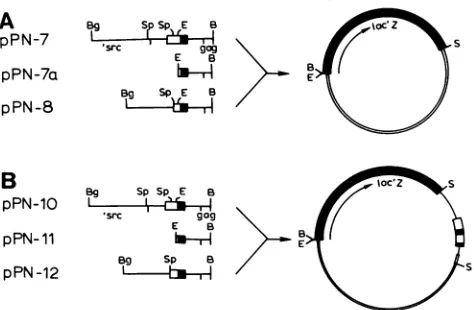
FIG. 2. (A) Plasmidswhich have LTRsequencessolelyatthe 5'
sideoflacZ. All viral inserts containedatleast 53 bases ofU3 in
additiontoR,U5, and leadersequences.All inserts alsoprovidethe
gag amino terminus in the correct reading frame to permit the
synthesis of a pl9gag_-,Bgalactosidase fusion protein (23). (B) A
secondsetofplasmidswhich have additional LTRsequences3' of
the indicatorgene. Relevant restriction sitesareindicated,asis the
directionoflacZ transcription. Solid bar, lacZ;openbar, pBR322 sequences; thin line, viral sequences. LTRs are boxed, withthe
openportiondenoting U3sequences. Restrictionsites: B, BamHI; Bg,BglII;E,EcoRI; S,Sall; Sp, SphI.
TABLE 1. Effectof3' LTRinsertions
Plasmid 5' LTR 3'LTR
3Galactosidase
activity(UIp.g)"
pPN-7 Intact - 1.7
pPN-7a -53to101 - 0.01
pPN-8 -141to101 - 0.01
pPN-10 Intact + 9.2
pPN-11 -53to101 + 0.02
pPN-12 -141to101 + 0.60
aAtotal of3 ,ug of eachplasmid DNAwasused perwell(diameter, 35), which had been seeded 1 day earlier with 2.5 x 10⁵ cells. Units of ,B-galactosidase activity were determined by assaying cultures 3 days after transfection; unitswereadjustedfortheamountofDNA pertransfected well.
RNA as carrier. Following ovenight incubation at
50°C,
unhybridized material was removed by treatment with a mixture of RNase A and RNase Ti in 0.5 M NaCl-50 mM Tris hydrochloride (pH 7.5). Samples were extracted with
phenol and ethanol precipitated, and protected probe
frag-ments were analyzed by electrophoresis through 4% poly-acrylamide under denaturing conditions. Dried gels were exposed to Kodak XAR 5 film at -70°C with anintensifying
screen.
RESULTS
Sequences required for RSV gene expression. We have previously described the use of the E. coli lacZ gene product ,B-galactosidase as a marker of transient retroviral gene expression(23). A number of plasmids were constructed in which the RSV LTR directed the synthesis of a gag-lacZ fusion product. One such plasmid(pPN-7; Fig. 2), contained a single LTR flanked by viral sequences that are normally found adjacenttoeither the 3' or the 5' LTR of anintegrated
provirus. Transfection of avian embryo fibroblasts with
pPN-7 resulted in highlevels of 3-galactosidase (23) (Table
1). As expectedfrom results presented in other reports (6, 15), deletionof viral sequencesupstream of the EcoRI site at nucleotide -53 (pPN-7a) or the SphI site at nucleotide -141 (pPN-8; Fig. 2)greatly reduced the levels of 3-galactosidase activityelicited intransfected cells(Table1). Reconstruction of an intact LTR in theabsence of viralsequences upstream of the LTRrestoredenzyme levels to near those of the wild type (data not shown). Thus, the inactivityof pPN-7a and pPN-8 was specifically attributable to deletion ofLTR
se-quences, defining theportion of U3 from its 5' boundaryat -233 to the SphI site at -141 as essential for gag-lacZ expression.
While it seemed most likely that the deletions directly reduced the transcriptional capacity of the LTR, other
possibilities were not excluded. As the 5' ends of the gag-lacZ encoding mRNAs derived from the plasmids de-scribed above must be identical, we expectedthat all
tran-scriptsweretranslated withequalefficiency. Dot
hybridiza-tion analyses of DNA isolated from transfected celllysates confirmed that all plasmidswere introduced into cells with
equal efficiency (data not shown). Thus, we conclude that the measureddifferences in,-galactosidaseinducedbythese
plasmidsreflect stable levels ofgag-lacZmRNA.
Insertion of 3' LTRs increases stable transcript levels.
Normally,aproviruscontains twoLTRs: one oneither side of the structuralgenes. Totestwhether insertion of LTRs 3' ofgag-lacZwould influence the amountof,-galactosidase synthesized, plasmids pPN-10, pPN-11, and pPN-12 were constructed. These plasmidsdiffered from pPN-7, pPN-7a, VOL.61, 1987
on November 10, 2019 by guest
http://jvi.asm.org/
[image:3.612.62.299.471.626.2]\1 .-f.;l5
w4w~~- ~~~~~~, I'
PIROBFI
.22nt
AL N
I:. s i) St
PROM)\!(
FIG. 3. Nuclease protection analysis of pPN-7- and pPN-10-derivedRNAs.Turkeyembryofibroblastsweretransfected with4.0 ,ug of either pPN-7 or pPN-10 DNA in the presence of 80 puM chloroquine. Three days later, total cellularRNAs wereprepared from these cultures and subjectedtohybridization withauniformly labeledRNAprobe complementarytoviral sequencesatpositions -53 to537.The structureof the invitro-synthesizedRNAprobe is diagrammed at the bottom ofthe figure (the probe also includes certain vector-derived sequences). Single-stranded material was
removed by digestion withRNase, andhybridswere analyzed by electrophoresis through 4% acrylamide under denaturing condi-tions. Lanes 1 to 3, 5.0, 1.6, and 0.5 pug of RNA from pPN-7-transfectedcells; lanes4 to6,similaramountsofRNAasin lanes1 to3,respectively, from cellsthat weretransfectedwithpPN-10;all hybridizationswereadjustedto20pugof totalRNAbytheinclusion of theappropriate quantity ofyeast RNAascarrier;lane7, carrier RNAalone; lane 8,1/50thasmuchundigested probeas waspresent in the otherlanes; lane M, pBR322cutwithMspIand end-labeled. Numbers to the left of the gel are in bases. Abbreviations: nt, nucleotides; E,EcoRI; S, Sacl; B, BamHI.
and pPN-8, respectively, by the presence of an
LTR-containing fragment ofpRAV-1 immediately 3' to lacZ, in the same transcriptional orientation as the upstream LTR
(Fig. 2). The permuted pRAV-1 fragment extends from within the env gene to the 5'-untranslated leader region and
contains two LTRs in tandem. For convenience, the LTR
directing gag-lacZgene expression is referred to as the 5' LTR, with those downstream of lacZ referred to as 3'. It should be borne in mind that all plasmids were transfected as
circles; thus, this distinction is notabsolute but valid only
with reference tolacZ.
Provision of 3' viral sequences significantly influenced
gag-lacZexpression (Table 1). The effect of 3' LTRs was most pronounced (greater than 50-fold) when the 5' LTR
lacked sequences 5' of nucleotide -141 in U3 (compare pPN-8 with pPN-12), suggesting that the LTRs 3' of lacZ
partly compensated for the defect. The 3' LTRs also aug-mented lacZ expression when the 5' LTR was intact (pPN-7 versuspPN-10), but the effect was not as striking. The most
severelytruncated LTR of pPN-7a was not activated by the
insertion (see pPN-11); it is likely that sequences upstream ofnucleotide -53 are an integral part of the promoter and cannotbe supplied at a distance.
We have previously established that the
3-galactosidase
levels induced by pPN-10, pPN-11, and pPN-12 correlate
well with the abundance of transcripts initiatedatthe 5' LTR ofeach plasmid (23). While it seemed likely that 3' LTRs directly increased stable gag-lacZ transcript levels, other explanationswerepossible, suchasvariation in thestability of different plasmid DNAs. Again, dothybridization analy-ses revealed no differences in transfection efficiency (data not shown). Moreover, plasmids bearing multiple LTRs were not more prone to homologous recombination events thanplasmids with single LTRs (datanotshown). Thus, the 3' LTRs did not seem to alter the number or stability of transfectedDNAmolecules, suggesting that the effectwas to alter gag-lacZ mRNA levels directly. The inactivity of pPN-11 indicates that the 3' LTRsdo not themselves direct transcription ofmRNAs that code for
P-galactosidase.
This suggestedthat 3' LTRs augment geneexpression by increas-ing the activity of the 5' LTR.Analysis of RNA fromtransfected cellsconfirmed thatthe 3' LTRs function to increase gag-lacZ transcript levels. Parallel cultures were transfected with equal amounts of pPN-10 or pPN-7 DNA. Three days later, RNAs were prepared from one culture transfected with each plasmid, andplasmid-specificRNAs were identifiedbytheirabilityto protectportions ofauniformly labeledRNAprobe (Fig. 3). The intensity of the 537-base fragmentprotected by the 5' end of gag-lacZ RNA indicated that the ratio of RNAs induced by pPN-10 relativeto pPN-7 (between 3:1 and9:1)
pPN-7R i }eo
_SP41 - 725
-141 -725
pPN-21 i2
pPN-2111
pPN-21
pPN-7 1
(H3) -657
SP (H,O -141 -408
i
Sp (Ha
-141 -301
-6517 -6S7
I
M B Sp
CH) (H,) (H)
-408-301 -141
I-gal,/,
2.8
8.0
15.0
< 1.0
100
0I1
FIG. 4. Inversion of various portions of U3 relative to the promoter.Details ofthe construction of theseplasmids are given in the text. Arrowsindicatethat the region so defined was inserted into pPN-21 inaninverted orientationwith respect tothe promoter. To facilitate manipulations, Hindlll linkers were inserted at various restriction sites,asindicatedon the map of pPN-7 at the bottom of thefigure (kb, kilobases). TheHindlIl site utilized in a particular constructionis indicated by subscriptnumbers. Only the relevant portions of the viral insert are shown (regions not detailed are identicaltopPN-7).Theopen boxes denote LTRsequences. Avian cells weretransfectedwith approximately 3pgof each plasmid in thepresenceof0.2 mg of DEAE-dextran per ml, and 3 days later, cell lysates were assayed for enzyme activity. The data are pre-sentedaspercentactivity(,-gal,
P-galactosidase)
relative to that of pPN-7. Restriction enzymes: B,BalII; H,Hindlll; M, MstII; Sp, SphI.x
on November 10, 2019 by guest
http://jvi.asm.org/
[image:4.612.61.298.72.276.2] [image:4.612.319.549.362.582.2]TABLE 2. Effectof alterationswithin the LTRatthe SphIsite
Plasmid Sequence alterations(ca. -141)a B-Galactosidaseactivity,(%)b
pPN-13 None: AGAAAAGGCACCGTGCATGCCGATTGGT 100
pPN-13d2 4bpDel: AGAAAAGGCACCGTG CCGATTGGT 78
pPN-13i11 48bpIns: AGAAAAGGCACCGTG<CAAGCTTG>6CCGATTGGT 83
pPN-13i12 72bpIns: AGAAAAGGCACCGTG<CAAGCTTG>gCCGATTGGT 52
pPN-13i13 130bp Ins: . . ..ACAA.ATCGCGAAGCTTGCCGATTGGT 19
pPN-13i14
130bpIns: ....CCA;LC'G AAA>CTTGCCGATTGGT 9a Abbreviations: Del, deletion; Ins, insertion; bp, base pairs. Inserted sequences are bracketed; subscripts represent the numbers ofHindlIl linkers that were inserted. The inserted fragment was a smallHindIII fragment derived from the RSVpolgene (25).Underlinednucleotidesindicate thosesharedbypPN-13and pPN-13i14.
b Values are presented as percentage ofp-galactosidaseactivity relative to that of pPN-13, as assayed 3 days aftertransfection. Background levels of -galactosidase were less than 3%.
correlated with relative ,B-galactosidase levels (Table 1).
(The bandofapproximately580bases was due totranscripts
reading through the LTR 5' of lacZ; no transcripts were
initiated at the 3' LTRs ofpPN-10. All the plasmid-borne
LTRs that we examined directed polyadenylation
ineffi-ciently; manuscript in preparation). It was concluded that the presence of 3' LTRs increased mRNA levels, and the strong effect observed when the 5' LTR was truncated suggeststhat the3' LTRprovidesanenhancer-like activity.
Distance-dependent enhancer activitywithinU3. While the -233 to -141 region of U3 (i.e., the region deleted from pPN-8) may havecontainedanenhancer element, it was also
possible that the deletion disrupted an enhancer. The
hall-marks of transcriptionalenhancers are the ability to function well ineitherorientationand at aconsiderabledistance from atestedpromoter(14). We wished todeterminewhether the
U3sequences from -233 to -141 met these criteria. Forsimplicityofinterpretationaswellasconstruction,we
chosetoanalyze sequences withinthe 5' LTR inthe absence
ofa 3' LTR. The SphI fragment missing from pPN-8 was
reinsertedintheopposite orientation (pPN-7R; Fig. 4). This
manipulation placed the relevant portion of U3 more than 400bases upstream of its normal location. Transfection of
cells with pPN-7R resulted in a reduced, but detectable,
level of
P-galactosidase.
It wasuncertain, however,whetherthepooractivityof theplasmid was due to theinversion of
U3 sequences or to theirdisplacementfrom the cap site. To
differentiate these twoalternatives, the -233 to -141 seg-ment was invertedandreinserted atvarious distances from the cap site (pPN-21il and pPN-21i2; Fig. 4). The level of
P-galactosidase
activity increased as the distance between theinvertedfragmentand thecap sitedecreased, suggesting thatadistal location largely accounted forthe lowactivityofpPN-7R.
Disruption oftheSphIsite itself couldconceivablyhave a
negative effecton LTRfunction.The simple deletionofbase
pairs -140 to -137 (thefour centralnucleotidesof theSphI
site; pPN-13d2; Table 2), however, did not greatly reduce
the levels ofenzyme activity. Thus, thesefew nucleotides
areentirely dispensable. Another series of plasmids empha-sized that the -233 to -141 sequences need not be posi-tioned
precisely
withrespect to thecap-proximal
promoter elements. Insertion of six or nine HindIII linkers(pPN-13illand
pPN-13i12,
respectively) slightly diminished enzymeactivity intransfected cells, to
approximately
70 and50%,
respectively (Table 2).However,insertion ofa
130-base-pair
HindIIIfragmentreduced lacZexpressionto amuchgreater extent (pPN-13il3 and pPN-13il4; Table 2). This
demon-stratedthatstrongdistancedependenceisnot
peculiar
tothe invertedorientation. Thedifference in geneexpression
ob-served when the samefragment
was inserted in either orientation(comparepPN-13i13
andpPN-13il4)
islikelydueto theintroducedpolsequences. Takentogether,theresults presentedabovesuggest that sequences on either sideofthe SphI siteinteracttoformtheRSVenhancer element but that thisinteractiondoes not require anyprecise spatial position-ing of sequence elements.
The 3' LTR provides transcriptional enhancement func-tions. Although our results suggest that transcriptional en-hancement plays a role in the 3' LTR effect, other factors
could have been involved. For instance, placement ofthe viralpolyadenylationsignal near to the 3' end of lacZ might tend to stabilizetheresulting mRNAs. To test this
possibil-ity, various LTRfragmentswere inserted 3' of lacZ, in the samerelativeorientation asthe 5' LTR. It was anticipated
pPN-8
* INSRTS
PLASMID 3LTR INSERTS
S u RsuRU (a) S
12 RAV-I (locZ)| ' 16 Pr-C (locZ) r 0
19 Pr-C (locZ) a
S w E S
23 RAV-I (lacZ)
27 RAV-0 (lacgag
S S
26 tdPr-B8 (loc Z) | gag 30 RAV- (locZ)
l---NONE
P-GAL .26
0. 13
o06 021
O.l
0.82
0 19
O.05
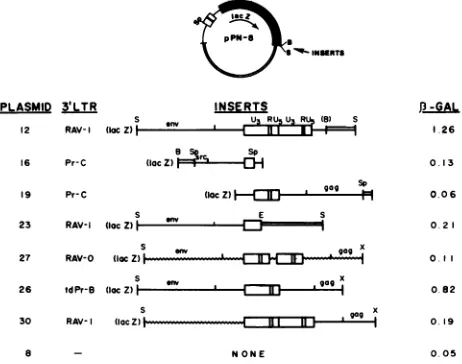
FIG. 5. Structure and activity ofvarious LTR-containing
frag-ments inserted intopPN-8 3' oflacZ. At the topof the figure the plasmid pPN-8,withnoviralsequence3'oflacZ, is shown.Below that arediagrammed the various fragments inserted attheBamHI (B)orSall (S) sites3'oflacZ;all 3' insertsplaced theLTRs(boxes) in the same orientation as the 5' LTR (the position of lacZ is indicated).Theleftmost columngivesthenumericdesignationofthe plasmid(withtheprefixpPN- omitted);thenextcolumn describes the viral origin of the LTR. The composition of flanking viral sequences isindicatedbythin lines(exogenoussequences)orwavy lines(endogenous sequences). pBR322sequencesareindicatedby
anopen bar. Relevantrestrictionsitesareindicated(B,BamHI;E, EcoRI; S,SaII;Sp,SphI;X,XhoI).Turkeyembryofibroblastswere
transfected with 3 ,ug ofeach plasmid DNA, and cultures were
assayed for ,-galactosidase (P-GAL) activity 3 days
posttransfec-tion. Theright column indicatesthe levelofP-galactosidaseactivity
inducedby eachplasmid,expressedasunits permicrogramofinput
plasmid DNA, adjusting for the slightly different sizes of the plasmidsas aconsequenceoftheinsertions. The value forpPN-8
wasnotdifferentfrom thatofthebackground(i.e., noplasmid).
VOL.61, 1987
on November 10, 2019 by guest
http://jvi.asm.org/
[image:5.612.319.550.363.545.2]pPP-7
< j ~~~INSERTS
PLASMID SLTR INSERTS
S ~~~~~UsR!5Us RULJ B) S 10 RAV-I (lacZ)I en Il n I I
B Sp Sp B
17 Pr-C (lacZ)
loZ Sp
(Iac Z) PiIJga
20 Pr-C
S nvE S
24 RAV- (lacZ) eEJ- S-1
28 RAV-0 (lacZ)I-E---gag
S env gags
29 tdPr-B (locz) e
31 RAV- (lgcZ) gag
N O N E
J-GAL
25.9
6.0 2.2
7.9
5. 2
8.3
3.7 3.5
FIG. 6. Structure and activity of variousLTR-containing restric-tionfragments inserted 3' of lacZ in pPN-7. pPN-7 is diagrammedat the top. Allconventions are as described in the legendto Fig. 5. Turkey embryo fibroblasts were transfected with 3
jig
of each plasmid, and cultures were assayed for 3-galactosidase (,B-GAL) activity3days posttransfection. Values presented represent units of enzyme activity per microgram of input plasmid DNA, adjusted for insert size. Background levels of enzymeactivityin thisexperiment were lessthan 0.05 U per culture.thatfinerlocalization ofthe sequencesresponsible forthe 3' LTR effect might distinguish transcriptional enhancement fromRNAstabilization.
Weinitially tested the various LTR inserts in combination
witha5'LTR that wastruncated atnucleotide -141(Fig.5).
First, both the RAV-1 fragment and a similar fragment containingasingleLTRderivedfromatdPr-RSV-B
deriva-tive (pPN-26; Fig. 5) elicited roughly equal levels of
P-galactosidase activity.Thus,theactivation effect ofa3' LTR was neither specific to the origin of the LTR nor to the presenceoftwoLTRs in tandem.
Theactivationeffect ofthe 3' LTRlargelyresistedfurther
mapping attempts: the region 5' of the SphI site at -141
exhibited very little activity, and the region 3' to it was
completely incapable of augmenting gag-lacZ expression (pPN-16 and pPN-19,respectively; Fig. 5). The latter result tends to discount a requirement for the polyadenylation
signal butsuggeststhat theregion upstream of the SphIsite
interacts with sequences that normally lie immediately
downstream. When the entire U3 region of RAV-1, except
for the 53 bases nearest to the cap site, was inserted 3' of lacZ (pPN-23; Fig. 5),
3-galactosidase
levels increased,confirming that sequences on either side of the SphI site
functionmoreefficiently when they are in close proximity to each other. The failure of any of the fragmented LTRs to substitute fully for an intact LTR indicates that the activa-tion phenomenon is complex.
The RAV-0 LTRdirects polyadenylation as efficiently as the exogenous LTRs (8, 12), but it does not possess the
ability
to enhance the expression of linked heterologous genes(7, 8, 36). Insertion of two tandem RAV-0 LTRs 3' oflacZresulted in far less ,B-galactosidase activity than when exogenous LTRs were substituted (compare pPN-27 with pPN-12 and pPN-26; Fig. 5). This argues against an impor-tantrolefor polyadenylationin the activation of gag-lacZ by
3' LTRs. Interestingly, a similar fragment derived from a recombinant between RAV-1 and RAV-0 which retained the exogenous LTRs was poorly active in the 3' position (pPN-30; Fig. 5). This was probably a consequence of the RAV-0 sequences that were presentimmediately upstream of the LTRs(seebelow).
To determine whethergag-lacZgene expression from an intact5' LTR wassimilarly affected, the same set of 3' LTR insertions was evaluated within the context ofpPN-7. The insertion of the single Pr-RSV-related LTR, generating
pPN-29 (Fig. 6), mimicked that of the RAV-1 LTRs, al-though the Pr-RSV LTR was somewhat less active. Neither of the SphI-divided LTR fragments greatly increased lacZ expression (pPN-17 and pPN-20; Fig. 6). The fragment extending from 5' of U3 to the EcoRI site at nucleotide -53 stimulated enzyme production to a significant extent (pPN-24; Fig. 6), but it still was notequivalent to an intact exogenousLTR. The RAV-0 LTRs had little effect(pPN-28; Fig. 6), as would be expected if the 3' LTRs functioned by supplying additional transcriptional enhancement activity. Interestingly, the activity of the RAV-1 LTRs was again attenuated by the juxtaposition of RAV-0 sequences (pPN-31; Fig. 6). The resultswereconsistent with the earlier conclusion that amulticomponent enhancer element resides withinthe RSV LTR and that the presence of this element 3' ofagene significantly affects itsexpression.
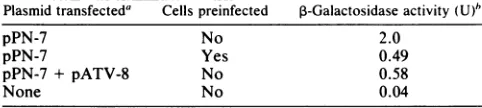
LTRactivityand viralgeneproducts.It hasbeenproposed that certain promoters, including the RSV LTR, are stimu-lated in transfectedmousecells when RSV gag seqences are present in trans (2). Because all the experiments described above wereperformed in uninfectedcells, it was of interest tocompareexpression in uninfected and infected avian cells.
P-Galactosidase
activity induced bypPN-7 transfection was, infact, reduced when cellswerepreinfectedwithPr-RSV-C (Fig. 7). A qualitatively similar but quantitatively less pro-nounced depression resulted from cotransfection ofpPN-78.0
-B-GAL, units
6.0
-4.0
-2.0
-0 1.0 2.0 3.0 4.0
ggpPN-7DNA
FIG. 7. ExpressionofpPN-7inuninfected versus infected cells. Turkeyembryo fibroblastswereeitherinfected withPr-RSV-C(0) or leftuninfected(0). Infected cells wereexposed to a high titer stockofPr-RSV-C more than 1 weekpriortotransfection. One day after cellswereseeded at adensity of2x 105 perwell(diameter,35 mm), cells weretransfected with the indicated amounts of pPN-7 DNA.
P-Galactosidase
(,B-GAL) activity was assayed 3 days posttransfection.on November 10, 2019 by guest
http://jvi.asm.org/
[image:6.612.69.304.73.267.2] [image:6.612.358.528.460.649.2]CONTROL OF RSV EXPRIESSION 1177 TABLE 3. Cotransfectionwith agag-expressing plasmid has the
same effect astransfectionofpreinfectedcells
Plasmidtransfecteda Cellspreinfected 3-Galactosidaseactivity(U)"
pPN-7 No 2.0
pPN-7 Yes 0.49
pPN-7 + pATV-8 No 0.58
None No 0.04
a A total of 1.0
pLg
of eachplasmid DNAwastransfected per1.5 x 10'cells perwell(diameter, 35 mm), with sheared salmon spermDNAaddedwhere necessaryto ensure that the total amounts ofDNAtransiectedwereequal.Cells were either uninfected turkey embryo fibroblastsorparallelcultures that were infectedmorethan 1week previously with Pr-RSV-C.
b,3-Galactosidaseactivity was measured 3 days after transfection.
andpATV-8
DNA
(Table 3). The latter plasmid has an intact gag gene downstream of an RSV LTR and presumably directs thesynthesis
ofgag proteins. Thus, a difference inthetransfection efficiencyofinfected cells relative to that of
theiruninfectedcounterparts cannot account for the absence
ofapparenttrans-activation of gag-lacZ by RSVsequences.
Wecouldfindnoevidencefor significant trans-activationof
transcription or translation of viral mRNA by RSV se-quehces, but the depression ofgene expression (probably a
consequence of sequestering of mRNA by gag proteins) mighthaveobscured a small effect.
DISCtJSSION
We situateda markergenewithin aproviral context,i.e., flanked byLTRsandothernoncoding sequences. Following transfection of avian fibroblasts with such constructs, ex-pressionofagag-lacZ fusion wasmonitoredboth by assay
for ,-galactosidase activity and by direct examination of
transcript levels. Anintact5' LTR wasrequiredfor efficient
expression ofthemarker gene, and within the LTR a region was identified which was required in an
orientation-independent but distance-dependent fashion. Expression
wasfurther increased byprovision of additionalLTRs 3' of
lacZ. Interestingly, it was found that deletions which ren-dered a 5'
LTR
unable to promote detectablelevels
of3-galactosidase
activity
could bepartially complemented
in cis by insertionof,
a secondLTR
3' to the marker gene.Delineation of an RSV enhancer element. Analysis of deletion mutants demonstratedthat sequences between
nu-cleotides -233 and -141 were obligatory forLTRactivity
butcouldfunction in either orientation, partly
conforming
to thedefinition ofatranscriptionalenhancer (14).Thefunction of this region was not completelyindependent
ofposition, however,asmovingtheelementgreater than 100nucleotidesaway significantly impaired function (Fig. 4 and Table 2). While analyses of the simian virus 40 (SV40) enhancer element have revealed that its
function
declines with dis-tancefromthe promoter(35), it isnotclearthat theregion
of U3 between nucleotides -233 and-141 isequivalent
tothe SV40 enhancer element.Rather,it seemslikelythattheSphIsite
might
lie withinanenhancer that iscomposed ofmultiple
synergistically
acting
domaiisthat havesomeflexibility
withregard to distance and orientation. Such a modular
organi-zationhasindeedbeenproposed fortheRSV enhancer
(15).
The sequence that forms the SphI
recognition
site atnucleotide
-141 does not itself appear to be essential for LTR activity, as plasmids carrying deletion or insertion mutationsatthatsitewerecapable
ofconferring
high
levelsofgag-lacZ
expression
(Table 2).
This site lies within thelongest
stretchofalternating purine and pyrimidine residueswithinU3;such sequences are capable of assuming a Z-DNA
conformation under the appropriate circumstances (34). It has been suggested that transcriptional enhancement is
associated withregions ofZ-DNA(22).
Th,
edatainTable 1offernosupportfor thishypothesis and rule out anabsolute
requirement for the central 4 base pairs of the SphI site, which is in agreement with results of a previous report
regarding deletion of these bases (6). Coincidentally, the sequences introduced adjacent to the altered SphI site in pPN-13il4 conserved 8 of 9 nucleotides that are normally found upstream of that site (underlined bases, Table 2),
suggesting that these 9 bases were not the crucial nucleotides that werelacking from pPN-8. Other investigators (16) have also foundthat a small deletion (ca. 10 base pairs) at the SphI
site didnotsignificantlyreduce LTR activity. Thus, it seems
unlikelythatthisrestriction site forms a specific bindingsite
for a single protein or complex of proteins, as such a regulatory element wouldbeexpected tohave precisespatial
requirements.
Examination of the nucleotide sequence of the Pr-RSV-C
U3 region (25) reveals an imperfect direct repeat, with the sequence at nucleotides -168 to -154 (GCCTTACAAG
GAAAG) repeated with four mismatches at positions -105 to -91 (GCCTTATTAGGAAGG). It has beenpointed out (15) that a portion of this repeat bears homology to the adenovirus ElA enhancer repeat AGGAAGGTGA (11). In addition, the sequence at positions -118 to -111 (GTG
GTACG) bears homology to the SV40-type enhancer con-sensus sequence (GTGGWWWG, where W represents ei-ther A or T) (37), and a related sequence is present a few base pairs upstream at -129 to -123 (GTGGTAG). While theimportance of these various sequence motifs remains to be determined, it is clear that certain of the core elements alone are not sufficient to activate the RSV promoter; for pPN-8, which retains one copy of theadenoviruslikeelement as well as both the SV40-like repeats, was incapable of gag-lacZ expression.
Effect of 3' LTRs on transcript levels. Modulation of
gag-lacZ expression by a 3' LTR could occur by several mechanisms. Nuclease mapping demonstrated that ,-galactosidase activity correlatedwth mRNA levels (Fig. 3); and because all plasmids were transfected with equal effi-ciency, it was likely that the 3' LTRs influenced stable
transcript levels directly. As the 3' LTR lies within the gag-lacZ transcript, its presence could affect the rate of mRNA synthesis or its stability (or both). Unfortunately, attempts to measure transcription rates via nuclear run-on
transcription experiments were unsuccessful due to the relative insensitivity of the technique (data not shown). It should be noted that,-galactosidaseactivityappearstobe at least as sensitive an indicator of gene expression as direct RNAanalysis.Plasrtids such aspPN-12,whichproducelow levels of gag-lacZ mRNA (23; P. A. Norton and J. M.
Coffin, manuscript in preparation) induce levels of
3-galactosidase thatare
substantially
above those of the back-ground.It also seemed unlikely that 3' LTRs could direct the
synthesis oftranslationallyactivegag-lacZ mRNA. Indeed,
it was observed that the
highly
truncated 5'LTR,
which lacks all sequences 5' ofposition -53,wasinsensitivetothe insertion of 3' LTRs (pPN-11). This also demonstrates that certain 5' LTR componentscannotbesupplied
at adistance.This resultagrees with that ofMitsialisetal. (21),who found that proviral structures with highly defective 5'
LTRs
aretranscriptionallyinactive.
on November 10, 2019 by guest
http://jvi.asm.org/
[image:7.612.48.289.100.154.2]Our inability to fully map the 3' determinant(s) which
increased transcript levels came as a surprise. To
summa-rize, the region between nucleotides -233 and -141 was
poorly active in the absence of adjacent LTR sequences.
Sequencesbetween -141and -53operatedonly in
conjunc-tion with the -233 to -141 moiety, as the -141 to 102 fragment was completely inactive. Provision ofa
polyade-nylation signal alone did not detectably influence gag-lacZ expression, but some component 3' of position -53 was
essentialforfullLTRfunction. Theincremental increasesin
enzyme activity with insertion of a larger LTR fragment
define a minimum of three interacting domains of the exogenous 3' LTR; these are -233 to -141, -141 to -53, and-53tothe3'boundaryofU5. Ourresults donotindicate whetherthedomainsarefunctionallyequivalent, ashasbeen
suggestedby other data (15).
Interestingly, substitution of an endogenous-type 3'-UT
regionlargely abrogated the stimulatoryeffectofexogenous
3' LTRs. This also demonstrated that the 3'-UTmust actin
a position-dependent fashion, as the exogenous sequence wasadjacenttothe 5' LTRin pPN-31. It has been reported that deletion of the exogenous 3'-UT region is correlated
withreduced levels of viralRNA (29),but itwasnotshown whetherthe endogenous 3'-UT wasfunctionally equivalent.
It has also been suggested that the region modulates viral pathogenicity (24, 30). Thenonpathogenic endogenous virus RAV-0 contains only a well-conserved sequence between env and U3, while the exogenous viruses examinedcontain
additional sequences, some of which are unrelated to each other (1, 4, 31). It is possible that the additional sequences
presentin theexogenous viruses relayinformation between
the 5' and 3' LTRs. Alternatively, insertions in this region may disrupt an element within the conserved sequence
which interferes with 3' LTRfunction.
In summary, while the LTR serves to direct efficient transcription initiation, our data indicate that the same
sequencesfunction inaless direct fashion andata
substan-tial distance to increase viralgene expression. Both
activi-ties appear to rely on the integrity of the LTRs within a
proviralunit. Itisunclear whether othertranscriptionalunits
possess a similar organization of controlling elements. A
mechanismthatwould bias LTR activities in favor of provi-ral transcription rather than expression of flanking cellular
sequences might be advantageous to both the virusand the host cell. Such a regulatory system requires a means of
distinguishingthetwoidentical LTRs ofaprovirus; wehave
discovered a sequence within the provirus nearthe 5' LTR
which mayfulfill this function (Norton and Coffin, in
prep-aration).
The RSV LTR does not require viral gene products to
function. A portion of the genome of human T-cell
lymphotropic virus types I and II appears to specifically stimulate LTR activity in trans (27, 28), and a similar
mechanismhas been proposed for RSV (2). Levels ofRSV
LTR-directedtranscripts, as wellastranscripts initiated ata
heterologous promoter, were increased in NIH 3T3 cells
when RSV sequences were present in trans (2). We thus
asked whether gag-lacZ expression was stimulated in
preinfected avian cells. The data in Fig. 7 led us to the
opposite conclusion: 3-galactosidase activity is depressed in
infectedcellsrelativetouninfectedcells, perhaps because of
sequestering ofgag-lacZ mRNA in virions. The proposed
trans-activationdoes notplayamajor role in the expression
of RSV in avian fibroblasts, which is in contrast to the
situationwith the human retroviruses.
It hasbeensuggestedthatthe stimulation of expression of
transfected DNA in preinfected avian cells is due to an
increase in DEAE-dextran-mediated uptake (5). This
expla-nation cannot accountfor the data regarding the
cotransfec-tion of pPN-7 and pATV-8 (Table 3). The
inconsistency
between ourdataand those reportedpreviously (2) could be resolved if theapparent trans-activation was, infact, due to RNAstabilization and notincreased transcription initiation.
Stabilizationof viral RNA by virtue of boundviral proteins
mightsimultaneously reduce translatability. Theobservable
consequences of such amechanism would beanincreasein the levels of stable RNA, along with a decrease in the
translation of that RNA (Fig. 7). Further analyses should
provide a definitive resolution tothe problem. ACKNOWLEDGMENTS
We are grateful to J. Stoye, A. Dorner, S. Herman, and B. Mermer for helpful discussions during the course of this work. We thank S. Morrison and H. Groelle for technical assistance and M. Bostic-Fitzgerald and S. Morrison for help in the preparation of the manuscript.
This study was supported by Public Health Service grant
R01-CA-27108 from the National Cancer Institute (to J.M.C.). P.A.N. was supported in part by Public Health Service training grant GM07310 from the National Institutes of Health.
LITERATURE CITED
1. Bizub, D., R. A. Katz, and A. M. Skalka. 1984. Nucleotide sequence of noncoding regions in Rous-associated virus 2: comparisons delineate conserved regions important in replica-tion and oncogenesis. J. Virol. 49:557-565.
2. Broome, S., and W. Gilbert. 1985. Rous sarcoma virus encodes a transcriptional activator. Cell 40:537-546.
3. Coffin, J. M. 1982. Structure of the retroviral genome, p. 261-368, ch. 4. In R. Weiss, N. Teich, H. E. Varmus, and J. M. Coffin (ed.), Molecular biology of tumor viruses. Part III. RNA tumor viruses. Cold Spring Harbor Laboratory, Cold Spring Harbor, N.Y.
4. Coffin, J. M. 1985. Genome structure, p. 17-73, ch. 4S. In R. Weiss, N. Teich, H. E. Varmus, and J. M. Coffin (ed.), Molec-ular biology of tumor viruses. Part
III.
RNA tumor viruses, vol. 2. Cold Spring Harbor Laboratory, Cold Spring Harbor, N.Y.5. Cullen, B. R., R. A. Katz, and G.
Ju.
1985. Expression of transfected DNA in avian cells can be enhanced in trans by retroviral infection. Mol. Cell. Biol. 5:1804-1807.6. Cullen, B. R., K. Raymond, and G. Ju. 1985. Functional analysis of the transcription control region located within the avian retroviral long terminal repeat. Mol. Cell. Biol. 5:438 447. 7. Cullen, B. R., K. Raymond, and G. Ju. 1985. Transcriptional
activity of avian retroviral long terminal repeats directly corre-lates with enhancer activity. J. Virol. 53:515-521.
8. Cullen, B. R., A. M. Skalka, and G. Ju. 1983. Endogenous avian retroviruses contain deficient promoter and leader sequences. Proc. Natl. Acad. Sci. USA 80:2946-2950.
9. Dorner, A. J., J. P. Stoye, and J. M. Coffin. 1985. Molecular basis of host
range
variation in avian retroviruses. J. Virol. 53: 32-39.10. Gilmartin, G. M., and J. T. Parsons. 1983. Identification of transcriptional elements within the long terminal repeat of Rous sarcoma virus. Mol. Cell. Biol. 3:1834-1845.
11. Hearing, P., and T. Shenk. 1983. The adenovirus type 5 ElA transcriptional control region contains a duplicated enhancer element. Cell 33:695-703.
12. Herman, S. A., and J. M. Coffin. 1986. Differential transcription from the long terminal repeats of integrated avian leukosis virus DNA. J. Virol. 60:497-505.
13. Katz, R. A., C. A. Omer, J. H. Weis, S. A. Mitsialis, A. J. Faras, and R. V. Guntaka. 1982. Restriction endonuclease and
nucle-otide sequence analyses of molecularly cloned unintegrated avian tumor virus DNA: structure of large terminal repeats in circlejunctions. J. Virol.42:346-351.
on November 10, 2019 by guest
http://jvi.asm.org/
14. Khoury, G., and P. Gruss. 1983. Enhancer elements. Cell 33: 313-314.
15. Laimins, L. A., P. Tsichlis, and G. Khoury. 1984. Multiple enhancer domains in the 3' terminus of the Prague strain of Rous sarcomavirus.Nucleic Acids Res. 12:6427-6442.
16. Luciw, P. A., J. M. Bishop, H. E. Varmus, andM.R. Capecchi. 1983. Locationandfunction of retroviral and SV40sequences thatenhancebiochemicaltransformationaftermicroinjectionof DNA. Cell33:705-716.
17. Maxam, A. M., and W. Gilbert. 1980. Sequencing end-labelled DNAwith base-specificchemical cleavages.MethodsEnzymol. 65:499-560.
18. McKnight, S., and R.Tjian.1986.Transcriptionalselectivity of viral genes in mammalian cells. Cell 46:795-805.
19. Melton, D. A., P. A. Krieg, M. R. Rebagliati, T. Maniatis, K. Zinn, and M.R. Green. 1984. Efficient in vitro synthesis of biologically active RNA andRNA hybridization probes from plasmids containing a bacteriophage SP6 promoter. Nucleic AcidsRes. 12:7035-7056.
20. Mermer, B., M. H. Malamy, and J. M. Coffin. 1983. Rous sarcomavirus contains sequences which permitexpressionof the gag gene in Escherichia coli. Mol. Cell. Biol. 3:1746-1758. 21. Mitsialis, S. A., S. Caplan, and R. V. Guntaka. 1983. An
upstreamregulatory domain of aviantumorvirus long terminal repeatisrequiredfor the expression ofaprocaryoticneomycin geneineucaryotic cells. Mol. Cell. Biol. 3:1975-1984. 22. Nordheim, A., and A. Rich. 1983.Negatively supercoiled simian
virus40 DNAcontains Z-DNA segments withintranscriptional enhancersequences. Nature(London)303:674-679.
23. Norton, P. A., and J. M. Coffin. 1985. Bacterial,-galactosidase as amarker ofRous sarcomavirusgeneexpression and repli-cation. Mol. Cell. Biol. 5:281-290.
24. Robinson, H. L., B. M. Blais, P. N. Tsichlis, and J. M.Coffin. 1982. At leasttwo regions of the viral genomedetermine the oncogenic potential of avian leukosis viruses.Proc. Natl.Acad. Sci. USA 79:1225-1229.
25. Schwartz, D.E., R. Tizard, and W. Gilbert. 1983. Nucleotide sequenceofRous sarcomavirus. Cell 32:853-869.
26. Sealy, L., M. L. Privalsky, G. Moscovici, C. Moscovici, and J. M.Bishop. 1983. Site-specific mutagenesis of avian erythro-blastosis virus: erb-B is required for oncogenicity. Virology 130:155-178.
27. Sodroski, J. G., W. C.Goh, C. A. Rosen, S. Z.Salahuddin, A. Aldovini, G. Franchini, F. Wong-Staal, R. C. Gallo, K.
Sugamura, Y. Hinuma, and W. A. Haseltine. 1985. Trans-activation of the human T-cell leukemia virus long terminal repeatcorrelates with expression of theX-lor protein. J. Virol. 55:831-835.
28. Sodroski, J. G., C. A. Rosen, and W. A. Haseltine. 1984. Trans-acting transcriptional activation ofthelong terminal re-peatof human Tlymphotropicviruses ininfected cells. Science 225:381-385.
29. Sorge, J., W. Ricci, and S. H. Hughes. 1983. cis-ActingRNA packaging locus in the 115-nucleotide direct repeat of Rous sarcomavirus.J. Virol.48:667-675.
30. Tsichlis, P. N., and J. M. Coffin. 1980. Recombinantsbetween endogenousandexogenous avian tumor viruses: role oftheC region and other portions of the genome in the control of replication andtransformation. J. Virol. 33:238-249.
31. Tsichlis, P. N., L. Donehower, G. Hager, N. Zeller, R. Malavarca,S. Astrin, and A. M. Skalka. 1982. Sequence
com-parison in thecrossoverregion ofanoncogenic avian retrovirus recombinant and its nononcogenicparent: genetic regionsthat controlgrowth rate andoncogenic potential. Mol. Cell. Biol. 2:1331-1338.
32. Varmus, H., and R. Swanstrom. 1982. Replication of retrovi-ruses, p.369-512,ch. 5. In R.Weiss,N.Teich,H. E. Varmus, andJ. M.Coffin (ed.), Molecular biology oftumorviruses.Part III. RNA tumorviruses. Cold Spring HarborLaboratory,Cold Spring Harbor, N.Y.
33. Varmus, H., and R. Swanstrom. 1985. Replication of retrovi-ruses, p.75-134,ch.SS. In R.Weiss,N.Teich,H. E.Varmus, andJ. M.Coffin(ed.), Molecular biology oftumorviruses. Part III. RNA tumor viruses. Cold SpringHarborLaboratory, Cold Spring Harbor,N.Y.
34. Wang, A. H.-J., G. J. Quigley, F. J. Kolpak, J. L. Crawford, J. H. vanBoom,G. vanderMarel, and A. Rich.1979. Molecular structure of a left-handed double helical DNA fragment at
atomic resolution. Nature(London) 282:680-686.
35. Wasylyk, B.,C.Wasylyk, and P. Chambon. 1984. Short and long range activation by the SV40 enhancer. Nucleic Acids Res. 12:5589-5608.
36. Weber, F.,andW.Schaffner. 1985. Enhanceractivitycorrelates with the oncogenic potential of avian retroviruses. EMBO J. 4:949-956.
37. Weiher, H., M. Konig, and P. Gruss. 1982. Multiple point mutations affecting the simian virus 40 enhancer. Science 219:626-631.