International Journal of Innovative Technology and Exploring Engineering (IJITEE) ISSN: 2278-3075, Volume-9 Issue-2, December 2019
Cloud-based Smart Grid ArchitectureforSecured
Big Data Information Management
D.Amirtha Sughi, R.M.Bhavadharini,
K.M.Anandkumar, R.Arunprakash
Abstract: There exists agrowing concern about energy utilization nowadays, which is prominent to aset-upthat supports Real-Time (RT) control and monitoring with a 2-way message between the services and clients. The Cloud-based Smart Grid Architecture (C-SGA) is the technological innovation that came up to meet these requirements and developproductivity, trustworthiness, finances, and sustainability of energy services. To manage communications to millions of endpoints and to process the data received from several front-end smart,intelligent components, Cloud Computing (CC) serves as a better technology for providing the necessary computational resources on demand for large scale Smart Grid (SG) applications. The factorslow-cost assistance, the flexible, redundant, and fast, responsive architecture of CC are the primary goals of energy conservation and demand response achieved in SGs for efficient, secure, and scalable electricity services.
Keywords –Cloud computing, Big Data, Smart Grid, Smart Frame, Cyber-Physical system
I. INTRODUCTION
There occurs a fast-paced development of power systems
nowadays, which necessities an efficient
framework(FWK)to process the largevolume of data of the consumers to provide the best effort services. It has found that the accuracy in monitoring and providing the relevant information to the electricity consumers enables them to determine their power consumption limits and adjust accordingly.
C-SGAis an electronic grid renovation plan that aims at implementing bidirectional communication FWK, where
data collected with finer granularity. It
bringssubstantialenhancement in the proficiency, trustworthiness, and substantiality of energy services. The 2-way energy streampermits for free-network topology with the distributed process. For the information controlling and BDA in SGs,CC is the best option to be integrated. CC offers more extensive opportunities in building a scalable and secure FWK to observethe procedure and authentication of data from severalC-SGAcauses in RTover its better storage and handlingabilities. Besides, it is the best option for offering low cost and robust computing capabilities. The 3 services presented to the SGbenefits by CC are Software as a Service (SaaS), Platform as a Service (PaaS), and Infrastructure as a Service (IaaS) for a better functioning FWK.
Revised Manuscript Received on December 05, 2019.
D.Amirtha Sughi, Assistant Professor, Department of Computer Science and Engineering, Easwari Engineering College, Chennai
R.M.Bhavadharini, Associate Professor, Department of Computer Science and Engineering, Easwari Engineering College, Chennai
Dr.K.M.Anandkumar, Professor, Department of Computer Science and Engineering, Easwari Engineering College, Chennai
Dr.R.Arunprakash, Assistant Professor, Dept of Computer Science and Engineering, University College of Engineering, Ariyalur
II. LITERATURE REVIEW
The revolutions in the power industry have resulted in the development of modern energy infrastructure to monitor and control the power practice of clients. SGs rose up with the vital idea of achieving the goal of such efficient energy management. The criticaltask faced by SG is the requirementfor security-aided information set-up for Big
Data Information Management (BGIM). The
primaryresponsibilities involved in SGInformation
Management (IM)are information
gathering/processing/storage.
In information gathering, since SG has to obtain data from numerous dissimilar devices, efficient methods are to be found out. Toaddress this experiment, several solutions proposed by recent surveys [4] [5].In information processing, a proposal to achieve data interoperability by standardizing the data structures used in SG applications implemented. For IS, the properties of SG and CC were analyzed to meet the requirements.
Due to massive-scale deployment, SGs undergo various weaknesses, which are addressed by multiple proposed methods. NISTIR [6] describes security standards in SG systems. Zhang at el. [7] and Wei at el. [8] introduced such security FWKs to protect SGs against cyber-attacks. Rogers et al. [9] presented avalidation and reliability approach using digital signatures and time-stamps. Besides this, security combination protocols by Li et al. [10]
Yigit et al. [1] described the SG architecture and its applications. It also discusses how the computational requirements for SG met by utilizing the CC model. CC architecture explained thoroughly. The efficiency, security, and reliability of the architecture analyzed in detail in this work. The paper also points out the openings and issues in applying CC in SG. CC based SG projects like a cloud-based smart meter, cloud-cloud-based M2M communication, and cyber-physical systems and discussed in detail.
Joon-sang et al. [2] suggested a secure CC based FWK for BGIM in SG and called as “Smart Frame.” The first deal of the FWK is to construct a classifiedmodel of CChubs to afford computing methods for IM and BDA. This proposed solution ensures several properties like save energy, less computation cost, scalability, agility, and flexibility. In addition to this FWK, the paper also presents a security result based on IBE, digital signature, and proxy re-encryption to discourseserious security problems of the suggestedFWK.
Yuan-yuan etal. [3] projected an idea focusing on cloud-based data handling and investigationpractices of the user side in SG. To demonstrate that the incorporation of CC, SG, data analysis techniques arereal-world, they presented the Cloud Platform (CP) architecture designed for data handling and its essentialtools
The criticaldivisions of cloud-based data processing, including data assemblage, storage, analysis, and imagining,conferred.
Rajesh Narayanan et al. [11] recommend an advanced method to derive scalable information infrastructure for SG. It is an open, scalable, and manageable FWK with complex and distributed communications among differentmodules to maintenance the message and computing requirements. The FWK well supports the evolving micro-grid system of the SG. AnarchetypeFWK is developed consisting of CloudLab [12], GENI [13] networks, and RTenergy system base at the RTPIS Lab [14].
Ling Zheng et al. [15] in this author compares private/public clouds, lists the changes between them, and puts onward a design of private CC to support SG. It expounds the structure of the respective layer and presents the concept of a reservedCC system and network virtualization. It provides a theoretical reference to build the private CC, thus endorses the creation of the SG.
SebnemRusitschka et al.,[16] model for SGData Management (DM) based on precisebehaviors of CC, such
as distributed DM for RT data gathering, parallel processing for RT information recovery, and pervasive access. There is an analysis of the set of well-known SG use cases, the
maximum of which requests flexible
associationthroughadministrativelimits of network operators and energy service providers, as well as the active contribution of the client. Hence, preserving secrecy and confidentiality, whilehandling the enormousquantities of SG data, is of dominantsignificance in the design of the SG Data Cloud.
SofanaReka et al. [17] proposes a CCFWK in
SGbackground by formingSG energy hub
associateRTestimation for maintaining massive data storage.A stochastic encodingmodel created with the CC for
actualDemand Side Management in SG.
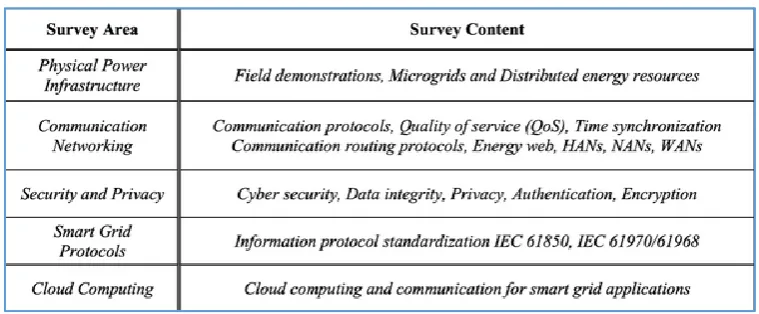
Investigationoutcomes are achieved using GUI interface and Gurobi optimizer in Mat lab to decrease the energy demand by forming energy save networks in a smart hub method (refer table 1.)
Table 1. SG Surveys
Energy focus [18] is the significant client standpoint face of the SG, giving in help for the clients to lessen the energy and in this way, economy. It instead delivers a smart, practical instrument that invigorates the connection between the clients and the utility suppliers, and to deal with the essentialness issues of all periods. For the need of making a fundamental vitality center point as client-server architecture, CC in SG assumes a predominant job.
III. PROPOSED METHOD
[image:2.595.117.497.306.463.2]A computational model enabling convenient, scalable, and on-demand access to a collective pool of data for the C-SGAis necessary for meeting the service requirements of the users who consume the energy for various needs. CC emerged as active support for meeting these challenges and providing RTDM and parallel processing of information Figure 1. Steps in C-SGA.
International Journal of Innovative Technology and Exploring Engineering (IJITEE) ISSN: 2278-3075, Volume-9 Issue-2, December 2019
3.1. CCfor SGApplications
CC is considered to have various characteristics that can yield improved SG applications and projects. At the same time,multiple challenges are faced by the SG architecture based on CC, and hence, a technical and security analysis is necessary for the same. The various characteristics of CCapplied in SG are agility, device and location independence, maintenance and virtualization, multi-tenancy, reliability, performance.
3.2. Methodology
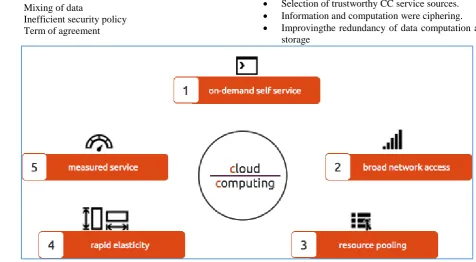
SG can advantage from all characteristics of CC since the power industry mainly focuses on business motives. Figure.2 depicts the conceptual model of SG architecture. The significant challenges faced by this system as follows:
1. Location of Data
2. Mixing of data
3. Inefficient security policy
4. Term of agreement
5. Dependence of CSP’s Application Programming Interface (APIs)
6. Compatibility
7. Redundant data organization and disaster rescue
IV. TECHNICAL AND CLOUD SECURITY
ANALYSIS
The practicalexamination of CC for SG discusses the threevital services, namely: SaaS, PaaS, and IaaS.The security approach for the CC based SGIM by ensuring the quality of service by the CP is made using a Protection Policy Manager (PPM). The PPM offersdata-security permitting to the requirements of C-SGAmethods by using 3 different approaches as:
Selection of trustworthy CC service sources. Information and computation were ciphering. Improvingthe redundancy of data computation and
storage
Figure 2: CC Characteristics for Security
3.3. SGDevelopments and RTApplications
Under the topic of C-SGAprojects and applications, the techniques used in SG demand-response optimization explained. Scalable stream processing, Semantic information integration, Data mining, and complicated event processing, ML, Natural language processing, etc. are some of the techniques used.
Cloud-based smart is another innovation that is an FWK used to control and gather data from client gadgets and check their status. Correspondence innovation is given by M2M interchanges to guaranteeing correspondence among FWKs and devices without requiring clients. Like this, numerous C-SGA applications use M2M innovation for SG and its energy the board FWKs to exchange data. CC joined with M2M interchanges due to its ease, proficiency, and elite. In this regard, a C-SGA's vitality, the board FWK, is upheld by M2M with CC.
Cyber-Physical System (CPS) is a CC process of the SG. The joining of processing energy, message capacity, and self-administering regulator capacity is finished by CPS. C-SGA observing RT need to control the cloud environment progressively, and CPS encourages this by controlling circumstances of data, procedures, broadcasts, and condition
continuously. CPS additionally gives C-SGA security MicroGridthat is joined to C-SGA FWK and is called as Micro network CPS FWK.
C-SGA systems practicea massivequantity of data containingRT information, operating data, test data, and the data size is increasing. Therefore, C-SGAcondition monitoring develops more problematic in terms of reliability and security. In this manner, it proposes the cloudmodel for CPs that hold the state of information of a C-SGA. This technology offersproficient, and RTC-SGA condition monitoring with big data combines with different types of technologies to guarantee high performance, efficient, and robust C-SGAcloud environmentcontrol systems. Hadoop is one of the used techniques to increase efficiency by running idle servers. Dynamic internet data centers also exist for minimizing electricity costs.
V. RESULT AND DISCUSSION
C-SGAis a technological novelty the signs of progress the efficiency, reliability and economics, and sustainability of
energy services. The
[image:3.595.59.536.221.483.2]devices such as power assets and SG efficiently; and how to practice a vastvolume of data received from SG devices. CC, a technology that delivers computational data resources on demands, is an excellentclient to address these tasks since it has numeroususefulbelongings such as energy-saving, cost-energy-saving, agility, scalability, and flexibility. 3.4. SFfor Cloud Security
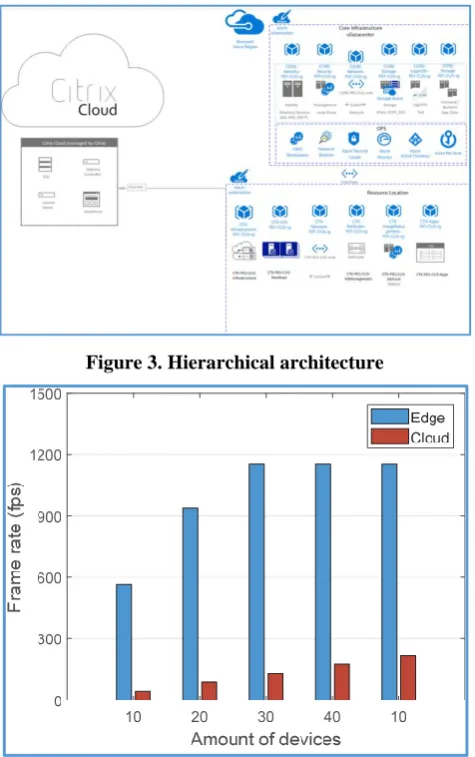
[image:4.595.51.289.267.646.2]Here, a secure CC based FWK for BGIM in SGs, which called “Smart-Frame,” proposed. The initialidea of this C-SGAFWK is to construct a hierarchical model of CC centers to ensurevarious types of CC services for IM and Big Data Analysis (BDA). In addition to this modelFWK, a security aideIBE, signature, and proxy re-encryption to address serious security problems of the proposed FWK presented. C-SGA(refer figure 3) is a flexible, scalable, and secure IMFWK which built at 3 hierarchical stages: topmost, regional, and end-user levels, in which the first two stagesinvolve of CC centers while the end level encloses end-user SG devices.
Figure 3. Hierarchical architecture
Figure 4. Frame Rate Edge Vs. Cloud
The top CC center proceedsaccountability of managing standarddevices and increasing of data across the localCC centers, which employed in the low-level in the order, and the frame rate compared with the edge is represented in figure 4. The local CC centers are, in turn, in charge of managing intelligent devices, which have low-level than the regional CC centers in specific regions, and processing data of these devices.
In addition to this overallFWK, the paper proposes a secured C-SGAexplanation for the FWK based on IBE and signature
and IBPR. Providing information security for SGs is most significant since much of the information in SGs is sensitive and needs to be rigorously protected. Information leakage in SGs can lead to vulnerabilities that affect not only individuals but also the whole nation because disclosed information can be used to introduction attacks to both individuals and the entire SGs at the home level.
3.5. Security Solution to SF
The first idea of the security OF C-SGAresult for the Smart-Frame (SF) is to permit all the complicatedobjects, i.e., top and regional CC centers, and end-users, to be signified by their individualities whichused as encryption keys. The entities in the low-level can use the identities of higher-level entities to encrypt their data for secure communication with the objects ata high-level. One of the noticeableaids we can gain from applying IBE cryptography to the SF is that through using identities rather than digital certificates, which depend on traditional Public Key Infrastructure (PKI), we can save anessentialvolume of resources for computation and communications and resolve scalability problems.
Cryptographic schemes Pairing-Based IBE and ID-based proxy re-encryption and IBS involving the following steps for ensuring confidentiality and authentication services.
1. Key Generation
2. Encryption to Information Storage (IS) 3. Encryption to top cloud
4. Proxy re-encryption by IS
5. Signature Generation (SG)by end-users 6. SG by objects in regional cloud 7. SG by high cloud
In the present scenario, where a tremendous amount of data is to processed for efficient management of energy in SGs, this concrete design is relevant. The hierarchical setting of CC centers enables this concept. Besides, data confidentiality is achieved using the proposed security solution.
VI. CONCLUSION AND FUTURE WORK
It
hasoriginated that the integration of CC technology to C-SGAhas served numerous applications for sharable, reliable, on-demand, and scalable access to the computing resources in the C-SGA. The C-SGAIT infrastructure provides management and monitoring of the data and services to the users. Also, efficient data processing FWK on the user side is necessary forC-SGA. Cloud-based analysis of user side data enabled the collection and storage of data, pre-processing of data, and analysis of data, visualization, and securing the data within the SG.International Journal of Innovative Technology and Exploring Engineering (IJITEE) ISSN: 2278-3075, Volume-9 Issue-2, December 2019
REFERENCES
1. Yigit, Melike, V. CagriGungor, and SelcukBaktir, "Cloud computing for smart grid applications" Computer Networks,vol70,pp.312-329,2014.
2. J. Baek, Q. H. Vu, J. K. Liu, X. Huang, and Y. Xiang, "A Secure Cloud Computing Based Framework for Big Data Information Management of Smart Grid," in IEEE Transactions on Cloud Computing, vol. 3, no. 2, pp. 233-244, April-June 1, 2015.
3. Yuan-Yuan Sun, Jing-Jing Yuan, Ming- Yue Zhai, "Cloud-Based Data Analysis of User Side in Smart Grid," Pp. 39-44, 2016. 4. Z. Fan, P. Kulkarni, S. Gormus, C. Efthymiou, G. Kalogridis, M.
Sooriyabandara, Z. Zhu, S. Lambotharan, and W. Chin, “Smart grid communications: Overview of research challenges, solutions, and standardization activities,” IEEE Commun. Survey Tutorials, vol. 15, no. 1, pp. 21–38, Jan. 2012.
5. W. Wang, Y. Xu, and M. Khanna, “A survey on the communication architectures in smart grid,” Comput. Netw., vol. 55, no. 15, pp. 3604–3629, 2011.
6. Lee A, Brewer T (2010) Smart grid cybersecurity strategy and requirements (NISTIR 7628 Draft). National Institute of Standards and Technology, [7] T. Zhang, W. Lin, Y. Wang, S. Deng, C. Shi, and L. Chen, “The design of information security protection framework to support smart grid,” in Proc. Int. Conf. Power Syst. Technol., 2010, pp. 1–5.
7. D. Wei, Y. Lu, M. Jafari, P. Skare, and K. Rohde, “An integrated security system of protecting the smart grid against cyberattacks,” in Proc. Eur. Conf. Innovative Smart Grid Technol., 2010, pp. 1–7. 8. K. Rogers, R. Klump, H. Khurana, A. Aquino-Lugo, and T. Overbye,
“An authenticated control framework for distributed voltage support on the smart grid,” IEEE Trans. Smart Grid, vol. 1, no. 1, pp. 40–47, Jun. 2010.
9. F. Li, B. Luo, and P. Liu, “Secure information aggregation for smartgrids using homomorphic encryption,” in Proc. IEEE Conf. Smart Grid Commun., 2010, pp. 327–332.
10. R. Narayanan, Ke Xu, Kuang-Ching Wang, and G. K. Venayagamoorthy, "An information infrastructure framework for smart grids leveraging SDN and cloud," 2016 Clemson University Power Systems Conference (PSC), Clemson, SC, 2016,pp.1-7.doi: 10.1109/PSC.2016.7462876
11. CloudLab. [Online]. Available: http://cloudlab.us
12. GENI, "Global Environment for Network Innovation" [Online]. Available: geni.net.
13. K. Venayagamoorthy, "Real-Time Power and Intelligent Systems (RTPIS) Laboratory," [Online]. Available: RTPIS.org.