City, University of London Institutional Repository
Citation
:
Gardner, Eli (2015). The parenting children course study: a quantitative and qualitative evaluation of a church based parenting intervention in the community.(Unpublished Doctoral thesis, City University London)
This is the accepted version of the paper.
This version of the publication may differ from the final published
version.
Permanent repository link:
http://openaccess.city.ac.uk/13857/Link to published version
:
Copyright and reuse:
City Research Online aims to make research
outputs of City, University of London available to a wider audience.
Copyright and Moral Rights remain with the author(s) and/or copyright
holders. URLs from City Research Online may be freely distributed and
linked to.
City Research Online: http://openaccess.city.ac.uk/ [email protected]
VOLUME ONE
Part A: Main Thesis
Part B: Critical Literature Review
Part C: Clinical Case Study
A thesis submitted in partial fulfilment of the degree
of Doctorate in Clinical Psychology (DPsych) Portfolio
City University, London Department of Psychology
Eli Gardner
THE FOLLOWING PARTS OF THIS THESIS HAVE BEEN
REDACTED FOR DATA PROTECTION REASONS:
Vol. 1
pp 237-262: Part C: Case study.
Vol. 2
pp 200-301: Appendix A17: Interview transcripts.
THE FOLLOWING PARTS OF THIS THESIS HAVE BEEN
REDACTED FOR COPYRIGHT REASONS:
Vol. 2
pp 50-127: Appendix A2. Lee, N. & Lee, S. (2011)The Parenting Course Manual,
London: Alpha international
Contents
List of Tables... 7
List of Figures ... 9
Acknowledgements ... 10
Declaration of Powers of Discretion ... 11
Preface ... 12
PART A: MAIN THESIS ... 18
Chapter 1 Introduction ... 20
1.1 Background... 20
1.2 Evidence based parenting programmes in the UK ... 22
1.2.1 Theoretical underpinnings of evidence-based programmes ... 23
1.2.2 Parenting styles theory ... 24
1.2.3 Social learning theory ... 24
1.2.4 Review of key parenting programmes ... 25
1.3 Key variables to consider in parenting interventions ... 26
1.3.1 Demographic variables ... 26
1.3.2 Child behaviour problems ... 28
1.3.3 Parental Self-efficacy ... 28
1.3.4 Parental disciplinary skills ... 29
1.3.5 General family functioning... 30
1.3.6 Facilitator variables ... 30
1.4 Summary... 31
1.5 Evidence based programmes in ‘real life’ settings in the community ... 32
1.6 Universal approaches... 34
1.7 Voluntary sector studies ... 35
1.8 Faith based interventions ... 36
1.9 DVD based interventions ... 39
1.10 Limitations of quantitative studies to date... 40
1.11.1 Combining methodologies... 42
1.11.2 Qualitative methodologies ... 43
1.11.3 Barriers to engagement found in the qualitative literature ... 45
1.12 Rationale for the present study ... 46
1.13 Research questions ... 49
Chapter 2 Quantitative Method ... 52
2.1 Introduction ... 52
2.2 Ethics ... 52
2.3 Quantitative methodology ... 53
2.3.1 Inclusion criteria ... 53
2.3.2 Sample size ... 53
2.3.3 Measures ... 53
2.3.4 Missing values and syntax files for all outcome measures ... 58
2.4 Procedure for quantitative data collection ... 59
2.4.1 Live Course ... 59
2.4.2 DVD Courses... 60
2.4.3 Participant Demographics ... 61
2.4.4 Use of data regarding post codes and caseness ... 65
2.5 Research design ... 65
Chapter 3 Results ... 67
3.1 Introduction ... 67
3.2 Data preparation ... 68
3.3 Demographics and exploring data ... 69
3.3.1 Attrition rate ... 70
3.3.2 Differences between participants at Time 1 ... 75
3.4 Correlations of demographics and outcome measures ... 77
3.5 Analyses of findings ... 78
3.6 Exploring the whole sample: DVD and Live Course data... 79
3.6.1 Changes between T1 and T2 for the whole sample (testing Hypothesis 1) ... 79
3.6.2 Changes between T1, T2 and T3 for the whole sample ... 85
3.7.1 Changes between T1 and T2 for Live course participants
(testing Hypothesis 2) ... 91
3.7.2 Changes between T1, T2 and T3 for Live course participants ... 94
3.8 Exploring the DVD course ... 99
3.8.1 Changes between T1 and T2 for DVD course participants (testing Hypothesis 3) ... 101
3.8.2 Changes between T1, T2 and T3 for DVD course participants ... 105
3.9 Intention to treat analysis... 108
3.10 Summary of Results ... 109
Chapter 4 Discussion of Quantitative Findings ... 112
4.1 Introduction ... 112
4.2 Overall effectiveness of the course T1-T2 for the whole sample ... 112
4.2.1 Main findings... 112
4.2.2 Demographic variables ... 114
4.2.3 Outcome variables ... 115
4.3 Facilitator effect – Live course only T1-T2 ... 118
4.4 Effect of duration of the course – DVD course only T1-T2 ... 118
4.5 After the end of the course – the three month follow up ... 119
4.5.1 Overall sample –DVD and Live course data T1-T3 ... 120
4.5.2 Live course T1- T3 ... 121
4.5.3 DVD course T1-T3 ... 121
4.6 Summary of findings ... 122
4.7 Strengths and limitations of this study ... 123
4.8 Directions for future research ... 127
4.9 Implications for the field of parenting research ... 130
Chapter 5 Qualitative Method ... 131
5.1 Introduction to and epistemology of the qualitative methodology ... 131
5.2 Epistemological positioning in qualitative research ... 131
5.3 Choice of qualitative tools for method and analysis ... 132
5.3.1 The interview schedule ... 132
5.4 Thematic analysis: What is it? ... 133
5.4.2 Inductive versus theoretical thematic analysis ... 134
5.4.3 Semantic or latent themes ... 135
5.4.4 Possible disadvantages of this method ... 136
5.5 Description of qualitative procedure and methodology ... 137
5.6 The interviews ... 137
5.6.1 The participants ... 137
5.6.2 The Interview process... 138
5.7 Process of analysis ... 139
5.7.1 Phase 1: familiarisation with the data ... 140
5.7.2 Phase 2: coding ... 140
5.7.3 Phase 3: searching for themes ... 142
5.7.4 Phase 4: reviewing themes ... 143
5.7.5 Phase 5: defining and naming themes ... 144
Chapter 6 Qualitative Findings ... 145
6.1 Overview of the findings: a thematic model ... 145
6.2 The themes... 148
6.3 Pre-course themes ... 149
6.3.1 View of self to be improved and learning ... 149
6.4 Course process themes ... 152
6.4.1 Social value: learning and fellowship ... 152
6.4.2 Purpose and value of the course: not therapy or a lecture and not a coffee am ... 155
6.4.3 Internal world: self-analysis ... 158
6.4.4 Role of a containing environment in enabling intimacy ... 160
6.4.5 Usefulness of course materials ... 163
6.5 Post course changes ... 164
6.5.1 Moving from unconscious to conscious parenting ... 164
6.5.2 More positive outlook... 166
6.5.3 Value given to single parent status within wider church ... 167
Chapter 7 Discussion of Qualitative Findings ... 170
7.1 Implications of the findings in relation to the research questions .... 170
7.2 Implications of the findings in relation to the literature ... 171
7.2.2 Post course changes: more positive view of parenting and of
their child ... 172
7.2.3 View of self to be improved and intentionality ... 174
7.2.4 Role of a containing environment in enabling intimacy ... 175
7.3 Implications of the findings in relation to application in the field ... 176
7.4 Validity, reliability and limitations of the study ... 178
7.5 Suggestions for future research ... 180
7.6 Research reflections... 181
7.7 Concluding remarks... 182
Chapter 8 Linking Qualitative and Quantitative findings: a final Discussion and Conclusion... 184
8.1 Introduction ... 184
8.2 Summary of findings across whole study ... 184
8.3 Group process factors ... 185
8.3.1 Parental confidence and self-efficacy ... 185
8.3.2 Role of the leader... 185
8.3.3 Social support ... 186
8.3.4 Environmental factors ... 187
8.3.5 Demographic factors ... 187
8.4 Future research ... 188
8.5 Impact and dissemination ... 189
8.6 Conclusion and final reflections ... 190
PART B: CRITICAL LITERATURE REVIEW ... 209
Chapter 9 What is the impact of Social Media (SM) use on adolescents’ existing friendships? ... 210
PART C: CASE STUDY ... 236
Chapter 10 Clinical Case Study: “Dolly” ... 237
Appendix C1 ... 260
List of Tables
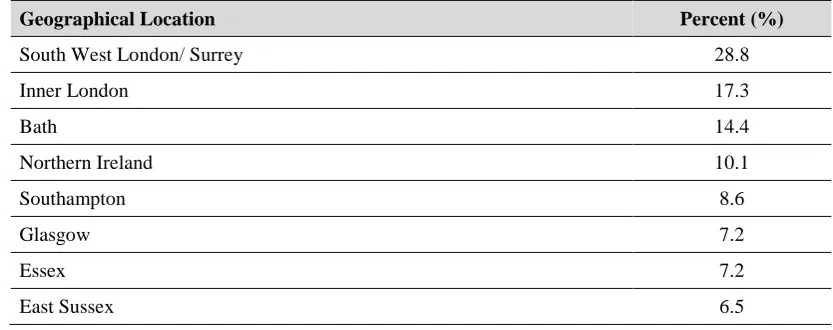
Table 2.1. Geographical distribution of parents participating in DVD courses ... 61
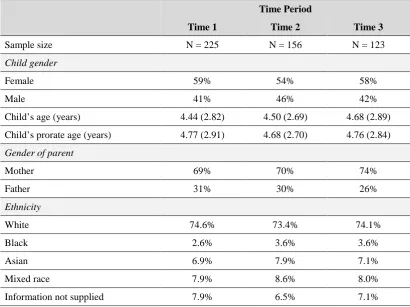
Table 2.2. Demographics of all participants for DVD and Live courses ... 63
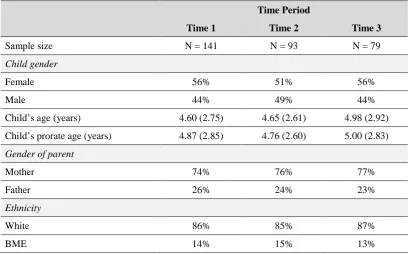
Table 2.3. DVD participant characteristics at T1, T2 and T3 ... 64
Table 2.4. Live Course participant characteristics at T1, T2 and T3 ... 64
Table 3.1. Mean scores and standard deviations of all measures for whole sample ... 69
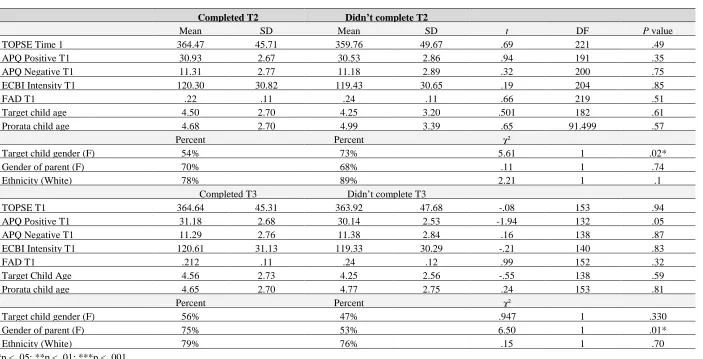
Table 3.2. Independent samples t-tests drop out analysis of differences with regard to all variables between those who completed T2 and those that did not and also for those who completed T3 and those that did not. ... 73
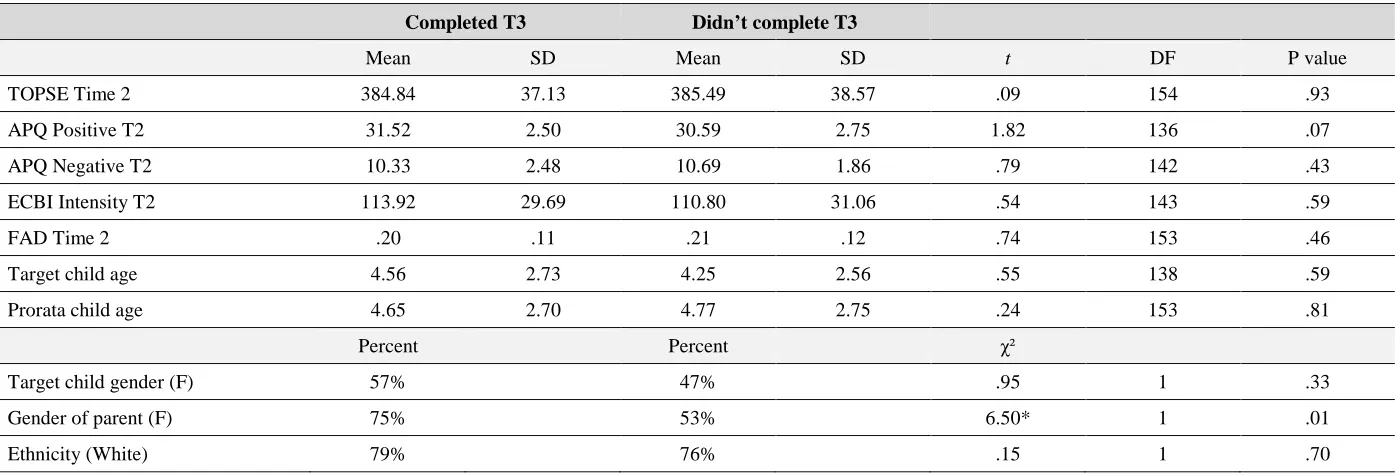
Table 3.3. Independent Samples t-tests drop out analysis for those who completed T3, having completed T2 and those that did not... 74
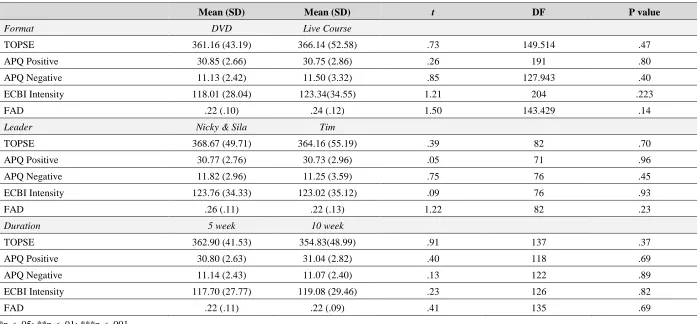
Table 3.4. Independent samples t-tests comparing initial T1 scores between groups for format, leader and duration. ... 76
Table 3.5. Correlation table between outcome measures for all participants at T1 ... 77
Table 3.6. Correlation table between outcome measures and demographic variables for all participants at T1 ... 77
Table 3.7. Means and s.d’s for ECBI intensity scale for whole sample between T1-T2 ... 79
Table 3.8. Crosstabulation between ECBI T1 and T2 scores ... 80
Table 3.9. Chi-Square Tests showing McNemar Test result ... 81
Table 3.10. Table showing means and s.d’s for FAD for whole sample between T1 and T2 ... 82
Table 3.11. Univariate ANOVA follow up results for parenting variables for all participants for T1-T2 (N=127) ... 84
Table 3.12. Univariate follow up results for all variables for all participants at all 3 time points and means and standard deviations for all variables for all participants at all 3 time points, (N=91) ... 86
Table 3.13. Means and s.d’s for ECBI intensity scale for all participants between T1, T2 and T3 ... 87
Table 3.14. Means and s.d’s for FAD scale for all participants between T1, T2 and T3 ... 88
Table 3.16. Table showing correlations between outcome measures and
demographic variables for Live course participants only at T1 ... 90
Table 3.17. Univariate ANOVA follow up results following the significant omnibus findings for participants on the Live course between T1 and T2, (N=51) ... 92
Table 3.18. Means and s.d’s for ECBI intensity scale for Live course
participants between T1-T2 ... 93
Table 3.19. Means and s.d’s for FAD for participants on Live course between T1 and T2 ... 93
Table 3.20. Univariate ANOVA follow up results following the significant omnibus findings for participants on the Live course between T1 and T2 and T3 ... 96
Table 3.21. Means and s.ds for ECBI intensity scale for Live course
participants between T1 and T3 ... 97
Table 3.22. Means and s.ds for FAD scale for Live course participants between T1-T3 ... 98
Table 3.23. Correlation table between outcome measures for DVD course
participants only at T1 ... 100
Table 3.24. Correlation table between outcome measures and demographic
variables for DVD course participants only at T1 ... 100
Table 3.25. Means and s.ds for ECBI intensity scale for DVD course
participants between T1 and T2 ... 102
Table 3.26. Means and s.ds for FAD scores for DVD course participants
between T1 and T2. ... 102
Table 3.27. Univariate ANOVA follow up results following the significant omnibus findings for DVD course participants between T1 and
T2, (N=76) ... 104
Table 3.28. Univariate ANOVA follow up results following the significant omnibus findings for DVD course participants between T1, T2
and T3, (N=61). ... 106
Table 3.29. Means and s.d’s for ECBI intensity scale for DVD course
participants between T1, T2 and T3 ... 107
List of Figures
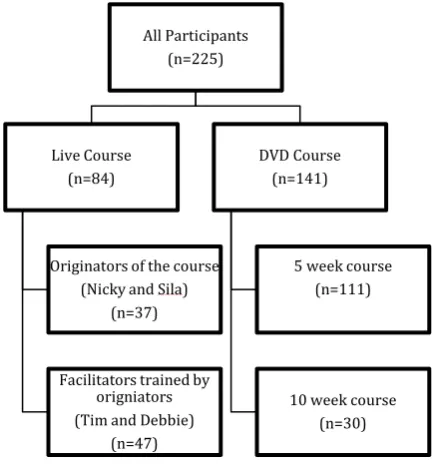
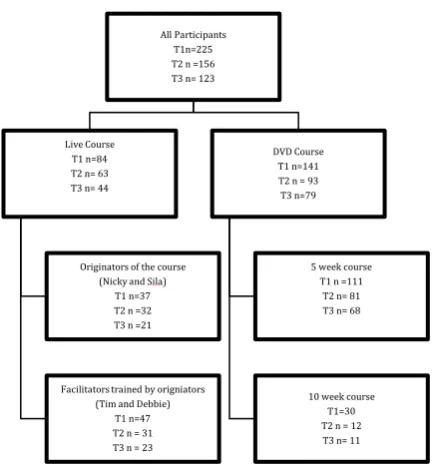
Figure 2.1. Flow chart showing distribution of parents to the different
versions of the course at Time 1 ... 62
Figure 3.1. Flow chart showing attrition rate of participants for all groups between T1, T2 and T3. ... 72
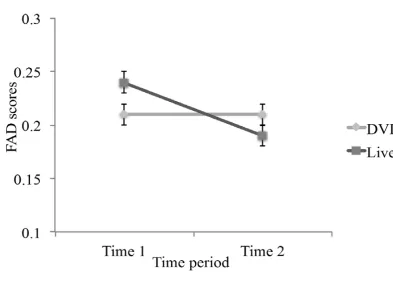
Figure 3.2. Graph showing interaction between FAD scores between T1 and T2 for DVD and live course participants ... 83
Figure 3.3. Flow chart showing distribution of parents attending Live courses at T1 ... 89
Figure 3.4. Graph showing FAD scores for Live course participants at T1, T2 and T3. ... 99
Figure 3.5. Flow chart showing distribution of parents attending DVD courses at T1 ... 99
Figure 5.1. Coding data extracts. ... 142
Figure 6.1. Detailed map showing connection between themes ... 146
Acknowledgements
Firstly I would like to acknowledge my enormous gratitude to both my supervisors: Huge thanks to Professor Carla Willig for her time, sharing of her knowledge and wisdom and her calm confidence in me. Carla, it has been such a privilege to have you as my supervisor, so thank you. Dr Matt Woolgar too, for his generosity in sharing his knowledge, ideas, time and for believing in the project. Thank you Matt also for re-introducing me to quantitative research in a way that made me almost enjoy it! I am also indebted to Danielle Beaumont for all her statistical help and very thankful for the patient teaching offered to me by Lauren Knott and James Hampton at City, allowing me to sit in on their lectures and answering all my most basic of statistical questions.
Special thanks to the parents who put up with filling in questionnaires and for those who granted me interviews and offered me their experiences so openly and generously. To the amazing facilitators of the groups who kindly gave of their time to make sure the study could go ahead, thank you. Nicky and Sila Lee and Tim and Debbie Matthews, thank you all for allowing me to conduct the study while you were
trying to run a parenting course and a big thanks to Marika Brennan for organising the interviews and all the administrators of the courses for putting together databases of all the parents and making things so much easier.
I must acknowledge my amazing husband David without whose unwavering support, I would not have embarked on this journey and could not possibly have completed it. Thank you also Pete and Jenny Hawkins for insisting I should do the Top up Doctorate. To my extended family and friends too, a big thanks for their support and belief in me and for my sister Karen for lending her expert editorial eye.
Declaration of Powers of Discretion
Preface
I have worked as a Clinical Psychologist with children and families for 20 years. The theme of this portfolio relates to parent and child well being. The research component evaluates a parenting course, the critical literature review takes as its focus the impact of social media on adolescent friendships, an important concern for parents today and the case study illustrates a piece of work carried out with a parent and her child to improve their relationship, the child’s well being and bolster the parent’s role. The three components are linked by my passion for working with families and helping them manage their children and enjoy family life more. In addition, each component of this portfolio served to further hone my research skills, particularly in relation to quantitative methods and critical thinking.
The background to my research subject (Part A) is that in 2009 I started working as a volunteer for my church helping to run The Parenting Children Course in a new setting: around a table, with 6-10 single mothers on a housing estate. I had recently had my third child whilst living abroad for three years and had returned to an honorary clinical post in Paediatric Psychology. It was a time of feeling rusty as a
clinician and somewhat overwhelmed as a parent with now three strong willed children. I signed up to volunteering because in spite of my own struggles, I was passionate and interested in parenting, how it works, what works. Working with inner city parents in a non-clinical capacity felt very fulfilling of my interests without the constraint of being the ‘expert clinician’ or the ‘expert parent’.
reminded by my supervisor not to be ‘so enthusiastic’ but to remember to be a scientist and look at the data objectively. Wise words.
Whilst this version of The Parenting Children Course was my primary interest, when it came to planning my research, I decided that I should evaluate the ‘main’ programme, run Live at our church three times a year by the originators, Nicky and Sila Lee, as well as their new product: The Parenting Children Course on DVD. For two reasons this was important: one, the small inner city version came from the main programme and therefore knowing if that works is very important for credibility for the small course and two, personally I wanted to gain experience of quantitative research which I had not done since undergraduate days. My reasons for doing the doctorate were hence two fold: to bring my clinical and research skills up to date and to contribute to the progress of this parenting intervention that I experienced as very useful and potentially very impactful.
Employing a mixed methodology was both challenging and satisfying. I have enjoyed qualitative research in the past and doing Thematic analysis (Braun & Clarke, 2006) has built on my existing knowledge of searching for themes and making meaning from the data that I had gathered doing my previous degree. The learning curve for employing quantitative methods has been frighteningly steep at times but it has meant that I am not only more knowledgeable of quantitative methods, but more aware and critical in my reading of clinical literature and even media reports in terms of evaluating the rigour of the studies I am reading about and weighing up their credibility based on their methods of gathering and analysing data.
Carrying out the critical literature review (Part B) felt like another excellent exercise in pulling apart studies and assessing them not just for their content, but for their process as well. The subject I chose, ‘The impact of social media on existing
argue, that for school connectedness, adolescents who more frequently used online communication were more likely than less frequent users to feel connectedness to
school, by having friendships that were more cohesive.
I felt this topic would fit in with the portfolio’s remit of parenting in that social media is here to stay (as emphasized by Subrahmanyam & Greenfield, 2008) and parents could benefit from understanding why it is important to their children and how best to manage it rather than to react adversely to what appears at face value, to be a negative influence in their children’s lives.
It was very interesting to learn about the different theories that have sprung up in this field in the last few years. For example, a popular theory in the early days of the internet was the displacement hypothesis which states that online communication impairs the quality of adolescents’ existing friendships, because it displaces the time that could be spent in more meaningful interactions with offline friends (Kraut et al., 1998; Mesch, 2003; Nie, 2001). Because online contacts are seen as superficially weak-tie relationships that lack feelings of affection or commitment, the internet is believed to reduce the quality of existing friendships among adolescents.
More recently, the stimulation or increase hypothesis emphasizes that more recent internet-based communication technologies are designed to encourage communication with existing friends. As a result, much of the time spent on online communication is used to maintain and deepen existing friendships, which eventually enhances their closeness (Bryant, Sanders-Jackson & Smallwood, 2006; Valkenburg & Peter, 2007).
Boyd (2008): “Despite the perception that social media is enabling teens to reach out to a new set of people online, the majority of teens define their peers and friendships by the relations fostered in school’ (p. 177).
Alongside building up my research skills, I was also keen to more sharply attune my clinical skills. For the case study therefore (Part C) I decided to be quite deliberate in
practicing from a theoretical base. Before going abroad, I had become increasingly interested in Solution Focused Therapy (de Shazer, 1985). It aims to help people make changes in their lives in the shortest possible time. It holds that change comes from encouraging clients to describe their preferred future - what their lives will be like should the therapy work and by building on resources they already have. From these, clients are able to make necessary adjustments in their lives. The main difference for me as a clinician using this method was the questioning. In my clinical training, the focus was on getting a very clear picture of when the problem is present, in order to help the client. In Solution focused work, the therapist works hard to get a clear picture of what things are like when the problem is absent. I was drawn to the positive nature of this method and was keen to try and implement it. In spite of reading up on it and attending regular supervision from a solution focused therapist, I found executing the method in a pure fashion difficult. I found I naturally made hypotheses and was drawn to try more narrative and behavioural exercises to help the family. I was relieved then to find solution oriented therapy: a method developed by Selekman (2010) who advocated for a looser version of the solution focused method which allowed for the use of other theoretically based techniques as long as they were solution oriented.
This has been an exciting discovery for me as it is a natural fit for the way I work; allowing space for some hypothesising about why things are the way they are whilst
remaining focused on moving the family on towards a solution rather than dwelling on the problem. It provides more of a framework to my practice than I might otherwise have as an experienced clinician. Exercising the purposeful discipline of
following theory quite closely, I feel was a good exercise in refining my clinical skills and reminding me of the need for our practice to be evidence based as well as using the valuable tool of age and experience as well.
addition, my hope is that this portfolio will show the progress I have made as a researcher, observer and interpreter of information I have gathered from the research
References
Braun, V. & Clarke, V. (2006) Using thematic analysis in psychology. Qualitative Research in Psychology, 3, 77-101.
Bryant, J.A., Sanders-Jackson, A. & Smallwood, A.M.K. (2006). “IMing, Text Messaging, and adolescent Social Networks,” Journal of Computer-Mediated Communication, 11, 577-592. de Shazer, S.(1985). Keys to solution in Brief Therapy. New York: W.W. Norton.
Kraut, R., Patterson, M., Lundmark, V., Kiesler, S., Mukophadhyay, T., & Scherlis, W. (1998). Internet paradox: A social technology that reduces social involvement and psychological well-being? American Psychologist, 53, 1017–1031.
Mesch, G.S. (2003). The family and the internet: The Israeli case. Social Science Quarterly, 84, 1038–50.
Nie, N.H. (2001). Sociability, interpersonal relations and the internet: Reconciling conflicting findings. American Behavioral Scientist, 45, 420–35.
Selekman, M. D. (2010). Collaborative brief therapy with children. New York: Guilford Press.
Subrahmanyam, K & Greenfield, P. (2008). Online Communication and Adolescent Relationships. The Future of Children, 18, 119-146.
Valkenburg, P.M. & Peter, J. (2007). Preadolescents’ and adolescents’ online
communication and their closeness to friends. Developmental Psychology, 43, 267-277.
Valkenburg, P. M., & Peter, J. (2009a). The effects of instant messaging on the quality of adolescents’ existing friendships: A longitudinal study. Journal of Communication,
PART A: MAIN THESIS
The Parenting Children Course Study:
A Quantitative and Qualitative Evaluation
ABSTRACT
Introduction Evidence based parenting programmes have been shown to improve parenting competence and reduce child behaviour problems. More rigorous evaluations of such programmes are needed. This study provides such an evaluation of The Parenting Children Course run by Holy Trinity Brompton (HTB) church in London. The course runs Live, on DVD and in inner city settings with small groups. Quantitative methods were used to evaluate the first two versions and qualitative methods for the latter.
Method 84 parents participated in the Live course and 141 in the DVD courses (n=225). Five parents were interviewed from the inner city courses. Live and DVD formats were evaluated for Parental disciplinary skills using the APQ (The Short Alabama Parenting Questionnaire; Elgar, Waschbusch, Dadds & Sigvaldason, 2007);
Self-efficacy using the TOPSE (Tool Of Parental Self Efficacy; Kendall & Bloomfield, 2005); Child behaviour, using the ECBI (Eyberg Child Behaviour Inventor; Eyberg, 1999); General family functioning, using the General Functioning Scale of the FAD (McMaster Family Assessment Device; Epstein, Baldwin & Bishop, 1983). The impact of changing leaders for the Live course and duration of the DVD course from five to ten weeks was also addressed. The study used 2x2 and 2x3 mixed factor ANOVAs to examine changes in parental scores between the start and end of the course and 3 months later. Semi-structured interviewing and Thematic analysis were used for the inner city version.
Chapter 1
Introduction
1.1
Background
The aim of this study is to provide a rigorous evaluation of The Parenting Children Course, a voluntary-sector parenting course run in the community by Nicky and Sila Lee, pastors at Holy Trinity Brompton (HTB) church in London. The course is run Live over five sessions, three times a year, with an average of 35 parents attending, as well as on DVD for church leaders to purchase and run in their communities. (See Appendix A2 for the guest manual script). In addition, this course has been adapted
and run in an inner city setting for small groups of parents (See Appendix A3 for the handout). The study will use both quantitative and qualitative methodologies to evaluate the different versions of the course. Further details of the course and rationale for this study will be given at the end of this chapter.
Prior to that, this Introduction will provide an outline of the current literature highlighting the main parenting interventions evaluated to date, their theoretical underpinnings and outcomes observed so far for parents and children alike. Some discussion of the limitations of previous studies will be offered, particularly in relation to research design; however, given the huge volume of literature in this area, this chapter neither aims to be a critical nor a systematic literature review, but rather aims to provide a context for the current study in terms of highlighting key findings to date and providing a rationale for the study.
As the current study aims to use both quantitative as well as qualitative methods, an outline of the issues raised in the literature in relation to qualitative and mixed
methods will be given here as well.
It is hoped that at the end of this chapter, the reader will have a broad understanding of current research trends in the field as well as its limitations and some clarity as to how the current study responds to the need for such research highlighted by previous studies.
Day, Michelson, Thomson, Penney & Draper (2012) report that disruptive behaviour is the most common reason for referral to child mental health services particularly in inner city areas which impacts considerably on child and parental well being. Academic failure, crime, unemployment are some of the sequelae to conduct problems in childhood with considerable economic and social costs to society (Fergusson, Horwood, & Ridder, 2005).
Research suggests that it is possible to prevent and treat behavioural problems in children. Some of the most effective interventions target parenting skills because the quality of the parent-child relationship is strongly associated with children’s wellbeing (Amussen, Matthews, Weizel, Bebiroglu & Scott, 2012). In addition, studies have shown that parenting programmes with a proven theoretical base provide an effective way to support the development of parenting skills. The sheer diversity of family life means that one size fits all approaches are unlikely to be uniformly successful for all contexts. Giving families access to diverse information and support that they can use as they think best is the approach that is most likely to
be effective (Arkan, Üstun & Guvenir, 2013).
While a handful of parenting interventions have been evaluated for efficacy, many other courses that are run in community settings and in the voluntary sector have not
1.2
Evidence based parenting programmes in the UK
Central and local government recognise that the role of the parent is crucial to the
development of the child: support for parents has therefore become an integral part of policy (Whitmarsh, 2008). The UK Government has increasingly favoured the use of evidence-based parenting programmes (EBPPs) because of their proven efficacy (Lewis, 2011). These will be outlined briefly below. As mentioned earlier, a critique of the methods and findings of studies evaluating such interventions is beyond the scope of this chapter and therefore the programmes are only described in order to set the context for the current study. Some of the limitations of studies that ‘prove’ the efficacy of such interventions will however be raised in a later section.
EBPPs have an identifiable theoretical underpinning, are carefully scripted week by week and require those who deliver them to follow a manual. The goals of such programmes have been to improve short and long-term parenting and to bring about social change by improving children’s behaviour.
The Children’s Workforce Development Council (CWDC) and the National Academy for Parenting Research (NAPR) developed a Commissioning Toolkit of programmes which have been evaluated and rated by NAPR. This is in order to understand the potential of programmes that may not have undergone a randomised controlled trial as well as to identify programmes that are not working so they can be decommissioned. (National Academy for Parenting Practitioners, 2008)
Additionally, The National Academy for Parenting Practitioners (NAPP) has determined that there are three key elements underpinning the success of evidence
based interventions:
● Eligibility: the intervention’s target audience is appropriate and clear
● Fidelity: the ‘active ingredients’ of the programme are rolled out without significant deviation
NICE (National Institute for Clinical Excellence) (2006, and since updated March, 2013) has published guidance for parent training/education in the management of
children with conduct disorder (serious behaviour problems which can affect a child’s development or interfere with their ability to lead a normal life) aged 12 years or younger. This recommends group-based programmes, only recommending individual-based programmes where families’ needs are too complex for such an approach.
NICE holds that all programmes should:
● Be based on social learning theory
● Include ways of improving family relationships
● Offer enough sessions (usually 8-12)
● Help parents identify goals
● Include role play and homework
● Be given by people who are trained, skilled and supported
● Follow the programme’s manual to ensure consistency (NICE, 2006)
1.2.1 Theoretical underpinnings of evidence-based programmes
Many theories have linked parenting to child outcomes but two perspectives – attachment theory and social learning theory have been especially influential in
recent times and have led to different types of parenting programmes. There have been several trials for attachment-based interventions, mostly with infants. The meta-analysis by Bakermans-Kranenburg, van Ijzendoorn, and Juffer (2003) found 81 studies. Overall, the interventions modestly improved parental sensitivity and attachment security. It will not be discussed further as it is of limited relevance to the current study. Social Learning Theory will be described below as most courses in the UK are underpinned by it (Scott, 2008) and it forms the basis of the parenting programme in this study.
1.2.2 Parenting styles theory
This theory, based on the work of Baumrind (1991), has been influential but has not led to specific interventions (Scott, 2008). Baumrind observed interactions between parents and young children. Core dimensions of parenting were measured and observed.
Four parenting typologies were repeatedly seen and were constructed from a cross of warmth, conflict and control. They were described as follows:
● Authoritative (high warmth, positive/assertive control)
● Authoritarian (low warmth, high conflict, coercive, punitive control attempts)
● Permissive (high warmth coupled with low control attempts)
● Neglectful/disengaged (low warmth and low control)
These typologies have proved to be robust and repeatedly associated with child outcomes (Scott, 2008). Children and adolescents of authoritative parents are consistently found to be more pro-social, academically and socially competent and less symptomatic. Children whose parents are described as authoritarian, permissive or disengaged show significantly worse outcomes. Children of authoritarian parents show the worst adjustment of the four.
1.2.3 Social learning theory
Social learning theory has led to interventions mainly for children over three years
old. It evolved from various roots in general learning theory and behaviourism based on the work of Bandura (1977), (Scott & Yule, 2008).
Scott (2008) describes the notion behind social learning theory as “that children’s real-life experiences and exposures directly or indirectly shape behaviour” (p. 1047). The key point is that moment-to-moment exchanges are crucial: if a child receives an immediate reward, like parental attention, for good behaviour, they are likely to repeat that behaviour. If they are ignored (or punished for it), they are less likely to do it again.
behaviour (Bugental, Blue & Cruzcosa, 1989; Dix, 1992) and its effects on children (Dodge, Pettit, Bates & Valente, 1995). Therefore the model suggests that children
learn strategies about managing emotions, resolving disputes and engaging with others both from their own experiences but also from the way parents react.
Research on social learning theory approaches to parenting interventions is most closely associated with the work of Patterson (1969), founder of the Oregon Social Learning Centre. Social learning theory has added to its focus on the harmful effects of parent-child conflict and inconsistent discipline, an emphasis on the positive dimension of parenting as a way of promoting child positive behaviour and affect and providing a more positive and effective relationship context for parental disciplinary interventions (Gardner, 1987). The vast majority of the programmes evaluated in the literature to date are based on social learning theory.
1.2.4 Review of key parenting programmes
Mrazek and Haggerty (1994) delineated three types of preventative parenting interventions: universal (targeting an entire population irrespective of risk), selective (targeting individuals or subgroups with elevated risk of conduct problems or mental health problems) and indicated (targeting high-risk individuals who are identified as having minimal but detectable problems foreshadowing disorder).
Programmes based on social learning theory have evolved over 40 years and there is a large evidence base for them. Some best known examples of targeted parenting interventions based on social learning theory include: Triple P (Markie-Dadds & Sanders, 2006), Helping the Non-Compliant Child, (McMahon & Forehand, 2003), Parent-Child Interaction Therapy, (Brinkmeyer & Eyberg, 2003), Defiant Children,
(Mash & Barkley, 2006) and The Incredible Years, (Webster-Stratton & Reid, 2003).
In the UK, local authority commissioners are particularly drawn to Incredible Years (IY) and Triple P due to their robust evidence base (Ramage, 2011). The Department for Education’s Commissioning Tool rates these programmes with their maximum four stars‘strong.’
The Incredible Years Programme (Webster-Stratton & Reid, 2003) has been
of child and parent outcomes, plus longer-term effectiveness (Moran et al. 2004). Targeting children 2-9 years old, the programme provides education in groups. An
important principle of the programme is that a strong and positive parent-child relation is the source of effective discipline. Groups consist of 10-12 parents on average. The drop out rate of parents varies between 10% to 50% (Webster-Stratton, 2004,2005). The programme has been subject to multiple studies around the world including the USA, the UK, China and Sweden which include a number of randomised controlled trials which demonstrate that the IY parenting programme significantly improves parenting interactions, reduces conduct problems and promotes children’s social-emotional competence. (Webster-Stratton, 1990a; Webster-Stratton & Hammond, 1990; Webster –Stratton, Hollinsworth & Kolpacoff, 1989).
The Positive Parenting Program, commonly referred to as “Triple P” is a parenting initiative first developed in Australia. The evidence base for Triple P appears to be extensive, with more than 200 publications and large number of published randomised trials (Wilson, Rush, Hussey, Puckering, Sim, Allely, … & Gillberg, 2012). Different service types (Group, Self-directed, Individual, Telephone assisted) are used and customised in accordance with changing requirement levels and choices of families (Universal, Selective, Primary Care, Standard, Enhanced). The time period of the programme varies between 4 and 12 weeks depending on the type selected. The group programmes averagely consist of 10-12 parents. The drop out rates of the parents participating in the programme vary between 5% and 44%
(Markie-Dadds & Sanders, 2006). There are four existing meta-analyses for the programme, uniformly reporting positive effects on child behaviour (Sanders, Markie-Dadds, Tully & Bor, 2000; Nowak & Heinrichs, 2008; de Graaf, Speetjens,
Smit, de Wolff, & Tavecchio, 2008a; Thomas & Zimmer-Gembeck, 2007; de Graaf, Speetjens, Smit, de Wolff, & Tavecchio, 2008b).
1.3
Key variables to consider in parenting interventions
1.3.1 Demographic variables
some large recent trials found no adverse effects of family disadvantage on child outcome, in both community preventative and clinic-referred samples. Werba,
Eyberg, Boggs and Algina (2006) and Scott (2005) also found the opposite: those with higher initial levels of child behaviour problems improved more following parenting interventions.
Demographic indicators such as single parenthood, lower maternal education, lower family income and larger family size have all been found to have small but negative effect on parent and child outcomes following parenting training (Reyno & McGrath, 2006). Malilken & Katz (2013) suggest that parental psychopathology has been shown to moderate the effectiveness of parent management training (Furey & Basili, 1988; McMahon, Wells & Kotler, 2006) and that children of depressed mothers tend to be less responsive to such training when compared to children of non-depressed parents (Beauchaine, Webster-Stratton & Reid, 2005 ; Suchman, Mayes, Conti, Slade & Rounsaville, 2004). This may be because the presence of psychopathology may impact parents’ motivation to stay and complete the programme (Stoolmiller, Duncan, Bank & Patterson, 1993; Patterson & Chamberlain, 1994; Forehand, Furey & McMahon, 1984).
Findings are mixed with regards to the impact of ethnicity on the take up of parenting interventions (Patel, Calam & Latham, 2011). For example Lamb and colleagues (2002) and Messent & Murrell (2003) reported the underutilisation of services by minority ethnic groups. However Scott et al., (2006) were able to recruit 75% of families approached within a predominantly African population in London to
a parenting intervention. Patel et al., (2011) in their study looking at whether ethnicity impacted intention and interest in parents to attend a parenting intervention found virtually no differences in perceived barriers or interest in attending between
White British families and other ethnic groups.
was replicated by Beauchaine et al., (2005). Scott (2005) concludes that age is not a clear determinant of outcome. Furlong, McGilloway, Bywater, Hutchings, Smith &
Donnelly, (2012) in a recent Cochrane Review concluded that parenting programmes appear effective for parents regardless of socioeconomic status, trial setting and severity of conduct problems at baseline. They also noted faithful implementation of the programme is an important component of effectiveness.
1.3.2 Child behaviour problems
The vast majority of the programmes mentioned above are targeted interventions
aimed at reducing conduct disorders and other behavioural difficulties. In the UK roughly one out of every ten children will be diagnosed with a mental health or conduct problem every year. If left untreated these problems can impair personal functioning into adulthood and when costs to the NHS of providing treatment for mental health problems and school-related costs are taken into account create considerable financial cost to society. As discussed above, it is now widely accepted that targeting parenting skills is an effective intervention for helping children with behaviour difficulties because the quality of the parent-child relationship is strongly associated with children’s wellbeing (Amussen et al., 2012). Many studies have found evidence based parenting courses generally work well for children aged 3-10 (Lundahl, Risser & Lovejoy, 2006; Maughan, Christiansen, Jenson, Olympia, & Clark, 2005; McCart, Priester, Davies & Azen, 2006; Scott, 2002; Furlong et al., (2012). Change in reported child behaviour will be one of the outcomes measured by the current study.
1.3.3 Parental Self-efficacy
sense of competence not only show less adequate parenting, but they also tend to withdraw from interactions with the child and give up addressing child problem
behaviours altogether (Coleman & Karraker, 1998).
Several studies have shown that parenting programmes have positive effects on parental sense of competence (Landy & Menna 2006; Leung, Sanders, Leung, Mak & Lau, 2003; Thompson, Ruma, Schuchmann & Burke, 1996). Moreover, higher parental self-confidence at the start of a programme appears to improve programme outcomes, both in terms of problem behaviour of the children (Hoza, Owens, Pelham, Swanson, Conners, Hinshaw … & Kraemer, 2000) and in terms of more adequate parenting skills (Spoth, Redmond, Haggerty & Ward, 1995).
A recent review of the studies that examined parents’ experience and perception of parenting programs (Kane, Wood & Barlow, 2007) showed that parents themselves view an increase in their sense of competence to deal with child problem behaviour as one of the most valuable elements of parenting programmes. Self-efficacy is therefore an important factor to measure and will be one of the outcome variables evaluated in the current study.
1.3.4 Parental disciplinary skills
Poor parenting skills are a key risk factor for child maltreatment (Belsky, 1993; Tolan et al., 2006). Parenting interventions have been shown to reduce the risk and incidence of child maltreatment in low income settings by enhancing positive parenting skills and providing effective but non-physical forms of discipline (Barlow et al, 2006; Prinz et al., 2009; Webster-Stratton & Reid, 2010).
In addition, as well as change in parenting skills impacting parental well being, Beauchaine et al. (2005) found that changes in harsh and ineffective parenting both predicted and mediated child behaviour change. These findings replicated those found by Tein, Sandler, MacKinnon and Wolchik (2004) and Gershoff et al., 2012). Change in observed positive parenting skills may also be an important predictor of change in child outcome rather than just a change in negative parenting (Dishion, Shaw, Connell, Gardner, Weaver & Wilson, 2008; Gardner et al., 2007). Changes in
1.3.5 General family functioning
Less well documented is the impact of parenting interventions on general family functioning. The researcher was interested in this variable as The Parenting Children Course is a universal course not aimed at parents with children diagnosed with conduct disorder and therefore evaluating its more general impact on the well-being of the family seemed appropriate.
Researchers have found that family environment measured by expressed emotion explained both depression and behavioural problems in children (Baker, Heller &
Henker, 2000). Nomura, Wickramaratne, Warner, Mufson, & Weissman, (2002), in a longitudinal study with 83 families found the presence of family discord was associated with higher rates of childhood major depressive disorder and conduct disorder. The authors suggest that the effects of both family discord and parental depression on offspring that begin in childhood and adolescence persist even into adulthood.
Morse, Rojahn and Smith (2014) also found a significant interaction between child behaviour outcome variables and general family functioning and concluded that parental stress due to behaviour problems was reduced in families that functioned well as a unit. Furthermore, parenting interventions contribute to reducing family stress and maternal mental ill health (Barlow et al., 2012) that are also known to be important risk factors for maltreatment (Knerr, Gardner & Cluver, 2013).
1.3.6 Facilitator variables
Also of interest to the current study is Scott’s (2008) suggestion that another important factor contributing to the success of any parenting intervention is the facilitator’s ability to make an alliance with the parent, their fidelity to specific components of a model and the skill with which the facilitator works.
Koerting, Smith, Knowles, Latter, Elsey, McCann, … & Sonuga-Barke (2013) have shown that adopting a non-judgmental, empathic and empowering approach is
essential in fostering good relationships. It is also recommended that wherever possible professionals share some similarities with parents to overcome the distrust often initially experienced by parents. Professionals should be aware that distrust could be a barrier for parents: developing a trusting relationship is key, particularly when working with hard to reach families.
1.4
Summary
In sum, there is general acceptance that EBPP’s can have a positive effect on child and parental well being regardless of gender, age or severity of disorder (Furlong et al., 2012). Furthermore, whilst there remains a dearth of studies that have rigorously evaluated current parenting interventions in low income settings and countries, there is some evidence that they are potentially adaptable and applicable across cultures, countries and income groups with only surface adaptations required to accommodate for language, literacy and other societal differences (Knerr et al., 2013).
In addition, the recent Allen Report (2011) stressed the need to show the effectiveness of parenting programmes in community settings or ‘real life settings’ in
addition to testing their efficacy in research trials. Such settings include mental health (Scott, Spender, Doolan, Jacobs, & Aspland, 2001b), primary care (Turner & Sanders, 2006), schools (Dishion, Nelson & Kavanagh, 2003) and welfare (Gardner, Shaw, Dishion, Burton, & Supplee, 2007) as well as in the non-profit sector (Gardner, Burton & Klimes, 2006) and in community settings for disadvantaged
preschools (Hutchings, Bywater, Daley, Gardner, Whitaker, Jones … & Edwards, 2007; Webster-Stratton, 1998). NICE in fact now recommends that EBPP’s should have a degree of flexibility built in to allow practitioners to tailor their services to the needs of their community (Barrett, 2009).
1.5
Evidence based programmes in ‘real life’ settings in the
community
Between 2006-2008 the UK Government commissioned an important evaluation of parenting interventions carried out in real life settings (following recommendations from Lindsay & Strand, 2013). The Parenting Early Intervention Pathfinder (2006-2008) was funded in 18 local authorities (LA’s). It focused on parents of children aged 8-13 exhibiting or at risk of behavioural problems. The results of that initial evaluation (Lindsay, Davis, Band, Cullen, Cullen, Strand, … & Stewart-Brown, 2008) were sufficiently positive to encourage the Department for Children, Schools and Families (which became the DfE in 2010) to implement parenting support in 43 LAs with data on over 6000 parents, who experienced one of four evidence-based programmes: Triple P, Incredible Years, Strengthening Families, Strengthening
Communities and the Strengthening Families Programme 10-14 (SFB 10-14).
Essentially the PEIP evaluation has demonstrated that all four programmes were effective in increasing parents’ mental well-being and reducing their children’s behavioural difficulties. These are key protective factors for long-term child outcomes. This evidence was used to inform the Guidance (Lindsay, Band, Cullen & Cullen, 2007) that was issued to all LAs to help them set up and deliver PEIP nationally in 2009. The PEIP operated within a new policy framework, Think Family (Lindsay et al., 2007).
This brought together several parenting support initiatives including the PEIP. The policy allowed LAs greater freedom in decision-making and they were allowed funding through PEIP to implement any of five programmes approved by the DCSF on the advice of the National Academy of Parenting Practitioners (NAPP).
with other meta-analyses (Dretzke, Frew, Davenport, Barlow, Stewart-Brown, Sandercock, … &Taylor, 2005; Dretzke, Davenport, Frew, Barlow, Stewart-Brown,
Bayliss, … & Hyde, 2009; Serkeitch & Dumas, 1996), parent management training was associated with significantly greater improvements in child disruptive behaviour compared to waitlist control conditions. No difference was detected in the overall performance of parent management training depending on whether it was delivered to clinic or study-referred populations; in service oriented or research settings; or by non-specialist or specialist therapists (including programme developers).
These results suggest that child disruptive behaviour can respond effectively to parent management training courses even when such treatment is delivered under a variety of real world practice conditions. This challenges assumptions held by some (Dulcan, 2005) that evidence-based interventions are likely to be less effective when provided outside of the tightly controlled conditions of efficacy trials. On the other hand, the authors stress that the results do not warrant the conclusion that all parent management training interventions are guaranteed to work within all clinical contexts and urge clinicians to think carefully about the specific applicability of any evidence based intervention to a given case.
In addition, most participants in the above studies are self-referred, suburban, Caucasian, and middle-class. Given that the highest rates of disruptive behaviour in Western countries are found in inner city areas (Davis, Day, Cox & Cutler, 2000; Loeber & Farington, 2000), the shortfall in research outputs originating from these settings and involving parents from minority ethnic and other socially disadvantaged
communities is a major concern (Michelson et al., 2013). The authors make a strong case for funding for future large-scale randomised evaluations of PMT to be targeted towards methodologically rigorous studies designed under genuinely real-world
conditions and involving diverse populations.
1.6
Universal approaches
Current UK government policies recognise the need for universal parenting support
to complement target and indicated approaches (Simkiss et al., 2013). The demand for universal parenting support is clear from research showing that around three-quarters of parents would like this (Peters, Garnett & Edwards, 2010) and that about 70% think being a parent now is harder than for the earlier generations (Family Lives, 2011).
Given the range and prevalence of health and social outcomes on which parent-child relationships have an influence (Simkiss et al., 2013), universal approaches are appealing. However such programmes can suffer from low recruitment and retention rates. They can also be challenging to evaluate. Normal populations may show little change on clinically validated outcome measures and control groups may experience contamination as in such community settings; existing parenting support may already be available and thus could ‘contaminate’ control group outcomes (Stewart- Brown, Anthony, Wilson, Winstanley, Stallard, Snooks & Simkiss, 2011).
The CANparent trial operated by the DfE during 2012-2014, was a Government initiative to examine the development of a universal offer of parenting classes to all parents of children aged 0-5 years (Lindsay, Cullen, Cullen, Totsika, Bakopoulou, Goodlad, Brind, Pickering, Bryson, Purdon, Conlon, Mantovani, 2014).
The aim of the trial was to see whether providing parenting classes for free would incentivise providers to offer additional parenting classes nationally, including for parents beyond the foundation stage and whether a universal approach could
In terms of other universal parenting interventions, The Family Caring Trust’s resources have been among the most popular universal parenting materials in Britain
and Ireland. Over half a million parents have experienced at least one of their low-cost community based courses. Their parenting and family relationship materials are skill-based community education programmes. They are delivered across the statutory, voluntary, faith and community sectors and have been translated into many languages. No one parenting model is espoused by the Trust.
The Pram to Primary Programme (also known as the ‘Noughts to Sixes’ Programme) and the Fives to Fifteens’ Programme were graded by researchers at the National Academy of Parenting Practitioners as being more than adequately evidence based, meeting almost all criteria for best practice in training and supervision, and reaching the highest possible grading for having appropriate targets, content and approach.
Triple P has performed some trials of universal parenting programmes (Sanders et al., 2000; Sanders, Turner & Markie-Dadds, 2002) with some success. Two other brief group-based parenting programmes have been subject to randomised controlled trials: the first in Australia with parents of eight month olds (Hiscock, Bayer, Price, Ukoumunne, Rogers & Wake, 2008) and the second an individually randomised trial in Germany with preschoolers (Lösel, Beelmann, Stemmler & Jaursch, 2006). No changes in parenting or child outcomes were observed (Simkiss et al., 2013). We therefore have very little information on the efficacy of universal interventions and yet there is a call both in the literature and from policy makers for more such courses. This study hopes to add to this literature in its evaluation of The Parenting
Children Course.
1.7
Voluntary sector studies
relevant to the current study as The Parenting Children Course is run by a voluntary sector organisation.
Voluntary organisations may bring remarkable energy and innovation into services (Gardner et al., 2006). Common challenges, however, may include insecure funding and employment, partial reliance on volunteers, poorly equipped facilities and less qualified staff. This raises issues about training and supervision for complex interventions.
Gardner et al., (2006) carried out the first randomised trial of a parenting programme in the voluntary sector. The intervention was the IY programme delivered in multiple neighbourhood sites by a voluntary sector organisation. The researchers hypothesised that the intervention will be effective in reducing conduct problems and increasing parental skill and confidence.
Using both parent-report and direct observational methods, significant intervention effects were found on child problem behaviour, play, sibling behaviour, positive and negative parenting. Compared to samples of referred children in other parenting treatment trials (Scott et al., 2001b; Taylor, Schmidt, Pepler & Hodgins, 1998; Webster-Stratton & Hammond, 1997), this sample showed similar or slightly higher levels of social disadvantage and problem behaviour, and broadly comparable medium-to-large effect sizes.
In terms of policy implications, these findings add to a growing body of knowledge suggesting that a well-structured parenting intervention can be translated across service settings (Gardner et al., 2006). Moreover, it can help socially disadvantaged
families whose children have high levels of conduct problems. It is important to note that whilst lacking any specialist mental health background, the staff who participated in the study were well trained and supervised weekly.
As programmes are diffused more widely into community and voluntary sector settings, it is vital to know if they are still effective.
1.8
Faith based interventions
by independent Christian Charities. More people do unpaid work for church organisations than any other organisation; More than 116,000 volunteers and an
additional 4900 employed adults run children/young people activity groups sponsored by the Church of England outside church worship. (Church of England, 2014).
One faith-based organisation is Care for the Family, an established Christian charity providing churches with marriage and parenting resources to use in communities in the UK. Their courses Time Out for Parents Early Years, (TOFPEY) and Drug Proof Your Kid (DPYK) have been evaluated ‘in house.’ Parents reported that their
parenting skills on specific aspects had improved and they generally enjoyed the courses. They reported how useful it was to meet other parents and how helpful the courses were in making them think about their parenting and learn more skills to help their children. (Cater, 2006). However, while participants’ comments were reported, no standardised measures were used and no rigorous qualitative analysis was conducted, therefore falling considerably short of the evaluation criteria recommended for parenting interventions described above.
The authors of DPYK comment on the need for more rigorous trials testing the effectiveness of the course in helping parents protect their children compared to a control group (Cater, 2006).
Similarly, other Christian Charities such as Oasis have anecdotal recorded evidence that parents appreciate their parenting courses but to the researcher’s knowledge, none of these organisations have provided an evidence base for their programmes.
Interestingly, Family Caring Trust, whilst having no links with any religious organisation, has developed additional programmes specifically tailored for family ministry within the church. They now publish two programmes specifically for
in separate sessions on their behaviour at home, peer pressure, and the gift of the Holy Spirit.
The provision of courses based on other faiths will not be discussed here as the current study is evaluating a course developed in a Christian context. There is however, a general dearth of research on spiritually based parenting interventions in the literature in general (Mahoney & Tarakeshwar, 2005) and the researcher is not aware at the time of writing of any non-Christian faith based programmes
Patrick, Rhoades, Small & Coatworth (2008) also record the lack of available empirical evidence regarding faith based initiatives in the US in spite of the finding that 60% of Americans believe religion is relevant for family and social problems (Puffer & Miller, 2001) and Mahoney, Pargament, Tarakeshwar & Swank, (2001). The authors conclude from their trawl of the literature looking at spirituality and parenting, that “greater parental religiousness relates to more positive parenting and better child adjustment” (p.559). Patrick et al.’s (2008) paper is interesting, as they conducted a pilot study running a faith-placed course; i.e. a secular evidence-based programme run in a church setting and evaluated it using interviews during focus groups upon completion of the course. The authors suggest that delivery of empirically validated programmes through churches may yield significant benefits thus far overlooked, including a familiar time and location for meetings, available childcare and youth programmes, the endorsement of respected leaders and the comfort and security of established social networks. They predicted key barriers to engagement of implementation and retention might be overcome as churches are
familiar community organisations (DeHaven, Huner, Wilder, Walton, & Berry, 2004). Their preliminary findings supported their hypotheses, reporting an influx of new faces to the programme as time went on, rather than parents dropping out and
applicability of the ideas suggested above will be discussed in the Discussion chapter.
In sum, there is huge potential for more people to be reached in their own communities through schools, clinics, places of worship and community centres, but a proper evaluation of potential courses is essential. Much work is still to be done to evaluate the effectiveness of well-known courses in community settings as well as evaluate the efficacy of lesser-known courses. In addition, the field is also now moving toward investigating mechanisms of change and understanding predictors and moderators of outcome (Scott, 2008; Maliken & Katz, 2013) which is beyond the scope of this study.
1.9
DVD based interventions
Another alternative to attending clinic or community-based courses is to follow a programme via DVD. There is very little research on parenting courses delivered via DVD although there is recognition of the value of computer technologies in the delivery of parenting and family support programmes (Long, 2004). The Triple P – Positive Parenting Programme (Sanders, 1999) exemplifies a parenting support system that uses the media as an integral part of a tiered continuum of parenting interventions within a public health perspective. Universal Triple P, the first of five levels of the system, involves the development of media and communication strategies to promote positive messages about raising children. Sanders, Calam, Durand, Liversidge &Carmont (2008).
Barnes (2010) carried out a study looking at differences in participants’ affective and
The current study will evaluate the effectiveness of the Parenting Children course delivered in several communities via the use of DVD. This is a potentially fruitful
method of delivering inexpensive interventions to a large number of parents.
1.10
Limitations of quantitative studies to date
Before moving on to look at studies employing combined and qualitative methods, it is worth pausing to consider some of the main limitations of the quantitative literature presented so far, in particular in relation to the prevalence of studies using RCT’s. In the literature to date, as highlighted above, RCT’s have held the privileged position of being considered the very best of research methodology in this area (Stewart-Brown et al., 2011). Observational studies are criticised because groups are rarely balanced in terms of age, severity of symptoms and participant characteristics, leading to difficulties in interpretation. These biases are considered by many to be best dealt with by double blind randomisation in a RCT. Major studies, such as the Allen (2011) review were based on this reasoning and the NAPP (2011) guidelines award studies using RCT’s the highest marks in terms of quality. However, Stewart-Brown et al., (2011) postulate that for the field of parenting evaluation, RCT’s may not necessarily be the method of choice. For example, the current preference in the evaluation of evidence based parenting interventions for randomised controlled studies as ‘the gold standard’ poses many critical challenges for the voluntary sector. Firstly, the knowledge, skills and understanding needed to participate in such robust evaluation processes are not necessarily available. Secondly, there is not an established relationship between the voluntary sector and potential funders and
academic institutions that currently undertake such trials. Thirdly, the cost of engaging in a randomised controlled trial is prohibitive for most if not all voluntary sector organisations.
behaviour problems as the key outcome variable to measure change. However, parenting programmes can produce many other beneficial outcomes as discussed:
increase in parental confidence better family functioning, better relationships within the family without necessarily affecting the child’s behaviour in a measurable way. This is particularly an issue in universal programmes where only a proportion of the children will have problem behaviour at the outset. Changes could statistically be very small but in fact equate to very important shifts for parents and children and be very worthwhile at a population level. Results of trials based on change on one outcome may therefore miss important effects unless they are very large. In addition even when change is shown, the results may not be that helpful to practitioners as they show an average level of change which can hide great individual variation. Other types of research, such as qualitative research can give this information as well as identifying many other ways people can change which may be more helpful at a practical level.
In addition, participants in RCT’s of preventative interventions may be less likely to benefit than the general population. Britton et al., (1998) suggest that trials of preventative strategies attract participants that are not typical of the general population: they are generally of a higher social group, better educated and thus potentially more healthy and less able to benefit that the population as a whole. Such recruitment bias might lead studies to find smaller effects than could be achieved if the programme were offered to people most likely to benefit.
Snooks et al., (2011) and Kane et al., (2007), suggest that qualitative and
multi-method studies can describe more accurately the impact of multifaceted interventions so practitioners and commissioners alike can have a clear idea of changes that can be expected from parenting interventions. The RCT has been offered as a method to
1.11
Qualitative and mixed methodology studies: understanding
process
The current study will employ both quantitative and qualitative methods in its evaluation of different formats of the course. Some researchers, (e.g. Yardley & Bishop, 2008), argue that using both methodologies helps to gain a better understanding not only of how effective parenting interventions are but why they are so and how they work. Some examples of studies using both methodologies will be reviewed below.
1.11.1 Combining methodologies
Lindsay & Strand (2013) argue the importance of using combined methods for the evaluation of parenting programmes and suggest qualitative methods have an important role to play in helping understand the mechanisms by which parenting programmes work for parents. The authors conducted a study of mixed methods design undertaken for the United Kingdom Government’s Department for Children, Schools and Families (DCSF), now the DfE – see Lindsay et al., (2011) and Lindsay et al., (2008). The project was on a large scale over three years and produced findings that led the government to fund a roll out across all local authorities. The quantitative results and recommendations from the Parenting Early Intervention
Pathfinder (PEIP) were described in an earlier section and showed parents held very positive views about attending the programme while the interviews enabled these opinions to be explored in more detail. The parents’ views of the US and Australian content of two of the programmes were explored to understand perception of relevance and match. In fact parents had no issues with adjusting to US and Australian examples and were positive about programme content and implementation including the skill and sensitivity of the facilitators.