Article
Dynamic Analysis of Deep Mining Disaster Control in
China and its Application in the Ivory Coast’s Mining
Activities
Kouame Joseph Arthur Kouame
1,*
, Kouakou Alphonse Yao
2, Fuxing Jiang
1, Yu Feng
3,
and Sitao Zhu
11 School of Civil and Environmental Engineering, University of Science and Technology Beijing, Beijing, China
2 National Polytechnic Institute Felix Houphouet-Boigny, Ivory Coast 3 Department of Civil Engineering, University of Toronto, Toronto, Canada *Email: [email protected] (Corresponding author)
Abstract. With the increasing depth of mining, rock burst is on the rise. China’s deep mining industry faces such a threat. A major problem of deep mining is high ground stress, which is the major factor of rock burst. Due to the complexity of the rock burst mechanisms, complexity of induced factors as well as suddenness and randomness of rock burst occurrences, studies of rock burst prediction and control for safe mine exploitation is far from satisfying.
The purpose of this paper is to examine of rock burst phenomenon in order to understand both stability in rock mechanics and the prediction of instability disasters in rock mechanics for application in the Ivory Coast mining sector with reference to the current Chinese mining industry.
Keywords: Deep mining technology, rock burst, rock burst control, coal mining in China.
ENGINEERING JOURNAL Volume 21 Issue 4
Received 27 September 2016 Accepted 31 January 2017 Published 31 July 2017
1.
Introduction
Mining poses a significant threat to population health and the environment. Mining in the Ivory Coast has caused waterway pollution and agricultural area flooding. Deep mining induces redistribution of the stress field based on the rheological and mechanical behavior of the rock mass. This leads to substantial microseismic activity, and is often accompanied by rock bursts [1]. A rock burst consists of an intense expulsion of the worked seam accompanied by violent shocks in the coal seam’s surrounding areas, causing significant damage to roadways and pillar closures or coal burst. In most mines, an integrated seismic monitoring system is set up to detect zones of rock burst risk. Mining induced seismic activity occurs in different forms depending on natural conditions and mining geometry (successive panels mined skin to skin or with small pillars in multiple layers). Major dynamic events are generally associated with important seismic activity. Back analysis and interpretation of such activity plays a major role in the prediction of such hazards in future mining areas [2].
Rock burst occurs as a sudden release of elastic strain energy and other phenomena such as scabbing, spelling, ejecting or throwing. While the explanation of this phenomenon is based on hypotheses, empirical results and is well described, a sound theory, fundamental physics or mechanics is lacking [3].
By definition, artisanal and small-scale mining refers largely to miners using inadequate technical materials to operate mines. Artisanal mining can also be described as small, medium or large and informal mining activities mostly run by illegal miners who operate with low technology or minimal machinery. Due to recent technological advancement, some small miners no longer use artisanal methods as they run larger operations. This sector employs over a 100 million people, mainly in developing counties. The Ivory Coast is a West African country whose annual gold production rose from 10 tons in 2014 to 23.5 tons in 2015. China is also a gold producer. As an example, the Linglong mine in Shandong produces over 2.7 tons of gold annually (Fig. 2).
Currently, China is undergoing industrialization with both a rapidly growing economy and metal consumption per person. From 1990 to 2010, China’s GDP per capita rose by about 20.8 times. As for metal consumption, steel consumption increased 8.4 times and 7.4 times for 10 types of main nonferrous metals. Although China has made great progress in manufacturing techniques, mechanical equipment, recycling, synthetic utilization, digital mining and informatized mining, only a fraction of the 9000 Chinese metal mines meet international standards, with most medium-sized mines still operating with 1970’s equipment. Many small-scale mines have a low level of mechanization and poor organization [4].
Moreover, due to the rapidly growing demand for metals coupled with advancements in mining science and technology, the Chinese mining industry is focusing on more complex mineral deposits, i.e. deposits that are deep-seated, not so rich, soft and unconsolidated, under water and located in severe and cold regions. The following are four main challenges the Chinese mining industry faces.
1) There is still an increasingly growing demand for metal to drive industrialization and urbanization; 2) Obstacles in resource storage and more than half of major mineral resources depend on imports; 3) Mine site environment is worsening;
4) Mining science and technology is deteriorating and informatization is needed.
2.
Objective
The objective of this paper is to examine rock burst phenomenon, particularly with reference to the findings obtained from research Chinese studies conducted on rock burst occurrence within the Chinese mining industry, in order to understand stability in rock mechanics and the contributing factors as well as the prediction of instability disasters in rock mechanics for application in the Ivory Coast mining sector.
3.
Methodology
stated for critical scrutiny and for use in testing the conclusions through replication; (7) It aims at formulating most general axioms or what can be termed as scientific theories. To ensure this research is conducted in accordance to the scientific method, a literature review of existing empirical research, particularly studies of rock burst within the Chinese mining industry, is undertaken.
4.
Literature Review:
4.1. Mining in China: The Current Situation
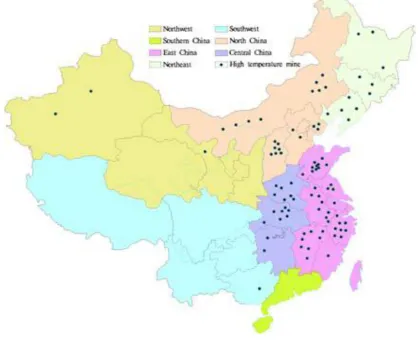
China is one of the world’s largest coal producers (Fig. 1). Rock burst or coalmine bump undermines the country’s mining sector [5–8]. While extensive rock burst research has been conducted in China, such knowledge is still inadequate for the formulation of a prediction and control method that aids in the protection of people and goods [9–13].
[image:3.595.88.507.260.600.2]Fig. 2. Location of the Linglong gold mine.
4.2. Accidents: No Small Matter
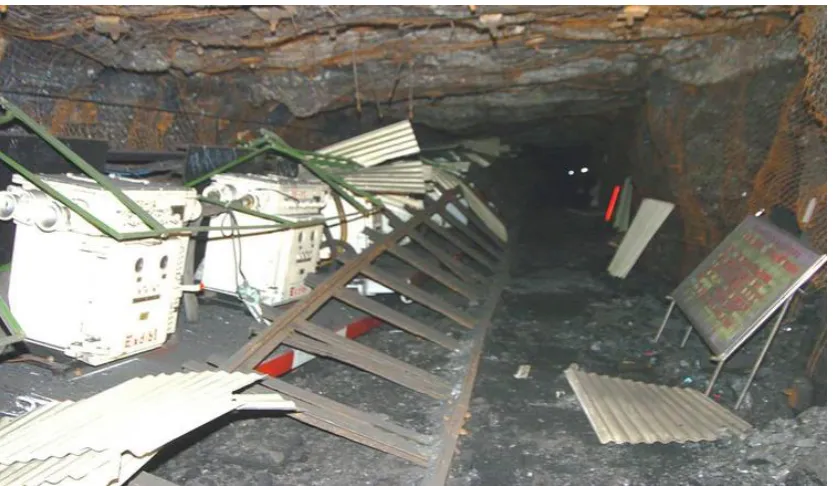
On September 6th, 2004, an accident occurred on the 2310 track during the preparation of injection concrete and grouting goaf-plugging measures. The incident resulted in 2 deaths and 6 injuries. 300 meters of roadway and 74 meters of the 35000 concentrated Belt Roads were completely damaged.
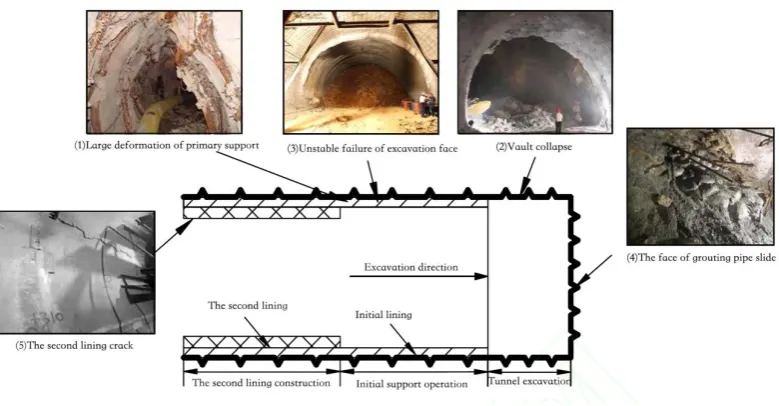
[image:4.595.89.509.78.282.2] [image:4.595.91.508.387.630.2]Fig. 4. Typical safety accidents.
4.3. Future Deep Mining
In the past 5 years, further exploration of deep-seated mines have found that more than 160 existing Chinese mine sites are potential sites for deep mining, with a total potential value of beyond ¥1,000 billion, with a large majority such mines to go into deep mining within 15 to 20 years. However, stress and temperature increases with increased mining depth. Metallogenic and rock burst prediction technology such as GIS and ventilation is required.
4.4. China and the Ivory Coast: A Comparison
China, being a large coal producer, is a beneficial and significant job creating industry for the Chinese people, unlike the Ivory Coast, where artisanal mining activity thrives due to the high rate of abject poverty and the low price of agricultural produce. In order to deal with poverty and better their lives, the people engage in artisanal mining in all parts of the country. Artisanal mining has been detrimental environmentally, socially and financially, while rock burst is a key issue in China’s advancing mining industry.
5.
Rock Burst and Contributing Factors
5.1. The Definition of Rock Burst
Rock burst is defined as a mining-induced seismic event that causes damage to openings in the rock. A rock burst will cause damage of varying severity. These bursts, occuring at mining depths of over 600 to 1000 meters, are due to a sudden and severe failure of rocks from a high stress concentration in deep underground excavations that occur with the instantaneous release of strain energy stored in the rocks.
5.2. Factors: The Case of Mining in China
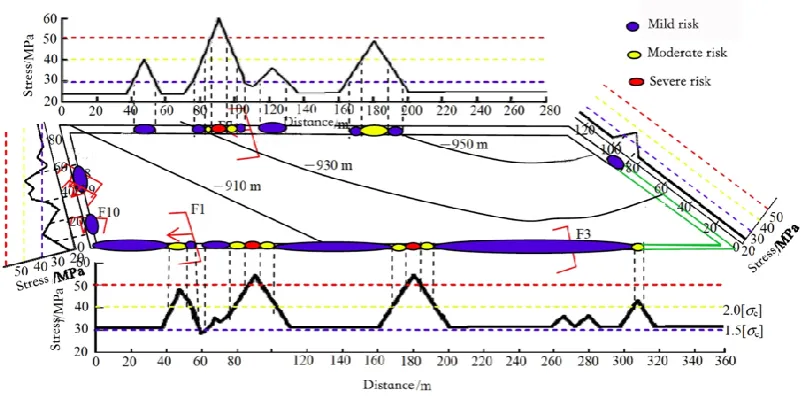
[image:5.595.110.500.86.289.2]Fig. 5. Rock burst danger zones around the working face.
5.3. Indirect Causes of Deep Mine Accidents
Generally, coal seam has a strong impact propensity; the average depth in an underground tunnel is 1027m. Accident and roadway layout in a conventional manner, contact with concentrated Lane roadway cross-cut to form a plurality of isolated deep mining depth and high stress coal, which led to the absence of mining disturbance conditions of "high stress creep and isolated local coal overall instability coupling shock "complex dynamic disaster. Currently, there is little understanding of this mechanism within the global mining industry.
5.4. New Complex Dynamic Disasters
Recently, the mining industry faces potential a new risk: coalmine bump. Bumps occur due to relatively thick overburden and extremely rigid strata occurring immediately above and below the mine coalbed. Additionally, the probability of bump occurrence is increased by certain mining practices that concentrate stresses during retreat mining in areas where geologic conditions are conducive to bumps.
6.
Mine Bump: Technical Appraisal Report
The mine is equipped with a program which covers the entire mine SOS microseismic monitoring system, a 24 seismometer is installed, 35001 Face installed a KJ550 stress monitoring system, set KJ551 microseismic monitoring system, equipped with 150-type drill rig 4, with cuttings method, electromagnetic radiation and the risk of impact on the mining face is detected; the impact of coal seam mining face danger in hazardous areas using large diameter drilling and other relief measures for getting rid of danger. Mostly, the accident area and scour protection measures and the implementation are related to the features. The roadway excavation before the accident area can develop a special scour protection measures during excavation in advance implementation of large diameter drilling relief, drilling depth of 18m, diameter 110mm; two to help implement a hole depth 22m, spaced not more than 3m, diameter of 110mm large diameter bored; bottomed coal roadway coal was carried out at the end of distress blasting.
7.
Post Rock Burst Findings
Generally, after the accident the basic characteristics are as follows:
[image:6.595.96.497.85.284.2]2) Absence of mining activities within the scope of 300m around the accident area, most recently Face focal distance 379m, has far exceeded the scope of the working face advance (based on the measured, ahead of the impact of a range of about 150m);
3) The roadway accident site will not be completely destroyed, the smaller casualties location roadway damage, and the rest have appeared after the impact of roadway accidents, and there is still walking space.
8.
Conclusion
In this paper, we apply research outcome in China for mining industry in Ivory Coast so we depicted in our study some interesting results about the several coming years in the mining industry.
The analysis of the advantage of Chinese research outcome compare to researches in other parts of the worlds, and how Chinese research outcome is more affection in mining industry of Ivory Coast and how is suitable for mining industry in Ivory Coast. We try to enumerate the similarity problems in mining industry of China with the mining industry of Ivory Coast.
Many reasons are behind mining hazard in China that is why we try to explain above question more in details, based on theoretical concept and practical application. And also to mention geological structure of region faced mining hazard in China because even if the geological not exactly similarity in China with Ivory Coast but leads to the same problem. It then emphasizes that dynamic hazard control is a complex technology system that involve many techniques: evaluation, control, prevention and treatment.
References
[1] G. Senfaute, M. Al Heib, J. P. Josien, and J. F. Noirel, “Detection and monitoring of high stress concentration zones induced by coal mining using numerical and microseismic methods,” in International Symposium on Rockburst and Seismicity in Mines, South African Institute of Mining and Metallurgy, 2001.
[2] H. B. Zhao and S. D. Yin, “Geomechanical parameters identification by particle swarm optimization and support vector machine,” Applied Mathematical Modelling, vol. 33, no. 10, pp. 3997–4012, 2009. [3] Y. Ren and G. C. Bai, “Determination of optimal SVM parameters by using GA/PSO,” Journal of
Computers, vol. 5, no. 8, pp. 1160–1168, 2010.
[4] J. A. Wang and H. D. Park, “Comprehensive prediction of rockburst based on analysis of strain energy in rocks,” Tunn Undergr Space Technol., vol. 16, pp. 49–57, 2001.
[5] J. P. Liu, X. T. Feng, Y. H. Li, and Y. Sheng, “Studies on temporal and spatial variation of micro-seismic activities in a deep metal mine,” International Journal of Rock Mechanics and Mining Sciences, vol. 60, pp. 171-179, 2013.
[6] T. Li and M. F. Cai, “A review of mining-induced seismicity in China,” Int. J. Rock Mech. Min. Sci., vol. 44, pp. 1149–1171, 2007.
[7] L. M. Dou, C. P. Lu, Z. L. Mu, and M. S. Gao, “Prevention and forecasting of rock burst hazards in coal mines,” Min. Sci. Technol., vol. 19, pp. 585–591, 2009.
[8] B. Yang, Y. Wang, and J. A. Liu, “PIV measurements of two phase velocity fields in aeolian sediment transport using fluorescent tracer particles,” Measurement, vol. 44, no. 4, pp. 708–716, 2011.
[9] V. Frid, “Electromagnetic radiation method water-infusion control in rockburst-prone strata,” Journal of Applied Geophysics, vol. 43, no. 1, 2000.
[10] Z. T. Wang, H. Q. Zhou, and Y. S. Xie, Mining Rock Mass Mechanics. Xuzhou, China: China University of Mining and Technology Press, 2008.
[11] S. H. Yan, Y. Ning, L. J. Kang, Y. W. Shi, Y. G. Wang, and Y. F. Li, “The mechanism of hydrobreakage to control hard roof and its test study,” J. China Coal Soc., vol. 25, pp. 32– 35, 2000. [12] W. C. Zhu, Z. H. Li, L. Zhu, and C. A. Tang, “Numerical simulation on rockburst of underground
opening triggered by dynamic disturbance,” Tunn Undergr. Space Technol., vol. 25, pp. 587–599, 2011.
[13] F. Qi, (2015, Aug. 05). Accidents in Two Coal Mines [Online]. Available: