International Journal of Innovative Technology and Exploring Engineering (IJITEE) ISSN: 2278-3075, Volume-8 Issue-10, August 2019
Abstract: The major goal of this paper is to explore the effective state estimation algorithm for continuous time dynamic system under the lossy environment without increasing the complexity of hardware realization. Though the existing methods of state estimation of continuous time system provides effective estimation with data loss, the real time hardware realization is difficult due to the complexity and multiple processing. Kalman Filter and Particle Filer are fundamental algorithms for state estimation of any linear and non-linear system respectively, but both have its limitation. The approach adopted here, detect the expected state value and covariance, existed by random input at each stage and filtered the noisy measurement and replace it with predicted modified value for the effective state estimation. To demonstrate the performance of the results, the continuous time dynamics of position of the Aerial Vehicle is used with proposed algorithm under the lossy measurements scenario and compared with standard Kalman filter and smoothed filter. The results show that the proposed method can effectively estimate the position of Aerial Vehicle compared to standard Kalman and smoothed filter under the non-reliable sensor measurements with less hardware realization complexity.
Index Terms: Kalman Filter; Particle Filter; state estimation; lossy network; state- measurement update; stochastic stability Multiple Model.
I.INTRODUCTION
The basic techniques involve for the estimation which provide foundation for the application like navigation, parameter tracking includes ML (maximum likelihood), MAP (maximum a posteriori estimation), LS (Least square error) and MMSE (minimum mean square error) where State Estimation problem refers to the inference of one or more parameter of the system with noise either by state or measurement model. Practically all the systems are driven by the system model dynamics with the influence of noise which need to be adjusted or predicted for the effective application. This system can be categorized by three which is continuous system, discrete systems and hybrid system. Hybrid system have both continuous and discrete dynamics. Hybrid system is
Revised Manuscript Received on August 05, 2019
Robinson P. Paul, Electronics & Communication, Gujarat Technological University, Ahmedabad, India.
Vishvjit K. Thakar, Information and communications technology, Sank alchand Patel University,Visnagar,India.
Hetal N. Patel, Electronics & Communication, Gujarat Technological University, Ahmedabad, India.
the special case where the continuous dynamic of the hybrid systems driven by the discrete dynamics.
The state estimation of system is useful in many applications in the field of biology [1] , Chemistry [2], communications, aeronautical engineering [3], stock prices [4] etc. In few field the solution is given through SWJ (Switching Without Jumps). The State estimation technique of hybrid system discussed in [5][6] is not useful for all the state estimation. The complexity of the state estimation of hybrid system is higher than the others. State estimation algorithm like adaptive multiple model iterated least squares) , adaptive multiple model unscented Kalman filer [7] , Interactive multiple model[8] and its different version like Interactive multiple model – Kalman Filter, Interactive multiple model – Extended Kalman Filter , Interactive multiple model -unscented Kalman filter, Interactive multiple model – Unscented Gauss-Helmert model [9] provide good state estimation at the cost of higher order mathematics calculation. As Majority of the dynamic system can be easily and effectively classified as the continuous time linear dynamics systems [10].
The state estimation of this type of systems with less mathematical computation by avoiding higher order calculation with efficient state estimation compare to the standard algorithm is desirable. This will help us to easily make it a hardware realizable.
To overcome this issue, we have proposed a novel and simple algorithm for continuous time linear dynamics system. The results show that under excited random inputs case our algorithm performs better compared to standard Kalman filter [11]. To check the results of our algorithm, we have taken case of unmanned aerial vehicle system dynamics as an example. The result of our algorithm is compared with the standard Kalman Filter, Average Smooth Filter algorithm which show that our algorithm gives good estimation accuracy that under excited random inputs with less computational complexity.
The rest of this paper is organized as follows: in Section II, system mathematical modelling is discussed. In Section III, we have discussed processing steps of our algorithm and its pseudocode. In Section IV,
we illustrate the
A Simple And Novel Algorithm For State
Estimation Of Continuous Time Linear
Stochastic Dynamic Systems Excited By
Random Inputs
Excited By Random Inputs
performance of our algorithm with simulation results and conclusions.
II. SYSTEMDESCRIPTIONS
The common continuous time linear dynamics system is described by the following equation,
( )
( ) ( )
( ). ( )
( ) ( )
x t
A t x t
B t u t
D t v t
...(1)Where , state vector represented by
x
,
input vector byu
,
process noise byv
with zero mean and white,
system matrix byA
,
input gain by B and noise gain byD
.
Above state equation can be re-written asx t
( )
A t x t
( ) ( )
D t v t
( ) ( )
without input.[12]The above equation is known as plant equation. The measurement equation for the continuous time dynamics system is described by
( )
( ) ( )
( )
z t
C t x t
w t
……..…...(2)Where,
w
is the measurement noise andC
ismeasurement matrix. For this system state is considered as Markov process and propagation of states’ mean and covariance with the known input and non-stationary white process noise with zero mean is given by
[ ( )]
( )
E v t
v t
and auto covariance function[[ ( )
( )][ (
( ]']
( ). (
)
E v t
v t
v
v
V t
t
.
The state expected value
x t
( )
is determine by the differential equation of the state known as propagation equation of the mean follows from differentiating expected value0
0 0
( )
( , ) ( )
t( , )[ ( ) ( )
( ) ( )]
t
x t
F t t x t
F t
B
u
D
v
d
Where ,
x t
( )
0 is the initial state and state transition matrixfrom
t
0to
t
is given byF t t
( , )
0.
Based on the differential equation
( )
( ) ( )
( ) ( )
( ) ( )
x t
A t x t
B t u t
D t v t
the expectedvalue of the state
x t
( )
E x t
[ ( )]
is decided.In this system description the lossy measurement update through covariance, the state estimation of the system cannot be done accurately. So we need to design an algorithm which detects the lossy measurement and discard of the effect of lossy measurement [13] for the effective state estimation without using any higher order calculation for the effective future hardware realization.
III. THEPROPOSEDMETHODFORTHESTATE ESTIMATION
In this section, we will discuss a novel and simple algorithm for the continuous time linear stochastic dynamic
system. Figure 1 shows the block diagram of the proposed algorithm which can be classified in three main categories. (i)
System evolution- which deals with system state dynamics where process and measurement equation decide the system
evolution. (ii) State Estimation- deals with calculation of
[image:2.595.317.550.76.220.2]expected value of state under the influence of random exited
Fig 1. Block diagram of Proposed algorithm
inputs with the help of covariance matrix and gain. with noise.
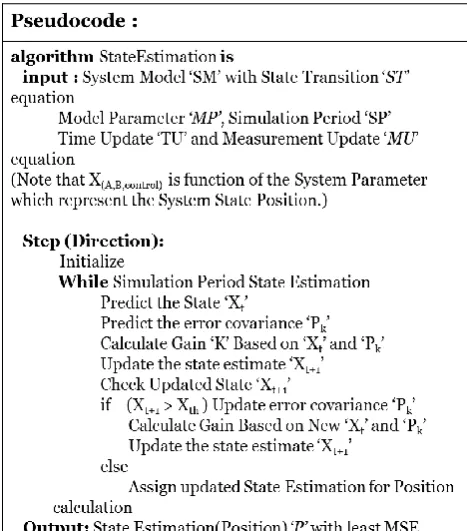
(iii) Loss detection with gain-covariance computation- in which, based on the available state and measurement update we remove the lossy measurement and update it with maximum likelihood for the effective state estimation calculation. The pseudocode of the proposed algorithm is given below in Figure 2.[12][14]
Fig 2. Proposed Algorithm Pseudocode Excited By Random Inputs
Above pseudocode can be used for evaluation of the sensitivity of the filter to an incorrect gain. In case of lossy measurement, the state update predicted the faulty state which leads to the noisy updated state covariance matrix. This noisy state covariance matrix degrades the performance next state prediction.[15] Our proposed algorithm detects the noisy state measurement and assign
[image:2.595.317.551.340.606.2]International Journal of Innovative Technology and Exploring Engineering (IJITEE) ISSN: 2278-3075, Volume-8 Issue-10, August 2019
the application specific threshold to avoid the recursive error expansion in the system due the noise.
IV. SIMULATIONRESULTS
In this section, to check the results of our proposed algorithm , the a novel and simple proposed algorithm is compared with standard Kalman Filter [16] and Average Smoothed Filter. We use the continuous time dynamics system [17] with state-dependent transitions to model the aerial vehicle to observe the performance of our algorithms. This efficient state estimation will help us to implement the effective estimation algorithm for multiple modes hybrid system under the noisy state measurement scenario. The continuous dynamics consider for the simulation [3][11] is given by
= a
…(3
)
Which is known as state prediction or process equation and
the measurement prediction is given by
C. ..(4)
Where ; is State vector with p = position,
v = velocity and .
Here , State Noise/Error =
; , = variance in
velocity & position = Measurement Noise
As shown in Fig. 2, the state estimation of system under
lossy or false measurement state update using Average
smooth filter or Kalman Filter both fails. Figure3 shows the
MSE (Mean square error) for the same scenario of Non-
smooth filter (NSF), Average smooth filter (ASF) and
[image:3.595.311.554.108.234.2]Kalman filter (KF).
Table I:Average Mean Square Error(MSE) with 50 Monte Carlo Simulation
% Lossy Measurement
Average MSE of Proposed Algorithm
Average MSE of Standard
Kalman
Average MSE of Smooth Filter
Algorithm
20 0.2434 0.2310 0.2206
25 0.3748 0.3250 0.3388
30 0.6006 0.6504 0.6563
35 1.2041 1.2556 1.2276
45 3.3578 3.5807 3.5917
55 8.6374 9.0264 8.8979
Table I shows the comparison of the Average Mean Square Error (MSE) values for 50 Monte Carlo simulation with 20 %
to 55% lossy measurements. In which our proposed algorithm performs better than standard Kalman and smooth filter.
Table II: Average Mean Square Error(MSE) with 500 Monte Carlo Simulation
% Lossy Measurement
Average MSE of Proposed Algorithm
Average MSE of Standard
Kalman
Average MSE of Smooth Filter
Algorithm
20 0.2206 0.2447 1.7124
25 0.3388 0.4630 2.2463
30 0.6563 0.9295 3.1626
35 1.2276 1.7679 4.7847
45 3.5917 4.9382 11.0579
55 8.8979 11.8160 23.8248
[image:3.595.47.296.303.470.2]
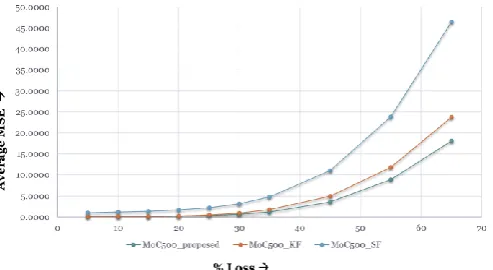
Table II shows the comparison of the Average Mean Square Error (MSE) values for 500 Monte Carlo simulation for more accurate results with 20 % to 55% lossy measurements, our proposed algorithm performs better compared to other two. Figure 3 & 4 shows Average Mean Square Error values with respect to different percentage lossy measurements. In both the figures it is evident that our proposed algorithm performs better.
[image:3.595.313.560.356.491.2]Fig 3. Average MSE (using MC-500) of State Estimation with Random Lossy Measurement
[image:3.595.320.569.546.682.2]Excited By Random Inputs Table III:Overall Percentage Improvement Of Mean
Square Error (MSE)
% Lossy Measurement
Average MSE of Proposed Algorithm
Average MSE of Standard Kalman
% Improvement of Avg MSE compared to Standard Kalman
20 0.2206 0.2447 10.9098 %
25 0.3388 0.4630 36.6533 %
30 0.6563 0.9295 41.6302 %
35 1.2276 1.7679 44.0051 %
[image:4.595.50.305.286.703.2]Table III represents the overall improvement in terms of percentage of MSE. This results shows when the lossy measurements increases for the state estimation, standard Kalman filter algorithm’s performance reduces compared to our proposed algorithm.
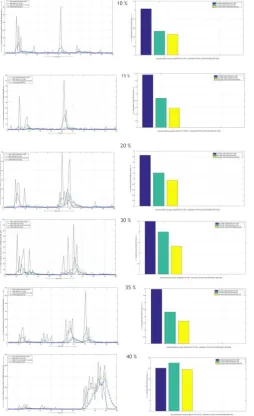
Fig 5. State Estimation Of Aerial Vehicle Using Proposed Algorithm
Fig. 4 and 5, demonstrate the performance of our proposed algorithm based on state estimation MSE and average MSE for entire simulation. For the effective visualization of the performance of our proposed algorithm Figure 4 & 5
represent the MSE in different lossy scenario where without increasing any computational complexity for the state estimation, State estimation error for our proposed algorithm is less than the other techniques.
V.CONCLUSION
The results show that, our proposed algorithm under lossy measurement performs better and gives 44% improvement compared to standard Kalman filter in terms of MSE for 35 % measurement loss. As a future work, this algorithm can be used for the hybrid system state estimation where multiple mode of CT systems is driven by Markov jumps. Also further work can be done to check the influence of measurement delay for the state estimation.
ACKNOWLEDGMENT
The authors would like to acknowledge the support of Gujarat Technological University and Dr. Mehul Shah (PhD- IITB) & Dr. Vinay Thumar (PhD- IITB), DPC Members for their valuable comments for this work.
REFERENCES
1. X. Wan, Z. Wang, M. Wu, and X. Liu, “State Estimation for Discrete Time-Delayed Genetic Regulatory Networks With Stochastic Noises Under the Round-Robin Protocols,” IEEE Trans. Nanobioscience, vol. 17, no. 2, pp. 145–154, Apr. 2018.
2. I. Abala, F. ezzahrae M’hamdi Alaoui, Y. Chhiti, F. Aguilar, E. Montero, and A. Sahibed-Dine, “Estimation PC-SAFT equation of state parameters of ethanol, 1-propanol, 1-butanol and 1-nonanol,” in 2017 International Renewable and Sustainable Energy Conference (IRSEC), 2017, pp. 1–6.
3. C. C. Mohammad Shaqura, “A Hybrid System Approach To Airspeed , Angle Of Attack And Sideslip Estimation In Unmanned Aerial Vehicles,” Int. Conf. Unmanned Aircr. Syst., pp. 723–732, 2015. 4. L. X. Wang, “Modeling Stock Price Dynamics with Fuzzy Opinion
Networks,” IEEE Trans. Fuzzy Syst., vol. 25, no. 2, pp. 277–301, 2017. 5. S. Di Cairano, W. P. M. H. Heemels, M. Lazar, and A. Bemporad, “Stabilizing Dynamic Controllers for Hybrid Systems: A Hybrid Control Lyapunov Function Approach,” Autom. Control. IEEE Trans., vol. 59, no. 10, pp. 2629–2643, 2014.
6. R. P. Paul and V. Thakar, “Stochastic Hybrid System-State Estimation methods -A Survey,” Int. Conf. “Research Innov. Sci. Eng. Technol., 2017.
7. R. Yang, Y. Bar-shalom, and G. W. Ng, “Altitude Estimation Using Multipath With a Two-Dimensional Radar Over Spherical Earth,” IEEE Trans. Aerosp. Electron. Syst., vol. 54, no. 2, pp. 770–782, 2018. 8. C. Zhang and Y. Jia, “Distributed estimation for stochastic hybrid
systems with event-triggered sensor schedule,” IET Control Theory Appl., vol. 11, no. 2, pp. 173–181, 2017.
9. C. Jauffret, “IMM-UGHF-NJ for Continuous Wave Bistatic Sonar Tracking with Propagation Delay,” no. July, 2017.
10. J.-J. Leth, J. G. Rasmussen, H. Schiler, and R. Wisniewski, “A Class of Stochastic Hybrid Systems with State-Dependent Switching Noise,” I E E E Conf. Decis. Control. Proc., pp. 4737–4744, 2013.
11. M. T. Andren and A. Cervin, “Event-based state estimation using an improved stochastic send-on-delta sampling scheme,” 2016 2nd Int. Conf. Event-Based Control. Commun. Signal Process. EBCCSP 2016 - Proc., 2016.
International Journal of Innovative Technology and Exploring Engineering (IJITEE) ISSN: 2278-3075, Volume-8 Issue-10, August 2019
13. S. Deshmukh, B. Natarajan, and A. Pahwa, “State Estimation Over a Lossy Network in Spatially Distributed Cyber-Physical Systems,” IEEE Trans. Signal Process., vol. 62, no. 15, pp. 3911–3923, 2014.
14. A. K. Fletcher, S. Rangan, and V. K. Goyal, “Estimation from lossy sensor data: jump linear modeling and Kalman filtering,” in Information Processing in Sensor Networks, 2004. IPSN 2004. Third International Symposium on, 2004, pp. 251–258.
15. H. Hsu, Probability, Random Variables and Random Processes, vol. 53, no. 9. 2013.
16. Q. Li, R. Li, K. Ji, and W. Dai, “Kalman Filter and Its Application,” in 2015 8th International Conference on Intelligent Networks and Intelligent Systems (ICINIS) ,pp.74-77, 2015.
17. C. Lei, C. Qian, W. Tian, and R. Jia, “State estimation in computer virus epidemic dynamical systems using hybrid extended Kalman filter,” in 2017 IEEE International Conference on Information and Automation (ICIA),pp.349-354, 2017.
AUTHORPROFILE
Robinson P Paul was born in Gujarat, India. He received B.E. & M.E. Degree in Electronics & communication Engineering from Sardar Patel University. He is pursuing PhD from Gujarat Technological university. He is presently working as an Assistant Professor in the Department of Electronics & communication, Birla Vishvakarma Mahavidyalaya, Gujarat, India. He has published numbers of research papers in National/International Conference and Journals. He is a active member of technical body like IEEE, ISTE ,ISA,IAENG. He has a total experience of 10 years in teaching and 3 years of research. His research interest includes Hybrid System Estimation & control , Adaptive Signal Processing, Multimodal Optimization.
Dr. Vishvjit Thakar has obtained his Ph.D from Indian Institute of Technology, Bombay. He is presently working as a professor and Head of department of Information & Technology, Knowledge Institute of Technology and Engineering, Gujarat. His research interest includes robust statistics, image processing, Estimation & control techniques and Biomedical Signal Processing. He has published more than 30 international journal and international conference papers. He has 22+ years of vast experience in teaching and industry.