Interventions for female drug-using offenders (Review)
Perry AE, Neilson M, Martyn-St James M, Glanville JM, Woodhouse R, Hewitt C
This is a reprint of a Cochrane review, prepared and maintained by The Cochrane Collaboration and published inThe Cochrane Library 2015, Issue 6
http://www.thecochranelibrary.com
T A B L E O F C O N T E N T S
1 HEADER . . . .
1
ABSTRACT . . . .
2
PLAIN LANGUAGE SUMMARY . . . .
3
SUMMARY OF FINDINGS FOR THE MAIN COMPARISON . . . .
5
BACKGROUND . . . .
7
OBJECTIVES . . . .
7 METHODS . . . .
Figure 1. . . 9
Figure 2. . . 10
Figure 3. . . 11
13 RESULTS . . . .
Figure 4. . . 14
Figure 5. . . 15
17
ADDITIONAL SUMMARY OF FINDINGS . . . .
20
DISCUSSION . . . .
22
AUTHORS’ CONCLUSIONS . . . .
23
ACKNOWLEDGEMENTS . . . .
23 REFERENCES . . . .
35
CHARACTERISTICS OF STUDIES . . . .
62 DATA AND ANALYSES . . . .
Analysis 1.1. Comparison 1 Any psychosocial intervention versus treatment as usual: criminal activity, Outcome 1 Self reported drug use dichotmous. . . 62 Analysis 1.2. Comparison 1 Any psychosocial intervention versus treatment as usual: criminal activity, Outcome 2 Arrests. 63 Analysis 1.3. Comparison 1 Any psychosocial intervention versus treatment as usual: criminal activity, Outcome 3
Recidivism (reincarceration, arrested and charged). . . 64 Analysis 2.1. Comparison 2 Pharmacological interventions versus placebo: drug use, Outcome 1 Self reported drug use. 65 65 ADDITIONAL TABLES . . . .
67
APPENDICES . . . .
96 WHAT’S NEW . . . .
97 HISTORY . . . .
97
CONTRIBUTIONS OF AUTHORS . . . .
98 DECLARATIONS OF INTEREST . . . .
98 SOURCES OF SUPPORT . . . .
98
DIFFERENCES BETWEEN PROTOCOL AND REVIEW . . . .
98
INDEX TERMS . . . .
[Intervention Review]
Interventions for female drug-using offenders
Amanda E Perry1, Matthew Neilson1, Marrissa Martyn-St James2, Julie M Glanville3, Rebecca Woodhouse1, Catherine Hewitt1
1Department of Health Sciences, University of York, York, UK.2School of Health and Related Research (ScHARR), University of Sheffield, Sheffield, UK.3York Health Economics Consortium, York, UK
Contact address: Amanda E Perry, Department of Health Sciences, University of York, Heslington, York, YO105DD, UK. [email protected].
Editorial group:Cochrane Drugs and Alcohol Group.
Publication status and date:New search for studies and content updated (conclusions changed), published in Issue 6, 2015.
Review content assessed as up-to-date: 31 May 2014.
Citation: Perry AE, Neilson M, Martyn-St James M, Glanville JM, Woodhouse R, Hewitt C. Interventions for female drug-using offenders.Cochrane Database of Systematic Reviews2015, Issue 6. Art. No.: CD010910. DOI: 10.1002/14651858.CD010910.pub2.
Copyright © 2015 The Cochrane Collaboration. Published by John Wiley & Sons, Ltd.
A B S T R A C T
Background
This is an updated version of a Cochrane review first published in Issue 3, 2006 (Perry 2006). The review represents one in a family of four reviews focusing on the effectiveness of interventions in reducing drug use and criminal activity for offenders. This specific review considers interventions for female drug-using offenders.
Objectives
To assess the effectiveness of interventions for female drug-using offenders in reducing criminal activity, or drug use, or both.
Search methods
We searched 14 electronic bibliographic databases up to May 2014 and five additional Website resources (between 2004 and November 2011). We contacted experts in the field for further information.
Selection criteria
We included randomised controlled trials (RCTs) designed to reduce, eliminate or prevent relapse of drug use or criminal activity in female drug-using offenders. We also reported data on the cost and cost-effectiveness of interventions.
Data collection and analysis
We used standard methodological procedures expected by The Cochrane Collaboration.
Main results
Nine trials with 1792 participants met the inclusion criteria. Trial quality and risks of bias varied across each study. We rated the majority of studies as being at ’unclear’ risk of bias due to a lack of descriptive information. We divided the studies into different categories for the purpose of meta-analyses: for any psychosocial treatments in comparison to treatment as usual we found low quality evidence that there were no significant differences in arrest rates, (two studies; 489 participants; risk ratio (RR) 0.82, 95% confidence interval (CI) 0.45 to 1.52) or drug use (one study; 77 participants; RR 0.65, 95% CI 0.20 to 2.12), but we found moderate quality evidence that there was a significant reduction in reincarceration, (three studies; 630 participants; RR 0.46, 95% CI 0.34 to 0.64). Pharmacological intervention using buprenorphine in comparison to a placebo did not significantly reduce self reported drug use (one study; 36 participants; RR 0.58, 95% CI 0.25 to 1.35). No cost or cost-effectiveness evidence was reported in the studies.
Authors’ conclusions
Three of the nine trials show a positive trend towards the use of any psychosocial treatment in comparison to treatment as usual showing an overall significant reduction in subsequent reincarceration, but not arrest rates or drug use. Pharmacological interventions in comparison to a placebo did not significantly reduce drug use and did not measure criminal activity. Four different treatment comparisons showed varying results and were not combined due to differences in the intervention and comparison groups. The studies overall showed a high degree of heterogeneity for types of comparisons and outcome measures assessed, which limited the possibility to pool the data. Descriptions of treatment modalities are required to identify the important elements for treatment success in drug-using female offenders. More trials are required to increase the precision of confidence with which we can draw conclusions about the effectiveness of treatments for female drug-using offenders.
P L A I N L A N G U A G E S U M M A R Y
Interventions for female drug-using offenders Background
Drug-using offenders naturally represent a socially excluded group where drug use is more prevalent than in the rest of the population. A growing number of female offenders are being incarcerated for drug-related crimes. For this reason, it is important to investigate what we know about what works for female offenders.
Study characteristics
The review authors searched scientific databases and Internet resources to identify randomised controlled trials (where participants are allocated at random to one of two or more treatment groups) of interventions to reduce, eliminate, or prevent relapse of drug use or criminal activity of female drug-using offenders. We included females of any age or ethnicity.
Key results
We identified nine trials of female drug-using offenders. Three studies included evaluations of therapeutic communities in comparison to: i) an alternative sentencing option; ii) a substance misuse educational cognitive skills programme; and iii) gender-responsive substance abuse treatment for women in prison in comparison to standard therapeutic communities. Two studies evaluated community-based management; one compared to standard probation and the other compared to standard parole supervision. Two studies evaluated a cognitive behavioural programme versus treatment as usual and combined cognitive behavioural treatment and acceptance and commitment therapy versus waiting list control. One study of a pharmacological intervention in comparison to a placebo or treatment as usual. One study compared interpersonal psychotherapy to an attention matched control psychoeducational control.
Overall, the findings suggest that any psychosocial treatment in comparison to treatment as usual had an impact on reducing subsequent reincarceration, but not rearrest or drug misuse. We found individual treatment interventions had differing effects. We identified too few studies to evaluate whether the treatment setting (for example, court or community) had an impact on the success of such programmes. Promising results highlight the use of psychosocial treatments in the reduction of reincarceration. No information is provided on the cost and cost-effectiveness of these studies. In conclusion, high quality research is required to evaluate the effectiveness of different treatment options for female drug-using offenders. Further information on the processes involved in the engagement of women mandated to substance abuse programmes, together with evaluations of cost-effectiveness research, will enable policy makers to make informed choices about commissioning the use of adapted programmes specifically targeted at female offenders.
Quality of the evidence
This review was limited by the lack of information reported in this group of trials and the quality of evidence was moderate to low. The evidence is current to May 2014.
S U M M A R Y O F F I N D I N G S F O R T H E M A I N C O M P A R I S O N [Explanation]
Any psychosocial intervention compared to treatment as usual: Drug use for female drug-using offenders Patient or population:Patients with female drug-using offenders
Settings:Community/parole
Intervention:Any psychosocial intervention Comparison:Treatment as usual: Drug use
Outcomes Illustrative comparative risks* (95% CI) Relative effect (95% CI)
No. of Participants (studies)
Quality of the evidence (GRADE)
Comments
Assumed risk Corresponding risk Treatment as usual:
Drug use
Any psychosocial inter-vention
Self reported drug use dichotomous
Follow-up: mean 9 months
Study population RR 0.65
(0.2 to 2.12)
77 (1 study)
⊕⊕
low1,2
158 per 1000 103 per 1000 (32 to 335)
Moderate
158 per 1000 103 per 1000 (32 to 335)
*The basis for theassumed risk(e.g. the median control group risk across studies) is provided in footnotes. Thecorresponding risk(and its 95% confidence interval) is based on the assumed risk in the comparison group and therelative effectof the intervention (and its 95% CI).
CI:Confidence interval;RR:Risk ratio; GRADE Working Group grades of evidence
High quality:Further research is very unlikely to change our confidence in the estimate of effect.
Moderate quality:Further research is likely to have an important impact on our confidence in the estimate of effect and may change the estimate. Low quality:Further research is very likely to have an important impact on our confidence in the estimate of effect and is likely to change the estimate. Very low quality:We are very uncertain about the estimate.
17 of 9 items judged at unclear risk of bias.
B A C K G R O U N D
This review forms part of a family of four reviews providing a close examination of what works in reducing drug use and crim-inal activity in drug-using offenders. Overall, the four reviews contain over 100 trials, generating a number of publications and numerous comparisons (Perry 2013;Perry 2014b;Perry 2014a). The four reviews represent a specific interest in pharmacological interventions, non-pharmacological interventions, female offend-ers and offendoffend-ers with concurrent mental illness. All four reviews stem from an updated Cochrane systematic reviewPerry 2006. In this set of four reviews we consider not only the effectiveness of interventions based on two key outcomes, but also analyse the im-pact of setting and intervention type. We present here the revised methodology for this updated review, focusing on the impact of interventions for female drug-using offenders.
Description of the condition
Within the criminal justice system the number of women incar-cerated for drug offences has significantly increased over the last decade, with rates of incarcerated women rising faster than for men (Bureau of Justice Statistics 2005). The latest UK Government figures show that around 4.7% of the prison population in the UK are women (Ministry of Justice 2012). In the United States of America (USA), this figure is around 7% (Guerino 2011), with around a quarter of all arrests being attributed to crimes commit-ted by women (FBI 2011).
As with male offenders, drug use is an important issue for women. A 2006 study of female prisoners found that 75.3% had used drugs in the six months prior to prison entry, with 58% reporting daily drug use in this period (Plugge 2006). Furthermore, the pattern of drug use in female offenders has been recognised to differ from that of the male population. Female offenders have been observed to use cannabis less on average than men, but are more prone to using so-called ’harder’ drugs such as heroin and amphetamines (Forsythe 2009). Other gender differences have been noted in variables that might have a bearing on drug use and drug treatment, such as mental illness, raising children, employment prospects, and patterns of offending (Forsythe 2009;Gelsthorpe 2007). Early victimisation and severity of addiction are stronger predic-tors of criminal activity and subsequent mental and physical health problems for women than for men (Bloom 2004;Messina 2007). Furthermore, women entering substance abuse treatment in prison are at a substantial disadvantage compared with their male coun-terparts (Messina 2007). Female offenders represent an under-re-searched, vulnerable population with specific needs distinct from their male counterparts (Corston 2007). Treatment for drug-in-volved offenders is scarce, with estimates that fewer than 10% re-ceive substance abuse treatment services (Taxman 2007).
Description of the intervention
There are many different treatments available for substance misuse (e.g. detoxification, and therapeutic communities in the criminal justice system. This review includes any intervention that was de-signed to reduce, eliminate or prevent relapse to drug use or crim-inal activity, or both. This resulted in the inclusion of a wide range of treatment interventions focusing on: therapeutic community and gender-responsive treatment programmes, community-based management, cognitive skills and cognitive behavioural therapy, pharmacological intervention (using buprenorphine), and inter-personal psychotherapy. The evidence supporting the effectiveness of these interventions differs and is dependent upon the quality of the experimental evaluations employed to assess whether they are successful in reducing drug use or criminal activity, or both. Previous meta-analyses and systematic reviews of therapeutic com-munity interventions, specifically with aftercare, have shown mod-est effects in the reduction of recidivism and drug use (Mitchell 2012;Pearson 1999). gender-responsive treatment programmes are designed to provide a secure environment for women offenders to safely discuss histories of trauma, abuse, and addiction without fear of judgment (Grella 2008).
Community-based management evolved traditionally to address the needs of prisoner re-entry programmes covering employ-ment, education, health, housing, and family support via assess-ment and connecting clients with the appropriate services (Austin 1994). Case management in the USA has been applied in Treat-ment Accountability for Safer Communities (TASC) programmes (Marlowe 2003 a) and has shown initial effectiveness, but without systematic evidence in support of the process. Contingency man-agement, alongside voucher incentives have shown some modest effects. To our knowledge, there has been no specific systematic review evaluating the effectiveness of voucher incentive schemes with drug-using offenders.
Cognitive-behavioural approaches, including self monitoring, goal setting, self control training, interpersonal skills training, relapse prevention, group work, lifestyle modification, and acceptance commitment therapy, have shown signs of success with offenders generally (Lipsey 2007), but the evidence excluded evaluations focused specifically on drug-using offenders.
There have been a number of pharmacological reviews focus-ing on the non-correctional population. Naltrexone mainte-nance treatment for opioid dependence (Amato 2005;Lobmaier 2008;Minozzi 2011) and the efficacy of methadone maintenance (Faggiano 2003; Marsch 1998; Mattick 2009) and buprenor-phine maintenance (Mattick 2009) have been examined.Minozzi 2013systematically reviewed the evidence on pharmacological maintenance for non-correctional pregnant women and identi-fied three small trials from which they were unable to draw firm conclusions about the effectiveness of treatment. Other non-cor-rectional reviews have investigated pharmacological interventions, but not specifically for female offenders. These have included eval-uations of naltrexone maintenance treatment for opioid
dence (Lobmaier 2008), the efficacy of methadone maintenance including the management of opioid withdrawal (Amato 2013; Faggiano 2003;Marsch 1998,Mattick 2009), and buprenorphine maintenance and impact on dosage (Fareed 2012;Mattick 2009 ). There is also recent guidance from the National Institute for Health and Clinical Excellence (NICE) on the evidence-based use of naltrexone, methadone, and buprenorphine for the manage-ment of opioid dependence (NICE 2007a;NICE 2007b). How-ever, none of these reviews focuses specifically on treatment out-comes for female offenders.
Internationally, methadone maintenance has been the primary choice for chronic opioid dependence in prisons and jails, in-cluding those in the Netherlands, Australia, Spain and Canada, and it is being increasingly implemented in the criminal jus-tice setting (Moller 2007; Stallwitz 2007). The USA has not generally endorsed the use of methadone treatment, and only 12% of correctional settings offer this option for incarcerated in-mates (Fiscella 2004). Reasons for this lack of expansion suggest that methadone amongst the public and criminal justice system providers has been considered a substitute for another addiction. In contrast, buprenorphine appears not to carry the same social stigma associated with methadone treatment and has been used in France, Austria and Puerto Rico (Catania 2003;Garcia 2007; Reynaud-Maurupt 2005). Naltrexone treatment has shown some promising findings, but associated problems surrounding high at-trition and low medication compliance in the community and high mortality rates (Gibson 2007;Minozzi 2011) pose concerns. Trials conducted in the criminal justice setting are still lacking, and continuity of care is considered crucial in the treatment of drug-involved offenders who move between the prison and the community.
Interpersonal psychotherapy has been used in the community with proven effectiveness with non-criminal justice settings. Such stud-ies have not found interpersonal psychotherapy to be superior to other treatments, but few of these studies include female offenders (Johnson 2012).
How the intervention might work
Therapeutic community programmes have been used in the USA since the 1960s and, combined with work release programmes, they attempt to rehabilitate offenders via a supportive environment over a relatively long period which encompasses the transition be-tween the prison and working within the community (Prendergast 2011). The ethos of therapeutic community interventions is to focus on treatment of the whole self, such that residents are instru-mental in running the therapeutic community (Mitchell 2012). Gender-responsive treatment is a theoretically-based programme which is used to develop trauma-informed services. Based upon the relational-cultural theory (Miller 1976), the programme is used to describe women’s psychological development in relationships and their connection to others.
Case management is a problematic term which describes a range of diverse practices and supervision models spanning a number of different services, including probation. The process is generally used to co-ordinate and integrate all aspects of community su-pervision, from the initial offender needs assessment, through to programme delivery and the intended completion of the order or sentencing requirement (Partridge 2004). Cognitive behavioural approaches using programmes based on psychological theory have been employed to try and help people address their offending be-haviour, and generally have good support from the literature in their reduction of recidivism (Andrews 1990;Lipsey 1998;Lipsey 2007).
Interpersonal psychotherapy addresses personal stress and life changes. The emphasis is to engage with clients to develop their network of social and peer support. A lack of support has been shown to associate with dropping out of addiction treatment and failure to maintain abstinence (Dobkin 2002;Holahan 2004). Without exception, these programmes and community-based in-terventions have been used repeatedly with male drug-using of-fenders, but to our knowledge little evidence has been collated about how these programmes and other available interventions have been adapted or used with female drug-using offenders. Given that very little is known about what interventions exist for fe-male drug-using offenders, the focus of this review is to include all known interventions that have been applied, or specifically adapted for use with female drug-using offenders. Our only re-quirement of these programmes is that they are aimed at reducing drug use or criminal activity, or both.
Why it is important to do this review
Policy interests have also placed an increasing demand on knowing more about the cost and cost-effectiveness of such interventions. Some evidence can be drawn from systematic reviews completed in the area. Despite the growing knowledge of evidence about the effectiveness of treatment programmes for offenders, in gen-eral there have been no systematic reviews of treatment outcomes aimed specifically at drug- using female offenders.
Several reviews have called for additional research on gender dif-ferences in response to substance use treatment (Plant 2008) and practice standards (Substance Abuse and Mental Health Services Administration,SAMHSA 1999), but the outcomes in literature supporting gender-sensitive treatments in corrections are sparse (Dolan 2003b;Veysey 2008). Several authors have expressed con-cerns that substance abuse programmes for women prisoners may not target the unique needs of incarcerated women or address their experiences of abuse and victimisation (Mosher 2006). The evidence suggests that service provision in the USA is low, with fewer than 1% of correctional agencies offering pharmacotherapy for their community correctional populations (Taxman 2007). For these reasons, this updated review provides a systematic exam-ination of trial evidence relating to the effectiveness of
tions for female drug-using offenders, given the increasing num-ber of female offenders who have been incarcerated for substance misuse problems and drug-related crimes, the lack of knowledge about how to treat female drug-using offenders, and no previous systematic review of this question. In order to address this broad topic, we considered a series of questions to assess the effective-ness of different interventions, in relation to criminal activity, drug misuse, treatment setting and type of treatment. The review also reported descriptively on the costs and cost-effectiveness of such treatment programmes.
O B J E C T I V E S
To assess the effectiveness of interventions for female drug-using offenders in reducing criminal activity, or drug use, or both.
M E T H O D S
Criteria for considering studies for this review
Types of studies
Randomised controlled trials (RCTs).
Types of participants
We included female drug-using offenders in the review, regard-less of age or ethnicity. Drug misuse included individuals using occasional drugs, or who are dependent, or are known to abuse drugs. Offenders were defined as individuals who were subject to the criminal justice system. Studies containing male participants were included in the review only when the trial results reported the outcomes separately by gender. In these instances we included only the results for the female participants in the review.
Types of interventions
Included interventions were designed, wholly or in part, to elim-inate or prevent relapse to drug-use or criminal activity, or both, among participants. We defined relapse as individuals who may have returned to an incarcerated setting, or subsequently been ar-rested, or relapsed into drug misuse. We included a range of dif-ferent types of interventions in the review.
Experimental interventions included in the review
1. Any pharmacological intervention (e.g. buprenorphine, methadone).
2. Any psychosocial intervention (e.g. therapeutic community, case management, cognitive behavioural therapy, interpersonal psychotherapy, motivational interviewing).
Control Interventions included in the review
1. No treatment. 2. Minimal treatment. 3. Waiting list. 4. Treatment as usual. 5. Other treatment.
Types of outcome measures
Primary outcomes
For the purpose of our review we categorised our primary out-comes into those relating to dichotomous and continuous drug use or criminal activity, or both. Where papers reported a number of different follow-up periods, we reported the longest time pe-riod, as we felt that such measures provide the most conservative estimate of effectiveness. For specific meta-analyses of subgroup-ings, we reviewed all reported follow-up periods to select the most appropriate time period for combining comparable studies. 1) Drug use measures were reported as:
• self reported drug use (unspecified drug use, specific drug use not including alcohol, Addiction Severity Index drug composite scores); and
• biological drug use (measured by drug testing, using either urine or hair analysis).
2) Criminal activity was measured by:
• self-report or official report of criminal activity, including arrest for any offence, drug offences, reincarceration,
convictions, charges and recidivism.
Secondary outcomes
Our secondary outcome reported on costs or cost-effectiveness information. We used a descriptive narrative for these findings. We undertook a full critical appraisal based on theDrummond 1997checklist for those studies presenting sufficient information.
Search methods for identification of studies
Electronic searches
The updated searches identified records from 2004 to May 2014.
• CENTRAL (issue 5, 2014).
• MEDLINE (1966 to May 2014).
• EMBASE (1980 to May 2014).
• PsycINFO (1978 to April 2014).
• Pascal (1973 to November 2004).a
• SciSearch (Science Citation Index) (1974 to April 2014).
• Social SciSearch (Social Science Citation Index) (1972 to April 2014).
• ASSIA (1987 to April 2014).
• Wilson Applied Science and Technology Abstracts (1983 to October 2004).a
• Inside Conferences (1993 to November 2004).a
• Dissertation Abstracts (1961 to October 2004).a
• NTIS (1964 to April 2014).
• Sociological Abstracts (1963 to April 2014).
• HMIC (to April 2014).
• PAIS (1972 to April 2014).
• SIGLE (1980 to June 2004).b
• Criminal Justice Abstracts (1968 to April 2014).
• LILACS (2004 to April 2014).
• National Research Register (March 2004).c
• Current Controlled Trials (December 2009).
• Drugscope (February 2004) unable to access.
• SPECTR (March 2004).d
aUnable to access beyond 2004 search.
bDatabase not updated since original 2004 search.
cNo longer exists.
dNow Campbell Collaboration - searched online.
To update the review, we restricted the search strategy to stud-ies that were published since the end date of the previous search (March 2013). We did not search a number of original databases for this update (indicated by the key at the end of the database list), including Pascal, ASSIA, Wilson Applied Science and Tech-nology Abstracts, Inside Conferences, and Dissertation Abstracts. These databases are available only via the fee-charging DIALOG online host service, and we did not have the resources to undertake these searches. The National Research Register no longer exists, and SIGLE has not been updated since 2005. Drugscope is avail-able only to subscribing members. Drugscope staff undertook the original searches.
We developed search strategies for each database to exploit the search engine most effectively and to make use of any controlled vocabulary. We included methodological search filters designed to identify RCTs. Whenever possible, we used filters retrieved from the InterTASC Information Specialists’ Sub-Group (ISSG) Search Filter Resource site (www.york.ac.uk/inst/crd/intertasc/). If filters were unavailable from this site, we substituted search terms based on existing versions.
In addition to the electronic databases, we searched a range of rele-vant Internet sites: Home Office, National Institute of Drug Abuse (NIDA), and European Association of Libraries and Information
Services on Alcohol and Other Drugs (ELISAD). We searched directory Websites, including OMNI (www.omni.ac.uk) up until November 2011. We did not place any language restrictions on identification and inclusion of studies in the review.
Details of the updated search strategies and results, and of the Internet sites searched are listed inAppendix 1; Appendix 2; Appendix 3;Appendix 4;Appendix 5;Appendix 6;Appendix 7; Appendix 8;Appendix 9;Appendix 10;Appendix 11;Appendix 12;Appendix 13.
Searching other resources
Reference Checking
We scrutinised the reference lists of all retrieved articles for fur-ther references, and also undertook searches of the catalogues of relevant organisations and research founders.
Personal communication
We contacted experts for their knowledge of other studies, pub-lished or unpubpub-lished, relevant to the review.
Data collection and analysis
Selection of studies
Two authors independently inspected the search hits by reading the titles and abstracts, and obtained each potentially relevant study located in the search as a full-text article in order to independently assess them for inclusion. In the case of discordance, a third inde-pendent author arbitrated. One author undertook translation of articles not written in the English language.
We divided the screening process into two key phases. Phase one used the initial eight key questions reported in the original review, as follows.
Prescreening criteria: Phase one
1. Is the document an empirical study? If not, exclude the document.
2. Does the study evaluate an intervention, a component of which is designed to reduce, eliminate, or prevent relapse with drug-using offenders?
3. Are the participants referred by the criminal justice system at baseline?
4. Does the study report pre- and post-programme measures of drug use?
5. Does the study report pre- and post-programme measures of criminal behaviour?
6. Is the study a RCT?
7. Do the outcome measures refer to the same length of follow-up for two groups?
After we identified relevant papers from phase one screening, we sought to identify those papers reporting on outcomes for female offenders in phase two. We obtained this information primarily from the participant description in the reporting of the results section.
Prescreening: Phase two
1. Is the study population composed wholly of female participants? (If not, then refer to question 2 below).
2. Are the results of the study reported separately by gender? (If yes, then include the document).
Drug-using interventions were implied if the programme targeted reduced drug use in a group of individuals. Offenders were indi-viduals either residing in special hospitals, prisons, the community (i.e. under the care of the probation service), diverted from court, or placed on arrest referral schemes for treatment. We included studies in the review where the entire sample were not drug-us-ing, but reported pre- and post-measures. The study setting could change throughout the process of the study, e.g. offenders could begin in prison but progress through a work release project into a community setting. Finally, studies need not report both drug and criminal activity outcomes. If either of these were reported we included the study in the review.
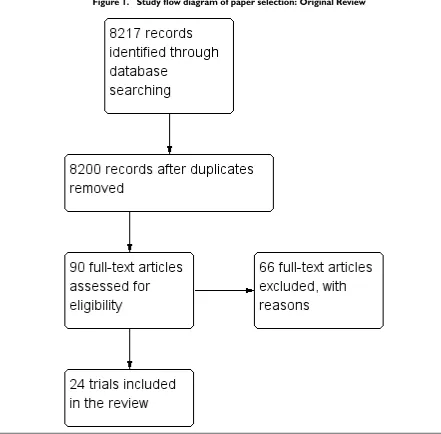
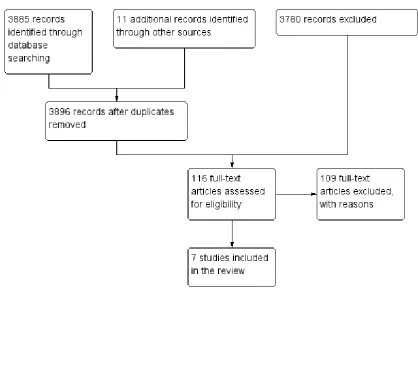
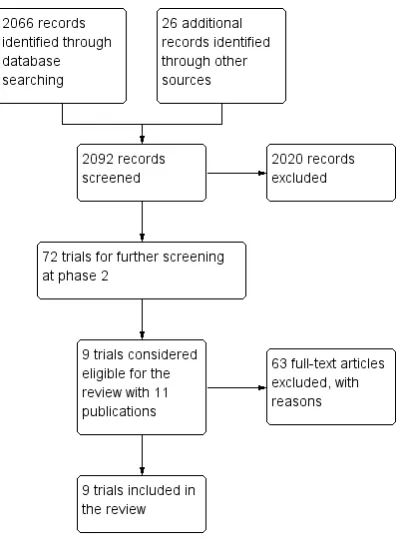
SeeFigure 1;Figure 2;Figure 3for the flow charts of the process
Figure 1. Study flow diagram of paper selection: Original Review
[image:11.595.82.524.260.694.2]Figure 2. Study flow diagram of paper selection: First Update
[image:12.595.95.514.218.605.2]Figure 3. Study flow diagram and paper selection: Second update
[image:13.595.109.512.94.655.2]Data extraction and management
We used data extraction forms to standardise the reporting of data from all studies obtained as potentially relevant. Two authors independently extracted data and subsequently checked them for agreement.
Assessment of risk of bias in included studies
Four authors (AJP, JMG, MMSJ, MJN) independently assessed risks of bias of all included studies using the ’Risk of bias’ assess-ment criteria recommended in theCochrane Handbook for System-atic Reviews of Interventions(Higgins 2011).
The recommended approach for assessing risk of bias in studies included in a Cochrane review is a two-part process, addressing seven specific domains, namely sequence generation and alloca-tion concealment (selecalloca-tion bias), blinding of participants and providers (performance bias), blinding of outcome assessors (de-tection bias), incomplete outcome data (attrition bias), selective outcome reporting (reporting bias), and other potential sources of bias. The first part of the process involves describing what was reported to have happened in the study. The second part involves assigning a judgement relating to the risk of bias for that domain, in terms of low, high or unclear risk of bias. To make these judge-ments we used the criteria indicated by theCochrane Handbook for Systematic Reviews of Interventionsadapted to the addiction field. SeeAppendix 14for details.
We addressed the domains of sequence generation and allocation concealment (avoidance of selection bias) by a single entry for each study.
We considered blinding of participants, personnel and outcome assessors (avoidance of performance bias and detection bias) sep-arately for objective outcomes (e.g. drop out, use of substance abuse measured by urine analysis, participants relapsed at the end of follow-up, participants engaged in further treatments), and for subjective outcomes (e.g. duration and severity of signs and symp-toms of withdrawal, participants’ self reported use of substance, side effects, social functioning as integration at school or at work, family relationships).
We considered incomplete outcome data (avoidance of attrition bias) for all outcomes except for drop out from the treatment, which is very often the primary outcome measure in trials of ad-diction.
For studies identified in the most recent search, we attempted to contact study authors to establish whether a study protocol was available.
Measures of treatment effect
We used mean differences (MDs) for outcomes measured on the same scale and standardised mean differences (SMDs) for out-comes measured on different scales. Higher scores for continuous measures are representative of greater harm. We present dichoto-mous outcomes as risk ratios (RRs), with 95% confidence interval (CIs).
Unit of analysis issues
To avoid double-counting of outcome measures (e.g. arrest and parole violation) and follow-up time periods (e.g. 12, 18 months) we checked all trials to ensure that multiple studies reporting the same evaluation did not contribute towards multiple estimates of programme effectiveness. We followed Cochrane guidance and where appropriate we combined intervention and control groups to create a single pair-wise comparison. Where this was not ap-propriate, we selected one treatment arm and excluded the others.
Dealing with missing data
Where we found missing data in the original publication, we at-tempted to contact the study authors via email to obtain the miss-ing information.
Assessment of heterogeneity
We assessed heterogeneity using the I² statistic and Chi² statistic (Higgins 2011).
Data synthesis
We used Review Manager software (RevMan 2014) to perform a series of meta-analyses for continuous and dichotomous outcome measures. We used a random-effects model to account for the fact that participants did not come from a single underlying popula-tion. The narrative tables include a presentation of the study de-tails (e.g. author, year of publication, and country of study), study methods (e.g. random assignment), participants (e.g. number in sample, age, gender, ethnicity, mental health status), interventions (e.g. description, duration, intensity and setting), outcomes (e.g. description, follow-up period and reporting mechanism), resource and cost information and resource savings (e.g. number of staff, intervention delivery, estimated costs and estimated savings) and notes (e.g. methodological and quality assessment information). For outcomes of criminal activity, there were enough data to allow us to divide into rearrest and reincarceration.
Subgroup analysis and investigation of heterogeneity
We planned to conduct a separate subgroup analysis of the studies by different types of treatments and different settings.
Sensitivity analysis
When appropriate, we had planned to conduct sensitivity analyses to assess the impact of studies at high risk of bias compared with those at low or unclear risk. However, because of the overall high risk of bias of the included studies, we were unable to perform this analysis.
R E S U L T S
Description of studies
Results of the search
Original review
The original searches spanned from database inception to October 2004. This identified a total of 8217 records, and after duplication, 8200. We acquired a total of 90 full-text papers for assessment and excluded 66 papers, bringing 24 trials to the review (seeFigure 1 ).
First update
The updated searches spanned from October 2004 until March 2013. This identified a total of 3896 records after duplication. We acquired a total of 116 full-text papers for assessment and excluded 109 papers, bringing seven new trials to the review (seeFigure 2).
Second update
The updated searches spanned from March 2013 until April 2014. This identified a total of 2092 records after duplication. We ac-quired a total of 72 full-text papers for assessment and excluded 63 papers, bringing nine trials (represented by 11 publications) (seeFigure 3). SeeCharacteristics of included studiestable for full details.
Included studies
• The nine trials (from 11 publications) included 1792 participants and were published between 1996 and 2014.
Treatment regimes and settings
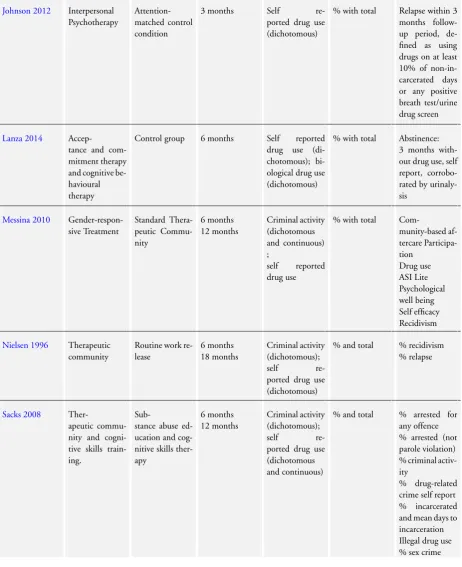
• Three studies focused on the impact of therapeutic community programmes in comparison to: i) an alternative sentencing option; ii) a substance misuse educational cognitive skills programme; and iii) gender-responsive substance abuse treatment for women in prison in comparison to standard therapeutic community programmes (Messina 2010;Nielsen 1996;Sacks 2008).
• Two evaluations of community-based management (Guydish 2011;Johnson 2011) compared to standard probation and standard parole supervision, respectively.
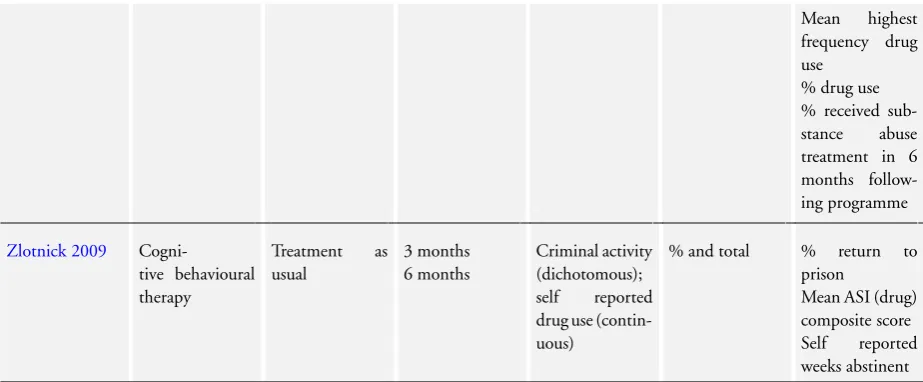
• Two studies evaluated: i) a cognitive behavioural programme versus treatment as usual (Zlotnick 2009); and ii) combined cognitive behavioural treatment and acceptance and commitment therapy versus waiting list control (Lanza 2014).
• One study was of a pharmacological intervention in comparison to a placebo or treatment as usual (Cropsey 2011).
• One study compared interpersonal psychotherapy to an attention matched psychoeducational control (Johnson 2012).
The studies were categorised by setting, providing three commu-nity-based studies (Cropsey 2011;Guydish 2011;Johnson 2011) and six secure-based studies (Johnson 2012;Lanza 2014;Messina 2010;Nielsen 1996;Sacks 2008;Zlotnick 2009).
We identified no studies in a court setting.
Countries in which studies were conducted
Eight studies were set in the USA and one study was conducted in Spain (Lanza 2014).
Duration of trials
The trial duration varied between three months (Cropsey 2011; Johnson 2012;Zlotnick 2009) and 18 months (Nielsen 1996). The majority of studies reported outcomes up to six and twelve months (Lanza 2014; Guydish 2011; Johnson 2011; Messina 2010;Sacks 2008).
Participants
• The nine studies included adult drug-using women offenders, with the exception of one study which investigated the impact of a therapeutic community with adults and young offenders (Nielsen 1996).
• Two studies also included male offenders (Johnson 2011; Nielsen 1996), but results for the women were reported separately, enabling us to extract data specifically for this review.
• The average age of the study participants ranged from a mean of 31.8 years to 35.6 years.
• In all but one study, the participants were of white ethnic origin (Nielsen 1996).
Excluded studies
We excluded a total of 172 studies. SeeCharacteristics of excluded studiesfor further details. Reasons for exclusion were: lack of crim-inal justice involvement in referral to the intervention; not report-ing relevant drug or crime outcome measures, or both, in both the pre- and post-intervention periods; and allocation of partici-pants to study groups that were not strictly randomised or did not contain original trial data. We excluded the majority of studies because the study population did not include female participants, or they were not offenders, or the studies did not report the data for the female participants separately. We excluded one study
be-cause follow-up periods were not equivalent across study groups (Di Nitto 2002) and one (Berman 2004) because the intervention (acupuncture) did not measure our specified outcomes of drug use or criminal activity. One study reported the protocol of a trial only (Baldus 2011), while another only contained conference proceed-ings (Kinlock 2009a).
Risk of bias in included studies
SeeFigure 4andFigure 5.
Figure 4. Risk of bias graph: review authors’ judgements about each risk of bias item presented as percentages across all included studies.
[image:16.595.97.520.261.438.2]Figure 5. Risk of bias summary: review authors’ judgements about each risk of bias item for each included study.
Allocation
All nine studies were described as randomised. A number of differ-ent methods were used to perform the random assignmdiffer-ent. These included use of a random number table (Cropsey 2011;Lanza 2014), urn randomisation (Johnson 2011), the use of odd and even identification numbers (Guydish 2011;Messina 2010), and wave randomisation (Johnson 2012). The description of the randomi-sation methodology remained unclear in . For allocation conceal-ment, two studies noted use of sealed envelopes, (Cropsey 2011; Guydish 2011), and one study noted concealment from personnel within the study (Johnson 2012). In the remaining six studies, no information was reported about allocation concealment and we therefore rated them as ’unclear’ (Johnson 2011;Lanza 2014; Messina 2010;Nielsen 1996;Sacks 2008;Zlotnick 2009). All studies exceptNielsen 1996reported on similar drug use and criminal behaviour at baseline.
Blinding
We assessed blinding across four dimensions, considering perfor-mance and detection bias across subjective and objective measures (seeAppendix 14). Reporting of blinding methodology across all nine studies was not well reported and we judged many studies as having unclear risk of bias. A handful of studies noted some ele-ments of blinding across one or more of the four domains. For ex-ample,Cropsey 2011considered blinding using a placebo option but reported concerns about potential contamination which were difficult to judge.Zlotnick 2009reported that the outcome asses-sors were aware of the individual assignment of clients, leading us to a judgement of high risk for detection bias across all possible outcome measures. We rated one study at low risk of blinding across the two measures of outcome blinding, noting that a re-search assistant was blind at the follow-up assessments after prison release (Sacks 2008).
Incomplete outcome data
Loss to follow-up was reported in five of the nine studies (Cropsey 2011;Guydish 2011;Johnson 2011;Johnson 2012;Lanza 2014). Two studies reported adequately on loss to follow-up (Sacks 2008; Zlotnick 2009). Two studies reported an intention-to-treat anal-ysis, using the data as participants had been randomised (Messina 2010;Sacks 2008).
Selective reporting
We rated three studies as being at unclear risk of reporting bias (Cropsey 2011;Johnson 2011;Nielsen 1996), six studies as being at low risk of selective reporting, and one study as being at high risk of bias (Johnson 2012).
Other potential sources of bias
Two studies had published a study protocol (Johnson 2011; Nielsen 1996). Two studies were at unclear risk of other biases (Cropsey 2011;Messina 2010). We rated four studies at low risk of other biases (Guydish 2011;Johnson 2011;Lanza 2014;Sacks 2008). We rated the remaining two studies at high risk of bias as (i) there was a potential for contamination between treatment and control participants (Zlotnick 2009), and (ii) measurement of relapse was limited, as nearly a third of the sample remained in residential treatment at the end of the study (Johnson 2012).
Effects of interventions
See: Summary of findings for the main comparison Any psychosocial intervention compared to treatment as usual: Drug use for female drug-using offenders; Summary of findings 2 Any psychosocial intervention compared to treatment as usual for female drug-using offenders
We included a number of comparisons in a series of meta-analy-ses (seeTable 1) and a ’Summary of findings’ table for the main comparison (Summary of findings 2). We grouped the studies by intervention (including any type of psychosocial intervention in comparison to treatment as usual, and any pharmacological inter-vention in comparison to a placebo) and outcome type (criminal activity and drug use). Finally, we considered whether individual treatment type had an impact on our outcome measures.
1. Any psychosocial intervention versus treatment as usual
1.1 Drug Use
SeeSummary of findings for the main comparison
One study (Johnson 2011), did not show a reduction in self re-ported drug use; 77 participants; RR 0.65, 95% CI 0.20 to 2.12; low quality of evidence, see Analysis 2.1.
1.2 Arrests
SeeSummary of findings 2
Two studies (Guydish 2011;Nielsen 1996) did not show a reduc-tion in rearrest; 489 participants, RR 0.82, (95% CI 0.45 to 1.52); low quality of evidence SeeAnalysis 1.2.
1.3 Recidivism
SeeSummary of findings 2
Three studies (Johnson 2011; Nielsen 1996; Zlotnick 2009) showed a reduction in reincarceration; 630 participants; RR 0.46,
95% CI 0.34 to 0.64; moderate quality of evidence, seeAnalysis 1.3.
2.Pharmacological treatment versus placebo
2.1 Drug use
One study (Cropsey 2011) did not show a reduction in self re-ported drug use; 36 participants; RR 0.58, 95% CI 0.25 to 1.35; seeAnalysis 2.1.
3. Psychosocial Interventions
3.1 Interpersonal therapy versus a psychoeducational attention matched control
Johnson 2012compared interpersonal psychotherapy in compar-ison to a psychoeducational attention matched control for women suffering from major depression. The findings showed that inter-personal psychotherapy participants had significantly reduced lev-els of depression and substance misuse over the attention matched control.
3.2 Cognitive behavioural therapy in comparison to an acceptance committment therapy versus a control
Lanza 2014compared an evaluation of cognitive behavioural ther-apy in comparison to acceptance committment therther-apy and a con-trol group. The study results found higher levels of abstinence in the acceptance commitment therapy (43.8%) when compared to the control (18.2%).
3.3 Gender-responsive therapeutic community programme versus a standard therapeutic community regime
Messina 2010 compared a gender-responsive therapeutic com-munity programme to those in a standard therapeutic commu-nity regime. The evaluation showed that gender-responsive treat-ment had a greater impact on reducing both subsequent drug
use and reincarceration, with gender-responsive treatment partic-ipants voluntarily remaining in aftercare treatment for longer pe-riods and being less likely than those in standard therapeutic com-munity care to be reincarcerated within 12 months of parole.
3.4 Therapeutic community intervention in comparison to a cognitive behavioural therapy
Sacks 2008compared women assigned to the therapeutic commu-nity intervention or standard treatment (referred to in the system as the Intensive Outpatient Programme (IOP)), or cognitive be-havioural therapy. At six months the study found that both con-ditions improved significantly for variables of mental health, sub-stance use, criminal behaviour, and HIV risk.).
Treatment setting
Too few studies were included in the meta-analyses to make a subgroup analysis for type of setting meaningful.
Cost and cost-effectiveness
None of the nine studies included any cost information which en-abled a cost-effectiveness evaluation of the interventions. Some de-scriptive information was provided by one study (Messina 2010). The study refers to the implications of the gender-responsive treat-ment programme and speculatively suggests that it may be more costly to implement and deliver in comparison to a therapeutic community environment. However, the authors of the study argue that although costly, reducing recidivism by delivering appropri-ate services provides a large benefit to further expenditures in the criminal justice system, and potentially the child welfare system. The remaining eight studies do not include cost information. Evi-dence from other research suggests that substance abuse treatments in the community are cost-effective, producing a benefit-cost ratio of 1.74 to 5.74. These findings obviously depend upon the type of programme (Belenko 2005), and do not examine specifically the costs associated with the delivery and outcomes of programmes for female offenders.
A D D I T I O N A L S U M M A R Y O F F I N D I N G S [Explanation]
Any psychosocial intervention compared to treatment as usual for female drug-using offenders Patient or population:Female drug-using offenders
Settings:Community/parole
Intervention:Any psychosocial intervention Comparison:Treatment as usual
Outcomes Illustrative comparative risks* (95% CI) Relative effect (95% CI)
No. of Participants (studies)
Quality of the evidence (GRADE)
Comments
Assumed risk Corresponding risk Treatment as usual Any psychosocial
inter-vention Arrests
Self report/ official records
Follow-up: 12-18 months
Study population RR 0.82
(0.45 to 1.52)
489 (2 studies)
⊕⊕
low1,2
67 per 100 55 per 100
(30 to 100)
Moderate
61 per 100 50 per 100
(27 to 92)
Re-incarceration (plus arrested and charged data)
Self reported
Follow-up: 6-9 months
Study population RR 0.46
(0.34 to 0.64)
630 (3 studies)
⊕⊕⊕
moderate3
35 per 100 16 per 100
(12 to 23)
Moderate
35 per 100 16 per 100
(12 to 23)
*The basis for theassumed risk(e.g. the median control group risk across studies) is provided in footnotes. Thecorresponding risk(and its 95% confidence interval) is based on the assumed risk in the comparison group and therelative effectof the intervention (and its 95% CI).
CI:Confidence interval;RR:Risk ratio; GRADE Working Group grades of evidence
High quality:Further research is very unlikely to change our confidence in the estimate of effect.
Moderate quality:Further research is likely to have an important impact on our confidence in the estimate of effect and may change the estimate. Low quality:Further research is very likely to have an important impact on our confidence in the estimate of effect and is likely to change the estimate. Very low quality:We are very uncertain about the estimate.
1The majority of risk of bias outcomes were marked as unclear in both studies. These included blinding and selective reporting. 2P <0.05, and I2= 93% suggesting significant levels of heterogeneity across the studies.
3The majority of risk of bias outcomes in the three studies were marked as unclear. One study marked three items as high risk of bias,
including blinding and other bias.
D I S C U S S I O N
Summary of main results
This systematic review provides evidence from nine trials. The nine studies were based in the community (three studies) and a secure setting (seven studies). We identified no studies which evaluated interventions for female offenders in court settings (e.g. pretrial diversion schemes or mental health courts). For this reason we do not know whether such interventions work better in one setting than another. The studies overall, showed a high degree of statisti-cal variation requiring a degree of caution in the interpretation of the magnitude of effect and direction of benefit for treatment out-comes. Four different types of interventions were classified across the nine studies: (1) therapeutic community and gender-respon-sive treatment programmes; (2) case management and cognitive skills; (3) pharmacological treatments; and (4) interpersonal psy-chotherapy. Below follows a more detailed description of the study interventions.
Three trials and four publications reported on the effectiveness of therapeutic communities. First we refer to the two studies which used the therapeutic community as the intervention group. In these studies the Continual Recovery through Education and Skills Training (CREST) work release programme was compared to par-ticipants in the Delaware conventional work release programme. The evaluation showed that it is possible to successfully combine the elements of therapeutic community treatment with the goals of work release (Nielsen 1996). More specifically, for participants at-tending CREST, increased length of time spent in the programme was associated with lower relapse and recidivism rates, and those that graduated from the programme fared better than non-gradu-ates.
The specifically-adapted gender responsive therapeutic commu-nity programme for women offenders was evaluated by Sacks and colleagues. This study compared women assigned to the therapeu-tic community or standard treatment (referred to in the system as the Intensive Outpatient Programme), or cognitive behavioural therapy. This consisted of a cognitive behavioural recovery and re-lapse prevention curriculum (Sacks 2008). At six months the study found that both conditions improved significantly on variables of mental health, substance use, criminal behaviour and HIV risk. They note that further exploration of each model for different of-fender groups is required to permit a more precise utility of each model. The study authors conclude that these preliminary find-ings suggest the importance of providing gender-specific sensitive and comprehensive approaches within the correctional system to respond to the complex substance abuse needs of female offend-ers (Sacks 2008). The more recent follow-up study investigated outcomes at 6 months and 12 months. The outcomes followed a similar pattern with both groups of women benefiting from treat-ment. The therapeutic community programme was found to be more beneficial than cognitive behavioural therapy at improving
reincarceration rates and lengthening the amount of time spent in the community before subsequent reincarceration (Sacks 2012). The final study in this group of therapeutic community eval-uations compared a gender-responsive treatment programme to those in a standard therapeutic community programme. The eval-uation showed that gender-responsive treatment had a greater im-pact on reducing both subsequent drug use and reincarceration, with gender-responsive treatment participants voluntarily remain-ing in aftercare treatment for longer periods and beremain-ing less likely than those in standard therapeutic community care to be reincar-cerated within 12 months of parole. One of the main differences between gender-responsive treatment and therapeutic community programmes was the recognition of trauma. The authors argue that trauma seemed to impact on a range of other outcomes and was an important aspect of recovery which needed to be addressed. The possible reason for this benefit may be due to the overall en-hanced treatment satisfaction of participants compared with those in the standard treatment group. This finding is supported by other qualitative research which showed that women attending the gender-responsive treatment programme were extremely invested and satisfied with treatment outcomes, and felt supported by other group members, which may have increased treatment adherence and recovery (Calhoun 2009;Messina 2010). Additionally, those women who stayed in treatment voluntarily remained in aftercare for a longer period of time. A number of implementation barriers were presented in the study, including the need for ongoing staff training, technical assistance and monitoring of adherence to the study protocol.
Evaluations of case management and standard parole showed dis-appointing results. TheGuydish 2011 probation case manage-ment study found no differential effect. Women in both groups were equally likely to be arrested during the one-year follow-up period. The study authors note that although the results indicated no advantage for probation case management over standard pro-bation, this finding is similar to other research showing mixed ef-fects. In particular Treatment Accountability for Safer Commu-nities interventions incorporating case management and trials of case management in drug abuse treatment have shown similar re-sults (Sorenson 2003). The authors note that one key limitation of the probation case management was the low-level face-to-face contact. Although probation case management is designed to be more engaging than standard probation, only 54% of the pro-bation case management participants reported face-to-face con-tact with their manager in the six months after programme entry. The implications suggest that case management based on reduced caseloads, specialised probation officer training and efforts to in-crease contact between probation officer and probationer may not be effective.
Similarly, use of collaborative behavioural management techniques in comparison to standard parole did not significantly reduce rein-carceration (21% of the collaborative behavioural management participants versus 29% of the control participants) in the
month follow-up (Johnson 2011). The study did show a reduc-tion in monthly primary drug use. This is consistent with past findings which have indicated that women who engage in prison substance use treatment programmes have lower drug use rates than men in the months after release from prison (Pelissier 2003). Other researchers have highlighted this gender effect, suggesting that factors predicting aftercare treatment completion, post-treat-ment drug use and recidivism were slightly different for women than for men, suggesting the possibility of gender-specific path-ways to successful community re-entry (Pelissier 2003). This find-ing is important because it may support the idea that optimal tran-sitional treatments may differ for men and women, however more randomised trials of transitional interventions for drug-involved offenders are required (Taxman 2002). The authors suggest that any gender differences displayed between men and women should be revisited to assess what important lessons can be applied for the successful integration of theory- and gender-responsive treatment. Some successful elements of treatment seemed to include a recog-nition of success, an emphasis on consistency and fairness from within the programme, and a focus on overall life functioning and support (Johnson 2011).
The study evaluating acceptance committment therapy in com-parison to traditional cognitive behavioural therapy and a control group found higher levels of abstinence in the acceptance com-mitment therapy group (43.8%) when compared to the control (18.2%). These findings are similar to other studies that have used acceptance commitment therapy, albeit in non-incarcerated pop-ulations (Hayes 2004). The authors note the success of acceptance commitment therapy to the nature of the ’co-joint’ work between the therapist and client. The aim of which is to increase the flex-ibility and structure of the therapy, allowing the client to have greater autonomy over making decisions. In contrast, they argue that cognitive behavioural therapy is more systematically directed by the therapist, leaving little scope for responsive change (Lanza 2014).
The final study evaluated in this group of analyses compared the use of a cognitive skills and cognitive behavioural therapy, referred to as the Seeking Safety Programme. The study compared seek-ing safety to the standard prison-based substance abuse treatment, and found no significant differences between conditions on any measure in the primary analysis (Zlotnick 2009). This finding is contrary to other research conducted using the Seeking Safety Pro-gramme with non-correctional clients in the community (Najavits 2006). The authors note that future research should focus specifi-cally on whether dosage has an impact on the successful outcome of seeking safety, with participants randomly assigned to different lengths of treatment. Further difficulties in the evaluation of the study led to concerns about adherence to the programme once the women were released into the community. A series of 12 booster sessions were offered, but on average women only attended three sessions. The challenge of programme adherence is common across the criminal justice system, especially with those programmes
con-ducted in the community. Given this context, the authors sug-gest that perhaps longer treatment during prison and increased frequency of treatment following release may be helpful. A major question for future research relates to the development of models for dealing with simultaneous problems and concurrent mental health issues (Zlotnick 2009).
Pharmacological interventions using buprenorphine for opioid-dependent women with a HIV risk found that use of buprenor-phine in prison and continued into the community was beneficial in preventing or delaying relapse to opioid use (Cropsey 2011). The findings of this study add to the growing body of evidence (which primarily includes men) suggesting that buprenorphine is comparable with both methadone and methadone maintenance in other studies (Kinlock 2008;Lobmaier 2010). The findings were not sustained post-treatment, with most women relapsing to active opioid use at the three-month follow-up point. Support for this conclusion using the meta-analysis data suggests no long-term significant effect. The study did not measure criminal activity, so we do not know whether such interventions are likely to reduce subsequent criminal activity in the future.
Interpersonal psychotherapy was evaluated using a pilot study with women suffering from major depression and substance use disor-der (Johnson 2012). This study is primarily a feasibility study to assess the applicability of using interpersonal psychotherapy in a prison environment. Despite being small, it is one of the largest trials including women with co-occurring substance misuse and mental health problems. The findings showed that interpersonal psychotherapy participants had significantly reduced levels of de-pression and substance misuse over the attention matched con-trol. The study authors note that the intensity of treatment de-livered, once released into the community, is key to maintaining good outcomes. However, they go on to state that women often experience delays in treatment and service provision on release and they suggest that alternative service provision such as phone treat-ment might be helpful in providing a more intensive post-release treatment, and may form a useful contact in times of crisis.
Overall completeness and applicability of evidence
The paucity of evidence within the review is covered in three key areas.
General applicability
The applicability of this evidence is hindered in general by a lack of trials covering a range of different treatment options for female offenders with drug misuse problems. All but one trial was con-ducted in the USA and therefore they have limited external valid-ity to other criminal justice systems outside of the USA. The cur-rent evidence suggests that therapeutic community programmes
and the gender-responsive treatment programmes may have some effect in reducing reincarceration rates, but we do not know how such treatments facilitate the rehabilitation of female offenders. Additionally, we can say nothing about whether such treatments are effective in reducing drug use and subsequent criminal be-haviour in court.
Adaptation of programmes for female offenders
Most of the studies described the programmes under evaluation as ’adapted’ or ’amended’ programmes tailored to the needs of women, but few studies described how the programmes had been adapted or what considerations had been taken into account. It is therefore difficult to draw conclusions about the successful ele-ments of treatment programmes for female offenders.
Cost information
Cost information within the studies was sparse. This lack of infor-mation allowed for little comparison of cost-effectiveness between different types of drug treatment programmes. Additional time spent in programmes also raises questions about reincarceration and days until first incarceration, generating important cost-avoid-ance implications which require further examination. Regular re-porting of effect sizes would aid calculations for power analysis and provides estimates of the magnitude of treatment effect needed for cost-benefit and cost-effectiveness analysis. Specific cost informa-tion for female offenders would also need to consider, for example, child welfare systems and costs to the wider family network.
Quality of the evidence
We rated the majority of studies as being at ’unclear’ risk of bias with poor reporting of information by study authors making it difficult for the authors of this review to assess the extent of poten-tial bias within the studies. The main limiting factor was the lack of reporting evidence which prevented the reviewers from making a clear judgement of bias. Since the imprecision of reporting low-ers the quality of evidence, we judged the evidence to be of low quality which means that further research is very likely to have an important impact on our confidence in the estimate of effect and is likely to change the estimate. Additional concerns with the research included attrition bias, the series of pilot trials, and the limited external generalisability associated with such studies and contamination effects.
A number of studies posed a threat of attrition bias, with over 50% rated at high risk of attrition. Five of the nine studies were classified as pilot studies, using sample sizes of 55 or less. TheCropsey 2011 study identified a sample of 36 women, randomly allocating 27 (15 to the intervention and 12 to the placebo group). They note that although the potency of buprenorphine for control of opioid
use is clearly demonstrated, a larger sample size may be needed to detect significant differences between groups on other variables of interest. The study was limited to three months of treatment, and future studies should explore the provision of buprenorphine for longer periods of time, to prolong opioid abstinence and to prevent associated criminal activity.
TheZlotnick 2009study used a slightly larger sample of 55 women with post-traumatic stress disorder in an incarcerated setting, com-paring cognitive behavioural therapy plus treatment as usual to treatment as usual alone. TheMessina 2010study called for larger sample sizes and bigger experimental studies. Similarily, theLanza 2014study assigned only 50 participants with complex needs, they note that future research should include larger samples. The Johnson 2012study assigned 19 participants to each arm of the trial and also had difficulties in measuring relapse rates, as 26% of the sample remained in residential treatment for the entire follow-up period.
Other potential biases were presented in theZlotnick 2009study, which noted potential contamination problems between the treat-ment and control conditions across the prison setting. Offend-ers from different wings or locations within the prison frequently mixed or moved locations. Finally, they noted that the facilitators delivered both the treatment intervention and treatment as usual, and that an immediate post-assessment was not completed. The authors argue this could have had an unknown effect on the im-mediate impact of the intervention.
Overall, we judged quality of evidence as moderate to low for the main comparison, ’any psychosocial intervention versus treatment as usual’.
Potential biases in the review process
Besides the limitations already discussed, there are also two limita-tions in the search methodology of the review. Specifically, the orig-inal review included an additional five fee-paying databases and one search using DrugScope. In this current update, resources did not allow such extensive searching. Whilst the electronic database searches have been updated to May 2014, the Website searching has only been updated to November 2011. As a result, some lit-erature may have been missed from this updated version.
A U T H O R S ’ C O N C L U S I O N S
Implications for practice
Three of the nine trials show a positive trend towards the use of any psychosocial treatment in comparison to treatment as usual, showing an overall significant reduction in subsequent reincarcer-ation, but not arrest or drug use. Pharmacological interventions in comparison to a placebo did not significantly reduce drug use