International Journal of Innovative Technology and Exploring Engineering (IJITEE) ISSN: 2278-3075, Volume-8 Issue-8S2, June 2019
Abstract: This study investigates the damage according to the cover material of multi latch cover for car. This study compares results when various materials are used at the continuous load and vibration due to damage of latch cover. In this study, the research models were made by using 3D modeling to find out the damage of multi latch for car according to the material. This study was used with ANSYS, the program using finite element method. A pin contacting a chassis was fixed and the latch was displaced as much as 1mm by force. This study examined the damage occurring in latch by applying the prescribed analysis conditions. This study examined the damage of car seat multi latch according to the material. In this study, the maximum equivalent stresses of GFRP, PE, PP and ABS were 854.27MPa, 903.74MPa, 938.76MPa and 1049.2MPa respectively. It was found that the maximum strains of PP, PE, ABS and GFRP were 0.54948mm/mm, 0.56996mm/mm, 0.61495mm/mm and 1.909mm/mm respectively. In case of the ordinary plastic, an object with high rigidity shows less elongation. GFRP, reinforced plastic stacked with glass fiber has high rigidity as it has brittleness but shows high elongation in damage caused by forced displacement. This study suggests that it is desirable to use PE material when using the plastic cover in a place where forced displacement occurs. This study secured the design factors of multi latch according to the materials and found the structural safety of plastics according to the material used in the place where the ordinary load or forced displacement occurs.
Index Terms: Car seat, Multi latch, Cover material, Damage, Load, Displacement
I. INTRODUCTION
As highly efficient cars have been manufactured in recent years, lots of car seats have been developed. A number of technologies have been developed to reduce the fatigue of passenger and make them feel comfortable. A typical example of above technologies is the side bolster to be fixed
Revised Manuscript Received on May 22, 2019.
Jae-Won Kim, Department of Mechanical Engineering, Graduate School, Kongju National University, 1223-24, Cheonan Daero, Seobuk-gu, Cheonan-si Chungnam, 31080, Korea
Chan-Ki Cho, R&D, Daechang Seat Co. LTD., 26-8, Oedongnonggongdanji-gil, Oedong-eup, Gyeongju-si, Gyeongbuk, 38214, Korea
Jin-Oh Kim, R&D, Daechang Seat Co. LTD., 26-8, Oedongnonggongdanji-gil, Oedong-eup, Gyeongju-si, Gyeongbuk, 38214, Korea
*Jae-Ung Cho, Division of Mechanical & Automotive Engineering, Kongju National University, 1223-24, Cheonan Daero, Seobuk-gu, Cheonan-si, Chungnam, 31080, Korea
Corresponding author: [email protected]
on the side of seat to help a driver keep stable. A seat with a side bolster keeps a driver from being slipped under lateral acceleration, which helps to reduce accident at the corner. Most devices affiliated with seat developed as the side bolster aim to reduce driver’s fatigue or improve ride quality. A latch used in this study was developed to be used in a back seat of small RV and hatch back. The latch was developed to induce such a function as a model with reclining gear on the back seat like SUV or van. A latch was developed initially as the device to fold a back seat to increase trunk capacity but later it has movement similar to a seat containing recliner with the functions of folding and reclining [1]-[3].
This study examined the damage of latch cover attached to a seat among multi latch for car according to latch cover. A latch and a fixation pin have less deformation and stress as they are made with structural steel but latch cover is inserted to control the resonance sound caused by vibration between a latch and a fixation pin. Plastic is used to control the resonance sound and it tends to be damaged due to a continuous load and vibration. It is advisable to conduct analysis by using various materials and to accumulate data on the damage according to the materials so that they can be used as design factors [4]-[6] .
II. RESEARCH METHOD AND MODELS
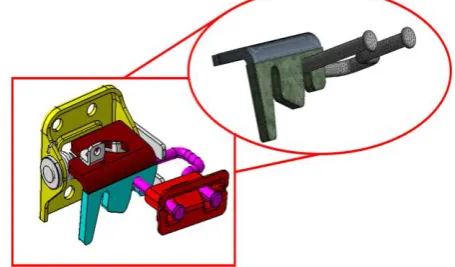
[image:1.595.314.542.579.712.2]This study designed 3D research model to investigate the damage of multi latch according to cover material by using ANSYS, analysis program.
Fig. 1 Research model that idealization was conducted
C
omparative Study on Damage According to
Cover Materials of Car Seat Multi Latch using
Analytic Technique
Fig. 2 Shape with mesh at research model
Fig. 1 represents a research model that idealization was conducted to reduce the time necessary to analyze and increase convergence. In this study, only a latch, a latch cover and a pin contacting a latch were used in analysis and thus other shapes were removed. Fig. 2 shows a research model with mesh. Thick mesh was applied to a latch cover in order to closely detect stress occurring in a latch cover. A structural steel was designated for a latch and a pin as materials used in research model. Glass Fiber, ABS, PP, PE and PA6.6 were designated for a latch cover. In this study, the above materials were selected to find out damage according to latch cover material [7]-[10].
III. BOUNDARY CONDITIONS
In order to verify whether the weight of passengers delivers to a latch and a pin due to damage to a latch cover made with plastic, the analysis conditions in this study were designated as follows
Fig. 3 Analysis conditions of research model using forced displacement
As shown in Fig. 3, the fixed support was designated in a part of the pin connecting a seat and a chassis in order to indicate that a pin is connected to a chassis. The forced displacement of 1mm was conducted to describe that this displacement was performed to cause a latch to be damaged at the actual test.
IV. SIMULATION ANALYSIS RESULTS
A. Result of analysis in full body model
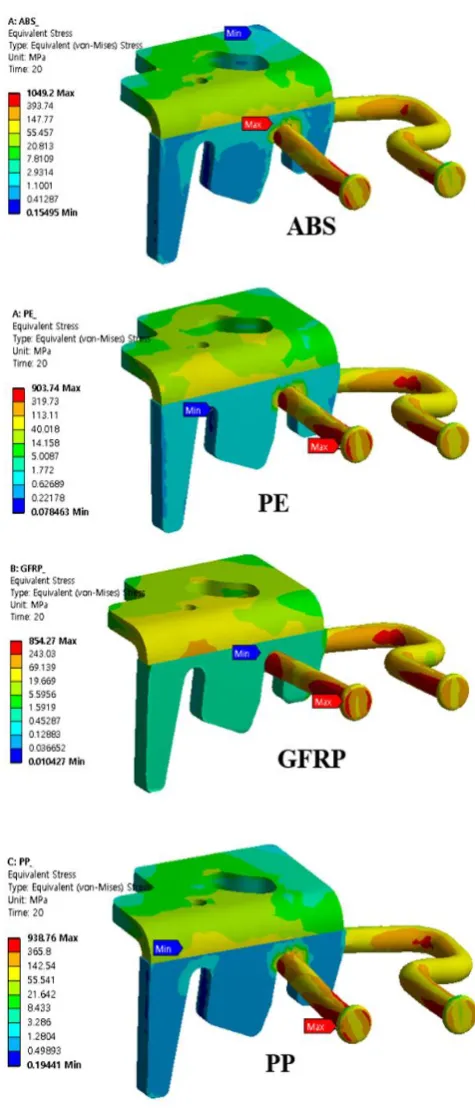
[image:2.595.313.551.164.720.2]We conducted the analysis with this research model and the analysis condition designated to find out the damage at full body model according to latch cover material. Results of analysis are as follows;
Fig. 4 Comparison of equivalent stress in full body model according to the material
[image:2.595.48.289.484.610.2]International Journal of Innovative Technology and Exploring Engineering (IJITEE) ISSN: 2278-3075, Volume-8 Issue-8S2, June 2019
[image:3.595.308.546.153.311.2]equivalent stress appearing in models according to the material. When GFRP was used, the maximum equivalent stress was 854.27MPa, which value was lower than the cases that other materials were used. When PE, PP and ABS were used, the stresses were 903.74MPa, 938.76MPa and 1049.2MPa respectively. It was found that the high stress around pin was shown at all materials except ABS.
Fig. 5 Comparison of strain according to the materials in full body model
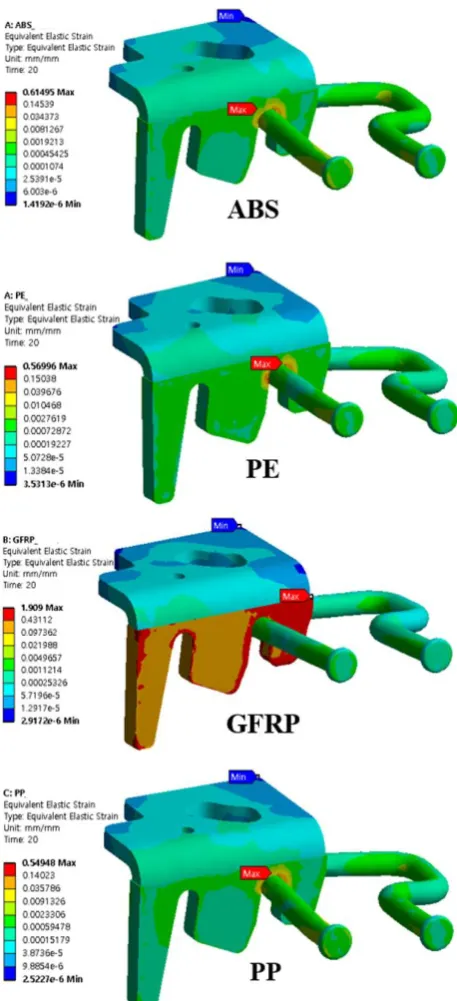
Fig. 5 shows the strain according to the material in research model. We found that when GFRP was used, the
strain as elongation was 1.909mm/mm, the greatest elongation. When PP was used, the strain was 0.54948mm/mm. When PE was used, the strain was 0.56996mm/mm. When ABS was used, the strain was 0.61495mm/mm. This analysis suggests that the reason for which the strain of GFRP was greater than other materials was that GFRP was brittle.
Fig. 6 Reaction force in a latch according to forced displacement
Fig. 6 shows the reaction force in a latch occurring from the forced displacement which is generated with a total of 1mm propagated for 20 seconds. It was found that the maximum reaction force values of GFRP, PP, PE and ABS
were 1956.2N, 2008.7N, 2026.8N, and 2086.3N
respectively. The greatest reaction force was found when a latch propagated 1mm in all materials.
B. Result of analysis in only latch cover
[image:3.595.59.288.204.705.2]Fig. 7 Comparison of equivalent stress in latch cover according to the materials
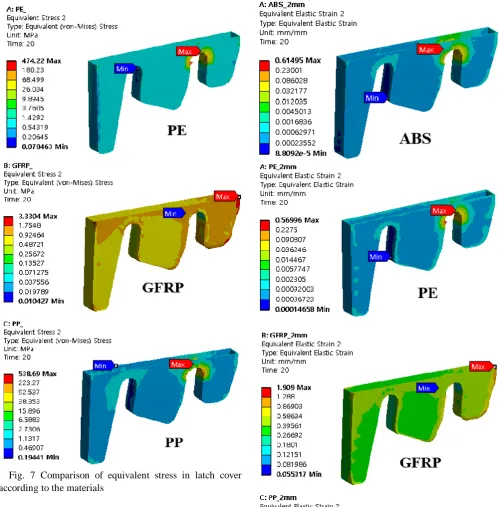
Fig. 7 shows the equivalent stress in only latch cover which damage occurs first actually. GFRP showed the stress of 3.3304MPa which was the lowest stress among materials. PE showed the stress of 474.22MPa and PP showed the stress of 538.69MPa. ABS showed the stress of 1049.2MPa. A point which is most likely to be damaged in latch cover was the part where a pin and a latch meet at all materials except GFRP. We found that the part where a pin and a latch meet has the highest stress. It was found that GFRP has lower stress than other materials as it was made of fiber reinforced plastic. We could get the study data on the properties of latch cover under
specific load by using such values. Fig. 8 Comparison of strain in latch cover according to the
[image:4.595.48.548.52.560.2]International Journal of Innovative Technology and Exploring Engineering (IJITEE) ISSN: 2278-3075, Volume-8 Issue-8S2, June 2019
Fig. 8 shows the strain at latch cover according to material. It was found that when GFRP was used, the strain was 1.909mm/mm which was the greatest elongation. The reason for which GFRP showed the greatest elongation was that it was brittle. When ABS was used, the strain was 0.61495mm/mm. When PE was used, the strain was 0.56996mm/mm. When PP was used, the strain was 0.51948mm/mm. Such study results are the same with those in full body model, which is caused by the fact that the greatest elongation occurs in latch cover.
V. CONCLUSION
This study investigated the damage according to car seat multi latch in accordance with the cover material by using analytic techniques. The results of this study are as follows.
1. We examined that the stresses of GFRP, PE, PP and ABS were 854.27MPa, 903.74MPa, 938.76MPa, and 1049.2MPa respectively. We also found that the strains of PP, PE, ABS and GFRP were 0.54948mm/mm, 0.56996mm/mm, 0.61495mm/mm and 1.909mm/mm respectively.
2. When the equivalent stress and strain as elongation were investigated at full body model, it was found that GFRP showed the maximum stress of 854.27MPa which was the lowest equivalent stress and GFRP showed the strain of 1.909mm/mm which was the greatest elongation. In case of ordinary plastic, an object with high rigidity shows less elongation. GFRP, reinforced plastic stacked with glass fiber has the high rigidity as it has brittleness but shows the high elongation in damage caused by forced displacement.
3. When comparing reaction forces from latches based on the forced displacement, it was found that the greatest reaction force was found when a latch propagated 1mm at all materials.
4. When comparing the values of materials by examining the equivalent stress of latch cover model, it was found that the maximum stresses of GFRP, PE, PP and ABS were 3.3304MPa, 474.22MPa, 538.69MPa, and 1049.2MPa respectively. When comparing the elongations of materials, it was found that the strains of PP, PE, ABS, and GFRP were 0.54948mm/mm, 0.56996mm/mm, 0.61495mm/mm and 1.909mm/mm respectively.
5. When comparing the equivalent stress and total deformation according to material at latch cover model, it was found that GFRP which was brittle showed the lowest equivalent stress and the greatest deformation as with full body model. Such a study result suggests that it is desirable to use PE when plastic cover is used in the place where the forced displacement occurs.
6. As the conclusion based on this study results, the damage of car seat multi latch according to material was studied by using analytic technique. We could get the design factors for car seat multi latch according to the material. In this study, the structural safety can be investigated according to the plastic material used in a place where ordinary load or forced displacement occurs.
ACKNOWLEDGMENT
This work was (partly) supported by Advanced Motor Parts Regional Innovation Center(AMPRIC) of Kongju National University administered by MSS(Ministry of SMEs and Startups), Korea.
REFERENCES
1. U. K. Heo, S. K. Kim, M. J. Song, I. Y. Yang and K. H. Im, “ Effectiveness evaluation for seat parts by seat belt anchorage strength analysis,” International Journal of Precision Engineering and Manufacturing, 12(6), pp. 1031-1034.
2. J. H. Kim, S. W. Ra, H. S. Kim and J. H. Kim, “On Clamping Force Characteristics in M1.4 Subminiature Screw for CFRP Stacking Angles,” International Journal of Precision Engineering and Manufacturing, 32(6), pp. 517-521.
3. E. Zheng, Y. Fan, R. Zhu, Y. Zhu and J. Xian, “Prediction of the vibration characteristics for wheeled tractor with suspended driver seat including air spring and MR damper,” Journal of Mechanical Science and Technology, 59(2), pp. 287-293.
4. Y. J. Song, I. Y. Yang, K. H. Im, Z. Ma, H. Zhao, S. Lu, H. Li and C. Liu “Method for determining the true stress of cross-shaped specimens subjected to biaxial tensile loads,” Instruments and Experimental Techniques, 59(2), pp. 287-293.
5. Y. Zhao and P. K. Malick, “A non-linear damage model for the tensile behavior of an injection molded short E-glass fiber reinforced polyamide-6,6,” Materials Science and Engineering, 393(1-2), pp. 303-309.
6. Y. Zhang, S. Jiang, Y. Zhao, D. Shan, “Isothermal precision forging of aluminum alloy ring seats with different preforms using FEM and experimental investigation,” The International Journal of Advanced Manufacturing Technology, 72(9-12), pp. 1693-1703.
7. A. Gauchia, E. Olmeda, M. J. L. Boada, B. L. Boada and V. Diaz, “Methodology for bus structure torsion stiffness and natural vibration frequency prediction based on a dimensional analysis approach,” International Journal of Automotive Technology, 15(3), pp. 451-461 8. T. D. Mew, K. J. Kang, F. W. Kienhofer and T. Kim, “Parametric study on
single shot peening by dimensional analysis method incorporated with finite element method,” Proc. Institution of Mechanical Engineers, Part D: J. Automobile Engineering, 229(6), pp. 674-683
9. X. Wu, X. Wang, Y. Wei, H. Song and C. Huang, “Methodology for bus structure torsion stiffness and natural vibration frequency prediction based on a dimensional analysis approach,” ACTA Mechanica Sinica, 28(3), pp. 674-683.
10. H. S. Park and X. P. Dang, “Development of a fiber-reinforced plastic armrest frame for weight-reduced automobiles,” International Journal of Automotive Technology, 12(1), pp. 83-92.
AUTHORS PROFILE
Jae-Won Kim is a graduate school student in the Department of Mechanical Engineering of Kongju National University, Cheonan city, Korea. His field of specialization is fracture mechanics(dynamic Impact), impact fracture of composite material), fatigue &
strength evaluation, and durability & optimum design.
Jin-Oh Kim received his Bachelor Degree in Software Engineering from Honam University, Gwangju-si, Korea, in 2005. Now he is a senior research engineer in Daechang Seat Co., Gyeongju-si, Korea. His field of specialization is the design and manufacturing of
lumbar support at automotive seat.