Schools
From good to outstanding:
evaluation of the Outstanding Teacher Programme
Peter Matthews, Visiting Professorial Fellow, Institute of Education, London
Revised January 2010
Resource
Contents
Summary 3
Main findings 4
Issues and recommendations 6
1. Background 8
2. The evaluation 9
3. Methodology 10
4. Eligibility for the Outstanding Teacher Programme 12
5. Participants’ reasons for engaging with the programme 15
6. Structure, organisation, facilitation and resourcing of the Outstanding Teacher Programme 17
7. Participants’ responses to the programme 19
8. Evidence of impact 21
9. Developing an understanding of outstanding teaching 24
10. Scaling up: replication and quality assurance 26
11. Programme improvement and follow-up 27
12. Value for money 28
Acknowledgements 29
Annex A: The Outstanding Teacher Programme 30
Annex B: TLSA: Quality assurance report: Outstanding Teacher Programme 31
Summary
The Outstanding Teacher Programme (OTP) is a 10-session school-based course sponsored by London Challenge and the Department for Children, Schools and Families (DCSF). The programme was developed by Ravens Wood School, Bromley and the Thinking and Learning Schools Alliance (TLSA).
It sets out systematically to help good teachers become outstanding and gain the skills with which to assist other teachers in raising their performance. The
programme also helps teachers to prepare for excellent teacher and advanced skills teacher (AST) status. It is highly successful in achieving these objectives.
This evaluation focused in detail on one cycle of the programme, but drew from feedback from former participants and their schools and a range of other evidence. Overall, the programme offers a proven process for developing excellence in
Main findings
The OTP, developed by Ravens Wood School, Bromley, and provided by this and other outstanding schools in London and elsewhere, is at the leading edge of teacher professional development. It is not known whether there are any similar programmes that are as well developed, although a growing number of schools have internal strategies for systematically improving teacher performance.
Those who have participated in the programme rate it very highly. It achieves measurable impact in promoting learning and enhancing professional skills, and on the basis of substantial evidence is judged to be an outstanding professional development model.
The OTP is very thoughtfully planned and – through its leadership, facilitation and the processes it employs – models with a high degree of consistency many of the characteristics expected of excellent teaching and learning.
Schools that nominated groups of staff to participate in the programme gain a resource that can be a significant strategic asset in raising standards of teaching and learning within the school and beyond. Some schools could do more in their planning to capitalise on the investment.
The programme’s strengths are many. These include the introduction of new
knowledge and skills, the provision of structured opportunities to reflect on teaching approaches and their quality and impact, the development and practice of coaching skills and a curriculum which sustains a focus on factors which make teaching outstanding. The programme is highly interactive, with a substantial amount of personalised learning.
It can be applied successfully with cross-phase groups of participants, although the quality of the teachers who take part makes an important contribution to the pace and value of the programme. Cross-phase work has shown that outstanding
teaching has common characteristics regardless of setting and that participants from different sectors add to the experience of all in terms of the skills and pedagogical expertise they bring.
There is some scope for further refinement, for example by raising further the levels of challenge to which participants are exposed, providing greater opportunity to witness outstanding teaching and adding a review day to be held after an appropriate interval.
The programme has demonstrated the ability to be adopted by other schools, and there is no reason to believe that any dilution in quality will result. Ravens Wood School and its partner school providers, to their credit, have instituted the necessary quality audit procedures, which are a further reflection of the thoughtful
implementation of the dissemination strategy.
The focus on evaluation and quality assurance provides an effective feedback mechanism. It is evident that second generation providers are refining and
improving the programme both to hone its effectiveness and to suit particular styles of facilitation.
The impact of the programme depends on the unequivocal commitment of the home school not only to facilitate participants’ full engagement, which involves not only their release but opportunities to work together back at school, but also to take a strategic approach to dissemination as a key part of the staff development plan.
The widening of the pool of schools and facilitators involved in providing the
programme is leading to refinements and improvements that should be captured and fed across the system.
Issues and recommendations
Since the quality of participants has an influence on the pace and challenge of the programme and its value to members who have the genuine potential to become ASTs, the nomination or selection processes should be rigorous and require the full, frank and reflective appraisal of candidates by the endorsing headteacher.
The methodology works best when delegates from each participating school attend in multiples of three. Triads also provide the best starting point for dissemination and application of the coaching and other methods after completing the programme.
The programme can make a strong contribution to the strategic development of a school if candidates are nominated with this purpose in mind. It was not always clear whether the priority lay in individual or school development. Knowing this would allow the programme to tailor the learning to the role expected of the
representatives from each school and puts an onus on all participating schools to do their utmost to facilitate the school-based aspects of the learning.
Recommendation 1. In order to make best value of the OTP, there should be a strong agreement – or contract – between the participating schools and the provider. This should help ensure that the skills developed
through the programme would be sustained, further developed and put to good use in the participating school. The contract should include a
commitment to a follow-up or review meeting for all the participants from a particular course together with a senior leader from each school.
While there is some benefit in having two facilitators for parts of the programme, this may not be essential. A good compromise would be for an experienced facilitator to be paired with and act as mentor to an aspiring facilitator.
Recommendation 2.In order to achieve best value for money and provide for a growing pool of facilitators, courses should be led not by pairs of facilitators but by a single facilitator accompanied by a trainee or
‘apprentice’, who would be a ‘graduate’ of an earlier course and take a full part in the sessions.
Although the programme provides well for participants from different school phases, it would be preferable if the pair of facilitators reflected the different sectors when there is a mixed group of participants.
Recommendation 3.In order to better harness and develop the expertise of cross-phase groups, facilitators should reflect the
sectors
represented, and it is highly desirable that all participants observe teaching andIt is desirable that the programme provides some mechanism for giving participants every opportunity to observe one or more outstanding lessons. The excellent
leadership of the programme cannot entirely compensate if this does not happen.
Recommendation 4.In order to help participants visualise outstanding teaching and learning, they should have greater opportunity to observe one or more outstanding lessons. The probability of this would be increased if they saw lessons delivered by excellent teachers or ASTs.
Although the OTP is a high-impact programme, there would be an advantage, identified by a significant number of participants, to hold a review session
downstream of the programme at which participants, together with a member of their schools’ senior leadership teams (SLTs), could review the personal development of delegates and the strategic impact of the programme and participate in higher level coaching activity.
Recommendation 5.In order to embed the potential contribution of the participants to their schools’ strategic development and improvement of teaching and learning, these issues should be the subject of a review meeting held a term or so after the end of the programme.
The quality, impact and practicality of this school-based programme is such that there is a strong case for familiarising training schools and national support schools with its principles, and those of the immersion teaching and learning programme and to encourage more of those schools to reflect the characteristics of ‘teaching
schools’.
Recommendation 6.In order to disseminate the programme to schools best equipped to draw from and use it, outstanding training and national support schools should be briefed about and given access to the
1. Background
The Outstanding Teacher Programme (OTP) is the highest level teacher development programme that has evolved through the Thinking and Learning Schools Alliance (TLSA) centred on Ravens Wood School in Bromley. London Challenge adopted the programme with funding from the Department for Children, Schools and Families (DCSF). Other teaching development programmes include the Teaching and Learning Immersion Programme, which is focused on understanding, achieving and helping others to deliver good or better lessons, and the Improving Teacher Programme.
The OTP responds to a need to improve the quality of the best teachers and help them to share their skills with their colleagues. It aims therefore to help teachers develop their skills from ‘good’ to ‘outstanding’, reflecting the national standards for excellent teacher and advanced skills teacher (AST) status. It is expected that teachers who complete the programme will work within and beyond their school to help other members of the profession improve their performance.
The OTP has been developed by Ravens Wood School in partnership with allied schools in and around London. The first open programme was run in September 2004. By May 2008, 10 programmes had been completed, three of them hosted by schools other than Ravens Wood. The programme has extended beyond London to schools in Bristol and Luton, and is becoming a core part of the provision of
2. The evaluation
The commissioning of this evaluation was timely, since it was completed at a point when the OTP was gathering momentum and showing the potential for transforming from a small-scale innovation to what could be a more systemic approach to
developing teacher excellence in a self-sustaining way. It is important therefore to understand the nature and impact of the programme and its value to school and system improvement.
This evaluation was completed during the period October 2007 to January 2008. Evidence was sought particularly in relation to the following questions.
How well does the programme meet its objectives?
1. What is the impact of the programme on: (i) participants; (ii) their schools?
2. What are the strengths of the programme? 3. What could be improved?
4. Issues for teaching schools (and national support schools)? 5. What are the implications for replication, scaling up and sustainability?
6. How well do participants understand outstanding teaching? 7. How well equipped are they to help improve the performance of
others?
3. Methodology
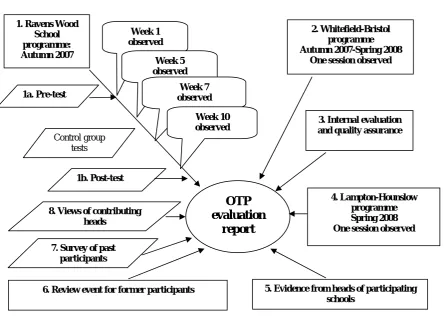
[image:10.595.89.534.198.515.2]The data and observational evidence that form the basis of this report were gathered in the period October 2007 to January 2008. The evaluation draws from mixed methods research, including surveys, discussions, interviews, observation and analysis of the output of some of the course activities. The approach is shown schematically in Figure 1.
Figure 1: Evaluation scheme
OTP
evaluation
report
1a. Pre-test1b. Post-test 1. Ravens Wood
School programme: Autumn 2007 Week 5 observed Week 7 observed Week 10 observed
8. Views of contributing heads
4. Lampton-Hounslow programme Spring 2008 One session observed
5. Evidence from heads of participating schools
3. Internal evaluation and quality assurance
Control group tests
7. Survey of past participants
6. Review event for former participants Week 1
observed
2. Whitefield-Bristol programme Autumn 2007-Spring 2008
One session observed
The evaluation was based, therefore, on eight strands of evidence, appropriately weighted. The core element was sampling of a programme in action (Strand 1 in Figure 1) through attendance at key points or activities, supplemented by pre- and post-test questionnaires for participants (1a and 1b), with the same questionnaires completed by a small parallel reference group. Observation of programme sessions provided the opportunity of talking to participants and facilitators, as well as observing the delivery of the programme and gauging how well different elements worked. The leaders of other programmes (Strands 2 and 4) were interviewed with particular reference to the challenges of replicating the programme elsewhere. Account was taken of quality assurance by Ravens Wood School (RWS) of two programmes conducted elsewhere (Strand 3, see Annex C).
schools that had participated in one or more programmes were asked for their perceptions of impact (Strand 5). The evidence base therefore included:
i. Documents related to the OTP
ii. Evaluation of four representative sessions of the RWS programme; three half-day sessions and a day session
iii. Pre- and post-event testing of one mixed (primary and secondary) group of participants
iv. A survey of previous participants
v. Evaluation of a review event for previous participants
vi. Discussions with managers and facilitators of the programme and with participants
vii. Quality assurance approach and reports developed by Ravens Wood School
4. Eligibility for the Outstanding Teacher Programme
Candidates for the OTP are nominated by their headteachers, who have to attest that the candidate meets a set of eligibility criteria for aspiring ASTs. These relate to:
• Experience: must have at least three years of teaching experience.
• Performance: must demonstrate a consistent, highly developed commitment
to teaching and learning in at least one Key Stage over a two-year period; must have value-added data showing (a) the progress made by students taught by the teacher, and (b) an improving trend in (test or) examination results.
• Professional development: attends regular subject-specific training to further
their ability to teach, manage students and assess and evaluate learning; can demonstrate the ability and willingness to reflect on their practice in order to improve.
• Student evaluation: uses student feedback to evaluate their teaching, reflect
and continually improve on current practice.
• Professional values: is a highly respected, inspiring professional who
demonstrates high order interpersonal skills and is a positive role model to both students and staff.
• Commitment: must be able to show that they have the commitment to both
their continuing professional development (CPD) and that of other staff.
Evidence of suitability must be provided in terms of each of these criteria, recorded on a standard form signed by the headteacher. From the sample of 16 ‘initial
enquiry’ forms scrutinised, the evidence was variously depicted by the candidate, the headteacher or a combination of sources. Most primary and secondary candidates provided evidence that met the experience and performance criteria well.
Responses to the professional development criterion ranged from the banal:
“Recently attended KS3 [Key Stage 3] new programmes of study INSET. Various subject INSET. INSET given in subject and questioning skills.” (secondary candidate)
to those which reflected the criterion and cited evidence:
“In the last year has attended many INSET days linked with literacy … and these covered how to be a reflective teacher, manage students and assess and evaluate learning. Has worked with fast track mentors in the [local authority] who observed lessons and noted willingness to reflect on own classroom practice.” (primary candidate)
Professional values and commitment are not appropriate criteria for self-reporting. The head of the home school might be expected to reflect on how best to capture and present evidence for these attributes that must be of a high order in teachers expected to act as models for others. In relation to commitment, for example, one candidate’s citation is clear and copiously supported by evidence:
“… frequently works alongside teaching and support staff to ensure they understand about tracking pupils, understanding and planning specific programmes to meet specialised pupil needs (SEN notes, EAL notes, SEN data, evidence of teaching programmes delivered by others and TA work).”
In contrast, the evidence that X “keeps up to date with all subject-specific developments”and Y’s commitment is “demonstrated by attendance at school workshops” hardly rises above the basic professional requirements of a teacher and does little to show that the secondary candidates concerned have ‘the commitment to both their continuing professional development and that of other staff’ specified in this criterion. In one unconvincing example, different candidates from the same school were supported by identically worded commendations on their values and commitment!
Some of these findings must be a cause for concern, because they impair the
integrity of a programme which is designed for carefully chosen participants who are then sponsored by significant amounts of public money to take part in a select but transformational experience so as to enhance their own performance and their contribution to school and system. The participants whose applications were sampled turned out to form a very mixed capability group. This reduced the opportunities for high-quality participants to interact with peers from other schools having equivalent attributes. Despite the considerable degree of personalisation in the programme, pace and challenge also suffered.
The conditions for entry into the programme, the integrity of the nominations and the process by which participants are enrolled should be reviewed so as to ensure that participants have the potential to be outstanding or excellent teachers who can help others to raise their performance. A suggestion from former participants that the sharing of a background and skills audit would be a useful resource is worth considering.
There is significant advantage in schools being represented by three participants, or multiples of three, provided there are enough applicants who meet the eligibility criteria. A number of participating primary schools, for whom the release of three staff is challenging, succeeded in putting forward three representatives,
demonstrating the feasibility of this. Conceivably, neighbouring schools could field trios, providing they can work in partnership across the schools both during and after the programme.
5. Participants’ reasons for engaging with the programme
The reasons cited by former participants centred on improvement of their own teaching and interest in becoming an AST. One comprehensive response which illustrates both the wish of the participant to improve his/her own practice and help colleagues to improve was:
“Insights into outstanding. To enhance my practice. Also looking for
affirmation of good practice. Want to be able to give feedback in a structured way, using a common language. Gain skills to share best practice with
others. To know how to reassure and build confidence in others.”
Only a minority initially expressed interest in AST status as a motive:
“I hoped to learn more about AST status and hear of good practice in other schools as well as share my own.”
Candidates were invariably nominated by their headteachers; the programme is not an open access type of provision. From the candidate’s point of view, the following examples describe what may typically happen:
“The head at my school approached me about undertaking the programme after observing a number of my lessons. The head had also had good
feedback about my lessons after an Ofsted inspection. Firstly, I really wanted to work collaboratively with other teachers from both secondary and primary backgrounds. In addition I wanted to take part in the programme for my own professional development. I was looking for advice and support on how my own teaching and learning could be moved on and how I might gain the confidence to be able to observe and evaluate the teaching of others and to give colleagues support.”
Another participant, nominated early in his/her career via the deputy head, explained that:
“I hoped that the reflection on my practice and the insight I gained from this would have a real and tangible effect on the quality of my teaching. I was just beginning my fourth year of teaching and was very settled in my department so I also hoped it would motivate me to think about the next steps in my career.”
more free-flow’. Only two professed specific interest initially in becoming ASTs, although the level of interest was appreciably higher by the end of the programme.
6. Structure, organisation, facilitation and resourcing of
the Outstanding Teacher Programme
The OTP is an intensive sessional programme spanning three months of the school year. Engagement is a serious commitment for the provider, participants and participating schools alike. Each of the 10 sessions, two of which are based in participants’ own schools, lasts for a day or half day. Some former participants felt that half-day sessions were too short. Certainly, some of those observed ran out of time to include all the planned activities. On the other hand, some participants commented on the intensity of the sessions. These points would need to be
balanced in any changes to the programme. (An example of a programme timetable is shown in Annex A.)
The programme can be visualised as having five main components. The first phase centres on an exploration of characteristics of outstanding teaching and learning, through workshops, lesson observation and critical analysis. It starts from
participants’ own perceptions and prepares them effectively to observe lessons in the host school with a view to identifying good and outstanding features and analysing what would be needed to turn good lessons into outstanding lessons. In the group observed, some participants were surprisingly not used to purposeful observation of teaching and learning. Experience of this should be considered as a requirement for inclusion in the programme.
The second key element is acquiring knowledge, skills and understanding in the area of coaching, particularly non-directive coaching. This work is intensive, challenging and sharply focused, but incorporates repeated opportunities to practise the coaching process working in triads of coach, subject and observer (evaluator). The third element requires school-based practice in the shared preparation of an outstanding lesson by each participant in a school trio or (or pair) which is then taught while observed by the other member(s) and its quality and effectiveness discussed at a debriefing coaching session. A fourth element requires school groups to prepare and present an outstanding ‘lesson’ for the whole group, which is
‘delivered’ at the following session.
The fifth and final element completes the circle by providing a strong input on the standards for excellent teachers and ASTs and the assessment mechanism for ASTs.
The programme is normally led by two facilitators, which – although more costly than one – has the advantage that they can challenge each other as well as the group, although the sessions on coaching and AST requirementswere led by external specialists in these areas. There is a good case for the second facilitator being a trainee (or apprentice) programme leader, one who has already participated in an earlier programme.
of the primary sector through visits or the balance of tuition. Mixed-phase courses would benefit from being led by facilitators representing the phases involved. It is desirable that the facilitator pool is expanded to include facilitators and coaching tutors with a primary background, and there would be advantages in varying the facilitator pairings as the programme becomes used more widely.
The sessions that were observed during the evaluation process all worked well. They were held in appropriate, although in one case slightly cramped, venues in which refreshments were provided. Sessions were very well planned and activities were interactive and demanded constant active participation by course members.
Strengths included high levels of interest by participants, their engagement with the programme, the good relationships established by facilitators – which were best reflected when they got to know participants and addressed them by name – and the degree to which a focus was sustained on the impact through learning of
characteristics of high-quality teaching. On a few occasions, the thinking or output of participants was not sufficiently challenged, for example when initially brainstorming characteristics of outstanding teaching or when participants made group
presentations that were somewhat underwhelming. Resources and visual material were thoughtfully used, of good quality and with few exceptions fit for purpose. Overall, the programme was very well balanced, structured and delivered. The evaluation concurs with the views eloquently expressed by one former participant:
7. Participants’ responses to the programme
Participants’ views were collected through a pre- and post-programme questionnaire of the group observed, a survey of all previous participants, discussions with
members of both groups and the feedback from a review day of previous participants.
Both former and the most recent participants rated the quality of the programme very highly, giving it around 90 on a 100-point scale for quality. Many offered unqualified praise. In terms of the now ubiquitous classification ‘what went well’ and ‘even better if …’ a flavour of what went well emerges from the following typical comments by former participants.
“I feel that I gained so much from attending this course. I particularly
enjoyed talking with other teachers about teaching and learning in a rigorous way. I found the coaching sessions particularly valuable. I still believe that I am 'grappling' with the difference between good and outstanding.”
“The level of questioning was challenging and a good model for how we should be questioning children at an outstanding level. Observing other participants’ lessons was also very successful. The course overall helped to clarify the difference between good and outstanding.”
Many participants appreciated the opportunity to observe lessons in a structured way. As one said:
“I found being able to observe good teaching practice invaluable. It was extremely helpful being able to evaluate and analyse these observations with other people. The paperwork we received outlining the difference between good and outstanding practice has helped me with my planning and undertaking observations in school.”
In the observed programme, all but one participant singled out coaching as a particular highlight of the course. They felt that the coaching sessions were taught, facilitated and modelled very clearly and thoroughly and that they made great strides in their learning. Work on coaching ‘employed an excellent range of activities which really enhanced understanding’, was well sequenced and persuaded many participants of the real benefits of using coaching systematically in school. The use of learning threes was particularly appreciated and their value recognised.
The many other highlights included: doing and watching presentations, learning about observation and how to give unthreatening feedback, working with colleagues and gaining ideas from them and engaging with colleagues in the ‘homework’ tasks.
portfolios and assessment, had taken place earlier in the course rather than left to the end. There would be advantages and disadvantages to this. On the one hand, it would lead to early explanation and clarification of the standards; on the other, it would be less relevant and possibly de-motivating to those course members who did not intend to pursue these routes or who felt daunted by the rigour of AST
assessment. Placed where it is, at the end of the course, the session provides a useful bridge between the course and what follows, so no change is suggested here.
A second issue was the disappointment of some candidates that they did not
observe lessons that were outstanding. Others recognised that the observations still provided for useful analysis of the quality of lessons and what would be needed to make them outstanding, but there would be advantages in seeing some teaching that was outstanding. One participant suggested that the use of video material might make up for this perceived deficiency.
Other issues included the suggestions that: some ‘homework’ tasks needed greater clarity, the course should be more overtly geared towards primary teaching, and for at least one, the length of the sessions ‘was a struggle at times’. The point about homework is borne out by some of the subsequent presentations, which were of indifferent quality, possibly because the importance of aiming to model outstanding teaching had not been sufficiently impressed on participants.
8. Evidence of impact
The effectiveness of a development programme depends on the learning that ensues and its absorption into practice. The aims of the OTP are sufficiently clear to permit several approaches to evaluating impact. Since the programme is concerned with (i) developing teachers from good to outstanding, and (ii) equipping them to help other members of the profession improve their performance, evidence was sought of the extent to which these intentions have been fulfilled.
Recent participants’ views of the effects of the programme, surveyed at the end of the course, provide a starting point. When 14 were asked about changes to their
practice that have ensued, the following indications of impact were dominant:
i. Almost all participants say they are much more reflective about their own teaching and how to make lessons even better or consistently outstanding. They cite greater emphases on: the purpose and value of lessons; raising levels of engagement in learning; the use of different teaching styles to challenge learners; greater readiness to innovate and take risks; and more reflective planning.
ii. About half have already found benefits and renewed confidence in aspects of coaching and mentoring, ranging from supporting new teachers to coaching experienced colleagues.
iii. A few claim that the experience has changed their practice completely or, as expressed by one: “I have felt the need to be more thorough in everything I do in school”.
Former participants are in a better position to reflect on the lasting changes to their practice, to which almost all testify. As one said:
“I found this programme a really enriching experience. It made me deconstruct my teaching practice and evaluate what I was doing in the classroom and why. This in itself was challenging. As a result of the
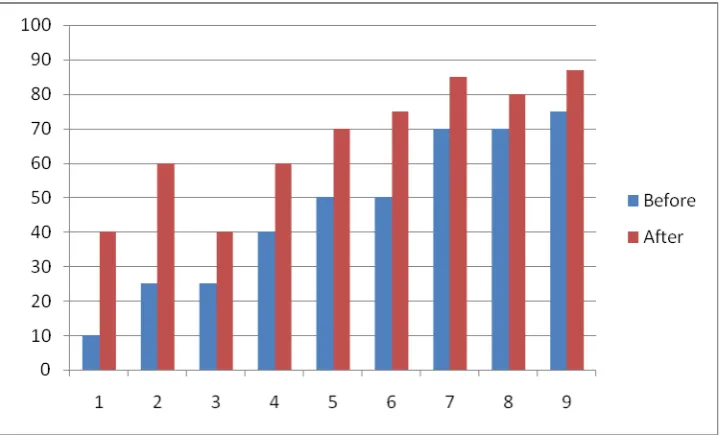
Figure 2: Improvement in percentage of outstanding teaching estimated by a sample of nine former participants in the OTP who attended different programmes
Participants were asked to assess changes in the quality of their teaching before and after the programme. This was done in two ways. Previous participants were asked the question: ‘What percentage of your teaching do you estimate was outstanding: (a) before coming on the programme, and (b) since completing the programme?’. The results are shown in Figure 2 (above). The mean gain was 20per cent.
When responding to this question, several former participants added comments to explain their assessment or which showed their efforts to reduce subjectivity. For example, respondent 1 said that estimated improvement had been:
“… from 10 to 40per cent; I estimate that now in all my lessons there are outstanding elements.”
Respondent 9 reported improvement from between 70 and 80per cent to:
“… between 80 and 95 sometimes of course hitting 100 which happens on more occasions than before.”
Respondent 4 perceived that the degree of change was:
“…. very difficult to assess. Not all lessons can be outstanding due to the nature of a sequence of lessons. Conservative estimate, improvement from 40 to 60per cent.”
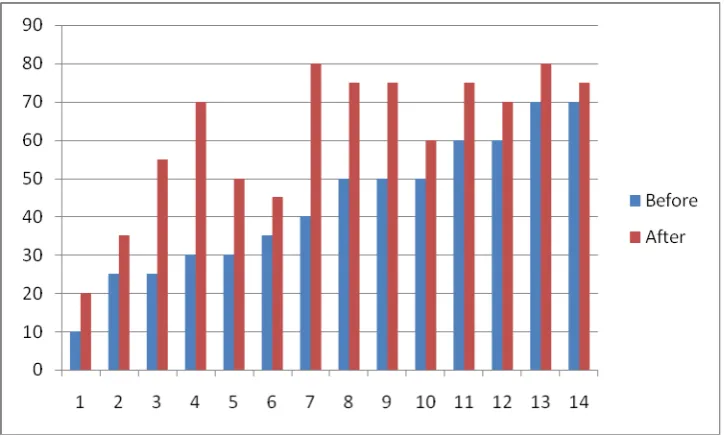
Figure 3: Improvement in percentage of outstanding teaching estimated in pre- and post-programme tests by a cohort who attended one
programme
The data are based on subjective self-assessment and should be taken cautiously, but all responses claim improvement, even though the magnitude is an estimate. Parallel responses from a smaller control group of equivalent teachers from the participating schools reflected lower before/after differences that were more random in direction. Some qualitative corroboration is supplied by the headteachers of the participants’ schools who were surveyed about aspects and the perceived impact of the programme. Those who responded recognised a sharpening of performance in their colleagues and were very enthusiastic about the programme.
Further evidence of the impact of the programme and its fitness for purpose comes from the participants who have either gained AST status or promotion. From a sample of 10 former participants, for example:
three have gained AST status two are planning to become ASTs
two came on the programme when promoted to lead their departments or faculties
one has been promoted to the senior leadership team (SLT)
one is an experienced headteacher who is now leading the OTP elsewhere one is on maternity leave
Evidence of impact, therefore, is readily available and all points in the same
9. Developing an understanding of outstanding teaching
The success of the OTP must in part be judged on whether participants have a clear sense by the end of the programme of what excellent or outstanding teaching is. Many earlier participants expressed confidence in this benchmark:
[image:24.595.108.495.287.780.2]The level of questioning was challenging and a good model for how we should be questioning children at an outstanding level. Observing other participants’ lessons was also very successful. The course overall helped to clarify the difference between good and outstanding.
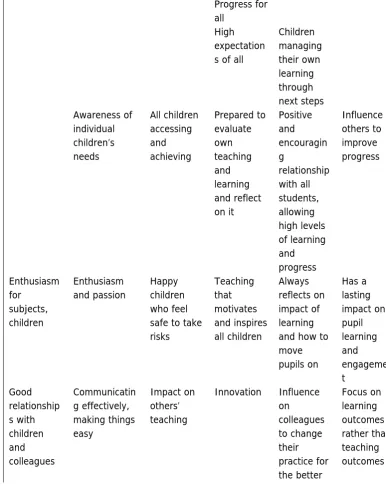
Table 1: Example of an end of programme ‘post-it’ brainstorm about characteristics of outstanding teachers (classified by one)
Progress for
all
High
expectation s of all
Children managing their own learning through next steps
Awareness of
individual children’s needs All children accessing and achieving Prepared to evaluate own teaching and learning and reflect on it Positive and encouragin g relationship with all students, allowing high levels of learning and progress Influence others to improve progress Enthusiasm for subjects, children Enthusiasm and passion Happy children who feel safe to take risks Teaching that motivates and inspires all children Always reflects on impact of learning and how to move pupils on Has a lasting impact on pupil learning and engagemen t Attributes
of outstanding teaching?
Can play significant role in pupil progress Ability to evaluate Adaptability Continuous self-reflection Motivationa l (to pupils and staff)
Shows value of lessons, purpose and links to outside world Engaging Professional development High expectation s (two responses) Constantly reflecting on best practice Ability to make every child feel valued and good about their learning journey Inclusion of purpose and value in lessons
→ Good → Outstanding → ?
Members of the Ravens Wood course cohort were asked to estimate this in the initial questionnaire. Responses indicated that there was a high self-reported level of knowledge in relation to characteristics of good (mean 79per cent) and outstanding (mean 72per cent) teaching on a scale of very little (0per cent) to very high (100per cent) knowledge. This was not evident, however, in an initial brainstorm of
outstanding characteristics, in which a small minority of the suggested indicators truly represented excellence. The pattern had changed by the end of the course in which a similar session elicited the responses shown in Table 1. In this case the distribution of responses, classified by an uninvolved and highly competent teacher acting as an independent third party, was positively skewed towards outstanding practice, indicated by reflection or and maximising impact in terms of the learning of individuals and the teacher’s capacity to help others improve.
The responses in Table 1 show that there is still a lack of clarity in the minds of some participants about the characteristics of outstanding teaching. In the event, the concept of outstanding was not fully embedded until after the input on
10. Scaling up: replication and quality assurance
By May 2008 Ravens Wood School had delivered seven cycles of the OTP. Four further programmes are currently under way, delivered by three new providers. The facilitators are ‘graduates’ of earlier OTP programmes whose schools are acting as centres for the provision of OTP, either on site or at a remote location. Thus
Lampton School in the London Borough of Hounslow is acting as a ‘teaching school’ in West London and providing the OTP in Spring 2008. Whitefield School has
delivered the first programme in Bristol, based at St Bede’s Catholic School and Sixth Form Centre, and has started a second programme as part of the London Challenge outreach work in this city. One session was observed in each of these programmes, and participants interviewed. The programmes were invariably considered by participants to be challenging and of very high quality, in some cases “the best professional development I have experienced”.The programme has subsequently been provided by outstanding schools in other regions, whose headteachers are national or local leaders of education. These schools are likely to be drawn from the ranks of support schools whose heads are already acting as consultant leaders (local leaders) in London or are national leaders of education.
The OTP is eminently suitable for delivery by outstanding schools that are learning communities, which give high priority to progressively ratcheting up standards of teaching and learning and which are committed to improvement partnerships with other schools. Local and national support schools that are also training schools are likely to have the culture and capacity to deliver the OTP. It is of course necessary for a group of staff from the potential programme provider to have experienced the OTP.
11. Programme improvement and follow-up
London Leadership Strategy held one follow-up meeting, to which all former
participants were invited. In practice, schools sent one or two representatives each. The session was highly successful and proved very fruitful, both in reviewing and suggesting improvements to the programme and in further enhancing coaching skills and networking.
In particular, the session captured a number of suggestions for the further
development of the programme, several of which accord with issues identified in this evaluation. The suggestions fell into a number of categories:
i. Suggestions for inclusion in the current OTP, such as:
• a module on research skills
• more guidance on how to put an AST folder together
• biography and skills audit of those doing the programme
• what it means to be an outstanding teacher outside the classroom
• understanding ‘outstanding learning’
ii. Comments related to the opportunity to practise skills in real situations, possibly outside ‘home’ schools
iii. More opportunities to work in learning threes after the programme iv. Support for continuing development beyond the course, which
included:
• a mentoring system
• a review and feedback mechanism
• optional refresher courses
• follow-up meetings
• creation of an OTP network and website v. Post-OTP support from individual schools:
• contracting arrangements for schools that buy into the course which include post-OTP commitment
12. Value for money
The funding of the OTP has changed since its inception. Schools were originally charged £1,500 per delegate, which was refunded to the school when they gained their AST status. This ensured a certain level of commitment from participating schools. Subsequently, the OTP received funding from the money provided to Ravens Wood School to provide a suite of programmes to enhance the quality of teaching.
From 2007, the OTP has been fully funded by the National College and so is free to delegates. A total of £15,400 is allocated to each school delivering the programme, of which there are now four: Ravens Wood, Whitefield, Lampton and Mayflower. With between 12 and 15 delegates per programme, this works out at between £1,026 to £1,283 per delegate, with costs of replacement being up to £1,000 per participant, allowing for some of the replacement being borne within the school.
Central funding cannot be relied on in the longer term and there is potential for some economies. Two facilitators lead most of the current sessions, although one of the most successful – a day of coaching training – only involved one. It is
questionable whether a second facilitator doubles the value of sessions, and
Acknowledgements
Annex A: The Outstanding Teacher Programme
15 January Week 1 13.30–16.30
Introduction to the course
Outstanding teaching and learning concepts
22 January Week 2 09.30–16.30
Teaching and learning
29 January Week 3 13.30–16.30
Teaching and learning
5 February Week 4
In-school practice
12 February Week 5 13.30–16.30
Teaching and learning
26 February Week 6 13.30–16.30
Coaching
4 March Week 7
In-school practice
11 March Week 8
Folio development as required
18 March Week 9 09.30–16.30
Coaching
1 April Week 10 13.30–16.30
Annex B: TLSA: Quality assurance report: Outstanding
Teacher Programme
Programme: Outstanding Teacher
Programme Venue:
Date: Friday, 16 November 2007 Facilitators:
Quality assurance non-negotiables for OTP
Has everyone been encouraged to develop high order thinking? Yes 9 No
Have the facilitators challenged all the delegates’ expectations of themselves? Yes 9
No
Has everyone been engaged in their own and others’ learning? Yes 9 No
Have all the learning processes been role-modelled? Yes 9 No
Planning and preparation
WWW Very well organised as much thought has gone into developing the programme to be
personalised for specific delegates
Effective use of PowerPoint to aid recap and inform the delegates of the tasks set USB memory sticks prepared with resources – one for each delegate
Resources prepared well, with a copy of the new standards on display Excellent course handbook and workbook prepared
Venue was quiet and promoted staff learning
New photograph resources prepared to stimulate thinking
Prior learning exercise developed as a semi-plenary to measure impact of the course Excellent standard of refreshments – fruit, cake, biscuits, fruit juice and water
machine
Meeting in six months to discuss impact and progression
EBI The learning space was more flexible to allow for better group work – for coaching
and activities in learning threes
Facilitation and role-modelling
WWW Facilitation team worked well together and were effective in delivering the session Calm and thoughtful facilitation with an excellent balance of sense of humour Good communication between the facilitators – especially at the beginning of the
session
Excellent questioning to allow for the delegates to really explore their own practice
and develop their thinking – “we must move the thinking up about questioning”
Excellent pick up on ‘the purpose of the question’ – ‘Was Humpty Dumpty a real
person?’
Effective discussion about ambiguous questions and real depth explored into Bloom’s
Taxonomy – a quality plenary session recapping on Bloom’s theories
Delegates found this topic quite demanding but worked through successfully
High order thinking and learning was constantly and consistently role-modelled to the
delegates. High challenge and maximum support given
EBI Delegates role-modelled outstanding too. Presentations were not completed by all and
Outcomes and impact
WWW A huge sense of a growing of self-esteem and confidence with all delegates
who are now more comfortable about leading teaching and learning in their own schools
One delegate has presented to the headteachers in the city, engaging them in
the OTP learning process and challenging them to support more teachers on this course in the future
Another delegate regularly now takes the teaching and learning section of the
staff briefing
All delegates have enjoyed attending the OTP and are entirely satisfied with
the programme
There are visible signs that all have been engaged and challenged by this
programme
Delegates have been approached by staff in their own school for advice after
having been invited to attend the OTP
The learning threes have been a very valuable part of the process with it
having a positive affect directly in the classroom – especially with engagement and challenge
Delegates have been modelling the learning processes in staff development
and in their classrooms
Comment by the headteacher of host school was very complimentary – “this
is one of the best pieces of work” – her thanks to the facilitators
A measurable positive outcome in the session by looking at their changed
perception of an outstanding teacher – brown paper exercise
Increased personal development facilitation team as it is important to ‘grow
the top’
EBI There the delegates were more accountable. It is important for the delegates
to self-manage small projects and be responsible for delivering at outstanding level
Is the service fit for purpose? Yes 9 No
Improvements to the OTP following this report
This was a highly effective session with both facilitators challenging the delegates to think beyond their norm. There have been some useful additions and changes to the programme that will be included in the programme to enhance the learning opportunities. These were:
The PowerPoint presentation to recap visually and refocus on prior learning – PB USB pen with resources – ALL
Meeting in six months to discuss progress and impact – GTB
Utilising an AST to talk about their role in supporting whole school teaching and learning
– ALL
Access to a MLE or VLE to build learning opportunities – PB The idea of self-coaching – PB/GR
Use of the stimuli at the end as a Bloom’s plenary – focus on the subject of the session
at the end
Workbooks and resource books – increase the pace and give more of a structure – RL to
action
Images – photographs of the models, sentences and groups working for their portfolios –
ALL
Observations: the two observers actually taking part in the lessons but having to find out
the knowledge by asking the students. No communication with the teachers!
Coaching exercise: coaching 1 to be PMI and coaching 2 to agree a hypothesis in the
Signed:
Annex C: Developing coaching and mentoring to the next
level
The feedback below represents an extension of the work begun during the opening ‘Where are we now?’ session. Delegates considered in more detail the aspects of the course that they felt were imperative and those that should and could be included.
Must have Should have Could have
Clear communication across the school (organisational capital)
External venue Whole day sessions
Dedicated time for meetings
(weekly?) Ongoing development Website to link all participants (past and present) and leaders Clear aims/accreditation More coaching and mentoring
development
Expanded learning threes across schools
Research Opportunities to develop learning
threes A detailed skills audit before the course Follow-up
assignments/procedures Opportunities to develop skills in other situations Post-course networking Cooperation from all heads Follow up Link to other National
College courses (NPQH?). Opportunity to arrange
timetable/teaching commitments as early as possible
Ability to influence timetables (to
minimise impact on classes) Time to investigate ‘out of the box’ teaching and learning models
Ability to build on SIP/SEF A road map of other courses to move onto in order to further develop skills
Links with non-educational specialists
Coaching and mentoring Emphasis on sharing practice with colleagues
Development of skills for research
Learning threes Direction on activities/reflection to undertake after each session WWW/EBI More feedback from colleagues
who have been through the course
The same facilitators More support from the home school
Teaching and learning focus Outcome measures to determine the impact on schools
Learning threes Input from other experts in educational development Commitment to delivering
outcomes An online community of support Share practice at a