EFFECTIVENESS OF ARRHYTHMIA INTERPRETATION
TRAINING (AIT) PROGRAMME ON KNOWLEDGE AND
ARRHYTHMIA INTERPRETATION AMONG STAFF
NURSES AT A SELECTED HOSPITAL IN CHENNAI
Dissertation submitted to
THE TAMIL NADU Dr. M.G.R. MEDICAL UNIVERSITY
CHENNAI
In partial fulfilment of requirement for the degree of
MASTER OF SCIENCE IN NURSING
TRAINING (AIT) PROGRAMME ON KNOWLEDGE AND
ARRHYTHMIA INTERPRETATION AMONG STAFF
NURSES AT A SELECTED HOSPITAL IN CHENNAI
Certified that this is the bonafide work of
Mr.
PAUL JOSEPH ANI
MMM College of Nursing, No.131, Sakthi Nagar, Nolambur
Mogappair West, Chennai.
COLLEGE SEAL:
SIGNATURE:
Dr. (Mrs) ROSALINE RACHEL
R.N., R.M., M.Sc. (N), MHRM, PGDGC., Ph.D. (N)
Principal,
MMM College of Nursing, No.131, Sakthi Nagar, Nolambur,
Mogappair West, Chennai.
Dissertation submitted to
THE TAMIL NADU Dr. M.G.R. MEDICAL UNIVERSITY
CHENNAI
In partial fulfilment of requirement for the degree of
MASTER OF SCIENCE IN NURSING
EFFECTIVENESS OF ARRHYTHMIA INTERPRETATION
TRAINING (AIT) PROGRAMME ON KNOWLEDGE AND
ARRHYTHMIA INTERPRETATION AMONG STAFF
NURSES AT A SELECTED HOSPITAL IN CHENNAI
Approved by the research committee in July 2014
PROFESSOR IN NURSING RESEARCH
Dr. (Mrs) ROSALINE RACHEL
_____________________
R.N., R.M., M.Sc(N)., Ph.D.,
Principal,
MMM College of Nursing,
No.131, Sakthi Nagar, Nolambur, Mogappair West, Chennai
MEDICAL EXPERT
Dr.AJITMULLASARI, _____________________ Director-Cardiology department
The Madras Medical Mission, Chennai
CLINICAL SPECIALITY-RESEARCH GUIDE
Mrs.ABITHA ANANDASOUNDARYA
_____________________
Reader,Medical surgical nursingMMM College of Nursing,
No.131, Sakthi Nagar, Nolambur, Mogappair West, Chennai
Dissertation submitted to
THE TAMIL NADU DR. M.G.R. MEDICAL UNIVERSITY
CHENNAI
In partial fulfilment of requirement for the degree of
MASTER OF SCIENCE IN NURSING
I thank God Almighty for being with me, guiding me and sustaining me in all my endeavours and enabling me to undertake this research, His blessings enabled me to complete this dissertation to my optimal satisfaction. This is to acknowledge my indebtedness and gratitude to innumerable well-wishers who contributed to help my dream come true.
I express my gratitude to the Management and The administrators, Madras Medical Mission (MMM) hospital for providing me an opportunity to undergo the post graduate program in this esteemed institution.
My genuine gratitude and heartfelt thanks to Dr.Rosaline Rachel, Principal, MMM College of Nursing, Nolambur, for her positive strokes that have helped to shape the study in many ways.
I extend my gratitude to Dr.Ajit Mullasari, Director Cardiology department, MMM hospital for giving the permission to do the study in the cardiac unit of MMM hospital.
I express my sincere gratitude and whole hearted thanks to research coordinator Prof. Padmavathi Kamaraj, Vice Principal, MMM College of Nursing, Nolambur for her extra ordinary guidance, suggestions, corrections and timely motivation in proceeding with the study.
My immense thanks to Dr.K.Jaishankar, senior Cardiologist and Electrophysiologist, Madras Medical Mission Hospital for his expert guidance and commendable encouragement in completing this study.
I’m indeed thankful to Mrs.Sosamma, Nursing Superintendent MMM hospital for giving me the permission to conduct the study over there.
I owe my profound gratitude and sincere thanks to Mrs.Arockiya Jaya Deepa.M, Nursing Coordinator, for her valuable guidance and abundant encouragement in the study.
The investigator is grateful for the full co-operation of the entire faculty members, library staff and office staff of MMM College of Nursing, Nolambur and staff of Madras Medical Mission hospital library and learning resource center, for their valuable and timely help throughout the endeavour.
My immense and deep gratitude to all the experts who have done the content validation of the research tools. I extend my sincere thanks to all the doctors and staff of Cardiology Department, Madras Medical Mission Hospital and for the cooperation they gave for the smooth conduct of the study.
A memorable note of gratitude to Mr.Muhammed Musthafa for the help rendered in statistical analysis of the data.
A word of appreciation to Mr.G.K.Venkataraman, Elite Computers, for his computer skill and sincere effort in editing and printing the manuscript.
all my dear friends for their unconditional love, constant encouragement, support and moral support rendered for the entire study.
LIST OF ABBREVIATIONS
AACN - American Association of Critical Care Nurses AF - Atrial Fibrillation
AHA - American Heart Association
AIT - Arrhythmia Interpretation Training AV Node - Atrioventricular Node
BACN - British Association of Critical Care Nurses BSM - Body Surface Mapping
CAD - Coronary Artery Disease CCU - Coronary Care Unit
CPR - Cardio Pulmonary Resuscitation CVD - Cardio Vascular Disease
DALYs - Disability Adjusted Life Years ECG - Electrocardiogram
ED - Emergency Department FTF - Face to Face Learning GBD - Global Burden of Disease GST - General System Theory ICCU - Intensive Coronary Care Unit
ICD - Implantable Cardioverter Defibrillator MMM - Madras Medical Mission
MV - Millivolt
MCL - Modified Chest Leads RN - Registered Nurse SA Node - Sino Atrial Node SCD - Sudden Cardiac Death
SPSS - Software Package used for Statistical Analysis SSM - Six Stage Method
S.No. Title Page No. 1
1.1 1.2 1.3 1.4 1.5 1.6 1.7 1.8 1.9
INTRODUCTION Background of the study Need for the study Statement of the problem Objectives of the study Operational definition Hypotheses of the study Assumption
Delimitation
Conceptual framework
1 – 16 1 5 10 10 10 11 12 12 12
2 REVIEW OF LITERATURE 17 – 34
3 3.1 3.2 3.3 3.4 3.5 3.6 3.7 3.8 3.9 3.10 3.11 3.12 3.13 3.14 3.15 3.16
RESEARCH METHODOLOGY Research approach
Research design Variables Research setting Population Sample Sample size
Sampling technique
Criteria for sample selection
Development and Description of tool Validity of the tool
Reliability of the tool Ethical consideration Pilot study
Data collection procedure Data analysis procedure
S.No. Title Page No.
4 DATA ANALYSIS AND INTERPRETATION 45 – 57
5 DISCUSSION 58 – 63
6 SUMMARY, CONCLUSION, IMPLICATION,
RECOMMENDATION AND LIMITATION
64 – 71
REFERENCES 72 – 77
TABLE
NO. TITLE PAGE NO.
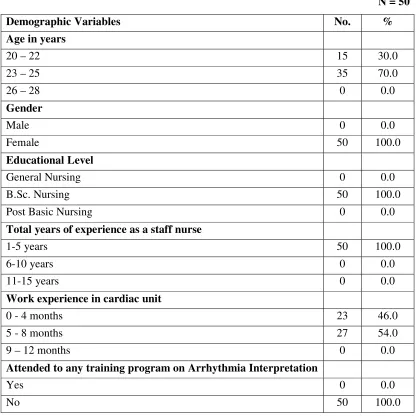
4.1 Frequency and percentage distribution of demographic variables of staff nurses.
46
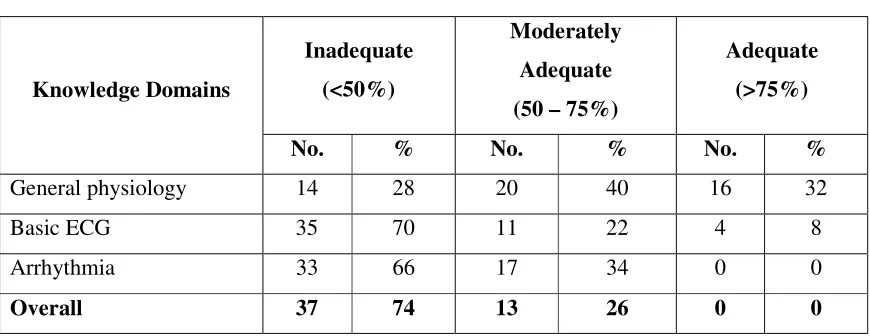
4.2 Frequency and percentage distribution of pretest level of knowledge among staff nurses.
48
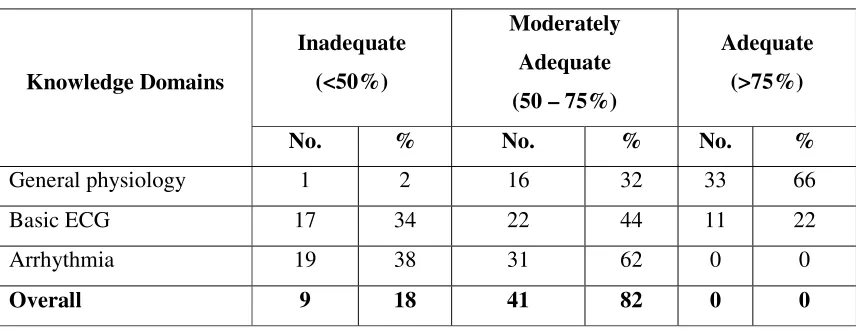
4.3 Frequency and percentage distribution of post test level of knowledge among staff nurses.
49
4.4 Mean and S.D of pre and posttest knowledge among staff nurses 50 4.5 Frequency and percentage distribution of Pre and post test level
of Arrhythmia interpretation among staff nurses.
51
4.6 Mean and S.D of pre and posttest Arrhythmia Interpretation skill among staff nurses
52
4.7 Correlation between post test knowledge and Arrhythmia Interpretation score among staff nurses.
53
4.8 Comparison of pretest and post test knowledge score among staff nurses.
54
4.9 Comparison of pretest and post level of Arrhythmia interpretation among staff nurse.
55
\4.10 Association of mean differed score of knowledge among staff nurses with their selected demographic variables.
56
4.11 Association of mean differed score of arrhythmia interpretation care among staff nurses with their selected demographic variables.
57
LIST OF FIGURES
FIGURE NO. TITLE
1.9.1 Ludwig Von Bertalanffy's concept of General System Theory
1.9.2 Conceptual Framework based on Modified Ludwig Von Bertalanffy System Model (1968)
3.15.1 Schematic representation data collection procedure 4.1.1 Percentage distribution of age of the staff nurses
4.1.2 Percentage distribution of work experience of staff nurses in cardiac unit.
4.2.1 Percentage distribution of pre and posttest level of knowledge among staff nurse
4.4.1 Percentage distribution of Pre and post test level of Arrhythmia interpretation among staff nurses.
Appendices Title A Letter seeking permission for conducting the study
B Ethical clearance certificate C Informed consent form D Tool for data collection E Intervention tool
F
Content validity
(i) Letter seeking expert’s opinion and suggestion for the content validity.
(ii) List of experts of content validity. (iii) Content validity certificates.
G Electrocardiology Course Certificate for “ECG Basics & Beyond” H Certificate of English editing
$%675$&7
Electrocardiogram (ECG) interpretation is a core clinical skill in the critical care nursing. It can provide evidence to support a diagnosis, and it is crucial for patient management by helping in diagnosing the abnormal cardiac rhythm. In potentially life threatening situations, the nurse is expected to interpret the rhythm accurately and respond appropriately. To do this the nurse must be well educated in rhythm interpretation. The present study was intended to assess effectiveness of Arrhythmia Interpretation Training (AIT) programme on knowledge and Arrhythmia Interpretation among staff nurses with the following objectives.
Objectives
• To assess the pre and post test level of knowledge and Arrhythmia Interpretations among the staff nurses.
• To correlate post test knowledge and Arrhythmia Interpretation of staff nurses. • To assess the effectiveness of Arrhythmia Interpretation Training (AIT)
programme on knowledge and Arrhythmia Interpretation among staff nurses. • To associate the mean differed level of knowledge and Arrhythmia Interpretation
score with selected demographic variables of staff nurse.
Research Methodology
Major Findings
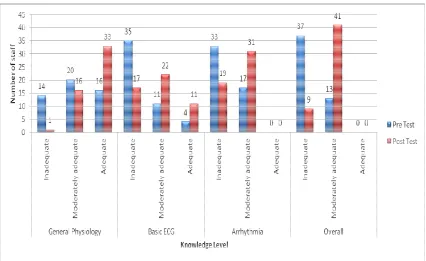
• The overall pre-test level of knowledge revealed that 37(74%) of them had inadequate knowledge and 13(26%) had moderately adequate knowledge and none of them had adequate knowledge. Whereas the overall post-test level of knowledge revealed that 41(82%) had moderately adequate knowledge and 9(18%) had inadequate knowledge and none of them had adequate knowledge. • Regarding pre-test Arrhythmia interpretation skill, all the staff nurses 50(100%)
were having inadequate level of Arrhythmia interpretation. While in the post test, nearly 14(28%) had a moderately adequate interpretation skill and 36(72%) had inadequate level of Arrhythmia interpretation skill.
• The post-test mean score of knowledge was 17.60 ±1.80 and post-test mean score of arrhythmia interpretation was 7.00±0.85. The calculated value of Karl Pearson's correlation(r) = 0.237 shows a moderate positive correlation between post-test knowledge and Arrhythmia interpretation.
• The mean knowledge score in pre-test was 15 with S.D 1.81 and the mean knowledge score in post-test was 17.60 with S.D 1.80. The calculated’ value was t = 8.67 which was found to be statistically highly significant at p<0.001 level. • The mean Arrhythmia interpretation score in pretest was 5.4 with S.D 1.34 and
the mean Arrhythmia interpretation score in post test was 7.0 with S.D 0.85. The calculated‘t’ value was t = 11.24 which was found to be statistically highly significant at p<0.001 level.
• Statistically significant association was found between the mean differed level of knowledge on arrhythmia with the demographic variable age (Ȥ2=5.51, p=0.02) at p<0.05 level.
Discussion
,1752'8&7,21
CHAPTER – 1
INTRODUCTION1.1 BACKGROUND OF THE STUDY
Critical thinking is the intellectually disciplined process of actively and skillfully conceptualizing, applying, analysing, synthesizing, and/or evaluating information gathered from, or generated by, observation, experience, reflection, reasoning, or communication, as a guide to belief and action. Critical care nursing offers a unique opportunity in the use of technology, advanced knowledge in pathophysiology, and assessment skills. It provides an opportunity to work collaboratively with physicians and other disciplines to impact patient outcomes. Critical care nurses must have excellent communication skills, caring, and compassion in the face of crisis and uncertainty. Critical care nursing is that specialty within nursing that deals specifically with human responses to life-threatening problems. A critical care nurse is a licensed professional nurse who is responsible for ensuring that acutely and critically ill patients and their families receive optimal care. Critically ill patients are defined as those patients who are at high risk for actual or potential life-threatening health problems.
The more critically ill the patient is, the more likely he or she is to be highly vulnerable, unstable and complex, thereby requiring intense and vigilant nursing care. Critical care nurses will need to keep pace with the latest information and develop skills to manage new treatment methods and technologies. As issues relating to patient care become increasingly complex and new technologies and treatments are introduced, critical care nurses will need to become ever more knowledgeable. This has required experienced critical care nurses to extend their knowledge so that they can provide care that is grounded in evidence.
2
Cardiovascular disease (CVD) is the leading cause of death in many regions worldwide, accounting for nearly one third of global deaths. Worldwide, cardiovascular disease is estimated to be the leading cause of death in the world by 2020. Acute Myocardial infarction is the most common and most serious life threatening illness that causes more deaths and disability and incurs greater economic costs than any other illness in the world. The mechanism responsible for infarction related arrhythmias include autonomic nervous system imbalance, electrolyte disturbances, ischemia and slowed condition in the zones of ischemic myocardium.
Arrhythmias have been noted in 70 to 95% of patients with Acute Myocardial infarction. Many arrhythmias may occur prior to hospitalization and thus the overall incidence of arrhythmias in acute myocardial infarction may actually be 100%. Arrhythmias are responsible for serious hemodynamic disturbances. The most significant consequence of cardiac arrhythmias is fall in cardiac output and B.P. This may precipitate or aggravate congestive cardiac failure. More than 60% of deaths associated with acute myocardial infarction occur within 1hour of the event and are attributable to malignant arrhythmias usually ventricular fibrillation. Careful monitoring of cardiac rhythm and prompt treatment of arrhythmias has sharply reduced the incidence of in-hospital deaths from arrhythmias.
The incidence type and severity of arrhythmias varies with the area of the infarct. Tachyarrhythmia’s are most commonly seen in anterior wall myocardial infarction while Bradyarrhythmias occur frequently in inferior wall myocardial infarction. The overall incidence of arrhythmias and their resultant mortality is more with anterior wall myocardial infarction.
Lown and his colleagues, through their provocative works, proved that intensive coronary care should be attempted in order to prevent the development of serious ventricular arrhythmias, which serves to reduce the mortality from acute myocardial infarction. This realisation led to the proliferation of mobile coronary care units, ICCU units and intermediate care or step down units.
The reduction in mortality has resulted from the elimination of primary arrhythmias as a cause of death. Intensive coronary care units allow continuous monitoring of cardiac rhythm by highly trained personnel, administer immediate support, treatment and prophylaxis of arrhythmias and use specialised cardiac interventions.
Nursing has progressed from ancient era to the dawn of modern nursing with the coming of Florence Nightingale and now to 21st century. The progress has been along with the socio-economic cultural changes all over the world, bringing along with it tremendous advancement in science and technology but professional nurse is no more only in the role of carrying out doctors order but is expected to make independent decisions in the day-to-day health care activities. This decision-making ability comes from having relevant knowledge, appropriate attitude and expert skills about health care measures, which together may be referred to as health care competency. Also precision in decision making about a health related activity depends on elaborate health assessment, analysis of the health parameters and identifying specific health problems. One of such important health parameters is ECG .Therefore it is essential that nurses are able to analyse ECG reading accurately, in order to make independent decisions in health care and to assist in therapeutic process.
4
Owing to the abstract nature of the basic theoretical knowledge of the ECG, its scattered characteristics, and tedious and difficult-to-learn and remember subject matter. Besides, the theoretical knowledge of the ECG is so difficult for nurses to understand that they tend to resort to traditional learning, which often leads to difficulties and errors in clinical interpretation of ECGs. Students and staff nurses tend to be unenthusiastic while learning about the ECG, and its reputation as a difficult concept causes some students to resist learning it and others to give up altogether. An adequate knowledge base should include the ability to define, recognize, and understand the basic pathophysiology of certain electrocardiographic abnormalities. Existing research, suggests that most staff nurses do not feel competent in their interpretation of ECG. In the extension this could negatively influence patient management decisions and could threaten patient safety.
Registered nurses working in diversified critical care areas and telemetry unit’s’care for patients who require cardiac monitoring on a regular basis. The RN must quickly and accurately identify life-threatening cardiac dysrhythmias, initiating appropriate treatment. The significance of nurses competency and proficiency in electrocardiographic interpretation and treatment modalities has been well documented (Van Arsdale, 1998). Nursing care is affected by the RN’s critical thinking and actions implemented according to interpretation of the patient’s electrocardiogram (ECG) rhythm. Accurate interpretation of cardiac rhythms is a fundamental role for the registered nurse working in diversified critical care areas. Nurses play an important role, directly impacting hospital patient mortality in critically ill patients (Van Arsdale, 1998). Registered nurses primarily obtain their critical care knowledge, skills, and expertise through hospital-based staff development programs, preceptors, professional journals, and continuing education opportunities (Lamb & Henderson, 1993).
interpretation promote competency and proficiency in qualified nursing staff working in diversified critical care areas (Lamb & Henderson, 1993).RNs participate in structured ECG interpretation classes, bringing varying educational backgrounds and experience.
1.2 NEED FOR THE STUDY
According to World Health Organization cardiovascular disease (CVD) is the foremost cause of illness, disability and death in India. CVD contributes to more than 50% mortality in India and still progressing. Unfortunately, a large number of people experiencing CVD are under age of sixty years which affects overall public health status of India. The cardiovascular disease burden globally as well as in India is rising sharply and presently is one of the leading causes of mortality. In 2008, out of the 57 million deaths globally around 63% (nearly 30 million deaths) were due to non-communicable diseases. Approximately 80% of these deaths have been reported to occur in low and middle income countries. Moreover, out of nine million premature death due to non-communicable disease (age<60years) around eight million occurred in low and middle income countries with 6.8% and 5.0% of Disability Adjusted Life Years (DALYs).
Cardiovascular disease have assumed epidemic proportion in India as well, the Global Burden of Disease (GBD) study reported the estimated mortality from coronary heart disease in India to be 1.6 million in the year 2000 which is estimated to increase to approximately 64 million by the year 2015. The projected rise in disease burden due to cardiovascular disease is expected to make it the prime contributors of total mortality and morbidity. Reports on CAD in Indian have shown that Asian Indians are at 3-4 times higher risk of CAD than white Americans, 6 times higher than Chinese and 20 times higher than Japanese. Various independent epidemiological studies conducted in North India suggest that the prevalence of CAD has increased from 1% in 1960 to 10.5% in 1998 in urban population.
•
India topped the world with 1531534 cardiovascular deaths in 2002.•
Incidence of CAD in young Indians is about 12%-16% which is higher than any other ethnic group.6
•
Half of the CVD related death ( that is 52% of CVD) in India occur below the age of 50 years and about 25% of acute MI in India occur below the age of 40 years.•
Age standardized estimates for Disability Adjusted Life Years lost due to CAD as per 1000 population in India are three times higher than in developed countries.Increased incidence of smoking, changes in food habits, little physical activity and increased frequency of eating out are some other major reason found to be causing more people in the country to have an ailing heart. Reviewing the register of acute coronary syndrome with 25,000 patients hospitalized with cardiac diseases in various parts of Kerala. It was noted that people in state have 17% more chance of getting heart diseases. This explains the need for medical interpretation. Electrocardiography is the most commonly performed cardiac test. This is because the ECG is a very useful screening tool for a variety of cardiac abnormalities. ECG machines are readily available in most medical facilities and the test is simple to perform risk free and inexpensive.
Nurses being a member of health team should be able to interpret ECG finding up to her extent of practice needed in clinical settings. Interpretation of ECG is the conclusion of identifying normal and abnormal findings among cardiovascular diseases with the help of measurements, rhythm analysis, conduction analysis, wave form description.
although the overall discordance was more than 50%, most ED misinterpretations were determined unlikely to have clinical significance.
Studies have shown that nurses often monitored in a single lead (regardless of diagnosis), failed to properly prepare the skin, misplaced electrodes, and were unable to differentiate wide complex QRS tachycardias, all of which could lead to false alarms or misdiagnoses (AACN Practice Alert, 2008; Drew & Funk, 2006; Funk et al., 2009; Keller& Raines, 2005). To prevent error, nurses working on monitored units need to know how to identify patients, who are at risk for potentially lethal dysrhythmias, distinguish between true and false alarms, correctly measure intervals, quickly recognize dysrhythmias, and initiate the appropriate treatment promptly.
In 2004, the American Heart Association (AHA) published a scientific statement recommending standards of practice for dysrhythmia monitoring (Drew et al., 2004). Since large randomized clinical trials did not exist, recommendations were classified according to level of evidence and were based on expert opinions. In addition, an executive summary with recommendations on how to implement the AHA standards was written by Drew and Funk (2006). Based on the data from these two documents, the American Association of Critical-Care Nurses (AACN) wrote a practice alert with specific recommendations for skin preparation, electrode placement, lead selection, and QTc interval measurements (AACN Practice Alert, 2008). The literature was reviewed to determine the best practices for educating staff nurses on ECG or dysrhythmia monitoring. Funk et al. are using an online ECG education program and unit based strategies led by unit champions to implement and sustain change.
8
Morris et al. (2009) measured the outcomes of a critical care course, of which one component was an online web-based ECG tutorial, designed to train the 173 critical care nursing staff who participated. Nurses were assigned to one of three groups based on experience level and the orientation program for each group was tailored to their needs. The program used multiple teaching strategies that included unit specific orientation with preceptors, case studies, human patient simulations, three computerized-assisted online learning modules, instructor-led modules, reference material on compact disc, and pocket guides. One limitation of this study was that the results could not be attributed to any one teaching strategy, since the model included all of them.
Gazarian (2013) analyzed nurses' response to frequency and types of electrocardiography alarms in a non-critical care setting. They aimed to identify nurses' routine practices related to continuous ECG monitoring, frequency and types of alarms, their associated nursing interventions, and the impact on the patient's plan of care. A prospective, descriptive, observational study was used to observe nine registered nurses providing care for patients receiving continuous ECG monitoring in non-critical care areas and data were recorded on a researcher designed observation tool. The findings revealed that nurses responded to 46.8% of all alarms and appropriate nursing interventions were implemented in response to alarms. They highlighted the importance of routine practices related to continue monitoring and revealed gaps in practice related to range of nursing interventions alarm management.
Kern et al (2007) explored on the importance of ECG monitoring after cardiac surgery: postoperative atrial fibrillation and the atrial electrogram. Background of the study says that atrial fibrillation is one of the most common complications after cardiac surgery and is associated with adverse outcomes such as increased mortality, neurological problems, longer hospitalizations, and increased cost of care. In this study they highlighted the importance of role of nurse in the early detection of atrial fibrillation by the recording of an atrial electrogram which is easily obtained from the bedside monitor during the postoperative period.
diagnose cardiac arrhythmias, acute myocardial ischemia and drug-induced prolonged QT interval.
Keller & Raines (2005) conducted a qualitative study perception to identify and describe critical care nurses' of arrhythmia knowledge. Data collection was done using a semi structured group session, with a moderator and analyzed by the constant comparative method. Sample size consisted of critical care nurses who work in acute care settings. They have conducted five focus groups over a period of 12 months. Participants were asked to describe their perceptions of arrhythmia knowledge and to assign a rating score related to the level of knowledge needed to identify specific arrhythmias. Findings of their study revealed that nurses lack knowledge in arrhythmia interpretation and lead placement. This enforced the need for the development of competency measures and evidence-based teaching strategies on basics of ECG and arrhythmia.
Hand (2002) identified the common cardiac arrhythmia in order to diagnose common cardiac disorders. The study was based on the observation that the interpretation of cardiac arrhythmia is very important in diagnosis of cardiac diseases. The study was conducted by examining the physiology of heart, conductive mechanism and cardiac rhythmic disorders and cardiac monitoring. The study suggested that it is necessary to interpret common cardiac arrhythmia which aids in diagnosing cardiac problems.
10
Hence the investigator was interested to the study: “Effectiveness of Arrhythmia Interpretation Training (AIT) programme on knowledge and arrhythmia interpretation among staff nurses” so that continuing educational programmes can be incorporated in order to assess the skill in arrhythmia interpretation and to determine the effectiveness of training programme.
1.3 STATEMENT OF THE PROBLEM
A pre experimental study to assess the effectiveness of Arrhythmia Interpretation Training (AIT) programme on knowledge and arrhythmia interpretation among staff nurses at a selected hospital in Chennai.
1.4 OBJECTIVES
1. To assess the pre and post test level of knowledge and Arrhythmia Interpretation among the staff nurses.
2. To correlate post test knowledge and Arrhythmia Interpretation of staff nurses. 3. To assess the effectiveness of Arrhythmia Interpretation Training programme
(AIT) on knowledge and arrhythmia interpretation among staff nurses.
4. To associate the mean differed level of knowledge and arrhythmia interpretation score with selected demographic variables of staff nurse.
1.5 OPERATIONAL DEFINITION 1.5.1 Effectiveness
In this study effectiveness refers to accomplishment of enhanced knowledge and interpretation of arrhythmias among the staff nurses after arrhythmia interpretation training programme.
1.5.2 Arrhythmia Interpretation Training (AIT)
AIT is the training given to the staff nurses for three consecutive days to enhance the knowledge and skill in the interpretation of the arrhythmia. AIT programme consisted of
Skill Training Programme - consisted of practical work sessions on Arrhythmia Interpretation. The following activities were carried out
• Calculation of heart rates(atrial and ventricular rates) • Identification of normal rhythms and arrhythmias. • Differentiation between normal and abnormal rhythms.
Teaching was done with the help of ECG booklet, original ECG strips, worksheets and PPT.
1.5.3 Knowledge
Knowledge refers to the awareness about the arrhythmias and its types. It was measured using a structured self-administered questionnaire regarding physiology of conduction system of heart and basics of ECG.
1.5.4 Arrhythmia Interpretation
In the present study it denotes the ability to recognize the abnormal cardiac rhythms and is measured using a structured self-administered questionnaire which consisted of Rhythm quiz for assessing arrhythmia Interpretation skills which includes case scenario and ECG rhythm strip.
1.5.5 Staff Nurses:
Registered nurses working in the MMM hospital with less than one year experience in cardiac unit.
1.6 HYPOTHESES OF THE STUDY
NH1: There is no significant relationship between the knowledge and arrhythmia interpretation among the staff nurses.
NH2: There is no significant difference in the pre and post-test levels of knowledge and arrhythmia interpretation.
12
1.7 ASSUMPTION
1. The staff nurses have basic knowledge on anatomy and physiology of human heart.
2. Staff nurses have basic knowledge about electrocardiogram.
3. Staff nurses need to be aware and able to identify the abnormal cardiac rhythms. 4. Staff nurses needs to periodically update their knowledge and skill on arrhythmia
interpretation through special training programme
1.8 DELIMITATION
Data collection is delimited to a period of four weeks
1.9 CONCEPTUAL FRAMEWORK
Conceptual framework for the study helps in defining the concepts of interest and proposing relationship among them. The model gives direction for the planning; data collection and interpretation of findings. Concepts are the building blocks of a theory. To describe the relationship of concepts in this study, General system theory by Ludwig Von Bertalanffy has been utilized.
1.9.1 General Concepts of General System Theory
Fig.1.9.1: Ludwig Von Bertalanffy's concept of General System Theory
Input:
Input is defined as any information, energy, or material that enters into the system through its boundary. It is a process by which a system is able to communicate and react with its environments. It is the stimuli and imported materials from the external environment.
Throughput:
Throughput is the process that occurs at some point between input and output process, which enables the input in such a way that, it can be readily used by the system. This stage was the prime potential interventions area for incentives, realignment and to improve outcomes.
Output:
It is the end product of a system. The energy, matter or information is given out by the system as a result of its processes. It is the resulting response or exported materials.
Feedback
• Negative equilibrating feedback operate within a system to restore a variable to an initial value.
¾ Deviation correcting feedback
14
• Positive equilibrating feedback operate within a system to drive a variable future from its initial value
¾ Deviation amplifying feedback
¾ Positive feedback reaches a maximum asymtomatac limit. System operates through differentiation and coordination among its components.
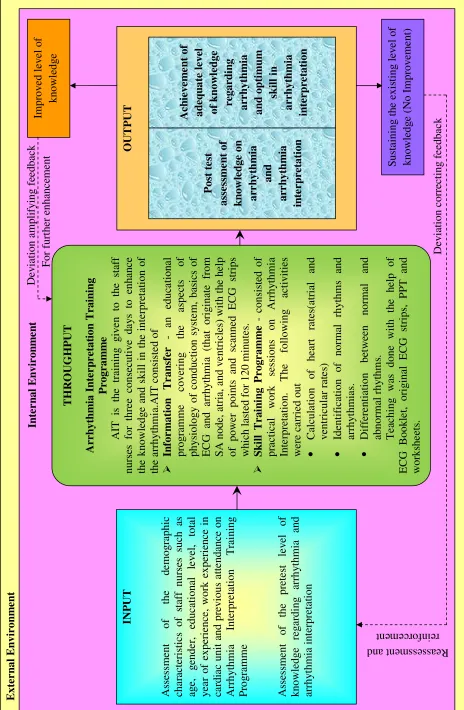
1.9.2 Application of Ludwig Von Bertalanffy's concept of General System Theory Input
In the present study the input refers to the staff nurses with characteristics age, gender, education level, total year of experience as a staff nurse, work experience in cardiac unit and previous exposure to Arrhythmia Interpretation Training Programme which may influence the knowledge and Arrhythmia Interpretation. Staff nurses are considered to be an open system who is influenced by own internal environment and in continuous interaction with external environment. The investigator assess the demographic characteristics of staff nurses which is their internal environment, level of pre-existing knowledge and arrhythmia interpretation skill to plan the activities to be carried out in throughput process.
Throughput
¾ Here the investigator administer Arrhythmia Interpretation Training Programme which consisted of
¾ Information Transfer - is an educational programme covering the aspects of physiology of conduction system, basics of ECG and arrhythmia (that originate from SA node, atria, and ventricles) with the help of power points and scanned ECG strips which lasted for 120 minutes.
¾ Skill Training Programme - consisted of practical work sessions on Arrhythmia Interpretation. The following activities were carried out
Output
In this study output refers to the gain in effectiveness in post-assessment; knowledge and Arrhythmia Interpretation scores.
FEEDBACK
It is the evaluation or response of a system. Feedback is the information of environmental responses to the systems output, which is used by the system in adjustment, correction and accommodation to interact with the environment.
If staff nurses are gaining improved knowledge and Arrhythmia Interpretation skill it is considered as positive feedback or deviation amplifying feedback which help investigator to plan for further programme to enhance knowledge.
16 INP U T As sessm ent of th e d em o g raphic cha racter istics o f s ta ff nur ses such as ag e, ge n d er, ed u ca ti o na l le ve l, to ta l y ea r o f exper ienc e, wor k exper ien ce in ca rd
iac unit and
pr ev ious a tt end anc e on Arrh y thmi a Inte rpre ta tion Tr ai ning Pro g ra mm e As sessm ent o f the pr etes t le v el of knowledg e reg ardi n g a rrh y thmia and arrhy thmia in te rpre ta ti on T H RO UG H P U T Arrh yt hm ia I n te r p r et a ti on Tra in in g Progr am m e AIT is th e trai ning g ive n to th e st aff nurses fo r three consec uti v e d ay s to enh an ce the knowledg e and s k ill in t h e int erpre ta ti on o f th e a rr h yt h m ia .A IT c o n sis te d of ¾ In fo r m ation Tr an sf er - a n educ ation al program me c o v ering th e a spects o f phy siolo g y of c ondu cti o n s y ste m , bas ics o f ECG and a rrhy thmi a (t ha t orig in at e f rom SA node , at ri a, a n d v entr ic les) wit h th e h elp of pow er poin ts and sc anned ECG strips which last ed f o r 120 m in u te s. ¾ S k il l T ra in in g P ro g ra m m e - consist ed of prac ti cal w o rk s ession s on Arrhy thmi a Inte rpretation . The fo llowing a ct iv it ies we re ca rrie d out • Calcul ation o f h ear t r ates (atr ial and v ent ric u la r ra te s) • Id en ti fi ca ti o n of n o rm al r h yt h m s an d arrhy thmia s. • Diff er en tiation be tw een nor m al and abnorm al rhy thm s. Te ac hi ng wa s done wit h t h e h elp o f ECG Bookl et , ori g inal ECG s trips , PP T and works h ee ts . OUTPUT Pos t te st assess m e n t of kn o w le d g e o n arr h yth m ia and arr h yth m ia in te rp ret at io n A c h ievem e n t of adequ a te leve l of knowl ed ge rega rd in g arrh yt hm ia and opti mu m sk ill in arrh yt hm ia in terp re ta ti on Ext er n al En viron m en t In te rn a l E n v iro n m en t Im p ro v ed l eve l of know le dg e D evi at io n a m pl if yi n g f ee d b ac k For f u rt her enhan ce m
ent Su
[image:33.612.69.533.27.737.2]5(9,(:2)
/,7(5$785(
17
CHAPTER – 2
REVIEW OF LITERATUREA literature review is a compilation of resources that provides the ground work for the study. Every research project is strengthened by preceding studies conducted in the same areas. A review of related literature enables one to get an insight into the various aspects of the problem under study. It uncovers aspects of the problem promising methodological tools, throws light on ways to improve the efficiency of the data collection and suggestions, how to improve or increase the effectiveness of data analysis and interpretation. Review of literature is therefore an essential step in the development of the research project. A brief account of various studies conducted by different investigators and a few citations from books, which were found to be relevant to the present study, are given in this chapter.
The literature review is arranged in the following sections
2.1 Section A: Studies related to general aspects of ECG
2.2 Section B: Studies related to knowledge on Arrhythmias among staff nurses 2.3 Section C: Studies related to Arrhythmia Interpretation skill among staff nurses.
2.1
SECTION A: STUDIES RELATED TO GENERAL ASPECTS OF ECGPadhi et al (2014) conducted a study on identifying prevalence of cardiac arrhythmia in a community based chiropractic practice. The study aimed to identify the feasibility of screening for cardiac arrhythmia in chiropractic clinic. The sampling was done using a convenient sampling technique. Findings of the study revealed that out of 76 patients, majority of patients have known or suspected cardiovascular abnormalities. Study results emphasized on the importance of arrhythmia screening chiropractic clinic than any other clinic.
Pathengay & Rath (2014) examined the effectiveness of arrhythmia detection in single lead ECG by combining beat and rhythm level information. The study propose the method for detecting arrhythmia in single lead ECG signals .By applying sequence of pre –processing steps, beat classification and rhythm identification. Subsequently rhythm identification uses a finite state machine to detect abnormal rhythm.
Zhu et al (2014) explored feature extraction from a novel ECG model for diagnosis of arrhythmia. The study focused on computer aided arrhythmia diagnosis using ECG. A location width and magnitude model was proposed for extracting each wave feature in ECG. A mixed approach was presented for estimating the parameters of a real ECG signal. Two kinds of arrhythmia were identified and the atrial premature complexes heart beats and premature ventricular complexes are diagnosed from normal beats using the data from MT-BIH arrhythmia data base. The results in this study demonstrate that the universal arrhythmia diagnosis is more accurate using these parameters.
19
(P<0·01, Į = 0·05).Researcher concluded that the Panoramic ECG display tool improves both accuracy and certainty of detecting ST segment changes among critical care nurses, when compared to conventional 12-lead ECG alone. They recommended that introduction of the Panoramic ECG display tool into clinical practice could help the patient to receive immediate treatment for myocardial ischemia with the potential for education in morbidity and mortality.
Jevon (2010) studied on the benefits of procedure for recording a standard 12-lead electrocardiogram among staff nurses to prevent misdiagnosis. The procedure for recording a standard 12-lead ECG is given as an educational package including preparation of the patient and of the equipment. Researcher emphasized that the nurse must be familiar with the manufacturer's recommendations regarding the use of the electrocardiograph. His findings suggest that ECG trace needs to be clear to enable accurate and reliable interpretation. This study revealed that standardization of the ECG procedure is important to achieve accurate diagnosis.
Sanoski (2010) reviewed the electrocardiographic findings and clinical presentation of common cardiac arrhythmia. They focused on component and interpretation of 12-lead ECG and compared and contrasted with ECG wave forms and clinical presentations. Study findings revealed that the timing and amplitude of ECG waveform provide valuable information regarding heart rate and rhythm, used in conjunction with clinical signs and symptoms which helps to identify cardiac arrhythmia. Findings of their investigation emphasized on the importance of identifying the ECG rate and amplitude in order to diagnose arrhythmia and follow up treatment.
AACN (2008) published ʊAACN Practice Alert: Dysrhythmia Monitoring. The Practice Alert summarized the organization‘s recommendations for dysrhythmia monitoring, including but not limited to:
• selecting Lead VI to diagnose wide QRS complex and Lead II to diagnose atrial activity and measure heart rate;
measuring the QTc interval and calculating the QTc using a consistent lead if at high risk for torsades de pointes.
The AACN is the professional organization that provides certification, education, and evidenced-based resources to nurses practicing in critical care areas, including progressive care and telemetry units. The AACN has issued over a dozen practice alerts to help close the gap between research and practice and to standardize practice for acute and critically ill patients.
Carey (2008) examined the accuracy of electrocardiographic predictors of sudden cardiac death. Background of the problem implied that, non-invasive electrocardiographic indices of depolarization and repolarization may better identify patients who are at an increased risk of SCD. Therefore researcher aimed at developing an approach to identify electrocardiographic changes associated with the highest risk of arrhythmic death among the patient selected for ICD therapy. His study findings revealed that electrocardiographic parameters that may be useful in identifying patients at risk of SCD.
Lancia et al (2008) reviews a comparison between EASI system 12-lead ECGs and standard 12-lead ECGs for improved clinical nursing practice. The study aimed to identify the basic ECG alterations between the accuracy of 12-Lead ECG, obtained through a continuous ECG monitoring system with five cables positioned in EASI mode. Background of the study implies that continuous ECG monitoring is an important device for nursing surveillance and is useful in decreasing adverse events. A sample size of 1164 ECG leads are investigated in EASI mode was compared with ECG leads acquired using the standard procedure with a traditional cardiograph. The study findings showed that ECG monitoring with EASI mode is a valid alternative to the standard 12-lead ECG for cardiac rhythm. They recommended that the routine use of the EASI system represents a valid device for the nursing surveillance of patients who need continuous ECG monitoring, improves clinical nursing practice in Coronary Care Units, supports the reduction of adverse events such as cardiac arrest and reduces the hospital costs.
21
life-threatening ventricular arrhythmias. Study focused on identifying a low-risk group with left ventricular dysfunction. Findings of the study suggested that ECG markers have the potential to aid in the safe administration of individualized medications, avoidance of sudden cardiac death, and provision of a non-invasive strategy.
Cruickshank (2008) conducted a review among general practitioners on initial management of cardiac arrhythmias. Background of the study emphasized on the importance of ECG interpretation and knowledge of resuscitation guidelines. They aimed to provide guide practitioners in managing patients who present with acute arrhythmias in the rural or regional setting. The study findings of their investigation recommended that Coronary care and emergency staff, both medical and nursing, have to the expertise with the ECG using colleague reviewing.
Jang et al (2005) examined the effectiveness of web-based teaching method versus a traditional lecture method on undergraduate nursing students' learning of electrocardiography (ECG). An experimental design was carried out with a sample size of 105 senior nursing students. Researcher developed a Web-based learning program and implemented for 4 weeks. Fifty-four students were assigned to an experimental group in 2002, and 51 were assigned to a control group in 2003. Study findings revealed that Knowledge about ECG among students in the Web-based group was significantly lower than that of students in the control group (p <.01). Conversely, the ability to interpret ECG recordings was significantly higher among students in the Web-based group (p <.05). No significant differences were found between the two groups in level of motivation or satisfaction with learning. Researcher recommended the importance of self-directed, Web-based ECG learning program appears to be effective in helping nursing students to interpret ECG recordings.
advantage for diagnosing wide-QRS-complex tachycardia and bundle branch and fascicular blocks when compared with standard ECG.
Kellen et al (1996) explored the importance of the Cardiac Arrhythmia Suppression Trial and its implications for nursing practice. Background of the study emphasized on need for suppressing ventricular premature depolarization and to improve survival. Interventional strategy consisted of the Cardiac Arrhythmia Suppression Trial was a multicenter, randomized, placebo-controlled trial. Findings of the study suggested that suppression of asymptomatic or mildly symptomatic ventricular premature depolarization in patients using encainide, flecainide, or moricizine failed to improve patient survival. The findings of their investigation suggested that supportive nursing care and arrhythmia monitoring is important until appropriate therapy for the management of arrhythmias. This enforced the importance of Clinical trials that provide an evaluation of therapies and direction for further studies.
2.2 SECTION B: STUDIES RELATED TO KNOWLEDGE ON ARRYTHMIAS AMONG STAFF NURSES
23
Tubaishat & Tawallah (2014) analyzed the effect of cardiac arrhythmia simulation on nursing student’s knowledge acquisition and retention. It provided an extremely useful part of teaching process. The study aimed to evaluate the effect of simulation – based teaching among nursing students. A randomized control trial with pretest and posttest were used to measure the knowledge. The teaching method used is simulation scenarios to experimental group and traditional lectures to control group. The result highlighted that there was a significant improvement in the knowledge after the intervention in both groups. However the experimental group demonstrated significant increase in knowledge on cardiac arrhythmia than control group. Therefore the study suggested that the simulation lead to a significant improvement in knowledge of cardiac arrhythmia among nursing students.
Laura et al (2012) evaluated knowledge retention and clinical application of basic arrhythmia among staff nurses. A descriptive study with pretest/posttest was carried out to evaluate knowledge retention and clinical application of basic arrhythmia knowledge. A sample size of 138 staff nurses were selected using convenient sampling technique. Basic orientation programme was carried over a week and the result doesn’t showed a significant improvement in knowledge retention. After the orientation programme an educational package which consisted of simulation was administered to the staff nurses over an 18-month period. Sixty-two (45%) RNs completed the whole course with pretest, posttest, and simulation and One hundred and two (74%) RNs completed only the pretest and posttest. Data showed knowledge retention and clinical application in rhythm identification between posttest score and clinical application in simulation testing at 3 months. The study showed a significant difference in knowledge retention pre- and post-program. Findings of the study recommended having in depth training programme regarding basic arrhythmia along with hospital orientation programme.
modalities on nurses' knowledge and confidence in electrocardiogram (EKG) interpretation. A convenience sample of 135 nurses was recruited in an integrated health care system in the South-eastern United States. Nurses attended an instructor-led course, an online learning (e-learning) platform with no study time or 1 week of study time, or an e-learning platform coupled with a 2-hour post-course instructor-facilitated debriefing with no study time or 1 week of study time. Instruments included a confidence scale, an online EKG test, and a course evaluation. The results of the study indicated that there is statistically significant differences in knowledge and confidence were found for individual groups after nurses participated in the intervention. Statistically significant differences were found in pre-knowledge and post-confidence when groups were compared. The study revealed that organizations that use various instructional methods to educate nurses in EKG interpretation can use different teaching modalities without negatively affecting nurses' knowledge or confidence in this skill.
Salah & Hakima (2012) evaluated the effectiveness of nursing education program on nurse’s knowledge toward arrhythmia. A quasi-experimental design was carried out using purposive sampling. Sample size consisted of 80 staff nurses .They were divided into two groups, study group consisted (40) nurses exposed to the nursing educational program and control group consisted (40) nurses were not exposed to the program. Educational package consisted of self-administered questionnaire which included the aspects of Anatomy and physiology of the heart and conduction system, Leads and placement of electrodes, polarization the heart, Time duration for impulses transition and reading ECG paper, cardiac rhythm ventricular premature contractions (VPCs), atrio-ventricular block and anti-arrhythmic drugs. Reliability of instrument was determined through the use of test and retest method. Findings of their investigation revealed a positive effectiveness of educational programme regarding nurse’s knowledge towards arrhythmia. Outcome of the study recommended that all nurses should involve in educational programmes in order to develop staff competency.
25
nursing education curriculum. The method consisted of Quasi-experimental with Seventy-seven nurses using purposive sampling. An EKG knowledge questionnaire was employed to collect data and was analyzed using the SPSS 15.0 for Windows software package. Researcher reported that the experimental group scored significantly higher on ECG knowledge after the intervention than the control group. They highlighted the importance of multimedia-assisted instruction and recommended its usage in the nursing education curriculum in order to increase learner interest and motivation.
Jeffries (2005) and Morris et al. (2009) conducted two other studies with nursing staff that evaluated the effectiveness of critical care courses, each including computer based ECG training. Both studies found that all participants successfully completed the Computer-based ECG course and demonstrated competency with ECG interpretation, which was one component of the critical care course. Due to the limited number of studies on nursing staff, studies that evaluated ECG teaching methods with nursing students were also reviewed. Two studies of nursing students compared interactive computer-based learning formats to traditional classroom instruction on interpreting dysrhythmias and performing12-lead ECG (Jang, Hwang, Park, Kim, & Kim, 2005; Jeffries, Woolf, & Linde, 2003). They found computer-based formats to be just as effective as, if not more effective as traditional formats.
Two studies on effectiveness of written self-study packets for teaching dysrhythmias to nursing staff showed conflicting results. Cadden (2007) found that a self-study learning package, supplemented with unit-based materials and learning activities with an educator, effectively developed staff competency regarding the operation of ECG monitors and the interpretation of arrhythmias. Van Arsdale (1998), however, concluded that a self-instruction reading packet was not as beneficial as instructor-led classes, which he based on lower post-test scores and students' comments that they would have preferred interaction with an instructor.
achievement. No significant differences were noted between FTF and web-based learning in learning motivation. Their results indicated that Learning satisfaction and students' experience in taking this course revealed some positive effects of blended learning. They recommended the use of blended learning program for undergraduate nursing students will provide an effective learning model.
Keller & Raines (2005) analysed the knowledge on arrhythmia among critical care nurses. The study focused to identify and describe perception of arrhythmia knowledge of critical care nurses. A qualitative research design was used and conducted the study. Data collection was done using focus group technique using semi structured group sessions. Data were analyzed constant comparative method. The results highlighted that the critical care nurses have basic intermediate and advanced level of arrhythmia knowledge but they lack skill in identifying specific cardiac arrhythmia such as tachyarrhythmia’s and heart block. Findings of their study emphasized on the importance of developing competency among critical care nurses.
Khan (2004) analysed the physiological basis and interpretation of the ECG as clinical skills. Background of the study implied the importance of understanding of the principles underlying generation of the ECG and application of this knowledge in interpretation of ECG. In this study researcher introduced the practitioner to the basic processes and mechanisms that govern formation of the normal ECG. Study concludes that the basic knowledge on ECG should help the practitioner to have a clearer understanding of interpreting the abnormalities seen on an ECG.
27
researchers reported high validity and reliability of the questionnaires and inter-rater reliability for the procedural checklist. Even though this course did not include instruction about dysrhythmia recognition, it did include instruction on correct lead placement, which is relevant to this project.
Hutchisson et al (2003) conducted a study on basic electrocardiogram interpretation among perioperative nurses. Educational package focused on the areas of changes in practice, rapid ECG interpretation and the conduction and coronary artery systems of the heart are to enable identification of normal and abnormal ECG rhythms. Researcher explained about each arrhythmia and potential causes and probable treatments are discussed.
Van Arsdale (1998) conducted four different methods for teaching cardiac dysrhythmias. The study was conducted at three moderate sized hospitals in a rural setting over two years using 244 registered nurses from the emergency room, critical care, and telemetry units. The two most effective methods for teaching arrhythmia interpretation to staff nurses were those with instructor-led classes in two-hour sessions conducted once a week over 10 weeks (Group 1) and those conducted twice a week over five weeks (Group 2), as evidenced by significantly higher post-test scores than the following two groups. All of the nurses from Group 3, who received a one week course with two-hour sessions twice a day, indicated too much new information was presented and they felt uncomfortable with their skills. Almost all of the nurses (91%) in Group 4, who received the self-instruction reading packet, indicated some classroom sessions would have been beneficial for asking questions or discussing rhythms. Limitations of this study included that the nurses were not randomized to groups, analysis was not provided on whether the groups were similar, and the course did not include bundle branch blocks. In addition, the self-study packet did not include any form of computer assisted instruction.
in CPR as first responders but only 18% had used a defibrillator during a cardiac arrest. Findings of their study suggested that staff nurses are willing to receive training in advanced cardiac life support and they possess some basic practical knowledge. Outcome of the study recommended training programme to nursing staff to improve their efficiency in resuscitation efforts.
Pettinger & Woods (1993) conducted a descriptive survey on paediatric critical care nurses' knowledge of cardiac dysrhythmias. They correlated knowledge level with demographic variables (education, nursing experience, certification, supplemental training, and area of employment and geographic region of residence).The study was conducted in American Association of Critical-Care Nurses' 19 geographic regions of the United States. Intervention consisted of a criterion-referenced, self-administered test regarding paediatric dysrhythmias was administered to a sample size of 1000 paediatric critical care nurses. Study results revealed that there is a significant association between mean total test score and with demographic variables. They concluded that nurses overall knowledge of dysrhythmias was low and recommended continuing education programs for paediatric critical care nurses.
2.3 SECTION C: STUDIES RELATED TO ARRYTHMIA INTERPRETATION SKILL AMONG STAFF NURSES
Orchard et al (2014) investigated the evolution of iPhone ECG screening by practice nurses and receptionists for atrial fibrillation The background of the study put forward that a single-lead iPhone electrocardiograph (iECG) with a validated AF algorithm could make systematic AF screening feasible in general practice. The qualitative study consist of pilot screening test was the receptionists and practice nurses screened patients aged 65 years using an iECG. They conducted fourteen semi-structured interviews with GPs, nurses, receptionists and patients were audio-recorded, transcribed and analysed thematically. The findings revealed that among Eighty-eight patients, 17 patients (19%) were in AF (all previously diagnosed). Findings suggested that nurses were confident in using the device, explaining and providing screening whereas receptionists reluctant in interpreting iECG.
29
six-stage method (SSM) with a descriptive teaching method in a single educational intervention. The method consisted of a randomized trial with 134 undergraduate nursing students. The education package consisted of brief instructional session, assigned to group A (SSM) and group B (descriptive teaching method). Samples had undergone a written test in cardiac rhythm recognition, immediately after the educational intervention (initial exam) and were also examined with an unannounced retention test (final exam),one month after instruction. Results shown that there were no significant difference between two teaching methods and was equally effective in interpreting cardiac arrhythmias. They concluded that SSM effectively develops staff competency for cardiac arrhythmia interpretation and suggested to implement the SSM method in a group with pre-existing ECG knowledge.
Werner et al (2014) conducted a prospective quantitative survey on electrocardiogram interpretation skills among ambulance nurses to describe ambulance nurses’ practical electrocardiogram (ECG) interpretation skills. A convenience sample collection was done among ambulance nurses. The score of the ECG test was correlated against the questions in the questionnaire regarding both general ECG interpretation skill and ability to identify acute myocardial infarction using Mann-Whitney U test, Kruskal-Wallis test and Spearman's rank correlation. The study result showed that there was no correlation between ECG interpretation skill and demographic factors. From their study they found out that the ambulance nurses lack ECG interpretation skills and they recommended to improve their experience in coronary care unit to have higher ECG interpretation skill.
ECG knowledge than those in the emergency department and ICU; test scores of nurses who had worked for 2-10 years were higher than else. The post-test total and domain scores at 2 weeks, and 4 months after the lecture-based learning and 1 month after a self-learning ECG handbook was presented were higher than the pre-test scores. Results of this study indicated that prior to training, ECG knowledge differed with respect to the nurses' different demographic characteristics. The lecture-based education program and self-learning handbook material were effective in improving the nurses' ECG knowledge.
Summer et al (2012) conducted a study on knowledge regarding basic arrhythmia and clinical application among staff nurses. The study was descriptive that focused to evaluate the knowledge retention over time and clinical application of basic arrhythmia knowledge followed by an orientation programme. The data showed significant difference in knowledge retention within a month and the staff nurse become efficient in the rhythm identification using simulation.
Tai et al (2012) conducted a prospective cohort study to determine the capability of nurses to identify ventricular fibrillation (VF) and ventricular tachycardia (VT) rhythms on an ECG and their ability to carry out subsequent defibrillation in a teaching hospital in Hong Kong. The intervention consisted of a questionnaire and a teaching session focusing on the identification of rhythms in cardiac arrest and defibrillation skills. Correct answers for both ECG interpretation and defibrillation decisions scored one point for each question. The differences in mean scores between the pre-teaching and post-teaching questionnaires of all nurses were calculated. The study concluded that nurses improved in defibrillation decision-making skills and confidence after appropriate brief, focused in-house training.
31
group 3 are considered as control group. The entire instructional package does not contain any specific QRS measurement instructions. The nurse data was compared with physician interpretation. The study findings showed that the nurses identified a wide QRS complex most of the time (77%), but had difficulty in accurately measuring the QRS duration (44%).
McRae ME et al (2010) evaluated efficiency of Cardiac surgical nurses' use of atrial electrograms to improve diagnosis of arrhythmia. The background of the study implied that practice standard for electrocardiographic monitoring in hospitals recommends use of atrial electrograms after cardiac surgery to help diagnose cardiac arrhythmias. The aim of the study was to determine whether use of atrial electrograms significantly improves nurses' ability to diagnose cardiac arrhythmias. A sample size of 165 staff nurses were given the educational package which consisted of standardized educational session on obtaining and interpreting atrial electrograms who had not previously received such education. In a second test, the same rhythms were provided along with atrial electrograms to 261 nurses. The findings of the study indicated that use of atrial electro grams significantly increased overall arrhythmia interpretation scores. Study findings emphasized that there is no correlation between experience with atrial electrograms and arrhythmia test scores. They concluded that nurses’ use of atrial electrograms improves diagnoses of cardiac arrhythmias.
Woodrow (2010) conducted a study to determine the ability of staff nurses to interpret the electrocardiograms. This article introduces the basic principles of reading electrocardiograms (ECGs) for nurses who are unfamiliar with reading them. For more experienced practitioners there are a number of useful articles and books (e.g. Hampton, 1992a, b) that will help further their knowledge. The ECG records cardiac electrical activity as a graph; interpretation is illustrated here by sinus rhythm. A single ECG lead (lead II) is used throughout this article. Atrial fibrillation is described to show a contrasting dysrhythmia. Specific nursing care is suggested for patients being monitored or having ECGs taken.
rhythm interpretation, over-monitoring for arrhythmias, under-utilization of ischemia monitoring, and failure to monitor for QTc prolongation when indicated.
Weatherburn et al (2009) studied about the role of off-site expert support for nurses undertaking ECGs in primary care. The researcher aimed to assist the staff nurses in decision-making process by providing the results of an audit from eight general practices and two walk-in centres. The study results showed that among 373 patients who had an ECG performed in practice, 76 had altered management decisions, 14 were saved hospital referral (11 of these from one walk-in centre), 18 were admitted to an acute hospital (10 from the same Walk-in centre), and another 24 were referred to hospital for investigation.
Mant et al (2007) conducted a study to assess the accuracy of diagnosing atrial fibrillation by primary care practitioners and interpretative diagnostic software: analysis of data from screening for atrial fibrillation in the elderly (SAFE) trial. The objective of the study was to assess the accuracy of general practitioners, practice nurses, and interpretative software in the use of different types of electrocardiogram to diagnose atrial fibrillation. Sample size consisted of 2595 patients aged 65 or over screened for atrial fibrillation .The intervention consisted of all electrocardiograms were read with the Biolog interpretative software, and a random sample of 12 lead, limb lead, and single lead thoracic placement electrocardiograms were assessed by general practitioners and practice nurses independently of each other and of the Biolog assessment. The results of the study revealed that general practitioners detected 79 out of 99 cases of atrial fibrillation on a 12 lead electrocardiogram and practice nurses detected a similar proportion of cases of atrial fibrillation. The study concluded that many primary care professionals cannot accurately detect atrial fibrillation on an electrocardiogram, and interpretative software is not sufficiently accurate to circumvent this problem, even when combined with interpretation by a general practitioner͘
33
on what content should be included in ECG education, although no recommendations were made on what should be taught in basic or advanced courses. The recommended topics in the guideline charts included electrophysiology concepts, ECG dysrhythmias and abnormalities, and specific monitoring skills.
Drew et al (2006) conducted a study to assess the accuracy of bedside electrocardiographic monitoring. The purpose of the study was to determine which leads nurse’s select for monitoring, and the accuracy of lead placement. From a random sample of nurses who were members of the American Association of Critical-Care Nurses, 302 returned a monitoring questionnaire. Average critical care experience was 8.5 years. Lead II was most often selected (74%) for single-channel monitoring; lead II plus V1 (or MCL1) were most often selected (87%) for dual-channel monitoring. Only 37% of nurses demonstrated proper technique for obtaining their single lead of choice; even fewer (13%) demonstrated proper technique for obtaining their dual leads of choice. These results suggested that misdiagnosis of arrhythmias such a wide complex tachycardia in monitored patients may be caused by inappropriate lead selection as well as inaccurate lead placement.
In a related evidenced-based medicine article on electrocardiography, Zipes et al. (2006) reported on practice guidelines for management of ventricular arrhythmia