University of Southampton Research Repository
ePrints Soton
Copyright © and Moral Rights for this thesis are retained by the author and/or other
copyright owners. A copy can be downloaded for personal non-commercial
research or study, without prior permission or charge. This thesis cannot be
reproduced or quoted extensively from without first obtaining permission in writing
from the copyright holder/s. The content must not be changed in any way or sold
commercially in any format or medium without the formal permission of the
copyright holders.
When referring to this work, full bibliographic details including the author, title,
awarding institution and date of the thesis must be given e.g.
AUTHOR (year of submission) "Full thesis title", University of Southampton, name
of the University School or Department, PhD Thesis, pagination
UNIVERSITY OF SOUTHAMPTON
The Nordic Seas Circulation and Exchanges
ELIZABETH HAWKER
A thesis submitted for the degree of Doctor of Philosophy
School of Ocean and Earth Science
UNIVERSITY OF SOUTHAMPTON
ABSTRACT
FACULTY OF ENGINEERING, SCIENCE & MATHEMATICS SCHOOL OF OCEAN & EARTH SCIENCES
Doctor of Philosophy
THE NORDIC SEAS CIRCULATION AND EXCHANGES
Elizabeth Hawker
The Nordic Seas provide the main oceanic connection between the Arctic and the deep global oceans via dense overflows between Greenland and Scotland, into the North Atlantic. An understanding of the circulation and exchanges of this region is vital for any consideration of the implications of high latitude climate change to variability in the Atlantic thermohaline circulation and consequences for regional (European) climate.
This thesis makes use of a unique data set of near synoptic hydrographic and LADCP (lowered acoustic Doppler current profiler) measurements across the entire region during summer 1999. The box inverse method is applied to this hydrographic data, using computed geostrophic velocities referenced to detided LADCP measurements. The full summer Nordic Sea flux field (volume, heat and freshwater) is quantified, studying both the exchanges across the openings to the Nordic Seas, and the interior circulation. The total volume transports imply an inflow of 1.3!±!0.5!Sv to the Nordic Seas from the Arctic Ocean, and a net export of 1.2!±!0.5!Sv across the Greenland!-!Scotland Ridge into the North Atlantic. Within the Nordic Seas 4.0!±!1.3!Sv of the warm saline inflow (s0!<!27.8) are converted to more dense waters, with the majority of the transformation (and ocean!
-!atmosphere heat loss) occurring over the southern part of the Nordic Seas. The total heat convergence within the Nordic Seas is 137!±!44!TW, giving an average flux of 51!±!16!W!m–2, and
the net input of freshwater to the Nordic Seas is 0.059!±!0.019!Sv.
Table of Contents
Chapter One: Introduction 1
Chapter Two: Overview 6
2.1 Introduction 7
2.2 Topography 7
2.3 Climate 9
2.3.1 Ocean Circulation 9
2.3.2 Atmosphere 18
2.3.3 Ice 19
2.3.4 Freshwater 21
2.4 Circulation Hypotheses 23
2.4.1 Atlantic Waters 23
2.4.2 Polar Waters 24
2.4.3 Intermediate Waters 24
2.4.4 Deep Waters 25
2.4.5 Overflow Waters 26
2.4.6 DSOW formation mechanisms 27
2.5 High Latitude Climate Change 28
2.6 Aims of this Thesis 30
Chapter Three: Data 41
3.1 Introduction 42
3.2 Experiment Design 42
3.3 Cruise Descriptions 43
3.3.1 JR44, Summer 1999 43
3.3.2 D242, Summer 1999 44
3.3.3 ARKTIS XV/3, Summer 1999 45
3.3.4 VEINS/9911, Summer 1999 45
3.3.5 SKAGEX II, Summer 1990 46
3.3.6 JM3/2000, Winter 2000 46
3.3.7 Svinøy section, Summer 1999 and Winter 2000 47
3.4 Further Data Sources 48
3.4.1 Climatological data 48
3.4.2 Tidal Models 49
3.4.3 Bathymetric Data 49
3.5 Hydrographic Data 50
3.6 Lowered Acoustic Doppler Current Profiler data 51
3.6.1 Processing 51
3.6.2 Accuracy 53
3.7 Setup of Boxes for Flux Calculations and Inversion 54
Chapter Four: Methods 62
4.1 Introduction 63
4.2 Ocean Circulation Dynamics 63
4.2.1 The Geostrophic Method 63
4.2.2 Time Dependence 64
4.2.3 Volume Transports 66
4.2.4 Heat Fluxes 67
4.2.6 Ageostrophic components of the circulation 69
4.3 Analysis of Direct Velocity Measurements 70
4.3.1 Detiding 71
4.3.2 Full-depth profile and near-bottom velocities 71
4.4 Geostrophic and Direct Velocities 72
4.4.1 Nordic Seas Openings 72
4.4.2 Nordic Seas 74
4.4.3 Northeast Atlantic 75
4.5 Derivation of the Initial Velocity Field 76
4.5.1 General Principles 76
4.5.2 Iceland-Scotland section 78
4.6 The Box Inverse Method 80
4.6.1 Setup of the Standard Model 82
4.6.2 Initialisation of the Standard Model 85
4.6.3 Weighting scheme for the Standard Model 85
4.6.4 Uncertainties 86
Chapter Five: Summer Circulation and Fluxes in the Nordic Seas 96
5.1 Introduction 97
5.2 Hydrographic Characteristics 97
5.2.1 Nordic Seas Openings 100
5.2.2 Nordic Seas 102
5.2.3 Northeast Atlantic 104
5.3 Wind - driven Circulation 105
5.4 Atmosphere - Ocean Exchanges 106
5.5 Initial Fluxes 107
5.6 The Standard Model and Solution 111
5.6.1 Constraints 111
5.6.2 Selection of Solution Degree 112
5.6.3 Standard Solution 114
5.6.4 Near full rank solution 115
5.6.5 Resolution Matrices 116
5.7 Net fluxes of the Nordic Seas 117
5.7.1 Volume Fluxes 117
5.7.2 Heat and Freshwater Fluxes 119
5.7.3 Effective Diapycnal Fluxes 120
5.8 Summer Circulation of the Nordic Seas 121
5.8.1 Upper Waters 122
5.8.2 Mid-depth Waters 124
5.8.3 Deep Waters 125
5.9 Summary 126
Chapter Six: Sensitivity of the Summer Circulation and Fluxes 176
6.1 Introduction 177
6.2 Errors in Flux Calculations 177
6.3 Formal Error Estimates 179
6.4 Inverse Sensitivity 179
6.4.1 Weighting scheme 180
6.4.2 Choice of rank 181
6.4.3 Inclusion of diapycnal velocities 181
6.4.5 Choice of initial velocity field 182
6.5 Oceanographic Sensitivity 183
6.5.1 Ekman flux 183
6.5.2 Bottom triangles 183
6.6 Asynopticity 184
6.7 Conclusions 185
Chapter Seven: Variability in the Circulation 190
7.1 Introduction 191
7.2 Seasonal variability in hydrography 191
7.3 Observations in the central Greenland Sea 192
7.4 Winter Atmosphere - Ocean Exchanges 193
7.5 Winter fluxes across the Greenland to Norway section 194
7.5.1 Hydrography 195
7.5.2 Velocity Field 197
7.5.3 Ekman transport 198
7.5.4 Volume fluxes 199
7.5.5 Heat fluxes 202
7.5.6 Freshwater fluxes 202
7.5.7 Error analysis 203
7.6 Ocean Climate 203
7.6.1 Long-term climate of the Nordic Seas 203
7.6.2 Climate of the Nordic Seas in the 1990s 204
7.6.3 The Nordic Seas during 1999 / 2000 205
7.7 Analysis of Summer Circulation 206
7.7.1 Comparison to previous work 206
7.7.2 Main questions and issues 208
Chapter Eight: Summary 220
8.1 Overview 221
8.2 Summer Circulation and Fluxes 222
8.2.1 Net fluxes 222
8.2.2 Circulation 223
8.3 Seasonal Variability 225
8.4 Future directions 226
8.5 Final Remarks 228
Appendix I. 229
List of Figures
Figure 1.1: Latitudinal profiles of net incoming short-wave radiation, outgoing long-wave radiation, and the net radiative heating of the earth (Bryden and Imawaki, 2001).
4
Figure 1.2: Components of the atmosphere and ocean energy transports required to balance the net radiative heating of the earth following Figure 1.1 (Bryden and Imawaki, 2001).
4
Figure 1.3: Map of the Arctic Region using the International Bathymetric Chart of the Arctic Ocean (IBCAO) (Jakobsson et al., 2000).
5
Figure 2.1: Bathymetry and geographic features of the Nordic Seas. 38 Figure 2.2: Bathymetry and geographic features of the Greenland - Scotland Ridge and the Northern
North Atlantic.
39
Figure 2.3: Schematic showing the general circulation of the Nordic Seas (from Fogelqvist, 2003). 39 Figure 2.4: Annual mean sea level pressure from NCEP / NCAR Reanalysis data provided by the
NOAA-CIRES Climate Diagnostics Center, Colorado, U.S.A.
40
Figure 2.5: High resolution sea ice maps of the Arctic Ocean derived from satellite (passive microwave) sensors (DMSP-SSM/I) (Kaleshcke et al., 2001).
40
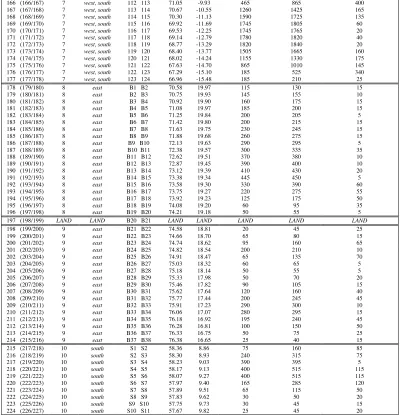
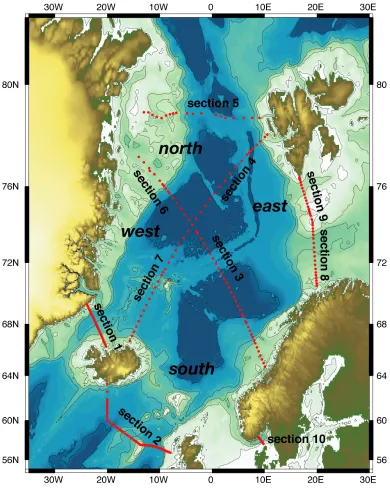
Figure 3.1: The Nordic Seas with station pair positions in red, showing the setup of boxes for the inverse calculation.
58
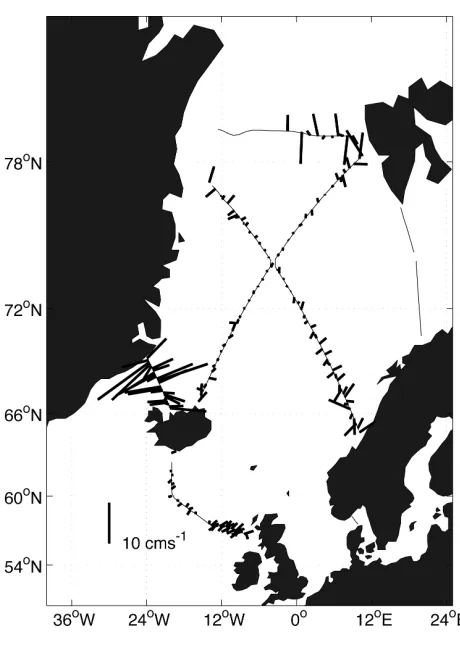
Figure 3.2: Hydrographic stations occupied during the individual cruises. 59 Figure 3.3: Comparison between the Egbert and Kowalik tidal models at two sites within the Nordic
Seas.
60
Figure 3.4: Station positions off the East Greenland coast on cruise JR44 showing the geographic locations of stations 042 and 043 in particular.
61
Figure 3.5: Geostrophic velocity (cm!s-1) for section 6. 61
Figure 4.1 87
Figure 4.2: Average tidal velocity (cm!s-1) over the duration of the hydrographic cast, applied as a
barotropic correction to the on station WT and BT LADCP profiles.
88
Figure 4.3: Contoured section of the LADCP velocity field (cm!s-1) for Denmark Strait. 89
Figure 4.4: Contoured section of the LADCP velocity field (cm!s-1) across Fram Strait. 90
Figure 4.5: Contoured section of the LADCP velocity field (cm!s-1) for the Greenland to Norway
section.
91
Figure 4.6: Contoured section of the LADCP velocity field (cm!s-1) for the Iceland to Svalbard section. 92
Figure 4.7: The differences (cm!s-1) between the WT and BT near bottom velocities (left panel) and
the normal probability plot (right panel).
93
Figure 4.8: Velocity profiles for station pair 81 at 68.1°N 6.5°E in the Norwegian Sea. 93 Figure 4.9: Cumulative volume transports (Sv) from shipboard ADCP data and LADCP data in the
upper 500!m of the water column for the Iceland to Scotland section.
94
Figure 4.10: Long term mean Sea Level Pressure for September (millibars), for 1968 - 1996. 94 Figure 4.11: Mean Sea Level Pressure for September 1999 (millibars). 95 Figure 4.12: Anomaly in Sea Level Pressure (millibars) for September 1999 from the long term mean
(Septembers 1968 – 1996).
95
Figure 5.1a: Contoured potential temperature (°C) section across Denmark Strait. 130 Figure 5.1b: Contoured salinity section across Denmark Strait. 131 Figure 5.1c: q!/!S diagram (potential temperature / salinity plot) for the Denmark Strait section. 132 Figure 5.2a: Contoured potential temperature (°C) section across the Barents Sea Opening. 133 Figure 5.2b: Contoured salinity section across the Barents Sea Opening. 134 Figure 5.2c: q!/!S diagram (potential temperature / salinity plot) for the section across the Barents Sea
Opening.
135
Figure 5.3c: q!/!S diagram (potential temperature / salinity plot) for the section across Fram Strait. 138 Figure 5.4a: Contoured potential temperature (°C) section across the Skagerrak. 139 Figure 5.4b: Contoured salinity section across the Skagerrak. 140 Figure 5.4c: q!/!S diagram (potential temperature / salinity plot) for section across the Skagerrak. 141 Figure 5.5a: Contoured potential temperature (°C) section for the Greenland to Norway section. 142 Figure 5.5b: Contoured salinity section for the Greenland to Norway section. 143 Figure 5.5c: q!/!S diagram (potential temperature / salinity plot) for the section from Greenland to
Norway.
144
Figure 5.6a: Contoured potential temperature (°C) section for the Iceland to Svalbard section. 145 Figure 5.6b: Contoured salinity section for the Iceland to Svalbard section. 146 Figure 5.6c: q!/!S diagram (potential temperature / salinity plot) for the Iceland to Svalbard section. 147 Figure 5.7a: Contoured potential temperature (°C) section for the Iceland to Scotland section. 148 Figure 5.7b: Contoured salinity section for the Iceland to Scotland section. 149 Figure 5.7c: q!/!S diagram (potential temperature / salinity plot) for the Iceland to Scotland section. 150 Figure 5.8: Contoured section of the initial velocity field (cm!s-1; LADCP referenced geostrophy) for
Denmark Strait.
151
Figure 5.9: Contoured section of the initial velocity field (cm!s-1; referenced geostrophy) across the
Barents Sea Opening
152
Figure 5.10: Contoured section of the initial velocity field (cm!s-1; LADCP referenced geostrophy)
across Fram Strait.
153
Figure 5.11 Contoured section of the initial velocity field (cm!s-1; referenced geostrophy) across the
Skagerrak.
154
Figure 5.12: Contoured section of the initial velocity field (cm!s-1; LADCP referenced geostrophy) for
the Greenland to Norway section.
155
Figure 5.13: Contoured section of the initial velocity field (cm!s-1; LADCP referenced geostrophy) for
the Iceland to Svalbard section.
156
Figure 5.14: Contoured section of the initial velocity field (cm!s-1; referenced geostrophy) for the
Iceland to Scotland section.
157
Figure 5.15: Ekman volume transports (Sv) on station pair positions. 158
Figure 5.16: Summer mean windstress field (N!m-2). 158
Figure 5.17: Full depth transports (Sv) across each section used to form the inverse boxes calculated from the initial velocity field.
159
Figure 5.18: Cumulative sum of the percentage of total variance for each solution degree of the standard model.
159
Figure 5.19: Condition number for each solution degree of the standard model. 160 Figure 5.20: Eigenvalues for each solution degree of the standard model. 160 Figure 5.21: Nondimensional norm of residual versus nondimensional norm of solution. 161 Figure 5.22: Reference velocities (cm!s-1) from the standard solution for each station pair. 161
Figure 5.23: Effective diapycnal velocities(x!10-4!cm!s-1) from the standard solution for volume and
salinity (layer interfaces 1 to 13) and temperature (layer interfaces 6 to 13).
162
Figure 5.24: Norms of solution vector (cm!s-1) for each solution degree of the standard model. 162
Figure 5.25: Diagonal of the observation resolution matrix for the standard solution. 163 Figure 5.26: Diagonal of the solution resolution matrix for the standard solution. 163 Figure 5.27: Full depth volume transports (Sv) across each section, calculated from the standard
solution and further adjusted for zero net volume flux in each box.
164
Figure 5.28: Volume transports (Sv) in layers for each station pair, calculated from the standard solution and further adjusted for zero net volume flux in each box.
165
Figure 5.29: Total heat fluxes across the northern and southern boundaries of the Nordic Seas, and total heat flux convergence (TW) over the region.
166
Figure 5.30: Total freshwater fluxes across the northern and southern boundaries of the Nordic Seas, and total freshwater divergence over the region.
166
Figure 5.31: Interior diapycnal velocities (106!m!s-1) and associated diapycnal volume transports
(106!m3!s-1) for each box.
167
Figure 5.35: Cumulative volume transports (Sv) across the Skagerrak. 171 Figure 5.36: Cumulative volume transports (Sv) for the Greenland to Norway section. 172 Figure 5.37: Cumulative volume transports (Sv) for the Iceland to Svalbard section. 173 Figure 5.38: Cumulative volume transports (Sv) for the Iceland to Scotland section. 174 Figure 5.39 Circulation scheme for the Nordic Seas (surface and mid-depth) based on results from the
standard inverse model.
175
Figure 6.1: The magnitude of the formal errors in volume transport (Sv) for each station pair. 189 Figure 6.2: Full depth volume transports (Sv) with errors, for each section, calculated from the
standard solution and further adjusted for zero net volume flux in each box.
189
Figure 7.1: Map of the Nordic Seas showing the positions of the winter reoccupations of the summer JR44 stations, the five stations described in section 7.2, and the Svinøy and Greenland to Norway sections.
211
Figure 7.2: Potential temperature and salinity profiles for stations occupied in both summer and winter.
212
Figure 7.3: Plot of potential temperature and salinity, with contoured isopycnals, for winter stations in the central Greenland Sea.
213
Figure 7.4: Potential temperature and salinity profiles from stations occupied in the central Greenland Sea during winter 2000.
213
Figure 7.5: The mean profiles of temperature and salinity observed on stations occupied in the central Greenland Sea during winter 2000.
214
Figure 7.6: Comparison of the mean profiles of temperature and salinity on stations occupied in the central Greenland Sea during summer 1999 and winter 2000.
214
Figure 7.7: Annual cycle in Atmosphere - Ocean Heat fluxes per unit area (W!m-2) over both the
Nordic Seas region and the individual inverse boxes.
215
Figure 7.8: Annual cycle in total Atmosphere - Ocean Heat fluxes (TW) over both the Nordic Seas region and the individual inverse boxes.
215
Figure 7.9: Potential temperature and salinity profiles for stations on the ‘winter’ Greenland to Norway section.
216
Figure 7.10: Mean velocities (cm!s-1) of the PIMMs floats deployed in ice against latitude. 217
List of Tables
Table 2.1a: Atlantic Waters of the Nordic Seas. 32
Table 2.1b: Polar Waters of the Nordic Seas. 33
Table 2.1c: Intermediate Waters of the Nordic Seas. 34
Table 2.1d: Deep Waters of the Nordic Seas. 35!/!36
Table 2.1e: Overflow Waters of the Nordic Seas. 37
Table 3.1: Station Pairs used to create the north, south, east and west boxes. 55!/!56!/!57
Table 4.1: Flux errors due to seasonality in the volumes of the isopycnal layers. 65 Table 4.2: Layers defined by s0, s1 and s2 surfaces, with mean layer depth and thickness. 67
Table 5.1: Conventions used in this thesis to identify water masses. 98
Table 5.2: Layers defined by s0, s1 and s2 surfaces, with area-weighted layer-average potential temperature
(°C) and salinity.
100
Table 5.3: Ekman Volume (Sv), Temperature (Sv °C) and Salinity (Sv psu) Transports calculated from the SOC and HR summer average climatologies.
105
Table 5.4: Air-Sea Heat fluxes per unit area (Wm-2), and total (TW), over both the Nordic Seas region and
the inverse boxes.
107
Table 5.5: Transport estimates (Sv) for the Nordic Seas, from the literature, the initial velocity field, and the standard solution of the inverse model.
128
Table 5.6: Heat Flux estimates (TW) for the Nordic Seas, from the literature, the initial velocity field, and the standard solution of the inverse model.
129
Table 5.7: Full depth volume transports (Sv) for each of the inverse boxes and the entire Nordic Seas region from the initial state of the standard model.
110
Table 5.8: Details of the constraints applied in the standard inverse model. 112
Table 5.9: Mean, peak and standard deviation of the barotropic corrections (cm!s-1) to the reference
velocities from the standard solution.
114
Table 5.10: Mean, peak and standard deviation of the corrections (x!10-5 cm!s-1) to the effective diapycnal
velocities from the standard solution.
115
Table 5.11: Volume transports (Sv) for each section, and for each layer, from the standard solution. 118 Table 5.12: Volume transports (Sv) summarised from Table 5.12, for exchanges between the Nordic Seas and
the North Atlantic across the Greenland-Scotland Ridge, across the Greenland-Norway section, and into the Arctic Ocean through Fram Strait and the Barents Sea Opening.
127
Table 6.1: a priori errors in the volume conservation equations, and layer mean and standard deviations of potential temperature and salinity for each box used in the inverse calculation.
178
Table 6.2: Specifications of alternative models to test inverse and oceanographic sensitivity. 180 Table 6.3: Volume Transport estimates (Sv) and Heat Fluxes (TW) for the Nordic Seas for the standard
solution and the alternative model runs.
187!/!188
Table 6.4: Summary of errors in volume flux from sensitivity tests. 185
Table 7.1: Atmosphere-Ocean Heat fluxes per unit area (Wm-2), and total (TW), over both the Nordic Seas
region and the individual inverse boxes.
194
Table 7.2: Station Pairs on the Greenland to Norway ‘winter’ section. 195
Table 7.3: Volume transports (Sv) across the Greenland to Norway section, for summer and winter, and for each layer.
200
Table 7.4: Net errors derived from the net volume fluxes (Sv) and heat fluxes (TW) across the Greenland to Norway section from sensitivity tests.
Graduate School of the
Southampton Oceanography Centre
This PhD dissertation by
Elizabeth Hawker
has been produced under the supervision of the following persons
Supervisor/s Dr Sheldon Bacon and Professor Harry Bryden
Chair of Advisory Panel Professor John Murray (to July 2003)
Professor Peter Killworth (from July 2003)
DECLARATION OF AUTHORSHIP
I, ………..,
declare that the thesis entitled
……….………
and the work presented in it are my own. I confirm that:
ß this work was done wholly or mainly while in candidature for a research degree at this
University;
ß where any part of this thesis has previously been submitted for a degree or any other
qualification at this University or any other institution, this has been clearly stated;
ß where I have consulted the published work of others, this is always clearly attributed;
ß where I have quoted from the work of others, the source is always given. With the exception of
such quotations, this thesis is entirely my own work;
ß I have acknowledged all main sources of help;
ß where the thesis is based on work done by myself jointly with others, I have made clear exactly
what was done by others and what I have contributed myself;
ß none of this work has been published before submission
Signed: ………..
Acknowledgements
I would like to formally thank NERC for the use of ARCICE data from JR44 and JM3/2000;
Sheldon Bacon and Margaret Yelland as the PSO’s on JR44; Peter Wadhams, Jan Backhaus and
Else Nøst Hegseth as the PSO’s on JM3; and Stuart Cunningham (Southampton Oceanography
Centre) for D242 data, Ursula Schauer (Alfred-Wegener-Institut) for ARKTIS XV/3 data and
Johann Blindheim for data from the Svinøy section. My thanks also to the officers, crews and all
cruise participants, without whose efforts this thesis would not exist.
My sincere thanks to my supervisors Sheldon Bacon and Harry Bryden, and to my advisory panel;
but particularly to Sheldon for his insight and encouragement, and for giving me a long rein.
Thanks to the crew and officers of the RRS James Clark Ross who were there the first time I went
to sea, and to all shipmates on that and subsequent cruises - for reminding me what this is for.
Thanks also to all in the hydrography team of the James Rennell Division; to Alberto Garabato and
Cecilie Mauritzen for helpful discussion; to Rebecca Woodgate and Peter Rhines for guidance
during my exchange to the University of Washington, Seattle, and afterwards; and to Deb
Shoosmith for her continued encouragement.
I am indebted to Sheldon and Margaret Yelland who quite literally gave me a home in Southampton,
and whose company and friendship gave my time here purpose. Thanks to my housemates; Anna
who understood about the PhD, and Chess who understood the urge to escape Southampton and
who was with me during the darkest hours. Thanks to SV Tenacious and all who sail on her, for
showing me there are other ways to ‘go to sea’. Similarly, of course, thanks to all those who have
kept me company on a hilltop or mountainside, for showing me ‘there are other mountains’ than
those down south. Finally, my thanks to Mark Brandon, for his support, for being there the first
time I went south, and for understanding.
And it goes without saying, I am forever grateful for the love and support of my parents, even when
for Mark Brandon,
who shared his South with me
One does not discover new lands without consenting to lose sight of the shore for a very long time.
Chapter One
Introduction
‘Begin at the beginning,’ the King said, gravely, ‘and go on till you come to the end: then stop.’
Lewis Carroll
Chapter 1: Introduction 2
The primary motivation for studying ocean circulation is to understand its importance to the climate
system, particularly with respect to modern concern over climate change. The Earth’s surface
receives an uneven distribution of energy from the sun, with a greater influx of solar radiation at low
latitudes (Figure 1.1). The global oceanic and atmospheric circulations balance this meridional bias
by a transport of heat from low to high latitudes (Figure 1.2; Bryden and Imawaki, 2001).
The meridional overturning circulation (MOC) of the North Atlantic releases considerable amounts
of heat to the atmosphere as warm subtropical waters are transported to high latitudes where they are
transformed to cold (and so more dense) waters. This results in a southward flow of deep cold water
and a northward ocean heat transport at all latitudes in the Atlantic Ocean (Bryden and Imawaki,
2001). This northward heat transport (even south of the equator) is peculiar to the Atlantic Ocean,
and emphasises the influence that the high latitudes of the Nordic Seas and Arctic Mediterranean
have on the global ocean circulation.
The North Atlantic Current (NAtlC) carries warm Atlantic waters from the subtropics to higher
latitudes within the North Atlantic. It is cooled and freshened as it splits to follow one pathway
through the subpolar gyre and another through the Nordic and Polar Seas (Figure 1.3) to the north
(Mauritzen, 1996a). The principal transformations of the Atlantic waters occur in the seas of the
Arctic Mediterranean, where they lose heat and become more dense. The intermediate waters which
then overflow the Greenland-Iceland-Scotland ridge contribute to the source waters of North
Atlantic Deep Water (NADW). The importance of understanding the variability and formation
mechanisms of these overflows has been emphasised by studies of the North Atlantic which have
shown how both the strength and structure of the meridional overturning are affected by the
downstream development of the overflows (Saunders, 2001; Wood et al., 1999).
The data which provided the framework and motivation for this PhD were collected under the
auspices of ARCICE (Arctic Sea Ice and Environmental Variability), a thematic programme of the
UK Natural Environment Research Council (NERC). The core cruise from the ARCICE
programme, JR44 (CATS-MIAOW), was the most extensive modern major synoptic survey to be
made within the Nordic Seas, and the data provide a unique set of near synoptic hydrographic and
LADCP (lowered acoustic Doppler current profiler) measurements across the entire region during
summer 1999. The box inverse method is applied here, to this data together with supplementary
hydrographic data, using geostrophic velocities referenced to detided LADCP measurements where
possible. A further ARCICE cruise (JM3) also collected winter data over a reduced region of the
Nordic Seas. This data set is used to characterise the winter circulation and to contrast it to the
summer circulation.
The Nordic Seas provide a substantial part of the headwaters of the Atlantic thermohaline
circulation. The water mass transformations within them provide a direct link between the
atmosphere and ocean and are of consequence for the stability of the global thermohaline
Chapter 1: Introduction 3
sealers and whalers, and earlier (e.g. Koch, 1945), and there have been oceanographic studies since
the era of Knudsen (1899) and Nansen (1902). However, while many of the key processes involved
in the ventilation, pathways and overflows of the Nordic Seas are quantified and understood, there
remain many outstanding questions, and an overall understanding of the components of the Nordic
Seas system is yet to be established. To this end, this thesis quantifies the full Nordic Sea flux field
(volume, heat and freshwater), thus determining the exchanges between the Nordic Seas and the
Arctic Ocean to the north, the Barents Sea to the east, and North Atlantic to the south, via the North
Atlantic Current inflow and the Denmark Strait and Iceland-Scotland overflows. This is the first
study to be able to make use of synoptic hydrographic data across the entire region with concurrent
direct velocity measurements on most sections; and can therefore provide a new estimate of the
long-term mean summer fluxes and exchanges. The winter data also allow a winter circulation to be
constructed, suggesting how the summer mean field might be extrapolated to provide an estimate of
the ‘true’ annual mean flux field.
The structure of this thesis is as follows: Chapter 2 gives a general overview to set the work in
context and outlines the aims in view of the outstanding questions concerning the circulation of the
Nordic Seas. Chapters 3 and 4 give detailed descriptions of the data and methods used for this
study. The main results are presented in Chapter 5, which describes the summer circulation and
fluxes of the Nordic Seas. A study of the sensitivity of the inverse model and a discussion of errors
are the subject of Chapter 6. A discussion of the variability of the circulation and fluxes of the
Nordic Seas is made in Chapter 7, with reference to winter hydrographic data and the general ocean
climate. Chapter 8 summarises the conclusions of this thesis and briefly considers the future of
Chapter 1: Introduction 4
Figure 1.1: Latitudinal profiles of net incoming short-wave radiation, outgoing long-wave radiation, and the net radiative
heating of the earth (Bryden and Imawaki, 2001). The latitudinal scale is stretched so that it is proportional to the radius of
the earth. Q is the incoming short wave solar radiation, a is the albedo of the Earth, E is the outgoing long wave black body radiation, and R is the net radiation balance.
Figure 1.2: Components of the atmosphere and ocean energy transports required to balance the net radiative heating of
the earth following Figure 1.1 (Bryden and Imawaki, 2001). The total energy transport is that required to balance the net
radiative heating/cooling of the earth following Figure 1.1. The standard atmospheric energy transport is here divided into
the dry static atmospheric energy transport and the latent heat transport, because the latent heat transport is fundamentally
a joint atmosphere-ocean process as the atmospheric water vapour transport is balanced by an opposing oceanic freshwater
transport. The ocean heat transport is determined by integrating over the oceans the spatial distribution of
atmosphere-surface heat exchange calculated by subtracting the atmospheric energy transport divergence from the radiative heating at
[image:18.595.164.486.453.659.2]Chapter 1: Introduction 5
Figure 1.3: Map of the Arctic Region using the International Bathymetric Chart of the Arctic Ocean (IBCAO)
Chapter Two
Overview
2.1 Introduction 7
2.2 Topography 7
2.3 Climate 9
2.3.1 Ocean Circulation 9
(i) General Circulation 9
(ii) Deep water formation 12
(iii) Variability 14
(iv) Circulation of the Arctic Ocean and Barents Sea 16
2.3.2 Atmosphere 18
2.3.3 Ice 19
2.3.4 Freshwater 21
2.4 Circulation Hypotheses 23
2.4.1 Atlantic Waters 23
2.4.2 Polar Waters 24
2.4.3 Intermediate Waters 24
2.4.4 Deep Waters 25
2.4.5 Overflow Waters 26
2.4.6 DSOW formation mechanisms 27
2.5 High Latitude Climate Change 28
Chapter 2: Overview 7
2.1
Introduction
The Nordic Seas provide the main oceanic connection between the Arctic and the deep global
oceans via the exchanges with the North Atlantic across the Greenland-Scotland Ridge. The inflow
of warm, salty Atlantic waters and the outflow of ice and cold, fresh Arctic waters form two major
components of the Nordic Sea circulation, and influence the long-term variability of the overflows
into the North Atlantic. An understanding of the circulation and exchanges of the Nordic Seas is
vital for any consideration of the implications of high latitude climate change to variability in the
Atlantic thermohaline circulation and consequences for regional (European) climate.
This chapter gives a general overview to set the work of this thesis in context. The outstanding
questions concerning the circulation of the Nordic Seas reveal the impetus for this thesis, the aims of
which are outlined at the end of this chapter.
2.2
Topography
Oceanic topography influences the circulation, both by restricting exchanges and steering flow. The
study of the Nordic Seas (Figure 2.1) has, since before the time of Nansen, been confused by the use
of different terminology to describe geographical features and define water masses. For
Helland-Hansen and Nansen (1909) discussion of the Norwegian Sea included the waters of the Greenland,
Iceland and Norwegian Seas. These have also been aptly referred to as the ‘GIN Seas’ (Aagaard
and Carmack, 1989). Today they are known collectively as the Nordic Seas (Hurdle 1986), and
together with the Arctic Ocean, form the Arctic Mediterranean. Even today, however, their status is
contentious; whether to be regarded as the northern marginal seas of the Atlantic, or the southward
‘Atlantic sector’ extension of the Arctic?
The Greenland-Scotland Ridge itself (Figure 2.2) was discovered by various expeditions in the late
1800s (for overview, see Bacon, 2000). In particular, Denmark Strait, the part of the ridge between
Greenland and Iceland, was identified by soundings made by the Royal Danish Navy from 1877 to
1879. The presence of a ridge had been inferred by contemporary oceanographic expeditions which
identified subsurface ‘warm’ and ‘cold’ areas to the south and north of Iceland respectively. It
effectively acts as a dam to the deep waters of the Arctic, but allows exchanges of surface and
intermediate waters through various gaps. Denmark Strait and the Faroe Bank Channel (the
southward extension of the Faroe-Shetland Channel between the Faroe Islands and Scotland),
provide the deepest connections with sill depths of 600!m and 850!m respectively, while the
Iceland-Faroes ridge is cut by four ‘notches’ with sill depths of less than 450!m (Meincke, 1983).
The Greenland-Scotland Ridge constitutes a physical barrier between the Nordic Seas and Arctic
Ocean to the north, and the Atlantic Ocean to the south. As such, it restricts the exchanges of
Chapter 2: Overview 8 the north and the south of the ridge were noted as far back at the late 1800s. It may therefore be
more reasonable to consider the Nordic Seas as the southerly extension of the Arctic rather than
within the northern margins of the Atlantic.
The individual sub-basins of the Nordic Seas are defined by the submarine topography (Figure 2.1).
The Iceland Sea (~1800!m in depth), between Greenland, Iceland and the island of Jan Mayen, is
bounded by the Greenland-Iceland ridge to the south, and the Jan Mayen Fracture Zone to the north.
The Norwegian Sea is separated into the Norwegian (~3600!m in depth) and Lofoten (~3200!m in
depth) Basins and further north, extends east of the Knipovich Ridge towards Fram Strait. The
Greenland Sea is separated from the Norwegian and Iceland Seas by the Mohns Ridge and the Jan
Mayen Fracture Zone, respectively. The Mohns Ridge has numerous traverse gaps, some of which
are very important in the exchange of waters between and within basins, such as the broad saddle
(~2400!m depth) at ~75°30’N. The western depression of the Iceland Sea and the southern
depression of the Greenland Basin are connected (at a depth of ~1600!m) between the Greenland
continental slope and the westernmost portion of the Mohns Ridge by the Greenland!-!Jan Mayen
Gap. A shallow shelf leads east from the Nordic Seas into the Barents Sea, between Norway, Bear
Island and Svalbard. To the south of Bear Island lies Bjørnøyrenna, a channel with a maximum
depth of ~500!m. Storfjordrenna lies to the north of Bear Island, a channel with depth of ~300!m,
which shoals to the east, and is blocked by Svalbard to the north.
Fram Strait, between Greenland and Svalbard, provides the deep connection (sill depth of 2600!m)
between the Nordic Seas and the Arctic Ocean. The Arctic Ocean itself is a semi-enclosed ocean
(Figure 1.3). Its connections to the global oceans, apart from Fram Strait, are restricted to
exchanges with the North Atlantic through the Barents Sea (~250!m depth) via the Nordic Seas, and
the Canadian Archipelago (~200!m depth); and exchanges with the Pacific through the Bering Strait
(50!m depth). The Arctic Ocean is most simply considered to comprise of the Arctic Shelf Seas and
two deep basins; the Canadian basin (maximum depth of ~3800!m) and the Eurasian basin
(maximum depth of 4200!m) divided by the Lomonosov Ridge (sill depth of ~1400!m). The
shallow continental shelf regions make up as much as ~53!% of the entire area of the Arctic Ocean
(Jakobsson, 2002), compared to a range of 9.1 to 17.7!% for the remainder of the global oceans,
implying that its circulation may be particularly sensitive to sea level changes. The physical
restrictions of Bering Strait and the Canadian Archipelago mean the principal exchanges between
the Arctic and the global oceans occur across the Greenland-Scotland ridge system.
The Nordic Seas are also connected to the North Atlantic via the North Sea and English Channel
(Figure 2.2). The North Sea is a shallow (~100!m) marginal shelf sea bounded by the landmasses of
the United Kingdom and continental Europe. The only deep connection between the Nordic Seas
and the North Sea is a continental shelf depression called the Norwegian Trench. The deeper parts
of this follow the Norwegian coast into the Skagerrak (maximum depth of 710!m) and onwards into
Chapter 2: Overview 9 Within the North Atlantic, to the south of the Greenland-Scotland Ridge, the Irminger Basin off the
east coast of Greenland is separated from the Iceland basin by the Reykjanes Ridge, and further to
the east the Rockall-Hatton Plateau separates these basins from the Rockall Trough. Exchanges
between the Irminger and Iceland basins (between the western and eastern North Atlantic) are
limited, with the deepest passage being through the Charlie-Gibbs Fracture Zone.
2.3
Climate
The oceanic and atmospheric circulations of the Nordic Seas, together with the cryosphere, form
major components in the high-latitude climate system.
2.3.1 Ocean Circulation
A schematic of the oceanic circulation of the Nordic Seas is illustrated in Figure 2.3. Although the
broad features (inflows, overflows, boundary currents, basin-scale gyre circulations) are relatively
well understood, the specific details of the interior circulation, in particular, are not yet well
determined. The general oceanic circulation of the Nordic Seas is characterised by a surface inflow
of Atlantic Water towards the Arctic (via Barents Sea and Fram Strait) and a surface outflow of
cold, fresh water from the Arctic to the North Atlantic, separated by cyclonic gyres in the Greenland
and Norwegian Seas (Hopkins, 1991).
(i) General Circulation
The Nordic Seas can be considered as an oceanic system with the East Greenland Current (EGC) as
its Western Boundary Current. The term ‘Sea’ is used here to identify parts of the ocean with
distinguishing characteristics. However, the region can also be considered as a ‘marginal sea’ in as
much as communication with the Atlantic Ocean is restricted by the Greenland-Scotland Ridge, and
is limited to exchanges through the deeper channels. Topography plays an important role in steering
the general flow.
A continuation of the NAtlC carries an inflow of warm, saline North Atlantic surface waters
(6!<!q!<!10°C; 35.1!<!S!<!35.3) over the Greenland-Scotland Ridge into the Nordic Seas. It has
been suggested that Mediterranean Sea outflow may form a contribution to this inflow (Reid, 1979).
Although the distinct silicate signature of Mediterranean Water indicates its influence within the
Norwegian Sea, it is now thought this is via an indirect route, supplying the interior Atlantic with
high salinity water (McCarney and Mauritzen, 2001; New et al., 2001; Slater, 2003), rather than via
a direct undercurrent along the eastern boundary.
Within the Nordic Seas, the Norwegian Atlantic Current (NAC) transports inflowing Atlantic Water
(AW) northwards along the coast of Norway, dominating the surface waters of the Norwegian Sea
Chapter 2: Overview 10 and provides Norway with its relatively mild climate despite its northern latitude. Some Atlantic
waters also enter the Nordic Seas through Denmark Strait via the Irminger Current which follows
the northwest coast of Iceland (Stefansson, 1962). These join the western branch of the NAC which
is topographically guided from the Iceland-Faroe Front through the Nordic Seas towards Fram
Strait. The eastern branch of the NAC carries AW inflow through the Faroe-Shetland Channel
northward along the Norwegian shelf edge, reaching current speeds of above 30!cm!s-1. Some of the
waters in this eastern branch continue towards the Arctic Ocean via the Barents Sea, while the
remainder join the western branch and flow towards Fram Strait.
The exchanges between the Nordic Seas and the North and Baltic Seas are limited, but are of
particular consequence with respect to the freshwater fluxes. Waters within the Baltic are typically
very fresh, with an average salinity of 8 (Rodhe and Winsor, 2003), since river runoff and
precipitation strongly exceed evaporation. The relatively high sea level within the North and Baltic
Seas (compared to the Nordic Seas), attributed to this low-salinity water, impedes the entrance of
NAW and prevents any significant portion from exiting via the English Channel (Hopkins, 1991).
Any of the Atlantic Water within the NAC that does enter the North Sea either recirculates, or is
mixed into the North Sea. The North Sea outflow includes fresh Norwegian Shelf Water,
originating in the Baltic Sea, which is carried northwards along the Norwegian coast in the
Norwegian Coastal Current (NCC). Hopkins (1991) suggested that the Baltic outflow to typically
be ~0.02!Sv, with the remainder of the North Sea runoff contributing 0.01!Sv; such that a typical
outflow of 1!Sv would be balanced by a recirculating inflow of about 0.97!Sv.
The complicated topographic structure of Fram Strait leads to a splitting of the West Spitsbergen
Current carrying Atlantic Water northward into at least three parts. One part follows the shelf edge
and enters the Arctic Ocean north of Svalbard. This part has to cross the Yermak Plateau, which
presents a sill for the flow with a depth of about 700!m. A second branch flows northward along the
northwestern slope of the Yermak Plateau and the third part recirculates immediately in Fram Strait
at about 79ºN and exits in the EGC. The size and strength of the different branches largely
determine the input of oceanic heat to the inner Arctic Ocean.
To the west of the Nordic Seas, the EGC provides the most direct connection from the Arctic to the
North Atlantic. It flows south-westwards along the eastern coast of Greenland carrying cold, fresh
polar water and ice out of the high Arctic through Fram Strait, and on towards Cape Farewell at the
southern tip of Greenland via Denmark Strait. Return Atlantic Water from the Fram Strait region is
carried the length of the East Greenland coast into the northern North Atlantic. North of Denmark
Strait, the EGC also carries waters recirculating within the Greenland Sea gyre, and deep and
intermediate waters from the Arctic and Nordic Seas, some of which contribute to the overflow
waters. The content and characteristics of the current change from north to south, and
transformations within the current may contribute to the formation of Denmark Strait Overflow
Chapter 2: Overview 11 Greenland coast (Rudels et al., 1999), increasing from ~10!Sv in Fram Strait to a maximum
transport of ~30!Sv in the Greenland Sea gyre in winter, and decreasing to a strength of ~3!Sv as it
leaves the Nordic Seas via Denmark Strait. Woodgate et al. (1999) found that current speeds within
the EGC can reach up to about 50!cm!s-1 and estimated the mean annual transport at 75°N to be
21!±!3 Sv (with a maximum winter transport of 37!Sv), using 9°W as the eastern boundary of the
current.
The cyclonic Greenland Sea gyre comprises a northward warm water branch and a southward cold
water branch. The former is the northward flowing warm, saline AW in the NAC. Some of this
AW flows westward into the interior of the gyre before forming the Spitzbergen Current through
Fram Strait into the Arctic Ocean. The latter is the southward flow of cold, fresh water in the EGC
out of the Arctic Ocean, some of which flows eastward into the interior of the gyre as the Jan Mayen
Current (JMC) along the Jan Mayen Ridge, and as the East Icelandic Current further south. The
JMC is an eastward flow emanating from the EGC, flowing to the north of Jan Mayen Island,
closing the southern limb of the Greenland Sea gyre (Bourke et al., 1992). The surface waters of the
JMC are cold and fresh (due to their origin in the EGC) relative to surface waters elsewhere in the
gyre, and so have a significant role in carrying freshwater into the gyre. During winter, the current
can sometimes be associated with the formation of the Odden ice tongue (section 2.4.3). Within the
central region of the gyre, results from a tracer-release experiment suggest that, under present
conditions vertical mixing may be dominated by rapid year-round turbulent mixing, rather than
convection (Watson et al., 1999).
The Jan Mayen Fracture Zone provides a deep connection (~2200m) through the Mohns Ridge
separating the deep basins of the Greenland and Norwegian Seas (Seolen, 1986). Current meter
measurements from the early 1980s show a steady flow from the Greenland Sea to the Norwegian
Sea with an average speed of about 7-8!cms-1 (Swift and Koltermann, 1988). However, with the
virtual cease of GSDW production (section 2.5) Osterhus and Gammelsrod (1999) suggest that the
transport through the Jan Mayen Channel may have reduced or even reversed, cutting off the deep
Norwegian Sea from the influence of the GSDW and its changes. From current meter
measurements during 1992 and 1993, they indeed found a very weak flow into the Greenland Sea.
It remains open to question whether this reversal of the deep-basin exchanges within the Nordic
Seas is a permanent or intermittent feature.
It has been known that dense water overspills the Greenland-Scotland Ridge into the North Atlantic
for more than a century (Knudsen, 1899). It was not, however, appreciated that these overflows
were implicated in the formation of North Atlantic Deep Water (NADW) and the ventilation of the
deep oceans. Initially it was suggested that most NADW was formed to the southeast of Greenland,
and the overflows were assumed not to make a substantial contribution (Nansen, 1912). Sverdrup et
Chapter 2: Overview 12 (1955) was the first to realise the significance of the dense northern overflows across the
Greenland-Scotland Ridge.
The deepest parts of the Denmark Strait overflow have temperatures below 0ºC and salinities
between 34.92 and 34.93 (characteristic of Norwegian Sea Deep Water found in the Iceland Sea).
At intermediate depths, waters typically have temperatures between 0ºC and 1ºC and salinities
between 34.5 and 34.94. At shallow depths, the cold, fresh waters of the East Greenland Current
have temperatures below 0ºC and salinities below 34.5. The mean (time-averaged) flux of water
colder than 2ºC has been found to be in the region of 2.9 Sv (Ross, 1984).
The principal overflow of the Iceland-Scotland section of the ridge occurs through the Faroe Bank
Channel (sill depth 850!m), although episodic overflows do occur west of the Faroe Islands
(Meincke, 1983; Saunders 2001). Estimates of the volume transport of overflow through the Faroe
Bank Channel give a flux of about 1.9!Sv (q!<!3°C) (Østerhus and Gammelsrod, 1999; Saunders,
1990a), while the Iceland-Faroe overflow is thought to be ~1!Sv (Hansen and Østerhus, 2000;
Meincke, 1983).
Within the North Atlantic, the paths of the overflows are determined by the topography of the
Iceland and Irminger basins. The downstream properties of the cold, fresh, dense overflow waters
change as the ambient Atlantic waters are entrained. The Iceland-Scotland component flows
anticlockwise round the Iceland Basin, and through the Charlie-Gibbs Fracture Zone into the
Irminger Basin. Here, it is incorporated with the Denmark Strait overflow descending to form the
Deep Northern Boundary Current (DNBC) of the North Atlantic (McCartney, 1992). These dense
northern overflows contribute to the formation of North Atlantic Deep Water (NADW) (Dickson
and Brown, 1994). North Atlantic Deep Water (NADW) forms the deep component of the
overturning circulation and can be traced into the Southern, Indian and Pacific Oceans (Schmitz and
McCartney, 1993).
(ii) Deep water formation
The formation of dense water and the associated water mass transformations underpin the
thermohaline circulation and set the properties of the deep ocean. Within the Arctic Mediterranean,
deep water formation has occurred through both open-ocean deep convection in the Greenland Sea
and convection mechanisms due to the formation of ice within the Arctic shelf seas.
The deep ocean is insulated from the direct influence of the atmosphere by the strong vertical
density gradients of the oceanic thermocline (Marshall and Schott, 1999). The surface layers of the
ocean undergo a regular cycle of homogenisation and restratification in response to the annual cycle
of buoyancy fluxes at the sea surface. Over the majority of the ocean the mixed layers extend to
depths of several hundred metres at most. In a few regions, however, deep convection mixes most
of the water column. These regions are characterised by weak stratification below the mixed layer
Chapter 2: Overview 13 The intermittent process of deep convection involves three phases (Marshall and Schott, 1999);
large-scale preconditioning (occurring over 100’s!kms), localised deep convection (on scales of the
order 1!km), and lateral exchange between the convection site and the ambient ocean (advective
processes on the scale of 10’s!kms). Large heat and freshwater fluxes are induced over the
Greenland Sea by cold, dry winds blowing over the water from land or ice surfaces. Within the
Greenland Sea, the weakly stratified waters of the interior are close to the surface where they are
subject to intense surface forcing during winter. In particular, the depth of the s0!=!27.9 isopycnal
rises from greater than 200!m at the periphery to less than 50!m in the central Greenland Sea
(Marshall and Schott, 1999). In the interior of the gyre a thin layer of Arctic surface water
originating from the East Greenland Current overlies a layer of intermediate water. Weakly
stratified Greenland Sea Deep Water, formed during previous convection events, lies below these
water masses. In early winter, as ice is formed eastward across the Greenland Sea, brine rejection
increases the density of the surface layer, while the mixed layer under the ice cools and deepens to
about 150!m. During some years, later in the winter season, the Odden ice feature forms (section
2.4.3). This was a regular feature, well known to whalers and sealers as the ‘Isodden’ or ‘Odden’
(Promontory) (Koch, 1945; Wadhams, 1981). It extends to the northeast enclosing an ice-free bay
the ‘Nordbukta’. This ice-free bay is thought to be largely a result of southward ice export due to
strong northerly winds (Visbeck et al., 1995). The eventual occurrence of deep convection depends
on the seasonal development of the surface buoyancy flux with respect to the initial stratification at
the beginning of the winter period. If the near surface stratification is eroded by the winter
buoyancy loss and meterological conditions are favourable then deep convection may occur. The
vertical heat transfer of deep convection then progresses to an advective horizontal transfer
associated with eddies.
In addition to open ocean deep convection, dense waters are also formed by convection mechanisms
due to the formation of ice. During periods of ice growth the salinity of the underlying water is
increased as brine is rejected. The high density of this cold, saline surface water causes it to sink,
entraining the ambient water. When this occurs in the shelf seas these cold, saline waters
accumulate and spread from the interior shelves towards the shelf edge. As they sink to depth in the
central ocean basins they modify and contribute to the deep waters (Schauer, 1995).
Dense waters formed in the Arctic shelf seas through the process of brine rejection act to ventilate
the deep waters of the Arctic Ocean (Rudels, 1995; Rudels and Quadfasel, 1991). Within the
Barents Sea, the formation of dense shelf waters occurs mainly in the coastal polynas (areas of open
water within ice covered regions) off Svalbard, Novaya Zemlya, and Franz Josef Land. Storfjorden
is a shallow fjord south of Svalbard with a wide southern opening towards the Barents Sea. Under
certain conditions a polyna will form as cold polar air is advected by easterly winds and drives ice
off the coast. New ice rapidly forms in this area of open water, rejecting salt into the underlying
Chapter 2: Overview 14 their salinity is increased, until eventually they sink. There has been direct observational evidence
for the sinking of this dense shelf water into a deep ocean basin (Quadfasel et al., 1988). Storfjorden
is bounded to the south by a shallow sill over which the dense shelf water eventually spills. This
plume of bottom water flows around the southern tip of Svalbard, along the western continental
slope and into Fram Strait where it sinks to depths of more than 2000!m. Along its descent path it
entrains warm Atlantic water from the West Spitsbergen Current, and Norwegian Sea Deep Water.
(iii) Variability
Seasonality in the flow over the domain of the Nordic Seas generally takes the form of a winter
intensification of the circulation. Moored current meters in the EGC at 75°N showed the current to
vary from 11!Sv in summer to 37!Sv in winter (Woodgate et al., 1999). Since no significant
seasonal signal has been observed in either Fram Strait or Denmark Strait, this suggests that the
seasonal flow is confined within the Greenland Sea and that the winter intensification of the gyre
circulation is of the order 100%. Jakobsen et al. (2003) found the winter intensification to
correspond to about 20!% of the mean flow over the remainder of the Nordic Seas, although stronger
for the eastern boundary currents and jets associated with topographic features. This seasonal
variability was also observed using long-term measurements with moored instruments in the NAC
near 63°N (Orvik et al., 2001).
Open-ocean deep water formation is not a steady state process, illustrated by the great variability in
the intensity of convection in the Greenland Sea on interannual and interdecadal timescales
(Dickson et al., 1996). In particular, conditions for deep convection in the Greenland Sea are
influenced by the effect of freshwater export (ice transport) on the oceanic density stratification.
Direct evidence of the extent of the convection regime is sparse since over the past two decades
deep convective activity in the Greenland Sea has weakened. Indirect evidence from tracer
concentrations indicates that there was ventilation of the deep waters below 2000!m during the
active convective period in the 1970’s (Smethie et al., 1986), and has allowed estimates of renewal
times to be made (Schlosser et al., 1991). More recent observational data suggest that convection
has latterly reached only to depths of about 1500!m (Rudels, 1989), although deep convection was
triggered in the Nordbukta region in 1989 with individual deep mixed profiles observed by
shipboard hydrographic profiling (Rhein, 1991). Based on oceanographic cruises to the central
Greenland Sea between 1991 and 2000, using temperature and salinity data, Budeus et al. (1998)
conclude that winter convection was extremely weak after 1993, not even ventilating the
intermediate waters, despite increasing salinities in the upper layers. Tracer inventories from the
same cruises, however, do show that some ventilation of the deeper waters did occur, with the
strongest ventilation between 1994 to 1995 and 1999 to 2000 (Bonisch et al., 1997; Karstensen et
al., 2002). With the absence of deep convection the temperatures of the deep waters within the
Chapter 2: Overview 15 Variability in the temperature and salinity of the North Atlantic inflow has been observed on
seasonal to decadal timescales (Loeng et al., 1992). Mork and Blindheim (2000) used hydrographic
observations on the Svinøy section, which runs northwest from about 62°N on the Norwegian coast
to 64°40’N 0°E, to investigate variations in the Atlantic inflow to the Nordic Seas using data from
the winter 1955 to 1973 and from the summer 1978 to 1996. They concluded that interannual
variations in the Svinøy section are controlled mostly by a large-scale pressure system that
influences the transport of Atlantic water over the Scotland-Iceland Ridge. They suggested that
variations in the North Atlantic Oscillation (NAO; see section 2.3.2) may influence the strength of
the transports over the Ridge. For example, an increase of westerly winds would move more
Atlantic water closer to Norway, bringing colder and fresher water from the Norwegian and Iceland
Seas further east. A recent survey of the Atlantic inflow to the Nordic Seas using moored current
meters, VM-ADCP and CTD observations has, to date, not found inter-annual or longer-term trends
in the Atlantic inflow (Orvik et al., 2001).
Several time series in the western Norwegian Sea indicate a long-term trend of cooling and
freshening of the upper layers in the western Norwegian Sea since the 1960s (Blindheim et al.,
2000). These time series include Russian surveys in the Norwegian Sea, Icelandic standard sections,
Scottish and Faroese observations in the Faroe-Shetland region, and measurements made at Ocean
Weather Station Mike (OWS M). This weather station is situated at 66°N 2°E is over the 2000!m
isobath on the slope to the deep Norwegian Basin. Daily and weekly hydrographic stations have
been made since 1948 to monitor both the deep Norwegian Sea and the front between the Atlantic
and Arctic type waters. The reason for the upper layer decrease in temperature and salinity is
mainly an increased freshwater supply from the East Icelandic Current. Blindheim et al. (2000)
suggested the change in water mass structure is manifested by the development of a layer of Arctic
intermediate waters, deriving from the Greenland and Iceland Seas and spreading over the
Norwegian Sea, and a freshening of the Atlantic waters above. In the Norwegian Basin this has
resulted an eastwards shift of the Arctic front, which in general terms divides the cold Arctic type
waters from the warm Atlantic type waters, and widespread cooling of the upper layers. The high
correlation between the eastward extent of the NAC and the NAO winter index suggest large-scale
wind forcing. The principal cause of the freshening seems to be this wind induced eastward
advection of Arctic waters.
Many studies of the overflow through Denmark Strait (sill depth 650!m) have shown it to have
characteristic short term variability both in thickness and hydrographic properties (Mann, 1969;
Worthington, 1969). Novel measurements were made in the overflow during autumn 1997, using
instantaneous velocity profiles (Girton et al., 2001). Results from this work support the view of the
DSO as an unchanging flow on timescales longer than a few days, with current meter studies within
Chapter 2: Overview 16 1978; Dickson and Brown, 1994). Similarly, no observational evidence has so far identified a
systematic seasonal signal in the Iceland-Scotland overflows (Østerhus et al., 1999).
(iv) Circulation of the Arctic Ocean and Barents Sea
The circulation of the Nordic Seas is linked to that of the remainder of the Arctic Mediterranean.
Thus, to consider the main exchanges of the Nordic Seas with the Arctic Ocean and the Barents Sea
it is worth understanding the general circulation of these regions.
The severe climatic conditions and perennial ice cover of the Arctic Ocean mean that the region is
relatively inaccessible. The first measurements were made over a hundred years ago during the drift
of the research vessel Fram (Nansen, 1902), and although coverage since then has been patchy both
spatially and temporally, considerable advances in understanding have been made during the past
three decades. The International Arctic Buoy Programme (IABP) has provided ice motion data
since January 1979 (e.g. Zhang et al., 2003). Ice breaker cruises have provided oceanographic data
(e.g. Anderson et al., 1989; Swift et al., 1997). Submarine expeditions have also provided
information on both the oceanography and ice thickness and extent. The historical declassified data
from military expeditions is mainly acoustic (upward looking sonar) data (Wadhams, 1992);
between 1958 and 2000 there were about 63 cruises under the sea ice by US Navy submarines and
there is also data available from some British naval submarine cruises. During the 1990’s there
were also six unclassified Scientific Ice Expeditions (SCICEX submarine cruises; Dickson, 1999)
with civilian scientists participating in the cruise planning. Since the 1970’s there has also been
continually improving satellite data from the Arctic regions, with extended coverage, improved
methods and more advanced technology. Interpretation of the data is, however, not always
straightforward, with difficulty in distinguishing melt ponds from open water in summer, for
example. The latest developments in satellite technology are the missions of ICESat (Ice, Cloud and
land Elevation Satellite) and CryoSat1. The former is a laser altimeter system to measure changes in
the elevation of the Greenland and Antarctic ice sheets (Kwok et al., 2004; Zwally et al., 2002).
CryoSat is a three-year radar altimetry mission to be launched in early 2005. The primary objective
of the mission is to test the prediction of thinning arctic ice due to global warming by determining
variations in the thickness of the Earth’s continental ice sheets and marine ice cover.
The water column of the Arctic Ocean can be considered as a three-layer system composed of
surface waters, intermediate waters formed from the inflow of warm, salty Atlantic water, and deep
waters. Waters of Atlantic origin (>!2°C and salinity > 34.9) enter the Arctic in an extension of the
Norwegian Atlantic Current, through Fram Strait and the Barents Sea. They are modified by
cooling as they release heat to the atmosphere, forming the Atlantic layer with a core identified by a
temperature maximum and relatively high salinity between depths of 200!-!800m over much of the
1