
International Journal of Innovative Technology and Exploring Engineering (IJITEE) ISSN: 2278-3075, Volume-9 Issue-1, November 2019
Distribution Based Crowd Abnormality Detection
Savitha C, D. Ramesh
Abstract- The complications of abnormal behavior and behavior identification are very eminent problems in the video processing. Abnormal behavior detector can be designed by choosing the region of interest through feature detector and by tracking them over the short time period. Therefore, the detector shows the trade-off among the object tracking and optical flow. Since, various regions normally display the various types of motion pattern, we introduce Distribution Based Crowd Abnormality Detection (DCAD) which catches the statistics of object trajectories which are passing via the Spatio-temporal cube. This technique directly provides the distribution to define the frame. Also clustering is not required to build the dictionary. Besides, we exploited the motion trajectories to calculate the “power potentials” in the pixel space which defines the amount of interaction among the people. Furthermore, utilize the standard method for classification by considering SVMs (Support Vector Machines) discriminative learning method to recognize the abnormalities.
Keywords: Detection, Tracking, Template Detector, Distribution Based Crowd Abnormality Detection (DCAD), UMN Dataset.
I. INTRODUCTION
The analysis of crowd behavior is a very difficult task due to discrepancies of light, scale and the crowd density. This paper aims to implement a technique, which can accurately recognize and categorize the abnormal behavior in dense crowd. For public safety and security purposes, digital camera methods and CCTV (Closed-Circuit-Television) are utilized for video surveillance. The video surveillance not only basically replace the human eyes by cameras but also automate the surveillance activities [1] which can recognize the crowd behaviors. For event detection and automatic abnormality, crowd analysis is utilized in the visual surveillance. The unstructured crowded and structured crowded scenes are examples of crowd view [2]. When crowd moves in a common direction which is independent of the time, it is known as structured crowd. The abnormal behavior of crowd detection is a novel area of research [3]. Traffic management and human monitoring are the applications of abnormal crowd behaviors. There are different methods for recognizing crowd density, crowd estimation, crowd tracking, crowd motion detection and crowd behavior recognition [2].
Revised Manuscript Received on November 05, 2019.
Savitha C, Department of ECE , Sri Siddhartha Institute of
Technology, Tumakuru, Karnataka, India
Email-[email protected]
Dr. D. Ramesh,Department of CSE, Sri Siddhartha Institute of
Technology, Tumakuru, Karnataka, India
Email[email protected]
The estimation of crowd density is utilized for measuring the crowd status. Defining the features of crowd and recognizing the behavior pattern in the crowd utilizes detection of crowd motion. The crowd tracking can be utilized for acquiring the trajectory movements that defines whether the abnormalities occurred or not. The recognition of crowd behavior is utilized for analyzing the crowd behaviors.
A computer based algorithm for crowd analysis can be separated into three phases such as analysis of crowd behavior, people tracking and people counting. The detection of crowd behavior is utilized to differ the behaviors as abnormal or normal. The behavior as abnormal means the abnormal behavior happened and broke the public security. Assuming the object-based techniques, few of the tasks made substantial efforts to develop the robustness to the problems. In [4], the author utilized 3D-models to recognize the person in the observed view and then implement the framework of probabilistic to follow the features from people. Few methods have adopted KLT algorithm for the tracking feature points in the observed view. In this model, trajectories utilize the space-proximity and it will be more simpler to arrive one to one association among trajectories and individual clusters [5] [6]. Anyways, it is a strong assumption which is hardly verified in the crowd view. Along with SFM (Social Force Model) [7], it is possible to elaborate the crowd behavior as an outcome of moving interaction particles. In [8], SFM is adopted to recognize the global-abnormal behavior and evaluate the LAB (Local Abnormal Behaviors).
In this paper, the analysis of tiny trajectories via video descriptor for recognizing the abnormal behaviors is done. We define a Spatio-temporal window in the video volume using motion trajectories. These are presented by the help of detector set, which are formed by small trajectories by tracing the interest points in the short period of time. Prior works, which are standard methods typically define the frame with the dense descriptors such as interaction force [9]. Then 3D or 2D patches are sampled from abnormal and normal frames in the video frames which are categorized by using BoW (bag of words) method.
Detector is unable to remove the objects/individuals that appear in successive video frames. To tackle this disadvantage, we introduce the robust detection approach, which recognizes the salient points in every single frame and recognizes all the salient points under the video.
However, we exploited the motion and trajectories to calculate the “power potentials” in pixel space which is defining the amount of interaction between the people. Our work is taking the differences among neighboring-trajectories. Within hypothesis the abnormalities are the outliers of usual situations. We use a standard method for the classification using the abnormal training data that is obtainable. We utilize the SVMs (Support Vector Machines) of discriminative learning method to recognize the abnormalities.
II. LITERATURE SURVEY
In [10], the author introduces a well-known technique to categorize the very important points of constant dynamical method for the abnormality identification that can be applied for the higher–density of crowds like religious festivals and marathons [11]. Furthermore, many methods made the clear efforts to reduce the complexity of crowd analysis by separating the given images patch in the patches of spatial-temporal. For example, in [12] [13], the gradients of Spatio-temporal can be resulting from frame pixel. Then, 3D-patch gradients are modeled by the help of Spatio-temporal models of Motion Pattern that are basically based on the 3D-Gaussian cluster of gradient [14] and utilized to add the observed gradient at training period to split the clusters center. The KL-distance (Kullback-Leilber) [14] [15] is utilized to choose training cluster centers with the help of closest gradient-distribution. In CDS (Complex Dynamic Scene) is the important problem to get the better model of inter-person relationship and Spatio-temporal contextual data. In paper [16], they represent RNN (Recurrent Neural Network), also known as stagNet, for better understanding of the individual actions and the group activities in image fame by joining the mechanism of Spatio-temporal-attention and also modeling the semantic graph. Specially, the graph of structured semantic can be openly modeled to articulate the content of spatial-context of all scenes that can be included with the help of temporal-factor via the structural RNN. By asset of “the message-passing” and “the factor-sharing” system their stagNet is able to remove informative and discriminative spatio-temporal representation by taking the inter-person relations. Furthermore, they adopt the model of Spatio-temporal to center attention on the frames/persons for developing the identification. Also, the method of global-part-feature pooling and the body-region are devised for the individual action identification.
To address the disadvantages from the method of macroscopic and micro to tackle the complex crowd problems like hybrid methods (or known to be mesoscopic techniques), both microscopic and macroscopic feature to explore the dynamic data from the little group under the huge numbers in the crowd. Therefore, many techniques are based on the small independent groups that have been introduced for dispersing, conflicting and collecting (group). In [17], the interactive data of crowd is computed by calculating both actual and desired speed of the individuals in the space of spatio-temporal with the help of feature
descriptors that are able to add the social factors to recognize the abnormal behavior patterns. In paper [18], they represented terminology of “independent few groups” to differentiate among individuals in all crowd behaviors. It can be treated as small group, which is formed by the adjacent individuals who are sharing a certain normal characteristics that tend to shift towards the common destination such as family members and travelling friends [19] [20]. The author introduced the unsupervised algorithm of ML (Machine Learning) to the cluster trajectories which are created by the crowd. The AMC, adjacency matrix based clustering and adjacency matrix divides the crowd into more than one independent little groups. Anyways, the interactive data between these little groups have not taken into the full consideration as these little groups are not dependent [21]. In [22], introduces the group descriptors to calculate the interactive data to engaging the interactive forces. In this method, every single group by KLT (Kanade– Lucas–Tomasi) generated the feature points that are presented as KNN-graph such as the complex interaction among pedestrians that can be defined by utilizing inter-group and intra-inter-group descriptors.
International Journal of Innovative Technology and Exploring Engineering (IJITEE) ISSN: 2278-3075, Volume-9 Issue-1, November 2019
III. DISTRIBUTION BASED CROWD ABNORMALITY DETECTION
The object tracking is compressed as Spatio-representations. They symbolize all trajectory fragments that correspond to the individual point’s movement pattern, created with the help of frame-wise association among outcomes of point localization in neighbor frames. The tracking fragments lead to the path evaluation that initially represents the model of human motion for action identification in the video sequences.
For more formally, the object is introduced as a point sequence in the space of Spatio-temporal as represented by:
(1)
Where, is denoted as the 2-D coordinates of object point in frame and denotes the length of each object. The well-known SIFT algorithm can be utilized to recognize the probable salient points in the given frame. Then, we used KLT algorithm, to trace salient point for frames. The spatial-coordinate of the traced points are utilized to form the object tracking , where is denoted as the number of all removed tracking objects and
introduces to points in the sample of video. The length is based on the sequence of frame-rate, the intensity of motion patterns and relative camera position represents the scene.
The track points has two different techniques such as video-level initialization and recognize /re-initialize salient points. In initialization of the video-level, the track points can be initialized utilizing the salient points which can be recognized in first video frame, then tracked till it fails. In failure, the re-initialization can be performed to manage identification failure or discover the novel salient points. The main disadvantage of this process is very limited to the salient points that were removed from 1st frame or the salient points that are recognized over re-initialization process (which happens only when the traces fails). This means the novel salient point sets are emerging in subsequent manner that’s not fully recognized and thus, not assumed for the track point removal.
E introduced to recognize/ re-initialize the salient points in all of the video frame and to trace a points over the frames, we called this TDD (Temporally Dense Detection). This type of technique is not restricted to points recognized at 1st frame, but it is capable of recognizing the entire salient points over the video. Specifically, no matter how long is taken the video, this technique is capable to recognize salient points of all of the appearing individuals/objects over a time. This outcome is generating the larger number of detection pool that can be utilized to observed the motion patterns in all frame.
3.1 DISTRIBUTED APPROACH
As mentioned in previous section, the track points are small sequences of 2-D(dimensional) points that are represented as . For each point over the detection, the local magnitude can be calculated as:
(2)
The distributed computation process begins by separating the video in the size of Spatio-temporal cuboids with the overlap of cuboids in spatial-domain. From now, we will utilize the apex to address the detected portion that intersects the as follows:
(3)
(4)
Where, denotes the magnitude in every single point which is introduced in Equation (2). The exit and entry points of the object from cuboids are recorded by and . The process of tracking the orientation and computing the magnitude are within the cuboids.
Lastly, the orientations and magnitudes of all detectors are passing across the cuboids are separately quantize magnitude bins and orientation. Here, we populated the distributed bins by basically counting how many times we examine the particular pair of magnitude and orientation . We normalize the histogram to generate the representation of independent distribution and observe the quantity of motion.
To evaluate the descriptor at the level of frame, , we utilize the method of sliding window, whereas is frame number on the basis of which cuboids temporarily ranges from . The main disadvantage is the
abnormalities that are recognized with less latency because they require(i) the “upcoming” frames, (ii) the descriptor of frames when the abnormality starts until encompasses the data from normal “previous” frames.
In various methods, the standard procedure of DOG (Distribution Oriented Gradients) computation is introduced, w the propose simplified- DOD (Distribution oriented detection) technique in the one-D version.
From the given set of magnitude-orientation-pairs , the DCAD descriptor is calculated by collecting magnitudes whose matching the orientation fall in the orientation bins. This type of process can be followed by the help of normalization to form non-biased oriented histogram. Similarly DOD (Distribution oriented detection) is calculated for every single cuboid which is temporarily
centered at the every single frame .
3.2 THE ABNORMALITY DETECTION
The given generative models encoded the process of data generation by introducing the signal by means of combined probability distribution. When the novel observation appears, sufficiently trained the given generative model can allocate the likelihood and probability that has been created by the help of modeled process.
Previously, the detection of abnormal behavior has utilized as mixture models and LDA (Latent Dirichlet Allocation). In this frame, we restrain our attention as for some time. In our case, the LDA describes on the basis co-occurrences among the features as well as motion patters.
Here, 2-D Distribution sets are given as (or
in simplified version) for all of the frame , then we create LDA training connection based on 2-various detection techniques. In initial phase, the descriptor of distribution are considered across the spatial sectors, with regard to the spatial data:
(5)
This technique is very useful for observing various environments or when the larger perspective distortion is represent in the video. In this phase, the distributions are from all various sectors that are concatenated in the single descriptor to conserve the spatial data all frame.
(6) LDA catches the common connection among the motion patterns that happen in various types of scene sector. Once, is gathered, we utilize LDA to train the set of topics , which describes the normality. Then we utilized variation– EM (Expectation Maximization) algorithm that repetitively develops the bound on data-log-likelihood.
(7)
Where, can be denoted as Dirichlet over topic mixture, and encodes the motion patterns connected to every single topic.
Based on the learning method, we can evaluate unseen-log-likelihood of the test frame and allocate either abnormal or normal label to frames, which is based on fixed threshold and estimated likelihoods. When abnormal and normal data events are available then the SVM is utilized in normal way.
IV. RESULT ANALYSIS
The detectors compute the representations of Spatio-temporal for moving the rigid objects. They show the fragments of all trajectories that correspond to the movement pattern of the individual point which is created by the help of frame wise association among point localization outcomes in neighbor frames. The tracking can be catching the patches evolution that were initially
introduced to the human motion model for action recognition task in the video sequence.
In this section, the evaluation of our proposed model is done in the environment of MATLAB 2018a, where the system configuration is Intel i5 processor, 2GB graphics card, 12Gb RAM using windows10 operating system. The considered dataset is in the form of avi video format and consists of four different scenarios such as, scenario A – crowd, scenario B – courtyard, scenario C – corridor and scenario D – Hit-run [33].The individual scenario consists of thirty frames per second but we took only two frames at one second, which can provide the usability chances in real time. The proposed model effectiveness is calculated using the Ground Truth to be as reference, the SVM classifier is used to detect the abnormal frame in a given scenario.
(a) (b)
(c) (d)
(e) (f)
International Journal of Innovative Technology and Exploring Engineering (IJITEE) ISSN: 2278-3075, Volume-9 Issue-1, November 2019
(a)
(b)
(c) (d)
(e) (f)
Figure2: Courtyard scene (scenario-B)(a) normal frame (b) abnormal frame (c)&(d) generated motion heat map
(e) detected normal activity (f) detected abnormal activity
(a)
(b)
(c) (d)
(e) (f)
Figure3:Corridor scene (scenario-C)(a) normal frame (b) abnormal frame (c)&(d) generated motion heat map
(e) detected normal activity (f) detected abnormal activity
(a) (b)
(c) (d)
(e) (f)
Figure 4:Hit-Run scene (scenario-D)(a) normal frame (b) abnormal frame (c)&(d) generated motion heat map (e)
Figure 5: Frame level comparison at scenario-A
[image:6.595.58.280.51.195.2]Figure 6: Frame level comparison at scenario-B
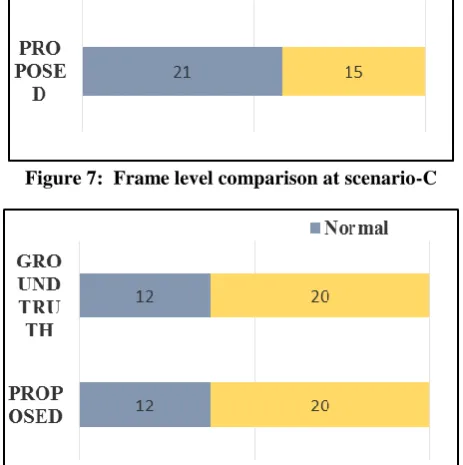
Figure 7: Frame level comparison at scenario-C
Figure 8: Frame level comparison at scenario-D
Figure 9: Area Under Curve (AUC )Comparison with Existing model
Figure 1 shows the Crowd scene (scenario-A), where (a) and (b) shows the normal and abnormal input frames, (c) & (d) shows the generated motion heat map, (e) and (d) shows the detected activity. Similarly, these representations are shown for the all considered scenarios that are presented in fig 2, fig 3 and, fig 4 which corresponds to scenario-B, scenario-C and scenario-D. Moreover, we have also shown the frame level comparison with respect to ground-truth data. Fig 5, fig 6, fig 7 and, fig 8 shows the frame level comparison that corresponds to scenario-A, scenario-B, scenario-C and scenario-D. Finally, we computed the Area Under Curve (AUC) and compared with the existing approach as given in fig 9, where our proposed DCAD model is compared with LMVD [34], MDT [35], HOG+HOS [36], LS [37], SR [38], CI [39] and SFM [40]. Our computed AUC is 99.8, which is 4.909%, 0.4%, 0.2%, 0.3%, 2.78%, 0.3%, and 1.2% more compared to existing approaches LMVD [34], MDT [35], HOG+HOS [36], LS [37], SR [38], CI [39] and SFM [40].
V. CONCLUSION
The behavior as abnormal means the abnormal behavior happened that breaks the public security. Therefore, crowd analysis is required to automatically detect the abnormal behavior in the visual surveillance system. In this paper, we introduced the analysis of tiny trajectories via video descriptor for recognizing the abnormal behaviors. We define the Spatio-temporal window in video volumes utilizing the motion trajectories. The motion trajectories are obtained by the detector set. These are tiny trajectories that are removed by tracking the interest points in a very short period of time. The robust detection approach recognizes the salient points in every single frame to recognize the whole salient points under the video. The SVM classifier is used to detect the abnormal frame in a given scenario. AUC is used as an evaluation parameter that calculates the proposed model’s effectiveness using Ground Truth as reference.
[image:6.595.54.288.131.739.2] [image:6.595.53.285.501.734.2]International Journal of Innovative Technology and Exploring Engineering (IJITEE) ISSN: 2278-3075, Volume-9 Issue-1, November 2019
REFERENCES
1. Saurabh Maheshwari, Surbhi Heda, “A Review on Crowd Behavior
Analysis Methods for Video Surveillance”, ACM, pp.1-5, March 2016 2. Sjarif, Nilam & Shamsuddin, Siti Mariyam & Mohd Hashim, Siti.
(2012). “Detection of abnormal behaviors in crowd scene: A review”. International Journal of Advances in Soft Computing and its Applications. 4.
3. Min Sun, Dongping Zhang, Leyi Qian, Ye Shen, “Crowd Abnormal
Behavior Detection on Label Distribution Learning”, 8th International Conference on Intelligent Computation Technology and Automation
(ICICTA), Nanchang, pp. 345-348. IEEE-2015
4. Zhao T, Nevatia R "Bayesian human segmentation in crowded
situations", vol 2. Computer Vision Pattern Recognition 2003 IEEE Computer Society Conference, pp 459–466
5. Rabaud V, Belongie S (2006) "Counting crowded moving objects", 2006 IEEE Computer Society Conference on Computer Vision Pattern Recognition (CVPR’06), pp 705–711
6. Krausz B, Bauckhage C "Analyzing pedestrian behavior in crowds for
automatic detection of congestions", 2011 IEEE International Conference on Computer Vision Workshops (ICCV workshops), Barcelona, 2011, pp 144–149
7. H. Fradi, B. Luvison and Q. C. Pham, "Crowd Behavior Analysis
Using Local Mid-Level Visual Descriptors," inIEEE Transactions on Circuits and Systems for Video Technology, vol. 27, no. 3, pp. 589-602, March 2017
8. Rittscher J, Tu PH, Krahnstoever N (2005) "Simultaneous estimation of segmentation and shape", 2005 IEEE Computer Society Conference on Computer Vision Pattern Recognition (CVPR’05), pp 486–493 9. Y. Hao, J. Wang, Y. Liu, Z. Xu and J. Fan, "Extracting
Spatio-Temporal Texture signatures for crowd abnormality detection," 2017
23rd International Conference on Automation and Computing (ICAC),
Huddersfield, IEEE 2017, pp. 1-5
10. Solmaz B, Moore BE, Shah M (2012) "Identifying behaviors in crowd
scenes using stability analysis for dynamical systems". IEEE Transactions On Pattern Analysis And Machine Intelligence 34:2064– 2070
11. Hu M, Ali S, Shah M (2008) "Detecting global motion patterns in complex videos". 2008 19th International Conference on Pattern
Recognition, IEEETampa, FL, 2008, pp.1-5.
12. Kratz L, Nishino K (2009) "Anomaly detection in extremely crowded scenes using spatio-temporal motion pattern models". Computer Vision Pattern Recognition CVPR 2009 IEEE Conference, pp 1446–1453
13. Kratz L, Nishino K (2010) "Tracking with local spatio-temporal
motion patterns in extremely crowded scenes". Computer Vision Pattern Recognition (CVPR) 2010 IEEE Conference, pp 693–700 14. L. Lazaridis, A. Dimou and P. Daras, "Abnormal Behavior Detection
in Crowded Scenes Using Density Heatmaps and Optical Flow," 2018 26th European Signal Processing Conference (EUSIPCO), Rome, 2018, pp. 2060-2064.
15. Shaoci Xie, B. Xiaohong Zhang, Jing Cai, " Video crowd detection and
abnormal behavior model detection based on machine learning method," in Springer, Neural computing and applications January 2019, Volume 31, Supplement 1, pp 175–184
16. Mengshi Qi, Yunhong Wang, “Stag-Net: "An Attentive Semantic RNN
for Group Activity and Individual Action Recognition” IEEE Transactions On Circuits And Systems For Video Technology 2019. DOI 10.1109/TCSVT.2019. 2894161
17. Aggarwal, J.K., Ryoo, M.S.: “Human Activity Analysis: a Review”.
ACM 43, 3 (2011).
18. Mehran,R, Oyama.A, Shah,M.: "Abnormal Crowd Behavior Detection
Using Social Force Model. In: Computer Vision and Pattern Recognition”, IEEE Conference on CVPR 2009, pp.935–942.
19. Kim,S.,Guy,S.J.,Manocha,D.”Velocity-based modeling of physical
interactions in multi-agent simulations”. In: Proceedings of the 12th ACM SIGGRAPH/Eurographics Symposium on Computer Animation, pp. 125–133 (2013)
20. Yang,W.,Wang,Y., Lan,T., Robinovitch,S.N., Mori,G.:
"Discriminative Latent Models For Recognizing Contextual Group Activities". IEEE Trans. Pattern Anal. Mach. Intell. 34(8), 1549–1562 (2012)
21. Chen, D.Y., Huang, P.C.: "Motion-based unusual event detection in human crowds".Elsevier, Journal of. Visual. Communication and. Image Representation. 22(2), 178–186 (2011).
22. Shao,J.,Chen,C.L.,Wang,X.: "Learning scene-independent group
descriptors for crowd understanding". IEEE Trans. Circuits Syst. Video Technol. 27(6), 1290–1303 (2017).
23. Mahadevan V, Li W, Bhalodia V, Vasconcelos N (2010) "Anomaly
detection in crowded scenes". CVPR, p 250.
24. Hu X, Hu S, Huang Y, Zhang H, Wu H (2016) "Video anomaly
detection using deep incremental slow feature analysis network". IET Comput Vis 10:265.
25. Mousavi H, Nabi M, Kiani H, Perina A, Murino V (2015) “Crowd
motion monitoring using tracklet-based commotion measure”. In: Image Processing (ICIP), 2015 IEEE International Conference, pp 2354–2358.
26. Ravanbakhsh M, Nabi M, Mousavi H, Sangineto E, Sebe N
”Plug-and-play CNN for crowd motion analysis: an application in abnormal event detection”. arXiv:1610.00307v3 27 Jan 2018.
27. Zhou S, Shen W, Zeng D, Fang M, Wei Y, Zhang Z (2016) “Spatial–
temporal convolutional neural networks for anomaly detection and localization in crowded scenes”. Signal Process: Image Communication Volume 47, September 2016, Pages 358-368
28. Rabiee H, Haddadnia J, Mousavi H, Nabi M, Murino V, Sebe N (2016)
“Emotion-based crowd representation for abnormality detection”. preprint: arXiv:1607.07646.
29. Rabiee H, Haddadnia J, Mousavi H (2016) "Crowd behavior
representation: an attribute-based approach”, Springer Plus 5:1179.
30. Chen K, Gong S, Xiang T, Change Loy C (2013) “Cumulative attribute
space for age and crowd density estimation” IEEE conference on computer vision and pattern recognition, pp 2467–2474.
31. Wang H, Kläser A, Schmid C, Liu C-L (2011) “Action recognition by
dense trajectories”, Computer Vision Pattern Recognition (CVPR) 2011 IEEE Conference, pp 3169–3176.
32. W. Ge, R. T. Collins, and R. B. Ruback, “Vision-based analysis of small groups in pedestrian crowds”, IEEE Transactions on Pattern Analysis and Machine Intelligence, vol. 34, no. 5, pp. 1003–1016, 2012 33. H. Fradi; B. Luvison; Q. C. Pham, "Crowd Behavior Analysis Using Local Mid-Level Visual Descriptors," in IEEE Transactions on Circuits and Systems for Video Technology, vol.PP, no.99, 2017.
34. T. Bai and J. Tan, "Automatic detection and removal of high-density impulse noises," in IET Image Processing, vol. 9, no. 2, pp. 162-172, 2015
35. Anna Yankovskaya, Yury Dementyeve, Artem Yamshanovb",
Application of Learning and Testing Intelligent System with Cognitive Component Based on Mixed Diagnostics Tests," inProcedia - Social and Behavioral Sciences 206 ( 2015 ) 254 – 261
36. V. Saligrama and Z. Chen, “Video anomaly detection based on local statistical aggregates,” in IEEE Conference on Computer Vision and Pattern Recognition, CVPR, 2012, pp. 2112–2119.
37. Octavio Camarena, Erik Cuevas , MarcoPérez-Cisneros, Fernando
Fausto, Adrián González, and Arturo Valdivia “LS-II: An Improved
Locust Search Algorithm for Solving Optimization Problems”,
Mathematical Problems in Engineering, Volume 2018, Article ID 4148975.
38. Y. Cong, J. Yuan, and J. Liu, “Sparse reconstruction cost for abnormal
event detection.” in Computer Vision and Pattern Recognition, CVPR, 2011, pp. 3449–3456
39. S.Wu, B. E. Moore, and M. Shah, “Chaotic invariants of lagrangian particle trajectories for anomaly detection in crowded scenes,” in IEEE Conference on Computer Vision and Pattern Recognition, CVPR, 2010, pp. 2054–2060.
40. Raghavendra, R. & Del Bue, Alessio & Cristani, Marco & Murino, Vittorio. (2011). “Abnormal Crowd Behavior Detection by Social Force Optimization”. Springer 134-145. 10.1007/978-3-642-25446-8_15.
41. W. Li, V. Mahadevan, and N. Vasconcelos, “Anomaly detection and
localization in crowded scenes,” IEEE Trans. Pattern Analysis and Machine Intelligence, vol. 36, no. 1, pp. 18–32, 2014.
42. V. Kaltsa, A. Briassouli, I. Kompatsiaris, L. J. Hadjileontiadis, and M.
G. Strintzis, “Swarm intelligence for detecting interesting events in crowded environments,” IEEE Transactions on Image Processing, vol. 24, no. 7, pp. 2153–2166, 2015.
AUTHORS PROFILE
Savitha.C, pursuing her
Doctorate in Electronics and Communication Engineering from Sri Siddhartha Academy of
Higher Education, Tumakuru, Karnataka,
She has a total academic teaching experience of 9 years with more than 10 publications in reputed, National and International Conferences and Journals. Her areas of research includes - Crowd Behavior Analysis, Motion Estimation and Image Processing. Also other areas of interest include embedded C programming, VHDL and Verilog Hardware Description Language, Power Electronics and Computer Communication Networks.
Dr. D. Ramesh has received his Ph.D. in Computer
![基於鑑別式自編碼解碼器之錄音回放攻擊偵測系統 (A Replay Spoofing Detection System Based on Discriminative Autoencoders) [In Chinese]](data:image/gif;base64,R0lGODlhAQABAIAAAP///wAAACH5BAEAAAAALAAAAAABAAEAAAICRAEAOw==)