Article
Hot Compressed Water Extraction of Lignin by Using
a Flow-Through Reactor
Siti Machmudah
1, Wahyudiono
2, Hideki Kanda
2, Mitsuru Sasaki
3, and Motonobu Goto
2,*
1 Department of Chemical Engineering, Sepuluh Nopember Institute of Technology, Kampus ITS,
Surabaya 60111, Indonesia
2 Department of Chemical Engineering, Nagoya University, Furo-cho, Chikusa-ku, Nagoya 464-8603, Japan 3 Graduate School of Science and Technology, Kumamoto University, 2-39-1 Kurokami, Kumamoto
860-8555, Japan
*E-mail: [email protected]
Abstract. Japanese rice straw, an agricultural by-product, was utilized for the extraction of lignin by hot compressed water at temperatures of 443–503 K and a pressure of 4.0 MPa using a flow-through system, a simple and environmentally friendly extraction method requiring no chemicals other than water. Under these conditions, thermal softening of the Japanese rice straw occurred, allowing the removal of lignin via depolymerization reactions. Lignin as an extraction product was analyzed using utraviolet-visible (UV–vis) spectrophotometry. Lignin recovery approached 85 % when the extraction was performed at 443 and 473 K with a flow rate of 4.67 ml min–1. At a constant residence time, recovery amounts increased with increasing flow rate at each temperature. The results suggested that this process may result in an advanced plant biomass components extraction technology.
Keywords: Biomass, extraction, lignin, rice straw, subcritical.
ENGINEERING JOURNAL Volume 19 Issue 4 Received 20 August 2014
Accepted 11 January 2015 Published 31 July 2015
1.
Introduction
Biomass is matter derived directly or indirectly from plants which is utilized in substantial amounts as energy or material. The main constituents of wood biomass are cellulose (40~45 wt%), hemicellulose (25~35 wt%), lignin (15~30 wt%) and other compounds (up to 10 wt%) [1]. Cellulose and hemicellulose can be enzymatically hydrolyzed to monomeric sugars after pre-treatment aiming at hydrolytic cleavage of its partially crystalline structure [2]. Recently, supercritical water treatment has been found possible without the addition of chemicals or oxygen, making it a potential method for pre-treatment of large quantities of biomass. This treatment causes specific hydrolysis of cellulose and hemicellulose and physically destructs tissues [2–5]. Lignin is another primary component of plant biomass and contains many oxygen functional groups. Phenolic chemicals can also be obtained from lignin by chemical degradation processes [5–10]. Lignin or biomass can be converted to gases by a gasification process; the major products from lignin gasification include H2, CO, CO2 and CH4 [11–15].
The plant biomass thermal decomposition process requires that biomass be separated into its components, conventionally under subcritical conditions. This process is crucial for the complete and most efficient conversion of the lignin, hemicellulose, and cellulose to their highest-value products. For example, the extraction of lignin from wood is needed in pulp and paper production as well as for ethanol production. Hydrolysis occurs by the addition of acids, bases or organic solvents, a process necessitation neutralization in order to reduce corrosion of the reactor [16–18]; recycling of these chemicals is also necessary so as to reduce negative impacts on the environment as well as on subsequent process. To eliminate such costs, non-catalytic hydrothermal processes have been studied [19–22]. At elevated temperatures and pressures, liquid water can be used to fractionate biomass into its constituents [23, 24]. The ionic product of water changes in tandem with temperature [25]. Therefore, hot compressed water extraction is considered suitable for the hydrolysis process because it gives the highest ionic product. Mok and Antal 1992 [26] succeeded in solubilizing most hemicellulose together with lignin in hot compressed water using a tubular percolating reactor; this was performed for the production of xylitol and furfural from hemicellulose or as a pretreatment for enzymatic hydrolysis of cellulose. Rogalinski et al. 2008 [27] conducted liquid hot water pretreatment of rye straw and rye silage in both a batch and a continuous flow reactor; they reported that liquid hot water provides an excellent reaction medium for the pretreatment of biomass. High degrees of biomass solubilization are possible. Chandra et al. 2012 [28] conducted methane fermentation study on pretreated substrates of rice straw biomass revealed that NaOH and hydrothermal pretreatments results into highly significant amount of increase in biogas and methane production yields.
This work presents hot compressed water extraction using a continuous process to isolate lignin from plant biomass. Japanese rice straw, used as a starting material, is an agricultural by-product usually left in the field after harvest and subsequently burnt or used as animal feed. Although the Japanese rice straw also has high potential for ethanol production via fermentation process, its cellulose needs proper pretreatment for complete conversion, and lignin cannot be converted by fermentation [29, 30]. Therefore, this process was anticipated to allow for the effective removal of lignin. In addition, Converti et al. 2010 [31] suggested that vanillin could be produced from lignin-rich wastes. They explained that vanillin recovered from the sulfite spent liquor came from guaiacyl units of lignin solubilized by alkaline oxidation during softwoods pulping.
2.
Experimental Section
2.1. Materials
2.2. Experimental Setup and Procedure
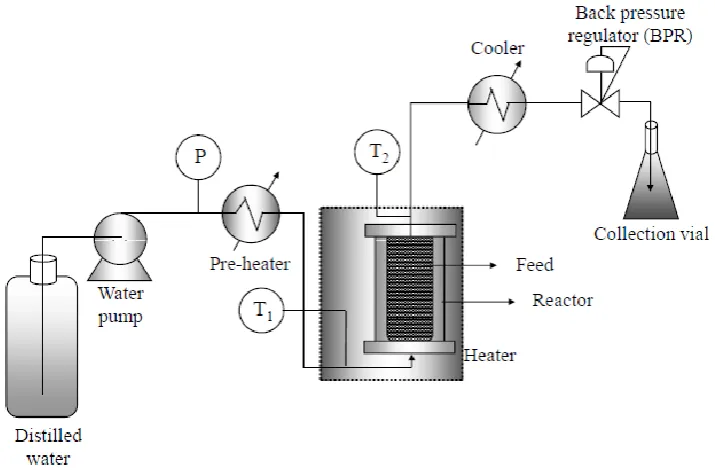
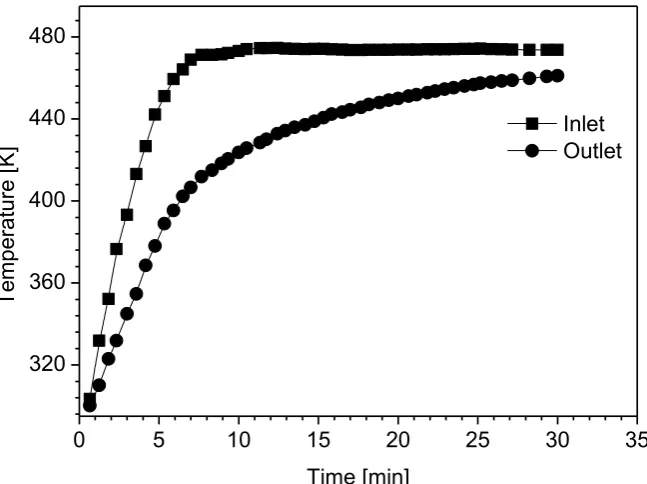
A schematic diagram of the apparatus is shown in Fig. 1. This apparatus consists of a high–pressure pump, heater, reactor, thermocontrollers and back–pressure regulators (BPR). The pre–heater was fabricated from 1/8 inch stainless-steel tubing (SUS316) with a volume of 50 mL and was heated using a mantel heater at temperatures of 443–503 K. The 1/16 inch stainless-steel tube was used to introduce the hot water from the pre-heater to the reactor that was placed in an oven. The reactor volume was 30 mL and was also made of stainless steel (SUS316). After the reactor inclusive of 5.0 g of the Japanese rice straw was installed in the system, distilled water at room temperature was pumped through the reactor inclusive pre–heater for a few minutes to purge air, completely wet the Japanese rice straw in the reactor, and pressurize the system to the set pressure of 4.0 MPa by controlling the back-pressure regulator (BPR) monitored by pressure gauge (P). When the system reached the desired pressure and a steady state was achieved, an electric heater was applied to heat the water. In this study, the reactor temperature was kept at 443–503 K. Both the temperature of the pre-heater, reactor and the electric heater were measured using K-type thermocouples. The time required to heat up the reactor from room temperature to the desired temperature was 5–8 min, after which the reactor temperature equaled the electric heater temperature. After the temperature at the reactor area reached a preset temperature, the pump was used to feed the water at 1.42, 2.92, and 4.67 ml min–1. During experiment, temperatures of the reactor water inlet (T1) and outlet (T2) were monitored. A profile of temperature is plotted in Fig. 2. Next, the outlet water was passed through the double-tube-type heat exchanger to quench the reaction. The time of each experiment was 60 min; therefore, the volumes of the collected extract were 85, 175, and 280 mL. Once the temperature in the reactor decreased to about 318 K, cold water (20 mL) was pumped through the system to purge liquid remaining in the reactor. For analysis, the extracts were collected and diluted to exact volumes of 100, 200, and 300 mL. These products were identified and quantified directly using GC–MS (gas chromatography mass spectrometry) and UV–vis spectrophotometry.
[image:3.595.116.474.406.641.2]Fig. 2. Typical temperature profile for hot compressed water extraction at pressure of 4 MPa and 2.92 ml min–1 water flowrate.
2.3. Analytical Methods
Analysis of lignin content in an extracts was conducted using UV–vis spectrophotometry V–550 (Jasco Corporation, Japan). UV–vis spectra were recorded with a PC–driven scanning spectrophotometer, operating in the fast scan mode, allowing spectra of between 190 and 800 nm with 10 nm min–1 of bands. The liquid products were analyzed in a quartz cuvette with a 1 cm path length. The acid soluble lignin content was determined on the hydrolysate by measuring UV–vis absorption at 205 nm in 1 cm quartz cells. It was evaluated according to Beer's law:
A =
𝑑 𝐶
(1)where A = absorbance; = absorptivity (L g–1 cm–1); d = path length (1 cm), and C = concentration of lignin (g L–1). Based on the calculation, the value of extinction coefficient (was 110 L g–1 cm–1 as adopted from Dence data [32, 33]. Hence,
𝐶 =
110A𝐷
(2)
where
D
= V
D/ V
0; V
D= volume of diluted extract, and V
0= volume of original extract taken.
The acid soluble lignin content in the extract sample was calculated as follows:
Lignin [wt %] =
𝐶 𝑥 𝑉 𝑥 1001000 𝑥 𝑊 (3)
where V = total volume of the extract [L] and W = dry weight of sample [g].
The normal wavelength of 280 nm was not used because of the potential interference from furfural and hydroxymethylfurfural; these aldehydes give a sharp absorption maximum at about 280 nm, but relatively low absorbance at shorter wavelengths. Therefore, the wavelength in the region of 200–210 nm provides a reasonable measure of soluble lignin in wood [34]. In addition, the liquid product was also identified by GC–MS after extraction with methanol using a GC–MS Hewlett Packard model 6890 series GC system and 5973 mass selective detector with a DB-5 MS capillary column (J&W Scientific, length 30 m, i.d. 0.25 mm, film 0.25 m). The GC-MS carrier gas was He at a flow rate of 2 mL min–1. The column operating conditions were as follows: injector temperature 523 K, 1 μL of a solution in methanol injected with a split ratio of 20:1. The chromatographic exit to mass spectrometer interface temperature was 573 K. The GC oven temperature was held at 313 K for 0 min then programmed to increase at 5 K min–1 to 573 K. The mass spectrometer was scanned from m/z 50 to 500 at 0.5 s decade–1 of mass with an interscan interval of 0.5 s, with the results stored as a total ion chromatogram. Electron ionization and positive ion mode were used. The NIST (National Institute of Standards and Technology) library of mass spectroscopy was used to identify the compounds.
0 5 10 15 20 25 30 35
320 360 400 440 480
Te
m
pe
ratur
e [
K
]
Time [min]
The solid product in water soluble extracted at each operating temperature were analyzed by a Spectrum One Fourier Transform Infrared Spectroscopy (FT–IR) spectrophotometer (Perkin–Elmer, Ltd., Bucks, England). Prior to this, vacuum evaporation at 333 K was used to remove water content; the products were then dried in a desiccator for 1 day at room temperature. This analysis was performed to determine the structure of the solid product after the hot compressed water extraction treatment. The samples were placed directly in the diffuse reflectance attachment sample holder between two KBr salt plates in a microcompression cell. Preflattening of the sample in a diamond cell was necessary prior to mounting. The spectra were measured in ATR (attenuated total reflectance) mode (golden single reflection ATR system, P/N 10500 series, Specac) at 4 cm–1 resolution. The scanning wavenumber ranged from 650 to 4000 cm–1. In addition, the ultimate analysis of solid residues remaining in the reactor was conducted using a CHN analyzer (Yanaco, CORDER MT–6). This analysis was carried out to determine the amount, typically a weight percent of an element in a compound. The most common type of elemental analysis is for carbon, hydrogen, and nitrogen (CHN analysis). This type of analysis is especially useful for organic compounds; i.e., those compounds containing carbon–carbon bonds.
3.
Results and Discussion
Fig. 3. UV–vis spectra of water soluble an extraction products.
Fig. 4. Amount of lignin removal by hot compressed water from Japanese rice straw.
0
20
40
60
80
100
443
473
503
L
igni
n r
ec
ove
ry
[w
t
%
]
Temperature [K]
1.42 mL/min
[image:6.595.76.512.87.416.2] [image:6.595.101.458.460.740.2]That covalent linkages between lignin and carbohydrates exist in wood is well-known. In the fractionation of plant biomass by hot compressed water, their separation is very important for complete and efficient utilization of substances which compose cell walls of plant biomass. The presence of water as the reactant leads to hydrolysis reaction and cleavage of bonds between hetero-atoms and carbon atoms. Non-requirement of additional chemicals and lower fabrication costs make this system attractive. Minowa et al. 1998 [38] reported that the decomposition of biomass components start at around 473 K or higher. Ko
[image:7.595.66.534.428.629.2]et al. 2014 [39] also investigated the fate of the lignin content in a hardwood biomass after treatment by liquid hot water at temperatures of 453–493 K. They reported that the percentage of lignin increased from 29.3 to 40.3% with increasing treatment temperature. They also explained that the higher treatment temperature (493 K) led to an increase in lignin recovery yield, which might be caused by the condensation reactions of lignin with other degradation products. Therefore, isolation of lignin is also possible at these range temperatures using hot compressed water. The amount of lignin from Japanese rice straw extracted by hot compressed water at a pressure of 4 MPa is shown in Fig. 4. Lignin recovery approached 85% when the extraction was performed at 443 and 473 K with a flow rate of 4.67 ml min–1. The lignin extraction rate increased with increased flow rate at each temperature; the increased flow rate allowed the dissolved lignin to be swept from the reactor before it could react and precipitate, resulting in substantially higher lignin removal [40, 41]. Under the same conditions, the recovery of lignin decreased at 503 K, possibly explicable by cleavage of ether and C–C linkages as functional groups in the trans-p-coumaryl alcohol, coniferyl alcohol and sinapyl alcohol existing in lignin structure units [29, 30, 42]. Demirbas et al. 2000 [36] reported that lignin is broken down by extensive cleavage of -aryl ether linkages during steaming of wood at temperatures under 488 K. They explained that normal C–C bond energy is about 380 kJ mol–1 and thermal excitation of the molecules becomes sufficient to break these bonds. These bonds, particularly the O–O bonds, are exceptionally weak and therefore can break at lower temperatures. Toor et al. 2011 [30] also explained that during hydrothermal degradation various phenols and methoxy phenols are formed by hydrolysis of ether-bonds (O–O bonds).
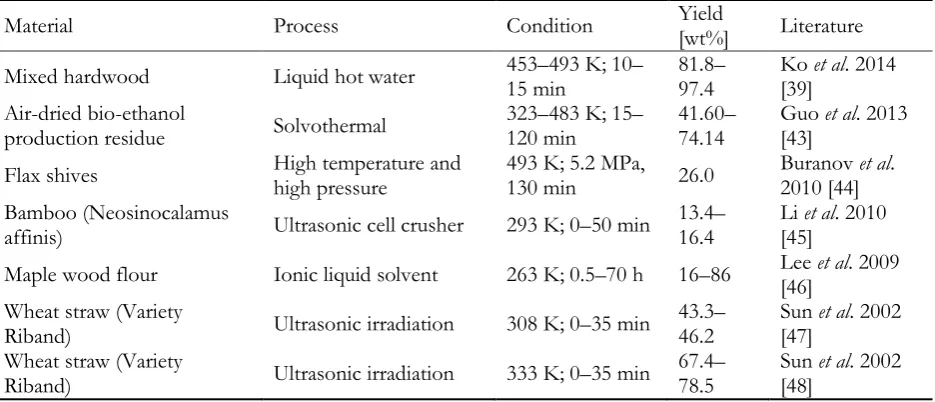
Table 1. Comparisons of different lignin extraction methods .
Material Process Condition Yield [wt%] Literature
Mixed hardwood Liquid hot water 453–493 K; 10–15 min 81.8–97.4 Ko [39] et al. 2014 Air-dried bio-ethanol
production residue Solvothermal 323–483 K; 15–120 min 41.60–74.14 Guo [43] et al. 2013 Flax shives High temperature and high pressure 493 K; 5.2 MPa, 130 min 26.0 Buranov 2010 [44] et al. Bamboo (Neosinocalamus
affinis) Ultrasonic cell crusher 293 K; 0–50 min 13.4–16.4 Li [45] et al. 2010 Maple wood flour Ionic liquid solvent 263 K; 0.5–70 h 16–86 Lee [46] et al. 2009 Wheat straw (Variety
Riband) Ultrasonic irradiation 308 K; 0–35 min 43.3–46.2 Sun [47] et al. 2002 Wheat straw (Variety
Riband) Ultrasonic irradiation 333 K; 0–35 min 67.4–78.5 Sun [48] et al. 2002
significant effect on the delignification of wheat straw. Lee et al. 2009 [46] performed wood flour fractionation by using ionic liquids as pretreatment solvents to extract lignin from wood flour. They reported that ionic liquid such as [Emim][CH3COO] did not dissolve the wood flour; conversely, facile extraction of the lignin was achieved. However, ionic liquid pretreatment also would result in a substantial decrease in the crystallinity of the cellulose. In other words, they demonstrated that the wood flour underwent delignification with substantially smaller losses of cellulose and xylan upon pretreatment in [Emim][CH3COO]. Guo et al. 2013 [43] developed an adequate method to separate lignin from air-dried bio-ethanol production residue by using solvothermal methods. Benzyl alcohol, dioxane and ethanol were used as lignin solvent extraction at temperature of 323–443 K with 5–120 min reaction time. They concluded that benzyl alcohol and dioxane extraction could reach higher lignin yield of 71.55 and 74.14% when the experiments were conducted at 443 K and 323 K with reaction time 15 and 60 min reaction time, respectively. They explained that that the chemical components and structure of lignin extracted by benzyl alcohol or dioxane was similar to that of lignin obtained with alkali-solution and acid-isolation method. Recently, Ko et al. 2014 [39] conducted experiments to remove lignin and its derived mixed hardwoods by liquid hot water at different severities. They reported that the isolated lignin from mixed hardwoods was 97.4% at 493 K with 15 min reaction time. In comparison with other methods (see Table 1), our work, hot compressed water extraction is simpler and could extract lignin around 85 % from Japanese rice straw. Here, the Japanese rice straw was directly fed in the extraction reactor as the starting material without any treatments. Under these conditions, water-soluble compounds (lignin) could be extracted from Japanese rice straw via autohydrolysis [15–17]. It could be said that this process is simple and versatile technique because of its capability and feasibility in the separation of large quantities of biomass.
compositional analysis under each experimental condition. Tymchyshyn and Xu 2010 [52] also reported that the oil derived from the liquefaction of lignin was the most concentrated with phenolic compounds. They explained that it is not surprising that the major compounds produced by the liquefaction of sawdust at around 523 K were phenolic compounds such as 2-methoxyphenol, 2-methoxy-methylphenol and 4-ethyl-2-methoxyphenol which comprise almost the phenolic/neutral oil. The major components of the phenolic/neutral oils derived from cornstalks are more varied. They said that substituted phenols and phenolic compounds comprise almost 74% of the phenolic/neutral oil collected from the liquefaction of lignin. In the case of cellulose, the major components of the cellulose-derived oil appeared to be esters of complex organic acids and long chain hydrocarbons, likely formed by dehydration of the cellulose.
Further, it could be said that cellulose, hemicellulose, and lignin as main components of Japanese rice straw underwent decomposition simultaneously during hot compressed water extraction process. Under these conditions, the cellulose degrades to low molecular weight aldehydes and ketones, then these aldehydes and ketones may then form aromatic compounds by condensation and dehydration. Hemicelluloses are also easily solubilized and hydrolyzed into various monosaccharides, including xylose, mannose, glucose and galactose, in water. As well as cellulose and hemicellulose, the decomposition of lignin was also occurred. It would be decomposed into various phenols and methoxy phenols by hydrolysis of ether-bonds during hot compressed water extraction. In this work, the reaction mechanism of cellulose, hemicellulose, and lignin are not presented.
Fig. 5. GC–MS chromatogram of water soluble products recovered after treatment at (a) 443, (b) 473, and (c) 503 K with 2.92 ml min–1 water flowrate, respectively.
Table 2(a). List of GC–MS monomeric products in the water soluble fraction at temperature of 443 K with 2.92 ml min–1 water flowrate.
No time [min] Retention Compound name Molecular weight Compound formula
1 5.32 Urea 60.06 CH4N2O
2 9.98 3-Methylbutanal 86.13 C5H10O
3 12.46 Methyl nitrite 61.04 CH3NO2
4 12.76 2-Furancarboxaldehyde 96.08 C5H4O2 5 13.35 2,5-Dihydro-3,4-dimethylfuran 98.14 C6H10O 6 14.72 Methylhydrazone acetaldehyde 72.11 C3H8N2 7 16.02 2,3-Dihydro-5-methyl-2-furanone 98.10 C5H6O2
8 17.36 Glycerin 92.1 C3H8O3
9 18.24 Allyl alcohol 58.08 C3H6O
10 18.11 N-Methyloxazolidone 101.10 C4H7NO2
11 18.49 Dihydropyran 84.12 C5H8O
12 20.99 Maltol 126.11 C6H6O3
13 21.41 2-Nitro-2-butene 101.10 C4H7NO2
14 22.05 2-Cyclohexenone 96.13 C6H8O
15 23.18 Sec-butylamine 73.14 C4H11N
16 23.74 3-Hydroxy-2,3-dihydromaltol 144.13 C6H8O4 17 25.46 2,4-Dimethylhexane 114.23 C8H18 18 25.91 5-Hydrxoymethylfurfural 126.11 C6H6O3 19 26.46 Tetrahydro-3,4-furandiol 104.11 C4H8O3 20 27.35 1,2-Heptanediol 132.20 C7H16O2
21 28.87 Durenol 150.22 C10H14O
[image:11.595.108.496.82.339.2] [image:11.595.80.518.398.767.2]23 30.06 Eugenol 164.20 C10H12O2
24 31.37 Vanillin 152.15 C8H8O3
25 32.01 Butyl glycolate 132.1577 C6H12O3 26 35.73 Methyl 2,2-dimethylvalerate 144.21 C8H16O2 27 36.45 Octadecanol acetate 312.53 C20H40O2
Table 2(b). List of GC–MS monomeric products in the water soluble fraction at temperature of 473 K with 2.92 ml min–1 water flowrate.
No time [min] Retention Compound name Molecular weight Compound formula
1 5.59 Urea 60.06 CH4N2O
2 8.53 Dicyclomine 309.49 C19H35NO2
3 10.01 3-Methylbutanal 86.13 C5H10O
4 12.76 2-Furancarboxaldehyde 96.08 C5H4O2
5 17.10 Trimethyloxazole 111.14 C6H9NO
6 17.41 5-Methyl-2-furaldehyde 110.11 C6H6O2 7 18.83 2,4-Imidazolidinedione 114.10 C4H6N2O2 8 21.42 N-Ethylpropanamide 101.15 C5H11NO
9 22.07 Furan 68.07 C4H4O
10 23.74 3-Hydroxy-2,3-dihydromaltol 144.13 C6H8O4 11 25.71 Dihydrobenzofuran 120.15 C8H8O 12 25.92 5-Hydrxoymethylfurfural 126.11 C6H6O3 13 28.89 2,4,6-Trimethyl-m-phenylenediamine 150.22 C9H14N2
14 30.06 Eugenol 164.20 C10H12O2
15 31.37 Vanillin 152.15 C8H8O3
16 32.07 D-Arabinose 150.16 C5H10O5
17 32.28 D-Galactose 180.16 C6H12O6
18 35.12 Vanillic acid 168.15 C8H8O4
19 37.82 Syringaldehyde 182.17 C9H10O4
20 39.51 Homovanillic acid methyl ester 196.20 C10H12O4 21 39.77 Eugenol methyl ether 178.23 C11H14O2 22 40.67 1-Phenyl-1H-indene 192.26 C15H12 23 42.31 3-Methoxy-4-hydroxycinnamic acid 194.18 C10H10O4 24 44.48 Methyl diphenylacetate 226.27 C15H14O2 24 44.91 4-allyl-1,2,6-trimethoxybenzene 208.25 C12H16O3
26 45.03 4b,10a-
Dihydrobenzo[3,4]cyclobuta[1,2-b][1,4]benzodioxine 210.23 C14H10O2
Table 2(c). List of GC–MS monomeric products in the water soluble fraction at temperature of 503 K with 2.92 ml min–1 water flowrate.
No time [min] Retention Compound name Molecular weight Compound formula
1 5.33 Urea 60.06 CH4N2O
2 8.50 3-Pentanone 86.13 C5H10O
3 9.90 3-Methylbutanal 86.13 C5H10O
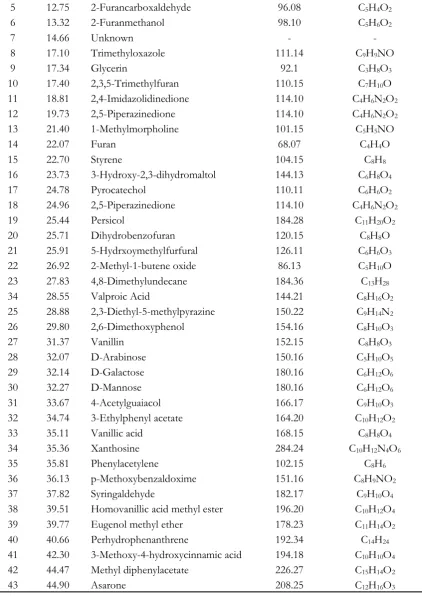
[image:12.595.79.524.198.643.2] [image:12.595.74.517.683.779.2]5 12.75 2-Furancarboxaldehyde 96.08 C5H4O2
6 13.32 2-Furanmethanol 98.10 C5H6O2
7 14.66 Unknown - -
8 17.10 Trimethyloxazole 111.14 C9H9NO
9 17.34 Glycerin 92.1 C3H8O3
10 17.40 2,3,5-Trimethylfuran 110.15 C7H10O 11 18.81 2,4-Imidazolidinedione 114.10 C4H6N2O2 12 19.73 2,5-Piperazinedione 114.10 C4H6N2O2 13 21.40 1-Methylmorpholine 101.15 C5H5NO
14 22.07 Furan 68.07 C4H4O
15 22.70 Styrene 104.15 C8H8
16 23.73 3-Hydroxy-2,3-dihydromaltol 144.13 C6H8O4
17 24.78 Pyrocatechol 110.11 C6H6O2
18 24.96 2,5-Piperazinedione 114.10 C4H6N2O2
19 25.44 Persicol 184.28 C11H20O2
20 25.71 Dihydrobenzofuran 120.15 C8H8O 21 25.91 5-Hydrxoymethylfurfural 126.11 C6H6O3 22 26.92 2-Methyl-1-butene oxide 86.13 C5H10O 23 27.83 4,8-Dimethylundecane 184.36 C13H28
34 28.55 Valproic Acid 144.21 C8H16O2
25 28.88 2,3-Diethyl-5-methylpyrazine 150.22 C9H14N2 26 29.80 2,6-Dimethoxyphenol 154.16 C8H10O3
27 31.37 Vanillin 152.15 C8H8O3
28 32.07 D-Arabinose 150.16 C5H10O5
29 32.14 D-Galactose 180.16 C6H12O6
30 32.27 D-Mannose 180.16 C6H12O6
31 33.67 4-Acetylguaiacol 166.17 C9H10O3 32 34.74 3-Ethylphenyl acetate 164.20 C10H12O2
33 35.11 Vanillic acid 168.15 C8H8O4
34 35.36 Xanthosine 284.24 C10H12N4O6
35 35.81 Phenylacetylene 102.15 C8H6
36 36.13 p-Methoxybenzaldoxime 151.16 C8H9NO2
37 37.82 Syringaldehyde 182.17 C9H10O4
38 39.51 Homovanillic acid methyl ester 196.20 C10H12O4 39 39.77 Eugenol methyl ether 178.23 C11H14O2 40 40.66 Perhydrophenanthrene 192.34 C14H24 41 42.30 3-Methoxy-4-hydroxycinnamic acid 194.18 C10H10O4 42 44.47 Methyl diphenylacetate 226.27 C15H14O2
[image:13.595.83.506.81.684.2]43 44.90 Asarone 208.25 C12H16O3
Table 3. The main functional groups of the major constituents of Japanese rice straw. Wave number [cm–1] Functional groups Compounds 3600 – 3000 O–H stretching Acid, methanol
1632 C = C Benzene stretching ring 1613, 1450 C = C stretching Aromatic skeletal mode
1470–1430 O–CH3 Methoxyl–O–CH3
1440–1400 O–H bending Acid
1402 C–H bending
1232 C–O–C stretching Aryl-alkyl ether linkage
1215 C–O stretching Phenol
1170, 1082 C–O–C stretching vibration Pyranose ring skeletal
1108 O–H association C–OH
1060 C–O stretching and C–O deformation C–OH (ethanol)
700–900 C–H Aromatic hydrogen
[image:14.595.75.520.288.477.2]700–650 C–C stretching
Table 4. Elemental analysis results of solid residues analyzed by CHN analyzer, on average. Temperature
[K] [ml minFlow rate –1]
Ultimate analysis [wt. %, DAF] Atomic ratio [–]
H C N O* H/C O/C
Room+ - 5.98 39.89 0.81 53.32 0.15 1.34
443
1.42 5.89 43.29 0.79 50.03 0.14 1.16 2.92 6.02 42.87 0.97 50.14 0.14 1.17 4.67 5.99 43.02 0.97 50.02 0.14 1.16
473
1.42 6.19 43.89 0.91 49.01 0.14 1.12 2.92 6.20 44.31 1.28 48.21 0.14 1.09 4.67 6.32 43.98 1.13 48.57 0.14 1.10
503
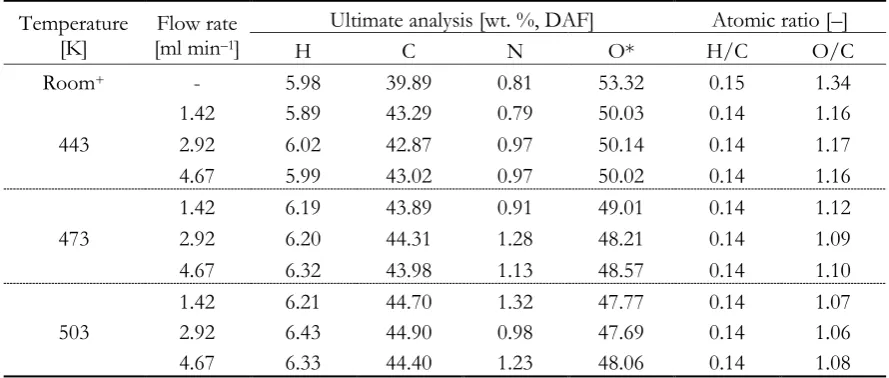
1.42 6.21 44.70 1.32 47.77 0.14 1.07 2.92 6.43 44.90 0.98 47.69 0.14 1.06 4.67 6.33 44.40 1.23 48.06 0.14 1.08 *The content of oxygen was determined by difference.
Fig. 6(a). FT–IR spectrum of Japanese rice straw and its major constituents.
Fig. 6(b). FT–IR spectrum of solid products from Japanese rice straw extraction (a) 443, (b) 473, and (c) 503 K with 2.92 ml min–1 water flowrate.
[image:15.595.109.486.84.365.2] [image:15.595.89.498.396.662.2]the hydrogen bonded. These results showed that dehydrogenation and deoxygenation occurred during the extraction process under these conditions [58–61]. It was reported by Nishimiya et al. 1998 [58] that the dehydrogenation and deoxygenation during the carbonization process of wood charcoal begin under dry conditions. Inoue et al. 2002 [59] also treated wood in hot compressed water to obtain charcoal, and then compare with dry conditions under a nitrogen atmosphere. They suggested that charcoal could be obtained from wood and that the dehydrogenation and deoxygenation in wood occurred during treatment with the hot compressed water. This indicates applicability of hot compressed water to such high-moisture biomass as Japanese rice straw, and that energy would be saved due to lack of necessity of drying.
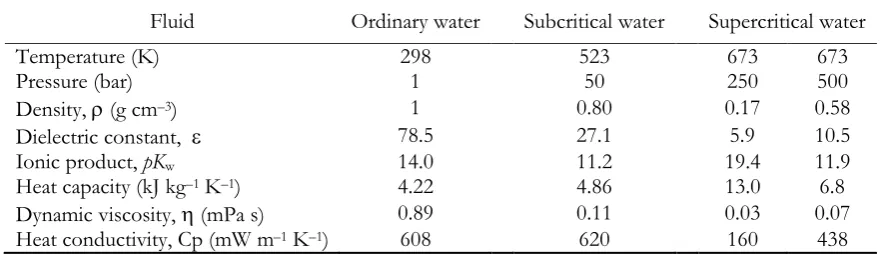
[image:16.595.77.519.415.542.2]As mentioned above, several methods, such as ultrasonic/microwave extraction, solvothermal extraction, ionic liquids solvent extraction, and liquid hot water extraction, were introduced to the extraction and separation of lignin as a one of the main components in biomass. Due to the complex process and less capacity of them, the development of extraction and separation technique for biomass components, such as lignin, is necessary. To reduce the use of organic solvent and improve the lignin extraction methods from plant biomass, hot compressed water extraction was applied at 443–503 K and 4.0 MP. It is a powerful technique at temperatures between 373 and 647 K and pressure high enough to maintain the liquid state leading to increased extraction efficiency through improvements in mass transfer and changes in the polarity of water. Under these conditions, water simultaneously acts as, reactant and catalyst. At conditions close to the critical point, water has several very interesting properties. Among them are low viscosity and high solubility of organic substances, which make hot compressed water an excellent medium for fast, homogeneous and efficient reactions. Hot compressed water was also called autohydrolysis, hydrothermal treatment, hydrothermolysis, liquid hot water, subcritical water, aquasolve process, aqueous processing and pressure-cooking in water [24]. Ruiz et al. 2013 [24] explained that hot compressed water has been considered a cost-effective pretreatment and in general, the major advantages of this process are: (1) the process does not require the addition and recovery of chemicals different from water, (2) limited equipment corrosion problems, (3) simple and economical operation.
Table 5. Properties of water under different conditions.
Fluid Ordinary water Subcritical water Supercritical water
Temperature (K) 298 523 673 673
Pressure (bar) 1 50 250 500
Density, (g cm–3) 1 0.80 0.17 0.58
Dielectric constant, 78.5 27.1 5.9 10.5
Ionic product, pKw 14.0 11.2 19.4 11.9
Heat capacity (kJ kg–1 K–1) 4.22 4.86 13.0 6.8 Dynamic viscosity, (mPa s) 0.89 0.11 0.03 0.07 Heat conductivity, Cp (mW m–1 K–1) 608 620 160 438
temperatures and the less polar compounds extracted at higher temperatures. For that reason, the hot compressed water extraction can be considered an environmentally friendly fractionation process. In addition, this technique is also suitable for processing high-moisture (wet) biomass since water is used as the extraction medium, and thus the biomass can be directly converted without an energy consuming drying step.
4.
Conclusions
Hot compressed water extraction of lignin from the Japanese rice straw was studied at temperatures of 443–503 K and pressure of 4.0 MPa using a flow-through system. Under these conditions, thermal softening of the Japanese rice straw occurred, allowing the removal of the lignin protecting other constituents in Japanese rice straw. UV–vis spectrum revealed strong absorption peaks distributed at wavelengths in the region of 200–210 nm due to the high lignin content in extracted products. Lignin recovery approached 85% when the extraction was performed at 443 and 473 K with a flow rate of 4.67 ml min–1; recovery increased with increased flow rate at each temperature. By ultimate analysis of solid residues, the concentration of carbon increased gradually with increased water extraction flow rate at 443, 473, and 503 K, respectively. The loss of hydrogen and oxygen in the solid residues is reflected in the decrease in hydrogen and oxygen content. Based on these results, it is proposed that hot compressed water treatment is applicable to isolate lignin from other types of biomass.
Acknowledgements
This work was supported by the Kumamoto University Global COE Program “Global Initiative Center for Pulsed Power Engineering”, NEDO (Development of Technology for High Efficiency Biomass Energy Conversions), and JSPS Fellowship from the Japan Society for the Promotion of Science (JSPS).
References
[1] E. Dorrestijn, L. J. J. Laarhoven, I. W. C. E. Arends, and P. Mulder, “The occurrence and reactivity of phenoxyl linkages in lignin and low rank coal,” J. Anal. Appl. Pyrolysis, vol. 54, no. 1–2, pp. 153–192, Mar., 2000.
[2] N. Mosier, R. Hendrickson, N. Ho, M. Sedlak, and M. R. Ladisch, “Optimization of pH controlled liquid hot water pretreatment of corn stover,” Bioresour. Technol., vol. 96 no. 18, pp. 1986–1993, Dec., 2005.
[3] H. Inoue, S. Yano, T. Endo, T. Sakaki, and S. Sawayama, “Combining hot-compressed water and ball milling pretreatments to improve the efficiency of the enzymatic hydrolysis of eucalyptus,” Biotechnol. Biofuels., vol. 1, no. 2, Apr., 2008.
[4] J. B. Kristensen, L. G. Thygesen, C. Felby, H. Jorgensen, and T. Elder, “Cell-wall structural changes in wheat straw pretreated for bioethanol production,” Biotechnol. Biofuels., vol. 1, no. 5, Apr., 2008.
[5] M. Carrier, A. Loppinet-Serani, C. Absalon, C. Aymonier, and M. Mench, “Degradation pathways of holocellulose, lignin and a-cellulose from Pteris vittata fronds in sub- and super critical conditions,”
Biomass Bioenergy, vol. 43, pp. 65–71, August, 2012.
[6] Wahyudiono, M. Sasaki, M. Goto, “Recovery of phenolic compounds through the decomposition of lignin in near and supercritical water,” Chem. Eng. Process., vol. 47, no. 9–10, pp. 1609–1619, Sep., 2008. [7] M. Saisu, T. Sato, M. Watanabe, T. Adschiri, and K. Arai, “Conversion of lignin with supercritical
water-phenol mixtures,” Energy Fuels, vol. 17, no. 4, pp. 922–928, May, 2003.
[8] Y. Ye, J. Fan, and J. Chang, “Effect of reaction conditions on hydrothermal degradation of cornstalk lignin,” J. Anal. Appl. Pyrolysis, vol. 94, pp. 190–195, Mar., 2012.
[9] H. Pinkowska, P. Wolak, and A. Zlocinska, “Hydrothermal decomposition of alkali lignin in sub- and supercritical water,” Chem. Eng. Journal, vol. 187, pp. 410–414, Apr., 2012.
[10] Wahyudiono, S. Machmudah, and M. Goto, “Utilization of sub and supercritical water reactions in resource recovery of biomass wastes,” Eng. Journal, vol. 17, no. 1, 2013. doi:10.4186/ej.2013.17.1.1 [11] V. Sricharoenchaikul, “Assessment of black liquor gasification in supercritical water,” Bioresour. Technol.,
[12] M. Osada, T. Sato, M. Watanabe, M. Shirai, and K. Arai, “Catalytic gasification of wood biomass in subcritical and supercritical water,” Combust. Sci. Technol., vol. 178, no. 1–3, pp. 537–552, Jan., 2006. [13] Y. Yoshida, Y. Oshima, and Y. Matsumura, “Gasification of biomass model compounds and real
biomass in supercritical water,” Biomass Bioenergy, vol. 26, no. 1, pp. 71–78, Jan., 2004.
[14] H. Jin, Y. Lu, L. Guo, X. Zhang, and A. Pei, “Hydrogen production by supercritical water gasification of biomass with homogeneous and heterogeneous catalyst,” Adv. Cond. Matt. Phys., vol. 2014, Jun., 2014.
[15] S. Kang, X. Li, J. Fan, and J. Chang, “Hydrothermal conversion of lignin: A review,” Renew. Sustain. Energy Rev., vol. 27, pp. 546–558, Nov., 2013.
[16] Y. Sun and J. Cheng, “Hydrolysis of lignocellulosic materials for ethanol production: A review,”
Bioresour. Technol., vol. 83, no. 1, pp. 1–11, May, 2002.
[17] C. E. Wyman, B. E. Dale, R. T. Elander, M. Holtzapple, M. R. Ladisch, and Y. Y. Lee, “Comparative sugar recovery data from laboratory scale application of leading pretreatment technologies to corn stover,” Bioresour. Technol., vol. 96, no. 18, pp. 1959–1966, Dec., 2005.
[18] F. Talebnia, D. Karakashev, and I. Angelidaki, “Production of bioethanol from wheat straw: An overview on pretreatment, hydrolysis and fermentation,” Bioresour. Technol., vol. 101, no. 13, pp. 4744– 4753, Jul., 2010.
[19] M. Goto, T. Nada, A. Ogata, A. Kodama, and T. Hirose, “Supercritical water oxidation for the destruction of municipal excess sludge and alcohol distillery wastewater of molasses,” J. Supercrit. Fluids, vol. 13, no. 1, pp. 277–282, Jun., 1998.
[20] M. Sasaki, B. Kabyemela, R. Malaluan, S. Hirose, N. Takeda, T. Adschiri, and K. Arai, “Cellulose hydrolysis in subcritical and supercritical water,” J. Supercrit. Fluids, vol. 13, no. 1, pp. 261–268, Jun., 1998.
[21] Wahyudiono, M. Sasaki, and M. Goto, “Kinetic study for liquefaction of tar in sub- and supercritical water,” Polymer Degradation and Stability, vol. 93, no. 6, pp. 1194–1204, Jun., 2008.
[22] F. P. Cardenas-Toro, S. C. Alcazar-Alay, T. Forster-Carneiro, and M. A. A. Meireles, “Obtaining oligo- and monosaccharides from agroindustrial and agricultural residues using hydrothermal treatments,” Food and Public Health, vol. 4 no. 3, pp. 123–139, 2014. doi: 10.5923/j.fph.20140403.08 [23] S. I. Aronovsky and R. A. Gortner, “The cooking process I—Role of water in the cooking of wood,”
Ind. Eng. Chem., vol. 22, no. 3. pp. 264–274, Mar., 1930.
[24] He. A. Ruiz, R. M. Rodriguez-Jasso, B. D. Fernandes, A. A. Vicente, and J. A. Teixeira, “Hydrothermal processing, as an alternative for upgrading agriculture residues and marine biomass according to the biorefinery concept: A review,” Renew. Sustain. Energy Rev., vol. 21, pp 35–51, May, 2013.
[25] W. L. Marshall and E. U. Franck, “Ion product of water substance, 0-1000oC, 1-10,000 bars new international formulation and its background,” J. Phys. Chem. Ref. Data, vol. 10, no. 2, pp. 295–304, 1981.
[26] W. S. L. Mok and M. J. Antal Jr., “Uncatalyzed solvolysis of whole biomass hemicellulose by hot compressed liquid water,” Ind. Eng. Chem. Res., vol. 31, no. 4, pp. 1157–1161, Apr., 1992.
[27] T. Rogalinski, T. Ingram, and G. Brunner, “Hydrolysis of lignocellulosic biomass in water under elevated temperatures and pressures,” J. Supercrit. Fluids, vol. 47, no. 1, pp. 54–63, Nov., 2008.
[28] R. Chandra, H. Takeuchi, and T. Hasegawa, “Hydrothermal pretreatment of rice straw biomass: A potential and promising method for enhanced methane production,” Appl. Energy, vol. 94, pp. 129– 140, Jun., 2012.
[29] N. Mosier, C. Wyman, B. Dale, R. Elander, Y. Y. Lee, M. Holtzapple, and M. Ladisch, “Features of promising technologies for pretreatment of lignocellulosic biomass,” Bioresour. Technol., vol. 96, no. 6, pp. 673–686, Apr., 2005.
[30] S. S. Toor, L. Rosendahl, and A. Rudolf, “Hydrothermal liquefaction of biomass: A review of subcritical water technologies,” Energy, vol. 36, no. 5, pp. 2328–2342, May, 2011.
[31] A. Converti, B. Aliakbarian, J. M. Dominguez, G. Bustos Vazquez, and P. Perego. “Microbial production of biovanillin,” Braz. J. Microbiol., vol. 41, no. 3, pp. 519–530, 2010.
[32] R. Hatfield and R. S. Fukushima, “Can lignin be accurately measured?,” Crop Sci., vol. 45, no. 3. pp. 832–839, May, 2005.
[34] D. N. S. Hon and N. Shiraishi, Wood and Cellulosic Chemistry, 2nd ed, revised and expanded. New York: Marcel Dekker, Inc., 2001, ch. VIII, sec. VI, pp. 315–352.
[35] G. Wegener, M. Przyklenk, and D. Fengel, “Hexafluoropropanol as a valuable solvent for lignin in UV and IR spectroscopy,” Holzforschung, vol. 37, no. 6, pp. 303–306, Jan., 1983.
[36] F. Maekawa, T. Ichikawa, and T. Koshijima, “An evaluation of the acid-soluble lignin determination in analysis of lignin by the sulfuric acis method,” J. Wood. Chem. Technol., vol. 9, no 4, pp. 549–567, Oct., 1989.
[37] M. S. Jahan and S. P. Mun, “Characteristics of dioxane lignins isolated at different ages of Nalita wood (Trema orientalis),” J. Wood. Chem. Technol., vol. 27, no. 2, Jul., 2007.
[38] T. Minowa, Z. Fang, T. Ogi, and V. Varhegyi, “Decomposition of cellulose and glucose in hot-compressed water under catalyst-free conditions,” J. Chem. Eng. Japan, vol. 31, no. 1, pp. 131–134, Apr., 1998.
[39] J. K. Ko, Y. Kim, E. Ximenes, and M. R. Ladisch, “Effect of liquid hot water pretreatment severity on properties of hardwood lignin and enzymatic hydrolysis of cellulose,” Biotechnol. Bioeng., vol. 112, no. 2, pp. 252–262, Oct., 2014.
[40] G. Vazquez, G. Antorrena, J. Gonzalez, S. Freire, and S. Lopez, “Acetosolv pulping of pine wood. Kinetic modelling of lignin solubilization and condensation,” Bioresour. Technol., vol. 59, no. 2, pp. 121– 127, Feb.–Mar., 1997.
[41] C. Liu and C. E. Wyman, “The effect of flow rate of compressed hot water on xylan, lignin, and total mass removal from corn stover,” Ind. Eng. Chem. Res., vol. 42, no. 21, pp. 5409–5416, Sept., 2003. [42] A. Demirbas, “Mechanisms of liquefaction and pyrolysis reactions of biomass,” Energy Conv. Manag.,
vol. 41, no. 6, pp. 633–646, Apr., 2000.
[43] G. Guo, S. Li, L. Wang, S. Ren, and G. Fang, “Separation and characterization of lignin from bio-ethanol production residue,” Bioresour. Technol., vol. 135, pp. 738–741, May, 2013.
[44] K. A. Buranov and R. G. Mazza, “Isolation and characterization of lignins extracted from flax shives using pressurized aqueous ethanol,” Bioresour. Technol., vol. 101, no. 19, pp. 7446–7455, Oct., 2010. [45] M. F. Li, Y. M. Fan, R. C. Sun, and F. Xu, “Characterization of extracted lignin of bamboo
(Neosinocalamus affinis) pretreated with sodium hydroxide/urea solution at low temperature,”
BioResources, vol. 5, no. 3, pp. 1762-1778, Aug., 2010.
[46] S. H. Lee, T. V. Doherty, R. J. Linhardt, and J. S. Dordick, “Ionic liquid-mediated selective extraction of lignin from wood leading to enhanced enzymatic cellulose hydrolysis,” Biotechnol. Bioeng., vol. 102, no. 5, pp. 1368–1376, Apr., 2009.
[47] R. C. Sun, J. Tomkinson, “Characterization of hemicelluloses isolated with tetraacetylethylenediamine activated peroxide from ultrasound irradiated and alkali pre-treated wheat straw,” Eur. Polym. J., vol. 39, no. 4, pp. 751-759, Apr., 2003.
[48] R. C. Sun, X. F. Sun, and X. P. Xu, “Effect of ultrasound on the physicochemical properties of organosolv lignins from wheat straw,” J. Appl. Polym. Sci., vol. 84, no. 13, pp. 2512–2522, Jun., 2002. [49] P. Rangsriwong, N. Rangkadilok, J. Satayavivad, M. Goto, and A. Shotipruk, “Subcritical water
extraction of polyphenolic compounds from Terminalia chebula Retz. Fruits,” Sep. Pur. Technol., vol. 66, no. 1, pp. 51–56, Apr., 2009.
[50] Y. Matsunaga, Wahyudiono, S. Machmudah, M. Sasaki, and M. Goto, “Hot compressed water extraction of polysaccharides from Ganoderma lucidum using a semibatch reactor,” Asia-Pac. J. Chem. Eng., vol. 9, no. 1, pp. 125–133, Jan./Feb., 2014.
[51] B. H. Klinke, B. K. Ahring, S. A. S. Schmidt, and A. B. Thomsen, “Characterization of degradation products from alkaline wet oxidation of wheat straw,” Bioresour. Technol., vol. 82, no. 1, pp. 15–26, March, 2002.
[52] M. Tymchyshyn and C. Xu, “Liquefaction of bio-mass in hot-compressed water for the production of phenolic compounds,” Bioresour. Technol., vol. 101, no. 7, pp. 2483–2490, Apr., 2010.
[53] Z. Yuan, S. Cheng, M. Leitch, and C. Xu, “Hydrolytic degradation of alkaline lignin in hot-compressed water and ethanol,” Bioresour. Technol., vol. 101, no. 23, pp. 9308–9313, Dec., 2010.
[54] X. Z. Yuan, J. Y. Tong, G. M. Zeng, H. Li, and W. Xie, “Comparative studies of products obtained at different temperatures during straw liquefaction by hot compressed water,” Energy Fuels, vol. 23, no. 6, pp. 3262–3267, Apr., 2009.
[56] K. Bilba and A. Ouensanga, “Fourier transform infrared spectroscopic study degradation of sugar cane bagasse,” J. Anal. Appl. Pyrolysis, vol. 38, no. 1–2, pp. 61–73, Dec., 1996.
[57] C. G. Boeriu, D. Bravo, R. J. A. Gosselink, and J. E. G. van Dam,”Characterisation of structure-dependent functional properties of lignin with infrared spectroscopy,” Ind. Crops Products, vol. 20, no. 2, pp. 205–218, Sept., 2004.
[58] K. Nishimiya, T. Hata, Y. Imamura, and S. Ishihara, “Analysis of chemical structure of wood charcoal by X-ray photoelectron spectroscopy,” J. Wood Sci., vol. 44, no. 1, pp. 56–61, Feb., 1998.
[59] S. Inoue, T. Hanaoka, and T. Minowa, “Hot compressed water treatment for production of charcoal from wood,” J. Chem. Eng. Japan, vol. 35, no. 10, pp. 1020–1023, Dec., 2002.
[60] A. Funke and F. Ziegler, “Heat of reaction measurements for hydrothermal carbonization of biomass,”
Bioresour. Technol., vol. 102, no. 16, pp. 7595–7598, Aug., 2011.
[61] X. Lu, B. Jordan, and N. D. Berge, “Thermal conversion of municipal solid waste via hydrothermal carbonization: Comparison of carbonization products to products from current waste management techniques,” Waste Management, vol. 32, no. 7, pp. 1353–1365, Jul., 2012.