After you have gone: Un-disciplined knowledge and new value/s, one year on
Abstract
In 2017, The University of Tasmania introduced new core degree structures reflecting major curriculum renewal across art and music and their multiple sub-disciplines. In 2019, further new curricula in design and interdisciplinary creative arts will be rolled-out, expanding the core and widening study options for our diverse learners. As part of the University’s broader curriculum renewal agenda, these changes reflect a radical overhaul of a set of value propositions for the creative arts disciplines and a commitment to social engagement, sustainability, the ethics of practice, and enterprise skill development.
Following ACUADS 2016, in which colleagues reported on the curriculum design phase, this paper reports on aspects of the initial delivery of Critical Practices – the rollout of the first of the core unit sequence of the BFA (Hons). With an entirely new, co-taught structure drawn around praxis and blended learning, challenges and discoveries arose every week. We are learning from our development of a distributed teaching model that spans sites in the north and south of the state, digital platforms, and sub-disciplines. Our particular reference point here is the ‘Manifesto’ module in which teaching staff employed the manifesto form to encourage learners to establish and declare their own value propositions. As a critical and diagnostic form, the ‘Manifesto’ module sought to identify and build value from the ground up, through instilling highly responsive and reflexive learning practices.
After you have gone: Un-disciplined knowledge and new value/s, one year on
Introduction
The University of Tasmania (UTAS) is undergoing considerable restructuring in parallel with curriculum review, as are so many similar institutions. The changes pose new challenges and opportunities for teaching and research development in art and design. Driven by sets of internal and external changes in funding and quality assurance, these changes pose significant demands on communicating the value of art and design in a higher educational context that appears to be, but is not conclusively, arranged predominantly around STEM (reference).
This September, the Tasmanian College of the Arts (TCoTA) was renamed the School of Creative Arts (SOCA). Last year UTAS colleagues from TCoTA reported on a number of changes as they unfolded at an earlier stage of BFA curriculum design. Colleagues reflected on our collective work by identifying social motives for the demand in art and design courses at a time when many courses are contracting. We reported on student demand – articulated as much by federal agendas as by the student contract – to communicate the value and application of art and design in a range of different contexts. These included dementia care, popular genealogy and resilience in a specific regional community. The diversification of the curricula to enable inter- and trans-disciplinary skills and value acquisition was, we argued, central to the future of art and design practices. Through diversifying the curricula, we sought to re-orientate them around a set of common values that were not driven by, but rather underpinned, by disciplinary excellence.
be formed” (2009, p. 39). In our case ‘infiltrators’ would ideally include academic leaders, museums, galleries, NGOs, community leaders, professional and technical partners and, of course, learners for vocation and leisure.
Aside from aiming to increase degree porosity, another driver is the new mandated UTAS institutional curriculum model (titled ‘Degrees of Difference’) which responds to perceived (and received) values held by current and potential students. These include flexibility in disciplinary terms and study volume (e.g. three or four years); wide-ranging choices of major/minor/elective combinations; the scope to specialise via disciplinary depth or pursue generalist breadth across fields of study, and the recognition of ‘experience and engagement’ activities such as volunteering, peer mentoring and study abroad. Through application of the design elements of the new degree model, key institutional values are expressed and developed: sustainability, ethics, entrepreneurship and creativity, wellbeing, literacy and numeracy, and experiential learning (e.g. via work integrated learning). These are to be enabled via specified elements in a degree comprising ‘core degree knowledge’, disciplinary majors/minors, and the experiential components (University of Tasmania 2016).
The necessity for us to demonstrate how these values manifest as outcomes for students in our new degrees spurs us to debate from our positions both within the academy, and relationally – within the creative arts community and more broadly. The institutional leadership has re-articulated its high-level value propositions to students and to the State, prompting critical questioning of the value propositions that we in the creative arts can make to our students – current and future. In this articulation of value there is a persistent tension between instrumental, market-driven imperatives for ‘employability’, and the inherent value of creative and cultural engagement as a social good.
bit, to make us see it in a different way, to critique and to celebrate ourselves, and to bind us together (2017, para 21).
We know young adults are acutely aware of their future employability and the need to distinguish themselves in the labour market. Corroborating the unpublished market research we conducted in relation to our new degree model, Kate Oakley and Dave O’Brien (2016) highlight the penetration of higher education into the creative sector in order to ‘sell’ formalised work experience to students, and to network seeding opportunities to assist with distinguishing themselves and graduating ‘work ready’ – a heady value proposition for many. As an institution with a highly diverse student population, enabling all of our students to explore their relationship to the creative arts community is crucial. It is also the value ground into which we welcomed commencing and some existing students into Critical Practices in February 2017.
In this report we reflect upon findings from the new Critical Practices units, to share the potentials and pitfalls of working in a new environment forged around distributed, co-teaching teaching models. Within this, a commitment to blended learning, and the challenges of multi-campus delivery remain core to new models of practice. In keeping with the theme of this year’s conference, we focus on communicating the strong value propositions that have been generated so far through these models. In so doing, we argue that a commitment to establishing and sharing values beyond (and before) disciplinary borders enables a reorientation of the curriculum based around and from social motivations, collaboration, and resilience.
Manifesto Part One: To begin at the beginning
Critical Practices 1A is the introductory unit in a six-unit sequence (years 1 to 3) within the 4 year BFA(Hons) course. For the majority of students it is the first unit that they encounter within their varied plans.
contemporary art and design, which echoes Mafe and Webb’s (2009) foundational open studio, honed over many years at QUT.
The aspiration for our unit was to engage students in learning through an integrated introductory approach to theory and practice through a given set of problematics. Discussion of diverse cultural texts occurs alongside acts of making in guided practical sessions. This is a significant pedagogical and structural change for us, and a major departure from the previous art and design history and theory sequence that was segregated from studio activity. Taking on Ruth Bridgstock’s (2013) challenge to engage students in disciplinary practices more meaningfully, vis-a-vis the early formation of artist/designer identities, Critical Practices is designed for exploration and integration.
Students are set tasks that encourage them to reflect on the ideas being presented and to generate practical responses to those ideas. For example, during an introductory task – ‘Making Manifest’ – students work in groups to adapt quotations from key historical texts such as ‘The Communist Manifesto’ to make the words (and their attendant meanings) visual through the use of expressive text and creative pictorialisation.
Assessment takes place via an end of semester folio submission. Students make a selection of work that includes both practical and written tasks, along with a supporting written statement that reflects on the reasons for their choices. The role and methods of feedback have been elevated, to move beyond what higher education scholar, D. Royce Sadler (2013, 62) argues often amounts to ‘telling’ or describing in response to standardised criteria, with limited utility to students’ development. In pursuing the constructive, holistic culture of critique that Sadler advocates, students will develop, trial and refine the skills of self- and peer-evaluation as ‘budding assessors’, over the full duration of Critical Practices 1A-3B.
Manifesto Part Two: Ethos and activity
‘Manifesto’ is the first in the sequence of three four-week modules. Students are presented with the definition of a manifesto as a public declaration of principles, intentions, motives and views, with the idea that artists often perform these principles through acts of making as well as through verbal pronouncements. By focusing on artistic manifesto-ing, students explore the links between intention and making and the role of the artist in society.
The assessment tasks are:
· to write a short summary of an existing artistic manifesto;
· to write and publish a manifesto (present a manifesto with words and images).
The key driver behind this challenging module (you’ve just come to art school now write your own manifesto!) was the intention to reverse any expectation that students would simply sit back and listen as we relayed our knowledge. The invitational hope was that within their first four weeks at art school they would make us listen. Whilst the structure within which they could do this was tightly regulated (they were tasked with making a 3 min video or narrated PowerPoint slideshow that combines a manifesto with images) the content of the manifesto, and therefore its value proposition, was entirely of each student’s choosing.
Students were guided through the potentially daunting task of writing and sharing a manifesto through examples both historical and contemporary, focusing on issue and affect, rather than historical chronology. Prior to making them visual, draft written manifestos were peer reviewed in the workshop sessions. The teaching of technical skills was tackled through offering straightforward online guides to video capture via smart phone camera and use of PowerPoint. The guides provided a basic method for all students to record a manifesto with zero previous knowledge.
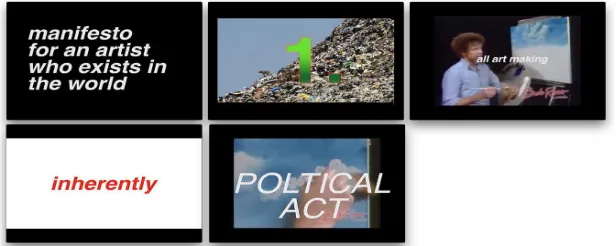
[image:6.612.75.383.567.690.2]The majority of the work that was published at the critique was compelling because it was a powerful individual expression of contemporary issues and topics through the mechanisms of art. For example, student AP’s manifesto advocated for the artist as a vital political agent operating outside the consumerist imperatives of capitalism. Her text was accompanied by deftly chosen video clips that amplified the expressive reach of the words. She taught herself the rudiments of Final Cut to make the video.
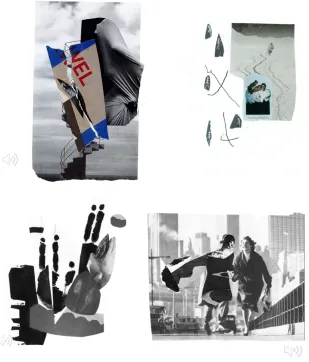
Student EW produced a narrated PowerPoint slideshow that used her voice as a third person ‘she’ to subtly state her case as a young female artist negotiating the complexities of a highly gendered art world. Each image in the slideshow was a unique and well resolved collage that opened up the poetic dimension of her text.
Fig. 2 image sequence from EW’s narrated PowerPoint slide show. Excerpt of narration: “A creative being is an artist…an artist is a creative being… interchangeable… hand in hand. She takes many forms. She speaks through many mediums. She does not stay in one box.”
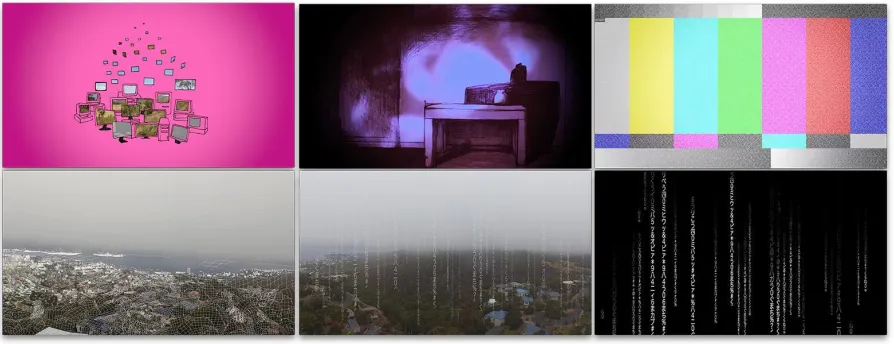
Fig. 3 screen shots of AS’ manifesto video.
Accounting for the preliminary ‘warm-up’ sessions and Manifesto Summary writing task, students had only two weeks to produce their videos, and many demonstrated a quality of work that would have required many more hours than those prescribed in the unit outline. Their extra commitment indicates that the module content and the invitation to espouse their view on their topic was eagerly embraced.
The ‘Manifesto’ module set the tone for the rest of the semester: that of excited, engaged participation in which the value of conceptual thinking was reframed through praxis. Feedback received through student surveys supports this view. For example:
“In comparison to Art Theory which I found quite formal and intimidating, Critical Practices has been a great way to understand practical and contextual meanings in order to fully understand what is required to be an artist.”
“It seems so much more appropriate to teach artists through doing, not through sitting them down and going chronologically through art history and expecting them to take interest and remember it.”
As we reflect on the successes and challenges of the first iterations of the Critical Practices suite of units, the expression of values afforded by Manifesto provide a reflexive model for future iterations. The elucidation of values expressed at the entry-stage of the Bachelor program enabled – and demanded – a number of reactive curriculum strategies that consolidated different positions (political, gendered, ecological, ethical, aesthetic). From these early expressions, we sought to further these value propositions through a closer examination of the values laid out. Our job, as unit leaders, was to reflect on the work of these early values and build content and experiences around these that furthered these areas but also sought to reform and reframe them.
Conclusion
Throughout the curriculum redevelopment process to date we’ve been using the term ‘praxis’ to signify the value-driven and un-disciplinary nature of our enterprise, which has not been the amelioration of discipline-based curriculum, rather, a reorientation towards multiple excursions into different disciplines and into communities (Fountain & Wise, 2016). We began using the word in its simpler sense to describe ‘thinking through doing’, and it has come to carry the idea of fluid and unimpeded movement and communication of ideas, concepts, practices through values and motivations and people, rather than ordered according to specific disciplinary skills and formats.
We see this praxis-model as a multimodal approach, an ethos and sense of purpose, that drives the school across its pre-degree, degree, and research agendas. In advocating for a curriculum driven by values and future needs, we seek to align ourselves with colleagues in other faculties who are also pursuing realignment and reorientation of their own disciplinary foci. Allowing for easier movement across disciplines through a shared sense of motivation and purpose, the aim of this common strategy is to allow for mobility and the possibility of new structures of content and context that develop new collaborative outcomes, but not to homogenise the curriculum.
share with our learners and our communities. In morphing the unit around shifting values, we recognise that the future iterations of the unit will be unique, being shaped by the values of the community that they forged by. Next year’s Manifesto may yet reveal a set of different value propositions, the unit will respond.
In conclusion.
References
BAKER, Su (2009) Art school 2.0: Art schools in the information age or reciprocal relations and the art of the possible, edited by B. Buckley & J. Conomos, 3-27. Re-thinking the contemporary art school: The artist, the PhD and the academy. Halifax: NSCAD.
BOIS, Yve-Alain (1992). ‘The Semiology of Cubism’ Picasso and Braque: A Symposium, ed. William Rubin, New York: Museum of Modern Art.
BRIDGSTOCK, Ruth (2013) Professional capabilities for twenty-first century creative careers: Lessons from outstandingly successful Australian artists and designers. International Journal of Art and Design Education, 32(2), 176-189. doi: 10.1111/j.1476-8070.2013.01756.x
CORMIER, Dave (2008) ‘Rhizomatic education: Community as curriculum.’ Innovate: Journal of Online Education, 4 (5): article 2.
MAFE, Daniel & Webb, MARK (2009) Introducing the interdisciplinary: The foundations year and the open studio. Retrieved from: https://eprints.usq.edu.au/8730/2/Binder1.pdf
OAKLEY, Kate & O’BRIEN, Dave (2016) Learning to labour unequally: Understanding the relationship between cultural production, cultural consumption and inequality. Social Identities: Journal for the Study of Race, Nation and Culture, 22(5), 471-486. doi: 10.1080/13504630.2015.1128800
O’Connor, Justin. (2017) Not jobs and growth but post-capitalism – and creative industries show the way. Retrieved 26 July 2017 from: http://theconversation.com/not-jobs-and-growth-but-post-capitalism-and-creative-industries-show-the-way-79650?
SADLER, D. Royce (2013) 'Opening up feedback: Teaching learners to see', edited by S. Merry, M. Price, D. Carless & M. Taras, 54-63. Reconceptualising Feedback
in Higher Education: developing dialogue with students. London: Routledge.
TASMANIAN GOVERNMENT (2015) Cultural and Creative Industries Strategy. Department of
State Growth, Hobart. Retrieved from:
http://www.stategrowth.tas.gov.au/__data/assets/pdf_file/0009/128691/Cultural_and_Creative_I ndustries_Strategy_for_Web.PDF