VOLUME 19 ISSUE 21 MARCH 2015 ISSN 1366-5278
Interventions to treat premature ejaculation:
a systematic review short report
ejaculation: a systematic review
short report
Katy Cooper,
*
Marrissa Martyn-St James,
Eva Kaltenthaler, Kath Dickinson and Anna Cantrell
School of Health and Related Research (ScHARR) Technology Assessment Group,
The University of Sheffield, Sheffield, UK
*Corresponding author
Declared competing interests of authors:none
Published March 2015
DOI: 10.3310/hta19210This report should be referenced as follows:
Cooper K, Martyn-St James M, Kaltenthaler E, Dickinson K, Cantrell A. Interventions to treat premature ejaculation: a systematic review short report.Health Technol Assess2015;19(21).
ISSN 1366-5278 (Print)
ISSN 2046-4924 (Online)
Impact factor: 5.116
Health Technology Assessmentis indexed in MEDLINE, CINAHL, EMBASE, The Cochrane Library and the ISI Science Citation Index and is
assessed for inclusion in the Database of Abstracts of Reviews of Effects.
This journal is a member of and subscribes to the principles of the Committee on Publication Ethics (COPE) (www.publicationethics.org/).
Editorial contact: [email protected]
The full HTA archive is freely available to view online at www.journalslibrary.nihr.ac.uk/hta. Print-on-demand copies can be purchased from the report pages of the NIHR Journals Library website: www.journalslibrary.nihr.ac.uk
Criteria for inclusion in theHealth Technology Assessmentjournal
Reports are published inHealth Technology Assessment(HTA) if (1) they have resulted from work for the HTA programme, and (2) they are of a sufficiently high scientific quality as assessed by the reviewers and editors.
Reviews inHealth Technology Assessmentare termed 'systematic' when the account of the search appraisal and synthesis methods (to minimise biases and random errors) would, in theory, permit the replication of the review by others.
HTA programme
The HTA programme, part of the National Institute for Health Research (NIHR), was set up in 1993. It produces high-quality research information on the effectiveness, costs and broader impact of health technologies for those who use, manage and provide care in the NHS. ‘Health technologies’are broadly defined as all interventions used to promote health, prevent and treat disease, and improve rehabilitation and long-term care.
The journal is indexed in NHS Evidence via its abstracts included in MEDLINE and its Technology Assessment Reports inform National Institute for Health and Care Excellence (NICE) guidance. HTA research is also an important source of evidence for National Screening Committee (NSC) policy decisions.
For more information about the HTA programme please visit the website: http://www.nets.nihr.ac.uk/programmes/hta
This report
The research reported in this issue of the journal was funded by the HTA programme as project number 13/12/01. The contractual start date was in July 2013. The draft report began editorial review in December 2013 and was accepted for publication in April 2014. The authors have been wholly responsible for all data collection, analysis and interpretation, and for writing up their work. The HTA editors and publisher have tried to ensure the accuracy of the authors’report and would like to thank the reviewers for their constructive comments on the draft document. However, they do not accept liability for damages or losses arising from material published in this report.
This report presents independent research funded by the National Institute for Health Research (NIHR). The views and opinions expressed by authors in this publication are those of the authors and do not necessarily reflect those of the NHS, the NIHR, NETSCC, the HTA programme or the Department of Health. If there are verbatim quotations included in this publication the views and opinions expressed by the
interviewees are those of the interviewees and do not necessarily reflect those of the authors, those of the NHS, the NIHR, NETSCC, the HTA programme or the Department of Health.
© Queen’s Printer and Controller of HMSO 2015. This work was produced by Cooperet al.under the terms of a commissioning contract issued by the Secretary of State for Health. This issue may be freely reproduced for the purposes of private research and study and extracts (or indeed, the full report) may be included in professional journals provided that suitable acknowledgement is made and the reproduction is not associated with any form of advertising. Applications for commercial reproduction should be addressed to: NIHR Journals Library, National Institute for Health Research, Evaluation, Trials and Studies Coordinating Centre, Alpha House, University of Southampton Science Park, Southampton SO16 7NS, UK.
Professor Tom Walley Director, NIHR Evaluation, Trials and Studies and Director of the HTA Programme, UK
NIHR Journals Library Editors
Professor Ken Stein Chair of HTA Editorial Board and Professor of Public Health, University of Exeter Medical School, UK
Professor Andree Le May Chair of NIHR Journals Library Editorial Group (EME, HS&DR, PGfAR, PHR journals)
Dr Martin Ashton-Key Consultant in Public Health Medicine/Consultant Advisor, NETSCC, UK
Professor Matthias Beck Chair in Public Sector Management and Subject Leader (Management Group), Queen’s University Management School, Queen’s University Belfast, UK
Professor Aileen Clarke Professor of Public Health and Health Services Research, Warwick Medical School, University of Warwick, UK
Dr Tessa Crilly Director, Crystal Blue Consulting Ltd, UK
Dr Peter Davidson Director of NETSCC, HTA, UK
Ms Tara Lamont Scientific Advisor, NETSCC, UK
Professor Elaine McColl Director, Newcastle Clinical Trials Unit, Institute of Health and Society, Newcastle University, UK
Professor William McGuire Professor of Child Health, Hull York Medical School, University of York, UK
Professor Geoffrey Meads Professor of Health Sciences Research, Faculty of Education, University of Winchester, UK
Professor John Powell Consultant Clinical Adviser, National Institute for Health and Care Excellence (NICE), UK
Professor James Raftery Professor of Health Technology Assessment, Wessex Institute, Faculty of Medicine, University of Southampton, UK
Dr Rob Riemsma Reviews Manager, Kleijnen Systematic Reviews Ltd, UK
Professor Helen Roberts Professor of Child Health Research, UCL Institute of Child Health, UK
Professor Helen Snooks Professor of Health Services Research, Institute of Life Science, College of Medicine, Swansea University, UK
Please visit the website for a list of members of the NIHR Journals Library Board: www.journalslibrary.nihr.ac.uk/about/editors
Abstract
Interventions to treat premature ejaculation: a systematic
review short report
Katy Cooper,
*Marrissa Martyn-St James, Eva Kaltenthaler,
Kath Dickinson and Anna Cantrell
School of Health and Related Research (ScHARR) Technology Assessment Group, The University of Sheffield, Sheffield, UK
*Corresponding author [email protected]
Background:Premature ejaculation (PE) is commonly defined as ejaculation with minimal sexual stimulation before, on or shortly after penetration and before the person wishes it. PE can be either lifelong and present since first sexual experiences (primary), or acquired (secondary), beginning later (Godpodinoff ML. Premature ejaculation: clinical subgroups and etiology.J Sex Marital Ther 1989;15:130–4). Treatments include behavioural and pharmacological interventions.
Objective:To systematically review evidence for clinical effectiveness of behavioural, topical and systemic treatments for PE.
Data sources:The following databases were searched from inception to 6 August 2013 for published and unpublished research evidence: MEDLINE; EMBASE; Cumulative Index to Nursing and Allied Health Literature; The Cochrane Library including the Cochrane Systematic Reviews Database, Cochrane Controlled Trials Register, Database of Abstracts of Reviews of Effects and theHealth Technology Assessmentdatabase; ISI Web of Science, including Science Citation Index, and the Conference Proceedings Citation Index-Science. The US Food and Drug Administration website and the European Medicines Agency (EMA) website were also searched.
Methods:Randomised controlled trials (RCTs) in adult men with PE were eligible (or non-RCTs in the absence of RCTs). RCT data were extrapolated from review articles when available. The primary outcome was intravaginal ejaculatory latency time (IELT). Data were meta-analysed when possible. Other outcomes included sexual satisfaction, control over ejaculation, relationship satisfaction, self-esteem, quality of life, treatment acceptability and adverse events (AEs).
Results:A total of 103 studies (102 RCTs, 65 from reviews) were included. RCTs were available for all interventions except yoga. The following interventions demonstrated significant improvements (p<0.05) in arithmetic mean difference in IELT compared with placebo:topical anaesthetics–eutectic mixture of local anaesthetics (EMLA®, AstraZeneca), topical eutectic mixture for PE (Plethora Solutions Ltd) spray; selective serotonin reuptake inhibitors(SSRIs)–citalopram (Cipramil®, Lundbeck), escitalopram (Cipralex®, Lundbeck), fluoxetine, paroxetine, sertraline, dapoxetine (Priligy®, Menarini), 30 mg or 60 mg;serotonin–noradrenaline reuptake inhibitors–duloxetine (Cymbalta®, Eli Lilly & Co Ltd);tricyclic antidepressants–inhaled clomipramine 4 mg;phosphodiesterase-5(PDE5)inhibitors–vardenafil (Levitra®, Bayer), tadalafil (Cialis®, Eli Lilly & Co Ltd);opioid analgesics–tramadol (Zydol SR®, Grünenthal).
not significantly different to antidepressants in ejaculation control;acupuncture–improvements over sham acupuncture in IELT, conflicting results for comparisons with SSRIs;Chinese medicine–improvements over treatment as usual;delay device–improvements in IELT when added to stop–start technique;
yoga–improved IELT over baseline, fluoxetine better than yoga. Treatment-related AEs were evident with most pharmacological interventions.
Limitations:Although data extraction from reviews was optimised when more than one review reported data for the same RCT, the reliability of the data extraction within these reviews cannot be guaranteed by this assessment report.
Conclusions:Several interventions significantly improved IELT. Many interventions also improved sexual satisfaction and other outcomes. However, assessment of longer-term safety and effectiveness is required to evaluate whether or not initial treatment effects are maintained long term, whether or not dose escalation is required, how soon treatment effects end following treatment cessation and whether or not treatments can be stopped and resumed at a later time. In addition, assessment of the AEs associated with long-term treatment and whether or not different doses have differing AE profiles is required.
Study registration:This study is registered as PROSPERO CRD42013005289.
Contents
List of tables ix
List of figures xi
Glossary xiii
List of abbreviations xv
Plain English summary xvii
Scientific summary xix
Chapter 1Background 1
Description of health problem 1
Aetiology, pathology and prognosis 1
Epidemiology and prevalence 1
Impact of health problem 1
Measurement of disease 1
Current service provision 2
Relevant national guidelines 2
Management of the condition 2
Description of technology under assessment 2
Summary of interventions 2
Chapter 2Definition of the decision problem 3
Decision problem 3
Population and subgroups 3
Interventions assessed 3
Relevant comparators 3
Key outcomes 3
Overall aim and objective of assessment 3
Chapter 3Assessment of clinical effectiveness 5
Methods for reviewing effectiveness 5
Identification of studies 5
Inclusion and exclusion criteria 5
Comparators 7
Outcomes 7
Included study types 7
Data abstraction strategy 8
Methods of data synthesis 8
Quality assessment of included studies 8
Results 9
Quantity and quality of research available 9
Chapter 4Discussion 145
Statement of principal findings 145
Behavioural interventions 145
Topical anaesthetics 145
Selective serotonin reuptake inhibitors currently not licensed for premature ejaculation 145
Selective serotonin reuptake inhibitors licensed for premature ejaculation (dapoxetine) 146
Serotonin–noradrenaline reuptake inhibitors 146
Tricyclic antidepressants 146
Phosphodiesterase-5 inhibitors 146
Alpha-blockers 146
Opioid analgesics: tramadol 147
Other therapies: acupuncture 147
Other therapies: Chinese medicine 147
Other therapies: delay devices 147
Other therapies: yoga 147
Strengths and limitations of the assessment 147
Strengths 147
Limitations 148
Assessment of factors relevant to the NHS and other parties 149
Chapter 5Conclusions 151
Implications for service provision 151
Suggested research priorities 151
Long-term safety and effectiveness 151
Comparison between treatments 151
Clinical significance of outcomes and risk–benefit assessment 152
Acknowledgements 153
References 155
Appendix 1Preferred Reporting Items for Systematic Reviews and
Meta-Analyses checklist 167
Appendix 2Literature search strategies 169
Appendix 3Table of excluded studies with rationale 171
List of tables
TABLE 1 Summary of reviews and RCTs by intervention 10 TABLE 2 Summary of overall results from RCT pairwise non-crossover comparisons 11 TABLE 3 Behavioural therapies: details of reviews and AMSTAR quality score 14 TABLE 4 Behavioural therapies: characteristics of RCTs included reviews and
additional RCTs not captured in reviews 15
TABLE 5 Behavioural therapies: results summary 19
TABLE 6 Behavioural therapies: outcomes other than IELT and AEs 25 TABLE 7 Topical anaesthetics: details of reviews and AMSTAR quality score 30 TABLE 8 Topical anaesthetics: characteristics of RCTs included reviews and
additional RCTs not captured in reviews 32
TABLE 9 Topical anaesthetics: results summary 36
TABLE 10 Topical anaesthetics: outcomes other than IELT and AEs 38 TABLE 11 Selective serotonin reuptake inhibitors currently not licensed for PE:
details of reviews and AMSTAR quality score 43
TABLE 12 Selective serotonin reuptake inhibitors are currently not licensed for PE: characteristics of RCTs included reviews and additional RCTs not captured
in reviews 45
TABLE 13 Selective serotonin reuptake inhibitors currently not licensed for PE:
results summary 55
TABLE 14 Selective serotonin reuptake inhibitors currently not licensed for PE:
outcomes other than IELT 59
TABLE 15 Selective serotonin reuptake inhibitors currently not licensed for PE:
AEs summary from one existing systematic review. Adapted from Huanget al. 64 TABLE 16 Selective serotonin reuptake inhibitors currently not licensed for PE:
AE data from individual studies 65
TABLE 17 Selective serotonin reuptake inhibitors licensed for PE (dapoxetine):
details of reviews and AMSTAR quality score 72
TABLE 18 Selective serotonin reuptake inhibitors licensed for PE (dapoxetine):
characteristics of RCTs included reviews and additional RCTs not captured in reviews 73 TABLE 19 Selective serotonin reuptake inhibitors licensed for PE (dapoxetine):
TABLE 20 Selective serotonin reuptake inhibitors licensed for PE (dapoxetine):
AEs and withdrawals 82
TABLE 21 Serotonin–noradrenaline reuptake inhibitor: characteristics of RCTs
included reviews and additional RCTs not captured in reviews 85 TABLE 22 Serotonin–noradrenaline reuptake inhibitors: other outcomes and AEs 87 TABLE 23 Tricyclic antidepressants: characteristics of RCTs included reviews and
additional RCTs not captured in reviews 90
TABLE 24 Tricyclic antidepressants: results summary 95 TABLE 25 Tricyclic antidepressants: outcomes other than IELT and AEs 98 TABLE 26 Phosphodiesterase-5 inhibitors: details of reviews and AMSTAR
quality score 103
TABLE 27 Phosphodiesterase-5 inhibitors: characteristics of RCTs included reviews
and additional RCTs not captured in reviews 104
TABLE 28 Phosphodiesterase-5 inhibitors: results summary 109 TABLE 29 Phosphodiesterase-5 inhibitors: outcomes other than IELT and AEs 114 TABLE 30 Alpha-blockers: characteristics of RCTs included reviews and additional
RCTs not captured in reviews 120
TABLE 31 Alpha-blockers: outcomes other than IELT and AEs 121 TABLE 32 Opioid analgesics, tramadol: details of reviews and AMSTAR
quality score 122
TABLE 33 Opioid analgesics, tramadol: characteristics of RCTs included reviews
and additional RCTs not captured in reviews 123
List of figures
FIGURE 1 Study selection process: PRISMA flow diagram 9 FIGURE 2 Behavioural therapies compared with comparator: forest plot of
IELT outcomes 21
FIGURE 3 Behavioural therapies, squeeze technique vs. SSRIs or TCAs–forest
plot of IELT outcomes 23
FIGURE 4 Topical anaesthetics, EMLA cream or TEMPE spray compared with
placebo: forest plot of IELT outcomes 35
FIGURE 5 Topical anaesthetics vs. placebo–forest plot of IELT outcomes 37 FIGURE 6 Topical anaesthetics compared with placebo: forest plot of AEs 41 FIGURE 7 Selective serotonin reuptake inhibitors compared with placebo or no
treatment: forest plot of IELT outcomes 54
FIGURE 8 Selective serotonin reuptake inhibitors, fluoxetine compared with
placebo: forest plot of IELT outcomes for end of study values 57 FIGURE 9 Dapoxetine 30 mg or 60 mg compared with placebo: forest plot of
IELT outcomes 76
FIGURE 10 Dapoxetine 30 mg compared with 60 mg: forest plot of IELT outcomes 80 FIGURE 11 Dapoxetine+mirodenafil compared with dapoxetine+placebo: forest
plot of IELT outcomes 80
FIGURE 12 Tricyclic antidepressants, clomipramine compared with PDE5
inhibitors: forest plot of IELT outcomes 94
FIGURE 13 Tricyclic antidepressants, clomipramine compared with SSRIs or
placebo: forest plot of IELT outcomes 97
FIGURE 14 Phosphodiesterase-5 inhibitors compared with placebo: forest plot of
IELT outcomes 108
FIGURE 15 Phosphodiesterase-5 inhibitors compared with SSRIs or TCAs: forest
plot of IELT outcomes 110
FIGURE 16 Phosphodiesterase-5 inhibitors plus SSRIs compared with SSRIs: forest
plot of IELT outcomes 112
FIGURE 17 Phosphodiesterase-5 inhibitors compared with behavioural
interventions: forest plot of IELT outcomes 113
FIGURE 18 Opioid analgesics, tramadol compared with comparator: forest plot
FIGURE 19 Opioid analgesics, tramadol different doses: forest plot of
IELT outcomes 127
FIGURE 20 Opioid analgesics, tramadol compared with comparator: forest plot
for AEs 131
FIGURE 21 Chinese medicine compared with comparator: forest plot of IELT
Glossary
Anejaculation Inability to ejaculate.
Bibliotherapy Expressive therapy that uses an individual’s relationship to the content of books.
Hypoaesthesia Diminished sensitivity to pain.
Intravaginal ejaculatory latency time Time taken by a man to ejaculate during vaginal penetration.
Libido Sexual drive or desire for sexual activity.
Sensate focus A focus on the patient’s own varied sense experience, rather than viewing orgasm as the
sole goal of sex.
Somnolence Strong desire for sleep.
Squeeze technique Application of firm pressure with thumb and forefinger below head of penis.
List of abbreviations
AE adverse event
AEC Ability of Ejaculation Control
AIPE Arabic Index of Premature Ejaculation
AMSTAR Assessing Methodological Quality of Systematic Reviews
CBT cognitive–behavioural therapy
CCRT Cochrane Controlled Trials Register
CGI-I Clinical Global Impression– Improvement
CI confidence interval
CINAHL Cumulative Index to Nursing and Allied Health Literature
CIPE Chinese Index of Premature Ejaculation
CIPE5 Chinese Index of Premature Ejaculation 5 premature ejaculation-related items
DSM-IV Diagnostic and Statistical Manual of Mental Disorders-Fourth Edition
DSM-IV-TR Diagnostic and Statistical Manual of Mental Disorders-Fourth Edition-Text Revision
EAU European Association of Urology
EMLA® eutectic mixture of local anaesthetics
EU European Union
GP general practitioner
GRISS Golombok Rust Inventory of Sexual Satisfaction
HTA Health Technology Assessment
ICD-10 International Classification of Diseases, Tenth Edition
IELT intravaginal ejaculatory latency time
IIEF International Index of Erectile Function
IPE Index of Premature Ejaculation
ISSM International Society for Sexual Medicine
MD mean difference
MeSH medical subject heading
NIHR National Institute for Health Research
OSAT overall sexual act time
PDE5 phosphodiesterase-5
PE premature ejaculation
PEDT Premature Ejaculation Diagnostic Tool
PEP Premature Ejaculation Profile
PRISMA Preferred Reporting Items for Systematic Reviews and Meta-Analyses
RCT randomised controlled trial
RR relative risk
SARI serotonin antagonist and reuptake inhibitor
ScHARR School of Health and Related Research
ScHARR-TAG School of Health and Related Research Technology Assessment Group
SD standard deviation
SNRI serotonin–noradrenaline reuptake inhibitor
SSRI selective serotonin reuptake inhibitor
TCA tricyclic antidepressant
TEMPE topical eutectic mixture for premature ejaculation
Plain English summary
P
remature ejaculation (PE) is ejaculation with minimal sexual stimulation before, on or shortly after penetration and before the person wishes it, and can cause distress for a man and his partner. Evidence from randomised controlled trials suggests that several treatments provide improvements of between 1 and 6 minutes in time to ejaculation, including drug treatments [selective serotonin inhibitors and other antidepressants, phosphodiesterase-5 inhibitors and tramadol (Zydol SR®, Grünenthal)],Scientific summary
Background
Premature ejaculation (PE) is commonly defined as ejaculation with minimal sexual stimulation before, on or shortly after penetration and before the person wishes it. PE can be either lifelong and present since first sexual experiences (primary), or acquired (secondary), beginning later. Prevalence rates internationally are 20–30%. Treatments include behavioural techniques, anaesthetic creams and sprays, tricyclic
antidepressants (TCAs), selective serotonin reuptake inhibitors (SSRIs), phosphodiesterase-5 (PDE5) inhibitors, analgesics such as tramadol (Zydol SR®, Grünenthal) and other interventions. Dapoxetine (Priligy®, Menarini) (a SSRI) is the only drug to have received approval for the treatment of PE in the UK.
Objectives
The objective was to systematically review the evidence for the clinical effectiveness of behavioural, topical and systemic treatments for PE in the form of aHealth Technology Assessment(HTA) short report.
Data sources
The following electronic databases were searched from inception to 6 August 2013 for published and unpublished research evidence: MEDLINE; EMBASE; Cumulative Index to Nursing and Allied Health Literature; The Cochrane Library including the Cochrane Systematic Reviews Database, Cochrane Controlled Trials Register, Database of Abstracts of Reviews of Effects and the HTA database; ISI Web of Science, including Science Citation Index, and the Conference Proceedings Citation Index-Science. The US Food and Drug Administration website and the European Medicines Agency website were also searched.
Methods
The systematic review included randomised controlled trials (RCTs) evaluating any intervention relevant to the UK in men with primary and/or secondary PE. Comparators included other interventions, waiting list control, placebo, or no treatment. RCTs were identified through literature searching of databases from inception to August 2013 and from existing reviews. Quality assessment was conducted for existing reviews and for further RCTs not captured in a review. For RCTs within existing reviews, data were extracted from the review and not from the original RCT publication. When no RCT evidence was identified for an intervention, other study types were considered. Outcomes included intravaginal ejaculatory latency time (IELT), sexual satisfaction, control over ejaculation, relationship satisfaction, self-esteem, quality of life, treatment acceptability and adverse events (AEs).
Results
Behavioural interventions
Twelve RCTs were identified. Behavioural therapies improved IELT and sexual satisfaction compared with waiting list control, and behavioural therapies combined with pharmacological therapies were better than either intervention alone in improving IELT, sexual satisfaction, sexual anxiety and ejaculation control. When reported, no AEs were associated with behavioural interventions alone.
Topical anaesthetics
Nine RCTs assessed treatment over 4–12 weeks. Both eutectic mixture of local anaesthetics cream and topical eutectic mixture for PE spray were significantly more effective than placebo in increasing IELT [mean difference (MD) 6.44 minutes, 95% confidence interval (CI) 6.01 to 6.87 minutes] and 3.30 minutes (95% CI 1.33 to 5.27 minutes); bothp<0.00001. AEs include loss of sensation and irritation (men and women) and loss of erection with applications≥20 minutes.
Selective serotonin reuptake inhibitors other than dapoxetine
Forty-two RCTs assessed SSRIs, mostly taken daily, and treatment duration was 4–12 weeks.
Citalopram (Cipramil®, Lundbeck) significantly increased IELT compared with placebo or no treatment [MD 0.25 minutes (95% CI–0.06 to 0.56 minutes) to 4.62 minutes (95% CI 4.21 to 5.03 minutes); p<0.00001] and improved sexual satisfaction. Escitalopram (Cipralex®, Lundbeck) significantly increased IELT compared with placebo (MD 1.2 minutes, 95% CI 0.79 to 1.61 minutes;p<0.00001). Fluoxetine significantly increased IELT compared with placebo (MD 2.41 minutes, 95% CI 2.10 to 2.73 minutes; p<0.00001). Fluvoxamine did not significantly increase IELT compared with placebo. Paroxetine significantly increased IELT compared with placebo (MD 5.34 minutes, 95% CI 3.79 to 6.89 minutes; p<0.00001) and improved sexual satisfaction. Sertraline significantly increased IELT compared with placebo (MD 2.72 minutes, 95% CI 1.77 to 3.67 minutes;p<0.00001) and improved ejaculation control. AEs included nausea, headache, insomnia, dry mouth, diarrhoea, drowsiness, dizziness, somnolence, decreased libido and anejaculation.
Selective serotonin reuptake inhibitors: dapoxetine
Eight RCT reports assessed licensed doses of dapoxetine, generally taken on demand prior to intercourse. Treatment duration was 2–24 weeks. Dapoxetine 30 mg and 60 mg significantly increased IELT compared with placebo [MD 1.16 minutes (95% CI 0.94 to 1.39 minutes) and 1.66 minutes (95% CI 1.46 to 1.87 minutes);p<0.00001] and dapoxetine 60 mg was more effective than 30 mg (MD 0.46 minutes, 95% CI 0.19 to 0.74 minutes;p=0.0009). Similar effects are evident for ejaculatory control, sexual satisfaction, global impression of change and clinical benefit. AEs included nausea, diarrhoea, headache and dizziness and appearing to be dose dependent.
Serotonin–noradrenaline reuptake inhibitors
Three RCTs were identified. One 12-week trial indicated that duloxetine (Cymbalta®, Eli Lilly & Co Ltd) is better than placebo in increasing IELT (MD 1.52 minutes, 95% CI 0.08 to 2.24 minutes;p<0.00001). Evidence from two RCTs suggests venlafaxine is not effective at increasing IELT compared with placebo. Duloxetine side effects included dry mouth and nausea. Venlafaxine caused significantly more side effects than placebo.
Tricyclic antidepressants
Phosphodiesterase-5 inhibitors
Twelve RCTs were identified, but IELT was poorly reported. Vardenafil (Levitra®, Bayer) and tadalafil (Cialis®, Eli Lilly & Co Ltd) significantly increased IELT compared with placebo [based on one RCT each; MD 3.80 minutes (95% CI 3.30 to 4.30 minutes) and 2.59 minutes (95% CI 1.28 to 3.90 minutes);p=0.006 andp<0.00001, respectively], but there was no significant difference in one RCT between sildenafil and placebo. Sexual satisfaction favoured PDE5 inhibitors over placebo. Sildenafil plus sertraline or behavioural therapy was better than sildenafil alone. AEs included flushing, headache and palpitations.
Alpha-blockers
Two RCTs were identified, neither assessing IELT. Evidence from one 8-week RCT showed improvements for terazosin (Hytrin®, AMCO) compared with placebo in ejaculation control. The current evidence base for alpha-blockers in the treatment of PE is limited.
Tramadol
Seven RCTs were identified. Treatment duration was 6–24 weeks. Tramadol significantly increased IELT compared with placebo (MD 1.35 minutes, 95% CI 0.63 to 2.07 minutes;p=0.0002) and improved sexual satisfaction. Tramadol plus behavioural therapy improved IELT over behavioural therapy alone (MD 1.65 minutes, 95% CI 0.30 to 3.00 minutes;p=0.02). There was no significant difference between tramadol and paroxetine. AEs included erectile dysfunction, constipation, nausea, headache, somnolence, dry mouth, dizziness, pruritus and vomiting. Addiction potential was not assessed.
Acupuncture
Two 4-week RCTs were identified. Acupuncture significantly increased IELT compared with sham acupuncture but comparisons with SSRIs were inconsistent. AEs were not well reported.
Chinese medicine
Five RCTs were identified. In one 2-week trial, Chinese medicine was more effective than treatment as usual (1.57 minutes, 95% CI 1.11 to 2.03 minutes;p<0.00001). In one 4-week trial, fluoxetine improved IELT compared with Chinese medicine (0.60 minutes, 95% CI 0.19 to 1.01 minutes;p<0.00001). AEs were not well reported.
Delay devices
One RCT compared a desensitising band plus stop–start technique compared with behavioural therapy plus stop–start technique (treatment duration unclear). IELT appeared improved with the desensitising band. AEs (soreness with overuse) were minimal when used as directed.
Yoga
No RCTs were identified. In one non-RCT comparing yoga with fluoxetine over 12 weeks, both yoga and fluoxetine significantly improved IELT from baseline, but fluoxetine significantly increased IELT compared with yoga. A high proportion of partners reported a good sexual satisfaction with yoga. AEs were not reported.
Discussion
Strengths
Limitations and uncertainties
Owing to the large volume of evidence, data for RCTs reported in reviews were extracted from the review article and not the original RCT publication. Thus, the reliability of these data cannot be guaranteed. Similarly, the methodological quality of individual RCTs reported in existing reviews was not assessed by this assessment report.
Generalisability of findings
Most trials involved men with primary PE without a concomitant condition such as erectile dysfunction, mainly recruited from specialist sexual health settings. The effectiveness of treatments for men with secondary PE, PE concomitant to another condition, or not attending specialised clinics, is less certain. Included trials were undertaken in various European Union (EU) and non-EU countries. Variability in trial populations, PE definitions and IELT entry criteria, cultural attitudes towards PE and acceptability of treatments also limits generalisability of findings. Treatment duration among trials ranged from 2 to 24 weeks. The long-term effectiveness and safety for patients either continuing or withdrawing from treatment are unknown. Furthermore, patient adherence to and acceptability of treatments have not been fully evaluated. The improvements in IELT ranged from 1 to 6 minutes. While these effects were statistically significant, it is difficult to quantify how acceptable and meaningful these changes are for men with PE without being able to evaluate the relationship between IELT, ejaculation control, and sexual satisfaction. There is currently no consensus on what constitutes a clinically significant threshold response to
interventions for PE.
Conclusions
Implications for service provision
Several interventions provided statistically significant improvements of between 1 and 6 minutes in time to ejaculation (IELT), including pharmacological interventions (SSRIs and other antidepressants, PDE5 inhibitors, tramadol), topical anaesthetics and behavioural therapies. Many interventions also demonstrated improvements in sexual satisfaction and other outcomes. Behavioural therapy combined with pharmacotherapy was better than behavioural therapy or pharmacotherapy alone. Pharmacological and topical therapies are associated with some AEs. Trial duration was a maximum of 12 weeks for most interventions (24 weeks for dapoxetine and tramadol). Different interventions have different modes of action and individual patients may have a preference for pharmacological or behavioural interventions, so maintaining a range of options (to be used individually or in combination) may remain a useful approach in the treatment of PE.
Suggested research priorities
Assessment of long-term safety and effectiveness of interventions (>6 months) is required and should assess whether or not initial treatment effects are maintained long term, whether or not the effects end with treatment cessation, whether or not treatments require dose escalation to maintain initial treatment effects and whether or not treatments can be stopped and resumed, as well as AEs associated with long-term treatment. This could be addressed by reviewing the literature for these treatments in other conditions, supplemented by longer-term studies in PE, possibly observational studies or longer-term follow-up of RCT participants.
The current evidence base does not include sufficient direct comparisons to inform a judgement
of interventions that are most effective. However, patients may have preferences for different types of treatment (e.g. pharmacological or behavioural) and, therefore, maintaining a range of options may be a useful approach.
Future research should also consider an evaluation of clinically meaningful increases in IELT, including evaluation of the relationship between increases in IELT, ejaculatory control and sexual satisfaction, and whether or not increases of a few minutes in IELT are more meaningful to some patients than others. The trade-off between an improvement in IELT and other effectiveness outcomes compared with AEs and inconvenience should also be further evaluated.
Funding
Chapter 1
Background
Description of health problem
Premature ejaculation (PE) is a form of male sexual dysfunction. It is also referred to as early ejaculation, rapid ejaculation, rapid climax, premature climax and (historically) ejaculation praecox. Official definitions of PE have been set out in theDiagnostic and Statistical Manual of Mental Disorders-Fourth Edition-Text Revision (DSM-IV-TR)1and in the World Health Organization’s (WHO’s)International Classification of Diseases, Tenth Edition (ICD-10).2The DSM-IV-TR defines the condition as persistent or recurrent
ejaculation with minimal sexual stimulation before, on or shortly after penetration and before the person wishes it.1Other definitions have also been proposed by the Second International Consultation on Sexual and Erectile Dysfunction3and the International Society for Sexual Medicine (ISSM).4All four definitions consider time to ejaculation, inability to control or delay ejaculation and negative consequences of PE. However, there is no current consensus on quantification of the time to ejaculation, which is usually described by intravaginal ejaculatory latency time (IELT), i.e. the time taken by a man to ejaculate during vaginal penetration.5
Aetiology, pathology and prognosis
According to the European Association of Urology (EAU), the aetiology of PE is unknown, with few data to support suggested biological and psychological hypotheses, including anxiety, penile hypersensitivity and 5-hydroxytryptamine (5-HT) receptor dysfunction, and the pathophysiology of PE is largely unknown.6 PE can be either lifelong (primary) or acquired (secondary).7Lifelong PE is that which has been present since the person’s first sexual experiences, while acquired PE is that which begins later following normal ejaculation experiences. PE can occur secondary to another condition such as erectile dysfunction or prostatitis, in which case guidelines recommend treating the underlying condition first or concomitantly.6,8 PE cannot be cured, but can be managed with behavioural and/or pharmacological treatment.
Epidemiology and prevalence
Epidemiological surveys in the USA and other countries suggest that PE as defined in theDiagnostic and Statistical Manual of Mental Disorders-Fourth Edition (DSM-IV)9is the most common male sexual dysfunction, with prevalence rates of 20–30%.3,10,11The highest prevalence, 31% (among men aged 18–59 years), was found by the USA National Health and Social Life Survey study.11In a five-country European observational study, which included the UK, the prevalence of PE was 18%.12
Impact of health problem
Men with PE are more likely to report lower levels of sexual functioning and satisfaction, and higher levels of personal distress and interpersonal difficulty, than men without PE.5They may also rate their overall quality of life lower than that of men without PE.5In addition, the partner’s satisfaction with the sexual relationship has been reported to decrease with increasing severity of the condition.13
Measurement of disease
Current service provision
Relevant national guidelines
Guidelines on PE include the EAU 2013 Guidelines on Male Sexual Dysfunction6and the British Recommendations for the Management of Premature Ejaculation, 2006.8
Management of the condition
The treatment of PE should attempt to alleviate concern about the condition as well as increase sexual satisfaction for the patient and the partner.8Descriptions of a recommended treatment pathway for the condition are varied. The British Association of Urological Surgeons suggest that counselling may help men with less troublesome PE but, for most men, the mainstay of long-term treatment is drugs.22The British Association for Sexual Health and HIV, Special Interest Group for Sexual Dysfunction, suggests that management of patients should be decided on a case-by-case basis that considers behavioural, local and systemic pharmacological treatments.8The EAU presents a definitive treatment pathway based on clinical diagnosis of the condition and treatment of PE based on whether or not the condition is either lifelong or acquired. There is currently no published literature that identifies a clinically significant threshold response to interventions for PE.23
Description of technology under assessment
Summary of interventions
Chapter 2
Definition of the decision problem
Decision problem
Population and subgroups
The relevant population comprised all men aged≥18 years with PE, both lifelong and acquired PE. Studies focusing specifically on men with PE secondary to another condition (such as erectile dysfunction or prostate conditions) were excluded if possible; however, this information was often not reported.
Interventions assessed
Treatment modalities included behavioural techniques, topical therapies, systemic therapies and other therapies.
Relevant comparators
Comparators included other interventions, waiting list control, placebo or no treatment.
Key outcomes
The key outcomes for this review were IELT, sexual satisfaction, control over ejaculation, relationship satisfaction, self-esteem and quality of life. As these outcomes in PE are assessed in the literature using different methods, and there is a lack of core validated outcome measures, any assessment methods were permitted for these outcomes.
Overall aim and objective of assessment
Chapter 3
Assessment of clinical effectiveness
A
systematic review of the literature was undertaken to evaluate the clinical effectiveness ofinterventions for men with PE. A review of the evidence was undertaken in accordance with the general principles recommended in the Preferred Reporting Items for Systematic Reviews and Meta-Analyses (PRISMA) statement.25The completed PRISMA checklist is presented inAppendix 1.
Methods for reviewing effectiveness
Identification of studies
The following electronic databases were searched from inception to 6 August 2013 for published and unpublished research evidence: MEDLINE; EMBASE; Cumulative Index to Nursing and Allied Health Literature (CINAHL); The Cochrane Library including the Cochrane Systematic Reviews Database; Cochrane Controlled Trials Register (CCRT); Database of Abstracts of Reviews of Effects and the HTA database; ISI Web of Science, including Science Citation Index, and the Conference Proceedings Citation Index-Science; The US Food and Drug Administration website and the European Medicines Agency website were also searched. All citations were imported into Reference Manager Software (version 12, Thomson ResearchSoft, Carlsbad, CA, USA) and any duplicates deleted.
Search terms were included a combination of medical subject headings (MeSHs) and free-text searches for terms around‘premature ejaculation’. These included:
l MeSHs: Ejaculation; Premature ejaculation.
l Free-text search terms: premature$adj3 ejaculat$; early adj3 ejaculat$; rapid adj3 ejaculat$; rapid adj3 climax$; premature$adj3 climax$; ejaculat$adj3 pr?ecox.
Search filters (study design filters) were used to restrict the searches to randomised controlled trials (RCTs), reviews and guidelines. These were:
l the RCT filter available from the Scottish Intercollegiate Guidelines Network26
l the reviews filter available from the York Centre for Reviews and Dissemination27
l the filter for guidelines available from the Health Evidence Bulletins Wales resource.28
Details of the MEDLINE strategy are presented inAppendix 2. Existing reviews identified by the searches were obtained and examined for relevant RCT data. However, all bibliographic data sources were searched from inception; thus, existing reviews were not relied upon as the only source for identifying relevant RCTs.
Inclusion and exclusion criteria
Population
As some formal definitions of PE have only recently been developed, studies were included whether or not they used a standard definition and all definitions used were recorded. Common definitions of PE include the following:
l DSM-IV-TR1
l WHO’s ICD-102
l the Second International Consultation on Sexual and Erectile Dysfunction4
l ISSM.29
Included interventions
Behavioural interventions included psychological or psychosocial interventions to develop sexual management strategies that were either validated or described by investigators as being a treatment for PE treatment. Examples include:
l ‘Stop–start’programme developed by Semans:16the man or his partner stimulates the penis until he feels the urge to ejaculate, then stops until the sensation passes; this is repeated a few times before allowing ejaculation to occur. The aim is to learn to recognise the feelings of arousal in order to improve control over ejaculation.
l ‘Squeeze’technique, proposed by Masters and Johnson:17the man’s partner stimulates the penis until he feels the urge to ejaculate, then squeezes the glans of the penis until the sensation passes; this is repeated before allowing ejaculation to occur.
l Sensate focus or sensate focusing:4the man and his partner begin by focusing on touch which excludes breasts, genitals and intercourse, to encourage body awareness while reducing performance anxiety; this is followed by gradual reintroduction of genital touching and then full intercourse.
Topical treatments included:
l Lidocaine–prilocaine, eutectic mixture of local anaesthetics (EMLA®, AstraZeneca), topical eutectic mixture for PE [(TEMPE), a combination of two medicines–lidocaine and prilocaine], dyclonine or lidocaine. These can be in the form of either a cream or an aerosol vehicle or a gel containing a local anaesthetic (Instillagel®, CliniMed).
Systemic treatments included:
l SSRIs [e.g. fluoxetine, sertraline, citalopram (Cipramil®, Lundbeck), paroxetine, fluvoxamine and
dapoxetine]. Dapoxetine is a short-acting SSRI that can be taken a few hours preintercourse rather than as a daily dose and is the only drug currently licensed for PE in the UK.
l Serotonin–noradrenaline reuptake inhibitors (SNRIs) [e.g. duloxetine (Cymbalta®, Eli Lilly & Co Ltd), venlafaxine].
l TCAs (e.g. clomipramine).
l PDE5 inhibitors [e.g. sildenafil (Viagra), vardenafil (Levitra®, Bayer), tadalafil (Cialis®, Eli Lilly & Co Ltd)].
l Alpha-blockers [e.g. terazosin (Hytrin®, AMCO), alfuzosin].
l Opioid analgesics (e.g. tramadol).
Other therapies included:
l acupuncture
l Chinese medicine
l delay device/desensitising band: a small device which the man can use together with stop–start and squeeze techniques to gradually improve control over ejaculation
l yoga.
Excluded interventions
The following interventions not considered relevant to the UK setting were excluded:
l Severance Secret cream (SS cream: a topical plant-based preparation comprising extracts of nine plants). Not currently available within the UK (Professor Kevan Wylie, Porterbrook Clinic, 2013, personal communication).
l Antiepileptic drugs (e.g. gabapentin). Not currently included in the UK30or European6guidelines and not currently used in clinical practice in the UK (Professor Kevan Wylie, personal communication).
l Antipsychotics [e.g. thioridazine (Melleril, Novartis, withdrawn worldwide in 2005), perphenazine (Trilafon, Merck Sharp & Dohme), levosulpiride]. Not currently included in the UK30or European6 guidelines and not currently used in clinical practice in the UK (Professor Kevan Wylie,
personal communication).
l Antiemetics (e.g. metoclopramide). Not currently included in the UK30or European6guidelines and not currently used in clinical practice in the UK (Professor Kevan Wylie, personal communication).
l Barbiturates (e.g. Atrium 300). Not currently included in the UK30or European6guidelines and not currently used in clinical practice in the UK (Professor Kevan Wylie, personal communication).
l Beta-blockers (e.g. propranolol). Not currently included in the UK30or European6guidelines and not currently used in clinical practice in the UK (Professor Kevan Wylie, personal communication).
Comparators
Comparators included other interventions, waiting list control, placebo or no treatment.
Outcomes
The key outcomes for this review were:
l IELT: studies that do not report this outcome objectively, but assess the outcome via another subjective measure such as a questionnaire, were included. Studies that assess ejaculation latency time in a laboratory setting, i.e. not intravaginally, were excluded.
l Sexual satisfaction.
l Control over ejaculation.
l Relationship satisfaction.
l Self-esteem.
Other outcomes included:
l Quality of life.
l Treatment acceptability.
l Adverse events (AEs).
Included study types
Included study designs were restricted to RCTs, if available. If no RCT evidence was identified for a particular intervention, other study types (non-RCT) were considered. Owing to the time constraints of this short report, if RCTs were included in existing reviews, data were extracted from the review and not from the original RCT publication. RCTs not captured by existing reviews and those published subsequently to existing reviews were identified via the literature search and data were extracted directly from the RCT publication. RCTs reported in abstract form only were eligible for inclusion, provided adequate information was presented in the abstract. Studies using quasi-randomisation were excluded, providing other RCT evidence for the treatment of interest was available.
Data abstraction strategy
Titles and abstracts of citations identified by the searches were screened for potentially relevant studies by one reviewer and a subset checked by a second reviewer (and a check for consistency undertaken). Full texts were screened by two reviewers. Details of studies identified for inclusion were extracted using a data extraction sheet. One reviewer performed data extraction of each included study. All numerical data were then checked against the original article by a second reviewer. Any disagreements were resolved by a third reviewer. When studies comprised duplicate reports (parallel publications), all associated reports were used to extract information.
Methods of data synthesis
When possible, data were pooled in a meta-analysis from RCTs reported in the existing reviews along with data extracted from additional RCTs not captured by the existing reviews. Meta-analysis of outcome data from all RCTs was then undertaken using Cochrane RevMan software (version 5.2, The Cochrane Collaboration, The Nordic Cochrane Centre, Copenhagen, Denmark). Outcomes reported as continuous data were estimated using a mean difference (MD) with 95% confidence interval (CI). Outcomes reported as dichotomous were estimated as relative risks (RRs) with associated 95% CI. When RCTs reported AEs in sufficient detail (e.g. the number of participants who experienced at least one AE), these were analysed as dichotomous data. Data from single-arm randomised crossover design studies were considered separately in the analysis to avoid a unit-of-analysis error.31
Clinical heterogeneity across RCTs (the degree to which RCTs appear different in terms of participants, intervention type and duration and outcome type) and statistical heterogeneity were considered prior to data pooling. Statistical heterogeneity was assessed using the chi-squared test (p-value<0.10 was considered to indicate statistically significant heterogeneity) in conjunction with theI-squared statistic.32 For comparisons in which there was little apparent clinical heterogeneity and theI2-value was≤40%, a fixed-effects model was applied. When there was little apparent clinical heterogeneity and theI2-value was>40%, a random-effects model was applied. Effect estimates (estimated in RevMan asz-values) were considered significant atp<0.05. Data were not pooled across RCTs for which heterogeneity was very high (I2-values of≥75%).
Quality assessment of included studies
Results
Quantity and quality of research available
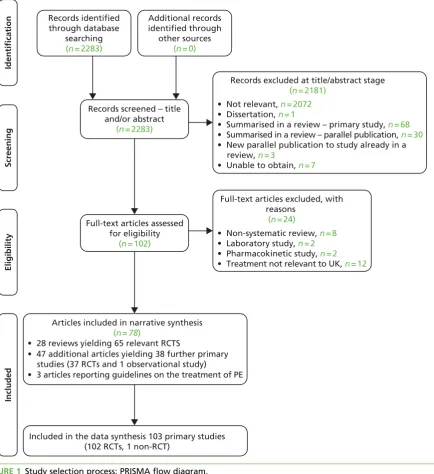
The searches identified 2283 citations. Of these, 2181 citations were excluded, 2174 based on title and/or abstract information and seven that we were unable to obtain. One hundred and three (103) full-text articles were obtained as potentially relevant. Of these, 24 were excluded: eight were non-systematic reviews or treatment overviews, two were laboratory-based assessments, two were pharmacokinetic assessment studies and 12 were studies evaluating treatments not relevant to the UK setting. Details of the 24 excluded studies are presented inAppendix 3. In total, 78 articles from the searches were included in this assessment report comprising: 28 reviews, 47 primary study articles (relating to 38 studies) and three guideline articles (relating to two guidelines) (Figure 1).
From these publications, a total of 103 primary studies (102 RCTs) are summarised in this review (Table 1). Sixty-five RCTs were extracted from existing reviews and 38 further studies from the literature search (seeTable 1). All 65 RCTs reported in existing reviews were also captured by the searches for this
Records identified through database
searching (n = 2283)
Screening
Included
Eligibility
Identification
Additional records identified through
other sources (n = 0)
Records screened – title and/or abstract
(n = 2283)
Records excluded at title/abstract stage (n = 2181)
• Not relevant, n = 2072 • Dissertation, n = 1
• Summarised in a review – primary study, n = 68 • Summarised in a review – parallel publication, n = 30 • New parallel publication to study already in a review, n = 3
• Unable to obtain, n = 7
Full-text articles assessed for eligibility
(n = 102)
Full-text articles excluded, with reasons
(n = 24)
Articles included in narrative synthesis (n = 78)
Included in the data synthesis 103 primary studies (102 RCTs, 1 non-RCT)
• Non-systematic review, n = 8 • Laboratory study, n = 2 • Pharmacokinetic study, n = 2 • Treatment not relevant to UK, n = 12
• 28 reviews yielding 65 relevant RCTS
• 47 additional articles yielding 38 further primary studies (37 RCTs and 1 observational study)
[image:35.595.75.510.287.762.2]• 3 articles reporting guidelines on the treatment of PE
assessment report. RCT evidence was available for all of the treatments of interest for this review, bar yoga. For yoga, one observational study was included (a non-RCT). Details of the AMSTAR33quality assessment of included reviews and Cochrane risk of bias assessment34for the RCTs not included by reviews are presented inAppendix 4.
As titles and abstracts were screened for inclusion by one reviewer, a check for consistency was
undertaken. A second reviewer screened approximately 10% of the references (n=250) during the initial screening stage. At this stage, references tagged as potentially relevant by reviewer 1 included 5 out of 194 (3%) references excluded by reviewer 2, and references tagged as potentially relevant by reviewer 2 included 22 out of 211 (10%) references excluded by reviewer 1. This gave a kappa statistic of 0.65, generally classed as good agreement. The discrepancies appeared to be due to the very broad inclusion criteria (in terms of study type and intervention type) that were applied at the time of initial screening. The references for which there was a discrepancy related to article types such as comment articles, news articles and uncontrolled studies that were initially tagged as potentially relevant. However, later
[image:36.595.85.535.93.544.2]examination revealed that none of these articles were relevant for inclusion in the final review.
TABLE 1 Summary of reviews and RCTs by intervention
Intervention type No. of reviews
No. of RCTs (extracted from reviews)
Further RCTs (not in
reviews) RCTs (total)
Behavioural therapies 435–38
939–47
348–50
12
Topical anaesthetics 451–54 755–61 262,63 9
SSRIs other than dapoxetine
7: 26: 16: 42:
l SSRIs: 464–67 l Citalopram: 470–73 l Citalopram: 592–96 l Citalopram: 9
l Various
treatments:
352,68,69
l Escitalopram
(Cipralex®,
Lundbeck): 0
l Escitalopram
(Cipralex®,
Lundbeck): 494,97–99
l Escitalopram
(Cipralex®,
Lundbeck): 4
l Fluoxetine: 1141,74–83 l Fluoxetine:
595,97,100–102
l Fluoxetine: 16
l Fluvoxamine: 181 l
Fluvoxamine: 0 l Fluvoxamine: 1
l Paroxetine:
939,73,81,82,84–88
l Paroxetine:
497,103–105
l Paroxetine: 13
l Sertraline:
939,76,78,81,82,84,89–91
l Sertraline:
492,102,106,107
l Sertraline: 13
Dapoxetine 8: 885,113–119(one non-licensed
doses; data not included
here115)
1120 9 (8 for licensed
doses)
l Dapoxetine:
668,108–112
l Various
SSRIs: 265,67
SNRIs 168
1 (duloxetine)121
2 (venlafaxine)122,123
3
TCAs (clomipramine) 352,68,69 1039,76,124–131 3107,132,133 13
PDE5 537,134–137
1039,55,138–145
2101,120
12
Alpha-blockers 2 (various
treatments)52,69
1146 1107 2
Opioid analgesics (tramadol)
3147–149
546,150–153
2154,155
7
Acupuncture 0 0 2156,157 2
Chinese medicine 0 0 5158–162
5
Delay device 0 0 1163 1
Yoga 0 0 1164
Assessment of effectiveness
Overall summary of results
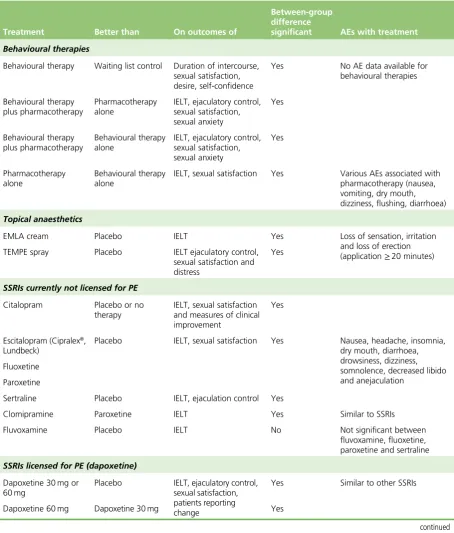
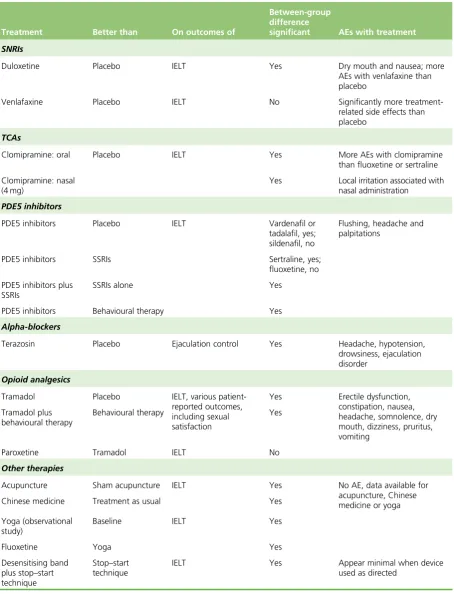
[image:37.595.61.516.211.745.2]An overall results summary from this assessment report for outcomes of IELT, sexual satisfaction, control over ejaculation and other secondary outcomes, plus AEs, following treatment with behavioural techniques anaesthetic creams and sprays, TCAs, SSRIs including dapoxetine, PDE5 inhibitors, analgesics (tramadol) and other interventions in the management of PE is provided inTable 2. A detailed assessment of the effectiveness for each treatment type then follows.
TABLE 2 Summary of overall results from RCT pairwise non-crossover comparisons
Treatment Better than On outcomes of
Between-group difference
significant AEs with treatment
Behavioural therapies
Behavioural therapy Waiting list control Duration of intercourse,
sexual satisfaction, desire, self-confidence
Yes No AE data available for
behavioural therapies
Behavioural therapy plus pharmacotherapy
Pharmacotherapy alone
IELT, ejaculatory control, sexual satisfaction, sexual anxiety
Yes
Behavioural therapy plus pharmacotherapy
Behavioural therapy alone
IELT, ejaculatory control, sexual satisfaction, sexual anxiety
Yes
Pharmacotherapy alone
Behavioural therapy alone
IELT, sexual satisfaction Yes Various AEs associated with
pharmacotherapy (nausea, vomiting, dry mouth, dizziness, flushing, diarrhoea)
Topical anaesthetics
EMLA cream Placebo IELT Yes Loss of sensation, irritation
and loss of erection
(application≥20 minutes)
TEMPE spray Placebo IELT ejaculatory control,
sexual satisfaction and distress
Yes
SSRIs currently not licensed for PE
Citalopram Placebo or no
therapy
IELT, sexual satisfaction and measures of clinical improvement
Yes
Escitalopram (Cipralex®,
Lundbeck)
Placebo IELT, sexual satisfaction Yes Nausea, headache, insomnia,
dry mouth, diarrhoea, drowsiness, dizziness, somnolence, decreased libido and anejaculation
Fluoxetine
Paroxetine
Sertraline Placebo IELT, ejaculation control Yes
Clomipramine Paroxetine IELT Yes Similar to SSRIs
Fluvoxamine Placebo IELT No Not significant between
fluvoxamine, fluoxetine, paroxetine and sertraline
SSRIs licensed for PE (dapoxetine)
Dapoxetine 30 mg or 60 mg
Placebo IELT, ejaculatory control,
sexual satisfaction, patients reporting change
Yes Similar to other SSRIs
Dapoxetine 60 mg Dapoxetine 30 mg Yes
TABLE 2 Summary of overall results from RCT pairwise non-crossover comparisons (continued)
Treatment Better than On outcomes of
Between-group difference
significant AEs with treatment
SNRIs
Duloxetine Placebo IELT Yes Dry mouth and nausea; more
AEs with venlafaxine than placebo
Venlafaxine Placebo IELT No Significantly more
treatment-related side effects than placebo
TCAs
Clomipramine: oral Placebo IELT Yes More AEs with clomipramine
than fluoxetine or sertraline
Clomipramine: nasal (4 mg)
Yes Local irritation associated with
nasal administration
PDE5 inhibitors
PDE5 inhibitors Placebo IELT Vardenafil or
tadalafil, yes; sildenafil, no
Flushing, headache and palpitations
PDE5 inhibitors SSRIs Sertraline, yes;
fluoxetine, no
PDE5 inhibitors plus SSRIs
SSRIs alone Yes
PDE5 inhibitors Behavioural therapy Yes
Alpha-blockers
Terazosin Placebo Ejaculation control Yes Headache, hypotension,
drowsiness, ejaculation disorder
Opioid analgesics
Tramadol Placebo IELT, various
patient-reported outcomes, including sexual satisfaction
Yes Erectile dysfunction,
constipation, nausea, headache, somnolence, dry mouth, dizziness, pruritus, vomiting
Tramadol plus behavioural therapy
Behavioural therapy Yes
Paroxetine Tramadol IELT No
Other therapies
Acupuncture Sham acupuncture IELT Yes No AE, data available for
acupuncture, Chinese medicine or yoga
Chinese medicine Treatment as usual Yes
Yoga (observational study)
Baseline IELT Yes
Fluoxetine Yoga Yes
Desensitising band
plus stop–start
technique
Stop–start
technique
IELT Yes Appear minimal when device
Behavioural therapies
Characteristics of included studies: behavioural therapies
Behavioural therapies were evaluated by one Cochrane review35and two further systematic reviews of behavioural therapies.36,38Nine RCTs evaluating behavioural therapies were identified from these and other reviews of pharmacological therapies.39–47A further three RCTs of behavioural therapy were identified by the literature search:48–50one evaluated pelvic floor exercises compared with dapoxetine,48one evaluated a multicomponent behavioural therapy intervention compared with paroxetine alone or in combination with the behavioural intervention49and one evaluated an internet-based behavioural intervention compared with waiting list control.50
Reviews The Cochrane review by Melniket al.35and the systematic review by Melniket al.38were
conducted in Brazil. The review by Berner and Gunzler36was undertaken in Germany. The Cochrane review by Melniket al.35was awarded an overall AMSTAR quality score 7 out of 11. The systematic reviews by Berner and Gunzler36and Melniket al.38were awarded 6 and 3 out of 11, respectively. Details of the review type, the databases searched and dates, relevant included RCTs and the AMSTAR points awarded to these reviews is presented inTable 3. Full details of the AMSTAR assessment for these and all other include reviews are presented inAppendix 4.
Randomised controlled trials included in reviews All reviews varied in terms of which RCTs they
included. In total, nine RCTs of behavioural therapies39–47(totaln=505) were included in at least one systematic review. The method of IELT assessment (stopwatch) was reported for only five RCTs.39,40,44,46,48 The duration of the RCTs included in the reviews ranged from 2 to 12 weeks. The behavioural therapies that were evaluated included the squeeze technique,39functional–sexological treatment involving movement of the body, speed of sexual activity and education regarding sensuality,40the stop–start technique plus squeeze technique,40behavioural psychotherapy,42stop–start technique alone,43behavioural psychotherapy,44‘Bibliotherapy’(consisting of introduction to PE, descriptions of squeeze technique, pause technique and sensate focusing), and sexual therapy for couples (sensate focus, stop–start technique and communication exercises).45The type of behavioural intervention was not specified for one RCT.47 In addition to the RCTs captured in reviews of behavioural therapy, one RCT evaluating the stop–start technique compared with fluoxetine or placebo41was captured in reviews of SSRIs (seeSelective serotonin reuptake inhibitors currently not licensed for premature ejaculation) and one RCT evaluating a behavioural therapy that intervention was not specified compared with tramadol46was captured in another review of pharmacological agents (seeOpioid analgesics). Details of the RCTs extracted from reviews are presented inTable 4. All RCTs in reviews were captured by the search strategy for this assessment report.
Randomised controlled trials not included in reviews The RCT by Pastoreet al.48was conducted in
Italy. Forty patients were randomised to pelvic floor muscle physiokinesitherapy (awareness of muscle contraction), comprising electrical stimulation of perineal floor, three 60-minute sessions per week, or to dapoxetine (30 mg or 60 mg on demand). IELT was assessed with a stopwatch. The duration was 12 weeks. The authors reported that 34 out of 40 (85%) patients completed the trial and IELT was stopwatch
TABLE 3 Behavioural therapies: details of reviews and AMSTAR quality score
Author (country)
review type Databases searched and dates
Included RCTs relevant to this section
AMSTAR review quality assessment
Berner and
Gunzler, 201236
(Germany) systematic review
CENTRAL, MEDLINE, CINAHL, Academic Search Premier, PsycINFO, PubMed and PSYNDEX between 1985 and 2009
de Carufel and Trudel 2006,40
Oguzhanogluet al.2005,43
Trudel and Proulx 198745
AMSTAR score, 6/11:
l a priori design reported
l duplicate study selection
and data extraction
l comprehensive
literature search
l characteristics of included
studies reported
l study quality assessed,
study quality used to informed conclusions
l conflict of interest
statement reported
Melniket al.
200938(Brazil)
systematic review
MEDLINE by PubMed
(1966–2009), PsycINFO
(1974–2009), EMBASE
(1980–2009), Latin America
and Caribbean Health Sciences
Literature (1982–2009) and
CENTRAL (The Cochrane Library, 2009, issue 1)
Abdel-Hamidet al.2001,39
de Carufel and Trudel 2006,40
Liet al.2006,42Tanget al.
2004,44Trudel and Proulx
1987,45Yuanet al.200847
AMSTAR score, 3/11:
l comprehensive
literature search
l studies included
regardless of publication type
l study quality assessed
Melniket al.
201135(Brazil)
Cochrane review
MEDLINE, 1966–2010; PsycINFO,
1974–2010; EMBASE,
1980–2010; Latin America and
Caribbean Health Sciences
Literature, 1982–2010; and The
Cochrane Library, 2010
Abdel-Hamidet al.2001,39
de Carufel and Trudel 2006,40
Liet al.2006,42Yuanet al.
200847
AMSTAR score, 7/11:
l a priori design reported
l comprehensive
literature search
l studies included
regardless of publication type
l characteristics of included
studies reported
l study quality assessed
l study quality used to
informed conclusions
l appropriate methods
used to pool data
l conflict of interest
statement reported
CENTRAL, Cochrane Central Register of Controlled Trials.