Rochester Institute of Technology
RIT Scholar Works
Theses Thesis/Dissertation Collections
8-7-2017
Robust and Traffic Aware Medium Access Control
Mechanisms for Energy-Efficient mm-Wave
Wireless Network-on-Chip Architectures
Naseef Mansoor [email protected]
Follow this and additional works at:https://scholarworks.rit.edu/theses
This Dissertation is brought to you for free and open access by the Thesis/Dissertation Collections at RIT Scholar Works. It has been accepted for inclusion in Theses by an authorized administrator of RIT Scholar Works. For more information, please [email protected]. Recommended Citation
Robust and Traffic Aware Medium Access Control
Mechanisms for Energy-Efficient mm-Wave Wireless
Network-on-Chip Architectures
BY
Naseef Mansoor
A DISSERTATION SUBMITTED IN PARTIAL FULFILLMENT OF THE REQUIREMENTS
FOR THE DEGREE OF DOCTOR OF PHILOSOPHY IN COMPUTING AND
INFORMATION SCIENCES
B. THOMAS GOLISANO COLLEGE OF COMPUTING AND INFORMATION SCIENCES
DEPARTMENT OF COMPUTING AND INFORMATION SCIENCES-PHD
ROCHESTER INSTITUTE OF TECHNOLOGY
ROCHESTER, NEW YORK
ii
Robust and Traffic Aware Medium Access Control
Mechanism for Energy-Efficient mm-Wave Wireless
Network-on-Chip Architectures
By
Naseef Mansoor
Committee Approval:
We, the undersigned committee members, certify that we have advised and/or supervised the candidate on the work described in this dissertation. We further certify that we have reviewed the dissertation manuscript and approve it in partial fulfillment of the requirements for the degree of Doctor of Philosophy in Computing and Information Sciences.
______________________________________________________________________________
Dr. Amlan Ganguly Date:
Dissertation Advisor, Dept. of Computer Engineering, R.I.T.
______________________________________________________________________________
Dr. Andres Kwasinski Date:
Dissertation Committee Member, Dept. of Computer Engineering, R.I.T.
______________________________________________________________________________
Dr. Minseok Kwon Date:
Dissertation Committee Member, Dept. of Computer Science, R.I.T.
______________________________________________________________________________
Dr. Sonia Lopez Alarcon Date:
Dissertation Committee Member, Dept. of Computer Science, R.I.T.
______________________________________________________________________________
Dr. Dorin Patru Date:
Dissertation Defense Chair, Dept. of Electrical & Microelectronic Engineering, R.I.T.
Certified by:
Dr. Pengcheng Shi Date:
iii
© [2017] [Naseef Mansoor]
iv
Robust and Traffic Aware Medium Access Control
Mechanism for Energy-Efficient mm-Wave Wireless
Network-on-Chip Architectures
By
Naseef Mansoor
ABSTRACT
To cater to the performance/watt needs, processors with multiple processing cores on the
same chip have become the de facto design choice. In such multicore systems, Network-on-Chip
(NoC) serves as a communication infrastructure for data transfer among the cores on the chip.
However, conventional metallic interconnect based NoCs are constrained by their long multi-hop
latencies and high power consumption, limiting the performance gain in these systems. Among,
different alternatives, due to the CMOS compatibility and energy-efficiency, low-latency wireless
interconnect operating in the millimeter wave (mm-wave) band is nearer term solution to this
multi-hop communication problem. This has led to the recent exploration of millimeter-wave
(mm-wave) wireless technologies in wireless NoC architectures (WiNoC).
To realize the mm-wave wireless interconnect in a WiNoC, a wireless interface (WI)
equipped with on-chip antenna and transceiver circuit operating at 60GHz frequency range is
integrated to the ports of some NoC switches. The WIs are also equipped with a medium access
control (MAC) mechanism that ensures a collision free and energy-efficient communication
among the WIs located at different parts on the chip. However, due to shrinking feature size and
complex integration in CMOS technology, high-density chips like multicore systems are prone to
v
permanently broken wireless links or cause the MAC to malfunction in a WiNoC. Consequently,
the energy-efficient communication through the wireless medium will be compromised.
Furthermore, the energy efficiency in the wireless channel access is also dependent on the traffic
pattern of the applications running on the multicore systems. Due to the bursty and self-similar
nature of the NoC traffic patterns, the traffic demand of the WIs can vary both spatially and
temporally. Ineffective management of such traffic variation of the WIs, limits the performance
and energy benefits of the novel mm-wave interconnect technology. Hence, to utilize the full
potential of the novel mm-wave interconnect technology in WiNoCs, design of a simple, fair,
robust, and efficient MAC is of paramount importance.
The main goal of this dissertation is to propose the design principles for robust and
traffic-aware MAC mechanisms to provide high bandwidth, low latency, and energy-efficient data
communication in mm-wave WiNoCs. The proposed solution has two parts. In the first part, we
propose the cross-layer design methodology of robust WiNoC architecture that can minimize the
effect of permanent failure of the wireless links and recover from transient failures caused by single
event upsets (SEU). Then, in the second part, we present a traffic-aware MAC mechanism that can
adjust the transmission slots of the WIs based on the traffic demand of the WIs. The proposed
MAC is also robust against the failure of the wireless access mechanism. Finally, as future research
directions, this idea of traffic awareness is extended throughout the whole NoC by enabling
vi
ACKNOWLEDGEMENTS
Many people have contributed to this dissertation, intellectually, and motivationally. I
would like to take this opportunity to express my earnest and heartfelt gratitude towards them.
First, I would like to thank my advisor, Dr. Amlan Ganguly, for his constant support and
mentorship throughout my Ph.D. He has taught me how to become a good and effective researcher.
He also taught me many important real-life lessons which I believe will help me in all race in life.
I cannot thank him enough for his efforts on revising my manuscripts for journal and conference
publications. His positive attitudes in both research and life have influenced me deeply, which will
certainly benefit me for the rest of my career.
My graduate life would have been very unproductive, had it not been for Md. Shahriar
Shamim. His technical questioning skills, insights and creativity, and endless inspiration made the
contents of this dissertation much stronger. His presence and support made even the depressing
Rochester weather feel motivational.
Many members of the Multicore Systems Lab, have contributed to this dissertation and my
life in the past five years. I especially thank Sayed Ashraf Mamun, Abhishek Vashist, Meraj
Ahmed and Pratheep Joe Siluvai Iruthayaraj for their support. Ranjith Murugesan and Sandeep
Aswath Narayana for always being a source of fun and optimism, and for bearing with my humor
and complaints.
I would like to thank my roommates, Juni Khisha and Md. Towhid Absar Chowdhury for
being so helpful, encouraging and for all the tasty foods that helped me gaining a few pounds over
vii
My internship at Intel during my Ph.D. has been an invaluable experience. I appreciate the
support, guidance, and the pleasant working atmosphere my colleagues at Intel have provided. I
particularly thank my mentors, Chang Joo Lee, and Vikash Agarwal, my manager Roger Jennings
and my fellow member Karna Sharma, as it has been a pleasure to work with them during the time
I spent at Intel.
My sincere appreciation to my Ph.D. dissertation committee members, Dr. Andres
Kwasinski, Dr. Minseok Kwon, Dr. Sonia Lopez Alarcon, and Dr. Dorin Patru for serving my
dissertation committee and giving me feedback and suggestions to improve my dissertation.
Finally, I cannot express with words my thankfulness to my parents, Md Monsur Ali and
Neelufar Farida Ferdous Khan, and my elder brother Nafees Mansoor and his wife Tasnin Tazally,
for their unconditional love and support at every step in my life. This dissertation would be
meaningless without them, though, they are likely not to understand much of it.
The research that forms the basis of this dissertation has been supported in part by the US
National Science Foundation (NSF) CAREER grant CNS-1553264 and grant CCF-1162123, and
by the Department of Computer Engineering, RIT.
The text of Chapter 3 is in part a reprint of the material from the paper, N. Mansoor, P. J.
S. Iruthayaraj and A. Ganguly, "Design Methodology for a Robust and Energy-Efficient
Millimeter-Wave Wireless Network-on-Chip," in IEEE Transactions on Multi-Scale Computing
Systems, vol. 1, no. 1, pp. 33-45, Jan.-March 1 2015. The dissertation author was the primary
researcher and author, and the co-authors involved assisted and supervised in the research which
viii
TABLE OF CONTENTS
ABSTRACT ... IV
ACKNOWLEDGEMENTS ... VI
LIST OF TABLES ... XII
LIST OF FIGURES ... XIII
CHAPTER 1 INTRODUCTION ... 1
1.1 Multicore Systems... 1
1.2 Network on Chip ... 2
1.3 Emerging Interconnection Paradigms ... 3
Photonic Interconnect ... 4
RF Interconnect ... 5
Wireless Interconnect ... 5
3D Integration ... 5
1.4 Wireless Interconnect Design Challenges ... 6
1.5 Summary of Research Objectives ... 10
1.6 Contributions ... 11
1.7 Dissertation Organization ... 12
1.8 Chapter References ... 14
CHAPTER 2 RELATED WORK ... 18
2.1 WiNoC Architectures ... 18
2.2 State-of-the-art MAC Mechanisms ... 19
2.3 Chapter References ... 23
CHAPTER 3 ROBUST WINOC ARCHITECTURE ... 26
3.1 Failure Scenarios ... 27
Permanent Failures ... 27
Transient Failures ... 28
3.2 Robust Wireless NoC Architecture ... 29
ix
WiNoC Topology Optimization ... 32
Determination of Wireline Topology and Location of the WIs ... 32
Determination of the Number of WIs ... 34
Antenna and Transceiver ... 35
Flow Control and Routing ... 36
Token Management Unit ... 39
Lost Token Regenerated ... 41
Duplicate Token Killed ... 42
Error Correction Code for Wireless Data ... 43
3.3 Experimental Results ... 44
Determination of the Optimal WiNoC Topology ... 47
Comparative Performance Evaluation ... 49
Architectures for Comparison ... 49
Performance Comparison ... 51
Effect of Failures in WiNoC Architectures... 54
Performance Evaluation of WiNoCs with TMU in Presence of Failures ... 57
Performance Evaluation of WiNoCs with TMU and Hamming ECC ... 59
Effect of Failure of Wireless Interconnects for Application-Specific Traffic ... 61
Area Overheads ... 62
3.4 Summary ... 64
3.5 Chapter References ... 65
CHAPTER 4 TRAFFIC-AWARE MAC MECHANISM FOR WINOC ... 68
4.1 Dynamic MAC Mechanism for WiNoC ... 70
Tracking and Prediction of Traffic Demand ... 71
Slot Allocation Mechanism ... 73
Proportional Slot Allocation (P-SAM) ... 73
Demanded Slot Allocation (D-SAM) ... 74
x
Robust Medium Access ... 79
4.2 WiMesh Architecture for the Test-Bed ... 82
Topology ... 82
Physical Layer ... 83
Flow Control and Routing ... 84
4.3 Experimental Results ... 85
Simulation Platform ... 85
Optimizing the Baseline WiMesh ... 88
Determining the Weights for Demand Prediction ... 90
Performance Evaluation with Synthetic Traffic ... 94
Evaluation with Uniform Random Traffic Pattern ... 96
Evaluation with Non-Uniform Traffic Pattern... 98
Evaluation with Broadcast Traffic Pattern ... 101
Evaluation with Application Specific Traffic ... 103
Performance Evaluation with Varying Flit Size ... 105
Performance Evaluation with Different System Sizes ... 107
Performance Evaluation with Failure of Wireless Medium Access ... 108
Evaluation with Alternative WiNoC Architecture ... 109
Overhead Analysis ... 111
4.4 Summary ... 111
4.5 Chapter References ... 113
CHAPTER 5 CONCLUSION AND FUTURE RESEARCH DIRECTIONS ... 116
5.1 Conclusion ... 116
5.2 Future Research Directions ... 118
Robust and Traffic-Aware Wireless Multi-Chip System ... 119
Traffic-Aware WiNoC with Dynamic Wireline and Wireless Links ... 121
xi
APPENDIX ... 124
xii
LIST OF TABLES
TABLE 3.1ARCHITECTURESUMMARYFOR64CORESYSTEMS ... 50
TABLE 3.2.CHARACTERISTICSOFTMU ... 57
TABLE 3.3.CHARACTERISTICSOFHAMMINGENCODERANDDECODER ... 60
xiii
LIST OF FIGURES
FIG.1.1. TOTAL POWER OF INTEL MICROPROCESSORS FOLLOWING MOORE’S LAW ... 1
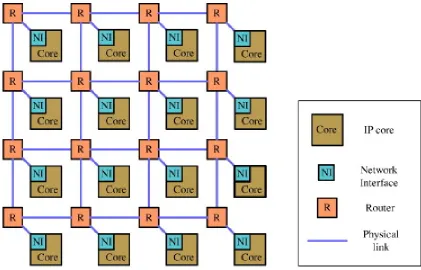
FIG.1.2. A REGULAR TILE BASED MESH NOC ARCHITECTURE. ... 4
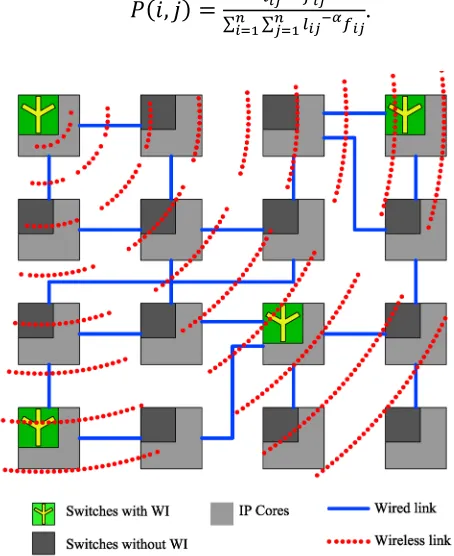
FIG.3.1. ARCHITECTURE FOR SMALL-WORLD WINOC. ... 30
FIG.3.2. ARCHITECTURE FOR SMALL-WORLD WINOC. ... 35
FIG.3.3. ARCHITECTURE OF THE TMU. ... 38
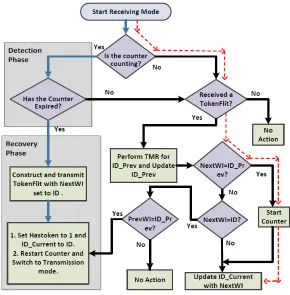
FIG.3.4. OPERATION OF THE TMU IN RECEIVING MODE. ... 41
FIG.3.5. OPERATION OF THE TMU IN TRANSMITTING MODE. ... 42
FIG.3.6. ARCHITECTURE OF WI WITH TMU AND HAMMING ENCODER AND DECODER. ... 44
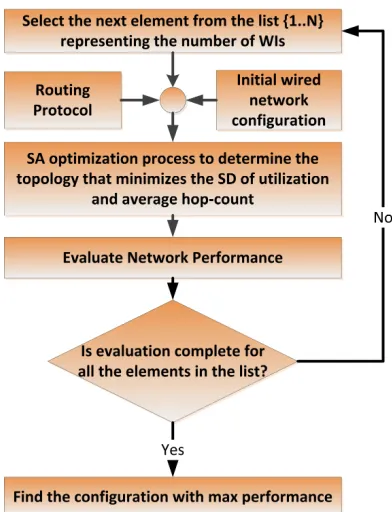
FIG.3.7. OPTIMIZATION PROCESS FOR A 64 CORE SYSTEM A)STEP 1 FOR 10WIS AND B)STEP 2 TO DETERMINE THE NUMBER OF WIS. ... 48
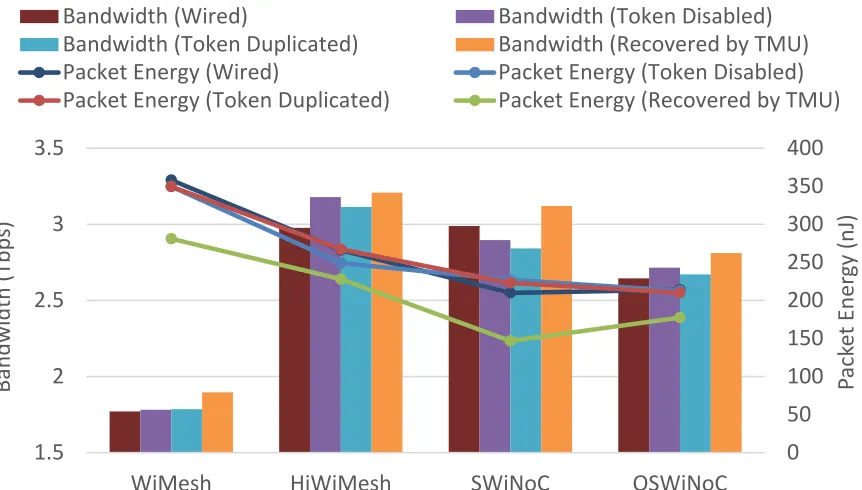
FIG.3.8. BANDWIDTH AND PACKET ENERGY FOR DIFFERENT WIRED AND WIRELESS NOCS. ... 51
FIG.3.9. PACKET ENERGY FOR OSWINOC AND OSWNOC FOR APPLICATION-SPECIFIC TRAFFIC PATTERNS. ... 53
FIG.3.10.INCREASE IN PACKET ENERGY PER WI FAILURE AND NORMALIZED STANDARD DEVIATION OF UTILIZATION FOR DIFFERENT WINOC ARCHITECTURES. ... 54
FIG.3.11.WINOC ARCHITECTURES WITH FAILURE OF MEDIUM ACCESS MECHANISM AND WITH RECOVERY BY TMU. ... 56
FIG.3.12.EFFECT OF FAILURE AND RECOVERY OF MEDIUM ACCESS MECHANISM FOR OSWINOC FOR DIFFERENT SYSTEM SIZES. ... 58
FIG.3.13.PERCENTAGE CHANGE IN BANDWIDTH AND PACKET ENERGY OF THE WINOCS WITH TMU AND ECC WITH RESPECT TO THE WINOCS WITHOUT BOTH AND THEIR WIRED COUNTERPARTS AND WIRELESS FER WITH AND WITHOUT ECC. ... 59
FIG.3.14.PERCENTAGE INCREASE IN PACKET ENERGY FOR OSWINOC WITH FAILURE OF MEDIUM ACCESS MECHANISM FOR APPLICATION-SPECIFIC TRAFFIC PATTERNS. ... 61
FIG.3.15.TOTAL AREA REQUIREMENT FOR DIFFERENT NOC ARCHITECTURES. ... 62
FIG.3.16.LINK LENGTH DISTRIBUTION FOR DIFFERENT ARCHITECTURES. ... 63
FIG.4.1. TIMING DIAGRAM OF (A)P-SAMMAC AND (B)D-SAMMAC. ... 76
FIG.4.2. ARCHITECTURE OF THE WI WITH THE PROPOSED MAC UNIT. ... 79
FIG.4.3. 64 CORE WIMESH ARCHITECTURE WITH 8WIS. ... 88
FIG.4.4. PEAK ACHIEVABLE BANDWIDTH PER CORE FOR BASELINE WIMESH WITH VARYING SUBNET SIZE. ... 90
xiv
FIG.4.6. COST FUNCTION J(D) WITH RESPECT TO KI AND KP.INSETS: ONLY ALONG KP AND KI AXES. ... 92
FIG.4.7. COST FUNCTION J(D) WITH RESPECT TO KD. ... 93
FIG.4.8. PREDICTED TRAFFIC DEMAND FOR THE 8WIS AT EACH EPOCH USING THE PID TRACKING BASED
PREDICTION MECHANISM WITH OPTIMAL WEIGHTS. ... 95
FIG.4.9. PEAK ACHIEVABLE BANDWIDTH PER CORE AND AVERAGE PACKET ENERGY FOR UNIFORM RANDOM
TRAFFIC. ... 96
FIG.4.10.AVERAGE PACKET LATENCY WITH VARYING INJECTION LOADS FOR UNIFORM RANDOM TRAFFIC. ... 97
FIG.4.11.PEAK ACHIEVABLE BANDWIDTH PER CORE AND AVERAGE PACKET ENERGY FOR HOTSPOT TRAFFIC... 98
FIG.4.12.PEAK ACHIEVABLE BANDWIDTH PER CORE AND AVERAGE PACKET ENERGY FOR BIT COMPLEMENT
TRAFFIC. ... 99
FIG.4.13.AVERAGE PACKET LATENCY WITH VARYING INJECTION LOADS FOR BIT COMPLEMENT TRAFFIC. ... 100
FIG.4.14.AVERAGE PACKET LATENCY WITH VARYING INJECTION LOADS FOR HOTSPOT TRAFFIC. ... 101
FIG.4.15.PERCENTAGE GAIN IN PEAK BANDWIDTH PER CORE AND REDUCTION IN AVERAGE PACKET ENERGY
WITH BROADCAST TRAFFIC. ... 102
FIG.4.16.PERCENTAGE REDUCTION IN PACKET LATENCY AND PACKET ENERGY WITH APPLICATION SPECIFIC
TRAFFIC. ... 104
FIG.4.17.RELATIVE IMPROVEMENT WITH VARYING FLIT SIZE FOR UNIFORM RANDOM TRAFFIC. ... 105
FIG.4.18.RELATIVE PERFORMANCE WITH VARYING SYSTEM SIZE. ... 107
FIG.4.19.DEGRADATION IN PACKET ENERGY AND BANDWIDTH FOR FAILURE IN MEDIUM ACCESS MECHANISM
FOR WIMESH+D-SAM ARCHITECTURE. ... 108
FIG.4.20.PERCENTAGE GAIN FOR HIWIMESH ARCHITECTURE WITH 64 CORES. ... 110
xv
Dedication
This dissertation is dedicated to my parents & Dada
1
Chapter 1
INTRODUCTION
1.1
Multicore Systems
Scaling of transistors following Moore’s law has resulted in improving the performance of
uniprocessor systems. However, to meet the increasing frequency demand with technology
scaling, transistor threshold voltage also scaled aggressively. This resulted in higher subthreshold
leakage increasing the power dissipation [1]. The power problem was aggravated further as
processor designs dynamically extracted extra performance from the instruction streams
(increasing instruction level parallelism) [2]. Hence with each processor generation, the power
consumed by the processors also increased. This trend is observable from Fig. 1.1 that illustrates
the power consumption of different Intel processors from 1971 to 2008. Here, green bars indicate
power within tolerable power budget and red signifies excess power due to sub-threshold leakage.
2
Hence, it can be seen from the Fig. 1.1, processor design needed to overcome the challenge of
increasing power while satisfying the ever-growing computational demand imposed by the
application domains like weather forecasting, astrophysics, bioinformatics, computer graphics and
many others. The multicore system emerged as a solution to this energy and performance problem
of the uniprocessor systems. In a multicore system, two or more simple processing cores are
integrated on the same die. Tasks are executed in parallel on the cores providing higher
performance compared to the uniprocessors. The power consumption of the multicore system is
also reduced as a slower clock operates each core. Intel's 80 core Polaris [3] and 48 core
Single-chip Cloud Computer (SCC) [4], Tilera's 64 core TILE64 [5] are some mentionable examples of
such multicore systems. However, the complexity of designing such multicore systems is
exacerbated by the increasing communication delay due to between the cores due to the
non-scalable global wires [6]. This made traditional bus-based interconnection fabrics like the ARM
AMBA [7], and the IBM CoreConnect [8] incompatible with multicore systems integrating a large
number of cores. Moreover, the ever-increasing integration of cores in multicore systems for
achieving higher performance paired with the non-scalable bus based interconnection fabric have
lead chip designers to explore new global interconnection architectures, giving rise to the
Network-on-Chip (NoC) paradigm.
1.2
Network on Chip
The Network-on-Chip (NoC) paradigm emerged as an enabling methodology for
interconnecting hundreds of cores on the same die. By designing a separate scalable
interconnection fabrics to support high-speed communication between cores [9] [10], NoC has
3
cores from the interconnection and communication needs, and provides a scalable plug-and-play
network for data communication. The common characteristic of these NoC architectures is that the
processor/storage intellectual property (IP) blocks communicate with each other through switches
and links as shown in Fig. 1.2. Generally, wormhole switching is adopted for NoC’s, which breaks
down a packet into fixed length flow control units or flits. The first flit or the header contains
routing information that helps to establish a path from the source to destination, which is
subsequently followed by all the other payload flits. The length of the interconnect between the
intelligent NoC switches are kept within a limit so that the pipelined structure in the entire
communication fabric is maintained and the cores can communicate in less than a clock cycle.
Thus, delay on wires is bounded by an upper limit irrespective of the size of the network. Some
common NoC topologies used today are the mesh, the folded-torus and the butterfly fat-tree [11].
The origin of these topologies can be traced back to literature on parallel computing. However, in
addition to just throughput and latency constraints as in multiprocessing environments, the
designers of a NoC also need to consider energy consumption constraints.
1.3
Emerging Interconnection Paradigms
Traditional NoC architectures are based on planar metallic interconnect. Due to the
multi-hop communication over the metallic interconnect in the conventional NoC architectures; the
energy required to route the packets is high, and the gain in performance is also limited. Such
multi-hop based communication will limit the performance benefit of future multicore systems
that requires integration of 100X more cores than the current state-of-the-art systems [12]. To
alleviate this problem, long range metal wires in a planar mesh based NoC [13] and
4
in recent time. However, the performance gain of these approaches is limited due to
metal/dielectric based interconnection. Hence, to enhance the performance of conventional NoC architectures few radically different interconnection technologies such as on-chip photonic interconnect [15], multi-band RF transmission line interconnects (RFI) [16], and wireless
interconnects [17] are currently being explored. Opportunities with 3D stacking multiple active layers on top of each other and integrating them using through silicon vias (TSVs) is also being studied
[18]. Although these novel interconnection technologies can achieve both low latency and low power
dissipation, they have their own challenges to overcome. Here, we discuss each of these emerging interconnect technologies in brief.
Photonic Interconnect
[image:20.612.93.514.70.340.2]The on-chip photonic interconnect is implemented using on-chip optical waveguides, micro-ring resonators, and laser sources. With the data transmissions occurmicro-ring at the speed of light, the
5
optical interconnect have been predicted to enhance the bandwidth and reduce latency [19] considerably. Due to the low loss, seen in the optical waveguides, regeneration or buffering is not required to ensure reliable data transmission through the photonic interconnects. However, the technological intricacy involved in manufacturing the photonic devices and integrating them with silicon-compatible circuits under area, power and delay constraints is a non-trivial challenge.
RF Interconnect
Multiband RF interconnects use wires as transmission lines to transfer data in the form of electromagnetic (EM) waves. The data is modulated onto a carrier using amplitude or phase shift keying [16]. Using this method of interconnection, bandwidth of conventional wires can be increased using multiple access techniques resulting in low latency data transfer at the speed of light via EM waves. Multiband RF interconnects are limited by the design of high frequency oscillators and filters on the chip for the transceivers.
Wireless Interconnect
On-chip wireless interconnect is a promising alternative to the performance limitations seen by long-distance wired links [20][21][22]. On-chip wireless transceivers enable long distance, high bandwidth and low latency communication over long range paths. The absence of the need for physical interconnection layouts makes wireless interconnects stand out from other emerging interconnects.
3D Integration
Three-dimensional integration is advantageous due to (1) shorter inter-layer channel, (2)
reduced number of hops and (3) increased bandwidth density. Integration of the stacked active
layers are realized using TSVs that are metallic interconnects passing through the silicon substrate.
6
increase in the power generated per unit surface area as well as in the peak temperature [23].
Fabrication of 3D interconnections is also proven to be challenging due to the issues with
inter-layer alignments, bonding, inter-inter-layer contact patterning, and testing [24]. Furthermore, for
evaluating the cost and complexity trade-off early in the design cycle, EDA tools linking
architecture level analysis with 3D physical planning is required [25].
1.4
Wireless Interconnect Design Challenges
As discussed in the previous section, manufacturing difficulties and design complexities of
emerging interconnect technologies such as photonic interconnect, RF interconnect, and 3D
integration limits their realization as a backbone for on-chip communication. However, it is
necessary to address the limitations of planar metal interconnect-based NoCs. The on-chip wireless
links are seen as a step towards this direction. Over the past few years, there have been considerable
efforts in the design and fabrication of on-chip miniature antennas operating in the range of tens
of GigaHertz to hundreds of TeraHertz, opening up the possibility of designing on-chip wireless
links [17][26][27]. Recent advances in the design of CMOS Ultra-Wide Band (UWB) technology
[28] and the feasibility of designing on-chip wireless communication network with miniature
antennas and simple transceivers that operate in the sub-THz range of 100-500 GHz has been
demonstrated [29]. However, due to the use of impulse based transceivers such wireless links can
carry data over a millimeter range only. It is possible to increase the transmission frequencies to
the THz range with the use of nanoscale antennas based on carbon nanotubes (CNTs) [27] and
graphene [31]. However, integration of such antennas with the current CMOS process is a
challenging task. On the other hand, CMOS compatible wireless shortcuts operating in the
7
wireless interfaces (WIs) deployed across a die. The two most important components of a WI are
an antenna and a transceiver. Recent investigations have established characteristics of the silicon
integrated on-chip antenna operating in the mm-wave range of a few tens to one hundred GHz,
and it is now a viable technology [30]. The on-chip antenna has to provide the best power gain for
the smallest area overhead. A metal zigzag antenna [17] has been demonstrated to possess these
characteristics. Moreover, such antennas are CMOS compatible. Due to this CMOS compatibility,
fabrication of such technology is inexpensive and is a more near-term solution compared to the
CNT or graphene based antennas.
In mm-wave technology, the bandwidth of the wireless channel is limited by the
state-of-the-art in transceiver design. Design of multiple non-overlapping channels enabling Frequency
Division Multiple Access (FDMA) is a non-trivial challenge from the perspective of transceiver
design, and the number of concurrent channels is not easily scalable. Consequently, multiple WIs
need to share the wireless bandwidth for data communication. Thus, to ensure the
energy-efficiency and performance benefits of the wireless interconnect, it is important to utilize the
wireless bandwidth efficiently. A medium access control (MAC) mechanism is responsible for
ensuring an efficient utilization of the wireless bandwidth by managing the access to wireless
channel among the WIs. However, unlike macro networks, MAC mechanism enabling collision
free and efficient utilization of the wireless channel in an on-chip environment is constrained by
area, power and buffer overheads. Due to these restrictions, complex MAC mechanisms used in
conventional networks are not suitable for wireless NoC architectures (WiNoCs). Hence, the
design of efficient, low-overhead, and fair MAC mechanism is considered as one of the critical
challenges for WiNoCs [32]. To achieve this goal, simple and distributed MAC mechanisms such
8
Access (TDMA) [20] and Code Division Multiple Access (CDMA) [36] mechanisms for WiNoCs
has been explored in recent time. Among these MAC mechanisms, due to distributed and
low-overhead implementation and fairness in channel access, a token passing based Time Division
Multiple Access (T-MAC) is adopted in many WiNoC architectures [20][34][35].
In the token passing MAC, the WIs are organized in a virtual ring. A token granting access
to transmit through the wireless medium circulates between the WIs following this token ring. The
token is passed using the wireless medium in form of a token packet containing an identification
of the token, and the identification of the WI where the token is passed. The identification of the
token is required to separate such control packet from data. On the other hand, as the wireless
medium is shared and the token is received by all the WIs, the identification of the WI field is used
to set the token bit at a particular WI (i.e. next WI in the token ring). The token bit, when set,
signifies the possession of the token by a particular WI and hence its’ right to transmit through the
wireless medium. Once the WI with this bit set transmits a predetermined number of packets, it
resets this bit and passes the token to the next WI in the ring. Exchanging the token using the
wireless medium eliminates the need for centralized control, synchronization, and arbitration
among the transceivers located in distant parts of the die. However, such simple mechanism can
fail due to permanent failures of the antenna elements or due to transient failures in the token
register or in the transmission of token packet. A permanent failure of the antenna element can
result from manufacturing defects caused by random fault and process variation. These defects can
distort the shape of metallic structures in CMOS process [37]. Antenna elements fabricated using
metal structures can suffer from such distortion. This in turn results in loss of tuning of the antenna
element to the specific carrier frequency. Such loss of tuning essentially makes the antenna unable
9
other hand, due to shrinking feature size augmented by on-chip wireless transmission, the issue of
transient failures in data transmission and memory elements are anticipated to be significant [38].
The high frequency mm-wave transceivers are vulnerable to noise and this can result in a failure
in wireless transmission. Due to such failure, the token circulating among the wireless interfaces
(WIs) can get lost. Moreover, SEU can flip the content of token register, disabling or duplicating
the token at multiple WIs. These failures of the wireless interconnect will degrade the energy and
performance benefits for communicating between distant cores using this novel interconnect
technology. Furthermore, the WiNoC architectures are designed to satisfy the traffic needs of the
applications running on the multicore system while consuming lower energy. The pattern of
communication and the volume of data transferred through the wireless medium depends on the
applications. Consequently, the energy and performance gains due to the wireless interconnect are
also dependent on the application running on a multicore system. Even for the same application,
due to bursty and self-similar traffic pattern, the traffic demand through the NoC components
(switches and links) can vary both temporally and spatially [39][40]. This causes sudden and
significant variations in the traffic demands on the WIs that provides energy-efficient
communication through the wireless channel [41]. Such variation is expected to be significant in
future heterogeneous multicore systems integrating CPU, GPU, Memory and custom logic fabrics
like ASICs [42]. If the wireless channel access is agnostic of such variation, transceiver energy is
wasted when no flit is transferred through the wireless channel. Hence, to ensure the energy
efficiency in on-chip data transfer over the wireless channel, it is necessary to both address the
issue of dynamic adjustment of the WI transmission opportunities as well as ensuring the
10
1.5
Summary of Research Objectives
1. Designing a robust mm-wave WiNoC architecture: The primary goal of this research is to develop design methodologies for robust and failure-resistant WiNoC architecture that can recover
from the failures of the wireless links. To reduce the effect of failure, we intend to design a WiNoC
topology that is resilient against the failure of the wireless interconnect. Furthermore, to recover
from transient failures in the wireless fabric, a robust MAC mechanism that will help in recovering
from the failures of the token based MAC will be designed. Also, a low-overhead error correction
codec will be developed to improve the reliability in wireless data transfer. To evaluate the
effectiveness of the proposed WiNoC architecture in terms of performance and energy-efficiency,
a comparative study will be conducted with the state-of-the-art WiNoC architectures. An overhead
analysis for the solution will be presented for evaluating the design trade-off for the proposed
WiNoC architecture.
2. Designing a traffic-aware MAC mechanism to enable robust and energy-efficient wireless communication under varying loads: NoC architectures for general purpose multicore systems should be able to cater to the traffic needs of a wide variety of applications. These application
based traffic patterns have varying injection loads as well as different spatio-temporal
characteristics. Due to this variation, the traffic demand of the WIs in a WiNoC will vary both
spatially and temporally. Effective sharing of the wireless medium among the WIs can not only
help in better utilizing the wireless channel but also will improve the performance and energy
efficiency of the entire communication fabric. The goal of this research is to design a traffic-aware
MAC scheme that can dynamically and efficiently manage the access to the wireless channel
11
mechanism will be developed. To further improve the utilization of the wireless interconnect and
reduce the buffer overhead at the WIs a modified wormhole flow control mechanism allowing
partial packet transfer will be developed. The proposed MAC should also be robust against the
failure of the wireless communication fabric. Furthermore, a comparative study demonstrating the
effectiveness of the proposed MAC in terms of performance and energy-efficiency will be
conducted.
1.6
Contributions
In this dissertation, we develop the design principles, and methodologies for designing
robust and traffic aware MAC mechanisms to ensure reliable and efficient communication over
the energy-efficient mm-wave wireless interconnects in a WiNoC. The major contribution of this
dissertation can be summarized as below:
o Designing a robust mm-wave WiNoC architecture
Propose an optimization metric to distribute traffic uniformly across
different NoC elements (i.e. links and switches).
Present the design of a Token Management Unit (TMU) to recover from
different token failure scenarios.
Enhance the reliability of the WiNoC architectures through single error correction coding.
Conduct comparative study between the proposed and other WiNoC
architectures for both synthetic and application specific traffic pattern in different token failure scenarios.
Evaluate the overheads for the proposed TMU and single error correction
codes.
12
Design of a low complexity and accurate traffic tracking mechanism that
can predict the traffic demand of a WIs.
Propose two dynamic MAC mechanisms that can adjust the slot durations
based on the predicted traffic demand.
Propose a robustness mechanism for the dynamic MACs to recover from
the failure in the wireless communication fabric.
Propose an appropriate wormhole switching mechanism for the dynamic
MACs allowing partial packet transmission.
Evaluate and compare the proposed MAC mechanism with different
state-of-the-art MAC mechanisms for various synthetic and application based traffic patterns.
1.7
Dissertation Organization
The dissertation is organized in five chapters. This chapter introduces the challenges for
designing medium access control mechanisms and an overview of the possible means of
addressing those issues. Chapter 2 discusses the background and summarizes the current state of
knowledge in this field. Chapter 3 presents a cross-layer robust and failure-resistant design methodology for WiNoC architectures. By optimizing the WiNoC topology and complementing it
with a robust token management scheme and error correction codes, the design of a
failure-resistent WiNoC is proposed. Through system-level simulations, we demonstrate that the proposed
design can mitigate the effect of various types of failures of the wireless fabric in WiNoC
architectures without compromising the energy-efficiency. Chapter 4 proposes the design of two
dynamic MAC mechanisms that can adjust the transmission slots of the WIs based on predicted
traffic demands and allow partial packet transfer. Such dynamic adjustment in transmission slots
results in improving the utilization of the wireless medium in a WiNoC. Through system level
13
well as capable of sustaining higher data bandwidth in WiNoCs. Finally, Chapter 5 summarizes
14
1.8
Chapter References
[1] S. Borkar. “Low power design challenges for the decade (invited talk)”. In Proceedings
of the 2001 Asia and South Pacific Design Automation Conference (ASP-DAC '01). ACM, New York, NY, USA, 293-296, 2001.
[2] G. Blake, R. G. Dreslinski and T. Mudge, "A survey of multicore processors," in IEEE
Signal Processing Magazine, vol. 26, no. 6, pp. 26-37, November 2009.
[3] S.R. Vangal et al., "An 80-Tile Sub-100-W TeraFLOPS Processor in 65-nm CMOS," In
IEEE Journal of Solid-State Circuits, vol.43, no.1, pp.29-41, Jan. 2008.
[4] J. Howard et al., "A 48-Core IA-32 message-passing Processor with DVFS in 45nm
CMOS," In proceddings of the IEEE International Solid-State Circuits Conference (ISSCC), San Francisco, CA, pp. 108-109, 2010.
[5] D. Wentzlaff et al., "On-Chip Interconnection Architecture of the Tile Processor," In Proceedings of the IEEE Micro, vol.27, no. 5, pp. 15-31, September/October 2007.
[6] R. Ho, K. W. Mai, M.A. Horowitz, “The Future of Wires”, Proceedings of the IEEE,
Vol. 89 Issue: 4, pp. 490–504, April 2001.
[7] D. Flynn, "AMBA: enabling reusable on-chip designs," IEEE Micro, vol. 17, no. 4, pp.
20-27, 1997.
[8] R. Hofmann and B. Drerup, "Next generation CoreConnect processor local bus
architecture," in Proceedings of 15th Annual IEEE International ASIC/SOC Conference, pp. 221-225, 2002.
[9] W.J. Dally and B. Towles, “Route packets, not wires: on-chip interconnection networks,”
In Proceedings of the 38th annual Design Automation Conference (DAC '01). ACM, New York, NY, USA, 684-689, 2001.
[10] L. Benini and G. De Micheli, “Networks on Chips: A New SoC Paradigm,” IEEE
Computer, pp. 70-78, 2002.
[11] P. P. Pande et al., “Performance Evaluation and Design Trade-Offs for Network-on-Chip
Interconnect Architectures,” IEEE Trans. Computers, vol. 54, no. 8, pp. 1025-1040, Aug. 2005.
[12] International Technology Roadmap for Semiconductors (ITRS), 2012 Edition, online:
15
[13] U. Y. Ogras and R. Marculescu, ""It's a small world after all": NoC performance optimization via long-range link insertion," in IEEE Trans. on Very Large Scale Integration (VLSI) Systems, vol. 14, no. 7, pp. 693-706, July 2006.
[14] A. Kumar, L. S. Peh, P. Kundu, N. K. Jha, “Express virtual channels: towards the ideal
interconnection fabric,” in Proc. of the International Symposium on Computer Architecture (ISCA’ 07), ACM, 2007.
[15] A. Shacham, K. Bergman and L. P. Carloni, "Photonic Networks-on-Chip for Future
Generations of Chip Multiprocessors," in IEEE Transactions on Computers, vol. 57, no. 9, pp. 1246-1260, 2008.
[16] M. F. Chang et al., "CMP network-on-chip overlaid with multi-band
RF-interconnect," in IEEE International Symposium on High Performance Computer Architecture, Salt Lake City, UT, pp. 191-202, 2008.
[17] B. A. Floyd, Chih-Ming Hung and K. K. O, "Intra-chip wireless interconnect for clock
distribution implemented with integrated antennas, receivers, and transmitters," in IEEE Journal of Solid-State Circuits, vol. 37, no. 5, pp. 543-552, May 2002.
[18] S. Pasricha, “Exploring serial vertical interconnects for 3D ICs,” In Proceedings of the
46th Annual Design Automation Conference (DAC '09), ACM, New York, USA, pp. 581-586, 2009.
[19] M. Brière et al., "System Level Assessment of an Optical NoC in MPSoC Platform," in
Proceedings of DATE, 2007.
[20] S. Deb et al., "Design of an Energy-Efficient CMOS-Compatible NoC Architecture with
Millimeter-Wave Wireless Interconnects," in IEEE Transactions on Computers, vol. 62, no. 12, pp. 2382-2396, Dec. 2013.
[21] A. Ganguly, K. Chang, S. Deb, P. P. Pande, B. Belzer, and C. Teuscher, “Scalable Hybrid
Wireless Network-on-Chip Architectures for Multicore Systems,” IEEE Transactions on Computers, vol. 60, no. 10, pp. 1485–1502, 2011.
[22] S. Abadal, E. Alarcón, A. Cabellos-Aparicio, M. C. Lemme and M. Nemirovsky,
"Graphene-enabled wireless communication for massive multicore architectures," in IEEE Communications Magazine, vol. 51, no. 11, pp. 137-143, November 2013.
[23] K. Puttaswamy and G. H. Loh. “Thermal analysis of a 3D die-stacked high-performance
microprocessor.” In Proceedings of the 16th ACM Great Lakes Symposium on VLSI, pp. 19-24, 2006.
[24] V.F. Pavlidis, E.G. Friedman, and E.G. Friedman, "3-D Topologies for
16
[25] K. Bernstein, et al, “Interconnects in the third dimension: design challenges for 3D ICs,”
In Proceedings of the 44th annual Design Automation Conference (DAC '07), ACM, pp. 562-567, 2007.
[26] J. Lin et al., "Communication Using Antennas Fabricated in Silicon Integrated Circuits," IEEE Journal of Solid-State Circuits, vol. 42, no. 8, pp. 1678-1687, August 2007.
[27] K. Kempa et al., "Carbon Nanotubes as Optical Antennae," Advanced Materials, vol. 19,
pp. 421-426, 2007.
[28] D. Zhao and Y. Wang, “SD-MAC: Design and Synthesis of A Hardware-Efficient
Collision-Free QoS-Aware MAC Protocol for Wireless Network-on-Chip,” IEEE Transactions on Computers, vol. 57, no. 9, pp. 1230-1245, September 2008.
[29] S. B. Lee, et al., “A scalable micro wireless interconnect structure for CMPs,”
Proceedings of ACM Annual International Conference on Mobile Computing and Networking, pp. 20-25, 2009.
[30] B. Razavi, “Design of millimeter-wave CMOS radios: a tutorial,” IEEE Trans. Circuits
Syst. I, vol. 56, no. 1, pp. 4-16, Nov. 2009.
[31] M. Dragoman, A. A. Muller, D. Dragoman, F. Coccetti, R. Plana, "Terahertz antenna
based on graphene", J. Appl. Phys., vol. 107, no. 10, May 2010.
[32] S. Abadal, M. Nemirovsky, E. Alarcón, and A. Cabellos-Aparicio. “Networking
Challenges and Prospective Impact of Broadcast-Oriented Wireless Networks-on-Chip,” In Proc. of the 9th ACM International Symp. on Networks-on-Chip (NOCS '15), Vancouver, Canada, Article 12, 2015.
[33] G. Piro, et. al., “Initial MAC Exploration for Graphene-enabled Wireless
Networks-on-Chip,” In Proceedings of ACM International Conference on Nanoscale Computing and Communication (NANOCOM' 14). ACM, USA, 2014.
[34] D. DiTomaso, A. Kodi, S. Kaya and D. Matolak, "iWISE: Inter-router Wireless Scalable
Express Channels for Network-on-Chips (NoCs) Architecture," 2011 IEEE 19th Annual Symposium on High Performance Interconnects, Santa Clara, CA, pp. 11-18, 2011.
[35] N. Mansoor, P. J. S. Iruthayaraj and A. Ganguly, "Design Methodology for a Robust and
Energy-Efficient Millimeter-Wave Wireless Network-on-Chip," in IEEE Transactions on Multi-Scale Computing Systems, vol. 1, no. 1, pp. 33-45, Jan.-March 1 2015.
[36] V. Vijayakumaran, et. al., "CDMA Enabled Wireless Network-on-Chip," J. Emerg.
Technol. Comput. Syst. 10, 4, Article 28, 20 pages, 2014.
[37] F. Y. Chang; R.S. Tsay; W.K. Mak, "How to consider shorts and guarantee yield rate
17
Computer-Aided Design - Digest of Technical Papers, ICCAD, vol., no., pp.33,38, 2-5 Nov. 2009.
[38] E. Dupont; M. Nicolaidis; P. Rohr, "Embedded robustness IPs for transient-error-free
ICs," Design & Test of Computers, IEEE ,vol.19, no.3, pp.54,68, May-June 2002.
[39] A. K. Mishra, N. Vijaykrishnan and C. R. Das, "A case for heterogeneous on-chip interconnects for CMPs," 2011 38th Annual International Symposium on Computer Architecture (ISCA ‘11), San Jose, CA, pp. 389-399, 2011.
[40] M. Badr and N. E. Jerger, "SynFull: Synthetic traffic models capturing cache coherent
behaviour," in ACM/IEEE 41st International Symposium on Computer Architecture (ISCA ‘14), Minneapolis, MN, pp. 109-120, 2014.
[41] N. Mansoor, S. Shamim and A. Ganguly, "A demand-aware predictive dynamic
bandwidth allocation mechanism for wireless network-on-chip," 2016 ACM/IEEE International Workshop on System Level Interconnect Prediction (SLIP), Austin, TX, pp. 1-8, 2016.
[42] E. S. Chung, P. A. Milder, J. C. Hoe and K. Mai, "Single-Chip Heterogeneous
18
Chapter 2
RELATED WORK
The research activities proposed in this dissertation are inspired and founded upon the
current state of knowledge in different Wireless NoC (WiNoC) architectures and medium access
control (MAC) mechanisms proposed for WiNoC architectures. Here we discuss the most recent
activities in these directions.
2.1
WiNoC Architectures
A comprehensive survey regarding various WiNoC architectures and their design
principles is presented in [1]. A multichannel CMOS ultra-wideband (UWB) WiNoC (McWiNoC)
based on traditional NoC is proposed in [2]. However, due to the use of impulse based transceivers
in the UWB technology, the communication range is limited to a few millimeters. Hence, such
wireless technology is not suitable for communicating across distant cores in a multicore system.
To enable communication between distant cores, authors in [3] proposed a 2D mesh based WiNoC
architecture with multiple sub-THz wireless links. Using similar sub-THz links, authors in [4]
proposed a 2D concentrated mesh-based WCube architecture. Although these architectures are
capable of providing an energy-efficient solution for the multi-hop communication issues of the
wireline interconnect, design of transceivers operating at such high frequency is a non-trivial
challenge from the transceiver design perspective. By realizing the wireless links using carbon
nanotube (CNT) antennas, authors in [5] proposed a hybrid WiNoC architecture capable of
achieving several orders of magnitude lower energy consumption. Another WiNoC architecture
19
systems is proposed in [6]. However, integration and fabrication of such CNT or graphene based
antenna elements in the current CMOS technology is a challenging task. On the other hand,
mm-wave physical layer technology uses metallic antennas that are CMOS compatible. Such CMOS
compatible design of mm-wave technology makes it a nearer term solution compared to the CNT
or graphene based technology. Using such novel and CMOS compatible mm-wave technology,
authors in [7][8][9] proposed a hierarchical mm-wave WiNoC architecture. Using the mm-wave
wireless links, authors in [8] proposed an inter-router wireless scalable express channel for NoC
architecture (iWISE). However, being an emerging technology, the mm-wave wireless
interconnect can suffer from failures due to design and integration challenges. To address the
failure of the CNT links, authors in [10] proposed the design of a small world based WiNoC
architecture that is resilient to failure of CNT based wireless links. Furthermore, in [11] it is shown
that optimizing a small world WiNoC topology with respect to a particular metric, results in more
homogeneous utilization of NoC links and switches. Consequently, temperature hotspots in the
NoC can be reduced. In [12], the authors designed rectangular codes to recover from burst errors
in wireless data transfer using CNT based antennas in WiNoCs. Although recent research proposes
different robustness mechanism for CNT based WiNoCs, no effort has been made to ensure
robustness of mm-wave interconnect technology. However, to make the mm-wave technology
adoptable for the design of WiNoC enabled multicore chips, robust design solution encompassing
both topology and MAC is necessary.
2.2
State-of-the-art MAC Mechanisms
The MAC mechanism enables collision free communication and efficient utilization of the
20
and buffer overheads. Due to these restrictions, complex MAC mechanisms used in conventional
networks are not suitable for WiNoCs [13]. Hence, design of efficient, low overhead, and fair
MAC mechanisms are considered as one of the critical challenges for WiNoCs [14]. A
synchronous and distributed MAC mechanism (SD-MAC) is proposed in [15] for the
Ultra-Wide-Band (UWB) WiNoC architectures. Such WiNoC uses impulse based transceivers where the
communication range is a few millimeters. Furthermore, to access the wireless channel, the WIs
share the request control packets over wired links. Thus, such MAC mechanism cannot be adopted
for WiNoCs where the WIs is more than a millimeter apart. A hybrid MAC mechanism combining
both TDMA and FDMA based access is proposed for CNT based WiNoC architectures in [5].
Although, the CNT based antennas enables communication among the WIs distributed over the
chip, their implementation in current CMOS process are challenging. Similar to the CNT based
WiNoC architecture, authors in [16] has proposed the design of WiNoC architecture using
graphene based antennas. By utilizing the directionality of graphene antenna array technology,
authors a proposed a Space Division Multiple Access (SDMA) technique where communication
among the WIs occur in phases based communication (phase 1: horizontal communication, phase
2: vertical communication, phase 3 and phase 4: diagonal communication). However, similar to
the CNT technology graphene based technology is relatively new and needs to overcome
challenges in fabrication. On the other hand, mm-wave technology is nearer term solution as the
antennas and transceivers are CMOS compatible. Authors in [16] has proposed an mm-wave
WiNoC architecture with multiple non-overlapping channels to enable FDMA based medium
access. However, such FDMA based approach is non-trivial from the perspective of transceiver
design and the number of concurrent channels are not easily scalable. An interference free SDMA
21
discussed in [18][19] enabling concurrent communication among wireless nodes. However, to
interference avoidance mechanism limits the number of WIs in the WiNoC for such systems.
Another WiNoC architecture that enables concurrent communication among the WIs by using a
CDMA based MAC is proposed in [20]. However, CDMA requires coherent Binary Phase Shift
Keying (BPSK) receiver along with Analog-to-Digital Converters (ADC) in the transceivers
making the design significantly challenging. Similar to the CDMA, a distributed MAC with strictly
synchronized orthogonal request packets is proposed in [13]. Such strict synchronization requires
power hungry transceiver design. In [21], authors discussed the performance of contention based
ALOHA and CSMA for graphene based WiNoCs. A comparative performance evaluation of
CSMA and Token based MAC is presented in [22]. Although, the CSMA MAC mechanism is
inherently adaptive to traffic demand of the WIs and performs well under low traffic loads, it
suffers from performance degradation issues at high traffic load due to back-off based collision
recovery as demonstrated in [23]. Therefore, a simple, distributed and low-overhead token passing
based MAC (T-MAC) mechanism is adopted for many WiNoC architectures [8][9]. In the T-MAC
mechanism, the access to wireless medium is granted to a WI by the possession of a token,
circulating among the WIs, organized in a virtual ring. However, the T-MAC mechanism is
unaware of the varying traffic demand through the WIs, resulting in inefficient utilization of the
energy efficient wireless channel. A dynamic radio access control mechanism (RACM) proposed
in [24] shows that dynamic allocation of slots to the WIs improves the performance of a WiNoC.
In the RACM MAC mechanism the unused slot by the WIs in an epoch is redistributed among the
WIs in the next epoch based on their current slot usage. A similar MAC mechanism reported in
[25] allocates slot to the wireless transceivers based on the link utilization. An adaptive MAC
22
depending on the traffic load. A predictive MAC mechanism based on the long-term traffic
demand of the WIs is proposed by the authors in [26]. Although, these dynamic MAC mechanisms
are novel and provides promising solution for traffic adaptiveness in WiNoC architectures, they
are reactive with slow system level response as they depend only on the utilization of the WIs
based on current traffic behavior. Moreover, these MAC mechanisms use packet-switching for
maintain the integrity of the wormhole switching in the wireless interconnect. Such mechanism
results in inefficient utilization of the wireless channel while requiring large buffers in the VCs of
the WIs to store large packets before they can be transmitted over the wireless medium. Hence, to
efficiently utilize the wireless channel, design of traffic-aware MAC that manages effective
channel access among the WIs based on the traffic demand is required.
This dissertation aims to develop design principles and methodologies for designing robust
and traffic aware MAC mechanisms to ensure reliable and efficient communication over the
23
2.3
Chapter References
[1] S. Deb, A. Ganguly, P. P. Pande, B. Belzer, D. Heo, "Wireless NoC as Interconnection
Backbone for Multicore Chips: Promises and Challenges," Emerging and Selected Topics in Circuits and Systems, IEEE Journal on , vol.2, no.2, pp.228,239, June 2012.
[2] D. Zhao, Y. Wang, J. Li, and T. Kikkawa, “Design of multi-channel wireless NoC to
improve on-chip communication capacity,” In Proceedings of the Fifth ACM/IEEE International Symposium on Networks-on-Chip (NOCS '11), ACM, New York, NY, USA, pp. 177-184, 2011.
[3] C. Wang, W. H. Hu and N. Bagherzadeh, "A Wireless Network-on-Chip Design for
Multicore Platforms," in Proc. of the International Euromicro Conference on Parallel, Distributed and Network-Based Processing, Ayia Napa, pp. 409-416, 2011.
[4] S. B. Lee, et al., “A scalable micro wireless interconnect structure for CMPs,”
Proceedings of ACM Annual International Conference on Mobile Computing and Networking, pp. 20-25, 2009.
[5] A. Ganguly, et. al., "Scalable Hybrid Wireless Network-on-Chip Architectures for
Multicore Systems," IEEE Trans. Comput. 60, 10 (October 2011), 1485-1502.
[6] S. Abadal, E. Alarcón, A. Cabellos-Aparicio, M. C. Lemme and M. Nemirovsky,
"Graphene-enabled wireless communication for massive multicore architectures," in IEEE Communications Magazine, vol. 51, no. 11, pp. 137-143, November 2013.
[7] K. Chang, et. al. 2012. "Performance evaluation and design trade-offs for wireless network-on-chip architectures," J. Emerg. Technol. Comput. Syst. 8, 3, Article 23, August 2012.
[8] D. DiTomaso, A. Kodi, S. Kaya, and D. Matolak, “iWISE: Inter-router Wireless Scalable
Express Channels for Network-on-Chips (NoCs) Architecture,” in 2011 IEEE 19th Annual Symposium on High Performance Interconnects (HOTI), pp. 11–18, 2011.
[9] S. Deb et al., "Design of an Energy-Efficient CMOS-Compatible NoC Architecture with
Millimeter-Wave Wireless Interconnects," in IEEE Transactions on Computers, vol. 62, no. 12, pp. 2382-2396, Dec. 2013.
[10] A. Ganguly, P. Wettin, K. Chang, and P. Pande, “Complex network inspired
fault-tolerant NoC architectures with wireless links,” in Fifth IEEE/ACM International Symposium on Networks on Chip (NoCS), pp. 169–176, 2011.
[11] M. S. Shamim, A. Mhatre, N. Mansoor, A. Ganguly, and G. Tsouri, "Temperature-aware
24
[12] A. Ganguly, P. Pande, B. Belzer, A. Nojeh, "A Unified Error Control Coding Scheme to
Enhance the Reliability of a Hybrid Wireless Network-on-Chip," IEEE International Symposium on Defect and Fault Tolerance in VLSI and Nanotechnology Systems (DFT), pp.277-285, Oct. 2011.
[13] K. Duraisamy, R. G. Kim and P. P. Pande, "Enhancing performance of wireless NoCs
with distributed MAC protocols," Sixteenth International Symposium on Quality Electronic Design, Santa Clara, CA, pp. 406-411, 2015.
[14] S. Abadal, M. Nemirovsky, E. Alarcón, and A. Cabellos-Aparicio. “Net-working
Challenges and Prospective Impact of Broadcast-Oriented Wireless Networks-on-Chip,” In Proc. of the 9th ACM International Symp. on Networks-on-Chip (NOCS '15), Vancouver, Canada, Article 12, 2015.
[15] D. Zhao and Y. Wang, "SD-MAC: Design and Synthesis of a Hardware-Efficient
Collision-Free QoS-Aware MAC Protocol for Wireless Network-on-Chip," in IEEE Transactions on Computers, vol. 57, no. 9, pp. 1230-1245, Sept. 2008.
[16] S. Saxena, et. al., “Folded Wireless Network-on-Chip using Graphene based THz-band
Antennas”, to be appear in 4th ACM International Conference on Nanoscale Computing and Communication 2017, Washington D.C, USA.
[17] X. Yu, J. Baylon, P. Wettin, D. Heo, P. P. Pande and S. Mirabbasi, "Architecture and
Design of Multichannel Millimeter-Wave Wireless NoC," in IEEE Design & Test, vol. 31, no. 6, pp. 19-28, Dec. 2014.
[18] S. Shamim, et. al., “Energy-efficient wireless network-on-chip architecture with
log-periodic on-chip antennas” In Proceedings of the 24th edition of the great lakes
symposium on VLSI (GLSVLSI '14). ACM, New York, NY, USA, 85-86.
[19] H. Mondal; S. Gade; M. Shamim; S. Deb; A. Ganguly, "Interference-Aware Wireless
Network-on-Chip Architecture using Directional Antennas," in IEEE Transactions on Multi-Scale Computing Systems , vol.PP, no.99, pp.1-1
[20] V. Vijayakumaran, M. P. Yuvaraj, N. Mansoor, N. Nerurkar, A. Ganguly, and A.
Kwasinski, “CDMA enabled wireless network-on-chip,” in ACM J. Emerg. Technol. Comput. Syst., vol. 10, no. 4, Art. 28, 2014.
[21] G. Piro, et al., "Initial MAC Exploration for Graphene-enabled Wireless
Networks-on-Chip," In Proceedings of ACM The First Annual International Conference on Nanoscale Computing and Communication (NANOCOM' 14), ACM, New York, NY, USA, 2014.
[22] J. Chen; Y. H. Lai, "A study of CSMA-based and token-based wireless interconnects
25
[23] N. Mansoor and A. Ganguly, “Reconfigurable Wireless Network-on-Chip with a
Dynamic Medium Access Mechanism,” In Proc. of the 9th ACM International Symposium on Networks-on-Chip (NOCS '15), Vancouver, Cana-da,, Article 13, 2015.
[24] M. Palesi, M. Collotta, A. Mineo, and V. Catania, “An Efficient Radio Access Control
Mechanism for Wireless Network-On-Chip Architectures,” in J. Low Power Electron. Appl., vol. 5, no. 2, pp. 38 – 56, 2015.
[25] D. DiTomaso, A. Kodi, D. Matolak, S. Kaya, S. Laha and W. Rayess, "A-WiNoC:
Adaptive Wireless Network-on-Chip Architecture for Chip Multiprocessors," in IEEE Transactions on Parallel and Distributed Systems, vol. 26, no. 12, pp. 3289-3302, Dec. 1 2015.
[26] N. Mansoor, S. Shamim and A. Ganguly, "A demand-aware predictive dynamic
26
Chapter 3
ROBUST WINOC ARCHITECTURE
In this chapter, we discuss the design methodology for a robust mm-wave wireless NoC
architecture capable of recovering from a failure of the wireless links. The robust mm-wave
architecture consists of a failure resistant WiNoC topology, a robust token based medium access
control (MAC) mechanism and a single error correction (SEC) code based Hamming encoder and
decoder. The failure resilient WiNoC topology based on the principles of small-world networks
helps in reducing the effect of permanent failures of the wireless interconnect. To ensure the
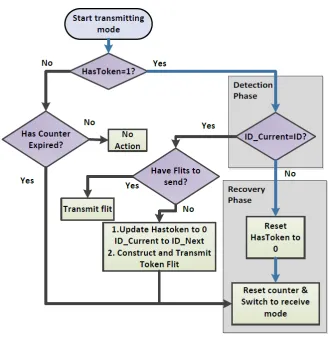
robustness in medium access, a low overhead and simple token management unit (TMU) is
proposed for token passing MAC mechanism (T-MAC). The TMU is able to regenerate a lost
token or kill a duplicate token ensures the robustness against the transient and permanent failure
of the wireless interconnect. To improve the reliability in data transfer over the wireless
interconnect, we also propose to equip all wireless interfaces (WIs) with a single error correction
(SEC) code based on Hamming encoder and decoder. The specific contribution of this chapter is:
1. Propose a topology for WiNoC architectures to improve robustness to the failure of
wireless links (e.g. Failure of the antenna element and transceiver).
2. Design of a failure-resistant token based MAC mechanism through the Token
Management Unit (TMU). Describe the structure and contents of the wireless token to
enable communication flow control and robustness.
3. Improve the reliability of wireless data transfer through Hamming code based Error
27
4. Evaluated the performance of the proposed WiNoC with a wide range of synthetic and
application specific traffic and compare with other WiNoC architectures.
This chapter is organized as follows: First, we discuss various failure scenarios for the
wireless interconnect in a WiNoC addressed in this work. Then, we discuss the design of a
failure-resistant WiNoC architecture with the TMU and ECC followed by the experimental results.
Finally, we conclude the paper with concluding remarks and future dimension for this work.
3.1
Failure Scenarios
Due to the shrinking of feature size and complex integration in CMOS technology,
high-density chips are prone to manufacturing defects and dynamic faults during chip operation
[1][2]. Such defects can result in permanently broken wireless links or cause malfunctioning in
the wireless medium access. In this section, the causes of failure in the wireless interconnect along
with their effects in on-chip data transfer is discussed.
Permanent Failures
The complexity and challenges of the design of wireless transceivers may result in
permanent failure in the on-chip wireless communication system. Manufacturing defects caused
by random defect and process variation can distort the shape of metallic structure in ICs [3]. The
antenna elements being fabricated as metallic structures in the CMOS process can suffer from such
distortions. This in turn results in loss of tuning of the antenna element to the specific carrier
frequency. Such loss of tuning essentially makes the antenna unable to communicate using the
28
A permanent failure of an antenna will not only disable the wireless links attached to it, but
also result in a loss of the token causing a failure of the MAC mechanism. In the token passing
MAC, when a WI is done transmitting a fixed number of flits through the wireless medium, the
token is passed to the next WI as a wireless flit. However, if the antenna is not tuned to the desired
frequency due to a failure, the token will never be captured to the next WI. Similarly, if the antenna
of the WI releasing the token is faulty, other WIs will not be able to capture the token flit. This
will result in the token which indicates the permission to transmit through the wireless medium
being lost and the entire wireless interconnection is disabled.
Transient Failures
Aggressive scaling of CMOS technology can result in soft errors in CMOS circuits. Soft
errors can be caused by power supply noise, thermal noise, leakage, and temporal circuit variations
[4]. These soft errors can result in transient failures in the WiNoC. Specially, thermal noise and
SNR degradation in wireless transceivers, alpha particle hit causing single event upset (SEU) in
the registers in the WIs can cause random transient failures in the wireless link.
The transient failures in the wireless transceivers or in the registers maintaining the status
of the token at the WIs can result in a lost token or a duplicate token. For example, when the bit
flip due to SEU occurs in the token register of a WI possessing the token, the WI is not allowed to
transmit through the wireless medium. Moreover, the token is not passed to the next WI, resulting
in disabling the communication through the energy efficient wireless medium. On the other hand,
when the token register for a WI not possessing the token is flipped, it is allowed access to the
29
Low complexity ECCs suitable for NoC fabrics is not sufficient to recover from such high rates of
errors.
For both these failure scenarios, the wireless interconnection is disable and energy efficient
communication through the wireless medium is compromised. In the following section, we discuss
the design methodology of a robust WiNoC architecture that can recover from the permanent and
transient failures that can result in a lost or duplicated token. Transient or permanent failures may
happen in the electronic circuits of the NoC switches and wireline links. However, in this chapter,
we do not address such failures. This chapter addresses the failure scenarios related to the wireless
interconnections only.
3.2
Robust Wireless NoC Architecture
In this section, we discuss the proposed methodology for designing the robust WiNoC
including topology optimization, failure-resistant token management, Error Correction Codes
(ECC) for wireless links along with the physical layer and flow control or routing required in such
a system.
Topology
The proposed WiNoC is a hybrid topology, where, each core is connected to a NoC switch,
and the switches are interconnected using both wireline and wireless links as shown in Fig. 3.1.
The wireless links are overlaid on top of a wireline network. The topology of the underlying
wireline network is based on the principles small-world network. A small-world network is
naturally occurring complex networks that is characterized with many short and few distance links.
30
hops from any other node. Such networks are commonly observable in microbe colonies, the
human brain, and social networks providing efficient means of communication [5]. Using such
design principle of deploying long-range shortcuts realized with metal interconnects, authors in
[6] has shown to improve the performance in a traditional mesh-based NoC. Moreover, theoretical
studies conducted in [7]