R E S E A R C H A R T I C L E
Open Access
Integrating community-based health
promotion programs and primary care: a
mixed methods analysis of feasibility
Aaron L. Leppin
1*, Karen Schaepe
2, Jason Egginton
2, Sara Dick
1, Megan Branda
1, Lori Christiansen
3,
Nicole M. Burow
4, Charlene Gaw
5and Victor M. Montori
1Abstract
Background:Implementation of evidence-based programs (EBPs) for disease self-management and prevention is a policy priority. It is challenging to implement EBPs offered in community settings and to integrate them with healthcare. We sought to understand, categorize, and richly describe key challenges and opportunities related to integrating EBPs into routine primary care practice in the United States.
Methods:As part of a parent, participatory action research project, we conducted a mixed methods evaluation guided by the PRECEDE implementation planning model in an 11-county region of Southeast Minnesota. Our community-partnered research team interviewed and surveyed 15 and 190 primary care clinicians and 15 and 88 non-clinician stakeholders, respectively. We coded interviews according to pre-defined PRECEDE factors and by participant type and searched for emerging themes. We then categorized survey items—before looking at participant responses—according to their ability to generate further evidence supporting the PRECEDE factors and emerging themes. We statistically summarized data within and across responder groups. When consistent, we merged these with qualitative insight.
Results:The themes we found,“Two Systems, Two Worlds,” “Not My Job,”and“Seeing is Believing,”highlighted the disparate nature of prescribed activities that different stakeholders do to contribute to health. For instance, primary care clinicians felt pressured to focus on activities of diagnosis and treatment and did not imagine ways in which EBPs could contribute to either. Quantitative analyses supported aspects of all three themes, highlighting clinicians’limited trust in community-placed activities, and the need for tailored education and system and policy-level changes to support their integration with primary care.
Conclusions:Primary care and community-based programs exist in disconnected worlds. Without urgent and intentional efforts to bridge well-care and sick-care, interventions that support people’s efforts to be and stay well in their communities will remain outside of—if not at odds with—healthcare.
Keywords:CBPR, Community-based participatory research, Mixed methods, Implementation, Evidence-based programs, Chronic disease self-management program, Clinic-community linkages, Primary care, Chronic disease management
* Correspondence:[email protected]
1Knowledge and Evaluation Research Unit, Mayo Clinic, 200 First Street SW,
Rochester, MN 55905, USA
Full list of author information is available at the end of the article
Background
Half of all American adults have at least one chronic condition; one in 4 live with the burdens of multiple chronic conditions [1]. When individuals with chronic illness are skilled at self-managing their health, they can persevere and thrive [2, 3]. Unfortunately, many people lack the capacity, resources, and/or skills to live well with chronic disease [4–6]. Healthcare organizations desire to support patients in their journeys toward better health [7], but their usual isolation from the communi-ties in which patients live limits their impact [8, 9]. Interventions that occur in the places where people live their lives may better support the needs of patients with chronic illness. As such, multiple stakeholders are advo-cating for the implementation of evidence-based health promotion programs (EBPs) in the community [10–12].
EBPs are a collection of interventions that are developed and evaluated by researchers for the purpose of enhancing patient capacity to prevent and self-manage chronic health conditions. Typically, EBPs follow a scripted curriculum and are designed to be facilitated with high fidelity by trained lay leaders in community settings. Many have been shown in large trials to improve health outcomes and reduce costs [13–20].
The Chronic Disease Self-Management Program (CDSMP) is a key example [13]. The CDSMP is a group-based workshop delivered over 6 weekly ses-sions by two trained peer leaders and for a group of 8–15 participants with any chronic physical or mental health condition. Federally-sponsored evaluations of the program have proven its value [14, 21] and its widespread implementation is now a key priority of the United States Department of Health and Human Services (DHHS), the Agency for Healthcare Research and Quality (AHRQ), the Centers for Disease Control (CDC), and the National Council on Aging, among others [10, 12]. Arguably, half of the American adult population could benefit from participating in the CDSMP [21].
Because the CDSMP and other EBPs are offered outside of the traditional healthcare system and delivered by non-traditional healthcare workers, they present unique challenges for implementation [22, 23]. We sought to understand, categorize, and richly describe key challenges and opportunities related to integrating EBPs into routine primary care practice in the United States, using the CDSMP as a test case.
Methods
Overview and setting
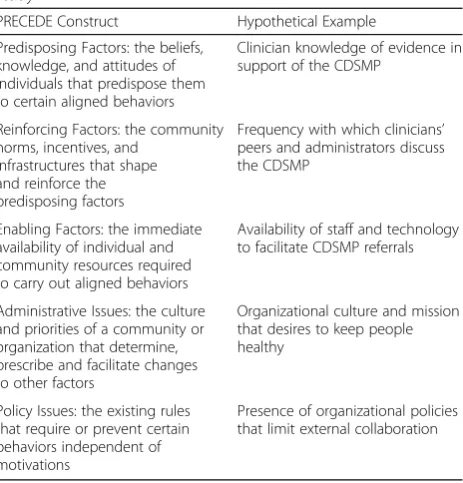
The present study is a mixed methods, community en-gaged research evaluation informed by the Predisposing, Reinforcing, and Enabling Constructs in Environmental Diagnosis and Evaluation (PRECEDE) implementation
planning model [24, 25]. It represents the preliminary research component of a parent, participatory action research [26] project focused on EBP implementation in an 11 county region of Southeast Minnesota. The parent project, which was designed to capitalize on the “ part-nership synergy” [27] of participatory implementation research [28], began when community stakeholders expressed a desire to implement the CDSMP in an effort to meet regional health needs. The community stake-holders were particularly interested in (1.) exploring barriers to clinical integration and (2.) developing strategies to promote referrals from healthcare to the community-based program. We used the PRECEDE planning model to guide these efforts because it has been used successfully in many similar projects [25,29]. Specifically, we oriented the model to assist—through a coded analysis of interviews and surveys—in identifying the predisposing, reinforcing, and enabling factors and the administrative and policy issues at multiple levels and across sectors that might be relevant to clinically integrating the CDSMP (see Table 1). We designed the study to include qualitative (interview) and quantitative (survey) components conducted in parallel, analyzed in series, and merged according to pre-defined methods (see Fig.1). We collected both types of data at the same time and for the same exploratory purpose because this was most efficient. We waited, however, to design and conduct the quantitative analyses until after the qualita-tive analyses were complete. In this way, we hoped to ensure that the survey items corresponded to the appro-priate PRECEDE constructs and that the quantitative data could be used to both strengthen and confirm the qualitative insight. We chose this approach—consistent with best practices for mixed methods research [30]—to gain rich and reliable understanding that would be of practical use in developing implementation strategies that would be both locally useful and broadly applicable [31].
Measure development
implementation. To optimize response rates, the surveys were designed to be brief [32]. After synthesizing feedback, we posted revised versions of the guides and surveys for final stakeholder approval on a web-based project management tool (Basecamp). The Mayo Clinic Office of Community Engagement in Research approved the final versions of the interview guides and surveys and all study procedures. Copies of all measures are available in the Additional file1: Online Supplement.
Participants and recruitment
For the qualitative component, we elected to interview 30 participants. We chose this sample size because we were familiar with the context and relevant stakeholders through prior collaborative work and we were confident it would be both feasible and sufficient to capture the breadth of insights. ALL recruited the participants, which consisted of 15 primary care clinicians (“ clini-cians”) and 15 non-primary care clinician stakeholders
(“stakeholders”). Clinicians were actively practicing phy-sicians or nurse practitioners in the region. Stakeholders held a variety of titles (e.g. public health, patient, community agency, researcher, administrator) but were not actively practicing primary care; they were also known to have personal experience or special insight relevant to EBP implementation from either a commu-nity or healthcare perspective. (see Table 2) Participants in the quantitative component were also primary care clinicians practicing in the region (physicians, nurse practitioners, or physician assistants) and other stake-holders. Although most non-clinician stakeholders worked and resided within the region, some (e.g. state level stakeholders from the Department of Health) did not. Primary care clinicians for the quantitative analysis were recruited by contacting employing health systems (n = 5). A purposeful sample of other informed stake-holders was recruited through convenience sampling of currently engaged individuals (e.g. from the stakeholder meeting) and the contacts they recommended and provided. Six professional and 4 community researchers constituted the multidisciplinary research team. All community researchers were local professionals known to the PI from prior collaborative work. They had pre-existing expertise and experience in EBP implementation as part of their professional roles and were recruited personally by the PI after being given a description of the anticipated requirements. Prior to study initiation they received training in the protection of human subjects and the conduct of qualitative interviews. Throughout the study the community researchers reported back to a larger group of stakeholders affiliated with the parent project who were not directly involved in the research conduct (this was so the other stake-holders could proceed with the “action” component of the parent project).
Procedure
[image:3.595.59.291.106.348.2]Over a three-month period, an experienced qualitative researcher (JE) conducted semi-structured face-to-face and phone interviews of the 15 non-clinician stake-holders. During this same time, 4 community researchers
Table 1The PRECEDE framework as conceptualized for this study
PRECEDE Construct Hypothetical Example
Predisposing Factors: the beliefs, knowledge, and attitudes of individuals that predispose them to certain aligned behaviors
Clinician knowledge of evidence in support of the CDSMP
Reinforcing Factors: the community norms, incentives, and
infrastructures that shape and reinforce the predisposing factors
Frequency with which clinicians’ peers and administrators discuss the CDSMP
Enabling Factors: the immediate availability of individual and community resources required to carry out aligned behaviors
Availability of staff and technology to facilitate CDSMP referrals
Administrative Issues: the culture and priorities of a community or organization that determine, prescribe and facilitate changes to other factors
Organizational culture and mission that desires to keep people healthy
Policy Issues: the existing rules that require or prevent certain behaviors independent of motivations
Presence of organizational policies that limit external collaboration
[image:3.595.60.538.606.727.2]conducted similar interviews of the clinicians (each con-ducting 2–4 interviews). This approach was taken because we anticipated the clinician interviews to be less variable, more interesting, and less challenging technically for the
community researchers. Interviews took approximately 30 min each; they were audiotaped and transcribed for analysis. Surveys of clinicians were distributed electronically or printed and distributed in person or by postal mail via complete or convenience sampling, depending on the preference of the participating healthcare systems. When possible, we sent printed surveys by postal mail to non-responding clinicians who received electronic surveys. Other stakeholders received their surveys electronically via email; we sent electronic reminders to non-responders. We entered and stored all responses in a secure (RedCAP) [33] database for analysis.
Analysis
We conducted analyses in two phases (qual before quan) so as not to bias the qualitative interpretations. Using the PRECEDE framework, two team members (SD and JE) working independently and in duplicate, coded all the interviews. Specifically, interviewee comments were categorized into a priori codes of Predisposing, Enabling, and Reinforcing Factors, and Administrative and Policy Issues. After the initial coding, the team collectively reviewed transcripts to reconcile individual coding interpretations and con-firm theoretical saturation. Narrative summaries were then distilled into brief and representative summary phrases and imported into one of two 5 (codes) by 15 (participants) frameworks for both clinicians and other stakeholders as appropriate. These frameworks were developed to provide a visual and actionable overview of the emerging information that the imple-menting stakeholders could understand and apply in the action phase of the parent project. To obtain a richer understanding of the key issues, a team of three experienced qualitative researchers (ALL, JE, KS) reviewed the interview content and explored the ways in which the various PRECEDE factors inter-acted within and across participant groups. This process was used to develop additional, emergent themes and to gain more generalizable insights.
[image:4.595.57.292.98.672.2]During the quantitative phase of the analysis, we cate-gorized survey items—before looking at the data—by whether they were likely to generate insight that could triangulate with the qualitative PRECEDE codes. We cal-culated response rates as applicable and used standard descriptive statistics to characterize the clinician and non-clinician stakeholders and their responses. We tested for differences in proportions between groups with chi square tests of association. We followed a simi-lar procedure for the quantitative assessment of the emergent themes with the exception that—for those themes that did not clearly correspond to a priori survey items—we constructed variables and analyses as feasible and appropriate (as determined by the authors). We
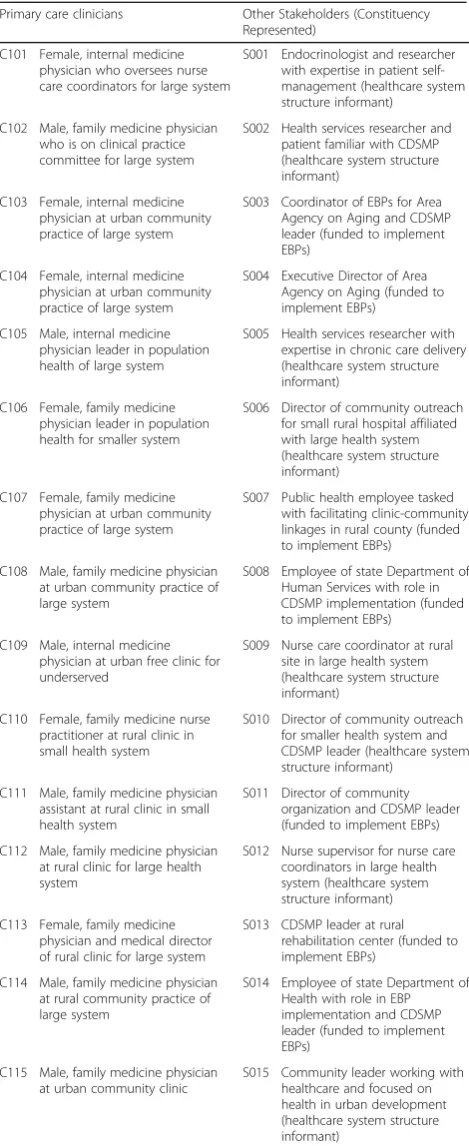
Table 2Description of interview participants
Primary care clinicians Other Stakeholders (Constituency Represented)
C101 Female, internal medicine physician who oversees nurse care coordinators for large system
S001 Endocrinologist and researcher with expertise in patient self-management (healthcare system structure informant)
C102 Male, family medicine physician who is on clinical practice committee for large system
S002 Health services researcher and patient familiar with CDSMP (healthcare system structure informant)
C103 Female, internal medicine physician at urban community practice of large system
S003 Coordinator of EBPs for Area Agency on Aging and CDSMP leader (funded to implement EBPs)
C104 Female, internal medicine physician at urban community practice of large system
S004 Executive Director of Area Agency on Aging (funded to implement EBPs)
C105 Male, internal medicine physician leader in population health of large system
S005 Health services researcher with expertise in chronic care delivery (healthcare system structure informant)
C106 Female, family medicine physician leader in population health for smaller system
S006 Director of community outreach for small rural hospital affiliated with large health system (healthcare system structure informant)
C107 Female, family medicine physician at urban community practice of large system
S007 Public health employee tasked with facilitating clinic-community linkages in rural county (funded to implement EBPs)
C108 Male, family medicine physician at urban community practice of large system
S008 Employee of state Department of Human Services with role in CDSMP implementation (funded to implement EBPs)
C109 Male, internal medicine physician at urban free clinic for underserved
S009 Nurse care coordinator at rural site in large health system (healthcare system structure informant)
C110 Female, family medicine nurse practitioner at rural clinic in small health system
S010 Director of community outreach for smaller health system and CDSMP leader (healthcare system structure informant)
C111 Male, family medicine physician assistant at rural clinic in small health system
S011 Director of community organization and CDSMP leader (funded to implement EBPs) C112 Male, family medicine physician
at rural clinic for large health system
S012 Nurse supervisor for nurse care coordinators in large health system (healthcare system structure informant) C113 Female, family medicine
physician and medical director of rural clinic for large system
S013 CDSMP leader at rural rehabilitation center (funded to implement EBPs)
C114 Male, family medicine physician at rural community practice of large system
S014 Employee of state Department of Health with role in EBP implementation and CDSMP leader (funded to implement EBPs)
C115 Male, family medicine physician at urban community clinic
conducted all quantitative analyses with SAS statistical software. Finally, we compared the collective insight from both the qualitative and quantitative analyses, judged for conceptual consistency, and took note of the ways in which methods and data sources confirmed, ex-plained, and/or contradicted one another. Figure 1 shows an overview of the process we used to collect, analyze, and make sense of the data.
Results
Qualitative component Demographics
We interviewed primary care clinicians from the three lar-gest healthcare provider systems in Southeast Minnesota (a clinician from the fourth system declined to participate and we were unable to contact a clinician from the fifth system). Most were physicians that had some understanding of what the CDSMP was and the evidence supporting it. Only one, however, had successfully referred a patient to the program. The other interviewees were a diverse group of local and state level stakeholders. Eight were from the community and seven worked within a healthcare provider system in either a research or clinical capacity (Table2).
PRECEDE analysis
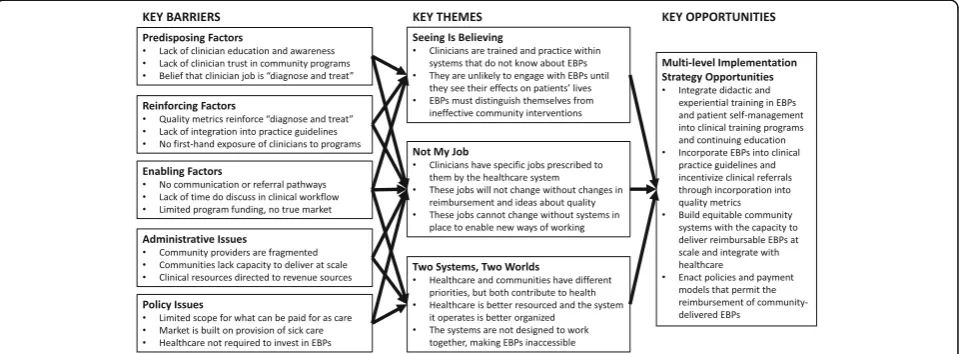
Overall, we found relevant discussion mapping to all PRECEDE codes in both participant groups and exam-ples of key barriers identified, organized by PRECEDE construct, are presented in Fig.2. For a detailed table of representative quotes from clinician and stakeholder interview participants organized by PRECEDE construct, see the Additional file 1: Online Supplement. Here, we emphasize the overarching and emergent themes that arose from the deep exploration of the within and cross group interactions of these codes: namely,“Two Systems, Two Worlds,” “Not My Job,”and“Seeing Is Believing.”
Emergent themes analysis
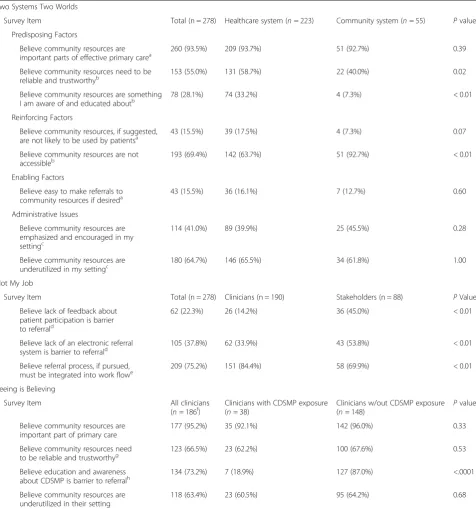
The theme of Two Systems, Two Worldshighlighted the importance of key policy and administrative issues in determining the different priorities of healthcare and the community. Superficially, it was supported by the fact that non-clinician stakeholders within the healthcare system seemed to offer insights more similar to those of clinicians than to those of their community-based coun-terparts in regards to both tone and topic. This discord-ance appeared to be rooted in key policy and administrative issues that determined that the priorities of—and associated resources and types of knowledge available to—participants within and outside of the healthcare system be different. Key community stake-holders, for example, were familiar with the CDSMP and other EBPs because of Federal and state-level policies and initiatives that funded and/or encouraged their particular implementation of them. This was especially true at the local Area Agency on Aging, where EBP implementation was the entire focus of one employee’s job. She even described the policy-enacted support she had at her disposal to do this work, claiming it was too directive and limited:
“So a portion of the [EBP] workshops that go on are funded under Older Americans Act Title IIID funding, which is, that funding has to be used specifically for evidence-based health promotion programs but they also have to be geared toward seniors. So that’s a limitation of that. And then another portion of workshops going on, the [providing] organizations are just taking it on as part of what they do as an organization.”
This approach of engaging organizations to take pro-grams on as“what they do” was a key strategy for scaling EBP implementation in the setting of fixed resources. And, as it turned out, the most accessible and willing partners were typically community-based non-profits. The activities
[image:5.595.59.540.537.714.2]these organizations undertook together to coordinate the training of leaders and licensing and delivery of programs seemed to contribute to the development of a“community system”of trust, familiarity, and purpose, and to the devel-opment of a common way of working. Perhaps consequen-tly—and reflective of and reinforced by past efforts—the community stakeholders viewed the CDSMP as something they mostly did (or were trying to do) independent of the healthcare system. Ironically, this was not their desire, and many interviewees highlighted the need for clinical referrals to the programs for success and sustainability. Indeed, clinical integration had apparently always been the hope and expectation of EBP implementation; but, many were giving up on that ambition. As one reflected:
“Nationally, when all of these evidence-based programs were funded by the Older Americans Act, the thought was that we were gonna educate doctors and they were gonna be telling patients about these programs and classes, but that’s not realistic. You know their time, ah, is so prescribed in many of the clinics across the country that that’s just not a feasible approach.”
The clinicians we interviewed uniformly agreed that their time was heavily prescribed, and that making refer-rals to the CDSMP and other EBPs was not part of what they were being encouraged to do. In that respect, it seemed that the policy and administrative issues of the healthcare system were not well matched to those of the community. As one clinician said:
“Part of the issue [preventing clinicians from making referrals] may be you know there, there are so many things coming at, at us in healthcare these days. Includ-ing expectations and requirements about different ways to care for patients. About things we have to meet for metrics and measures.”
Although they were often a source of burden and frus-tration, clinicians felt most responsible for these“metrics and measures”—typically based on clinical practice guide-lines for disease screening and treatment protocols. The reason these measures were prioritized (while EBP refer-rals were not, for example) was that they were often tied to quality-based payment contracts. These complicated relationships formed the major priorities of the healthcare system and, thus, they helped to shape the jobs of clinicians.
Related to this, Not My Job emerged as a distinct theme to represent primary care clinicians’apparent lack of interest in carrying out the acts of referring patients to the CDSMP and/or other community resources. Indeed, primary care clinicians often reported that nurses and care coordinators had more time and more expertise when it came to discussing these sorts of opportunities with patients. As one physician said,“I am [only] trained in diagnosis and treatment.” Because, in the minds of most clinicians, the CDSMP was not
thought of as diagnosis or treatment, it could have been hard for clinicians to conceptualize the program as part of what they do. Certainly, clinicians had no frame of reference for what actually happened in the CDSMP because it was not part of their education or training. Consequently, clinicians felt both a lack of responsi-bility for and caparesponsi-bility in making referrals. As one physician said.
“And the truth is that there are times I tell you that, you know I’m, I’m missing even I’m not gonna say more critical things but—but things I measure on. So…(sigh) is there, is there an automatic way to do this?”
The idea of“automating” the referral process was often explicitly suggested as a way to save time. Implicitly, however, it seemed that clinicians proposed the idea as a polite way of deferring responsibility for and attention to the task. It also may have represented a lack of interest in integrating the program into treatment plans. Along these lines, clinicians were quick to request that any information about the community programs or feedback related to when a patient participated be brief. It was not clear, for example, that clinicians had considered or desired a scenario by which they would adapt their care plans based on the goals identified or the lifestyle or self-care changes made by patients through program participation.
A notable exception to this was clinician C113. As the medical director of a rural practice, she had had the opportunity to attend a meeting in which a CDSMP participant had talked about her experience in the program. The clinician then familiarized herself with the program’s curriculum and began referring some of her patients to the program. She had come to find so much value in the program, she was con-sidering attending herself:
It would be kind of fun, actually, just to wouldn’t it cuz I read the book, actually but just to sit in the class because, you know, I don’t have half these issues, but there still are things in they’re just lessons in life to learn, like, how to be happier and, you know, other things. So like I said, I have two [patients] that have gone through it and both of them have said that this is this has been a great program. So, again, I’m all in and if there’s other ways, like I said, that you think that we can get this information out, I’m, I’m more than willing to, you know, try to do that.
outside the healthcare system. Indeed, it was those clos-est to the program that were most able to articulate how it helped people, often citing powerful anecdotes of par-ticipant success. As one program leader (S010) said:
The one thing that sticks out is people [with chronic conditions] think they’re alone out there. So a lot of people with tears in their eyes would say, “I thought I was the only one feeling like this.” And they realize that they’re not. That everybody feels all of these things…no matter if it’s diabetes, depression whatever it might be, they’re all feeling the same thing. And the dynamics of the group interaction is, is the meeting. We’re there as leaders but we’re really just a guide. And they pretty much help each other. And they interact they hold each other accountable. We had one gentleman and wife who came. They came for him; he wasn’t doing his homework. The other people in the class kept him accountable. And said, “Hey, you need to do this; your wife is emotional about this.” And his wife was really the one who bene-fited the most from it as a care taker. And so when she left the last session she came up to me and she was crying. And she said, “Thank you for saving our marriage.”So it so it can have really profound effects.
These effects were difficult for clinicians to fully ap-preciate, even after familiarizing themselves with evi-dence summaries of the program’s value. “Seeing is Believing,” captured this idea and represented the fact that clinicians who had no first-hand exposure to the CDSMP were forced to develop an impression through use of their imaginations. These impressions seemed to be reinforced by experiences with or impressions of other programs or interventions that patients pursued outside of the healthcare system. This connection raised concern in the minds of some that clinicians—especially
“old fogeys”—would think of the CDSMP as “wishy washy” or alternative to effective care. Indeed, one clin-ician perceived the program as something that would be best suited for patients that were noncompliant with clinical care:
“So for instance somebody who doesn’t necessarily trust medications or even though they may really need medi-cations based on my recommendations wanna avoid meds, avoid drugs, find a more holistic approach to it. And I find that my knowledge there is fairly limited. So the yoga, the tai chi, and what not…”.
In some ways, it seemed that the healthcare system was well positioned to reinforce a skepticism among clinicians about the value of all things outside its walls. Although this could be perceived as a reasonable and protective heuristic in many cases, it might have also predisposed clinicians to distrust EBPs and, potentially, focus less on the work that patients had do to self-manage their health. A key priority of the quantitative component was to further explore the validity of these ideas.
Quantitative component Demographics
In regards to that effort, we were successful in surveying 190 primary care clinicians from 4 of the 5 healthcare provider systems (and 9 of the 11 counties) in Southeast Minnesota. We did not receive responses to requests to contact clinicians from the smallest system, although there were few clinicians there, representing less than 5% of clinicians in the region. Approximately half (52%) of the clinicians practiced in an urban/suburban community, while the rest were located in more rural settings. The response rate for the largest of the health systems was 37% (174/474). Response rates for the other systems were not calculable but were believed to range from 5 to 50% (the surveys were handed out in person to attendees of institutional healthcare provider meetings and exact denominators are not known). Through convenience and snowball sampling procedures, we distributed surveys to 167 non-clinician stakeholders. Of these, 88 (53%) completed the survey, with respondents representing every county in SE MN. Table 3 describes the survey participants.
PRECEDE analysis
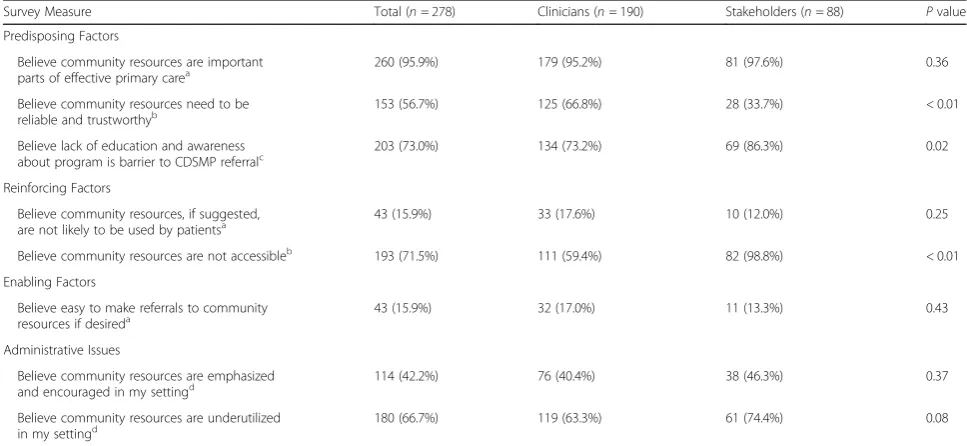
We selected 8 survey items to represent four of the pre-determined PRECEDE constructs (we were not confident that any of the items corresponded to relevant policy issues). Broadly, the questions asked both clinicians and stakeholders about their perceptions of barriers to clinical referrals to the CDSMP and other community resources (see Table4). Overall, respondents (260, 96%) overwhelm-ingly agreed that community resources were integral to effective primary care. They also highlighted lack of clinician education and awareness about the CDSMP (203, 73%) and practical challenges in referring to com-munity resources (220, 79%) as key barriers. Importantly, both clinicians and stakeholders (63 and 74%, respectively) felt that community resources were underutilized and underemphasized in their organizations. However, clini-cians were twice as likely to emphasize the need for com-munity resources to be trustworthy and reliable than their stakeholder counterparts (67% vs 34%, respectively; p = < 0.001). Additional details about the PRECEDE survey re-sults, organized by construct and participant group are presented in Table4.
Emergent themes analysis
participants (e.g. the stakeholders that did not work within the healthcare system). This analysis did not change impressions greatly, but did reinforce key differ-ences between community and healthcare-based stake-holders. Specifically, healthcare system stakeholders were significantly less aware (p < 0.001), less trusting (p= 0.02), and less concerned about the accessibility of (p < 0.001) community resources than their community-based counterparts.
We identified 3 survey measures that corresponded to the theme ofNot My Joband analyzed these in the same way as the PRECEDE factors. Specifically, the items explored the extent to which clinicians desired or were willing to take on the work required for clinical integra-tion of the CDSMP. Consistent with the theme, only a minority of clinicians (62, 34%) expressed concern about the lack of a system for making referrals and few (26, 14%) expressed a clear desire to receive feedback if and when their patients participated in the program. Not surprisingly, the vast majority (151, 84%) of clinicians reported that any system pursued to initiate referrals must fit into the electronic workflow. Non-clinician stakeholders expressed significantly less extreme percep-tions of theNot My Jobmeasures in all 3 cases.
[image:8.595.56.289.97.454.2]Finally, we used the clinician distributions of all survey items representing the Predisposing factors as well as an item assessing clinicians’ perceptions of whether com-munity resources were underutilized in their practice across levels of exposure (some vs none) to the CDSMP to representSeeing is Believing. We found that clinicians with exposure to the CDSMP were significantly less likely to cite education and awareness as a barrier to
Table 3Characteristics of survey study participants
Participant Characteristic N (%)
Primary Care CliniciansN= 190
Type of Practice
Family Practice 101 (53.2%)
Internal Medicine 50 (26.3%)
Other (urgent care, ED) 27 (14.2%)
Degree
MD/DO 107 (56.3%)
PA 11 (5.8%)
NP 49 (25.8%)
Other 9 (4.7%)
Other StakeholdersN= 88
Role/interest in improving health in SEMN
Health care employee that may refer patients to community resources
19 (22%)
Health care employee not likely to refer patients to community resources
12 (14%)
Public health 14 (16%)
Community-based agency or non-profit 16 (18%)
Patient 8 (9%)
Researcher 7 (8%)
Payer/Insurer 1 (1%)
Funder/Philanthropist 1 (1%)
Contractor 1 (1%)
Volunteer 2 (2%)
Other 7 (8%)
*
Missing responses not counted in percentages
Table 4Dichotomized responses to PRECEDE survey items
Survey Measure Total (n= 278) Clinicians (n= 190) Stakeholders (n= 88) Pvalue Predisposing Factors
Believe community resources are important
parts of effective primary carea 260 (95.9%) 179 (95.2%) 81 (97.6%) 0.36
Believe community resources need to be
reliable and trustworthyb 153 (56.7%) 125 (66.8%) 28 (33.7%) < 0.01
Believe lack of education and awareness
about program is barrier to CDSMP referralc 203 (73.0%) 134 (73.2%) 69 (86.3%) 0.02
Reinforcing Factors
Believe community resources, if suggested,
are not likely to be used by patientsa 43 (15.9%) 33 (17.6%) 10 (12.0%) 0.25
Believe community resources are not accessibleb
193 (71.5%) 111 (59.4%) 82 (98.8%) < 0.01 Enabling Factors
Believe easy to make referrals to community
resources if desireda 43 (15.9%) 32 (17.0%) 11 (13.3%) 0.43
Administrative Issues
Believe community resources are emphasized
and encouraged in my settingd 114 (42.2%) 76 (40.4%) 38 (46.3%) 0.37
Believe community resources are underutilized
in my settingd 180 (66.7%) 119 (63.3%) 61 (74.4%) 0.08
a
Missing 7 responses (2 clinicians);b
Missing 8 responses (3 clinicians);c
Missing 15 responses (7 clinicians);d
[image:8.595.55.539.506.729.2]referral (p < 0.0001). Exposure to the CDSMP was not significantly associated with better perceptions of com-munity resources in general, however. This supports the idea that the CDSMP and other EBPs may not be viewed in the same light as other, more typical and “ trust-worthy” community resources. Other details about the quantitative analyses of the emergent themes are pre-sented in Table5.
Discussion Our findings
We sought to understand, categorize, and richly describe key challenges and opportunities related to integrating EBPs into routine primary care practice in the United States as part of a parent, participatory action research project. Three themes emerged from this investigation that help explain why primary care and community-based programs exist in disconnected worlds.
Limitations and strengths
Our study has several weaknesses and, partly for this reason, it should be viewed as exploratory. Small numbers of interview participants among some stake-holder constituencies, although representative of Southeast Minnesota, could have prevented us from reaching a generalizable saturation of insights. Sam-pling bias, due in part to samSam-pling procedures and low response rates, may threaten the validity of the survey data. Additionally, our surveys were developed to explore topics consistent with PRECEDE constructs and to triangulate with qualitative data. They were not designed to measure PRECEDE constructs them-selves, nor was any reliability or validity testing done. Although not feasible for our study, the survey likely would have been more useful had it been designed after completion of the qualitative component. Our focus on a large, 11-county region of Southeast Min-nesota, albeit relevant to our purpose, may also threaten the applicability of our findings. The validity of our findings is strengthened, however, by the sam-pling of an entire geographic region, our conduct of quantitative analyses after and in confirmation of qualitative data, and the congruence of findings across methods and participants. Our study also adds to the body of literature related to EBPs in that—while many studies focused on EBP effectiveness, acceptability, and value, have been conducted [34–37]—to our knowledge, this is the first empirical, theory-guided exploration of the feasibility of clinical integration of community-based EBPs. In that respect, this study provides timely evidence to stakeholders seeking to scale EBPs and improve population health.
Conclusions
Our findings suggest that key policy and administrative issues have played important roles in prescribing—in a very fragmented and siloed way—the work that health-care and the community are “supposed to do” to con-tribute to health. Two separate systems with distinct cultural identities coexist and do not understand each other well. Our work supports prior laments describing healthcare as a“sick care”system [38], for example, but adds deeper understanding of the pathways by which healthcare is directed to focus somewhat exclusively on the activities of“diagnosis and treatment.”It also begins to articulate the role EBPs may play in person-centered and evidence-based efforts to improve population health. Indeed, to the extent “well-care” is needed and can be operationalized through the delivery of EBPs, the com-munity appears capable and motivated to contribute. Its capacity to do this at scale and in a way healthcare will understand and accept—and eventually embrace, coord-inate with, and seamlessly integrate—is likely to require bidirectional education and engagement, as well as policy and system-level changes (see Fig.2).
Practice implications
Stakeholders guiding efforts to transform healthcare delivery in the United States should consider our findings. Specifically, the Department of Health and Human Services has made CDSMP implementation a key goal in its framework for improving the health of patients with multiple chronic conditions [39], and the CDC and the Centers for Medicare and Medicaid Services (CMS) have rolled out initiatives to imple-ment and pay for the Diabetes Prevention Program, respectively. For the most part, these and other approaches to EBP implementation have relied on community-based and publicly-funded dissemination channels, and only assumed the participation of primary care. Our findings suggest that this strategy is unlikely to penetrate the healthcare system or influ-ence its priorities. Indeed, to the extent disease experts—who may be trained only in the activities of
“diagnosis and treatment”—continue to develop and inform the “metrics and measures” that determine what primary care clinicians know, do, and get paid for [40, 41], actual referrals to EBPs and incorpor-ation of them into treatment plans are unlikely to come at scale.
Future directions
that is entirely independent of healthcare. For ex-ample, we uncovered numerous examples of clinician distrust of EBPs and concerns about the extent to which these programs are perceived to “compete with” clinical care. If explicit efforts are not under-taken to engage clinicians—potentially through experi-ential learning and detailing—we foresee a scenario by
[image:10.595.61.538.99.609.2]which clinicians become less supportive of and poten-tially opposed to EBPs. This would undermine the community’s efforts. We believe future work should focus on the development and testing of multi-level implementation strategies that seek to engage clini-cians and broaden the priorities of healthcare. Such strategies should be aligned to counteract the barriers
Table 5Emergent themes analyses
Two Systems Two Worlds
Survey Item Total (n = 278) Healthcare system (n= 223) Community system (n= 55) Pvalue
Predisposing Factors
Believe community resources are
important parts of effective primary carea 260 (93.5%) 209 (93.7%) 51 (92.7%) 0.39
Believe community resources need to be reliable and trustworthyb
153 (55.0%) 131 (58.7%) 22 (40.0%) 0.02
Believe community resources are something
I am aware of and educated aboutb 78 (28.1%) 74 (33.2%) 4 (7.3%) < 0.01
Reinforcing Factors
Believe community resources, if suggested, are not likely to be used by patientsa
43 (15.5%) 39 (17.5%) 4 (7.3%) 0.07
Believe community resources are not
accessibleb 193 (69.4%) 142 (63.7%) 51 (92.7%) < 0.01
Enabling Factors
Believe easy to make referrals to community resources if desireda
43 (15.5%) 36 (16.1%) 7 (12.7%) 0.60
Administrative Issues
Believe community resources are emphasized and encouraged in my settingc
114 (41.0%) 89 (39.9%) 25 (45.5%) 0.28
Believe community resources are
underutilized in my settingc 180 (64.7%) 146 (65.5%) 34 (61.8%) 1.00
Not My Job
Survey Item Total (n = 278) Clinicians (n = 190) Stakeholders (n = 88) PValue
Believe lack of feedback about patient participation is barrier to referrald
62 (22.3%) 26 (14.2%) 36 (45.0%) < 0.01
Believe lack of an electronic referral system is barrier to referrald
105 (37.8%) 62 (33.9%) 43 (53.8%) < 0.01
Believe referral process, if pursued,
must be integrated into work flowe 209 (75.2%) 151 (84.4%) 58 (69.9%) < 0.01
Seeing is Believing
Survey Item All clinicians
(n= 186f)
Clinicians with CDSMP exposure (n= 38)
Clinicians w/out CDSMP exposure (n= 148)
Pvalue
Believe community resources are important part of primary care
177 (95.2%) 35 (92.1%) 142 (96.0%) 0.33
Believe community resources need to be reliable and trustworthyg
123 (66.5%) 23 (62.2%) 100 (67.6%) 0.53
Believe education and awareness
about CDSMP is barrier to referralh 134 (73.2%) 7 (18.9%) 127 (87.0%) <.0001
Believe community resources are underutilized in their setting
118 (63.4%) 23 (60.5%) 95 (64.2%) 0.68
a
Missing 7 responses, 4 from healthcare;bMissing 8 responses, 5 from healthcare;cMissing 8 responses, 4 from healthcare;dMissing 15 responses, 7 from clinicians;e
Missing 16 responses, 11 from clinicians;f
4 clinicians did not respond to question to ascertain exposure;g
Missing 1 response for a clinician with exposure to CDSMP;h
identified here (see Fig. 2) [42]. They should promote and reward the establishment of clinic-community partnerships and align with system and reimburse-ment model transformations presently occurring in the United States [43]. Specifically, the value of re-organizing, reframing, and repurposing the commu-nity and articulating its potential and non-duplicative role as a “well-care” system of EBPs should be ex-plored. We believe this could facilitate the creation and orient the function of scalable clinic-community partner-ships that improve population health. Indeed, this is the approach our own community-partnered team has taken as part of the parent project. Thus far, it has spurred the creation of a“hub-based”[44] model for EBP implementa-tion and an accompanying technology ( www.wellconnect-semn.org). We are engaging with learning collaboratives convened by the National Council on Aging and others interested in similar approaches to explore opportun-ities for refinement and evaluation.
Additional files
Additional file 1:a) Primary Care Clinician Survey. b) Stakeholder Survey. c) Participant Interview Guide. d) Sample Participant Quotes by PRECEDE Construct (PDF 784 kb)
Abbreviations
AHRQ:The Agency for Healthcare Research and Quality; CDC: The U.S. Centers for Disease Control and Prevention; CDSMP: The Chronic Disease Self-Management Program; CMS: The U.S. Centers for Medicare and Medicaid Services; DHHS: The U.S. Department of Health and Human Services; EBPs: Evidence-based health promotion programs; PRECEDE: Predisposing, Reinforcing, and Enabling Constructs in Diagnosis and Evaluation and the associated implementation planning model
Acknowledgements
Not applicable.
Funding
This publication was made possible by CTSA Grant Number UL1 TR000135 from the National Center for Advancing Translational Sciences (NCATS), a component of the National Institutes of Health (NIH). Its contents are solely the responsibility of the authors and do not necessarily represent the official view of NIH.
Availability of data and materials
Much of the data generated or analyzed during this study are included in this published article and its Additional file1. All additional datasets and analyses are available from the corresponding author on reasonable request.
Authors’contributions
ALL was the principal investigator of the study. He conceptualized the overall study design and oversaw all aspects of stakeholder engagement; participant recruitment; and data collection, analysis, and reporting. He wrote the first draft of the manuscript, oversaw the editing and revision process, and approved the final draft. KS led in the qualitative analysis and in the identification of emergent themes and contributed to several drafts of the manuscript. JE conducted all clinician interviews, coded all interviews, and contributed to the development of the qualitative framework analyses and to the writing of the final manuscript. SD assisted in the recruitment of participants, coded all interviews, and contributed to the identification of qualitative themes and to the writing of the final manuscript. MB conducted all quantitative and statistical analyses, reviewed all drafts of the manuscript,
and contributed to the writing of the final version. LC conducted clinician interviews, reviewed multiple drafts of the manuscript, and contributed to the writing of the final version. NB conducted clinician interviews, reviewed multiple drafts of the manuscript, and contributed to the writing of the final version. CG assisted with quantitative analyses and with the creation of tables, reviewed multiple drafts of the manuscript, and contributed to the final version. VM provided significant feedback and editing to late versions of the manuscript. All authors read and approved the final manuscript.
Authors’information
ALL is a physician and implementation scientist in the Knowledge and Evaluation Research Unit at Mayo Clinic.
Ethics approval and consent to participate
This study was approved by the Mayo Clinic Institutional Review Board through its Office of Community Engagement in Research under exempt status. All participants gave consent to participate in this study. The reference number for the study is: 15–002587-03
Consent for publication
Not applicable.
Competing interests
The authors declare that they have no competing interests.
Publisher’s Note
Springer Nature remains neutral with regard to jurisdictional claims in published maps and institutional affiliations.
Author details
1Knowledge and Evaluation Research Unit, Mayo Clinic, 200 First Street SW,
Rochester, MN 55905, USA.2Division of Health Care and Policy Research, Mayo Clinic, 200 First Street SW, Rochester, MN 55905, USA.3Southeastern Minnesota Area Agency on Aging, 2720 Superior Drive NW, Suite 102, Rochester, MN 55901, USA.4Dan Abraham Healthy Living Center, Mayo Clinic, 200 First Street SW, Rochester, MN 55905, USA.5Mayo Clinic School of Medicine, Mayo Clinic, 200 First Street SW, Rochester, MN 55905, USA.
Received: 30 January 2017 Accepted: 21 January 2018
References
1. Ward BW, Schiller JS, Goodman RA. Multiple chronic conditions among US adults: a 2012 update. Prev Chronic Dis. 2014;11:E62.
2. Bodenheimer T, Lorig K, Holman H, Grumbach K. Patient self-management of chronic disease in primary care. JAMA. 2002;288(19):2469–75. 3. Norris SL, Engelgau MM, Narayan KV. Effectiveness of self-management
training in type 2 diabetes a systematic review of randomized controlled trials. Diabetes Care. 2001;24(3):561–87.
4. Gallant MP. The influence of social support on chronic illness self-management: a review and directions for research. Health Educ Behav. 2003;30(2):170–95.
5. Cunningham PJ. Chronic burdens: the persistently high out-of-pocket health care expenses faced by many Americans with chronic conditions. Issue Brief (Commonw Fund). 2009;63:1–14.
6. Gallacher K, May CR, Montori VM, Mair FS. Understanding patients' experiences of treatment burden in chronic heart failure using normalization process theory. Ann Fam Med. 2011;9(3):235–43. 7. Wagner EH, Austin BT, Davis C, Hindmarsh M, Schaefer J, Bonomi A.
Improving chronic illness care: translating evidence into action. Health Aff (Millwood). 2001;20(6):64–78.
8. Sequist TD, Taveras EM. Clinic-community linkages for high-value care. N Engl J Med. 2014;371(23):2148–50.
9. Herrin J, St Andre J, Kenward K, Joshi MS, Audet AM, Hines SC. Community factors and hospital readmission rates. Health Serv Res. 2015;50(1):20–39. 10. Parekh AK, Kronick R, Tavenner M. Optimizing health for persons with
multiple chronic conditions. JAMA. 2014;312(12):1199–200. 11. Ory MG, Smith ML, Patton K, Lorig K, Zenker W, Whitelaw N.
12. US Department of Health and Human Services: Multiple chronic conditions—a strategic framework: optimum health and quality of life for individuals with multiple chronic conditions. Washington, DC, Department of Health and Human Services 2010.
13. Lorig KR, Sobel DS, Ritter PL, Laurent D, Hobbs M. Effect of a self-management program on patients with chronic disease. Eff Clin Pract. 2001;4(6):256–62.
14. Ory MG, Ahn S, Jiang L, Smith ML, Ritter PL, Whitelaw N, Lorig K. Successes of a national study of the chronic disease self-management program: meeting the triple aim of health care reform. Med Care. 2013;51(11):992–8.
15. U.S. Department of Health & Human Services: Independent experts confirm that diabetes prevention model supported by the Affordable Care Act saves money and improves health. In.http://www.hhs.gov/about/news/2016/03/ 23/independent-experts-confirm-diabetes-prevention-model-supported-affordable-care-act-saves-money.html; 2016.
16. Samuel-Hodge CD, Keyserling TC, Park S, Johnston LF, Gizlice Z, Bangdiwala SI. A randomized trial of a church-based diabetes self-management program for African Americans with type 2 diabetes. Diabetes Educ. 2009; 35(3):439–54.
17. Lorig K, Ritter PL, Villa FJ, Armas J. Community-based peer-led diabetes self-management: a randomized trial. Diabetes Educ. 2009;35(4):641–51. 18. Lorig K, Ritter PL, Villa F, Piette JD. Spanish diabetes self-management with
and without automated telephone reinforcement: two randomized trials. Diabetes Care. 2008;31(3):408–14.
19. Li F, Harmer P, Fisher KJ, McAuley E, Chaumeton N, Eckstrom E, Wilson NL. Tai chi and fall reductions in older adults: a randomized controlled trial. J Gerontol A Biol Sci Med Sci. 2005;60(2):187–94.
20. Clemson L, Cumming RG, Kendig H, Swann M, Heard R, Taylor K. The effectiveness of a community-based program for reducing the incidence of falls in the elderly: a randomized trial. J Am Geriatr Soc. 2004;52(9):1487–94.
21. Brady TJ ML, Beauchesne D, Bhalakla A, Chervin D, Daniels B, Greenberg M, House M, O'Coleman B,: Sorting through the evidence for the Arthritis Self-Management Program and the Chronic Disease Self-Managment Program, Executive Summary of ASMP/CDSMP meta-analyses. In.; May 2011. 22. Brady TJ, Sniezek J, Ramsey LA. News from the CDC: scaling up sustainable
intervention delivery-lessons learned from the CDC arthritis program. Transl Behav Med. 2012;2(1):3–5.
23. Shier V, Trieu E, Ganz DA. Implementing exercise programs to prevent falls: systematic descriptive review. Inj Epidemiol. 2016;3:16.
24. Green L KM: Health promotion planning: an educational and ecological approach, 4th edition edn. Mountain View, CA: Mayfield Publishers; 2005. 25. Crosby R, Noar SM. What is a planning model? An introduction to
PRECEDE-PROCEED. J Public Health Dent. 2011;71(Suppl 1):S7–15.
26. Whyte WF. (Ed.). Sage focus editions, Vol. 123. Participatory action research. Thousand Oaks: Sage Publications; 1991.
27. Jagosh J, Macaulay AC, Pluye P, Salsberg J, Bush PL, Henderson J, Sirett E, Wong G, Cargo M, Herbert CP. Uncovering the benefits of participatory research: implications of a realist review for health research and practice. Milt Q. 2012;90(2):311–46.
28. Minkler M. Using participatory action research to build healthy communities. Public Health Rep. 2000;115(2–3):191.
29. Published Applications of the Precede Model.http://www.lgreen.net/ precede.htm.
30. Creswell JW, Klassen AC, Plano Clark VL, Smith KC. Best practices for mixed methods research in the health sciences. National Institutes of Health: Bethesda (Maryland); 2011.
31. Green CA, Duan N, Gibbons RD, Hoagwood KE, Palinkas LA, Wisdom JP. Approaches to mixed methods dissemination and implementation research: methods, strengths, caveats, and opportunities. Admin Pol Ment Health. 2015;42(5):508–23.
32. Galesic M, Bosnjak M. Effects of questionnaire length on participation and indicators of response quality in a web survey. Public Opin. Q. 2009;73(2):349–60.
33. Harris PA, Taylor R, Thielke R, Payne J, Gonzalez N, Conde JG. Research electronic data capture (REDCap)–a metadata-driven methodology and workflow process for providing translational research informatics support. J Biomed Inform. 2009;42(2):377–81.
34. Palmer RC, Batra A, Anderson C, Page T, Vieira E, Seff L. Implementation of an evidence-based exercise program for older adults in South Florida. J Aging Res. 2016;2016:9630241.
35. Tomioka M, Braun KL. Implementing evidence-based programs: a four-step protocol for assuring replication with fidelity. Health Promot Pract. 2013;14(6):850–8.
36. Snyder SJ, Thompson M, Denison P: EnhanceFitness: a 20-year dissemination history. Front Public Health. 2014;2:270.
37. Glasgow RE, Vogt TM, Boles SM. Evaluating the public health impact of health promotion interventions: the RE-AIM framework. Am J Public Health. 1999;89(9):1322–7.
38. Fani Marvasti F, Stafford RS. From sick care to health care–reengineering prevention into the U.S. system. N Engl J Med. 2012;367(10):889–91. 39. United States Department of Health and Human Services (2014). "HHS
Initiative on Multiple Chronic Conditions." Retrieved January 20, 2014, from
http://www.hhs.gov/ash/initiatives/mcc/.
40. Kane RL. Creating practice guidelines: the dangers of over-reliance on expert judgment. J Law Med Ethics. 1995;23(1):62–4.
41. Walter LC, Davidowitz NP, Heineken PA, Covinsky KE. Pitfalls of converting practice guidelines into quality measures: lessons learned from a VA performance measure. JAMA. 2004;291(20):2466–70.
42. Grol R, Grimshaw J. Evidence-based implementation of evidence-based medicine. Jt Comm J Qual Improv. 1999;25(10):503–13.
43. Rajkumar R, Conway PH, Tavenner M. CMS–engaging multiple payers in payment reform. JAMA. 2014;311(19):1967–8.
44. Schwamm LH, Audebert HJ, Amarenco P, Chumbler NR, Frankel MR, George MG, Gorelick PB, Horton KB, Kaste M, Lackland DT, et al. Recommendations for the implementation of telemedicine within stroke systems of care: a policy statement from the American Heart Association. Stroke. 2009;40(7): 2635–60.
• We accept pre-submission inquiries
• Our selector tool helps you to find the most relevant journal • We provide round the clock customer support
• Convenient online submission • Thorough peer review
• Inclusion in PubMed and all major indexing services • Maximum visibility for your research
Submit your manuscript at www.biomedcentral.com/submit