ePrints Soton
Copyright © and Moral Rights for this thesis are retained by the author and/or other
copyright owners. A copy can be downloaded for personal non-commercial
research or study, without prior permission or charge. This thesis cannot be
reproduced or quoted extensively from without first obtaining permission in writing
from the copyright holder/s. The content must not be changed in any way or sold
commercially in any format or medium without the formal permission of the
copyright holders.
When referring to this work, full bibliographic details including the author, title,
awarding institution and date of the thesis must be given e.g.
AUTHOR (year of submission) "Full thesis title", University of Southampton, name
of the University School or Department, PhD Thesis, pagination
Sally Kidsley
School of Medicine
Contraceptive Use in Nepal
Thesis submitted for
Abstract.
This thesis presents three inter-related studies investigating different aspects of contraceptive use
in rural Nepal.
The intrauterine device (IUD) is one of the most cost effective methods of reversible
contraception available but is not well known or understood and consequently not well used in
Nepal. This has not always been the case, when family planning was first introduced in Nepal the
IUD was the most widely used method. Over the decades its use has dwindled to a point where
less than one percent of women of reproductive age use it as their preferred method of
contraception. The government and non-government organisations are concerned about the
rising costs of providing family planning to a growing population of need. The IUD has therefore
created much interest from these parties due to its cost-effectiveness. In order to increase the
use of the IUD, demand must be created. To increase demand the reasons for the present low
use must be understood.
This thesis identifies the reasons behind the low use of the IUD in eastern rural Nepal, by
employing qualitative methodology. These qualitative findings are then further employed to create
demand for the IUD. The thesis draws attention to the various roles different routes of increasing
awareness and demand for the IUD have. By creating demand it is shown that the uptake of the
IUD is increased. Increasing demand alone does not equate to satisfaction with the method so
the thesis points to quality of care being an important factor in high satisfaction leading to high
continuation of the IUD.
Male influence is shown to have an influence on the uptake of the IUD within two of the studies so
a third study investigates the knowledge, attitudes and practice of Nepalese men towards family
planning and reproductive health. This thesis identifies a number of factors that are influencing
future contraceptive use, family planning and sexually transmitted infection rates. These changes
List of Contents
Acknowledgements
Glossary
Introduction to thesis
Literature Review
The History of Nepal Family Planning Programme
Page
11
23
24
The increasing unmet need for contraception in Nepal 30
How the use of contraceptives is influenced 34
Contraceptive side effects 34
Provider bias 36
Knowledge and Education 41
Availability and Accessibility 42
Son preference 44
Husband, kin and community values. 47
References 53
The intrauterine device 57
World use 58
IUD devices 59
Duration of use 61
Contraindications for the use of the IUD 61
Barriers to the use of the IUD 61
Providers 61
Discontinuation 64
Ectopic 66
Infection and HIV 66
Follow up 67
Barriers to the uptake of the IUD in rural Nepal: A conceptual framework 73
Introduction
74
Research Objective
78
Methodology
84
Results
87
Discussion 99
Limitations of the study
107
Conclusion
108
References
110
The uptake and continuation of the IUD in three rural districts of Nepal:
A prospective study
118
Introduction 119
Background
120
Research Objectives
125
Methodology
126
Results
128
Discussion 137
Limitations of the study 141
Conclusion
142
References
152
Changing attitudes towards family planning and reproductive health: The younger generations of
men in Nepal. 154
Introduction
155
Methodology
160
Results
165
Discussion
172
Limitations of the study
177
References
Conclusion
List of Tables
Contraceptive Prevalence Rates from South Asian Countries
Use of the IUD per district (percentage distribution of currently married women).
Total fertility rates by development region
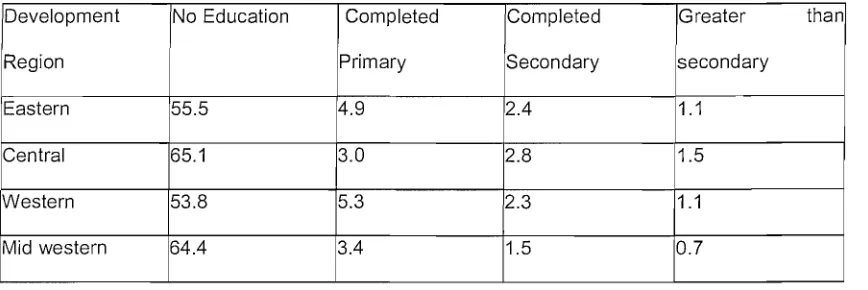
Educational level of women in development regions (percentage distribution of the defacto female household population)
Percentage of women listening to radio every day
Percent distribution of currently married women by contraceptive method currently used in the Eastern development region
Percentage of currently married women who are sterilised or husbands are sterilised who regret operation in Eastern Hills and Terai
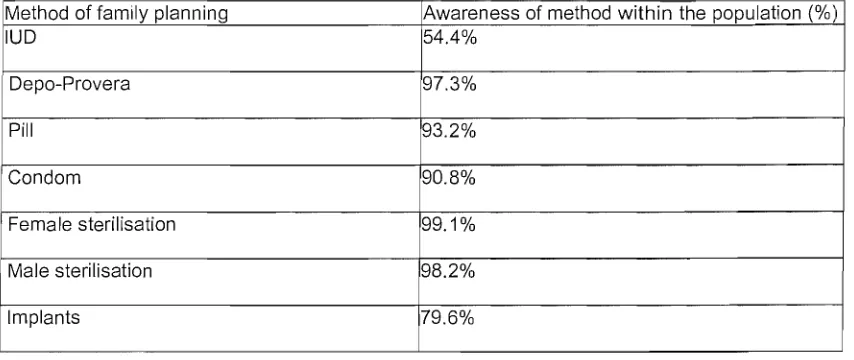
Awareness of modern methods as a percentage of the population
Socio-demographic characteristics of women accepting the IUD
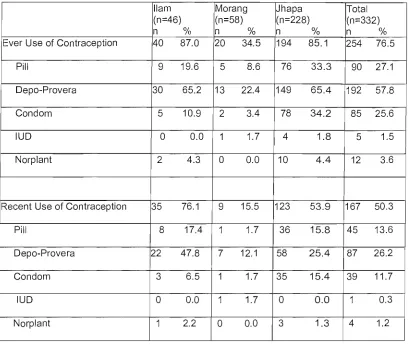
Numbers and percentages of whole study sample who have ever used or recently used contraception, by method.
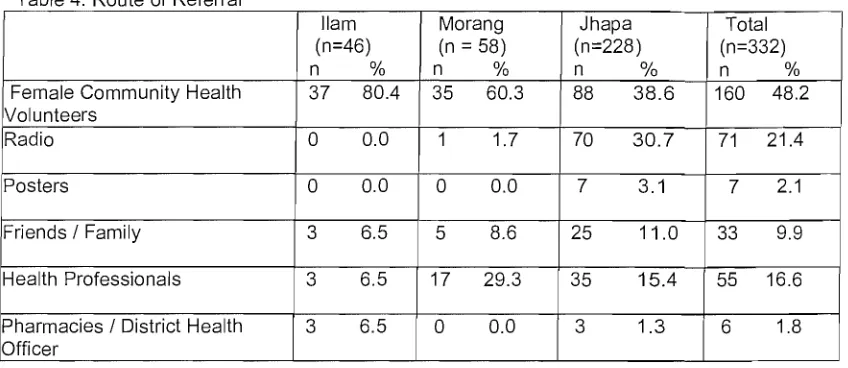
Route of referral
Reasons for discontinuation
Methods of contraception chosen by discontinuers of the IUD
Statistical associations with discontinuation of the IUD
Published research informing the framework
Similarities and differences in socio-demographic variables between men in Eastern and Mid-Western Terai
Principal Component Analysis
Background characteristics of study sample
Associations between men's attitude components and socio-demographic variables
List of Figures Page
Bertrands Conceptual Framework of Access 79
Conceptual Framework of barriers to the uptake of the IUD in rural Nepal. 109
Bruce's Quality of Care Framework 121
Comparison of clinic numbers between intervention clinics and non-intervention clinics 136
Theoretical framework of factors affecting contraceptive use in men. 158
List of Appendices
Question Route for FGD in Nepal
Thematic Coding
Forms used for study participants by the health professionals.
Statistical Tests
Graphs of differences in Caste with regard to socio-demographic variables
Identification Questionnaire
113
115
143
179
186
Glossary
CPR CYP DFID DHS FCHV FGD FHD FPAN FP/MCH FPP HIV HMG HRT ICPD IEC IUD KAP LNG-IUS LSE MMR MOH MOPE MSI NCP NGO PCAContraceptive Prevalence Rate
Couple Years of Protection
Department for International Development
Demographic and Health Surveys
Female Coomunity Health Volunteers
Focus Group Discussions
Family Health Division
Family Planning Organisation of Nepal
Family Planning I Maternal and Child Health Family Planning Programs
Human Immunodeficiency Virus
His Majesty's Government
Hormone Replacement Therapy
International Conference on Population and Development
Information, Education and Communication
Intrauterine Device
Knowledge, Attitude and Practice
Levonorgestrel releasing Intrauterine System
London School of Economics
Maternal Mortality Rate
Ministry of Health
Ministry of Population and Environment
Marie Stopes International
National Commission on Population
Non Government Organisation
PID
QOC
SFDP
SPN
SSI
STD
STI
TFR
UNFPA
VHW
WHOMEC
Pelvic Inflammatory Disease
Quality of Care
Small Farmers Development Program
Sunualo Parvivar Nepal
Systematic Sampling Interval
Sexually Transmitted Diseases
Sexually Transmitted Infections
Total Fertility Rate
United Nations Population Fund
Village Health Workers
Acknowledgements
I would like to thank my supervisors Mr Will Stones and Nyovani Madise for their invaluable input.
I would especially like to thank Will for all his time and effort in keeping me focussed on my thesis
at times when I felt the end was never in sight.
I would like to thanks both Liliana and Jill from Marie Stapes International for their support in my
research in Nepal along with all the members of Sunualo Parvivar Nepal. I would especially like to
thank Mrs Kamala Thapa and Biraj Bista for their assistance in making the research happen and
continue until its conclusion.
Finally I would like to thank all my friends and family, especially Carlton for continually pushing
The International Conference on Population and Development, held in Cairo in 1994, delivered a
statement on objectives for change in the field of reproductive health, which could be achieved in
the 20 years following the conference. Some of the objectives related to women's rights, some to
men's rights and some to sexual health.
It was stated that 'reproductive health is a state of complete physical, mental and social
well-being and not merely the absence of disease or infirmity, in all matters relating to the reproductive
system and to its functions and processes'. This implies that given peoples capability to
reproduce they have the freedom to decide if, when and how often to do so. Women and men
therefore have the right to be informed and have access to safe, effective, affordable and
effective methods of family planning of their choice, as well as other methods of fertility
regulation. All these factors should enable women to go safely through pregnancy and childbirth
and provide couples with the best chance of having a healthy infant.
Four objectives are linked specifically to reproductive health and these relate to the
empowerment and status of women, women's health and safe motherhood, male responsibilities
and participation and finally, sexually transmitted diseases (STD) and HIV prevention.
The basis for taking action in these four areas was set out as follows:
Empowerment of women.
The full participation and partnership of both women and men is required in productive and
reproductive life. In most regions of the world, women receive less formal education than men
and education is one of the most important means of empowering women. Improving the status of
women will enhance their decision-making capacity, especially in the arena of sexuality and
reproduction.
At the global level, it has been estimated that about half a million women die each year of
pregnancy related causes, 99% of them in developing countries. The age at which women begin
or stop childbearing, the interval between each birth, the total number of lifetime pregnancies can
all influence maternal morbidity and mortality. Also a significant proportion of the abortions carried
out in developing countries are self-induced or otherwise unsafe, contributing to a large
proportion of the maternal morbidity and mortality.
Male responsibility and participation.
Men playa key role in bringing about gender equality since, in most societies; men exercise
power in nearly every sphere of life, including decisions regarding family size. It is therefore
essential to improve communication between men and women on issues of sexuality and
reproductive health.
Sexually transmitted diseases and HIV prevention
The worldwide incidence of sexually transmitted diseases is high and increasing.
In order to try and achieve a change informed by these statements, the ICPD set out certain
objectives relating to reproductive health. Some of the key objectives are listed.
Women's empowerment:
To achieve equality and equity based on harmonious partnership between men and
women.
2 To ensure that all women are provided with the education necessary for them to meet,
and exercise their human needs and rights.
Women's health and safe motherhood
1 To ensure comprehensive and factual information and a full range of reproductive health
convenient to all users.
2 To enable and support decisions about child bearing, methods of family planning and
fertility regulation
3 To help couples and individuals meet their reproductive goals in a framework that
promotes optimum health and their right to choose the number, spacing and timing of
their children.
4 To improve the quality of family planning advice, information, education, communication,
counselling and services.
5 To achieve a rapid and substantial reduction in maternal morbidity and mortality and
reduce the differences observed between developing and developed countries.
6 To reduce greatly the number of deaths and morbidity from unsafe abortion.
Male participation
To increase the participation and sharing of responsibility of men in the actual practice of
family planning.
2 To encourage and enable men to take responsibility for their sexual and reproductive
behaviour and their social and family roles.
The research described in this thesis touches on many of the issues discussed at the ICPD. The
intrauterine contraceptive device (IUD) is a particular method of family planning not widely known
in Nepal and very seldom chosen as a form of contraception. The IUD is the most widely used
method of reversible contraception in the world yet makes a very small proportion of the method
mix in Nepal. The IUD is a very effective method that can equally be used for spacing as well as
limiting childbearing. Despite all the known benefits of this method of contraception, it is not
clearly understood why women in Nepal are not choosing it as a method. Are some women being
denied a choice? Are some women undereducated about the method? Is the method not widely
available or accessible to the nation's women? Or despite choice, availability and understanding
Very limited research has been undertaken on this issue in Nepal. To date only one study has
been carried out by the Ministry of Health in and around the capital of Nepal, Kathmandu.
I joined the Opportunities and Choices Reproductive Health Knowledge Program in May 2001 as
a clinical research fellow. My background was in Obstetrics, Gynaecology and Women's Heath.
The Opportunities and Choices Program was a consortium composed of members from the
University of Southampton, Marie Stopes International (MSI) and the London School of
Economics (LSE) and was funded by the Department for International Development (DFID). The
program researched many issues surrounding reproductive health including maternal mortality
and morbidity, family planning and contraception and HIV and sexually transmitted infections.
I became involved as the primary researcher in a project to investigate the use of the IUD in
Nepal. A member of the MSI team working with their affiliates in Nepal had noted that the use of
the IUD had been steadily falling. The MSI affiliates in Nepal were Sunualo Pavirar Nepal (SPN).
As a non-government organisation (NGO) in Nepal they wanted to try and increase the use of the
IUD because of its cost-effectiveness and high value couple year's protection (CYP). They were
not alone in this desire as the government itself as well as other NGOs were also starting to take
an interest in finding ways of increasing the use of the IUD within the female population of Nepal.
My first visit to Nepal occurred in August 2001 where I worked alongside members of SPN to
develop a study project to investigate methods of increasing the use of the IUD. One idea was to
provide the IUD at the same time and in the same location as the mobile sterilisation camps.
Mobile sterilisation camps, or sibirs, have been in operation in Nepal for many years. Having first
been introduced by the government as a means of providing a one off permanent method of
as a method of providing contraception by the Family Planning Association of Nepal (FPAN) and
other NGOs, including SPN. The camps are carried out in the dry season and move from area to
area providing this surgical procedure. In each area the camp would stay for approximately 7 to
10 days and then move on once it was felt that demand in that area had been satisfied.
The initial plan for the research was to take another team of providers to offer the IUD as an
alternative to sterilisation at the time of the camps. Any form of research in Nepal has to have the
backing of the government and so as the principal researcher I went along with the director of
SPN, Mrs Kamala Thapa, to meet the Minister of the Family Health Division of the Ministry of
Health Mr Pathak. We also met with the Senior Health and Population Advisor of DFID Nepal, Mr
Michael O'Dwyer.
After initial discussions it was felt there may be some difficulties in offering the IUD by such a
route, mainly the ability to provide follow up for women choosing the IUD in rural areas where
there are no health posts. The idea behind sterilisation camps is that the areas are rural with no
health posts but the procedure is a one off operation with no requirement of follow up, so health
posts are not as important. This is not the case for the IUD where follow up is important for the
health of the woman.
After a number of discussions with all members involved the provision of the IUD was felt to be
optimal through static clinics. SPN had static clinics in 10 districts of Nepal (Nepal has 75 districts
in all) so it was appropriate to provide the service through these clinics. These clinics run by SPN
have minimum standards that they have to reach and provide all methods of family planning
including the IUD and sterilisation.
The next issue that had to be addressed was demand for the IUD. When the original thought had
camps had their minds set on sterilisation and it would be very difficult to persuade them
otherwise at the time of the operation. Awareness and knowledge of the IUD is poor so it was felt
in order to increase uptake of the IUD we needed to increase demand. In order to increase
demand it was imperative that the reasons for low use were understood and these reasons
utilised to develop strategies to raise demand. To that end I employed the services of a research
group recommended by SPN. SPN has previously used the services of the research group to
help research condom use in Nepal.
On discussion with members of both the research group and Opportunity and Choices I felt the
most appropriate way of investigating reasons behind the poor use the IUD was through the
qualitative methodology of focus group discussions. These discussions would be held in the
same districts as the study to investigate the use of the IUD. I developed a question route with
assistance from Opportunity and Choices members with a qualitative research background.
The focus group discussions were held in November 2001 and then the data was analysed. I
analysed this data with the assistance of a member of the MSI group, the data revealed that a
number of positive issues could be identified that could be used in the development of
information, education and communication (IEC) strategies:
• "Hassle free'~' Once the IUD is inserted the woman does not have to worry again as she is protected from pregnancy.
• ·Works for 12 years: The longevity of the method was seen as very positive.
• ·No requirement for an operation: Some women saw the IUD as a real alternative to surgical sterilisation negating the need for an operation.
• ·No need to remember daily or three monthly methods: The IUD has a life of 12 years
and once inserted it does not require any maintenance when compared to hormonal methods such as the contraceptive pill and Depo-Provera.
The themes and ideas gained from the qualitative research were utilised to design information,
education and communication materials in collaboration with a marketing group based in
Kathmandu. The research had mainly found out that most people in these districts had were not
aware of IUD, and that there was an urgent need for more promotional activities. Since the
majority of people come to know about contraceptives through radio and village promoters, the
IUD program was disseminated mainly through these two channels. The promotional activities
took place for two months in order to increase the awareness of the IUD among women in the
study districts leading to recruitment of women into the study proper. The IEC materials that were
developed had to be agreed to by the government. The government had its own department
dealing with its own information, education and communication strategies and after meetings with
members of this department the research materials were passed. The promotional activities were
in four fold.
1. Radio:
A sixty-second radio sketch was produced and played on a daily basis on Kantipur FM
Nepal-wide for 2 months from April 7th till June 7th, 2002 within the three study districts. Radio is
commonly owned within most districts of Nepal so the opportunity to reach as wide an audience
as possible was presented through this media.
2. Posters, Information Leaflets, and Flip Charts:
Posters, information leaflets, and Flip Charts were designed to appeal directly to women within
the three districts, so they were culturally sensitive and adapted. The content of these materials
were proof read and agreed upon by the IEC department of the His Majesty's Government
(HMG). It was felt that to have the greatest impact the poster had to be appreciated by the local
women and they also had to be distributed as widely as possible. Posters were placed in the local
3. Female Community Health Volunteers:
These women were chosen from the female community health volunteers used at the SPN
clinics. They had previously been employed to go out into neighbouring villages, and other areas
within the districts, to talk with about reproductive health issues to the village women. IEC based
orientation tools such as flip charts about family planning and reproductive health and information
leaflets about IUD were used to educate FCHVs. They were trained for two days on the IUD.
They were given information on the IUD including how it worked, who could use it, how long it
would last. The myths and rumours discovered in the qualitative research were used as a basis
for describing the inaccurate information present about the IUD and then the FCHV were told the
actual facts. This was essential so they could confidently go into the villages and answer most
questions about the IUD as well as dispelling rumours at the same time.
4. Pharmaceutical Shops Visit:
Due to lack of health experts in Nepal women often seek advice from pharmaceutical shops. A
number of pharmaceutical shops were visited in all three districts and informed about the IUD, its
effectiveness, and our guarantee to provide follow-up services.
These promotional activities took place over the course of two months and it was during this
period that clients were recruited into the study.
I held interviews with Mrs Kamala Thapa in December 2001 for the post of project manager; this
person would be responsible for overseeing the study whilst I was out of the country. The project
manager would report directly to me and would be stationed at SPN headquarters where he
would receive local support. The project manager chosen was Mr Biraj Bista, he had a university
degree and experience in data collection. I worked alongside him to explain the proposed study
Three nurses were selected for IUD study from the districts where the study would be performed
(one nurse from each district). They underwent training on IUD insertion, removal, counselling
and problem solving. This training started on January 30, 2002 and ended on February 20, 2002.
All training was based on the His Majesty Government National Health Training curriculum. After
the completion of their training the nurses received a certificate of completion of IUD training,
which allowed them to work within any family planning clinic in Nepal. The nurses then went back
to their respective clinic where they were initially supervised, first directly then indirectly, by the
doctors on site. When the doctors felt the nurses were fully competent they were allowed to work
independently. Even though the nurses were fully trained in all aspects of family planning their
main role was to insert and counsel clients requesting the IUD and enter them into the study.
They were trained in completion of the questionnaires required for each recruited client.
After receiving the formal letter from the Family Health Division of the Department of Health
allowing the study to begin on March 18th 2002, the study became operational from April 1 st
2002 to March 31 st, 2003.
Towards the end of the study period I considered that it was important to discover in more detail
how women who had both continued with the IUD and those who had discontinued with it, felt
about the method and the whole process of insertion and follow up. To this end I developed a
question route and the project manager travelled to the districts to question some of the clients
who had participated in the study. The clients were located and asked to participate in the
discussions by the female community health volunteers. These discussions gave further insight
into reasons for both continuation and discontinuation of the IUD.
During the analysis of the qualitative data I discovered that men had some influence on the
uptake of the IUD and family planning by women. The IUD study itself revealed that some women
the influence men appeared to have on women and their ability to utilise family planning then it
would be ideal to investigate men's knowledge, attitude and practice towards family planning and
reproductive health. I discussed this with Dr Ram Sharan Pathak who is an associate professor of
the Central Department of Population Studies at Tribhuvan University, Kathmandu. Dr Pathak
had been involved in an advisory capacity on the development and data processing of the
Demographic and Health Survey (DHS) of Nepal in 2001. The DHS are carried in many
developing countries in the world, the Nepal DHS 2001 is a robust and nationally representative
survey sampling 8,726 women of reproductive age and 2,261men aged 15-59. I developed a
questionnaire with the assistance of Dr Pathak and he and his research team at the Tribhuvan
University performed the survey in three districts of Nepal. I analysed the raw data sent to me by
Dr Pathak.
Research Timeline:
2002
January February March April May June July August September October November December2003
January February March April May ActivitiesRecruitment of Staff and development of IEC materials
Training of providers
IEC/Training of Promoters
IEC/Recruitment of clients (Follow up 7-14 days post insertion)
Recruitment of clients (Follow up 7-14 days post insertion)
Follow up on clients and data collection in regular intervals
Development of study questionnaire for male study Male study carried out
Data analysis of male study
Qualitative research - Focus Group Discussion for IUD study
Qualitative research - Focus Group Discussion for IUD study
Data processing
Data processing and report writing
Report writing and preparation of the conclusion of study
Conclusion of the study
Conclusion of the study and dissemination of research findings
In summary, this research takes forward specific areas highlighted at the ICPD. The education of
educated decisions about their family planning requirements, and to provide the women with high
quality services, and full counselling. A benefit of providing a wider choice is that it leads to a
higher continuation rate that ultimately leads to the reduction of unwanted pregnancies and
unsafe abortions. With respect to men, key questions were men were becoming more involved in
family planning decisions and reproductive health issues and, if this were the case, the factors
underlying this greater involvement.
Three research studies are described in this thesis. The conduct of these studies was approved
by the Family Health Division of the Ministry of Health of His Majesty's Government of Nepal. The
work was undertaken according to the ethical guidelines of the 'Opportunities and Choices'
reproductive health research programme of the university of Southampton, and in accordance
cf
~
~
... ~
.,
/"
x·
"'/Q'.~
"'4>~
~:
'<?ql.
0"
Nepal
"
•
~·"t
flrl) I?$ .
((101)
Cfll)/ra, 'T
' "glo,.,
~Rll-'l,.-,nf'-../~
v
S')v
1:>
'7 \)
\
$",te: ( C
I .)Literature Review
The History of Nepal Family Planning Programme
Nepal has one of the oldest and longest established family planning programmes in the world.
programme in 1959 [2]. The FPAN disseminated information about family planning from this early
stage but actual services only became available in 1968 [3].
The Government, in the form of a delivery programme, supported these family planning services.
The United Nations had made a Declaration on Population, which stated that family planning was
a basic human right and an important factor in development planning [3]. The Nepalese
Government following this Declaration adopted a family planning programme in 1965 in order to
try and maintain a balance between population growth and economic growth.
The establishment of the Family Planning and Maternal- Child Health Board (FP/MCH) in 1968
saw the start of a national service delivery system [3,4]. This board was a semi-autonomous
implementing agency working under the auspice of the Ministry of Health. Initially the national
family planning programme was introduced only into the cities of the Kathmandu valleys [5]. As
only 14.2% of Nepal's population is urban and the majority are living in rural areas, to deliver
family planning services the programme had to develop ways of introducing the services into rural
areas [6]. Nepal is topographically a very difficult country for links to the more rural and remote
areas to be established. It has three distinct geographic areas, the mountains, the hills and the
terai. The mountain belt stretches over to include the Himalayas; this terrain is sparsely populated
with many areas impassable for a proportion of the year. The hills are more densely populated
than the mountains but the country's infrastructure makes even these areas difficult to access.
The terai is an area of flat land, which is densely populated; here the mainstay of income is from
agriculture.
Nepal is divided into five development regions; these are Eastern, Central, Western,
Mid-Western, Far-Westem [2]. These five development regions are further divided into 14 zones, 75
districts and 4,021 panchayats. A village panchayat may comprise one or more villages, and each
The establishment of the FP/MCH programme saw the start of formal provision of family planning
services in Nepal with the aim being to reach as many of the rural and remote areas as possible.
The structure of this program consisted of 4 levels: the central office, four regional offices (one in
each development region), 40 district offices and 492 service centres both clinic and panchayat
based [4]. It was the main role of both the district offices and clinic and panchayat based centres
to provide family planning services. Health workers are based at both the district and clinic I panchayat level and these workers became the primary link between the FP/MCH program and
the village population. Through home visits they established contacts with the villagers and once
trust was gained they went on to educate the villagers about family planning and in so doing
promote the services which they went on to deliver.
The delivery of services was mainly through the centres, where free oral contraceptives and
condoms were always available. Also the provision of Depo-provera was catered for in selected
centres and any centre whose staff included a medical doctor could provide both vasectomies
and IUDs.
Then in the early 1970's the Nepalese Government started to look at an integrated
FP/MCH programme [4]. The structure of the integrated programme differed from the original
programme. It consisted of a central office, an operations branch with two field supervisors and
two health inspectors, 48 district health offices and 298 health posts. The actual provision of
family planning services was again the main responsibility of the district health offices and the
health posts. Both the district health offices and the health posts within the integrated program
had more ground staff i.e. front line staff.
In order to provide services outside the health post and reach the more inaccessible rural areas,
village health workers (VHW) were employed. The health posts are subdivided into 4-6 areas
referred to as Veks. Each of these Veks had a VHW assigned to it who worked under the
each household about twice a year, while this number of visits increases to six in the
mid-mountain and terai areas.
As the years passed other ways of reaching the general population, informing them and providing
them with family planning services were considered and implemented. In the early stages of the
family planning programme in Nepal most services could only be accessed through static or
permanently established clinics [7]. These were few in number and each clinic could only offer a
very limited choice of family planning methods to potential clients. In answer to this, outreach
service delivery systems were developed, referred to as the family planning Sibir or camps. The
ideal was that these camps would make the provision of family planning services possible in
previously remote and inaccessible areas. These camps went to areas where there was a
demand for services but no static clinic had been established or could be foreseen as being
established in the near future. For a limited time they stayed in the area until the local demand for
family planning at that particular time was met.
The camps are now a strong feature of Nepal's family planning service and the number of clients
attending these camps has increased significantly over the years since their introduction. The
number of female sterilisations was minimal at the start, but over the years the use of
laparoscopy and mini-laparotomy has been shown to be both safe and effective in the camp
situation, to the extent where the number of female sterilisations far out-number vasectomies
(15% : 6.3% DHS 2001). These camps are frequently seen as the only option for couples that
wish to limit their childbearing but do not have the means to access a static site.
The organisation of the family planning services changed over the years in Nepal [3J. In
1975 under the National Planning Commission, the Population Policy Coordination Board was
established. The Government in the same year moved forward with its acknowledgement of the
need for family planning services when for the first time it explicitly set out demographic policies
Board was reorganised, in 1978 it became the National Commission on Population (NCP) and in
1982 it reorganised once more into an independent, politically strong support system for
population and family planning programs. It worked with both private and public sectors where its
primary responsibilities were to formulate appropriate policies and
coordinate population and family planning related programs.
Further developments of the family planning services in Nepal meant that by the
early 1980's there had been the establishment of 32 operating theatres at district and
zone hospitals and several family planning clinics all with the ability to provide female and male
sterilisations. The FPAN also organised sites for sterilisation, initially in three districts. It was
apparent that female and male surgical contraception were becoming the most popular and most
used forms of family planning in Nepal and the Government developed a long-term plan to
provide sterilisation services throughout the year at static clinics to accommodate this increase
[7].
Over the years there has been a change in the ways in which sterilisation is offered. The sites
providing this service are divided into three categories: static sites, seasonal sites and mobile
outreach sites [7]. The difference between them essentially lies in the timing of the provision of
services. The static sites are available throughout the year for sterilisation, but as the name
implies are fixed in one building meaning that the clients have the inconvenience of travelling to
them. Seasonal sites provide services for a limited time at each site using existing facilities such
as hospitals and clinics, which have fully equipped operating theatres. Mobile outreach sites on
the other hand go out into the more remote areas, where they stay for a limited period of time and
use facilities such as schools and health posts. These facilities can provide a basic building but
the operating equipment has to be transported from main centres to these more remote areas.
In 1995 the Ministry of Population and Environment (MOPE) was established as a separate
programmes. This ministry was responsible for formulating and implementing population policies,
plans and programs as well as monitoring and evaluating such programs. The Ministry was
therefore responsible for implementing programmes of action recommended by the International
Conference on Population Development (lCPD 1994) and taking the national implementation in a
different direction to the previous focus on population control.
A number of five year development programmes have been running since 1970 with the most
recent beginning in January 2002. His Majesty's Government of Nepal receives help from a
number of donor agencies, one of the largest contributors being UNFPA (8). HMG of Nepal also
works alongside a number of non -government organisations (NGOs), including Sunualo Parivar
Nepal, the Nepalese partner of Marie Stopes International. These government and NGO
partnerships have strategic aims aligned with the principles of the ICPD. All these agencies work
in close consultation to formulate programmes, within these programmes there is development of
specialised activities aimed at particular target groups. Special attention is being placed to
increase awareness of the needs of young people. In Nepal adolescents comprise a fifth of the
total population and a fifth of women aged between 15 - 19 years are pregnant or already
mothers. Half of them do not receive adequate obstetric care and this leads to 19% of maternal
death occurring in this group. The adolescent component of the program endorses the distribution
of contraception to unmarried adolescents and emphasises education regarding adolescent
reproductive health.
The ideal of the 5 year development programme is to aim towards a decentralised reproductive
health programme that will increase the utilisation of quality reproductive health services by
women, men and adolescents whilst also increasing awareness of reproductive health risks and
benefits. This latter initiative has the goal of bringing about behavioural changes regarding safer
sex and reproductive practices.
keeping with its programme goals, is trying to increase the uptake throughout the country. Its use
of mobile outreach sites for surgical contraception has been proved to be successful in making
potential clients more aware of its availability and therefore increasing its utilisation [3]. The
reason for its success can in a large part be attributed to the increase in knowledge of the
procedure among much of the population. The increase in uptake of Depo-Provera, a long acting
injectable contraceptive, has been attributed also to the increase in knowledge of its use [9]. This
has been achieved by ensuring that providers are fully trained in its action, use and provision and
by making it widely available and easily accessible through local pharmacies.
Increasing knowledge among the population about different forms of contraception can lead to an
increase in their use [10]. If the providers can be fully trained in the counselling and provision of
the different forms of contraception then this has the potential to increase general knowledge and
increase utilisation and continuation of family planning methods. Increasing the accessibility of
methods of contraception will also be likely to increase the uptake of those methods within a
population [10,11].
The government has responded to this knowledge by introducing the Comprehensive Family
Planning Training Course. Health workers are instructed on a complete range of essential family
planning information and trained in the skills that are necessary to provide a high quality service
to the client. In order to do this the trainers themselves use standardised materials that are all up
to date and meet national medical standards. Before the trainees offer services to clients they will
have been trained on anatomically correct models on which they will have achieved competency.
The government has ensured that these training courses emphasise counselling skills and
include an extensive infection prevention component linked to technical skills.
The face of family planning in Nepal is changing with time. However, the population have
contraceptive needs that are still not being met. There are a number of factors encompassing
The government and other providers are slowly finding ways of addressing these issues, but
many remain deep-seated among the community.
The challenge for the family planning services in Nepal is now to strengthen and expand the
provision of good quality services on a regular basis to meet increasing demands currently or in
the future [9]
The increasing unmet need for contraception in Nepal.
Women with unmet need for contraception are defined as being currently married, fecund, aged
15 - 49 years, not pregnant and stating that they do not wish to have any more children, but
despite this are not using a contraceptive method. From the last Demographic and Health Survey
of Nepal in 2001, the unmet need stood at 27.8% of currently married women. 16.4% of this
comprised women wanting to limit their families and 11.4% were those who wanted to space their
families [6]. The unmet need for spacing is higher among younger women because they have not
yet completed their families, whereas among older women who have completed their families
there is a higher unmet need for limiting methods of contraception.
The ideal and actual family size are markers for unmet need, the greater the difference between
the two values the higher the unmet need. It has been argued that in countries where
contraception has become increasingly available and acceptable, such as Nepal, couples give
serious consideration to their proposed family size [12]. In Nepal the majority of women consider
three or less to be an ideal number of children, which indicates that a small family size is
increasingly seen as desirable [13,14].
The attitudes of the Nepalese people towards reproductive health and contraception have
changed, but behaviour has not changed along with changing attitudes. Contraceptive use is
increasing, but not quickly enough to keep fertility in line with changing reproductive attitudes
ideal, there still remain a substantial number of unplanned births throughout the national
community.
Throughout Nepal there are misconceptions about contraception that can be attributed to a
serious lack of available information and education of the general population. This leads to a
palpable fear of modern methods of contraception, which includes both sterilisation and
temporary methods. This fear lends itself to an atmosphere of indecision and inaction with regard
to the use of contraception.
Couples really want to limit their family size but the fear of side effects and therefore health
consequences lead to the decision not to use contraception. The major industry in Nepal is
subsistence agriculture, which involves mainly manual labour. The fear associated with family
planning methods is that the side effects will have a negative effect on the ability of a family to
sustain itself [15]. This results in couples going beyond their desired family size and not using
family planning facilities even when they are physically accessible [17]. Even when individuals
use the services it is common that they will not return for additional services, advice or
information if they have a perceived problem.
Nepal continues to have a high total fertility rate, which stands at 4.1 births. There has been very
limited success in making contraceptive services available throughout the country but especially
for the least educated. At present Nepal has one of the lower rates for contraceptive use in the
world. 99.5% of currently married women in Nepal know of at least one family planning method
but only 53.1 % of these women report that they have ever used one [6].
There is a distinction between the fertility needs of couples living in an urban area and those
living in a rural area The difference between the wanted and actual fertility rates was almost twice
as high among rural as urban couples [13]. In rural areas the organisation of subsistence
those who had larger holdings of land suggesting that children may still be valuable as labour
[18]. Over time there has slowly been erosion of the family base. In recent years most people in
Nepal have found there to be growing opportunities for wage employment. They have more free
time in which to enjoy new leisure activities and more and more people are moving away from
extended family communities in the rural areas into the more nuclear family units in the urban
areas [19]. With this move it was believed that the way in which the older members of the
community influenced the younger members, especially in terms of marriage and labour, would
change [16]. Younger members gain more independence and along with this more autonomy.
They are exposed to new ideas and values; this may have the benefit of showing that there could
be more to the future than having a large family.
Nepali urban areas are exemplified by Kathmandu. As the capital city it exhibits many of the
classic features of urbanisation. These include wage labour, availability of education, widespread
literacy, modern health facilities, consumption of manufactured goods, mass communications,
and opportunities for socio-economic mobility. It has eliminated the need for the extended family
to be the basic unit of production. Along with all these features it carries the burden of inflation
and low wages. This urban economy is associated with high costs for large families [16].
In general in Nepal, children are only seen as capable of increasing the family's productive
capacity when they can be employed within the family itself [15,19]. This may still hold some
weight in the rural areas, but in urban areas it is wage employment and not subsistence farming
that provides income and commodities for the family. Therefore children are not used for labour in
the urban districts and in consequence are not seen as economically valuable to their parents
whilst growing up. Indeed most children in these urban areas contribute virtually nothing to the
family's income, instead accounting for a large proportion of the household's expenditure.
Children can account for between 33 -38% of the monthly expenditure.
perception within the urban population is that the adults would not return to a village life and
therefore neither would their children be likely to in the future. Due to this shift from the extended
rural family to the nuclear urban family, the parents now have more responsibility to equip their
children with the education and skills they will need to continue on in the city [16]. As a
consequence, parents have to make this provision through their own income. This all leads to the
fact that raising children in an urban setting is becoming increasingly more expensive and one of
the ways in which to reduce these outgoings is to reduce family size and limit childbearing [15].
Thus, the reasons for unmet need in urban areas are economic in conjunction with lack of
knowledge of contraceptive methods. In rural areas the reasons for unmet need differ in some
respects. One of the main underlying reasons is the fear of side effects from the family planning
methods, which could interfere with their livelihood and existence.
Overall rural Nepalese see the use of contraception as hazardous and although they have a
significant knowledge of the contraceptives available, each method has perceived risks that seem
to outweigh any benefits it may possess. Temporary methods have potentially too high a health
risk and permanent methods, such as surgical sterilisation, carry the probability of rendering the
couple infertile and unable to replace any children who may unfortunately die.
It is perceived that even the costs of recuperation after a sterilisation operation, in terms of having
a good diet and rest time off work, are too high to bear where this time loss equates to loss of
income and subsistence that can be ill afforded.
These perceived losses due to contraception have to be placed against the comparatively low
costs of raising children in a rural area where food does not have to be bought and the children
seldom have any formal education, but instead are used as labourers in the family work of
subsistence farming. In this context it is doubtful that the use of contraception will increase in the
How is the use of contraceptives is influenced? Contraceptive side effects
As discussed above there is an impression held by a large majority of the population that
contraceptive methods, whether permanent or temporary, have adverse health effects, which
make their use hazardous [16].These beliefs have grown from an environment where there is a
paucity of accurate information about family planning, but many myths and rumours fuelled by
hearsay. Couples living within such a society then find it hard to make informed decisions about
family planning methods and it seems inevitable that a proportion will therefore make no decision
at all [17].
The perceived and actual adverse health effects of contraceptives contribute to unmet need as
they discourage women, who would benefit from using family planning methods, from doing so
[20]. The concerns about side effects come from a variety of sources. These include the
experiences of the woman herself, the experiences of friends and family and more often than not
from rumours that have been told and retold within communities, becoming distorted with time.
These rumours and myths have such an effect that most women will quote such a story and use it
as a way to explain why they will not use a particular method of contraceptive even though they
have never tried it themselves [10].
For the women of Nepal, there are two main adverse effects associated with contraceptive use.
Firstly, the actual physical side effects that comes from contraceptive use and secondly, the belief
that contraceptives will render couples infertile, thus denying them the chance to replace any
children that may die. When the foundation of a society is based on strenuous agricultural labour,
then physical side effects that may interfere with this work are viewed as very risky. This is the
case in Nepal where 86% of the population live in rural areas and gain their income and living
their ability to earn a living.
The side effects most commonly associated with the use of contraceptives are excessive
bleeding leading to weakness, dizziness, and weight loss, which are all debilitating. Already the
health status of many of these rural people is compromised owing to living conditions which are
less than ideal, with poor nutrition and hard work. The indirect costs associated with use of
contraceptive methods, whether permanent or temporary, are perceived as large and can
account for the low uptake of family planning [21]. When work is an absolute requirement, and
any change in a woman's health status affect her ability to do a full day's work, and so the cost of
contraceptive use would be high. Even after a sterilisation operation the cost of providing a
nutritious diet and time off for recuperation can stop some couples considering this as an option.
In Hindu society, the excessive or irregular bleeding that can occur with the use of some forms of
contraception, can be a disadvantage. Hindus believe that a woman is polluted during
menstruation and childbirth, and she is deemed untouchable. Due to this interpretation a woman
will be secluded from her family and friends during menstruation, childbirth and in the postpartum
period. Therefore if the family planning method that a woman chooses increases the amount and
duration of her menstruation or causes bleeding to occur between menses, then the time she is
secluded will increase and may cause her to reconsider the use of that particular method [17].
A great concern of Nepalese couples, and other couples around the world, is that by using
contraception they will become infertile. In Nepal the infant mortality rate is high, with many
families experiencing the loss of one or more of their children [6]. It is in this light that the
concerns must be viewed. If their chances of losing a child are high then they will not want to
consider using family planning methods, which they fear, carry a risk to their future reproductive
capacity.
limiting their families and do not have the chance to replace children that die. Therefore
sterilisation is used when a couple believe they have completed their family, but more importantly
have the desired number of sons or more, to ensure the survival of at least one son. Sterilisation
is used towards the latter part of a woman's reproductive life and the tendency is that no other
form of temporary contraceptive is used in the interim, to space the family. Temporary methods,
such as the pill, IUD, and depo-provera are also believed to reduce a woman's reproductive
capacity. In a culture where children are considered of paramount importance, a method of
contraception which is assumed to reduce a couple's long term chance of conceiving will be
viewed with suspicion. This means that temporary methods have a low uptake in Nepal and in the
majority of cases, where they are used, will not be started until after the first child is born, or the
birth of their first son. Sterilisation is widely known throughout Nepal and the basic patterns of the
contraceptive mix has changed very little over the past two decades with sterilisation, both female
and male, making up the majority of contraception used [3].
These beliefs are strongly held in Nepalese culture and are borne from a lack of knowledge about
family planning. People are poorly educated by the providers of family
planning and end up feeling concerned because they experience unexplained side effects from
the contraceptives they use. This leads to a sense of ambivalence connected with the future use
of family planning and increases the negative views of contraception which are then shared within
communities
Provider bias
The rational approach to health promotion is that information given by a health professional will
bring about a positive change in health behaviour [22]. A positive change in terms of fertility
regulation would involve individuals and couples armed with adequate knowledge and means
making decisions regarding family planning that would benefit them as individuals and improve
the welfare of their family. The imparting of information about family planning methods is the
essential condition for increasing that the uptake of contraception. There are many
misconceptions that are held by the people of Nepal with respect to family planning and it is the
task of the family planning team to dispel the myths surrounding
the subject by giving out correct information.
Previous research has indicated that family planning team members, whether based in clinics or
in the outreach sites, hold certain beliefs about their clients and about contraceptive methods.
These beliefs mean that team members treat distinct sections of society in different ways.
Poor people expect inferior treatment from family planning clinic staff and they get it, but despite
this they are reluctant to complain [15]. Potential clients are afraid to use clinics and develop
tactics to help them receive adequate care and information from the staff. The schemes they
employ include travelling to clinics with other people to offset costs, taking someone with them,
either a friend or relative who has used contraception before, to act as an intermediary. They also
identify providers from their own ethnic background, especially those that speak the same dialect.
The fact that lower class Nepalese people feel they do not possess the necessary skills to
manipulate the system means they are prone not to use it [16].
Clients feel they cannot engage in useful dialogue with staff and therefore cannot gain the
appropriate information and advice needed to make informed choices. Thus, it is the quality of the
interaction between staff and clients that is a factor in the under use of family planning methods.
The poor quality of services provided for the lower classes means that negative perceptions arise
and are then disseminated to relatives and neighbours. This causes a "vicious circle" effect,
where potential clients listen to negative messages and choose not to use the services.
Providers can also set their own rules about whom to give contraception to, such as the woman
having to be of a certain age or to already have a certain number of children [15]. This may be
infertility [23]
When clinic staff are observed in their work setting, there are certain trends that have been
observed. When clients enter the clinic setting the tendency is for the clients and providers to fall
into a traditional, hierarchical pattern of interaction. The clinic staff have been institutionalised and
automatically assume an air of authority [24].
Providers were assessed on their treatment of the different classes of Nepalese people in terms
of the accuracy and completeness of the family planning information, and on their attitude and
bias towards the clients. It was found that providers spent more time and imparted more
information to the upper classes than they did to the lower classes. Providers held a low
estimation of the lower class, uneducated clients' intelligence and ended up "talking down" to
them. Providers felt the need to dominate the lower class clients and only offer them as much
information as the provider thought necessary. Sometimes this was done because of the good
intentions of the staff who had a sincere concern for the client. The advice being offered was
different in relation to experiences in the lives of the staff. In other instances, it was not concern
that prompted the provider to talk to the client as they did, but a belief that they were superior and
that the client would not be able to take in the appropriate information. It is thought by the
providers in these circumstances that clients are best told exactly what family planning method
they need and not offered an alternative. This leaves the client with the impression that there is
only one form of contraception that they can use and if it is not suitable there is no alternative.
Counselling at the time of acceptance of a method helps women and couples make informed
choices and ultimately means that the odds of discontinuation are lowered [24]. The way the
providers interact with the lower class clients goes against the standards set for good provision of
family planning. It is considered that a good attitude and a lack of bias will produce a desirable
outcome; that the clients will be able to make a fully informed, free decision about the form of
contraceptive that is best for them. There is a significant positive effect of women's perceptions of
to initiate and continue to practice contraception may depend on the quality of care that the
woman receives i.e. the choice of methods offered, the information communicated to her and her
personal treatment [25]. Providers sometimes have limited and poor knowledge of family planning
themselves along with ingrained beliefs that they impart to clients thus discouraging them from
using a method that may be appropriate for them [3,26]
In outreach posts where the sterilisation camps are held, a different form of bias is at work. The
most common form of family planning method by far in Nepal is sterilisation [6]. This is a widely
known method of contraception across all age ranges, whereas in other countries there is a
tendency for younger, low parity women to know more about the temporary methods than older,
high parity women. This does not hold true in Nepal. Younger women in Nepal were no more
likely than the older women to know about temporary methods and their use for spacing families.
So even though over the years more contraceptive methods have become available in Nepal and
they are now more accessible than ever, the uptake of temporary methods remains low whilst
sterilisation continues to dominate [3].
This strong emphasis on sterilisation has been backed by the government [7]. Voluntary
sterilisation camps of Nepal are run in a specific way. It is the task of motivators and providers
(field workers) in the areas where the camps will go to recruit women and men to come along and
be sterilised. Their tasks should also include informing potential clients about all forms of
contraception so they can make an informed choice, but the motivators and providers spent a
disproportionate amount of time telling potential clients about sterilisation at the expense of
temporary methods.
Field workers confine their activities within a limited radius from their own homes. They do not
make any extra effort to reach villagers living in distant areas; instead "family planning" is most
probably promoted mainly among those who could be potential acceptors of sterilisation and



![Figure 1; Bruce's Quality of Care Framework [11]](https://thumb-us.123doks.com/thumbv2/123dok_us/8502298.347834/124.595.95.400.430.668/figure-bruce-s-quality-care-framework.webp)