This is a repository copy of
Consensus best practice pathway of the UK Systemic
Sclerosis Study group: management of cardiac disease in systemic sclerosis
.
White Rose Research Online URL for this paper:
http://eprints.whiterose.ac.uk/106126/
Version: Accepted Version
Article:
Bissell, L-A orcid.org/0000-0002-2789-4652, Anderson, M, Burgess, M et al. (10 more
authors) (2017) Consensus best practice pathway of the UK Systemic Sclerosis Study
group: management of cardiac disease in systemic sclerosis. Rheumatology, 56 (6). pp.
912-921. ISSN 1462-0324
https://doi.org/10.1093/rheumatology/kew488
© The Author 2017. Published by Oxford University Press on behalf of the British Society
for Rheumatology. This is a pre-copyedited, author-produced PDF of an article accepted
for publication in Rheumatology following peer review. The version of record, (Bissell et al.;
Consensus best practice pathway of the UK Systemic Sclerosis Study group: management
of cardiac disease in systemic sclerosis. Rheumatology (Oxford) 2017 kew488) is
available online at: https://doi.org/10.1093/rheumatology/kew488.
[email protected] https://eprints.whiterose.ac.uk/
Reuse
Unless indicated otherwise, fulltext items are protected by copyright with all rights reserved. The copyright exception in section 29 of the Copyright, Designs and Patents Act 1988 allows the making of a single copy solely for the purpose of non-commercial research or private study within the limits of fair dealing. The publisher or other rights-holder may allow further reproduction and re-use of this version - refer to the White Rose Research Online record for this item. Where records identify the publisher as the copyright holder, users can verify any specific terms of use on the publisher’s website.
Takedown
If you consider content in White Rose Research Online to be in breach of UK law, please notify us by
Consensus best practice pathway of the UK Systemic Sclerosis Study group: management of cardiac disease in systemic sclerosis
Lesley-Anne Bissell1,2, Marina Anderson3, Malcolm Burgess3, Kuntal Chakravarty4, Gerry Coghlan5, Raluca B Dumitru1,2, Lee Graham6, Voon Ong7, John D Pauling8, Sven Plein6, Dominik Schlosshan6, Peter Woolfson9, Maya H Buch1,2
1. Leeds Institute of Rheumatic and Musculoskeletal Medicine, University of Leeds, Chapel Allerton
Hospital, Leeds, UK
2. NIHR Leeds Musculoskeletal Biomedical Research Unit, Leeds Teaching Hospitals NHS Trust,
Leeds, UK
3. Aintree University Hospital, University of Liverpool - Academic Rheumatology Unit Clinical
Sciences Centre, Liverpool, UK
4. Royal Free Hospital, Centre for Rheumatology and Connective Tissue Diseases, London, UK
5. Royal Free Hospital, Pulmonary Hypertension Unit, University college London, London, UK
Department of Inflammation, Division of Medicine, University college London, London, UK
6. Leeds Institute of Cardiovascular and Metabolic Medicine, University of Leeds, Leeds General
Infirmary, Leeds, UK
7. Royal Free Hospital, Centre for Rheumatology and Connective Tissue Diseases
Department of Inflammation, Division of Medicine, University college London, London, UK
8. Department of Rheumatology, Royal National Hospital for Rheumatic Diseases, Bath, UK
9. Department of Cardiology Medicine, Salford Royal NHS Foundation Trust, Salford, UK
Correspondence to: Maya H Buch, Leeds Institute of Rheumatic & Musculoskeletal Medicine, Chapel
Allerton Hospital, Leeds LS7 4SA, United Kingdom. Email: [email protected].
ABSTRACT
Objective: Cardiac disease in Systemic Sclerosis (SSc) can manifest in various ways and is associated with a poor prognosis. There is little evidence on how best to detect and manage cardiac disease in
SSc. Our objective was to produce an expert consensus best practice pathway for the management
of cardiac disease in SSc.
Methods: The UK Systemic Sclerosis Study Group set up several working groups to develop a number of consensus best practice pathways for the management of SSc-specific complications, including
cardiac disease. A multi-disciplinary task force was convened. The guidelines were partly informed by
a comprehensive literature review.
Results: A best practice pathway for cardiac disease (with a focus on primary cardiac disease) in SSc is presented including approaches for early detection and standard pharmacological and device
therapies. The benefits of shared care and multi-disciplinary approach are recommended. A future
research agenda is formulated in response to the relative lack of understanding of the natural history
of primary cardiac disease that was highlighted by the initiative.
Conclusion: The physician should be alert to the possibility of cardiac disease in SSc; best managed within a multi-disciplinary team including both rheumatologists and cardiologists. This pathway
provides a reference for all physicians managing patients with SSc.
Key words: systemic sclerosis, scleroderma, primary myocardial disease, cardiac disease,
cardiomyopathy
Key messages
SSc cardiomyopathy is prevalent in SSc and is associated with a poor prognosis.
The UKSSSG best practice recommendations help inform the UK physician in the management of
SSc-cardiomyopathy.
The UKSSSG best practice recommendations highlight the clinical and research agendas going
forwards for SSc-cardiomyopathy.
Systemic sclerosis (SSc, scleroderma) is a complex and heterogeneous connective tissue disorder (CTD)
characterised by excessive extracellular matrix deposition with widespread fibrosis of the skin and
visceral organs, microvascular injury and evidence of immune system activation [1, 2]. The heart is
one of the major organs affected in SSc [3, 4] although its presence is probably underestimated due
to the occult nature and variable reports of prevalence. Clinically evident cardiac involvement is
associated with a poor prognosis, with up to 70% mortality at 5 years [4, 5]. Approximately
twenty-five percent of SSc-related fatalities are attributable to cardiac causes [6, 7]. The features of primary
cardiac disease are typically myocardial fibrosis [8]and myocarditis [9]. The time-course, dynamics and
extent of each of the pathologies however are poorly understood. The management of primary cardiac
disease (herewith termed SSc-cardiomyopathy) is varied and often ad hoc, usually in response to a
clinical event when prognosis is particularly poor.
The UK SSc study group assembled several working groups to develop best practice consensus
pathways for the key manifestations of SSc. The best practice consensus recommendations reported
here aim to inform the management of SSc-cardiomyopathy in the UK and as such, are to be used in
conjunction with the guidelines published by EULAR/EUSTAR. Of note, these recommendations relate
to SSc-cardiomyopathy as opposed to right heart involvement and pulmonary hypertension for which
separate recommendations have been developed.
METHODS
With the approval of the UK SSc study group, the convenor (MHB) formulated a working group with
the aim of establishing recommendations for the management of SSc-cardiomyopathy.
Working group composition
The multidisciplinary working group comprised 16 participants including: 4 SSc specialists; 6
cardiologists (1 electrophysiology specialist, 1 cardiac MR specialist, 2 cardiac ECHO specialists, 1
pulmonary hypertension expert, 1 general); 1 pharmacist, 1 specialist nurse, 2 research fellows and 2
patient organisations representatives.
To this end, a comprehensive literature review was undertaken (LAB) to inform the working group
(Bissell LA accepted for publication). A working group was convened with participants selected based
on the field of expertise, knowledge and experience; as well as covering specialist and non-specialist
agreed. At a second meeting in October 2012, the literature was presented and discussed and draft
recommendations were formulated.
A glossary and algorithm that informed this report was developed (MHB) and feedback from the
working group was requested for further refinement. Both documents were finalised and approved in
March 2014.
RESULTS
The aim of the working group was to distil available information on the following topics into
recommendations for use in clinical practice; to determine the nature, prevalence and predictors of
disease; to determine when to screen and monitor for cardiac disease; to determine appropriate tests
for screening and monitoring of cardiac disease; to establish a standardised echocardiogram protocol
and report (Scleroderma Echo); to evaluate the need for more novel echocardiography (ECHO)
techniques; to determine the role of N-Terminal pro-Brain Natriuretic Peptide (NT-proBNP) testing in
a patient with SSc; to determine if/when cardiac MRI should be used; to establish how to monitor for
conduction abnormalities; to determine how to treat SSc-cardiomyopathy; to determine how best to
screen for and manage coronary artery disease (CAD).
The working group anticipated a lack of high quality evidence base, which the literature review
confirmed. As such, presented below are the recommendations based on available evidence and
consolidated by expert opinion of the working group.
Over-arching principles
The working group discussed and agreed upon the following general principles that should be applied
in the management of patients with SSc: assessment of patients with SSc for cardiac disease should
include evaluation for the presence of both SSc cardiomyopathy and coronary artery disease (CAD).
Suggestion of SSc-cardiomyopathy on investigation should be interpreted in the context of possible
co-existing non-SSc related pathology as seen in the general population including systemic
hypertension (HTN), CAD, and valvular disease (that might have similar clinical manifestations to those
observed in patients with SSc-CM). Other confounding factors such as interstitial lung disease (ILD),
pulmonary hypertension (PAH) and anaemia should also be evaluated; cardiac pathology should be
provide interpretation of cardiac investigation findings and to help manage the patient and plan
appropriate monitoring.
Relevant background to the recommendations
Included is a summary of key information to support these recommendations. The comprehensive
literature review by Bissel LA, et al (submitted) provides further data [10].
Principal pathologies underlying SSc cardiomyopath
Myocardial fibrosis: This process may be sub-clinical before becoming clinically apparent [11, 12]. The
underlying mechanism is not fully elucidated. However, fibrosis frequently spares the
subendocardium, an area usually affected in atherosclerotic heart disease [13] and data suggest this
may be preceded by micro-perfusion abnormalities with reperfusion damage [9, 14]; perfusion
abnormalities independent of atherosclerotic heart disease [15] and present in association with digital
ulcers [16].
Myocarditis: Patients with new symptoms of heart disease have been found to have cellular
inflammatory change on endomyocardial biopsies [17], however, myocarditis may also be sub-clinical,
and has been described in association with peripheral myositis [18, 19]. Studies suggest that it can
lead to secondary fibrosis with resolution of the initial inflammatory process [20].
Autopsy findings have also included pericarditis, nodular abnormalities of valve tissue and sterile
vegetation [21].
Cardiac manifestations of SSc cardiomyopathy
The prevalence of cardiac manifestations recorded in SSc studies varies greatly, as detailed in the
submitted literature review associated with these recommendations by Bissell LA, et al [10]; with a
prevalence between 7% and 39% [3, 7]. The major limitation is differentiating pathology due to SSc
cardiomyopathy from atherosclerotic heart disease, with immense heterogeneity in the definitions of
cardiac involvement applied. The manifestations are determined by the structure/area affected:
Cardiac failure: Diastolic dysfunction is frequently recorded in patients with SSc [22, 23], but in this
population, leads uncommonly to diastolic heart failure [24]. Some studies suggest that its occurrence
dysfunction is less commonly described in SSc [12, 27] but if present is usually the consequence of
CAD. It might also follow specific SSc cardiomyopathy due to myocarditis and fibrosis [28]. Less
commonly, a restrictive cardiomyopathy with left or right ventricular involvement, increased
ventricular mass and decreased movement of ventricular walls can be observed in SSc [29].
Arrhythmia: The mechanism underlying arrhythmias in SSc is likely to be multi-factorial, thought to
include direct effects of microvascular injury, the subsequent development of fibrosis as well as
autonomic dysfunction [30]. Cardiac conduction defects, as documented in studies using
electrocardiogram (ECG) and 24-hour Holter monitor are reported with a variable prevalence,
between 4% [31] and 51% [32, 33]. Intra-ventricular conduction defects are clinically relevant as they
are associated with the development of atrio-ventricular (AV) block and other rhythm disturbances
[34]. Nevertheless, supraventricular tachycardia (SVT) and ventricular tachyarrhythmias are not
uncommon findings in SSc and have been associated with increased mortality in some studies [35].
Automatic implantable cardioverter-defibrillator (AICD) use in patients with SSc has been reported
[36].
Pericarditis: Pericarditis is a common feature of inflammatory conditions and in SSc can manifest as
fibrous pericarditis, pericardial effusion, and rarely as pericardial tamponade or constrictive
pericarditis [37, 38]. The evidence of an increased prevalence in SSc is debated though, studies
reporting similar prevalence when compared to controls [39, 40].
Valvular involvement: Valvular disease can represent a feature of primary cardiac SSc, but less
commonly observed. Endocarditis, thickening of the valves and valve prolapse has been noted in SSc
patients [21, 41].
SSc cardiomyopathy and disease course
The time-course and basis for susceptibility remains unclear. Cardiac pathology should be considered
throughout the disease course; nevertheless, the nature of involvement might be more likely at
certain stages or subtypes. Thus, myocarditis is often expected in early diffuse SSc stage, sometimes
concomitant with a peripheral myositis [17]; evidence of diastolic dysfunction however is associated
with increasing disease duration [13].
Recommendations
SSc cardiomyopathy: The following clinical features should alert the rheumatologist to the at risk SSc
patient for the development of SSc cardiomyopathy: male gender [42], diffuse cutaneous SSc[43],
anti-topoisomerase antibody together with rapid skin thickness progression[44], anti-Ku [45], anti-Histone
[46], anti-RNA polymerase[47] and anti-U3-RNP antibodies [48] age of onset >65 years[49], presence
of tendon friction rubs[44], digital ulcers, lung involvement, myositis [42] and higher HAQ-DI
scores[50].
Coronary artery disease: For CAD, the traditional risk factors of hypertension, hypercholesterolemia,
diabetes, smoking history, and family history of CAD should be identified and acted upon.
Establishing a diagnosis
History and examination
Breathlessness, orthopnoea, paroxysmal nocturnal dyspnoea (PND), palpitations, dizziness, blackouts,
chest pain, fatigue and peripheral oedema should alert the physician to possible SSc-cardiomyopathy;
with the symptoms typically relating to the nature of cardiac involvement, for example, breathlessness
and reduced exercise tolerance in the context of left ventricle (LV) dysfunction. Patients need to be
aware to report such symptoms. A comprehensive cardiorespiratory assessment should be routinely
performed, including looking for evidence of atherosclerosis.
Investigations
Blood tests: The working group recommends annual lipid profile and HbA1c monitoring to identify
associated CAD risk factors. NT-proBNP is established for detection of heart failure by primary care
and has similarly shown utility in SSc-pulmonary vasculopathy [51, 52]. There is also emerging
evidence for the association of NT-proBNP with SSc- cardiomyopathy [53], although its prognostic
value is unknown. To potentially identify early cardiac involvement and aid monitoring,
rheumatologists may consider baseline reference measurement and asymptomatic annual patient
monitoring. In case of symptomatic or confirmed diagnosis of cardiac disease (and/or PAH),
six-monthly monitoring (or more frequently if indicated) should be arranged to assess progression and/or
response to treatment.However, clinicians should bear in mind that normal NT-proBNP levels may be
recorded in the presence of PAH and high levels can be associated with low glomerular filtration rate
in patients with chronic kidney disease.
Troponin and CK are recommended in the evaluation of acute coronary syndrome (ACS) (as per
CK -morbidities, and other causes considered, for example, peripheral myositis. Troponin I (TnI) in particular should be identified as this
is considered to have exclusive myocardial origin. If the clinical impression suggests (clinical or
subclinical) SSc-cardiomyopathy as a possibility, further imaging, using echocardiography, and/or
cardiac-MRI may be appropriate.
Trans-Thoracic Echocardiogram (TTE): All sonographers performing echocardiographic screening
studies in patients with SSc should be accredited with the British Society of Echocardiography to
ensure the highest standard of imaging. The working group recommends using a standardised
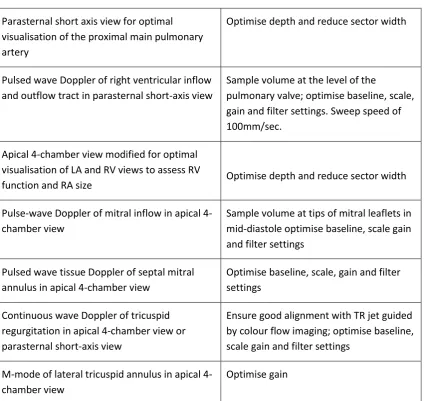
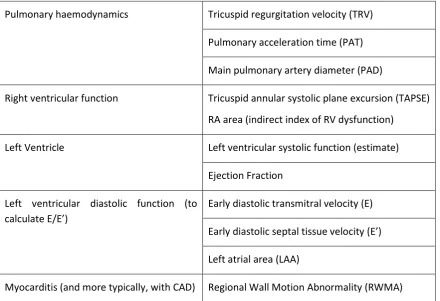
Scleroderma Doppler echocardiography protocol (Table 1) with a report that includes minimum
scleroderma echocardiographic dataset of 10 reproducible measures (Table 2). Where indicated, a
cardiologist should be involved to provide interpretation of echocardiography findings and to help
plan appropriate monitoring and management.
Tissue Doppler echocardiography: Tissue Doppler echocardiography (TDE) may be a preferred method
if the expertise is available but further research into the added utility this has on early detection and
assessment of primary cardiac involvement is needed.
Cardiac MRI (CMR): Tissue Doppler echocardiography (CMR) can detect both functional changes and
those at tissue level, thus helping to characterise the underlying pathology[54]. Although reports to
date demonstrate the utility of CMR in SSc, there is no consensus for the development of a meaningful
algorithm.
The working group recommends that a core clinical protocol should be established for regional centres
with development of a research protocol to facilitate future collaborative activities. A basic (core) CMR
protocol following Society for Cardiovascular Magnetic Resonance (SCMR) standardised protocols for
non-ischaemic LV cardiomyopathies including myocarditis [55] is detailed in table 3.
CMR availability is limited (in District General Hospital, DGH) and may be considered in selected
patients, especially those with high risk of cardiac involvement/symptoms and/or signs suggestive of
SSc cardiomyopathy.
Triggers for performing CMR should include the following considerations particularly in the absence
of other pathologies (such as hypertension, CAD): ECHO abnormalities such as Regional Wall Motion
Abnormality (RWMA) and/or troponin rise (once CAD/ACS has been excluded); right ventricle (RV)
dysfunction (in absence of PAH or chronic lung disease); LV dysfunction (if no evidence of HTN/CAD or
unexplained new or particular worsening in a patient with background hypertensive or ischaemic
heart disease related changes); notable/increase in pericardial effusion; and raised NT-proBNP levels
If CMR is undertaken and pathology is confirmed including scarring/fibrosis, this should trigger more
intensive screen for arrhythmias as well as closer interval assessment for cardiac function with
echocardiography. The frequency of follow-up, for example, three to six monthly, would depend on
need for monitoring for interval change
post-pharmaceutical treatment. A management plan should be developed together with specialist
cardiology input.
Electrophysiological testing: The working group recommends that ECG should be performed in all
patients. Although not a sensitive method, this may detect conduction abnormalities and evidence of
LV/RV strain/hypertrophy. Holter monitor or external loop recorder (ELR) should be applied if there is
any clinical suggestion of conduction abnormality. Similarly, a low threshold for use of an implantable
loop recorder (ILR, e.g. Reveal) should be maintained. ILR is used in the general population for
unexplained infrequent syncope. Its use in patients with SSc is currently being evaluated (the
Electrophysiology and Cardiac Imaging in Scleroderma, ELCASA Study, REC Ref: RR12/10286) and for
the moment should be driven by clinical symptoms. AICD devices are used for monitoring +/- delivery
of electrical shock for a life-threatening tachycardia[56]. Further specialist +/- invasive investigations
may thus be used but require referral to a regional cardiac centre. Signal average ECG may be used as
an additional tool to detect abnormalities and late potentials (surrogate marker for scar/fibrosis) if
available although this is not widely employed. In general, electrophysiological studies should be
considered as in standard practice. The input of a cardiologist should be requested for the
interpretation of these studies.
Endomyocardial biopsy: The role of endomyocardial biopsy is limited and should only be considered
as part of a multi-disciplinary assessment; with the assumption that non-invasive testing, including
CMR is undertaken before a possible need for biopsy is raised.
Frequency of investigation/monitoring of patients with SSc for SSc cardiomyopathy
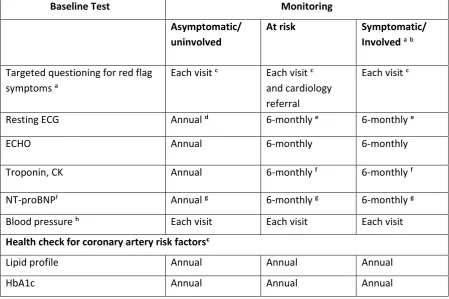
There is minimal evidence base to guide recommended testing and the frequency of testing but table
4 based on expert opinion. Frequency of surveillance should be
determined by the nature of patient group: asymptomatic patient requires routine surveillance,
whereas the patient thought to be at most risk of SSc-cardiomyopathy (the at-risk patient) (see first
recommendation) warrants more careful (early and comprehensive) observation, and the patient with
confirmed cardiac disease needs regular assessments (three to six monthly when establishing disease
activity/response to treatment) and treatment initiation. The group agreed that it is important to
Although evidence suggests that follow-up scans after an initial normal ECHO has a low pick up rate
of new PAH[57] screening annually through echocardiogram is still advocated. ILR may be considered
in patients with symptoms such as syncope, palpitations, dizziness in whom 24-hour/30-day external
monitor has not identified any arrhythmias.
Treatment of
SSc cardiomyopathy
Treatment of patients should be undertaken with appropriate cardiologist input.
Immunosuppression
Steroid and/or initiation or escalation of immunosuppressive agents is often used (especially with
co-existing peripheral myositis) although a good evidence base for this does not exist. The time-course
of individual pathology has not been well defined and can vary; hence it is advised that all relevant
indicators suggesting active and dynamic pathology (including CK, troponin, CRP, RWMA on imaging,
CMR changes and overlap of SSc with other autoimmune pathology e.g. polymyositis, systemic lupus
erythematosus) as well as evidence of other features of active SSc should be used to consider
immunosuppression. Whilst it is unclear whether steroid and immunosuppressive agents should be
used for the presence of fibrosis (using corollary of management of ILD), this may be considered if a
dynamic decline in function is observed over time.
In accordance with BSR and BHPR guideline for the treatment of systemic sclerosis [58], the working
group recommends moderate dose corticosteroid (<15mg/day) +/- pulse cyclophosphamide as a
reasonable approach if a myocarditis or other features of SSc cardiomyopathy are evident. Indications
for the use of cyclophosphamide would thus include myocarditis, moderate-severe LV dysfunction
(not secondary to atherosclerotic heart disease) and life-threatening cardiac arrhythmias. The group
recognises the co-existence of peripheral myositis (in up to 43%) [59], and therefore, there is additional
basis to consider alternative/broader immunosuppression strategies [60, 61].
Arrhythmia
The same principles applied to the general population should be used in the patient with SSc.
Pharmacotherapy should be initiated in patients with evidence of conduction abnormalities. Special
attention should be given to the potential adverse events (AE) of some antiarrhythmic therapies
Ablation therapy has a role in symptomatic patients with palpitations as alternative to drug treatment
[SVT/atrial flutter/ventricular tachycardia (VT)]. AICD devices should be considered as per standard
practice [56] for life-threatening arrhythmias such as VT/ventricular fibrillation (VF).
Heart failure
Systolic dysfunction may require angiotensin-converting-enzyme inhibitors (ACE-I) and beta-blockers
whereas the evidence base for the treatment of diastolic heart failure remains weak although may be
considered. Diuretics should be added, as required. Cardiac resynchronisation therapy (CRT) for LBBB
associated diastolic dysfunction and transplantation in end stage systolic dysfunction is currently used
in general population and could be considered for patients with SSc.
Traditional risk factors of cardiovascular disease
Optimisation of control and management of other associated co-morbidities such as systemic
hypertension, high cholesterol, diabetes and renal disease should be considered. Lifestyle
modification such as diet and smoking cessation should be encouraged for all patients.
Cardiac transplantation
There is an absence of published experience in cardiac transplantation in patients with SSc. In the most
severe life-threatening cases of SSc-CM, resistant to medical therapy, the usual multi-disciplinary team
and approach that would be applied to the general population could carefully consider heart
transplantation in this population. The group stressed this as an evidence free area that would carry
significant risk.
Coronary artery disease
CAD in SSc should be investigated as in the general population. Exercise stress testing has become
more redundant and is no longer an appropriate tool. In patients with SSc in whom CAD is suspected,
a form of stress perfusion testing such as nuclear medicine, ECHO, CMR, CT followed by coronary
angiography as indicated, should be undertaken. ECHO abnormalities such as RWMA should also be a
trigger for consideration of underlying CAD. Hence, both CAD and SSc cardiomyopathy as mentioned
earlier should be included in the differential. In a patient with SSc with new/interval change
studies/coronary angiography should be considered if presentation remains unexplained following
respiratory assessment for ILD and evaluation for PAH [including CT pulmonary angiography (to
exclude PE), right heart catheterisation].
Management of proven, significant CAD should be as per general population: prognostically beneficial
pharmacotherapy (aspirin, statin, ACEI inhibitor and a cardioselective beta-blocker), proceeding to
intervention as indicated. Cardiac rehabilitation programmes should also be considered.
Multi-disciplinary approach
The identification of a dedicated cardiologist, with an interest in CTD is important for the optimal
assessment and management of patients with potential cardiac involvement. In a tertiary centre, the
cardiologist would be able to coordinate care between the rheumatologist and sub-specialist
cardiology expertise as indicated. It is recommended that peripheral DGHs establish a link with their
secondary care/regional cardiology department with access to relevant technology and expertise to
facilitate efficient shared care when indicated.
The rheumatologist and Nurse Specialist, together with specialist cardiology input, as indicated should
adequately counsel patients. A trained counsellor and patient support groups where available would
be particularly useful.
Cardiotoxicity of commonly used treatments in SSc
Review of the main drugs used in the management of SSc (see below) failed to identify clear suggestion
of cardiac toxicity but caution should be given to those patients with pre-morbid cardiovascular
conditions. Regarding Cyclophosphamide, the Food and Drug Administration (FDA) has reported some
cases of cardiac dysfunction although acute cardiac toxicity has been observed with high doses and
no residual abnormalities in those surviving an acute event. In SSc, no cardiac AE, side from a viral
myocarditis as a result of immunosuppression has been described. With Mycophenolate, no specific
cardiac AE have been reported in patients with SSc. For Methotrexate (MTX), pericarditis, pericardial
effusion, hypotension and thromboembolic events have been mentioned as possible adverse
reactions. Randomised controls studies of MTX in SSc patients have not identified any cardiac toxicity
[62].
Several premorbid cardiovascular states are mentioned among the contraindications of calcium
Uncommonly, they may cause angina pectoris. The contraindications of Iloprost include a number of
premorbid cardiovascular and thromboembolic states. Bosentan should be used with caution in
pre-existing LVF and thromboembolic states. No cardiac AE/SAE has been reported in in RAPIDS-2
study[63]. Sildenafil is contraindicated in severe CVD, hypotension, recent myocardial infarction/CVA
and should be administered with caution in patients with aortic stenosis and hypertrophic
cardiomyopathy. Figure 1 represents a flow diagram of the management of cardiac involvement in
SSc, recommended by the group.
Research agenda
This initiative highlighted the limited understanding of the pathology and the dynamics underlying
SSc-cardiomyopathy. Initial research areas identified for evaluation include; the potential use of
NT-proBNP in screening and management of SSc-cardiomyopathy; the utility of repeated
echocardiograms in the screening of SSc-cardiomyopathy; the additional benefit of TDE in the
assessment of primary cardiac involvement in SSc; whether CMR allows a better characterisation of
features of SSc-cardiomyopathy and subsets for application in a management pathway and the utility
of a core UK SSC-CMR working network; the potential use of electrophysiological tests in screening
for arrhythmia in SSc, especially ILR and the use of AICD to prevent sudden death; whether
SSc-cardiomyopathy co-exists with PAH and if so, whether it represents a poor prognostic indicator for
PAH; the management of diastolic dysfunction in SSc (albeit a limited prevalence); role of
immunosuppression for the treatment of SSc-cardiomyopathy. The research agenda will be crucial for
moving this field forward.
Acknowledgements
We are grateful to all the members of the UK SSc cardiac group who contributed to the development
of these best practice recommendations; including Richard Dodds (Scleroderma Society), Tina
Hawkins (Pharmacist, Leeds NHS Teaching Hospitals), Lynne Lister (Patient Representative, Leeds NHS
T H B M R S A
References
1 Abraham DJ, Krieg T, Distler J, Distler O. Overview of pathogenesis of systemic sclerosis. Rheumatology (Oxford, England) 2009;48 Suppl 3:iii3-7.
2 Campbell PM, LeRoy EC. Pathogenesis of systemic sclerosis: a vascular hypothesis. Semin Arthritis Rheum 1975;4(4):351-68.
3 Ashida R, Ihn H, Mimura Y, et al. Clinical and laboratory features of Japanese patients with scleroderma and telangiectasia. Clinical and experimental dermatology 2009;34(7):781-3.
4 Ferri C, Valentini G, Cozzi F, et al. Systemic sclerosis: demographic, clinical, and serologic features and survival in 1,012 Italian patients. Medicine 2002;81(2):139-53.
5 Steen VD, Medsger TA, Jr. Severe organ involvement in systemic sclerosis with diffuse scleroderma. Arthritis and rheumatism 2000;43(11):2437-44.
6 Hachulla E, Carpentier P, Gressin V, et al. Risk factors for death and the 3-year survival of patients with systemic sclerosis: the French ItinerAIR-Sclerodermie study. Rheumatology (Oxford, England) 2009;48(3):304-8.
7 Tyndall AJ, Bannert B, Vonk M, et al. Causes and risk factors for death in systemic sclerosis: a study from the EULAR Scleroderma Trials and Research (EUSTAR) database. Annals of the rheumatic diseases 2010;69(10):1809-15.
8 Bulkley BH, Ridolfi RL, Salyer WR, Hutchins GM. Myocardial lesions of progressive systemic sclerosis. A cause of cardiac dysfunction. Circulation 1976;53(3):483-90.
9 Liangos O, Neure L, Kuhl U, et al. The possible role of myocardial biopsy in systemic sclerosis. Rheumatology (Oxford, England) 2000;39(6):674-9.
10 Bissell L-A, Yusof Y, Buch MH. Primary myocardial disease in scleroderma a comprehensive review of the literature to inform the UKSSSG (UK Systemic Sclerosis Study Group) cardiac working group. Rheumatology;In press.
11 Kobayashi H, Yokoe I, Hirano M, et al. Cardiac magnetic resonance imaging with pharmacological stress perfusion and delayed enhancement in asymptomatic patients with systemic sclerosis. J Rheumatol 2009;36(1):106-12.
12 Nassenstein K, Breuckmann F, Huger M, et al. Detection of myocardial fibrosis in systemic sclerosis by contrast-enhanced magnetic resonance imaging. Rofo 2008;180(12):1054-60.
13 Hachulla AL, Launay D, Gaxotte V, et al. Cardiac magnetic resonance imaging in systemic sclerosis: a cross-sectional observational study of 52 patients. Annals of the rheumatic diseases 2009;68(12):1878-84.
14 Rodriguez-Reyna TS, Morelos-Guzman M, Hernandez-Reyes P, et al. Cardiac Fibrosis and Microvascular Damage Are Hallmark of Cardiac Involvement in Patients with Systemic Sclerosis (SSc). Prevalence and Patterns of Cardiac Damage in Patients with SSc. Journal of Rheumatology 2011;38(6):1187-8.
15 Rodriguez-Reyna TS, Morelos-Guzman M, Hernandez-Reyes P, et al. Assessment of myocardial fibrosis and microvascular damage in systemic sclerosis by magnetic resonance imaging and coronary angiotomography. Rheumatology (Oxford, England) 2015;54(4):647-54.
16 Mavrogeni SI, Bratis K, Karabela G, et al. Cardiovascular Magnetic Resonance Imaging clarifies cardiac pathophysiology in early, asymptomatic diffuse systemic sclerosis. Inflammation & allergy drug targets 2015;14(1):29-36.
17 Pieroni M, De Santis M, Zizzo G, et al. Recognizing and treating myocarditis in recent-onset systemic sclerosis heart disease: potential utility of immunosuppressive therapy in cardiac damage progression. Semin Arthritis Rheum 2014;43(4):526-35.
19 Clemson BS, Miller WR, Luck JC, Feriss JA. Acute myocarditis in fulminant systemic sclerosis. Chest 1992;101(3):872-4.
20 Vintila M, Tanaseanu S, Luca R, Balanescu E, Tanasescu C, Purice S. Is cardiac involvement in collagen diseases important? A clinical study in 917 patients. Medecine interne 1990;28(3):219-27. 21 Dinser R, Frerix M, Meier FM, Klingel K, Rolf A. Endocardial and myocardial involvement in systemic sclerosis--is there a relevant inflammatory component? Joint, bone, spine : revue du rhumatisme 2013;80(3):320-3.
22 Minier T, Nagy Z, Balint Z, et al. Construct validity evaluation of the European Scleroderma Study Group activity index, and investigation of possible new disease activity markers in systemic sclerosis. Rheumatology (Oxford, England) 2010;49(6):1133-45.
23 Aguglia G, Sgreccia A, Bernardo ML, et al. Left ventricular diastolic function in systemic sclerosis. J Rheumatol 2001;28(7):1563-7.
24 Valentini G, Vitale DF, Giunta A, et al. Diastolic abnormalities in systemic sclerosis: evidence for associated defective cardiac functional reserve. Annals of the rheumatic diseases 1996;55(7):455-60.
25 Nakajima K, Taki J, Kawano M, et al. Diastolic dysfunction in patients with systemic sclerosis detected by gated myocardial perfusion SPECT: an early sign of cardiac involvement. J Nucl Med 2001;42(2):183-8.
26 Hinchcliff M, Desai CS, Varga J, Shah SJ. Prevalence, prognosis, and factors associated with left ventricular diastolic dysfunction in systemic sclerosis. Clinical and experimental rheumatology 2012;30(2 Suppl 71):S30-7.
27 Bezante GP, Rollando D, Sessarego M, et al. Cardiac magnetic resonance imaging detects subclinical right ventricular impairment in systemic sclerosis. J Rheumatol 2007;34(12):2431-7. 28 Ferri C, Di Bello V, Martini A, et al. Heart involvement in systemic sclerosis: an ultrasonic tissue characterisation study. Annals of the rheumatic diseases 1998;57(5):296-302.
29 Schurle DR, Evans RW, Cohlmia JB, Lin J. Restrictive cardiomyopathy in scleroderma. The Journal of the Kansas Medical Society 1984;85(2):49-50.
30 Othman KM, Assaf NY, Farouk HM, Aly Hassan IM. Autonomic dysfunction predicts early cardiac affection in patients with systemic sclerosis. Clinical medicine insights. Arthritis and musculoskeletal disorders 2010;3:43-54.
31 Al-Adhadh RN, Al-Sayed TA. Clinical features of systemic sclerosis. Saudi medical journal 2001;22(4):333-6.
32 Draeger HT, Assassi S, Sharif R, et al. Right bundle branch block: a predictor of mortality in early systemic sclerosis. PloS one 2013;8(10):e78808.
33 Bissell L-A, Yusof Y, Buch MH. Primary myocardial disease in scleroderma a comprehensive review of the literature to inform the UKSSSG (UK Systemic Sclerosis Study Group) cardiac working group. Rheumatology (Oxford, England) submited 2015.
34 Urai L, Veress G, Urai K. Scleroderma-heart and conduction disturbances. Acta medica Academiae Scientiarum Hungaricae 1978;35(3-4):189-200.
35 Kostis JB, Seibold JR, Turkevich D, et al. Prognostic importance of cardiac arrhythmias in systemic sclerosis. The American journal of medicine 1988;84(6):1007-15.
36 Bernardo P, Conforti ML, Bellando-Randone S, et al. Implantable cardioverter defibrillator prevents sudden cardiac death in systemic sclerosis. J Rheumatol 2011;38(8):1617-21.
37 Satoh M, Tokuhira M, Hama N, et al. Massive pericardial effusion in scleroderma: a review of five cases. British journal of rheumatology 1995;34(6):564-7.
38 Abu-Shakra M, Koh ET, Treger T, Lee P. Pericardial effusion and vasculitis in a patient with systemic sclerosis. J Rheumatol 1995;22(7):1386-8.
40 Maione S, Cuomo G, Giunta A, et al. Echocardiographic alterations in systemic sclerosis: a longitudinal study. Semin Arthritis Rheum 2005;34(5):721-7.
41 Lambova S. Cardiac manifestations in systemic sclerosis. World journal of cardiology 2014;6(9):993-1005.
42 Allanore Y, Meune C, Vonk MC, et al. Prevalence and factors associated with left ventricular dysfunction in the EULAR Scleroderma Trial and Research group (EUSTAR) database of patients with systemic sclerosis. Annals of the rheumatic diseases 2010;69(1):218-21.
43 Hunzelmann N, Genth E, Krieg T, et al. The registry of the German Network for Systemic Scleroderma: frequency of disease subsets and patterns of organ involvement. Rheumatology (Oxford, England) 2008;47(8):1185-92.
44 Steen VD, Medsger TA, Jr. The palpable tendon friction rub: an important physical examination finding in patients with systemic sclerosis. Arthritis and rheumatism 1997;40(6):1146-51.
45 Rodriguez-Reyna TS, Hinojosa-Azaola A, Martinez-Reyes C, et al. Distinctive autoantibody profile in Mexican Mestizo systemic sclerosis patients. Autoimmunity 2011;44(7):576-84.
46 Hesselstrand R, Scheja A, Shen GQ, Wiik A, Akesson A. The association of antinuclear antibodies with organ involvement and survival in systemic sclerosis. Rheumatology 2003;42(4):534-40.
47 Kuwana M, Kaburaki J, Okano Y, Tojo T, Homma M. Clinical and prognostic associations based on serum antinuclear antibodies in Japanese patients with systemic sclerosis. Arthritis and rheumatism 1994;37(1):75-83.
48 Steen VD. Autoantibodies in systemic sclerosis. Seminars in Arthritis and Rheumatism 2005;35(1):35-42.
49 Manno RL, Wigley FM, Gelber AC, Hummers LK. Late-age onset systemic sclerosis. J Rheumatol 2011;38(7):1317-25.
50 Morita Y, Muro Y, Sugiura K, Tomita Y, Tamakoshi K. Results of the Health Assessment Questionnaire for Japanese patients with systemic sclerosis--measuring functional impairment in systemic sclerosis versus other connective tissue diseases. Clinical and experimental rheumatology 2007;25(3):367-72.
51 Cavagna L, Caporali R, Klersy C, et al. Comparison of brain natriuretic peptide (BNP) and NT-proBNP in screening for pulmonary arterial hypertension in patients with systemic sclerosis. J Rheumatol 2010;37(10):2064-70.
52 Williams MH, Handler CE, Akram R, et al. Role of N-terminal brain natriuretic peptide (N-TproBNP) in scleroderma-associated pulmonary arterial hypertension. Eur Heart J 2006;27(12):1485-94.
53 Chighizola C, Meroni PL, Schreiber BE, Coghlan JG, Denton CP, Ong VH. Role of N-terminal pro-brain natriuretic peptide in detecting clinically significant cardiac involvement in systemic sclerosis patients. Clinical and experimental rheumatology 2012;30(2 Suppl 71):S81-5.
54 Pennell DJ. Cardiovascular magnetic resonance. Circulation 2010;121(5):692-705.
55 Kramer C, Barkhausen J, Flamm S, Kim R, Nagel E. Standardized cardiovascular magnetic resonance imaging (CMR) protocols, society for cardiovascular magnetic resonance: board of trustees task force on standardized protocols. J Cardiovasc Magn Reson 2008;10:35.
56 NICE. Implantable cardioverter defibrillators and cardiac resynchronisation therapy for arrhythmias and heart failure. 2014;NICE guideline (TA314).
57 Sanchez-Roman J, Opitz CF, Kowal-Bielecka O, et al. Screening for PAH in patients with systemic sclerosis: focus on Doppler echocardiography. Rheumatology (Oxford, England) 2008;47 Suppl 5:v33-5.
58 Denton CP, Hughes M, Gak N, et al. BSR and BHPR guideline for the treatment of systemic sclerosis. Rheumatology (Oxford, England) in press.
60 NHS England Specialised Services Clinical Reference Group for Specialised Rheumatology. Clinical Commissioning Policy Proposition: Rituximab for the treatment of dermatomyositis and polymyositis (Adults) (A13X05/01). 2016;2016(22/05/2016). https:// www.engage.england.nhs.uk/consultation/clinical-commissioning-wave3/user_uploads/a13-x05-rituximab-myosits-policy-prop.pdf.
61 Department of Health. Clinical guidelines for immunoglobulin use: update to second edition. 2011;2016(22/05/2016).
https://www.gov.uk/government/uploads/system/uploads/attachment_data/file/216671/dh_13110 7.pdf.
62 van den Hoogen FH, Boerbooms AM, Swaak AJ, Rasker JJ, van Lier HJ, van de Putte LB. Comparison of methotrexate with placebo in the treatment of systemic sclerosis: a 24 week randomized double-blind trial, followed by a 24 week observational trial. British journal of rheumatology 1996;35(4):364-72.
Table 1: Recommended Scleroderma Doppler echocardiography protocol
Parasternal short axis view for optimal visualisation of the proximal main pulmonary artery
Optimise depth and reduce sector width
Pulsed wave Doppler of right ventricular inflow and outflow tract in parasternal short-axis view
Sample volume at the level of the
pulmonary valve; optimise baseline, scale, gain and filter settings. Sweep speed of 100mm/sec.
Apical 4-chamber view modified for optimal visualisation of LA and RV views to assess RV
function and RA size Optimise depth and reduce sector width
Pulse-wave Doppler of mitral inflow in apical 4-chamber view
Sample volume at tips of mitral leaflets in mid-diastole optimise baseline, scale gain and filter settings
Pulsed wave tissue Doppler of septal mitral annulus in apical 4-chamber view
Optimise baseline, scale, gain and filter settings
Continuous wave Doppler of tricuspid regurgitation in apical 4-chamber view or parasternal short-axis view
Ensure good alignment with TR jet guided by colour flow imaging; optimise baseline, scale gain and filter settings
M-mode of lateral tricuspid annulus in apical 4-chamber view
Optimise gain
Table 2: Recommended minimum scleroderma echocardiographic dataset
Pulmonary haemodynamics Tricuspid regurgitation velocity (TRV)
Pulmonary acceleration time (PAT)
Main pulmonary artery diameter (PAD)
Right ventricular function Tricuspid annular systolic plane excursion (TAPSE)
RA area (indirect index of RV dysfunction)
Left Ventricle Left ventricular systolic function (estimate)
Ejection Fraction
Left ventricular diastolic function (to E E
Early diastolic transmitral velocity (E)
E E
Left atrial area (LAA)
Table 3. Recommended core clinical cardiac MRI protocol, following the Society for Cardiovascular Magnetic Resonance protocol
Non-ischaemic LV
cardiomyopathies, including myocarditis
LV structure and function module ±Advanced tissue characterization module: T2weighted, T2, T1 mapping
±Early gadolinium module (for myocarditis only) -T1weighted imaging before and after gadolinium
Late gadolinium module
Coronary artery disease Adenosine stress-rest perfusion
Table 4: Recommended testing and frequency of testing for SSc cardiomyopathy
Baseline Test Monitoring
Asymptomatic/ uninvolved
At risk Symptomatic/ Involved
Targeted questioning for red flag symptoms
Each visit Each visit andcardiology referral
Each visit
Resting ECG Annual 6-monthly 6-monthly
ECHO Annual 6-monthly 6-monthly
Troponin, CK Annual 6-monthly 6-monthly
NT-proBNPf Annual 6-monthly 6-monthly
Blood pressure Each visit Each visit Each visit
Health check for coronary artery risk factors
Lipid profile Annual Annual Annual
HbA1c Annual Annual Annual
Alternative frequency as indicated. Determined by nature of cardiac involvement, managed with a cardiology specialist.
Shortness of breath, orthopnoea, paroxysmal nocturnal dyspnoea, chest pain, palpitations, dizziness, blackouts.
Holter/similar monitor may also be an appropriate baseline/reference investigation as it provides improved yield over ECG.
Holter/similar monitor as indicated. Interpret in the context of the clinical scenario, with specialist cardiology input.
Consider other factors that may contribute to positive troponin/NT-proBNP result (eg chronic kidney disease, PE, myositis).
Figure 1. Management of cardiac involvement in patients with SSc
This figure outlines the 3 key stages in the assessment and management of cardiac disease in patients
with SSc (addressing both SSc-cardiomyopathy and coronary artery disease): clinical assessment - key
elements in the history and physical examination; investigations - recommended investigation to
diagnose and monitor based on risk of patient of developing SSc-cardiomyopathy and clinical status;
and management - highlighting pharmacotherapy and role of devices. At each stage, the need for
multidisciplinary input with cardiology expertise as indicated is recommended. ACEI:
angiotensin-converting enzyme inhibitor; AICD: automatic implantable cardioverter-defibrilator; CAD: coronary
artery disease; ELR: external loop recorder; HBP: high blood pressure; ILD: interstitial lung disease;
ILR: implantable loop recorder; PAH: pulmonary arterial hypertension; PE: pulmonary embolism; PH:
pulmonary hypertension; PND: paroxysmal nocturnal dyspnoea; PPI: proton-pump inhibitors; RWMA: