This is a repository copy of Cognitive Analytic Therapy for Bipolar Disorder: A Pilot Randomized Controlled Trial.
White Rose Research Online URL for this paper: http://eprints.whiterose.ac.uk/110016/
Version: Accepted Version Article:
Evans, M., Kellett, S., Heyland, S. et al. (2 more authors) (2016) Cognitive Analytic
Therapy for Bipolar Disorder: A Pilot Randomized Controlled Trial. Clinical Psychology and Psychotherapy. ISSN 1063-3995
https://doi.org/10.1002/cpp.2065
This is the peer reviewed version of the following article: Evans, M. et al (2016) Cognitive Analytic Therapy for Bipolar Disorder: A Pilot Randomized Controlled Trial. Clin. Psychol. Psychother., which has been published in final form at https://doi.org/10.1002/cpp.2065. This article may be used for non-commercial purposes in accordance with Wiley Terms and Conditions for Self-Archiving.
[email protected] https://eprints.whiterose.ac.uk/
Reuse
Unless indicated otherwise, fulltext items are protected by copyright with all rights reserved. The copyright exception in section 29 of the Copyright, Designs and Patents Act 1988 allows the making of a single copy solely for the purpose of non-commercial research or private study within the limits of fair dealing. The publisher or other rights-holder may allow further reproduction and re-use of this version - refer to the White Rose Research Online record for this item. Where records identify the publisher as the copyright holder, users can verify any specific terms of use on the publisher’s website.
Takedown
If you consider content in White Rose Research Online to be in breach of UK law, please notify us by
1 Running head: CAT FOR BIPOLAR DISORDER
Cognitive Analytic Therapy for Bipolar Disorder:
A Pilot Randomized Controlled Trial
Mark Evans
Gaskell House Psychotherapy Centre,
Manchester Mental Health and Social Care Trust, UK
Stephen Kellett
Sheffield Social and Health NHS Foundation Trust, UK
Psychological Services Outcome Research Centre, University of Sheffield, UK
Simon Heyland
Specialist Psychotherapies Services, Devon House, Birmingham, UK
Jo Hall
University of Sheffield, UK
&
Shazmin Majid
University of Sheffield, UK
Correspondence
Correspondence concerning this article should be addressed to Dr Mark Evans, Gaskell
House Psychotherapy Centre, Swinton Grove, Manchester, M13 0EU.
2 The evidence base for treatment of bipolar affective disorder (BD) demands the evaluation of
new psychotherapies in order to broaden patient choice. This study reports on the feasibility,
safety, helpfulness and effectiveness of cognitive analytic therapy (CAT). In a pilot
randomised controlled trial, BD patients in remission were randomised to either receiving 24
sessions of CAT (N=9) or treatment as usual (N=9) and were assessed in terms of symptoms,
functioning and service usage over time. In the CAT arm no adverse events occurred, 8/9
completed treatment, 5/8 attended all 24 sessions and 2/8 were categorised as recovered. The
most common helpful event during CAT was recognition of patterns in mood variability,
with helpfulness themes changing according to phase of therapy. No major differences were
found when comparing the arms over time in terms of service usage or psychometric
outcomes. The study suggests that conducting further research into the effectiveness of CAT
in treating BD is warranted and guidance regarding future trials is provided.
Practitioner points:
o Treating BD with CAT appears feasible and safe.
o Retaining fidelity to the reformulation, recognition and revision structure of CAT
appears useful.
o Participants stated that across the phases of CAT, focussing on patterns of mood
variability was consistently helpful.
3 In Bipolar Affective Disorder (BD) highly recurrent and episodic periods of mania
(depending on the severity or whether there is psychosis) or hypomania and periods of
profound depression predict clinically significant shifts in energy/activity levels that disrupt
abilities to occupy and perform day-to-day roles and tasks (DSM-5; APA, 2013). Bipolar I is
characterized by an extreme manic or mixed episode and a major depressive episode and
Bipolar II by one or more major depressive episodes and at least one episode of hypomania -
with possible periods of euthymia between episodes. Judd et al. (2005) noted that
psychosocial disability in BD fluctuated in parallel with such changes in affective symptom
severity. Lifetime prevalence for BD is 1.3-1.6% and BD is equally common across the
genders (NIMH, 2012). Lithium (and other mood stabilising medications) persist as the
pharmacological treatments of choice (Young & Hammond, 2007). However,
pharmacological adherence is problematic in 20-60% of cases (Adams & Scott, 2000), with
high relapse rates, continuing difficulties and on-going psychosocial impairment common
outcomes (Miklowitz & Scott, 2009).
Judd et al. (2003) showed that BD patients also commonly suffer inter-episodic
depressive symptoms even when medicated. A recent review of cognitive impairments
(Deglas et al. 2015) found that during acute phases, deficiencies were most commonly found
in cognitive flexibility, with deficits in working memory typically occurring during remission
phases. Meta-analysis has shown that psychological therapies effectively augment
pharmacology in reducing relapse rates (Scott, Colom & Vieta, 2007), with an associated
recognition of the need to integrate psychotherapy into BD care-packages (Shannon &
Swarbrick, 2010). However, even in specialist Secondary Care services, less than one third
of all BD cases receive any form of psychotherapy, highlighting high levels of unmet patient
needs (Wittchen, Jacobi, Rehm, Gustavsson, Svensson, Jönsson, & Steinhausen, 2011) and
4 Psychological treatments of BD have evolved beyond early versions whose sole purpose
centred on increasing medication adherence. Contemporary psychological treatments for BD
can be characterised by treatment intensity. A ‘low intensity’ approach to BD is defined by
the delivery of a small number of brief sessions focussing on psychoeducation regarding
treatment adherence, stress management, symptom awareness and substance abuse (Colom et
al. 2003). ‘High intensity’ psychological therapies are more traditional and so adopt a
formulation–driven treatment approach, with a greater number of longer sessions (Clark,
Layard, Smithies, Richards, Suckling & Wright, 2009). The evidence base for psychotherapy
for BD reflects six main models (see Salcedo et al. 2016 for a review) which have been tested
in clinical trials; psychoeducation (N=12 trials), cognitive behavioural therapy (N=9 trials),
interpersonal and social rhythm therapy (N=2 trials), dialectical behaviour therapy (N=2
trials), mindfulness based cognitive therapy (N=3 trials) and family therapy (N=3 trials).
Outcomes can be negatively affected by comorbidity with other psychiatric disorders; the
frequent comorbidity of personality disorder complicates the course of BD and also
responsivity to treatment (Latalova, Pasko, Kamaradova & Ociskova, 2013).
A conclusion drawn from the Salcedo et al. (2016) review of empirically supported
psychotherapies for BD was that patients may well be suited to differing interventions for BD
and that associated matching and choice were clinically important. Given the extant evidence
concerning inter-episodic residual symptoms (Judd et al. 2003), cognitive impairment
(Deglas et al. 2015), comorbidity (Krishnan, 2005) and impaired functioning (Judd et al.
2005), there is a need to develop and evaluate new applications of existing therapies (or
develop bespoke therapies), in order to broaden access to effective therapies. The recent Aas
et al. (2016) systematic review noted that childhood trauma was a known risk factor for BD,
in addition to trauma tending to generate more severe clinical presentation over time (e.g.
5 relationships and self-concept is central to the ongoing management of BD (Goldberg &
Harrow, 2005), with BD patients reporting significantly more interpersonal problems
compared to community controls (Drieling, Scherer-Klabunde, Schaerer, Biedermann, Post
& Langosch, 2010). Whilst interpersonal and social rhythm therapy has an interpersonal
element (i.e. via emphasising the bidirectional nature of mood and interpersonal events), it
does not make explicit use of the therapeutic relationship as a means of analysing (and
changing) intra and interpersonal difficulties that are often related to childhood trauma.
There is therefore a clear clinical need to trial a relational therapy for BD that can
additionally formulate the role of childhood trauma. The rationale for taking a more
relational approach, is that if a therapy was able to facilitate changes in the relationship the
BD patient has with themselves, the disorder and/or their broader interpersonal relationships,
then the stress-diathesis model of BD (Scott, 2001) would state that this had the potential to
change the dynamics of BD itself (or at least the manner in which the patient copes with the
disorder).
Cognitive analytic therapy (CAT) was developed in response to the need for short-term
therapies in pressured public services (Ryle, 1995) and in the UK is a popular integrative
therapy distinct in its explicit relational focus and methods (Ryle & Kerr, 2002). The model
has evolved from one for treating neurotic problems, to one which is typically used to treat
complex and enduring mental health problems, particularly that of personality disorder in
Secondary Care services (Ryle, Kellett, Hepple & Calvert, 2014). For complex difficulties, a
routine CAT contract consists of 24 weekly sessions plus four follow-ups (spaced over
6-months). Calvert & Kellett’s (2014) systematic review found that the CAT evidence base
was generally founded on moderate to high quality outcome studies in typically complex
6 Theoretically, CAT draws on personal construct (Kelly, 1956) and object relations theory
(Ryle, 1991). Cognitive analytic theory asserts that negative mental representations of self,
others and the world are developmentally formed by early neglectful or abusive interactions
with significant others (Ryle & Kerr, 2002). Such internalised, early object relations are
termed reciprocal roles that influence how people anticipate, experience, enact and react to
relational dynamics. The theory also suggests that patients have learnt a repertoire of
reciprocal roles and target problem procedures (TPPs; commonly referred to as traps, snags
and dilemmas; Ryle & Kerr, 2002) to ‘survive’ childhood adversity/trauma, but which are
currently maladaptive (Clarke & Llewelyn, 1994).
Clinically, CAT follows a three-phase process; (1) narrative and diagrammatic
reformulation of the presenting problem to enable a shared understanding both of the
developmental origins of difficulties and their current maintainers, (b) a recognition phase
wherein the patient becomes more aware of their roles and procedures via self-monitoring
and (c) a final revision phase in which change methods are collaboratively designed in order
to change patterns and roles (Ryle, 1995). Exits are the active change methods of CAT
developed during the revision phase that support the patient in revising maladaptive
procedures, with the therapist aiming to offer a containing, non-collusive experience
throughout – exits also include analysis of enactments of roles and procedures occurring
within the therapeutic relationship (Bennett & Parry, 2004). The change methods of CAT are
catholic and can be drawn from any approach, as long as they are grounded in the
reformulation of the patient (Kellett, 2012).
The evolution of CAT for more complex presentations has been stimulated by the
development of the multiple self-states model (MSSM; Ryle, 1995). A self-state is defined
by the presence of key affect, particular beliefs concerning self/others and the degree to
7 Tibbles, 2009). Theoretically, the MSSM conceptualises BD therefore as the lack of
integration of a constellation of opposing/contrasting self-states and associated self-state
switching (Kerr, 2001) which is captured in the diagrammatic reformulation. Shannon and
Swarbrick (2010) defined characteristic BD self-states as manic euphoria, controlled
superiority, masked remission, critical shaming, psychotic anger, dismissing and rejected
depression. A typical CAT formulation of BD would therefore use the MSSM to reflect the
hierarchical structure of both preferred (manic or hypomanic) and dreaded (depressed)
self-states, associated interpersonal status (e.g. in depression; losing, failing and impotent) and
identity positions (e.g. in mania; winner, unique and special). State switching is an
involuntary strategy used to block out consciousness of unwanted information, which dictates
the observable fixed/unhelpful reactions and responses (Elzinga, Phaf, Ardon & van Dyck,
2003; Dalenberg et al. 2012). As the MSSM captures both the manic and depressed elements
of BD (Fountouakis, 2008; Shannon & Swarbrick, 2010), it meets Castle et al’s (2009)
demand for BD treatments to have the capacity to simultaneously formulate and treat both
poles of BD.
The evidence of CAT for BD is limited to one previous study. Kerr (2001) reported a
case series (N=4) of the application of CAT with treatment resistant hypomania with residual
psychotic symptoms, in which two of the patients had a good qualitative outcome. The study
highlighted that the CAT model was useful in comprehending what was previously seen as
‘psychotic psychopathology’ in terms of the MSSM and that CAT reformulation was both
containing and also helped to reduce disturbed/non-compliant behaviours. This current study
sought to expand on this initial uncontrolled evidence; meta-analytic evidence of a weighted
mean effect size across a variety of outcome measures of d+ = 0.83 for CAT (Ryle et al.,
8 Medical Research Council (MRC) guidelines state that pilot trials are essential prior to
any major trial seeking to evaluate a complex intervention such as psychotherapy (Lancaster
et al. 2010). The current study met the definition of an external pilot trial, as it was a
stand-alone pilot study (i.e. not the first stage of a larger trial), whose method included a
randomisation procedure (Arnold, et al. 2009; Arain, Campbell, Cooper & Lancaster, 2010).
The trial was also pragmatic because all participants were seen as an aspect of routine service
delivery. The primary aim was to provide preliminary evidence regarding the feasibility,
safety, and helpfulness of CAT for BD, alongside testing the trial procedures themselves
(recruitment, treatment, ability to follow-up patients and appropriateness of measures). As
the study also involved randomisation, a secondary aim was to compare outcomes (with
treatment as usual). The purpose was not to provide a definitive test of the efficacy of CAT
for BD on an a priori specified primary outcome measure (Thabane et al. 2010). This pilot
rather sought to test the potential and feasibility of CAT with BD in preparation for a larger
clinical trial and so providing some initial evidence of a new approach to treating BD in a
frequently neglected population (Wittchen et al. 2011).
Method
Design and randomization
The study design was a pragmatic randomized controlled trial, with BD patients randomised
to either CAT or treatment as usual (TAU) within standard public sector care. After initial
diagnostic assessment, the psychiatrist undertaking the assessment communicated key
assessment details to the trial coordinator. Patient randomization to either arm of the trial
was then completed by a computer-generated random allocation method undertaken by an
independent body (School of Health and Related Research (ScHARR); Sheffield, UK). A
9 randomisation to the assessors. If patients were allocated to CAT, the trial coordinator made
direct contact with a study therapist who then offered therapy. Psychometric outcomes were
taken at four points in time; (1) pre CAT, (2) immediately post CAT, (3) at 6-months
follow-up and (4) at 12-months follow-follow-up. Patients in the TAU arm completed measures over a
matched course of time.
Sample and recruitment
Potential participants had to have an extant clinical diagnosis of BD and also be under the
care of psychiatric services. Potential participants were recruited from community mental
health teams within Manchester Mental Health and Social Care Trust in the UK and were
treated within a specialist psychotherapy service. The service offers various forms of
evidenced based psychotherapies across a variety of diagnoses and BD would not normally
routinely excluded. The majority of the service’s work concerns treatment of personality
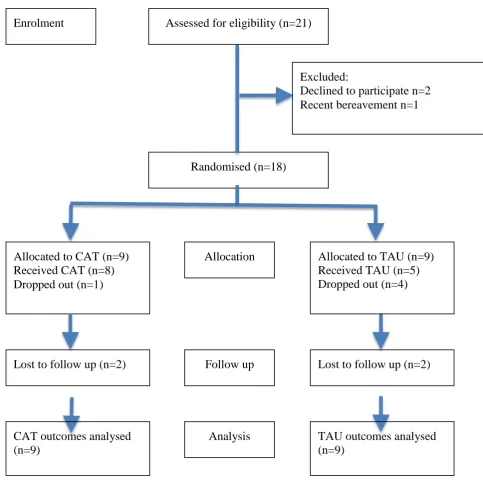
disorder. Figure 1 illustrates that N=21 BD patients were referred and considered for
eligibility; three of whom were excluded (2 declined to participate and 1 had a recent
bereavement). All patients referred to the trial underwent psychiatric assessment prior to
randomisation to ensure Bipolar I or II diagnosis, via the Structured Clinical Interview for
DSM Disorders (SCID-I; First, Williams, Spitzer & Gibbon, 2007). This was also used to
assess the rate of co-morbidities with other diagnoses. The diagnostic assessments were
completed by psychiatrists trained in SCID assessment for the purposes of the study.
Assessing psychiatrists received supervision on each case prior to making definitive
diagnostic decisions to ensure consistency - and also did not act as therapists within the trial.
Participants were excluded if they were exhibiting; (a) a current hypomanic or manic
episode, (b) a current moderate or severe depressive episode, (c) current continuous and
10 recent past (within 6 months) treatment of their BD with a formal psychotherapy or
psychoeducative programme and finally (g) involvement in another psychological or
pharmacological treatment trial and were in the follow up phase. Patients who were in
remission were chosen for the trial because, (1) this population has been studied in the early
stages of testing other models, (2) as the focus of the trial was on feasibility, safety and
effectiveness this meant that CAT sessions did not get used on the containment of acute
episodes, (3) evidence from the Scott CBT trial found that psychological therapies were less
efficacious when focussed on containing BD relapse (Scott et al. 2006) and (4)
sub-syndromal depressive symptoms are associated with significant impairment in BD (Judd et al.
2005).
Intervention; treatment as usual
The control condition was TAU that included drug treatments (mood stabilizers,
antidepressants and anti-psychotics) as recommended by NICE guidelines for BD (NICE,
2006). Participants in the TAU arm were therefore seen for regular outpatient treatment
reviews with psychiatrists and had regular contact with community psychiatric nurses (CPN)
acting as care coordinators. Type and dose of medication was not recorded. As TAU
participants consented to not engaging in other psychological therapy during the trial, on
completion of the study, all TAU patients were offered CAT. Therefore, the control
condition was a waitlist control (Elliott & Brown, 2002).
Intervention; cognitive analytic therapy
Participants in the experimental treatment arm of the trial received TAU, plus a course of
CAT. All therapies were delivered by Association of Cognitive Analytic Therapy (ACAT)
accredited CAT practitioners and psychotherapists (N=5). All therapists attended weekly
individual clinical supervision for trial patients with an ACAT accredited supervisor and
11 consisted of 24 weekly fifty-minute one-to-one sessions, followed by four follow-up sessions
(at one, two, three and six-months post-therapy). CAT is delivered in three distinct stages:
reformulation (sessions 0-6), recognition (sessions 6-12) and revision (sessions 12-24).
During the reformulation stage, narrative and diagrammatic reformulations of BD were
co-constructed. Narrative reformulations reformulated the experiences and traumas leaving
patients prone to BD and were also used to predict potential alliance ruptures and anticipated
unhelpful enactments within the therapeutic relationship (Ryle & Kerr, 2002). Diagrammatic
reformulations involved mapping of BD self-states and associated procedures, and are
referred to as sequential diagrammatic reformulations (SDRs). The recognition stage entailed
self-monitoring of self-states and associated target problem procedures to improve awareness
of reciprocal role relational dynamics (self-self; self-other; other-self) creating and
maintaining BD self-states. The final revision stage centred on change and entailed the
collaborative development of ‘exits’, which were labelled on the SDR and practised between
sessions as homework (e.g. experimenting with being more behaviourally active when a
mood decent cycle was recognised or analysis of an enactment within the therapeutic
relationship). All patients were invited to write an ending letter following CAT, to mirror the
‘goodbye letter’ written by therapists. Follow-up sessions entailed checking in on patient
progress and reinforcing and revisiting the exits developed during therapy.
Intervention; treatment fidelity
CAT treatment fidelity was assessed via the Competence in Cognitive Analytic Therapy
measure (CCAT; Bennett & Parry, 2004). The CCAT is a valid and reliable measure of CAT
therapeutic competency. The CCAT is scored across ten domains, with a global CCAT score
=>20 being the cut-off score for competent CAT. Each therapist in the trial had a CCAT
completed on one of their treatment sessions, with treatment sessions chosen at random. An
12 CCAT ratings. The mean CCAT score was 34.16 (SD = 5.49); all sessions sampled were
above the competency cut-off score (Bennett & Parry, 2004).
Outcome measures
Researchers not involved in providing CAT or TAU and blind as to allocation collected
primary and secondary measures.
Primary outcome measures
The primary outcome measures concerned feasibility, safety and helpfulness. Feasibility of
CAT was calculated via the mean number of CAT sessions attended and the treatment
dropout rate. Patient safety (Duggan et al. 2014) was monitored via adverse events
monitoring in both arms of the trial on three indices; (1) crisis team involvement, (2)
hospitalisation days and (3) a reliable deterioration on the CORE-OM (see measures section).
Helpfulness of CAT was measured on responses to the Helpful Aspects of Therapy form
which is a valid and reliable index of therapeutic helpfulness (Llewelyn, 1988). The HAT
asks participants (a) to describe the helpful or hindering event(s) that occurred in the session
and (b) to rate the identified event(s) from 0 (hindering) to 9 (helpful).
Secondary outcome measures
The secondary measures comprised further indices of service utilisation and psychometric
outcomes. Service utilisation measures included: the number of psychiatry outpatient and
community psychiatric nurse (CPN) appointments offered and attended. For all service usage
measures, comparisons were made between the 12-month period preceding entry into the
study and the 12-month period immediately following therapy. The following clinician and
self-report valid and reliable psychometric outcome measures were administered: Beck
Depression Inventory-II (BDI-II; Beck, Steer & Brown, 1995; a self-report measure of
depression severity), Montgomery-Asberg Depression Rating Scale (MADRS; Montgomery
13 mood disorders), Bech-Rafaelson Mania Rating Scale (BRMRS; Bech et al. 1979; a clinician
report assessment of current mania), Clinical Outcomes in Routine Evaluation – Outcome
Measure (CORE-OM; Evans et al. 2000; a self-report measure of psychological distress),
Work and Social Adjustment Scale (WSAS; Mundt, Marks, Shear, & Greist, 2002; a
self-report measure of functioning) and Personality Structure Questionnaire (PSQ; Pollock et al.
2001; a self-report measure of identity disturbance and state-shifting). The PSQ is a
CAT-specific outcome measure derived from the MSSM, which has a caseness cut-off of 26-28
(Berrios, Kellett, Fiorani & Poggioli, 2016) and is sensitive to change (Kellett, Bennett, Ryle,
& Thake, 2013).
Qualitative analyses
Thematic analysis was conducted by SM on the qualitative descriptions of helpfulness events
named on the HAT (Llewelyn, 1988) following CAT sessions. Thematic analysis is a
research method used to identify, analyse and report patterns/themes within qualitative data
(Boyatzis, 1998). The analysis was carried out following Braun & Clarke’s (2006) phase
approach to data analysis; (1) familiarisation with the helpfulness data in order to understand
what was in the data and what was interesting about what was helpful, (2) development of
initial codes to identify features of the helpfulness data that were relevant to the overall
research question, paying particular attention to repetitive patterns or themes, (3) individual
codes were then analysed to consider how they may be combined to form broader theme
levels - at the end of this phase, a collection of helpfulness themes (and sub-themes) was
created and all extracts of data were then coded in relation to these, (4) themes were then
reviewed and refined to ensure thematic clarity and associated sharp distinctions between
themes and finally, (5) naming of themes as a summary of the helpfulness thematic results.
SM created and maintained a reflexivity journal to document close reflections on the
14 analysis during research supervision to reflect on emerging patterns, themes and concepts
found in the helpfulness data. The reflexivity diary also logged any concerns with the
analysis, observations and parallels with the CAT theoretical framework and any issues with
the coding process. Emerson, Fretz & Shaw’s (1995) recommendations for coding fieldwork
notes were used to draw particular attention to the following: (a) what were participants
saying about specific helpful approaches or strategies in sessions and (b) how did participants
describe and understand what had been helpful in the session? SK acted as the outside
reviewer of the reflexivity journal through evaluating the overall themes and in confirming
the details of textual excerpts (Hosmer, 2008). The final themes identified from the thematic
analysis were then compared according to the different phases of CAT (i.e. reformulation,
recognition and revision stages), in order to examine whether helpfulness themes changed
according to phase of therapy. Frequency counts of themes are used to illuminate which
aspects of helpfulness were the most common according to which phase of therapy and HAT
helpfulness scores are used to show a ‘helpfulness rating’ for each theme. This created a
mean and SD for each theme, in order to illustrate how helpful the theme was according to
the reformulation, recognition and revision stages of CAT.
Quantitative analyses
Descriptive statistics are provided for CAT and TAU over time for both service usage and
secondary outcome measures in order to compare outcomes. Mann-Whitney U tests were
used to compare service usage. Treatment outcomes in the study arms on the secondary
outcome measure were compared via repeated-measures ANOVAs on post-treatment and
follow-up assessments (6 and 12-months). In order to provide a conservative estimation of
treatment effects, intention-to-treat analyses were conducted using the last observation
carried forward method (LOCF; Carpenter & Kenward, 2008). Post-hoc t-tests were then
15 were calculated for secondary outcome measures to demonstrate the size of the effect in each
arm. Effect sizes were calculated using the follow-up change score during CAT divided by
the pre-intervention SD (Westbrook & Kirk, 2005). Between-group effect size comparisons
were achieved by dividing the difference between TAU and CAT outcomes post-therapy (or
at follow-up) by the pooled standard deviation. Effect sizes were considered with Cohen’s
(1992) power primer that denotes d+= .20 as a “small” effect, d+= .50 as a “medium” effect,
d+= .80 as a “large” effect. The degree of psychological change achieved during CAT was
then categorised on the CORE-OM using the reliable change index (RCI; Jacobson & Truax,
1991). Reliable and clinically significant change is increasingly taken as a credible index of
psychological recovery (Barkham, Stiles, Connell & Mellor-Clark, 2012). Clinically
significant change was deemed to have occurred when the pre-post CORE-OM score reduced
from the clinical (>10 score) to a non-clinical (<10 score) population (Evans, Margison &
Barkham, 1998). In accordance with extant RCI recommendations (Evans et al. 1998),
reliable improvement was recorded when an individual patient’s pre-post score on the
CORE-OM improved by equal to or more than 1.96 times the SEdiff; a reliable change index
of 5 was therefore adopted (Connell et al., 2007).
Results
Treatment feasibility
Figure 1 displays the entry of patients into the trial (organised according to CONSORT
recommendations; Moher et al., 2001), showing that eighteen patients were randomised to
either CAT or TAU. All randomized patients were subsequently analysed using an
intention-to-treat approach. The CAT group consisted of 7 females and 2 males with an average age of
16 diagnosis and all were prescribed medication. The TAU arm consisted of 7 females and 2
males, with in average age of 45.66 (sd = 12.55) years; 8 of the TAU participants had a BD1
diagnosis and 1 had a BD2 diagnosis and all were prescribed medication. There were no
significant differences in terms of age (p = .62) or gender distribution (p = .72) between the
two arms of the trial. Co-morbidity was common; 4/9 (44.4%) of CAT patients and 6/9
(65.2%) of TAU patients met diagnostic criteria for at least one other psychiatric diagnosis,
but there was no difference in the rate of psychiatric comorbidities (p = .14) between the
arms. In the CAT arm, nine patients started therapy, with one participant transferred to a
different service after 7-months, due to relocating. In the TAU arm, four patients dropped
out of the study. Two patients in both arms were lost to follow-up. In the CAT arm, 8/9
patients completed full treatment (treatment completion rate = 88.8%). In terms of sessional
attendance, 5/8 (62.5%) patients attended every one of their 24 CAT sessions - the median
and mean number of CAT sessions attended was 22 (91.66% of sessions attended), with a
mode of 24 sessions attended.
Insert figure 1 here please
Treatment helpfulness
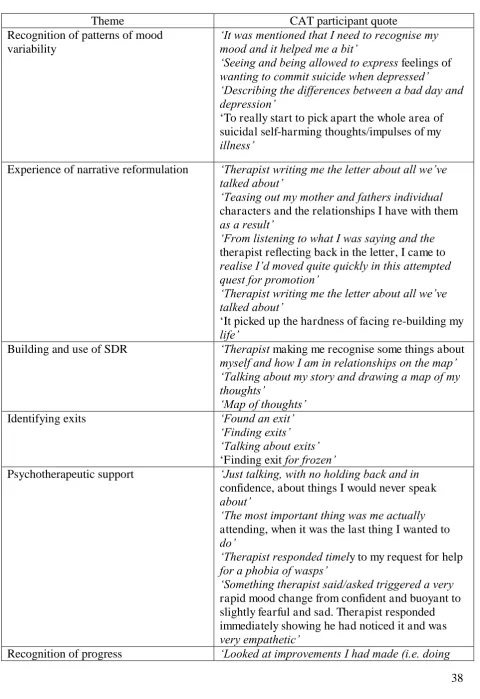
Thematic analysis of HAT forms for CAT patients identified seven themes; (1) recognition of
mood variability, (2) the experience of narrative feedback, (3) building and use of SDRs, (4)
identifying exits, (5) psychotherapeutic support, (6) recognition of progress and (7)
uneventful session. Table 2 contains textual excerpts in order to illuminate the theme
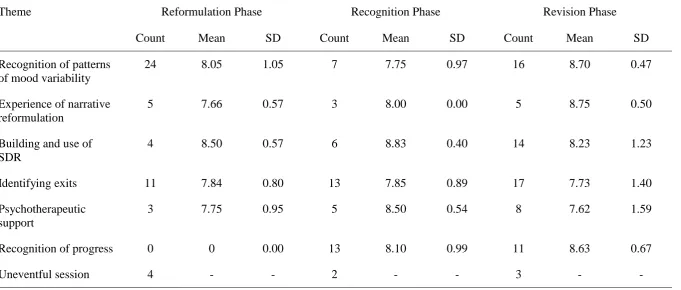
identified. The frequency of helpful event themes and also the mean helpfulness ratings for
each theme across the reformulation, recognition and revision phases of CAT are reported in
Table 3. Results illustrate that uneventful sessions were an infrequent occurrence regardless
17 During the reformulation stage of CAT, the most commonly occurring helpful event
was when therapists helped patients to recognize patterns in their mood variability (event n =
24). This continued to be a common helpful event across recognition (event n = 7) and
revision (event n = 16) phases. Co-construction of SDRs generated the highest mean
helpfulness score (8.50) during the reformulation phase. During the recognition stage of
CAT, the most frequent helping events were when patients were able to recognise the initial
progress being made within therapy and also to start on generating exits (event n=13). Again,
use of SDRs generated the highest helpfulness ratings during the recognition phase.
Consistent with the model, an increase in exit work was evidenced over the phases, with the
highest frequency of exit work taking place in the final revision stage (event n =17). This
increase in helpful exit events is mirrored by active use of the SDR also being a frequent
event in the final revision phase (event n = 14). The ‘experience of narrative feedback’
theme covered the reformulation letter during the early stages of the therapy (event n =5) and
the goodbye letter delivered at termination of the revision stage (event n =5).
Insert tables 1 and 2 here
Treatment safety
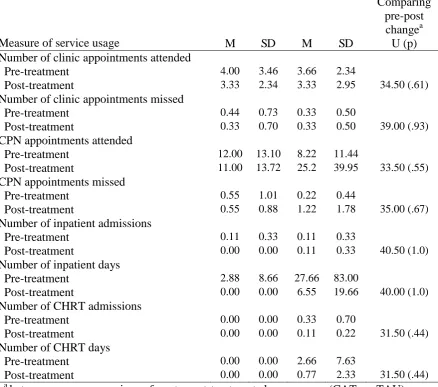
Descriptive statistics for adverse events and service usage for CAT and TAU are presented in
Table 3. When the month period preceding entry into the study was compared to the
12-month period immediately following therapy, no differences in service usage or adverse
events (hospitalization; 1 participant in each arm) were apparent. No single patient in the
CAT and one patient in the TAU arm were seen by the crisis team.
18 Treatment effectiveness
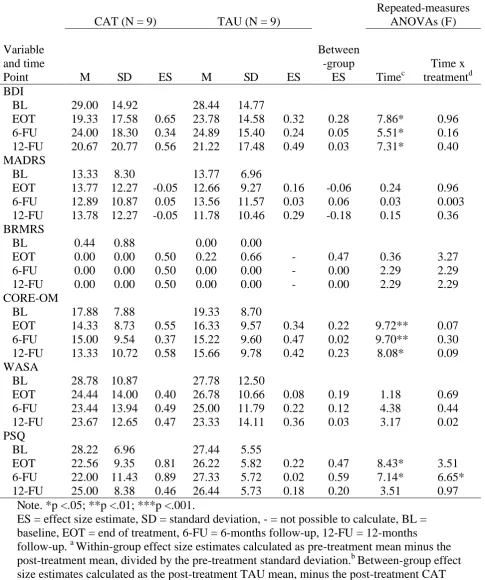
Table 4 contains mean scores, effect sizes and within and between group comparisons on the
secondary outcome measures at baseline, end of treatment, 6 and 12-months follow-up. End
of treatment effect sizes (d+) in the CAT group were generally medium sized, whilst for TAU
effect sizes (d+) were generally small. End of treatment between-group effect size estimates
generally indicated small treatment effects in favour of CAT. At 6 and 12-month follow-up,
treatment effects generally demonstrated equivalence of outcomes. However, on the PSQ at
6-month follow-up there was a medium between-group effect size favouring CAT. The
repeated-measures ANOVAs found that for both CAT and TAU significant improvements on
secondary outcomes occurred over time (as measured by the BDI, CORE-OM and PSQ).
Time x group interactions were non-significant for all outcome measures, across all
measurement points, indicating no significant differences in treatment outcomes between
CAT and TAU. Again, an exception to this was found regarding PSQ scores at 6-months
follow-up; a significant interaction of time and group was observed. However, a post-hoc
two-tailed t-test did not indicate that CAT resulted in significantly larger PSQ treatment
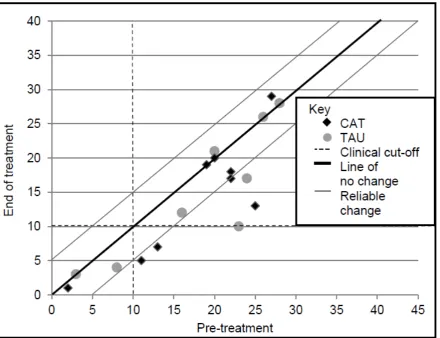
effects than TAU at 6-month follow-up (t = 1.25, df = 16, p = 0.23). Figure 2 provides a
visual representation of pre-post CORE-OM outcomes for both arm of the trial. Two CAT
participants demonstrated clinically significant and reliable change (i.e. scoring beneath the
cut-off line and also outside the no change tramline) and were therefore classified as
‘recovered’ post-treatment. No TAU participants met the criteria for recovery. The majority
19 no change tramlines). No participants (TAU or CAT) had a reliable deterioration in
psychological distress.
Insert table 4 and figure 2 here
Discussion
This study reported findings from the first pilot trial of CAT for BD and so makes a
contribution by (a) showing that CAT is a safe, feasible and helpful form of psychological
therapy for BD in routine care and (b) by adding to the emerging CAT evidence base (Calvert
& Kellett, 2014). The value of pilot trials is widely recognised (Whitehead, Sully &
Campbell, 2014), particularly so in difficult-to-treat conditions such as BD and also when the
treatment being tested is anticipated to be complicated to deliver and/or to engage with. In
terms of feasibility evidence, results suggest that participants found CAT to be engaging as
high numbers of sessions were attended and also treatment contracts were typically
completed. There was also preliminary evidence of CAT being a safe intervention for BD, as
the service usage outcomes were similar to TAU and no patients in the CAT arm had a
reliable deterioration in psychological distress during treatment (Duggan et al. 2014). The
trial procedures themselves did not highlight any major issues (e.g. during recruitment or in
terms of outcome measures). Analysis of the secondary outcome measures suggested few
stark differences between the arms, but a trend for a moderate effect in CAT and a small
effect in TAU. In both arms of the trial comorbidity was common; strong associations are
common between BD and substance abuse, cyclothymia, anxiety, personality disorders,
ADHD and also eating disorders (Krishnan, 2005).
Treatment feasibility is multifaceted (Tickle-Degnen, 2013), but an important aspect
is whether patient’s can and do complete treatment. The feasibility of providing CAT to BD
20 treatment dropout rate (12.2%). 5/8 CAT participants attended every session offered in the
contract, suggesting sustained therapeutic engagement. Treatment completion has previously
been found to be an important predictor of outcome (Cahill et al. 2003). BD patients are
often characterised as often difficult to engage in psychological treatment (Basco & Rush,
2005) and so the attendance findings for CAT are encouraging.
Another aspect of feasibility is the patient experience of the therapy (Tickle-Degnen,
2013). In order to assess the helpfulness of CAT for BD in greater detail, a thematic analysis
was completed on named helpful events in HAT forms, with six helpfulness themes emerging
(with one theme of uneventful sessions). Across the three phases, the theme of CAT helping
patients to recognize patterns within their mood variability was a consistent finding. Part of
the recognition phase of CAT entails enabling patients to occupy an ‘observing eye’ position,
from which they can notice previously automatic or stereotyped relational patterns (Ryle &
Kerr, 2002). This is based on the object relations procedural sequence approach (Ryle, 1991)
and encourages CAT therapists to name and map patterns of thoughts, feelings and behaviour
emerging from reciprocal roles. This allows patients to ‘stand back’ and recognise when
patterns or role positions are about to happen, are happening or have just happened. Within
treatment of BD, this CAT approach seemed helpful to patients in recognising the patterns
reliably creating shifts in their mood states. The helpfulness results would reflect the CAT
clinical method; engage the patient in rapid reformulation of the self-states and procedural
patterns of their BD as the foundation stone upon which enhanced recognition can then
facilitate ‘exit work.’ Finally, in terms of feasibility, the Salcedo et al. (2016) review noted
the dilemma of the availability of empirically-supported treatments for BD, but the lack of
suitably qualified therapists to provide them. All therapists in the current trial were qualified
to the level of at least a ‘CAT practitioner’ which entails a 2-year therapy qualification (8
21 in another modality. Attempting to deliver CAT for BD would be unwise without
appropriate training and supervision, whilst there needs not to be a bottle-neck of provision,
due to a lack of appropriately qualified therapists.
The outcome comparison between CAT and TAU highlighted some intriguing
differences in terms of PSQ outcomes (Pollock et al. 2001). At 6-month follow-up there was
a medium between-group effect size favouring CAT with a significant time x group
interaction (tempered by a subsequent non-significant t-test). The PSQ is a measure of
identity confusion/state-switching theoretically grounded in the MSSM (Berrios et al. 2016)
and results suggest that CAT patients at follow up were reporting less state-switching. This
finding would encourage both the use of the MSSM to conceptualise BD and also the need to
consider the PSQ as the primary outcome measure in future trials of CAT for BD. On the
CORE-OM two of the CAT participants achieved ‘recovery’ status on the CORE-OM,
suggesting a marked individual change in psychological distress not apparent for any single
participant in TAU. The within group changes on the secondary outcome measures apparent
in the TAU arm may have been due to engagement in the research process itself (Godin,
Germain, Conner, Sheeran & Delage, 2012) and there is meta-analytic evidence that
wait-times in wait-list control trials are associated with improvement (Hesser et al. 2011). It is
noticeable that the changes that did occur were found solely on the self-report measures.
This may reflect that the participants felt that change had occurred, but assessors did not
share in this opinion. Indeed, meta-analytic evidence notes that clinician-rated and
self-report outcomes measures for depression are non-equivalent and that different symptoms are
better suited to one or the other, and so clinical trials should include both (Cuijpers, Li,
Hoffman & Andersson, 2010). The lack of change in manic and depressive symptoms in the
current study may have been due to the participant sample being drawn from patients
22 In terms of methodological weaknesses and future directions, the small number of
participants randomized to the study arms (and also subsequent unequal attrition within the
arms) is certainly the most critical. Whilst the sample size was appropriate for the pilot
nature of the study (Julious, 2005), larger samples would be needed in future studies to detect
consistent significant differences in outcome between study arms and also compare cost and
health economic outcomes. The factors creating stasis outcomes are worthy of examination
(Kellett, Webb, Wilkinson, Bliss & Hardy, 2016). Personality disorder co-morbidity would
be an important covariate in the analysis of future studies (Latalova, Pasko, Kamaradova &
Ociskova, 2013) and stringent assessment of comorbid physical and psychological disorders
is indicated (Krisnan, 2005). Furthermore, the rate of previous BD episodes, impulsivity
(Etain et al. 2013), childhood adversity (Aas et al. 2016) and type and dosage of current
pharmacology should be recorded in future trials. Extensive trial selection criteria were
employed which reduces the generalisability of the current findings (Rothwell, 2006). The
follow-up period could have been longer to more effectively index long-term outcomes. The
CCAT data were restricted to one session per therapist and therefore wider CCAT analysis
(e.g. one session per phase of CAT per patient) would have been preferable. Although CAT
theory dictates a ‘three-phase approach’ and the helpfulness data were analysed accordingly,
in clinical practice there is often overlap between phases. Because in the current study the
participants randomised to CAT received greater amounts of care (by dint of attending for
therapy), then future trials need to compare CAT with another active psychological treatment
(in medicated participants) to equalise the amount of care in the arms. In terms of supporting
patient choice, a patient-preference randomised control trial (Howard & Thornicroft, 2006)
would be the ultimate test of treatment acceptability between the psychotherapies for BD.
In conclusion, this study reported outcomes the first pragmatic pilot trial of CAT for
23 The CAT effect size results (although admittedly preliminary due to the small sample size)
are encouraging. Results imply that future CAT studies with BD would not suffer from
issues with recruitment. Patients were also willing to be randomised, but future studies need
to develop effective mechanisms to reduce dropout rates (Oldham, Kellett, Miles & Sheeran,
2012) and also capture long-term follow-up outcomes. CAT specific factors such as early
collaborative narrative and diagrammatic reformulation were found to be most helpful which
mirrors the early Kerr (2001) BD evidence'. Whitehead et al. (2014) stated that pilot trials
should determine whether a clinically meaningful effect has taken place. The authors
propose that this has been found here for CAT for BD and so this pilot study functions as a
foundation stone upon which future properly powered and controlled studies can now be
24 References
Aas, M., Henry, C., Andreassen, O.A., Bellivier, F., Melle, I., & Etain, B. (2016). The role of
childhood trauma in bipolar disorders. International Journal of Bipolar Disorder, 4, 2.
doi:10.1186/s40345-015-0042-0
Adams, J., & Scott, J. (2000). Predicting medication adherence in severe mental disorders.
Acta Psychiatry Scandinavia, 101, 119-124. doi: 10.1034/j.1600-0447.2000.90061.x
American Psychiatric Association. (2013). Diagnostic and statistical manual of mental
disorders (5th ed.). Arlington, VA: American Psychiatric Publishing.
Arain, M., Campbell, M.J., Cooper, C.L. & Lancaster, G.A. (2010). What is a pilot or a
feasibility study? A review of current practice and editorial policy. Medical Research
Methodology, 67, 10-20. doi: 10.1186/1471-2288-10-67
Arnold, D.M., Burns, K.E., Adhikari, N.K., Kho, M.E., Meade, M.O., & Cook, D.J. (2009).
The design and interpretation of pilot trials in clinical research in critical care. Critical
Care Medicine, 37, 569-574. doi: 10.1097/CCM.0b013e3181920e33
Barkham, M., Stiles, W. B., Connell, J., & Mellor-Clark, J. (2012). Psychological treatment
25 Psychology and Psychotherapy: Theory, Research and Practice, 85, 1–16. doi:
10.1111/j.2044-8341.2011.02019.x
Basco, M.R. & Rush, J. (2007). Cognitive-behaviour therapy for bipolar disorder (2nd
edition). Guilford Press.
Bedford, A. Davies, F., & Tibbles, J. (2009). The Personality Structure Questionnaire (PSQ):
a cross-validation with a large clinical sample. Clinical Psychology and
Psychotherapy, 16, 77-81.
Bech, P., Bolwig, T., Kramp, P., & Rafaelsen, O. J. (1979). The Bech Rafaelsen Mania Scale
and the Hamilton Depression Scale. Acta Psychiatrica Scandinavica, 59, 420-430.
Beck, A.T. Steer, R.A. & Brown, G.K. (1995). Beck Depression Inventory II Manual. San
Antonio; US: The Psychological Corporation, Harcourt Brace and Co.
Bennett, D., & Parry, G. (2004). A measure of psychotherapeutic competence derived from
cognitive analytic therapy. Psychotherapy Research, 14, 176–192.
doi: 10.1093/ptr/kph016
Berrios, R., Kellett, S., Fiorani, C., & Poggioli, M. (2016). Assessment of identity
disturbance: Factor Structure and validation of the Personality Structure Questionnaire
(PSQ) in an Italian sample. Psychological Assessment, 28, 27-35.
26 Boyatzis, R. E. (1998). Transforming qualitative information: Thematic analysis and code
development. Thousand Oaks, CA: Sage.
Braun, V., & Clarke, V. (2006). Using thematic analysis in psychology. Qualitative Research
in Psychology, 3, 77-101. doi:10.1191/1478088706qp063oa
Cahill, J., Barkham, M., Hardy, G., Rees, A., Shapiro, D.A., Stiles, W.B. & Macaskill, N.
(2003). Outcomes of patients completing and not completing cognitive therapy for
depression. British Journal of Clinical Psychology, 42, 133-143.
Calvert, R., & Kellett, S. (2014). Cognitive analytic therapy: A review of the outcome
evidence base for treatment. Psychology and Psychotherapy: Theory, Research and
Practice, 87, 253-77. doi: 10.1111/papt.12020.
Carpenter J.R., & Kenward, M.G. (2008) Missing data in clinical trials — a practical guide.
Birmingham: National Institute for Health Research.
Castle, D.J., Berk, L., Lauder, S., Berk, M. & Murray, G. (2009). Psychosocial interventions
for bipolar disorder. Acta Neuropsychiatrica, 21, 275-284. Doi:
10.1111/j.1601-5215.2009.00430.x
Clarke, S., & Llewelyn, S. (1994). Personal constructs of survivors of childhood sexual abuse
receiving cognitive analytic therapy. British Journal of Medical Psychology, 67,
27 Clark, D.M., Layard, R., Smithies, R., Richards, D.A., Suckling, R. & Wright, B. (2009).
Improving access to psychological therapy: Initial evaluation of two UK demonstration
sites. Behaviour Research and Therapy, 47, 910-920. doi: 10.1016/j.brat.2009.07.010.
Cohen, J. (1990). A power primer. Psychological Bulletin, 112, 155-159. doi:
10.1037/0033-2909.112.1.155
Colom, F., Vieta, E., Reinares, M., Martínez-Arán, A., Torrent, C., Goikolea, J. M., & Gastó,
C. (2003). Psychoeducation efficacy in bipolar disorders: beyond compliance
enhancement. Journal of Clinical Psychiatry, 64, 1101-1105.
doi: 10.4088/JCP.v64n0917
Cuijpers, P., Li, J., Hoffman, S.G. & Andersson, G. (2010). Self-reported versus
clinician-rated symptoms of depression as outcome measures in psychotherapy research on
depression: a meta-analysis. Clinical Psychology Review, 30, 768-778. doi:
10.1016/j.cpr.2010.06.001.
Deglas, R., Yucel, M., Cotton, S., Allott, K., Hetrick, S., & Berk, M. (2015). Cognitive
impairment in first-episode mania: a systematic review of the evidence in the acute and
remission phases of the illness. International Journal of Bipolar Disorder, 3:9.
28 Drieling, T., Scherer-Klabunde, D., Schaerer, L.O., Biedermann, N.C., Post, R.M. &
Langosch, J.M. (2010). Interpersonal and instrumental functioning of patients with
bipolar disorder depends on remaining depressive symptoms. German Journal of
Psychiatry, 81, 8-18.
Duggan, C., Parry, G.. McMurran, M., Davidson, K., & Dennis, J. (2014). The recording of
adverse events from psychological treatments in clinical trials: evidence from a review of
NIHR-funded trials. Trials, 15, 335. doi:10.1186/1745-6215-15-335
Elliott, S.A., & Brown, J.S. (2002). What are we doing to waiting list controls? Behaviour,
Research and Therapy, 40, 1047–52.
Elzinga, B. M., Phaf, R., Hans, A., Angelique, M., & van Dyck, R. (2003). Directed
forgetting between, but not within, dissociative personality states. Journal of
Abnormal Psychology, 112, 237–243. doi: 10.1037/0021-843X.112.2.237
Emerson, R.M., Fretz, R.I., & Shaw, L.L. (1995). Writing ethnographic field notes.
Chicago: University of Chicago Press.
Etain, B., Mathieu, F., Liquet, S., Raust, A., Cochet, B., Richard, J.R., Gard, S., Zanouy, L.,
Kahn, J.P., Cohen, R.F., Bougerol, T., Henry, C., Leboyer, M., & Bellivier, F. (2013).
Clinical features associated with trait-impulsiveness in euthymic bipolar disorder
29 Evans, C., Mellor-Clark, J., Margison, F., Barkham, M., Audin, K., Connell, J., & McGrath,
G.C. (2000). CORE: clinical outcomes in routine evaluation. Journal of Mental
Health, 9, 247-255. doi:10.1080/jmh.9.3.247.255
Evans, C., Margison, F., & Barkham, M. (1998). The contribution of reliable and clinically
significant change methods to evidence-based mental health. Evidence Based Mental
Health, 1, 70-72. doi:10.1136/ebmh.1.3.70
First, M.B., Williams, J.B.W., Spitzer, R.L., & Gibbon, M. (2007). Structured Clinical
Interview for DSM-IV-TR Axis I Disorders, Clinical Trials Version (SCID-CT). New
York: Biometrics Research, New York State Psychiatric Institute.
Fountouakis, K.N. (2008). The contemporary face of bipolar illness: complex diagnostic and
therapeutic challenges. CNS Spectrum, 13, 763-774. doi:10.1017/S1092852900013894
Godin, G., Germain, M., Conner, M., Sheeran, P., & Delage, G. (2012). A randomized
controlled trial of the "question-behaviour effect" among inactive blood donors.
Psychology and Health, 27, 49-50.
Goldberg, J.F., & Harrow, M. (2005). Bipolar disorder; clinical course and outcome.
Wsahington: American Psychiatric Press.
Hesser, H., Weise, C., Rief, W., & Andersson, G. (2011). The effect of waiting: A
meta-analysis of wait-list control groups in trials for tinnitus distress. Journal of
30 Howard, L. & Thornicroft, G. (2007). Patient preference randomised controlled trials in
mental health research. British Journal of Psychiatry, 188, 303-304.
doi:10.1192/bjp.188.4.303
Hosmer, R. (2008). Discussing the dead: Patterns of family interaction regarding lost family
members. Published thesis. USA: University of Denver.
Jacobson, N.S. & Traux, P. (1991). Clinical significance: A statistical approach to defining
meaningful change in psychotherapy research. Journal of Consulting and Clinical
Psychology, 59, 12-19. doi:10.1037//0022-006X.59.1.12
Judd, L.L., Akiskal, H.S., Schettler, P.J., Corvell, W., Endicott, J., Muser, J.D., Soloman,
D.A., Leon, A.C., & Keller, M.D. (2003). A prospective investigation of the natural
history of the long-term weekly symptomatic status of bipolar II disorder. Archives of
General Psychiatry, 60, 261-269. doi:10.1001/archpsyc.60.3.261
Judd, L.L., Akiskal, H.S., Schettler, P.J., Endicott, J., Leon, A.C., Soloman, D.A., Corvell,
W., Muser, J.D., & Keller, M.D. (2005). Psychosocial disability in the course of bipolar I
and II disorders: a prospective, comparative, longitudinal study. Archives of General
Psychiatry, 62, 1322-1330. doi: 10.1001/archpsyc.62.12.1322
Julious, S. A. (2005). Sample size of 12 per group rule of thumb for a pilot study.
31 Kellett, S. (2012). Cognitive analytic therapy. In C. Feltham & I. Horton (eds). The sage
handbook of counselling and psychotherapy (3rd Edition). Sage:London.
Kellett, S., Webb, K., Wilkinson, N., Bliss, P., & Hardy, G. (2016). Developing services for
patients with depression or anxiety in the context of long-term physical health
conditions and medically unexplained symptoms: Evaluation of an IAPT pathfinder
site. Behavioural and Cognitive Psychotherapy
Kellett, S. Bennett, D. Ryle, A. & Thake, A. (2013). Cognitive Analytic Therapy for
Borderline Personality Disorder: Therapist competence and therapeutic effectiveness
in routine practice. Clinical Psychology and Psychotherapy, 20, 216-225.
Kelly, G. (1956). The psychology of personal constructs. New York: Norton.
Kerr, I. (2001). Brief cognitive analytic therapy for post-acute manic psychosis on a
psychiatric intensice care unit. Clinical Psychology and Psychotherapy, 6, 117-129.
doi: 10.1002/cpp.251
Krishnan, K.R. (2005). Psychiatric and medical comorbidities of bipolar disorder.
Psychosomatic Medicine, 67, 1-8. doi: 10.1097/01.psy.0000151489.36347.18
Lancaster, G.A., Campbell, M.J., Eldridge, S., Farrin, A., Marchant, M., Muller, S., Perera,
R., Peters, T.J., Prevost, A.T., & Rait, G. (2010). Trials in primary care: issues in the
design of complex interventions. Statistical Methods in Medical Research, 19, 349-77.
32 Latalova, K., Prasko, J., Kamaradova, D., & Ociskova, M. (2013). Comorbidity bipolar
disorder and personality disorder. Neurological Endocrinology Letters, 34, 1-8.
Llewelyn, S. (1988). Psychological therapy as viewed by clients and therapists. British
Journal of Clinical Psychology, 27, 223-238. doi: 10.1111/j.2044-8260.1988.tb00779.x
Miklowitz, D. J., & Scott, J. (2009). Psychosocial treatments for bipolar disorder: cost
effectiveness, mediating mechanisms and future directions. Bipolar Disorders, 11,
110-122. doi: 10.1111/j.1399-5618.2009.00715.x
Moher, D., Schulz, K. F., & Altman, D. G. (2001). The CONSORT statement: revised
recommendations for improving the quality of reports of parallel group randomized
trials. BMC Medical Research Methodology, 1, 2. doi:10.1186/1471-2288-1-2
Montgomery, S. A., & Asberg, M. (1979). A new depression scale designed to be sensitive to
change. British Journal of Psychiatry, 134, 382-389. doi: 10.1192/bjp.134.4.382
Mundt, J. C., Marks, I. M., Shear, M. K., & Greist, J. M. (2002). The Work and Social
Adjustment Scale: a simple measure of impairment in functioning. British Journal of
Psychiatry, 180, 461-464. doi: 10.1192/bjp.180.5.461
National Institute for Healthcare and Care Excellence. (2006). Bipolar disorder: The
management of bipolar disorder in adults, children and adolescents, in primary and
secondary care. Available: http://www.nice.org.uk/guidance/CG38. Last accessed
33 National Institute of Mental Health (2012). Bipolar Disorder in Adults. Available:
http://www.nimh.nih.gov/health/publications/bipolar-disorder-in-adults/index.shtml. Last
accessed 17th July 2014
Oldham, M. Kellett, S. Miles, E. & Sheeran, P. (2012). Interventions
to increase attendance at psychotherapy: A meta-analysis of randomised
controlled trials. Journal of Consulting and Clinical Psychology, 80, 928-939. doi:
10.1037/a0029630
Rothwell, P.M. (2006) Factors that can affect the external validity of randomised controlled
trials. PLoS Clin Trials; 1(1): e9.
Ryle, A. (1991). Object relations theory and activity theory: A proposed link by way of the
procedural sequence model. British Journal of Medical Psychology, 64, 307-316.
doi: 10.1111/j.2044-8341.1991.tb01669.x
Ryle, A. (1995) Cognitive analytic therapy: Development in theory and practice. Wiley:
Chichester.
Ryle, A., & Kerr, I. B. (2002). Introducing cognitive analytic therapy: Principles and
practice. John Wiley & Sons.
Ryle, A. Kellett, S. Hepple, J. & Calvert, R. (2014). Cognitive analytic therapy at 30.
34 Pollock, P. H., Broadbent, M., Clarke, S., Dorrian, A., & Ryle, A. (2001). The Personality
Structure Questionnaire (PSQ): A measure of the multiple self-states model of identity
disturbance in cognitive analytic therapy. Clinical Psychology & Psychotherapy, 8,
59-72. doi: 10.1002/cpp.250
Salcedo, S., Gold, A.K., Sheikh, S., Marcus, P.H., Nierenberg, A.A., Deckersbach, T., &
Sylvia, L.G., (2016). Empirically supported psychosocial interventions for bipolar
disorder: Current state of the research. Journal of Affective Disorders, 201, 203–214.
doi:10.1016/j.jad.2016.05.018
Scott, J. (2001). Cognitive therapy as an adjunct to medication in bipolar disorder. British
Journal of Psychiatry, 178, 164-168. doi: 10.1192/bjp.178.41.s164
Scott, J. A. N., Paykel, E., Morriss, R., Bentall, R., Kinderman, P., Johnson, T., & Hayhurst,
H. (2006). Cognitive–behavioural therapy for severe and recurrent bipolar disorders:
Randomised controlled trial. British Journal of Psychiatry, 188, 313-320. doi:
10.1192/bjp.188.4.313
Scott, J., Colom, F., & Vieta, E. (2007). A meta-analysis of relapse rates with adjunctive
psychological therapies compared to usual psychiatric treatment for bipolar disorders.
The International Journal of Neuropsychopharmacology, 10, 123-129. Doi:
35 Shannon, K., & Swarbrick, R. (2010). The development of a cognitive analytic therapy
relational framework for bipolar disorder. Reformulation, Summer, 17-25.
Tickle-Degnen, L. (2013). Nuts and bolts of conducting feasibility studies. American Journal
of Occupational Therapy, 67, 171–176
Thabane, L., Ma, J., Chu, R., Cheng, J., Ismalia, A., Rios, l.P., Robson, R., Thabane, G., &
Goldsmith, C.H. (2010). A tutorial on pilot studies: the what, why and how. Medical
Research Methodology, 10, 1. doi:10.1186/1471-2288-10-1
Westbrook, D., & Kirk, J. (2005). The clinical effectiveness of cognitive behaviour
therapy: Outcome for a large sample of adults treated in routine practice. Behaviour,
Research and Therapy, 43, 1243–1261. doi: 10.1016/j.brat.2004.09.006
Whitehead, A.L., Sully, B.G.O., & Campbell, M.J. (2014). Pilot and feasibility studies: Is
there a difference from each other and randomised controlled trials? Contemporary
Clinical Trials, 38, 130-133. doi: 10.1016/j.cct.2014.04.001
Wittchen, H. U., Jacobi, F., Rehm, J., Gustavsson, A., Svensson, M., Jönsson, B., &
Steinhausen, H. C. (2011). The size and burden of mental disorders and other disorders
of the brain in Europe 2010. European Neuropsychopharmacology, 21, 655-679. doi:
36 Young, A.H. & Hammond, J.M. (2007). Lithium in mood disorders: increasing evidence
base, declining use? British Journal of Psychiatry, 191, 474-476. doi:
37 Randomised (n=18)
Analysis Allocated to CAT (n=9)
Received CAT (n=8) Dropped out (n=1)
Lost to follow up (n=2) Enrolment
CAT outcomes analysed (n=9)
Follow up Allocation
Assessed for eligibility (n=21)
Excluded:
Declined to participate n=2 Recent bereavement n=1
Allocated to TAU (n=9) Received TAU (n=5) Dropped out (n=4)
TAU outcomes analysed (n=9)
[image:38.595.66.550.83.571.2]38 Table 1. Themes and quotes from the Helpful Aspects of Therapy measure
Theme CAT participant quote
Recognition of patterns of mood variability
‘It was mentioned that I need to recognise my mood and it helped me a bit’
‘Seeing and being allowed to express feelings of wanting to commit suicide when depressed’
‘Describing the differences between a bad day and depression’
‘To really start to pick apart the whole area of suicidal self-harming thoughts/impulses of my illness’
Experience of narrative reformulation ‘Therapist writing me the letter about all we’ve talked about’
‘Teasing out my mother and fathers individual characters and the relationships I have with them as a result’
‘From listening to what I was saying and the therapist reflecting back in the letter, I came to realise I’d moved quite quickly in this attempted quest for promotion’
‘Therapist writing me the letter about all we’ve talked about’
‘It picked up the hardness of facing re-building my life’
Building and use of SDR ‘Therapist making me recognise some things about myself and how I am in relationships on the map’ ‘Talking about my story and drawing a map of my thoughts’
‘Map of thoughts’
Identifying exits ‘Found an exit’
‘Finding exits’ ‘Talking about exits’ ‘Finding exit for frozen’
Psychotherapeutic support ‘Just talking, with no holding back and in confidence, about things I would never speak about’
‘The most important thing was me actually attending, when it was the last thing I wanted to do’
‘Therapist responded timely to my request for help for a phobia of wasps’
‘Something therapist said/asked triggered a very rapid mood change from confident and buoyant to slightly fearful and sad. Therapist responded immediately showing he had noticed it and was very empathetic’
39 less planning)’
‘To be reminded that I am doing well’ ‘Talking about doing well’
Uneventful session ‘Nothing eventful’ ‘Nothing today really’
‘In this session, I was in a very low mood so explained this to therapist. For this reason, I have nothing to say on the form today and feel it
1 Table 2. Frequency (count) and degree (HAT mean and SD) of helpfulness during CAT for BD
Theme Reformulation Phase Recognition Phase Revision Phase
Count Mean SD Count Mean SD Count Mean SD
Recognition of patterns of mood variability
24 8.05 1.05 7 7.75 0.97 16 8.70 0.47
Experience of narrative reformulation
5 7.66 0.57 3 8.00 0.00 5 8.75 0.50
Building and use of SDR
4 8.50 0.57 6 8.83 0.40 14 8.23 1.23
Identifying exits 11 7.84 0.80 13 7.85 0.89 17 7.73 1.40
Psychotherapeutic support
3 7.75 0.95 5 8.50 0.54 8 7.62 1.59
Recognition of progress 0 0 0.00 13 8.10 0.99 11 8.63 0.67
1 Table 3. Adverse event and service usage
Measure of service usage
CAT (N = 9)
TAU (N = 9)
CAT vs. TAU
M SD M SD
Comparing pre-post
changea U (p) Number of clinic appointments attended
Pre-treatment 4.00 3.46 3.66 2.34
Post-treatment 3.33 2.34 3.33 2.95 34.50 (.61)
Number of clinic appointments missed
Pre-treatment 0.44 0.73 0.33 0.50
Post-treatment 0.33 0.70 0.33 0.50 39.00 (.93)
CPN appointments attended
Pre-treatment 12.00 13.10 8.22 11.44
Post-treatment 11.00 13.72 25.2 39.95 33.50 (.55)
CPN appointments missed
Pre-treatment 0.55 1.01 0.22 0.44
Post-treatment 0.55 0.88 1.22 1.78 35.00 (.67)
Number of inpatient admissions
Pre-treatment 0.11 0.33 0.11 0.33
Post-treatment 0.00 0.00 0.11 0.33 40.50 (1.0)
Number of inpatient days
Pre-treatment 2.88 8.66 27.66 83.00
Post-treatment 0.00 0.00 6.55 19.66 40.00 (1.0)
Number of CHRT admissions
Pre-treatment 0.00 0.00 0.33 0.70
Post-treatment 0.00 0.00 0.11 0.22 31.50 (.44)
Number of CHRT days
Pre-treatment 0.00 0.00 2.66 7.63
Post-treatment 0.00 0.00 0.77 2.33 31.50 (.44) a
2 Table 4. Secondary outcome measure analyses
Within-group outcomes and analyses
Between-group analyses (CAT vs. TAU)
CAT (N = 9) TAU (N = 9)
Repeated-measures ANOVAs (F)
Variable and time
Point M SD ES M SD ES
Between -group
ES Timec
Time x treatmentd BDI
BL 29.00 14.92 28.44 14.77
EOT 19.33 17.58 0.65 23.78 14.58 0.32 0.28 7.86* 0.96 6-FU 24.00 18.30 0.34 24.89 15.40 0.24 0.05 5.51* 0.16 12-FU 20.67 20.77 0.56 21.22 17.48 0.49 0.03 7.31* 0.40 MADRS
BL 13.33 8.30 13.77 6.96
EOT 13.77 12.27 -0.05 12.66 9.27 0.16 -0.06 0.24 0.96 6-FU 12.89 10.87 0.05 13.56 11.57 0.03 0.06 0.03 0.003 12-FU 13.78 12.27 -0.05 11.78 10.46 0.29 -0.18 0.15 0.36 BRMRS
BL 0.44 0.88 0.00 0.00
EOT 0.00 0.00 0.50 0.22 0.66 - 0.47 0.36 3.27 6-FU 0.00 0.00 0.50 0.00 0.00 - 0.00 2.29 2.29 12-FU 0.00 0.00 0.50 0.00 0.00 - 0.00 2.29 2.29 CORE-OM
BL 17.88 7.88 19.33 8.70
EOT 14.33 8.73 0.55 16.33 9.57 0.34 0.22 9.72** 0.07 6-FU 15.00 9.54 0.37 15.22 9.60 0.47 0.02 9.70** 0.30 12-FU 13.33 10.72 0.58 15.66 9.78 0.42 0.23 8.08* 0.09 WASA
BL 28.78 10.87 27.78 12.50
EOT 24.44 14.00 0.40 26.78 10.66 0.08 0.19 1.18 0.69 6-FU 23.44 13.94 0.49 25.00 11.79 0.22 0.12 4.38 0.44 12-FU 23.67 12.65 0.47 23.33 14.11 0.36 0.03 3.17 0.02 PSQ
BL 28.22 6.96 27.44 5.55
EOT 22.56 9.35 0.81 26.22 5.82 0.22 0.47 8.43* 3.51 6-FU 22.00 11.43 0.89 27.33 5.72 0.02 0.59 7.14* 6.65* 12-FU 25.00 8.38 0.46 26.44 5.73 0.18 0.20 3.51 0.97
Note. *p <.05; **p <.01; ***p <.001.