RESEARCH ARTICLE
Difference in oxidative stress
tolerance between rice cultivars estimated
with chlorophyll fluorescence analysis
Ichiro Kasajima
1,2*Abstract
Background: Oxidative stress is considered to be involved in growth retardation of plants when they are exposed to a variety of biotic and abiotic stresses. Despite its potential importance in improving crop production, comparative studies on oxidative stress tolerance between rice (Oryza sativa L.) cultivars are limited. This work describes the differ-ence in term of oxidative stress tolerance between 72 rice cultivars.
Methods: 72 rice cultivars grown under naturally lit greenhouse were used in this study. Excised leaf discs were sub-jected to a low concentration of methyl viologen (paraquat), a chemical reagent known to generate reactive oxygen species in chloroplast. Chlorophyll fluorescence analysis using a two-dimensional fluorescence meter, ion leakage analysis as well as the measurement of chlorophyll contents were used to evaluate the oxidative stress tolerance of leaf discs. Furthermore, fluorescence intensities were finely analyzed based on new fluorescence theories that we have optimized.
Results: Treatment of leaf discs with methyl viologen caused differential decrease of maximum quantum yield of photosystem II (Fv/Fm) between cultivars. Decrease of Fv/Fm was also closely correlated with increase of ion leakage and decrease of chlorophyll a/b ratio. Fv/Fm was factorized into photochemical and non-photochemical parameters to classify rice cultivars into sensitive and tolerant ones. Among the 72 compared rice cultivars, the traditional cultivar Co13 was identified as the most tolerant to oxidative stress. Koshihikari, a dominant modern Japonica cultivar in Japan as well as IR58, one of the modern Indica breeding lines exhibited a strong tolerance to oxidative stress.
Conclusions: Close correlation between Fv/Fm and chlorophyll a/b ratio provides a simple method to estimate oxidative stress tolerance, without measurement of chlorophyll fluorescence with special equipment. The fact that modern cultivars, especially major cultivars possessed tolerance to oxidative stress suggests that oxidative stress tolerance is one of the agricultural traits prerequisite for improvement of modern rice cultivars. Data presented in this study would enable breeding of rice cultivars having strong tolerance to oxidative stress.
Keywords: Chlorophyll fluorescence, Co13, Koshihikari, Methyl viologen, Modern cultivar, Oxidative stress, Rice
© The Author(s) 2017. This article is distributed under the terms of the Creative Commons Attribution 4.0 International License (http://creativecommons.org/licenses/by/4.0/), which permits unrestricted use, distribution, and reproduction in any medium, provided you give appropriate credit to the original author(s) and the source, provide a link to the Creative Commons license, and indicate if changes were made. The Creative Commons Public Domain Dedication waiver (http://creativecommons.org/ publicdomain/zero/1.0/) applies to the data made available in this article, unless otherwise stated.
Background
Ancient Asian people selected mutations in rice genome which cause desirable features either to the whole rice plant architecture or to its grain. Selection during rice domestication helped to identify mutations affecting
traits such as grain shattering, grain pericarp color, sticky grains, grain size/shape, grain fragrance, grain number, and semi-dwarfism [1, 2]. However, it is not clear whether other physiological traits were selected during rice domestication. We previously reported a physiological difference between rice subclasses, we showed, a higher capacity of non-photochemical quenching in Japonica cultivars compared with Indica cultivars [3]. Although the direct impact on agriculture of such increase of non-photochemical quenching in Japonica cultivars is not
Open Access
*Correspondence: [email protected]
2 Department of Agriculture, Iwate University, Ueda 3-18-8, Morioka,
Iwate, Japan
yet clear, we speculate its involvement in the process of acclimation to cool climates. A mutation responsible for non-photochemical quenching would have contributed to give rise to Japonica cultivars, rather than having been selected throughout cultivation.
Modern cultivars are bred by crossing between tradi-tional cultivars and selection of progenies having supe-rior agricultural traits than traditional cultivars. Modern high-yield cultivars are also highly responsive to ferti-lizer application [4]. Then, the question is whether other physiological traits that characterize quality of modern rice cultivars can be identified. One of such potential agricultural trait may be anti-oxidative capacity. Reac-tive oxygen species are generated under various stresses in rice plant [5–8]. Among them, illumination of sun-light catalyzes generation of reactive oxygen species in plant (called photo-oxidation) [9, 10]. Improved oxidative stress tolerance of rice plant is expected to benefit fitness of rice plant either under harsh or mild climates. General knowledge on difference (or similarity) in oxidative stress tolerance between cultivars is the first step toward under-standing its significance in rice breeding. In fact, envi-ronmental stress tolerance emerges as one of the factors enabling fertilizer response of high-yield cultivars [4].
Because oxidative stress rises as a secondary stress, induced by other stresses such as heat, cold, salt, drought, aluminum and high light [5–9, 11], it is difficult to clearly evaluate the effect of oxidative stress, and the importance of anti-oxidative capacity of crops, despite its potential importance in agriculture. In this study methyl viologen (also known as paraquat) was adopted as an artificial inducer of oxidative stress in rice leaves, like many pre-vious reports. Methyl viologen is one of the most fre-quently used inducer of oxidative stress in plant studies. Here we report the difference of tolerance to oxidative stress between 72 rice cultivars following the treatment of leaf discs with methyl viologen.
Methods Plant materials
Seeds of ‘World Rice Core Collection’ were obtained from National Institute of Agrobiological Sciences, Japan. This Collection reflects the genetic diversity of all rice culti-vars [12]. Classification of rice cultivars into four sub-groups was done based on previous report [3, 12]. Seeds were incubated in growth chamber at 28 °C for 4–5 days then transferred to pots containing nutrient-rich soil (Bon-sol #1, Sumitomo Chemical, Tokyo, Japan). Plants were grown in a naturally lit greenhouse in the building of the Institute of Molecular and Cellular Biosciences in 2008 and 2009. Temperature in greenhouse was 28 °C in the day (16 h) and 24 °C in the night (8 h). The light intensity (photosynthetic photon flux density, PPFD) in
the greenhouse was variable according to climates, with the maximum intensity of around 1000 μmol-photons m−2 s−1. Although, about half of sunlight is absorbed by
glass in the greenhouse, this light intensity (1000 μmol-photons m−2 s−1) is still much higher than intensity in
growth chambers, the reason why rice seedlings are com-monly pre-germinated in greenhouse by Japanese farm-ers. All cultivars were allowed to grow under the same spacial orientation in the absence of any shade to ensure uniform growth, to avoid potential differential light intensity effects on cultivars throughout the experiments. Some cultivars, which showed poor growth under these conditions were not considered in this study. Data were reproducible independently from the plant growth stage. Cultivars Koshihikari and Co13 shown in Fig. 3e, were pre-germinated in water for 6 days followed by a growth in half-strength Murashige-Skoog culture salt containing 0, 0.01, 0.1 or 1 μM methyl viologen for 4 days.
Chlorophyll fluorescence
About 6 mm leaf discs were excised from the center of fully expended leaf blades of independent rice plants at 8, 12 and 4 weeks after germination (Figs. 1, 2, 3 respectively), and immediately dipped into 2-mL solu-tions using 24-well plastic plates. Solusolu-tions of Triton X-100 at 0.01% and methyl viologen at different con-centrations (0.1; 0.3;1;3;10 and 100 μM) were used. The concentration of methyl viologen reported here (1 μM) is ten times lower than previously report [13]. Preliminary experiments allowed the determination of this optimum concentration of 1 μM under which we could detect difference between cultivars. Duration of illumination with low-intensity light was extended from 6 h to 20 h in place. Fv/Fm value which quantify chlorophyll fluorescence was around 0.8 in all tested cultivars before start of illumination. This value, of 0.8, was also observed in untreated leaves throughout all experiments. Values around 0.8 were also observed for control leaves treated with water (without methyl viologen). The only exception was recorded in cv. Sur-jamukhi, which is plotted at the most-left side of in Fig. 3a and b. Leaves of cv. Surjamukhi were in fact damaged even when treated with water. Leaves were dark-adapted for 5 min before measuring Fv/Fm value using a two-dimensional fluorescence imager (Closed FluoroCam, Photon Systems Instruments, Brno, Czech Republic). After light treatment using white LED light (PPFD = 120 μmol-photons m−2 s−1 in Fig. 1a and
PPFD = 150 μmol-photons m−2 s−1 in the other
treatment. Duration of light treatment was 18 h in the analysis of World Rice Core Collection, and 20 h in the other analyses. Calculations of Fv/Fm, qPI, qSlow and fluctuation of the sensitivity factor were done as described in our previous reports [14, 15]. Calculation of qPI and qSlow required further measurements before and after photo-damage.
Chlorophyll contents
Leaf discs were soaked in N,N-dimethylformamide over-night under dark conditions at 10 °C. Chlorophylls a and b were photometrically quantified [16].
Ion leakage
Leaf discs excised from expanded leaves of independent mature plants (16 w after germination) were placed on 2-mL solutions containing 0.01% Triton X-100 and 1 μM methyl viologen. After 30 min vacuum, leaf discs were put under light at 150 μmol-photons m−2 s−1 for 16 h.
‘Specific ion leakage’ was calculated from electronic con-ductivity of solution before (ECb) and after illumination
(ECa) as follows:
Specific ion leakage
=(ECa−ECb)/ECb
Staining
Hydrogen peroxide accumulated in leaves was stained as follows. Largest leaf blades of juvenile plants (2 w after germination) were excised near the center, and floated on solution containing 1 mg mL−1 3,3′-diaminobenzidine.
pH of the solution was adjusted to 3.8. After light treat-ment at medium intensity (PPFD = 600 μmol-photons m−2 s−1) for 7 h, leaves were boiled in ethanol to remove
pigment. 3,3′-diaminobenzidine is precipitated as insol-uble dark-brown polymer when oxidized by hydrogen peroxide.
Root elongation
Independent rice seeds used to quantify root elongation (in Fig. 2g, h) were germinated for 3 days in water. Germi-nated rice plants were transferred to plastic mesh floating on solution containing 0.5 mM CaCl2, 1 mM potassium
phosphate buffer (pH = 5.8), and methyl viologen (rang-ing from 0.001 to 1 μM) or hydrogen peroxide (rang(rang-ing from 1 to 1000 μM). ‘Specific root elongation’ was calcu-lated by dividing each value by the average elongation in the absence of stress. Specific root elongation of 3 days-germinated plants was observed for 24 h for cv. Kasalath and 47 h for cv. Nipponbare.
%HIRUHWUHDWPHQW $IWHUWUHDWPHQW
1RQD
%RNU
D
.DVDODWK +DEDWDNL
6DVDQLVKLN
L
.RVKLKLNDU
L
$NLKLNDUL
1LSSRQEDU
H
1RQD
%RNU
D
.DVDODWK +DEDWDNL
6DVDQLVKLN
L
.RVKLKLNDU
L
$NLKLNDU
L
1LSSRQEDU
H
)
Y
)
P
D D D
DEF F E EF
1RQD%RNUD .DVDODWK +DEDWDNL 6DVDQLVKLNL .RVKLKLNDUL $NLKLNDUL 1LSSRQEDUH
a b
c
1RQD
%RNU
D
.DVDODWK +DEDWDNL
6DVDQLVKLN
L
.RVKLKLNDU
L
$NLKLNDUL
1LSSRQEDUH
6SHFLILF
LRQ
OHDNDJ
H D DE E
F F F F
Fig. 1 Oxidative stress tolerance in representative seven rice cultivars. aFv/Fm values before and after treatment with methyl viologen. b Specific
ion leakage induced by treatment with methyl viologen. In a and b, Indica cultivars are shown with white bars, and Japonica cultivars are shown
with black bars. Data represent means and standard deviations. n= 4. Student’s t test was performed on ‘after treatment’ data in (a) and data in (b).
[image:3.595.55.540.86.350.2]Results
Oxidative stress tolerance of seven rice cultivars
In this report, tolerance of rice cultivars to oxidative stress was compared. Seven rice cultivars extensively studied in Japan including three Indica cultivars
(Nana Bokra, Kasalath and Habataki) and four Japon-ica cultivars (Sasanishiki, Koshihikari, Akihikari and Nipponbare) were tested. Potential difference in oxi-dative stress tolerance was first investigated. Leaf discs were floated on water containing detergent and
.DVDODWK .RVKLKLNDU L 0HWK\OYLRORJHQ ˩0 ) Y ) P &KORURSK\OO D QPROPJ): &KORURSK\OO E QPRO PJ) : &KORURSK\OO D E UDWL R 0HWK\OYLRORJHQ ˩0 &KORURSK\OO D E UDWL R
)Y)P +\GURJHQSHUR[LGH˩0
6SHFLILF URRW HORQJD WLRQ 6SHFLILF URRW H ORQJ DW LRQ a b
c d e
f g h
0.00 0.20 0.40 0.60 0.80 1.00 0 0.
1 1 10
100
0HWK\OYLRORJHQ ˩0 0HWK\OYLRORJHQ ˩0
1.00 2.00 3.00 4.00
0.00 0.20 0.40 0.60 0.80 1.00 0 25 50 75 100 125 0 0.00 1 0.01 0. 1 1 0HWK\OYLRORJHQ ˩0 0 25 50 75 100 125
0 1 10
10 0 1000
Fig. 2 Comparison between tolerant and sensitive cultivars with various methods. aFv/Fm values after treatment with a series of concentrations of
methyl viologen. b Photographs of a part of leaf discs treated with methyl viologen for 37 h. Numbers up to each photograph indicate concentrations
of methyl viologen (μM). c Chlorophyll a content, d chlorophyll b content, and e chlorophyll a/b ratio of leaf discs after treatment with methyl
violo-gen. f Relationship between Fv/Fm measured in a and chlorophyll a/b ratio measured in e. In a through f, white square indicates Kasalath (sensitive
cultivar) and black circle indicates Koshihikari (tolerant cultivar). Data represent means and standard deviations. n= 8. g Specific root elongation
in solutions containing methyl viologen. h Specific root elongation in solutions containing hydrogen peroxide. In g and h, white square indicates
Kasalath (sensitive cultivar), and black circle represents Nipponbare (moderately tolerant cultivar). Data represent means and standard deviations.
[image:4.595.60.541.86.535.2]methyl viologen. This mild treatment was appropriate to observe differential responses between cultivars, which was reflected by the reduction in Fv/Fm val-ues (Fig. 1a). This reduction in Fv/Fm value was sig-nificantly larger in the three Indica cultivars than in the four Japonica cultivars. Moreover, oxidative stress tolerance of the seven cultivars showed the same ten-dency based on their specific ion leakage (Fig. 1b). Data on the accumulation of hydrogen peroxide, show that the leaves of sensitive cultivars to oxidative stress tend to accumulate more hydrogen peroxide (Fig. 1c).
Comparison between sensitive and tolerant cultivars at various concentrations of methyl viologen
Next, a tolerant cultivar Koshihikari and a sensitive one Kasalath were compared. Leaf discs excised from plants were put under light conditions for 20 h on water con-taining a series of concentrations of methyl viologen. Dif-ference in Fv/Fm value was the largest at 1 μM (Fig. 2a). Treatment of these leaves were extended to 37 h to allow chlorophyll degradation, time after which leaves treated with high concentration of methyl viologen turned from green to yellow (Fig. 2b). Both chlorophyll a and b were degraded by oxidative stress (Fig. 2c, d). Interestingly,
WURSLFDOMDSRQLFD WHPSHUDWH MDSRQLFD DXV
LQGLFD
,QGLFDXQFODVVLILHG
T6OR
Z
T3,
.DVDODWK
&R
,5 1LSSRQEDUH
WROHUDQW VHQVLWLYH
K\SHUWROHUDQW K\SHUVHQVLWLYH
T6OR
Z
T6OR
Z
T3,
T3,
a b
c
d
)Y
)P
.DVDODWK
1LSSRQEDUH
,5 &R
e
6XUMDPXNKL
D
F
E F
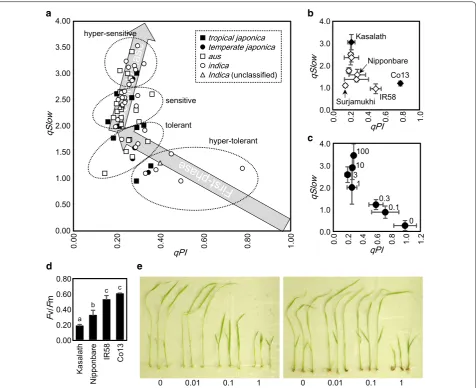
Fig. 3 Estimation of oxidative stress tolerance of World Rice Core Collection. aqPI and qSlow values of 67 cultivars. Data represent means of four
replications. b The same data as a, of selected cultivars. White diamonds indicate all seven modern cultivars analyzed in this experiment. Data
repre-sent means and standard deviations. cqPI and qSlow values of Nipponbare treated with a series of concentrations of methyl viologen.
Concentra-tions of methyl viologen are shown to the right of each plot. Data represent means and standard deviations. n= 4. dFv/Fm values of four cultivars,
after treatment with methyl viologen. Data represent means and standard deviations. n= 4. Different alphabets up to bars indicate statistical
difference by Student’s t test (P < 0.05). e Koshihikari (left) and Co13 (right) seedlings grown in media containing methyl viologen. Concentrations of
[image:5.595.62.539.87.475.2]chlorophyll b was not degraded when intermediate con-centrations (0.3 and 1 μM) of methyl viologen were used although chlorophyll a was degraded under these same concentrations. This imbalanced degradation of chlo-rophylls resulted in a serial decrease of chlorophyll a/b ratio, depending on both the concentrations of methyl viologen and on rice cultivar (Fig. 2e). A comparison between Fv/Fm values (after 20 h of treatment) and chlo-rophyll a/b ratio (37 h treatment), showed a clear correla-tion between them (Fig. 2f).
The response of roots to chemicals treatment was also assessed using a moderately tolerant cultivar Nipponbare and a sensitive cultivar Kasalath. According to Fig. 2g, a relatively low concentrations of Methyl viologen (such as 0.01 μM) significantly inhibited root elongation, and this was to a similar extent for both Kasalath and Nipponbare. Root elongation was also measured under the presence of hydrogen peroxide in culture. Nipponbare showed significantly higher tolerance to hydrogen peroxide than Kasalath (Fig. 2h).
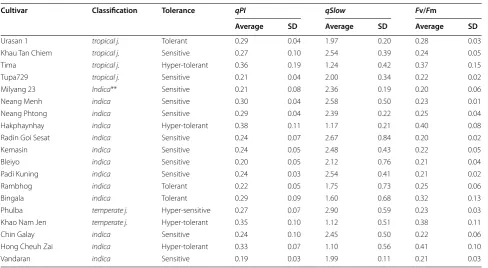
Oxidative stress tolerance of World Rice Core Collection Sixty-seven cultivars of World Rice Core Collection, including Kasalath and Nipponbare, were analyzed by chlorophyll fluorescence. Treatment with Methyl violo-gen caused Fv/Fm values of many cultivars to decrease down to nearly 0.2 (Table 1). In order to compare toler-ance of such sensitive cultivars, Fv/Fm was factorized into two parameters qPI and qSlow. qPI value represents changes in photochemical de-excitation processes, and qSlow represents changes in non-photochemical de-exci-tation processes [14]. qPI–qSlow plot for all cultivars is shown in Fig. 3a. Standard deviations are not shown to simplify the figure. Four subgroups (Japonica subgroups, including tropical japonica and temperate japonica; and Indica subgroups including aus and indica) are indi-cated with different symbols. We observed harmonized changes in qPI and qSlow values in the course of photo-damage of rice leaves with our previous report [15]. A similar decrease in qPI value accompanied by increase in qSlow value was also observed in response to methyl viologen in the present analysis.
Trace of qPI–qSlow coordinates during photo-damage is as follows: Because healthy leaves have 100% capacity of photochemistry (qPI) and no induction of slow-relax-ing non-photochemical quenchslow-relax-ing (qSlow), coordinate (1, 0) was defined as the initial coordinate. Upon treat-ment, coordinates rise semi-linearly to the left, to reach (0.2, 2). Then for some reason that will be discussed later, coordinates change direction to the right, to direct to (0.4, 5). This bi-phasic changes in qPI and qSlow values is illustrated with light-gray arrows in Fig. 3a. Notably, cultivars plotted near the original point (1, 0) are tolerant
and those plotted near arrow-head are sensitive. Cultivars were classified as hyper-tolerant (9 cultivars), tolerant (15 cultivars), sensitive (29 cultivars) or hyper-sensitive (14 cultivars) according to their positions along the arrows.
qPI–qSlow plot of some selected cultivars are shown in Fig. 3b. A traditional cultivar Co13 came from India was the most tolerant to oxidative stress, followed by a modern cultivar IR58 from Philippines. Four other mod-ern cultivars (Rexmont from U.S.A., Nipponbare from Japan, Dianyu1 from China and Surjamukhi from India) were tolerant, and the other two modern cultivars (Deng Pao Zhai from China and Milyang23 from South Korea) were sensitive. It’s noteworthy that no modern cultivar examined in this study was hyper-sensitive to oxidative stress. Also, ratio of tolerant cultivars is higher in mod-ern cultivars (1 hyper-tolerant, 4 tolerant and 2 sensitive) compared with traditional cultivars (6 hyper-tolerant, 9 tolerant, 27 sensitive and 14 hyper-sensitive cultivars).
Changes in qPI and qSlow values were also observed in Nipponbare treated with different concentrations of methyl viologen (Fig. 3c). Leaf discs were plotted on the same bi-phasic line as shown in Fig. 3a, confirming pre-vious observations as well as the reproducibility of this change. Fv/Fm values of Kasalath, Nipponbare, IR58 and Co13 after treatment with methyl viologen are shown in Fig. 3d. These values ranged from 0.2 to 0.6. In Fig. 3e, Koshihikari and Co13 were grown in nutrient solution containing methyl viologen.
Discussion
Table 1 Chlorophyll fluorescence parameters of World Rice Core Collection
Cultivar Classification Tolerance qPI qSlow Fv/Fm
Average SD Average SD Average SD
Nipponbare temperate j. Tolerant 0.28 0.10 1.59 0.25 0.32 0.07
Kasalath aus Hyper-sensitive 0.21 0.04 3.06 0.34 0.19 0.02
Bei Khe indica Hyper-sensitive 0.25 0.02 3.12 0.19 0.21 0.02
Jena 035 aus Tolerant 0.24 0.08 1.51 0.36 0.28 0.09
Naba indica Tolerant 0.30 0.04 1.66 0.36 0.32 0.06
Puluik Arang indica Hyper-sensitive 0.26 0.06 2.80 0.57 0.21 0.03
Davao 1 indica Hyper-sensitive 0.27 0.05 2.87 0.30 0.23 0.05
Ryou Suisan Koumai indica Hyper-tolerant 0.45 0.10 1.47 0.27 0.44 0.09
Shuusoushu indica Hyper-sensitive 0.28 0.05 3.15 0.66 0.23 0.01
Jinguoyin indica Tolerant 0.33 0.03 1.92 0.69 0.33 0.07
Dahonggu Indica** Hyper-tolerant 0.40 0.12 1.30 0.78 0.44 0.14
IR 58 indica Hyper-tolerant 0.50 0.06 0.95 0.22 0.53 0.05
Co 13 indica Hyper-tolerant 0.78 0.01 1.19 0.11 0.60 0.01
Vary Futsi indica Hyper-sensitive 0.29 0.06 3.08 0.92 0.23 0.02
Keiboba indica Hyper-sensitive 0.24 0.02 3.24 0.32 0.20 0.03
Qingyu indica Sensitive 0.23 0.05 2.41 0.36 0.21 0.04
Deng Pao Zhai indica Sensitive 0.21 0.02 2.51 0.47 0.20 0.03
Tadukan indica Sensitive 0.22 0.03 2.64 0.17 0.20 0.02
Shwe Nang Gyi indica Hyper-sensitive 0.30 0.04 3.53 0.25 0.21 0.02
Calotoc aus Sensitive 0.22 0.04 2.65 0.44 0.20 0.02
Lebed indica Hyper-sensitive 0.32 0.02 3.19 0.57 0.21 0.02
Pinulupot 1 indica Sensitive 0.23 0.03 2.54 0.27 0.21 0.02
Muha aus Tolerant 0.34 0.09 1.70 0.28 0.35 0.08
Jhona 2 aus Sensitive 0.22 0.05 2.13 0.85 0.21 0.01
Nepal 8 aus Sensitive 0.30 0.12 2.08 0.40 0.27 0.09
Jarjan aus Sensitive 0.36 0.09 2.61 1.66 0.33 0.17
Kalo Dhan aus Hyper-sensitive 0.25 0.03 3.00 0.55 0.21 0.02
Anjana Dhan aus Sensitive 0.29 0.02 2.30 0.48 0.27 0.03
Shoni aus Sensitive 0.20 0.04 2.28 0.49 0.21 0.02
Tupa 121-3 aus Sensitive 0.22 0.03 2.38 0.28 0.23 0.02
Surjamukhi aus Tolerant 0.14 0.00 1.10 0.08 0.23 0.00
ARC 7291 aus Hyper-sensitive 0.26 0.02 2.91 0.31 0.23 0.03
ARC 5955 aus Sensitive 0.22 0.04 2.32 0.26 0.21 0.02
Ratul aus Sensitive 0.22 0.04 2.03 0.65 0.24 0.02
ARC 7047 aus Tolerant 0.27 0.09 1.41 0.41 0.32 0.11
ARC 11094 aus Hyper-sensitive 0.27 0.03 3.42 0.33 0.20 0.02
Badari Dhan aus Sensitive 0.19 0.04 2.16 0.51 0.19 0.01
Nepal 555 aus Tolerant 0.26 0.08 1.74 0.83 0.27 0.10
Kaluheenati aus Sensitive 0.22 0.02 2.16 0.50 0.21 0.02
Local Basmati aus Sensitive 0.20 0.03 2.43 0.39 0.20 0.03
Dianyu 1 temperate j. Tolerant 0.27 0.14 1.38 0.11 0.32 0.12
Basilanon aus Tolerant 0.25 0.03 1.73 0.72 0.27 0.03
Ma sho tropical j. Sensitive 0.16 0.02 2.08 0.20 0.17 0.02
Khao Nok tropical j. Hyper-sensitive 0.29 0.04 3.01 0.27 0.23 0.03
Jaguary tropical j. Hyper-tolerant 0.29 0.12 0.95 0.63 0.37 0.17
Khau Mac Kho tropical j. Sensitive 0.20 0.07 2.62 0.44 0.19 0.04
Padi Perak tropical j. Tolerant 0.32 0.25 2.02 0.65 0.29 0.19
[image:7.595.58.541.102.723.2]viologen in plant are lacking, a clear image can emerge based on the correlation between uptake and toxicity of other toxic compounds such as selenate and germanium [17, 18].
Fv/Fm value provides an appropriate estimation of damage caused by methyl viologen. This was demon-strated through the reasonable correlation between val-ues of Fv/Fm and ion leakage (Fig. 1a, b), and between values of Fv/Fm and chlorophyll a/b ratio (Fig. 2f). Fur-thermore, the correlation between Fv/Fm and chloro-phyll a/b ratio suggests that tolerant cultivars to oxidative stress, estimated by Fv/Fm values in this study, would be able to protect chlorophyll pigment from breakdown by oxidative stress. Moreover, sensitive lines to oxidative stress tended to accumulate more hydrogen peroxide in intact leaves compared with tolerant ones (Fig. 1c). The decrease in chlorophyll a/b ratio under photo-damage is useful for future studies. Measurement of this ratio is simple and thus could be a good indicator to evaluate damage caused by oxidative stress, especially when spe-cial tool for fluorescence measurement based on ‘pulse amplitude modulation’ technique is not available in the laboratory or in the field. Favorable degradation of chlo-rophyll a may happen because chlorophyll a is bound to photosystems I and II, where light reaction takes place,
whereas chlorophyll b is bound to antenna complex. Decrease in chlorophyll a/b ratio is also observed in shaded leaves. This is an adaptive mechanism to absorb broad spectra of light [19]. Chlorophyll a/b ratio may also have effect on leaf colors. Although the exact colors of chlorophyll a and chlorophyll b are not clear, chlorophyll a would be bluish green and chlorophyll b would be yel-lowish green, judging from their absorbance spectra and RGB color matching function [20, 21]. Decrease in chlo-rophyll a/b ratio will be one of the reasons for leaf yellow-ing under oxidative stress, together with dichromatism caused by decreased chlorophyll concentrations [21], and yellow xanthophyll pigments [20]. Further information about the exact color of each of the chlorophylls a and b are needed for better understanding of this phenomenon. Technical advantage of using Fv/Fm as mean of estima-tion of photo-damage is the speed of its analysis and its applicability to small samples. For measurement of ion leakage, leaf discs had to be excised from mature plants because there is no enough amount of ion in young leaves (according to our preliminary experiments). Further-more, it offers the advantage of measuring 24 samples at once, using two-dimensional fluorescence imager. Similar decrease of Fv/Fm was observed under the same treat-ments with methyl viologen, regardless of growth stages
n = 4
SD standard deviation ** Unclassified Indica cultivars Table 1 continued
Cultivar Classification Tolerance qPI qSlow Fv/Fm
Average SD Average SD Average SD
Urasan 1 tropical j. Tolerant 0.29 0.04 1.97 0.20 0.28 0.03
Khau Tan Chiem tropical j. Sensitive 0.27 0.10 2.54 0.39 0.24 0.05
Tima tropical j. Hyper-tolerant 0.36 0.19 1.24 0.42 0.37 0.15
Tupa729 tropical j. Sensitive 0.21 0.04 2.00 0.34 0.22 0.02
Milyang 23 Indica** Sensitive 0.21 0.08 2.36 0.19 0.20 0.06
Neang Menh indica Sensitive 0.30 0.04 2.58 0.50 0.23 0.01
Neang Phtong indica Sensitive 0.29 0.04 2.39 0.22 0.25 0.04
Hakphaynhay indica Hyper-tolerant 0.38 0.11 1.17 0.21 0.40 0.08
Radin Goi Sesat indica Sensitive 0.24 0.07 2.67 0.84 0.20 0.02
Kemasin indica Sensitive 0.24 0.05 2.48 0.43 0.22 0.05
Bleiyo indica Sensitive 0.20 0.05 2.12 0.76 0.21 0.04
Padi Kuning indica Sensitive 0.24 0.03 2.54 0.41 0.21 0.02
Rambhog indica Tolerant 0.22 0.05 1.75 0.73 0.25 0.06
Bingala indica Tolerant 0.29 0.09 1.60 0.68 0.32 0.13
Phulba temperate j. Hyper-sensitive 0.27 0.07 2.90 0.59 0.23 0.03
Khao Nam Jen temperate j. Hyper-tolerant 0.35 0.10 1.12 0.51 0.38 0.11
Chin Galay indica Sensitive 0.24 0.10 2.45 0.50 0.22 0.06
Hong Cheuh Zai indica Hyper-tolerant 0.33 0.07 1.10 0.56 0.41 0.10
[image:8.595.56.545.98.366.2]of rice plants (juvenile, young or mature). These advan-tages of the method allowed simultaneous and reliable estimation of anti-oxidative capacity of ‘World Rice Core Collection’.
The bi-phasic and correlated change of qPI and qSlow values in Fig. 3 is consistent with previous finding. For instance, a similar change of coordinate from (1, 0) to (0.2, 2) caused by photo-damage was observed in our previous report [15]. In addition to this first-phase move of plot, a second-phase move of plot from (0.2, 2) to (0.4, 5) was found in this study. Fv/Fm does not change in this second phase. In other words, Fv/Fm value is negatively correlated with the slope of line connecting between (0, −1) and plot of leaves. The second phase of move occurs on one of such lines, connecting between (0, −1) and (0.2, 2). Simultaneous and proportional increase in pho-tochemical process (qPI) and non-photochemical process (1 + qSlow) occurs when the value of the sensitivity fac-tor fluctuates [15]. Fluctuation of the sensitivity factor would have occurred because of decrease in light absorp-tion of leaf, as a result of chlorophyll breakdown. When qSlow value changes from 2 to 3.5, proportion of this fluctuation (σ) is:
Thus, qPI and qSlow values proportionally increased on a second-phase regression line, in rice leaves with only low anti-oxidative capacity. In this course, light absorp-tion decreased down to approximately 67% in cultivars with the lowest anti-oxidative capacities, namely Shwe Nang Gyi and ARC11094. Apart from chlorophyll break-down, it is not yet clear why qSlow, the slow-relaxing non-photochemical quenching is induced accompanied by photo-damage. Chloroplast movement could explain part of it [22], but its contribution is not high when flu-orescence is measured in two dimension [15]. It may be worth considering the effect of imbalanced proportion of chlorophyll a/b ratio for induction of qSlow, which was observed in this report.
qPI and qSlow values enabled classification of rice cul-tivars into four classes (hyper-tolerant, tolerant, sensi-tive and hyper-sensisensi-tive). Estimation of anti-oxidasensi-tive capacity of similar set of rice cultivars, by treatment of single plants per cultivar with high concentration of methyl viologen added to media was already reported [23]. Despite the large differences in experimental con-ditions, these two reports have some trend in common. In this study, Fv/Fm values after treatment with methyl viologen are typically 0.4–0.6 for hyper-tolerant cul-tivars, 0.3 for tolerant culcul-tivars, and 0.2 for sensitive/ hyper-sensitive cultivars (Table 1). In this sense, Koshi-hikari is also hyper-tolerant to oxidative stress. Co13 was more tolerant to oxidative stress than Koshihikari
σ =(1+qSlow)/1+qSlow′
=(1+2)/(1+3.5)=2/3
(Fig. 3e). By contrast to capacity of non-photochemical quenching, there was no discrimination of anti-oxidative capacity between rice subclasses or subgroups (Fig. 3a). Different kinds of genes are needed to maintain level of oxidative stress tolerance (such as ascorbate peroxidase, glutathione peroxidase, glutathione reductase, heme oxygenase, Ndh complex, lipocalin, basic helix-loop-helix transcription factor and PsbS) [24–33]. Similar set of genes also improve plant tolerance to oxidative stress when ectopically expressed by transformation (superox-ide dismutase, ascorbate peroxidase, monodehydroascor-bate reductase, catalase, glutathione peroxidase, aldehyde dehydrogenase, Nudix hydrolase, thioredoxin, nucleoside diphosphate kinase, 2-cysteine peroxiredoxin, methio-nine sulfoxide reductase, Fe-chelatase, bZIP transcrip-tion factor, and annexin) [34–48]. Some of these genes improve cold, heat, salt or heavy metal tolerance as well, further supporting importance of oxidative stress tol-erance in adaptation to abiotic stresses. Localization of enzymes in chloroplast is also key to oxidative stress tolerance for some of the genes (superoxide dismutase, ascorbate peroxidase, glutathione-S-transferase, glu-tathione reductase, dehydroascorbate reductase, ferre-doxin-NADP(H) reductase, Nudix hydrolase, RecA, and flavodoxin) [49–56]. Many other genes (including ferritin and miR398) are also regulated by oxidative stress [57– 62]. However, contribution to oxidative stress tolerance is not only restricted to genes, and metabolites (proline, salicylic acid, ascorbic acid, glutathione, and vitamin B6)
also improve oxidative stress tolerance [63–70]. Consid-ering such large number of genes and metabolites con-tributing to oxidative stress tolerance, it is not strange that there was no discrimination in oxidative stress tol-erance between Indica and Japonica. Rice cultivars may have evolved their own tolerance mechanisms by accu-mulating mutations in these genes. Roughly speaking, there also seems to be a ‘trade-off’ between growth rate and oxidative stress tolerance. Cultivars such as Kasalath and Nona Bokra grow much faster than Japanese culti-vars (for instance Koshihikari), whereas Nona Bokra accumulates lower concentration of metabolites than Koshihikari in leaf (Kasajima, unpublished data). This will be also correlated with lower chlorophyll contents in Kasalath (Fig. 2). However, this is just a hypothesis, and mechanism of oxidative stress tolerance should be exam-ined from various aspects.
and Nanatsuboshi are all derivatives from Koshihikari [71]. It would not be a mere coincidence that Koshihi-kari, together with IR58, the only ‘IR’ line bred by Inter-national Rice Research Institute and that was included in World Rice Core Collection, were both hyper-tolerant to oxidative stress. Improved anti-oxidative capacity may aid growth of rice plants exposed to various stresses in the field. One of the important characteristic of modern cultivars is their eating quality. Then, is there any possi-bility that anti-oxidative capacity improves eating quality by protecting rice grains from oxidation? For instance, superoxide dismutase and catalase ameliorate postharvest physiological deterioration in cassava, wheat tasg1 mutant possesses oxidative stress tolerance and show delayed senescence, and paraquat tolerance is positively correlated with longevity of Drosophila strains [72–74]. Longev-ity of rice plant (delayed leaf senescence) will also cause increase in photosynthesis and results in higher rice yield.
Finally, this study was performed in greenhouse and laboratory controlled conditions, thus precautions should be taken into consideration when moving to paddy field. We anticipate that rice breeding aiming to enhance anti-oxidative capacity based on fluorescence analysis will contribute to further improvement of rice cultivars.
Conclusions
High-throughput estimation of oxidative stress tolerance of rice leaves was performed in this study. This consists of direct treatment of leaf discs with low concentration of methyl viologen. Damage to leaf discs was estimated by chlorophyll fluorescence. Factorization of Fv/Fm into qPI and qSlow was an effective approach for precise compari-son between rice cultivars. Furthermore, chlorophyll a/b ratio was found to be a potential new indicator which can evaluate rice leaf damage under oxidative stress. A large difference in oxidative stress tolerance between rice cul-tivars was reported. In addition, modern culcul-tivars tended to possess higher tolerance to oxidative stress. These data are useful for breeding of rice cultivars having stronger tolerance to oxidative stress.
Abbreviations
Fv/Fm: maximum quantum yield of photosystem II; PPFD: photosynthetic photon flux density; qPI: a chlorophyll fluorescence parameter estimating the size of photochemistry after treatment relative to the size of photochemistry before treatment; qSlow: a chlorophyll fluorescence parameter estimating the size of slow-relaxing non-photochemical quenching relative to the size of basal dissipation.
Additional file
Additional file 1. Numerical data used to prepare figures. All numerical data used to prepare figures are provided in this file, in the order they appear in figures.
Authors’ information
Ichiro Kasajima: Researcher at Saitama University (2008, 2010), University of Tokyo (2009), NARO institute of floricultural science (2012–2014) and Iwate University (2015-present). Special-appointed assistant professor at Nara Insti-tute of Science and Technology (2011).
Author details
1 Institute of Molecular and Cellular Biosciences, University of Tokyo, Yayoi
1-1-1, Bunkyo-ku, Tokyo, Japan. 2 Department of Agriculture, Iwate University,
Ueda 3-18-8, Morioka, Iwate, Japan.
Acknowledgements
We would like to acknowledge Hirofumi Uchimiya, Kentaro Takahara, Kaworu Ebana, and all the other colleagues for helpful assistance and discussions. Rice materials were provided by the Gene Bank of the National Institute of Agrobiological Sciences. English was edited by Rym Fekih.
Competing interests
The author declares no competing interests.
Availability of data and materials
Seeds of rice cultivars are available from the Gene Bank of the National Institute of Agrobiological Sciences, Japan (https://www.gene.affrc.go.jp/ databases-core_collections_wr_en.php). All data presented in figures are provided in the Additional file 1.
Ethics approval
Not applicable. This report does not include animal or human data. Plant materials were obtained from a domestic public resource center.
Funding
This study was supported by a grant from the Japanese Ministry of Agriculture, Forestry and Fisheries (Genomics for Agricultural Innovation).
Publisher’s Note
Springer Nature remains neutral with regard to jurisdictional claims in pub-lished maps and institutional affiliations.
Received: 19 April 2016 Accepted: 20 April 2017
References
1. Kovach MJ, Sweeney T, McCouch SR. New insights into the history of rice domestication. Trends Genet. 2007;23:578–87.
2. Asano K, Yamasaki M, Takuno S, Miura K, Katagiri S, Ito T, Doi K, Wu J, Ebana K, Matsumoto T, Innan H, Kitano H, Ashikari M, Matsuoka M. Artifi-cial selection for a green revolution gene during japonica rice domestica-tion. Proc Natl Acad Sci USA. 2001;108:11034–9.
3. Kasajima I, Ebana K, Yamamoto T, Takahara K, Yano M, Kawai-Yamada M, Uchimiya H. Molecular distinction in genetic regulation of nonphotochemical quenching in rice. Proc Natl Acad Sci USA. 2011;108:13835–40.
4. Estudillo JP, Otsuka K. Lessons from the Asian Green Revolution in Rice. In: Otsuka K, Larson DF, editors. An African Green Revolution: Finding Ways to Boost Productivity on Small Farms. New York: Springer; 2013. p. 17–41. 5. Lin KC, Jwo WS, Chandrika NNP, Wu TM, Lai MH, Wang CS, Hong CY.
A rice mutant defective in antioxidant-defense system and sodium homeostasis possesses increased sensitivity to salt stress. Biol Plant. 2016;60:86–94.
6. Pandey P, Srivastava RK, Rajpoot R, Rani A, Pandey AK, Dubey RS. Water defi-cit and aluminum interactive effects on generation of reactive oxygen spe-cies and responses of antioxidative enzymes in the seedlings of two rice cul-tivars differing in stress tolerance. Envorion Sci Pollut Res. 2016;23:1516–28. 7. Rachoski M, Gazquez A, Calzadilla P, Bezus R, Rodriguez A, Ruiz O,
8. Xu K, Chun S, Li T, Ma X, Liang X, Ding X, Liu H, Luo L. OsGRAS23, a rice GRAS transcription factor gene, is involved in drought stress response through regulating expression of stress-responsive genes. BMC Plant Biol. 2015;15:141.
9. Printó-Marijuan M, Munné-Bosch S. Photo-oxidative stress markers as a measure of abiotic stress-induced leaf senescence: advantages and limitations. J Exp Bot. 2014;65:3845–57.
10. Takahashi S, Badger MR. Photoprotection in plants: a new light on photo-system II damage. Trends Plant Sci. 2011;16:53–60.
11. Demidchik V. Mechanisms of oxidative stress in plants: from classical chemistry to cell biology. Environ Exp Bot. 2015;109:212–28. 12. Kojima Y, Ebana K, Fukuoka S, Nagamine T, Kawase M. Development
of an RFLP-based rice diversity research set of germplasm. Breed Sci. 2005;55:431–40.
13. Takahara K, Kasajima I, Takahashi H, Hashida SN, Itami T, Onodera H, Toki S, Yanagisawa S, Kawai-Yamada M, Uchimiya H. Metabolome and photo-chemical analysis of rice plants overexpressing Arabidopsis NAD kinase gene. Plant Physiol. 2010;152:1863–73.
14. Kasajima I, Takahara K, Kawai-Yamada M, Uchimiya H. Estimation of the relative sizes of rate constants for chlorophyll de-excitation processes through comparison of inverse fluorescence intensities. Plant Cell Physiol. 2009;50:1600–16.
15. Kasajima I, Suetsugu N, Wada M, Takahara K. Collective calculation of actual values of non-photochemical quenching from their apparent values after chloroplast movement and photoinhibition. Am J Plant Sci. 2015;6:1792–805.
16. Porra RJ, Thompson WA, Kriedemann PE. Determination of accurate extinction coefficients and simultaneous equations for assaying chloro-phylls a and b extracted with four different solvents: verification of the concentration of chlorophyll standards by atomic absorption spectros-copy. Biochim Biophys Acta. 1989;975:384–94.
17. Shibagaki N, Rose A, McDermott JP, Fujiwara T, Hayashi H, Yoneyama T, Davies JP. Selenate-resistant mutants of Arabidopsis thaliana identify
Sultr1;2, a sulfate transporter required for efficient transport of sulfate into roots. Plant J. 2002;29:475–86.
18. Ma JF, Yamaji N, Mitani N, Tamai K, Konishi S, Fujiwara T, Katsuhara M, Yano M. An efflux transporter of silicon in rice. Nature. 2007;448:209–12. 19. Kitajima K, Hogan KP. Increases of chlorophyll a/b ratios during
acclima-tion of tropical woody seedlings to nitrogen limitaacclima-tion and high light. Plant, Cell Environ. 2003;26:857–65.
20. Heldt HW. The use of energy from sunlight by photosynthesis is the basis of life on earth. In: Biochemistry Plant, editor. 3rd edition. Amsterdam:
Elsevier; 2005. p. 45–66.
21. Kasajima I, Sasaki K. Dichromatism causes color variations in leaves and spices. Color Res Appl. 2015;40:605–11.
22. Cazzaniga S, Dall’Osto L, Kong SG, Wada M, Bassi R. Interaction between avoidance of photon absorption excess energy dissipation and zeax-anthin synthesis against photooxidative stress in Arabidopsis. Plant J. 2013;76:568–79.
23. Iseki K, Homma K, Endo T, Shiraiwa T. Genotypic diversity of cross-tolerance to oxidative and drought stresses in rice seedlings evaluated by the maximum quantum yield of photosystem II and membrane stability. Plant Prod Sci. 2013;16:295–304.
24. Caverzan A, Bonifacio A, Carvalho FEL, Andrade CMB, Passaia G, Schüne-mann M, Maraschin FDS, Martins MO, Teixeira FK, Rauber R, Margis R, Silveira JAG, Margis-Pinheiro M. The knockdown of chloroplastic ascor-bate peroxidases reveals its regulatory role in the photosynthesis and protection under photo-oxidative stress in rice. Plant Sci. 2014;214:74–87. 25. Huang XS, Wang W, Zhang Q, Liu JH. A basic helix-loop-helix
transcrip-tion factor, PtrbHLH, of Poncirus trifoliata confers cold tolerance and modulates peroxidase-mediated scavenging of hydrogen peroxide. Plant Physiol. 2013;162:1178–94.
26. Gaber A, Ogata T, Maruta T, Yoshimura K, Tamoi M, Shigeoka S. The involvement of Arabidopsis glutathione peroxidase 8 in the suppres-sion of oxidative damage in the nucleus and cytosol. Plant Cell Physiol. 2012;53:1596–606.
27. Xu S, Wang L, Zhang B, Han B, Xie Y, Yang J, Zhong W, Chen H, Wang R, Wang N, Cui W, Shen W. RNAi knockdown of rice SE5 gene is sensitive to the herbicide methyl viologen by the down-regulation of antioxidant defense. Plant Mol Biol. 2012;80:219–35.
28. Levesque-Tremblay G, Havaux M, Ouellet F. The chloroplastic lipocalin AtCHL prevents lipid peroxidation and protects Arabidopsis against oxida-tive stress. Plant J. 2009;60:691–702.
29. Ding S, Lu Q, Zhang Y, Yang Z, Wen X, Zhang L, Lu C. Enhanced sensitiv-ity to oxidative stress in transgenic tobacco plants with decreased glutathione reductase activity leads to a decrease in ascorbate pool and ascorbate redox state. Plant Mol Biol. 2009;69:577–92.
30. Charron JBF, Ouellet F, Houde M, Sarhan F. The plant Apolipoprotein D ortholog protects Arabidopsis against oxidative stress. BMC Plant Biol. 2008;8:86.
31. Tarantino D, Vannini C, Bracale M, Campa M, Soave C, Murgia I. Antisense reduction of thylakoidal ascorbate peroxidase in Arabidopsis enhances Paraquat-induced photooxidative stress and nitric oxide-induced cell death. Planta. 2005;221:757–65.
32. Martin M, Casano LM, Zapata JM, Guéra A, Del Campo EM, Schmitz-Linneweber C, Maier RM, Sabater B. Role of thylakoid Ndh complex and peroxidase in the protection against photo-oxidative stress: fluorescence and enzyme activities in wild-type and ndhF-deficient tobacco. Physiol Plant. 2004;122:443–52.
33. Zulfugarov I, Tovuu A, Eu YJ, Dogsom B, Poudyal RS, Nath K, Hall M, Banerjee M, Yoon UC, Moon YH, An G, Jansson S, Lee CH. Production of superoxide from Photosystem II in a rice (Oryza sativa L.) mutant lacking PsbS. BMC Plant Biol. 2014;14:242.
34. Dalal A, Kumar A, Yadav D, Gudla T, Viehhauser A, Dietz KJ, Kirti PB. Alleviation of methyl viologen-mediated oxidative stress by
Brassica juncea annexin-3 in transgenic Arabidopsis. Plant Sci. 2014;219–20:9–18.
35. Seong ES, Yoo JH, Kim NJ, Choi JH, Lee JG, Ghimire BK, Chung IM, Yu CY. Morphological changes and increase of resistance to oxidative stress by overexpression of the LebZIP2 gene in Nicotiana benthamiana. Russ J Plant Physiol. 2016;63:124–31.
36. Kim JG, Back K, Lee HY, Lee HJ, Phung TH, Grimm B, Jung S. Increased expression of Fe-chelatase leads to increased metabolic flux into heme and confers protection against photodynamically induced oxidative stress. Plant Mol Biol. 2014;86:271–87.
37. Li CW, Lee SH, Chieh PS, Lin CS, Wang YC, Chan MT. Arabidopsis root-abundant cytosolic methionine sulfoxide reductase B genes MsrB7 and
MsrB8 are involved in tolerance to oxidative stress. Plant Cell Physiol. 2012;53:1707–19.
38. Kim MD, Kim YH, Kwon SY, Jang BY, Lee SY, Yun DJ, Cho JH, Kwak SS, Lee HS. Overexpression of 2-cysteine peroxiredoxin enhances tolerance to methyl viologen-mediated oxidative stress and high temperature in potato plants. Plant Physiol Biochem. 2011;49:891–7.
39. Kim YH, Kim MD, Choi YI, Park SC, Yun DJ, Noh EW, Lee HS, Kwak SS. Trans-genic poplar expressing Arabidopsis NDPK2 enhances growth as well as oxidative stress tolerance. Plant Biotehchnol J. 2011;9:334–47. 40. Sun L, Ren H, Liu R, Li B, Wu T, Sun F, Liu H, Wang X, Dong H. An h-type
thioredoxin functions in tobacco defense responses to two spe-cies of virus and an abiotic oxidative stress. Mol Plant Microbe In. 2010;23:1470–85.
41. Kim MD, Kim YH, Kwon SY, Yun DJ, Kwak SS, Lee HS. Enhanced tolerance to methyl viologen-induced oxidative stress and high temperature in transgenic potato plants overexpressing the CuZnSOD, APX and NDPK2
genes. Physiol Plant. 2010;140:153–62.
42. Li F, Wu QY, Sun YL, Wang LY, Yang XH, Meng QW. Overexpression of chloroplastic monodehydroascorbate reductase enhanced tolerance to temperature and methyl viologen-mediated oxidative stresses. Physiol Plant. 2010;139:421–34.
43. Ahmad R, Kim YH, Kim MD, Kwon SY, Cho K, Lee HS, Kwak SS. Simultane-ous expression of choline oxidase, superoxide dismutase and ascor-bate peroxidase in potato plant chloroplasts provides synergistically enhanced protection against various abiotic stresses. Physiol Plant. 2010;138:520–33.
44. Ogawa T, Ishikawa K, Harada K, Fukusaki E, Yoshimura K, Shigeoka S. Overexpression of an ADP-ribose pyrophosphatase, AtNUDX2, confers enhanced tolerance to oxidative stress in Arabidopsis plants. Plant J. 2009;57:289–301.
46. Yoshimura K, Miyao K, Gaber A, Takeda T, Kanaboshi H, Miyasaka H, Shigeoka S. Enhancement of stress tolerance in transgenic tobacco plants overexpressing Chlamydomonas glutathione peroxidase in chloro-plasts or cytosol. Plant J. 2004;37:21–33.
47. Mohamed EA, Iwaki T, Munir I, Tamoi M, Shigeoka S, Wadano A. Over-expression of bacterial catalase in tomato leaf chloroplasts enhances photo-oxidative stress tolerance. Plant, Cell Environ. 2003;26:2037–46. 48. Sunkar R, Bartels D, Kirch HH. Overexpression of a stress-inducible
alde-hyde dehydrogenase gene from Arabidopsis thaliana in transgenic plants improves stress tolerance. Plant J. 2003;35:452–64.
49. Gupta AA, Heinen JL, Holaday AS, Burke JJ, Allen RD. Increased resistance to oxidative stress in transgenic plants that overexpress chloroplastic Cu/ Zn superoxide dismutase. Proc Natl Acad Sci USA. 1993;90:1629–33. 50. Yoshimura K, Ogawa T, Tsujimura M, Ishikawa K, Shigeoka S. Ectopic expression of the human MutT-type Nudix hydrolase, hMTH1, confers enhanced tolerance to oxidative stress in Arabidopsis. Plant Cell Physiol. 2014;55:1534–43.
51. Jeon H, Jin YM, Choi MH, Lee H, Kim M. Chloroplast-targeted bacterial RecA proteins confer tolerance to chloroplast DNA damage by methyl viologen or UV-C radiation in tobacco (Nicotiana tabacum) plants. Physiol Plant. 2013;147:218–33.
52. Ceccoli RD, Blanco NE, Segretin ME, Melzer M, Hanke GT, Scheibe R, Hajirezaei MR, Bravo-Almonacid FF, Carrillo N. Flavodoxin displays dose-dependent effects on photosynthesis and stress tolerance when expressed in transgenic tobacco plants. Planta. 2012;236:1447–58. 53. Le Martret B, Poage M, Shiel K, Nugent GD, Dix PJ. Tobacco chloroplast
transformants expressing genes encoding dehydroascorbate reductase, glutathione reductase, and glutathione-S-transferase, exhibit altered anti-oxidant metabolism and improved abiotic stress tolerance. Plant Biotechnol J. 2011;9:661–73.
54. Poage M, Le Martret B, Jansen MAK, Nugent GD, Dix PJ. Modification of reactive oxygen species scavenging capacity of chloroplasts through plastid transformation. Plant Mol Biol. 2011;76:371–84.
55. Rodriguez RE, Lodeyro A, Poli HO, Zurbriggen M, Peisker M, Palatnik JF, Tognetti VB, Tschiersch H, Hajirezaei MR, Valle EM, Carrillo N. Transgenic tobacco plants overexpressing chloroplastic ferredoxin-NADP(H) reduc-tase display normal rates of photosynthesis and increased tolerance to oxidative stress. Plant Physiol. 2017;143:639–49.
56. Mugia I, Terantino D, Vannini C, Bracale M, Carravieri S, Soave C. Arabidop-sis thaliana plants overexpressing thylakoidal ascorbate peroxidase show increased resistance to Paraquat-induced photooxidative stress and to nitric oxide-induced cell death. Plant J. 2004;38:940–53.
57. Benina M, Ribeiro DM, Gechev TS, Mueller-Roeber B, Schippers JHM. A cell type-specific view on the translation of mRNAs from ROS-responsive genes upon paraquat treatment of Arabidopsis thaliana leaves. Plant, Cell Environ. 2015;38:349–63.
58. Wang L, Ma F, Xu S, Zheng T, Wang R, Chen H, Shen W. Cloning and char-acterization of a heme oxygenase-2 gene from rice (Oryza sativa L.), and its expression analysis in response to some abiotic stresses. Acta Physiol Plant. 2014;36:893–902.
59. Ramírez M, Guillén G, Fuentes SI, Íñiguez LP, Aparicio-Fabre R, Zamorano-Sánchez D, Encarnacion-Guevara S, Panzeri D, Castiglioni B, Cremonesi P, Strozzi F, Stella A, Girard L, Sparvoli F, Hernández G. Transcript profiling of common bean nodules subjected to oxidative stress. Physiol Plant. 2013;149:389–407.
60. Asensio AC, Marino D, James EK, Ariz I, Arrese-Igor C, Aparicio-Tejo PM, Arredondo-Peter R, Moran JF. Expression and localization of a Rhyzobium -derived cambialistic superoxide dismutase in pea (Pisum sativum) nod-ules subjected to oxidative stress. Mol Plant Microbe In. 2011;24:1247–57. 61. Shevyakova NI, Eshinimaeva BT, Kuznetsov VV. Expression of ferritin
gene in Mesembryanthemum crystallinum plants under different supply with iron and different intensity of oxidative stress. Russ J Plant Physiol. 2011;58:768–75.
62. Jagadeeswaran G, Saini A, Sunkar R. Biotic and abiotic stress down-regu-late miR398 expression in Arabidopsis. Planta. 2009;229:1009–14. 63. Radyukina NL, Shashukova AV, Shevyakova NI, Kuznetsov VV. Proline
involvement in the common sage antioxidant system in the presence of NaCl and paraquat. Russ. J Plant Physiol. 2008;55:649–56.
64. Yang Y, Qi M, Mei C. Endogenous salicylic acid protects rice plants from oxidative damage caused by aging as well as biotic and abiotic stress. Plant J. 2004;40:909–19.
65. Liu W, An HM, Yang M. Overexpression of Rosa roxburghiil
-galactono-1,4-lactone dehydrogenase in tobacco plant enhances ascorbate accumulation and abiotic stress tolerance. Acta Physiol Plant. 2013;35:1617–24.
66. Raschke M, Boycheva S, Crevecoeur M, Nunes-Nesi A, Witt S, Fernie AR, Amrhein N, Fitzpatrick TB. Enhanced levels of vitamin B6 increase aerial organ size and positively affect stress tolerance in Arabidopsis. Plant J. 2011;66:414–32.
67. Zhang C, Liu J, Zhang Y, Cai X, Gong P, Zhang J, Wang T, Li H, Ye Z. Over-expression of SlGMEs leads to ascorbate accumulation with enhanced oxidative stress, cold, and salt tolerance in tomato. Plant Cell Rep. 2011;30:389–98.
68. Wang Z, Xiao Y, Chen W, Tang K, Zhang L. Increased vitamin C content accompanied by an enhanced recycling pathway confers oxidative stress tolerance in Arabidopsis. J Integr Plant Biol. 2010;52:400–9.
69. Shevyakova NI, Bakulina EA, Kuznetsov VV. Proline antioxidant role in the common ice plant subjected to salinity and paraquat treatment inducing oxidative stress. Russ J Plant Physiol. 2009;56:663–9.
70. Pang CH, Wang BS. Role of ascorbate peroxidase and glutathione reductase in ascorbate-glutathione cycle and stress tolerance in plants. In: Anjum NA, Chan MT, Umar S, editors. Ascorbate-glutathione pathway and stress tolerance in plants. New York: Springer; 2010. p. 91–113. 71. Beikoku Antei Kyoukyuu Kakuho Shien Kikou (Institute for stable supply
and storage supports of rice, Japan). Heisei 26 Nensan Suitou No Hinshu-betsu Sakutsuke Doukou Ni Tsuite (About planting of paddy rice in 2014). 2015. http://www.komenet.jp/pdf/H26sakutuke.pdf. Accessed 20 Mar 2016. (Japanese).
72. Xu J, Duan X, Yang J, Beeching JR, Zhang P. Enhanced reactive oxygen species scavenging by overproduction of superoxide dismutase and catalase delays postharvest physiological deterioration of cassava storage roots. Plant Physiol. 2013;161:1517–28.
73. Hui Z, Tian FX, Wang G, Wang GP, Wang W. The antioxidative defense system is involved in the delayed senescence in a wheat mutant tasg1. Plant Cell Rep. 2012;31:1073–84.
74. Arking R. Molecular basis of extended longevity in selected Drosophila