AUGMENTED
PEDAGOGIES
Thesis submitted in accordance with the requirements of the
University of Liverpool for the degree of Doctor in Philosophy
by
Alejandro Andrés Veliz Reyes
iv
I have been lucky to count on great friends and colleagues to support and guide me during this PhD journey. A continuous company throughout this adventure has been the guidance, friendship and constant support of my supervisor Dr Tuba Kocaturk. I will be always deeply thankful for her help, which has gone beyond every expectation. Also, my thanks go to my co-supervisor Mr Michael Knight for his insights. Dr Riccardo Balbo and Professor Benachir Medjdoub have also taken the role of co-supervisor at some point. Their friendship and support have been fundamental for my work. Both, from different perspectives, have done a contribution without which this work could not be achieved.
My sincerest thanks are also with Professor Arto Kiviniemi and Professor David McClean, whom have generously used their time and expertise to review my work as internal and external reviewers, respectively.
Without the good will from several informants it would have been impossible to successfully complete this research as intended. Scholars, students and technical support staff have scaffolded this work with their openness and insights. Some initial explorations on the use of augmented reality for education were made in the MSc Digital Architectural Design at the University of Salford, with a teaching team formed by Dr Tuba Kocaturk, Professor Benachir Medjdoub and Dr Riccardo Balbo in the Design Directorate of the School of the Built Environment. The observational work at the Polytechnic of Turin was supported by an amazing group of anonymised academics who kindly gave me access to their design studio courses. The work conducted at the University of Liverpool was facilitated by a Higher Education Academy project implemented in a MA Architecture design studio course led by Dr Tuba Kocaturk and Mr Asterios Agkathidis, with the technical support of Mr Martin Winchester. Many other informants bravely let me observe and enquiry about their studio activities, including a group of instructors interviewed for the last stage of my work. Needless to say, without their contribution my dissertation would not have been possible and albeit their anonymous support, I cannot but acknowledge their time - you know who you are, thank you!
v international doctoral studies, awarded by the Chilean National Commission for Scientific and Technological Research (CONICYT) in the Ministry of Education.
At the moment of finishing this dissertation I am lecturing Digital Design at the School of Architecture, Design and Environment of Plymouth University. My heartfelt gratitude to my patient colleagues and students who have given me much needed time and support during the last writing stage of this thesis. My special thanks go to my 1st and 2nd year BArch students, Professor Alessandro Aurigi, Professor Bob Brown, Ms Toshiko Terazono and Mr Andy Humphreys.
My thoughts are also with all those friends I’ve met throughout this journey: Ozlem, Yekta, Serhat, Andrea, Vincenzo, Clelie, Ela, Hani, Pooya, Rux, Mo, and many others. I must also mention my fellow Chileans, always there with their resilient chileanness and barbeques. My thanks go to Carola, Alejandro, Almendra and Lucas Hidalgo, as well as to the rest of the Chilean community in the North West of England. My thoughts are also with María Paz and Javiera for their company, motivation and counselling on demand whenever and wherever needed. Back in Chile, I have nothing but gratitude for the constant encouragement from Juan Francisco and Monse, Valeska, Ena and so many others.
vi
Traditional institutions of the architectural design studio such as the design critique or the design jury are at the core of studio pedagogy. Yet, they have shifted and evolved over time towards what can be hardly defined as the typical master-apprentice “atelier” praxis anymore. Design studio pedagogy, deeply rooted into our disciplinary ethos, is under pressure due to a series of factors such as new industry demands, ever-evolving technologies or the diversification of architecture’s collaborative contexts of practice. While the design studio comprises a series of cultural, social, technological and educational mutually interdependent dimensions, this research specifically focuses on technology-mediated teaching and learning
communication. By following a grounded theory approach, this work attempts to
formalise and describe technology-enabled emergent studio pedagogies. In more detail, the observed technologies in this thesis are those of augmented reality visualisations embedded into design critique sessions, and the use of Wikis for online communication throughout a studio course. The research question pursued along this thesis is, then, “how do the use of AR visualisations and the use of supporting Wikis impact on communication in the architectural design
studio?”.
For such enquiry, it is claimed that the integration of technology into architectural education contexts does not proceed only on the grounds of tools’ development and training, but on a series of complex interrelations across technological, communicational and societal patterns that once orchestrated, provide a vehicle for such technology-driven pedagogies.
vii analysis of on-site gathered data, therefore grounding the research results to the contexts in which they operate - supporting the validity and applicability of the research outcomes.
The resulting theory outputs - namely “theory of augmented pedagogies” - describes the emergent communication dynamics resulting from the use of such tools. Its construction process is as follows:
After observational data is analysed following an incremental coding process, a set of conceptual categories (a set of conceptual categories) is created, and then linked to each other allowing the formulation of a framework. The framework, composed by seven categories, clusters systematically built evidence of the complex role of technology for architectural education purposes. The categories are: solo interactions, social interactions, technology affordances, troubleshooting,
emotional engagement, multimodal engagement, and organisational shifts.
Those categories are organised in two core topics that describe the impact of technologies in the architectural design studio: “augmented interactions” and “pedagogical implementations of technology”. Throughout the definition and scope of those topics, various links across pedagogy and technology are claimed.
The outcomes of this research intend to serve as a pedagogical resource for integrating new technologies into architectural design studios, and organise those newly emergent pedagogies as novel educational resources. Since it is based on a grounded theory approach, the framework is also flexible enough to accommodate further pedagogical knowledge, and paths for future work are identified accordingly.
viii
Acknowledgements iv
Abstract vi
List of Contents viii
List of Figures and Tables xiii
CHAPTER I. Introduction 1
1.1. Investigating the impact of technology in architectural education 1.1.1. Classifications of the roles of technology for architectural education
1.1.2. Augmenting reality and using Wikis
1.1.3. Characterising the design studio as a communication space 1.2. Research problem
1.3. Research question 1.4. Research objectives
1.5. Research outputs and relevance 1.5.1. Theoretical outputs 1.5.2. Methodological outputs 1.5.3. Target groups
1.6. Methodology
1.7. Dissertation structure
CHAPTER II. Setting a disciplinary framework to observe
communication in architectural design studios 17
2.1. Introduction
2.1.1. Situating human communication into a disciplinary landscape 2.1.2. Structure of the Chapter
2.2. Architectural education - reconsidering educational practices 2.2.1. Theorising the design studio
2.3. A multimodal approach to investigate architectural design studio dynamics
2.3.1. Investigating communication as a “cognitive ethnography” 2.3.2. Multimodality as a research approach
2.4. Multimodality in design research
2.5. Tracing multimodality in the use of Wikis 2.6. Summary and conclusions
CHAPTER III. Research fieldwork: contexts and methods in design
studio settings 45
ix 3.2.1. Site selections
3.3. Preliminary study: technical affordances and challenges of augmented reality models
3.3.1. Lessons for data collection
3.4. Methods to investigate face-to-face interactions in design critique sessions
3.4.1. Video-recording design critique sessions 3.4.2. Students’ semi-structured interviews
3.5. Investigating students’ collaborative work using Wikis 3.5.1. Observing communication in on-line environments 3.5.2. Collection of Wiki sites’ modes of communication 3.5.3. Students’ semi-structured interviews
3.6. Investigating instructors’ perspectives
3.6.1. Instructors’ semi-structured interviews 3.6.2. Participant observations
3.7. Recommendations and reflections for data collection in the design studio
3.7.1. The observer/instructor dichotomy
3.7.2. Transcribing multimodal face-to-face communication
3.7.3. Transcribing multimodal on-line communication using Wikis 3.8. Summary and conclusions
CHAPTER IV. Construction of conceptual categories: analysis of
face-to-face interactions during design critique sessions 73
4.1. Introduction
4.1.1. The communication dynamics of a design critique session 4.1.2. Design critiques’ selection for data analysis
4.1.3. Face-to-face multimodal interaction: exemplary dialogues across participants
4.2. Conceptual derivation: naming and coding incidents through comparative analysis
4.2.1. A multimodal description of relevant incidents 4.2.2. Naming and coding relevant incidents
4.3. Defining sets of relevant themes 4.3.1. Solo interactions 4.3.2. Social interactions 4.3.3. Technology affordances 4.3.4. Troubleshooting
4.3.5. Multimodal engagement 4.3.6. Emotional engagement 4.3.7. Organisational shifts
4.4. Findings of the descriptions of face-to-face interactions using AR models
4.4.1. Conceptual integration 4.4.2. Augmented interactions
x
5.1. Introduction
5.1.1. Structure of the Chapter
5.2. General features of the use of Wikis for design education 5.3. Depicting students’ multimodal communication using Wikis
5.3.1. Design and construction of the Wiki sites 5.3.2. Group interactions in the Wiki sites 5.3.3. Studio interactions in the Wiki sites
5.4. Building frameworks: revisiting and structuring conceptual categories 5.4.1. Evolution of the conceptual vocabulary into emergent pedagogical frameworks
5.5. Discussion and conclusions
5.5.1. Instructional and curatorial modes of communication using Wikis 5.5.2. Methodological considerations
5.5.3. Summary and conclusions
CHAPTER VI. Validation, conclusions and recommendations
for further work 123
6.1. Introduction 6.2. Main findings 6.3. Validation
6.3.1. Setting instances for the theory framework 6.3.2. Characterising the interviewees
6.3.3. Content analysis of responses 6.4. Applicability of the framework
6.5. Main contributions of the research
6.5.1. General contribution to architectural design education 6.5.2. General contribution to design research
6.6. Recommendations for further work
List of References 139
List of Appendices
Appendix I. Veliz, A. (2013). Augmented modelling in the design studio:
Augmented pedagogies. Augmented reality, art and technology, 3, 58-63.
Appendix II. Transcripts of design critique dialogues making use of AR
technology, and detail of coded incidents isolated from the data transcripts.
Appendix III. Sample transcript of fieldwork observational notes at the
Polytechnic of Turin.
Appendix IV. Sample Wiki screenshots
Appendix V. Ethical considerations in design studio fieldwork
xi
FIGURES
Figure 1.1. AR model that combines into a single visualisation a
physically printed floorplan and a digital 3D model. The model is built using the tool metaioCreator 2.0.
Figure 2.1. A complex assembly of representations made by a group of
students being used to communicate a final project in a MArch course at the Liverpool School of Architecture.
Figure 2.2. Video screenshot - A student describes to the design
instructor an architectural model that combines a physically printed floorplan with a 3D model of the building’s form, by using AR technology.
Figure 2.3. Donald Schön’s “The Reflective Practitioner” (1983) with
drawings to illustrate the dialogue between “Quist” and “Petra”. Pages 82, 83, 86 and 87 are here reproduced with permission from Perseus Book Group.
Figure 2.4. Screenshot of the Wiki site developed by group 5. Source:
designpedagogy.org.
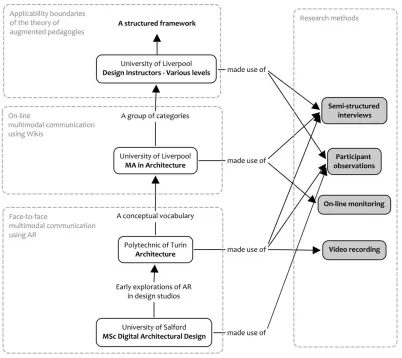
Figure 3.1. Summary of selected research methods utilised in the
different stages of this research.
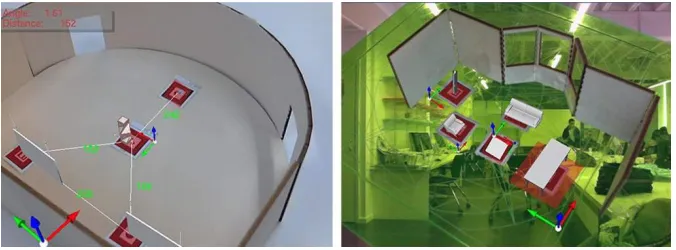
Figure 3.2. Sample models developed by students. Left: Augmented
model to study the layout of an exhibition space. Right: A furniture layout model.
Figure 3.3. AR-supported distance measuring functions.
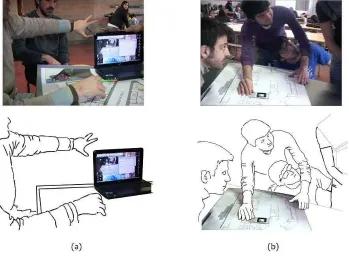
Figure 3.4. Sample video frames of participants interacting with AR
models.
Figure 3.5. Sample Wiki site screenshot (Group 2). From left to right: a
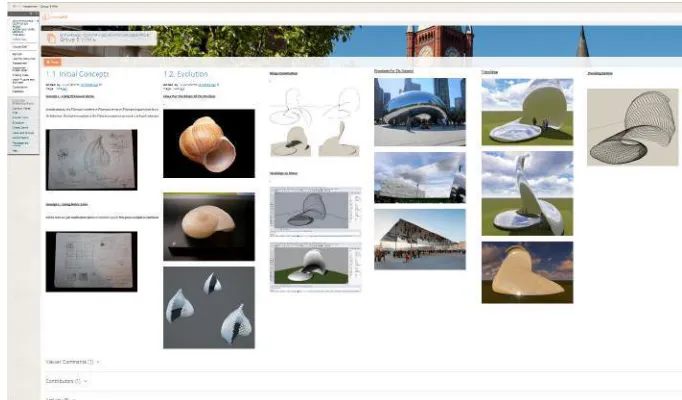
description of a building detail and materials, cutting patterns of the elements of the pavillion, renders of the finished pavillion. Source: University of Liverpool Blackboard system (2014).
Figure 3.6. Wiki site screenshots (Group 1). Top image: Record of the
e-mail communications across members of the group. Bottom image: Scanned record of the group sketching meetings. Source: University of
Liverpool Blackboard system (2014).
Figure 3.7. Schedule displaying the time/day of different comments
made in the Wiki sites throughout the semester. The studio teaching time 6
28
30
35
41
53
54 54
57
60
xii
Figure 3.8. Identification of the roles of texts and images within the
layout of a Wiki site. Source: University of Liverpool Blackboard system (2014).
Figure 3.9. Array of representation and communication tools declared
to be used by students throughout their design process. Source:
Kocaturk et al, 2014.
Figure 3.10. Sample data transcription sheet.
Figure 3.11. Extract of a communication Wiki site (Group 1). Source:
University of Liverpool Blackboard system (2014).
Figure 4.1. Video frames illustrating the different instructors’ roles uses
of an AR model during a design critique session.
Figure 4.2. Video frames relevant to describe the interaction between a
group of students and instructor, sequenced indicated in the text (a, b, c, d).
Figure 4.3. Hand coding of transcribed data sheets.
Figure 4.4. Video frames that show some interactions between people
by using augmented models. Most of the actions in this category involve the use of AR on screen (for visualisation purposes) or pointing at it as a communication resource.
Figure 4.5. Video frame showing the misaligned AR model. The arrow
at the bottom indicates the location of the marker on the top of the floor plan, while the arrow at the top of the screen indicates the actual location of the digital model.
Figure 4.6. Gestural performance from Alberto indicating some
cognitive engagement with the construction of AR models.
Figure 4.7. Gestural performance from a student indicating some
cognitive engagement with the construction of AR models.
Figure 4.8. Initial grouping of conceptual categories into core topics.
Figure 5.1. Sample Wiki site. Contents are here organised in columns.
Source: University of Liverpool Blackboard system (2014).
Figure 5.2. Sample Wiki site. Source: University of Liverpool
Blackboard system (2014).
Figure 5.3. Sample collaboratively-built sketches. Source: University of
63
64 70
71
79
82 85
88
90
91
92 95
105
xiii
Figure 5.4. Different representations utilised by groups of students to
display their design work, including (from left to right, top to bottom): meetings minutes, sketches, parametric modelling sequences, mindmaps, drawings, sun shading analyses, fabrication patterns, 3D models, and renders. Source: Kocaturk et al, 2013.
Figure 5.5. Sample Wiki site. Source: University of Liverpool
Blackboard system (2014).
Figure 5.6. Perceived benefits of using Wikis throughout the studio
course. Source: Kocaturk et al. (2014).
Figure 6.1. Diagram of the applicability of the framework to Ian’s
teaching approach.
Figure 6.2. Diagram of the applicability of the framework to Noel’s
(red), Barry’s (green) and Andy’s (blue) teaching approaches.
TABLES
Table 1.1. Categories of the use of technologies for architectural
education, as stated by Andia (2002) and Mizban & Roberts (2008). Highlighted in red are the categories considered as relevant for this research.
Table 3.1. Table indicating the transcription notations used in data
transcriptions. 111
112
115
133 134
4
1
CHAPTER I
2
1.1. INVESTIGATING THE IMPACT OF TECHNOLOGY IN
ARCHITECTURAL EDUCATION
The core locus of architectural education is the design studio1. The studio is a project-based learning system, in which students continuously interact with tools, methods, instructors and peers throughout the development and resolution of a given design brief. Those interactions are usually structured into a series of rather traditional institutions such as design critiques or the design jury sessions. There is a series of factors influencing the studio pedagogy such as the nature of the design briefs, or the design tools, skills and methods considered relevant by the instructors. Such array of interrelated elements render the studio into a teaching and learning environment bridled with complexities, yet with a proven effectiveness on educating architects for several decades (Cuff, 1991) and moreover, it has been suggested as a good practice for other Higher Education professional subjects (Boyer & Mitgang, 1996).
Nowadays, the fact that technologies are reshaping architectural education is widely accepted in our discipline, and technology literacies have been acknowledged as part of the skillset of future architects (Andia, 2002; Building Futures, 2013). New demands from an increasingly collaborative industry as well as global issues are adding requests for technology integration in the education of contemporary architects. Among other requirements for the new architects, it has been reported that they require higher levels of ICT literacy, technology-enabled representation skills and mastery of collaborative working schemes and tools (Building Futures, 2013).
In the United Kingdom, this array of requirements has been usually framed within the Graduate Attributes for Part 1 (undergraduate) and Part 2 (postgraduate) Architecture validated courses (RIBA, 2014). Those attributes have been defined as “the ability to apply a range of communication methods and media to present design proposals clearly and effectively” (namely “GA1.2” for Part 1 courses), and the “ability to evaluate and apply a comprehensive range of visual, oral and written media to test, analyse, critically appraise and explain design proposals” (namely “GA2.2” for Part 2 courses). Therefore, digital
3 communication skills and contents are part of the validation process for every School of Architecture in the country.
However, the integration of technologies in the design studio has been accompanied by its implications for teaching and learning. In that regard, this research works towards a better comprehension of how technologies impact the design studio. More specifically, it aims to understand how visualisation (augmented reality) and communication (Wikis) technologies can contribute to enhance teaching and learning in architectural education. Here, the ways in which educational dynamics are reorganised are explored; how those emergent didactics can be formalised into technology-driven pedagogical resources; and how the identification of such pedagogies can benefit the studio community are explored.
1.1.1. Classifications of the roles of technology for architectural
education
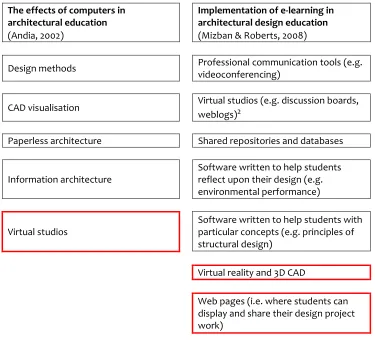
Previous research (Andia, 2002; Mizban & Roberts, 2008) has classified different roles of technologies for teaching and learning in architectural education (Table 1.1). Both studies have been conducted in design studios, doing either observational ethnographic work (in the case of Andia) or a mixed-methods qualitative methodology (in the case of Mizban & Roberts, including revisions of literature and interviews with informants). Additionally, both studies have been conducted in different contexts: Schools of Architecture in the USA and Japan (Andia, 2002) and British Schools of Architecture accompanied by other examples from the literature (Mizban & Roberts, 2008). Despite the different contexts for their enquiry and methodological approaches, however, their work coincide on some core matters such as the need to broadly understand learning technologies as facilitators of an educational experience, beyond its use for novel and complex emergent design products and processes.
Aligned with their viewpoint, this research sees technologies as enablers of an augmented educational experience, by mediating design communication across members of the studio during teaching and learning activities. This view coincides with the categories already presented in previous research, such as the “Virtual Studios” proposed by Andia (2002), which he partially describes as
4
[image:18.595.83.458.232.580.2]studio experience by introducing external reviewers and a more collaborative environment among students, professors, and consultants. This new mode of collaboration increases the transmission of ideas and could open the congested culture of traditional design studios (p. 11).
Table 1.1. Categories of the use of technologies for architectural education, as stated by Andia (2002) and Mizban & Roberts (2008). Highlighted in red are the categories
considered as relevant for this research. The effects of computers in
architectural education
Implementation of e-learning in architectural design education (Andia, 2002) (Mizban & Roberts, 2008)
Design methods Professional communication tools (e.g. videoconferencing)
CAD visualisation Virtual studios (e.g. discussion boards, weblogs)2
Paperless architecture Shared repositories and databases
Information architecture
Software written to help students reflect upon their design (e.g. environmental performance)
Virtual studios
Software written to help students with particular concepts (e.g. principles of structural design)
Virtual reality and 3D CAD
Web pages (i.e. where students can display and share their design project work)
5 This distinction between “technologies for design” and “technologies for teaching and learning” is rather relevant considering that technologies provide tools and methods embedded into intelligently networked contexts and processes of design knowledge production and communication. Their use blurs and mixes the boundaries across different processes of students’ work, including those of “designing” and “learning”. Then, it must be noted that while this work is particularly concerned with technology-mediated learning, the explored technologies broadly operate as a coordinated ecology of socio-technical systems by influencing the studio’s mutually interdependent working environments and social dynamics (Heller, 2001). As already stated, the technologies that this research focuses on have a role on design communication in the design studio, making use of a set of various modes of communication such as images, speech or text. In more detail, the technologies utilised to explore those “augmented pedagogies” in this research are two: augmented reality (AR) visualisations for design critique sessions (related to what Mizban & Roberts define as “Virtual Reality” and “3D CAD”), and the use of Wikis for on-line supported communication (related to what the same authors define as “Web pages”) throughout design studio courses.
As seen in the next section, those tools enable a deeper, yet not full, understanding of the impact of ICT resources for teaching and learning in the design studio.
1.1.2. Augmenting reality and using Wikis
The rationale to choose AR and the use of Wikis as the pathway through which studio pedagogy evolves, responds to the need to observe different dimensions and dynamics of communication in studio teaching and learning.
6
applications in the AEC industry have been developed by the “Augmented reality and 3D tracking” group at VTT Finland, and the Australasian Joint Research Centre in BIM at Curtin University in Australia. These applications are usually aligned with industrial developments and products that make use of augmented reality tools, such as augmented reality gaming engines and head mounted displays. Overall, AR is a quickly developing field as can be seen in the academic repositories, technology events and ongoing commercial applications from organisations such as SIGGRAPH, Ars Electronica and Microsoft.
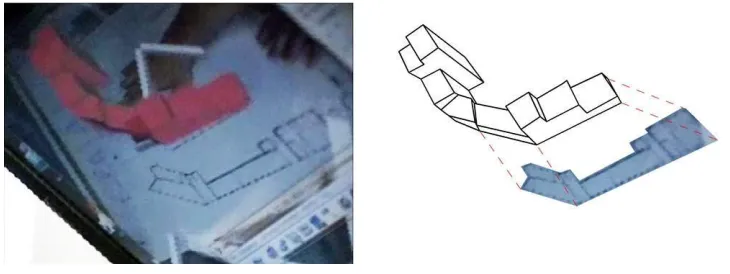
[image:20.595.98.415.397.647.2]For the purpose of this research, small-scale applications have been utilised in design studios, making use of freely available software for the construction of reduced and easily viewable architectural models. This specific application, called marker tracking, works by recognising a figure (namely “the marker”) using a camera and a tracking engine, and displaying a geometric model accordingly, following the marker in real-time as it moves in the space in front of the camera.
Figure 1.1. AR model that combines into a single visualisation a physically printed floorplan and a digital 3D model. The model is built using the tool metaioCreator 2.0.
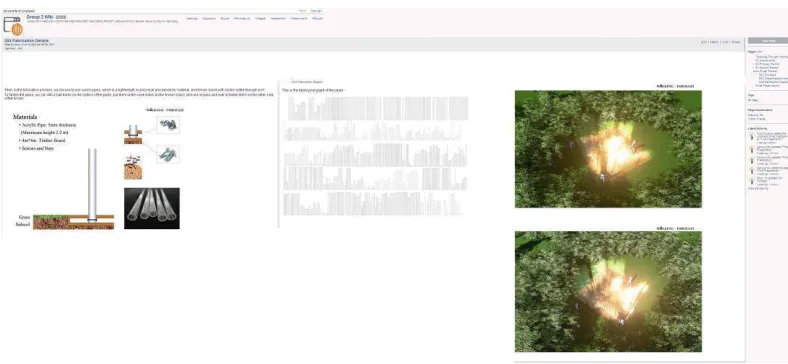
7 the application enabling its development), created through the incremental development by a group of collaborating users” (Wagner, 2004). For the purpose of this research, a group of MA Architecture students at the University of Liverpool have used Wikis to keep a record of their design processes, allowing the use of on-line conversation forums and the display of a series of images - as a sort of digital sketchbook updated at any time, with continuous feedback from peers and instructors. In that sense, Wikis contribute to this research by allowing the observation of students’ communication outside teaching hours and as a result, allowing a more comprehensive monitoring of student’s working and communicating dynamics.
As a result, a wide scope of studio teaching and learning is achieved by observing both technologies, but it must be noted that other elements of design studio teaching such as design reviews are out of the scope of this work. This is aligned with the characterisation of the design studio as a learning activity across ubiquitous locations and temporal frames, as well as with an updated understanding of how students visualise and communicate design knowledge and information through different media.
In that sense, the name of this research (“augmented pedagogies”) has not been chosen only after the observation of AR tools in design, but is more broadly aligned with the concept of “augmentation” developed by Buechner (2011) who describes it as an “action of enhancement or improvement” of reality. In his words, he describes how augmented reality can actually support the performance of cognitive activities:
8
1.1.3. Characterising the design studio as a communication space
Among the core tasks making use of technologies in the design studio, is that of modelling. The visualisation and communication of models are the main resources students’ utilise to display their design work, request feedback or are assessed. Design instructors, on the other hand, make use of models as teaching resources, and as evidence of skills and mastery of design techniques by the students.
Throughout a studio course, the use of representations is the main method by which ideas are expressed in order to ‘move across’ different design solutions as the design process proceeds (Goldschmidt, 1997). It should be acknowledged, however, that if architectural models “speak” or “talk back” to the designer is an ongoing disciplinary polemic in design research. For some authors models do not “talk back” and are the external representation of internal ideas and thoughts (e.g. Goldschmidt, 1997). In educational contexts, however, architectural modelling can be framed within Kolb’s learning cycle (Kolb, 1984) as part of the processes of “active experimentation” or “concrete experience”, which can actually lead to further stages of the learning cycle and therefore “talking back” by enabling further cognitive processes. Those “design moves” affect the way in which design information is shared and engage the designers into a continuous feedback between mental images and representations (Brown, 2003). Relevantly and as will be furtherly described, this view of models as tools for learning and further inquiry has been already theorised by Schon (1983) as part of his “reflection in action” description of design learning.
9 This research standpoint is supported by concurrent and contemporary research in social semiotics (Hodge & Kress, 1988; Kress, 2010; Jewitt, 2009). Following the work of Hodge & Kress (1988), multimodality accounts for the observation of coordinated multiple modes of communication as the embodiment of socially constructed meanings (Kress, 2001; Jewitt, 2013). This approach addresses communication as a mean to understand the construction of texts and meaning by defining and describing such intelligent orchestrations across different modes of communication, such as spoken dialogues, gestural communication, gaze, and so on.
This research, then, characterises the studio as a series of learning situations in which people interact in several, yet intelligently interrelated ways; design studio education is here described as a set of activities across different settings and diverse modes of communication. Such fabric of socially constructed patterns comprise not only formal studio teaching time, but also students’ ubiquitous work outside teaching hours, in various locations and times.
1.2. RESEARCH PROBLEM
As already reviewed, the integration of digital tools into design education does not entail only emergent design processes and products, but also reaches and impacts upon a networked series of dimensions of the educational experience (e.g. design brief, mastery of skills, professional values, among others). In that sense, this research observes technologies and their dynamic and situated role across different collaborative, organisational, emotional and cultural dimensions of teaching and learning architectural design. It is not clear, however, how these impacts occurs, and there is limited evidence on how ICT tools have been used to support specific pedagogic needs in architectural education (Mizban & Roberts, 2008).
10
impacts of technologies in the contemporary architectural design studio.
1.3. RESEARCH QUESTION
Following the exploratory nature of this work, several questions arise and hypotheses are proposed as the research proceeds. However, the thread upon which this work is structured answer to the following:
How do the use of AR visualisations and the use of Wikis impact on communication in architectural design studio
courses?
Throughout the development of this research, it has been considered the quick pace at which visualisation tools and on-line environments are being developed. I do not pursue, then, the construction of a fixed theoretical framework, but instead a flexible, systematically built theory of augmented pedagogies that can furtherly accommodate technology developments and emergent studio teaching and learning modes. In this sense, it is not expected a definitive, one-size-fits-all set of results but instead a set of theory outcomes applicable in the observed contexts of design pedagogy.
Throughout the research process, an extensive range of multidisciplinary sources are utilised such as technology-enhanced learning, computer supported collaborative work, multimodal communication and visual analysis, social semiotics and educational research. Additionally, this work is fed by my own interpretations as a participant observer in the investigated settings, and my experience of 8 years involved in architectural education in various contexts and roles. This has served as an interpretative tool, allowing me to understand the codes and practices of the design studio, more easily approach informants and arrange technology induction sessions prior to data collection stages.
11 1.4. RESEARCH OBJECTIVES
The theory of augmented pedagogies is yet to be determined by the demand to depict and formalise pedagogical knowledge derived from technology-mediated communication in the contemporary design studio. In order to achieve this goal, the objectives of this work are:
1. To situate architectural design pedagogy in the context of
communication studies,
2. To develop a multimodal research approach and its corresponding
methods and tools for architectural education research, and
3. To construct a series of descriptive interrelated concepts, and a
subsequent theory framework.
1.5. RESEARCH OUTPUTS AND RELEVANCE
1.5.1. Theoretical outputs
March & Smith (1995) have defined theoretical outputs in technology research as a series of constructs, models, methods or instantiations. Following this precept, the outputs of this research incrementally produce the building blocks of a “theory of augmented pedagogies” as the dissertation proceeds.
The initial output of this work consists of an assembly of interrelated conceptual descriptions (categories) describing the impact of AR and on-line communication technologies. A set of relationships across these constructs allows the development of pedagogical frameworks (a model) that classifies and organises this knowledge. Finally, the validity of the theory of augmented pedagogies is here explored by enquiring design instructors’ practices within the design studio, their approaches towards learning technologies and their diverse views on students’ learning. This knowledge results on a series of situated contexts of teaching and learning (instances) in which the theory can be tested, thus depicting an understanding of the limits of this contribution to knowledge.
1.5.2. Methodological outputs
12
Despite the fact that design studios differ in their approach to design problems, students’ background and institutional standpoint towards design education, every case is aligned with the tendency of the occidental world in architectural education (Cuff, 1991), that is a project-based course in which the core knowledge transfer activity is the design critique (Webster, 2008). Consequently, it is anticipated that the theory framework has a potentially broad scope of generality and applicability. The operational knowledge elicited from this fieldwork has, additionally, produced as a secondary output a set of interrelated research methods to understand multimodal communication in design studios.
1.5.3. Target groups
As Breen (2002) points out, research in architectural design education is closely related to the domains of architectural design theory and architectural design practice by being primarily targeted at the production of knowledge, insights and skills. This extensive nature of architectural research requires clear descriptions of the main target groups towards which this research is aimed at. Two target groups are expected to benefit from this research. Primarily, the architectural design education community (instructors and students) will benefit from the production of theory outputs that account for the use of AR and Wikis for teaching and learning purposes. Secondly, technology developers will benefit from these outputs, which are elicited from the observation of the use of AR visualisation tools and on-line educational environments.
1.6. METHODOLOGY
While a strong stream of research and literature has been devoted to the methods and suggestions for educational research in generic educational contexts (lecturing environments and primary education, for instance), the research work reporting complex higher education environments for professional education such as design studios is scarce (Schon, 1983; Boyer & Mitgang, 1996). This is yet an important challenge for further research in architectural education, given that the design studio is its “signature pedagogy” (Schulman, 2005), which defines to a great extent the process of induction of novice designers into the practice of the profession (Cuff, 1991).
13 as an exemplary teaching practice for other fields, with several authors encouraging academics from other disciplines to adopt such type of project-based scheme. For instance, studio-like project based learning has been considered of value for sciences education (Schon, 1988). The Boyer-Mitgang Report (1996) describes the design studio as a powerful method of education, and suggests to find wider applications in other higher education contexts. As a result, there seems to be an apparent conflict between a largely acknowledged teaching and learning system, but yet limited accounts of how educational research is conducted and how the interactions that shape teaching and learning take place within it.
In that sense, there is no standard or single good-practice recommended methodology to observe technology-enhanced learning in architectural education. Conversely, each study requires a unique standpoint in terms of validity and fitness to the research problem and the subject matter. As Orlikowski & Iacono (2001) state, this corresponds to the fact that the use of technologies highly relies on the application context and, therefore,
there is no single, one-size-fits-all conceptualization of technology that will work for all studies (…) researchers need to develop the theoretical apparatus that is appropriate for their particular types of investigations, relying on their questions, focus, methodology, and units of analysis (p. 131).
Given the aim of this work and the limited amount of related previous research, the use of an exploratory methodology focused on the generation of theory fits with the context in which technologies are observed and analysed. The process of gathering data, data analysis and outputs generation follows a grounded theory methodology (Glaser and Strauss, 1967; Strauss and Corbin, 1990; Charmaz, 2006; Bowen, 2006).
14
In order to provide a structure to the theory development process, the action of ‘coding’ is the one in which data is processed by scaling from basic themes and identification of concepts (open coding) up to emergent patterns, topics and dimensions in which the theory outputs are integrated and refined (selective coding), so that the core topics emerge. Conclusions are therefore obtained in relation with the data during the research process in which the theoretical results will be grounded, rather than in a separated final stage. This is reflected on the way this dissertation is structured.
1.7. DISSERTATION STRUCTURE
This dissertation is structured into 6 chapters. After this Introduction, Chapters 2 and 3 are dedicated to the construction of a research space by proposing a disciplinary framework for this work, and a set of methods and techniques to operate within such framework. Throughout Chapter 2, I discuss and analyse related disciplines and previously conducted research to set a path towards the observation of technology-mediated communication in the architectural design studio through a literature review. After describing how processes such as learning have been observed in the past, I then narrow the discussion down to the previous observations of communication patterns in social settings. I then situate that discussion into related research conducted in architectural design practice and education, by observing previous works that have described design as interaction, such as the reflection-in-action theory by Donald Schon (1983), the uses of protocol analyses to describe design activities (Cross, 2011) or more recent work in alternative modes of communication, such as Mewburn’s research on gestural communication in design studio settings (2009) and on-line interactions in educational settings (e.g. Mayer, 2008). As a result, a foundational disciplinary ground is laid to both trace a continuity between this research and its precedents, and to additionally elicit the relevant modes of interaction in design which have been historically observed.
15 different stages of this research, their practicalities and limitations, and the theory informing such methods.
Then, the construction of the theoretical outputs of this research is presented. Chapter 4 begins by exemplifying how different modes of communication are involved in an “architectural dialogue”. Data obtained after design critique sessions were conducted with the mediation of AR tools is here presented and described. By reviewing, coding, and patterning data from those interactions, early conceptual definitions are built in order to ground a conceptual vocabulary accounting for that social setting.
Chapter 5 expands this theory construction process by exploring students’ communication in on-line environments. Here the observed social setting is that of students’ on-line collaborative work using Wikis, and data is obtained by reviewing and analysing the modes of communication and their assemblies within such communication dynamics. The core argument of this chapter is that online collaboration poses different modes of interaction allowing the observation of informal learning - a scarcely observed dimension of architectural education (e.g. Knight & Brown, 2010).
17
CHAPTER II
SETTING A DISCIPLINARY
FRAMEWORK TO OBSERVE
18
2.1. INTRODUCTION
The outcomes of this Chapter are twofold. Firstly, it sets a disciplinary context in which this work is situated, by critically discussing existing streams of research and their approaches to the observation of communication in architectural design education and practice. Different experiences in architectural education are here presented as a mean to encompass a broad understanding of communication within a multidisciplinary framework.
Secondly, it will systematically review the different utilised ways in which communication in architectural education and practice has been observed, by identifying the typically observed modes of communication in concurrent research. For such purpose, the Chapter introduces the concept of multimodality as a mean to identify, observe, record and analyse different yet interrelated modes of communication. This information will later provide the groundwork to the construction of a methodological apparatus to operate within this disciplinary framework, in Chapter III.
2.1.1. Situating architectural
communication into a disciplinary
landscape
Throughout the last decades, technology developments have allowed the emergence of novel information and communication resources that enable new forms of approaching, producing, testing or disseminating design knowledge. The more specific observation of communication dynamics in architectural education and practice has been historically, however, related to the field of psychology (e.g. Oschner, 2000). Given its inherent psychological nature, communication phenomena have been observed from various perspectives within the psychological sciences: cognitive studies, behavioural studies, and psychoanalysis among others. Those perspectives have been coincidentally followed by different design researchers to situate the observation of design communication into specific disciplinary frames, such as the psychoanalyical description of the design studio interactions by Ochsner (2000) or the protocol analysis approach (Purcell and Gero, 1998), which highly relies on the observation of behaviour.
19 communication as a distributed process across internal, observable and socio-technical dimensions of human psychology. Early examples of these steps were the formulation of critical, discursive and post-modern physchology.
Another recent example of the attempts to reach an understanding of technology in social settings is the theory of distributed cognition (Hutchins et al, 1986) - which additionally includes components related to cultural anthropology and sociology. The theory of distributed cognition observes human cognition as a flowing and situated assembly across internal and external representations, thus keeping focus on both the machinery of “private behaviour” (as described by early cognitivists) as well as the socio-technical and tool-mediated contexts in which that machinery operates (as claimed by early behaviourists).
On an early applications of distributed cognition as a way to understand learning is the widespread work of Hutchins & Klausen (1995) on “Distributed Cognition on an Airplane Cockpit” in which he describes “the cockpit” as a “culturally constituted functional group” rather than a solely individual-based entity in coordinated work with machinery. Since then, distributed cognition has been acknowledged as an emerging approach to understand cognitive systems. Recent research on architectural education has also followed a distributed cognition approach. On a recent work published by Kocaturk et al (2013), a framework is presented to support a web-based teaching environment (an eco-system), which accounts for architectural education as a situated, tool-mediated and socially-shaped activity. As authors describe it, the proposed so-called eco-system
is described as a community of users together viewed as a system of inter-acting and in(ter)dependent relationships. What we are proposing is not a substitute to the new modes of architectural education, but an essential support and a complementary activity for building an integrated, autonomous and distributed learning experience for the learner, by combining effects with and effects of technology within the same environment (p. 61).
2.1.2. Structure of the Chapter
20 approaches and disciplinary frames. In this Chapter, a framework is set by describing two core streams of research. After this introduction to the broader topic of human communication and distributed cognition, a brief discussion of communication in architectural education is presented. The argument of the section is mainly developed through a review of Donald Schon’s reflection-in-action theory (1983). His work is a first and widely accepted theorisation of design studio teaching, which is coincidentally based on the observation of communication between a design instructor and a student. Schon’s work has been additionally utilised as an initial descriptor of other types of professional education (e.g. counselling) and has been matched with related theories for experience-based learning, such as Kolb’s inventory of learning styles (Kolb, 1985). In this research, Schon’s work is revisited by discussing how he made use of different modes of interaction within a design critique session as a mean to build the reflection-in-action theory.
21
2.2. ARCHITECTURAL EDUCATION - RECONSIDERING
EDUCATIONAL PRACTICES
Nowadays the core expression of architectural education is the design studio. Despite diverging contents, modules and teaching methods, the studio remains as the backbone of the architectural curricula in most Architecture programmes around the world (Cuff, 1991). The studio is usually a project-based course where students engage in design work with the support of more experienced instructors and peers. Activities such as the design brief, the critiques or the design jury sessions can be considered as typical and are deeply rooted into the studio culture (Cuff, 1991), thus becoming strong and commonplace pedagogic institutions.
Design studio pedagogy was originated as a master-apprentice atelier teaching system even before Architecture was embedded into academic contexts (Mewburn, 2011). The resulting University-based construction of studio pedagogy, however, followed those highly established practices derived from the workshop system. Some of those practices such as mentoring younger architects by members of the profession, and a guild-like structure, are still prevalent on contemporary professional bodies such as RIBA in the United Kingdom.
A long time after architecture studios were fostered in Universities, it was not until the 1970s when studio pedagogy was firstly theorised by Donald Schön (1983) and his influential “reflection in action” theory (Webster, 2008). Regardless the fact that Schön’s work (1983) was partly based on an Architecture course in the United States, the studio system has steadily spread across occidental educational institutions and has been adopted by different countries (Cuff, 1991; Dutton, 1987), and as a result his theory has until today a wide degree of applicability and generality.
2.2.1. Theorising the design studio
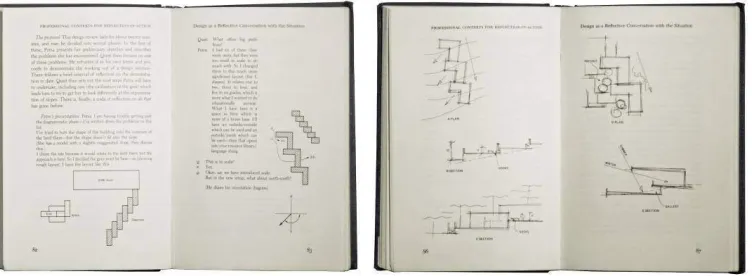
22 then further developed in “The Design Studio” (Schön, 1985). Here, the reflection in action theory is furtherly developed by questioning the nature of professional knowledge, and proposing a new epistemology (e.g. “a professional artistry”) that describes “knowledge” and “action” as mutually constitutive elements of professional practice. In more detail, Schon’s work (1983) emphasises the dialogical nature of design education and how “reflection in action” is embedded within its feedback processes, illustrated in his work by the partial transcription of a design critique session between an intructor (Quist) and a student (Petra).
Two years after “The Design Studio” (Schön, 1985), Dutton labeled as a “hidden curriculum” (1987) the collection of tacit normative value structures that shape studio pedagogy. Those value structures do not only shape the contents being taught but also additionally, as Stevens (1995) points out, derive into a “type of person” by shaping design habits and practices in a social environment through power and cultural dynamics. Ward (1990) details how the hidden curriculum described by Dutton (1987) is “determined to maintain, rather than challenge the status quo and thus to prevent real growth and real learning” in the studio.
Also specifically addressing the reflection in action theory (Schön, 1983), a provocative publication by Till (2005) harshly critisised Schön’s analysis by focusing on his misinterpretation of the design critique session utilised as part of his theory construction process. According to Till (2005), the design critique sequence he describes is not an actual collaborative dialogue between the student and an instructor, but it seems closer to a patronising sequence to induce the student into certain praxis, rather than an account for the reflective capacity of the student. In his words
at every stage he (the instructor) exerts his authority over the mystified student, cutting into her explanations, tracing over her drawings and eventually getting her to draw his preferred solution … her struggle is patronisingly dismissed. (Till, 2005, p. 167).
23 points out theoretical and validity limitations on Schön’s work. While a majority of the academic community tends to agree and sympathise with the notion of “reflection in action”, relevant components of studio teaching are purposefully left aside from this original theory, such as informal and peer learning. The “acculturation” of students into architects (Ward, 1990; Webster, 2008) highly relies on the way they transit towards becoming members of the disciplinary community and yet, little attention has been paid to other teaching modes and contexts beyond the design critique itself. In that sense, Webster (2008) remarks that the educational praxis described by Schon (1985) is constrained to a single design critique dialogue leaving aside other cognitive, corporeal and emotional aspects of the students’ education. Moreover, the authority dynamics already highlighted by previous authors are recalled by Webster (2008) as
those readers who have read the generic literature on learning and teaching or instinctively feel that tutors should avoid coercion will find Mr Quist’s (the instructor) teaching manner deeply worrying (p. 69).
The need to review other cognitive or emotional aspects of design education has been highlighted by the mentioned authors, yet the available published investigation is rather scarce. It is clear, however, that studio pedagogy is not only composed of knowledge “production and delivery” practices involving face-to-face individual feedback, but also functions as a pathway towards disciplinary habits, even at risk of unattended and tacitly accepted power and authority dynamics. The current tension between the need to reconsider our educational practices whilst operating on a highly traditional indoctrination environment is summarised by Inger Mewburn (2011) as a power struggle, by stating that
the student centred approach would suggest that too much guidance, like that offered by Quist, represses students and turns them into passive consumers rather than active participants. But the student centred discourses could in turn be questioned as reinforcing an unhelpful binary view of power, positioning it as always oppressive (p. 377).
24 (2013) who remark the importance of the perceived importance of authoritative tutor guidance in developing student confidence in their work. As a result, it is plausible to note that the studio dynamics go far beyond an instructional and knowledge trannsfer interaction across its members, but also is composed by relevant socially and culturally shaped conducts and behaviours embedded into its inherent, and yet hardly observed, academic practices.
2.3.
A
MULTIMODAL
APPROACH
TO
INVESTIGATE
ARCHITECTURAL DESIGN STUDIO DYNAMICS
Extrinsic factors influencing a reconsideration of studio teaching are many (e,g, global sustainability issues, population dynamics and emergent cities, new modes of professional practice, and so on), and hardly able to be covered in a single review. This work, focused on the integration of technology in the studio and its pedagogical impliancies, draws upon the technological context in which designers and students produce, model and communicate within the design studio. This context is commonly set by a design brief that both allow students to produce an element of design (e.g. a building) while at the same time they learn “the trade” of the professional practice.
However, it is not entirely outlined how technologies are embedded into the design studio and become “tools for design” (e.g. tools that facilitate design processes such as form-finding) or “tools for learning” (e,g, tools that facilitate learning processes such as the development of operational knowledge). In the recent report by Mizban & Roberts (2008) the term “e-learning” is used to describe the use of technologies in architectural education and particularly within design studio teaching. After an extensive review across several Schools of Architecture, the authors develop different groups of e-learning technologies that contribute to different dimensions of design and communication.
25 3D visualisation” and “Web pages”, therefore purposefully leaving aside other aspects of ICT which can be well found in architectural design studios under different categorisations.
The infusion of these types of tools, and particularly those related to CAD and 3D visualisation is, however, not new. In “The Electronic Design Studio”, the editors McCollough, Mitchell, & Purcell (1990) compiled what became a repository of pioneering experiences on computer-mediated architectural education, based on the proceedings of the CAAD Futures Conference 1989. With Chapters presented by relevant authors in the field such as Richard Coyne or George Stiny (among others), the editors explored the foundations of computers’ integration into architectural studios across the world, in both professional and educational contexts. In that sense, the work of McCollough et al. (1990) is arguably an early description of contemporary views of computer-mediated studio education.
The presented works, however limited by the technology constraints of the time, already anticipated the roles of computers in the studio and approached different digitally-derived opportunities from instrumental (e.g. Gero, 1990), organisational (e.g. Catalano, 1990) or educational perspectives (e.g. Akin, 1990). On such early publication, Akin’s work on the impact of CAD in the design studio already warned the academic community of its potential to “change” the student, the instruction, and the instructor within the design studio (Danahy, 1991). Relevantly for this work, in “The Electronic Design Studio” an early version of an AR system was presented by Purcell & Applebaum (1989) with their “Light Table”, which allowed users to physically interact with digitally retrieved materials in a table-like screen. Yet not tested in educational contexts and despite its quite premature development, this work remarks the potential use of visual infographic systems for distributed collaborative design work, as the authors state that
26 Similar systems have been developed over time, and the technology industry has seen great progress on technical solutions improving user experience, computing capacities, novel user interfaces or increasingly specialist software. Recently, studies such as Belcher & Johnson (2008) and Hsiao & Johnson (2011) describe significant contributions to the discipline by producing advanced and seemingly useful AR applications. The first study develops an AR visualisation system involving various functionalities, such as form generation, simulation, and collaboration for architectural design, yet no user-trials have been reported and its potential impact in design remains unknown. Hsiao & Johnson (2011), on the other hand, tested an AR model-making tool with architectural design students, yet user trials were used to outline technical limitations of the system rather than on students’ learning processes.
Aligned with this viewpoint is the publication from Wang et al. (2008), who state that despite the maturity of AR for industrial applications, is has had a slow transfer and adoption process within the architectural discipline. They claim that the cause for this phenomenon is the lack of understanding of the design dynamics and therefore, efforts have hardly progressed beyond production and testing phases (Wang et al., 2008).
On a similar standpoint, the use of Wikis for design education has been usually reported as a mean of communication supporting studio courses’ needs, such as communication between students and instructors. On-line learning is gaining attention from the educational community, yet it is mostly focused on its capacities related to potential higher student numbers, and geographically distributed learning environments increasing the reach of certain educational programmes. In architectural design education, one of the relevant issues raised by academics in relation to the the use of Wikis and related ICT tools is the need to reconcile those different modes of delivery (Knight & Brown, 2010) with the traditional face-to-face modes of teaching and learning in design. Aditionally, Knight & Brown (2010) reported the institutional agendas demanding the use of on-line support within the higher education spectrum, considering the need for increasing student numbers, and requests for improving the ICT-supported delivery of contents:
27 pressure on studio space and on staff time from increasing student numbers means we are seeing more students working independently away from studio. It is worth pointing out that this is currently in addition to the normal timetable tutorials, but gives students an extra opportunity for feedback and reflection on their design. (p. 51-52).
2.3.1. Investigating communication as a “cognitive ethnography”
Despite the limited studies of the applicability of the aforementioned technologies in design education, there is a concurrent stream of research, which facilitates the understanding of technology-mediated social settings.
Following the definition of “cognitive ethnographies” (Hollan et al., 2000), the challenge of setting a disciplinary frame for this research is to account for design as a social activity, allowing the observation of the impact of technologies within such setting. Studio teaching, in fact, resonates as a context in which a distinctive culture has been developed over time (Cuff, 1991) where different social practices shape the learning process (e.g. design critiques, design juries).
2.3.2. Multimodality as a research approach
Recalling previous sections, design studios rely on a series of pedagogical traditions and habits currently being called for reconsideration, stressed and permeated by extrinsic factors such as new tools and technologies. Design studios operate, at a generic level, by situating students in a project development scenario throughout a semester that is continuously fed by feedback provided by instructors and peers. Starting with a design brief, students set design goals and move across design options as the course proceeds (usually on a semester or yearly basis), and in the limited time-shared with instructors they make use of that feedback and constructive criticism to move on through the design process. As a result in design studios students model, represent, learn and use technology to a high level of complexity.
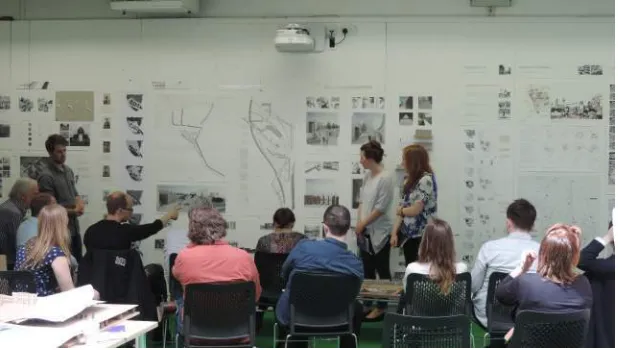
28 informal design critique session whilst a more ellaborated, neat model should be the standard in a final design jury by the end of a studio course. The first model aims to communicate work-in-progress ideas to be reviewed by the instructors while the latter aims to convey detailed design knowledge, demonstrating mastery of modelling methods and techniques to be assessed. Those “messages” are expressed through variations on the materiality and craftmanship of the models, and are interpreted and understood by instructors and fellow students in the studio (Figure 2.1).
Figure 2.1. A complex assembly of representations made by a group of students being used to communicate a final project in a MArch course at the Liverpool School of Architecture.
The validity of observing models as a communication and perception process stands not only by previous disciplinary examples - which might be familiar with any architecture instructor nowadays -, but also on theoretical work. The widespread publication from Brian Lawson “How designers think” (2005, 4th ed.) devotes a full chapter to view design as conversation and perception. He describes this approach to design largely based on conversations with designers that will ultimately form part of his research presented in “Design in Mind” (Lawson, 1994).
29 computers” (Lawson, 2005). He states that a fundamental issue to conduct an effective “conversation with the computer” is that, due to technology affordances, such conversation must be done “in the terms of the computer” in relation to the use of symbols and operations – a presence of logical thinking as an active element of a design process.
Whilst he does not describe the use of computers in social systems, it is relevant to mention his (rather succint) observation on the work of Dreyfus (1992) who describes design cognition as a complex task which can be only supported - yet not replaced - by digital tools in the context of a design conversation. Despite the brief mention, Dreyfus’ work (1992) was later to be quoted in Hutchins’ “Cognition in the Wild” (1995) where he laid foundations for the development of the theory of distributed cognition, thus adding relevance to the roles of symbols and meaning making in cognitive processes. This semiotic approach to cognition is clearly stated by Hutchins as “the entities that are imagined to be inside the mind are modeled on a particular class of entities that are outside the mind: symbolic representations” (Hutchins, 1995, p. 357), and also aligned with disciplinary viewpoints such as Goldschmidt’s work on internal and external representations (1997).
Meaning-making is at the core of social semiotics and communicational dynamics. In systems such as the design studio, conveying meaning through actions, dialogues or artifacts is a basic action of communication. In the words of Theo van Leeuwen (2005) such actions, dialogues and artifacts constitute
semiotic resources. Those resouces for communication embody social interaction through a “grammar” that structures such resources in meaningful ways. Indeed, the construction of meaning is facilitated by the use of a language that does not necessarily comprise speech, as regardless our mainstream use of speech as a communication medium, we also make use of additional semiotic resources whose interaction embodies meaning: models, gestures, gazes, and so on.
30 resources for students: video, sounds, or digitally fabricated representations are now within their reach. In the more specific case of AR -derived semiotic resources, those are combined into assemblies across digital and physical media, thus enriching the communication potential of differently and yet meaningfully crafted combinations (Figure 2.2). During the session those resources are structured into a presentation layout and a speech, constructing a narrative structure which describes the project. Such “grammar” assembles the message that students convey towards the jury members for feedback, assessment and marking purposes.
[image:44.595.83.448.500.637.2]The construction of meaning is then a social phenomenon highly relying on its context; it is in the context of the architectural design studio where the messages carried through models become identifiable and recognisable. As stated by Hodge & Kress (1988), the social dimensions of a semiotic system are intrinsic to its nature so such systems cannot be studied in isolation. Such context, namely “discourse” in social semiotics, is where the assembly of messages take place. Recalling Hodge and Kress (1988), the discourse is “the site where social forms of organisation engage with systems of signs on the production of texts, thus reproducing or changing the sets of meanings and values which makes up a culture.” (p. 6).
Figure 2.2. Video screenshot - A student describes to the design instructor an architectural model that combines a physically printed floorplan with a 3D model of the building’s form, by
using AR technology.