COMMISSION OF THE EUROPEAN COMMUNITIES
Brussels, 2.3.2006 SEC(2006) 294
COMMISSION STAFF WORKING DOCUMENT
Annex to the:
COMMUNICATION FROM THE COMMISSION TO THE COUNCIL AND THE EUROPEAN PARLIAMENT
Financing for Development and Aid Effectiveness –
The challenges of scaling up EU aid 2006 – 2010
EU monitoring of Financing for Development Aid Effectiveness: Starting to deliver on the new commitments
TABLE OF CONTENTS
EU follow – up to the Barcelona Commitments and operationalisation of the Monterrey consensus
1. Introduction ... 3
1.1. Background ... 3
1.2. Monitoring – mandate, methodology and structure ... 4
2. Commitment on ODA volume increases: the intermediate targets 2006... 5
3. Commitment to ODA volume increases: the intermediate targets 2010... 7
3.1. The challenge of scaling up EU aid during 2006 - 2010... 7
3.2. The impact of debt relief operations on the scaling up of EU aid... 9
3.3. The focus on Africa... 11
4. Commitment on innovative sources of financing ... 13
5. Commitment on debt relief ... 15
6. Commitments on aid effectiveness ... 16
6.1. Background and EU performance... 16
6.2. Results of the Survey ... 16
7. Commitment on more predictable, less volatile aid mechanisms ... 17
8. Commitment on exogenous shocks... 18
8.1. Background ... 18
8.2. EU performance ... 19
8.3. Results of the Survey ... 20
9. Commitment on untying of aid ... 20
10. Commitment on International Public Goods ... 21
11. Commitment on the reform of the International Finance Institutions... 22
12. Commitment on trade and development ... 23
13. Country profiles by EU Member State ... 27
1. INTRODUCTION
1.1. Background
In May 2005, in an extraordinary effort to contribute to the success of the UN Millennium Review Summit of September 2005, the European Union, adopted a number of historic commitments. These promises concern the volume and sources of financing for development, aid effectiveness and trade. They reconfirm the EU’s continued commitment to operationalise the Monterrey Consensus, adopted by the International Conference on Financing for Development (FfD) in Mexico, in March 2002, to make progress on both the quantity and quality of Official Development Assistance (ODA).
In deciding to attain the UN goal of spending 0.7% ODA/GNI by 2015 by gradually increasing aid and adopting a new intermediate target in 2010, the EU is making a crucial contribution to achieving the Millennium Development Goals (MDG). The willingness to transform the longstanding 0.7% aid target from an aspirational goal into a concrete, time-bound target has further confirmed the Union’s role as a key partner in the Financing for Development process. Increased aid effectiveness will support the aim of increasing the resources available for developing countries in their endeavours to eradicate poverty and achieve sustainable economic growth and development. The set of updated, reinforced or completely new commitments comprises
• new targets for Official Development Assistance (ODA): By gradually increasing ODA, the EU will collectively provide 0.56% of its GNI by 2010, as an intermediate step to achieving the UN target of 0.7% by 2015. This commitment is combined with the promise to increase aid volumes to Africa by 50%;
• additional commitments concern innovative sources of financing for development, further debt relief and International Public Goods;
• better coordinated and more effective aid at EU level as well as the implementation of the Paris Declaration on Aid Effectiveness, including more predictable aid mechanisms, mitigation of exogenous shocks, aid untying and reform of the international financial system;
• trade-related assistance (TRA), for which the Council further specified the commitments prior to the WTO Ministerial Conference in Hong Kong1.
While welcome pledges for additional aid and debt relief followed from some international partners2, these efforts are more modest in scope and ambition and other international players, in particular non-OECD/DAC donors, have yet to demonstrate their commitment to addressing the challenges of financing for development around the world. Whereas the UN Summit in September 2005 reiterated the shared responsibility of donor and recipient countries in achieving the Goals of the Millennium Declaration and other internationally agreed development objectives, the summit outcome fell short of the EU’s ambitions, including on the issue of Financing for Development.
1
“Aid for Trade” Council Document 15579/05 DEVGEN 250 RELEX 748 of 09.12.2005.
When the EU further strengthened its policy framework later in 2005, the new set of commitments on financing and effectiveness of aid became key parts of the joint EU Development Policy Statement (‘European Consensus on Development’) and the EU Strategy for Africa3.
1.2. Monitoring – mandate, methodology and structure
Since 2003 the Commission’s annual progress reports have become a well established monitoring mechanism within the EU for assessing the degree of implementation of the EU’s commitments on financing and effectiveness of aid and for proposing corrective measures wherever progress is insufficient. In 2005 the Council reiterated the request to the Commission to provide annual progress reports. The Commission monitors progress in implementing the EU’s commitments on the basis of an annual survey of EU Member States (MS) based on a detailed questionnaire. This exercise provides a good opportunity for
collective benchmarking and ensures that action taken by the Union is transparent. The progress reports of the Commission regularly consist of a Communication to the Council and the European Parliament and are supplemented by a Staff Working Paper.
The first monitoring report of 2003 fed into the preparations for the first UN High Level Dialogue on FfD in October 20034; the 2004 report5 ultimately led to the EU report ‘Advancing coordination, harmonisation and alignment’6 which became an essential input into the international harmonisation and alignment debate at the OECD/DAC High Level Forum II (HLF II) in Paris in March 2005. The 2005 report laid the basis for the new set of EU commitments adopted by the Council and reconfirmed by the European Council7.
This year’s survey covered questions relating to the new commitments of 2005 as well as the earlier intermediate ODA target, established in 2002, on which the EU promised to deliver by 2006.
The scope of feedback and the quality of contributions by MS to the questionnaire have been constantly improving. This seems to reflect a considerable and growing interest and Member States’ (MS) ownership in the monitoring of the joint EU performance. Some MS provided more detailed information, while others preferred not to take a position on all issues. The responses from all the MS constitute a solid basis for drafting the proposals that have been incorporated in the Communication ‘Financing for development and aid effectiveness – the challenges of the scaling up of EU aid 2006 – 2010’.
This report evaluates the trends expressed by the MS and assesses the state of preparation and initial progress in delivering on each of the new commitments. The report consists of two parts: the first part is divided into eleven thematic chapters on each of the commitments; the second part consists of a compilation of answers to the survey by each MS.
3 Council of 22.11.2005: “The European Consensus on Development”, Council Document 14820/05; the Presidents of the Council, the European Parliament and the Commission jointly signed the ‘Consensus’ on 20.12.2005; ‘The EU and Africa: Towards a strategic partnership’ adopted by the European Council of 15-16.12.2005 Council document 15961/05 of 19.12.2005.
4 Commission Staff Working Paper “Follow-up to the International Conference on Financing for Development (Monterrey – 2002) - Monitoring the Barcelona Commitments” SEC (2003) 569, 15.05.2003; Council Conclusions of the GAERC of 20.05.2003, document 9379/03 (Presse 138) p.20.
5
2. COMMITMENT ON ODA VOLUME INCREASES: THE INTERMEDIATE TARGETS 2006
Commitment: “In pursuance of the undertaking to examine the means and timeframe that will allow each of the Member States to reach the UN goal of 0.7% ODA/GNI, those Member States that have not yet reached the 0.7% target commit themselves – as a first significant step – individually to increase their ODA volume in the next four years within their respective budget allocation processes, whilst the other Member States renew their efforts to remain at or above the target of 0.7% ODA, so that collectively an EU average of 0.39% is reached by 2006. In view of this goal, all the EU Member States will in any case strive to reach, within their respective budget allocation processes, at least 0.33% ODA/GNI by 2006.”
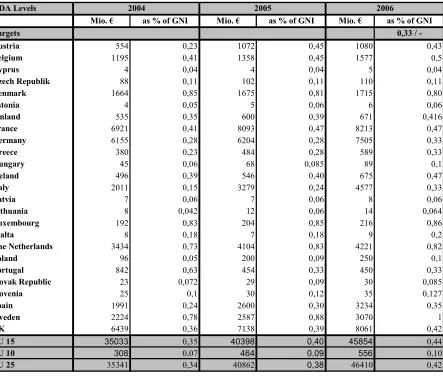
[image:5.595.81.524.285.661.2]These first intermediate individual and collective ODA targets were established by the EU in 2002 (‘Barcelona commitments’) and have to be honoured by 2006.
Table 1: EU ODA levels 2004 – 2005 – 2006
ODA Levels
Mio. € as % of GNI Mio. € as % of GNI Mio. € as % of GNI
Targets 0,33 /
-Austria 554 0,23 1072 0,45 1080 0,43
Belgium 1195 0,41 1358 0,45 1577 0,5
Cyprus 4 0,04 4 0,04 5 0,04
Czech Republik 88 0,11 102 0,11 110 0,11
Denmark 1664 0,85 1675 0,81 1715 0,80
Estonia 4 0,05 5 0,06 6 0,06
Finland 535 0,35 600 0,39 671 0,416
France 6921 0,41 8093 0,47 8213 0,47
Germany 6155 0,28 6204 0,28 7505 0,33
Greece 380 0,23 484 0,28 589 0,33
Hungary 45 0,06 68 0,085 89 0,1
Ireland 496 0,39 546 0,40 675 0,47
Italy 2011 0,15 3279 0,24 4577 0,33
Latvia 7 0,06 7 0,06 8 0,06
Lithuania 8 0,042 12 0,06 14 0,064
Luxembourg 192 0,83 204 0,85 216 0,86
Malta 8 0,18 7 0,18 9 0,2
The Netherlands 3434 0,73 4104 0,83 4221 0,82
Poland 96 0,05 200 0,09 250 0,1
Portugal 842 0,63 454 0,33 450 0,33
Slovak Republic 23 0,072 29 0,09 30 0,085
Slovenia 25 0,1 30 0,12 35 0,127
Spain 1991 0,24 2600 0,30 3234 0,35
Sweden 2224 0,78 2587 0,88 3070 1
UK 6439 0,36 7138 0,39 8061 0,42
EU 15 35033 0,35 40398 0,40 45854 0,44
EU 10 308 0,07 464 0,09 556 0,10
EU 25 35341 0,34 40862 0,38 46410 0,42
2004 2005 2006
Data sources: OECD/DAC Annual report 2005, statistical annexes and replies by EU MS to the Monterrey survey8.
The EU is broadly on track to meet the ODA target thresholds. In 2004 the EU collectively was significantly above the average of OECD/DAC donors (except for Norway and Switzerland), but no real increase in percentage terms was achieved compared to 2003. ODA volumes increased in nominal terms in 22 Member States. Examples of an exceptional increase (Portugal) and decrease (Belgium) compared to 2003 are mainly related to debt relief efforts. Despite a transitory decrease - due to early repayment of ODA loans - Netherlands aid remains largely above the 0.7% and should again achieve levels at or above 0.8% throughout the period 2005-2010. The continuing low and falling level of Italian aid (0.15% ODA/GNI), which has now decreased further to become the lowest ODA/GNI ratio of OECD/DAC donors, is the main reason why the EU has been unable to increase its collective performance in real terms above the 2003 level. If Italy had maintained the 2002 level of 0.2%, the combined EU efforts in 2004 would have resulted in a real increase and a higher ODA/GNI ratio of 0.35%.
The outlook for 2005 and 2006 is more promising: If current estimates are accurate, the Member States that adopted the ‘Barcelona commitments’ in 2002 (EU15) have together already exceeded the 0.39% target in 2005. Italy appears to have introduced corrective measures (estimated 0.24% ODA/GNI), but remains by far the weakest performer of the group. The collective result in 2006 will depend on those countries that are still below the minimum threshold of 0.33%. Germany, Greece, Italy, Portugal and Spain must achieve a substantial rise in their aid volumes to meet or maintain their individual targets by 2006. The individual contributions of the “heavyweights”, Germany and Italy, are particularly important to the collective result. Italy will have to make the ODA increase a political priority throughout 2006 in order to reach 0.33% and avoid jeopardising the overall positive trends of EU ODA seen since 2002. What is required is the mobilisation of further € 2.6 billion compared to the 2004 ODA allocations. Germany’s ODA levels were stable at 0.28% for two consecutive years (2003-2004) and it re-confirmed - including in the new Government agreement - the commitment to allocate 0.33% of the GNI for ODA in 2006. The main reason why Germany and other MS are meeting the individual ODA baselines by 2006 seems to be that they are benefiting from the effects of recent debt reduction operations for countries that do not belong to the group of Heavily Indebted Low-Income Countries (HIPCs), notably Iraq and Nigeria.
Compared to last year’s forecast some Member States seem to have adjusted their intended ODA increases to the joint EU timetable 2006-2010 and slightly corrected downwards their ODA growth projections for 2006 and beyond, while still remaining well above the individual baseline target.
3. COMMITMENT TO ODA VOLUME INCREASES: THE INTERMEDIATE TARGETS 2010
Commitment: “Increased ODA is urgently needed to achieve the MDGs. In the context of reaching the existing commitment to attain the internationally agreed ODA target of 0.7 % ODA/GNI, the EU notes with satisfaction that its Member States are on track to achieve the 0.39% target in 2006 for ODA volumes contained in the Barcelona commitments. At present, four out of the five countries, which exceed the UN target for ODA of 0.7, of GNI are member states of the European Union. Five others have committed to a timetable to reach this target. While reaffirming its determination to reach these targets, the EU agrees to a new collective EU target of 0.56 % ODA/GNI by 2010, that would result in additional annual € 20bn ODA by that time.”
3.1. The challenge of scaling up EU aid during 2006 - 2010
Member States’ replies to the survey indicate that the preparations in the EU for speeding up ODA increases during 2006 – 2010 have already got off the ground successfully; collectively the EU appears to be approaching the agreed intermediate targets.
Diagram 1: Current state of preparation for meeting the new collective EU targets by 2010
0 0,1 0,2 0,3 0,4 0,5 0,6 0,7
2002 2003 2004 2005 2006
Target Year
2007 2008 2009 2010
Target Year
EU-25 Target 2006 EU-25 Target 2010 EU-10 Target 2010 EU 15 TOTAL EU 15 Last Figures EU 10 Total EU 10 Last Figures EU 25 TOTAL EU 25 Last Figures
Sources: Replies of EU Member States to the Monterrey survey
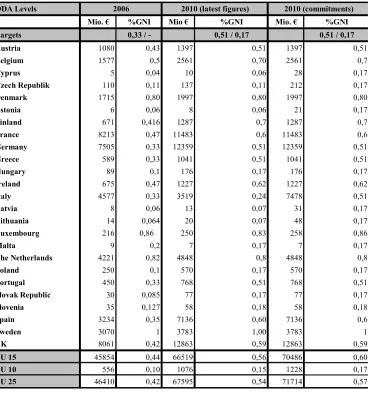
[image:8.595.78.446.187.580.2]Preliminary estimates show that the majority of MS have introduced the necessary measures to attain the 2010 ODA targets: six MS will provide 0.7% or more of their GNI as ODA, with Sweden keeping its ODA at 1.0% of GNI and Luxembourg endeavouring to attain that level. A further four MS will allocate around 0.6% of their GNI for development aid and others foresee progressive year-on-year increases reaching 0.51% ODA/GNI.
Table 2: Prospects for delivery on the 2006-2010 intermediate EU targets
ODA Levels
Mio. € %GNI Mio € %GNI Mio. € %GNI
Targets 0,33 / - 0,51 / 0,17 0,51 / 0,17
Austria 1080 0,43 1397 0,51 1397 0,51
Belgium 1577 0,5 2561 0,70 2561 0,7
Cyprus 5 0,04 10 0,06 28 0,17
Czech Republik 110 0,11 137 0,11 212 0,17
Denmark 1715 0,80 1997 0,80 1997 0,80
Estonia 6 0,06 8 0,06 21 0,17
Finland 671 0,416 1287 0,7 1287 0,7
France 8213 0,47 11483 0,6 11483 0,6
Germany 7505 0,33 12359 0,51 12359 0,51
Greece 589 0,33 1041 0,51 1041 0,51
Hungary 89 0,1 176 0,17 176 0,17
Ireland 675 0,47 1227 0,62 1227 0,62
Italy 4577 0,33 3519 0,24 7478 0,51
Latvia 8 0,06 13 0,07 31 0,17
Lithuania 14 0,064 20 0,07 48 0,17
Luxembourg 216 0,86 250 0,83 258 0,86
Malta 9 0,2 7 0,17 7 0,17
The Netherlands 4221 0,82 4848 0,8 4848 0,8
Poland 250 0,1 570 0,17 570 0,17
Portugal 450 0,33 768 0,51 768 0,51
Slovak Republic 30 0,085 77 0,17 77 0,17
Slovenia 35 0,127 58 0,18 58 0,18
Spain 3234 0,35 7136 0,60 7136 0,6
Sweden 3070 1 3783 1,00 3783 1
UK 8061 0,42 12863 0,59 12863 0,59
EU 15 45854 0,44 66519 0,56 70486 0,60
EU 10 556 0,10 1076 0,15 1228 0,17
EU 25 46410 0,42 67595 0,54 71714 0,57
2006 2010 (latest figures) 2010 (commitments)
Source: Replies of EU MS to the Monterrey survey
However, the Commission is concerned at the overall tendency of MS to strongly back-load the substantial increases in ODA volumes towards meeting the next intermediate individual and collective ODA targets. In particular, Italy and Germany and several new MS have been unable to indicate how they intend to ensure the required gradual growth of ODA allocations in their national medium-term budget planning. If projections are confirmed over time, the combined EU performance would lead, by 2010, to an ODA/GNI ratio that is almost three
Diagram 2: Scaling up of EU aid 2006 – 2010 compared to the DAC average without EU
0 0,1 0,2 0,3 0,4 0,5 0,6 0,7
2002 2003 2004 2005 2006
Target Year
2007 2008 2009 2010
Target Year
EU-25 Target 2006 EU-25 Target 2010
EU-10 Target 2010
EU 15 TOTAL EU-10
EU 25 TOTAL
DAC Members
Sources: OECD/ DAC Annual Report 2005, statistical annex; replies of Member States to the Monterrey survey; Commission estimates
3.2. The impact of debt relief operations on the scaling up of EU aid
Diagram3: EUODAflows and debt relief 2000 – 2004
EU ODA flows 2000-2004 and 2005-2007 forecasts
0 5 000 10 000 15 000 20 000 25 000 30 000 35 000 40 000 45 000
2000 2001 2002 2003 2004 2005 2006 2007
€
m
ill
io
n
Nigerian Debt
Iraqi Debt
HIPC
Non HIPC Debt Non-Debt ODA
Data source: OECD/DAC Annual report 2005, statistical annex
1.1. The contribution of the new Member States
Diagram: The ODA/GNI ratio of the EU10 in 2004, compared to current projections and commitments for 2010
0 0,05 0,1 0,15 0,2
Cyprus Czech Republic Estonia Hungary Latvia Lithuania Malta Poland Slovak Republic Slovenia EU 10 Total
2010 Target
2004 ODA Level
2010 ODA Level
Sources: Replies of Member States to the Monterrey survey
EU10’s overall commitment and performance is impressive and could achieve, in the medium-term, ODA/GNI ratios comparable to the USA and close to those of Japan, the two single most important DAC donors. Five of these Member States see medium-term ODA-allocations moving up to 0.17% or more by the target date. Slovenia’s efforts are geared towards achieving 0.18% by 2010, whereas Malta already attained that level in 2004 and has pledged to sustain its ODA at least at 0.17% of GNI throughout the period 2004 – 2010. The Baltic countries and the Czech Republic, who were not yet in a position to explain medium-term budget planning for development assistance, and Cyprus, need to strengthen their efforts and adapt their ODA budgets as from 2006, especially through aid allocations in addition to their contributions to the EC budget and the 10th EDF.
3.3. The focus on Africa
will be required to ensure a sound division of labour and fair burden-sharing in order to move towards this common goal which was not linked to an individual commitment by each MS. So far, Africa has not been a focus region for a number of EU Member States. The annex provides an overview of the replies by MS on how they are bilaterally preparing to focus their bilateral ODA more fully on Africa. The feedback from MS reveals a wide variety of situations and future orientations regarding Africa, although most intend to pay increasing attention to the share of ODA for Africa within their overall budgets: Between 2000 and 2004, five of the EU15 provided around 50 percent or more of their ODA to Africa (Belgium, France, Ireland, Italy, Portugal); they all confirmed that Africa will remain their first geographical priority in the future. Others stated that their aid budgets for Africa will increase (Germany, Poland, Spain, Sweden, Slovenia, United Kingdom) or that the majority of the countries on which they are already focusing are in Africa (Austria, Cyprus, Denmark, Luxembourg). Some MS are planning to increase their aid to Africa through humanitarian aid (Czech Republic, Sweden) or food aid (Poland), through debt relief (Hungary), allocations to multilateral organisations (Estonia, Poland, Slovakia, Spain) or possibly partnerships with other MS (Lithuania, Slovakia).
Diagram: Share of allocations to Africa in EU total ODA – average 2000 - 2004
0 10 20 30 40 50 60 70 80 90 100 Aus tria Bel gium Den mar k Finl and Fran ce Ger man y Gre ece Irela nd Italy Luxe mbo urg Net herla nds Por tuga l Spa in
Swed en
Uni ted
Kin
gdom E C P e rc e n ta g e
Diagram: The share of Africa in ODA allocations of the EU Member States and the European Community 0 10 20 30 40 50 60 70 80 90 100 Aust ria Belg ium Den mar k Finl and Fran ce Ger man y Gre ece Irela nd Italy Luxe mbo urg The Net herla nds Portu gal Spai n Swed en Uni ted King
dom E.C .
2002 level 2003 level
Source: OECD/DAC Annual Report 2004, statistical annex
4. COMMITMENT ON INNOVATIVE SOURCES OF FINANCING
Commitment: “The Council will continue to consider the most promising options for innovative sources of financing for development, in order to increase the resources available in a sustainable and predictable way. It notes the intention of some Member States to introduce a solidarity levy on airline tickets.”
In 2005, the Council considered the most promising options for innovative sources of financing for development on the basis of technical analyses provided by the Commission of those financing mechanisms which the Council regarded as most likely to receive significant support from Member States9
As a result of this process, the following two proposals received the support of some Member States:
• The International Finance Facility for immunisation (IFF-Im) which was launched in September 200510 by France, Italy, Spain, Sweden and the UK as a mechanism to frontload financing for immunisation programmes. Seen as a pilot case for a much larger IFF mechanism, the IFF-Im involves a commitment of € 3.3 billion over ten years with an initial market borrowing and related disbursement expected in early 2006. To date, the actual cost of frontloading funds through such a financial mechanism (as opposed to simply speeding up the increase in government budgets for development) remains an open question. Moreover, Portugal is ready to support the IFF-IM, whereas Luxemburg is exploring this option further.
9
“New Sources of Financing for Development: A Review of Options” SEC(2005)467 of 05.04.2005; “A analysis of a possible contribution based on airline tickets as a new source of financing development” SEC(2005)733 of 15.06.2005; “A possible contribution based on airline tickts as a new source of financing development: technical reflections in the run up to the UN High Level Event” SEC(2005)1067 of 01.09.2005.
• A contribution on airline tickets to enable financing development projects in particular in the health sector, was approved by France in December 2005 and will apply to all air tickets sold in the country for travel departing from France as of July 2006. Return ticket tax rates range from €1 for economy class to €10 for business class on flights within the European Economic Area (EEA), and from €4 to €40 for flights outside the EEA. According to French estimates the tax would raise about €210 million annually that would be used to increase the French contribution to financing of the struggle against pandemics in the developing world, especially AIDS, tuberculosis and malaria. The United Kingdom indicated that part its existing Air Passenger Duty should be used for development financing. The United Kingdom levies an Air Passenger Duty that amounts to €29 for European flights and up to €58 for other international flights. Luxemburg indicated its readiness to implement an airline ticket tax.
The objective of mobilising additional and more stable sources of finances must guide the discussion on innovative financing sources and aid modalities and should, in the medium-term, lead to the provision of more predictable funding. The Commission notes that the IFF-Im brings forward in time resources already pledged to partner countries. Airline ticket solidarity levies can either facilitate the financing of existing commitments or provide complementary resources. In addition, in view of the manifest tendency to link new sources of finances to specific issues and goals, there is a risk that this may contribute to the creation of further vertical and issue-based funds and programmes, thus harming overall aid effectiveness and country ownership.
To support the debate and preserve the momentum, a technical workshop between the Commission services and representatives of the 25 Member States was held in February 2006. Touching upon the existing initiatives as well as possible alternatives, the workshop revealed that the implementation of the initiatives under preparation may have a positive effect on Member States’ readiness to join, or carry forward, initiative in the area of innovative financing for development. This is in line with the answers to the Monterrey survey which indicate that while a minority of Member States are actively considering the introduction of one or more innovative financing mechanism (Belgium, Estonia, Germany, Finland, Italy, Luxemburg and Spain) the large majority does not plan to adopt innovative financing modalities prior to an analysis of on-going experience and a thorough study of the feasibility and impact of the measures proposed.
5. COMMITMENT ON DEBT RELIEF
Commitment: “The EU remains committed to finding solutions, in cooperation with International Financial Institutions (IFIs), to unsustainable debt burdens, and is committed to full implementation of the enhanced HIPC initiative. It will be vital to agree on the scope and modalities for further multilateral debt relief in order to secure the long term debt sustainability on a case by case approach.”
The Multilateral Debt Relief Initiative of the G8, subsequently confirmed by the IFIs at the World Bank/ IMF Annual Meeting of September 2005, to a large extent provided a response the EU’s concern regarding debt sustainability for the HIPC, as expressed in the above-quoted new commitment on debt.
As far as the implementation of the enhanced HIPC initiative is concerned, good progress is being made. However, the level of participation of Non-Paris Club official creditors and commercial creditors generally is low. 13 Member States are prepared to take some action to help avoid lawsuits against HIPCs from commercial creditors, but not all of them seem ready to finance the existing debt reduction facility managed by the World Bank, as only four have replied favourably to this question (Netherlands, Slovenia, Sweden, United Kingdom). The potential inclusion of four new countries in the HIPC initiative (Eritrea, Haiti, Kyrgyz Republic and Nepal) will increase costs for seven Member States. However, several of them have not yet been able to indicate the amounts which would be involved.
Five out of the nine new Member States that replied indicate they have not yet made the necessary provisions to fully implement the HIPC initiative; four do not envisage being able to meet the Barcelona commitment to the 100% debt relief on bilateral claims. Malta is not concerned by the debt of developing countries.
As to whether they would support a potential further initiative to cover the debt owed to multilateral institutions other than those covered by the Multilateral Debt Relief Initiative, nine Member States responded favourably. Of these, five Member States (Denmark, Ireland, Luxembourg, Malta, Slovenia) specifically mentioned the possibility of covering the old EC/EDF loans managed by the EIB. The Inter-American Development Bank was mentioned by six Member States (Cyprus, Denmark, Ireland, Luxembourg, Malta, Spain).
6. COMMITMENTS ON AID EFFECTIVENESS
Commitment:
“In preparation for the Paris High Level Forum, the Council has adopted, on 22 November 2004, a comprehensive EU response with the report on ‘Advancing coordination, harmonisation and alignment’. The EU will ensure implementation of the concrete recommendations contained therein, including a more effective framework for development assistance at the EU level and division of labour and complementarity at country level in the context of joint, multi-annual programming based on the partner country’s poverty reduction strategies.
The EU is fully committed to a timely implementation and monitoring of the Paris Declaration on Aid Effectiveness including setting monitorable targets for 2010 and of the EU specific commitments adopted at the Paris Forum.”
6.1. Background and EU performance
The EU’s report ‘Advancing coordination, harmonisation and alignment’ came up with eight recommendations, on which the EU MS and the Commission have started to deliver. At the Paris High Level Forum the EU, in addition to the official declaration of the meeting, committed itself unilaterally to additional specific targets: (1) to provide all capacity building assistance through coordinated programmes with an increasing use of multi-donor arrangements; (2) to channel 50% of government-to-government assistance through country systems, including by increasing the percentage of assistance provided through budget support or Sector Wide Approach arrangements; (3) to avoid the establishment of any new Project Implementation Units; (4) to reduce by 50% the number of un-coordinated missions. 2006 will be the year of truth, in which progress in delivery will be checked against our commitments.
In order to keep up the pace of necessary reforms, a strong and steady mechanism for monitoring the objectives and indicators of the Paris Declaration is needed. The Commission plays a positive role in maintaining a co-ordinated position at EU level, in ensuring enhance partner country participation and in striving to agree on meaningful, but ambitious indicators The reluctance of some donors to follow the EU’s lead in moving the aid effectiveness agenda forward is, however, regrettable. Considering the delays in finalising that monitoring tool, it is essential that this process finds its cruising speed in 2006, without watering down the commitments, in order to keep up the pace of the necessary reforms. It is noticeable that twenty of the EU MS have already adopted instructions to ensure appropriate dissemination of the Paris Declaration and objectives in their own systems. In future editions of this progress report the Commission will assess the status of the EU’s own commitments, which were recorded during the Paris High Level Forum. The Commission report separately on the progress of implantation of the special EU commitments of Paris so far as well as on the Roadmap process, underway in follow-up to the Ad Hoc Working Party Report of November 2004.
6.2. Results of the Survey
improving our division of labour, as a key component of improving the effectiveness of our aid. This is one of the main issues highlighted by several Council conclusions in 2005 and raised by the EU Action Plan that needs to be addressed in the follow-up to the Paris Declaration. In this regard, two thirds of the MS have already agreed to re-examine their resources and structures in order to face the challenges of complementarity, and to address existing gaps. The survey prompted a variety of views on the guiding principles for a division of labour at EU level: More than two thirds of the MS believe that a system of division of labour should (1) cover both donors’ activities and donors’ systems and (2) address the existing gaps (orphan countries and sectors). Views are more divided on the question of whether the division of labour should only focus on new initiatives (six MS) or also cover actions under implementation (ten MS). More than 40% of the Member States are in principle ready for a partial re-deployment of their bilateral activities.
The survey provides a fairly differentiated picture of approaches as regards the main channels that will be used to implement the increasing ODA volumes in the scaling up process. There does not seem to be a single line among MS: Eighty percent of the MS intend to strengthen both the bilateral strand and the cooperation with multilateral, regional or European institutions.
Concerning the bilateral leg of their cooperation, 19 MS expressed a preference for government-to-government cooperation; for 14 MS the cooperation through NGOs is important, whereas 11 MS want to work through local authorities/organisations. Eight MS are looking for partnerships with other bilateral donors.
The UN system leads the ranks of the most favoured recipients of multilateral aid: Two thirds of the MS will use the UN system to channel increasing bilateral aid volumes. As the EU is already the largest supplier of ODA support to the UN system, a much closer coordination among EU MS and the Commission is crucial to ensure the effectiveness and visibility within the EU of such contributions to the different UN organisations. Eleven MS are planning to increase their contributions to the IFIs and ten to regional development banks or regional organisations. Despite the new commitments on trade-related assistance (TRA) of May and December 2005, it is surprising to note that only three MS appear to be considering increased support to the WTO (Finland, Italy and Luxembourg).
7. COMMITMENT ON MORE PREDICTABLE, LESS VOLATILE AID MECHANISMS
Commitment: “In order to better respond to the need for stable resources and in view of the expected increases in ODA flows, the EU will develop new, more predictable and less volatile aid mechanisms. Such mechanisms could consist in the provision of a minimum level of budgetary aid secured in a medium-term perspective and linked to policy performance in the partner countries, in particular in relation to the commitment to achieving the MDGs in national poverty reduction strategies.”
The Council invited the Commission to develop proposals for a new long-term budget support mechanism11, targeting the best performing countries. Budget support is now also regarded by more than half of the MS as their preferred instrument for delivering increased bilateral aid:
13 MS indicated that programme aid in the form of budget support was one the two
most favoured methods of delivering future bilateral ODA. Six MS (Denmark, Finland, France, Portugal, Sweden, United Kingdom) are ready to provide general untargeted budget support. Ten Member States (Austria, Belgium, Cyprus, Denmark, Finland, France, Ireland, Italy, Poland, United Kingdom) appear to be taking a more cautious stand by giving
preference to budget support targeted at particular sectors such as health, education, sanitation or infrastructure. Germany – following the explicit reference to budget support as a delivery tool in the new Government agreement – is in the process of reviewing its aid delivery modalities, including the use of based approaches and programme-oriented joint financing with other donors.
This overall picture presented by the feedback to the survey shows that there is a more positive assessment of sectoral and general budget support among MS. However, the pace of this movement contrasts with the commitments made, notably at the Paris High Level Forum on budget support and Sector-Wide Approaches, and the challenges linked to aid delivery in the EU scaling-up process. So far, just two Member States (Portugal and United Kingdom) seem inclined to move to multi-annual budget support with reviews of conditionality at intervals of less than one year, in the sense indicated by the Council Conclusions on the Millennium Development Goals of May 24, 2005. The divergent views among Member States were also apparent at a technical workshop organised by the Commission in February 2006 in response to the Council’s invitation to elaborate proposals for a new long-term budget support mechanism targeting the best performing countries.
8. COMMITMENT ON EXOGENOUS SHOCKS
Commitment: In order to mitigate the impact of exogenous shocks, including price vulnerability, on developing countries economies, the EU will support the operationalisation of market based insurance schemes and explore possibilities for temporary suspension of debt servicing on a case by case basis. Further, the EU will strengthen and improve access to existing financing mechanisms such as those provided for in the Cotonou Agreement (FLEX) to give short term cover against the impact of such shocks on countries’ revenue.
8.1. Background
Exogenous shocks, including commodity price drops, natural disasters and trade-distorting conflicts in the region, often have a significant negative effect on the economy of developing countries. By definition, exogenous shocks are events beyond the control of national authorities, to which a quick adjustment has to be sought in order to mitigate the impact on the national economy. There are several instruments to assist governments, but their effectiveness has at best been mixed. In 2005, renewed attention was drawn to the need to widen and improve the development assistance ‘toolbox’ to be able to better respond to the challenges faced through external shocks. Moreover, the donor community is looking to encourage a migration from current ad hoc post shock/disaster assistance to a broader strategic approach on shock/disaster planning through ex-ante risk management investment strategies and investment in prevention.
arrangements with the participation of the private sector for commodity price-risk management’. Moreover, the EU Development Policy Statement of December 2005 refers to risk management as an important focal area in support of agricultural development: “in relation to agriculture, the Community will focus on …… and risk management (in countries dependent on commodities)”.
8.2. EU performance
The Commission and some of the EU Member States participate actively in the International Task Force on Commodity Risk Management. At the 2005 meeting of this task force, the concept of the Global Index Insurance Facility (GIIF) was launched. The main aim of the GIIF is to set up a re-insurance facility that will allow insurance coverage for indexable price risks related to weather, disaster and commodities in developing countries. The GIIF would like to close the gap between the developing countries’ demand for insurance against severe shocks at public and private levels and the index insurance markets. The GIIF would lower the entry barrier for international risk transfer by pooling smaller transactions and thereby increase the transfer of risk out of developing countries. The clients of the GIIF would be governments, local banks and primary insurers in developing countries. Preparatory work on the GIIF has been undertaken and it is expected to become operational by mid-2006. The EC and ACP have earmarked € 25 million to support the development of the GIIF and to facilitate access to the Facility by ACP States through the European Development Fund. The European Investment Bank is expected to become one of the main shareholders of the GIIF and will prepare its due diligence report in early 2006.
A first ad hoc revision of the EC financed FLEX mechanism for ACP countries took place in 2004 (Decision N°2/2004 of the ACP-EC Council of Ministers of 30 June 2004). The modification of the eligibility criteria (extension to landlocked and island ACP States of the special clause of 2% loss of export earnings in the case of least-developed countries - criterion 1) and reducing from 10 to 2% the worsening in the programmed public deficit - criterion 2) resulted in increased accessibility to the mechanism for ACP States.
A second revision was conducted as part of the revision of the Cotonou Agreement signed on 25 June 2005 with the adaptation of Article 68 on FLEX. The new draft wording of paragraph 3 states “In this context, the least developed, landlocked and island, post-conflict and post natural disaster ACP States shall receive more favourable treatment”. This means that the special clause of 2% loss of export earnings has also been extended to post-conflict and post natural disaster ACP States.
Beyond the modification contained in the revised Cotonou agreement on the existing FLEX, and in line with the explanation contained in the explanatory memorandum (paragraph 6) of the Commission proposal to the Council (COM/2005/185 of 3/5/2005), it was decided that “some components, such as the rules on the award of contracts and the modalities for implementation of the FLEX mechanism will be reviewed and adapted, if necessary, by the ACP-EC Council of Ministers”. Therefore, at the request of the ACP States a further review to improve the speed of delivery and the anti-cyclical impact of the FLEX mechanism is expected.
8.3. Results of the Survey
The 2005 questionnaire focused on the Global Index Insurance Facility (GIIF) and asked MS whether they intend to support the GIIF or similar market-based insurance schemes for the mitigation of negative effects from external shocks. In general, the survey indicated little familiarity with the concept of the GIIF and the proposals to establish the facility. A few Member States (Cyprus, Netherlands and Spain) were willing to consider supporting to the GIIF, but could not provide details about the likely type and scale of their support. The conditions under which support would be envisaged are: sufficient progress in the establishment of the GIIF, a clear work plan, a more detailed financial plan and sufficient support from other donors. Other Member States (Belgium, Germany and Sweden) welcomed the initiative, had no objection to EC financing and/or indicated that they are not yet in a position to give an indication of potential support, usually because of lack of knowledge about the facility. Others (Finland, Ireland, Luxembourg and United Kingdom) welcomed the attention being given to shock management in general and the role of the Commission in the GIIF, but indicated that no bilateral support can be expected in the short term. The linkage between the various initiatives (including the newly established Exogenous Shocks Facility by the IMF) is seen as important, and the overall ability of the international aid architecture to respond should be looked at with a view to ensuring a rapid reaction to exogenous shocks.
9. COMMITMENT ON UNTYING OF AID
Commitment: “Addressing the challenge of untying of aid by adopting as soon as possible, on the basis of the Commission’s proposal, a regulation on the access to EC external assistance; the EU will support ongoing debates at the international level on further untying of aid beyond existing OECD/DAC recommendations.”
The European Community concluded long-standing work to untie the aid managed by the Commission. The two regulations on untying (n° 2110 and 2112) were eventually adopted on 14.12.2005 and entered into force on 28.12.200512.
In the context of the second part of the commitment, e.g. the further support for untying beyond existing DAC recommendations, the untying of food aid is a particular concern of the EU, and the questions in the survey focused on this subject.
In their replies, the EU15 plus Slovenia and Poland declared that they provide nearly all food aid contribution in cash and untied, with only minor conditions, namely no support of development activities, preferences for local or regional purchases, no Genetically Modified Organism (GMO) food. The same group of MS appear to provide little or no donations in kind13, nor do they dispose of food surpluses as food aid. This means that there are no donations of domestically produced commodities or any requirement to buy commodities in their country or in the EU14.
Regarding the new Member States (with the exception of Slovenia and Poland), the situation is more differentiated. Three of the EU10 (Estonia, Latvia, and Malta) do not provide any food aid donations. The remaining EU10 countries present a variety of situations covering a
mix of in kind and cash donations with a quite substantial share of tied aid. Their reporting does not mention the introduction of any new legislation that would contribute to changing this situation in the near future (with the exception of Lithuania)
As the EU has reiterated on various occasions in international forums15, the European Union’s common position on food aid needs to be fully implemented by the MS, particularly by the new MS (and possibly also by Greece, Italy and Portugal). It is important to recall that the EU intends to provide food aid on the following basis:
• As an instrument of humanitarian assistance;
• Fully in grant form in situations of acute and protracted crises, with a view to the timely meeting of well identified and internationally recognised needs;
• Demand-driven rather than supply-driven;
• It should not be a means for donors to dispose of surpluses and must not disrupt local markets and production;
• In line with the recommendations of the OECD, the EU emphasises the need to fully untie food aid and move donor practices towards local and regional purchases as a means of stimulating agricultural production, sustaining local markets and enhancing the livelihood of producers;
• Furthermore, food aid must be compatible with local food habits and take account of safety concerns.
In accordance with the existing international commitments of the EC, food aid should be provided in a manner consistent with FAO Principles of Surplus Disposal and Consultative Obligations, the Food Aid Convention and the WTO Agreement on Agriculture. MS should fully implement the existing OECD/DAC recommendation of 2001 and furthermore support enhanced efforts to promote untied aid in the framework of the ongoing OECD/DAC discussions. Concerning current multilateral negotiations on food aid, the European Community (EC) supports WTO discussions to reform and strengthen its rules governing the provision of food aid. In accordance with the EC’s position at these negotiations, food aid should be provided in cash and fully untied.
10. COMMITMENT ON INTERNATIONAL PUBLIC GOODS
Commitment: “Examining, on the basis of the report of the Task Force on Global Public Goods, the possibilities to establish by 2006 an Action Plan at EU level on the provision of priority International Public Goods (IPGs) and agreeing to examine the financing modalities of the IPGs.”
The subject of International Public Goods has always had difficulties trying to move from the realm of academic debate into the political arena. The Task Force has had a unique opportunity to make this happen, and many Member States have recognised its important contributions in terms of widening the debate, raising awareness and promoting dialogue.
However, concern among Member States about the Task Force’s overall value-added is increasing, due to its delay in completing its final report and making it available. Last year a majority of Member States had accepted the working definition of International Public Goods provided by the Task Force. This year, five of them have retreated to an “undecided” position and some have stated that changing the definition before the release of the final report is premature. There is a feeling that the momentum may be lost, unless the report is swiftly released, with an inherent risk that some Member States will lose confidence in the process and in the work of the Task Force unless the report is released promptly.
It is also apparent that many Member States have not yet firmed up their thinking on IPGs beyond the classic linkage to development assistance: A small number of EU countries have made the connection to IPGs that are provided through other financial resources (for instance, paying for vaccines to be delivered outside national borders to address pandemics through the Ministry of Health budget rather than through official development assistance).
11. COMMITMENT ON THE REFORM OF THE INTERNATIONAL FINANCE INSTITUTIONS
Commitment of 24 May 2005: “Promoting a joint European position on enhancing the voice of developing and transition countries and further improving the quality of existing EU coordination in the IFIs.”
Commitment of 14 March 2002: “To influence the reform of the International Financial System by combating abuses of financial globalisation, strengthening the voice of developing countries in international economic decision-making and, while respecting their respective roles, enhancing the coherence between the UN, International Financial Institutions and WTO.”
The EU commitment of 2005 adds a welcome clarification and focus to the earlier EU commitment, made in 2002. The new text focuses on the joint EU contribution to strengthening the voice of developing countries and EU coordination in the IFIs. But the new commitment cannot fully replace the previous promise, which is broader in scope and thus remains relevant for further joint work in the EU.
The questions in the survey concentrated on EU coordination in the IFIs and produced a clear majority of 19 MS in favour of more systematic joint statements by EU representatives on the Governing Board of the IFIs and of a more formal coordination mechanism among EU MS for World Bank issues of strategic importance to the EU. A joint position by the EU MS is essential to increasing the EU’s visibility and influence in the IFIs with a view to moving towards a credible solution which honours the Monterrey commitment to developing countries. Only a minority of MS considered the existing practice of EU coordination on Governing Boards of the IFIs adequate (Denmark, Finland, the Netherlands, Poland, Sweden, and the United Kingdom) or did not express any position (Italy). Compared to earlier surveys, this result marks a clear change in the attitude of MS towards strengthening the EU profile in the IFIs.
(Denmark, Lithuania, Luxembourg, Netherlands, Portugal and Spain). Two MS are open to seeing EU policies/ positions presented either by the European Commission generally or by the EU Presidency (Greece, Slovakia). Slovenia, on the other hand, clearly favours the Commission alone, as it does not belong to any constituency of the Governing Boards. Some MS (Cyprus, Czech Republic, Estonia, Finland, Sweden, United Kingdom) either expressed no position or favoured none of the three options.
12. COMMITMENT ON TRADE AND DEVELOPMENT
Commitment (Council conclusions of May 24, 2005): “…the EU commits to further improving and better co-ordinating trade-related assistance programmes and – in view of possible trade integration costs faced by developing countries - providing additional support for trade adjustment and integration into the global economy. It therefore agrees that the different options set out in the Communication for improved and increased aid, including that of an international mechanism for trade adjustment and capacity building, be pursued further within the EU and with the international community.”
“The EU will continue to provide support to developing countries to enable them to seize trading opportunities, in particular by assisting them in integrating trade into their national development strategies and securing the necessary domestic reform.”
Commitments complemented by Council conclusions of December 12, 2005): “Integrated Framework (IF): On the understanding that the enhancement of the IF needs to address fully its existing weaknesses, the EU resolves that, within available budgets and with other donors, it will provide resources to enable the enhanced IF to be adequately and predictably funded. Some Member States may alternatively decide to provide aid for the same purpose through other channels.”
“Trade-Related Assistance (TRA): Within their commitments to future increases in development assistance, Member States will strive to increase the EU’s collective spending on trade-related assistance (as so defined), in response to needs prioritised in partner country poverty reduction strategies or development plans, with a view to reaching a figure of €1 billion per year by 2010, inclusive of spending on the enhanced Integrated Framework. This would bring the contribution of the EU as a whole, including the Community contribution, to €2 billion per year by 2010.”
Background
Throughout 2005, trade and development issues were at the centre of interest of the international community, including the EU, in view of the WTO Ministerial Meeting in Hong Kong in December 2005. For that reason the Council Conclusions of May 2005 on accelerating progress towards attaining the MDGs, which had already prompted new commitments on trade related assistance, were supplemented and made more specific by the Council at its December meeting. The Conclusions on Aid for Trade underlined the need for additional support to poorer developing countries so that they can better seize trading opportunities offered by the Doha Development Agenda16. The Council agreed that:
• The MS will strive to increase their collective spending on TRA to reach €1 billion p.a. in 2010. The collective EU contribution should thus reach €2 billion.
• The Integrated Framework (IF) is an important instrument for helping poor countries to use TRA and infrastructure investment effectively to stimulate broad-based growth through trade. The EU resolves to provide resources for adequate and predictable funding of an enhanced IF, provided that its weaknesses are addressed.
• The EU will work to increase infrastructure activity that is complementary to TRA in stimulating export-led growth, particularly in Africa.
• Credible assistance is needed to facilitate adjustment difficulties arising from preference erosion and reduction in government revenue due to lower tariffs.
The promise concerning ODA volumes to be reserved for TRA activities is equivalent to almost doubling the EU’s collective aid for trade by 2010 compared to the 2001-2004 average allocation, and requires timely preparation by MS to include this specific theme into the general commitments to increase their ODA. The implementation of these decisions will further strengthen the EU’s position as the world’s largest provider of TRA, thus again proving its commitment to make the Doha Development Agenda a success, especially for the Least Developed Countries and other vulnerable economies. In this context it will be crucial to ensure that work is directed towards more effective and increased trade-related infrastructure activity, support to the enhanced IF as well as credible assistance to facilitate trade adjustment such as that arising from reduced tariff revenue, restructuring private sector activity and reforming fiscal systems.
EU performance
Since the start of the DDA, the Commission has worked to increase its effectiveness in the area of TRA, including by setting up a staff training programme, preparing thematic reviews and working out detailed guidelines for EC aid.
Following the 2004 recommendations of the comprehensive external evaluation of TRA activities of the EC, the Commission initiated work on systematic trade needs assessments that are used in the programming processes with beneficiary countries. The trade needs assessments take account of existing work like the Diagnostic Trade Integration Studies (DTIS) under the IF and the Trade Policy Reviews of the WTO and prepare to fill the gaps, with a view to mainstreaming trade matters more effectively in poverty reduction or other development strategies.
A joint evaluation by the Commission and some MS on EU coordination of TRAfor
2005-06 concluded that the EU Informal Trade and Development Expert Group remains the main tool at headquarters level for coordination between the Commission and MS. Other key findings include: headquarters exchange of information is mostly from the Commission to MS and not in the other direction; in-country coordination is a very ad hoc process, which has managed to avoid duplication, but has not yet matured into a common strategic response to TRA needs; some MS contribute to shaping multilateral initiatives, but there is no joint EU strategy on such initiatives.
for trade. Nevertheless, the feedback from MS showed broad agreement with the guidelines defined by the Council. Overall, MS have become far more sensitive towards trade related assistance issues during the last year, and this has led to far more coherent replies to this part of the survey than in previous years.
Concerning the growth of bilateral TRA, 20 MS are planning to increase this allocation. Only Austria, the Czech Republic, Malta, the Netherlands and Spain have no intention of increasing TRA. However, most MS were not yet in a position to give clear indications on the volumes of future TRA allocations in their national budgets. It is worth pointing out that, even if the share of TRA in overall ODA remains the same, the ODA commitments would result in more TRA in absolute terms.
The survey also revealed a broad convergence of views on the preferred channels for future TRA. The three most important support channels to come out of the survey, ranked in order of priority, were:
• International institutions (e.g. WTO, UNIDO, UNCTAD, JITAP, Integrated Framework (IF) – mentioned by 23 MS;
• Individual countries – chosen by 18 MS;
• Regional institutions related to trade and development – favoured by 10 MS.
Only a group of five MS believe that cooperation through Non-Governmental Organisations is an important channel for TRA.
In 2005, the need for increased and more effective “aid for trade” was discussed in various international forums. The World Bank/ IMF Trade Progress Report of September 2005
‘DDA and Aid for Trade’ identified three non-mutually exclusive approaches for increasing TRA. Concerning possible future support by MS for the proposed options a large majority - 18 MS – plan to back the enhanced Integrated Framework. Nine would (also) prefer other options, such as a multilateral fund for cross-country and regional “aid for trade” projects (nine MS). Only Ireland and Portugal backed the idea of a multilateral fund to address adjustment concerns.
The survey also asked for the MS’ assessment of the existing coordination tools in Brussels on trade and development issues, including the EU informal trade and development expert group, the Art. 133 Committee, and the Council Working Groups on ‘Development cooperation’ and ‘ACP’. There is a clear agreement among Member States that these tools are adequate; but four countries believe that the effectiveness of the experts’ group needs to be improved (Finland, the Netherlands, Portugal and the United Kingdom), calling specifically for better interaction between the various groups. Moreover, 22 MS believe that the coordination of EU positions related to TRA in international forums (OECD, WTO, World Bank etc.) is adequate. Only Finland, France and Portugal do not share this view. Finland underlined the importance of working towards more coherence.
All relevant international forums have called for a better mainstreaming of trade into the national development strategies of developing countries. With a view to strengthening the EU policy dialogue at regional and country levels, 20 MS expressed their support to
13. COUNTRY PROFILES BY EUMEMBER STATE
AUSTRIA
Development of ODA volumes
Projected ODA in national budget
Year Absolute amount As % of GNI
2004 545.42 Mio. € 0.23
2005 1072 Mio. € 0.45
2006 1080 Mio. € 0.43
2007 According to Monterrey and June 2005 Council commitments
2008 According to Monterrey and June 2005 Council commitments
2009 According to Monterrey and June 2005 Council commitments
2010 n.a. 0.51
• Measures taken to increase ODA for Africa: concentration on six regions, three of which are in Africa.
Innovative sources of financing
No readiness to implement innovative sources of financing: The following conditions should be in place in order to make Austria reconsider its position:
– participation of all MS
– availability of results of feasibility and impact studies
Prepared to explore the tax on fuel for international aviation as this would have secondary ecological effects. Nevertheless, analyses and results from an impact assessment procedure should be available. Furthermore, a voluntary contribution on airline tickets provides an insecure and unstable source of development financing and is unlikely to raise sufficient funds.
Challenges/obstacles expected when introducing innovative sources of financing: all MS should participate to avoid any market disturbances.
Austria is not considering taking partin the IFF for three main reasons:
– Loans will be repaid at the expense of future ODA budgets which will result in a decrease of ODA after 2015, when financing needs will still be substantial
– The issue of the ODA eligibility of IFF commitments is still to be decided.
Debt
Not prepared to take action against commercial creditors registered in the MS to stop them from filing law-suits against HIPCs
Not prepared to support WB debt reduction facility to buy back commercial debt of HIPC
Impact of extension of list of eligible HIPCs on costs (only Sri Lanka, costs being currently assessed)
No extension of G8 multilateral debt relief proposal to other multilateral/ European institutions
Uncertain whether an additional debt service suspension is required, after implementation of the Multilateral Debt Relief Initiative (MDRI) for countries affected by exogenous shocks. Comments: In the case of large Middle-Income countries, the financial implications might reach a level which makes the provision of adequate financial resources unlikely.
Aid effectiveness
Instructions adopted to disseminate EU commitments on harmonisation/ coordination:
• At headquarters (HQ): joint Action Plan of the Ministry of Foreign Affairs and the ADC; principles incorporated into strategic documents. 50 partnership commitments and 12 indicators have been incorporated into the three-year programme 2006-8 and in all development policy guidelines.
• Field level: in Austrian Development Agency’s main partner countries, Heads of coordination are active members of the local donor coordination groups. Harmonisation and alignment based on strategic priorities of the partner country. ADC is considering further streamlining and/or concentration of sectors and programmes.
Guiding principles for complementarity/ division of labour: it should cover both donors’ activities and systems; it should also cover actions under implementation and address the existing gap. Finally, Austria is ready for a certain, partial redeployment of its bilateral activities.
Channels used for implementing increasing ODA volumes: government to government cooperation, partnerships with other bilateral donors as well as the UN system, regional
development banks, NGOs and local authorities.
Favoured form of aid: project aid and TA projects; sectoral budget support with an
annual review of the conditions.
Exogenous shocks
Untying of aid
Food aid: 53.6% in cash and 46.4% in kind; with conditions (earmarking, reporting requirements, contracts, etc.) but without system of local preferences.
International Public Goods (GPG)
No position on the proposed definition of GPG. Austria is committed to meet its obligations deriving from the Monterrey/Barcelona agreements and will thus continue to make major efforts in order to make an adequate contribution to the millennium goals.
Contribution of International Task Force to IPG debate: raising awareness and giving scientific input to the international debate.
Reform of the International Financial System
• Proposed measures to improve EU coordination at WB/ IMF/ regional development banks: based on the priorities of their partners
• In favour of more systematic joint EU statements at IFIs
• In favour of an enhanced coordination mechanism within WB/ IMF
• Who should present agreed EU positions/ policies at the IMF/ WB Development Committee? EU presidency
Trade Related Assistance
• No plans to increase TRA
Projected TRA-related ODA commitments
Year of
commitment
Trade policy/
regulations
Trade development Trade related infrastructure and other supply-side constraints
2004 n.a.
2005 n.a.
2006 n.a.
2007 n.a.
• Preferred channels for provision of TRA: international institutions
• Preferred options for channelling increased ODA for TRA: enhanced integrated framework
• Adequate Coordination by the EU informal trade and development expert group of the Art. 133 committee.
• Adequate coordination of EU positions on TRA in international forums
BELGIUM
Development of ODA volumes
Projected ODA in national budget
Year Absolute amount As % of GNI
2004 1 177 819 598 € 0.41
2005 1 357 785 000 € 0.45
2006 1 576 900 000 € 0.50
2007 1 789 991 500 € 0.55
2008 2 030 352 000 € 0.60
2009 2 287 857 000 € 0.65
2010 2 561 188 000 € 0.70
• Measures taken to increase ODA for Africa: more than 50% of Belgium’s aid budget already goes to Africa and this % is due to increase.
Innovative sources of financing
• Ready to implement innovative sources of financing: B will participate in one or more of these initiatives, but it has yet to be decided which option should be favoured: a law introducing a tax on international financial transactions has been passed. To be enforced as soon as other EU-MS adopt the same measure
• Challenges/obstacles expected when introducing innovative sources of financing: coordination problems amongst OECD countries
Debt
• Prepared to take action against commercial creditors registered in the MS to refrain from filing law-suits against HIPCs
• Not prepared to support WB debt reduction facility to buy back commercial debt of HIPC
• No impact of extending list of eligible countries on costs
• Against an extension of G8 multilateral debt relief proposal to other multilateral/ European institutions
Aid effectiveness
• Instructions adopted to disseminate EU commitments on harmonisation/ coordination? – HQ: budget aid mechanisms have been elaborated and adopted; the Belgian aid
cycle is being revised; a harmonisation plan is in preparation.
– Field: leading the ‘fragile states pilot’ in the RDC; increased participation in basket funds and budget support operations; participation in local coordination mechanisms.
• Guiding principles for complementarity/division of labour: it should address the existing gap.
• Channels used for implementing increasing ODA volumes: all existing channels will see their funding increased for the time being; international and national developments will influence future decisions.
• Favoured form of aid: project aid and TA projects as well as sectoral budget support subject to annual reviews of the conditions.
Exogenous shocks
• No support to GIIF, but Belgium is not opposed to an EC financing of the facility.
Untying of aid
• Food aid: 100% in cash and untied without conditions or a system of local preferences
International Public Goods
• No position on the proposed definition
• Unable to answer on the contribution of the International Task Force to the IPG debate
Reform of the International Financial System
• Proposed measures to improve EU coordination at:
– WB: difficult due to constituencies consisting of EU MS and non-EU countries. – IMF: Belgian development cooperation does not participate.
– regional development banks: has not been discussed
• Not in favour of more systematic joint EU statements at IFIs
• In favour of an enhanced coordination mechanism with WB/ IMF. One way to have a common European voice would be having ‘European constituencies’. This would imply a reform of the system.