SUPERVISOR DECLARATION
"I hereby declare that I have read this thesis and in my opinion this report is sufficient in terms of scope and quality for the award of the degree of Bachelor of Mechanical
Engineering (Structure & Material)"
Signature
Supervisor
Date
--i!Az
MOHD
~
N
MOHD HANAR PensyarahFakulti Kejuruteraan Mekanikal Universiti Teknikal Malaysia Melakt
DECLARATION
'I hereby declare that the work in this report is my own except for summaries and quotations which have been duly acknowledged.'
Signature:
Author: N\OtlP..fY\M~D Sl-\A~ l~ (glN Date: 2 i
I
io / 2\J \3
ACKNOWLEDGEMENT
Firstly, bless upon god because I successfully manage to complete my Projek
Sarjana Muda report, without his will it is impossible to finish this report. I would like to
express my deepest appreciation to all those who provided me the possibility to
complete this report. The help and support received from people who generously gave
me advice and assistance while I was doing this study which is compulsory for all
Universiti Teknikal Malaysia Melaka (UTeM) students to pass before being awarded a
Bachelors Degree in Mechanical Engineering.
I would like to express my gratitude to my supervisor Encik Mohd Hafidzal Bin
Mohd Hanafi for the useful comments, remarks and guidance through the learning
process of this final year project. He has taught me a lot from the beginning until I have
successfully finish my final year project. Without his guidance it is impossible for me to
understand what my research about.
Furthermore, I also want to give my appreciation to the panels Dr. Yusmady,
Encik Airnan and Encik Ridhwan for the valuable comments and suggestion to improve
my final year project. Apart from that, not to forget the research that has been done by
Dr Mohd Faizal Wan Mahmood because of his Kiva-3V CFO analysis I have
successfully run all the simulations that I need to be analyzed for this research. I am
really grateful for any difficulties that I have undergone as it sure has its own silver
linings.
ABSTRAK
Di dalam enjin diesel jelaga terbentuk akibat berlakunya proses pembakaran
yang tidak lengkap di kebuk pembakaran. Sesetengah jelaga ini akan bergerak ke piston
engine dan seterusnya akan masuk ke dalam minyak pelinciran. Jelaga menyebabkan
minyak pelincir menjadi pekat. Pada satu masa kadar penyerapan minyak pelincir akan
mencapai tahap maksimum. Kesannya jelaga akan melekat pada ruang pembakaran
dalam enjin dan kesan lanjutannya piston dalam enjin akan menjadi haus. Kajian
simulasi jelaga bertujuan untuk membuat analisis tentang saiz jelaga untuk keseluruhan
ruang pembakaran dalam enjin diesel. Melalui kajian ini, kita boleh lihat corak tumpuan
saiz jelaga dalam enjin. Kajian mengenai jelaga ini sangat penting kerana jelaga ini
sangat merbahaya kepada engin dan alam sekitar.
ABSTRACT
In a diesel engme the soot produce because of incomplete fuel combustion
happen in combustion chamber. Some of this soot will move to piston and slowly move
downward were the lubricant oil is located. This soot make the lubricant oil become
dirty and increase it viscosity. Until one moment, the oil lubricant has reach its limit in
absorbing soot. As a result soot will be stick on the combustion chamber and lastly it
will cause engine wear. Soot simulation research is done to create analysis of soot-size
inside the combustion chamber of diesel engine. From this research, we can see the
pattern concentration of soot-size inside the engine. This soot research is important
because soot is very dangerous to engine and environment.
CONTENT
CHAPTER 1
TABLE OF CONTENT
TITLE SUPERVISOR DECLARATION DECLARATION ACKNOWLEDEGMENT ABSTRAK ABTRACT
TABLE OF CONTENT
LIST OF TABLE
LIST OF FIGURE
LIST OF SYMBOL
LIST OF APPENDIX
INTRODUCTION
1.1 Project Background
1.2 Problem Statement
CHAPTER2
CHAPTER3
CHAPTER4
1.3 Objective
1.4 Scope
LITERATURE REVIEW
3
3
4
2.1 Brief introduction on soot 4
2.2 Diesel engine component 6
2.3 Diesel engine operating cycle 7
2.4 Diesel engine combustion process 9 2.5 Advantages and disadvantages of diesel engine 9
2.6 Difference between diesel engine and gasoline engine 11
2.7 Soot formation mechanism 12
2.8 Factors causing excessive soot levels in crankcase oil 15
2.9 Setup of computational of diesel combustion system 18
METHODOLOGY
3. l Research Background
3 .2 Soot pat1icle tracking approach
3.3 MATLAB simulation analysis
RESULTS
4.0 Introduction
4.1 Results and analysis
CHAPTERS
CHAPTER6
4.1.1 Result for crank angle 4 ° 4.1.2 Result for crank angle 8° 4.1.3 Result for crank angle 30°
DISCUSSION
5.0 Overall analysis
5.1 Analysis for rho manipulated 5.2 Analysis for theta manipulated 5.3 Analysis for z position manipulated 5.4 Analysis from experimental method 5.5 Suggestion
LIST OF TABLE
NO. TITLE PAGES
2.0 Advantage and disadvantage of diesel engine 10
2.1 Difference between gasoline engine (petrol engine) and diesel engine 11
2.2 Specification of the engine 19
2.3 Specification of the fuel injector 19
2.4 Specifications of the test condition 20
3.0 Specifications of the mesh configuration 26
3.1 Specifications of the Diesel Engine 26
4.0 Result when rho manipulated CA 4 ° 29
4.1 Result when z manipulated CA 4 ° 33
4.2 Result when theta manipulated CA 4 • 35
4.3 Result when rho manipulated CA 8° 29
4.4 Result when theta manipulated CA 8° 38
4.5 Result when z manipulated CA 8° 41
4.5 Result when rho manipulated CA 30° 43
4.6 Result when z manipulated CA 30° 46
4.7 Result when theta manipulated CA 30° 51
LIST OF FIGURE
NO. TITLE
2.0 Emission of soot from large diesel truck
2. l Cross section ofV-type diesel engine
2.2 4 stroke stages of diesel engine
2.3 Flow chart of soot formation mechanism
2.4 Soot growth mechanism flow
2.5 Wearing piston
2.6 Fuel spray pattern
2. 7 Graph of stoichiometric air-fuel ratio versus type of emission
PAGES
5
6
8
12
15
16
17
17
2.8 Actual configuration of the direct injection combustion engine system 18
2.9 Mesh configuration of combustion chamber 21
2. l 0 Typical cell used in simulation 22
3.0 Mesh configuration of combustion chamber 25
3.1 Crank angle resolved soot profiles 27
5.0 Average soot agglomeration size against oil at maximum load 57
NOx =Nitrogen Oxide
C02 = Carbon dioxide
LIST OF SYMBOL
PAH =Poly-aromatic hydrocarbons
C2H2 =Acetylene
LIST OF APPENDIX
NO. TITLE
A Figure of soot distribution from CFD KIV A-3V
PAGES
63
CHAPTER 1
INTRODUCTION
1.0 PROJECT BACKGROUND
In this globalization era, soot emission is one of the problems that contribute most of the air pollution and it also will affect health. Soot particle is poisonous to our body because it will leads health problem such as irritation of the eyes, nose, and throat vomiting, light-headedness, headache, heartburn, numbness, bronchitis, chronic respiratory, cardiovascular, cardiopulmonary and allergic diseases such as shortness of breath and painful breathing, cancer, and premature death [R: Prasad, 20 l 0). As we know, the property of soot which is dark in color. If they accumulate on a clean surface it will darken the surface. Compared with dust, it will show non-significant color. So the property of soot will make our properties such as vehicle easy to be dirty. Based on previous research, most of emission of soot come from vehicle especially form
un-service vehicle. Internal combustion engines produce soot as a result of incomplete fuel
combustion. Ideally, complete combustion in a cylinder would only produce carbon
dioxide and water, but no engine is completely efficient [M. Dave, 2000].
Because of the way that fuel is injected and ignited, soot formation occurs more
commonly in diesel than in gasoline engines. Unlike gasoline engines where the fuel/air
mixture is ignited with a spark, fuel and air entering the diesel cylinder ignite
spontaneously from the high pressure in the combustion chamber. The fuel and air
mixture in diesel engines typically does not mix as thoroughly as it does in gasoline
engines. This creates fuel-dense pockets that produce soot when ignited. While the
majority of soot easily escapes through the exhaust, some gets past the piston rings and
ends up in the oil [M. Dave, 2000].
1.1 PROBLEM ST A TEMENT
In engine combustion system, soot is developed when the process of the
combustion in diesel engine is not in complete combustion. High development of soot
will cause the motor oil exceed their ability to absorb soot and this cause the soot to
accumulate on the inner wall of the engine. High contaminant of soot will increase the
acidic level of the engine. This will leads to corrosion and engine weariness [DA Green,
2008]. If there is a way to cope this problem, soot emission will not be an issue on the
environmental problem.
So, this research is done to study the soot size inside the engine and its behavior.
By doing this research, the knowledge of soot particle size and its number distribution is
important in both areas, environmental and diesel engine maintenance. The key reason
for going from mass to number limit is the health hazard posed by the smallest particles
which contribute little to mass emitted. However, with current measurement technology,
smaller particles could pass through measuring equipment undetected thus giving rise to
the concern of meaningless soot emission legislations [Mahmood, 2011].
Soot particle size and number distribution also influence the behavior of particles
m the environment and within the engine itself. Particle size influences the
environmental impacts of engine exhaust particles in several ways: it influences the
atmosphe1ic residence time of the particles, the optical properties of the particles, the
patticle surface area and ability to patticipate in atmospheric chemistry, and the health
effects of the particles. In the engine environment, soot particle size and its distribution
influence how the soot particles grow from nucleation, how they coagulate, agglomerate
and oxidize, and finally how the soot particles are transfen-ed to the liner before they are
scraped into the engine oil. The size and distribution of in-cylinder soot particles, during
the engine cycles, influence the size of soot particles at the exhaust tailpipe. It also affects the interactions between the in-cylinder soot particles and the cylinder wall
which may in tum influences the amount of soot entry into the engine oil [Mahmood,
2011]. Due to these, the investigation of in-cylinder soot particle size and distribution is
valuable.
1.2 OBJECTIVE
• Develop a model that shows the soot movement inside diesel engine using
MATLAB software.
1.2 SCOPE
• Study the soot movement that develop under combustion process of a diesel
engme.
CHAPTER2
LITREATURE REVIEW
2.1 SOOT DEFINITION
Soot is impure carbon particles resulting from the incomplete combustion of hydrocarbons. It is more properly restricted to the product of the gas-phase combustion process but is commonly extended to include the residual pyrolyzed fuel particles such as coal, cenospheres, charred wood, petroleum coke, and so on, that may become airborne during pyrolysis and that are more properly identified as cokes or chars [ J. Eilperin, 2013 ].
Soot, as an airborne contaminant in the environment has.many different sources but they are all the result of some form of pyrolysis. They include soot from coal burning, internal combustion engines, power plant boilers, hog-fuel boilers, ship boilers, central steam heat boilers, waste incineration, local field burning, house fires, forest fires, fireplaces, furnaces, etc. These exterior sources also contribute to the indoor environment sources such as smoking of plant matter, cooking, oil lamps, candles, quartz/halogen bulbs with settled dust, fireplaces, defective furnaces, etc.
Soot in very low concentrations is capable of darkening surfaces or making particle
agglomerates, such as those from ventilation systems, appear black. Soot is the
primary cause of "ghosting", the discoloration of walls and ceilings or walls and
flooring where they meet. It is generally responsible for the discoloration of the
walls above baseboard electric heating units and can be known as a gas [Scienfield,
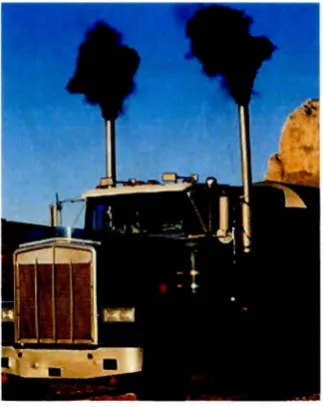
[image:17.501.181.343.210.414.2]2012]. Figure 2 shows an example of emission of soot by a diesel truck.
Figure 2: Emission of soot from a large
diesel truck, without particle filters
(Source: planetsave.com)
2.2 DIESEL ENGINE COMPONENT
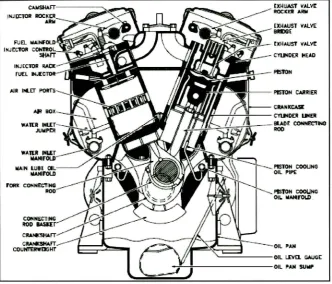
!XMUAST VAL~ llOCKEll ARll
[XMAl.IST VALVE:
llK)G[
!XM.WST VAL~ CYUNDDI HEAD
PISTON COOLING OIL l'tPE
ptsfON COOUNO
OIL MANll'OLD
OIL rAN
[image:18.501.94.427.174.458.2]" - - - O I L L..lVa.. GAUGE - : - - - : - - - O I L rAN !IUW'
Figure 2.1: Cross section ofV-type diesel engine
(source : Barbara Meinkiel, 2012)
The main components of a diesel engine are [Menkiel, 2012],
~ Cylinder block: usually made of grey cast iron (low cost and high resistance to
wear). It houses both the cylinders and pistons.
~ Cylinder head: is made from iron and aluminium, is connected to the top of
cylinder block and forms top of combustion chamber. In diesel engines the
cylinder head contains the fuel injectors and valves. The In-line engine has one
cylinder head for all the cylinders.
);:;> Valves and valve trains: are usually made from forged alloy steel. Sometimes
steel is mixed with chromium or silicon to make them more resistant to
corrosion. Exhaust valves are frequently made from nickel based alloy. Valves
are located in the cylinder head.
);:;> Camshaft and drives: made of hardened iron alloy or steel, the camshaft is
usually cast or machined. Its main function is driving the valves and is supported
by the main bearings. The number of bearings depends on number of cylinders
and typically is one more than number of cylinders.
);:;> Crankshaft: is made of alloy steel of great mechanical strength. Is attached to the
connecting rod in areas called throws - where the downward power pulses
change into rotating motion.
>-- Crankcase: is often integrated with the cylinder block and is sealed at the bottom
with a pressed steel or cast aluminium oil pan.
>-- Piston: is made of aluminium and its design depends on the engine type. Pistons
transfer the gas energy into the crank through connecting rods. The piston is
fitted with rings used to seal the cylinder and prevent both heat and pressure
from escaping. Upper rings are called compression rings and lower oil rings. Oil
rings scrape the oil from the cylinder wall and returns it to crankcase.
2.3 DIESEL ENGINE OPERA TING CYCLE
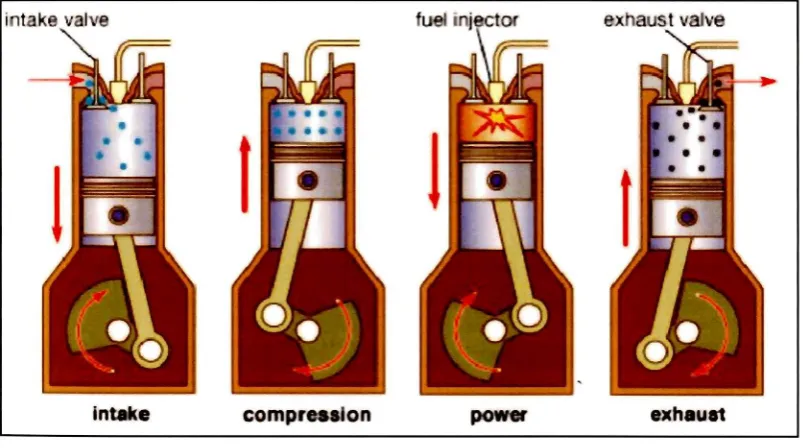
Most engines operate on a four-stroke cycle. To complete the sequence of events, the
piston has to complete four strokes that correspond to two crankshaft revolutions. Four
strokes are schematically presented in figure shown and are composed of [Menkiel,
2012]:
I. An intake stroke starting at TDC and ending at with piston at BOC. ln this stroke air
mixture enters the combustion chamber. The intake valves open just before the stroke starts and close after it ends.
2. A compression stroke when all valves are closed and the mixture inside the cylinder is
compressed to a small volume while piston moves towards TDC. Towards the end of compression stroke, the combustion is initiated and the cylinder pressure rapidly rises.
3. A power stroke (expansion stroke) starting at TDC and ends at BOC. High-temperature and high-pressure gases push down the piston and force the crank to rotate.
While the piston approaches BOC the exhaust valves open and the in-cylinder pressure drops.
4. An exhaust stroke in which gases remaining after combustion exit the cylinder. The piston in this time moves towards TDC and just after the exhaust valves close, the intake
valves open and the cycle begins again.
intake valve fuel injector exhaust valve
[image:20.501.60.462.382.606.2]Intake
comprnalon
power e>ehau11Figure 2.2: 4 stroke stages of diesel engine
(Source: Encyclopedia Brintannica)
2.4 DIESEL ENGINE COMBUSTION PROCESS
The combustion process in a diesel engine is a combination of complex chemical and physical mechanisms. The process starts from the injection of fuel under high pressure near the end of the compression stroke. A high speed fuel jet enters the combustion chamber through the injector nozzles and its liquid core quickly brakes up into small droplets. A turbulent environment together with the swirl of the intake air improves the mixing process of air and fuel. The time available for mixing in a diesel engine is limited and it is therefore imperative to achieve the best possible atomization. While the piston moves towards TDC, the in-cylinder pressure and temperature increases and the injected fuel quickly evaporates. Combustion is initiated while the temperature reaches the level sufficient for spontaneous auto-ignition and this temperature is one of the most important parameters in combustion process. Auto-ignition depends on in-cylinder temperature (pressure), concentration of air, fuel and its chemical composition. Fuel auto-ignition is characterized by cetane number and may occur simultaneously in different locations of combustion chamber. The production of soot and compounds like nitrogen oxides, carbon monoxides, carbon dioxides and unburned hydrocarbons are correlated with combustion process and are known as pollutants [Menkiel, 2012].
2.5 ADV ANT AGES AND DISADVANTAGES OF DIESEL ENGINE
An increase in the popularity of diesel engines over recent years is a result of their
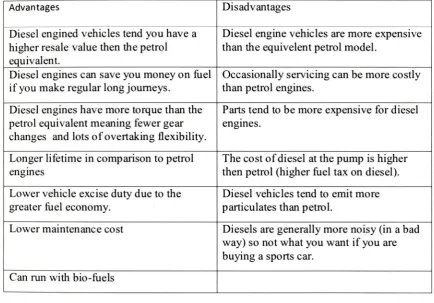
numerous advantages over gasoline combustion engines. The advantages and
[image:22.501.33.468.255.558.2]disadvantages of diesel combustion engines are as shown in table 2 [Alastaik, 2003];
Table 2: Advantage and disadvantage of diesel engine
Advantages Disadvantages
Diesel engined vehicles tend you have a Diesel engine vehicles are more expensive higher resale value then the petrol than the equivelent petrol model.
equivalent.
Diesel engines can save you money on fuel Occasionally servicing can be more costly
if you make regular long journeys. than petrol engines.
Diesel engines have more torque than the Parts tend to be more expensive for diesel petrol equivalent meaning fewer gear engmes.
changes and lots of overtaking flexibility.
Longer lifetime in comparison to petrol The cost of diesel at the pump is higher
engmes then petrol (higher fuel tax on diesel).
Lower vehicle excise duty due to the Diesel vehicles tend to emit more
greater fuel economy. particulates than petrol.
Lower maintenance cost Diesels are generally more noisy (in a bad
way) so not what you want if you are buying a sports car.
Can mn with bio-fuels
2.6 DIFFERENCE BETWEEN GASOLINE ENGINE AND DIESEL ENGINE
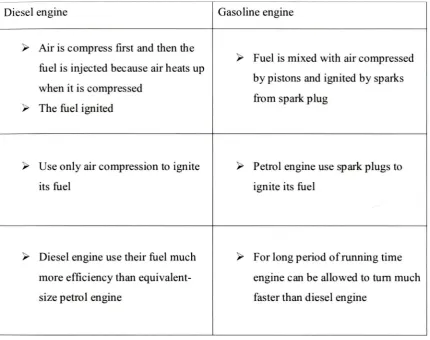
Table 2.1: Difference between gasoline engine (petrol engine) and diesel engine
Diesel engine Gasoline engine
);;> Air is compress first and then the
);;> Fuel is mixed with air compressed fuel is injected because air heats up
by pistons and ignited by sparks when it is compressed
from spark plug );;> The fuel ignited
);;> Use only air compression to ignite );;> Petrol engine use spark plugs to
its fuel ignite its fuel
);;> Diesel engine use their fuel much );;> For long period of running time
more efficiency than equivalent- engine can be allowed to tum much
size petrol engine faster than diesel engine
2.7 SOOT FORMATION MECHANISM
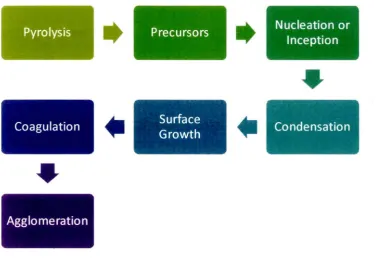
Soot 1s impure carbon particles resulting from the incomplete combustion of
hydrocarbons. Soot formation is a very complicated process involving hundreds of
elemental steps. Qualitatively, there are seven stages that lead to a p1imary soot particle
[Mahmood, 2011]:
Pyrolysis
Coagulation
•
I
, Agglomeration
Precursors
Surface Growth
Nucleation or Inception
•
CondensationFigure 2.3: Flow chart of soot formation mechanism
Pyrolysis
• Pyrolysis is the process of fuel changing their molecular structure in the present
of high temperature without significant oxidation even though oxygen species
are present.
• Produce unstaturated hydrocarbon, polyacetylenes and other aromatic
compound ..
[image:24.501.70.447.257.515.2]