CASE STUDY
Consolidating tactical planning
and implementation frameworks for integrated
vector management in Uganda
Michael Okia
1, Peter Okui
2, Myers Lugemwa
2, John M. Govere
3, Vincent Katamba
2, John B. Rwakimari
1,
Betty Mpeka
1and Emmanuel Chanda
4*Abstract
Background: Integrated vector management (IVM) is the recommended approach for controlling some vector-borne diseases (VBD). In the face of current challenges to disease vector control, IVM is vital to achieve national targets set for VBD control. Though global efforts, especially for combating malaria, now focus on elimination and eradication, IVM remains useful for Uganda which is principally still in the control phase of the malaria continuum. This paper out-lines the processes undertaken to consolidate tactical planning and implementation frameworks for IVM in Uganda. Case description: The Uganda National Malaria Control Programme with its efforts to implement an IVM approach to vector control was the ‘case’ for this study. Integrated management of malaria vectors in Uganda remained an underdeveloped component of malaria control policy. In 2012, knowledge and perceptions of malaria vector control policy and IVM were assessed, and recommendations for a specific IVM policy were made. In 2014, a thorough vector control needs assessment (VCNA) was conducted according to WHO recommendations. The findings of the VCNA informed the development of the national IVM strategic guidelines. Information sources for this study included all available data and accessible archived documentary records on VBD control in Uganda. The literature was reviewed and adapted to the local context and translated into the consolidated tactical framework.
Discussion: WHO recommends implementation of IVM as the main strategy to vector control and has encouraged member states to adopt the approach. However, many VBD-endemic countries lack IVM policy frameworks to guide implementation of the approach. In Uganda most VBD coexists and could be managed more effectively if done in tandem. In order to successfully control malaria and other VBD and move towards their elimination, the country needs to scale up proven and effective vector control interventions and also learn from the experience of other coun-tries. The IVM strategy is important in consolidating inter-sectoral collaboration and coordination and providing the tactical direction for effective deployment of vector control interventions along the five key elements of the approach and to align them with contemporary epidemiology of VBD in the country.
Conclusions: Uganda has successfully established an evidence-based IVM approach and consolidated strategic planning and operational frameworks for VBD control. However, operating implementation arrangements as outlined in the national strategic guidelines for IVM and managing insecticide resistance, as well as improving vector surveil-lance, are imperative. In addition, strengthened information, education and communication/behaviour change and communication, collaboration and coordination will be crucial in scaling up and using vector control interventions. Keywords: Malaria vector control, Vector borne disease control, Vector control needs assessment, Integrated vector management, Insecticide resistance management, Vector surveillance, Sustainability, Uganda
© 2016 Okia et al. This article is distributed under the terms of the Creative Commons Attribution 4.0 International License (http://creativecommons.org/licenses/by/4.0/), which permits unrestricted use, distribution, and reproduction in any medium, provided you give appropriate credit to the original author(s) and the source, provide a link to the Creative Commons license, and indicate if changes were made. The Creative Commons Public Domain Dedication waiver (http://creativecommons.org/ publicdomain/zero/1.0/) applies to the data made available in this article, unless otherwise stated.
Open Access
*Correspondence: [email protected] 4 Kamwala South, Lusaka, Zambia
Background
A variety of vector-borne diseases (VBDs) often coex-ist in the same environment and impose a heavy burden on human populations, particularly in developing coun-tries in tropical and sub-tropical zones [1]. Besides their adverse health effects on humans, VBDs are a significant impediment to socio-economic development. Until now, the control of some VBDs has primarily relied on verti-cal vector control programmes. The failure to effectively reduce the burden of VBD is due to multiple factors: human, technical (including insecticidal and drug resist-ance), operational, ecological, economic, and others [2]. When well planned and effectively targeted, vector con-trol is an important component of the prevention and management of these diseases. Vector control reduces or interrupts VBD transmission by reducing the vec-tor density or abundance, reducing longevity, and pre-venting human–vector contact [1]. Therefore, the need for increased access to effective transmission-reducing interventions in areas that are at risk of VBDs cannot be overemphasized.
Vector control methods have evolved from rudimen-tary environmental sanitation to the present integrated vector management (IVM) approach. The re-emergence of diseases and problems triggered by excessive depend-ence on insecticides led to the integrated vector control (IVC) strategy described as the “utilization of all appro-priate, safe and compatible means of control to bring about an effective degree of vector suppression in a cost-effective manner” [3]. Selective vector control (SVC) evolved the “application of targeted, site-specific and cost-effective activities to reduce malaria morbidity and mortality” [4]. Then followed the concept of comprehen-sive vector control (CVC) referred to as “control of the vectors of two or more co-prevalent diseases through a unified managerial structure using similar or different vector control methods” [5].
Presently, IVM, defined as “a rational decision-making process for optimal use of resources for vector control” is the recommended approach for vector control [6]. It uses sound principles of management and allows full consid-eration of the determinants of disease transmission and control. IVM characteristic features include: selection of methods based on knowledge of local vector biology, dis-ease transmission and morbidity; utilization of a range of interventions, often in combination and synergistically; collaboration within the health sector, researchers and with other public and private sectors that have an impact on vector breeding; engagement with local communi-ties and other stakeholders; a public health regulatory and legislative framework; rational use of insecticides; and, good management practices [1]. An IVM strategy
takes into account the available health infrastructure and resources, employs a multi-disease approach, and inte-grates all available and effective interventions, whether chemical, biological, or environmental, involves other sectors and communities, and aims to strengthen vector control management systems [1]. However, introduction of the IVM approach should be preceded by a thorough vector control needs assessment (VCNA) [7].
In Uganda, current approaches to controlling the vari-ous VBD work is in near isolation from each other despite the fact that in some districts, opportunities exist for optimal control and management of two or more VBDs by pooling available resources at district and community levels, taking into account health sector reforms wher-ever possible. In pursuit of integrated VBD control, the Uganda Malaria Reduction Strategic Plan (2014–2020) incorporates principals of IVM [8]. Uganda conducted a VCNA to determine existing gaps in policies, strate-gies, legislation, and capacity for proper implementation of vector control. The findings of the VCNA informed development of the national IVM strategic guidelines [9]. This paper outlines the processes undertaken to consoli-date tactical planning and implementation frameworks for IVM in Uganda.
Case presentation
The Uganda National Malaria Control Programme (NMCP) with its efforts to implement an IVM approach to vector control was the ‘case’ for this study. Integrated management of malaria vectors in Uganda remained an underdeveloped component of malaria control pol-icy. In 2012, knowledge and perceptions in relation to current malaria vector control policy and IVM were assessed in Uganda, and recommendations for consid-eration during the development of a specific IVM policy were made. In 2013, an IVM guideline was drafted but focused on malaria and lacked inherent IVM charac-teristics and components. In pursuit of integrated VBD control, the National Malaria Reduction Strategic Plan (2014–2020) incorporating an IVM approach for vector control was developed and necessitated the updating of the IVM guideline [8]. A VCNA was conducted accord-ing to WHO recommendations [7]. The findings of the VCNA informed the development of the IVM strategic guidelines.
AND IVM; (2) NTDs AND IVM; (3) NTDs AND vec-tor control; (4) Uganda; (1) and (4); (2) and (4); and, (3) and 4); vector control, epidemiology, malaria, human African trypanosomiasis, leishmaniasis, onchocerciasis, lymphatic filariasis, plague, trachoma, schistosomiasis, tungiasis and arboviruses including’ dengue fever, zika, chikungunya and yellow fever. Additional non-peer-reviewed documents in the Ministry of Health (MoH), such as annual reports and guidelines for vector control, were examined for information related to the subject. The literature was reviewed and applicable findings and key concepts from Uganda and other countries were dis-cussed, adapted to the local context and translated into the consolidated tactical framework.
The rationale for integrated vector management
While various global strategies have been developed to combat VBDs with renewed emphasis on vector con-trol, malaria still remain the major cause of morbidity and mortality in Uganda [8]. The VCNA revealed several key factors that undermine the effectiveness of vector control in the country: inadequate capacity for evidence-based decision-making to guide vector control strate-gies at national, regional, district, and community levels, thereby resulting in sub-optimal choice or improper tim-ing of interventions and subsequent waste of valuable resources; vector control efforts focus on a single dis-ease and are not fully integrated into health systems, raising concern about their sustainability; the patterns of most of the VBDs, including malaria, are affected by climate change, environmental degradation and urbani-zation, pointing to the need for an adaptive manage-ment approach to vector control based on local evidence; other sectors such as agriculture, industrial works and construction including communities are often not well informed and involved in vector control, resulting in limited awareness of the consequences of their actions on the incidence of VBDs; long-lasting insecticidal nets (LLINs) and indoor residual spraying (IRS) are threat-ened by the development of resistance and could under-mine effective vector control efforts [9]. The Stockholm Convention on Persistent Organic Pollutants (POPs) [13] and World Health Assembly resolution WHA50.13 [14] call on countries to design sustainable strategies for vector control. These opportunities, coupled with the presence of arboviral diseases also transmitted by mos-quitoes, substantiated the need for an IVM approach to vector control in Uganda and the development of guidelines that apply, in principle, to all VBDs but focus specifically on malaria control in the country. The IVM strategic guideline would require regular adaptation to changes in local eco-epidemiological or socio-economic conditions.
The scale of the vector‑borne disease problem
Uganda is located along the eastern African Rift Valley within the Nile basin. It borders Kenya in the east, South Sudan in the north, the Democratic Republic of the Congo in the west, Rwanda in the southwest, and Tan-zania in the south. Its topography varies, ranging from high altitude areas, including the Rwenzori Mountains (5100 m) to the low-lying Sudanese Plain in the north. The country has a tropical climate with mean annual temperatures of 16 °C in the southwest; 25 °C in the cen-tre, east, and northwest; and close to 30 °C in the north-east with two peaks of rainfall from March to May and from September to December each year. Uganda has an area of about 241,039 sq km divided into 112 decentral-ized districts. Service delivery is the responsibility of the districts and their lower local governments. The esti-mated population of Uganda is 36.6 million people. The proportion of urban area dwellers has increased from 6.6 % in 1969 to 15.6 % in 2011 [15].
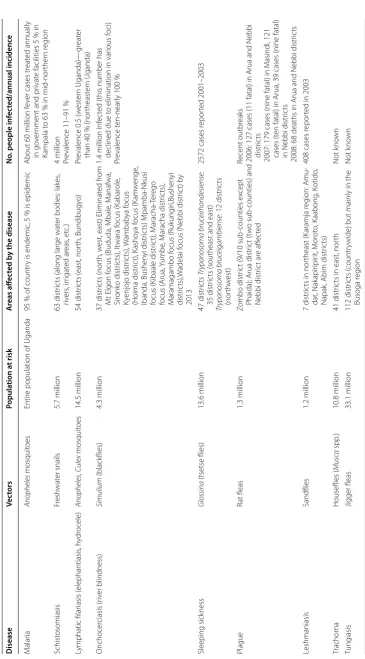
Uganda’s equatorial temperature, rainfall and relative humidity provide a conducive environment for malaria and other VBD vectors to thrive (Table 1). However, as malaria is the pathfinder for IVM in Uganda, VBDs tar-geted initially are those that are amenable to malaria vector control interventions. These include malaria, lym-phatic filariasis, plague, visceral leishmaniasis, sleeping sickness, trachoma and arboviruses. Uganda has the third highest number of annual deaths from malaria in Africa and the highest reported malaria transmission intensi-ties in the world [16]. Anopheles gambiae s.s., Anopheles arabiensis and Anopheles funestus are the main malaria vectors. A. gambiae s.s. is the dominant vector species in most locations. While these vectors coexist, effective IRS and LLIN interventions have changed their distribution and composition profile in Uganda. Reduced prevalence of An. funestus and An. gambiae s.s. and a dominance of An. arabiensis has been reported from IRS districts [17]. Secondary vectors include Anopheles nili, Anoph-eles moucheti, Anopheles obscurus and Anopheles bwam-bae [18]. All the four species of malaria parasites exist in Uganda: Plasmodium falciparum (95 %), Plasmodium malariae (2 %), Plasmodium vivax (2 %), and Plasmo-dium ovale (1 %).The whole population of Uganda is at risk of malaria [19]. Over 90 % of the population resides in areas of high and stable malaria transmission with the remainder in low and unstable malaria transmission areas [8].
Table 1 D istribution of v ec tor-b
orne diseases in Uganda
D isease Vec tors Popula tion a t risk A reas aff ec ted b y the disease No
. people inf
ec ted/annual incidenc e M alar ia Anopheles mosquit oes Entir
e population of Uganda
95
% of countr
y is endemic
, 5
% is epidemic
About 60 million f
ev
er cases tr
eat
ed annually
in go
ver
nment and pr
ivat
e facilities 5
% in
Kampala t
o 63
% in mid-nor
ther n r eg ion Schist osomiasis Fr esh wat er snails 5.7 million 63 distr ic
ts (along lar
ge wat
er bodies: lak
es , riv ers , ir rigat ed ar eas , et c.)
4 million Prevalence 11–91
% Lymphatic filar iasis ( elephantiasis , h ydr ocele) Anopheles , Culex mosquit oes 14.5 million 54 distr ic ts ( east, nor th, Bundibugy o) Pr
evalence 0.5 (w
est er n Uganda)— gr eat er than 40 % (nor theast er n Uganda) Onchocer ciasis (r iv er blindness) Simulium (blackflies) 4.3 million 37 distr ic ts (nor th, w
est, east) Eliminat
ed fr
om
Mt Elgon f
ocus (Bududa, Mbale
, M anafwa, Sir onk o distr ic ts), I twara f ocus (K abar ole , Ky enjojo distr ic ts), W ambab ya f ocus (Hoima distr ic t), K asho ya f ocus (K am w enge , Ibanda, Bushen yi distr ic ts) M pamba-N kusi focus (K ibaale distr ic t), M aracha-Ter ego focus ( Arua, Yumbe , M aracha distr ic ts), M aramagambo f ocus (Ruk ung iri,Bushen yi distr ic ts),W adelai f
ocus (Nebbi distr
ic
t) b
y
2013
1.4 million inf
ec
ted (this number has
declined due t
o elimination in var
ious f oci) Pr evalence t en-near ly 100 % Sleeping sick ness Glossina (tsetse flies) 13.6 million 47 distr ic ts Tr ypanosoma bruc eirhondesiense : 35 distr ic
ts (southeast and east)
Tr
ypanosoma bruc
eigambiense
: 12 distr
ic ts (nor th w est)
2572 cases r
epor ted 2001–2003 Plague Rat fleas 1.3 million Zombo distr ic
t (9/10 sub
-counties ex
cept
Phaida); Arua distr
ic t (t w o sub -counties) and Nebbi distr ic t ar e aff ec ted Recent outbr eaks
2006: 127 cases (11 fatal) in Arua and Nebbi distr
ic
ts
2007: 179 cases (nine fatal) in M
asindi, 121
cases (t
en fatal) in Arua, 39 cases (nine fatal)
in Nebbi distr
ic
ts
2008: 68 deaths in Arua and Nebbi distr
ic ts Leshmaniasis Sandflies 1.2 million 7 distr ic
ts in nor
theast (K aramja r eg ion: Amu -dat, Nak apir ipir it, M or ot o, K aabong , K otido , Napak
, Abim distr
ic
ts)
408 cases r
epor
ted in 2003
Trachoma Houseflies ( Musc a spp .) 10.8 million 41 distr ic
ts in east, nor
th Not k no wn Tung iasis Jigger fleas 33.1 million 112 distr ic ts ( countr
ywide) but mainly in the
[image:4.595.120.486.71.731.2]dengue fever primarily transmitted by Aedes aegypti and
Aedes albopictus; human African trypanosomiasis
vec-tored by Glossina fuscipes, Glossina tachinoides, Glossina pallidipes and Glossina morsitans species of tsetse flies; Leishmaniasis (kala-azar) vectored by Phlebotomus
ori-entalis, Phlebotomus martini and Phlebotomus celiae
species of Sand flies; Onchocerciasis (River Blindness) vectored by Simulium damnosum black flies; lymphatic filariasis transmitted by A. gambiae, An. arabiensis and
An. funestu and Culex quinquefasciatus; chikungunya and zika vectored by Ae. albopictus and Aedes aegypti; Trachoma vectored by Musica sorbens bazaar flies; plague vectored by Xenopsilla spp. Rat fleas; Tungiasis transmitted by Xenopsilla spp. Jigger fleas and Rift valley fever transmitted by Aedes spp. mosquitoes. Meanwhile, malaria targeting interventions such as IRS and LLINS also have a significant effect of on other vectors of VBDs i.e. dengue, chikungunya, zika, lymphatic filariasis, yellow fever and leishmaniasis.
Vector control interventions in Uganda
The large communal-scaleuse of LLINs and IRS, sup-ported by intensive social mobilization and behaviour change communication (BCC), are key interventions to prevent malaria and other VBDs in Uganda. The coun-try has adopted a policy of universal coverage (one net per two people) with LLINs to protect all people from malaria and other VBDs with over 21 million nets dis-tributed via mass campaigns. Since 2009, two spray rounds per year have been conducted in ten districts covering over 500,000 structures, achieving >90 % cov-erage of targeted structures and protecting over 2.6 mil-lion representing >90 % of the targeted population. In the northern and eastern regions with holo-endemic malaria transmission, LLINs and IRS are combined for the same households [19]. While there are currently no meaningful larval source management (LSM) activities at programme level, the MoH plans to implement LSM in the context of IVM in urban or peri-urban sites and arid areas of Uganda. Live-bait technology, application of insecticides on domesticated animals, especially cattle to control tick borne diseases is practiced by local communities in Greater Mbarara district. Community sensitization on the benefits of this approach to controlling several VBDs including sleeping sickness, malaria, lymphatic filariasis, and trachoma, and the expansion of these efforts into other cattle-keeping communities is required. Tsetse traps and screens are used in tsetse-infested areas such as eastern and northern Uganda and can also be used around zero-grazed cattle, to help reduce domestic ani-mal nuisance pests, including stomoxys and tabanid flies, and to some extent malaria vectors. These devices also
help reduce eye-seeking flies, thereby helping to control trachoma [20].
Challenges for vector‑borne disease control
In Uganda major challenges to malaria control include very high malaria transmission intensity, low cover-age of proven malaria control interventions, inadequate health care resources, a weak health system, inadequate understanding of malaria epidemiology and the impact of control interventions [16]. There has been a grow-ing problem of insecticide resistance in disease vectors to organochloride, dichloro-diphenyl-trichloroethane (DDT), pyrethroids and to a lesser extent carbamates, particularly in An. gambiae s.l. and An. funestus [21, 22]. Integrated management of malaria vectors remains an underdeveloped component of malaria control policy in Uganda [23]. Most development partners have neglected health system strengthening [24]. Therefore, concerted efforts and strong political commitment that translates into adequate financial allocation for vector control, including focused research and inter-country coopera-tion and exchange to share best practices are urgently needed to radically scale up cost-effective interventions. Further challenges include inadequate social mobiliza-tion and sensitizamobiliza-tion of target communities due to lim-ited resources for requisite activities. Integrated control would require strengthening of research, including stud-ies of the efficacy and cost-effectiveness of integrated management of VBDs, knowledge, attitude and practice, community meetings, and development of and harmo-nization of information, education and communication (IEC) messages and their effective delivery of materials [25].
and communities, and aims to strengthen vector control management systems [1]. IVM characteristic features include: selection of methods based on knowledge of local vector biology, disease transmission and morbidity; utilization of a range of interventions, often in combina-tion and synergistically; collaboracombina-tion within the health sector, researchers and with other public and private sec-tors that have an impact on vector breeding; engagement with local communities and other stakeholders; a public health regulatory and legislative framework; rational use of insecticides; and, good management practices [1].
Vector control needs assessment
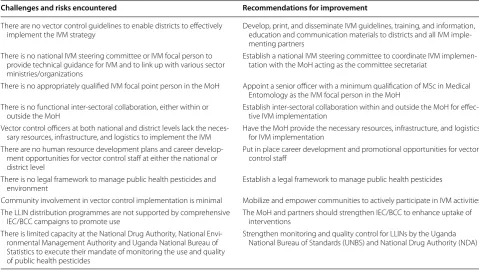
Introduction and implementation of IVM requires a comprehensive situation analysis, and an in-depth assess-ment of challenges and specific vector manageassess-ment needs. Prior to developing an IVM strategy, a VCNA was conducted to assess existing gaps in policies, strate-gies, legislation, and capacity for the implementation of vector control in the context of IVM.A modified World Health Organization VCNA tool [7] was used to col-lect data from key informants from the NMCP, 17 dis-tricts and institutions that included the Vector Control Division (VCD), Uganda National Bureau of Statistics, Uganda Revenue Authority, National Environmental Management Authority, National Drug Authority, and Agricultural Chemical Board of the Ministry of Agricul-ture, Animal Industry and Fisheries. The findings of the VCNA established that there is goodwill by both govern-ment and international organizations to support IRS and LLINs, which provide a platform for resource mobiliza-tion. While implementation of LSM is rudimentary, there is local capacity to effectively implement IRS and LLINs using a partnership model that creates room for sustain-ability of the IVM interventions. To manage insecticide resistance, carbamates (bendiocarb) or organophosphate (pirimiphos-methyl CS) are used for IRS [26]. The Agri-cultural Chemicals (Control) Act, 2006 exists with atten-dant regulations and guidelines to handle all agricultural chemicals along the value chain [9]. However, vector control in Uganda has been characterized by many con-straints. Table 2 presents the synopsis of key challenges/ issues and recommendations for improving vector-borne disease control in Uganda.
Integrated vector management
In 2014, Uganda developed the IVM strategic guideline to provide a common operational framework for all vec-tor control stakeholders for planning and implementing VBD control according to IVM characteristics and prin-ciples [20]. The guideline seeks to reorient vector con-trol interventions in the context of emerging insecticide resistance, the need for inter-sectoral collaboration and
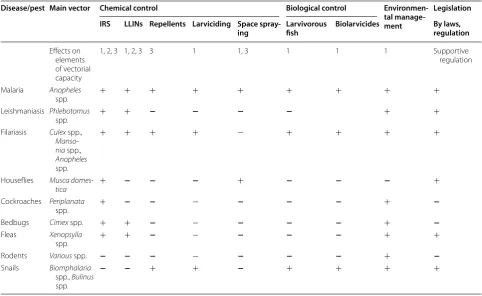
targeted evidence-based vector control. The develop-ment of the guideline was all-inclusive and participatory, involving all key stakeholders, including civil society, aca-demia/research, malaria development partners, and the private corporate sector. The document will be regularly adapted to changes in local eco-epidemiological or socio-economic conditions. The selection criteria for malaria vector control methods include effectiveness, affordabil-ity, safety, sustainabilaffordabil-ity, risk for resistance, community acceptance, etc. (Tables 3, 4).
The mechanisms for implementation of the IVM stra-tegic guidelines will be a joint effort by all partners and stakeholders at all levels of society through the public health system (Table 5). The MoH via the NMCP and VCD will coordinate efforts to control malaria and other VBDs using the platform of Interagency Coordination Committee for Malaria (ICCM), which is chaired by the MoH. For effective inter-sectoral collaboration, an inter-sectoral steering committee on IVM will function as an inter-ministerial governing body with a responsi-bility to facilitate harmonization of policies and institu-tional arrangements and to provide strategic direction and coordination for research and implementation of IVM. A nominated focal person for IVM will coordinate and manage networking among national partners and ensure implementation of the recommendations of the Committee.
Discussion
WHO recommends implementation of IVM as the main strategy to vector control and encourages member states to adopt the approach. However, many VBD-endemic countries lack IVM policy frameworks to guide imple-mentation. By 2010, only 62 % of 113 countries had developed policies on IVM and implemented the strategy [27]. While most VBDs coexist in Uganda and could be managed more effectively if done in tandem, integrated management of disease vectors remains underdeveloped. Uganda assessed knowledge and perceptions in rela-tion to current malaria vector control policy and IVM, and made recommendations for consideration during future development of a specific IVM policy [8]. By 2014, Uganda successfully developed evidence-based national strategic guidelines for IVM founded on thorough VCNA [17].
platform [28]. Vector control has been implemented and sustained with consistent national government funding supplemented by partner support [29, 30]. LLINs and IRS are deployed as main-thrust malaria vector control tools supplemented with LSM in accordance with and strict adherence to a set of eligibility criteria [29, 31]. In Zambia, IVM has facilitated strong partner collaboration
and has helped leverage additional resources for vector control [31]. Namibia and Eritrea have recently devel-oped costed IVM strategies for advocacy and leverage of resources for evidence-based vector control [28, 29]. With the escalating problem of insecticide resistance in malaria vectors [32, 33], insecticide resistance manage-ment (IRM) and improving vector surveillance in Uganda
Table 2 Challenges and risks encountered in vector control and recommendations for improvement in Uganda
Challenges and risks encountered Recommendations for improvement
There are no vector control guidelines to enable districts to effectively
implement the IVM strategy Develop, print, and disseminate IVM guidelines, training, and information, education and communication materials to districts and all IVM imple-menting partners
There is no national IVM steering committee or IVM focal person to provide technical guidance for IVM and to link up with various sector ministries/organizations
Establish a national IVM steering committee to coordinate IVM implemen-tation with the MoH acting as the committee secretariat
There is no appropriately qualified IVM focal point person in the MoH Appoint a senior officer with a minimum qualification of MSc in Medical Entomology as the IVM focal person in the MoH
There is no functional inter-sectoral collaboration, either within or
outside the MoH Establish inter-sectoral collaboration within and outside the MoH for effec-tive IVM implementation Vector control officers at both national and district levels lack the
neces-sary resources, infrastructure, and logistics to implement the IVM Have the MoH provide the necessary resources, infrastructure, and logistics for IVM implementation There are no human resource development plans and career
develop-ment opportunities for vector control staff at either the national or district level
Put in place career development and promotional opportunities for vector control staff
There is no legal framework to manage public health pesticides and
environment Establish a legal framework to manage public health pesticides
Community involvement in vector control implementation is minimal Mobilize and empower communities to actively participate in IVM activities The LLIN distribution programmes are not supported by comprehensive
IEC/BCC campaigns to promote use The MoH and partners should strengthen IEC/BCC to enhance uptake of interventions There is limited capacity at the National Drug Authority, National
Envi-ronmental Management Authority and Uganda National Bureau of Statistics to execute their mandate of monitoring the use and quality of public health pesticides
Strengthen monitoring and quality control for LLINs by the Uganda National Bureau of Standards (UNBS) and National Drug Authority (NDA)
Table 3 Integrated vector management interventions to reduce vectorial capacity
Objective Action Method
Reduce vector abundance Reduce the number of sites where vector larvae
grow Environmental management
Reduce number of larvae or prevent insects from
reaching adult stage Larvivorous fish, biolarvicides, insect growth regula-tors, and other parasites, chemical larvicides Kill adult insects when they rest on sprayed
surfaces Indoor residual spraying (IRS) Kill insects as they alight on treated surfaces, repel
them or inhibit them from feeding/biting Insecticide-treated materials such as mosquito nets, curtains and chaddars (cloth sheets), indoor durable wall linings
Reduce the population of adult insects Space spraying in urban areas. Reduction of vector survival and
longev-ity Reduce life of the insect before it reaches infec-tive age IRS and insecticide-treated materials Reduction of human vector contact Reduce opportunities for insects to enter the
house House improvements such as screens with insecti-cide-treated materials and wiremesh Repel insects before they bite Repellents: coils, mats, lotions, creams, vaporizers,
[image:7.595.56.536.103.373.2] [image:7.595.55.534.415.608.2]will be crucial. Equally, strengthening IEC/BCC and con-solidating inter-sectoral collaboration and coordination will be needed to improve uptake and support for the implemented tools.
Strong entomological teams at national and local lev-els are crucial to coordinate routine monitoring of resist-ance, data analysis and interpretation to inform policy decisions, translate policies and guidance into action at ground level [34]. Although current resistance data show that organophosphates are the only technically sound options for IRS in Uganda, a rational IRM approach is required to guide evidence-based decisions regarding insecticide choices for vector control. However, switch-ing to strategic IRM demands for development of moni-toring and management plans based on a meticulous review of information on insecticides registered for public health and agricultural use, knowledge of main vector species and their resistance profiles, efficient data management and mapping capacity, current vec-tor control interventions, evidence and knowledge gaps including constraints and mitigating measures [35]. The plan should incorporate an implementation framework comprising a multidisciplinary national IRM decision-making body, the establishment of multiple sentinel sites
for routine resistance surveillance and monitoring and collection of data annually, including interpretation of test results and policy implications, human resources, procurement and supplies, regulatory requirements and procedures, budget and potential sources of funding [35]. Zambia, Eritrea, South Africa, Mozambique, and Namibia have developed country-specific IRM plans to prevent development and spread of insecticide resistance and have trained local staff in entomological surveillance and resistance monitoring.
[image:8.595.56.539.114.410.2]Mapping of vector species and their resistance pro-files across the country would facilitate deployment of cost-effective vector control. As such, vector surveillance should be an integral aspect of the IVM strategy imple-mentation to: (1) provide evidence for decision-making in IRS; (2) evaluate a programme’s impact on vector populations; and, (3) monitor and evaluate IRS where the surveillance sites are located in or near implementa-tion settings. These investigaimplementa-tions will provide data on temporal and spatial vector species composition, den-sity, feeding and resting behaviour, infectivity rate and longevity, susceptibility to insecticides, and quality and residual effect of insecticides [36]. Therefore, Uganda should develop country-specific vector surveillance
Table 4 Methods for controlling vector-borne diseases and their respective effects on vector abundance, survival and human contact
1 = Reduce abundance, 2 = reduce survival/longevity, 3 = reduce human-vector/pest contact, + = effect, − = no effect
Disease/pest Main vector Chemical control Biological control Environmen‑
tal manage‑ ment
Legislation IRS LLINs Repellents Larviciding Space spray‑
ing Larvivorous fish Biolarvicides By laws, regulation
Effects on elements of vectorial capacity
1, 2, 3 1, 2, 3 3 1 1, 3 1 1 1 Supportive
regulation
Malaria Anopheles
spp. + + + + + + + + +
Leishmaniasis Phlebotomus
spp. + + − − − − + +
Filariasis Culex spp., Manso-nia spp., Anopheles spp.
+ + + + − + + + +
Houseflies Musca
domes-tica + − − − + − − − +
Cockroaches Periplanata
spp. + − − − − − − + −
Bedbugs Cimex spp. + + − − − − − + −
Fleas Xenopsylla
spp. + + − − − − − + +
Rodents Various spp. − − − − − − − + −
Snails Biomphalaria spp., Bulinus spp.
Table 5 Anticipated roles of various sectors in integrated vector management implementation
Sector/agency Roles
NMCP Resource mobilization for IVM. Setting strategic directions and conducting overall evaluation; advis-ing on policy and institutional arrangements; conductadvis-ing epidemiological and vector assessment, stratification; supervising decentralized planning and implementation; supervising decentralized monitoring and evaluation; supervising decentralized organization and management; preparing curricula and training trainers; ensuring preparedness to coordinate emergency response; advising on research priorities
Districts and villages Establishing inter-sectoral partnerships and networking; planning and implementing local IVM strategy; implementing health interventions; monitoring and evaluating; organizing and managing; undertaking local vector surveillance; providing training, education and awareness raising VCD Support the NMCP in planning, implementing, supervision, monitoring and evaluation of IVM
imple-mentation of interventions. Monitor impact of malaria control interventions on other VBDs. Support the NMCP in conducting capacity building for malaria vector control; monitor insecticide resistance in vectors to control commodities. Monitor the impact of application of chemicals on domestic animals in the control of tsetse flies on malaria vectors as well as on sleeping sickness
Agriculture Ensure that famers implement IVM, popularizing the concept of dry-wet irrigation through extension education, management of agricultural pesticides. Coordinate and monitor the impact of the appli-cation of chemicals onto domestic animals on the control of tsetse flies and ticks and tsetse- and tick-borne diseases. Ensure the safe use and application of agricultural chemicals to protect human, and animal health and environment
Water resources development Maintenance of canal system, intermittent irrigation, design modifications and lining of canals, weed-ing for proper flow, creatweed-ing small check-dams away from human settlements, health impact assess-ment
Water supply Repair of leakages to prevent pooling, restoration of taps, diversion of wastewater to pond/pit, stagger-ing of water supply, mosquito-proofstagger-ing of water harveststagger-ing devices, repair of sluice valves
Local governments Implement, supervise and monitor IVM implementation. Implement the Kampala Declaration on Sanitation
Road and building sector Proper planning as per bylaws, merging pits by breaking bunds, excavations in line with natural slope/ gradient, making way for water to flow into natural depression/pond/river, follow-up actions after excavations, maintaining storm water roadside drains
Urban development Implementation of building bylaws, improved designing to avoid undue water lodging, building use permission after clearance of health dept; safe rainwater
National Environment Management Authority Ensure Environmental Impact Assessments are done before embarking on projects. Provide guidelines in the manufacture and handling of public health insecticides, storage and disposal including safety measures to prevent human and environment contamination
National Drug Authority Develop legislation for the manufacture, sale, importation, storage, transportation, and use of public health insecticides. Develop and disseminate specific operational guidelines on the management of pesticides for public health. Ensure the quality of public health pesticides imported into the country. Ensure the quality and quantity of insecticide in LLINs. Monitor quality of public health pesticides, equipment, etc. in the open market
Uganda National Bureau of Standards Ensure the quality of LLINs imported into the country conform to international standards (WHOPES recommendations)
CBO, FBO and CSOs Participate in implementation of some IVM interventions, e.g., distribution of LLINs and conducting IRS, conduct advocacy, social mobilization and BCC and community sensitization. Support active com-munity participation in malaria control and prevention activities
Private sector Manufacture and procure quality IVM logistics (equipment and chemicals), participate in implementa-tion of some IVM intervenimplementa-tions e.g., distribuimplementa-tion of LLINs and conducting IRS
Communities Participate in implementation of some IVM interventions, e.g., distribution of LLINs, conducting IRS and larval mosquito control, proper use and care of LLINs. Apply chemicals on domestic animals for controlling tsetse flies, ticks and malaria vectors for controlling sleeping sickness, tick-borne diseases and malaria
USAID, DFID, ADB, GFATM, World Bank, UNICEF Provide the resources for IVM interventions, monitor and evaluate IVM interventions
WHO Provide the resources for IVM interventions, monitor and evaluate IVM interventions, provide IVM guidelines and training and IEC materials
Research institutions Conduct research on vectors and VBD and impact of IVM interventions on VBD
[image:9.595.54.536.81.690.2]guidelines to include: entomological field and laboratory techniques, WHO contact and susceptibility bioassays, mosquito rearing in insectaria, organization of entomo-logical teams, geographical information systems (GIS), and supervision of entomological teams and operations [36]. Entomological investigations should be conducted regularly at fixed locations to: (1) reduce natural varia-tion, costs and labour intensity; (2) increase the useful-ness of timely collected data in decision-making; and, (3) optimize the use of available resources. Eritrea and Namibia have elaborated vector surveillance guidelines to facilitate entomological monitoring by the regional levels [30].
The mandate of informing, educating and mobiliz-ing the communities on VBD control operations in Uganda rests with the MoH via the NMCP and VCD. This requires unremitting and well-coordinated IEC/ BCC to promote knowledge, awareness and compliance and ownership vector control tools. Equally, strategic and effective advocacy to mobilize local public and pri-vate support will be vital for the sustainability of the IRS programme. Therefore, the NMCP should: (1) coordinate the development of all IEC and advocacy material for vector control and ensure the harmonization of its con-tent in collaboration with partners; and, (2) advocate for increased and continued political, financial and technical support and mobilize all stakeholders and partners for vector control. For effective collaboration to link various stakeholders at national level, an inter-sectoral steering committee on IVM will function as an inter-ministerial governing body with a responsibility to facilitate har-monization of policies and institutional arrangements, interaction between Ministries/Departments and to pro-vide strategic direction and coordination for research, planning and implementation of IVM. This committee will also serve as a platform for reconciling competing interests between Ministries/Departments at the national level or navigating IVM when partners or competing interests disagree with the process or plan.
The IVM strategy is important in consolidating inter-sectoral collaboration and coordination and providing the tactical direction for effective deployment of vector control interventions along the five key elements of the approach and to align them with changing epidemiology
of VBD in Uganda. It outlines strategic interventions and activities, IRM, monitoring and evaluation and operational research, programme management, budget and funding, an implementation plan, and the perfor-mance framework [20]. The IVM strategy is expected to reduce the risk of transmission, reduce disease burden, improve the cost effectiveness of vector control opera-tions, improve ecological soundness and be sustainable. Cooperation between the health and other sectors needs strengthening and funding for vector control increased in order to develop and effectively implement an appro-priate IVM policy. Zambia and Zimbabwe have estab-lished strong external links with international research institutions to further build local entomological capacity [31]. Continuous engagement of communities by gov-ernment as well as monitoring and evaluation of vector control programmes will be crucial for sustaining IVM in Uganda. In fact, requisite resources for vector control could be mobilized by strengthening advocacy and col-laboration based on the IVM strategy.
Conclusions
Uganda has successfully consolidated strategic planning and operational frameworks for VBD control by estab-lishing an evidence-based IVM approach. This will help the country to expedite their efforts towards achieving VBD elimination/eradication, particularly malaria. The country should put into operational implementation arrangements as outlined in the IVM strategic guide-lines. IRM should be implemented and vector surveil-lance improved. In addition, strengthened IEC/BCC and consolidating inter-sectoral collaboration and coordina-tion will be crucial for scaling up and utilizacoordina-tion of vector control interventions in the country.
Abbreviations
BCC: behaviour change communication; CBO: Community Based Organiza-tion; CSO: Civil Society OrganizaOrganiza-tion; CVC: comprehensive vector control; DDT: dichloro-diphenyl-trichloroethane; FBO: Faith Based Organizations; GIS: geo-graphical information systems; GPIRM: Global Plan for Insecticide Resistance Management; ICCM: Interagency Coordination Committee for Malaria; IEC: information, education and communication; IVC: integrated vector control; IRS: indoor residual spraying; IRM: insecticide resistance management; IVM: integrated vector management; IRMTWG: Insecticide Resistance Management Technical Working Group; LLINs: long-lasting insecticidal nets; LSM: larval source management; NMCP: National Malaria Control Programme; NTDs: neglected tropical diseases; MoH: Ministry of Health; POPs: persistent organic
Table 5 continued
Sector/agency Roles
pollutants; SVC: selective vector control; VBD: vector-borne disease; VCNA: vector control needs assessment; VCD: Vector Control Division; WHA: World Health Assembly; WHO: World Health Organization.
Authors’ contributions
MO, JMG, PO, and ML conducted the VCNA and drafted the guidelines. MO, PO, ML, VK, BM, and JBR collaborated and reviewed the manuscript. JMG and EC conceived the idea and wrote the paper. All authors read and approved the final manuscript.
Author details
1 Abt Associates, Kampala, Uganda. 2 National Malaria Control Programme, Ministry of Health, Kampala, Uganda. 3 Nelspruit, Mpumalanga, South Africa. 4 Kamwala South, Lusaka, Zambia.
Acknowledgements
The authors thank the USAID, Abt Associates for financing the VCNA and the development of IVM strategic guidelines. Gratitude is also expressed to the MoH and the NMCP for authorizing publication of this manuscript.
Competing interests
The authors declare that they have no competing interests.
Received: 14 December 2015 Accepted: 1 April 2016
References
1. WHO. Global strategic framework for integrated vector management. WHO/CDS/CPE/PVC/2004.10. Geneva: World Health Organization; 2004.
http://whqlibdoc.who.int/hq/2004/WHO_CDS_CPE_PVC_2004_10.pdf. 2. WHO. Handbook for integrated vector management. WHO/HTM/NTD/
VEM/2012.3. Geneva: World Health Organization; 2012.
3. WHO. Integrated vector control. Report of the WHO Expert Committee on Vector Biology and Control. WHO Technical Report Series, No. 688. Geneva: World Health Organization; 1983.
4. WHO. Vector control for malaria and other mosquito-borne diseases. Report of a WHO Study Group. WHO Technical Report Series, No. 857. Geneva: World Health Organization; 1995.
5. WHO. Second regional training course on comprehensive vector control. Regional Office for South East Asia, World Health Organization, Malaysia; 2001.
6. WHO. Position statement on integrated vector management. Geneva: World Health Organization; 2008. http://whqlibdoc.who.int/hq/2008/ WHO_HTM_NTD_VEM_2008.2_eng.pdf.
7. WHO. Guidelines for vector control needs assessment. Harare: WHO Regional Office for Africa, World Health Organization; 2003.
8. Ministry of Health (MoH). The Uganda Malaria Reduction Strategic Plan (2014–2020): accelerated nationwide scale up to achieve universal cover-age of cost effective malaria prevention and treatment interventions. Kampala: Ministry of Health; 2014.
9. Report on vector Control Needs Assessment in Uganda. Ministry of Health. Uganda: Kampala; 2014.
10. Google Scholar. http://www.google.com. 11. PubMed. www.ncbi.nlm.nih.gov/pubmed. 12. WHO. http://www.who.int/.
13. The Stockholm Convention on Persistent Organic Pollutants, May 2001. 14. WHOPES. Decision-making for the judicious use of insecticides. WHO/
CDS/WHOPES/2004.9a. World Health Organization, Geneva, Switzerland; 2004. http://whqlibdoc.who.int/hq/2004/WHO_CDS_WHOPES_2004.9a. pdf.
15. Uganda Bureau of Statistics. Projection of demographic trends in Uganda 2007–2017. Uganda Bureau of Statistics, Kampala, Uganda; 2007.
16. Yeka A, Gasasira A, Mpimbaza A, Achan J, Nankabirwa J, Nsobya S. Malaria in Uganda: challenges to control on the long road to elimination: I. Epide-miology and current control efforts. Acta Trop. 2012;121:184–95. 17. Okia M, de Alwis R, Rwakimari JB, Kirunda J, Ssaka K, Muwonge C. Report
on malaria vector susceptibility to public health insecticides in Uganda, October–November 2011. Ministry of Health, Kampala, Uganda; 2011. 18. Okello PE, Van Bortel W, Byaruhanga AM, Correwyn A, Roelants P, Talisuna
A, et al. Variation in malaria transmission intensity in seven sites through-out Uganda. Am J Trop Med Hyg. 2006;75:219–25.
19. Uganda Malaria Indicator Survey, 2009–2010. Ministry of Health, Kampala, Uganda; 2010.
20. MoH. Integrated vector management strategic guidelines for Uganda. Ministry of Health, Kampala, Uganda; 2014.
21. Morgan JC, Irving H, Okedi LM, Steven A, Wondji CS. Pyrethroid resist-ance in an Anopheles funestus population from Uganda. PLoS One. 2010;5:e11872. doi:10.1371/journal.pone.0011872.
22. Rubaihayo J, Tuesiga E, Abaasa A. Reduced susceptibility to pyrethroid insecticide-treated nets by the malaria vector Anopheles gambiae s.l. in western Uganda. Malar J. 2008;7:92.
23. Mutero CM, Schlodder D, Kabatereine N, Kramer R. Integrated vector management for malaria control in Uganda: knowledge, perceptions and policy development. Malar J. 2012;11:21.
24. Ambrose TA, Adibaku S, Dorsey G, Kamya MR, Rosenthal PJ. Malaria in Uganda: challenges to control on the long road to elimination. II. The path forward. Acta Trop. 2012;121:196–201.
25. Kolaczinski JH, Kabatereine NB, Onapa AW, Ndyomugyenyi R, Kakembo ASL, Brooker S. Neglected tropical diseases in Uganda: the prospect and challenge of integrated control. Trends Parasitol. 2007;23:485–93. 26. Ministry of Health (MoH). Report on national malaria vector
susceptibil-ity to public health insecticides in Uganda, September 02–16. USAID, Kampala, Uganda; 2013.
27. Mnzava A, Williams J, Bos R, Zaim M. Implementation of integrated vector management for disease vector control in the Eastern Mediter-ranean: where are we and where are we going? East Mediter Health J. 2011;17:453–9.
28. WHO. World malaria report. Geneva: World Health Organization; 2011. 29. Nyarango PM, Gebremeskel T, Mebrahtu G, Mufunda J, Abdulmumini U,
Ogbamariam A, et al. A steep decline of malaria morbidity and mortality trends in Eritrea between 2000 and 2004: the effect of combination of control methods. Malar J. 2006;5:33.
30. Chanda E, Ameneshewa B, Angula HA, Uusiku P, Iitula I, Trune D, et al. Strengthening tactical planning and operational frameworks for vec-tor control: the roadmap for malaria elimination in Namibia. Malar J. 2015;14:302.
31. Chanda E, Masaninga F, Coleman M, Sikaala C, Katebe C, MacDonald M, et al. Integrated vector management: the Zambian experience. Malar J. 2008;7:164.
32. Verhaeghen K, Van BortelW, Roelants P, Okella PE, Talisuna A, Coosemans M. Spatio-temporal patterns in kdr frequency in permethrin and DDT resistant Anopheles gambiae s.s. from Uganda. Am J Trop Med Hyg. 2010;82:566–73.
33. Ramphul U, Boase T, Bass C, Okedi LM, Donnelly MJ, Müller P. Insecticide resistance and its association with target-site mutations in natural popu-lations of Anopheles gambiae from eastern Uganda. Trans R Soc Trop Med Hyg. 2009;103:1121–6.
34. WHO. Global plan for insecticide resistance management in malaria vec-tors (GPIRM). WHO Global Malaria Programme, Geneva, Switzerland; 2012.
http://www.who.int/malaria/vector_control/ivm/gpirm/en/index.html. (Accessed 20 Nov 2012).
35. WHO. Guidance on the development of a national insecticide resistance monitoring and management plans, including annual work-plans. Geneva: World Health Organization; 2013.