'Learning through Country: Competing
knowledge systems and place based
pedagogy’
'Learning through Country: Competing
knowledge systems and place based
pedagogy’
A thesis submitted for the degree of Doctor of Philosophy of The
Australian National University
William Patrick Fogarty
DECLARATION OF AUTHORSHIP
I, William Patrick Fogarty, declare that this thesis contains only my original work except where due acknowledgement has been made in the text. This thesis contains an extract from a jointly authored paper (Fordham et al. 2010) which I made an equal contribution to and is used here with the express permission of the other authors. This thesis does not exceed 100,000 words in length, exclusive of footnotes, tables, figures and appendices.
Table of Contents
LIST OF TABLES, FIGURES AND PHOTOGRAPHS... III ACKNOWLEDGEMENTS………V DEDICATION ...VII ABSTRACT ... VIII LIST OF ACRONYMS ...X
CHAPTER 1 INTRODUCTION AND METHOD ...1
Method ...8
An Anthropological Approach ...11
Fieldwork ...12
The Intervention. ...15
Caveats...20
‘Indigenous’ ...20
‘Community’ ...21
‘Remote Indigenous Development’ ...22
‘Pedagogy, pedagogic discourse and the pedagogic device’...23
Style and Tone...25
CHAPTER 2 POLICY AND PEDAGOGY...26
Policy and Pedagogy ...40
From School to Work ...45
Reconnecting School, Work and Indigenous Communities...49
CHAPTER 3 INDIGENOUS KNOWLEDGE, DEVELOPMENT AND PEDAGOGY ...51
Knowledge and Education ...52
Indigenous Knowledge, Education and Development...53
What is Indigenous Knowledge? ...54
Indigenous Knowledge and Anthropology ...55
Postmodernism and Anthropology ...57
Indigenous Knowledge and Development ...59
Remote Development and Indigenous Knowledge ...61
Knowledge Foundations of a Sustainable Wildlife Development Enterprise...62
Summary of Indigenous knowledge about Species Used in the Wildlife Development ...65
Indigenous knowledge: Cosmological importance of turtle and spider...65
Indigenous knowledge: Language and the differentiation of species...68
Indigenous knowledge: Distribution and abundance...69
Indigenous knowledge: Life cycle of the species...71
Indigenous knowledge: Customary use...72
Indigenous knowledge: Access issues ...72
Western scientific knowledge ...74
Combining knowledge systems for the successful development of the wildlife enterprise ...76
Development and the transmission of knowledge ...77
Formal education and training ...78
The pedagogic needs of a remote Indigenous development ...80
CHAPTER 4 PEDAGOGY AND PLACE...85
A Pedagogy of Place ...86
Maningrida ...89
Social and Linguistic Organisation ...91
Kin, Clan and Estate ...94
Physical and Environmental Features of the Maningrida Region ...101
Flora ...104
Fauna ...107
Climatic Influence ...110
CHAPTER 5 COUNTRY AS A ‘PEDAGOGIC DEVICE’ ...122
Gamardi Country program ...145
CHAPTER 6 CARING FOR COUNTRY AND WORKING ON COUNTRY ...149
Training and Pathways ...165
PHOTOGRAPHIC ESSAY DJELK RANGERS ...181
CHAPTER 7 LEARNING THROUGH COUNTRY………..187
The Anindilyakwa Junior Ranger Program ...202
Tangentyere Land & Learning Project ...205
The Kakadu National Park School Based Junior Ranger Program...207
Towards a Model of Pedagogic Design for ‘Learning though Country’ ...210
Policy and Resourcing Issues ...213
Policy Context ...215
CONCLUSION: THE POTENTIAL OF LEARNING THROUGH COUNTRY……...216
A Final Note...222
REFERENCES ...223
List of Tables
Table 1 List of organisations ... 10
Table 2 Indigenous names attributed to Chelodina rugosa and Selenothulus sp from language groups interviewed ... 69
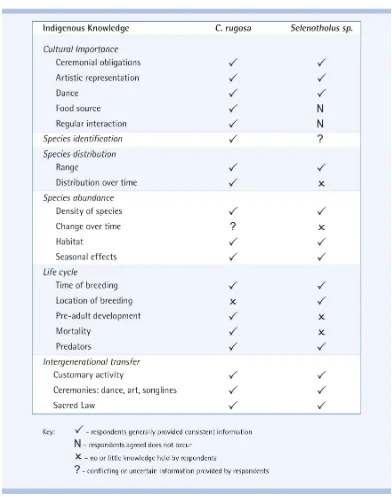
Table 3 Summary of IEK information for each of the two species gathered during semi-directive interviews and field work ... 74
Table 4 The major languages spoken in the region... 92
Table 5 Language, clan, moiety and Country... 99
Table 6 Major and significant vegetation types – Blyth River basin ... 104
Table 7 Major and significant vegetation gypes – Liverpool River basin ... 105
Table 8 Weeds of major importance ... 106
Table 9 Threatened fauna recorded from the proposed Djelk IPA with NT and national conservation status ... 107
Table 10 Status of exotic animals occurring within the region ... 108
Table 11 Income range ... 118
Table 12 Median income ... 118
Table 13 Knowledge dichotomies... 130
Table 14 Indigenous employment in the NT by industry... 158
Table 15 Observable tasks of Djelk rangers ... 174
Table 16 Indigenous land and sea management calendar... 175
List of Figures
Figure 1 Public meetings on Intervention in Maningrida 22 June – 25 July 2007 ... 17Figure 2 Discrete Indigenous communities and Indigenous owned land... 27
Figure 3 Percentage attendance by very remote school NT ... 31
Figure 4 NAPLAN results ... 34
Figure 5 Transmission of IK and WSK ... 78
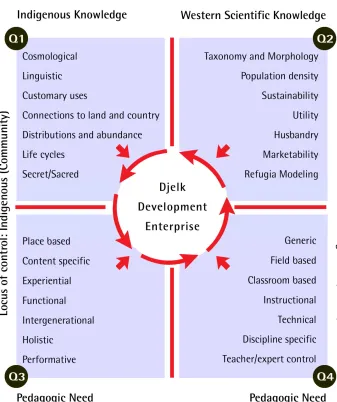
Figure 6 Pedagogic needs of a remote Indigenous development... 80
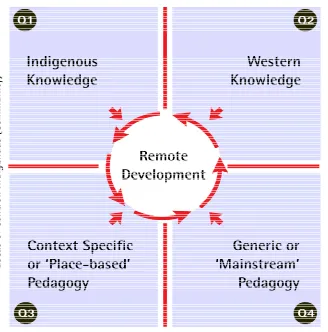
Figure 7 Generic model for assessing pedagogic needs of a remote Indigenous development... 83
Figure 8 Map of Western Arnhem Land ... 90
Figure 9 Population distribution – Maningrida... 90
Figure10 Kuninjku subsections... 97
Figure11 Djinang Ceremonial subsections... 97/98 Figure 12 Map of Maningrida township... 116
Figure 13 Current job breakdowns by CDEP ... 117
Figure 14 Bio-region assessment of ecological damage – Arnhem coastal region .. 154
Figure 15 Indigenous land and sea management groups in the NT ... 157
Figure 16 Indigenous employment by industry in very remote regions of the NT... 159
Figure 17 Maningrida STEP results ... 168
Figure 18 Retention of training participants ... 168
Figure 19 Governance structure of Djelk Rangers... 172
Figure 29 Organisational structure of Djelk Rangers... 173
Figure 21 School to work transition principles approved by the KNP board in 2005 ... 208
List of Photographs
Photo 1 Djimalawa Homeland Learning Centre 2007 ... 1
Photo 2 Spider rock art at Baradj ... 66
Photo 3 ‘Banda’ Michael Goduswara, 1998... 67
Photo 4 ‘Spider dreaming’ Billy Redford and Marina Murdilnga, 2001 ... 67
Photo 5 Mouth of Cadell River, Blyth basin 2007... 103
Photo 6 Buffalo damage to floodplain 2006... 109
Photo 7 Gamardi Homeland Learning Centre school 2007... 137
Photo 8 Mischat Rostron collecting crocodile eggs 2997 ... 181
Photo 9 Crocodile hatching after incubation ... 181
Photo 10 Djelk rangers preparing crocodile trap for problem crocodiles May 2007 182 Photo 11 Djelk rangers retrieving crocodile killed in illegal fishing net April 2007 182 Photo 12 Djelk sea rangers freeing turtles from foreign fishing vessel net... 183
Photo 12 Djelk sea rangers training with Australian Customs September 2007 ... 183
Photo 14 Djelk sea rangers retrieving ghost net October 2007 ... 184
Photo 15 Djelk sea rangers burning intercepted foreign fishing vessel March 2006 184 Photo 16 Weed management (mimosa) 2006 ... 185
Photo 17 Controlled burning 2006 ... 185
Photo 18 Repairing damage to Country August 2007... 186
Acknowledgements
First and foremost I wish to acknowledge the people of the Maningrida region who
are my friends and family and who have made this thesis possible. I thank you all for
your openness, honesty, hospitality and generosity. I especially thank you for all you
have taught me and shown me. You have made my life rich. If I had space I would
name you all individually, but I am particularly indebted to the people of the
Maningrida Outstations, the Bawinanga Aboriginal Corporation executive and
members, the staff and students of Maningrida Community Education Centre, past
and present, and the Djelk Rangers who put up with me and my questioning for so
long.
I need also to make special thanks to Ian Munro for his steadfast friendship and
ongoing support of my work over many years, as well as Michael Godjuwara,
Mathew Ryan, Victor Rostron, Margaret Rinbuma, Johnny Wapurrali, Mason
Scholes, Ben Corey, Shaun Ansell, Manuel Gundegorrtji, Russel Jordilla, Martin
Black, Wayne Campion, Peter Danija, Dean Yibarbuk, Felicity Douglas, Warren
Nunn, Tommy Steele, Chris Davies, Jillian White, Kath Magarey, Tim Bickmore,
Bently James, Krista Pedley-Smith, Rob and Wendy Evans, Greg Minogue and the
late Greg Jarvis for friendship, guidance and help during the times I have lived in
Maningrida.
To all of the staff and students at the Centre for Aboriginal Economic Policy Research
at the Australian National University, I extend my thanks for making my time as a
student so enjoyable and for your collegiality in every regard. To my supervisors,
Professor Jon Altman and Dr Jerry Schwab, I wish to express my sincere thanks for
giving me the opportunity to write this thesis, as well as for your friendship, support,
intellectual guidance and painstaking efforts to encourage and help me with my work.
I am in your debt. Also a big thank you to Janet Hunt for your time and effort as my
advisor on this work. I also wish to acknowledge Karen Clark and John Hughes for
To my mother and father, thank you so much for everything you have done for me. To
my extended family, especially Dr William Tyler and Annie and John Paterson, I
thank you for your support, understanding and encouragement over the time it has
taken to write this thesis.
DEDICATION
Abstract
This thesis exposes the dichotomies and binaries that have characterised theoretical
and political discourses in the provision of remote Indigenous education in Australia.
The research finds that ideological tensions and over simplified notions of
biculturalism in Indigenous affairs have dominated policy settings, resulting in
compromised pedagogy at the classroom level. The research also finds that a
structural disconnect exists in remote Indigenous education between schools,
community and work at a local level. This disconnect is perpetuated by a failure of
remote educational provision to develop pedagogic frameworks that are able to be
inclusive of Indigenous knowledge and remote Indigenous development aspiration.
The thesis demonstrates that remote Indigenous developments, and their associated
employment roles, have specific pedagogic needs that cannot be met solely through
generic pedagogy, nor can they be met through the provision of education based
solely in ‘culturalism’. Rather, the research shows that there is a need for pedagogic
frameworks that can cater for inherent tensions and complementarities in the
transmission of knowledge. This is based in a notion that all knowledge is contested
and, as such, it is the way that pedagogy is designed and which sets of knowledge are
valued that ultimately decides what is learned. Towards this end, an analysis of the
knowledge foundations of a remote Indigenous development is used to generate a
model that can be used to assess educational and training requirements.
Through detailed ethnographic and qualitative data, this thesis also provides an
analysis of the social, physical and economic characteristics of one of the largest
remote Indigenous communities in the Northern Territory, Maningrida in Western
Arnhem Land. This is then used to develop a ‘pedagogic device’ that can link ‘place
based pedagogy’ with generic pedagogy. Finding that ‘Country’ forms a basis for
social organisation and knowledge transfer in the region, the thesis describes the
development of a localised ‘Learning through Country’ program which uses land as a
‘pedagogic device’. The thesis then moves from ‘Learning through Country’ to
development and employment in ‘working on Country’ and ‘caring for Country’
programs. This section of the thesis analyses the development of Indigenous land and
remote employment, as well as a quantification of activity and a training history of a
large Indigenous land and sea management program. Finally, the preceding research
is combined with research on land and learning models of education in the NT to
create an applied pedagogic framework that has the potential to provide space for
Indigenous knowledge in learning, as well as mediating the dichotomies in pedagogic
provision for remote Indigenous students. Ultimately, this framework has the ability
List of Acronyms
AARE Australian Association for Research in Education ABS Australian Bureau of Statistics
ACF Australian Conservation Foundation
ACER Australian Council for Educational Research AEP Aboriginal Education Policy
AEU Australian Education Union
AGPS Australian Government Printing Service
AIATSIS Australian Institute of Aboriginal and Torres Strait Islander Studies
ALRA Aboriginal Land Rights Act 1976
ALRA NT Aboriginal Land Rights Act 1976 Northern Territory
ALC Anindilyakwa Land Council
ANTA Australian National Training Authority ANU Australian National University
ANZ Australian and New Zealand Bank AQUIS Australian Quarantine Inspection Service ARC Australian Research Council
ARIA Accessibility Remoteness Index of Australia
ASSPA Aboriginal Student Support and Parental Association ATSIC Aboriginal and Torres Strait Islander Commission ATSIS Aboriginal and Torres Strait Islander Services BAC Bawinanga Aboriginal Corporation
BIITE Batchelor Institute of Indigenous Tertiary Education CAEPR Centre for Aboriginal Economic Policy Research CDEP Community Development Employment Program CDU Charles Darwin University
CEC Community Education Centre
CEO Chief Executive Officer
CEP Community Employment Program
CFC Caring for Country
COAG Council of Australian Governments CRC Cooperative Research Centre
DEET Department of Education, Employment and Training
DEEWR Department of Education, Employment and Workplace Relations (formerly Dept. of Education, Science and Training)
DEST Department of Education, Science and Training (now Dept. of Education, Employment and Workplace Relations)
DETYA Department of Employment, Training and Youth Affairs ECI Early Childhood Intervention
ESL English as a Second Language FACS Family and Community Services
HLC Homeland Learning Centre
HREOC Human Rights and Equal Opportunity Commission
IK Indigenous Knowledge
IEK Indigenous Ecological Knowledge
IESP Indigenous Education Strategic Initiatives Program ILUA Indigenous Land Use Agreement
ITEP Indigenous Training for Employment Program JET Jobs, Employment and Training
KJRP Kakadu Junior Ranger Program
KNP Kakadu National Park
KLC Kimberley Land Council
LGANT Local Government Association of the Northern Territory MCATSIA Ministerial Council for Aboriginal and Torres Strait Islander
Affairs
MCEECDYA Ministerial Council for Education, Early Childhood Development and Youth Affairs
MCEETYA Ministerial Council of Education, Employment Training and Youth Affairs
MCEC Maningrida Community Education Centre MPA Maningrida Progress Association
NAPLAN National Assessment Program – Literacy and Numeracy NATSISS
NCVER National Centre for Vocational Education Research
NIELNS National Indigenous English Literacy and Numeracy Strategy
NLC Northern Land Council
NNTT National Native Title Tribunal
NRETA Dept. of Natural Resources, the Environment and the Arts (NT Govt.)
NSW New South Wales
NT Northern Territory
NTACC Northern Territory Area Consultative Committee NTCE Northern Territory Certificate of Education NTCF Northern Territory Curriculum Framework
NTDEET Northern Territory Dept. of Education Employment and Training NTER Northern Territory Emergency Response
NTG Northern Territory Government RATE Remote Area Teacher Education RTO Registered Training Organization SHEP Secondary Homelands Education Project SRP Strategic Results Project
STEP Structured Training and Employment Program TAFE Technical and Further Education
TER Tertiary Entrance Rank
UN United Nations
VET Vocational Education and Training
WA Western Australia
Chapter 1: Introduction and Method
In November 1998 I was teaching under a small tin shelter in an outstation in
Arnhem Land. It was unspeakably hot and the group of teenage students I was
working with stared back at me listlessly, as I desperately tried to come up with some
way to engage them. Part of the problem, apart from a mangy puppy that continually
outperformed me by sticking its head around the corner, much to the mirth of the
students, was that both the students and I were unsure of why we were there. What
was the point of education in this hot little space we shared? This question of ‘why?’
seemed to me, and perhaps the students, unanswerably big and omnipresent. Worse
still, over the preceding months I had come to a point where I felt that the education I
was offering could actually be detrimental to my students in the long run. I felt I was
part of a process of steady acculturation, that the educational wares I was selling were
diametrically opposed, and perhaps irrelevant, to the lifestyles and aspirations of my
students and their families. It all felt wrong. I even thought that my role as an
educator was actually a plank in a contemporary and insidious form of colonisation.
Photo 1 Djimalawa Homeland Learning Centre 1998
While this time perhaps represented a low point personally, it set me on a naively
simplistic journey to find a ‘better’ way. I worked with parents and landowners, I
consulted the doyens of ‘two way’ education, struggled to develop bilingual texts and
developed curricula, in situ, with Aboriginal and non-Aboriginal educators. I tried to
connect policy and praxis, and I measured, evaluated and reported as hard as I could.
All around me, my colleagues determinedly, doggedly and relentlessly did the same.
Still I felt, and saw, that there was a fundamental disconnect, a yawning chasm at
times, between the process, system and content of education and its intended purpose
in an intercultural, but very Aboriginal dominated, educational setting. The ever
present question of ‘why education?’ in this remote Indigenous context continued to
vex and torment me.
While I struggled with what eventually manifested into a kind of self induced
professional paralysis, the students seemed to have no such problem. They were
determinedly pro-active and stayed away in droves. Unfortunately, this was not just
occurring in the outstation schools in the Maningrida region of Arnhem land where I
worked. The situation in the main township was much worse, with only a quarter of
the students turning up on any given day (Fogarty 2005). In 2010 nothing has
changed, and as John Taylor’s (2010) work has shown, this situation is replicated at
other remote communities such as Wadeye. At a national level, figures showing the
enormity of Indigenous non-attendance become somewhat softened by better
attendance patterns in urban areas, but are, nevertheless, consistently and markedly
less than those of non-Indigenous students. Most pronounced in this endemic pattern
of non-attendance is the low number of students in their middle and latter teens who
are choosing to engage in education in remote areas. They are, in fact, highly
conspicuous by their absence (see chapter 2).
For me, this absenteeism poses some immediate, but difficult questions. Is poor
attendance a form of strategic non engagement or resistance to education? Is it a
failure of the education system, or more broadly the state, to provide meaningful
education to these students? Or, is it perhaps an economic problem, an employment
problem, a consumption, demand or supply problem? Perhaps, this lack of
engagement has its roots in historical, political or governance problems? Maybe it’s
even a cultural, behavioural problem? Are the parents, or the students, or teachers the
Rather than trying to answer one of these rhetorical questions regarding student
attendance, this thesis takes a broader approach that begins beyond the traditional
confines of the classroom and the well documented ‘attendance problems’ in remote
Indigenous education. My research begins in how remote Indigenous education
provision and policy interact with Aboriginal peoples’ diverse aspirations for self
determined socio-economic futures. After over a decade of living, working and
researching with Aboriginal people in remote regions of the Northern Territory, I
have experienced and observed a fundamental disjuncture between education in
remote settings and schooling’s ability to connect with the needs and wants of the
people. This disjuncture often gives rise to a failure of education to have real meaning
and utility for students, parents or community aspirations. This brings me back to the
question that vexed me so long ago. What is the point of education for remote
Indigenous students?
Indigenous education in the remote areas of the Northern Territory (NT) sits at the
centre of dilemma. On the one hand, education can be seen as a pathway to a future
that encompasses a life of better job prospects, better health, more money, better
housing and prospects of social mobility. On the other hand, education can be seen as
a tool of oppression and symbolic violence (Bourdieu 1990). It can repress linguistic
and cultural diversity, usurp local social structures and, at its worse, perpetuate
despair, failure and dysfunction. This is a conflict that is played out in the large and
difficult policy arena of Indigenous affairs, and strikes at the ability of the Australian
nation, its people and its economic system to countenance an exceedingly complex
form of educational pluralism. The actualisation of education that can cater for the
‘mainstream’, while simultaneously allowing even basic notions of cultural
difference, has been poor. This has resulted in a dilemma that, when viewed through a
lens of policy history, could be considered as intractable. Harris (1990:1) sums this
dilemma up succinctly stating:
The Dilemma is that Aborigines (sic) in remote communities want their children to learn the three R’s and to grow up Aboriginal. But if these children succeed in the Western school system, this is likely to be at a serious cost to their culture…’
Indeed, as I demonstrate in chapter 2 and revisit in chapter 5, policy design and
pedagogy have struggled with this dilemma at all levels of Indigenous education
of two broad approaches to Indigenous education. One approach privileges
educational relevance and cultural preservation. The other approach sees the generic
pursuit of English literacy and numeracy and the progression into neo-liberal
production roles as paramount, regardless of context and culture. In reality, such
distinctions are far from clear cut. In fact, the collision of these positions at the
‘chalkface’ has led to an educational landscape dominated by uncertainty and constant
re-invention (see chapter 2). This thesis attempts to mediate this dichotomy with an
applied pedagogic framework that allows for an intercultural mode of educational
provision.
To do this, I must acknowledge up front that I have struggled with my own view of
this educational dilemma for well over a decade. In many ways my own experiences
in Indigenous education have, at different times, seen me oscillate and agonise
between these two positions, trapped in what Altman (2001) coined the ‘great ditch’
of Indigenous affairs. My background as a teacher instilled in me a great belief in the
power of education as a vehicle of social justice, as a purveyor of opportunity and as a
fundamental requirement for empowerment and choice. However, I have also learned
that such uncritical beliefs, applied in a remote Indigenous context, can lead to
education that disempowers learners and leads to imagined futures. This thesis
therefore is my attempt to engage with this dilemma in the hope that I can offer some
contribution to what must be viewed as a dynamic, yet incredibly complex and taxing
field: remote Indigenous education in Australia.
To do this, I have chosen to examine in detail one small part of education within
this larger dilemma. This thesis explores a growing, and potentially positive
connection between Indigenous land and sea management and remote Indigenous
education. I chose this because my experiences in remote communities, combined
with my research herein, have taught me that an educational relationship with land
and sea management allows for approaches that have potential to mitigate, or at least
mediate, some of the dilemmas that education policy and provision in remote
Indigenous communities face. In particular, I exploit the synergies and linkages
between education and land and sea management to alleviate the disconnect between
schooling, community and work.
In order to achieve this, the thesis operates on three distinct, yet totally interrelated
and pay particular attention to the provision of education in the remote communities
of the Northern Territory. By exploring the policy settings that have characterised
Indigenous education it becomes clear that the ‘chalkface’ has become compromised
by the political ideologies that have dominated the broader field of Indigenous affairs
in Australia. This has resulted in pedagogic frameworks that have oscillated between
what can be termed a culturally relativist position and between frameworks that allow
for no pluralism or difference in learning at all. I show how such ‘to-ing and fro-ing’
of policy settings has culminated in compromised pedagogic approaches in the
classroom. In addition, I find that that the penetration of political ideologies, and top
down policy into the pedagogic space has also caused a disjuncture between local
learning communities and their schools. This is evidenced, not only through the
provision of schooling that lacks utility for learners in the local context, but also
through the systemic disengagement of Indigenous students. This disjuncture is
particularly clear in the crucial area of transitions between school and work. Despite a
litany of research espousing the importance of connecting the school with the
community and meaningful work or production roles that are valued locally, it is clear
that current policy settings are an abject failure in this regard.
At a theoretical level, I examine how knowledge acquisition, transmission and
reproduction come together in a ‘pedagogic space’ to provide a platform for learning.
I do this by first deconstructing the false binary between Indigenous and Western
knowledge. This is an intercultural (see Merlan 1998, Hinkson and Smith 2005)
approach that focuses on knowledge complementarity, rather than the discourse of
dichotomy and difference which dominates so much of the literature around Western
and Indigenous knowledge. As an example, I demonstrate how the synergies between
Indigenous and Western knowledge bases are being used by Aboriginal and
non-Aboriginal people to run a sustainable wildlife industry in Arnhem Land. In analysing
how both Western and Indigenous knowledge combine to create this local wildlife
industry, I then show how this particular form of local development has specific
educational needs. These needs cannot be met by educational approaches that solely
privilege a cultural relativist approach, nor simply though the provision of generic
education. Rather, this example shows that education for an emergent form of local
development, such as the wildlife enterprise, relies on a mix of knowledge bases and
in educational provision. In turn, this example demonstrates that education in remote
settings for Indigenous students must be cognisant of the need for schooling to
connect with the knowledge of the local community and to support local development
aspirations and need.
At an applied level, the thesis analyses the physical, social and economic
characteristics of one of the largest Indigenous communities in the NT, Maningrida
(chapter 4). I posit Maningrida as a community in transition and show that the
intercultural realities of daily life are beset by a complexity that demands localised
development process, as well as broad engagement with the wider global community.
This analysis is based on a relatively large body of existing research, my own
experiences teaching and living in Maningrida, as well as data collected during
fieldwork. In analysing the complexity of Maningrida and how this township, and the
surrounding region, is negotiating and creating an intercultural development base, it
becomes clear that any pedagogic framework that fails to account for the realities of
such a place will fail. In particular, I show that the realm of work is very much
dependent on skills and knowledge that utilise areas of complementarity between
Indigenous and Western knowledge. Given this, it becomes clear that learning in this
context must also be able to cater for the interaction between Indigenous and Western
knowledge.
Building on this analysis of Maningrida, I then examine the importance of the
connection between ‘Country’ and learning in the region (chapter 5). By
demonstrating that ‘Country’ is a socio-cultural concept that sits at the heart of the
region’s daily machinations, I show that the link between ‘Country’ and learning in
the region has always had a role in the provision of education in Maningrida. Yet,
despite historical examples of how this link can be used to engage learners and further
educational development, I argue that such links have rarely been made explicit.
Conversely, I show that formal schooling has, in the main, failed to account for the
importance of this link and instead pursued pedagogic development based in static
and piecemeal representations of Indigenous land and culture, or completely missed
the educational role that connections to Country can play in this context. Such
educational positions have instead focused on domain separation and models of
biculturalism that perpetuate the educational dilemma with which I started. In chapter
nuanced position through a conceptualisation of Country, its importance in a remote
learning context and its potential role in pedagogy.
Moving from the relationship between ‘Country’ and learning in Maningrida, I
then explore the relationship between ‘Country’ and work. Beginning in the
jurisprudence underlying a modern Indigenous estate, chapter 6 examines the role of
land in the development of a relatively new production role in remote Australia:
Indigenous land and sea management ‘rangers’. In this chapter, I show the importance
of Indigenous ranger work as a growing form of employment. I also show that
Indigenous land and sea management programs rely on a matrix of skills and learning
that are transferred in both formal and informal domains and rely very much on
synergies between Indigenous and Western scientific knowledge. These skills begin
in the notion of ‘Country’ and are actualised in the daily work of Indigenous land and
sea management in practice. Through detailed ethnographic and quantitative data, I
demonstrate that ranger work has allowed the creation of a development space that
can both mediate and allow for competing discourses in knowledge. I also show how
this particular form of activity connects ‘the community’ and an increasingly
neo-liberal work paradigm to produce an intercultural mode of production that has
particular needs in terms of educational provision.
Chapter 7 brings the theoretical and applied aspects of the thesis together to show
how the failure of policy in remote Indigenous education is being tackled at a local
level. In particular, this chapter traces the development of land and learning programs
and ‘junior ranger’ programs that have developed organically in many remote
Indigenous communities in the NT. These programs are localised attempts to
reconnect the community, schooling and work. They also represent an example of
education that has the potential to partially mediate the dilemmas of remote
Indigenous education. Under such models, students are potentially able to learn ‘the
three R’s’ required by a neo-liberal state and maintain an increasingly diverse set of
intercultural norms. However, in my analysis of four of these programs I find that
they are fragile and suffer from severe capacity constraints. Importantly, I also find
that these programs provide an example of an intercultural model of education. Such
programs have the capacity to exploit connections between Western and Indigenous
educational outcomes. I finish chapter 7 by developing a typology of these programs
and showing how this can be used as a base for an applied pedagogic framework.
In my conclusion, I reiterate my findings and recap on how they can be applied to
create a learning program that has potential to traverse the dichotomies that dominate
current policy and delivery in education. However, I offer this as no panacea to the
deep seated and complex issues that characterise remote Indigenous education
provision, but rather as a new way to tackle pedagogic design in areas that
demonstrate a need for both generic and place based educational approaches.
Method
In the next section of this chapter, I discuss the methodologies employed in order
to make my findings, with an emphasis on two major periods of fieldwork during the
research. I also comment on some contextual factors concerning the method of
research and the circumstances under which the research was conducted. In addition, I
discuss the impact of the Northern Territory Emergency Response (NTER), or ‘The
Intervention’ as it has become known, upon my time in the field and upon the people
with whom I was working. While arguably outside the context of the thesis as a
whole, I contend that as the largest policy shift in Indigenous affairs in three decades,
combined with the critical impact the Intervention had upon this research, that it
would be remiss of me not comment on this policy shift. Finally, I discuss some
caveats.
This research has its genesis in a project funded by the Australian Research
Council (ARC). The project was conducted at the Centre for Aboriginal Economic
Policy Research (CAEPR) as part of a ‘linkage project’1 entitled ‘Custom-based land
and resource management and the educational and social re-engagement of
Indigenous youth in the Northern Territory’. This thesis is one of the outcomes of the
project. Dr Jerry Schwab was the Chief Investigator on this project and also the chair
of supervision for this thesis. While CAEPR at Australian National University (ANU)
was the research institution, the project also had three industry partners, The
Bawinanga Aboriginal Corporation (BAC), the Northern Land Council (NLC) and
The Northern Territory Department of Education and Training (DET)2. In addition to
1
A ‘linkage project’ aims to link the Academy and Industry in research of national importance.
2
input provided by the three industry partners listed above, the following list of
institutions (Table 1) also provided significant assistance during the course of the
research:
BAC was established in 1974 as an outstation resource agency providing services to over 800 people residing on 32 outstations in north central Arnhem Land and is one of the largest Aboriginal corporations in Australia. BAC is strongly committed to the establishment of small commercial enterprises as a mechanism for economic development for the region. Local land and resource management is one of the Corporation’s primary activities, carried out by the Djelk community rangers. The rangers are also involved in educational delivery at Maningrida CEC, the local school in Maningrida.
The Northern Land Council (NLC)
The NLC is a statuary authority representing Aboriginal people in the northern half of the Northern Territory. The NLC assists Aboriginal people manage their land through its Caring for Country Unit; the programs within this unit have facilitated the development of over 30 community-based land and sea management programs employing over 300 Aboriginal people. The NLC has indicated that early engagement of young people with these programs is necessary to ensure the next generation of land and resource managers have the capacity to protect their land and engage with regional economies. The Northern Territory Department of Education and Training (DET)
DET has a primary role in providing education for Indigenous students in the NT. The research aligned with DET’s targets on attendance, retention and the creation of pathways to employment while providing an important strategic ‘fit’ with the recommendations of a recent review into secondary education conducted in the Territory (Charles Darwin University and the Northern Territory
Table 1 List of organisations
Organisation Location
Djelk Rangers
Maningrida CEC
Maningrida
Merwangi Rangers
Ramingining CEC
Ramingining
Dhimurru Rangers Nhulunbuy
Yirralka Rangers
Yirrkala Homelands Schools
Yirrkala CEC
Lahnapuy Homelands Aboriginal Corporation
Yirrkala
Anindilyakwa Rangers
Anurrugu CEC
Anindilyakwa Land Council
Groote Eylandt
Lianthawirriyarra Rangers
Borroloola Area School
Borroloola
Yugul Mangi Rangers
Ngukurr CEC
Ngukurr
Gapuwiyak CEC Gapuwiyak
Tangentyere Land Council Alice Springs Australian Quarantine Inspection Service (in) Maningrida
Norforce Defence (in) Maningrida
Australian Customs (in) Maningrida
NT Fisheries (in) Maningrida
As well as consultations with the institutions listed above, the research is informed
by formal and informal interviews with people, both Indigenous and non-Indigenous,
from a diversity of backgrounds and locations over a four year duration. While only
relatively few of these people are directly quoted or referenced in this thesis, many of
these individuals have contributed to my thinking and the research outcome and, as
such, these discussions have formed an integral part of my method in deriving results.
However, it is primarily the people with whom I worked closely during fieldwork that
An Anthropological Approach
In order to engage in the dilemma I have outlined at the start of this chapter, I have
taken a necessarily eclectic approach to the thesis. My fundamental approach is
influenced by Anthropology. The anthropological tools of ethnography and
participant observation have formed the cornerstone of this work. However, in many
ways, this thesis should not be judged as a standard anthropological piece of work (if
such a thing exists). By necessity, I have drawn heavily on a variety of other
disciplines in order to explore my thesis. These include sociology, educational
studies, development theory and economics. This is particularly evident in chapters 2
and 3. However, more conventionally, my methodology in the field relied greatly on
ethnographic data. In this, I partly follow Geertz’s (1973) understandings of
ethnography as ‘thick description’ and as a method to expose ‘the webs of meaning’
underpinning the social constructs of the field site. However, I augment this with
secondary research material, both quantitative and qualitative, in order to connect
three somewhat disparate areas of inquiry. Specifically, these areas are remote
Indigenous education, Indigenous land and sea management and the pedagogic
relationship between Western and Indigenous knowledge.
In order to obtain this data, I spent an extensive time in the field living and
working with local Indigenous people. Each day I endeavoured to take notes on what
I had observed, who had said what or done what, and how such action related to my
primary research concern. I also gathered data on the social and economic context in
which the research was being conducted. However, it was the use of semi-structured,
informal interview and discussion that formed much of my approach. This consisted
of taking the opportunity, at every opportunity, to discuss with and question local
people in as relaxed and informal way as possible. This was not always easy, and as
per the requirements under the ethical guidelines of this research,3 each discussion
with an individual began with an explanation of the research and our respective
obligations in order to ensure prior and informed consent. This was also accompanied
by the signing of a consent form ensuring transparency. This did not always make for
a comfortable, relaxed beginning as the following field note shows:
3
‘After explaining to S_____ what my research was about, what his participation meant and talking through the consent form, he was enthusiastic and keen to be involved. “Great,” I said and passed him the form showing him where to sign.
“What this djurra? (paper),” he said somewhat alarmed. “You government mob now? You take him away. I’ll tell you story, no worries Gammerang,4 but no fuckin
djurra humbug!”’ Extract from field note January 21 2007
Despite such trials and tribulations, I always tried to ensure people were well
versed in what I was trying to do and to conduct my questioning and reporting of
these interviews as ethically as possible. In all, I interviewed 171 separate individuals
in this manner. Many of these interviews were enlightening. Some were not. Some of
these individuals, and in particular the Djelk rangers with whom I spent a great deal
of time, provided me with additional data and insights on an almost daily basis. I also
augmented these less formal interviews with a series of more structured, formal
interviews which I conducted with 18 rangers from the Djelk program. In this case, I
developed a series of questions, talked the whole group through the questions and
gave them to each person to consider overnight before recording the interviews over
the following days. These interviews, while yielding some good material, were less
fruitful than the more relaxed approach, as informants tended to be more nervous in
this situation and thus provide less information. Indeed, one informant provided very
little information, despite normally being very forthcoming. When I asked her why
she told me that she was worried about getting the questions wrong, even though they
were open ended. This gave me great insight into the importance of keeping
questioning relaxed and in the power of being a participant observer more generally.
Fieldwork
The fieldwork for this research was undertaken in two distinct blocks. The first
period was undertaken in the township of Maningrida in Western Arnhem Land (see
chapter 4 for comprehensive data on township). This period of field research began in
September 2006 and ended in November 2007 and included three hundred and
thirty-nine days living in an outstation named Djinkarr, situated 20 kms from the main
township of Maningrida.
4
Maningrida was chosen as a primary field site for the research for three main
reasons. First, I had lived and worked in Maningrida as a senior teacher from 1998
until mid 2003. My duties included the managing of fourteen outstation schools over
the 10,000 square kilometer area that Maningrida Community Education Centre
(CEC) serviced. As such, I had intimate knowledge of the educational and social
challenges the region presented. Similarly, during the time I had spent living in the
region I had formed strong personal and professional relationships with many of the
Indigenous and non-Indigenous people of Maningrida. Indeed, these relationships
were integral in being able to negotiate the research with the community during its
planning stages, as well as allowing for access to key informants during fieldwork, an
important consideration for an anthropologist.
The second reason for choosing Maningrida as a field site was that the township is
one of the largest remote townships in the Northern Territory. With its size comes an
extremely complex social and economic environment that, I believe, provides
challenges in education that make it an ideal case study for pedagogic design. These
challenges are exemplified by the extremely poor attendance and numeracy and
literacy outcomes of the school, as well as the great diversity of linguistic and cultural
blocs within the region which provide for a complexity of social arrangements (see
chapter 4).
The third reason for choosing Maningrida as a field site was the existence of the
Djelk ranger program and the Djelk Sustainable Wildlife harvest development (see
chapters 3 and 6). Given that a primary concern of my research was to find a way to
link school with work that aligned with Indigenous development aspirations, the
Djelk programs provided a live example of a remote development that provided
meaningful work as well as being valued by the community for its role in caring for
Country (see chapter 6). Similarly, the Maningrida CEC was engaged in the delivery
of educational programs that linked with the Djelks and therefore provided an ideal
case study for the research (see chapter 7).
In an initial meeting in June 2006 with the Bawinanga Aboriginal Corporation
(BAC) Chief Executive Officer (CEO), the BAC Executive, and two of the senior
Indigenous Djelk rangers it was decided that I would spend my fieldwork period as a
participant observer inside the Djelk program. I considered this to be ideal, for
less familiar with the work of the Djelk program and was keen to base my
ethnographic data, particularly concerning the interaction between Indigenous and
Western knowledge, upon their work. So, in early September 2006 I headed to
Maningrida to begin fieldwork, accompanied by my partner who was also conducting
research in the region. Upon arriving, however, I was forced to make a major change
to my proposed method of research.
In my first week in Maningrida I received a phone call from the CEO of BAC
saying that the rangers had been to see him and that they did not want to work with
me or participate in the research. This was despite the fact that the Indigenous rangers
were initially supportive of the research and had already said they were comfortable
working with me. This came as something of a shock. It transpired that the then
non-Indigenous coordinator of the Djelk program had reservations about the research. On
the 12th September I approached the coordinator about a meeting. Eventually, after
two weeks of trying, I met with both the coordinator and the rangers to try to
understand what their concerns were and, if possible, alleviate the issues. The meeting
did not begin well with the coordinator stating “I have no idea why you are here or
what you want”. After I explained the research and that I really just wanted to talk to
people and observe, as well as help in any way with daily work, the senior Indigenous
ranger very strongly stated that he thought it was a good idea. I suggested that perhaps
I could come in on Mondays and that they could choose how and when I could
engage. This was agreed to by the head Indigenous ranger, but rejected by the
coordinator who basically said they were too busy and I would be in the way. The
coordinator then left the meeting. The senior Indigenous ranger grabbed my hand and
quietly said “we will work with you”.
I detail this beginning not to demonise the coordinator, who during my second
stage of fieldwork and in another context was extremely supportive of my research
and facilitated key insights to my work, but rather to show how fraught the
relationships between Indigenous and non-Indigenous interests can be in a remote
research context. Furthermore, this inauspicious beginning forced me to change my
original approach. Deciding against forcing the issue with the rangers, I negotiated to
spend the next two months of my fieldwork working with four outstations in the
region, Wurdeja, Gamardi, Ji-balbal and Markolidjban (see map in chapter 4). During
seventy-eight with particular regard to their views on education, their own experiences of
schooling and what they felt was needed in terms of educational provision in the
region5. At all times I was assisted by Indigenous collaborators to translate, one of
whom had advanced linguistic ability in English and three of the languages spoken in
the area. The subsequent insights these semi-structured interviews provided have been
critical in formulating the work in this thesis, particularly regarding the role people
perceived ‘Country’, as well as Indigenous knowledge, should play in education.
In January 2007, after a change of personnel, I was invited once again to conduct
research with the Djelk Rangers. Over the next eight months, I spent each week day
from 8am until 5pm working with the rangers. During this period, I accompanied the
rangers on 48 separate sea patrols and 33 land patrols, participated in all activities the
rangers undertake as part of their work, and for all intents and purposes, worked as a
quasi-ranger when possible. While much of my time was spent with the male ranger
group, I also managed to spend a period of four weeks with the female ranger
program and worked with them on the full breadth of their activities (see chapter 6).
During March and April, I was the only non-Indigenous person working with the
male ranger group and at the rangers’ request, and given that my literacy levels
qualified me, I provided a range of administrative and financial support to the group
including report writing, grant writing and facilities management. In addition to this I
was involved in all meetings, although restricted myself to observation only, and was
for all intents and purposes treated as a member of the team. Through this period I
gained much knowledge about the ranger program and, more importantly, the rangers
themselves. Similarly, I was able to gain an understanding of the educational
requirements of both the program and the individuals, as well as learn much about the
extensive Indigenous knowledge the rangers needed to perform their functions.
The Intervention.
My time with the rangers during fieldwork was highly productive, but just as I felt
the research was coming together, Indigenous affairs experienced a major policy shift,
which had a dramatic impact on the research and the people with whom I was
working. On the 21st June 2007, the Australian government announced the Northern
5
Territory Emergency Response (NTER) (Brough 2007a). The ‘Intervention’, as the
NTER has come to be known, was called in response to the Little Children are Sacred
report into the protection of Aboriginal children from sexual abuse (Anderson & Wild
2007). A series of emergency policy measures were outlined in a joint media release
by the Prime Minister John Howard and the Hon. Mal Brough (2007), the then
Indigenous affairs minister. Over the next four weeks the Intervention became an all
consuming issue for many people in Maningrida. On the 5th July 2007 I wrote a piece
for ‘Crikey’ which I provide an excerpt of here in order to show how the intervention
impacted upon Maningrida:
Most of the community found out about the plan through newspaper reports and television. Media grabs of children in Aboriginal communities and file footage of Australian Defence Force personnel combined with a general lack of linguistic comprehension on the part of the community combined to create an initial wave of fear.
This was reinforced by the general tenor of many reports. In a multilingual community where English is some people’s fourth or fifth language, such reporting had the effect of scaring people and many believed the army was coming to take away their kids.
As this fear gained traction, a couple of local men organised a hastily convened public meeting which was characterised by incredible misinformation, including comments such as “the UN peace keeping forces are coming with guns” and “Mr. Canberra man (Mal Brough) wants to take our kids because he thinks they have AIDS”.
By the end of last week the fear in the community was palpable, there was panic buying at the local shops and it is my conservative estimation that one-third of the community packed up and headed into the bush to stay at one of the 35 outstations in the area. People are now returning slowly, but confusion and uncertainty prevails.’ (Fogarty 2007)
For the rangers, the Intervention, and an associated announcement of the abolition
of the Community Development Employment Program (CDEP) (see Brough 2007b
for further information) under which they were employed, became all consuming. A
series of public meetings, as well as meetings within local organisations over the four
weeks following the announcement of the Intervention led to many of the rangers
being engaged in roles far removed from their daily work. During this period, public
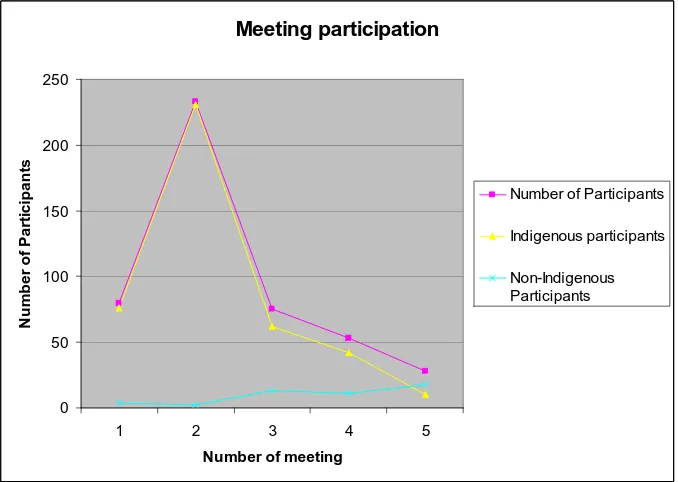
meetings were initially very well attended, but as time wore on participation dropped
of whom were involved in the ranger program, formed the majority of most meetings,
[image:31.612.126.465.142.383.2]asserting their authority to speak on behalf of their respective interests.
Figure 1 Public meetings on Intervention in Maningrida 22nd June to 25th July 2007
Meeting participation 0 50 100 150 200 250
1 2 3 4 5
Number of meeting
N u m b e r o f P a rt ic ip a n ts
Number of Participants
Indigenous participants
Non-Indigenous Participants
The involvement of rangers in Intervention related activity meant that the research
I was trying conduct became increasingly untenable. In addition, my partner and I
found that our role as researchers in the community, combined with my long history
with people in Maningrida, meant we were seen as somehow neutral or empathetic by
many Indigenous people and we were besieged by people wanting advice on what the
Intervention meant. For both of us the Intervention forced a new and uncomfortable
role upon us as quasi ‘community advisors’ on government policy as a direct result of
the Federal government’s decision not to consult with any of the people in the
township, their local organisations or indeed the NT government prior to launching
the Intervention. This was compounded by an absence of contact with the community
by the Federal government for a period of four weeks after announcing the
Intervention. As a consequence, we found ourselves in an unwitting and certainly
reluctant position of having to explain what the changes meant for the people of the
township, as outlined in media releases (See Brough 2007). This proved to be an
extremely difficult task as not only did we have to contend with inherent linguistic
community, but also with a policy that seemed to be changing by the day, or that was
being ‘adaptively managed’.
In August 2007 I was faced with a problem. If I left the community I felt that my
research with the rangers would not be completed. If I stayed I saw that I would have
to somehow find a way to incorporate the Intervention into my research. This
dilemma was set against an increasingly vociferous public debate, and the beginnings
of anthropological debate within the academy, in which taking any position regarding
the Intervention as a PhD student seemed fraught. As it transpired, my decision was
expedited by an approach by BAC for my partner and I to undertake a consultancy
analysing the likely social impact of the Intervention upon the organisation and its
members. This work was conducted under a tight time frame in order to have a report
written to present to the Northern Territory Emergency Response Taskforce which
was to visit within four weeks and culminated in a report Constructive engagement:
Impacts, Limitations and Opportunities during a National Emergency (Fogarty and
Paterson 2007).
In terms of this thesis, the opportunity to work closely with BAC’s Indigenous
executive and non-Indigenous CEO provided access to data and insights that have
greatly enhanced the research. I was advised by my supervisor to negotiate joint
intellectual property for the consultancy which was accepted by BAC, who also
generously granted permission to use data obtained during the course of the
consultancy for my research herein. Similarly, the relationships I formed with the
Bawinanga Executive provided a different ethnographic lens through which to view
my research and allowed for a much greater understanding of the educational and
development concerns faced by BAC and its members. Following the consultancy,
and as some stabilisation returned to Maningrida, I was able to complete my research
with the Djelk Rangers and left Maningrida at the end of November 2007.
In August 2008, I undertook a second, and much shorter period of fieldwork. This
four week period of fieldwork had three parts. First, I returned to Maningrida to report
back to people I had been working with and to ensure accuracy of my observations.
This involved checking quotes and obtaining, where possible, missing information
My second task was to conduct research specifically targeted at exploring the
relationship between Indigenous and Western scientific knowledge in an Indigenous
owned and run commercial wildlife enterprise. In order to explore the strength,
relevance and availability of Indigenous knowledge surrounding two species that
were being used by the enterprise, I conducted a series of formal and semi-formal
interviews, as per an agreed framework for the project. The interviews were
conducted in situ over a period of 10 days between the 6th and 16th of August 2008
with 39 people. Respondents were not chosen randomly, but rather through
connections to Country deemed to be within scope of the enterprise development,
seniority within the socio-cultural fabric of the region and immediate township, as
well as through self selection. One of the interviews was specifically conducted with
staff of the BAC wildlife enterprise development as a training exercise, where the
method of semi-formal interview was demonstrated with the staff acting as both
respondents and students. This was done to enable staff of the wildlife enterprise to
conduct their own interviews with people in the region. Information from such
interviews is often needed for permits for wildlife utilisation and as part of the
wildlife enterprise’s ongoing documentation of local knowledge.
All interviews were conducted in conjunction with Indigenous collaborators and
interpreters, with both male and female collaborators participating at different times.
Interviews were also conducted within the ethical parameters of the larger project, as
per the ANU ethics clearance process. As an impetus and visual aid to each of the
interviews, a live specimen of the tarantula, one of the species being investigated, was
procured from the BAC wildlife enterprise. The findings of this research are to be
found in chapter 3.
The final task during this second fieldwork period involved visiting a number of
remote places in the NT in order to document existent and potential linkages between
education and Indigenous land and sea management programs. Accompanied by Dr
Jerry Schwab from CAEPR and a senior Indigenous ranger from Maningrida, Mr
Mathew Ryan, I visited Ramingining, Gapuwiyak, Nhulunbuy, Alyangula, Angurugu,
Yirrkala, Ngukurr and Boroloola.6 This field trip was designed to garnish the views of
key people in these areas and to assess and document existent programs linking
6
education and land and sea management. The communities and programs visited as
part of the August field trip were chosen to assess the levels of intuitional and
operational support available, as well as to reflect the diversity of remote Indigenous
circumstance. During this trip we managed to hold discussions with 160 people and to
garner an extremely diverse and wide ranging set of perspectives and information
which have been crucial in forming the work herein.
Caveats
The field of Indigenous education has spawned a body of research, both
domestically and internationally, that is immense and reaches far beyond the
immediate concerns of the thesis. Similarly, fields such as development, pedagogy,
knowledge transfer, Indigenous natural resource management and constructs of
Indigenous land are all valid areas of specialist study in their own right. Given this
breadth of topical concern, I have targeted the literature research within the thesis to
my specific areas of inquirey. While this could perhaps lead to accusations of
‘selective bias’, the intended purpose of this thesis is to develop an applied model that
can be of use to educators and policy makers in the very difficult context of remote
Indigenous education provision. As such, the complexity of real world educational
situations requires that disparate disciplines of academia conflate at the ‘chalkface’
and are subject to concerns of pragmatism. Given this, I have kept my exploration of
academic discourses focused on the applied. Having said that, there are some terms
used throughout the thesis that require some academic definition at the outset. The
terms defined below are provided here, in the introductory chapter, to make clear my
approach and assist the reader in clarity of understandings and readability in the rest
of the thesis.
‘Indigenous’
Accepted nomenclature in the discussion of Aboriginal and Torres Strait Islander
peoples is subject to changes regarding appropriateness, usually as a result of
Indigenous people themselves being unhappy with certain terminologies. 7 Given this,
7
I use the term ‘Indigenous’ throughout the thesis as a term intended to include a
diversity of Indigenous culture and people throughout Australia and the Torres Strait,
while being cognisant that Indigenous people themselves have their preferred terms of
identification and nomenclature pertaining to their cultural, linguistic and
geographical backgrounds, which I have used where possible. In this regard I have
endeavoured to be sensitive, while noting the heuristic need in the thesis to identify
Indigenous people as distinct from the antonym of non-Indigenous. I also note that the
term ‘Indigenous’ is the preferred nomenclature of the Commonwealth Government
at the time of writing and that in consultations with people on fieldwork the word
‘Indigenous’ was seen as being acceptable as a generic term.
‘Community’
The term ‘community’ in its varying connotations has long formed a cornerstone
of social science research and method. Arguably with much of its conceptual
beginnings in Tonnie’s (1887) binary opposition between Gemeinschaft and
Gesellschaft, modern anthropological discourse has been highly critical of the term
‘community’, particularly in relation to ‘community development’ (see for example
Walker 2001, Cohen 1985 and Smith 1989).8 As Smith critically notes:
The use of the term 'community' without Aboriginal consultation, self analysis and definition has in fact acted as a barrier to self determination, setting communities up for administrative failure, and thus denying Aboriginal people the opportunity to work through the development process, with specialised professional support, and in their own time (Smith 1989: 4).
Much of this critique relates to post-structural readings of context which see
uncritical use of the term ‘community’ as proffering a static, bounded and unchanging
conception upon a fluid and dynamic social structure. Similarly, the term community
is heavily criticised for masking the heterogeneous and often disparate views of
people and institutions within a given locale (see for example Amit, Vered and Indigenous people due to its historical associations with the processes of colonisation. Similarly, the term ‘Aboriginal’, in an Australian context is seen not to include people from the Torres Strait Islands or of Torres Strait Islander decent.
8