Copyright ©)1988, AmericanSocietyfor Microbiology
Site-Specific Mutations in
Vectors
That
Express
Antigenic
and
Temperature-Sensitive Phenotypes of
the
M
Gene
of
Vesicular
Stomatitis
Virus
YAN LI, LIZHONG LUO, RUTH M. SNYDER, AND ROBERTR. WAGNER*
Department of Microbiology andCancer Center, UniversityofVirginia School ofMedicine, Charlottesville, Virginia 22908
Received 25 April 1988/Accepted 1July 1988
Full-lengthcDNAcopies of mRNAs coding for the matrix (M) proteins ofvesicular stomatitis virusandits mutantts023(III)werecloned inpBSM13- (BlueScribe). Theauthenticity ofthese cloneswasdemonstrated
by restrictionenzymemapping,DNA sequencing, and in vitro transcription and translationtoidentify thetwo M proteins by Western immunoblotting with epitope-specific monoclonal antibodies. Site-directed mutants
wereconstructedbyprimerextension of synthetic oligodeoxynucleotides withone ortwonucleotide changesto alter theglycineatamino acid21of the wild-type(wt) Mgenetoglutamic acid, alanine, orproline. Similarly,
a revertant wascreated inthe M gene ofmutant ts023 bya Glu-21->Gly substitution. A series ofwt- and mutant-M-gene chimeras was also constructed to create mutant and revertant clones with Leu-*Phe and His--Tyr alterationsatamino acids 111 and 227, respectively. We then movedthewtand ts023 Mgenesand
their site-specific mutants and chimeras cloned in pBSM13- into the eucaryotic expression vector pTF7 directedby the T7 bacteriophage RNA polymerase of the vaccinia virus recombinant vTF1-6,2. Western blot analysisof the Mproteins transientlyexpressed inCV-1cells byplasmids carrying M genesalteredatamino acid 21 revealed thatthe critical antigenicdeterminant (epitope 1) is expressed only by the Gly-21 M protein and notby Glu-21, Ala-21,orPro-21Mproteins. Of particularinterest isanapparentconformational change,
evidenced by slightly but significantly retarded electrophoretic migration, in plasmid-expressed M proteins
with amino acids substituted for glycine at position 21. The glutamic acid at position 21 of tsO23 is not responsible for its temperature-sensitivephenotype, becauseatsO23revertantplasmid with glycine substituted atposition 21 failstorescuetsO23 virus incells infected atthe restrictivetemperature; conversely,plasmids
expressing wt M protein with substitutions ofglutamic acid, alanine, orproline at position 21 arejust as
effective in markerrescue oftsO23 asis theGly-21 wtMprotein. Markerrescue experimentswith wt- and
mutant-M-gene chimerassupportthe hypothesisofK.Morita,R.Vanderoef,andJ.Lenard (J.Virol.
61:256-263, 1987) thatthetemperature-sensitive phenotypeof tsO23is duetoaphenylalaninesubstituted for leucine
at amino acid 111, rather than the His-227-*Tyr substitution or the Gly-21--*Glu substitution, which
independentlyaccountsfor the loss of epitope 1inthemutantMprotein oftsO23. Vectors expressinggreater amounts of M protein are necessary to locate the region of the tsO23 M gene responsible for loss of the
transcription inhibitionphenotype.
Thematrix(M)protein of vesicular stomatitisvirus(VSV) plays importantroles in virusassembly(22, 27, 28) and down regulation of viral transcription (2, 4, 29). Monoclonal
anti-body (MAb) directed to oneof four antigenic determinants
(epitope 1) specificallyreversestranscription inhibition byM
protein (17).EnzymaticandchemicalcleavagesofMprotein localized much ofthetranscriptioninhibitionactivitywithin thefirst43 N-terminal amino acidsandepitope1 inaregion
between amino acids 18 and 43(15). Studies with synthetic oligopeptides corresponding to M-protein amino acid se-quences indicate that epitope 1 is located between amino acids 17 through 31, whereas the
transcription-inhibitory
activity is located, at least partially, within the first 20
N-terminal amino acids (24).
Ofconsiderable interest are
early
studies which indicatethatvarious temperature-sensitive mutantsof VSV in
com-plementation group IIIcontain M protein which exhibits a
nonconditional loss in the phenotypefor inhibition of VSV
transcription (2, 29). Moritaetal.(14)have
sequenced
someof these mutants and many revertants
by
primer
cDNA extension and found spontaneous nucleotidechanges leading*Correspondingauthor.
to amino acid substitutions widely distributed throughout 60% ofthe Mgene. Ofparticularinterest to usis the group III mutant ts023, the M protein of which completely loses both epitope 1 and its transcription inhibition activity (17).
The M gene ofmutant ts023 has been foundtodiffer from thatof the wild type (wt)(Orsay strain) bythreenucleotide changes leading to three amino acid
substitutions,
as fol-lows:Gly-*Glu
atposition 21,Leu->Pheatposition
111,andHis--Tyr at position 227 (14). We have confirmed the
Gly-21-->Glu
substitutionbydirect amino acidsequencing
ofwt andts023 Mproteins (J. B. Shipley and R. R. Wagner, unpublished data). Moreover, substitution of
glutamic
acid forglycine
atposition
21 in asynthetic pentadecapeptide
corresponding
toM-protein
amino acids 17through
31 was found to have lost its antigenic specificity and itsunique
,B-bend structure(24).
Thecurrent experiments representanattempt to
identify
thespecificnucleotidechangesin theMgeneand amino acid substitutions in theMprotein
ofwtVSV(Orsay
strain)
that resultinconversionto thetemperature-sensitive
phenotype
orthelossofan
antigenic
determinant inthe mutanttsO23.Theseexperiments were
performed by
molecularcloning
offull-lengthcDNA
copies
of the entirecoding region
for the M3729
on November 10, 2019 by guest
http://jvi.asm.org/
proteins
of wt Orsay VSV and mutant ts023 inpBSM13-and by introducing site-directed mutations and wt-mutant chimeras intothese clones. The wt, ts mutant, chimeras, and
site-specific mutant clones were transferred to the vaccinia
virus T7-polymerase vector of Fuerst et al. (6) and tran-siently expressed in CV-1 cells by previously
described
methods (11).
MATERIALS AND METHODS
Cells, viruses, and plasmids. wt VSV (Orsay strain,
Indi-anaserotype) and the temperature-sensitive Orsay group III
mutant tsO23 were kindly provided by A. Flamand,
Faculte
des Sciences, Universite de Paris-Sud, Orsay, France. All stockswereplaque purified. Viruses were grown in BHK-21 cells and isolated and purified as described previously (17,
18). Purified virions were stored at -70°Cuntil further use.
Recombinant vaccinia virus vTF1-6,2 that expresses T7 RNApolymeraseandvaccinia expression vectorpTF7IHB1 were both designed by Fuerst et al. (6) and kindly provided
by
B. Moss. Plasmid pBSM13- (BlueScribe M13-) was obtained from Stratagene Cloning Systems, San Diego,Calif.).
Preparation of VSV Orsay wt and tsO23 mutant mRNA.
VSVmRNAs were synthesizedby in vitro transcription in a 20-ml reaction mixture exactly as described by Rose and
Gallione (20). After virion transcription for 3 h, the reaction
was stopped by addition of sodium dodecyl sulfate (SDS) andsodium acetate to final concentrations of1%and 0.5 M,
respectively. Theentire mixture was then passed through a column containing 0.25 g of oligo(dT)-cellulose (type 3;
CollaborativeResearch, Inc., Waltham, Mass.); the column
was then washed with 15 ml of 0.4 M sodium acetate. The
bound polyadenylated mRNA was eluted with distilled wa-ter, precipitated withethanol, dissolved in H20, and stored at -80°C.Approximately 250,ug of mRNA was obtained for each reaction.
Synthesis and cloning of cDNA. Reverse transcription of cDNAs from wt VSV Orsay and tsO23 mutant RNA was
performed
by usingacDNA synthesis kit (Amersham Corp.,Arlington Heights, Ill.), exactly following the manufactur-er'sprotocol, except that 10
pLg
of mRNA was heated at70°C
for 1 min and rapidly chilled on ice prior to cDNA synthesis. After transcribing the first and second strand, the
double-stranded cDNA was purified by phenol-chloroform (1:1),
ethanolprecipitated, and then subjected to 1.5% agarose gel
electrophoresis. A cDNA band which is similar in size to that expected forMand NS mRNA was isolated by
electro-blotting onto NA-45 DEAE membranes (Schleicher &
Schuell, Inc., Keene, N.H.).
Plasmid vector pBSM13- was digested to completion
withSmaIanddephosphorylated withcalf intestinal alkaline
phosphatase.
The purified M and NS cDNAs (which have blunt ends) were ligated to the SmaI site of pBSM13- at26°C for 4 h and used to transform competent Escherichia coli JM109 cells (9). The transformed cells were plated on LBmedium containing 100 ,ug of ampicillin per ml, 40
,g
of X-Gal(5-bromo-4-chloro-3-indolyl-3-D-galactopyranoside)
per ml, and 1 mM IPTG
(isopropyl-p-D-thiogalactopy-ranoside). The colonies containing the desired recombinantplasmid were identified by the method of Grunstein and
Hogness (7). Theplasmids were prepared from the isolated colonies by a rapid isolation procedure and analyzed for their size, partial restriction maps, and orientation of in-serted DNA (13).
Site-directedmutagenesis. Theprocedure described in the
Stratagene kit was used to prepare single-stranded DNA
isolated from E. coli
JM101
cells containingpBSM13-plasmids withwtM or
ts023
McDNAinserts after infectionwith helper bacteriophage R408. Site-specific mutations
were produced by in vitro primer extension of
complemen-tary synthetic oligodeoxynucleotides with
single-base
sub-stitutions by usingthe protocol described in the Amershamkit with the following modifications. (i) Primer
oligodeoxy-nucleotide (6pmol) washybridizedto5
,ug
ofsingle-stranded
templateDNA in a total volumeof34
,ul.
(ii) Digestion with exonuclease III was performed at37°C
for5min,
instead of30
min.
(iii)Afterligation ofDNA gaps, 3,ul ofeach reactionmixture was used to transform competent
JM109
cells.Screening mutant M-gene clones. Certain mutant
plasmid
clones(created byprimer extension) were directly identified
by
PvuI
restriction mapping ofDNA isolated fromJM109
mini-preps; these twooligonucleotideprimerswere
designed
to createthe new
PvuI
restriction site. For screening other mutantclones, colonies ofeach werepicked and then grown overnight at37°C
in 5 ml ofLB medium containing 50 p.g of ampicillin per ml without IPTG. Cells from overnight cul-tures were lysed in a buffer containing 2% SDS, 62.5 mMTris hydrochloride (pH 6.8), 10% glycerol,5% mercaptoeth-anol, and 0.01% bromphenol blue and heated at
100°C
for 3min.
The contents were then applied to 12.5%polyacryl-amide-SDS gels (10). After separation, the proteins were
transferred by electroblotting to nitrocellulose sheets (26) andvisualizedby binding the indicated monoclonalantibody
and then
125I-labeled
staphylococcal protein A, followed byautoradiography (18). All single-base mutants had the ex-pected mutations verified by DNA sequencing.
Subcloning into vaccinia virus transient-expression system and immunoblot analysis. cDNA inserts of wt,
ts023,
and their corresponding mutated M genes were excised from pBSM13- clones withBamHI
andKpnI,
blunt-ended with Klenow polymerase and T4 DNA polymerase, and recloned into theBamHI
site of the vaccinia virus expression vector pTF7 blunt-ended with Klenow polymerase, as described previously (11). The resulting recombinant plasmids, with the appropriate M cDNA insert in the correct orientation,were selected by
XbaI
andBglII
digestions. Transient-expression assays and immunoblot analyses of the synthe-sized M proteins were performed exactly as described by Li et al. (11).Marker rescue. These experiments were performed as describedby Li et al. (11). Briefly, CV-1 cells were grown to 80% confluence in 35-mm-diameter plates and infected with the VSV
tsO23
mutant at a multiplicity of 1 PFU per cell for 30min
at room temperature. The inoculum was then re-moved, and 2 ml of minimal essential medium containing5% fetal bovine serum was added to each plate. The infected cells were incubated at39°C
for 2 h. At 2.5 h after infection, the cells were reinfected with vaccinia virus vTF1-6,2 at a multiplicity of 30 PFU per cell at39°C
for 1 h and then transfected with 15,ug
of calcium phosphate-precipitated plasmid DNA. The plates were further incubated at39°C
for 14 h, the medium was harvested, and virus yield was titrated by plaque assay on L-cell monolayers at both 31 and39°C.
RESULTS
Cloning M genes in pBSM13-. In order to compare the genotypes and phenotypes of wt and mutant VSVM genes, it was necessary to clone them in a vector suitable for their sequencing, expression, and induction of site-specific base changes. For these purposes, we chose pBSM13- (Blue-Scribe), similar to the plasmid designed by Dente et al. (5),
on November 10, 2019 by guest
http://jvi.asm.org/
10 42 48 103 374
pYL-OM79
5'-CACAATCTAAGTGTTATCCCAATCCATTCATCATG---CCC---GGG---TTG---Pro Gly Leu
pYL-tsM23
pYL-OM79 pYL-tsM23
pYL-OM79
5'-GTTATCCCAATCCATTCATCATG---TCC---GAG---TTT---Ser Glu Phe
720 731 778
--CAC---TGAGCTAGTCTAACTTCTAGCTTCTGAACAATCCCCGGTTTACTCAGTCT His
--TAC---TGAGCTAGTCTAACTTCTAGCTTCTGAACAATCCCCGGTTTACTCAGTCT Tyr
779 839
CTCCTAATTCCAGCCTCTCGAACAACTAATATCCTGTCTTTTCTATCCCTATGAAAAAAAA-3
pYL-tsM23 CTCCTAATTCCAGCCTCTCGAACAACTAATATCCTGTCTTTTCTATCCCTATGAAAAAA-3
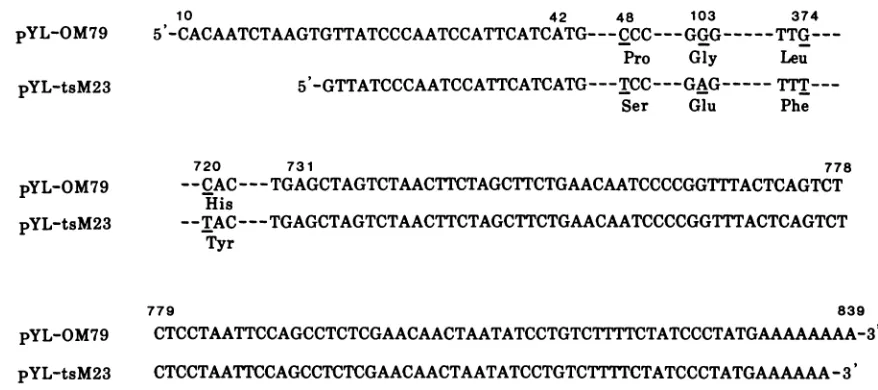
FIG. 1. Comparative nucleotide sequences of VSV Orsay wt and tsO23 M genes cloned in pYL-OM79 and pYL-tsM23. Only the noncoding sequences are shown for both the wt M gene and for homologous noncoding regions of thetsO23 M gene. The coding sequences of thewtandtsO23 M genes are not shown but were found to be identical to thecorrespondingconsensussequences for the M-gene region ofOrsay wt andts023 virion RNAs reported by Morita et al. (14), except for a C rather than a T at nucleotide 48. Also shown here are nucleotides in the coding region that differ for the cDNAs of the wt and tsO23 M-gene inserts. The nucleotide numbers correspond to the numerical system used by Rose and Gallione (20).
which possesses all these properties. In order to obtain
full-length cDNAcopies of the mRNA that translates com-plete M protein, we produced in vitro VSV transcripts as
described in Materials and Methods. These intact viral mRNAs provided templates for reverse transcriptase
syn-thesis of cDNA, representing the M gene and other VSV genes, as described by Gubler and Hoffman (8) and further
developed byAmersham. Aftersecond-strand DNA
synthe-sisand treatment withT4 polymerase to remove any small
remaining 3' overhangs, the blunt-ended, double-stranded DNAs were subjected to electrophoresis on 1.5% agarose
gelstodetermine their sizes.
The M and NS DNAs were isolated by electroblotting
onto NA-45 DEAE membranes and inserted into the SmaI site ofpBSM13-. E.coli JM109 cells were thentransformed
withthese pBSM13-recombinants, and ampicillin-resistant white colonies were selected for analysis by colony
hybrid-ization. The plasmid DNAs from these hybridization-posi-tiveE. coli colonies were analyzed for size and orientation by BamHI and KpnI excision and then by XbaI andBglII partial restriction mapping. By comparing these restriction
maps with previous data (14, 20), we were able to assign
each recombinant cloneunambiguously to either theOrsay wt M gene orthe mutant tsO23 M gene (data not shown).
Subsequent research was performed with one clone each
from the wt M-gene or tsO23 M-gene pBSM13- recombi-nantsdesignated,respectively,pYL-OM79 and pYL-tsM23. Nucleotide sequence and expression ofMgenes in E. coli. Thenucleotide sequencesofwtand tsO23 M genes inserted inplasmidspYL-OM79 andpYL-tsM23, respectively, were
determined by primerextension and the dideoxy-chain ter-mination method (3, 21). Synthetic
oligodeoxynucleotides
homologous to the T7 and T3 regions ofpBSM13- were
obtained from Stratagene and were used as primers for
sequencing the nucleotides
corresponding
to the 5'- and3'-noncoding regions of each M gene. In
addition,
foursynthetic
oligodeoxynucleotides homologous
to M-gene nu-cleotide sequences 36 through 50, 195through
208,
392through406, and 545through 559,asnumbered
by
RoseandGallione (20), were used to sequence the coding regions of the two M genes.
Figure 1 shows the entire noncoding sequences flanking the M-genecoding regions of the wt plasmid pYL-OM79 and themutantplasmidpYL-tsM23,aswellasthosenucleotides
inthecoding region whicharedifferent forthe wt and tsO23
M genes. The wt M-gene DNA inserted in pYL-OM79
consists of 830 nucleotides extending from positions 10 through 839, whereas the tsO23 M-gene DNA inserted in pYL-tsM23 consists of816nucleotides extending from nu-cleotides 22through837,accordingtothenumbering system
ofRose and Gallione (20). Comparison ofthe pYL-OM79 andpYL-tsM23 M-gene sequences reveals three nucleotide
changesin thets023 M genecompared withthe wt M gene,
as follows: G--A at nucleotide 103, leading to a Gly--Glu substitution at amino acid 21; G-T at nucleotide 374,
leadingto aLeu--Phesubstitutionat amino acid 111; anda
C-*T
atnucleotide720,leadingto aHis--Tyrsubstitutionat amino acid227.These M-gene sequences in pYL-OM79 and pYL-tsM23 are identical to the corresponding consensus sequences
reported by Moritaetal. (14)for therespective M genesof wtVSVOrsay and tsO23 withonlyoneexception. OurwtM genehas aC, rather thanaT, at nucleotide48, as
reported
byMoritaetal.(14),resultingina
Ser-*Pro
changeinamino acid 3;ourtsO23 M gene hasaTat nucleotide48asdidthe tsO23MgenesequencedbyMoritaetal. (14).Five separate clonesofour wtOrsay strainallrevealedaCatposition
48. Thisdifferencein thetwoOrsaywtstrains inourlaboratory
and thatof JohnLenardisattributabletothe
high degree
ofspontaneous mutability of the VSV genome (23, 25). To verify this C--T difference at nucleotide 48 between our sequence and that of Moritaet al.
(14),
wesequenced
the entire M-generegion
of VSVOrsay
wtgenomic
RNAby
primer extensionas
previously
described for the G gene(12).
Thesegenomicsequenceresults confirmedlocationofaCat nucleotide48, rather than theTfound
by
Moritaetal.(14)
for theirOrsay wt strain. In
addition,
the sequencesin thenoncoding
regions
ofourOrsay
wtandtsO23McDNAsareon November 10, 2019 by guest
http://jvi.asm.org/
[image:3.612.79.518.70.265.2]* 11b_
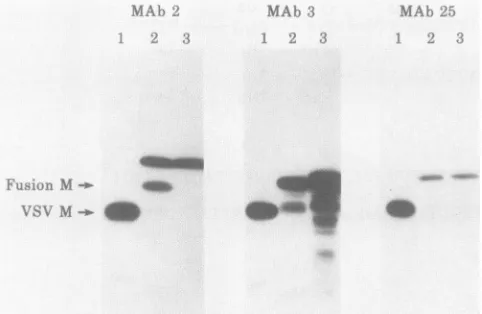
FIG. 2. Westernblotanalysisof wt andts023fusion Mproteins expressed in E. coli cells on reaction with three epitope-specific
MAbs. E.coliJM109cells transformed withplasmidspYL-OM79or
pYL-tsM23 were grown in the presence ofampicillin (50 jig/ml), pelleted, solubilized, and subjected toelectrophoresison a 12.5%
polyacrylamide-SDSslabgel alongwith marker Mprotein(150ng)
extracted from VSV virions. The proteins were transferred to a
nitrocellulose sheet by electroblotting and exposed to individual
MAbs,MAb2(specificforepitope 1),MAb3(specificforepitope 2),
andMAb25(specificforepitope 3). Autoradiographswereprepared
after exposureto 251I-labeled staphylococcal protein A. Lanes: 1, purifiedVSV virion Mprotein;2,extract of cells transformed with
pYL-OM79;3, extract of cells transformed withpYL-tsM23.
thesame asthosereported byRoseandGallione(20)forthe SanJuanstrain Mgenecloned inpM309, exceptfor theeight
and six extraadenylic acids at the respective 3' ends; also, there is an A, rather thanaG, at nucleotide 13.
The sequence data for
pYL-OM79
and pYL-tsM23 alsorevealedthat the wt andtsO23 M-geneinsertsarepositioned
in the same readingframeas that of the lacZgene. There-fore, it was possible to express both the wt and tsO23 M genesin
pYL-OM79
andpYL-tsM23 plasmid-transformedE. coliand to detecttherespectiveMproteins bytheir reactiv-itywith MAbs. Figure 2 shows Western blot (immunoblot) autoradiogramsof the Mproteinsof the VSV virion andof M proteins expressedin E. colibypYL-OM79andpYL-tsM23 followingreaction with threeepitope-specificMAbs. The wtMprotein expressed bypYL-OM79 wasreadily recognized
byMAbs to all three epitopes, butepitope 1-specific MAb2
failed to react with tsO23 M protein expressed by
pYL-tsM23. This loss ofepitope 1 inthe M proteinoftsO23 was
originallydescribed byPalet al. (17)andwasattributedtoa
Gly-+Glu substitution in amino acid 21 of the mutant M protein. MAb2 (but not MAb3 or MAb25) also reacted nonspecificallywithahigher-molecular-weight proteinin the
pYL-OM79
and pYL-tsM23 expression systems (Fig. 2), which was also present in extracts of E. coli cells trans-formed with control pBSM13- not containing any M gene (data not shown). The slower migration of the fusion M proteinisclearlyattributableto its 40additionalaminoacids, which adds -4.8 kilodaltons to its estimated molecularmass. As noted, the M protein expressed by pYL-tsM23
differed slightly in its mobilityfrom that ofpYL-OM79 M
protein. By far the strongest affinity for both
pYL-OM79-and pYL-tsM23-expressed M proteins was exhibited by epitope 2-specific MAb3, which also reacted with
lower-molecular-weight proteins, presumably cleavage products.
For unknown reasons, the binding of epitope 3-specific
MAb25toMproteins expressed by plasmidspYL-OM79and
pYL-tsM23 was weak in a manner not unlike that of M protein expressed by vaccinia virus vectors in mammalian CV-1 cells(11). Despite theseunexplainedaberrations,these findings provide a convenient meansfor screening the anti-genic determinants of M protein expressed in E. coli
by
clonedgenes with site-directed mutations as recounted be-low.
Construction of M-gene vectors and wt-tsO23 chimeras coding for amino acid substitutions atpositions 21, 111, and 227. It was of interest to determine whether amino acids other than glycine at position 21 of thepBSM13- M-gene
recombinant would affect theantigenic and otherproperties
of the expressed M protein. Predictions made by Brandt-Rauf et al. (1) on the basis of energy minimizationcomputer modeling of the dodecapeptide from Lys-15 to Pro-26 of the M protein revealed marked conformational changes when glutamic acid, alanine, or proline was substituted forglycine
at position 21 of the wt M protein; these amino acid substitutions, leading to altered conformations, could
ex-plain the loss of epitope 1 and transcription-inhibitory activ-ity resulting from the Gly-21-*Glu substitution (17). In order to test some of these predictions, we set out to construct
altered pYL-OM79 and pYL-tsM23 expression vectors by
making site-directed mutations in inserted wt and tsO23 M genes by oligodeoxynucleotide primer extension at the N-terminal regions.
Four synthetic oligonucleotide primers were used to
cre-ate one revertantand three site-directed mutants at nucleo-tides 103 and 102(Fig. 1). The revertant pYL-tsM23(R1)was
created by using primer 5'-GAAATTAGGGATCGCAC CAC-3', which is complementary to the tsO23 M-gene nucleotides 95 through 114 of pYL-tsM23 except for a
mismatch (G for A) at nucleotide 103, resulting in a Gly, ratherthan aGlu, at residue 21. Theprimer 5'-GAAATTA
GAGATCGCACCAC-3', complementary to nucleotides 95 through 114 of thepYL-OM79 M gene except foramismatch (A for G) at nucleotide 103, was used to create mutant pYL-OM79(Glu2l). The primer 5'-GAAATTAGCGATCG
CACCAC-3', complementary topYL-OM79 M gene nucde-otides 95 through 114 except for a C at position 103, was
used to create mutant pYL-OM79(Ala2l). Lastly, mutant pYL-OM79(Pro2l) was created by use of primer
5'-AGAAATTACCGATCGCACCACCCC-3', complementary
topYL-OM79M-genenucleotides94through 117 except for
twomismatchedbasesatnucleotides102and 103, giving rise
to aproline atresidue 21.
These site-directed mutant plasmids constructed by
primer extension werescreened by Western blotting and/or by restriction mappingas described in Materials and Meth-ods. One clone from each Glu-21, Ala-21, and Pro-21
site-directed mutant plasmid and the Glu-21->Gly revertant
plasmid were used fortransient expression in the vaccinia virus vectors.
The question arises whether antigenic and temperature-sensitive phenotypes of the mutant ts023 M protein are affected byits other amino acid substitutions: Leu-*Phe at
position 111 and His->Tyr at position 227, as well as the
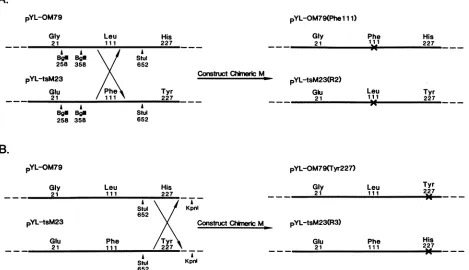
Gly--Glu substitution at position 21. For this purpose, we constructedfour chimeras of the M genes of wt and tsO23
viruses,by using a strategy outlined in Fig. 3. The DNAs of the four wt-mutant chimeras and the aforementioned four
site-directed mutants were sequenced and were found to have theexpected nucleotide changes in the correct reading frame.
Transientexpression of wt and mutant M genes cloned in a
vaccinia virus vector. We previously reported (11) ample
on November 10, 2019 by guest
http://jvi.asm.org/
[image:4.612.63.304.75.232.2]A.
pYL-OM79 Gly
21 Leu111
A A
Bgg Bg \
258 358 pYL-tsM23
Glu Phe
21 1
Bgg BgU 258 358
His 227
stut
652
ConstructChknresi M Tyr
227 _
Stul
652
pYL-OM79 pYL-OM79(Tyr227)
Gly Leu Tyr
21_111
227pYL-tsM23(R3)
Glu Phe His
21 111 227
- - - %_I _
I
[image:5.612.74.543.76.346.2]Stul KprI 652
FIG. 3. Construction of wt-ts023 M-gene chimeras pYL-OM79(Phelll), pYL-tsM23(R2), pYL-OM79(Tyr227),and pYL-tsM23(R3). (A) Restrictionfragments,generated byexposureseparately ofpYL-OM79and pYL-tsM23toBglIland StuI,wereseparated by electrophoresis
on 1.5% agarose gels, electroblotted onto DEAE membranes, and purified by phenol-chloroform extraction, followed by ethanol precipitation. Thetwosmall pYL-tsM23 restriction fragments containing the Phe-111 sitewereligated by T4 ligasetothelargepYL-OM79 restrictionfragmentmissing the Leu-111 sitetoform pYL-OM79(Phelll). Conversely, thetwosmallpYL-OM79restriction fragmentswere
religated with T4 ligase to the large BglII-StuI fragment to form plasmid pYL-tsM23(R2) with a Leu-111 revertant site. (B) Plasmids pYL-OM79and pYL-tsM23werealso separately restricted by StuI andKpnI,and eachwasfractionatedandpurifiedby thesametechniques
before ligating the small pYL-tsM23 restriction fragment to the large pYL-OM79 restriction fragment to form pYL-OM79(Tyr227). Conversely, thesmall StuI-KpnI restriction fragment of pYL-OM79 containing the His-227 site wasreligated withT4ligase to the large pYL-tsM23 restriction fragment toform the revertant pYL-tsM23(R3). The DNAs ofall resulting chimeric plasmids were sequenced to
confirmthevalidity of each of the fourconstructsthatwereselected forexperimentation.Themulticloning sites of pBSM13- (- )are
shown.
expression of authentic, unfused M proteins by M genes
cloned in the pTF7 plasmid in cells coinfected with the
vaccinia virusrecombinant vTF1-6,2 described by Fuerstet al. (6). By methods previously described (11), the M-gene
sequences in pYL-OM79 (wt), pYL-tsM23 (tsO23 mutant),
and the four site-directed revertants or mutants pYL-tsM23(R1), pYL-OM79(Glu21), pYL-OM79(Ala2l), and
pYL-OM79(Pro2l), as well as the chimeric plasmids
pYL-OM79(Phelll), pYL-OM79(Tyr227), pYL-tsM23(R2), and
pYL-tsM23(R3), were recloned into the BamHI site of
pTF7IHB1flankedby the 410promoterandT4X terminator.
These M-gene plasmids are designated pTF7-OM79(wt),
pTF7-tsM23(tsO23), pTF7-tsM23(R1), pTF7-OM79(Glu21), pTF7-OM79(Ala21), pTF7-OM79(Pro21), pTF7-OM79(Phe-111), pTF7-OM79(Tyr227), pTF7-tsM23(R2), and pTF7-tsM23(R3), correspondingtothepYL plasmids. Under
con-ditions previously established (11), wt and mutant M pro-teins were synthesized in vTF1-6,2-infected and
plasmid-cotransfected CV-1 cells and detected by Western blotting
withM-proteinepitope-specific MAbs.
Figure 4 illustrates the Western blot autoradiograms of pTF7plasmid-expressedwt, mutant,revertant,andchimeric M proteins after exposure to MAbs specific for epitope 1 (Fig.4A andC)orepitope2(Fig.4B andD).Theclonedwt
protein expressed bypTF7-OM79 (Fig. 4A and B, lanes 5)
exhibited exactly the same electrophoretic mobility as did
the authentic virion 26-kilodalton M protein used as the
marker (lanes 1). wt Gly-21 M protein expressed by pTF7-OM79 (Fig. 4A,lane5)reactedwithepitope1-specificMAb2 but the tsO23 Glu-21 M protein expressed by pTF7-tsM23
did not(lane 2), injust thesame manner as the M proteins
presentinwtandtsO23virions(17). Similarly,theMprotein expressed by pTF7-OM79(Glu2l), with its Gly-21--Glu
amino acid substitution, failed to react with MAb2 but
stronglyreacted withMAb3(Fig.4AandB,lanes4).These
Glu-21-*Gly andGly-21---Glu substitutions clearly reaffirm theevidence thatglycine21 determines theantigenic speci-ficityofepitope 1,rather than leucine 111orhistidine227 of wtMprotein,whichalsoundergoaminoacid substitutions in the Mprotein oftsO23 (14).
We also tested pTF7-OM79(Ala2l) and pTF7-OM79
(Pro2l) for the capacity of their expressed M proteins to react with MAb2 (epitope 1) and MAb3 (epitope 2). These site-directed mutations in the wt M gene (Gly-21->Ala and Gly-21--Pro)were prompted bythe studies ofBrandt-Rauf et al. (1), who predicted, on the basis of computerized
minimal energy conformation, that alanine at position 21 shouldprovideaconformationsimilar to that of thetsO23M
pYL-OM79(Phe1
11)Gly 21
B.
Phe
1.-i
Leu
11l pYL-tsM23(R2)
GkI 21
His 227
Tyr 227
I
on November 10, 2019 by guest
http://jvi.asm.org/
3734 LI ET AL.
/ j *
/i
1 2 3 4 5 6 7 8 9
A. MAb2 ( Epitope 1 )
1 2 3 4 5 6 7 8 9
1 2 3 4 5 6 7
MM
t
Am- dC. MAb2 ( Epitope 1 )
1 2 3 4 6 6 7 8
B. MAb3 ( Epitope 2
)
D. MAb3 ( Epitope 2)
FIG. 4. Western blot analysis of M proteins transiently expressed in CV-1 cells transfected with T7 polymerase-directed plasmid
recombinants ofMgenesfromwt, tsO23, site-directed mutants,andchimericplasmids.CV-1 cellswereinfected with 30 PFU ofvTF1-6,2
(recombinant vaccinia virus expressingT7 RNApolymerase)percell and transfectedwith 15,ugof eachplasmid,asindicated. Cellsincubated at37°Cwerelysed24 hafterinfection; thelysatesweresubjectedtoelectrophoresison12.5%polyacrylamide-SDSslabgelsandtransferred tonitrocellulose sheetsbyelectroblotting.InpanelsAandC,Mproteinswerereactedwith MAb2(specificforepitope 1),and inpanelsB and D, M proteins were reacted with MAb3 (specific for epitope 2) before exposure to 125I-labeled staphylococcal protein A and autoradiography. Lanes 1containpurifiedVSV(SanJuanstrain)virionMprotein (arrow). (AandB)Lanes 2through8were loadedwith extractsof cells transfected withwtortsO23plasmids withorwithoutsite-directedmutations,asindicated.(CandD)Lanes 2through8were
loaded withextractsof cells transfected withwtorts023plasmids,orwt-mutantchimeras,asindicated. Theplasmid pTF7-M3showninlane 8(A and B)referstotheVSV IndianawtM-geneconstructaspreviouslydescribed (11).
proteinwithglutamic acidatposition21. On the otherhand,
it was also predicted that proline at position 21 should
provide a global minimumconformation notat all like that for the Glu-21 or Ala-21 peptides but somewhat more like
that of the wt Gly-21 peptide, atleast to some degree (1).
Figure 4A reveals that neither alanine (lane 6) nor proline (lane 7)substitutedfor glycine atposition21wascapable of
restoring epitope 1 to wt M protein expressed by pTF7-OM79(Ala2l) orpTF7-OM79(Pro2l), both of which reacted
strongly with MAb3 (Fig. 4B), assuring the presence of epitope 2 in the M protein. It appears, therefore, that the presenceof glycineat position 21 is essential for conferring
on M protein the conformation required for expressing epitope 1.
Ofconsiderable interest inFig. 4Bwasthe consistentand
reproducible findingthat expressed mutantM proteins with
glutamic acidatposition 21 always migrated slightly slower thanGly-21 wtMprotein(comparelanes 2 and 4 with lanes
1, 3, and 5 in Fig. 4B). Not only the ts023 M protein
expressed by pTF7-tsM23 but also the Gly-21--Glu
substi-tution in wt M protein expressed by pTF7-OM79(Glu2l) exhibited the slower mobility, indicating that the hindered
migration was not due to amino acid substitutions Leu-111->Phe or His-227-*Tyr in the tsO23 M protein. More-over, the site-directed Glu-21-*Gly revertant
pTF7-tsM23(R1) resulted in expression of an M protein that
migrated identically to that of wt Orsay or San Juan M
protein (comparelanes3, 5,and 8 inFig. 4B). It should also be noted that these plasmid-expressed M proteins contain the identical number of amino acidsand, hence,should have the same molecular weight. Of further interest is the evi-dence that the site-directed mutant plasmids pTF7-OM79(Ala2l)andpTF7-OM79(Pro2l),identical in molecular sizeto pTF7-OM79(Glu2l), expressed M proteins that
mi-gratedtoapositionsomewhatintermediatetothat of thewt M protein of pTF7-OM79 and mutant Glu-21 M protein (comparelanes4, 5, 6,and 7 inFig. 4B).These datastrongly
suggest that the presence ofglutamic acid in position 21,
rather thanglycine, alanine,orproline, results in retardation
ofM-protein electrophoretic migration. This retarded
migra-tion of the Glu-21 M protein could be due to the negative charge ofglutamic acid. An alternative explanation for the
retardedmigrationof theGlu-21 M protein is altered confor-mation, predicted by Brandt-Raufetal. (1) tobe anot-helix
intheregionof the Glu-21peptide,a 3-bend in the region of
theGly-21 peptide,andana-helixdisruption in the region of a Pro-21 peptide. However, they also predict an Ala-21
peptidestructuresimilartothatof the Glu-21peptide, which
isnotconsistent with the migration ofthe Ala-21Mprotein
faster than that of the Glu-21 mutantMprotein. Completely
8
almoks- ..am
400
J. VIROL.
AN
'~
,
0on November 10, 2019 by guest
http://jvi.asm.org/
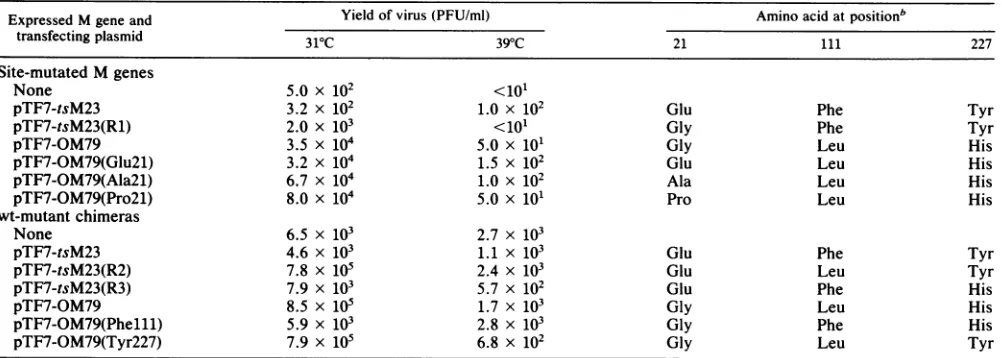
[image:6.612.119.506.72.375.2]TABLE 1. Comparativerescueof M-proteinmutant ts023bytransfecting plasmidsexpressingsite-mutated Mgenes or wt-mutant chimeric M genes with different amino acidsubstitutionsa
Expressed M gene and Yield of virus (PFU/ml) Amino acid atpositionb
transfecting plasmid 310C 39°C 21 111 227
Site-mutated M genes
None 5.0 x 10² <101
pTF7-tsM23 3.2 x 10² 1.0 x 10² Glu Phe Tyr
pTF7-tsM23(Rl) 2.0 x 10³ <lo Gly Phe Tyr
pTF7-OM79 3.5 x 10⁴ 5.0 x 101 Gly Leu His
pTF7-OM79(Glu2l) 3.2 x 10⁴ 1.5 X 10² Glu Leu His
pTF7-0M79(Ala2l) 6.7 x 10⁴ 1.0 x 10² Ala Leu His
pTF7-OM79(Pro2l) 8.0 x 10⁴ 5.0 x 101 Pro Leu His
wt-mutantchimeras
None 6.5 x 10³ 2.7 x 10³
pTF7-tsM23 4.6 x 10³ 1.1 X 10³ Glu Phe Tyr
pTF7-tsM23(R2) 7.8 x 10⁵ 2.4 x 10³ Glu Leu Tyr
pTF7-tsM23(R3) 7.9 x 10³ 5.7 x 10² Glu Phe His
pTF7-OM79 8.5 x 10⁵ 1.7 x 10³ Gly Leu His
pTF7-OM79(Phelll) 5.9 x 10³ 2.8 x 10³ Gly Phe His
pTF7-OM79(Tyr227) 7.9 x 10⁵ 6.8 x 10² Gly Leu Tyr
aCV-1 cells were infected withts023virus(multiplicity of infection ofapproximately1PFUper cell)at roomtemperature for30min.Then,thevirus inoculum wasreplaced with 2 ml of minimal essential medium containing5%fetalbovine serum and incubated at 39°C for 2 h. At 2.5 h after infection, the cells were infected withvTFl-6,2(recombinant vaccinia virus that expresses T7 RNA polymerase) at a multiplicity of 30 PFU per cell at 39°C for1 handtransfected with15,ug of eachplasmidDNAasindicated. The cells were incubated furtherat39°C for14h.Supernatant culture fluidswerethencollected,andts023 progeny viruswas
titrated by plaque assay onL-cell monolayersat31and39°C.
bTheseamino acid substitutionsatposition 21, 111,or 227 weremadeby extension of mismatchedoligodeoxynucleotide primers homologoustots023or
wild-type M genes, or by constructing chimeras of wt andts023Mgenes. Eachimputed amino acid sequencewascorroboratedbyplasmid DNAsequencing.
analogous results to those with epitope 2-specific MAb3 were obtained with epitope 3-specific MAb25 (data not shown).
Figure 4C and D, illustrating Western blot analysis of M proteinsexpressed in CV-1 cellstransfected withwt-mutant
chimeric plasmids, confirms the requirement of glycine at position 21 for epitope 1 antigenic specificity. Chimeric plasmids pTF7-OM79(Phelll) and pTF7-OM79(Tyr227)
with glycine at position 21 synthesized M proteins that recognized MAb2 despite the presence ofts023 M-protein amino acids phenyalanine at position 111 or tyrosine at position 227 (lanes 4 and 6). Conversely, chimeras pTF7-tsM23(R2) and pTF7-tsM23(R3) withts023glutamic acid at position 21 expressed M proteins that did not recognize MAb2 (epitope 1), despite the presence of wt amino acids Leu-111 and His-227 (lanes 5 and 7). It is also of interest that the M proteins expressed by pTF7-tsM23(R2) and pTF7-tsM23(R3) migrated more slowly on the polyacrylamide gel (Fig. 4D, lanes 5 and 7), emphasizingthepoint that glutamic acid at position 21 results in retarded mobility of the M protein.
Marker rescue of thetemperature-sensitive phenotype of M protein. Although the glycine at position 21 of wt M protein clearlyimparts epitope 1 antigenic specificity, this may not bethe genotypic site responsible for temperature sensitivity
ofmutant tsO23. In fact, Morita et al. (14) have provided evidence, based on sequencing a large series of M-gene mutants and revertants, that the nature of the amino acid at position 111, or sequences in its vicinity, determines their temperature-sensitivephenotype. It is their contention that a
Leu-111->Phe M-protein substitution, rather than the Gly-21-+Glu or His-227--Tyr substitution, is the reason why ts023 does not grow at 39°C. We had previously shown(11)
that the wt M gene expressed by plasmid pTF7-M3 could rescue by-100-fold theinfectivity oftsO23 in CV-1 cells at the restrictive temperature of 39°C. Now that we have available wt Orsay and mutants, tsO23 M-gene mutants, with amino acids substituted at position 21, as well as
wt-mutantchimeras with single amino acid substitutions at positions 111 and227, itwaspossibletodeterminewhether
M proteins expressed by these pTF plasmids could rescue
tsO23 in cells infected atthe restrictive temperature. Aspreviously described (11), marker rescue experiments
were performed by infecting CV-1 cells with tsO23 at a multiplicity of1PFU per cellandincubatingat 39°C for2.5 hbeforecoinfectingthese cellswithvacciniavirusvTF1-6,2
at 30PFU per cell. After furtherincubationat39°C for1 h,
these cells were transfected with 15 ,u.g of calcium phos-phate-precipitated plasmid DNA pTF7-tsM23, pTF7-tsM23 (Rl), pTF7-OM79, pTF7-OM79(Glu2l), pTF7-OM79
(Ala2l), and pTF7-OM79(Pro2l), or chimeric plasmids
pTF7-tsM23(R2), pTF7-tsM23(R3), pTF7-OM79(Phelll),
and pTF7-OM79(Tyr227). After further incubation at
39°C
for 14h, supernatant fluidsof these cell culturesweretested
for release of progeny virions
by plaque
assays on L-cellmonolayers atboth 39 and
31°C.
Table 1 summarizes the results ofduplicate
experiments,
illustrating the degree of
complementation
ofmutant tsO23by transfection with plasmids
expressing
Mproteins
withamino acids substituted at
position
21, 111, and 227. As noted previously (11), most of the progeny virions in allexperiments were tsO23 that
replicates only
at31°C,
but acertain small proportion were spontaneous revertants that grew at39°C. Also as
expected
fromprevious
experiments,
mock-transfected cells or cells transfected with mutanttsO23 recombinant
pTF7-tsM23
produced
only
smallamounts of
tsO23,
which isquite
leaky,
as well ashaving
a high reversion frequency (19). Bycomparison,
tsO23-in-fected cells transfected with
Orsay
wtM-gene
plasmid
pTF7-OM79yielded3.5 x 104or8.5 x105
PFUoftsO23per ml, about 100 times morethan thatfrom the controls. WhentsO23-infected cells were transfected with
plasmids
pTF7-OM79(Glu2l),
pTF7-OM79(Ala2l),
orpTF7-OM79(Pro2l),
each of which expresses wt Mprotein
with therespective
proteins substituted at
position 21,
theyields
oftsO23 virus were as great as or evenslightly
greater than that of cellson November 10, 2019 by guest
http://jvi.asm.org/
transfected with thewt M-geneplasmid pTF7-OM79 (Table 1). In sharp contrast, tsO23-infected cells transfected with
the Glu-21---Glyrevertant ts023 M-gene recombinant plas-mid pTF7-tsM23(R1) resulted in
production
of tsO23 virusonlysix times greater than that in cells transfected with the
Glu-21 tsO23M-gene recombinant
pTF7-tsM23
andatleast20-fold less than cells transfected with those
plasmids
ex-pressingwtM genes
regardless
oftheaminoacidatposition
21 (Table 1).
Also shown in Table 1 are marker rescue experiments
using
ts023-infected cells transfected with wt-mutant chi-mericplasmids
withsingle
aminoacid substitutionsatposi-tions 21, 111, or227.
Clearly,
thoseplasmids
withphenylal-anine at
position
111 [pTF7-tsM23,pTF7-tsM23(R3),
andpTF7-0M79(Phelll)]
failed to rescue tsO23 mutants,regardless oftheamino acidat
positions
21and 227. Insharp
contrast, allM-gene
plasmids
containing
leucine atposition
111 [pTF7-tsM23(R2),pTF-OM79,
andpTF7-OM79
(Tyr227)]
all increasedyields
ofthe ts023 mutantby
titersmorethan 100-foldgreaterthan thatofcontrolsor
plasmids
with phenylalanine at position 21.
These dataindicate that the
ability
ofplasmid-expressed
wt M protein to rescue tsO23 at therestrictive temperature haslittleornothingtodowiththe presence ofglycineorany otheramino acidat
position
21,suggesting
thattheglutamic
acid at
position
21 is notresponsible
for thenonpermis-sivenessof ts023. These resultsclearlyconfirm the
hypoth-esis of Morita et al. (14) that the
temperature-restricted
phenotype
ofts023 isduetothe presenceofphenylalanine,
rather than
leucine,
atposition
111 ofthe Mprotein.
Nospecific phenotype
can beassigned
totheTyr->His
substi-tutionat
position
227 ofts023.DISCUSSION
Bymeansof site-directedmutations
leading
toexpression
ofM
protein
withaminoacid substitutionsatposition 21,
we were able to testsome of thepredictions made by Brandt-Rauf et al. (1)concerning
conformational changes in thisregion
that could alter MAb2 recognition ofepitope 1. AGly-21--Glu
substitution in Mprotein
cloned in andex-pressed by
pTF7-OM79(Glu2l)
led todisappearance ofepi-tope
1,
as did expressed M proteins with alanine orproline substituted forglycine
atposition
21.Glu-21-*Glysubstitu-tion inmutantM
protein
expressed bytherevertantplasmidpTF7-tsM23(R1)
restoredepitope 1,asevidenced bybindingof MAb2. These data support the hypothesis, based on
computerized
minimalenergy conformations ofthe M-pro-teinpeptides
from Lys-15 to Pro-26, that predicts thatglycine
atposition
21results inap-bend,
possiblycritical forexpressing epitope
1, whereas glutamic acid or alanine atposition
21 would beexpectedtoloseepitope 1becausetheglobal
minimal energy of such apeptide should assume theshape of an ox-helix (1). The prediction that proline at
position
21might
result in a peptide much like that of theGly-21 peptide
and wouldperhapsrecognize MAb2 was not borne outby ourexperiments.Somewhat unexpectedly, amino acid substitutions at
po-sition 21 ofplasmid-expressed M proteins resulted in their altered mobility on electrophoresis in polyacrylamide-SDS
gels (Fig.
4B), a difference that had been noted previouslybetweenthevirionMproteinsof VSV wt and
ts023
(14). Allplasmid-expressedMproteins with glutamic acid at position 21
migrated
slower than M proteins expressed bypTF7-tsM23(R1)
or pTF7-OM79withglycine at position 21. This couldbe due todifference in charge of the two amino acidsbut is also likely to result from the more compact
P-bend
conformation of the Gly-21 M protein than the extended a-helix of the Glu-21 M protein, whose gel migration would beexpected to be retarded.
Recent studies by Ono et al. (16) have shown that M proteins produced in cells infected withtwoother group III mutants,tsG31ortsG33, aggregateattheperinuclear region at nonpermissive temperatures but diffuse throughout the cytoplasmatpermissive temperatures. Althoughwehave no direct evidence for thesetemperature-dependent phenomena for mutant ts023 M protein, it may well be that this observation explains the failure of group III mutant M proteins to promote VSV maturationatrestrictive
tempera-tures. We were able to demonstrate in the experiments presented here thatwtMprotein expressed in CV-1 cells by pTF7-OM79 was able to rescue ts023 at the restrictive temperature but thatmutant Mprotein expressedby pTF7-tsM23 could not. These experiments indicate that the plas-mid-expressedwtandmutantMproteinsarephenotypically similarto theirrespective virion wt and ts023 M proteins. Our studies also support the conclusion advancedby Ono et al. (16) that the normal functions of M protein in VSV
maturationdonotappeartobedependentonthe activities of other VSV proteins.
Our studies clearly indicate that the Gly-21-*Glu
substi-tution in the M protein of ts023 is not responsible for the
temperature-sensitive phenotype that results in abortive
maturation ofVSVmutantvirionsattherestrictive
temper-ature. Clearly, plasmids expressing M genes that are
geno-typically wt, except for glutamic acid, alanine, or proline
substitutedforglycine atposition 21, all complementts023
at the restrictive temperature. Also, the revertant plasmid
pTF7-tsM23(R1), inwhich theGlu-21---Gly substitution re-stores epitope 1, fails to rescue coinfecting ts023 at the
nonpermissive temperature. Further marker rescue experi-mentswithwt-mutantchimericplasmids clearlyshow thata Leu-*Phe substitution at amino acid 111, rather than the
Gly-*Glu substitution at amino acid 21 or the His--Tyr substitution at amino acid 227, confers the temperature-sensitive phenotype on mutant ts023. These data lend credence to the hypothesis advanced by Moritaet al. (14) that the temperature-sensitive phenotype of ts023, and
perhaps other group III mutants, is due to the Leu-*Phe
substitutionataminoacid111. Thecommondenominatorin all of ourmarker rescue experiments was successful
com-plementation oftsO23 when the plasmid-expressed M pro-tein contained a leucine and not a phenylalanine at amino
acidposition 111.
At this stage of our studies, we have not been able to
identify conclusively the genotype of M protein which endows it with the phenotype fordown regulation of VSV
transcription(2, 4, 29).Moritaetal. (14) haveidentified three mutations in the M gene of tsO23 and at different sites in other group IIImutantMproteinsrestricted intranscription
inhibition;quite a few revertants, with amino acid substitu-tions at sitesfar distant from the original mutational sites,
partially restore transcription-inhibitory activity to mutant M proteins. However, in no case is transcription inhibition
or its loss by mutation a temperature-dependent event. In
fact, there is no good correlation between reversion of
temperature-sensitive phenotype and restoration of
M-pro-teintranscription-inhibitory activity. Our earlier studies, in which M-protein transcription inhibition is reversed by a MAb specific for epitope 1, suggest that the transcription
inhibition site ofMprotein is located at its amino-terminal end (15). Studies by Shipley et al. (24) indicate that a
on November 10, 2019 by guest
http://jvi.asm.org/
synthetic oligopeptide corresponding to the first 20 amino acids of wt M protein inhibits VSV transcription in vitro, whereas a synthetic oligopeptide representing epitope 1 and corresponding to M-protein amino acids 17 through 31 does not inhibit transcription. These preliminary data provide reasonable sites on the M-protein gene for site-directed mutagenesis and expressing products that can be tested for defects in transcription inhibition activity. However, further refinements in our techniques are required to construct vectors that express wt and mutant M proteins in sufficient quantities and purity to assay reliably their transcription-inhibitory activity.
ACKNOWLEDGMENTS
This research was supported by Public Health Service grants AI-11112 and AI-21652 from the National Institute of Allergy and Infectious Diseasesand by grant MV-9 from the American Cancer Society.
We again express our gratitude to Bernard Moss and Thomas Fuerstforgraciously supplying the vaccinia virus vectors.
LITERATURE CITED
1. Brandt-Rauf, P. W., M. R. Pincus, J. Maizel, R. P. Carty, J. Lubowsky, M. Avitable, J. B. Shipley, and R. R. Wagner. 1987. Structural effects of amino acid substitutions on the matrix protein of vesicular stomatitis virus. J. Protein Chem. 6:463-472.
2. Carroll, A. R., and R. R. Wagner. 1979. Role of the membrane (M) proteininendogenous inhibition of invitrotranscriptionby vesicular stomatitis virus.J. Virol.29:134-142.
3. Chen, E. Y., and P. H. Seeburg. 1985. Supercoil sequencing: a fast andsimple method for sequencing plasmid DNA. DNA 4: 165-170.
4. Clinton,G. M., S. P. Little, F. S. Hagen, and A. S.Huang. 1978. The matrix (M) protein of vesicular stomatitis virus regulates transcription. Cell 15:1455-1462.
5. Dente, L., G. Cesaren, and R. Cortese. 1983. pEMBL: a new family of single-stranded plasmids. Nucleic AcidsRes. 11:1645-1655.
6. Fuerst, T. R., E. G. Niles, F. W. Studier, and B. Moss. 1986. Eukaryotic transient expressionsystem based onrecombinant vaccinia virusthat synthesizesbacteriophageT7 RNA polymer-ase. Proc. Natl. Acad. Sci. USA83:8122-8126.
7. Grunstein, M.,and D.S.Hogness. 1975.Colonyhybridization:a method for the isolation of cloned DNA'sthatcontainaspecific gene. Proc. Natl. Acad. Sci. USA72:3961-3965.
8. Gubler, U., and B. J. Hoffman.1983.Asimple andveryefficient methodforgenerating cDNA libraries. Gene25:263-269. 9. King, P. V., and R. W. Blakesley. 1986. Optimizing DNA
ligations for transformation. Focus(BRL) 8:1-3.
10. Laemmli,U. K.1970.Cleavage of structuralproteins duringthe assembly of the head ofbacteriophage T4. Nature (London)
227:680-685.
11. Li, Y., L. Luo, R. M. Snyder, and R. R. Wagner. 1988. Expression ofthe M geneof vesicular stomatitisvirusclonedin various vaccinia virusvectors.J. Virol. 62:776-782.
12. Luo, L., Y. Li, R. M. Snyder,andR. R. Wagner. 1988. Point mutations in glycoprotein gene of vesicular stomatitis virus (NewJersey serotype) selected by resistancetoneutralization
by epitope-specific monoclonal antibodies. Virology 163:341-348.
13. Maniatis, T., E. F. Fritsch, and J. Sambrook. 1982. Molecular cloning: a laboratory manual. Cold Spring Harbor Laboratory, Cold Spring Harbor, N.Y.
14. Morita, K., R. Vanderoef, and J. Lenard. 1987. Phenotypic revertantsof temperature-sensitive M protein mutants of vesic-ular stomatitis virus: sequence analysis and functional charac-terization. J.Virol.61:256-263.
15. Ogden, J. R., R. Pal, and R. R. Wagner. 1986. Mapping regions of the matrixprotein of vesicular stomatitis virus which bind to ribonucleocapsids, liposomes, and monoclonal antibodies. J. Virol. 58:860-868.
16. Ono,K., M. E. Dubois-Dalcq, M. Schubert, and R. A. Lazzarini. 1987. Amutated membraneprotein of vesicular stomatitis virus has anabnormaldistribution withinthe infected cell and causes defectivebudding.J. Virol.61:1332-1341.
17. Pal, R., B. W. Grinnell, R. M. Snyder, and R. R. Wagner.1985. Regulation of viral transcriptionby the matrixprotein of vesic-ular stomatitis virus probed by monoclonal antibodies and temperature-sensitivemutants.J. Virol.56:386-394.
18. Pal, R., B. W. Grinnell, R. M. Snyder, J. R. Wiener, W. A. Volk, and R. R. Wagner. 1985. Monoclonal antibodies to the M protein of vesicular stomatitis virus (Indianaserotype)andto a cDNA M geneexpression product. J. Virol. 55:298-306. 19. Pringle, C. R. 1987. Rhabdovirusgenetics,p. 167-243. In R. R.
Wagner (ed.), The rhabdoviruses. Plenum Publishing Corp., NewYork.
20. Rose, J. K., and C. J.Gallione. 1981. Nucleotidesequencesof the mRNA's encoding the vesicular stomatitis virus G and M proteins determinedfrom cDNA clonescontainingthecomplete coding regions. J.Virol. 39:519-528.
21. Sanger, F., S. Nicklen, and A. R. Coulson. 1977. DNA sequenc-ing with chain-terminating inhibitors. Proc. Natl. Acad. Sci. USA74:5463-5467.
22. Schnitzer, T. J., and H. F. Lodish. 1979.Noninfectious vesicular stomatitis virusparticles deficient inthe viralnucleocapsid. J. Virol.29:443-447.
23. Schubert, M., G. Harmison, and E. Meier. 1984. Primary structureof thevesicular stomatitis viruspolymerase (L)gene: evidence for a high frequency of mutations. J. Virol. 51:505-514.
24. Shipley, J. B., R. Pal, and R. R. Wagner. 1988. Antigenicity, function, and conformation of synthetic oligopeptides corre-spondingtoamino-terminal sequencesofwild-typeandmutant matrixproteins ofvesicularstomatitis virus.J.Virol. 62:2569-2577.
25. Steinhauer,D. A., andJ. J. Holland. 1986. Direct method for quantitation of extreme polymerase error frequencies at se-lectedsinglebase sitesin viral RNA. J. Virol. 57:219-228. 26. Towbin,H., T.Staehelin,andJ.Gordon. 1979.Electrophoretic
transfer ofprotein from polyacrylamide gels to nitrocellulose sheets:procedure andsomeapplications.Proc.Natl. Acad.Sci. USA 76:4350-4354.
27. Wagner, R. R. 1987. Rhabdovirus biology and infection: an overview, p. 9-74. In R. R. Wagner(ed.),The rhabdoviruses. PlenumPublishing Corp.,NewYork.
28. Weiss,R. A.,and R. L. R. Bennett. 1980. Assembly of mem-braneglycoprotein studied by phenotypic mixingbetween
mu-tantsof vesicular stomatitis virusand retrovirus.Virology100: 252-274.
29. Wilson, T., andJ. Lenard. 1981. Interaction ofwild-type and mutantM proteinofvesicularstomatitisvirus with
nucleocap-sidsin vitro. Biochemistry20:1349-1354.