
Cemented paste backfill modification using different types of binders and insight into its mechanical, micro-structure, and flow properties
204
0
0
Full text
(2) JAMES COOK UNIVERSITY COLLEGE OF SCIENCE AND ENGINEERING. Cemented Paste Backfill Modification Using Different Types of Binders and Insight into its Mechanical, Micro-Structure, and Flow Properties. Niroshan Naguleswaran B.Sc.(Eng.) Hons., M.Sc.(Eng.). Thesis submitted to the College of Science and Engineering in partial fulfilment of the requirements for the degree of. Doctor of Philosophy (Geotechnical Engineering). April 2018.
(3) Statement of access I, the undersigned, the author of this thesis, understand that James Cook University will make it available for use within the University Library and via the Australian Digital Theses network for use elsewhere. I understand that as an unpublished work, a thesis has significant protection under Copyright act and I do not wish to place restriction on access to this work.. 05 / 04 / 2018 Niroshan Naguleswaran. Date. i.
(4) Statement of sources I declare that this thesis is my work and has not been submitted for another degree or diploma at any university or other institution of tertiary education. Information derived from published or unpublished work of others has been acknowledged in the text and a list of references given.. 05 / 04 / 2018 Niroshan Naguleswaran. Date. ii.
(5) Statement on the contribution of others Grants: This research work was supported by scholarship by College of Science and Engineering, James Cook University (JCU), and additional conference travel stipend was also awarded by the Graduate Research School (GRS) at JCU to present the papers at international conferences. Supervision: Associate Professor Nagaratnam Sivakugan (JCU) was the primary advisor of this work. Additional supervision was provided by Dr. Ryan Veenstra (Senior Backfill Engineer at Newmont Tanami Operation), and Dr. Peter To (JCU). Editorial Assistance: The editorial assistance for both thesis and journal articles was provided by Associate Professor Nagaratnam Sivakugan (JCU), Dr. Ryan Veenstra (Senior Backfill Engineer at Newmont Tanami Operation), Dr. Peter To (JCU). Dr. Ling Yin (JCU) provided the editorial assistance for a journal article, which is included in chapter 6 of thesis. SEM Technical Assistance: Dr Shane Askew from Advance Analytical Centre (AACJCU). iii.
(6) Acknowledgements Firstly, I would like to acknowledge the support of my wonderful family and relatives throughout the period of my studies. Especially, to my father, who understood my intentions to pursue for PhD and supported back from home, I am forever grateful his support and the understanding throughout this long journey. To my primary advisor Associate Professor Nagaratnam Sivakugan, indeed a professor in the way he interprets the complex aspects in Geotechnical Engineering and Geomechanics with fundamental knowledge. Thank you Professor Siva, for being a real mentor and providing continuous support from the beginning until the end of my thesis. My co-advisors, Dr. Ryan Veenstra (Senior Backfill Engineer at Newmont Tanami Operation), and Dr. Peter To, whose guidance were very helpful throughout. Dr. Ling Yin, whose guidance for the study on the structure-property interrelationship was very useful. Thanks to all academic and technical staffs in College of Science and Engineering, especially to former senior engineering laboratory technician Mr. Warren O’Donnell and current engineering laboratory technician Mr. Shaun Robinson and Mr Troy Poole for their ongoing patience with my style of test design and testing within the laboratories. Thanks to Ms. Kellie Johns at Teaching and Learning development for the discussions provided on my research proposal and to the graduate research school and Dr. Liz Tynan on organising academic writing workshops. In addition, my university colleagues (Sathees, Thushara, Geeth, Elsa, Korah, Mitchel, Dushyantha, Micheal, Dilip and Nasif) and the school support staffs, especially Melissa, provided support as well as company during my candidature. Also, the friends and families at Townsville (the home away from home) should be thanked for their love, company and laughs during my stay. I feel very fortunate to spend with you guys during my stay in Townsville. I wish to acknowledge the College of Science and Engineering (JCU) scholarship, which provided a living allowance during my studies as well as the financial support received iv.
(7) from my school (Student Support Allocation) and the Graduate Research Scheme funds to support my academic and conference travel expenses. Finally, I also wish to express my sincere love and gratitude to my beloved wife, Sangeertha, for her understanding and endless love throughout the duration of my studies. Thank you for being a great companion on this wonderful journey.. v.
(8) This work is dedicated to my family and teachers. vi.
(9) Abstract Cemented paste backfill (CPB) is widely used in backfilling underground mine voids. It consists of fine grained mine tailings with a small dosage of binder (~ 3–10%). Cement is the common binder, which is currently being used in most of the mines in North Queensland, Australia. In an effort to control backfilling costs, investigations are being currently carried out for the use of some alternative binders, that is, pozzolanic binder such as blended cement (BC) containing slag or fly ash in CPB. A thorough study to quantify the effects of additives, such as blast furnace slag and fly ash with ordinary Portland cement, in certain percentages on CPB could save large sums of money for Australian mining companies, if the required cement percentage is reduced in binder for CPB. In an attempt to dispose more tailings underground, the mines prefer increasing the solid content to the maximum possible limit, as dense CPB needs less binder to achieve a target strength. On the other hand, a high solid content slurry has both increased yield stress and viscosity, which increase the likelihood of blocking the reticulation pipeline. In this research, the possibilities of partial replacement of cement binder in CPB were studied through detailed laboratory investigations on influence of binder types as well as dosages in both mechanical and flow properties. Also, five different curing methods for CPB samples were studied to propose proper method. UCS test on 25 identical samples from three different CPB mixes were conducted for the detailed statistical analysis to assess the variability of mechanical properties of CPB samples and to validate the proposed curing method. Furthermore, the possibility of using a relatively smaller cylinder (110 mm height and 110 mm diameter) in slump test is assessed via extensive slump test along with standard slump cone on different CPB mixes. Moreover, series of scanning electron microscopy (SEM) analyses were performed on cracked UCS sample to investigate the relationship between microstructure and long-term mechanical properties. Finally, possibility of using UCS and indirect tensile (IDT) strength to determine the shear strength parameters (c and φ) for CPB was assessed with proper validation based on both experimental test and numerical simulation. For all these studies vii.
(10) and investigations conducted in this research, various laboratory experiments, such as uniaxial compressive strength (UCS) test, indirect tensile (IDT) strength test, slump test, yield stress test, triaxial test and SEM analysis, with analytical correlation techniques and numerical simulation were employed. Slag blended cement (60% Slag + 40% Portland cement) can be used as replacement of cement binder in preparation of CPB with less dosage to achieve similar strength and stiffness as like cement binder, even in short curing time. This significant reduction in Portland cement usage not only leads to the significant cost saving, but also may slightly contribute for a sustainable development. In addition, through the extensive laboratory experiments on rheological properties, it is found that the there is hardly any difference between the cement and slag blended cement binders on flow properties namely the yield stress and slump, while the binder dosage has an effect. The smaller cylindrical slump device appears to have good potential for slurries like mine tailings or dredged mud that have high water content for slump test as there was strong correlation between the two different slump test devices used. Also, It is found that there is strong inter-relationship among solid content, slump, yield stress, and bulk density of CPB. In addition, a simple and proper curing method for CPB samples for the laboratory tests was recommended. In addition, the mechanical properties of CPBs cured in this proposed method show less variability for UCS and Young’s modulus with relatively small coefficient of variation of less than 10% and 25%, respectively and hence these small variabilities of mechanical properties demonstrates the consistency of sample casting, curing, and testing methods. Furthermore, it is found that there is a positive relationship between microstructure and mechanical properties of CPB. Finally, the estimated shear strength parameters of CPB using the UCS and IDT strengths show good agreement with experimental and numerical. viii.
(11) simulation. Throughout the thesis, sets of empirical models and correlations were proposed to predict the long term UCS, stiffness, yield stress, slump height, and cohesion. In summary, the great potential of partial replacement of existing cement binder using slag blended cement in preparation of CPB is identified through various laboratory tests. In addition to the mechanical properties, the microstructure and flow properties of modified CPB were extensively investigated. This research will not only help to reduce the cement consumption in CPB production but also provides an alternative way of recycling industrial waste, such as slag and fly ash in vast volumes.. ix.
(12) List of Publications Journals Sivakugan, N., Veenstra, R., and Niroshan, N. (2015). "Underground Mine Backfilling in Australia Using Paste Fills and Hydraulic Fills." International Journal of Geosynthetics and Ground Engineering, Springer, 1(2), 1-7. doi: 10.1007/s40891-0150020-8 Niroshan, N., Sivakugan, N., and Veenstra, R. L. (2017). "Laboratory Study on Strength Development in Cemented Paste Backfills." Journal of Materials in Civil Engineering, ASCE, 29(7), 04017027. doi: 10.1061/(ASCE)MT.1943-5533.0001848 Niroshan, N., Yin, L., Sivakugan, N., and Veenstra, R. L. (2018). "Relevance of SEM to Mechanical Properties of Cemented Paste Backfill.” Geological and Geotechnical Engineering, Springer, doi: 10.1007/s10706-018-0455-5 Niroshan, N., Sivakugan, N., and Veenstra, R. L. (2018). "Flow characteristics of Cemented Paste Backfills.” Geological and Geotechnical Engineering, Springer, doi: 10.1007/s10706-018-0460-8 Niroshan, N., Sivakugan, N., and Veenstra, R. L. (2018). "Effects of curing methods on UCS test specimens and variability of mechanical properties of cemented paste backfill." Journal of Materials in Civil Engineering, ASCE (Under 2nd review). x.
(13) Referred Conferences Proceedings Niroshan, N., Sivakugan, N., and Lovisa, J. (2015). "A Review on Use of Pozzolanic Materials and Geopolymers in Stabilizing Mine Tailings and Dredged Mud." Proc., Int. Conf. on Geotechnical Engineering, Sri Lankan Geotechnical Society (SLGS), Colombo, Sri Lanka 375-378, https://www.issmge.org. Niroshan, N., Sivakugan, N., and Veenstra, R. (2016). "Effects of Different Binders on the Strength and Stiffness of Paste Fills." Proc., 4th GeoChina International Conference, Shandong, China, 197-205, doi: 10.1061/9780784480083.025. xi.
(14) Table of Contents 1. 2. Introduction................................................................................................................ 1 1.1. Background ........................................................................................................ 1. 1.2. Problem Statement ............................................................................................. 3. 1.3. Objectives of the Research ................................................................................. 5. 1.4. Relevance of the Research ................................................................................. 6. 1.5. Organisation of Thesis ....................................................................................... 7. Literature Review .................................................................................................... 10 2.1. Mining .............................................................................................................. 10. 2.1.1 2.2. Backfills ........................................................................................................... 14. 2.2.1 2.3. 3. Underground Mining ................................................................................ 11. Paste Backfills........................................................................................... 17. Binders ............................................................................................................. 22. 2.3.1. Pozzolanic Binders ................................................................................... 22. 2.3.2. Fly Ash ...................................................................................................... 23. 2.3.3. Granulated Blast Furnace Slag ................................................................. 24. 2.3.4. Geopolymer .............................................................................................. 25. 2.4. Rheology of CPB ............................................................................................. 26. 2.5. Uniaxial Compressive Strength of CPB ........................................................... 29. 2.6. Shear strength of CPB ...................................................................................... 33. 2.7. Numerical Simulation ...................................................................................... 34. 2.8. Summary .......................................................................................................... 35. Geotechnical Characterisation of the Mine Tailings ............................................... 36 3.1. Introduction ...................................................................................................... 36. 3.2. Moisture Content .............................................................................................. 36. 3.3. Grain Size Distribution .................................................................................... 37. 3.4. Specific Gravity ............................................................................................... 37. 3.5. Atterberg Limits and Linear Shrinkage............................................................ 38 xii.
(15) 3.6. Consolidation and Permeability ....................................................................... 39. 3.7. Grain Shape and Chemical Composition ......................................................... 45. 3.7.1. Scanning Electron Microscope (SEM) Analysis ...................................... 46. 3.7.2. Chemical Characterisation ........................................................................ 46. 3.8 4. 5. Summary .......................................................................................................... 47. Specimen Preparation – Casting and Curing ........................................................... 48 4.1. Introduction ...................................................................................................... 48. 4.2. Materials ........................................................................................................... 51. 4.3. Sample Preparation for UCS Test .................................................................... 51. 4.4. Effect of Curing Method .................................................................................. 52. 4.5. Variabilities in Mechanical Properties – A Statistical Approach..................... 58. 4.6. Summary .......................................................................................................... 66. Effect of Different Types of Binders on Strength and Stiffness .............................. 68 5.1. Introduction ...................................................................................................... 68. 5.2. Laboratory Experimental Program ................................................................... 69. 5.3. Slump Tests ...................................................................................................... 72. 5.4. Uniaxial Compressive Strength (UCS) Tests ................................................... 74. 5.5. Further Interpretation of Laboratory Test Data ................................................ 79. 5.6. Developing a UCS Model for Cemented Paste Backfill .................................. 82. 5.6.1 5.7. Effects of solid content and binder dosage in UCS strength gain in CPB ....... 87. 5.7.1. Example .................................................................................................... 90. 5.7.2. Solution ..................................................................................................... 91. 5.8 6. UCS Strength Model Validation ............................................................... 85. Summary .......................................................................................................... 91. Relevance of SEM to long-term Mechanical Properties of CPB ............................ 93 6.1. Introduction ...................................................................................................... 93. 6.2. Materials ........................................................................................................... 94. 6.2.1. Tailing Material ........................................................................................ 94. 6.2.2. Binders ...................................................................................................... 96 xiii.
(16) 7. 6.3. Fabrication of CPB Samples .......................................................................... 100. 6.4. Mechanical Properties and Statistical Analysis ............................................. 102. 6.5. SEM Analysis of Fractured Samples ............................................................. 109. 6.6. Discussion ...................................................................................................... 113. 6.7. Summary ........................................................................................................ 117. Rheological characteristic of CPB ......................................................................... 118 7.1. Introduction .................................................................................................... 118. 7.2. Materials ......................................................................................................... 119. 7.2.1. Mine tailing ............................................................................................. 119. 7.2.2. Binders .................................................................................................... 119. 7.2.3. Water ....................................................................................................... 120. 7.3. Sample preparation and testing program........................................................ 120. 7.4. Slump Measurement....................................................................................... 121. 7.4.1. Effect of Binder Content on Slump ........................................................ 123. 7.4.2. Effect of Binder Type on Slump ............................................................. 124. 7.4.3. Correlation between Standard and Cylindrical Slump of CPB Mixes.... 124. 7.4.4. Correlation between Bulk Density and Solid Content ............................ 125. 7.5. 7.5.1. Effect of Solid Content on Yield Stress .................................................. 130. 7.5.2. Correlation between Cylindrical Slump and Yield Stress ...................... 133. 7.5.3. Effect of Bulk Density on Cylindrical Slump and Yield Stress ............. 134. 7.6 8. Yield Stress Measurement.............................................................................. 126. Summary ........................................................................................................ 136. Determination of c and φ of CPB: Experimental, Analytical and Numerical Modelling ............................................................................................................... 138 8.1. Introduction .................................................................................................... 138. 8.2. Sample Preparation ........................................................................................ 138. 8.3. Analytical Approach ...................................................................................... 140. 8.3.1. Uniaxial Compression Strength Test ...................................................... 141. 8.3.2. Indirect Tensile (IDT) Strength Test ...................................................... 142 xiv.
(17) 8.4. Experimental Approach ................................................................................. 150. 8.4.1 8.5. Numerical Approach ...................................................................................... 154. 8.5.1 8.6 9. Triaxial Test ............................................................................................ 150. FLAC3D Simulation ................................................................................ 154. Summary ........................................................................................................ 159. Summary, Conclusions and Recommendations for Future Research .................... 160 9.1. Summary ........................................................................................................ 160. 9.2. Conclusions .................................................................................................... 163. 9.2.1. Geotechnical Characterisation of Mine Tailings .................................... 163. 9.2.2. Specimen Preparation – Casting and Curing Methods ........................... 164. 9.2.3. Effect of Different Types of Binders on Strength and Stiffness ............. 164. 9.2.4. Relevance of SEM to Long-term Mechanical Properties of CPB .......... 165. 9.2.5. Rheological Characteristics of CPB ....................................................... 166. 9.2.6. Determination of c and φ of CPB ........................................................... 166. 9.3. Recommendations for Future Research ......................................................... 168. 9.3.1. Mechanical and Flow Properties of CPB ................................................ 168. 9.3.2. Relevance of SEM to Mechanical Properties of CPB ............................ 168. 9.3.3. Shear Strength Parameter (c and φ) of CPB ........................................... 169. References ..................................................................................................................... 170. xv.
(18) List of Figures Fig. 1.1 (a) Open pit (surface) mine and (b) underground mine in Queensland, Australia.............................................................................................................. 1 Fig. 2.1 (a) Open Pit mine, and (b) underground mine ................................................... 10 Fig. 2.2 Schematic diagram showing a primary-secondary stope extraction sequence with access drives in an underground mine (Sivakugan et al. 2015)................ 12 Fig. 2.3 Paste fill being discharged into a stop via pipeline ........................................... 13 Fig. 2.4 Shotcreted barricades for a paste fill stope ........................................................ 14 Fig. 2.5 Rock fill used in an underground mine in Queensland, Australia ..................... 15 Fig. 2.6 Scanning electron micrograph of mine tailings. (a) Paste fills (b) hydraulic fills .................................................................................................................... 16 Fig. 2.7 Grain size distributions of Paste fills and Hydraulic fills (Sivakugan et al. 2015) ................................................................................................................. 17 Fig. 2.8 Components of CPB (modified from Belem and Benzaazoua (2008)) ............. 18 Fig. 2.9 Comparison of Bingham plastic and Newtonian flow models .......................... 19 Fig. 2.10 Strength gain curves for 4% OPC CPB at 76% solids (Sivakugan et al. 2015) ................................................................................................................. 21 Fig. 2.11 Rheological curves for particulate fluids (Rankine et al. 2007) ...................... 27 Fig. 2.12 (a) Slump cone mould (b) Schematic view of slump ((Belem and Benzaazoua 2008)............................................................................................. 28 Fig. 2.13 Effect of GP cement dosage on strength of CPB (Cihangir et al. 2012) ......... 30 Fig. 2.14 Effect of GBFS addition on the strength of CBP samples (Ercikdi et al. 2009) ................................................................................................................. 32 Fig. 3.1 Grain size distribution of George Fisher Mine Tailings .................................... 37 Fig. 3.2 Test setup for the consolidation and permeability measurements ..................... 40 Fig. 3.3 Positions of inlet and outlet valves during permeability measurements in ACE consolidation apparatus ........................................................................... 41 Fig. 3.4 Settlement curve of paste fill for determination of cv (a) Casagrande’s log time method (b) Taylor’s square root of time method ............................... 42 xvi.
(19) Fig. 3.5 (a) Void ratio (e), (b) Coefficient of volume compressibility (mv) and (c) Coefficient of consolidation (cv) changes with log σv' for paste backfill (no binder) ............................................................................................................... 44 Fig. 3.6 The permeability of GFM tailings changes with vertical effective stress ......... 45 Fig. 3.7 Scanning electron micrograph (SEM) of the GFM tailings .............................. 46 Fig. 4.1 CPB samples curing methods: (a) Method-1, (b) Method-2, (c) Method-3, (d) Method-4, (e) Method-5.............................................................................. 53 Fig. 4.2 Stress-strain plots of CPB samples in 28 days of curing ................................... 55 Fig. 4.3 Stress-strain plots of CPB samples in 56 days of curing ................................... 56 Fig. 4.4 Mechanical properties of CPB samples cured by different methods for 7, 28 and 56 days: (a) Strength, (b) Young’s modulus .............................................. 57 Fig. 4.5 (a) Moisture content (b) Degree of saturation of CPB samples changes with curing days in different curing methods ........................................................... 58 Fig. 4.6 Moisture content changes with curing time of CPB mix .................................. 62 Fig. 4.7 Histogram and cumulative distribution of mechanical properties of CPBs: (a) UCS–Mix 1, (b) Young’s modulus–Mix 1, (c) UCS–Mix 2, (d) Young’s modulus–Mix 2, (e) UCS–Mix 3, (f) Young’s modulus–Mix 3 ....................... 64 Fig. 4.8 Normal probability plots for (a) UCS (b) Young’s modulus of CPB samples .. 65 Fig. 4.9 Probability density function (PDF) of mechanical properties of CPBs (a) UCS (b) Young’s modulus ............................................................................... 66 Fig. 5.1 Test results of the tailings: (a) Grain size distribution; (b) Scanning electron micrograph ........................................................................................................ 69 Fig. 5.2 Slump test of Paste fill: (a) Before; (b) After and; (c) Variation of slump height with solid content for Mix – 4 ............................................................... 73 Fig. 5.3 Sample preparation for UCS test: (a) Samples within the mould; (b) Before trimming; (c) After trimming ........................................................................... 75 Fig. 5.4 UCS Test: (a) Experimental setup; (b) Stress – Strain plot of a sample from Mix 4 (6% GPC) in 56 days curing .................................................................. 76. xvii.
(20) Fig. 5.5 UCS test results of the 10 mixes at 7, 14, 28 and 56 days: (a) UCS; (b) Young’s modulus ........................................................................................ 78 Fig. 5.6 Normalized UCS versus curing time: (a) 28 days; (b) 56 days ......................... 80 Fig. 5.7 E/UCS of CPB ................................................................................................... 81 Fig. 5.8 UCS changes with curing time of paste fill mixes ............................................ 82 Fig. 5.9 Determination of coefficients: (a) a for the four GPC binder mixes, (b) a for the five BC binder mixes, (c) d for the four GPC binder mixes....... 84 Fig. 5.10 Estimated UCS using each strength model varies over curing period for: (a) GPC binder mixes; (b) BC binder mixes .................................................... 85 Fig. 5.11 Measured UCS verses estimated UCS using model: (a) Eq. 5.5; (b) Eq. 5.6.. 87 Fig. 5.12 UCS changes with solid content: (a) 28 days; (b) 56 days .............................. 89 Fig. 5.13 UCS variation: (a) per unit solid content increment changes over binder increases; (b) per unit BC binder content increment changes over solid content increases ............................................................................................... 90 Fig. 6.1 Grain size distribution of tailing and binders .................................................... 94 Fig. 6.2 SEM micrographs of the tailing at different magnifications ............................. 96 Fig. 6.3 SEM micrographs of general purpose cement (cement) at different magnifications .................................................................................................. 98 Fig. 6.4 SEM micrographs of fly ash-blended cement (fly ash-cement) at different magnifications .................................................................................................. 99 Fig. 6.5 SEM micrographs of fly ash at different magnifications ................................ 100 Fig. 6.6 A cemented paste backfill (CPB) sample in UCS test setup ........................... 102 Fig. 6.7 Photographs showing (a) the immediate collapse in a Mix 1 sample once extruded from the plastic tube, and the compression-tested (b) Mix 2, (c) Mix 3 and (d) Mix 4 samples .................................................................... 104 Fig. 6.8 Axial stress - axial strain plots of CPB mixes: (a) Mix 2, (b) Mix 3, and (c) Mix 4 ......................................................................................................... 105 Fig. 6.9 (a) UCS versus mix samples, (b) failure strain versus mix samples, and (c) Young’s modulus versus mix samples ...................................................... 107 xviii.
(21) Fig. 6.10 SEM micrographs of the collapsed Mix 1 sample (no binder) ...................... 110 Fig. 6.11 SEM micrographs of the fractured Mix 2 sample (geopolymer) .................. 111 Fig. 6.12 SEM micrographs of the fractured Mix 3 sample (Fly ash-cement) ............. 112 Fig. 6.13 SEM micrographs of the fractured Mix 4 sample (cement) .......................... 113 Fig. 7.1 Slump test devices; (a) Standard cone slump, (b) Cylindrical slump.............. 122 Fig. 7.2 Standard slump height changes with solid content of CPB mixes .................. 123 Fig. 7.3 Standard slump height changes with solid content of binder CPB mixes (a) GP cement, (b) Slag cement ...................................................................... 123 Fig. 7.4 Standard slump height changes with solid content of (a) 4% binder (b) 6% binder, CPB mixes .............................................................................. 124 Fig. 7.5 Correlation between cylindrical slump and standard slump of CPB mixes .... 125 Fig. 7.6 Experimental and theoretical curves of bulk density changes with solid contents ........................................................................................................... 125 Fig. 7.7 Typical flow curves ......................................................................................... 127 Fig. 7.8 Apparatus for measuring yield stress of CPB; (a) Viscometer, spindle, and beaker, (b) Vane ............................................................................................. 129 Fig. 7.9 Yield stress changes with solid content of CPB binder mixes ........................ 130 Fig. 7.10 Correlation between yield stress and solid content of mixes with and without binder ................................................................................................. 131 Fig. 7.11 Experimental and estimated yield stress changes with solid content ............ 132 Fig. 7.12 Yield stress changes with cylindrical slump of CPB binder mixes ............... 133 Fig. 7.13 Correlation between yield stress and cylindrical slump of mixes with and without binder ................................................................................................. 134 Fig. 7.14 Relationship between (a) cylindrical slump, (b) yield stress and bulk density of CPB with 4% and 6% binder ......................................................... 135 Fig. 8.1 Experimental setup for UCS test of CPB sample ............................................ 141 Fig. 8.2 Schematic loading situation of cylindrical sample of IDT strength test (Sivakugan et al. 2014) ................................................................................... 142 Fig. 8.3 Experimental setup for an IDT strength test of cylindrical CBP sample ........ 143 xix.
(22) Fig. 8.4 Correlation for IDT strength of CPB prepared in two different sizes ............. 144 Fig. 8.5 Correlation between UCS and IDT of CPB .................................................... 146 Fig. 8.6 Estimated cohesion (c) changes with indirect tensile strength of CPBs ......... 147 Fig. 8.7 Estimated cohesion (c) changes with uniaxial compressive strength of CPBs ............................................................................................................... 147 Fig. 8.8 Estimated cohesion (c) versus binder dosage for CPB prepared with cement binder ................................................................................................. 148 Fig. 8.9 Estimated cohesion (c) changes with dosage for CPB prepared with slagcement binder ................................................................................................. 148 Fig. 8.10 (a) Triaxial test setup and (b) CPB sample after test ..................................... 151 Fig. 8.11 Comparison for cohesion of CPB from experimental and analytical outcome .......................................................................................................... 151 Fig. 8.12 Comparison for friction angle of CPB from experimental and analytical outcome .......................................................................................................... 152 Fig. 8.13 Simulation of UCS test of slag-cement binder CPB mix, (a) just before reach peak strength (b) After reached peak strength ...................................... 156 Fig. 8.14 Simulation of IDT test of cement binder CPB mix, (a) before reached peak strength (b) After reached peak strength ................................................ 157 Fig. 8.15 Comparison between experimental results with numerical simulation of UCS test .......................................................................................................... 158 Fig. 8.16 Comparison between experimental results with numerical simulation of IDT test ........................................................................................................... 158. xx.
(23) List of Tables Table 3.1 Physical properties of George Fisher Mine (GFM) tailings ........................... 39 Table 3.2 Chemical analysis of the GFM tailings, (wt. %) ............................................ 47 Table 4.1 Water analysis of three different mine waters ................................................ 51 Table 4.2 Mix design for statistical analysis................................................................... 59 Table 4.3 UCS test results and analysis .......................................................................... 60 Table 4.4 Descriptive analysis of mechanical properties of CPB samples ..................... 63 Table 5.1 Physical properties of the CPB mine tailings ................................................. 70 Table 5.2 Chemical concentration of different compound in the tested tailings ............ 70 Table 5.3 Chemical composition and properties of the binders ..................................... 71 Table 5.4 Mix design used for the lab experiments ........................................................ 72 Table 5.5 Solid content corresponding to 260 mm slump .............................................. 74 Table 5.6 E/UCS values of some civil engineering materials ........................................ 81 Table 5.7 Summary of coefficients for UCS model ....................................................... 84 Table 5.8 Coefficient of determination values................................................................ 86 Table 5.9 28 and 56 days UCS data for the BC binder samples ..................................... 88 Table 6.1 Grain size distribution parameters of the tailing............................................. 95 Table 6.2 Chemical compositions and properties of the binders .................................... 97 Table 6.3 Mix proportions in CPB samples .................................................................. 101 Table 6.4 Strength, failure strains and Young’s moduli of CPB mixes after 112-day curing.............................................................................................. 106 Table 6.5 One-way analysis of variance (ANOVA) of the strength for all CPB mixes ............................................................................................................ 108 Table 6.6 One-way analysis of variance (ANOVA) of the failure strains for all CPB mixes .................................................................................................... 108 Table 6.7 One-way analysis of variance (ANOVA) of the Young’s moduli for all CPB mixes ............................................................................................... 108 Table 6.8 Paired t-test for comparison of the strength for Mix 3 and Mix 4 ................ 108 Table 6.9 Paired t-test for comparison of the failure strains for Mix 3 and Mix 4 ....... 109 xxi.
(24) Table 6.10 Paired t-test for comparison of the Young’s moduli for Mix 3 and Mix 4 ............................................................................................................ 109 Table 7.1 Water analysis of the mine water used ......................................................... 120 Table 7.2 CPB mix design ............................................................................................ 121 Table 7.3 Typical yield stress values (adopted from Boger et al. (2006)) .................... 127 Table 8.1 Water analysis ............................................................................................... 139 Table 8.2 Testing Program............................................................................................ 139 Table 8.3 Experimental results with analytical outcome .............................................. 145 Table 8.4 Comparison between current and past studies of the ratio of, c/UCS and c/IDT for different geomaterials .................................................................. 149 Table 8.5 Comparison between the analytical and experimental results for shear strength parameters ...................................................................................... 153 Table 8.6 Triaxial test results obtained by Rankine and Sivakugan (2007) of CPB samples cured at 28 days .............................................................................. 153 Table 8.7 FLAC3D input parameters ............................................................................. 156 Table 8.8 Comparison of numerical outputs with experimental results ....................... 157. xxii.
(25) 1. Introduction. 1.1. Background. Mining is one of the major economic activities in many countries such as Australia, Brazil, Canada, Chile, China, India and South Africa, producing millions of tonnes of waste materials every year (Boger 1998). Due to the strict guidelines, these waste materials (extracted waste rock and processed tailings) need to be disposed in a responsible manner. Surface mining (Fig 1.1(a)) and underground mining (Fig 1.1(b)) are two different ways of mining to recover shallow and deep ore bodies, respectively. In underground mining, the ore is extracted through blasting and excavation. The excavated voids, which are commonly referred to as ‘‘stopes’’ are in the form of rectangular prisms, with plan dimensions of 20–50 m and heights of about 50–200 m. These stopes are backfilled, generally using waste materials in the form of cemented paste backfills (CPB), hydraulic fills and other types of backfills (e.g., cemented aggregate fill, cemented rock fill etc.). Tailings are generally used to make hydraulic fill and CPB, while waste rock is used for cemented rock fill.. (a). (b). Fig. 1.1 (a) Open pit (surface) mine and (b) underground mine in Queensland, Australia. CPB is produced by mixing tailings, water, and a binder. When a stope is backfilled with CPB, a plug consisting of paste fill with high cement content is poured at the base of the 1.
(26) stope to a certain thickness before the rest of the stope is filled, often continuously, with paste of lower binder content. Using CPB to fill the underground voids is an effective way of disposing a large quantity of tailings (up to 60%), which have to be otherwise disposed at the ground level in a tailing storage facility (Brackebusch 1995). The CPB also provides regional ground support for mining operations and increases the ore recovery. The CPB is transferred to underground via pipes from the paste plant and is placed into the mine voids in the form of thickened slurry. The pulp density, binder content, and binder type determine the mechanical and rheological properties of CPB. A small dosage of binder (typically 3% to 10% of the solids mass) is added to the paste fill to enhance strength (Belem and Benzaazoua 2008; Benzaazoua et al. 2002). As cement is currently used as a base material in the binder, the mining industry currently consumes millions of tonnes of cement per year to produce underground backfills. Due to high cement cost and environmental issues related to cement production, mines worldwide are considering using slag and fly ash to partially replace the Portland cement to form blended cement. Blended cements can consist of various proportions of Portland cement and the replacement materials such as slag or fly ash, depending on the strength and flowability requirements. In underground mining, stope wall heights can be significant (more than 100m) and providing a stable wall is essential to undertake adjacent stoping in order to maximise ore recovery. There is no typical backfill type or mix design in backfill system as it is minespecific. It is important, therefore, to ensure that thorough investigation is carried out to determine the most suitable backfilled type when designing a backfill system. The static stability requirements can be satisfied by designing the backfill masses with sufficient strength to ensure the vertical faces of the backfilled stopes remain stable throughout the mining of the adjacent stopes. Typically, excavation of adjacent (secondary) stope is commenced after 28 days curing period of primary stope when it would have attained most of its strength. If the paste backfill becomes unstable, the adjacent faces may collapse, causing high levels of dilution and, significant loss of mining economies. 2.
(27) Therefore, when using CPB, the key consideration is how quickly the backfill attains the necessary strength. Quicker development of strength and stiffness enable faster mining sequences but usually requires higher cement content which can have significant cost increases. Consequently, mining operations can be quicker due to the better support attained in the stope in a shorter time and reduced excess water problems in the stope due to CPB. 1.2. Problem Statement. Cemented Paste Backfill (CPB) is one of the many backfill materials used to fill the large underground mine voids that are created by the mining activities around the world. CPB is produced by mixing the mine tailings, binder, typically 2 to 10 wt.% (Benzaazoua et al. 2002) and required amount of water as per the consistency of CPB materials required for the flow through pipes. In terms of production benefits, the use of CPB, compared to the hydraulic fill, results in significant time saving in stope filling. Archibald et al. (1999) reported that the time requirement for filling a stope with satisfactory backfill strength is 45 days for CPB and 87.5 days for hydraulic fills. Therefore, the usage of CPB results in almost 50% reduction in mining cycle time, barricade preparation requirements, and capacity to fill stope voids with higher solid contents. Cement is the common binder, which is currently being used in most of the mines in Australia. In an effort to control backfilling costs, investigations are being currently carried out for the use of some alternative binders for CPB. De Souza et al. (2003) reported that the cost of ordinary Portland cement in CPBs to be around 42% of the overall backfill cost. Due to the arising environmental sustainability concerns world-wide and increasing backfill cost, the possibilities of replacing the cement by alternate environmental friendly binders, i.e., large percentage of supplementary cementitious materials (SCMs) along with relatively small percentage of cement, in CPB have been already extensively assessed by the by researchers, both from industry and academia (Belem and Benzaazoua 2008; Belem et al. 2000; Ercikdi et al. 2009; Ercikdi et al. 2014;. 3.
(28) Fall et al. 2007; Ouellet et al. 1998; Pirapakaran et al. 2007; Rankine and Sivakugan 2007; Sivakugan et al. 2006; Sivakugan et al. 2015; Thomas 1979; Yilmaz et al. 2010) all over the world. In Canada, it was noted that the principal alternatives were blended cement, which is a combination of OPC with either fly ash or slag from different industrial applications in different percentages as per a comprehensive review by Chew (2000). However, the results of these investigations cannot be easily generalised, since the physio-chemical behaviour of a certain material is related to its origin (Manca et al. 1983). In addition, there is no typical backfill type or mix design for all applications as the backfill system is mine-specific. A thorough study to quantify the effects of additives, such as blast furnace slag and fly ash with ordinary Portland cement in certain percentages on CPB could save large sums of money for Australian mining companies, if the required cement percentage is reduced in binder for CPB. The majority of alternative binders are waste products from other industries. Therefore, the usage of this by products in underground mine offers environmental benefits while increasing revenues to the waste providers. In addition to the cost savings and technical benefits that can be realised by using alternative binders at appropriate dosage, there are environmental benefits. Especially, the environmental issues related to greenhouse emission and global warming due to the excessive cement production are reduced. In addition, there is no standardised process for sampling, curing, and testing the paste backfill materials in laboratory. Their mechanical properties are governed by not only the characteristics of tailings, binders, and mixing water but also the chemical mineralogical properties of these materials. Even though the test results of in situ samples from the underground are often different from the laboratory experiment, standardised procedure, as for concrete or soil, for sampling, curing, and testing is necessary to minimise the error and variation between the lab and in situ samples. In an attempt to dispose more tailings underground, the mines prefer increasing the solid content to the maximum possible limit, as dense CPB needs less binder to achieve a target strength. On the other hand, a high solids content slurry has both increased yield stress 4.
(29) and viscosity, which increase the likelihood of blocking the reticulation pipeline. As CPB is transported through a pipe system, the flow characteristics of the CPB are governed by its rheological parameters. Gravity based delivery methods are utilised for slurry based systems with the dense tailings slurry being delivered by pipeline to the disposal point in the stope. Flow characteristics play a key role as the CPB more commonly flows by gravity down a mine shaft to fill the void. Therefore, it is necessary to establish a balance to optimize the solid content and flow properties of CPB. 1.3. Objectives of the Research. The major focus of this thesis was to study the mechanical, flow, microstructure, and shear strength properties of CPB utilising tailing materials supplied by Glencore’s George Fisher Mine (GFM), which is located North Queensland, Australia. The objectives of this thesis are: . To suggest the best practice for sample preparation and curing in laboratory for the Uniaxial Compressive Strength (UCS) samples prepared using CPB;. . To assess the variability of mechanical properties of CPB and to validate the casting, curing and testing methods of CPB at laboratory;. . To investigate the effects of different binder materials and dosages on strength and Young’s modulus development and flow characteristics of CPB;. . To find out the relevance of microstructure to long term (i.e., 112 days of curing period) mechanical properties of CPB;. . To determine the shear strength parameters, such as cohesion (c) and friction angle (φ), of CPB using laboratory results of UCS and indirect tensile (IDT) strength and compare these results with experimental results, such as triaxial tests and the numerical simulations using FLAC3D; and. 5.
(30) . To propose some simple correlations equations to estimate the strength, stiffness, slump, yield stress, cohesion, and friction angle of CPB in certain solid content.. 1.4. Relevance of the Research. CPB is one of the popular and relatively new techniques, where the backfills are derived from mine tailings by adding small percentage of binders and water. The popularity is mainly due to its high strength achieved in a short time and its capability of standing alone without confinement, during the ore removal from adjacent secondary stope. The early strength gain enables the mining operations to be quicker. CPB is an engineered fill material, where the strength enhancement is achieved through the binder. By carrying out a proper mix design, through a series of trials, it is possible to achieve the optimum mix that will give the appropriate strength gain at certain time. The primary motivation for this research is to investigate the strength and stiffness development of cemented paste backfill after replacing the cement binder by other alternatives while carefully study the flow characteristics of modified CPBs. Binders have a significant role in backfilling operations, especially in CPB. As binder is the major cost component in CPB, there have been several attempts by researchers worldwide to reduce the percentage of cement and explore the possibilities of offering other pozzolanic materials, such as flyash, slag and others as partial or sometimes total substitutes. From this research, it may lead to following positive aspects for the mining industry: . Significant reduction in Portland cement usage in mine industry, which would lead to sustainable development as mining industries are consuming vast amount of cement binder in the form of CPB in Australia;. . Significant reduction in catastrophic failures and increase in productivity due to the better understanding on strength and stiffness development of CPB throughout curing period up to 112 days; 6.
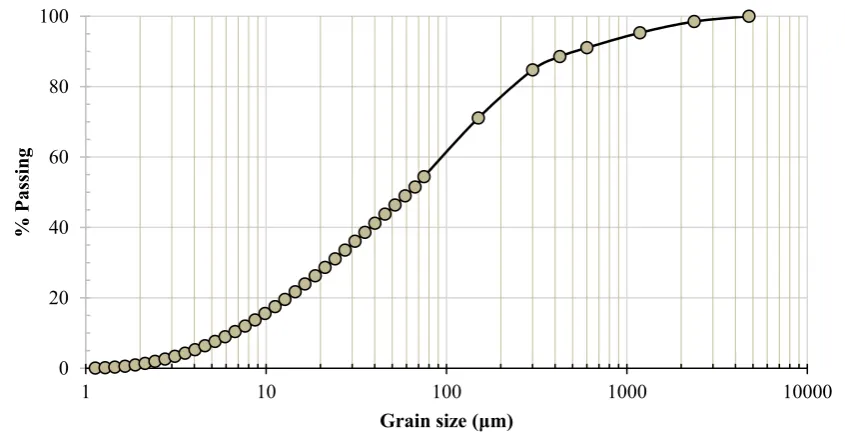
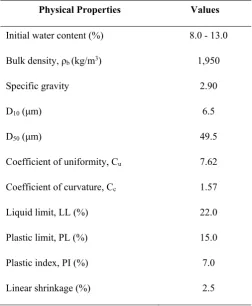
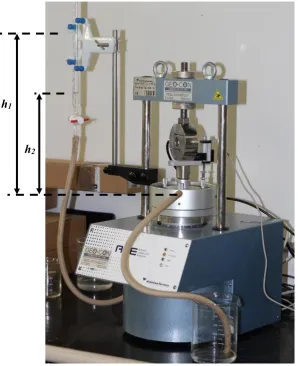
(31) . Significant cost savings through altering current binder type and dosage, and proposing alternative ways to estimate the strength, stiffness, flow properties, and shear strength parameters using simple correlations;. . Increase safety in mine practices while increasing the productivity and without affecting ore recovery; and. . Reduce the maintenance cost as well as the interruption in operation due to blockages in pipelines through a better understanding on flow properties of CPB for certain range of solid content.. 1.5. Organisation of Thesis. This chapter introduces the problem statement of the research, objectives and significance of the findings. The following Chapter 2 outlines brief insight in the mining and related sections while reviews the current binders and its effectiveness of producing CPB throughout the world. Most of the sections of this chapter were published as “Sivakugan, N., Veenstra, R., and Niroshan, N. (2015) "Underground Mine Backfilling in Australia Using Paste Fills and Hydraulic Fills." Int. J. of Geosynth. and Ground Eng., 1(2), 1-7, doi: 10.1007/s40891-015-0020-8”, and as “Niroshan, N., Sivakugan, N., and Lovisa, J. (2015) "A Review on Use of Pozzolanic Materials and Geopolymers in Stabilizing Mine Tailings and Dredged Mud." Proc., Int. Conf. on Geotechnical Engineering, Sri Lankan Geotechnical Society (SLGS), Colombo, Sri Lanka 375-378.”, which was a peer reviewed International conference article. Chapter 3 describes the geotechnical characteristics of mine tailing used in this study, where the specific gravity, grain size distribution, Atterberg limits, grain shape and chemical characterisations were briefly assessed and discussed. This chapter was submitted as part of a journal article and published as Niroshan, N., Sivakugan, N., and Veenstra, R. L. (2018) "Flow characteristics of Cemented Paste Backfills.” Geological and Geotechnical Engineering, doi: 10.1007/s10706-018-0460-8. 7.
(32) UCS Specimen preparation including casting and curing samples is explained in Chapter 4. A proper curing method for UCS specimen is proposed by experimentally assessing the five different curing methods based on the attained mechanical properties in 28 days and 56 days. In addition, the variability of mechanical properties of CPB is statistically assessed by testing separate 25 identical samples from each mix. This chapter has been submitted as journal article to Journal of Materials in Civil Engineering (ASCE) for publication as Niroshan, N., Sivakugan, N., and Veenstra, R. L. (2018) "Effects of curing methods on UCS test specimens and variability of mechanical properties of cemented paste backfill", which is under second review. Chapter 5 elaborates the findings from an extensive laboratory test program carried out to understand the effects of binder dosage and solid content on the strength development over 56 days of curing. In addition, two simple strength models were developed to express UCS as a function of time and the 14 day UCS. Finally, the relative effect of increasing the solid content or binder dosage was studied in this chapter. This chapter was published as “Niroshan, N., Sivakugan, N., and Veenstra, R. L. (2017)."Laboratory Study on Strength Development in Cemented Paste Backfills." Journal of Materials in Civil Engineering, 29(7), 04017027. doi: 10.1061/(ASCE)MT.1943-5533.0001848” Part of the results were published in an International conference as “Niroshan, N., Sivakugan, N., and Veenstra, R. (2016) "Effects of Different Binders on the Strength and Stiffness of Paste Fills." Proc., 4th GeoChina International Conference, Shandong, China, 197205, doi: 10.1061/9780784480083.025”. Comparison between micro structure and long-term mechanical properties of CPB is demonstrated in Chapter 6. The uniaxial compressive strength (UCS) tests were conducted on all samples after curing for 112 days to obtain their mechanical properties. scanning electron microscope (SEM) analysis was conducted on fractured samples to understand the failure mechanisms at the microstructural scale. This chapter was published as “Niroshan, N., Yin, L., Sivakugan, N., and Veenstra, R. L. (2018). 8.
(33) "Relevance of SEM to Long-Term Mechanical Properties of Cemented Paste Backfill." Geotechnical and Geological Engineering. doi: 10.1007/s10706-018-0455-5”. Chapter 7 deals with the flow characteristics (i.e., rheological properties) of CPB. In this chapter the slump measurements and yield stress of CPB are critically analysed and some useful correlations are proposed to predict the yield stress and slump in the mine site. This chapter has been submitted as main part of a journal article and published as Niroshan, N., Sivakugan, N., and Veenstra, R. L. (2018) "Flow characteristics of Cemented Paste Backfills.” Geological and Geotechnical Engineering, doi: 10.1007/s10706-018-0460-8. Chapter 8 describes the determination of shear strength parameters, i.e., c and φ, of CPB for purpose if design and stability analysis. In this chapter, the shear strength parameters are determined in two different ways, such as experimental and analytical procedure. Unconsolidated Undrained (UU) Triaxial test was used to find the experimental values of c and φ, while UCS and IDT were performed to analytically find the values of c and φ of CPB using already developed analytical equations. These two outcomes from two different testings (analytical and experimental approaches) were compared and proposed a correlation to find one from other one. In addition, a numerical simulation using FLAC3D, which is a finite different modelling (FDM) software, was carried out to compare the outcome with laboratory test. This chapter will be submitted as a research article to journal upon thesis submission. Finally, Chapter 9 gives the summary of the work done, discusses the main findings and provides recommendations for future research.. 9.
(34) 2. Literature Review. 2.1. Mining. Mining is a multi-billion dollar industry in many countries around the world. Australia, Brazil, Canada, Chile, China, India, South Africa and United States are some of the countries that are at the forefront in the mining and exploration activities. Australia holds the world’s largest known economic resources of bauxite, lead, zinc, silver, uranium, industrial diamonds and mineral sands. Most of the mines in Australia are located in the states of Queensland, Western Australia, New South Wales and Northern Territory. Mining industry is the largest generator of solid wastes in Australia (Boger 1998). Open pit (Fig. 2.1(a)) and underground mining (Fig. 2.1(b)) are two different ways of mining to recover shallow and deep ore bodies, respectively. The study in this whole research is limited to backfilling underground mines, which are located from hundreds to thousands of metres below the ground level that are accessed through ramps, shafts and tunnels. Sometimes, when the near surface ore is recovered through open pit mining, the deep mineral resources can be accessed through underground mining process. For example, Osborne mine in Queensland started its operation as an open pit mine, and later developed as an underground mine.. (a). Fig. 2.1 (a) Open Pit mine, and (b) underground mine. 10.
(35) Millions of tonnes of ore are removed from the ground, to extract a very small fraction of valuable minerals, leaving the bulk of the waste materials at the ground level for disposal. In addition, the ore removal leaves very large underground voids. These voids have to be backfilled before proceeding with excavation of nearby orebodies. Backfilling the voids ensures regional stability, minimises ore dilution, provides a working floor, controls subsidence and facilitates subsequent excavation and ore removal nearby. In addition, there are environmental regulations requiring that the mine site is left in good condition on the completion of mining operation, with all underground voids backfilled, all waste materials disposed in a responsible manner, and the flora and fauna in the region are protected. By sending the waste tailings to where they came from, the large underground voids are backfilled while the tailings are also disposed effectively in an environmentally friendly way. However, the success of a tailings backfill design and operation ultimately depends on the characteristics, strength and flowability properties of the tailings material, and physical conditions (i.e., shape and size) of the underground voids. 2.1.1. Underground Mining. When the parent rock of unit weight of 25–35 kN/m3 and very low porosity is crushed and the small fraction of the valuable minerals are removed, there is a substantial quantity of crushed rock that has to be disposed. The crushed rock waste can be present in a range of grain sizes, and the smaller fractions are known as tailings. When the parent rock is crushed, the porosity increases from insignificant levels to 40–45% when it is placed underground in the form of tailings. With the dry unit weight of the waste tailings in the order of 15–20 kN/m3 and porosity of 40–45%, only little more than 50% of the tailings can be disposed underground. The rest of the tailings have to be disposed through tailing dams on the surface. The ore is extracted through blasting, and excavation in large blocks known as stopes. There are horizontal tunnels known as access drives at different levels for transporting. 11.
(36) the ore (Fig. 2.2). The void left behind has to be backfilled before the nearby stopes can be excavated.. Fig. 2.2 Schematic diagram showing a primary-secondary stope extraction sequence with access drives in an underground mine (Sivakugan et al. 2015). The tailings are transported through pipelines and boreholes over long distances. For ease of transport, they are generally pumped through pipes and boreholes in the form of slurry. In an attempt to dispose as much tailings as possible, the mines tend to increase the solid content to the maximum possible value, which is currently as high as 75–80 % in the case of paste fills, and slightly lower for hydraulic fills. Here, solid content is defined as the ratio of the mass of solids to the total mass, expressed in percentage. Increasing the solid content makes the flow through pipe difficult, leading to clogging. Therefore, it is necessary to arrive at the optimum solid content that will give satisfactory flow characteristics while maximising the tailing disposal. The flowability of the tailing slurry is generally quantified in terms of slump measured through a slump test or yield stress measured using a rheometer. With increasing solid content, slump decreases and yield stress increases. Fig. 2.3 shows the paste fill tailing slurry pumped through a pipe. Pipe diameters of 5–25 cm have been reported in the literature (De Souza et al. 2003).. 12.
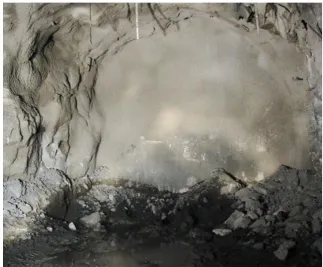
(37) Fig. 2.3 Paste fill being discharged into a stop via pipeline. The empty stopes are filled by the tailing slurry over several days. In the case of hydraulic fills, depending on the rate of production of the tailing slurry at the plant, 12 h fill followed by 12 h pause or similar filling schedules have been reported in the literature, with pour rate of 1000–5000 tonnes of dry tailings per day. When paste fill is poured into the stope, a high-strength plug consisting of paste fill with high cement content is formed at the base before the rest of the stope is filled often continuously. When the wet slurry of tailings is placed within the empty stope, it is necessary to barricade the access drives to isolate the rest of the working environment in the mine. Failure of the barricades can lead to inrush of tailings into the other areas of the mine, causing economic damage and sometimes fatalities. Fig. 2.4 shows a barricade covering the drive of a paste fill stope, shotcreted prior to filling.. 13.
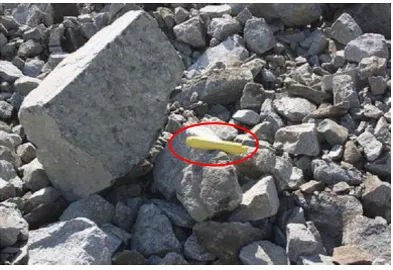
(38) Fig. 2.4 Shotcreted barricades for a paste fill stope. 2.2. Backfills. Backfills can be uncemented or cemented geomaterials such as tailings, sands or waste rocks. The uncemented backfills include hydraulic fills, sand fills, aggregate fills and rock fills. The majority of the uncemented backfills are rock fills and hydraulic fills. Fig.2.5 shows the rock fills used in backfilling an underground mine in Queensland, Australia. The yellow marker in the Fig. 2.5 is 350 mm in length. The rock fill consisted of gravel size to boulder size materials. The abundance of the rock fill material from the previous open pit operation dictated the selection of rock fills over any other type of fill. The most common cemented backfills are cemented paste backfill (CPB), cemented hydraulic fills and cemented rock fills.. 14.
(39) Fig. 2.5 Rock fill used in an underground mine in Queensland, Australia. To expedite ore removal, the backfilled stopes may have one or more of the vertical walls exposed when the adjacent stopes or pillars are blasted and excavated. To ensure that the backfilled stopes remain stable during such exposures, a small dosage of binder is added to the tailings to enhance their strength. These cemented backfills include cemented paste backfill (CPB), cemented hydraulic fill (CHF), cemented aggregate fill (CAF) and cemented rock fill (CRF). De Souza et al. (2003) noted that a mining company could consume as much as 100,000 tonnes of cement per year. Therefore, there is good reason for any attempt to reduce the binder content even by 1 percent. In addition to the large carbon footprint associated with the cement production, due to the high transport cost to the mine site, cement adds significant cost to the backfills, even in such small dosages in the order of 3–6 wt.%. The mines have been trying to replace cement with blended cements, which consist of cement mixed with fly ash and/or slag, with considerable success.. 15.
(40) Fig. 2.6 shows scanning electron micrographs (SEM) of mine tailings that are present in CPBs and hydraulic fills. It can be seen that the hydraulic fill grains are very sharp and angular. This is not the case with the soil grains encountered in nature, which have undergone thousands of years weathering and tend to become more rounded, sub-rounded or sub-angular. The angularity is not obvious in the case of paste fills, which contain significant clay fraction.. Fig. 2.6 Scanning electron micrograph of mine tailings. (a) Paste fills (b) hydraulic fills. Fig. 2.7 shows the grain size distributions of paste fills, hydraulic fills, ordinary Portland cement (OPC), and dune sand. The three different zones of fine, medium, and coarsegrained tailings are clearly indicated along with their suitability in paste fills and hydraulic fills.. 16.
(41) Fig. 2.7 Grain size distributions of Paste fills and Hydraulic fills (Sivakugan et al. 2015). 2.2.1. Paste Backfills. The use of paste as an underground backfill started in 1979 when it was used at Preussag’s Bad Grund Mine in Germany. However, paste fill (PF) did not gain much widespread use until the mid-1990s when several plants were built in Canada and Australia. It is estimated that over 150 paste plants have now been built (some are not currently operating) with the industry having added approximately 5 paste plants a year since 2000 (Stone 2014). Paste is a high density slurry thickened until it is non-settling, which usually occurs at solid contents ranging from 70–80 % (Masssolids/Masstotal) depending on the constituent materials. Fig 2.8 shows the typical component of CPB. Paste also generally uses the entire tailings stream (fine-grained soils with fine sand). Fig. 2.7 can be referred for comparison of the particle size distributions.. 17.
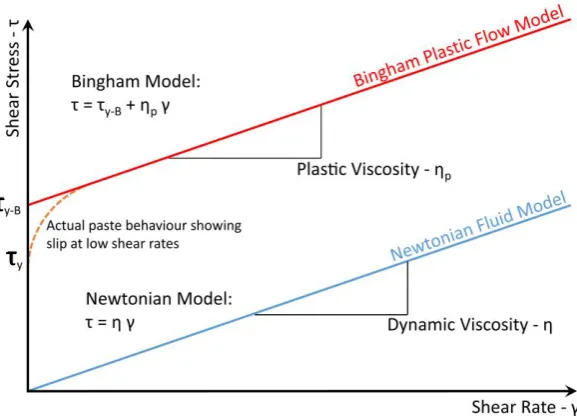
(42) Pulverized Tailing. Binding agents (Portland. (PSD curve, Atterberg limit & S.G). cement / Blended cement). Mixing required water (mine water). Solid content (wt.%) Binder (wt.%) =. = 70% ~ 85% W.r.t. required. 3% ~ 10%. Slump & Yield Cemented Paste Backfill (CBP). Fig. 2.8 Components of CPB (modified from Belem and Benzaazoua (2008)). It is common practice to make CPB by adding a small dosage of binder, in the range of 2–10 % binder (Masscement/Masssolids), to enhance the CPB’s strength. This strength is dependent on the CPB’s application (type of exposure, size of exposure, etc.). Note that uncemented paste fill is not used in an underground mining operation due to liquefaction concerns. Historically most CPB was made with a binder containing 100 % OPC. However there is a recent trend to use blended cements for manufacturing CPB in mining operations. These blended cements contain other cementitious materials, such fly ash and/or slag, mixed with OPC in various proportions. CPB is usually delivered to the underground void via a reticulation pipeline driven by either a pure or pump-assisted gravity system. However, given the thickened nature of the paste slurry it is critical to understand how the flow properties of paste slurry impact the design and successful operation of the reticulation system. The flow of CPB closely conforms to the Bingham plastic flow model, which is strongly non-Newtonian in its behaviour. Fig. 2.9 shows Newtonian and non-Newtonian fluid models and plots the change in shear stress as a function of the shear rate. Water is the. 18.
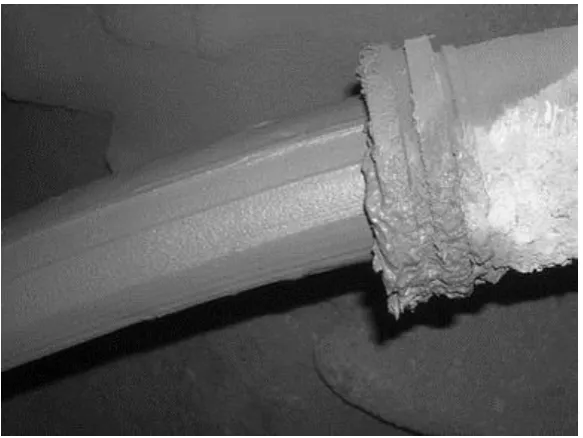
(43) best example of a Newtonian fluid, exhibiting no shear strength at a shear rate of zero and linear increases in shear stress with increases in shear rate.. τ τ. Fig. 2.9 Comparison of Bingham plastic and Newtonian flow models. Bingham plastics in general, and pastes in particular, exhibit a significant shear stress which must be overcome before movement (shearing) commences. This value of shear stress is commonly referred to as yield stress (τy). Once shearing has commenced, the rate of rise of shear stress with shear rate is closely linear. The gradient of this line is the viscosity of the paste. Note that the linear Bingham model predicts a yield stress (τy-B) that is higher than the actual yield stress (τy) of the material. This means that actual paste generally exhibits a non-linear behaviour at low shear rates. The flow characteristics (τy and ηp) of the paste can be determined through the use of a shear-vane rheometer (laboratory-scale) or a pipe loop (field-scale) testing. Pipe loop testing generally gives better results but requires specialized equipment to complete. Mines typically operate at a yield stress around 250 Pa, although operating yield stresses can range from 50 to 500 Pa depending on a particular mine’s CPB and reticulation system. For ease of use, paste plant operators typically use either a conical or cylindrical 19.
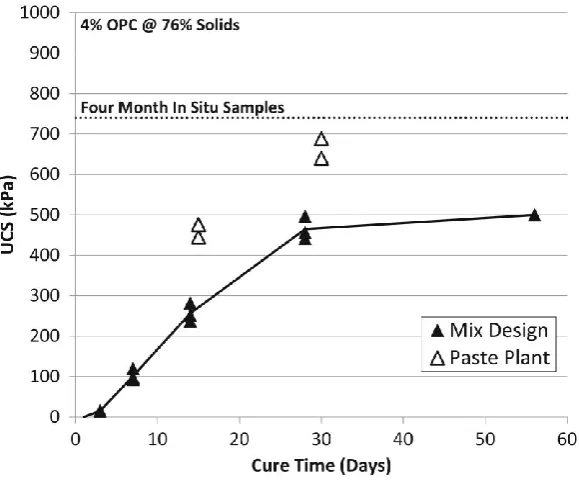
(44) slump test to provide an indication of their CPB’s ability to flow (similar to the cement and concrete industries). The amount of slump varies for each mine site but is generally between 235 to 275 mm for most of the mine in North Queensland, Australia. Increasing the density of a paste also increases its yield stress (and a decrease in its slump). In general, the cement content required to achieve a specific strength is reduced as the density increases. Therefore, the primary economic goal of a paste plant operator will always be to decrease the amount of cement added by maximising the CPB density. This is typically done by minimising the addition of water. However, this means that the reticulation system will be operated in a narrow band of densities. Flow will only occur when the driving head exceeds the total pipeline wall shear stress. If the density of the CPB is too high, flow will not occur and the CPB will set in the borehole, which leads to pipeline blockages. Conversely, if the density is too low the CPB will be of lower strength, it may experience sediment settlement in low velocity areas, and it may cause excessive pipeline wear at high velocity areas. Nowadays, there are several chemical additives available commercially that can increase the slump, reduce the yield stress and enhance the flow without reducing the strength of the paste fill when it cures. Once the CPB is deposited in the stope, the binder starts to hydrate and gain strength with cement curing age. The typical industry measure of backfill strength is the UCS tests. This testing is typically carried out on samples prepared in the laboratory or at the paste plant for quality control purposes. Mix design testing is conducted to determine the strength of a CPB mix proportion at different curing ages and appropriate mix proportions are selected based on the strength required (again, exposure type, exposure size etc.). Fig. 2.10 shows a strength gain curve for an Australian mine’s CPB recipe using 4 % OPC at approximately 76 % solids. Three sets of results are plotted. The first two are the mix design and the paste plant QC samples. The third set of data is the horizontal dashed line showing the average strength of four-month old in situ samples. The results show that the paste plant and in situ samples are higher than the mix design and that these results are more similar to each other than to the mix design. This trend has been observed 20.
(45) at mining operations (though the reverse is also observed) but the amount of in situ samples obtained by mining operations is limited, making such comparisons difficult.. Fig. 2.10 Strength gain curves for 4% OPC CPB at 76% solids (Sivakugan et al. 2015). If one assumes that the required backfill strength is 400 kPa, this chart indicates that a curing age over approximately 25 days would give the required strength whereas a required strength of 300 kPa would be achieved just before a 20 day cure. Unlike hydraulic fills, excess water is not a problem in paste fills. The water in the slurry is partly used in the hydration and the rest stays within the clay matrix, without any excess water obvious to the naked eye. The main advantages of the paste fills are that the mining operations can be quicker due to the better support achieved in the stope in a shorter time, reduced excess water problems, and more tailings being disposed underground, leaving less for the surface tailing disposal facilities.. 21.
Figure

+7

Related documents
Fig. 4 A western blot analysis of PTEN, Akt and other factors related to cell cycle and apoptosis. Effect of anti-miR-93 and PTEN expression vector on PTEN protein expression and
The current process was found to be deficient because although the Columbia Scale identified patients who were at high risk for suicide, the specific risk factors that make
Usage of poetry retrieval methods, based on structural patterns of poetic works and adaptable linguistic models, including the distance measure of words and phrases
In order to restore the forest, studying the role of soil seed bank will bring to awareness the species composition of the seedlings, the historical knowledge of the
• Why we need to study parental leave episodes • Collaboration on data with Swedish Social?. Insurance Agency •
We apply the framework developed in Reitz and Taylor (2008) to daily data on the yen-US dollar exchange rate and on Federal Reserve and Japanese Ministry of Finance
This is based on the Novel Partial product Generation method using Higher radix-256 Booth encoding (NPGHB) which reduces the number of partial product rows by 8-fold.. Hence
In particular, in the patent of the Russian Federation (1997) we[3] revealed at studying of influence N-replaced oxipiridin for speed of synthesis of DNA and RNA in
