STUDY ON THE PERFORMANCE OF INTERNAL COMBUSTION ENGINE BY IMPLEMENTING THE AIR COOLER FOR INTAKE MANIFOLD
MUHAMMAD SHAZNIL IZWAN B041310050
BMCT
Email : [email protected]
Draft Final Report Projek Sarjana Muda II
Supervisor : SAFARUDIN GAZALI HERAWAN Second Examiner : DR TEE BOON TUAN
Faculty of Mechanical Engineering Universiti Teknikal Malaysia Melaka
STUDY ON THE PERFORMANCE OF INTERNAL COMBUSTION ENGINE BY IMPLEMENTING THE AIR COOLER FOR INTAKE MANIFOLD
MUHAMMAD SHAZNIL IZWAN
STUDY ON THE PERFORMANCE OF INTERNAL COMBUSTION ENGINE BY IMPLEMENTING THE AIR COOLER FOR INTAKE MANIFOLD
MUHAMMAD SHAZNIL IZWAN
This report is submitted
in fulfillment of the requirement for the degree of Bachelor of Mechanical Engineering (Thermal-Fluid)
Faculty of Mechanical Engineering
UNIVERSITI TEKNIKAL MALAYSIA MELAKA
DECLARATION
I declare that this project report entitled “Study On The Performance Of Internal Combustion
Engine By Implementing The Air Cooler For Intake Manifold” is the result of my own work
except as cited in the references.
Signature : ...
Name : MUHAMMAD SHAZNIL IZWAN
APPROVAL
I hereby declare that I have read this project report and in my opinion this report is sufficient
in terms of scope and quality for the award of the degree of Bachelor of Mechanical
Engineering (Thermal-Fluid).
Signature :. ...
Name of Supervisor : SAFARUDIN GAZALI HERAWAN
DEDICATION
i ABSTRACT
This study commisioned to develop cold air intake models for an internal combustion car engine that operates on a Otto Cycle and to measure the increment of performance made by the models by calculating the temperature drops. Since the performance of an internal combustion is limited, therefore a solution is needed to improve the efficiency and the performance of a car at the same time by spending less money. It is found that when the temperature of the air is lower, the density of the oxygen increases, thus allowing a better combustion of the air and fuel mixture in the combustion chamber. The study was carried out by measuring the temperature drops on four models. Two of the models were made by implementing with thermoelectric coolers, one was made so to operate without energy and last one by sharing cold air from inside the cabin of a car. At the end of the study, it was found that all models of the cold air intake were able to cause decrement on the temperature of the air. However, three of models showed increment that were believed to be at an insignificant and unnoticable range of less than 1 % increment. Only one of models showed a significant increment in the value, which is by drawing the air from the car cabin to the intake valve. The increment made by the model almost reach 3 %, which can be improved if the material of the model and the position of the model be revised in order to eliminate heat transfer at the engine bay.
ii
ABSTRAK
iii
ACKNOWLEDGEMENT
First and foremost, I would like to express my gratitude to the Almighty Allah S.W.T because of His blessing and forgiveness I am able to complete this final year project report.
Secondly, I would like to thank my project supervisor, Mr. Safarudin Gazali Herawan for giving me the opportunity to carry out my final year project under his supervision and to guide me well throughout the period of this final year project. I would also like to thank assistant engineer, Mr. Asjufri for assisting and guiding me in this project.
Not to forget, my parents who had been with me through ups and down. Your support has made me a stronger person and I will forever be grateful.
iv
TABLE OF CONTENT
DECLARATION IV
APPROVAL V
DEDICATION VI
ABSTRACT I
ACKNOWLEDGEMENT III
LIST OF FIGURES VII
LIST OF TABLES IX
LIST OF ABBREVIATIONS X
LIST OF SYMBOLS XI
CHAPTER 1 INTRODUCTION 1
1.1 BACKGROUND 1
1.2 PROBLEMSTATEMENT 4
1.3 OBJECTIVE 4
1.4 SCOPEOFPROJECT 5
CHAPTER 2 LITERATURE REVIEW 6
2.1 INTERNALCOMBUSTIONENGINE 6
2.1.1 FOUR-STROKE SPARK-IGNITION ENGINE 7
2.1.2 FOUR-STROKE COMPRESSION-IGNITION ENGINE 9
2.2 RELATEDTHERMODYNAMICCYCLESFORINTERNALCOMBUSTION
ENGINE 11
2.2.1 OTTO CYCLE 11
2.2.3 DIESEL CYCLE 14
2.3 CARAIRINTAKESYSTEM 16
v
2.3.2 MASS AIR FLOW SENSOR 18
2.3.3 THROTTLE BODY 19
2.3.4 COLD AIR INTAKE 20
2.4 THERMOELECTRICITY 22
CHAPTER 3 METHODOLOGY 25
3.1 GENERALMETHODOLOGY 25
3.2 RESEARCHMETHOD 26
3.3 MATERIALSANDEQUIPMENTSTOBEUSED 28
3.3.1 THERMOELECTRIC COOLING (TEC) MODULE PADS 28
3.3.2 HEAT SINK 29
3.3.3 VOLTAGE STEP-DOWN REGULATOR 30
3.3.4 PICO DATA LOGGER 31
3.4 EXPERIMENTALSETUP 32
3.5 EXPECTEDRESULT 34
CHAPTER 4 RESULTS AND DISCUSSION 36
4.1 PRELIMINARYRESULTS 36
4.2 APPLYINGTHERMOELECTRICCOOLERTOACARAIRINTAKEHOSE 42
4.3 APPLYINGTHERMOELECTRICCOOLERTOAHAIRDRYERCOIL 45
4.4 ECOCOOLER 48
4.5 DRAWINGCOLDAIRFORMTHECARAIR-CONDITIONER 50
4.6 CALCULATIONOFDATAOBTAINED 54
4.6.1 APPLYINGTHERMOELECTRICCOOLERTOACARAIRINTAKEHOSE 55
4.6.2 APPLYINGTHERMOELECTRICCOOLERTOAHAIRDRYERCOIL 56
4.6.3 ECOCOOLER 57
4.6.4 DRAWINGCOLDAIRFORMTHECARAIR-CONDITIONER 58
CHAPTER 5 CONCLUSION AND RECOMMENDATION 59
5.1 CONCLUSION 59
5.2 RECOMMENDATION 60
vi
APPENDIX A 63
vii
LIST OF FIGURES
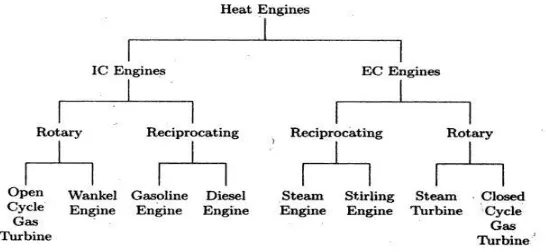
Figure 1. 1 : Classification of heat engines 2
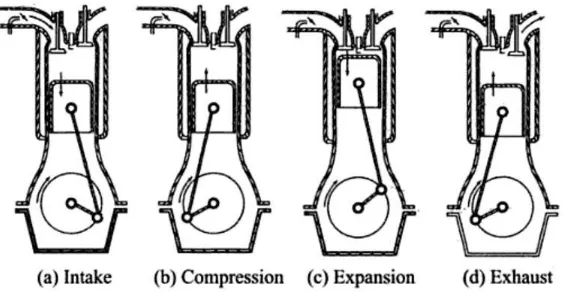
Figure 2. 1 : Principle of a 4-stroke SI engine 7
Figure 2. 2 : Working Principle of a 4-Stroke CI engine 9
Figure 2. 3 : Actual and ideal cycles in Spark-Ignition Engines and their P-v diagram 12
Figure 2. 4 : P-v diagram and T-s diagram of Diesel Cycle 15
Figure 2. 5 : Example of An Air Filter. 17
Figure 2. 6 : Example of A Throttle Body 19
Figure 2. 7 : Diagram of the Seebeck Effect and Peltier Effect 22
Figure 2. 8 : Arrangement of the thermoelectric cooler module. 24
Figure 2. 9 : Construction of the TEC module. 24
Figure 3. 1 : Flow chart of the general methodology. 27
Figure 3. 2: Thermoelectric cooling (TEC) module pad 29
Figure 3. 3: Heat sink 30
Figure 3. 4 : Voltage Step-Down Regulator 31
Figure 3. 5: Pico Data Logger 32
Figure 4. 1 : In-Car USB Port 37
Figure 4. 2: 12V Battery. 38
Figure 4. 3 : Wiring Diagram of the TECs. 38
Figure 4. 4: Adjusting the Voltage Regulator to 5V. 39
Figure 4. 5: Image from Thermal Imaging Camera 41
viii
Figure 4. 7: Experimental Setup using Car Air Intake Hose 42
Figure 4. 8: Graph of Temperature Measurement by using Air Intake Hose 43
Figure 4. 9: The inside of the air intake hose 44
Figure 4. 10: Thermoelectric Coolers attached to a Hair Dryer coil 45
Figure 4. 11: Experimental Setup using Hair Dryer Coil 46
Figure 4. 12: Graph of Temperature Measurement by using Hair Dryer Coil 46
Figure 4. 13: Model of Eco Cooler developed 48
Figure 4. 14: Graph of Temperature Measurement by using Eco Cooler Model 49
Figure 4. 15: Car Air-Conditioner Cold Air Intake 51
ix
LIST OF TABLES
Table 3. 1: Specifications of TEC module pad 28
Table 3. 2 : Specifications of heat sink 29
Table 3. 3 : specifications of Voltage Step-Down Regulator 31
Table 4. 1: Motorcycle Battery Datasheet 39
Table 4. 2: Temperature Measurement when using USB Port 40
Table 4. 3: Temperature Measurement when using motorcycle battery 40
x
LIST OF ABBREVIATIONS
ICE – Internal Combustion Engine
ECE – External Combustion Engine
IC – Internal Combustion
TDC – Top Dead Center
BDC – Bottom Dead Center
SI – Spark-Ignition
CI – Compressed-Ignition
TE – Thermoelectric
TEG – Thermoelectric Generator
TEC – Thermoelectric Cooler
xi
LIST OF SYMBOLS
qin = Heat supplied qout = Heat rejected win = Work in wout = Work out u = Entalphy
Cv = Constant Volume
Ƞ = Efficiency
h = Entropy
Cp = Constant Pressure
T = Temperature
Rc = Cutoff Ratio P = Pressure
V = Volume
R = Gas Constant
n = No. of moles
1 CHAPTER 1
INTRODUCTION
1.1 BACKGROUND
One of humans greatest invention is the heat engine. Heat engine converts thermal
energy into mechanical energy. It utilizes fuel in the form of gasoline, diesel and natural gas in
order to convert the thermal energy to mechanical energy to perform such work. Heat engines
also can be combined with hybrid electricity to form hybrid engines to increase engine
effieciency thus reducing fuel consumption. Heat engines can be classified into two major
2
Figure 1. 1 : Classification of heat engines
( Ganesan,V. 2012 )
There are two types of engines working principle, the spark-ignition working principle
and the compression-ignition working principle. Today, most automobile car engines are
operating on the four-stroke spark-ignition engines. The reason it is called four-stroke is
because of the rotation of the crankshaft that makes a number of four strokes in order to
complete a cycle. The spark-ignition means that the combustion process inside the engine is
ignited by the spark plug. The credit of inventing the spark-ignition engines goes to Nicolaus
A. Otto (1876) which then mostly referred as Otto Engine.
During the four stroke in a spark-ignition engine,there are five process to be completed
within the four strokes, which are; suction, compression, combustion, expansion, and exhaust.
Every stroke will give a 180 degree rotation on the crankshaft and upon completing the whole
3
The first stroke in the four-stroke engine is the inlet/suction stroke. The combination of
air-fuel mixture will be ‘sucked’ into the cylinder through the inlet valve due to the motion of
the piston. Secondly, the compression stroke is where the air-fuel mixture is compressed by
the piston. The mixture is then ignited by the spark plug located at the cylinder head. The third
stroke is the expansion/power stroke. The burnt mixture will push the piston downwards.
Power is produced during this stroke. The final stroke is called the exhaust stroke. During this
stroke, inlet valve remains closed while the exhaust valve is opened. Burnt gases from
previous stroke are released ( Ganesan,V. 2012 ).
Thermoelectricity, on the other hand, was discovered by a German physicist named
Thomas J. Seebeck. He found that when two metals with different temperatures are touching,
voltage diffrence are produced which can drive electrical current in closed circuit. Today, it is
known as Seebeck Effect. A bit later after Seebeck founded that theory, a French physicist
named Jean Peltier discovered and proved the reverse of Seebeck Effect. If a current is passed
through two different metals, the temperature on one of the metal will increase while the other
4
1.2 PROBLEM STATEMENT
The performance of an internal combustion engine in a car is limited and there are
many reasons regarding to this factor. Low perfomance is a result of low efficiency.
Nowadays, there are many ways to increase the performance of a car. Among of rhe common
methods to increase the performance of a car are turbocharger engine, supercharger engine,
aftermarket performance chips and also reducing the weight of a car. All of these methods are
proven to be effective. Eventhough these methods are effective, unfortunately they are
exceptionally high in costing and also need some reconstruction to a car. Due to the economic
crisis today, an alternative solution is needed in order to increase the performance of a car.
Besides increasing the performance of the car, the solution must be low in costing and easy to
constuct and install.
1.3 OBJECTIVE
The objectives of this project are as follows:
1. To study the effect of cold air in the intake manifold of an IC engine.
2. To develop an air cooler intake for the intake manifold of an IC engine.
3. To measure the temperature of the air after implenting cold air intake.
5 1.4 SCOPE OF PROJECT
The scopes of this project are:
1. Limited to four-stroke spark-ignition engines only.
2. Developing a cold air intake model which reduces the temperature of air that goes
6 CHAPTER 2
LITERATURE REVIEW
2.1 INTERNAL COMBUSTION ENGINE
From what being introduced previously in chapter one, there are two types of heat
engines, which is the internal combustion engine (ICE) and also the external combustion
engine (ECE). External combustion engine a type of engine where the combustion process
took part outside the the engine, while the internal combustion is vice versa to the ECE, where
the combustion process took part inside or within the engine. This study focuses on the
internal combustion engine.
The combustion process for internal combustion engine occurs inside a confined space
which is known as the combustion chamber. ICE normally are seen in transportation such as
cars and others. The advantages of internal combustion engine are the portability. ICE is
proven to be more convenient over electricity. But everything has it’s advantages and
disadvantages, the same goes to ICE. The disadvantage of ICE are the pollution that the
7
are many components in an Internal Combustion Engine that has function of its own in order
for the ICE to perform to produce power.
2.1.1 FOUR-STROKE SPARK-IGNITION ENGINE
In a four-stroke engine, the cycle of operations is completed in four strokes of the
piston or two revolutions of the crankshaft. The reason it is called four-stroke is due to the
number of the strokes needed to complete through the 720 degree rotation of the crankshaft
which are the intake stroke, the compression stroke, the power stroke and the exhaust stroke.
Spark-ignition refers to the method of how the air-fuel mixture are combusted, which is by
using the spark plug (Ganesan, V. 2012). Figure 2.1 shows the working principle of a
[image:24.612.173.454.444.590.2]four-stroke spark ignition engine.
Figure 2. 1 : Principle of a 4-stroke SI engine