Wasting Away: The Influences of Weight Management on Jockeys’ Physical, Psychological and Social Wellbeing.
Vivienne M. Sullivan
Faculty of Arts, Education and Human Development School of Psychology
Victoria University
Declaration
I, Vivienne M. Sullivan, declare that the PhD thesis entitled Wasting Away: The Influences of Weight Management on Jockeys’ Physical, Psychological and Social Wellbeing is no more than 100,000 words in length, exclusive of tables, figures, appendices, references and footnotes. This thesis contains no material that has been submitted previously, in whole or in part, for the award of any other academic degree or diploma. Except where otherwise indicated, this thesis is my own work.
Abstract
Little research has examined the effects of weight management on jockey’s wellbeing. However, there is a consensus that pervasive weight-loss practices (WLP) in the racing industry negatively impact on jockey’s physical, psychological and social wellbeing. The research reported herein examined the effects of the WLP used by flat-race jockeys on their physical, psychological and social wellbeing. In Study 1, 42 jockeys (10 women and 32 men) completed questionnaires examining eating
Acknowledgements
I would like to sincerely thank the jockeys, their families and industry professionals who generously took part in, and supported, this research. Without their willingness to give up their time, and to share their experiences, this research would not have been possible. I am also appreciative of the Victorian Jockeys Association and Racing Victoria Limited for supporting the research by informing jockeys and others in the industry about the research.
I am extremely thankful for the support, guidance and advice of my
supervisors, Dr. Gerard A. Kennedy and Prof. Jill Astbury. Their contributions have been invaluable and have made it possible for me to complete the thesis. I also acknowledge Associate Prof. Mark Andersen and Dr. Harriet Speed.
Table of Contents
Declaration ...ii
Abstract ... iii
Acknowledgements ... iv
Table of Contents ... v
List of Tables ... xv
List of Figures ... xvii
Chapter 1: Introduction ... 1
Chapter 2: Thoroughbred Horseracing in Australia ... 5
The Demands of Horseracing on Jockeys... 9
Chapter 3: Weight Restrictions in Sport ... 14
Weight Restrictions for Jockeys ... 17
Chapter 4: Weight Management and Physical Wellbeing ... 23
Dehydration ... 23
Restricted Food Intake ... 28
Physical Effects of Weight Management on Athletes ... 30
Physical Effects of Weight Management on Jockeys ... 33
Chapter 5: Weight Management and Physical Performance ... 37
Chapter 6: Weight Management and Cognition ... 41
Chapter 7: Weight Management and Eating Disorders... 44
Predisposing Factors of Eating Disorders ... 47
Eating Disorders and Athletes ... 62
Eating Disorders and Jockeys ... 67
Weight Management and Mood ... 71
Weight Management, Mood and Athletes ... 72
Weight Management, Mood and Jockeys ... 75
Chapter 9: Weight Management, Social Networks and Social Interaction ... 78
Jockeys Social Networks and Social Interactions ... 81
Chapter 10: Aims and Hypotheses of the Study ... 85
Weight Management ... 85
Mood ... 86
Social Networks and Interactions ... 87
Disordered Eating ... 87
Physical Wellbeing ... 88
Chapter 11: Study 1 – Jockeys’ Physical and Psychological Wellbeing Questionnaires ... 89
Method ... 90
Participants ... 90
Licensed jockeys. ... 90
Apprentice jockeys. ... 91
Total sample: licensed jockeys and apprentice jockeys. ... 92
Measures ... 93
Questionnaire 1: demographics and riding information. ... 94
Questionnaire 2: psychological, social and physical effects of weight management. ... 94
Questionnaire 3: Eating Disorders Inventory - 2. ... 95
Procedure ... 98
Results ... 99
Weight, Height and Body Mass Index ... 99
Weight Management ... 101
Psychological Effects of Weight Management ... 106
Disordered Eating... 111
Social Effects of Weight Management ... 122
Physical Effects of Weight Management ... 126
Discussion ... 129
Weight Management ... 130
Weight Management and Mood ... 135
Weight Management and Eating Disorders ... 137
Weight Management and Social Effects... 143
Weight Management and Mental Health Disorders... 146
Weight Management and Physical Effects ... 147
Chapter 12: Study 2 - Jockey Interviews and Race Day and Non-Race Day Testing ... 152
Method ... 155
Participants ... 155
Measures ... 155
Procedure ... 158
Data Analysis ... 160
Results ... 162
Tristan ... 163
Background. ... 163
Psychological and social effects of weight management. ... 168
Physical effects of weight management. ... 170
Suggested future directions in racing. ... 171
Summary... 172
Joseph... 173
Background. ... 173
Weight management. ... 175
Psychological and social effects of weight management. ... 178
Physical effects of weight management. ... 180
Suggested future directions in racing. ... 181
Advice to up and coming jockeys. ... 182
World of racing. ... 182
Summary... 183
Mark ... 183
Background. ... 183
Weight management. ... 186
Psychological and social effects of weight management. ... 188
Physical effects of weight management. ... 190
Suggested future directions in racing. ... 193
Advice to up and coming jockeys. ... 194
World of racing. ... 194
Summary... 195
William ... 196
Background. ... 196
Psychological and social effects of weight management. ... 202
Physical effects of weight management. ... 203
Suggested future directions in racing. ... 204
Advice to up and coming jockeys. ... 204
Summary... 205
Neil ... 206
Background. ... 206
Weight management. ... 209
Psychological and social effects of weight management. ... 212
Physical effects of weight management. ... 215
Suggested future directions in racing. ... 216
Advice to up and coming jockeys. ... 217
Summary... 218
Peter ... 218
Background. ... 218
Weight management. ... 221
Psychological and social effects of weight management. ... 223
Physical effects of weight management. ... 224
Suggested future directions in racing. ... 225
Advice to up and coming jockeys. ... 225
World of racing. ... 226
Summary... 226
Discussion ... 227
Weight Management ... 227
Weight Management and Mental Health Disorders... 233
Physical Effects of Weight Management ... 236
Optimistic Bias and the Health Belief Model ... 238
Jockeys’ Recommendations ... 243
Raising minimum riding weights. ... 243
Access to professional advice. ... 243
Guaranteed time off from racing. ... 244
Potential danger of sweating in the car. ... 244
Chapter 13: Study 3 - Jockey, Family Member and Industry Stakeholder Interviews ... 245
Method ... 247
Participants ... 247
Measures ... 249
Procedure ... 250
Data Analysis ... 251
Results and Discussion... 251
Life of a Jockey ... 253
Weight Management ... 266
Psychological and Social Effects of Weight Management... 281
Weight Management and Mental Health Disorders... 299
Physical Effects of Weight Management ... 301
Optimistic Bias and the Health Belief Model ... 314
Recommendations of Jockeys, Stakeholders and Family Members ... 316
Raising minimum riding weights. ... 317
Physical testing to determine individual minimum weight. ... 318
Improved access to services. ... 319
Guaranteed time off from racing. ... 319
Improved food options available to jockeys. ... 319
Chapter 14: Studies 1, 2 and 3 Discussion ... 320
Weight Management ... 321
Weight Management and Mood ... 324
Weight Management and Social Interactions ... 325
Weight Management and Eating Disorders ... 328
Weight Management and Mental Health Disorders ... 329
Weight Management and Physical Effects ... 331
Key Recommendations ... 332
Raising Minimum Weights... 332
Overall Minimum Weight ... 332
Individual Minimum Weight ... 333
Public Holiday Minimum Weights ... 334
Apprentice Claims ... 335
Guaranteed Time Off from Racing ... 335
One day off a week. ... 335
Four weeks off a year. ... 336
Access to Professional Advice ... 336
Confidentiality of available services... 336
Marketing of available services. ... 337
Professional development... 337
Education of trainers and owners. ... 338
Health Promotion Using the Health Belief Model ... 339
Perceived susceptibility. ... 339
Perceived severity. ... 340
Perceived benefits. ... 340
Perceived barriers... 341
Self-efficacy. ... 342
Further Research ... 342
Mood. ... 342
Social support. ... 343
Eating disorders... 344
Occupational Weight-Loss Disorder. ... 344
Physical wellbeing. ... 345
Status of female jockeys. ... 345
Conclusion ... 346
Glossary of Terms ... 348
References ... 350
Appendix A: Amendments to Weight Allocations as of January 1 2007 ... 384
Appendix B: Requirements of an Apprentice and Licensed Jockeys ... 386
Apprentice Jockeys ... 386
Apprentice jockeys: course structure and skills development. ... 386
Day in the life of an apprentice jockey. ... 389
Apprenticeship completion... 390
Licensed Jockeys ... 391
Licensed jockeys: skills and requirements. ... 391
Day in the life of a licensed jockey... 394
Appendix C: Study 1 Plain Language Statement and Study 1 Questionnaire Package ... 395
Appendix D: EDI-2 Subscale Items ... 405
Appendix E: Study 1 Questionnaire Reminder Notice ... 406
Appendix F: Study 2 Questionnaires ... 407
Study 2: Questionnaire 1 ... 407
Study 2: Circumplex Mood Scale ... 408
Appendix G: Jockey, Family and Stakeholder Interview Guidelines ... 409
Jockey Interview Guidelines ... 409
Family Member Interview Guidelines ... 411
Stakeholder Interview Guidelines ... 413
Appendix H: Jockey, Family and Stakeholder Interview Consent Forms, Plain Language Statements and Interview Invitation Letters... 415
Jockey Interview Race Day and Non-Race Day Testing Consent Form ... 415
Jockey Interview and Race Day and Non-Race Day Testing Plain Language Statement ... 416
Jockey Interview and Race Day and Non-Race Day Testing Invitation Letter . 417 Jockey Interview Consent Form... 418
Jockey Interview Plain Language Statement... 419
Jockey Interview Invitation Letter ... 420
Family and Stakeholder Consent Form ... 421
Family Plain Language Statement ... 422
List of Tables
Table 1 Minimum Weight Requirements/Categories and Weigh-In Procedures for Weight Category Sports ... 16 Table 2 Comorbid Conditions Commonly Associated with Anorexia Nervosa (AN),
Bulimia Nervosa (BN) and/or Eating Disorder Not Otherwise Specified
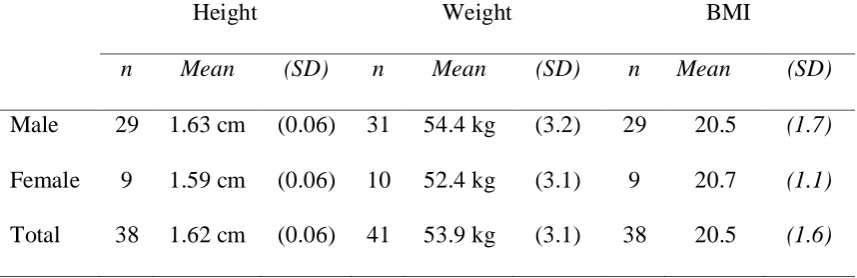
(EDNOS) ... 50 Table 3 Mean (and Standard Deviation) Height, Weight and BMI of Male and Female
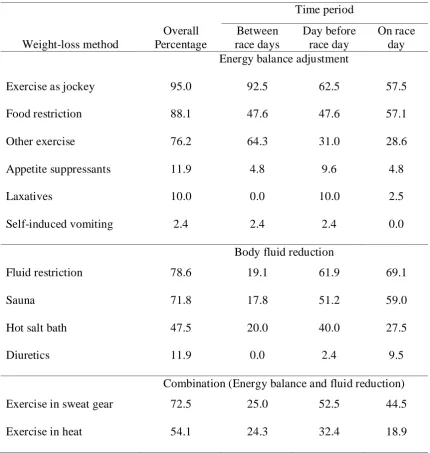
Jockeys and the Total Sample. ... 100 Table 4 Percentage of Jockeys Using Specific Weight-Management Methods at
Specific Times ... 104 Table 5 Correlations of Jockeys’ Usual Weight, Difficulty Experienced Losing
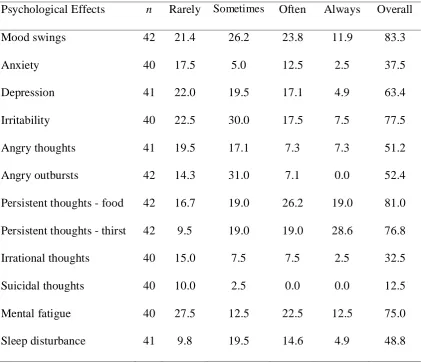
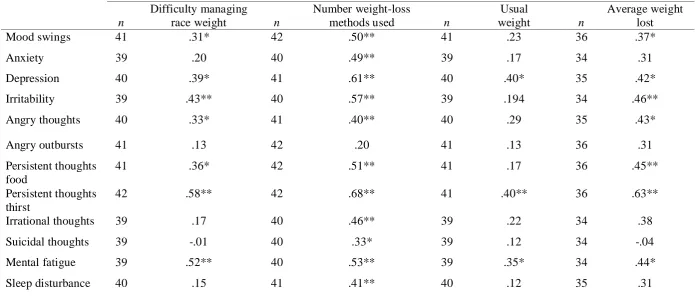
Weight, Number of Weight-Loss Methods Used to Make Race Weight and the Amount of Weight Usually Lost ... 105 Table 6 Percentage of Jockeys to Experience Psychological Effects While Wasting 107 Table 7 Correlations Between Jockeys’ Difficulty Managing Race Weight, the
Number of Weight-Loss Methods Used, Usual Weight, Average Amount of
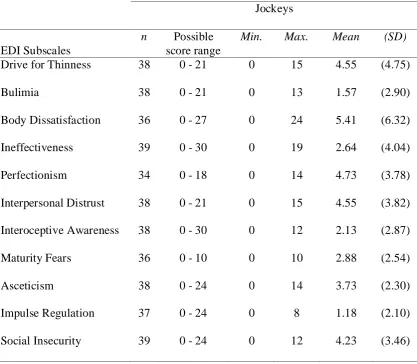
Weight Usually Lost and Frequency of Psychological Effects While Wasting .. 110 Table 8 EDI-2 Subscales Score Ranges and Jockeys’ Mean, Standard Deviation,
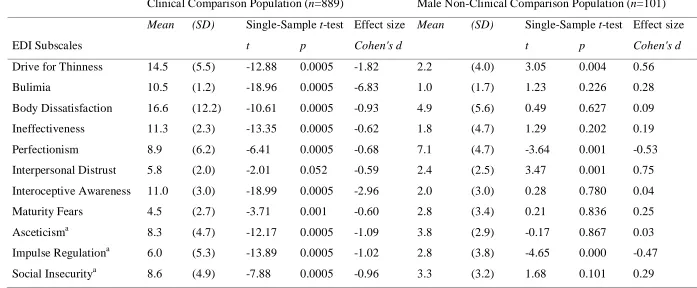
Minimum and Maximum Scores on Each Subscale ... 112 Table 9 Means, Standard Deviations, Single Sample t-tests and Effect Sizes for the 11
EDI-2 Subscales for a Clinical Eating Disorder (Comparison) Population and a Non-Clinical Male (Comparison) Population... 115 Table 10 Percentage of Jockeys Experiencing Negative Social Effects While Wasting
Table 11 Correlations Between Jockeys’ Difficulty Managing Race Weight, the Number of Weight-Loss Methods Used, Usual Weight, Average Amount of
Weight Usually Lost and Frequency of Negative Social Effects While Wasting125 Table 12 Percentage of Jockeys to Experience Specific Physical Effects While
Wasting ... 127 Table 13 Correlations Between Jockeys’ Difficulty Managing Race Weight, Number
of Weight-Loss Methods Used, Usual Weight, Average Amount of Weight
Usually Lost and Frequency of Physical Effects While Wasting ... 128 Table 14 Major Themes and Sub-Themes From Jockey Interviews ... 163 Table 15 Major Themes and Sub-Themes From Jockey, Family Member and Industry
List of Figures
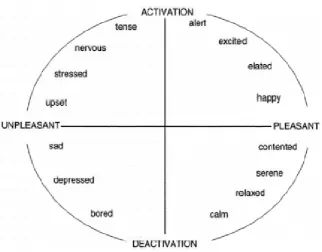
Figure 1. Graphical representation of the circumplex model of affect with the horizontal axis representing the valence dimension and the vertical axis
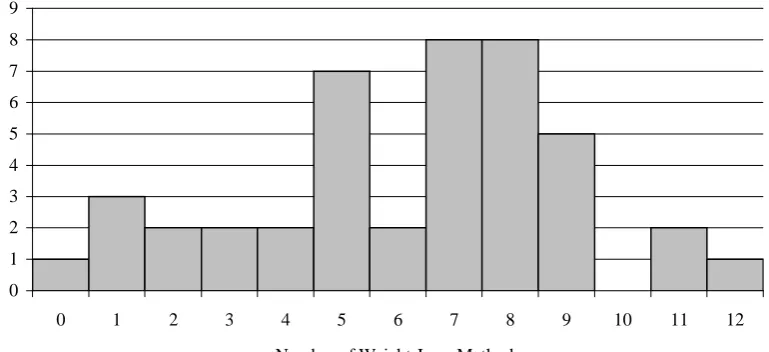
representing the arousal or activation dimension (Posner et al., 2005, p. 716).... 70 Figure 2. Number of weight-loss methods used by jockeys. ... 102 Figure 3. Frequency of responses for jockeys who did (n=29) and did not (n=9)
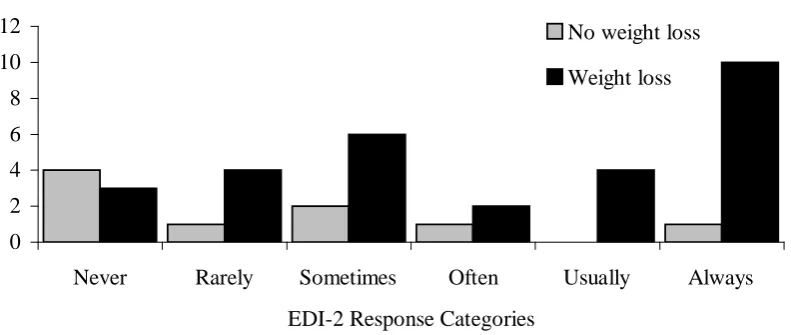
usually lose weight to meet race weight on EDI-2 Item 7: I think about dieting. ... 116 Figure 4. Frequency of responses for jockeys who did (n=30) and did not (n=9)
usually lose weight to meet race weight on EDI-2 Item 28: I have gone on eating binges where I felt I could not stop. ... 117 Figure 5. Frequency of responses for jockeys who did (n=29) and did not (n=9)
usually lose weight to meet race weight on Item 38: I think about bingeing
(overeating)... 118 Figure 6. Frequency of responses for jockeys who did (n=28) and did not (n=9)
usually lose weight to meet race weight on EDI-2 Item 16: I am terrified of gaining weight. ... 119 Figure 7. Frequency of responses for jockeys who did (n=28) and did not (n=9)
usually lose weight to meet race weight on EDI-2 Item 49: If I gain a pound, I worry I will keep gaining... 119 Figure 8. Frequency of responses for jockeys who did (n=29) and did not (n=9)
Figure 9. Frequency of responses for jockeys who did (n=29) and did not (n=9) usually lose weight to meet race weight on EDI-2 Item 83: Others would say I am easily irritated. ... 121 Figure 10. Frequency of responses for jockeys who did (n=28) and did not (n=9)
usually lose weight to meet race weight on Item 79: I am prone to outbursts of anger and rage. ... 121 Figure 11. Frequency of responses for jockeys who did (n=31) and did not (n=8)
usually lose weight to meet race weight on EDI-2 Item 87 of the EDI-2: I would rather spend time by myself than with others... 122 Figure 12. Health Belief Model. ... 154 Figure 13. Mean negative CMI subscale scores for Tristan on race days (before and
after racing) and non-race days. ... 165 Figure 14. Mean CMI contemplation subscale scores for Tristan on race days (before
and after racing) and non-race days. ... 165 Figure 15. Mean positive CMI subscale scores for Tristan on race days (before and
after racing) and non-race days. ... 166 Figure 16. Mean negative CMI subscale scores for Joseph on race days (before and
after racing) and non-race days. ... 174 Figure 17. Mean CMI contemplation subscale scores for Joseph on race days (before
and after racing) and non-race days. ... 175 Figure 18. Mean positive CMI subscale scores for Joseph on race days (before and
after racing) and non-race days. ... 175 Figure 19. Mean negative CMI subscale scores for Mark on race days (before and
Figure 20. Mean CMI contemplation subscale scores for Mark on race days (before and after racing) and non-race days. ... 185 Figure 21. Mean positive CMI subscale scores for Mark on race days (before and
after racing) and non-race days. ... 186 Figure 22. Mean negative CMI subscale scores for William on race days (before and
after racing) and non-race days. ... 197 Figure 23. Mean CMI contemplation subscale scores for William on race days (before and after racing) and non-race days. ... 198 Figure 24. Mean positive CMI subscale scores for William on race days (before and
after racing) and non-race days. ... 198 Figure 25. Mean negative CMI subscale scores for Neil on race days (before and after racing) and non-race days. ... 208 Figure 26. Mean contemplation CMI subscale scores for Neil on race days (before
and after racing) and non-race days. ... 208 Figure 27. Mean positive CMI subscale scores for Neil on race days (before and after
racing) and non-race days. ... 209 Figure 28. Mean negative CMI subscale scores for Peter on race days (before and
after racing) and non-race days. ... 220 Figure 29. Mean CMI contemplation subscale scores for Peter on race days (before
Chapter 1: Introduction
Horseracing is a highly competitive and dangerous sport that requires jockeys to have strength, balance and the ability to maintain high levels of concentration (DeBenedette, 1987). To give themselves the best chance of winning races and staying injury free, jockeys need to be physically and mentally fit (DeBenedette, 1987; Hillenbrand, 2001; Presnell, 2008; Sperling, 2002). In addition, jockeys need to strive for a low body weight1
Jockeys’ weight-management practices include behaviours that limit food intake, promote a negative energy balance and promote fluid loss (Atkinson, Storrow, & Cable, 2001; Hill et al., 1998; M. B. King & Mezey, 1987; Labadarios, Kotze, Momberg, & Kotze, 1993; Leydon & Wall, 2002; Moore, Timperio, Crawford, Burns, & Cameron-Smith, 2002; Speed et al., 2001). For jockeys, the use of short-term
that will maximise their opportunities for offers of rides in races (Apted, 1988; Hill & O'Connor, 1998). The ongoing requirement for jockeys to achieve and maintain low body weights negatively impacts on their physical, psychological and social wellbeing (Speed, Seedsman, Morris, & Sullivan, 2001).
Despite their generally small stature, most jockeys have difficulty meeting the low riding weights required by the sport (Apted, 1988; Bishop & Deans, 1996; M. B. King & Mezey, 1987). To achieve low body weights jockeys engage in short-term and/or long-term weight-loss behaviours that are detrimental to their health (Apted, 1988; Pruscino, McGregor, Jones, Flanagan, & Sullivan, 2005).
1
weight-loss practices, or wasting as it is known in the horseracing industry, appears to be common (Apted, 1988; Moore et al., 2002). The body composition of jockeys generally consists of increased muscle bulk and low body fat levels (Hill & O'Connor, 1998; Pruscino et al., 2005) and thus wasting behaviours (e.g., sauna use, fluid
restriction, food restriction) are necessary for weight loss (Apted, 1988; Norton, Olds, Olive, & Craig, 1996). The use of unhealthy weight-management behaviours to meet riding weight requirements is a concern because Victorian jockeys can ride in races, and engage in weight-management behaviours, 363 days a year (Racing Victoria Limited, 2006b). It is entirely possible that jockeys ride all year, without taking a break, as there is a fear that if they reject a riding offer they will lose the support of the owner and/or trainer (Thomas, 2008). Only a small number of studies have examined the effects of weight management on jockeys’ physical, psychological and social wellbeing (e.g., Caulfield, Karageorghis, Terry, & Chatzisarantis, 2003; Labadarios et al., 1993; Speed et al., 2001).
A review of the literature revealed two United Kingdom studies that explored the psychological consequences of wasting experienced by jockeys. These studies showed that while jockeys were wasting they experienced increased levels of irritability, fatigue (Caulfield et al., 2003; M. B. King & Mezey, 1987), anger, depression, confusion and tension (Caufield et al., 2003). Most of the evidence pertaining to the effects of weight management on jockeys’ psychological wellbeing is anecdotal, coming from newspaper articles (e.g., Eddy, 2007; Harris, Whittaker, & Dore, 2001; Stewart & Habel, 2001) or novels (e.g., Hillenbrand, 2001). This
evidence indicates primarily negative effects on jockeys’ mood while they are
attributed both aggressive physical and verbal behaviour to wasting (Cormick, 2006; Prendergast, 2001).
Research examining athletes from sports other than horseracing, and research examining other individuals who use extreme weight-loss behaviours, provides further evidence for the contention that weight-loss behaviours are linked to increased negative affect (Keys, Brozek, Henschel, Mickelsen, & Taylor, 1950; Landers, Arent, & Lutz, 2001; Lane, 2001; Terry, Lane, & Warren, 1999). Jockeys can engage in weight-management behaviours for most of the year. Thus, further research
specifically designed to investigate the negative consequences of these behaviours on mood and affect is required.
In addition to previously mentioned studies on the effects of wasting on jockeys’ mood, two additional studies exploring disordered eating in jockeys were identified in published research. Unfortunately, their findings were contradictory, with one study revealing no evidence of clinical eating disorders among jockeys (M. B. King & Mezey, 1987), and the other showing that 20% of jockeys had EAT-26 (Eating Attitudes Test-26) test scores that indicated disordered eating (Leydon & Wall, 2002). Research examining athletes from other sports has shown that the pressure for athletes to maintain a low body weight increases the risk of developing disordered eating (Haase, Prapavessis, & Owens, 1999; Sundgot-Bogen, 1993; Sundgot-Bogen & Klungland, 2002). Given the serious physical and psychological consequences of disordered eating behaviours (Landers, 2002), more research on jockeys eating behaviours is needed.
conscientious objectors. Jockeys restrict food intake year round. Therefore, research on their extreme behaviour and its effects on physical, psychological and social aspects of their lives is required.
The use of fluid loss and food restriction by jockeys to meet race weights raises questions about the physical consequences of wasting (Hassanien, Razack, Gavaler, & Van Thiel, 1992; Sparling, 2000). A limited number of studies have been carried out which indicate that jockeys are dehydrated on race days and non-race days (Pruscino et al., 2005; Warrington, McGoldrick, & Griffin, 2006). Dehydration is associated with an increased risk of heat illness which includes symptoms such as muscular cramps, dizziness and loss of consciousness (American Association of Family Physicians, 1998; Armstrong & Maresh, 1993; Coris, Ramirez, & Van Durme, 2004; Coris, Walz, Duncanson, Ramirez, & Roetzheim, 2006; Howe & Boden, 2007). Considering the nature of horseracing and the need for jockeys to be physically fit (DeBenedette, 1987; Hillenbrand, 2001; Presnell, 2008; Sperling, 2002), further research into the physical consequences of wasting is needed.
Chapter 2: Thoroughbred Horseracing in Australia
Thoroughbred horseracing is Australia’s oldest national sport (International Event Resources, 2001). Attendance statistics indicate that it is currently the second most popular spectator sport following closely behind Australian Rules Football (AFL; Australian Bureau of Statistics, 2002). However, unlike Australian Rules Football, horseracing is year round on 355 racetracks across the country. During the financial year spanning 2005/2006 there were 19,963 individual races, which translates to an average of 55 races per day (Australian Racing Board, 2006).
In Australia, horseracing is not just a popular sport it is a thriving,
economically important industry. Per capita, Australia’s thoroughbred racing industry is one of the largest racing industries in the world, boasting the greatest number of registered race clubs (one club for every 50,000 people), horses in training,
thoroughbred racehorse owners and race meetings (Australian Racing Board, 2006; International Event Resources, 2001). Although there is an understanding that racing is “big business” there is little public comprehension of its immense economic contribution to the country. During the 1999-2000 racing season, the industry supported 249,063 full-time, part-time and casual jobs. The hours worked in the industry equated to 77,755 full-time jobs, making horseracing the fourth largest employment industry in Australia (Harding, 2004; International Event Resources, 2001).
the 1999-2000 figures, it was estimated that over the following five years the racing industry would have a $41.1 billion direct impact on the Australian economy (International Event Resources, 2001).
Although popular throughout Australia, the state of Victoria is considered the home of horseracing (Dabkowski, 2003; Harding, 2004; International Event
Resources, 2001). Each year, racing contributes $1.8 billion dollars in direct spending to the state of Victoria, including in excess of $240 million to the Victorian state government and $263 million to the Federal government by way of taxes. It also provides direct employment for around 48,500 people in full-time, part-time or casual capacities. When considering support industries, there are a further 27,900
employment positions (International Event Resources & Monash University Centre of Policy Studies, 2006). There is a race meeting (and sometimes more than one) every day of the year, except Christmas Day and Good Friday. In summer, the racing industry also runs twilight and night meetings (International Event Resources, 2001; International Event Resources & Monash University Centre of Policy Studies, 2006; Kron, 1998; Racing Victoria Limited, 2006b).
Victoria hosts the nation’s biggest thoroughbred horseracing event, the Spring Racing Carnival (annually during October and November). According to an
known as “the race that stops a nation”, attracts more than 100,000 international and interstate visitors to Victoria and is watched by an audience of over 700 million people from 120 countries and territories (International Event Resources & Monash University Centre of Policy Studies, 2006).
Thoroughbred horseracing is not the only sport that thrives in Victoria. In fact, since the 1956 Olympics, Melbourne has become known as the sporting capital of Australia. Every year Melbourne hosts a number of major sporting events, including the AFL finals, the Australian Tennis Open and the Heineken Golf Classic. These events mean an Olympic-size number of ticket sales, hotel occupancies, international broadcasts, and economic benefits each year (Dabkowski, 2003; Sport and Recreation Victoria, 2003).
Over the years, Australia’s reputation as a sporting nation has grown along with increases in spectatorship and participation. Testimony to the increased profile of sport within the country are the improvements in performances at the Commonwealth Games and Olympic Games (Australian Bureau of Statistics, 2002). Coupled with these improvements in performances has come the increased professionalism of many sports (e.g., training facilities, business contributions, governing bodies, player representative bodies) and of the athletes themselves (Australian Bureau of Statistics, 2002; Speed et al., 2001; Sport and Recreation Victoria, 2003).
Victoria Limited (RVL)2 and the Victorian Jockeys’ Association (VJA)3
For the currently riding jockeys, the effects of wasting and weight management were no less serious. The results of Speed et al.’s (2001) research revealed that jockeys felt wasting contributed to psychological problems such as severe mood disturbances, despair, loss of confidence and anxiety. Fourteen percent commissioned research into the welfare of jockeys. This research examined the responses of 72 retired jockeys, 64 currently registered jockeys and 22 apprentices, on a specially designed questionnaire, along with the responses of seven retired and five currently registered jockeys in follow-up interviews (Speed et al., 2001). The research provided the most comprehensive picture to date of the life of a jockey (e.g., weight-management behaviour, financial remuneration) and highlighted a number of areas of concern for both retired and working jockeys. An important concern arising from this research was the physical and psychological effects of wasting and other weight-loss methods used by jockeys to meet industry weight requirements (Speed et al., 2001). For jockeys, the struggle to maintain weight is a serious one. Speed et al. (2001) found that for many it can mean the end of their careers and that it can continue to be a problem even after retirement. Among retired jockeys, weight-management difficulties were the second most common reason for retirement (20%; second to injury 36%) and 13% reported that they experienced excessive weight gain after their riding career ended.
2
RVL provides independent governance of thoroughbred horseracing in Victoria 3
of participants felt that weight would influence their decision to retire (behind lack of rides 21% and injury 15%).
The Demands of Horseracing on Jockeys
The weight restrictions placed on jockeys are the most stringent of any of the weight restriction sports (Hawley & Burke, 1998). The Rules of Racing (Racing Victoria Limited, 2006c) state that currently 46 kg is the minimum weight to be carried by any horse in handicap flat races (see Appendix A for 2007 amendments). Apprentices are eligible to claim weight allowances on the listed weight allocation from 1.5 kg to 3 kg. This means they may ride at a reduced weight of up to 3 kg (Racing Victoria Limited, 2006c). Being eligible to claim weight does not necessarily mean that the jockey is physically able to do so. If an apprentice is unable to claim the full weight allowance (e.g., lose 1.5 kg not 3 kg) their riding offers may be limited (Bartley, 2007a).
do, ride in more than one race during a race meeting, therefore, they are required to weigh-out and weigh-in several times. Furthermore, their mounts may have different weight allocations, meaning they have to meet several different weight requirements during the race meeting (Hawley & Burke, 1998). Added to this are the continuous demands of the racing year, with race meetings scheduled 7 days a week, year round (Racing Victoria Limited, 2006b). This means that jockeys have no set off-season and can potentially be required to ride 7 days a week.
Horseracing also differs from other weight category sports in that jockeys must weigh-out and weigh-in in their racing colours (boots, pants, shirts) and with their saddles (Racing Victoria Limited, 2006c). In other weight category sports (e.g., boxing, judo, wrestling), only the participant’s body weight is measured (International Judo Federation, 2003; National Collegiate Athletic Association, 2005; Walberg-Rakins, 2000).
The stringent weight requirements in racing mean that physical stature is an important consideration for anyone wishing to enter professional riding as a career. Individuals applying to become apprentice flat-race jockeys are required to be over 15 years old, undergo a medical examination and thorough screening process for physical suitability and weigh no more than 48 kg. The initial weight restriction and screening process attempts to aid in the selection of applicants who will be able to maintain a low body weight after maturation (Racing Victoria Limited, 2006c). However, for most jockeys the continued weight restrictions throughout their working lives makes it necessary to learn and develop methods of weight loss (M. B. King & Mezey, 1987).
(Bartley, 2007a; Manley, 2008). Jockeys have no guarantee of securing rides, let alone of securing horses with the ability to win races. This means that earnings vary considerably between colleagues (Beadman & Young, 2003; DeBenedette, 1987; Hislop, 2002; Ray & Grimes, 1993; Schmidt, 2004). Jockeys also compete against each other to obtain rides, creating a high-pressure environment within the industry (DeBenedette, 1987). For these reasons any problems with performance, weight or injury are kept quiet. If a jockey’s struggles become common knowledge, it can mean he/she will lose future rides (Beadman & Young, 2003; Schmidt, 2004).
Female jockeys seem to face another hurdle, their gender. Horseracing is one of the only major sports where men and women regularly compete against each other and must adhere to the same rules (Ray & Grimes, 1993). Despite evidence
suggesting neither gender has a physical advantage over the other, research on jockeys in the United States has shown that male jockeys can earn up to nine times more than their female counterparts even though, on average, women are more likely to perform better in their races (Bennett, 1989; Ray & Grimes, 1993). Ray and Grimes (1993) felt that the difference in earnings came from the fact that females rode in half as many races as males, and the races they did ride in were not as prominent (less prize
money). Although it is possible that female jockeys could be turning down rides, Ray and Grimes (1993) felt it was more likely that they were not being offered as many opportunities as male jockeys. They speculated women were being closed out of riding networks as statistical analysis revealed that their future rides depended on their performance in previous races. This was not the case for male jockeys. The
visibility in the community. They said that a community could not pay attention to the behaviour of all its members so there was an inclination to use inaccurate information to create some people’s reputation.
Anecdotal evidence on Australian racing supports that gender-based discrimination is not just limited to the USA. During the 2007 Melbourne Cup Carnival two female jockeys won races in the carnival, bringing the tally of winning female jockeys during the carnival to just five in the last decade. The small number of winning female jockeys during the most prestigious racing carnival in Australia could indicate that, like their American counterparts, Australian female jockeys are being offered less riding opportunities and less quality riding opportunities (mounts are less likely to win). This notion is supported by the fact that the two female winners had only one ride each at the meet they won at and for one of them, the horses odds were 101 to 1 to win (Habel & Windmill, 2007; Thomas, 2007a).
Racing seems to be a sport of glaring disparities between jockeys. Large gaps exist between the number of rides secured by jockeys and their earnings. During the 1998/1999 racing season, the top twenty Victorian jockeys who regularly rode in metropolitan race meetings earned an average of $59,000 from their losing rides (684 rides). For other jockeys, their losing rides (294 rides) earned them an average of $35,500. With winnings, consolidated earnings increased to averages of $197,472 (top twenty jockeys) and $45,380 (other jockeys) respectively (Speed et al., 2001).
Every time a jockey rides, whether it is for track training, trials or races, he/she runs the risk of injury. Riding accidents often result in serious injuries requiring long periods out of the saddle, paralysis or even death (DeBenedette, 1987; Schmidt, 2004; Turner et al., 2002; Wilmoth, 2007).
Chapter 3: Weight Restrictions in Sport
Jockeys are not the only athletes who are required to achieve a specified weight as a condition of participating in their chosen sport. Sports such as boxing, judo, wrestling and rowing all have weight requirements as part of competition rules. Despite differences in minimum weights and weigh-in procedures (see Table 1), a review of the literature showed there are similarities in the type of weight-loss
methods used by athletes across weight category sports and similarities in the negative physical and psychological impact of these practices (Fogelholm, Koskinen, Laakso, Rankinen, & Ruokonen, 1993). Considering the importance of jockeys competing at optimal physical and psychological peak to guard against injury (Hawley & Burke, 1998), it is interesting to note the similarities between jockeys and other weight category athletes.
Similarly to jockeys, other athletes competing in sports like boxing and wrestling face the potential threat of exclusion from competition if they exceed the specified weight for the particular division of the sport. The threat of exclusion, and for some, the threat of financial penalties, leads athletes to engage in what can only be considered unhealthy weight-loss behaviours (Coles, 1999; Groeller & Gallowey, 1996; Lane, 2001; Terry et al., 1999).
reported losing weight in the three days prior to competing. Over half did this through food restriction. The next most utilised weight-loss method was exercising in thermal clothes (for an average of 40 minutes) with the participant usage peaking on race day (33%). Although fluid restriction was not examined, 37% of participants reported drinking one and a half litres or more of fluids after weigh-in (prior to performing). Three quarters of the participants also ate between the weigh-in and race, and all drank something.
Lane (2001) found that in a bid to qualify within their nominated weight category, amateur boxers habitually restricted food and fluid intake prior to the official weigh-in for an event. Ohhashi et al. (2002) investigated the weight-management practices of 632 Japanese boxers and reported similar results. On average the athletes lost 5.56 kg over 29.5 days. The researchers’ findings showed that, preferably, most boxers wanted at least a month to lose the weight so that they could increase their exercise and gradually decrease their food intake. When the time lead-up was insufficient, the boxers reported using rapid weight-loss measures such as saunas (46%). Of these boxers, 67.7% reported feeling weakness, exhaustion,
dizziness, and a lack of concentration after rapid weight loss. Immediately after the official weigh-in and prior to competing, 89.9% of the boxers reported eating and drinking.
periods over 24 hours prior to a tournament. The use of laxatives was reported by 6% of the athletes, 5% reported self-induced vomiting and 3% using diuretics.
Table 1 Minimum Weight Requirements/Categories and Weigh-In Procedures for Weight Category Sports
Sport Gender Minimum
Weight
Weigh-in Procedure
Boxing Males:
Females:
48 kg 46 kg
Day of competition - three hours prior to first bout. Medical check required.
Judo Males:
Females:
60 kg 48 kg
Day of competition - two hours prior to first bout.
Taekwondo Males:
Females:
58 kg 49 kg
Day of competition – one to two hours prior to first bout.
International Wrestling Males: Females: 55 kg 48 kg
Day prior to competition. Medical check required.
Collegiate Wrestling Males: Females:
55 kg 48 kg
Day of competition - two hours or less prior to first bout.
Rowing Males:
Females:
72.5 kg 59 kg
Day of competition - one to two hours prior to first race
Horseracing* Prize > $55,000
Prize ≤ $55,000
Males: Females: Males: Females: 46 kg 46 kg 52 kg 52 kg
Similarly, Groeller and Gallowey (1996) reported that taekwondo players use exercising in vapour-impermeable suits, saunas, and food and fluid restriction, to make weight. After they weigh-in and prior to competing, they would immediately eat and drink to rehydrate and replenish glycogen stores (Lee, 1997).
Weight Restrictions for Jockeys
Like athletes in other weight category sports, Leydon and Wall (2002), reported that most jockeys find it takes a concerted effort to attain the low weight required for their profession. Jockeys usually have to use both short-term and long-term weight-loss methods to achieve their weight goals. A review of the research on the methods jockeys use while wasting, as well as long-term weight-loss techniques used supports this observation. Most studies indicate that jockeys engage in a variety of unhealthy weight-control behaviours (e.g., extreme food and fluid restriction, long hours in saunas, over use of diuretics) to maintain or lose weight. M.B. King and Mezey (1987) interviewed 14 English jockeys and found that they all reported using unhealthy weight-control methods. These behaviours included extreme fasting, long hours in saunas (up to 4 hours), very strenuous exercise, over use of diuretics, laxatives, and appetite suppressants and self-induced vomiting.
race meetings. Labadarios et al. (1993) reported that 64% of the jockeys experienced difficulty maintaining race weight and that as a result, the mean intake of energy and nutrients experienced by jockeys fell well below the recommended daily intake. The methods that were used either alone or in combination to achieve race weight included food and fluid restriction, saunas, exercise, hot baths, smoking, and using diuretics and appetite suppressants.
More recently, similar findings were reported by Atkinson, Storrow and Cable (2001). They investigated the eating habits and body mass control methods of 92 male professional jockeys (flat race and national hunt). They administered a questionnaire on the timing and types of foods that are normally ingested by the jockeys and the most commonly used weight-loss methods. A substantial number of jockeys reported missing meals in an attempt to maintain a low body weight (49% missed breakfast, 47% missed lunch, 59% missed dinner, and 41% did not eat snacks). The jockeys also reported that the most commonly used weight-control methods were sauna, exercise and fasting. Forty-six percent of the jockeys indicated that weight control was “difficult”, while 20% reported that they had considered retiring from the sport as a result of these difficulties.
and weight-control behaviours of jockeys have a negative impact on short-term and long-term health. Energy and carbohydrate intake was below levels recommended for athletes. Sixty-seven percent of the jockeys reported using other unhealthy weight-control methods that included saunas, hot baths, exercise, diuretics and fluid
restriction. Fifty percent of those who smoked reported that they smoked as a weight-control method. Forty percent of the jockeys had a body mass index (BMI)4
Apted (1988) interviewed nine successful jockeys about the methods they used to lose weight and found energy intake was below half of the kilocalories (energy producing potential in food) required for basal metabolism (basal metabolic rate – BMR
of less than 20 which is considered underweight, and 20% had EAT scores indicative of disordered eating.
A review of the literature identified four studies that dealt with the lifestyle and dietary behaviours of Australian jockeys. Speed et al. (2001) found that most jockeys had to resort to unhealthy weight-loss methods to achieve their race weight (methods included sauna use, fasting, fluid restriction, laxative and diuretic misuse, self-induced vomiting).
5
4
Medical ratio measure of fatness that allows a comparison between people based on their weight relative to their height (Marieb, 2001).
5
Energy required, at rest, to maintain regulated body temperature and maintain the systems of the body (Burke & Deakin, 2002)
Hill et al. (1998) explored the lifestyle and health status of jockeys, including their dietary, exercise and weight-loss practices. The researchers developed a
questionnaire based on information gained via a focus group with experienced jockeys and mailed it to all registered jockeys in New South Wales. Sixty-five jockeys
completed the questionnaire. From the information gathered, Hill et al. (1998)
surmised that a jockey’s lifestyle revolved around chronic dietary and fluid restriction and often involved extreme weight-loss measures which were potentially detrimental to their health. The jockeys in Hills et al. (1998) study described weight control as being the most difficult aspect of being a jockey. To maintain a low body weight, jockeys consumed a mean of 2.2 + 0.6 meals per day on non-race days and 1.3 + 0.8 on race days. Methods used to make weight were reported to include dehydration (through sweat-loss activities and fluid restriction), fasting, exercise and diuretics.
Moore et al. (2002) also explored the eating, drinking and riding behaviours of Australian jockeys. They administered questionnaires to 91 male and 25 female Victorian jockeys to determine weight-loss or weight-maintenance practices, attitudes to food and eating, achieving riding weight and nutritional and weight-management advice. The results showed that most jockeys preferred to manage their weight using short-term weight-control practices. The most common practices included the sauna, diuretics and energy restriction in the form of skipping meals. Nine percent of the jockeys reported using self-induced vomiting as a weight-control method. Eighty percent of the jockeys reported restricting food and fluid 24 hours prior to racing.
imagine as highlight for many people, but it is for me” (Bartley, 2007a, p. 38). Hillenbrand (2001) suggested that jockeys view water as their prime enemy because of its weight when ingested (i.e., 100 ml of water equates to 100 g of weight), and sweating in the sauna as one method to keep fluid out of their systems. Darren
Beadman (a successful Australian jockey) describes racing as a high pressure industry where a successful jockey learns to control himself mentally and physically and not to complain about “punishing the body by wasting” (Beadman & Young, 2003, p. 2). To meet the recently increased minimum riding weight of 53 kg, Beadman normally eats only one meal a day (Beadman, 2005; Guinness, 2006) and explained “… hunger is a way of life” (Guinness, 2006, p. 14). Another jockey also reported surviving on one meal a day, even after deciding to only accept rides over 54 kg (Thomas, 2006). Generally jockeys seemed to have a policy of eating very little (Beadman, 2005; Dunn, 2008; Guinness, 2006; Thomas, 2006).
Laffit Pincay, one of the most successful jockeys of all time, had a similar story. Although he stated that racing was a “pretty good life”, he was thought to starve himself as a means of continued success (Scott, 1999). In Scott (1999), Pincay
described a very big (cheating) meal as a small piece of chicken, four slices of tomato, a spoon of plain rice, a small potato and a miniature dinner roll. Scott (1999)
Chapter 4: Weight Management and Physical Wellbeing
There is little research on the physical effects wasting has on jockeys’ health and performance. However, research on the effects of rapid weight loss on the health and performance of athletes in other sports offers some insights into the physical effects rapid weight loss might have on jockeys. During high intensity exercise, a well-trained athlete has a 20-fold increase in heat metabolism. Due to regularly experiencing heat stress, most athletes develop a higher heat tolerance than people who exercise little. Nevertheless, hydration must be carefully monitored, as a drop in hydration of more than 3% of body weight is a significant risk factor for heat illnesses (Hassanien et al., 1992; Sparling, 2000).
Dehydration
Dehydration occurs when there is inadequate water available to maintain the required water levels within body tissue and systems (Mader, 1990; Marieb, 2001; Oppliger & Bartok, 2002; Walberg-Rakins, 2000). Athletes who engage in short-term weight-loss methods, such as exercising in vapour-impermeable suits, fluid
restriction, saunas, diuretics and vomiting, put themselves at a high risk of
dehydration and associated physical consequences such as heart failure and death (American Association of Family Physicians, 1998; Armstrong & Maresh, 1993; Oppliger & Bartok, 2002).
(Hassanien et al., 1992). Body temperature is regulated within a narrow range through the delicate and complex balance between heat load (production and heat storage) and heat dissipation. The most effective forms of heat dissipation use the circulatory system. Excess heat is carried in the blood stream away from the core of the body to blood vessels in the skin where it is lost via: (1) conduction: heat is transferred
through direct contact with a cooler object; (2) convection: air currents carry heat lost through conduction away; (3) evaporation: heat is used as the energy to change sweat to a vapour; and/or (4) radiation: heat loss due to infrared emissions (Armstrong & Maresh, 1993; Brewster, O'Conner, & Lillegard, 1995; Howe & Boden, 2007; Jordan, 2004; Starr & Taggart, 1987).
Dehydration causes a decrease in intravascular volume through a loss of plasma volume. This may lead to the diversion of blood flow to the vital organs rather than the skeletal muscles and vascular beds of the skin. Further compounding this is the fact that the ability to produce sweat is reduced and heat loss is quickly exceeded by heat gain and core body temperature increases (Armstrong & Maresh, 1993; Brewster et al., 1995; Caldwell, 1984; Caldwell, Ahonen, & Nousiainen, 1984; Lee, 1997; Nadel, Mack, & Nose, 1990; Pawelcyzyk, 2001; Shirreffs, Armstrong, & Cheuvront, 2004; Sparling, 2000; Starr & Taggart, 1987; Wade, Freund, & Claybaugh, 1987; Walberg-Rakins, 2000).
conclude that jockeys are habitually dehydrated on non-race days, and to an even greater extent, on race days.
A study carried out by Pruscino, McGregor, Jones, Flanagan and Sullivan (2005) found that similar to Irish jockeys, Australian jockeys were also likely to be consistently dehydrated. Pruscino et al. (2005) collected blood and urine samples from seven Victorian jockeys on five separate occasions (including up to three race days and two non-race days). They also recorded the jockeys’ body temperatures on race days. They reported that 9% of jockeys recorded a post-race body temperature over 38.5 °C and that markers of dehydration were evident on both race days and non-race days.
Pruscino et al.’s (2005) findings were cause for concern, because the rise in body temperature observed increases the risk of heat illness (American Association of Family Physicians, 1998). There are five common types of heat illness; heat oedema, heat syncope, heat cramps, heat exhaustion and heatstroke. Each illness is associated with varying degrees of physical and psychological impairment (Armstrong & Maresh, 1993; Barrow & Clark, 1998; Coris et al., 2004; Coris et al., 2006; Howe & Boden, 2007; Wexler, 2002).
Heat oedema is the mildest form of heat illness and usually occurs in people not acclimatised to extreme heat. It is characterised by an excessive accumulation of serous fluid in the intracellular spaces of tissue in the lower extremities. It appears to have no lasting effects, and can be treated by elevating the affected area and periodic exercise, coupled with gradual acclimatisation (Barrow & Clark, 1998; Brewster et al., 1995; Coris et al., 2004; Howe & Boden, 2007; Lee-Chiong & Stitt, 1995).
lying position (Howe & Boden, 2007; Sandor, 1997). It is often the consequence of an insufficient cardiac output and/or abnormally low blood pressure caused by
dehydration, a failure to cool down after exercise or poor heat acclimatisation. Treatment involves fluid replacement and lying in a supine position with the lower extremities raised so blood flow can return to the central nervous system (Holtzhausen et al., 1994; Howe & Boden, 2007; Wexler, 2002).
Heat cramps represent the next level of heat illness. They are characterised by the painful spasms of skeletal muscles in the arms, legs, abdomen and/or trunk. Cramps are often attributed to a negative sodium balance due to changes in blood chemistry. Treatment involves the replacement of fluid and sodium. Although
sometimes thought of as annoying, cramps can be severe and act as a warning sign of impending heat exhaustion (Caldwell et al., 1984; Howe & Boden, 2007; Latzka & Montain, 1999; Mellion & Shelton, 1997; Oppliger & Bartok, 2002; Wexler, 2002) as they can occur concurrently with heat exhaustion symptoms. During an episode of heat cramps a person’s core body temperature may start to become elevated (Howe & Boden, 2007).
symptoms include hyperventilation, ataxia, agitation, impaired judgement and
confusion (Armstrong & Maresh, 1993; Howe & Boden, 2007; Wexler, 2002). Short-term treatment involves rapid cooling and fluid replacement. The long-Short-term
consequences are not known (Coris et al., 2004), but athletes returning to activity should be fully hydrated and should undergo regular assessments of hydration levels during activity. A minimum of 7 to 10 days of gradually increasing exercise is also recommended for athletes in hot environments (Armstrong & Lopez, 2007; Coris, Walz, Konin, & Pescasio, 2007). For extremely fit athletes who experience mild heat exhaustion, 1 to 2 days may suffice (Armstrong & Lopez, 2007).
Heatstroke is the fifth level of the heat illnesses and the most severe.
Heatstroke is considered a clinical and pathological condition, where an elevated body temperature results in damage to body tissue and affects multiple organs. Symptoms are similar to those of heat exhaustion, but include a body temperature above 40.5 oC, failing or cessation of the sweating mechanism and neurological problems, including coma (Coris et al., 2004; Hassanien et al., 1992; Howe & Boden, 2007). Typically, heatstroke occurs during periods of extreme heat and humidity, but has been observed in cool to temperate environments (Armstrong & Maresh, 1993; Coris et al., 2004). When intrinsic heat production is the main reason for hyperthermia the condition is known as exertional heatstroke (Howe & Boden, 2007). In either classic
death (Coris et al., 2006; Lee-Chiong & Stitt, 1995). For athletes who recover from heatstroke, there may be a period of reduced heat tolerance and an increased
susceptibility to severe heat illness when exercising in hot environments (Armstrong et al., 1990; Coris et al., 2007).
The prevention of most heat illness symptoms in athletes is relatively simple, monitor the person’s hydration levels and ensure they ingest enough water and salt-containing solutions to maintain his/her fluid and sodium levels (Coris et al., 2007; Howe & Boden, 2007). Howe and Bowden (2007) went as far as to say that
heatstroke was completely preventable in athletic populations. Unfortunately, as reported by Warrington et al. (2006) and Pruscino et al. (2005), even on non-race days most jockeys are not fully hydrated. More alarmingly, jockeys actively dehydrate themselves to meet riding weight-loss requirements (Atkinson et al., 2001; Hill et al., 1998; M. B. King & Mezey, 1987; Labadarios et al., 1993; Leydon & Wall, 2002; Moore et al., 2002; Speed et al., 2001).
Pruscino et al. (2005) found that 18% of jockeys in their study reported
experiencing three or more symptoms of heat illness on race days and that there was a direct relationship between the number of behaviours designed to induce fluid loss and the number of heat illness symptoms experienced prior to racing.
Restricted Food Intake
sodium enhances fluid retention and plasma volume restoration (Hawley & Burke, 1998; Pendergast, Horvath, Leddy, & Venkatraman, 1996).
Athletes tend to use two forms of dietary restraint, long-term dieting and short-term starvation (Filaire, Maso, Degoutte, Jouanel, & Lac, 2001; Steen, Oppliger, & Brownell, 1988). As well as putting themselves at risk of dehydration, these
weight-loss practices can put athletes at a high “nutritional” risk (Wahl, 1999). Of particular concern for athletes is the lack of “fuel” for the body (Hawley & Burke, 1998). Dietary restriction is associated with decreased energy stores, increased
fatigue, increased injury and impaired recovery. Moreover, food restriction can lead to electrolyte imbalances and decreased iron levels that are linked to reduced oxygen transport. Inadequate dietary intake of proteins could cause problems with the maintenance of muscle protein, a reduction in glycogen resynthesis, where as aan inadequate intake of carbohydrates could lower the rate of glycogen repletion resulting in lowered liver and muscle glycogen stores in the muscles and the likelihood of hypoglycemia (Filaire et al., 2001; Fogelholm et al., 1993; Hawley & Burke, 1998; Horswill, Park, & Roemmich, 1990; Ivy, 1991; Keys et al., 1950; Pendergast et al., 1996).
On a longer term basis, further adverse consequences include the loss of bone density, body pains, loss of muscle mass, neuroendocrine disturbances,
extreme situations, the combination of restricted food intake and dehydration can lead to collapse and even death (Maughan, 2000).
Physical Effects of Weight Management on Athletes
Unfortunately, in the sporting arena severe dehydration results in the injury and death of many athletes each year (Oppliger & Bartok, 2002). Oppliger and Bartok (2002) stated that the numbers of dehydration related injuries are too numerous to record. Even so, there have been stand out cases that have received a great deal of attention. Several of these cases have occurred in American football. For instance, during the same week in 2001, two players died from heatstroke related injuries. One player's core body temperature at the time of his death was more than 42.5oC.
(Mueller & Diehl, 2006; Oppliger & Bartok, 2002). These deaths are just two of 21 heatstroke related deaths reported by The National Centre for Catastrophic Sports Injuries (NCCSI) in American footballers in the last 10 years (Mueller & Diehl, 2006). The increase in dehydration-related deaths over recent years has been attributed to several factors. Some of these include a lack of heat acclimatisation, incompetent planning of training sessions and the growing trend of using weight-loss supplements that speed up metabolism or supposedly build muscle (Gatorade Sports Science Institute, 2002).
(Wahl, 1999). Evidence of the negative effects of rapid weight-loss strategies were reported by Green, Petrou, Fogarty-Hover and Rolf (2007) who examined the
correlation between rapid weight loss, gender, grade, weight category and injury rate in 392 judoka. They found that rapid weight loss was the only significant variable for increased injury risk during competition. Further evidence of the negative effects of rapid weight loss was shown by Alderman et al.’s (2004) investigation of
international-style wrestling. Competitors used rapid weight-loss methods to lose an average of 5% of their body weight and experienced effects such as headaches (47%), dizziness (44%), nausea (42%), hot flushes (22%), nosebleeds (20%), fever (17%), disorientation (9%) and racing heart rate (4%).
In 1997, three collegiate wrestlers died as a consequence of rapid weight loss (Walberg-Rakins, 2000). The first casualty was 19-year-old William Saylor who was more than 17.3 kg (38 pounds) over his weight class (195 pounds, 88.6 kg) at the beginning of the wrestling season. He lost the first 10.5 kg (23 pounds) over 10 weeks and a further 4.1 kg (9 pounds) 2 days prior to a tournament. Eight hours before weighing in, William attempted to lose the last 2.7 kg (6 pounds) through fluid and food restriction and exercise in a vapour-impermeable suit in a hot environment. After a 2-hour break, he resumed exercise and reported experiencing extreme fatigue. He then became unresponsive. William suffered a cardiorespiratory arrest and could not be resuscitated (Centre for Disease Control and Prevention, 1998; Viscardi, 1998; Walberg-Rakins, 2000).
the competition, he was also exercising in a vapour-impermeable suit, this time riding a stationary bike in a steam-filled bathroom. Joseph reported shortness of breath and feeling unwell and took time to rest and drink some water. He collapsed and became unresponsive despite attempts to cool him. His temperature at the time of death was 42.8 °C. Joseph had suffered a cardiorespiratory arrest and the cause of his death was reported as hyperthermia (Centre for Disease Control and Prevention, 1998; Viscardi, 1998; Walberg-Rakins, 2000).
The third casualty was 21-year-old Jeff Reese, who was attempting to lose 12.3 kg (27 pounds) to wrestle in the 153-pound (69.5 kg) weight class. He lost 10 pounds (4.5 kg) over 12.5 weeks and then 5 kg (11 pounds) in the 3 days prior to the competition. He attempted to lose the last 2.7 kg (6 pounds) in the 3 hours before the weigh-in. He died after a 2 hour work out in a vapour-impermeable suit in a 33 °C room. The cause of death was cited as rhabdomyolysis (the cellular break down of skeletal muscles) combined with kidney failure and heart malfunction due to dehydration (Centre for Disease Control and Prevention, 1998; Viscardi, 1998; Walberg-Rakins, 2000).
of rapid weight-loss techniques. A Korean judo coach can recall three or four other high school judoka who have died attempting to make weight for school competitions. One death had occurred in the last year (K. J. Ha, personal communication April 12, 2004).
Australian judoka seem to have been more fortunate than their Korean
counterparts. Victorian judo coach, Neil Whitehead, recalled two separate incidences of international level players being hospitalised due to rapid weight loss. In one case, despite fainting the night prior to the competition, the judoka continued to restrict food intake and dehydrate using the sauna. She collapsed on the scales while
attempting to weigh-in and required 6 litres of intravenous fluid to rehydrate. She now suffers from a heart condition (N. P. Whitehead, personal communication October 26, 2006).
Physical Effects of Weight Management on Jockeys
Anecdotal reports from jockeys confirm that some are concerned about their health. One jockey revealed being unable to sleep before race days because of the pain caused by dehydration and feeling “so nauseated … so thirsty you could drink battery acid … your mouth feels like leather” (Harris et al., 2001, p. 39). On the flip side, wasting has been reported to leave jockeys exhausted physically. One of Australia’s most successful jockeys was so drained from wasting that after a winning ride he lay on the parade path unable to make it into the jockeys’ rooms (Edwards, 2008). There are also several reports of jockeys being light-headed and/or collapsing after wasting (Christine, 2001; Hinds, 2006; Hoffer, 2001; Stewart & Habel, 2001; Thomas, 2006) and experiencing excruciating cramps due to fluid, electrolyte and mineral depletion, “all of a sudden your body cramps up … a red hot poker going through your hips” (Baptiste, 2000a, p. 31).
One jockey believed that dangerous weight-loss practices had contributed to his liver and kidney transplants (Schmidt, 2004). Although it has not been
investigated, some jockeys considered severe wasting to be a factor in the onset of epidemics of fatal lung disease such as tuberculosis and pneumonia (Hillenbrand, 2001).
Victorian on-course saunas were closed for 8 months while RVL considered solutions that would decrease the potential liability risk of on-course saunas. Eventually, on the 22nd of July 2002, saunas were re-opened with their use being contingent on several conditions including: (1) use be strictly supervised; (2) use be limited to a maximum of three separate 15 minute sessions per day; (3) jockeys attend seminars on
alternative weight-loss practices; and (4) jockeys sign a waiver against taking legal action for any alleged accident that could occur in an on-course sauna (Bourke, 2002).
Anecdotal reports indicated that this case was not the only incident of a jockey experiencing severe health problems because of sauna use. In fact, it seems that this particular jockey may have been fortunate. Some jockeys recalled a colleague who also suffered a heart attack in the sauna, but in his case it was fatal (Stewart & Habel, 2001).
Australia is not the only country to experience jockey injury and mortality due to wasting-related behaviours. One instance occurred in the USA in 2000. Twenty-nine year old jockey, Chris McKenzie, died of a heart arrhythmia that was attributed to depleted potassium levels because of constant wasting. Chris reportedly sat in the sauna for hours to lose weight and survived on sunflower seeds, a few pieces of dry cereal, an occasional salad and some icy-poles. Tragically, a track physician had noted his abuse of his body and tried unsuccessfully to have him banned. The same
physician indicated that Chris was not an isolated case of using extreme weight-loss methods and suggested that he may not be the last to die because of it (Christine, 2001; Finely, 2000; Schmidt, 2004).
system. One was a banned weight-loss drug known to cause fatal heart attacks. These incidents of wasting-related injury and mortality lead to concerns for jockeys’
physical and psychological capacity while racing. Some jockeys reported that despite the consequences of wasting, adrenalin could push them through and help
performance on race day (Hoffer, 2001). However, other jockeys, indicated penalties that impaired their functioning (Baptiste, 2000a). The combination of wasting and riding could leave some jockeys feeling exhausted and experiencing cognitive difficulties (Prendergast, 2001). One jockey reported that “more than half of the jockeys on race days were mentally and physically incapable of riding properly as a result of dehydration and starving themselves to make correct weight” (Harris et al., 2001 p. 18).
Chapter 5: Weight Management and Physical Performance
Given the adverse health consequences of dehydration and nutritional deficits, it is not surprising that the effect on physical performance has been of interest to researchers (Burge, Carey, & Payne, 1993; Buskirk, Iampietro, & Bass, 1958;
Caldwell, 1984; Doscher, 1944; Keys et al., 1950; Latzka & Montain, 1999; Oppliger & Bartok, 2002). Arguably, one of the most powerful studies highlighting the
detrimental effects of nutritional deficit on physical performance was conducted over 50 years ago by Keys et al. (1950). In an effort to research dietary rehabilitation for troops returning from prisoner of war camps, 36 physically and psychologically healthy young men (mean age 25 years) were chosen from one hundred volunteer conscientious objectors. Participants weighed an average of 69.3 kg and undertook a 3-month control period, 6-month semi-starvation period and 3 to 5-month
rehabilitation period. During the control period, participants were given
individualised, palatable and nutrient rich diets to bring them as close as possible to their “healthy weight” (average of 3493 calories per day). During the semi-starvation period, they received two meals a day (average of 1570 calories) consistent with famine food in Europe (cereals, wheat bread, potatoes, turnips, cabbage and token amounts of meat and dairy). On average, participants lost 16.82 kg, 24% of their body weight. Participants were served two “relief” meals during the last 3 months of the semi starvation period. To make up a 48 hour “work” week, participants were
completing their work during the later part of the experiment due to weakness and apathy. In fact, by the end of the semi-starvation period, total work capacity (running on a treadmill until exhausted) had decreased by 84.2% and muscular strength in the back and forearm had decreased by 28.2% and 29.8% respectively. Anaerobic work capacity was also impaired, with decreases in oxygen debt and lactate production. The latter can also be seen as an indication of the greater contribution of fat to energy metabolism (Lee, 1997).
These results are interesting considering the workload of both apprentice and registered jockeys (see Appendix B) and their reported under-consumption of energy and carbohydrates (Apted, 1988; Labadarios et al., 1993; Leydon & Wall, 2002; Moore et al., 2002). Speed et al. (2001) reported that the average amount of time that jockeys engaged in jockey duties was 49.8 hours per week. The number of races they rode varied from between 1 to 30 rides, with an average of 9.5 rides a week. The participants in Keys and colleagues’ (1950) study were consuming 1570 calories a day in the semi-starvation phase, which equates to two meals a day. Reports from the research on jockeys indicated that while they worked long hours, jockeys also skipped meals, and had an energy and carbohydrates consumption level below the
recommended level for athletes (Hill et al., 1998; Labadarios et al., 1993). Many were considered to be underweight and at the lower end of normal, using the BMI
classifications (Apted, 1988; Leydon & Wall, 2002).
Studies examining lightweight rowers, boxers, judoka, taekwondo players and wrestlers have shown that rapid weight loss can decrease oxygen consumption, anaerobic threshold, strength, power, muscular endurance, thermal regulation, flexibility, agility and even perceived performance ability (Burge et al., 1993; Filaire et al., 2001; Lane, 2001; Lee, 1997; Webster, Rutt, & Weltman, 1990). For instance, Filaire et al. (2001) examined dietary restraint (7 days) in 11 male judoka competing in weight categories below 73 kg. Participants lost an average 3.6 kg by restricting diet to 1000 calories per day. It was assumed that dehydration also contributed to weight loss as this only equated to a 1 kg of body mass. Participants undertook judo specific tests of static strength (muscular strength in grips), vertical jumps and
mechanical power of lower limbs with successive maximal jumps. Comparative to the control tests, there was a decrease in grip strength and power noted after the dietary restraint period (Filaire et al., 2001).