University of South Carolina
Scholar Commons
Theses and Dissertations
2017
The Effects of Arts Integration on Literacy
Comprehension Achievement
Sara D. Tucker
University of South Carolina
Follow this and additional works at:https://scholarcommons.sc.edu/etd
Part of theCurriculum and Instruction Commons
This Open Access Dissertation is brought to you by Scholar Commons. It has been accepted for inclusion in Theses and Dissertations by an authorized administrator of Scholar Commons. For more information, please [email protected].
Recommended Citation
Tucker, S. D.(2017).The Effects of Arts Integration on Literacy Comprehension Achievement.(Doctoral dissertation). Retrieved from
T
HEE
FFECTS OFA
RTSI
NTEGRATION ONL
ITERACYC
OMPREHENSIONA
CHIEVEMENTby
Sara D. Tucker
Bachelor of Science
Charleston Southern University, 2005
Master of Education Columbia College, 2007
Master of Education Winthrop University, 2011
Submitted in Partial Fulfillment of the Requirements
For the Degree of Doctor of Philosophy in
Curriculum and Instruction
College of Education
University of South Carolina
2017
Accepted by:
Kenneth Vogler, Major Professor
Susan Schramm-Pate, Committee Member
Richard Lussier, Committee Member
Vic Oglan, Committee Member
Abstract
This study focused on the effects of arts-based instruction on student literacy
achievement. The study sought to identify how incorporating arts into the reading
classroom through arts-based interventions affected the literacy achievement of
fifth-grade students who attended a school for science, technology, engineering, art, and
mathematics (STEAM) located in South Carolina. One group of fifth-grade
student-participants, consisting of 10 students, received arts-based interventions, focusing on
literacy skills. Students met with the researcher three times a week to receive arts-based
literacy interventions. Data collection included a pre assessment and post assessment of
literacy skills, along with surveys of student-participants’ attitudes about the reading and
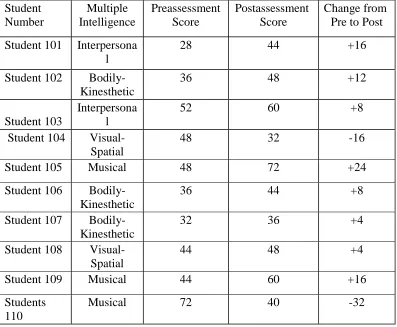
literacy curriculum. Findings included an overall increase in assessment scores among
80% of the student participants who received arts-based interventions. From the study’s
findings, the participant-researcher, along with the administration and teaching team,
designed an action plan and shared reflections regarding arts-based curricular integration.
The action plan focused on implementing arts based literacy interventions to all 5th grade
Table of Contents
Abstract ... iii
Chapter 1: Introduction to Arts Integration Action Study ...1
Introduction ...1
Problem Statement ...3
Statement of Purpose ...4
Rationale ...5
Conceptual Framework ...7
Participants ...8
Research Question ...10
Sources of Data Collection ...10
Chapter 2: Literature Review of Current Arts Integration Movement ...11
Introduction ...11
STEAM ...11
Purpose Statement ...13
Problem Statement ...13
Research Question ...14
Evolution and Importance of Question ...14
Importance of Literature Review ...15
Methodology ...16
Participants ...17
Theory ...18
History ...30
Key Terms ...33
Chapter 3: Methodology ...35
Introduction ...35
Background ...35
Purpose of the Study ...36
Statement of the Problem Practice ...37
Researcher Objectives ...37
Research Design ...38
Variables ...38
Quantitative Purpose Statement ...38
Quantitative Research Question ...39
Hypothesis ...39
Chapter 4: Findings and Interpretation ...40
Introduction ...40
Problem of Practice ...40
Justification of Problem of Practice ...41
Research Question ...41
Overview of Methodology ...42
Findings of the Study ...43
Conclusion ...48
Chapter 5: Summary and Discussion ...50
Introduction ...50
Focus of the Study ...50
Overview of the Study ...51
Summary of the Study ...52
Discussion of Major Points ...54
Key Questions ...57
Action Plan: Implications of the Findings ...59
Suggestions for Future Research ...61
Educational Change ...62
Conclusion ...63
References ...65
Appendix A: State ELA Testing Results 2016 (Schoolwide) ...71
Appendix B: Reading Interest Survey ...72
Appendix C: Multiple Intelligence Survey ...73
Appendix D: Data Collection Form ...76
Appendix E: Researcher Project/Study Information Sheet ...77
Appendix F: Parent Permission Form ...78
Chapter 1: Introduction to Arts Integration Action Study
Introduction
Chapter One gives an introduction to the present action research study. The
chapter will provide an introduction to arts integration and literacy achievement. The
chapter also discusses the problem statement, statement of purpose, and rationale behind
the present action research. The chapter will offer a brief introduction to the study, the
background for the study, the participants, the question focus for the study, and the
method by which the study was completed.
As teachers, we are always looking for unique ways to reach our students.
Students today live in a world where there are many technological advances occurring on
a daily basis. With such advances, students are exposed to many different things and can
obtain information instantly. Students “live in a world enveloped by technologies and
use technologies in their daily life” (Hsin, Li, & Tsai, 2014, p. 85). Students also have
many talents and abilities that teachers can use to their advantage when it comes to
educating students. Teachers must be able to tap into these abilities to serve as a
motivational tool for their learning. Today’s students have different learning styles that
require teachers to make accommodations to fit the students’ needs. One way to achieve
this is through incorporating arts into the classroom, which allows students to use their
natural talents and abilities to demonstrate their learning and understanding of content
information, have choice in how they demonstrate their learning, take ownership of their
creating a differentiation of instruction to meet the needs of the diverse group of learners
in today’s classrooms. Over the years, many different programs have entered into the
education field. One of the most recent movements in education is the incorporation of
arts in the content area classroom setting (Burnaford, Brown, Doherty, & McLaughlin,
2007). Our school recently made the move to bring more arts-based instruction into the
content classroom, instead of only relegating such instruction to the related arts
classrooms. Teachers were given the opportunity to attend preparation courses to learn
how to effectively incorporate arts into the classroom to help with student achievement.
This preparation not only allowed teachers to become familiar with the background of
arts integration and how to effectively develop lessons that reached the students’ artistic
abilities and engaged with multiple types of intelligence, but it also helped with their
understanding of ideas and concepts being taught in the content area classroom. The
implementation of arts integration can be beneficial for students because it allows for a
positive and safe classroom environment where all students are actively engaged, can
stimulate students’ thinking by allowing for opportunities for creativity and critical
thinking, and can provide a variety of ways to learn (Appel, 2006).
Whether integrating arts-based instruction or making other changes,
implementing a new curriculum or adding to the current curriculum can be overwhelming
for educators; however, effective school leaders who have dedicated people contributing
to such efforts can make a great difference amid such changes. School leaders are people
who allow other people to use their strengths, talents, and abilities for the betterment of
the school (Wallace Foundation, 2013). While the school principal is ultimately
possess leadership qualities and give school faculty the opportunity to take on leadership
roles. Effective school leaders build the leadership skills of those around them to help
them become effective school leaders as well. According to the Wallace Foundation
(2013), some characteristics of effective leaders within the school setting include people
who create and shape a vision for all students to be academically successful, create a
climate and culture that is hospitable to education, grow and develop leadership skills in
others, improve the quality of instruction within classrooms, and manage the processes
needed to foster school improvement. These characteristics help leaders move their
schools in positive directions to help with the improvement of student achievement. The
implementation of a program or change in curriculum can be a daunting task (Wallace
Foundation, 2013), but effective school leaders can implement the changes needed to
benefit their students. In the case of the presented study, the implementation of arts in the
curriculum was a change that required strong leadership and support to effectively
implement this shift for the benefit of the students.
Problem Statement
The ability to read and comprehend are both essential skills for people to be
successful and productive citizens in today’s society. Bruner (2009) focused not only on
the importance of reading but also on students’ lack of interest, motivation, and ability to
read, which can greatly affect students’ literacy achievement. Every aspect of life
requires reading as well as being able to understand and comprehend what has been read.
Not being able to read is certainly problematic, but being able to read yet neither
Unfortunately, according to Bruner, many students seem disinterested in reading, but
often that occurs because of the kinds of reading that students are asked to do. Often,
teachers pass out or assign reading assignments while students sit “discouraged, less than
enthusiastic, and bored” (Bruner, 2009, p. 32). To students in this situation, reading can
be seen as a tedious task that requires them to do something they do not like rather than
do something for pleasure. With the current implementation of arts integration in many
schools, many teachers are using arts-based lessons to bring the passion for reading back
to students.
Statement of Purpose
No longer do students learn simply from sitting at a desk listening to the teacher
lecture on different topics. No longer do students learn from participating in lessons
where the teacher is the primary person doing the work and students are watching and
observing. Students today are more hands-on learners, and they enjoy learning materials
that employ methods that are comfortable for them. Howard Gardner’s (2011) ideas on
multiple intelligence suggested that individuals pull from different forms of intelligence.
Gardner studied human cognition and human intelligence, as it relates to a person’s
capabilities and how they demonstrate those abilities (“Howard Gardner’s Theory of
Multiple Intelligence,” n.d.). Morgan (1992) discussed Gardner’s work and his concept
known as “multiple intelligence,” which discussed seven different ways that students
learn: visual-spatial, bodily-kinesthetic, musical, interpersonal, intrapersonal, linguistic,
and logical-mathematical. Morgan stated that students learn best through at least one of
With students learning in so many different ways, teachers must understand the different
methods of learning and work to develop lessons and activities that reach the different
learning needs and methods of students. Considering Gardner and Morgan’s work, arts
integration is important because, if implemented correctly, it can motivate reluctant
readers and help increase student achievement by giving students alternatives and choices
regarding how to display their understanding. Furthermore, it allows for more student
interaction within the classroom and during lessons, which helps to keep students
engaged in the lesson. With students possessing such diverse learning styles, it is
important that teachers find different ways to reach all students. By incorporating the arts
into the classroom curriculum, students can have alternative methods to demonstrate
learning, and it allows them to use their strengths to display their understanding.
The purpose of this study was to examine the effect of arts-based instruction on
student literacy achievement. By incorporating arts-based instruction through reading
interventions, the hope is to increase student achievement through engaging, rigorous,
and innovative instruction and activities. This study focused on the effective
implementation of arts-based lessons and activities within reading interventions and the
effect of these alternative lessons and activities on student reading achievement.
Rationale
Art can act as a universal language for students who cannot yet read, who may be
emergent readers, or may be struggling with proficiency. Arts-based instruction can be a
step toward using an alternative method to help students learn the necessary material.
these students to help with reading proficiency and achievement. With my school’s
current move from being a STEM school to being a STEAM school, the school
leadership emphasized incorporating more arts into the content area curriculum to help
with student engagement and achievement. I became interested in finding ways to
effectively incorporate the arts into my reading class in the hopes of viewing how
effective arts-based lessons and opportunities could be for my students. I began to think
about integrating arts into the ELA classroom and how it would be beneficial for my
students. I then made the decision to learn more about arts integration and how its
implementation could effectively help my students with reading proficiency and
achievement.
After reviewing and understanding the importance of including arts in the content
area curriculum, the focus of my study is on the effect of arts integration on reading
proficiency. What role can integrating arts play in helping students with their reading
proficiency? Reading proficiency involves many complex components. Students have to
be able to decode and read words and then work to develop an understanding of what
they have read (McCarty, 2007). Because reading contains so many steps and complex
components, students have to be able to be critical thinkers, and including the arts in the
learning process allows the development of critical thinking skills. The inclusion of the
arts allows students to move beyond the recall and memorization stages of learning
(Gullatt, 2008). Students are able to develop a deeper understanding of content by having
to complete projects or activities rather than just repeating learned information.
Furthermore, arts incorporation can serve as a motivating concept when it comes to
hands-on learning process. It also gives them a chance to showcase their natural abilities and
talents and can serve as an alternative to traditional assignments or assessments.
Arts-based literacy instruction offers students many opportunities to display their
learning via alternative methods. It also helps to make literature more meaningful for
students. As discussed by Lynch (2007), the arts allow students to use their bodies to
express their learning, as they use their “hands, bodies, and voices in meaningful ways”
(p. 36). Additionally, when dealing with literature, students are able to demonstrate their
learning via different methods. Gullatt (2008) described multiple ways to involve arts
within a reading classroom, including asking students to act out scenes from the plot of a
story, create visuals to display a story’s setting, or use music to describe the tone or mood
of a story. While these types of activities bring in concepts from the arts, students must
be able to comprehend the text in order to complete the assignments. These types of
arts-based activities allow students to demonstrate their proficiency of the text in an
unconventional way. Arts activities can serve as “effective learning tools as students
become actively engaged in a learning project” (Gullatt, 2008, p. 18).
Conceptual Framework
For this study, my goal was to see if adding arts-based lessons and more
opportunities for students to learn material and demonstrate learning through artistic
measures would increase student achievement. Based on this goal, the study’s direction
was to have a literacy intervention group that was presented material and engaged with
artistic methods. Research by Lynch (2007) showed that arts-based literacy instruction
make literature more meaningful for students by allowing them to use their bodies to
learn and express their learning (Lynch, 2007). Gullatt (2008) suggested that allowing
students to act out scenes from the plot of the story, create visuals to display the setting,
or use music to describe the tone or mood of the story are possible ways to include arts in
a reading classroom and allow students to be active participants. By offering students
these opportunities, they are able to demonstrate learning in a way that is comfortable for
them. The arts activities can serve as “effective learning tools as students become
actively engaged in a learning project” (Gullatt, 2008, p. 18).
Participants
This study was quantitative in nature. The participants of this study were
fifth-grade students at Fairfield Magnet School for Math and Science, a rural school located
within the School District of Fairfield County. The school services grade CD4 to sixth
grade and currently enrolls approximately 350 students. The school is located in
Winnsboro, SC, which is a small, central town in Fairfield County. The study school is a
choice school within the school district. Students must apply, and are then selected by
lottery to attend the school. Students attend the school from all over the county, so a
majority of the students live in the rural, outer sections of the county. Within the school
setting, many of the students live in single-parent homes or live with relatives other than
parents. Many of the students are considered “latchkey kids” since they come from
single-parent homes and have parents who work multiple jobs or second or third shifts.
There are several after-school programs offered by the school, as well as the Boys and
Girls Club program, which offer options for parents who are unable to pick students up
related arts classes that allow students to participate in the arts when they are in
after-school care. Students can attend art, music, dance, and band classes on a weekly basis.
The school currently offers many additional opportunities for students to display their
artistic talents. The school has a band, orchestra, and drumline for the musical students.
There is a dance team for grades CD4 through grade 3 and a team for grades 4 through 6,
as well as boys’ and girls’ step teams for students interested in dance. The school also
has a co-ed chorus and a male choir for students interested in singing and a drama club
for students interested in acting. Students who are interested in visual art can join the art
club, and students who have notable artistic abilities can be a part of the honors art
program. The goal of this study is to bring in those different artistic interests and talents
and incorporate them into the classroom setting to help with student achievement.
The study consisted of 10 fifth-grade students. These students had been identified
as being below grade level in reading and in need of reading interventions based on
results from the state assessment from the previous school year and Fountas and Pinnell
testing completed at the beginning of the school year. The students in the study
completed a multiple intelligence survey (Appendix C) at the beginning of the study to
allow the researcher to have a clear understanding of the different ways in which the
student-participants learned. All participants also completed a reading proficiency pre
assessment of literacy skills. During the course of the study, the group met during the
school’s intervention period and received additional literacy instruction, which consisted
of arts-based intervention lessons and activities. Students in the study group worked on
literacy skills through art, music, dance, and movement. At the end of the study, students
effects that the arts-integrated intervention had on students’ literacy skills through pre
assessment and post assessment scores.
Research Question
What effect will the incorporation of arts-based literacy instruction within a
STEAM school have on fifth-grade student achievement?
Sources of Data Collection
For this study, state assessment scores, along with scores from the Fountas and
Pinnell reading assessment, were used to determine the participants of the study. Fountas
and Pinnell is a reading assessment that determines the reading level of students.
Students are classified at above grade level, on grade level, and below grade level based
on the results of the assessment. Students worked individually with a teacher to read a
story and answer proficiency questions to determine their reading level. After students
were selected for the study, each participant completed a multiple intelligence survey
(Appendix C) and reading interest inventory (Appendix B) to allow the
participant-researcher the opportunity to understand the different strengths of the participants, and
also the thoughts, attitudes, and interest level of each participant in terms of literacy.
Furthermore, each participant completed afifth-grade literacy skills pre assessment test.
Participants completed arts-based literacy interventions throughout the course of the
study. At the end of the study period, each participant completed the literacy skills post
Chapter 2: Literature Review of Current Arts Integration Movement
Introduction
Chapter Two of this Dissertation in Practice (DiP) is a literature review of the
current arts integration movement in American public schools and the integration of arts
in English Language Arts (ELA) and literacy. The literature involving the integration of
music, dance, drama, visual art, and music was also reviewed to theoretically ground and
historically contextualize this DiP. The identified problem of practice for this proposed
action research study focused on ELA and its place within the current movement to
incorporate arts into content area curricula. As a participant researcher and an ELA
teacher in a school that has been identified as an arts-based school, I was interested in
fifth-grade students’ reading scores and whether the integration of the arts within ELA
instruction would increase their literacy assessment scores. This action research project
took place in rural South Carolina with a population that has been identified as low
socioeconomic class status (SES), as evidenced by 86% of students who qualify for
reduced or free meals at school. This particular demographic was shown to have special
needs and issues with literacy skills.
STEAM
Over the past few years, many different programs have entered into the education
technology, engineering, arts, and mathematics. My school recently became a “STEAM
school,” which means that, while the school covers all subject areas, there is a focus on
science, technology, engineering, arts integration, and math (Yakman & Hyonyong,
2012). During the school day, students attend special classes geared towards the STEM
concepts. With the move from STEM to STEAM, there was a shift in focus to
incorporating the arts into all content area classrooms, not just the STEM-focused classes.
I was selected to attend a preparation session to become “STEAM certified,” which
means I am currently a certified STEAM teacher, having completed the preparations
necessary to ensure that I understand how to effectively incorporate STEAM concepts
into the classroom. STEAM enables classroom teachers to integrate the subject areas of
science, technology, engineering, and mathematics (STEM), but with a focus on the arts.
“Arts” are defined as the areas of music, visual art, drama, and dance, with “arts
integration” focusing on the arts being actively taught in conjunction with core content
subjects (Sorensen, 2010).
As an ELA teacher, I was constantly seeking ways to help my students not only
develop a passion for reading, but also to fully comprehend what they were reading. I am
also constantly looking for ways to help students who are struggling with reading
proficiency, offering them strategies that can help with their proficiency. In my
experience, hands-on learning and students’ active participation in the learning process
are not only enjoyable for students but also help students with their learning and
achievement. This action research project enabled me to do additional research on arts
integration and how to use it to help my students with their reading proficiency and
to include music, physical education, visual art, and drama in my ELA reading lessons,
allowing for reluctant or disinterested students in ELA classes to have an opportunity to
connect reading concepts with their different artistic talents and abilities.
Purpose Statement
The purpose of the present action research study is to examine the effect of
arts-based interventions on literacy skills among fifth-grade students in a STEAM school
located in South Carolina. Based on results from the South Carolina state assessment,
students in the study showed a weakness in literacy skills. The study worked with
students who were shown to be below grade level in reading based on the results of the
state assessment as well as the Fountas and Pinnell reading assessment administered at
the beginning of the year. Student participants received arts-focused reading
interventions. By exposing these fifth-grade students to literacy through the use of
arts-based instruction, the researcher sought to engage students in learning with the goal of
increasing students’ literacy assessment scores.
Problem Statement
The identified problem of practice for this DiP involved the integration of an
arts-based literacy program at Fairfield School for Math & Science (FMSMS), a STEAM
school in South Carolina. Fairfield Magnet School was recently labeled a STEAM
school, with a major focus on incorporating the arts into content area classrooms. As a
teacher in the school, I conducted an action research project to determine if the
higher score on the benchmark assessment. In particular, the fifth-grade students at this
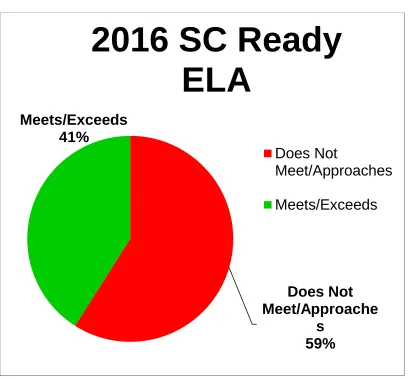
school have not been meeting the basic skills on the state-mandated standardized test for
literacy, as evidenced by the state’s standardized test records (Appendix A). Because of
such results, the school developed a goal to find strategies and interventions that could be
used to increase student achievement. One of the strategies that was suggested was the
integration of the arts into content area classroom lessons. For this study, the focus was
on integrating arts into the literacy classroom. The hope was that by integrating arts into
literacy lessons, there would be an increase for these fifth-grade students’ scores on the
literacy assessment.
Research Question
The purpose statement and the problem statement for this DiP, as stated above,
has given rise to the following research question: What effect will the incorporation of
arts-based literacy instruction within a STEAM school have on fifth-grade student
achievement?
Evolution and Importance of Question
As a fifth-grade ELA teacher, I was often faced with the task of finding ways to
push reluctant readers to achieve literacy goals. Since our school evolved from a STEM
to a STEAM school, incorporating arts into the content area curricula throughout the
school, I became interested in finding ways to effectively incorporate the arts into ELA
and literacy instruction with the hope of finding how effective these arts-based lessons
and activities could be for students. I had the opportunity to go through the STEAM
to incorporate arts into the current STEM curriculum. We completed many activities that
integrated art into the curriculum, but many of the activities were based in math or
science. Because I teach ELA, I began to think about how integrating arts into ELA
would benefit my students. I decided that I wanted to know more about arts integration
and how implementing this concept effectively could help with student achievement.
After considering this issue and developing this question, I believe that the
concept is important because, if implemented correctly, this concept can work to motivate
reluctant readers and increase student achievement by actively engaging students during
literacy lessons.
Importance of Literature Review
A literature review is a report of the studies related to the selected topic of study
that summarizes, evaluates, and describes the found literature (Boote & Beile, 2005).
Reviewing literature allows the researcher to gain a great deal of knowledge by reading
and studying literature related to the topic of study, increasing the researcher’s
understanding of the topic and of pertinent information related to the topic. A literature
review gives the researcher the opportunity to review other studies that have already been
completed to gain information to help with the current research and study being
completed. A literature review ensures that the researcher is aware of what is currently
happening or has occurred in the field, serves as a foundation for the work the researcher
is proposing, shows the significance of the work, and will lead the researcher into new
Methodology
In order to effectively answer the research questions, the present action research
study was a quantitative research design study. The study focused on the background and
theories of arts integration and its role in student engagement and achievement as well as
how arts integration in a reading classroom affects the reading achievement of students
within that classroom setting. The quantitative design focused on comparing the pre
assessment and post assessment scores of students who received arts-based literacy
interventions.
Research Site
The present action research study was quantitative in nature. The participants of
this study were fifth-grade students at Fairfield Magnet School for Math and Science
(FMSMS), which is located in the School District of Fairfield County in the state of
South Carolina. FMSMS services grades CD4 to sixth grade and currently enrolls
approximately 350 students. FMSMS is located in Winnsboro, SC, which is a small,
rural town in Fairfield County. FMSMS is a magnet school within the school district.
Typically, students must apply and are chosen by lottery to attend the school. Recently,
the acceptance criteria was changed, and all students who applied were admitted to the
school. Because the school is a magnet school, students have to maintain a “C” average
in content area classes in order to remain a student at the school. If students drop below a
“C” average, the first time, students are placed on a one-year probationary period. At the
end of the probationary period, if the student still has below a “C” average, the student
Fairfield County is predominantly rural, and within the school setting, many of
the students live in single-parent homes or live with relatives other than parents. Many of
the students are considered “latchkey” kids, since they come from single-parent/guardian
homes and have parents or guardians who work multiple jobs. There are several
after-school programs offered by the after-school, as well as a Boys and Girls Club, which provide
options for parents and guardians who do not have a places for their children to go after
school.
FMSMS currently offers many opportunities for students to display their artistic
and, in particular, their musical, dance, and drama talents. The school has band,
orchestra, and drumline for students interested in instrumental music. There is a dance
team for grades CD4 through grade 3 and another team for grades 4 through 6, as well as
step teams for students interested in dance. Additionally, the school also has a co-ed
chorus and a male choir for students who are interested in choral music and a drama club
for students who are interested in acting.
Participants
The present quantitative action research study consisted of 10 fifth-grade students.
These students were shown to be below grade level in reading and did not meet literacy
skills based on the South Carolina state assessment (see Appendix A). All students also
were shown to be below grade level in reading based on the beginning-of-year Fountas
and Pinnell reading assessment scores. At the beginning of the study, students completed
multiple intelligence and learning styles surveys (see surveys in Appendix B and
weaknesses and preferred learning styles. Students also completed a literacy pre
assessment. Students received arts-based interventions during the study. At the end of
the study, students completed a post assessment measuring literacy.
Theory
Within our school, there have been many discussions recently about the
importance of visual arts in schools. When schools or districts are faced with major
budget cuts, visual arts programs are often among the first programs downsized or
eliminated. Many visual arts programs have already fallen victim to recent budgetary
issues in schools and districts; however, visual arts programs play an essential role in
school systems and their students. Miller and Hopper (2010) stated that “an art based
environment helps to enhance creativity, independent thinking, cognitive development,
and social skills” (p. 3). Being a participant and being exposed to visual arts within the
school environment allows students to be exposed to different opportunities to develop
skills to enhance their thinking, which can crossover into the classroom and other
academic pursuits.
How can visual arts affect literacy proficiency and achievement? McCarty (2007)
stated that visual arts incorporate all the types of intelligence theorized by Gardner, which
gives students multiple opportunities to develop their cognitive abilities and demonstrate
their learning. While it is widely acknowledged that students have different learning
styles and multiple types of intelligence, our current education system often forces
students to learn in a singular way and assesses students based on one kind of intelligence
learn in environments that muffle their abilities and limit their opportunities to develop
such talents to enhance their learning. Students who have these abilities or the types of
intelligence that go unrecognized within the current system are often left behind, as
teachers and curricula fail to tap into and engage these skills and talents (McCarty, 2007).
Even though the visual arts can play a major role in students’ learning and
achievement, many schools and districts have not gotten on board with the benefits of
visual arts and their effect on learning, and with the current age of accountability in
schools, many people are reluctant to move to an integrated arts classroom or program.
Mishook and Kornhaber (2006) stated that many in the education field feel pressure to
ensure that their students are “test ready” and do not feel that they have the instructional
time or resources to incorporate arts, instead feeling that they must focus completely on
the tested areas. As Miller and Hopper (2010) discussed, many schools have not
incorporated the arts into their curricula and, for schools that do have an integrated arts
curriculum, the testing and assessments often do not reflect these curricular changes.
State and end-of-year assessments are still in the format of paper-and-pencil or
computerized tests. With these types of assessments, students with different learning
styles and abilities are not able to use their strengths to display what they know. With the
pressure that is placed on schools and teachers when it comes to test results, many
schools and teachers have overlooked the importance and benefits of arts integration in
exchange for ensuring that students are adequately prepared for these paper-and-pencil
and computerized tests.
When we think of the different content areas taught in school, one of the difficult
reading, while others struggle with proficiency. As students get older, they realize that
they are no longer learning to read but have moved to the stage where they are reading to
learn; at this stage, their reading is important for proficiency, not only in reading class but
also in all content areas (DiCicco & Jordan, 2012). The quality of student learning
becomes essential to their ability to read and understand what they are and have read
(Miller & Hopper, 2010). Reading and reading proficiency become extremely imperative
as the ability to read and comprehend becomes essential to understanding information
and being successful in all content area subjects.
As studies increasingly showed the ways in which arts integration improved
student learning and comprehension in multiple content areas, schools began to shift from
a STEM to STEAM focus. Research has shown that arts integration allows students to
process learning in ways that help them deepen their learning and improve their
understanding (Hoyt, 1992). Different forms of art and expression allow students to
display their learning and understanding of the content and offers teachers and students
an alternative to the normal paper-and-pencil assessments to which so many students are
accustomed.
Along with reviewing literature regarding incorporating arts into school curricula,
for this study, it is important to consider the effects of arts integration on reading
proficiency, in particular. Reading proficiency involves many complex components.
According to McCarty (2007), students have to be able to decode and read words, then
work to develop an understanding of what they have read, and because of this, students
have to be able to be critical thinkers. The arts offer students the opportunity to develop
process allows students to move beyond the recall and memorization stages of learning;
thus, students develop a deeper understanding of content by having to complete projects
or activities rather than just repeating learned information. Gullat further suggested that
the incorporation of the arts into school curricula can serve as a motivating factor for
students when it comes to instruction and learning. Including arts in the classroom
allows students to be more hands-on in the learning process and offers them a chance to
showcase their abilities and talents, while providing alternatives to traditional
assignments and assessments.
What is arts-based integration? Arts-based integration is defined as “an approach
to teaching in which students construct and demonstrate understanding through an art
form. Students engage in a creative process which connects an art form and another
subject area and meets evolving objectives in both” (Silverstein & Layne, 2010, p. 1.).
Arts integration works to create a blending of content area skills with skills from the arts
to enhance learning and demonstrate acquired knowledge (“Why Arts Integration”,
2008).
Arts integration is more than just adding art into a few activities; instead, it offers
a new approach to teaching that requires teachers to fully understand how arts integration
can benefit students. Silverstein and Layne (2010) described this shift as changing how
something is taught instead of changing what is taught. Many teachers have different
approaches to teaching, from teacher-centered approaches to student-centered
approaches; thus, when arts integration is considered as another approach to teaching, it
As suggested by Silverstein and Layne (2010), the arts integration approach to
teaching works to ensure that the learning process for students is active, collaborative,
experimental, problem-solving, and reflective. Arts integration allows students to bring
together all of these concepts within the learning process. The ideas and concepts of arts
integration create a classroom environment in which learning is important and risks are
welcomed and students are challenged to draw on their existing skills and prior
knowledge, encounter authentic problems using hands-on, active learning, work together
to enrich the learning and understanding of others, and engage in reflection about their
learning (Silverstein & Layne, 2010).
Arts-based literacy instruction offers students many opportunities to display their
learning via alternative methods and makes literature more meaningful for students. As
noted in the previous chapter, Lynch (2007) noted that with arts-based literacy
instruction, students are able to use their “hands, bodies, and voices in meaningful ways”
(p. 36) to express their learning. In terms of studying literature, Gullatt (2008) described
how asking students to act out scenes from the plot of a story, create visuals to display a
story’s setting, or use music to describe the tone or mood of a story are possible ways to
involve arts within a reading classroom. These types of activities bring in concepts from
the arts, but in order to complete the activities, students have to comprehend the text.
These types of arts-based activities allow students to demonstrate their understanding of
the text in unconventional ways. Thus, arts activities can serve as “effective learning
tools as students become actively engaged in a learning project” (Gullatt, 2008, p. 18).
When people hear or see arts integration, they may think of drawing or singing in
administrators, and students must engage with the arts in meaningful ways. According to
Cornett (2006), while the arts can be seen as fun for students, meaningful integration
occurs when the classroom becomes a place of diversity, creative problem-solving,
risk-taking, experimentation, and learning (Cornett, 2006). Effective arts integration can
change the climate and culture of a classroom. Lynch (2007) expanded on Cornett’s
sentiments, noting that arts integration allows content to be viewed from different
perspectives, creates a safe learning environment where risk-taking is welcomed, and
demonstrates that learning can be enjoyable.
Why should schools and teachers consider arts integration in the classroom?
According to the article “Why Arts Integration” (2008), arts integration is a highly
effective approach to engaging and motivating students and can serve as a support to help
with the improvement of academic achievement and social behavior. Students will also
be exposed to an array of arts skills, which can serve as an entry point to introducing
content area skills. Furthermore, arts integration also works to enliven the teaching and
learning processes for students and teachers by allowing opportunities for imagination
and creativity to flow (“Why Arts Integration”, 2008). Additionally, as Sloan (2009)
stated, arts integration allows students to develop their creativity and problem-solving
skills to prepare them for the future jobs and the world. More specifically, Crawford
(2004) discussed the following six reasons why schools should consider arts integration
and why it is beneficial for students: The arts (1) make content information more
accessible, (2) encourage joyful and active learning, (3) help students create personal
connections to the content, (4) encourage students to develop a greater understanding of
collaborative skills. Thus, arts integration helps to develop well-rounded students by
challenging them to use artistic skills to understand content and demonstrate what they
have learned. Furthermore, according to Rinne, Gregory, Yarmolinskaya, and Hardiman
(2011), arts integration offers a highly effective method for students to retain taught
content by naturally encouraging them to participate in activities that they are likely to
enjoy and engage in, thus activating long-term memory.
Importantly, the benefits of arts integration extend beyond a single classroom; as
Ruppert (2006) stated, the skills that students learn through arts integration can be
transferred to other aspects of the student’s life as well. Ruppert discussed the “ABCs”
of the benefits of arts integration: academics, basic, and comprehensive. In terms of
academics, the integration of arts in content areas helps students develop a variety of
academic skills, including skills in reading, language, and mathematics. Students are also
able to develop basic thinking and cognitive skills. In addition, the reasoning, perception,
imagination, and problem-solving skills that come from arts integration can help students
both academically and in real-world situations and can contribute to the development of
complete and well-rounded individuals (Ruppert, 2006).
The literature makes clear the benefits of incorporating the arts in school
curricula, but as previously stated, the arts must be correctly integrated in order to be
effective. Gullatt (2008) states that there are four styles of arts integration in the
classroom setting—the subservient approach, the co-equal cognitive integration
approach, the affective approach, and the social integration approach. The subservient
approach includes educators who use arts to “spice up” their lessons. Using the co-equal
students to use higher level thinking skills to gain a full understanding of the content
covered. With the affective approach, educators do not simply include the arts as a
complement to the curriculum, but instead, they fully immerse students in the arts along
with the curriculum. Through the social integration approach, educators focus on
performances, including school performances on content learned in class (Gullatt, 2008).
Not only is arts integration beneficial for students, but it can also be beneficial for
teachers. Arts integration allows regular content teachers and arts teachers to collaborate
to make meaningful experiences for their students. It allows classroom teachers to
incorporate arts skills in their content classes and arts teachers to incorporate content
material into arts classes (Lynch, 2007). With this incorporation across classrooms,
students can gain a greater understanding of how different subjects work together instead
of just thinking of each individual subject as its own entity.
In order to effectively transition into an effective arts-integrated school, there are
many things that must be taking into consideration. According to Morris (2009), the first
thing that must be done is to get everyone in the school on board with the transition and
implementation and ensure that they are willing to put in the time and effort to effectively
make the transition. Second, Morris stated that there should be a well-developed plan for
the integration. School leaders, faculty, and staff must ask themselves, “What will be the
focus of the arts integration?” In order to be effective, there has to be a plan. Third, there
must be professional development and resources provided for teachers in order for them
to be properly trained and understand the concept of integrating arts into the curriculum
(Morris, 2009). It is imperative that teachers receive the proper preparation in order to
the shift to an arts-integrated curriculum will not be as effective as it could be. Finally, a
school that is moving toward arts integration must have an administrator who serves as an
instructional leader and provides the support and resources that teachers need (Morris,
2009). The instructional leader of the school must realize that arts integration is not a
simple process and must take into consideration the stress and pressure it may place on
teachers, especially since they might need additional assistance or support to create
effective arts integrated classrooms.
Harloff (2011) completed a study that examined the effect of arts instruction on
student achievement in ELA and math. The students used the integration of four forms of
art: theater, dance, visual arts, and music and integrated these art forms into content
classrooms. The study evaluated the effect of arts integration on fourth-grade urban
students and their achievement in math and ELA and also focused on which art form had
the highest impact on student achievement. ELA and math test scores were used as
measurements for the study, and the study consisted of 39 elementary schools.
Fourth-grade students in nine elementary schools had arts integration that consisted of visual
arts, music, and one other art form. Students in two schools received dance integration
and those in another two schools incorporated music, while three schools integrated
visual art as their main art form focus. The remainder of the schools were considered the
control group, having a visual arts and music teacher but no co-planned units or
integration of the arts into the classroom content. The study concluded that arts
integration had a positive effect on student achievement in ELA and mathematics. The
integration of music had the greatest results in ELA, while visual arts integration had the
the arts into content area classrooms positively affects students’ achievement in ELA and
mathematics. It was also noted that while all forms of arts integration had a positive
effect on student achievement, some art forms were more beneficial than others, and
some art forms were more beneficial to certain content areas than others.
Bellisario, Donovan, and Prendergast (2013) also conducted research on the
relevance of arts integration in the classroom setting, based on the perspectives of
teachers. In the project, researchers used a mixed methods approach, beginning with a
teacher survey, to gather teachers’ thoughts and views on the relevance and current
practice of arts integration. Those surveyed were teachers who had been through Lesley
University's Integrated Teaching through the Arts Master's program. After the surveys
were analyzed, 11 focus groups were developed to study the themes that were noted as a
result of survey analysis. Researchers then used the focus groups to identify and observe
nine teachers and classrooms. The project provided many findings as a result of the
observations of teachers and students. First, the research showed that arts integration can
lead to deep learning, an increase in student ownership, and more engagement with the
content. Second, the results showed that arts integration allowed teachers to use a variety
of strategies for assessment and student expression of understanding. It also showed that
arts integration creates opportunities for learning to be relevant to students, for students to
engage with activities that are creative and innovative, and for teachers to experience
renewed commitment to their work. Thus, the project provided beneficial information on
the positive effects of arts integration beyond student experiences.
The Integrated Teaching Through the Arts program through Lesley University is
that the inclusion of the arts will increase the use of innovative teaching practices, which
are needed for diverse learners within classroom settings today (Bellisario, Donovan, and
Prendergast, 2013). Teachers who participated in the surveys and observations noted that
one of the important things they learned about arts integration was understanding theories
regarding learning styles and multiple intelligence and recognizing the different learning
styles and intelligence of the students. Understanding these learning styles and
intelligence helped the teachers to fully comprehend the diverse ways that students learn
and the artistic strengths they may have; furthermore, such understanding helped with the
planning and implementing of activities that worked with the different learning styles and
the multiple intelligence present in the classroom. As these teachers realized, when an
educator truly understands this information about their students, they can develop a
classroom climate and culture in which students are engaged and active in the learning
process (Bellisario, Donovan, and Prendergast, 2013).
While academic content and skills are important for students’ success, in the 21st
century, creativity, collaboration, and technological proficiency are important skills that
students must possess. Arts integration not only enhances students’ knowledge and skills
regarding particular classroom content and academic subjects, but it also fosters the
creativity, critical thinking, collaboration, and broad perspectives that are needed for
success in our technologically and globally diverse society (Bellisario, Donovan, and
Prendergast, 2013).
The integration of arts affects both students and teachers. If they want to
effectively integrate the arts into their classrooms, educators have to examine their
Teachers in the Integrated Teaching Through the Arts research study stated that the
integration of the arts helped them to become rejuvenated and to reconnect to their
passion for teaching. Teachers also stated that receiving professional development
allowed them to gain a greater understanding and appreciation for the arts and arts
integration, which assisted them in more easily incorporating the arts into their curricula
and classrooms.
As we move further into the 21st century, it is imperative that students are
prepared for the world and the jobs that will be available to them. The STEM education
movement, which promotes science, technology, engineering, and mathematics, has been
identified as a national reform in education to help prepare students for the 21st century
and its globalized society (Yakman & Hyonyong, 2012). Yet, while science, technology,
engineering and mathematics are important skills, educators and researchers are
increasingly realizing that students must also know how to be creative, critical thinkers,
and team players. With its focus on science, technology, engineering, mathematics, and
the arts, the STEAM education movement seeks to educate the whole learner and is
closely related to constructivist theory, demonstrating the primary components of
constructivism, including engagement, understanding, performance, reflection, and
commitment (Yakman & Hyonyong, 2012). STEAM education has been promoted by
Georgette Yakman, who was an educator and now serves as a researcher and studies the
integration of arts in school curricula, traveling to different schools and districts
conducting preparation sessions on STEAM implementation (Lodaya, 2013). Yakman
allows the education, industry, and governmental fields, as well as the community, to
work together in the education of children (Lodaya, 2013).
Kamen and Maeda (2012) stated that STEM education is critical for preparing
students to be productive in today’s society, but STEM is missing the “secret sauce,”
which is creativity. As an answer to that, STEAM education builds off of the STEM
curriculum that has been implemented in many schools by adding opportunities for
students to be creative, collaborate, and display their natural talents and abilities. The
interdisciplinary approach to STEAM education helps students develop unique
connections to content and increases students’ interest in learning (Lodaya 2013).
History
Arts education has been a part of public education for many years. The concept
of arts in the school was introduced as preparation for employment in industrial fields
through the teaching of drawing and drafting, though later it became associated with
cultural activities (Heilig, Cole, & Aguilar, 2010). As the arts moved from a more
upper-class activity to one that included middle-upper-class citizens, arts education became popular
within school settings. During the Great Depression and World War II, the prevalence of
arts education began to decline due to many districts having to cut budgets from lack of
funding, causing many schools to cut arts programs altogether (Heilig, Cole, & Aguilar,
2010). With the improvement of the economy during the 1950s, arts education began to
grow, and many arts programs received the funding they had lost during the economic
hardships of the previous decades. Arts programs continued to grow and flourish within
schools and districts. With the installment of the No Child Left Behind Act of 2001, the
mathematics, many feared for the viability of arts education programs within schools
(Heilig, Cole, & Aguilar, 2010). With so much of focus on language arts and
mathematics, what room would be left for arts education? What role could arts education
play in schools? According to Heilig, Cole, and Aguilar (2010), the era of accountability
marked the “culmination of a movement from arts education that is driven solely by local
pedagogical and curricular discourse to an environment in which educational standards
defined at the state and federal levels influence the prominence and presence of the arts in
school curriculum” (p. 139).
In the early 1900s, John Dewey began working on what later became known as
progressive education, experimenting with a new approach to learning and developing a
theory that explained the importance of authentic education, which gives students the
opportunity to grow mentally, socially, and physically and allows them to have
opportunities to express their creativity and become critical thinkers (Heilig, Cole, &
Aguilar, 2010). Dewey was seen as a valuable representative of pedagogy and was
highly regarded in the field of education (Ilica, 2016). Dewey believed that “every person
is capable of being an artist, living an artful life of social interaction that benefits and
thereby beautifies the world” (Goldblatt, 2006, p. 12). Dewey was a firm believer that
the arts are an important part of people's lives and should be embraced, even in the school
setting. From Dewey’s perspective, art exemplifies and promotes the qualities and
characteristics that children should develop in order to be functional in society. As
Heilig, Cole, and Aguilar (2010) noted, “Dewey believed that arts are indeed experience,
and that access to arts education opens processes of inquiry that expand a child’s
Dewey saw art and artistic opportunities as experiences that allow for inquiry,
looking for and finding meanings, and developing connections (Goldblatt, 2006). These
experiences allow students to use thinking skills through exploration and making
connections. As Goldblatt (2006) stated, the role of the school is to strive to make
improvements and work toward the advancement of the welfare of society, helping
students to understand the “development of a larger life” (p. 22). A way for students to
develop these concepts is through art curricula and art integration, which fosters moral,
intellectual, and social skills and abilities.
Howard Gardner developed a theory known as the Multiple Intelligence Theory in
1983, which suggested that there are eight methods of learning and different ways that
people interact with information and situations (Harloff, 2011). Gardner suggested that
there are multiple intelligence that are activated when information is presented and that
help people learn. These intelligence include musical, linguistic, mathematical,
visual-spatial, bodily-kinesthetic, interpersonal, intrapersonal, and naturalist intelligence, but
there may be many others that have not been identified (Harloff, 2011). Gardner’s theory
focused the different strengths and intelligence that people use when learning information
and noted that these strengths and intelligence should be taken into consideration when
developing curricula, planning instructions and lessons, selecting coursework and
activities, and developing assessments (“Howard Gardner’s Theory of Multiple
Intelligence,” n.d.).
This literature review focused on reviewing various literature on arts integration
and its effect on student achievement. The review consisted of different articles and
on student achievement. This literature review allowed for the review of a variety of
studies on arts integration with a goal of providing a greater understanding of the effects
that the arts and the integration of arts can have on students.
Key Terms
Arts integration. An approach to teaching in which students create and
demonstrate an understanding of learning through an art form that engages students in the
creative process and connects art to other subjects and works to evolve the objectives of
both (Silverstein & Layne, 2010)
Bodily-kinesthetic intelligence. Intelligence that uses one’s body to solve
problems and to demonstrate learning and understanding through bodily movements
(“Howard Gardner’s Theory of Multiple Intelligence,” n.d.).
Fountas and Pinnell. Individual reading assessment given to students to
determine reading level and needed instruction
Interpersonal intelligence. Intelligence that uses one’s capabilities to understand
the motivations, intentions, and desires of others; those who are strong in interpersonal
intelligence are often able to work well with others (“Howard Gardner’s Theory of
Multiple Intelligence,” n.d.)
Intrapersonal intelligence. Intelligence in which one works to understand
oneself, develop an understanding of one’s own attitudes, motivations, and fears, and to
recognize how they play into the learning process (“Howard Gardner’s Theory of
Linguistic intelligence. Intelligence that involves written and spoken language,
with students being able to express themselves either through written or oral
opportunities (“Howard Gardner’s Theory of Multiple Intelligence,” n.d.).
Logical-mathematical intelligence. The ability to analyze problems logically
and carry out mathematical problems (“Howard Gardner’s Theory of Multiple
Intelligence,” n.d.).
Multiple Intelligence Theory. A theory developed by Howard Gardner that
stated that individuals draw on different natural intelligence to solve problems in their
learning (“Howard Gardner’s Theory of Multiple Intelligence,” n.d.)
Musical intelligence. Using the performance, composition, and musical
appreciation to enhance and demonstrate learning (“Howard Gardner’s Theory of
Multiple Intelligence,” n.d.)
Spatial intelligence. The ability to recognize and use patterns (“Howard
Gardner’s Theory of Multiple Intelligence,” n.d.)
STEM. An acronym for science, technology, engineering, and mathematics; a
multidisciplinary approach to teaching and curriculum development that focuses on those
specific topics to create learning for a global society (Fioriello, 2011)
STEAM. An acronym for science, technology, engineering, arts, and
mathematics; a flexible, interdisciplinary framework that promotes a natural approach to
rigorous learning and promotes arts integration in both learning and assessment processes
Chapter 3: Methodology
Introduction
Chapter Three delineates the purpose of the study and the identified problem of
practice (PoP) as well as the research question and the research design used to investigate
an arts-based curricular intervention with fifth-grade students in English Language Arts
at Fairfield Magnet School for Math and Science (FMSMS), a school for science,
technology, engineering, art, and math (STEAM). The participant-researcher was an
ELA teacher at the school and worked with a group of fifth-grade students to study the
effects of arts-based reading interventions on student literacy achievement.
Background
Chapter Two of this dissertation in practice (DiP) focused on the current trend of
arts-based integration in American public schools. When many people in the United
States think of “arts instruction,” they focus on the artistic aspect (for example, visual arts
classes) (McCarty, 2007). However, arts integration deals with many different artistic
aspects and can include music (both vocal and instrumental), drama, dance, or
engineering. All of these artistic aspects allow students to learn and express their
learning in different ways that are comfortable to them (McCarty, 2007). Furthermore,
visual arts education incorporates multiple intelligence, which give students a variety of
demonstrating their learning (Gardner, 2000). According to McCarty (2007), students
learn differently and have different learning styles and multiple intelligence. In the
current public education system in the United States, students are forced to learn in the
same way and are assessed in a highly standardized manner. Students with diverse
artistic abilities and talents are forced to learn in environments that stifle their abilities,
and thus, they are often left behind as these gifts are not encouraged or tapped into
(McCarthy, 2007).
Purpose of the Study
The purpose of the present Action Research study was to examine the effect of
arts-based intervention on literacy skills among 10 students in a STEAM school in South
Carolina. The student-participants are fifth-grade students, ranging in age from 10 to 11
years old, at Fairfield Magnet School for Math and Science, located in Fairfield County.
Based on results from the South Carolina state assessment, the student-participants
showed a weakness in terms of literacy skills. The study worked with students who were
shown to be below grade level in reading based on the results of the state assessment as
well as the Fountas and Pinnell reading assessment given at the beginning of the school
year. The participant-researcher served as the primary researcher for the study. The
participant-researcher investigated the effect that arts intervention in the classroom
(including artistic opportunities through classroom instruction and student assessment)
had on student achievement in literacy skills and reading proficiency. The goal of the
participant-researcher was to use students’ abilities, talents, and interests to engage them
in literacy activities, with the hope of increasing student literacy achievement, and to see