University of South Carolina
Scholar Commons
Theses and Dissertations
2017
The Association between Sexual Risk Behaviors of
Latinos and HIV Knowledge in South Carolina
Danielle Nicole Sill
University of South Carolina
Follow this and additional works at:https://scholarcommons.sc.edu/etd
Part of theEpidemiology Commons
This Open Access Thesis is brought to you by Scholar Commons. It has been accepted for inclusion in Theses and Dissertations by an authorized administrator of Scholar Commons. For more information, please [email protected].
Recommended Citation
T
HEA
SSOCIATIONB
ETWEENS
EXUALR
ISKB
EHAVIORS OFL
ATINOS ANDHIV
K
NOWLEDGE INS
OUTHC
AROLINAby
Danielle Nicole Sill
Bachelor of Science Iowa State University, 2015
Submitted in Partial Fulfillment of the Requirements
For the Degree of Master of Science in Public Health in
Epidemiology
The Norman J. Arnold School of Public Health
University of South Carolina
2017
Accepted by:
Myriam Torres, Director of Thesis
Feifei Xiao, Reader
Lucy Annang Ingram, Reader
DEDICATION
I dedicate this thesis to my husband and family. None of this would have been
ACKNOWLEDGEMENTS
I am grateful for those who have helped perfect my thesis. To my committee
members, Dr. Myriam Torres, Dr. Feifei Xiao, and Dr. Lucy Annang Ingram none of this
would have been possible without your input and patience. Thanks for allowing me to
make this thesis my own and providing edits to make sure the final product was the best
it could be.
To the women in my graduate cohort, thank you for always having an open ear
and listening to any questions I had pertaining to my thesis. I am lucky to be a part of a
ABSTRACT
HIV/AIDS inordinately impacts Hispanics/Latinos, which are the fastest growing
minority group in the United States. 16,222 South Carolinians are infected with HIV,
with 70 new cases being diagnosed each month. Few studies have been conducted to
determine if HIV knowledge is associated with sexual risk behaviors in South Carolina.
Bilingual/bicultural interviewers conducted a survey of Latinos living in the Pee Dee and
Midlands regions of South Carolina. The survey consisted of questions regarding
demographic characteristics, HIV knowledge, and sexual risk behaviors. We enrolled 203
participants in which 193 were eligible for our study (97 females and 96 males). We
hypothesized that Hispanics/Latinos with high HIV knowledge would have lower odds of
participating in risky sexual behaviors. Results show the most prevalent risky sexual
behaviors were inconsistent condom use during oral and vaginal sex, as most of the study
population only had one sexual partner in the past 12 months. 87.63% of females and
92.71% of males sometimes or never wore a condom during oral sex which was
consistent with condom use during vaginal sex; 91.75% of females sometimes or never
wore a condom during vaginal sex and 83.33% of males sometimes or never wore a
condom during vaginal sex. The median HIV knowledge score of males and females was
11 out of 18 with 65.8% of the study participants having below average HIV knowledge
scores when using a dichotomized variable. Logistic regression found for every correct
answer on the HIV knowledge questionnaire, the odds of high sexual risk behavior
(OR: 0.820, OR CI: 0.684-0.982). Five HIV knowledge questions were answered
incorrectly by more than 50% of males and females with similar misconceptions found in
previous studies. Our study demonstrates a need to focus on prevalent HIV
misconceptions during development of new HIV/AIDS education programs as HIV
TABLE OF CONTENTS
DEDICATION ... iii
ACKNOWLEDGEMENTS ... iv
ABSTRACT ...v
LIST OF TABLES ... viii
CHAPTER 1:INTRODUCTION ...1
CHAPTER 2:LITERATURE REVIEW ...4
CHAPTER 3:METHODS ...14
CHAPTER 4:RESULTS ...22
CHAPTER 5:DISCUSSION ...33
REFERENCES ...38
LIST OF TABLES
Table 4.1 Socio-Demographic Characteristics by Sex in Participants 18 years and older, SABER 2014 ...27
Table 4.2 HIV Knowledge by Sex in Participants 18 years and older, SABER 2014...28
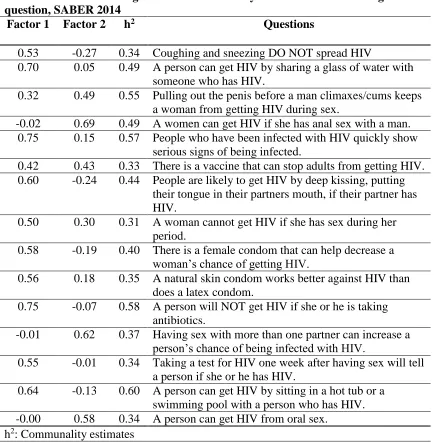
Table 4.3 Factor Loading Scores and Variability for Each HIV Knowledge Question, SABER 2014 ...29
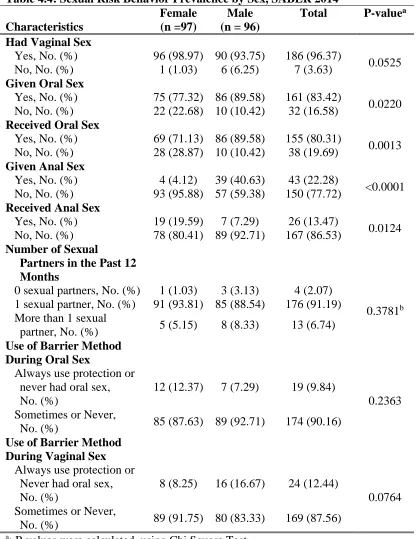
Table 4.4 Sexual Risk Behavior Prevalence by Sex, SABER 2014 ...30
Table 4.5 Association between dichotomized HIV Knowledge Score and Sexual Risk Behavior, SABER 2014 ...31
Table 4.6 Association between HIV Knowledge Score and Sexual Risk Behavior using three categories, SABER 2014 ...31
CHAPTER
1
INTRODUCTION
HIV Burden in the United States
Human Immunodeficiency Virus (HIV) currently affects 56,000 United States
citizens annually.1 HIV is a virus that attacks one’s own immune system identifying
regular cells as foreign.2 More specifically HIV attacks CD4 cells, which are T-cells used
to help fight off infection in one’s body.2 If left untreated, HIV will destroy a vast
majority of CD4 cells, leaving the body helpless against other infections and diseases.2
Over time HIV reduces the number of CD4 cells in the body which leads to the last stage
of HIV infection- Acquired Immunodeficiency Syndrome (AIDS).2 As of July 2015, over
one million people are currently living with HIV and 13% of people infected, do not
realize they have it.3 While overall HIV diagnosis has remained stable, certain subgroups
have seen a rise in recent years, giving a reason to study it.4 Between 2006 and 2009
racial/ethnic minorities encompassed many of the newly diagnosed HIV cases.4 As the
Latino population continues to increase in the United States it is important to study HIV
prevention.5
Latinos make up 17% of the United States population, yet account for 21% of
HIV/AIDS diagnoses.6 Hispanics/Latinos made up only 5.4% of the South Carolina
population in 2014, but the South Carolina AIDS case rate was 13th highest among states
among Latinos in South Carolina are men who have sex with men followed by those
engaging in heterosexual sex.7 Some authors suggest that culture plays a role in sexual
prevention in the Latino population, with their main focus on machismo and
Catholicism.7-15
Multiple studies have suggested decreased HIV knowledge among Latinas
(Latino women) and high risk sexual activities among Latino men.16-23 Yet, no study
to-date has looked at how HIV knowledge alone is associated with sexual risk behaviors
among Latinos. We hypothesize that those with higher HIV knowledge will demonstrate
fewer sexual risk behaviors. Along with determining the association with HIV knowledge
and sexual practices, factor analysis will be used to determine the major HIV
misconceptions among Latinos. Bivariate analysis will be used to determine sexual
practices of highest prevalence.
Objective and Research Questions
The overall objective of this research is to examine if HIV knowledge is
associated with risky sexual behaviors among Latinos in South Carolina. The research
questions are:
1. What are the most frequent HIV misconceptions among Latinos?
2. What sexual practices are the most prevalent among Latinos?
3. Is there an association between HIV knowledge and sexual risk behaviors
Significance
HIV disproportionately affects Latinos in the United States.4 While Latinos only
make up 4% of the HIV/AIDS cases in South Carolina, their population is the fastest
growing in the United States.5,7 Latinos have the second highest HIV rate in the United
States suggesting needs for increased prevention efforts for that population.1,3,24 To our
knowledge no study to-date has examined how HIV knowledge alone is associated with
sexual risk behaviors in the Latino population and no study-to-date has assessed this in
South Carolina. As knowledge of HIV transmission and prevention is increased, we
proposed examining a decrease in sexual risk behaviors. To achieve zero new HIV
infections and zero AIDS-related deaths, we need to find productive interventions that
reach multiple subgroups of the United States population.25 Reaching an agreement on the
highest misconceptions of HIV transmission can help increase education programs
surrounding HIV/AIDS, as it was seen that Latino men from a study conducted in
Baltimore City who knew at least two correct HIV transmission routes were more likely
to get tested for HIV.26 Participants for this study were recruited from neighborhoods and
venues where Latinos congregated between 2009 and 2010 to assess how HIV
knowledge, acculturation, self-perceived risk of HIV, and sexual risk behaviors differed
between genders.26 Increasing knowledge on HIV transmission can potentially diminish
CHAPTER 2
LITERATURE REVIEW
National HIV Trends
Every 9 ½ minutes a person in the United States receives a Human
Immunodeficiency Virus (HIV) diagnosis, with approximately 56,000 people infected
annually.1 Since the start of the AIDS epidemic, 650,000 have died and 92,000 of those
deaths occurred through heterosexual contact transmission.3 While HIV diagnosis has
remained relatively stable, certain subgroups have seen a rise in recent years.4 The
highest increase in HIV incidence was seen in the 13-29 year old age category between
2006 and 2009, where HIV incidence increased from 21.8 to 25.8 per 100,000.4 Out of all
HIV diagnoses between 2006 and 2009, 95% are from racial/ethnic minorities, sexual
minorities, and injection drug users.4 HIV testing incidence increased from a relatively
stable 40% in 2001-2006 to 45% in 2009. Higher percentage of HIV testing has led to a
decrease in late HIV diagnoses in the United States.1 Late HIV diagnosis is categorized
as receiving a HIV positive result within 12 months of AIDS diagnosis.1
Latinos make up the most rapidly growing minority group in the United States.5
Latinos account for 21% of HIV/AIDS diagnoses, while only making up 17% of the
United States population.6 Between 2006 and 2007, Latinos saw a statistically significant
26% increase in HIV incidence, with the highest rate of HIV/AIDS occurring in the
South and Northeast regions of the United States.1,4 Behind African Americans, Latinos
male and female counterparts, respectively. Along with high infection rates, Latinos are
more likely to be diagnosed with HIV late in their infection and in close proximity to
AIDS diagnosis.1,3,24,27 Out of all Latinos living with HIV, approximately 15% are
unaware of their status and 35% of those diagnosed will never seek medical care,
contributing to one-sixth of all deaths due to AIDS occurring in the Latino population.6
Unfortunately, many Latinos do not receive HIV testing unless through community
health initiatives due to insufficient insurance or fear of deportation.8
Trends of HIV in South Carolina
South Carolina is the tenth smallest state with a total population of 4,832,482
people, with 5.4% of the population being of Hispanic/Latino origin.7 Hispanics/Latinos
in South Carolina earn 38% below the average income of $23,687 per capita, with 32%
of the Hispanic/Latino population in South Carolina living below the poverty line.7 South
Carolina currently ranks 13th for highest AIDS case rate; dropping from eighth highest in
2011.7 Contrary to the drop in overall AIDS case rate, South Carolina ranked fourthin
percentage of late HIV diagnoses of states participating in a confidential HIV
surveillance program.7 The incidence rate for HIV and AIDS is 17.4 per 100,000 and 10.5
per 100,000, respectively.7 In 2014, there were 16,222 people living with HIV in South
Carolina, with approximately 70 new cases of HIV diagnosed each month.7 The highest
at-risk age group for HIV infection in South Carolina are those aged 20-44 years old.7 In
South Carolina, groups at highest risk of HIV transmission are 52% men who have sex
with men (MSM) and 34% heterosexual sex which is congruent with high risk groups
identified in the Hispanic/Latino population.7 Latinas accounted for 75% of South
Suggested Role of Culture in HIV/AIDS Transmission
Some authors suggest culture plays a role in sexual knowledge, sexual risk
behaviors, and STD (Sexually-transmitted disease) testing in the Hispanic/Latino
population. Few authors state that machismo (male gender role) and marianismo (female
gender role) have strong influences on relationship behaviors.9 Rios-Ellis et. al (2010)
defines machismo as men being dominant and superior figures in all aspects of the
relationship, even in sexual decision making.9 Based on machismo and marianismo, if a
male refuses to use protection during sexual intercourse, the female must accept his
decision. HIV testing may also be influenced by gender roles, according to a study in
Baltimore City, where Latinas refused to get tested for HIV without their partner’s
permission.8 In two studies, Latinas reported fear of communicating with their partner
about topics like sexual behavior and sexual decision making due to fear of their partner’s
anger, domestic violence, or thoughts of infidelity.10,11 Those in relationships suggested
condoms were associated with prostitution, drug use, and adultery.10,12 Similar male and
female gender roles have been seen in African cultures, as well.13
Simpatia is another value researchers suggest prevents Latinos from partaking in
open conversations regarding sex.28Simpatia puts emphasis on the family and upholding
family-life through creating and maintaining harmonious relationships.28 Someone
exposing their promiscuity, drug use, or sexuality could upset their family and ruin the
simpatia, according to some researchers.28Familismo also values high respect and caring
for the family.15 Familismo hasappeared to impact the sexual risk behaviors of girls more
than boys, with young Latino girls disclosing they thought about what their mothers
influenced by familismo throughthe closeness of their family or wanting to bring honor
to their family name.15
Researchers propose Catholic religion influences sexual decision making in
Latinos.12,28,29 Catholicism is the most practiced faith in the Hispanic/Latino population
and condemns the use of condoms.12,28,29 Hispanic/Latinos in focus groups conducted in
Mexico, Puerto Rico, and the Dominican Republic stated they would not use condoms
regardless of the STD protection condoms gave, due to rejection by the church.12
Fundamentalists and Pentecostal faiths are on the rise with many Latinos, and both
religions look down upon homosexuality, female promiscuity, and hold family life in
high regard.28 Catholicism and machismo were seen as the two major hindrances to
condom use in the Latino population, according to Pérez-Jiménez et al. (2009). 12
HIV Knowledge and Sexual Risk Behaviors among Latinos
A study conducted in rural South Carolina aimed to address reasons for differing
HIV knowledge scores in pregnant Latinas.16 Pregnant Latinas 18 years and older were
recruited after their first visit to prenatal care.16 A cross-sectional study design was given
to eligible participants by bilingual/bicultural surveyors in the language of the
participant’s choice.16 The survey included questions regarding: demographics and HIV
prevention, testing, and transmission.16 There were 11 true/false HIV knowledge
questions adapted from an already validated study.16 HIV knowledge score was
dichotomized for logistic regression analysis with high HIV knowledge categorized as
correctly answering eight or more true/false questions.16 Those who answered less than
controlled for age and poverty while determining the 95% confidence intervals and
adjusted odds ratios.16 In this study, 76% of pregnant Latinas were categorized in the low
HIV knowledge group, answering less than eight questions correctly; eight participants
failed to correctly answer at least one.16 Low HIV knowledge in Latinas was supported
by findings in other studies.16-18 A major HIV misconception identified in this study was
mothers with HIV would automatically transmit it to their child.16
Higher HIV knowledge was identified in Latino men as demonstrated in a pilot
study in eastern North Carolina.19 Migrant or seasonal male farmworkers already enrolled
in a pesticide study were recruited from 11 eastern North Carolina counties.19 A
57-question survey in Spanish was given to the 120 participants, with 57-questions regarding
HIV knowledge, STD knowledge, and condom-use.19 11 true/false questions were used in
the HIV knowledge section from a Knipper et al study on condom-use in heterosexual
Latino men.19 60% of participants in the study believed coughing and sneezing could
spread HIV and 80% of participants thought they would not contract HIV as long as their
partners were chosen wisely.19 Out of 11 true/false questions, the average HIV
knowledge score for this study sample was 8.1.19 This study demonstrated higher HIV
knowledge scores in males than had been seen in previous studies with Latino females.
16-19
Adolescents’ knowledge about STDs, source of STD knowledge, condom-use,
and demographic characteristics were assessed in a cross-national study which compared
differences between Hispanic/Latinos in Chicago, Illinois and Santo Domingo,
Dominican Republic.20 Parents were asked to give consent for their child in 9th-12th grade
high risk groups based off inconsistent condom-use.20 Chi square analysis was used to
detect differences in condom-use between the two sites and logistic regression was used
to predict those at high risk of STDs.20 High risk was categorized as students who stated
they would never or had never used a condom during any sexual encounter.20 90% of
students acknowledged they knew about HIV, but misconceptions were still recognized
in both populations.20 30% of students across both sites thought a person infected with
HIV was easily recognizable through physical characteristics, while only 10% of students
knew antiretroviral therapy could treat HIV.20 Many students in this study claimed they
did not use condoms during sexual intercourse simply because they would forget.20 Only
1% of students from Chicago reported learning about STDs at home and 58% of students
learned about STDs at school, leaving 41% of student’s STD knowledge source
unaccounted for.20 This provides evidence of a need for better HIV programs that reach
all students.20
More HIV misconceptions were presented in a study in Baltimore City.26 This
study was conducted in neighborhoods and venues in Baltimore City where many Latinos
congregated between 2009 and 2010.26 After consent was given, Latinos took part in a 20
minute in-person interview with a bilingual surveyor which focused on history of moving
to the states, acculturation, self-perceived risk of HIV, HIV knowledge, and sexual risk
behaviors.26 Sexual risk behavior questions were generated from the UNAIDS/
MEASURE Evaluation HIV/AIDS Prevention Indicator Study.26 Previous HIV testing
was the outcome of interest and dichotomized to “yes” or “no/don’t know.” 26 All
statistical analyses (Chi square, univariate logistic models, multivariable logistic models)
in Baltimore City was that HIV could spread through sharing utensils or kissing an
infected person.26 Latinas were less likely to have used a condom in any sexual encounter
in the previous year and less likely to report condom-use overall compared to Latino
men.26 However, Latino men were more likely to put themselves at higher risk of HIV
through riskier sexual behaviors.26 Latino men acknowledged that their sexual behaviors
put them at higher risk for HIV, but performed the behaviors anyway.26 Increasing HIV
knowledge of Latinos would be beneficial, as this study found Latino men identifying
two or more correct ways HIV could be transmitted were more likely to get tested for
HIV.26
In a convenience-sample conducted between January and June of 2003,
Spanish-speaking Latino men and women were asked to participate in an open-ended conversation
about sexual health knowledge and preventions for STIs (Sexually-transmitted
infections), specifically HPV.21 10 women and 10 men were interviewed by the same sex,
native Spanish-speaking interviewers who openly discussed topics listed above using a
topic guide.21 Instead of asking, “Have you ever performed or done any of these sexual
behaviors,” interviewers asked, “Has anyone you know done any of these.”21 By asking
questions in this manner, researchers hoped social desirability bias would be eliminated.21
Two interviewers separately coded all answers to find recurring themes.21 One common
theme was Latino men having more sexual partners than Latino women in their
lifetime.21 40% of Latino men stated knowing other men with three or more sexual
partners in the year prior and 80% of men stated they knew men with 3-20 sexual
partners over their entire lifetime which was also documented from studies in
Sexual risk behaviors and HIV knowledge were assessed through three studies
conducted in the Los Angeles or San Diego, CA area.9,14,22 One study used three
bilingual/bicultural females to conduct focus groups with 461 participants.9 HIV risk and
HIV knowledge were determined using an 11 question true/false HIV knowledge survey
to identify content areas to use during interventions.9 Logistic regression was used to
gauge how attrition changed before and after implementation of the intervention plan.9
Many participants in this study expressed they were unaware of their sexual partner’s
HIV status.9 The more alarming discovery was that 11% of Latinos either knew their
sexual partner was infected with HIV or did not ask because they stated not caring.9
Contrary to findings from this study, another study conducted in Los Angeles, found
many HIV-positive Latinas participated in low-risk sexual behaviors.22 Between January
2005 and October 2006, 214 participants were recruited in Los Angeles, California to
determine HIV transmission risk of mothers infected with HIV.22 Number of lifetime
sexual partners of HIV-infected women was predicted using ordinary least squares with
logarithmic transformation.22 Researchers found most Latinas had been infected with
HIV through heterosexual contact, which was replicated in another study with older
Latinas.22,28 Many of the women in this study contracted HIV from men they were
married to and seemed to engage in less unprotected sex than Latinas without HIV.22
Lastly, a randomized control trial in Los Angeles County identified the need for HIV
education starting before high school age.14 Over 300 participants, all of which were
couples, were randomized to the intervention or control group.14 The study aimed to
determine if parental protectiveness in an intervention setting would decrease the risky
the ages of 14 and 25, (2) in their current relationship for over 3 months, and (3) have a
child over 3 years old.14 The intervention focused on condom-use, sexual negotiations in
the relationship, protection, and attitudes and beliefs surrounding barrier protection
during sex.14 Through this study, couples declared Latinos aged 14-25 had an average of
about six lifetime sexual partners for males compared to about three lifetime sexual
partners for females.14 Many of the Latinos stated they engaged in their first sexual
activity by the age of 14, showing a need for HIV education before students enter high
school.14
Studies conducted in Alabama, Georgia, North Carolina, and South Carolina were
assessed in a qualitative review to determine HIV burden in Latino men.23 Migrant Latino
men appeared to be at higher risk for HIV/STDs with the burden of infection unknown.23
Heterosexual contact seemed to be a recurring issue among sexual behaviors that
increased Latino men’s HIV burden.23 Another study conducted in accordance with the
Latino Families HIV Needs Assessment project identified Durham, NC as the site with
the lowest condom-use.10 Over 90% of participants stated they had not used a condom
during any sexual encounter in the previous two years.10 This qualitative study was
conducted using data from surveys in 14 cities across the United States and Puerto
Rico.10 Cities were picked if they had high AIDS case rates (>25 per 100,000), high
incidence of substance abuse among Latinos, had a large population of Latinos close to
the US/Mexico border, or had an increased Latino immigrant population within the last
ten years.10
Many different studies assessed HIV knowledge and sexual risk behaviors, but
Other studies included HIV knowledge and sexual risk behaviors but had other exposures
and outcomes of major interest. According to previous studies, low HIV knowledge was
seen in many Latino women compared to high HIV knowledge seen in Latino men.16-19
Multiple HIV misconceptions were identified between studies: (1) A mother will
automatically transmit HIV to her child, (2) coughing/sneezing, sharing utensils, or
kissing an infected individual will transmit HIV, (3) antiretroviral therapy is not used to
treat HIV, and (4) someone with HIV is easily recognizable.16,19,20,26
Latino males seem to partake in higher sexual risk behaviors than women, yet
women were found less likely to wear a condom in previous sexual encounters.23,26 This
might lead to high transmission of HIV through heterosexual contact in Latinas as
identified in two different studies.22,24 Part of the higher sexual risk behaviors in Latino
males is due to males having significantly more sexual partners than females, which was
replicated in a study in Kazakhstan.14,17,21 Identifying how Latinos in South Carolina
compare to other studies conducted will help to create well-rounded HIV education
programs which focus on major HIV misconceptions. Heightening HIV awareness may
lead to a decrease in sexual risk behaviors ultimately lowering the HIV burden seen in the
CHAPTER
3
METHODS
The Study to Assess Beliefs and Evaluate Risks (SABER) was conducted from
March 2014 to February 2015 by the University of South Carolina, specifically the
Consortium for Latino Immigration Studies in the Arnold School of Public Health.
SABER is a cross-sectional convenience sample of 203 Latino men and women recruited
from the Midlands and Pee Dee regions of South Carolina. SABER was designed to
determine HIV knowledge and sexual risk behaviors among a sample of Latinos in South
Carolina.
Participants
Latinos were recruited at community sites such as flea markets, auto shops,
hospitals, clinics, and other community areas in South Carolina and invited to participate
in the SABER study. Inclusion criteria were persons 18 years and older who
self-identified as Hispanic/Latino. After completing the survey, participants received a $20
incentive for their time. The study procedures were submitted and reviewed by the
Institutional Review Board (IRB) at the University of South Carolina in which it was
classified as exempt, given that no identifiable information was collected from study
Measures
The SABER survey consisted of three domains: demographic characteristics, HIV
knowledge, and sexual practices. Information about the following demographic
characteristics was collected: age, city and country of birth, length of stay in the United
States, years of education completed, city and country of current residence, family
income, occupation, medical insurance coverage (yes,no), and racial/ethnic background
of the participants’ previous sexual partners (Caucasian, American Indian or Alaskan
Native, Asian or Pacific Islander, Hispanic or Latino/a, Black or African American,
Other). To assess HIV knowledge an adapted Spanish 18-item true/false questionnaire
(HIV-KQ-18) was used.30 Some sample items included: “Coughing and sneezing DO
NOT spread HIV,” “A woman cannot get HIV if she has sex during her period,” “A
person can get HIV from oral sex.” Measures of sexual practices were comprised of 41
questions ascertaining types of sexual activity (anal, oral, vaginal), frequency of sexual
activity (how often participant participated in anal, oral, or vaginal sex), age at first
sexual encounter, number of sexual partners (how many sexual partners did you have
anal/oral/vaginal sex with in the last 3, 6, or 12 months), condom/barrier use (type,
frequency, duration during sexual activity, location condom was from), and risk factors
associated with HIV (having sex for money, using alcohol/drugs, and HIV/STD status of
partner). The sexual practice items were adapted from NHANES and the National HIV
Behavioral Surveillance Round 3 Questionnaire.31 The full survey, including
demographic questions, HIV knowledge questions, and sexual practices, can be found in
questions based on type of sex, condom-use, and frequency of sexual partners in the past
12 months.
Demographic Characteristics
Medians and interquartile ranges (IQR) were computed for all continuous
variables and stratified by sex. Statistical significance (p-value < 0.05) was determined
for continuous variables between male and females using the Wilcoxon Rank-Sum Test.
Bivariate analysis was conducted on categorical variables and frequencies were
calculated. Chi-square test was used to test statistical significance;
Fisher-Freeman-Halton test or Fisher’s exact test was used in frequency tables with less than five
expected counts.
Research Question 1
1. What are the most frequent misconceptions about HIV among Latinos?
Bivariate analysis was performed to determine differences in answers on HIV
knowledge questions between males and females. Pearson’s Chi square test was used to
determine if the difference in number of correct answers between males and females for
each of the 18 questions was statistically significant.
The 18 item HIV knowledge questionnaire was subject to exploratory factor
analysis using SAS® version 9.4. To assess appropriateness of our data for factor
analysis, the Kaiser-Meyer-Olkin statistic was used with a preferred value greater than
0.80 and a p-value above 0.05 for Bartlett’s sphericity test. Once suitability of factor
To estimate the correct number of factors Cattell’s scree test and the
interpretability criterion were used.32 Each variable was tested for fit in a given factor
based on the simple factor structure. Any variables cross-loading on multiple factors or
any factor with less than three variables significantly loading to it were dropped from
analysis. Factor loadings of 0.40 or higher were considered significant.33 Once the correct
number of factors were identified, Pearson correlation was used to identify HIV
knowledge factor loading scores for each variable.
Research Question 2
2. What sexual practices seem to be the most prevalent among Latinos?
To determine prevalent sexual practices among Latinos, bivariate analysis was
used to assess sexual practices amongst differing genders. Percentages were computed
using the sexual practice question items and those attaining the highest percentages were
considered the most prevalent. The Chi Square and the Fisher-Freeman-Halton test
assessed if prevalence of sexual behaviors were statistically significantly different
between genders.
Research Question 3
3. Is there an association between HIV knowledge and sexual risk behaviors
among Latinos?
Sexual risk was categorized using answers from the following questions: “In the
past 12 months how many different people have you had sex with?” “When you have
vaginal sex, do you use a condom?” “When you have oral sex, do you use a condom?”
months, six months, and 12 months were collapsed into one category and labeled as
“Number of sexual partners in the past 12 months.” The highest number of sexual
partners out of the three, six, and 12 month time frame was used as the sexual frequency
variable. For example, if someone stated they had two sexual partners in the past three
months but stated only one sexual partner in the past 12 months their sexual frequency
variable would be ‘more than one’. Participants’ sexual risk behavior was marked
‘at-risk’ if they fell into any of the following criteria: had sex with more than one person in
the past 12 months or if they had sex with one person in the past 12 months but did not
wear a condom during vaginal sex. Participant’s sexual risk behavior was marked ‘low
risk’ if they fell into any of the following criteria: had sex with only one person and used
protection during oral and vaginal sex; had sex with one person and used protection
during vaginal sex but not oral sex. High risk sexual activity is categorized as having
more than one sexual partner or not using protection during sexual intercourse. Those
who did not use protection during oral sex were categorized in the low risk category,
because it was identified through three studies that the transmission risk of HIV through
unprotected oral sex was close to zero.34
HIV knowledge score was determined by assigning a score of ‘1’ to every
question answered correctly and ‘0’ to every question answered incorrectly or marked “I
don’t know.” HIV scores were summed for each participant to create an HIV knowledge
score. HIV knowledge was split into two categories ‘average and above’ or ‘below
average’. Those who correctly answered 13 questions were marked as ‘average or above’
and those who incorrectly answered less than 13 questions were marked as ‘below
proportion of correct answers out of over 2,000 participants was 0.72.30 This number was
used to determine that 13 questions correct out of 18 yielded a proportion of 0.72 which
was then used to define the category criteria. A 2X2 frequency table was made and
Fisher’s exact test was used to test a significant association between HIV knowledge and
sexual risk behaviors. An odds ratio and 95% confidence interval were calculated.
To differentiate between highest sexual risk behaviors and medium sexual risk
behaviors, HIV knowledge and sexual risk behaviors were categorized into three groups.
HIV knowledge scores were given categories of ‘above average’, ‘average’, and ‘below
average’. Participants fell in the ‘average’ category if their HIV knowledge score fell
between 10 and 16. In the HIV-KQ-18 questionnaire the average proportion of correct
answers was 0.72. This proportion had a standard deviation of 0.18 which was used to
determine the average HIV knowledge score.30 One standard deviation was added to the
average proportion of 0.72 to get 0.90 and one standard deviation was subtracted from the
average proportion to get 0.54. These two proportions (0.54, 0.90) were used to calculate
the range for scores expected in the average HIV knowledge group. 10-16 correct
answers on our HIV knowledge questionnaire corresponded to proportions with a range
of 0.54-0.90 and were therefore categorized as having ‘average’ HIV knowledge. Those
who correctly answered less than ten questions were marked as having a ‘below average’
HIV knowledge score and those who correctly answered more than 16 items were
marked as having an ‘above average’ HIV knowledge score. For sexual risk behaviors
individuals were divided into three categories ‘high risk’, ‘medium risk’, or ‘minimal/no
risk’. Participants were marked as ‘low risk’ if any of the following criteria were met: had
sex in the last 12 months with one individual and used a condom during vaginal sex but
not oral sex. Reason for including the last criteria in the minimal to no risk category was
due to very rare transmission of HIV through oral sex compared to vaginal sex.34
Participants were marked as ‘medium risk’ if any of the following criteria applied: had
sex with more than one person in the past 12 months but used condoms during oral and
vaginal sex, had sex with only one individual in the past 12 months but did not use a
condom during vaginal intercourse, had sex with more than one person in the last 12
months but did not use protection during oral intercourse but did for vaginal intercourse,
or had sex with only one individual in the last 12 months and never used a condom
during oral or vaginal intercourse. Participants were marked as ‘high risk’ if they had sex
with more than one person and did not wear protection during vaginal intercourse. The
nonzero correlation Chi Square statistic was used to calculate the p-value for statistical
significance of the association between HIV knowledge and sexual risk behaviors divided
into three categories while taking order into account.
Logistic regression was performed on the dichotomized sexual risk behavior
variable categorized as ‘low risk’ or ‘high risk’. HIV knowledge was the main predictor
and kept as a continuous variable in logistic regression with a scale from 0-18. Every
correctly answered HIV knowledge question was given a ‘1’ with a score of 18
demonstrating a perfect score. From previous readings on HIV knowledge, we knew that
age of a person, their sex, and number of years of school completed were all confounders
and therefore were included in our final logistic model despite showing no statistical
significance.8,10,15 A stepwise selection process was used to determine other potential
separately, leaving in the variables found from previous readings, to assess the
significance of the p-value. If a variable was not significant, the procedure was rerun
using the next variable until all demographic variables were assessed as potential
confounders. No other covariates were identified. SAS® version 9.4 was used to perform
CHAPTER
4
RESULTS
Demographic Characteristics
193 participants (97 females and 96 males) were included in the final analysis of
our study. Demographic characteristics of males and females are summarized in Table
4.1. For females, the median of the following were found: age was 34 years old, number
of years living in the US was 12 years, years of school education completed was 9.5 years
and monthly household income was $450. Males had medians of the following: 33 years
old, 13 years living in the US, 8 years of school education completed and a monthly
household income of $500. Significant differences between males and females were seen
in years of school completed and average household monthly income with p-values of
0.0051 and 0.0323, respectively. Females tended to complete more years of school than
males in our sample and males reported higher monthly household incomes. 70.10% of
females and 75% of males in our study reported their country of birth as Mexico; 72.16%
of females and 73.96% of males reported living in South Carolina for 6-15 years; 85.57%
of females and 92.71% of males reported having no insurance; 81.44% of females and
70.53% of males reported having sexual relationships with Hispanic/Latinos. Statistical
significance was seen only in occupation (p-value = <0.0001). 100% of males in our
study were employed compared to 72.16% of females employed. We found men were
HIV Knowledge Misconceptions
Table 4.2 summarizes the correct and incorrect answers on the HIV knowledge
questionnaire by males and females. Several questions were incorrectly answered by
bothmales and females. 81.44% of females and 78.13% of males incorrectly answered all
pregnant women infected with HIV would automatically have a baby born with AIDS.
65.98% of females and 71.88% of males incorrectly answered that HIV could be
transmitted through deep kissing. 74.23% of females and 76.04% of males incorrectly
answered that there was not a female condom that could be worn to reduce the risk of
HIV for females. 65.98% of females and 60.42% believed natural skin condoms work
better for protecting against HIV than latex condoms. 69.07% of females and 77.08% of
males believed that HIV status could be determined by taking a test one week after
having sex with an individual infected with HIV. Lastly, 61.86% of women correctly
answered that a person can still get HIV when on antibiotics compared to only 46.88% of
males demonstrating a statistically significant difference (p-value= 0.0367).
Factor analysis was completed for the 18-item HIV knowledge scale. A
Kaiser-Meyer-Olkin value of 0.855 and a p-value of <0.0001 on Bartlett’s test of sphericity
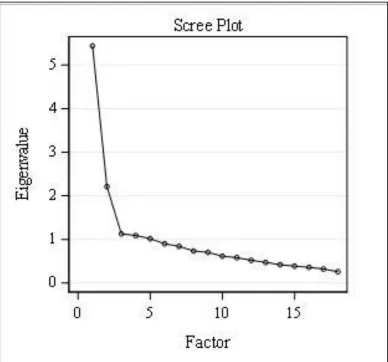
demonstrated that our data was suitable for factor analysis. Five factors were identified
through factor analysis having eigenvalues greater than 1; 5.44, 2.21, 1.13, 1.09, 1.02.
Even though the eigenvalues suggested five factors, the scree plot demonstrated a clear
elbow at three factors (Figure 4.1). The interpretability criterion was applied during
principal component analysis to determine that two factors were to be included instead of
and therefore only two factors were included in our final analysis. Factors 1 and 2
combined represented 42% of the total variance (30% plus 12%, respectively).
Factor loading scores for each question on the HIV-KQ-18 questionnaire are
presented in Table 4.3. Looking at the rotated factor pattern, questions were said to load
on a specific factor if the factor loading was 0.40 or higher for that factor and less than
0.40 for the other factor. After removing variables that were not found to load
significantly on either factor or variables that significantly cross-loaded we found that
Factor 1 included ten questions and Factor 2 included five questions. Factor 1
encompassed questions regarding HIV transmission, symptoms and testing, whereas
Factor 2 encompassed HIV sexual transmission. Factor analysis demonstrated
inconclusive evidence suggesting the number of questions in the HIV-KQ-18
questionnaire, adapted for the SABER study, was sufficient.
Sexual Risk Prevalence
Sexual behaviors of males and females is presented in Table 4.4. 98.97% of
females and 93.75% of males expressed having vaginal sex in their lifetime. Males in our
study were more likely to give and receive oral sex than females (p=0.0220 and
p=0.0013, respectively). 77.32% of female participants in stated giving oral sex
compared to 89.58% of males. 71.13% of females received oral sex compared to 89.58%
of males. Males in our study were more likely to have given anal sex (p-value = <0.001)
and females were more likely to receive anal sex (p-value= 0.0124). 40.63% of males
declared giving anal sex compared to 4.12% of females and 7.29% of males stated
sexual partner within the last 12 months, yet 90.16% and 87.56% of participants
sometimes or never used a barrier method during oral sex or vaginal sex, respectively.
Statistical significance was not identified between number of sexual partners or
condom-use during oral or vaginal sex. 93.81% of females and 88.54% of males had only one
sexual partner in the last 12 months. 87.63% of women and 92.71% of men stated
sometimes or never wearing condoms during oral sex compared to 91.75% of females
and 83.33% of males sometimes or never wearing condoms during vaginal sex.
Association of HIV Knowledge and Sexual Risk Behaviors
Out of 18 points possible on the HIV knowledge questionnaire, the median
number of correct answers was 11 out of 18 questions for both males and females as seen
in Table 4.1. Chi square analysis revealed a significant association between HIV
knowledge and sexual risk behaviors (Table 4.5). 65.80% of participants answered less
than 13 items correctly on the HIV knowledge questionnaire and 88.60% of participants
were categorized as ‘at-risk’ for HIV due to their sexual behavior. An ‘average or above
average’ HIV knowledge score was associated with a decrease in risky sexual behaviors
compared to those with below average HIV knowledge scores (p-value = 0.0089). An
odds ratio of 0.3110 (95% CI: 0.125-0.772) was obtained suggesting those with average
or above average HIV knowledge scores have 0.3110 times lower odds of partaking in at-
risk sexual behaviors compared to those who have below average HIV knowledge scores.
HIV knowledge and sexual risk behaviors were subsequently split into three categories:
HIV knowledge (below average, average, above average) and sexual risk (minimal/none,
medium, high). Using this categorization scheme, 38.34% of participants answered less
‘below average’ HIV knowledge and 88.6% of participants were categorized as at
medium or high risk for HIV due to their sexual behaviors. A statistically significant
association (p-value =0.0068) between HIV knowledge and sexual risk behavior was
observed when each variable was split into three categories (Table 4.6).
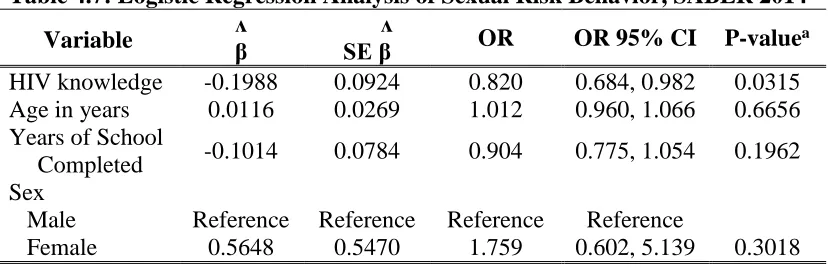
Among Latinos in our sample, after multivariate adjustment was performed (age,
sex, years of school completed), higher HIV knowledge was statistically significantly
associated with lower sexual risk behaviors as seen in Table 4.7 (p-value = 0.0312). For
every correct answer on the HIV knowledge questionnaire, the odds of high sexual risk
Table 4.1: Socio-Demographic Characteristics by Sex in Participants 18 Years and Older, SABER 2014
Characteristics
Female (n =97)
Male (n = 96)
P-valuea
Age
Median(IQR), y 34 (27-40) 33 (27-38.5) 0.4741b
Country of Birth
Mexico, No. (%) 68 (70.10) 72 (75.00)
0.1037 United States, No. (%) 4 (4.12) 9 (9.38)
Other, No. (%) 25 (25.77) 15 (15.63)
Years Living in the United States
Median(IQR), y 12 (9-15) 13 (9-15) 0.4082b
Years Living in South Carolina
< 5 years, No. (%) 18 (18.56) 20 (20.83)
0.5352 6-15 years, No. (%) 70 (72.16) 71 (73.96)
>15 years, No. (%) 9 (9.28) 5 (5.21)
Years of Education Completed
Median(IQR), y 9.5 (6-12) 8 (6-11) 0.0051b
Residence Region
Midlands, No. (%) 52 (53.61) 48 (50.00)
0.7078c
Pee Dee, No. (%) 43 (44.33) 47 (48.96)
Other, No. (%) 2 (2.06) 1 (1.04)
Monthly Family Salary
Median(IQR) 450 (300-915) 500 (400-1000) 0.0323b
Medical Insurance
Yes, No. (%) 14 (14.43) 7 (7.29)
0.1112
No, No. (%) 83 (85.57) 89 (92.71)
Occupation
Employed, No. (%) 70 (72.16) 96 (100.00)
<0.0001
Unemployed, No. (%) 27 (27.84) 0 (0.00)
Race/Ethnicity of Dating Partners
Hispanic/Latino, No. (%) 79 (81.44) 67 (70.53)
0.1423c
White, No. (%) 1 (1.03) 1 (1.05)
More than one race, No. (%) 17 (17.53) 27 (28.42) HIV Knowledge Score
Median(IQR) 11 (7-14) 11 (7-13) 0.6916b
Abbreviations: IQR, Interquartile Range
a: P-values were calculated using Chi-Square Test
Table 4.2: HIV Knowledge by Sex in Participants 18 years and older, SABER 2014 Female (n=97) No. (%) Male(n=96) No. (%) P-valuea
HIV Knowledge Question Correct Incorrect Correct Incorrect
Coughing and sneezing DO NOT spread HIV. 51 (52.58) 46 (47.42) 45 (46.88) 51 (53.13) 0.4282
A person can get HIV by sharing a glass of water with someone who has HIV.
61 (62.89) 36 (37.11) 57 (59.38) 39 (40.63) 0.6168
Pulling out the penis before a man
climaxes/cums keeps a woman from getting HIV during sex.
67 (69.07) 30 (30.93) 71 (73.96) 25
(26.04) 0.4521
A woman can get HIV if she has anal sex with a man.
79 (81.44) 18 (18.56) 86 (89.58) 10
(10.42) 0.1084 Showering, or washing one’s genitals/private
parts, after sex keeps a person from getting HIV. 77 (79.38) 20 (20.62) 78 (81.25) 18
(18.75) 0.7441
All pregnant women infected with HIV will have babies born with HIV.
18 (18.56) 79 (81.44) 21 (21.88) 75
(78.13) 0.5660
People who have been infected with HIV quickly show serious signs of being infected.
56 (57.73) 41 (42.27) 54 (56.25) 42
(43.75) 0.8353
There is a vaccine that can stop adults from getting HIV. 78 (80.41) 19 (19.59) 78 (81.25) 18
(18.75) 0.8825
People are likely to get HIV by deep kissing if their partner has HIV.
33 (34.02) 64 (65.98) 27 (28.13) 69 (71.88) 0.3763
A woman cannot get HIV if she has sex during her period.
56 (57.73) 41 (53.95) 61 (63.54) 35 (36.46) 0.4088
There is a female condom that can help decrease a woman’s chance of getting HIV.
25 (25.77) 72 (74.23) 23 (23.96) 73 (76.04) 0.7706
A natural skin condom works better against HIV than does a latex condom.
33 (34.02) 64 (65.98) 38 (39.58) 58 (60.42) 0.4230
A person will NOT get HIV if she or he is taking antibiotics. 60 (61.86) 37 (38.14) 45 (46.88) 51 (53.13) 0.0367
Having sex with more than one partner can increase a person’s risk of being infected with HIV. 86 (88.66) 11 (11.34) 89 (92.71) 7 (7.29) 0.3335
Taking a test for HIV one week after having sex will tell a person if she or he has HIV.
30 (30.93) 67 (69.07) 22 (22.92) 74
(77.08) 0.2098
A person can get HIV by sitting in a hot tub or a swimming pool with a person who has HIV. 55 (56.70) 42 (43.30) 45 (46.88) 51
(53.13) 0.1720
A person can get HIV from oral sex. 63 (64.95) 34 (35.05) 58 (60.42) 38 (39.58) 0.5151
Using Vaseline or baby oil with condoms lowers the chance of getting HIV.
66 (68.04) 31 (31.96) 76 (79.17) 20
(20.83) 0.0797
Table 4.3: Factor Loading Scores and Variability for Each HIV Knowledge question, SABER 2014
Factor 1 Factor 2 h2 Questions
0.53 -0.27 0.34 Coughing and sneezing DO NOT spread HIV
0.70 0.05 0.49 A person can get HIV by sharing a glass of water with someone who has HIV.
0.32 0.49 0.55 Pulling out the penis before a man climaxes/cums keeps a woman from getting HIV during sex.
-0.02 0.69 0.49 A women can get HIV if she has anal sex with a man. 0.75 0.15 0.57 People who have been infected with HIV quickly show
serious signs of being infected.
0.42 0.43 0.33 There is a vaccine that can stop adults from getting HIV. 0.60 -0.24 0.44 People are likely to get HIV by deep kissing, putting
their tongue in their partners mouth, if their partner has HIV.
0.50 0.30 0.31 A woman cannot get HIV if she has sex during her period.
0.58 -0.19 0.40 There is a female condom that can help decrease a woman’s chance of getting HIV.
0.56 0.18 0.35 A natural skin condom works better against HIV than does a latex condom.
0.75 -0.07 0.58 A person will NOT get HIV if she or he is taking antibiotics.
-0.01 0.62 0.37 Having sex with more than one partner can increase a person’s chance of being infected with HIV.
0.55 -0.01 0.34 Taking a test for HIV one week after having sex will tell a person if she or he has HIV.
0.64 -0.13 0.60 A person can get HIV by sitting in a hot tub or a swimming pool with a person who has HIV. -0.00 0.58 0.34 A person can get HIV from oral sex.
Table 4.4: Sexual Risk Behavior Prevalence by Sex, SABER 2014
Characteristics
Female (n =97)
Male (n = 96)
Total P-valuea
Had Vaginal Sex
Yes, No. (%) 96 (98.97) 90 (93.75) 186 (96.37)
0.0525 No, No. (%) 1 (1.03) 6 (6.25) 7 (3.63)
Given Oral Sex
Yes, No. (%) 75 (77.32) 86 (89.58) 161 (83.42)
0.0220 No, No. (%) 22 (22.68) 10 (10.42) 32 (16.58)
Received Oral Sex
Yes, No. (%) 69 (71.13) 86 (89.58) 155 (80.31)
0.0013 No, No. (%) 28 (28.87) 10 (10.42) 38 (19.69)
Given Anal Sex
Yes, No. (%) 4 (4.12) 39 (40.63) 43 (22.28)
<0.0001 No, No. (%) 93 (95.88) 57 (59.38) 150 (77.72)
Received Anal Sex
Yes, No. (%) 19 (19.59) 7 (7.29) 26 (13.47)
0.0124 No, No. (%) 78 (80.41) 89 (92.71) 167 (86.53)
Number of Sexual
Partners in the Past 12 Months
0 sexual partners, No. (%) 1 (1.03) 3 (3.13) 4 (2.07)
0.3781b
1 sexual partner, No. (%) 91 (93.81) 85 (88.54) 176 (91.19) More than 1 sexual
partner, No. (%) 5 (5.15) 8 (8.33) 13 (6.74) Use of Barrier Method
During Oral Sex
Always use protection or never had oral sex, No. (%)
12 (12.37) 7 (7.29) 19 (9.84)
0.2363 Sometimes or Never,
No. (%) 85 (87.63) 89 (92.71) 174 (90.16) Use of Barrier Method
During Vaginal Sex Always use protection or
Never had oral sex, No. (%)
8 (8.25) 16 (16.67) 24 (12.44)
0.0764 Sometimes or Never,
No. (%) 89 (91.75) 80 (83.33) 169 (87.56)
a: P-values were calculated using Chi Square Test
Table 4.5: Association between dichotomized HIV Knowledge Score and Sexual Risk Behavior, SABER 2014
Sexual Risk Behavior HIV Knowledge
Score
At-risk, No. (%)
Minimal/ No Risk, No. (%)
Total, No. (%)
Below Average 118 (61.14) 9 (4.66) 127 (65.80)
Average or above 53 (27.46) 13 (6.74) 66 (34.20)
Total 171 (88.60) 22 (11.40) 193 (100)
Chi Square 6.382a
a: p-value = 0.0089
Table 4.6: Association between HIV Knowledge Score and Sexual Risk Behavior using three categories, SABER 2014
Sexual Risk Behavior HIV Knowledge Score High risk, No. (%) Medium Risk, No. (%) Minimal/ No Risk, No. (%) Total, No. (%)
Below average 5 (2.59) 67 (34.72) 2 (1.04) 74 (38.34)
Average 4 (2.07) 87 (45.08) 19 (9.84) 110 (56.99)
Above Average 0 (0.00) 8 (4.15) 1 (0.52) 9 (4.66)
Total 9 (4.66) 162 (83.94) 22 (11.40) 193 (100)
Chi Square 7.3212a
a:p-value = 0.0068
Table 4.7: Logistic Regression Analysis of Sexual Risk Behavior, SABER 2014
Variable ᴧ β ᴧ SE β OR OR 95% CI P-valuea
HIV knowledge -0.1988 0.0924 0.820 0.684, 0.982 0.0315 Age in years 0.0116 0.0269 1.012 0.960, 1.066 0.6656 Years of School
Completed -0.1014 0.0784 0.904 0.775, 1.054 0.1962 Sex
Male Reference Reference Reference Reference
Female 0.5648 0.5470 1.759 0.602, 5.139 0.3018 Abbreviations: β, Parameter Estimate; SE, Standard Error; OR, Odds Ratio; CI, Confidence Interval
Figure 4.1 Eigenvalues from HIV knowledge factor analysis using Cattel’s Scree
CHAPTER
5
DISCUSSION
From 2000-2010, the Hispanic/Latino population in South Carolina grew by
147.9%, with continued increases seen every year since.35 It is imperative to understand
the misconceptions about HIV and content areas where education programs should focus,
as Hispanics/Latinos have the second highest HIV incidence rate behind
African-Americans.1,3,24 We found that males and females did not differ in their HIV knowledge
score with a median of 11 correctly answered questions out of 18 possible. This finding
was different than other studies which demonstrated males have higher HIV knowledge
scores compared to females.16-19 Females in our study had statistically significant higher
median years of education completed, which could have been a reason we saw the same
HIV knowledge median score among males and females in our study. Five questions on
the HIV knowledge questionnaire were answered incorrectly by more than 50% of males
and females in our population and should be explicitly addressed in HIV education
classes and clinics, as it was seen that similar misconceptions have been identified in
previous studies.16,19,20,26
While HIV knowledge median scores did not differ between sexes, 65.80% of
participants in our study had below average HIV knowledge scores. A similar study of
pregnant Latinas in South Carolina found 76% of participants had low HIV knowledge.16
good education systems. Males and females in our study reported average monthly
incomes below the poverty line (Table 4.1) and unfortunately those in poverty also have a
more difficult time finding good education systems which influences HIV knowledge.19
This is problematic since our study found evidence that those with lower HIV knowledge
were at statistically significant higher odds of partaking in riskier sexual behaviors (OR:
1.22, CI: 1.02, 1.46). For sexual risk behaviors, 88.60% of participants in our study
participated in sexual behaviors that put them at higher risk for HIV, with the most
prevalent sexual risk behaviors being sometimes or never using a condom during oral
(87.63% for females and 92.71% for males) or vaginal sex (91.75% for females and
83.33% for males). This is similar to the finding among 9th-12th graders, where
inconsistent condom use in Hispanics/Latinos was attributed to forgetfulness during
intercourse.20 The most prevalent answer for the number of past sexual partners in the
past twelve months was one (93.81% for females and 88.54% for males). Number of
sexual partners did not differ significantly between males and females in our study, which
provided contrasting information from other studies which identified females had
statistically significant fewer sexual partners than males.14,17,21 Marriage was not assessed
in our study and could be the reason the highest prevalence of sexual partners was one
between males and females, as our study could have been highly populated with married
persons. Even though, a majority of our population stated they only had one sexual
partner, the status of concurrent relationships of their partner were unknown. Due to
being unaware of the sexual activities of the partners, many could still be at risk due to no
barrier protection used during sexual activities. 88.60% of participants in our study were
using protection during vaginal sex. It is important to work with community partners and
faith-based organizations to provide supplemental materials for HIV education targeting
HIV knowledge misconceptions and expressing the importance of condom-use, even if
the individual only has one sexual partner.29
Upon completing factor analysis our results were inconclusive. Originally, the
HIV-KQ questionnaire had 45 questions and factor analysis reduced the questions that
seemed to depict the same overall theme. Once factor analysis was performed, three
factors were left, including 18 different questions.30 In our analysis, two factors were
needed; however, the factors did not depict the same overall theme. Factor 1 had
variables loading to it that described HIV general transmission, HIV testing, and HIV
prevention, whereas factor 2 had an overall theme that could be depicted- sexual
transmission of HIV. With two factors, only 42% of total variance was explained, which
is not very beneficial to determine the overall theme of HIV misconceptions in the
Hispanic/Latino population. When comparing factor loading scores by question with each
factor, it was found that most of them loaded similarly on both factors or did not follow
the interpretability criterion. The interpretability criterion states variables should load on
one factor significantly and barely load on the other.32 From our findings, we did not find
any evidence to report reduction of questions in HIV-KQ-18 and were unable to come up
with an overarching theme for misconceptions presented in our study sample. This
demonstrates the survey was sufficient in testing HIV misconceptions and assessing a
wide array of HIV knowledge.
Many strengths were presented in this research. First, our study was conducted in
was used to note if HIV-KQ-18 was sufficient to use in further studies which we were
able to confirm. Third, the SABER survey assessed race/ethnicity of sexual partners
which authors suggest might give insight into HIV risk within a community. Authors
suggest certain racial/ethnic groups have tight-knit social networks making it easier for
HIV to spread compared to people in larger social groups.36,37 This might share insight on
why certain race/ethnicities seem to be disproportionately infected with HIV even when
partaking in low-risk sexual activities. Lastly, as the Hispanic/Latino population
continues to grow in South Carolina it is important to study this population to stay ahead
of potential health concerns, one being HIV.
This study also presented a few limitations. Our study design was cross-sectional
in which temporality between exposure of HIV Knowledge and outcome of sexual risk
behavior could not be addressed. Second, sexual orientation was not asked to participants
which could have helped us further explain the association between HIV knowledge and
sexual risk behaviors. Third, due to the nature of our questionnaire, many participants did
not answer most of the sexual behavior questions. The sexual behavior questionnaire had
41 questions in which only 10 provided substantial numbers for analysis. Some of the
questions not answered included: “Did you or your partner use the condom the entire
sexual act or only at the end of the act?” “When you have anal sex do you use a
condom?” “Before or during the last time you had sex with this partner did you use
alcohol, drugs or both alcohol and drugs?” “The last time you had sex with a partner, did
you know his/her HIV status and, if so, what was his/her HIV status?” The unanswered
questions would have been beneficial in our analysis to explain prevalent sexual risk
status. These questions would have helped in the categorization of sexual behaviors
among participants. Fourth, social desirability could have biased our results. Participants
could have lessened the number of partners they had sex with in the past 12 months, not
stated what type of sexual acts they really participated in, or falsely stated they used a
condom because they wanted to demonstrate they practiced safe sexual behaviors. Fifth,
all statistical analyses assumed independence, however it is unknown if participants were
family members which would make some of our data correlated. Lastly, our study
population was 193 Hispanic/Latinos from two regions in South Carolina and may not be
representative of the United States population limiting generalizability from our study.
Future studies should focus on gathering a nationally representative sample of the
United States population while taking into account sexual orientation. A cross-sectional
study design should be administered to determine the differences between race/ethnicities
and sexual orientation preferences when it comes to HIV knowledge and sexual risk
behavior. This would allow us to determine if our findings are specific to the
Hispanic/Latino population or if they can be generalized to other race/ethnicities. As the
Hispanic/Latino population in the United States keeps increasing, it is important to find
REFERENCES
1. CDC. (2010). Vital signs: HIV testing and diagnosis among adults--United States,
2001-2009. MMWR Morb Mortal Wkly Rep, 59(47), 1550-5. Retrieved July 7,
2016, from https://www.cdc.gov/mmwr/preview/mmwrhtml/mm5947a3.htm.
2. CDC. (2016). About HIV/AIDS. Retrieved on September 19, 2016, from
http://www.cdc.gov/hiv/basics/whatishiv.html
3. CDC. (2016). HIV in the United States: At a Glance. HIV/AIDS Statistics Center.
Retrieved on August 19, 2016, from
http://www.cdc.gov/hiv/statistics/overview/ataglance.html
4. Prejean, J., Song, R., Hernandez, A., Ziebell, R., Green, T., Walker, F., Lin, L. S.,
An, Q., Mermin, J., Lansky, A., Hall, H. I., for the HIV Incidence Surveillance
Group. (2011). Estimated HIV Incidence in the United States, 2006–2009. PLoS
ONE, 6(8), e17502. doi: 10.1371/journal.pone.0017502
5. Henry J. Kaiser Family Foundation. (2014, April). Latinos and HIV/AIDS.
Retrieved from http://kff.org/hivaids/fact-sheet/latinos-and-hivaids/
6. CDC Fact Sheet. (2016). HIV and AIDS Among Latinos. Retrieved on August 19,
2016, from
7. SCDHEC. (n.d.) An Epidemiologic Profile of HIV and AIDS in South Carolina
2015. Retrieved on July 7, 2016, from
https://www.scdhec.gov/health/docs/stdhiv/pp_CH1-EpiProfile.pdf
8. Chen, N., Erbelding, E., Yeh, H.-C., Page, K. (2010). Testing Among Latinos in
Baltimore City. J Immigr Minor Health, 12(6), 867–874. doi:
10.1007/s10903-009-9297-9
9. Rios-Ellis, B., Espinoza, L., Bird, M., Garcia, M., D’Anna, L. H., Bellamy, L.,
Scolari, R. (2010). Increasing HIV-related Knowledge, Communication, and
Testing Intentions among Latinos: Protégé tu Familia: Hazte la Prueba. J Health
Care Poor Underserved, 21(3), 148-168
10. Rios-Ellis, B., Frates, J., D’Anna, L. H., Dwyer, M., Lopez-Zetina, J., Ugarte, C.
(2008). Addressing the need for access to culturally and linguistically appropriate
HIV/AIDS prevention for Latinos. J Immigr Minor Health, 10(5), 445-460.
11. Alvarez, M. E., Jakhmola, P., Painter, T. M., Taillepierre, J. D., Romaguera, R.
A., Herbst, J. H., Wolitski, R. J. (2009). Summary of Comments and
Recommendations from the CDC Consultation on the HIV/AIDS Epidemic and
Prevention in the Hispanic/Latino Community. AIDS Educ Prev, 21(5 Suppl), 7
-18.doi: 10.1521/aeap.2009.21.5_supp.7
12. Pérez-Jiménez, D., Seal, D. W., & Serrano-García, I. (2009). Barriers and
Facilitators of HIV Prevention With Heterosexual Latino Couples: Beliefs of Four
Stakeholder Groups. Cultur Divers Ethnic Minor Psychol,15(1), 11–17.
13. Montgomery, C. M., Lees, S., Stadler, J., Morar, N. S., Ssali, A., Mwanza, B.,
Mntambo, M., Phillip, J., Watts, C., Pool, R. (2008). The role of partnership
dynamics in determining the acceptability of condoms and microbicides. AIDS
Care, 20(6): 733-740. doi: 10.1080/09540120701693974
14. Lesser, J., Koniak-Griffin, D., Huang, R., Takayanagi, S., & Cumberland, W. G.
(2009). Parental Protectiveness and Unprotected Sexual Activity Among Latino
Adolescent Mothers and Fathers. AIDS Educ Prev, 21(5 Suppl), 88–102.
doi:10.1521/aeap.2009.21.5_supp.88
15. Guilamo-Ramos, V., Bouris, A., Jaccard, J., Lesesne, C., Ballan, M. (2009).
Familial and cultural influences on sexual risk behaviors among Mexican, Puerto
Rican, and Dominican youth. AIDS Educ Prev, 21(5 suppl), 61-79. doi:
10.1521/aeap.2009.21.5_supp.61
16. Torres, M. E., Murray, A., Meetze, E. G., Gaul, Z., Sutton, M. Y. (2016). HIv
Knowledge Among Pregnant Latinas in Rural South Carolina. J Immigr Minor
Health doi: 10.1007/s10903-016-0455-6
17. Zhussupov, B., McNutt, L.-A., Gilbert, L., Terlikbayeva, A., & El-Bassel, N.
(2015). Migrant Workers in Kazakhstan: Gender Differences in HIV Knowledge
and Sexual Risk Behaviors. AIDS Behav, 19(7), 1298–1304.
doi:10.1007/s10461-014-0914-9
18. Akers, A., Bernstein L., Henderson, S., Doyle, J., Corbie-Smith, G.(2007).
Factors Associated with Lack of Interest in HIV Testing in Older At-Risk
Women. J Womens Health (Larchmt), 16(6), 842-858.