WEEDFALL, ANDREW ALEXANDER. Individual Differences in Perceptions of Cyber
Incivility: Mitigating the Negative Effects of Incivility with Job Crafting. (Under the direction of Dr. Samuel B. Pond, III).
by
Andrew Alexander Weedfall
A dissertation submitted to the Graduate Faculty of North Carolina State University
in partial fulfillment of the requirements for the degree of
Doctor of Philosophy
Psychology
Raleigh, North Carolina 2019
APPROVED BY:
______________________ ______________________
Dr. Samuel B. Pond, III Dr. S. Bartholomew Craig
Chair of Advisory Committee
BIOGRAPHY
Andrew Weedfall attended West Virginia University, where he received his Bachelor of Arts in Psychology in 2013. Andrew then joined the Industrial and Organizational (I-O)
TABLE OF CONTENTS
LIST OF TABLES ... iv
LIST OF FIGURES ...v
Individual Differences in Perceptions of Cyber Incivility: Mitigating the Negative Effects of Incivility with Job Crafting ...1
Incivility and Cyber Incivility ...2
Personality and Incivility ...4
Linking Personality with Perceptions and Outcomes of Cyber Incivility ...5
Outcomes of Incivility ...10
Cyber Incivility Source ...14
Job Crafting ...17
Methods ...23
Participants and Procedure ...23
Measures ...24
Results ...29
Adjustment to the Hypothesized Model ...29
Hypothesis Testing ...30
Discussion ...37
Practical Limitations ...43
Limitations and Future Research ...44
Conclusion ...46
References ...48
Tables ...59
Figures ...75
LIST OF TABLES
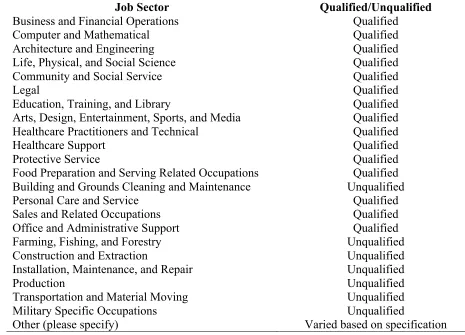
Table 1 List of Qualified and Unqualified Job Sectors for Participation in
the Present Study. ...59
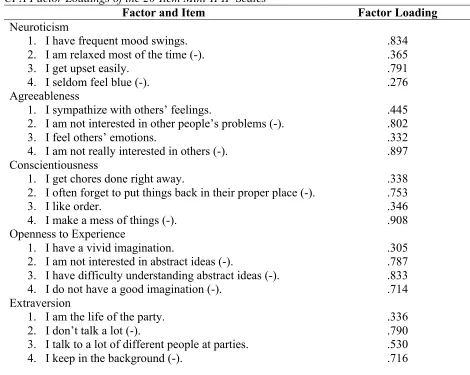
Table 2 CFA Factor Loadings of the 20-Item Mini-IPIP Scales. ...60
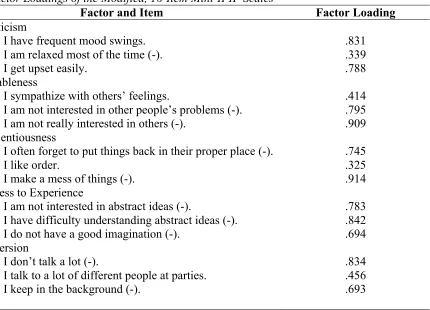
Table 3 CFA Factor Loadings of the Modified, 16-Item Mini-IPIP Scales. ...61
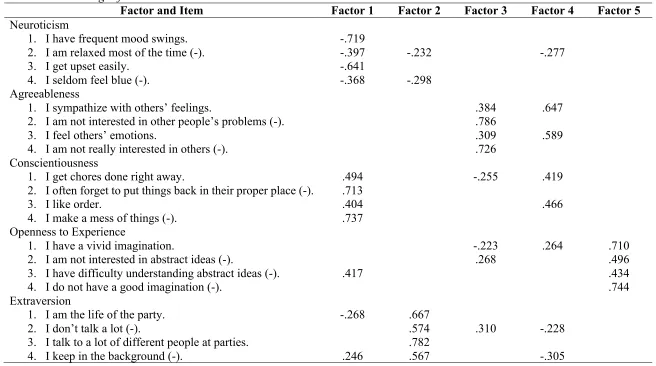
Table 4 EFA Factor Loadings of the 20-Item Mini-IPIP Scales. ...62
Table 5 Revisions and Combining of Hypothesis 1 and Research Questions 1 and 2. ...63
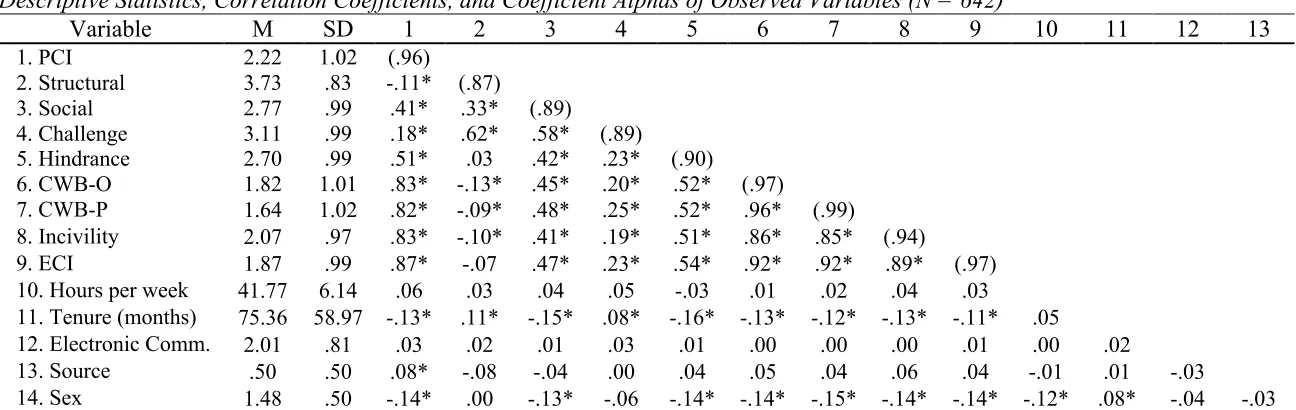
Table 6 Descriptive Statistics, Correlation Coefficients, and Coefficient Alphas of Observed Variables (N = 642). ...64
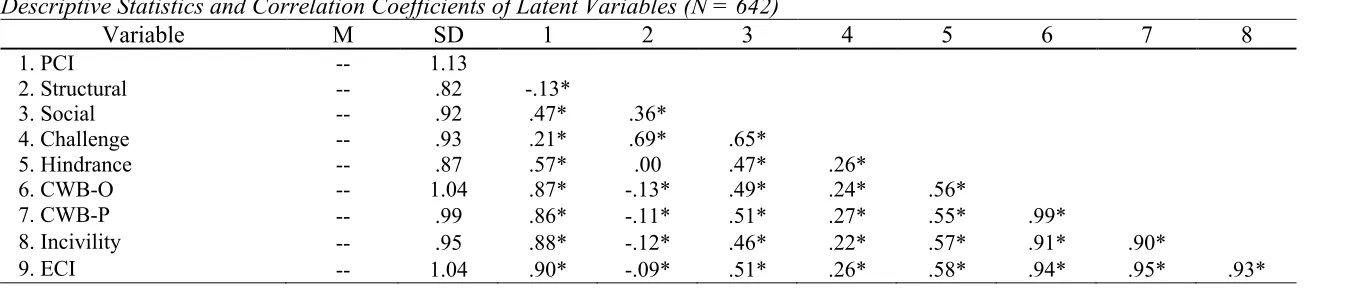
Table 7 Descriptive Statistics and Correlation Coefficients of Latent Variables (N=642) ...65
Table 8 Fit Statistics and Comparisons of All Expected and Competing Measurement Models. ...66
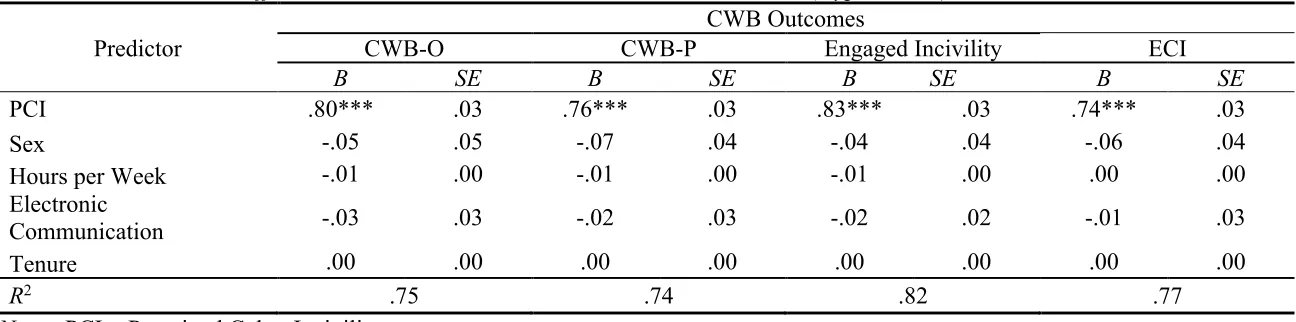
Table 9 Structural Model Path Coefficients Between PCI and CWB Outcomes with Controls (Hypothesis 1). ...67
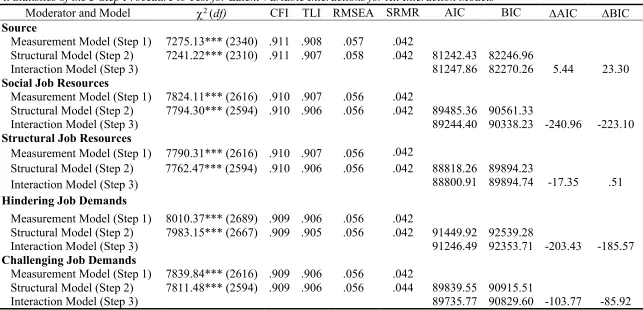
Table 10 Fit Statistics of the 3-Step Procedure to Test for Latent Variable Interactions for All Interaction Models. ...68
Table 11 Path Coefficients of the Structural Model with the PCI by Source Interaction with Controls (Hypothesis 2). ...69
Table 12 Path Coefficients of the Structural Model with the PCI by Increasing Social Resources Interaction with Controls (Hypothesis 4a). ...70
Table 13 Simple Slopes of the Moderators with Significant Interactions at One Standard Deviation Above and Below the Mean of the Respective Moderator. ...71
Table 14 Path Coefficients of the Structural Model with the PCI by Increasing Structural Resources Interaction with Controls (Hypothesis 4b). ...72
Table 16 Path Coefficients of the Structural Model with the PCI By Increasing
LIST OF FIGURES
Figure 1 Hypothesized moderated mediation model the present study. ...75 Figure 2 Modified hypothesized moderation model. Dotted lines indicate
paths that could no longer be tested. ...76 Figure 3 Moderating effects of increasing social resources on the relation between
PCI and various CWBs. Low and High Social represent values of the job crafting to increase social resources moderator at one standard deviation
above and below the mean, respectively. ...77 Figure 4 Moderating effects of increasing structural resources on the relation
between PCI and CWB-O. Low and High Structural represent values of the job crafting to increase social resources moderator at one standard
deviation above and below the mean, respectively. ...78 Figure 5 Moderating effects of decreasing hindering demands on the relation
between PCI and various CWBs. Low and High Hindering represent values of the job crafting to decrease hindering demands moderator at
one standard deviation above and below the mean, respectively. ...79 Figure 6 Moderating effects of increasing challenging demands on the relation
between PCI and various CWBs. Low and High Challenge represent values of the job crafting to increase challenging demands moderator
Individual Differences in Perceptions of Cyber Incivility: Mitigating the Negative Effects of Incivility with Job Crafting
Employees have reported frequent experiences of uncivil behaviors in their workplaces (Pearson & Porath, 2005; Porath & Pearson, 2013), and researchers have linked these
experiences to a wide array of negative outcomes (Schilpzand, De Pater, & Erez, 2016).
Researchers refer to these behaviors as acts of workplace incivility and describe incivility as a set of deviant behaviors that violate workplace norms for mutual respect but are low in intensity and have an ambiguous intent to harm the target of these behaviors (Andersson & Pearson, 1999). Examples of incivility include, speaking to others disrespectfully or in a demeaning manner, ignoring others, interrupting others during conversation, excluding co-workers from meetings or from going out to lunch, and other forms of discourteous behavior (Pearson, Andersson, & Porath, 2000; Penney & Spector, 2005).
Due to the low intensity and ambiguous intent to harm of incivility, instigators of
Incivility perceptions are important because researchers have identified a number of negative outcomes associated with experiencing uncivil behaviors (see Schilpzand, De Pater, & Erez, 2016 for a review). Furthermore, forms of incivility such as cyber incivility have become increasingly prevalent in the workplace (Giumetti, Saunders, Brunette, DiFrancesco, & Graham, 2016), yet they have received less attention in some areas of the literature. Thus, this study assesses the potential individual differences that could influence perceptions of cyber incivility (PCI) and the negative outcomes associated with them that researchers have not yet addressed. Lastly, the present research examines factors that may influence or potentially mitigate the negative outcomes associated with PCI. Specifically, this study investigates the mediating role of PCI between personality and counterproductive work behaviors (CWBs) and the moderating effects that the source of the incivility and job crafting have on the relation between PCI and CWBs.
Incivility and Cyber Incivility
In recent incivility literature, cyber incivility, or incivility that occurs through electronic communication such as email and text messaging has gained researcher interest. Cyber incivility shares many of the same characteristics as face-to-face incivility in that it is a violation of
may experience fewer negative outcomes as a result, because they are able to find alternative explanations for the uncivil behavior (Miner et al., 2018). Nonetheless, researchers posit that instigators may engage in more uncivil behaviors through online communication because they feel less constrained and freer to express themselves in ways that they may refrain from during face-to-face interactions (Giumetti et al., 2016).
Uncivil behaviors may look similar to one another regardless of whether they occur online or through face-to-face communication. However, if individuals are more likely to engage in uncivil behaviors or perceive interactions as uncivil when they occur through electronic communication systems compared to in person, it is important to understand the antecedents and outcomes of such cyber interactions.
By and large, it should be no surprise that these low-intensity and thus, easily deniable acts of incivility occur often within the workplace. Researchers contend that as many as 98% of workers have experienced face-to-face incivility in the workplace at least once, while 20%-50% of them have experienced these behaviors at least once per week (Pearson & Porath, 2005; Porath & Pearson, 2013). Few research studies exist on the frequency of cyber incivility experiences among employees, but one study has shown that 91% of employees included in the study had experienced cyber incivility from their supervisor at work (Lim & Chin, 2006). Although both forms of incivility tend to occur frequently in the workplace, the frequency with which people experience face-to-face or cyber incivility may vary from person to person. In other words, there may be individual differences in the way people perceive and draw
busy dealing with some more pressing concern. Researchers have aimed to identify individual differences that might help to determine who is most likely to experience incivility. Among those most commonly researched, are personality differences.
Personality and Incivility
Researchers often describe personality through the five-factor model of personality, otherwise known as The Big Five. This framework summarizes personality into five distinct factors, or personality traits: openness to experience, conscientiousness, extraversion,
agreeableness, and neuroticism (McCrae & John, 1992). Openness to experience involves being open minded, intelligent, imaginative, and curious. Conscientiousness is associated with being dependable, achievement oriented, careful, organized, and responsible. Individuals who are high in extraversion tend to be talkative, social, and are often ambitious. Agreeableness refers to being friendly, flexible, courteous, and tolerant or compliant. Finally, neuroticism, or emotional instability, relates to being emotional, anxious and depressed, and is associated with general negative affectivity (Barrick & Mount, 1991; Costa & McCrae, 1990). Researchers have posited that these Big Five personality traits may influence the extent to which individuals perceive certain behaviors of others as uncivil.
Milam, Spitzmueller, and Penney (2009) were among the first to assess how incivility was associated with personality. Specifically, they examined how agreeableness, neuroticism, and extraversion link to perceptions of incivility. They found that individuals who were low in agreeableness or high in neuroticism were more likely to report that they had experienced incivility in the workplace. Other researchers have also found that all Big Five traits except extraversion were correlated with experiences of incivility (Sliter et al., 2014; Taylor &
uncivil incidents higher on average than individuals who were low in neuroticism (Beattie & Griffin, 2014). Sliter et al., (2014) contended that these personality traits influenced perceptions of incivility in the same way that personality affects the appraisal process of stress.
According to the transactional theory of stress (Lazarus & Folkman, 1987), when people experience potentially stressful demands, they undergo two types of appraisals regarding what that stressor means to them personally, namely, primary and secondary appraisal. Primary appraisal involves assessing what kind of a demand one is experiencing. Specifically, demands can be a threat in which one may anticipate future potential harm or a challenge in which one may anticipate that the experience may provide potential for mastery. For example, during potentially uncivil interpersonal interactions, it is through the primary appraisal process that individuals perceive whether the interaction is a threatening stressor (e.g., incivility) or a challenge (e.g., relationship building opportunity). In contrast, secondary appraisal is the cognitive process that involves evaluating what a person might do about the stressor. This appraisal involves assessing the resources that are available to cope with and improve the
situation (Lazarus & Folkman, 1987; Sliter et al., 2014). Therefore, primary appraisal is relevant to the perceptions and antecedents of incivility, whereas secondary appraisal is relevant to the resulting outcomes of incivility once an individual has perceived the occurrence of incivility. Research from the personality, stress, and CWB literatures suggest that personality may be a driver in both of these appraisals.
Linking Personality, with Perceptions and Outcomes of Cyber Incivility
subsequent outcomes of incivility. However, research has shown that some personality traits are more influential in this process than others are.
Neuroticism. Neuroticism is among the most consistent personality predictor of stress appraisal and incivility perceptions. Costa and McCrae (1990) refer to neuroticism as a
predisposition to experience distress, which influences how individuals perceive potential stressors that they experience. Several stress researchers have found positive associations between highly neurotic individuals and stress levels or stress appraisal (e.g., Ebstrup, Eplov, Pisinger, & Jørgensen, 2011; Gallagher, 1990; Kaiseler, Polman, & Nicholls 2012; Penley & Tomaka, 2002; Vollrath, 2000). This predisposition to stress may be especially true for interpersonal stressors (e.g., incivility). Gunthert, Cohen, and Armeli (1999) showed that in a daily diary study, individuals who scored high on neuroticism tended to more frequently rate interpersonal stressors as their worst problem of the day than individuals low in neuroticism. Because highly neurotic individuals tend to be especially sensitive to interpersonal stressors, it is unsurprising that they would frequently perceive incivility or cyber incivility in ambiguous interactions. Although all forms of incivility have an ambiguous intent to harm, the lack of nonverbal cues and feedback in cyber incivility may even intensify the ambiguity of intention to harm (Giumetti et al., 2016). Therefore, in the present research, I expect that individuals high in neuroticism will more frequently perceive and interpret these ambiguous cyber behaviors as uncivil compared to individuals low in neuroticism.
who are high in conscientiousness tend to experience fewer interpersonal stressors over their lives because they are able to develop better relationships and engage in fewer altercations (Hogan & Ones, 1997). Accordingly, studies have shown that conscientiousness was negatively associated with perceived stress appraisal (e.g., Ebstrup et al., 2011; Penley & Tomaka, 2002; Watson & Hubbard, 1996). In contrast, Gartland, O’Conner, and Lawton (2012) found that individuals high in conscientiousness tended to appraise more stress than individuals low in conscientiousness. Similar inconsistencies exist within the incivility literature as well. Sliter and colleagues (2014) found evidence to support their assertion that conscientious individuals would be more sensitive to breaches of interpersonal norms due to their high attention to detail
compared to individuals who were more easy-going and less organized. Yet, Taylor and Kluemper (2012) found a negative correlation between conscientious individuals and their perceptions of incivility. Nonetheless, there appears to be more evidence that suggests
conscientious individuals are motivated to build strong relationships, avoid altercations, and have positive affective expectations for the situations that they encounter (Besser & Shackelford, 2007; Hogan & Ones, 1997). Thus, in the present study I expect that highly conscientious individuals will perceive less cyber incivility than individuals who are low in conscientiousness.
Agreeableness. Researchers have posited that individual differences in agreeableness may be the most salient Big Five trait with regard to interpersonal relationships, and specifically during interpersonal conflict. In these cases, individuals who are high in agreeableness may have a propensity to perceive potential interpersonal conflict more constructively than individuals who are low in agreeableness because agreeable individuals have a desire to sustain positive
agreeable individuals appraise their stressors as less intense than individuals who are low in agreeableness (Kaiseler et al., 2012). However, other research has reported that there is no significant association between agreeableness and stress appraisal (e.g., Penley & Tomaka, 2002; Vollrath, 2000). Nonetheless, it seems that unlike conscientiousness, when researchers find significant associations between agreeableness and stress appraisal, they are always in a negative direction. Furthermore, both Milam et al., (2009) and Sliter et al., (2014) found that individuals high in agreeableness perceived less incivility than individuals low in agreeableness. With this in mind, as Graziano et al., (1996) suggested, individual differences in the agreeableness trait may be most important in contexts of interpersonal stressors as opposed to other stressors. Thus, in line with previous incivility research, in the present study I expect that individuals who are high in agreeableness will perceive less cyber incivility than individuals who are low in
agreeableness. In fact, with the potentially higher ambiguity of cyber interactions compared to face-to-face interactions (Giumetti et al., 2016), highly agreeable individuals may have even less reason to perceive such cyber interactions negatively as they might in instances of potential face-to-face incivility.
The one study that has assessed how openness to experience relates to perceptions of incivility found that individuals who score high in openness tend to perceive fewer uncivil interactions than individuals who score low in openness (Sliter et al., 2014). However, the literature tends to offer less support to this association less than it does for associations involving the three
aforementioned personality traits. Thus, I will not make any predictions with regard to openness to experience but will include it in the study for exploratory purposes.
Extraversion. In contrast to neuroticism, the extraversion trait is perhaps the least consistent predictor of threatening stressor appraisal or perceptions of incivility among the Big Five personality traits. Although some research has concluded that extraverts perceive and experience fewer stressors than introverts do (Penley & Tomaka, 2002; Vollrath, 2000), other research has shown no relation between stress and the personality trait (Kaiseler et al., 2012; Schneider et al., 2012). In line with the claim that extraverted individuals have more positive experiences than introverted individuals do, incivility researchers hypothesized that extraversion would be negatively associated with perceptions of incivility. Specifically, these researchers reasoned that extraverted individuals tend to view even neutral events in a positive light.
Therefore, like openness, extraversion is still of interest to the present study and thus, is included for exploratory purposes.
Outcomes of Incivility
Given that certain personality traits may influence the appraisal process and thus
perceptions of incivility, these traits may also have an indirect association with several negative outcomes. This is because, despite the mild nature of uncivil behaviors, research has shown that through high frequencies of occurrence, both face-to-face and cyber incivility are associated with a wide range of negative outcomes. These outcomes can impact both the personal well-being of individual employees as well as the organizations in which they work. For instance, researchers have concluded that the frequency of encounters with face-to-face workplace incivility is
positively associated with psychological distress and negatively associated with organizational commitment and job satisfaction (Cortina, Magley, Williams, & Langhout, 2001; Spence Laschinger, Leiter, Day & Gilin, 2009; Taylor, Bedeian, & Kluemper, 2012). Additionally, qualitative research has shown that being a target of face-to-face incivility often results in experiencing feelings of negative affectivity and isolation after the encounter (Pearson, Andersson, & Wegner, 2001). Similarly, cyber incivility researchers have found that uncivil cyber behaviors link to some of the same negative outcomes as face-to-face incivility with regard to personal well-being. For example, researchers have found that cyber incivility is negatively associated with organizational commitment and job satisfaction, and positively associated with burnout and affective and physical distress (Giumetti, McKibben, Hatfield, Schroeder, & Kowalski, 2012; Giumetti et al., 2016, Lim & Teo, 2009; Park, Fritz, & Jex, 2015).
email tended to experience more negative affect than participants who received supportive email communications.
Studies have shown that face-to-face and cyber incivility can have some severe
consequences on organizational outputs as well. Research has shown that uncivil face-to-face encounters at work are positively associated with turnover intentions, and negatively associated with citizenship performance and work engagement which then negatively affects task
performance (Chen et al., 2013; Cortina et al., 2001; Spence Laschinger et al., 2009; Pearson et al., 2001; Taylor et al., 2012). Likewise, cyber incivility has shown negative and positive relations with job performance and turnover intentions, respectively (Giumetti et al., 2012; Giumetti et al., 2016). Thus, there are many similarities with regard to the negative outcomes of face-to-face and cyber incivility. However, one area of research that seems to be lacking in the cyber incivility literature, which may be especially relevant to personality, is the connection between cyber incivility and other CWBs.
The relation between cyber incivility and CWBs is especially of interest because research has shown a link between face-to-face incivility in the workplace and other CWBs (Mao, Chang, Johnson, & Sun, 2017; Penney & Spector, 2005). Specifically, incivility researchers have proposed that there may be a spiraling effect where acts of incivility are likely to lead to
Two frameworks can explain the stressor to CWB relation. First, according to the job stress/emotion/CWB model, individuals may respond emotionally to the stressor by engaging in CWBs as a form of coping with the stressor (Fox, Spector, & Miles, 2001; Krischer, Penney, & Hunter, 2010; Spector & Fox, 2002). Alternatively, albeit not necessarily a mutually exclusive response to all stressors, individuals may have a more cognitive rather than an emotional response to a particular stressor. Martinko, Gundlach, and Douglas (2002) explain that individuals may cognitively rationalize their engagement in CWBs because of a stressor they have experienced. With regard to cyber incivility, both of these frameworks or driving forces could apply. For example, targets of cyber incivility may withdraw from their work or engage in production deviance in order to free up resources to cope with the stressor. Likewise, cyber incivility targets may rationalize abusive or even aggressive behaviors toward instigators as a way of getting back at them. Nonetheless, apart from withdrawal behaviors (see Giumetti et al., 2012), there is little to no existing research that has assessed the association between cyber incivility and CWBs. However, there is research on the association between personality and CWBs.
significant associations between conscientiousness and CWB-P, along with other associations between the Big Five personality traits and CWBs that are similar to the Kozako et al.’s findings (e.g., Bolton, Becker, & Barber, 2010; Mount, Ilies, & Johnson 2006). Meta-analytic research has attempted to summarize the relations between personality and CWBs. This research found that Big Five personality traits are among the most strongly correlated variables to both CWB-P and CWB-O. Specifically, Berry, Ones, and Sackett (2007) found especially strong relationships between CWB and agreeableness, conscientiousness, and neuroticism compared to openness and extraversion. The weaker associations found for openness and extraversion further support the inclusion of these traits for exploratory purposes only.
Thus, although some variation exists in the research, in general, there appears to be a clear relation between some personality traits and CWBs, namely agreeableness,
contrast, CWB-Ps typically refer to interpersonal conflicts that can range from severe physical aggression or threats of aggression to more minor infractions like incivility. I anticipate that neuroticism will have a positive indirect effect on the engagement in all of these CWBs, whereas agreeableness and conscientiousness will have a negative indirect effect on these various CWBs. Figure 1 fully illustrates the hypothesized associations and research questions.
Hypothesis 1: PCI will mediate the association between personality (i.e., agreeableness, conscientiousness, and neuroticism) and the engagement in CWBs.
Research Question 1: Will PCI mediate the association between openness to experience and the engagement in CWBs?
Research Question 2: Will PCI mediate the association between extraversion and the engagement in CWBs?
It is important to assess the engagement in CWBs in separate categories (i.e., CWB-O, CWB-P, incivility, and cyber incivility) for several reasons more fully presented below.
Cyber Incivility Source
Although targets may perceive the uncivil cyber behaviors of a peer as forms of
interpersonal conflict, targets may view uncivil cyber behaviors coming from their supervisors as forms of interactional injustice (Cortina et al., 2001; Penney & Spector, 2005). This is because individuals may perceive their supervisors as agents of the organization, and they may view exchanges with their supervisors as formal organizational interactions. Thus, in these scenarios, the targets of cyber incivility may be more likely to engage in CWB-O than in CWB-P because they feel that the uncivil behavior is essentially coming from the organization rather than an individual.
Additionally, in instances where supervisors are the instigators, power differentials can affect the type of CWBs that their targets engage in. Despite the fact that incivility targets may have more negative perceptions of uncivil behaviors that come from supervisors (Cortina & Magley, 2009), some research has shown that these targets are less likely to directly confront their uncivil supervisors compared to targets who experienced uncivil behaviors from less powerful instigators (Porath, Overbeak, & Pearson, 2008). These findings are also consistent with the literature on workplace revenge and retaliation. For example, Aquino, Trip, and Bies (2001) found that although being a victim of a workplace offense was positively associated with exacting revenge on the perpetrator, the relative status of the victim compared to the perpetrator moderated this relationship. In other words, victims were less likely to seek revenge against perpetrators when the perpetrators were of higher relative status within the organization than the victims themselves were. This is likely because there are greater risks involved with retaliating against a supervisor than a co-worker. Thus, incivility targets may refrain from directly
negatively influence the formal work outcomes of the target, such as reward systems and social connections (Aquino et al., 2001).
Targets of supervisor incivility may be less likely to engage in CWB-P; however, it remains unclear whether these targets will engage in CWB-O as an alternative. Although some research has assessed separately the relation between incivility and both forms of CWB (i.e., CWB-O and CWB-P), this research has not distinguished between the sources of the incivility (e.g., supervisor and co-worker; Penney & Spector, 2005). Furthermore, researchers have not yet tested these associations with instances of cyber incivility. Thus, I assess the interaction between PCI and the source of the cyber incivility on the engagement in CWBs. Specifically, hypothesis 2 and 3 state:
Hypothesis 2: The source of the cyber incivility (supervisor or co-worker) will moderate the relation between PCI and engagement in CWB-Ps, incivility, and cyber incivility such that when the source of the cyber incivility is a supervisor, the relation between PCI and engagement in CWB-Ps, incivility, and cyber incivility will be weaker than if the source of the cyber incivility is a co-worker.
Hypothesis 3: The source of the cyber incivility (supervisor or co-worker) will moderate the indirect effect between personality and engagement in CWB-Ps, incivility, and cyber incivility through PCI, such that when the source of the cyber incivility is a supervisor, the indirect effect of personality on engagement in CWB-Ps, incivility, and cyber
incivility through PCI will be weaker for neuroticism and stronger for conscientiousness and agreeableness than if the source of the cyber incivility is a co-worker.
inclination to engage in CWB-Os. In other words, it is unclear how the source of the cyber incivility might influence targets’ engagement in CWB-Os. Therefore, in the present study I propose the following research questions:
Research Question 3: Does the source of the cyber incivility moderate the relation between PCI and engagement in CWB-Os, such that targets are more or less likely to engage in CWB-Os when their PCI comes from a supervisor as opposed to a co-worker? Research Question 4: Does the source of the cyber incivility moderate the indirect effect of personality on engagement in CWB-Os through PCI, such that targets are more or less likely to engage in CWB-Os when their PCI comes from a supervisor as opposed to a co-worker?
Studying these antecedent and moderating variables may help researchers to better understand the influence that incivility may have on negative work outcomes, as well as what dispositions may be associated with such experiences and negative outcomes. The final purpose of this research is to explore whether there are ways to mitigate these negative outcomes. Said differently, I will examine an additional moderating variable, job crafting, which could affect the extent to which targets of cyber incivility engage in CWBs.
Job Crafting
that they change the type or amount of interpersonal exchanges they have with others at work. Lastly, job crafters may revise their cognitive task boundaries by changing their own perceptions of their work and the way they go about doing it (Wrzesniewski & Dutton, 2001). Although this provided an initial conceptualization of what job crafting might entail, researchers have since challenged this framework and argued that it is too general and too limited in its scope. In other words, researchers have argued that this definition does not address the actual behaviors of employees in the job crafting process, and that job crafting may take even more forms that fall outside of this definition. (Bakker, Tims, & Derks, 2012; Tims & Bakker, 2010). For example, Tims and Bakker (2010) framed job crafting within the job demands-resources (JD-R) model.
The JD-R model asserts that job demands and job resources make up the two broad categories of job characteristics that apply to all jobs, regardless of the specific job demands and resources that might be involved in any particular job. Job demands are aspects of a job that involve the exertion of ongoing physical or psychological effort such that there are physiological or psychological costs as a result. In contrast, job resources are aspects of a job that reduce the aforementioned job demands and their resulting costs or that facilitate the achievement of work goals, personal growth, learning, or development (Bakker & Demerouti, 2007).
supervisor (Tims et al., 2012). On the job demands side, hindering demands are job demands that are overwhelming to employees and that impede the achievement of desired goals. These demands might include role ambiguity and conflict, interpersonal conflict, and any other demands that employees find to be mentally and emotionally taxing (Tims & Bakker, 2010; Tims et al., 2012). When employees lack the job resources to cope with and manage these hindering job demands, such demands can result in negative personal and organizational outcomes (Bakker, Demerouti, & Euwema, 2005; Crawford, LePine, & Rich, 2010). Thus, employees may engage in job crafting to reduce these hindering demands or to increase resources to combat these demands. In comparison to hindering job demands, challenging job demands are demands that are less taxing on employees and their job resources because the cost of challenging demands are offset by potential opportunities for growth, stimulation, mastery, and learning (Tims & Bakker, 2010; Tims et al., 2012). In fact, having too few challenging demands and a lack of stimulating work may actually result in several negative work outcomes among employees like absenteeism and job dissatisfaction (Kass, Vodanovich, & Callender, 2001). Therefore, when individuals have adequate job resources, they may craft their jobs so that they can take on more responsibility, increase their workloads, and expand the scope of their job to increase these challenging demands in their work (Tims & Bakker, 2010; Tims et al., 2012).
with a number of negative outcomes, including behavioral strains such as CWBs (Demerouti, Bakker, Nachreiner, & Schaufeli, 2001; Penney & Spector, 2005). Thus, theoretically
employees who experience a hindering job demand (i.e., cyber incivility) could craft their jobs in a number of ways to counteract the negative impact of such a demand. Namely, individuals could attempt to increase their structural or social job resources to cope better with the cyber incivility. Although there is no extant research that has demonstrated how job crafting itself could mitigate the negative impact of incivility, there is research that has shown how the
resulting elements of job crafting could buffer the negative effects of hindering job demands like incivility. For example, researchers found that a social resource, social support at work, buffered the relation between incivility and multiple psychological strains (Miner, Settles, Pratt-Hyatt, & Brady 2012). Furthermore, Park et al., (2015) demonstrated a similar moderating effect that job control, a structural job resource, had on the association between cyber incivility and
psychological and physiological strains. Thus, although this research does not involve a proactive effort from employees to attain more job resources (i.e., job crafting), it does show how having social and structural job resources (i.e., social support and job control) can mitigate the negative impacts of incivility. Accordingly, the present study pertains to the following hypotheses:
Hypothesis 4: Crafting a job to increase (a) social and (b) structural job resources will moderate the relation between PCI and engagement in CWBs such that the positive relation between PCI and the engagement in CWBs will be weaker when crafting a job to increase resources is high vs. low.
such that the mediated effect between personality and the engagement in CWBs will be weaker for neuroticism and stronger for conscientiousness and agreeableness when crafting a job to increase resources is high vs. low.
Along the same lines, the effort-recovery model (ERM; Meijman & Mulder, 1998) and the conservation of resources (COR) theory (Hobfoll, 1989), albeit more general approaches, can further emphasize the importance of job resources and introduce the role that crafting a job to address job demands may play.
Similar to the JD-R, both the ERM and COR theory are centered on the notion that job demands or stressors have a taxing effect on individuals and their resources. As the ERM specifies, these demands result in load reactions, or negative responses that can manifest themselves in physiological, psychological, or behavioral ways. Thus, to stabilize these responses, individuals must remove their demands and undergo a recovery period to recharge their resources in preparation for new demands (Meijman & Mulder, 1998). Although much of the ERM research has focused on psychological detachment from these job stressors during periods outside of work (e.g., Sonnentag & Fritz, 2015), an alternative recovery process may be for individuals to rearrange elements of their work to reduce their hindering demands that are especially taxing upon their resources. In theory, this could aid with the recovery process and prevent negative reactions to the demands such as incivility and CWBs. Thus, I hypothesize:
Hypothesis 7: Crafting a job to decrease hindering job demands will moderate the indirect effect between personality and engagement in CWBs through PCI such that the mediated effect between personality and the engagement in CWBs will be weaker for neuroticism and stronger for conscientiousness and agreeableness when crafting a job to decrease hindering job demands is high vs. low.
In contrast to the ERM, the main principle of the COR theory is that individuals are predisposed to attain and protect resources that threatening stressors use and deplete (Hobfoll, 1989). Said differently, rather than reducing demands to recover, the COR theory states that individuals are always attempting to hold and build on their resources because threatening stressors may use up these resources. Thus, as in the JD-R model, individuals need resources to be able to manage their demands and crafting their jobs to acquire more social and structural job resources may be a process in which they do this. However, COR theory has a broader
definition of job resources than the JD-R model and includes a process in which individuals may be willing to spend their resources for more highly valued resources. Of relevance to the present study are resources such as self-esteem, mastery, and skills. Specifically, individuals may be willing to devote some of their other resources, like time and energy, to acquire these more highly valued resources because these growth-oriented resources are able to mitigate the effects of future threatening stressors, and thus can prevent future resource loss (Hobfoll, 1989). Challenging job demands are associated with mastery, the development of new skills, and corresponding increases in self-efficacy. Thus, by crafting jobs to increase these types of demands, individuals may experience improvements in work attitudes like motivation,
CWBs (e.g., Sulea et al., 2012). One study has demonstrated such an effect. Zhang, Mayer, and Hwang (2018) found that when employees engaged in mastery experiences in which they could learn something new, these experiences mitigated the positive association between hindrance demands and workplace deviance. Taken together, increasing challenging job demands may better equip employees to cope with threatening stressors (e.g., cyber incivility) and thus reduce the likelihood that they will engage in CWBs. Therefore, I hypothesize the following:
Hypothesis 8: Crafting a job to increase challenging demands will moderate the relation between PCI and engagement in CWBs, such that the positive relation between PCI and the engagement in CWBs will be weaker when crafting a job to increase challenging job demands is high vs. low.
Hypothesis 9: Crafting a job to increase challenging demands will moderate the indirect effect between personality and engagement in CWBs through PCI, such that the mediated effect between personality and the engagement in CWBs will be weaker for neuroticism and stronger for conscientiousness and agreeableness when crafting a job to increase challenging job demands is high vs. low.
Methods Participants and Procedure
I collected data from 699 participants via Amazon Mechanical Turk (MTurk).
To qualify for participation in the study, individuals had to live in the United States, be at least 18 years of age, and be full-time employees (at least 35 hours per week) at a single job in one of several pre-specified job sectors (see Table 1 for a full list of qualified and unqualified job sectors). Additionally, only participants who reported that they communicated electronically (e.g., email, text, online chat) with their supervisor and/or co-workers at least once per day or more were qualified to participate in this study. Participants received $1.00 if they met these requirements and completed the survey in full. The survey software automatically removed participants from the survey for careless responses based on an attention-checking item on the survey. However, I also identified additional careless responses on open response items (e.g., reporting the same number for years of age as years of tenure at one’s organization) during data cleaning. I removed those participants, so the final sample included 642 participants.
Measures
Personality. To measure personality, I used the 20 item Mini-IPIP scales (Donnellan, Oswald, Baird, & Lucas, 2006). The Mini-IPIP scales are based on the larger 50-item
International Personality Item Pool (IPIP) representation of the Big-Five lexical markers (Goldberg, 1992). For each personality factor, there are four indicator items. A sample
Perceptions of cyber incivility (PCI) and cyber incivility source. To measure PCI and the source from which participants perceived the cyber incivility I administered Lim and Teo (2009)’s 14-item cyber incivility measure twice for each participant. One measure asked about the perceived uncivil cyber behaviors coming from participants’ supervisors, and the second asked about those behaviors coming from participants’ co-workers. Apart from the source (i.e., supervisor or co-worker), the two measures were otherwise identical. Prior to analysis, I
calculated a PCI score for each participant and a source variable in which I grouped participants into either a supervisor or co-worker source group. To do so, I assessed from which source each participant reported the most cyber incivility. Specifically, I averaged participants’ 14 responses from each PCI measure. If participants showed higher supervisor PCI scores compared to their co-worker PCI scores, I grouped those participants into the supervisor source group, and only used the responses from their supervisor PCI measure as their overall PCI responses. If participants’ co-worker PCI scores were highest, I did the opposite. It is important to note that 166 participants showed equal PCI scores from their supervisors and co-workers. Therefore, because the overall PCI scores would be the same regardless, I randomly assigned those participants into their source grouping.
On each of the two measures, participants reported the frequency they experienced various uncivil cyber behaviors during the past year on a 5-point scale (1 = “Not at all,” 5 = “All the time”). Sample items include, “Your SUPERVISOR(s) said something hurtful to you
through email” and “Your CO-WORKER(s) ignored a request (e.g., schedule a meeting) that you made through email.” Appendix B displays the full cyber incivility measure.
Face-to-face workplace incivility. To measure face-to-face incivility, I used the
Workplace Incivility Scale (WIS; Cortina et al., 2001). The WIS is a list of 7 uncivil behaviors. Although Cortina and colleagues (2001) originally used the WIS to measure experienced
incivility, Blau and Andersson (2005) demonstrated that simply reversing the perspective
through the lead-in phrase can result in a measure of engagement in incivility that is distinct from the measure of experienced incivility. Thus, I used the lead-in phrase, “How often have you exhibited the following behaviors in person to someone at work during the past year” with the WIS to measure engagement in face-to-face incivility. Respondents responded on a 5-point scale (1 = “Never,” 5 = “Many times”). Sample items include, “Put someone down or was
condescending to them” and “Paid little attention to someone’s statement or showed little interest in their opinion.” Appendix C displays the full list of items from the WIS.
Engagement in cyber incivility (ECI). I measured ECI with the same 14-item measure that I used to measure PCI (Lim & Teo, 2009). However, similar to the WSI, I changed the introduction statement of the measure from “Please rate the extent to which you have
experienced each of these behaviors during the past year” to “How often have you engaged in the following behaviors to someone at work during the last year?”. Researchers have used similar methods of reversing the lead-in statement to create distinct measures (Blau & Andersson, 2005). Participants responded on a 5-point frequency scale (1 = “Not at all,” 5 = “All the time”).
Counterproductive work behaviors (CWBs). To measure CWBs, I used the
belonging to your employer”), and abuse (e.g., “Started or continued a damaging or harmful rumor at work”). Sabotage, withdrawal, production deviance, and theft are also forms of CWB-O, whereas most of the abuse items are forms of CWB-P. Because the CWB-C also includes items that tap into the incivility content domain, I conducted an initial CFA that included the CWB-C and the WIS measure. Through theoretical rationale and the modification indices of this CFA, I identified items to remove from the CWB-C that theoretically and empirically overlapped with those on the WIS. Furthermore, although sabotage, withdrawal, production deviance, and theft items typically indicate the CWB-O construct, whereas abuse items typically indicate the CWB-P construct, the CFA also indicated that some items would better load onto the opposite construct. Thus, when it also made theoretical sense to do so, I moved items to indicate the opposite construct than they did initially. Through this process, I eliminated three items from the CWB-C measure and switched two items on the CWB-C to indicate the opposite factor. This resulted in 15 CWB-O items and 15 CWB-P items. Participants indicated the extent to which they had engaged in each of the 30 behaviors during the past year on a 5-point scale (1 = “Never,” 5 = “Every day”). Appendix D shows the full CWB-C that I used.
myself proactively as a project co-worker.” Finally, an example of an item from the decreasing hindering job demands facet is, “I make sure that my work is mentally less intense.” Appendix E displays the full JCS.
Demographic and control variables. I asked participants to report on some
demographic variables such as age and job sector. Based on previous research, I also measured and controlled for some additional variables. Appendix F shows the full list of demographic and control variables and their respective response options.
Gender. Research has shown that females may report higher frequencies of experienced incivility (Cortina et al., 2001). Thus, I measured and controlled for participants’ gender.
Hours worked per week. Because working more hours per week may increase the opportunity to experience cyber incivility and engage in CWBs, I controlled for the number of hours that participants worked per week.
Job tenure. Research has shown that job tenure may be associated with the engagement in CWBs (Berry et al., 2007). Thus, I measured and controlled for the number of years that participants have worked for their current employers.
Results
Before reporting the results of the present study, it is important to first note that I could not test all of the proposed hypotheses. Specifically, due to severe issues with the personality measure, I was unable to use the participants’ personality data, and thus, I could not assess hypotheses pertaining to relationships between personality and the other constructs of interest. I explain the details of these measurement issues as well as the adjustments that I made to the hypothesized model in the following section.
Adjustment to the Hypothesized Model
Prior to testing any hypotheses, I conducted a series of confirmatory factor analyses (CFAs) to test the measurement models of each of the specified measures to ensure that the item indicators of each construct properly loaded onto their respective factors and to ensure that factors were distinct from one another. Despite acceptable model fit and factor loadings for all other measurement models, the CFA of the Mini-IPIP showed very poor model fit according to the recommended guidelines (Bentler & Bonnet, 1980; Hooper, Coughlan, & Mullen, 2008; Hu & Bentler 1999; Marsh, Hau, & Wen, 2004), c2 (160) = 1756.451, p < .001, CFI = .709, TLI =
.655, RMSEA = .125 [.119, .130], SRMR = .116. Upon further assessment, several of the personality items displayed low factor loadings (< .40; Ford, MacCullum, & Tait, 1986) onto their respective latent factors (Table 2). In order to improve the fit of the model, I removed the item with the lowest factor loading from each of the five factors. Although this improved the fit of the measurement model, the fit statistics were nearly all still below the recommended
standards for acceptable model fit c2 (80) = 576.133, p < .001, CFI = .88, TLI = .842, RMSEA =
further this lack of model fit (Table 4). Many items failed to load onto their respective factors, with several items cross-loading onto multiple factors. Thus, given the amount of apparent error present in the measure, I chose to remove the personality variables from the model.
The following analyses only included the analysis of the relations between PCI and its negative outcomes (i.e., CWBs) and the moderation of these particular relationships. Figure 2 shows the adjusted hypothesized model, with dotted lines indicating paths that I could no longer test, and solid lines indicating the hypothesized paths that remained. Without the inclusion of the personality variables, I could not test the indirect effects specified in Hypotheses 1, 3, 5, 7, or 9, or in Research Questions 1, 2, and 4. The indirect effects described in Hypothesis 1 and
Research Questions 1 and 2 involved the relation between personality and CWBs through the PCI mediator. Although I could no longer assess the indirect effect of personality on CWBs, I could still assess the latter half of this mediation model, the direct effect between PCI and CWBs. Therefore, I revised Hypothesis 1 to reflect the assessment of the PCI to CWB direct effect (see Table 5 for a summary of these revisions). It was unnecessary to make similar modifications to Hypotheses 3, 5, 7, and 9 because Hypotheses 2, 4, 6, and 8 already included the respective direct effects that were nested within those conditional indirect effects hypotheses. Thus, in summary, given these changes to the variables included in the hypothesized model, the following analyses only include the assessment and discussion of Research Question 3,
Hypotheses 2, 4, 6, and 8, and the revised (direct effects of) Hypothesis 1. Hypothesis Testing
(Table 7) latent variable means in cross-sectional research are zero). The next step was to conduct a series of CFAs on each of the measures to ensure that items properly loaded onto their respective factors, but also to ensure that each of the measures were distinct from one another. Therefore, I also conducted several CFAs on combinations of theoretically similar measures. For example, I examined a 2-factor model that included both PCI and ECI. I then compared the 2-factor model to a 1-factor model in which both PCI and ECI loaded onto the same factor. I conducted a chi-square difference test (Dc2) to confirm that the 2-factor model was the better
fitting model. Additionally, because certain measures consisted of multiple factors (e.g., CWB-C, JCS), I also tested competing measurement models within a single measure. For example, the JCS is intended to be a four-factor measure; therefore, I also tested a 1-factor model and a 2-factor model within which I combined the two job demand 2-factors together and the two job resources factors together.
Table 8 presents the fit statistics from all of the CFAs, including the competing models. Some measurement models displayed RMSEA values slightly above recommended values of .08 for adequate model fit. However, this tended to occur only among the models with smaller degrees of freedom (df) compared to the other measurement models. Research suggests that RMSEA values may improve (i.e., decrease) as df values increase (Kenny, Kaniskan, & McCoach, 2015). Furthermore, all other fit indices were within acceptable ranges. Thus, I concluded that all measurement models yielded adequate-to-good model fit and they all yielded significantly superior fit to their respective competing models.
measurement model of the variables of interest, followed by the hypothesized structural model. Specifically, I conducted a CFA model that included PCI, CWB-O, CWB-P, engaged face-to-face incivility, and ECI to ensure adequate model fit before specifying the hypothesized
structural model. The measurement model yielded adequate fit, c2 (2271) = 7180.47, p < .001,
CFI = .911, TLI = .909, RMSEA = .058 [.057, .06], SRMR = .042. In the second step, to test the structural model, I added the hypothesized paths from PCI to the CWB outcomes. The fit indices of the structural model were similar to those of the measurement model, c2 (2249) = 7151.762, p
< .001, CFI = .912, TLI = .908, RMSEA = .058 [.057, .06], SRMR = .041. Lastly, the path coefficients of the structural model showed that while controlling for participants’ sex, average hours worked per week, electronic communication use, and tenure, PCI was positively associated with all CWB outcomes (Table 9). Thus, the revised hypothesis 1 was fully supported.
Because the remaining hypotheses involved moderation, I tested the latent variable interactions with the Latent Moderated Structural Equations (LMS) method (Klein &
Moosbrugger, 2000). Specifically, I followed a three-step process for estimating latent variable interactions (Klein & Moosbrugger, 2000; Maslowsky, Jager, & Hemken, 2016). Like the analyses for the revised Hypothesis 1, for steps one and two I assessed a measurement model and then a structural model that included one moderating variable but not the interaction term. In the third step I added the interaction term so that I could compare the structural model without the interaction term (step 2) to the structural model with the interaction term (step 3). Henceforth, I will refer to the model in this third step as the interaction model. These steps are necessary because LMS models are not able to compute the absolute or incremental fit indices (e.g., c2 ,
available. Although the absolute values of these information criteria alone are not indicators of absolute model fit, the differences in the AIC and BIC values across different models are indicators of relative fit. That is, when comparing two models, the model with the smaller AIC and BIC values is the superior fitting model (Sardeshmukh & Vandenberg, 2017). Therefore, I used the fit of the structural model in step two as a baseline and compared the AIC and BIC values of the structural models in steps 2 and 3 to ensure that the interaction model demonstrated superior fit to the baseline structural model. In other words, I calculated DAIC and DBIC by
subtracting the AIC and BIC values of step 2 from the AIC and BIC values of step 3,
respectively. Thus, negative DAIC and DBIC values in Table 10 indicate a superior interaction
model compared to the structural model of step 2. Using this method, I was also able to calculate the DR2 by subtracting the R2 value of the initial structural model from the R2 value of the
interaction model to account for any additional variance that the interaction term alone explained in the model (Maslowsky et al., 2016).
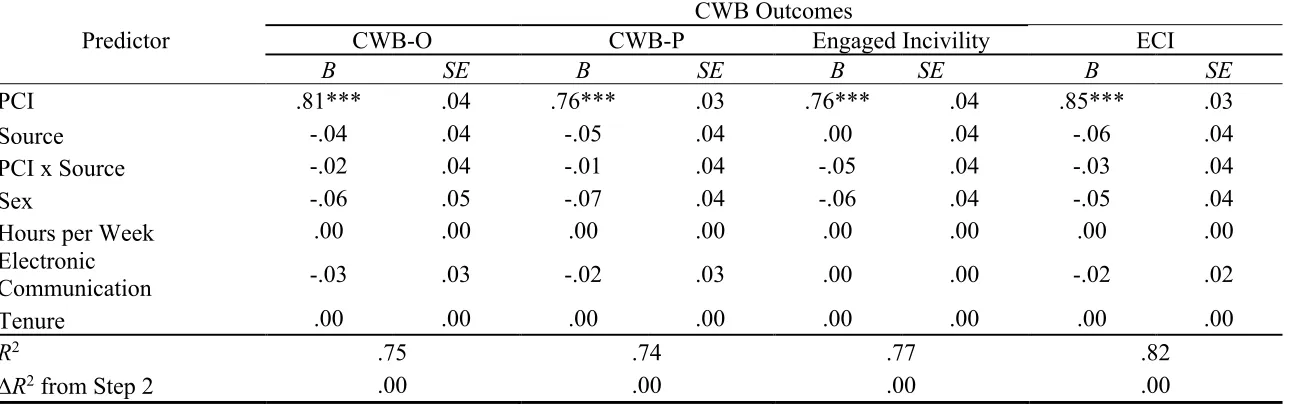
Because the overall hypothesized model included five moderators, for statistical and practical reasons, I assessed each of the moderators separately. Thus, to test Hypothesis 2 and Research Question 3, I followed this three-step procedure to first assess the moderating effect of cyber incivility source (i.e., supervisor or co-worker) on the relation between PCI and the CWB outcomes. Table 10 displays the fit statistics of each step in the process and for each of the five moderators.
and the aforementioned negative outcomes would be weaker. Furthermore, in Research
Question 3, I inquired as to whether the cyber incivility source would also moderate the relation between PCI and CWB-Os. The fit statistics of each of the three steps for the source moderator in Table 10 show that the measurement and structural model (steps 1 and 2) demonstrated
adequate model fit; however, the DAIC and DBIC values indicated that model fit did not improve
after adding the interaction term (step 3). Furthermore, the path coefficients of the interaction model show that the interaction term was not statistically significant for any of the four CWB outcomes and the DR2 from step 2 to 3 indicated that the interaction term did not explain any
additional variance (Table 11). Thus, Hypothesis 2 was not supported. Furthermore, with regard to Research Question 3, the source of the cyber incivility did not moderate the effect between PCI and CWB-O. Next, I assessed the moderating role of job crafting behaviors.
the social resources moderator at one standard deviation above and below its mean for each of the four CWB outcomes. The simple slopes for all significant interactions are displayed in Table 13. Although the social resources simple slopes were statistically significant, the relationships were in the opposite direction than expected. In other words, the positive relation between PCI and each of the CWB outcomes was stronger when job crafting for social resources was high vs. low. Thus, Hypothesis 4a was not supported.
Similar to Hypothesis 4a, Table 10 shows that the measurement and structural models with the structural resources job crafting moderator also demonstrated acceptable model fit. However, although the AIC of the interaction model was lower than the AIC of the structural model (indicating superior fit), the BIC value was slightly higher in the interaction model
compared to the structural model (indicating inferior fit). This inconsistency may have occurred because the interaction only related significantly to the CWB-O outcome, and not any of the other three CWB outcomes (Table 14). Although the interaction term was significant when regressed on the CWB-O outcome, the effect was relatively small, and the interaction only accounted for 1% of additional variance. Nonetheless, using the same method from hypothesis 4a, I calculated (Table 13) and plotted (Figure 4) the simple slopes of the structural resources job crafting moderator for the CWB-O outcome. As seen in Figure 4, the relation between PCI and CWB-O was still positive despite the level of job crafting for structural resources; however, the association was slightly weaker when job crafting was high, as opposed to low. Thus,
Hypothesis 4b was partially supported for one of the four CWB outcomes.
adequate fit, and the fit improved when the interaction term was added to the final model. Table 15 shows that the interaction was statistically significant, and it accounted for additional variance for each of the CWB outcomes. The simple slopes in Table 13 were also statistically significant; however, as Figure 5 shows, similar to the findings for Hypothesis 4a, crafting to decrease hindering job demands seemed to have the opposite effect on the relation between PCI and the CWB outcomes than was expected. Specifically, when crafting to decrease hindering job demands was high, the positive relations between PCI and the CWBs were stronger than when crafting to decrease hindering demands was low. Therefore, despite the significant interactions, Hypothesis 6 was not supported.
Crafting to increase challenging job demands. Finally, Hypothesis 8 predicted that when crafting to increase challenging demands was high, the positive relation between PCI and the engagement in CWBs would be weaker than when crafting to increase challenging demands was low. The fit statistics in Table 10 show that the measurement and structural models yielded acceptable fit and the interaction model demonstrated superior fit to the structural model. The PCI by challenging demands job crafting interaction significantly related to each of the four CWB outcomes, and the interaction explained small amounts of additional variance for each outcome (Table 16). However, similar to in Hypotheses 4a and 6, upon assessment of the simple slopes (Table 13) and the interaction plots (Figure 6), it was evident that the effect of the
interaction was in the opposite direction than expected for each of the four CWB outcomes. Specifically, the PCI to CWB relation was stronger when crafting to increase challenging demands was high vs. low. Thus, Hypothesis 8 was not supported.
study (Podsakoff, MacKenzie, Lee, & Podsakoff, 2003). First, I conducted a CFA in which all items loaded onto their respective latent factors and then onto an additional latent method factor. In this test, if the latent method factor can account for a majority portion of the models’ variance, then this may indicate a problematic level of common method bias. However, likely due to the large number of indicators, this model did not converge. Therefore, as an alternative, I
conducted Harman’s single-factor test. This method is similar to the latent variable method above; however, it instead involves the use of an unrotated EFA to test whether a single factor can account for the majority of the variance (Podsakoff et al., 2003). In this test, a single factor did account for the majority of the variance (54%) with many, but not all items, loading onto that single factor. These findings indicate that a high level of common method bias may have been present in this study. However, I discuss potential alternative explanations in the Limitations section.
Discussion
The first purpose of this study was to investigate the potential link between employees’ PCI and their engagement in various CWBs. The extant cyber incivility literature discusses several negative outcomes associated with perceptions of cyber incivility (e.g., Giumetti et al., 2012; Giumetti et al., 2016, Lim & Teo, 2009, Park et al., 2015); however, the literature has failed to address many of the potential behavioral outcomes of cyber incivility (Miner et al., 2018). Thus, the present study closes that gap in the literature somewhat by demonstrating links between PCI and various CWBs. Specifically, the results showed that when employees
incivility literature that has shown positive associations between face-to-face incivility and CWBs (Mao et al., 2017; Penney & Spector, 2005). Furthermore, although the cross-sectional nature of this study limits the claim that employees’ PCI will result in their subsequent
engagement in CWBs, these results do provide initial support for the possibility that cyber incivility may also result in a spiraling effect that researchers have proposed (Andersson & Pearson, 1999) and examined (e.g., Bunk & Magley, 2013) in the incivility literature. Future studies should aim to replicate these findings within a longitudinal design to understand further the causal direction of these relations.
other source. Therefore, with potentially only very small differences in PCI across source groupings, finding any differential effects across groupings proved to be difficult.
Next, I investigated whether cyber incivility victims’ engagement in CWBs differed as a function of their job crafting behaviors. Specifically, by leveraging multiple theoretical
frameworks, such as the stressor-strain framework and the conservation of resources (COR) theory, I anticipated that employees who engaged in job crafting behaviors would be better equipped to cope with their PCI and thus, would engage in fewer CWBs. Said differently, I contended that job crafting might provide crafters with valued resources and reduced hindering demands. Therefore, I expected that compared to individuals who rarely job craft, frequent crafters would have the ability to choose healthier mechanisms of coping with PCI rather than engaging in CWBS.
I examined each of the four job crafting dimensions separately. Interestingly, three of the four job crafting dimensions did significantly moderate the relation between employees’ PCI and their engagement in CWBs; however, these moderations had the opposite effect than what I expected in the analyses pertaining to Hypotheses 4a, 6, and 8. When employees experienced cyber incivility, they tended to engage in more CWBs when they were also engaging in more, as opposed to fewer, job crafting behaviors. The one exception to these findings was for the structural resources job crafting dimension. That dimension had a moderating effect in the expected direction; however, this was only true for CWB-Os and not any other type of CWB. In other words, when employees engaged in more as opposed to fewer crafting behaviors to
when they were also engaging in more, as opposed to fewer, crafting behaviors to increase their structural resources. Although it is possible that the structural job resources job crafting
dimension differed from the others by chance, I provide some alternative explanations in the sections below.
Despite that most of these findings differ from the proposed hypotheses, there are some plausible explanations for such findings. First, it is important to note that the present study only assessed the self-reported engagement in job crafting and not the resulting outcomes of job crafting. Therefore, although it seems that the engagement in some job crafting behaviors bolstered cyber incivility victims’ likelihood to engage in CWBs, this does not necessarily discount job crafting as a coping tool because the resulting outcomes of the job crafting behaviors were unknown. This is an important distinction because the engagement in job crafting behaviors does not always equate to successful job crafting (Berg, Dutton, &
possible that job crafting did not mitigate the effects between PCI and CWB. The cross-sectional nature of this study may further explain why the engagement in job crafting appeared to bolster the effect between PCI and CWBs in most cases.
Because this was a cross-sectional study, the causal nature of the relations between PCI, job crafting, and CWB are unclear. It is possible that those who craft their jobs to better fit their own needs may elicit more uncivil cyber behaviors from others, and as the present study
demonstrates, these uncivil cyber experiences are associated with CWBs. For example, frequent modifications to one’s demands or requests to one’s supervisor or colleagues for coaching, feedback, or advice may irritate others and cause them to respond with cyber incivility, such as ignoring emails or making rude and dismissive remarks. In turn, individuals may experience this incivility and then engage in CWBs, possibly as a result of their initial job crafting efforts. In this example, job crafting becomes the causal antecedent of this chain of events. Although this was not the anticipated relation, it may explain why job crafting seemed to strengthen the association between PCI and CWBs. Because this was a cross-sectional study, I cannot rule out the possibility of this alternative explanation of causal direction.
crafting dimensions had an amplifying effect on the PCI-CWB relation, but job crafting to increase structural resources did not.
One explanation may be that it is more difficult to make adjustments to one’s social resources and challenging and hindering demands, whereas increasing one’s structural resources is a more attainable task. Therefore, it is possible that employees in this study were simply more successful at increasing their structural resources on a consistent basis than any other job crafting attempt, thus we only observed the expected outcome on the PCI-CWB-O relation with the structural resources job crafting dimension. Second, if job crafting is actually the antecedent to PCI which then results in CWBs, one possible explanation is that increasing one’s structural resources may not have the same negative impact on others that the other three dimensions have. For example, with job crafting to increase social resources, individuals are highly reliant on others to acquire their desired social job resources. This dimension of job crafting involves a high amount of interpersonal interaction, and thus, there is an increased risk of both the
perception of, and engagement in cyber incivility. Furthermore, job crafting to influence one’s hindering and challenging job demands may have a negative effect on others because it involves making changes to one’s actual job tasks. Other employees may view these changes unfavorably and this could also lead to potential uncivil behaviors. In comparison, job crafting to increase structural resources is less reliant on others and involves an independent and less visible effort to grow, develop, and act with autonomy. Therefore, if job crafting is an antecedent to PCI, it is a likely explanation that the structural job resources dimension would be among the least likely to result in PCI compared to the other more interpersonal and visible job crafting dimensions.
Practical Implications
Although not all of the present study’s hypotheses were supported, these findings nonetheless may have significant implications for practitioners and future research. This study demonstrated the powerful effects that frequent experiences with uncivil cyber interactions may have on victims’ behaviors; particularly on behaviors that are harmful to their workplaces. These findings suggest that even the perception of minor interpersonal infractions may be associated with far more severe CWBs directed at individuals or the organization itself. Thus, when communicating with subordinates or co-workers via electronic communication, individuals should be mindful that even something as minor as an ignored email may have a strong negative impact when it occurs often enough and in combination with other minor uncivil actions.
Furthermore, managers should attempt to understand the frequency in which cyber incivility occurs within their organizations so that they might be amenable to possible interventions to counter it.
Although the present study was primarily focused on the mitigation of the negative responses to cyber incivility (via job crafting), an alternative, albeit, perhaps more difficult approach may be to focus on reducing the occurrences of uncivil cyber interactions in the first place. It is unlikely that organizations could rid themselves of all cyber incivility due to its ambiguous nature (Kunkel & Davidson, 2014). However, organizations may be able to train employees to be more mindful about their sent and received cyber communications in order to reduce both actual and perceived uncivil cyber behaviors.