THE U.S. BIOSIMILAR MARKET: ONGOING POLICY CHALLENGES AMONG KEY HEALTH CARE STAKEHOLDERS
by
Christine E Lynch
A thesis submitted to the faculty of the University of North Carolina at Chapel Hill
in partial fulfillment of the requirements for the degree of Master of Public Health in
the Public Health Leadership Program
Chapel Hill Spring 2017
Approved by:
______________________________ Date
2 ©2017 Christine E Lynch
Table of Contents
1 INTRODUCTION 4
2 BACKGROUND 6
2.1EMABIOSIMILAR REGULATORY PATHWAY 7
2.2USFDA/CDERBIOSIMILAR REGULATORY PATHWAYS 8
3 METHODOLOGY 12
4 FINDINGS 14
4.1EMABIOSIMILAR IMPLEMENTATION 14
4.1.1EMA POST-APPROVAL SAFETY SURVEILLANCE 14
4.2U.S.BIOSIMILAR IMPLEMENTATION 15
4.2.1SUMMARY OF STATE LAW AND LEGISLATION RELATED TO BIOLOGIC MEDICATIONS AND SUBSTITUTION OF
BIOSIMILARS,2013 THROUGH 2016 17
4.3EU AND USINDUSTRY BIOSIMILAR PATENT LITIGATION 17 4.4PAYER LANDSCAPE INFLUENCE OF BIOSIMILAR UTILIZATION 18
4.4.1BUY AND BILL PRACTICES 19
4.5U.S.PRESCRIBER PERCEPTION OF BIOSIMILARS 20
4.5.1OVERVIEW OF THE ACRPOSITION STATEMENT 21
4.5.2OVERVIEW OF NRASPOSITION 22
4.5.3OVERVIEW OF THE GABISURVEY ANALYSIS 23
4.5.4RELEVANT OUTCOMES FROM DANBIO DANISH REGISTRY 24
5 DISCUSSION 24
5.1LACK OF BIOSIMILAR INTERCHANGEABILITY APPROVAL 26
6 RECOMMENDATIONS 27
6.1ESTABLISH STAKEHOLDER DRIVEN BEST PRACTICES 27
6.2MAKE BETTER USE OF AVAILABLE RESOURCES 28
6.3FDABIOSIMILAR RESOURCE:THE PURPLE BOOK 29
7 CONCLUSION 29
APPENDICES: 31
APPENDIX 1:RECOMMENDED WEBSITES 31
1 Introduction
US biologic pharmaceuticals are currently the most expensive medicines on the market. Biologic products are complex protein, vaccines, or living entities (e.g. cells) derived from living cell recombinant DNA technology or natural sources such as human tissue. Manufacturing biologics typically requires rigorous processes to reduce variability and maintain the structural integrity of the compound (US Food and Drug Administration, 2016) Because of the strong association between compound structure and therapeutic function, small structural changes in chemical moiety can directly affect and clinical properties of the final product. The U.S. biosimilar market is comprised of large molecule biologic compounds approved as “generic” versions of approved large molecule biologic medications. Similar to generic small molecule products, biosimilars are intended to reduce health care cost by creating competition in the biologic marketplace through offering lower priced alternative products. The potential direct savings on biologic spending in the U.S. has been estimated at 44.2 billion from 2014 through 2024 (Singh, 2015). Unlike small molecule drugs that face generic competition following patent expiration, biologic (large molecule) medicines lack any price competition, thus higher prices extend long after patent exclusivity protection.
Institute for Health and Care Excellence (NICE) recommendations. This action was in response to improved cost-effectiveness of the biologic originator product filgrastim (G-CSF) Subsequent to biosimilar guideline inclusion, filgrastim Drug utilization increased by 104% from January 2009 to January 2014, thereby enabling more patients to access treatment at earlier stages within chemotherapy cycles.
Statutory regulation of biosimilars within the U.S. followed EU biosimilar regulation, enacted as part of the Patient Protection and Affordable Care Act (ACA) in 2010 (FDA, 2016). As biosimilar research development reaches its seventh year within the U.S., four biosimilar agents have received FDA approval. Comparatively, following the first two biosimilar therapies approved by the EMA in 2006, over 20 biosimilar products are approved for use within the EU (IMS Institute for Healthcare Informatics, 2016).
Projections regarding the clinical and economic impact of biosimilar products have been met with controversy regarding biosimilar drug safety, provider perceived differences in drug efficacy, and complications within reimbursement and coverage within a privatized, for-profit, health care system. Additionally, U.S. patent litigation and disputes associated with the regulatory processes (e.g. naming convention, product interchangeability studies, unmet scheduled guidance meetings with the FDA and manufacturers) continue to stall successful implementation and access to biosimilar products.
“Since their first introduction in the EU, biosimilar medicines increased patient access by 44% in the EU-5
countries between 2006 and 2014.” –Carol Lynch, Global Health of Biopharmaceuticals at Sandoz and
Chair of the Biosimilars Medicines Group (Medicines for Europe, 2016)
As U.S. utilization of biosimilars is assessed, we may glean insight from the EU comparative biosimilar market initiated in 2005 regarding best practices, barriers to biosimilar utilization, and overall patient (and population) health improvements associated with increased access to effective and costly biologic medicines.
2 BACKGROUND
Biosimilar products are a class of biologic products that are high similar to a previously approved Food and Drug Administration (FDA) product, called a reference or originator product for purposes of this review. Conceptually, biosimilar products were anticipated to reduce health care costs associated with the most expensive drug class, the biologic products. The lower cost of biosimilars compared to reference biologic therapies were anticipated to increase utilization and access for patients requiring costly therapies for chronic and debilitating disease.
benefit of biosimilars will rely on several key factors including: federal and state statutory regulation of biosimilar access (i.e. interchangeability designation and substitution with reference biologic products) state-by-state), manufacture pricing, reimbursement and insurance formulary positioning and incentivisation, and acceptance of safety and efficacy by prescriber and patient shareholders (Robert Wood Johnson Foundation, 2013).
2.1 EMA Biosimilar Regulatory Pathway
The European Medicines Agency (EMA) approved the first biosimilar for availability within the EU in 2006, through the approval review process regulated by the EMA’s Committee for Medicinal Products for Human Use (CHMP) (Morton, 2017). EMA successes in the biosimilar market include achieving greater drug access and cost savings. Currently, 20 biosimilars are approved within the EU (Kucher, 2016).
As the cost of biologics is a considerable accessibility barrier for patients globally, the biosimilar competitive market in the EU provides alternative biologic products at approximately 25-30% lower cost than the reference biologic medicine. The EMA defines a biosimilar medicine as follows:
A similar biological or “biosimilar” medicine that is similar to another biological medicine that has
already been authorized for use. Biological medicines are medicines that are made by or derived
from a biological source, such as a bacterium or yeast. They can consist of relatively small
molecules such as human insulin or erythropoietin, or complex molecules such as monoclonal
antibodies (EMA, 2017).
source/posology, route of administration, and deviation from reference product strength, formulation, excipients, are noted and may require additional review.
Importantly, interchangeability designation of biosimilars is not determined by the EMA drug application process. Interchangeability status by EMA, “ … are within the remit of the EU member states.” ((EMA), European Medicines Agency, 2014) . In consideration of product exclusivity for biologics marketed in the EU, the EMA defines a period of marketing exclusivity as the “ 8 + 2 year rule” . During the first 8 years from market authorization, no generic product manufacturer can submit reference biologic data for regulatory review. After a period of 10 years, a generic product manufacturer can submit the reference product data for market authorization (TaylorWessing, 2015).
Finally, drug manufacturers submit a single drug application for biosimilar approval for all EU member states to minimize redundancy and reduce application costs (EMA, 2017).
2.2 US FDA/CDER Biosimilar Regulatory Pathways
The U.S. biosimilar market has been less successful in terms of accessibility compared to the EU, largely due to health care policy reform and legislation effectively preserving biologic reference product viability. As part of the Patient Protection and Affordable Care Act (PPACA), new biologic products are now eligible for 12 years of market exclusivity, as codified in the Biologics and Price Competition and Innovation Act (BPCI). The BPCI Act also designated an abbreviated approval pathway for biosimilar approval, as part of an amendment to the Public Health Service (PHS) Act Section 351(a). The biosimilar approval pathway and the aforementioned biologic exclusivity regulation are defined within Section 351(k) and Section 351(k)(7)(C) of the PHS Act respectively (PHS Act, 2009).
there is not one pivotal study or human participant clinical trial that demonstrates “effectiveness”. Instead, analytical studies, animal studies, and a clinical study (or studies) on the most sensitive indication, as determined by the manufacturer in conjunction with the FDA, are components of a biosimilar development program.
FDA has four biosimilar classifications of based on analytical characterization: not similar, similar, highly similar, and highly similar with fingerprint-like similarity. If a biosimilar compound is deemed as not similar, the drug application has no formal guidance. However, the cost associated with an investment (sponsor) would likely not continue through the 351(k) regulatory pathway. Next, a similar designation requires the sponsor must present additional information/evidence to determine if the product is highly similar to the reference product. The third classification, highly similar, meets the analytical standard for analytic similarity and would continue through the 351(k) pathway to determine selective/specific demonstrated biosimilarity. Finally, highly similar with fingerprint-like similarity classification is defined “…based on integrated, multiparameter approaches that are extremely sensitive in identifying analytical differences.” (FDA, 2016, p. 15) The assessment of interchangeability would be assessed in highly similar classifications of biosimilars if the sponsor submitted additional switching studies. Switching studies, or crossover design studies, are direct comparative assessments in efficacy and immunogenicity to simulate and determine effects of switching in real life from the reference product. Therefore the patient or participant should represent the final user (e.g. patient with RA). Additionally, switch over study design requires direct comparison of the biosimilar with the proposed U.S. reference product, not an alternative treatment or placebo (FDA, 2016).
351(k) program is depicted in figure 1, including a side-by- side cartoon of the traditional 351(a) program and the 351(k) program.
Figure 1: U.S. Biosimilar 351(k) and Biologic 351(a) Program Comparison
Through the totality of evidence, a biosimilar product development program must demonstrate little to no clinically meaningful differences in terms of safety and efficacy through chemical analysis and standardization of manufacturing that are similar to a US licensed reference product.
The introduction of the abbreviated biosimilar pathway was anticipated to expand access to biologic medications through providing alternative and more affordable options, generic biosimilars, thereby creating a more competitive biologic market.
Additional Clinical and Immunogenicity
Studies
Comparative Human Pharmacology Studies (pharmacokinetics and pharmacodynamics)
Toxicity Analysis and Animal Studies
Analytical Comparative Structural /Functional Compound Characterization
Clinical Safety and Efficacy Phase 1-3 pivotal trials
Clinical Pharmacology
Analytical Compound Characterization
Figure 1a: FDA Step-wise 351(k) Biosimilar Development Program
As of March 2017, four biosimilar products have been granted approval since enactment of the PPACA in 2010. Key potential barriers identified for biosimilar manufacturers depicted in figure 2 include regulatory burden, statutory burden, and collective market risks that impact the U.S. biosimilar industry (Matrix Global Advisors, 2015, p.1). Moreover, the Centers for Medicare & Medicaid Services (CMS) regulation practices of restriction of cost, fixed cost, and complex reimbursement practices also reduce the long-term success of a functional competitive market. (IMS Institute for Healthcare Informatics, 2016). The onset of multiple citizen petitions by stakeholders, patent infringement litigation, and interchangeability concerns have added to the instability of the biosimilar market and implementation of alternative lower cost medicine therapy.
Figure 2: Barriers to the proposed US Biosimilar Public Health Impact Pyramid
3 Methodology
Table 1: Online Literature Search Methodology
Federal State
EU-7/Global
Legal Medical/Misc.
DHHS, FDA, CBER, CDER regulations.gov
NCBOP EMA, WHO
NCLS.org PUBMED, NCBI, ACA, Kff.org, ASHP, AMA, NIH, Google scholar, purple book, Pew Chart Trusts
Summary of biosimilar resources and databases: U.S. Department of Health and Human Services (DHHS), Center for Medicare and Medicaid Services (CMS), The Food and Drug Administration (FDA), Center for Biologics Evaluation and Research Organization CBER, Center for Drug Evaluation and Research (CDER), North Carolina Board of Pharmacy (NCBOP), European Medical Association (EMA), World Health Organization (WHO), National Institute of Health (NIH), PUBMED, National Center for Biologic Institution (NCBI), The Alternative Care Act of 2010 (ACA), American Medical Association(AMA)
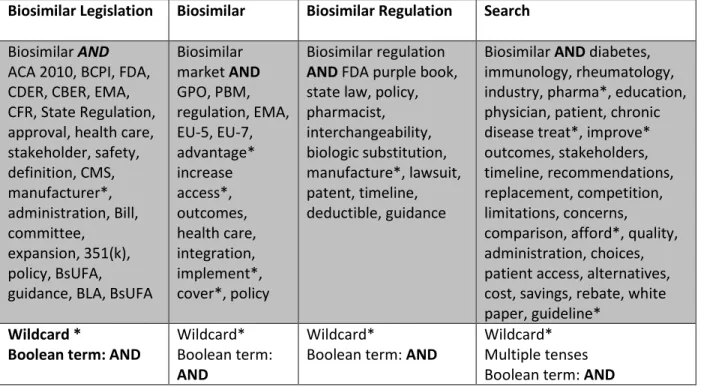
Additional resources were identified through searching medical data using key word searches relevant to medical policy statements included in the analysis (Table 2). Other medical society literature review included: The American College of Rheumatology (ACR), Generic Pharmaceutical Association (GPhA), Biotechnology Industry Organization (BIO), and HSRA.
Table 2: Concept Search by Term
Biosimilar Legislation Biosimilar Biosimilar Regulation Search
Biosimilar AND ACA 2010, BCPI, FDA, CDER, CBER, EMA, CFR, State Regulation, approval, health care, stakeholder, safety, definition, CMS, manufacturer*, administration, Bill, committee, expansion, 351(k), policy, BsUFA,
guidance, BLA, BsUFA
Biosimilar market AND GPO, PBM, regulation, EMA, EU-5, EU-7, advantage* increase access*, outcomes, health care, integration, implement*, cover*, policy Biosimilar regulation AND FDA purple book, state law, policy, pharmacist, interchangeability, biologic substitution, manufacture*, lawsuit, patent, timeline, deductible, guidance
Biosimilar AND diabetes, immunology, rheumatology, industry, pharma*, education, physician, patient, chronic disease treat*, improve* outcomes, stakeholders, timeline, recommendations, replacement, competition, limitations, concerns,
comparison, afford*, quality, administration, choices, patient access, alternatives, cost, savings, rebate, white paper, guideline*
Wildcard *
Boolean term: AND
Wildcard* Boolean term: AND
Wildcard*
Boolean term: AND
4 Findings
4.1 EMA Biosimilar Implementation
The EMA has recently celebrated 20 years of existence (1995-2015). The successful evolution of biosimilar products is considered a major milestone in scientific progress and development of new medicines (EMA, 2017).
EMA credits successful biosimilar market balance through fostering innovation while reducing costs associated with biologic therapy utilization. Notably, the EMA approached biosimilar development by forming a working group, Biosimilar Medicinal Products Working Party (BMWP) to generate regulatory guidelines in 2005. The BMWP underwent a consultative process to gain insight from key health care stakeholders to position guidelines as balanced in terms of regulatory demands and feasibility to research manufacturers. Because the guidance provided by the BMWP included key stakeholder consultation, the EMA regulatory pathways reflect considerations for both safety and feasibility for biosimilar development programs. As the biosimilar market continues to grow within the EU-7 through EMA regulation, over 20 products have been introduced (Table 3).
4.1.1 EMA post-approval safety surveillance
standardized and transparent post-approval research. Funding for the research is facilitated by the EMA through its Pharmacovigilance Working Party/Pharmacovigilance Risk Assessment Committee (PRAC) and the Committee for Medicinal Products for Human Use (CHMP). Essentially, the span of funding medicine safety/pharmacovigilance research includes the pharmaceutical industry, national public resources, and the European Commission stakeholder resources. Further, health care practitioners are recognized as important participants in pharmacovigilance and safety assurance related to supervision and adherence to medicines. The Working Party with Healthcare Professionals Organisations (HCPWP) promotes feedback and dialogue within the medicinal development partnerships. Finally, at the public and patient level, drug safety transparency is available to patients through the European Public Assessment Report (EPAR), based on EMA scientific committee minutes (EMA, 2017).
Patients have the right to know on which data and grounds a medicine is prescribed to them,
and physicians and pharmacists should have the ability to know on which basis a medicine is
granted access to the market. Therefore, we are broadening transparency on scientific data on
which regulatory decisions are based. (EMA, 2017, p. 64)
4.2 U.S. Biosimilar Implementation
difference between U.S. and EU biosimilar drug statutory framework includes the designation of biosimilar interchangeability.
Within the U.S., interchangeability status is assessed if the biosimilar sponsor requests interchangeability status designation as part of the submission proposal. FDA guidance for biosimilar interchangeability includes studies to assess comparative efficacy and demonstration of no clinically meaningful differences between the biosimilar and the U.S. reference biologic drug. To attain interchangeability status, extrapolation of interchangeability must be demonstrated with the specific U.S. biologic reference product as EU comparator biologics are not acceptable. Additionally, cross-over (switching) studies, designed to mimic real world use pertinent to efficacy and adherence are required. Of the four current biosimilar products approved by FDA (table 3), none have interchangeability designation.
Table 3 U.S. Approved Biosimilars (CDER, 2016)
Biosimilar Reference Product Date of approval Interchangeability
Filgrastim-sndz (Zarxio) Filgrastim (Neupogen) 3/6/2015 no Infliximab-dyyb (Inflectra) Infliximab (Remicade) 4/5/2016 no Etanercept-szzs (Erelzi) Etanercept (Embrel) 8/30/2016 no Adalimumab-atto (Amjevita) Adalimumab (Humira) 9/23/2016 no
4.2.1 Summary of State Law and legislation related to Biologic Medications and Substitution of Biosimilars, 2013 through 2016
During the past six years, 36 states have established state standards for interchangeability (substitution) of a biosimilar to replace a reference biologic (Cauchi, 2016). Common features of state regulations provide the authority for prescribers to substitute biosimilars if approved as “interchangeable” by the FDA. Additionally, individual patients must be notified that a substitution has been made, and the pharmacist is allowed to substitute biologics with biosimilars. Laws enacted in Colorado, Georgia, Illinois, North Carolina, and Texas requires that an authorized or allowable substitution must be the lowest cost or price.
In North Carolina, Bill H 195 was proposed by (R) Dollar and signed on 05/21/2015. The law “amends the Pharmacy Practice Act to allow for the substitution of an interchangeable biological product.” Additionally, the NC pharmacist must “communicate” not “notify” a prescriber. This requirement allows the pharmacist to enter into an electronic health record but not notify the prescriber directly. Finally, the NC Board of Pharmacy must post a list of interchangeable products for pharmacists to choose (Cauchi, 2016).
The Pew Charitable Trusts Organization states one study found that requiring patient consent reduces the rate of generic substitution by 25 percent (Trusts, 2017). Although FDA interchangeability status has not been granted for any biosimilars in the U.S., the ongoing concern regarding state regulatory policy effects on biosimilar utilization should be warranted.
Within Europe and the U.S. patent infringement and patent litigation processes impact the availability and thus utilization of biosimilar products. The most common strategy to challenge a reference drug patent within Europe is through the European Patent Office (EPO). Use of the EPO is due to the lack of a single court to rule on all filings, now more contentious since UK Brexit. Notably, this strategy allows for a single EU patent regulation on a European Unitary Patent (EUP). The purpose of unification is to stimulate drug innovation and associated costs of development.
U.S., industry stakeholders have recently impacted the U.S. biosimilar market with legal patent dance and litigation holding on biosimilar accessibility. The patent dance, described as patent litigation provisions associated with the new biosimilar pathway, has two phases. Within phase I, the registered biologic patent holder (for reference biologic) must bring suit against the biosimilar applicant with respect to the patents included in the supplied patent list (to the biologic patent holder) within 30 days. Phase 2 occurs just prior to biosimilar launch, as the biosimilar sponsor must provide 180-day notice before commercial launch. During the 180 day window, the reference biologic patent holder can seek a declaratory judgment (Malkin, 2015).
4.4 Payer Landscape Influence of Biosimilar Utilization
Commercial payers, large employer groups, managed Medicaid programs, and Part D programs often contract with PBMs to manage prescription drug benefits. The payer may outsource all aspects of pharmacy benefit management to the PBM or opt for select services, such as developing and administering utilization management programs. Some common designs in plan benefit administration that payers and PBMs use to manage drug utilization are described in table 4.
Prior Authorization: Approval from a payer prior to reimbursement of medication
Step-edits: A graduated treatment protocol directing to physicians the order in which the must administer different therapies for a given condition
Quantity/Duration Limit: Limits the amount of a drug that may be dispensed at one time and or the duration of use
4.4.1 Buy and Bill Practices
Physician practices typically acquire biologics administered to patients within their office from wholesale distributors in a process referred to as “buy and bill.” Medical practices and clinic purchases providing “buy and bill” services will purchase the drug, manage the inventory, administer the drug to a patient, and bill the patient’s insurance provider for the product and the medical services provided. Medical practices and large Institutional Delivery Networks (IDNs) will often join a group purchasing organization (GPO) in order to receive price discounts. Commercial payers reimburse physicians for drugs that are administered in the office using the manufacturer average sales price (ASP) formula, as instituted by the Center for Medicaid and Medicare Services (CMS). The practice also receives a small markup on the price to compensate for storage, handling, infusion, and other administrative costs. For comparison, patients with Medicare coverage generally provide a structured reimbursement to physician practices and clinics at ASP + 6 % (IMS Institute for Healthcare Informatics, 2016).
Medicare Part B and Part D payment programs are currently both utilized by physicians and health care organizations to obtain reimbursement for biologics and biosimilars. Medicare Part B includes provider-administered drugs regardless of inpatient or outpatient status. Medicare Part B will reimburse providers at 106% of the Wholesale Acquisition Cost (WAC) for the product until ASP information is available after two full quarters of sales data have been reported to CMS. Once the ASP is established, drug reimbursement reverts to ASP + 6%. Medicare Part D, voluntary plans vary related to formulary and cost-sharing structure. The types of utilization management tools also vary by plan. As part of standard benefits, the cost of biosimilars under Part D plans shift the cost share to patient responsibility through co-payment and/or donut hole status related patient cost payment structure.
Drug coverage under a Pharmacy benefit (buy and bill versus contracted specialty pharmacy) is determined by coding, although traditionally fewer utilization controls are associated with the medical benefit. Importantly, drug utilization under the pharmacy benefit has higher out of pocket patient cost, through co-pay or coinsurance. Drugs covered under the pharmacy benefit are typical subject to several utilization controls to ensure appropriate use, such as copayment tiers, prior authorization, and step edits. As health plans incur rising costs due to specialty drugs, they are shifting the coverage from the medical benefit to the pharmacy benefit. As a consequence, this means that patients may pay higher out of pocket costs for these specialty (biologic) drugs.
4.5 U.S. Prescriber Perception of Biosimilars
Rheumatoid Arthritis Society (NRAS) Position Paper on Biosimilars, and relevant key findings from a GaBI Survey published in 2015.
4.5.1 Overview of the ACR Position Statement
The ACR medical society attests that from a purely analytic characterization and thus functional aspect of biosimilar development programs, biosimilar manufacturers that sponsor and develop biosimilars do not have access to proprietary manufacturing processes. Because analytic characterization of the highly specialized isoforms of biologics is closely tied with therapeutic benefit and efficacy, slight product variation in biosimilar compounds respective of originator biologic reference compounds that are highly complex is not out of the question depending on the sensitivity/specificity of FDA program review pertaining to chemical characterization analytic evidence. Pointedly, the ACR described the historical safety concerns associated with utilization of the biosimilar product of the reference biologic erythropoietin (EPO). The emphasis highlighted the need for more stringent approval processes and regulation in the U.S. as the utilization of the biosimilar was associated with serious adverse events following 1998 biosimilar approval by the EMA. The most alarming drug adverse events included a life-threatening adverse event was associated with the EPO “similar” product, Eprex, approved in the EU but not in the US. A minor change in Eprex manufacturing led to a 95 % increase in the number of cases of pure red cell aplasia (PRCA). More recently, another increase in reported PRCA in Thailand was associated with other biosimilar EPO medicines. The ACR recommends that only treating physicians should be allowed to substitute a biosimilar for a reference biologic or the switch among biosimilar medicines due to such safety concerns. A summary of the key policy concerns are listed in table 5 below from the ACR in response to the August 2015 FDA issued draft guidance for biosimilar policy (ACR , 2015):
The size, complexity, and heterogeneity of biologics (and biosimilars) require greater scientific evidence and analytical evaluation than generic small molecule drugs passed through the U.S.C. 355(j) Drug Price Competition and Patent Term Restoration Act (Hatch-Waxman Act of 1984)
Clinical trials in humans are necessary to ensure the safety and efficacy of biosimilars
The decision to substitute a biosimilar product should only be made by the prescribing provider
Providers must retain the right to write “dispense as written” or “brand medically necessary” for all prescriptions
Biosimilars have to have distinct names to ensure accurate pharmacovigilance
Long term post-marketing registry based data collection for each biosimilar is necessary to monitor for less common but important adverse events
The ACR objects to compulsory switching of stable patients to a different medicine including biosimilars for cost saving reasons without consent from the prescribing provider
4.5.2 Overview of NRAS Position
NRAS posits that at the time of the position paper revision (March 2016), only two biologic products, Remicade/infliximab and Enbrel/infliximab had biosimilar approved alternatives available in the UK for the treatment of Rheumatoid Arthritis. Overall, the biosimilars demonstrated, “…similar therapeutic efficacy and incidence of drug-related events, are well tolerated, and have a comparable record of safety.” (NRAS, 2016, p. 2)
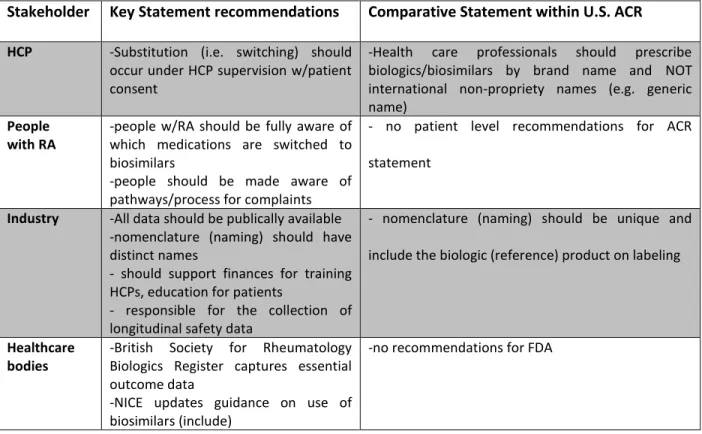
the wider access availability associated with biosimilar utilization. Notably, NICE declined the BSR/NRAS appeal to widen access to patients with moderate to severe disease with poor prognostic disease indicators. Comparative NRAS and ACR policy position recommendations are included in table 6 below, focused on healthcare professional, patient, industry, and health care entity stakeholders.
Table 6: Comparison of NRAS and ACR Biosimilar Policy Position
Stakeholder Key Statement recommendations Comparative Statement within U.S. ACR
HCP -Substitution (i.e. switching) should
occur under HCP supervision w/patient consent
-Health care professionals should prescribe biologics/biosimilars by brand name and NOT international non-propriety names (e.g. generic name)
People with RA
-people w/RA should be fully aware of which medications are switched to biosimilars
-people should be made aware of pathways/process for complaints
- no patient level recommendations for ACR
statement
Industry -All data should be publically available
-nomenclature (naming) should have distinct names
- should support finances for training HCPs, education for patients
- responsible for the collection of longitudinal safety data
- nomenclature (naming) should be unique and
include the biologic (reference) product on labeling
Healthcare bodies
-British Society for Rheumatology Biologics Register captures essential outcome data
-NICE updates guidance on use of biosimilars (include)
-no recommendations for FDA
Additionally, NRAS revealed that although biosimilar availability has improved patient access due to decreased medication cost, the access is not consistent outside of mainland Europe due to more stringent accessibility regulation. Until NICE revises guidance to include specific biosimilar utilization (update), increased access will be limited geographically (NRAS, 2016).
The Generics and Biosimilars Initiative Journal (GaBI Journal) assessed barriers to biosimilar uptake within the U.S. in 2014. Overall, the objective of the survey analysis provided data on two healthcare market stakeholders, physicians, and payers. Overall results report 70% of prescribers responded they are likely to prescribe a biosimilar to treatment-naïve patients. Regarding switching an existing patient to a biosimilar from the reference biologic, 8%, 61%, and 31% responded very likely, somewhat likely, and not likely respectively. For payers, 7 of 8 respondents reported they were very likely to include biosimilars on formulary. Further, the inclusion of biosimilars would be tiered to differentiate between the biosimilar and biologic. 75% of payer respondents expect biosimilars to have a 15-35% price discount as compared to the biologic reference product (GaBI, 2014).
4.5.4 Relevant Outcomes from Danbio Danish Registry
Outcomes from the Danbio Danish Registry presented at the ACR 2016 Annual Meeting reported results of 768 patients with inflammatory rheumatic disease treated with Remicade for greater than four years. These patients did not experience disease progression after the non-medical switch to the biosimilar Remsima from the Biologic reference product, Remicade (during three months prior and three months post switch monitoring). Other important findings reported 15% (117) of patients discontinued treatment, 34 due to adverse effects, and 51 due to lack of effect. Study authors recommend further investigation as to patient specific adherence and barriers to therapy use during switching periods between the biosimilar and biologic reference product use (Glintborg B, 2017).
5 Discussion
biosimilars in two therapeutic areas in the U.S., Inflammation (Rheumatology) and Diabetes rely on multiple stakeholders. The savings opportunity provided by the biosimilars is timely, considering ongoing budgetary constraints within the current political landscape. Biosimilars also provide an avenue to support the patient goal, to improve their health outcomes and quality of life. Thus, increased access to biologic therapies represents an important policy goal. Disincentives for biosimilar use include payer price fixing (e.g. ASP calculated cost), physician resistance to adoption, increased development cost and litigation within the pharmaceutical industry, and lack of consistent interchangeability within each state.
In June 2015, AbbVie Inc., the manufacturer of the biologic Humira (adalimumab ) filed a citizen petition questioning the FDAs approach to biosimilar labeling related to the biosimilar Amjevita (adalimumab-atto). Highlights of AbbVie’s petition include advocating that approved prescription drug labeling for biosimilar products licensed under section 351(k) of the PHSA contain (FDA, 2015):
A clear statement that the product is a biosimilar, that the biosimilar is licensed for fewer than all the US-licensed reference products conditions (if applicable) (AbbVie Inc., 2015)
A clear statement that the FDA has not determined that the biosimilar product is interchangeable (if applicable) (AbbVie Inc., 2015)
A concise description of pertinent data developed to support licensure of the biosimilar, along with information adequate to enable prescribers to distinguish data derived from studies of the US –licensed product (AbbVie Inc., 2015)
In response, FDA currently aligned with only the requirement, that the drug label includes a clear statement that the product is a biosimilar. The naming convention guidance for biosimilars now includes a 4-letter suffix “devoid of meaning” as part of the name of all biologic products, including US-licensed reference products and biosimilar products (Goodwin, 2017).
comment notification processes, public meetings, and live discussion forums were held to discuss modifications needed within The Biosimilar User Fee Act (BsUFA) set to expire in December of 2017. A Public Meeting Agenda for public comment was held on October 20th, 2016 that included a forum for key stakeholders to submit and voice comments and recommendations for the reauthorization of the expiring BsUFA for fiscal years (FYs) 2018 – 2022 (Goodwin Proctor LLP, 2016).
FDA final recommendations for reauthorization of BsUFA through implementation of BsUFA II, all public comments are to be submitted to the U.S. Congress for review no later than January 15th, 2017. Clearly, many stakeholders influence the balance of a viable Biosimilar Market that BsUFA II regulates and FDA holds the responsibility to effectively and completely execute a drug application review processes as set through the BsUFA regulatory mandates. Ultimately, however, the final responsibility to assure the safe biosimilar drug utilization falls on U.S. prescribers as they monitor and regulate patient treatment and adherence (CDER, 2016).
5.1 Lack of Biosimilar Interchangeability Approval
manage biologic medicine cost includes a paradigm shift in the perception on what definitively ensures safety and efficacy to important stakeholders, the prescribers and patients. Because FDA focused on analytics and PK/PD studies, the programs lack clinically significant information. The Biosimilar 351(k) development methods focus on biosimilarity through analytical methodology in normal (healthy) volunteers, utilizing data extrapolation, rather than Phase 3 clinical trials.
6 Recommendations
6.1 Establish Stakeholder Driven Best Practices
Prescriber stakeholder recommendations include improved education regarding biosimilar therapy, being able to consistently improve health care outcomes for patients through increased access to costly medications. Additionally, prescribers in the U.S. have voiced concern regarding maintaining their freedom in prescribing biosimilar medications for the appropriate patient.
Supportive physician education regarding the paradigm shift from 351a to k: change the focus and educational message to describe the value of demonstrated biosimilarity and patient population (e.g. new starts instead of generic interchange among patients with established biologic product treatment). Manufacturing and FDA have improved educational efforts regarding the 351(k) approval process, thus improving the inherent differences of biologic and biosimilar pathway review processes. Simply providing CME educational resources to describe the analytical basis to the review processes (assessing critical physical, chemical, biological characteristics of a molecule) that truly define the similarity tied to structural and functional analysis is paramount to successful biosimilar product acceptance.
acceptance criteria), potentially as part of labeling may also reduce questions regarding lot to lot variability or genetic drift concerns (US Food and Drug Administration, 2016).
6.2 Make Better Use of Available Resources
Resources for prescriber CME education include: FDA CDER educational programs, Medical Societies (e.g. American Medical Society), FDA resources online, purple book for biosimilars, pharmacists and health system pharmacy resources (i.e. American Society of Health System Pharmacy (ASHP)) Industry manufacturer websites, and GPO/Specialty pharmacy outreach programs (e.g. Express Scripts).
ASHP recommendations also emphasize understanding the rationale regarding the biosimilar 351(k) pathway, predicated on the use of analytic scientific supportive evidence instead of clinical safety/efficacy trials. Every stage of the analytics is focused on validating structural similarity (function is extrapolated from the structure of the compound/specificity). Further, explaining that neutralization binding assays (% neutralization of primary target) and analytical studies are completed against the originator biologic to determine target binding comparative to reference biologics. The American Society of Health System Pharmacists provided the following educational recommendation, referred to as the ABCs and E of Biosimilar Provider Education summarized in Table 7: Table 7: ASHP “ABC and E’s of Biosimilars” (ProCE, Inc., 2016)
Table 7: ABC and E’s of Biosimilars
Accept the accuracy of analytics
6.3 FDA Biosimilar Resource: The Purple Book
The Purple Book is a primary resource for all biosimilar and biological products, including
interchangeability designation, licensed by FDA (U.S. Dept. of Health and Human Services, 2017). CMS recommends instructing physicians and pharmacists on how to prescribe and dispense cost-effective biosimilars to maximize use. It is important to point out that a prescriber may have to write the proprietary name of the biosimilar product as found in the FDA Purple Book for it to be dispensed; a prescriber may not be able to simply write the proprietary name of a reference product and expect the pharmacist to substitute it with the biosimilar. The link for the Purple book and biosimilar list is included in appendices (appendix 1).
7 Conclusion
Appendices:
Appendix 1: Recommended Websites
The Purple Book- list of licensed biological products with reference product exclusivity and Biosimilarity orInterchangeability
Link:
https://www.fda.gov/downloads/Drugs/DevelopmentApprovalProcess/HowDrugsareDevelopedandApproved/A pprovalApplications/TherapeuticBiologicApplications/Biosimilars/UCM412398.pdf
National Conference of State Legislatures Link:
http://www.ncsl.org/research/health/state-laws-and-legislation-related-to-biologic-medications-and-substitution-of-biosimilars.aspx
CME: FDA- CDER Overview of Biosimilar Products fdabiosimilars.e-paga.com/course/framework/index.html#
CME: A Health-System Pharmacists Guide to Biosimilars: Regulatory, Scientific, and Practical Considerations Link:
www.biosimcentral.org
Reference Product Exclusivity Biological Products Filed Under Sect 351(a) of the PHS Act, August 2015 Link:
http://www/fda.gov/downloads/Drugs/GuidanceComplanceRegulatorInformation/Guidances/UCM407844.pdf ClincalPharmacology Data to Support a Demonstration of Biosimilarity to a Reference Product, May 2014 Link:
http://www.fda.gov/downloads/drugs/GuidanceComplianceRegulatoryInformation/Guidances/UCM397017.pdf
FDA Guidance for Industry, “QE5 Comparability of Biotechnological/Biological Products Subject to Changes in Their Manufacturing Process”
Link:
http://www.fda.gov/downloads/drugs/GuidanceComplianceRegulatoryInformation/Guidances/UCM397017.pdf Formal Meetings between FDA and Biosimilar Biological Product Sponsors or Applicants, May 2013
Link:
http://www.fda.gov/downloads/drugs/guidanceComplianceRegulatoryInformation/guidances/UCM345649.pdf
Quality Considerations in Demonstration of Biosimilarity to a Reference Protein Product, May 2012 Link:
Appendix 2: EMA Approved Biosimilars (accessed March 1, 2017)
Biosimilar Reference
Biologic
Therapeutic Area Authorization
Date
Manufacturer Post Marketing
Abasaglar (previously Abasria)
Insulin Glargine DM 9/2014 Eli Lilly and Boehringer
Landmark approval: 1st
biosimilar insulin
Omnitrope Somatropin Turner Syndrome +2
indications
4/2006 Sandoz
Valtropin Somatropin Turner syndrome +1
indication
4/2006 BioPartners w/drwn 5/2012
Lusduna Insulin Glargine DM 1/2017 Merck
Amgevita adalimumab RA +7 indications 1/2017 Amgen
Benepali Etanercept RA+ 3 indications 1/2016 Samsung
Flixabi Infliximab RA +5 indications 5/2016 Samsung
Inflectra Infliximab RA +5 indications 9/2014 Hospira
Remsima Infliximab RA +5 indications 9/2013 Celltrion
Movymia Teripartide osteoporosis 1/2016 STADA
Terrosa Teripartide osteoporosis 11/2016 Gedeon
Solymbic Adalimumab RA + 6 indications 1/2017 Amgen
Inhixa Enoxaparin
sodium
Venous
thromboembolism
9/2016 Techdow EU
Thorinane Enoxaparin
sodium
Venous
thromboembolism
9/2016 Pharmathen
Truxima Rituxumab RA +4 indications 12/2016 Celltrion
Abseamed Epoetin alpha CKD, Cancer, Anemia 8/2007 Medice
Arzneimittel
Binocrit Epoetin alpha CKD, Anemia 8/2007 Sandoz
Epoetin alfa hexal Epoetin alpha CKD, Cancer, Anemia 8/2007 Hexal
Retacrit Epoetin zeta CKD +3 indications 12/2007 Hospira
Silapo Epoetin zeta CKD ++3 indications 12/2007 STADA
Filgrastim Hexal Filgrastim Neutropenia +2
indications
2/2009 Hexal
Accofil Filgrastim Neutropenia 9/2014 Accord
Healthcare
Filgrastim ratiopharm
Filgrastim Neutropenia +2 indications
9/2008 Ratiopharm w/drawn 4/2011
Biograstim Filgrastim Neutropenia + 2
indications
9/2008
Grastofil Filgrastim Neutropenia 10/2013 Apotex
Nivestim Filgrastim Neutropenia +2
indications
6/2010 Hospira
Tevagrastim Filgrastim Neutropenia +2 9/2008 Teva Generics
Zarzio Filgrastim Neutropenia +2 2/2009 Sandoz
Bemfola Follitropin
alpha
Anovulation IVF 3/2014 Finox Biotech
Ovaleap Follitropin
alpha
Anovulation IVF 9/2013 Teva Pharma
REFERENCES
(EMA), European Medicines Agency. (2014, October 23). Guideline on similar biological medicinal products. CHMP/437/04 Rev 1, p. 5.
AbbVie Inc. (2015, December 16). Regulations.gov. Retrieved from Citizen Petition: https://www.regulations.gov/document?D=FDA-2015-P-4935-0001
ACR . (2015, March 12). Americal College of Rheumatology Position Statement on Biosimilars: Encourages Strict Oversight, Scientific Study, and Physician Involvement. Atlanta, GA, US. Advisory Committee for Pharmaceutical Sciences and Clinical Pharmacology. (2012). Biosimilars- An
Update Focused on Quality Considerations . Retrieved November 11, 2016, from Office of Biotechnology Products:
http://www.fda.gov/downloads/advisorycommittees/committeesmeetingmaterials/drugs/advis orycommitteeforpharmaceuticalscienceandclinicalpharmacology/ucm315764.pdf
Brill, A. (2016, April). Payor Strategies to Promote Biosimilar Utilization. Retrieved October 1, 2016, from Matrix Global Advisors: https://www.pcmanet.org/wp-content/uploads/2016/08/mga-payor-strategies-for-biosimilars-white-paper-april-2016-2.pdf
Cauchi, R. (2016, June 1). National Conference of State Legislature. Retrieved November 1, 2016, from State Laws and Legislation Related to Biologic Medications and Substitution:
http://www.ncsl.org/research/elections-and-campaigns/ncsl-statevote-post-election-briefing.aspx
CDER. (2015, March). Formal Meetings Between the FDA and Biosimilar Biologic Sponsor or Applicants. Retrieved November 10, 2016, from Guidance for Industry:
http://www.fda.gov/downloads/drugs/guidancecomplianceregulatoryinformation/guidances/uc m345649.pdf
CDER. (2016, October 20). October 20, 2016 BsUFA II Agenda. Retrieved November 10, 2016, from Public Meeting BsUFA II :
https://collaboration.fda.gov/p8t969jkjvi/?launcher=false&fcsContent=true&pbMode=normal Chrisl L for the US Food and Drug Administration. (2015, June 19). FDAs overview of the regulatory
guidance for the development and approval of biosimilar products in the US. Retrieved September 20, 2016, from
Constantino, T. (2016, March 29). IMS Health. Retrieved November 18, 2016, from IMS Health: Surge in biosimilars to drive significant change in health system costs, patient access and competition by 2020: www.imshealth.com/en/about-us/news/ims-health-surge-in-biosimilars-to-drive-change-in-health-system-costs
EMA. (2017, January). EMA . Retrieved from Biosimilar Medications:
http://www.ema.europa.eu/ema/index.jsp?curl=pages/special_topics/document_listing/docum ent_listing_000318.jsp
EMA. (2017, 1 9). European Medicines Agency. Retrieved from Celebrating 20 Years:
http://www.ema.europa.eu/docs/en_GB/document_library/Leaflet/2015/03/WC500184383.pd f
European Medicines Agency (EMA). (2014, October 23). Guideline on similar biological medicinal products. CHMP/437/04 Rev 1. London E14, United Kingdom, England.
European Medicines Agency. (2012, September 27). Questions and Answers on Biosimilar Medicines (Similar Biologic Medicinal Products). Retrieved from Google, Google Docs:
www.ema.europa.eu/docs/en_GB/document_library/Medicine_QA/2009/12/WC500020062.pd f
FDA . (2017, January 12). U.S. Department of Health and Human Services. Retrieved from Information for Industry (Biosimilars):
https://www.fda.gov/Drugs/DevelopmentApprovalProcess/HowDrugsareDevelopedandApprove d/ApprovalApplications/TherapeuticBiologicApplications/Biosimilars/ucm241720.htm
FDA. (2015, March 6). FDA approves first biosimilar product Zarxio. Retrieved October 3, 2016 , from press release: www.fda.gov/newsevents/newsroom/pressannouncements/ucm436648.htm FDA. (2015, December 23). Regulations.gov. Retrieved from Citizen Petition from AbbVie Inc. :
https://www.regulations.gov/document?D=FDA-2015-P-4935-0001
FDA. (2016, August 12). Biosimilar User Fee Act (BsUFA). Retrieved November 16, 2016, from For Industry: www.fda.gov/forIndustry/userfees/biosimilaruserfeeactbsufa/default.htm
FDA. (2016, October 20). Biosimilar User Fee Act Guidance for Industry. Retrieved November 2016, from Biosimilar User Fee Act (BsUFA II) Reauthorization Public Meeting Presentation:
https://www.fda.gov/downloads/forindustry/userfees/biosimilaruserfeeactbsufa/UCM526071.p df
FDA. (2016, December). FDA Guidance for Industry. Retrieved from Clincal Pharmacology Data to Support a Demonstration of Biosimilarity to a Reference Product:
FDA. (2016, May 10). U.S. Food and Drug Administration. Retrieved October 2, 2016, from Information on Biosimilars:
www.fda.gov/Drugs/DevelopmentApprovalProcess/HowDrugsareDevelopedandApproved/Appr ovalApplications/TherapeuticBiologicApplications/Biosimilars/
FDA CDER. (2016, May). Protocol Assessment Guidance for Industry. Retrieved from Special Protocol Assessment Guidance for Industry:
https://www.fda.gov/downloads/drugs/guidanceComplianceRegulatoryInformation/guidances/ UCM498793.pdf
GaBI. (2014). Barriers to Market Uptake of Biosimilars in the US. GaBI Journal, 108-15. Retrieved from GaBI Journal Online .
Glintborg B, e. a. (2017, March 26). Outcomes from the Danbio Registry [abstract]. Retrieved from Arthritis Rheumatology: http://acraabstracts.org/abstract/a-nationwide-non-medical-switch- from-originator-to-biosimilar-infliximab-in-patients-with-inflammatory-arthritis-eleven-months-clinical-outcomes-from-the-danbio-registry/
Goodwin. (2017, January 18). Big Molecule Watch. Retrieved from FDA Denies AbbVie's Citizen Petition on Interchangeability: http://www.bigmoleculewatch.com/2017/01/18/fda-denies-abbvies-citizen-petition-on-interchangeability/
Goodwin Proctor LLP. (2016, November 28). Big Molecule Watch. Retrieved December 2, 2016, from BPCIA Litigation Summary: www.bigmoleculewatch.com/bpcia-litigation-summary-chart/ IMS Institute for Healthcare Informatics. (2016, March). Delivering on the promise of biosimilar
medications: the role of functioning competitive markets. Retrieved October 10, 2016, from file:///Users/christinelynch/Downloads/IMS_Institute_Biosimilar_Brief_March_2016.pdf Kucher, S. e. (2016). Policy Requirements for a Sustainable Biosimilar Market. Retrieved from
medicinesforeurope.com
Malkin, B. E. (2015). GaBI Journal. Retrieved from Biosimilars Patent Litigation in the EU and the US: a comparative strategic overview: http://gabi-journal.net/biosimilars-patent-litigation-in-the-eu-and-the-us-a-comparative-strategic-overview.html
Matrix Global Advisors. (2015, February). The Economic Viability of a U.S. Biosimilars Industry. Retrieved October 2, 2016, from Policy Areas Health Care: www.matrixglobaladvisors.com
National Kidney Foundation. (20104). Biosimilar Drugs Frequently Asked Questions. Retrieved from Google, Google Docs: www.kidney.org
NRAS. (2016). NRAS Position Paper on Biosimilar Medicines.
ProCE, Inc. (2016). Biosimilars Out of the Gate: What are the Latest Developments? 51st ASHP Midyear Clinical Meeting and Exhibition. Las Vegas: ProCE, Inc.
Robert Wood Johnson Foundation. (2013, October 10). Health Affairs Health Policy Briefs. Retrieved from Biosimilars: http://www.rwjf.org/en/library/research/2013/10/biosimilars.html
Singh, S. C. (2015, December 28). American Journal of Managed Markets. Retrieved from The Economic Implications of Biosimilars:
http://www.ajmc.com/journals/supplement/2015/ace0039_dec15_biosimilars/ace0039_dec15 _biosimilars_singhbagnato
Staton, T. (2016, August 8). Fierce Pharma. Retrieved November 18, 2016, from Aiming to shield 14 Billion in Sales, AbbVie smaks Amgen with a Patent Suit over Humira Biosimilar:
www.fiercepharma.com/pharma/aiming-to-shield-14b-sales-abbvie-smacks-amgen-a-patent-suit-over-humira-biosim
TaylorWessing. (2015, January). Synapse Law for Life Sciences. Retrieved from Data exclusivity for medicinal products in Europe:
https://www.taylorwessing.com/synapse/regulatory_dataexclusivity.html
Trusts, T. P. (2017, 2 2). Q:A Biosimilars. Retrieved from How Federal and State Policy will Affect Use: http://www.pewtrusts.org/en/research-and-analysis/q-and-a/2016/03/biologic-and-biosimilar-drugs-how-federal-and-state-policy-will-affect-their-use
U.S. Dept. of Health and Human Services. (2017, March 29 ). Purple Book: Lists of Licensed Biological Products with Reference Product Exclusivity and Biosimilarity or Interchangeability Evaluations. Retrieved from FDA:
https://www.fda.gov/drugs/developmentapprovalprocess/howdrugsaredevelopedandapproved /approvalapplications/therapeuticbiologicapplications/bisimilars/ucm411418.htm
U.S. Food and Drug Administration. (2014, 08 29). About FDA. Retrieved from About the FDA Organizational Charts:
https://www.fda.gov/aboutFDA/CentersOffices/OrganizationCharts/default.htm