PATTERNS OF ROTAVIRUS VACCINE UPTAKE, USE, AND EFFECTIVENESS IN PRIVATELY-INSURED US CHILDREN, 2006-2010
Catherine A. Panozzo
A dissertation submitted to the faculty of the University of North Carolina at Chapel Hill in partial fulfillment of the requirements for the degree of Doctor of Philosophy in the
Department of Epidemiology, Gillings School of Global Public Health.
Chapel Hill 2013
Approved by: M. Alan Brookhart Sylvia Becker-Dreps Michele Jonsson Funk Til Stürmer
ii ABSTRACT
CATHERINE A. PANOZZO: Patterns of rotavirus vaccine uptake, use, and effectiveness in privately-insured US children, 2006-2010
(Under the direction of M. Alan Brookhart)
Objectives. Our study examines predictors and timeliness of rotavirus vaccine
administration among privately-insured US infants and children from 2006 to 2010. We also calculate direct, indirect, total, and overall rotavirus vaccine effectiveness estimates as well as the number of rotavirus and acute gastroenteritis hospitalizations prevented among infants and children aged 8 to 20 months.
Methods. Bivariate analyses and multivariable log-risk models were used to determine predictors of rotavirus vaccine series initiation and completion among infants in the
MarketScan Research Databases. Vaccine effectiveness estimates were derived using Cox proportional hazards regression, stratifying by calendar year and adjusting for month of birth. Incidence rate differences were calculated to determine the absolute number of rotavirus and acute gastroenteritis hospitalizations prevented in the cohort.
iii
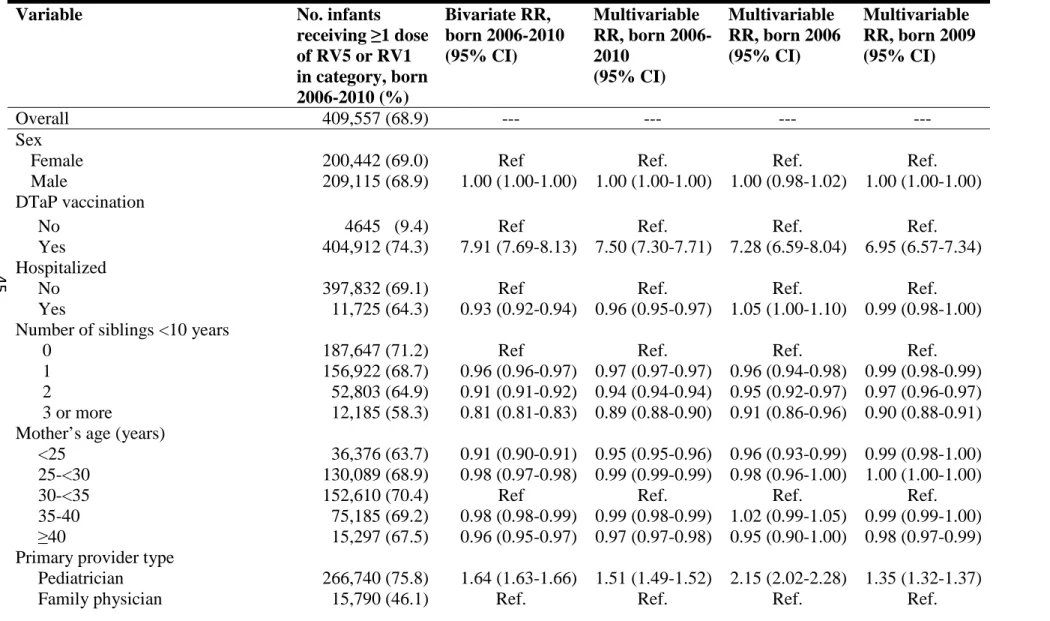
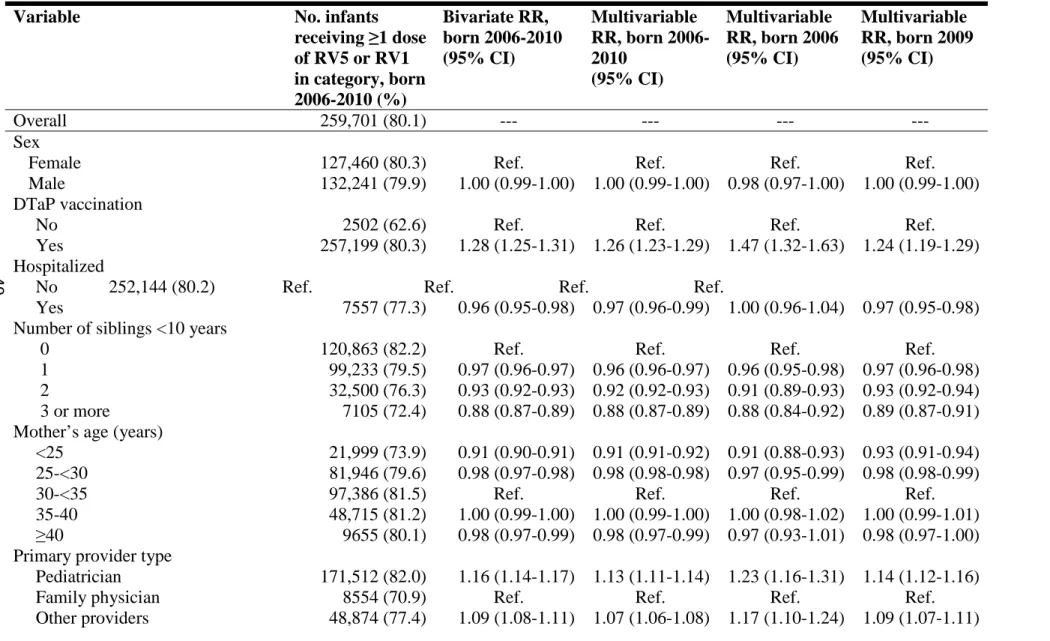
receipt of the diphtheria, tetanus and acellular pertussis vaccine (Initiation: RR=7.50, 95% CI=7.30-7.71; Completion: RR=1.26, 95% CI=1.23-1.29), visiting a pediatrician versus family physician (Initiation: RR=1.51, 95% CI=1.49-1.52; Completion: RR=1.13, 95% CI=1.11-1.14), and living in a large metropolitan versus smaller metropolitan, urban, or rural area. Direct vaccine effectiveness of one or more doses of any rotavirus vaccine in
preventing rotavirus gastroenteritis hospitalizations in children 8 to 20 months ranged from 87 to 92% for each calendar year, 2007-2010. Accounting for indirect protection increased the total vaccine effectiveness by an additional 3 to 8%. Failing to account for indirect protection underestimated the absolute number of rotavirus gastroenteritis hospitalizations prevented in rotavirus-vaccinated children by 1.5 to 5.3-fold.
iv PREFACE
If successfully awarded this Doctor of Philosophy in Epidemiology, I will be the first “doctor” of any kind in the Panozzo and Marks family.
This achievement would not be close to being realized without support from my parents, Don and Susan Panozzo, and my fiancée, Jeremy Marks.
Dad, thanks for your help and patience as I struggled through math homework late at night when I was growing up, and Mom, thanks for correcting my English papers when I was younger. I think epidemiology combines both of your original professions as teachers, and more than anything, it combines the curiosity, creativity, and diversity of disciplines that you always inspired me to pursue.
v
ACKNOWLEDGEMENTS
Alan Brookhart, thanks for giving me many opportunities to develop as an
epidemiologist. Just when I thought I would never be able to study vaccines at UNC, you gave me a real chance, and I will always be grateful for your support and expertise.
Sylvia Becker-Dreps, thanks for sharing your subject matter expertise and field experiences, and for your enthusiasm along the way. It was very motivating and comforting to have a “rotavirus friend” at UNC, and now we have several more such friends.
Michele Jonsson Funk, thanks for being the expert on pharmacoepi issues related to the maternal/infant codes and being a great role model to me. Your attention to detail is something I will strive to achieve.
Til Strümer, I didn’t plan to study pharmacoepi when I came to UNC, but I’m glad I did because the skills gained and the resources provided matched the experience I was
looking for and has continued to help me find new opportunities. Thanks for putting students first.
David Weber, you always had an amazing number of new inspiring ideas, and provided great mentorship and wise advice during some of the more difficult times. Thanks for the clinical perspectives that you have shared.
vi
TABLE OF CONTENTS
LIST OF TABLES...ix
LIST OF FIGURES ...x
LIST OF ABBREVIATIONS...xi
Chapter I. REVIEW OF THE LITERATURE...1
A. Conceptual Framework ...1
B. Historical Background...2
C. Critical review of literature ...6
D. Synopsis or Summary...10
References……….11
II. STATEMENT OF SPECIFIC AIMS ...18
A. Specific aims, Hypotheses, Rationale………..18
III. METHODS...21
A. Overview of Methods...21
B. Design...21
1. Subject Identification…………...21
a. Source Population ...21
vii
2. Methods for Proposed Study ...23
a. Classification of Exposure...23
1. Exposure of Interest ...23
2. Exposure Period...25
3. Measurement Characteristics (reproducibility/validity) ...26
b. Classification of Outcome ...27
3. Data Analysis...27
References……….30
IV. RESULTS...31
A. Patterns of rotavirus vaccine uptake and use in privately-insured US infants, 2006-2010...31
1. Introduction ...31
2. Methods...32
3. Results ...35
4. Discussion ...39
5. Figures and Tables……….………..43
B. Direct, indirect, total and overall effectiveness of the rotavirus vaccines in preventing gastroenteritis hospitalizations in privately- insured US children, 2007-2010...53
1. Introduction...53
2. Methods...54
3. Results ...57
__ 4. Discussion ...61
5. Figures and Tables………..……68
viii
V. CONCLUSIONS...86
A. Recapitulation of overall study aims, findings and degree to which the goals of the doctoral research have been met……...86
B. Strengths...89
C. Limitations ...90
D. Public Health Implications ...93
E. Future Directions...94
ix
LIST OF TABLES
Table 1. Adherence to the Rotavirus Vaccination 2009 ACIP Guidelines (n=486,295)……44
Table 2. Estimates of Rotavirus Vaccine Receipt, One or More Doses (n=594,117)……....45
Table 3. Estimates of Rotavirus Vaccine Series Completion (n=324,264)………49
Table 4. Characteristics of Commercially Insured US Infants and Children
Vaccinated or Unvaccinated with RV or RV1, 2001-2010 (n=905,718)………...70
Table 5. Rotavirus Vaccine Effectiveness Estimates Against RGE Hospitalization
in US Commercially Insured Infants and Children 8 to 20 Months, 2007-2010…..74
Table 6. Rotavirus Vaccine Effectiveness Estimates Against AGE Hospitalization
in US Commercially Insured Infants and Children 8 to 20 Months, 2007-2010...75
Table 7. Absolute Numbers of RGE Hospitalizations Prevented by the Rotavirus _______Vaccination Program in Commercially Insured US Infants and Children
8 to 20 Months, 2007-2010……….…..…76
Table 8. Absolute Numbers of AGE Hospitalizations Prevented by the Rotavirus _______ _______Vaccination Program in Commercially Insured US Infants and Children
x
LIST OF FIGURES
Figure1. Percent and Number of Infants Vaccinated with at Least One Dose
of Rotavirus Vaccine, February 2006-November 2010 (n=825,300...…43
Figure 2. Percent of Infants Vaccinated With at Least One Dose of Rotavirus Vaccine, February 2006-November 2010 by Physician Type and
Geographic Area (n=385,291)……….………...…….48
Figure 3. Development of Study Cohorts, MarketScan Research Databases,
2006-2010………52
Figure 4. Types of Vaccine Effectiveness Described by Halloran et al……….68
Figure 5. Cohort Study Design for Rotavirus Vaccine Effectiveness Study in a Population of Commercially Insured Infants and Children 8 to 20 Months,
2007-2010………...…....69
Figure 6. Incidence of RGE Hospitalizations per 10,000 Child-years Among
Commercially Insured US Infants and Children 8 to 20 Months, 2001-2010…….72
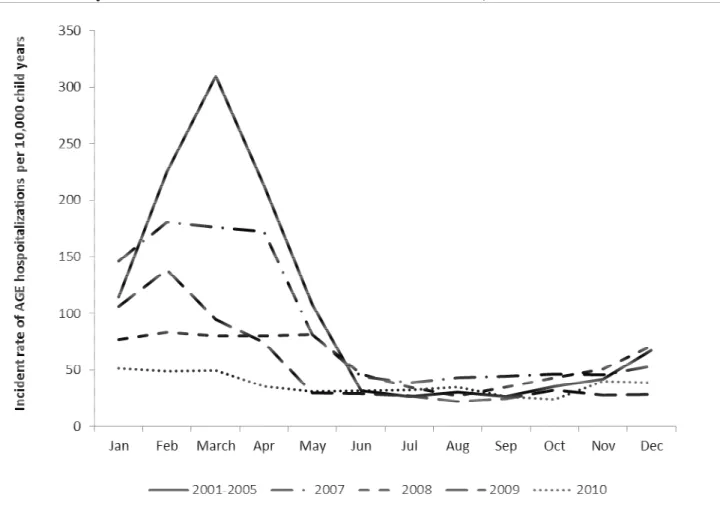
Figure 7. Incidence of AGE Hospitalizations per 10,000 Child-years Among
Commercially Insured US Infants and Children 8 to 20 Months, 2001-2010…….73
Figure 8. Benefit of Rotavirus Vaccine in Preventing RGE and AGE
Hospitalizations Among Commercially Insured US Children 8 to 20
Months Receiving at Least One Dose of Rotavirus Vaccine, 2007-2010……..…78
Figure 9. Benefit of Rotavirus Vaccine Use in the General Population in Preventing RGE and AGE Hospitalizations Among Commercially
Insured US Children 8 to 20 Months Not Receiving Any Doses of
Rotavirus Vaccine, 2007-2010………....79
Figure 10. Public Health Benefit of Rotavirus Vaccine Use in Preventing RGE and AGE Hospitalizations Among Commercially Insured US
xi
LIST OF ABBREVIATIONS
ACIP: Advisory Committee on Immunization Practices AGE: acute gastroenteritis
CDC: Centers for Disease Control and Prevention CDHP: Consumer Directed Health Plan
CI: confidence interval
CPT: Current Procedural Terminology
DTaP: diphtheria, tetanus, and acellular pertussis vaccine DTP: diphtheria, tetanus, and pertussis vaccine
EPO: Exclusive Provider Organization FDA: Food and Drug Administration
FIPS: Federal Information Processing Codes HHS: Health and Human Services
HMO: Health Maintenance Organization
ICD-9-CM: International Classification of Diseases, 9th Revision, Clinical Modification IQR: Interquartile range
IRD: Incident rate difference Metro: Metropolitan
NC DETECT: North Carolina Disease Event Tracking and Epidemiologic Collection Tool NCIR: North Carolina Immunization Registry
NIS: National Immunization Survey OPV: oral polio vaccine
PCV: porcine circovirus Pop: population
xii RGE: rotavirus gastroenteritis
RRV-TV: rhesus rotavirus vaccine, tetravalent RV1: monovalent rotavirus vaccine
RV5: pentavalent rotavirus vaccine Std: standard deviation
US: United States
USDA: United States Department of Agriculture V: vaccinated
CHAPTER I
REVIEW OF THE LITERATURE
A. Conceptual framework
Measuring vaccine effectiveness post-market. Post licensure vaccine effectiveness
(VE) studies present both challenges and new opportunities. On one hand, since post licensure studies are not generally randomized, identical exposure rates to infections in vaccinated and unvaccinated individuals cannot be guaranteed or always measured.
Additional concerns may include potential biases in case ascertainment, case finding, and the validity of vaccination and disease records.(1, 2) On the other hand, the duration of vaccine protection, changing epidemiologic patterns of disease, and effectiveness among diverse populations, including those vaccinated on alternative schedules, can only be investigated post licensure.(3)
Definitions of vaccine effectiveness. Most Phase III vaccine efficacy trials focus on
2
indirect VE on individuals receiving the vaccine, while the overall VE weights the average of the total VE on individuals receiving the vaccine with the indirect VE on individuals not receiving the vaccine.(1) Total VE can thus be interpreted as the complete benefit of vaccination in vaccine recipients and overall VE can be interpreted as the public health benefit of vaccination. Despite challenges in estimating the four types of VE, they are essential to understand the real-world impact of a vaccine. (1-3)
B. Historical background
Epidemiology of acute gastroenteritis (AGE) and rotavirus gastroenteritis (RGE).
Although there are many viral, bacterial, and parasitic causes of acute gastroenteritis (AGE) in the US, viruses are the most common causes of infectious diarrhea across all age groups, and among viruses, rotavirus and norovirus are most frequently observed.(4, 5) Prior to the availability of rotavirus vaccines in 2006, AGE accounted for approximately nine percent of all hospitalizations among children less than five years of age in the US, and of the 220,000 children in this age group hospitalized with AGE annually, one-quarter to one-third of these hospitalizations were due to rotavirus infection.(6-9)
3
in outpatient settings each year.(10) Health care utilization estimates from another study utilizing claims data found that the AGE and RGE hospitalization rates among children less than five years of age with Medicaid insurance were nearly double the estimates reported for children with private insurance during the pre-rotavirus vaccine period (107 versus 41 per 10,000); however, outpatient and emergency department estimates among children with both insurance types were similar.(11)
In the pre-rotavirus vaccine era, virtually all children became infected with rotavirus by age three years, with illness most commonly occurring between four and twenty-four months of age. Infections during the first three months of life and reinfections among older children were more likely to be asymptomatic than primary infections in older infants and younger children.(4) Rotavirus transmission is presumed to occur via the fecal-oral route, and shedding has been observed up to 21 days after symptom onset.(4) In the US, prior to the availability of rotavirus vaccines, rotavirus was most prevalent during the winter and spring months, generally peaking in March.(12-14) Since the availability of rotavirus vaccines, the typical winter-spring seasonality of rotavirus has shown signs of disruption in the US.(14, 15)
Rotavirus illness usually begins with acute onset of fever and vomiting followed by water diarrhea with 10 to 20 bowel movements per day.(16) Such symptoms generally persist for three to eight days.(4) No specific antiviral therapy is available so treatment generally consists of oral or parenteral fluids to prevent and correct dehydration.(17) Dehydration and electrolyte disturbances are the major complications of rotavirus infection, and are most common in young infants.(4) Worldwide, complications from rotavirus infection
4
years of age.(18) In the US, rotavirus infections are not a major cause of mortality since therapy for dehydration is readily available.(19)
History of rotavirus vaccines. The first rotavirus vaccine that was licensed and recommend for routine use in US infants was rhesus rotavirus vaccine, tetravalent (RRV-TV), or Rotashield (Wyeth). It was composed of four live viruses, including three reassortants expressing either G1, G2, or G4 proteins, and the native G3P[3] strain.(20) RRV-TV was an oral vaccine, given as a three dose series at ages two, four, and six
months.(20) After approximately one year of availability (1998-1999), the recommendation to routinely vaccinate infants with RRV-TV was withdrawn due to its association with intussusception, a type of bowel obstruction that occurs when the bowel folds in on itself (relative risk, 1.6 – 1.8).(21-23)
5
RV5 was licensed and recommend in February 2006, and RV1 was licensed in April 2008 and recommended in June 2008 for routine use among US infants by the Advisory Committee on Immunization Practices (ACIP).(35, 36) RV5 contains five reassortant rotaviruses developed from human and bovine parent strains that express proteins from serotypes G1, G2, G3, G4, and P1A[8], and RV1 consists of a single attenuated human rotavirus strain of the G1P1A[8] serotype. Both are live, oral vaccines, but RV5 requires three doses administered at ages two, four, and six months and elicits mainly a homotypic immune response, while RV1 requires just two doses administered at ages two and four months and is thought to elicit both a homotypic and heterotypic immune response.(36)
On March 22, 2010 the Food and Drug Administration (FDA) recommend that physicians suspend the use of RV1 after academic researchers discovered that the vaccine contained DNA from porcine circovirus 1 (PCV1).(37) Although the FDA emphasized that there were no known safety risks associated with PCV1 contamination, they advised
physicians to switch to RV5 which was later found to be contaminated with PCV1 and porcine circovirus 2 (PCV2). By May 2010, the FDA recommended that physicians resume the use of RV1 and continue use of RV5 since PCV1 and PCV2 are not known to cause illness in either pigs or humans. The labels of both vaccines were updated to disclose the presence of PCV viruses.(37)
History of rotavirus vaccine recommendations. The 2006 ACIP recommendations for
6
recommendations changed when RV1 was licensed. The 2009 ACIP recommendations increased the new maximum age at which the first dose could be administered to 14 weeks, 6 days, and the maximum age at which the last dose could be administered to 8 months, 0 days (~35 weeks). They also eliminated the maximum interval at which a dose could be
given.(36) The 2009 ACIP guidelines apply to both RV5 and RV1 and continue to be used in practice.
C. Critical review of the literature
Predictors of vaccine uptake. Among eight recommended pediatric vaccines, only the
hepatitis A vaccine has lower coverage than the rotavirus vaccine in the US (50% versus 59%).(38) Not much is known about why newly adopted vaccines like the rotavirus vaccine can take years to reach high coverage levels, but individual, provider, and ecologic
characteristics likely play a role. At the individual level, parents or guardians may consciously choose not to vaccinate their children with any, many, or certain vaccines for personal reasons such as the fear of side effects, or the belief that vaccines are not necessary to protect child health.(39) Some studies have also shown that children of young mothers may also be less likely to be up-to-date on their vaccines than children with older mothers, but this finding has been inconsistent across different geographic settings and
7
with childhood immunization status include gender, maternal education, birth order, interbirth interval, and frequency of emergency room visits.(42, 43, 45-50)
With regards to provider characteristics, having consistent continuity of care can impact the quality of care received, and physician office size, clinic hours, reimbursement levels, patient volume, patient education efforts, and geographic location of the office may also impact whether a recommended vaccine is administered.(51-62) The type of physician visited may also influence whether an infant receives a rotavirus vaccine. A national survey of physicians in 2007 found that while 85% of pediatricians routinely offered the rotavirus vaccine, only 45% of family medicine physicians routinely offered it to eligible patients.(61) Other provider, health plan, or health plan utilization characteristics that have been associated with the timeliness or completion of recommended childhood vaccines include status of provider (private versus public), insurance status of patient (uninsured versus insured), number of patient visits to provider, consistency of medical home, and out-of-pocket expenses.(41, 43, 48, 49, 62)
Geographic characteristics of residence, including the population density, region of the country, and population size of the metropolitan statistical area have been important predictors of childhood immunization status in some studies, and unimportant in others.(45, 46, 49, 50, 55, 59) Additional ecologic factors, such as number of physicians per person and income level in the area residence, have also been explored.(43, 46) One study using NIS data to measure vaccine coverage among preschool children in four selected medically underserved areas found that an area’s need for childhood vaccination interventions was not well predicted by a low number of providers per capita, but this finding has not been
8
tracts with low per capita incomes that did not receive first and second doses of DTP and oral polio vaccine (OPV) simultaneously were much less likely to be age-appropriately
vaccinated by age two years compared with children attending schools in census tracts with higher per capita incomes that received the first and second doses of DTP and OPV
simultaneously.(46)
Timeliness of rotavirus vaccine administration. Administering the rotavirus vaccines
at the recommended times (i.e., according to the current ACIP guidelines) is considered important because the effectiveness and safety of the vaccines if given before or after the recommended time intervals are currently unknown. However, some studies have argued that the allowable administration window should be broadened because the potential number of excess deaths from adverse events (i.e., intussusception) would be outnumbered by the number of lives saved from diarrheal disease if more infants could receive a rotavirus vaccine.(25, 63)
A recent study using the health insurance claims database, Optuminsight, noted a slightly higher level of adherence to the 2009 ACIP guidelines for infants receiving RV1 as opposed to RV5. The authors found that 83.3% of infants receiving RV1 and 76.4% of infants receiving RV5 were fully compliant with the ACIP vaccination schedule, and that 91.0% and 83.4% of infants receiving RV1 and RV5 completed the full vaccine series.(64)
Rotavirus vaccine effectiveness. Although the ACIP currently recommends both RV5
9
immune response mechanism of RV5 and RV1 differ, such arguments may not be fully justified. Unfortunately, since Phase III clinical trials of RV5 and RV1 used different methodologies, including different case definitions, follow-up times, and populations, comparative effectiveness analyses of the two rotavirus vaccines cannot be explored using clinical trial data.(65)
10
against RGE-coded and AGE-coded visits from January- May of 2007-2008.(79) Since the RV1 vaccine is still relatively new in the U.S., these studies have focused on the
effectiveness of RV5, or have done so implicitly.
Two post-market studies have compared the effectiveness of RV5 and RV1 in the same or similar infant populations and found no difference in their effectiveness. However, one study had limited power, the other was an ecologic study, and neither was conducted in U.S. infants.(81, 82) Since herd immunity appears to be an important factor in post-market rotavirus vaccine effectiveness studies, effectiveness studies comparing RV5 and RV1 may be a challenge in geographic settings that administer both rotavirus vaccines (i.e., US from mid-2008 to present).
D. Synopsis or Summary
The rotavirus vaccines appear to have been highly effective in preventing RGE and AGE healthcare visits during the first few years post-licensure. Whether such high levels of effectiveness can be maintained, how much protection is attributable to direct versus indirect (herd) protection, how the effectiveness of RV5 compares to RV1, and how the effectiveness of a complete versus partial series compares deserve further exploration.
Only two studies have explored predictors of rotavirus vaccination, but since such exploration was not the main purpose of either study, a more thorough review of potential predictors are needed so targeted interventions can be developed. The current literature suggests that rotavirus vaccine coverage may be lower among non-Hispanic blacks compared to non-Hispanic whites and among infants visiting family physicians as opposed to
11 References
1. Halloran ME, Struchiner CJ, Longini IM,Jr. Study designs for evaluating different efficacy and effectiveness aspects of vaccines. Am J Epidemiol. 1997;146(10):789-803.
2. Orenstein WA, Bernier RH, Hinman AR. Assessing vaccine efficacy in the field. Further observations. Epidemiol Rev. 1988;10:212-41.
3. Schuchat A, Bell BP. Monitoring the impact of vaccines postlicensure: new challenges, new opportunities. Expert Rev Vaccines. 2008;7(4):437-56. (doi:
10.1586/14760584.7.4.437).
4. Dennehy PH. Acute diarrheal disease in children: epidemiology, prevention, and
treatment. Infect Dis Clin North Am. 2005;19(3):585-602. (doi: 10.1016/j.idc.2005.05.003). 5. Wilhelmi I, Roman E, Sanchez-Fauquier A. Viruses causing gastroenteritis. Clin
Microbiol Infect. 2003;9(4):247-62.
6. Parashar UD, Holman RC, Clarke MJ, et al. Hospitalizations associated with rotavirus diarrhea in the United States, 1993 through 1995: surveillance based on the new ICD-9-CM rotavirus-specific diagnostic code. J Infect Dis. 1998;177(1):13-7.
7. Malek MA, Curns AT, Holman RC, et al. Diarrhea- and rotavirus-associated
hospitalizations among children less than 5 years of age: United States, 1997 and 2000. Pediatrics. 2006;117(6):1887-92. (doi: 10.1542/peds.2005-2351).
8. Charles MD, Holman RC, Curns AT, et al. Hospitalizations associated with rotavirus gastroenteritis in the United States, 1993-2002. Pediatr Infect Dis J. 2006;25(6):489-93. (doi: 10.1097/01.inf.0000215234.91997.21).
9. Glass RI, Kilgore PE, Holman RC, et al. The epidemiology of rotavirus diarrhea in the United States: surveillance and estimates of disease burden. J Infect Dis. 1996;174 Suppl 1:S5-11.
10. Cortes JE, Curns AT, Tate JE, et al. Trends in healthcare utilization for diarrhea and rotavirus disease in privately insured US children <5 years of age, 2001-2006. Pediatr Infect Dis J. 2009;28(10):874-8. (doi: 10.1097/INF.0b013e3181a653cd).
12
13. Turcios RM, Curns AT, Holman RC, et al. Temporal and geographic trends of rotavirus activity in the United States, 1997-2004. Pediatr Infect Dis J. 2006;25(5):451-4. (doi: 10.1097/01.inf.0000214987.67522.78).
14. Centers for Disease Control and Prevention (CDC). Delayed onset and diminished magnitude of rotavirus activity--United States, November 2007-May 2008. MMWR Morb Mortal Wkly Rep. 2008;57(25):697-700.
15. Curns AT, Panozzo CA, Tate JE, et al. Remarkable postvaccination spatiotemporal changes in United States rotavirus activity. Pediatr Infect Dis J. 2011;30(1 Suppl):S54-5. (doi: 10.1097/INF.0b013e3181fefda9).
16. Staat MA, Azimi PH, Berke T, et al. Clinical presentations of rotavirus infection among hospitalized children. Pediatr Infect Dis J. 2002;21(3):221-7.
17. Desselberger U. Rotavirus infections: guidelines for treatment and prevention. Drugs. 1999;58(3):447-52.
18. Tate JE, Patel MM, Cortese MM, et al. Remaining issues and challenges for rotavirus vaccine in preventing global childhood diarrheal morbidity and mortality. Expert Rev Vaccines. 2012;11(2):211-20 (doi: 10.1586/erv.11.184).
19. Desai R, Esposito DH, Lees C, et al. Rotavirus-coded Deaths in Children, United States, 1999-2007. Pediatr Infect Dis J. 2011. (doi: 10.1097/INF.0b013e318220fe20).
20. Marshall GS. Rotavirus disease and prevention through vaccination. Pediatr Infect Dis J. 2009;28(4):355,62, quiz 363-4. (doi: 10.1097/INF.0b013e318199494a).
21. Murphy TV, Smith PJ, Gargiullo PM, et al. The first rotavirus vaccine and intussusception: epidemiological studies and policy decisions. J Infect Dis. 2003;187(8):1309-13. (doi: 10.1086/374420).
22. Centers for Disease Control and Prevention (CDC). Intussusception among recipients of rotavirus vaccine--United States, 1998-1999. MMWR Morb Mortal Wkly Rep.
1999;48(27):577-81.
23. Centers for Disease Control and Prevention (CDC). Suspension of rotavirus vaccine after reports of intussusception--United States, 1999. MMWR Morb Mortal Wkly Rep.
2004;53(34):786-9.
24. Bines JE, Patel M, Parashar U. Assessment of postlicensure safety of rotavirus vaccines, with emphasis on intussusception. J Infect Dis. 2009;200 Suppl 1:S282-90. (doi:
13
25. Patel MM, Lopez-Collada VR, Bulhoes MM, et al. Intussusception risk and health benefits of rotavirus vaccination in Mexico and Brazil. N Engl J Med. 2011;364(24):2283-92. (doi: 10.1056/NEJMoa1012952).
26. Buttery JP, Danchin MH, Lee KJ, et al. Intussusception following rotavirus vaccine administration: Post-marketing surveillance in the National Immunization Program in Australia. Vaccine. 2011. (doi: 10.1016/j.vaccine.2011.01.088).
27. Perez-Vargas J, Isa P, Lopez S, et al. Rotavirus vaccine: early introduction in Latin America-risks and benefits. Arch Med Res. 2006;37(1):1-10. (doi:
10.1016/j.arcmed.2005.06.004).
28. Vesikari T, Matson DO, Dennehy P, et al. Safety and efficacy of a pentavalent human-bovine (WC3) reassortant rotavirus vaccine. N Engl J Med. 2006;354(1):23-33. (doi: 10.1056/NEJMoa052664).
29. Vesikari T, Karvonen A, Puustinen L, et al. Efficacy of RIX4414 live attenuated human rotavirus vaccine in Finnish infants. Pediatr Infect Dis J. 2004;23(10):937-43.
30. Vesikari T, Karvonen A, Prymula R, et al. Efficacy of human rotavirus vaccine against rotavirus gastroenteritis during the first 2 years of life in European infants: randomised, double-blind controlled study. Lancet. 2007;370(9601):1757-63. (doi: 10.1016/S0140-6736(07)61744-9).
31. Vesikari T, Itzler R, Matson DO, et al. Efficacy of a pentavalent rotavirus vaccine in reducing rotavirus-associated health care utilization across three regions (11 countries). Int J Infect Dis. 2007;11 Suppl 2:S29-35. (doi: 10.1016/S1201-9712(07)60019-8).
32. Block SL, Vesikari T, Goveia MG, et al. Efficacy, immunogenicity, and safety of a pentavalent human-bovine (WC3) reassortant rotavirus vaccine at the end of shelf life. Pediatrics. 2007;119(1):11-8. (doi: 10.1542/peds.2006-2058).
33. Linhares AC, Velazquez FR, Perez-Schael I, et al. Efficacy and safety of an oral live attenuated human rotavirus vaccine against rotavirus gastroenteritis during the first 2 years of life in Latin American infants: a randomised, double-blind, placebo-controlled phase III study. Lancet. 2008;371(9619):1181-9. (doi: 10.1016/S0140-6736(08)60524-3).
34. Ruiz-Palacios GM, Perez-Schael I, Velazquez FR, et al. Safety and efficacy of an
attenuated vaccine against severe rotavirus gastroenteritis. N Engl J Med. 2006;354(1):11-22. (doi: 10.1056/NEJMoa052434).
35. Parashar UD, Alexander JP, Glass RI, et al. Prevention of rotavirus gastroenteritis among infants and children. Recommendations of the Advisory Committee on Immunization
14
36. Cortese MM, Parashar UD, Centers for Disease Control and Prevention (CDC).
Prevention of rotavirus gastroenteritis among infants and children: recommendations of the Advisory Committee on Immunization Practices (ACIP). MMWR Recomm Rep.
2009;58(RR-2):1-25.
37. Kuehn BM. FDA: Benefits of rotavirus vaccination outweigh potential contamination risk. JAMA. 2010;304(1):30-1. (doi: 10.1001/jama.2010.863).
38. Centers for Disease Control and Prevention (CDC). National and state vaccination coverage among children aged 19--35 months --- United States, 2010. MMWR Morb Mortal Wkly Rep. 2011;60:1157-63.
39. Smith PJ, Humiston SG, Marcuse EK, et al. Parental delay or refusal of vaccine doses, childhood vaccination coverage at 24 months of age, and the Health Belief Model. Public Health Rep. 2011;126 Suppl 2:135-46.
40. Salmon DA, Smith PJ, Pan WK, et al. Disparities in preschool immunization coverage associated with maternal age. Hum Vaccin. 2009;5(8):557-61.
41. Cotter JJ, Bramble JD, Bovbjerg VE, et al. Timeliness of immunizations of children in a Medicaid primary care case management managed care program. J Natl Med Assoc.
2002;94(9):833-40.
42. Ponsonby AL, Couper D, Dwyer T, et al. Characteristics of infants receiving prompt first diphtheria-tetanus-pertussis immunisation in an infant cohort. Aust N Z J Public Health. 1997;21(5):489-94.
43. Rosenthal J, Rodewald L, McCauley M, et al. Immunization coverage levels among 19- to 35-month-old children in 4 diverse, medically underserved areas of the United States. Pediatrics. 2004;113(4):e296-302.
44. Centers for Disease Control and Prevention (CDC). National, state, and local area vaccination coverage among children aged 19-35 months --- United States, 2009. MMWR Morb Mortal Wkly Rep. 2010;59(36):1171-7.
45. Byrd KK, Santibanez TA, Chaves SS. Predictors of hepatitis A vaccination among young children in the United States. Vaccine. 2011;29(17):3254-9. (doi:
10.1016/j.vaccine.2011.02.028).
46. Williams IT, Milton JD, Farrell JB, et al. Interaction of socioeconomic status and provider practices as predictors of immunization coverage in Virginia children. Pediatrics. 1995;96(3 Pt 1):439-46.
15
48. Owen EC, Peddecord KM, Wang WW, et al. Hepatitis A vaccine uptake in San Diego County: Hispanic children are better immunized. Arch Pediatr Adolesc Med.
2005;159(10):971-6. (doi: 10.1001/archpedi.159.10.971).
49. Taylor JA, Darden PM, Slora E, et al. The influence of provider behavior, parental characteristics, and a public policy initiative on the immunization status of children followed by private pediatricians: a study from Pediatric Research in Office Settings. Pediatrics. 1997;99(2):209-15.
50. Zhao Z, Mokdad AH, Barker L. Impact of health insurance status on vaccination coverage in children 19-35 months old, United States, 1993-1996. Public Health Rep. 2004;119(2):156-62.
51. Bhatt P, Block SL, Toback SL, et al. A prospective observational study of US in-office pediatric influenza vaccination during the 2007 to 2009 influenza seasons: use and factors associated with increased vaccination rates. Clin Pediatr (Phila). 2010;49(10):954-63. (doi: 10.1177/0009922810370868).
52. Christakis DA, Mell L, Wright JA, et al. The association between greater continuity of care and timely measles-mumps-rubella vaccination. Am J Public Health. 2000;90(6):962-5. 53. McInerny TK, Cull WL, Yudkowsky BK. Physician reimbursement levels and adherence to American Academy of Pediatrics well-visit and immunization recommendations.
Pediatrics. 2005;115(4):833-8. (doi: 10.1542/peds.2004-1510).
54. Poehling KA, Fairbrother G, Zhu Y, et al. Practice and child characteristics associated with influenza vaccine uptake in young children. Pediatrics. 2010;126(4):665-73. (doi: 10.1542/peds.2009-2620).
55. Stokley S, Smith PJ, Klevens RM, et al. Vaccination status of children living in rural areas in the United States: are they protected? Am J Prev Med. 2001;20(4 Suppl):55-60. 56. Smith PJ, Santoli JM, Chu SY, et al. The association between having a medical home and vaccination coverage among children eligible for the vaccines for children program.
Pediatrics. 2005;116(1):130-9. (doi: 10.1542/peds.2004-1058).
57. Thomas M, Kohli V, King D. Barriers to childhood immunization: findings from a needs assessment study. Home Health Care Serv Q. 2004;23(2):19-39. (doi:
10.1300/J027v23n02_02).
58. Vannice KS, Salmon DA, Shui I, et al. Attitudes and beliefs of parents concerned about vaccines: impact of timing of immunization information. Pediatrics. 2011;127 Suppl 1:S120-6. (doi: 10.1542/peds.2010-1722R).
16
60. Kempe A, Daley MF, Parashar UD, et al. Will pediatricians adopt the new rotavirus vaccine? Pediatrics. 2007;119(1):1-10. (doi: 10.1542/peds.2006-1874).
61. Kempe A, Patel MM, Daley MF, et al. Adoption of rotavirus vaccination by pediatricians and family medicine physicians in the United States. Pediatrics. 2009;124(5):e809-16. (doi: 10.1542/peds.2008-3832).
62. Kahane SM, Watt JP, Newell K, et al. Immunization levels and risk factors for low immunization coverage among private practices. Pediatrics. 2000;105(6):E73.
63. Patel MM, Clark AD, Glass RI, et al. Broadening the age restriction for initiating
rotavirus vaccination in regions with high rotavirus mortality: benefits of mortality reduction versus risk of fatal intussusception. Vaccine. 2009;27(22):2916-22. (doi:
10.1016/j.vaccine.2009.03.016).
64. Krishnarajah G, Davis EJ, Fan Y, et al. Rotavirus vaccine series completion and adherence to vaccination schedules among infants in managed care in the United States. Vaccine. 2012;30(24):3717-22. (doi: 10.1016/j.vaccine.2011.12.077).
65. Toumi M, Vesikari T, Giaquinto C. Comment on the contribution by Weycker et al., "Cost of routine immunization of young children against rotavirus infection with Rotarix (R) versus RotaTeq (R)". Vaccine. 2010;28(45):7241; author reply 7242. (doi:
10.1016/j.vaccine.2010.08.086).
66. Weycker D, Sofrygin O, Kemner JE, et al. Cost of routine immunization of young children against rotavirus infection with Rotarix versus RotaTeq. Vaccine.
2009;27(36):4930-7. (doi: 10.1016/j.vaccine.2009.06.025).
67. Cortese MM, Tate JE, Simonsen L, et al. Reduction in gastroenteritis in United States children and correlation with early rotavirus vaccine uptake from national medical claims databases. Pediatr Infect Dis J. 2010;29(6):489-94. (doi: 10.1097/INF.0b013e3181d95b53). 68. Yen C, Tate JE, Wenk JD, et al. Diarrhea-associated hospitalizations among US children over 2 rotavirus seasons after vaccine introduction. Pediatrics. 2011;127(1):e9-e15. (doi: 10.1542/peds.2010-1393).
17
vaccine era. Pediatr Infect Dis J. 2010;29(8):699-702. (doi: 10.1097/INF.0b013e3181d73524).
72. Payne DC, Staat MA, Edwards KM, et al. Direct and Indirect Effects of Rotavirus
Vaccination Upon Childhood Hospitalizations in 3 US Counties, 2006-2009. Clin Infect Dis. 2011. (doi: 10.1093/cid/cir307).
73. Staat MA, Payne DC, Donauer S, et al. Effectiveness of Pentavalent Rotavirus Vaccine Against Severe Disease. Pediatrics. 2011;128(2):e267-75. (doi: 10.1542/peds.2010-3722). 74. Desai SN, Esposito DB, Shapiro ED, et al. Effectiveness of rotavirus vaccine in
preventing hospitalization due to rotavirus gastroenteritis in young children in Connecticut, USA. Vaccine. 2010;28(47):7501-6. (doi: 10.1016/j.vaccine.2010.09.013).
75. Curns AT, Steiner CA, Barrett M, et al. Reduction in acute gastroenteritis hospitalizations among US children after introduction of rotavirus vaccine: analysis of hospital discharge data from 18 US states. J Infect Dis. 2010;201(11):1617-24. (doi: 10.1086/652403).
76. Cortes JE, Curns AT, Tate JE, et al. Rotavirus vaccine and health care utilization for diarrhea in U.S. children. N Engl J Med. 2011;365(12):1108-17. (doi:
10.1056/NEJMoa1000446).
77. Boom JA, Tate JE, Sahni LC, et al. Effectiveness of pentavalent rotavirus vaccine in a large urban population in the United States. Pediatrics. 2010;125(2):e199-207. (doi: 10.1542/peds.2009-1021).
78. Boom JA, Tate JE, Sahni LC, et al. Sustained protection from pentavalent rotavirus vaccination during the second year of life at a large, urban United States pediatric hospital. Pediatr Infect Dis J. 2010;29(12):1133-5. (doi: 10.1097/INF.0b013e3181ed18ab).
79. Wang FT, Mast TC, Glass RJ, et al. Effectiveness of the pentavalent rotavirus vaccine in preventing gastroenteritis in the United States. Pediatrics. 2010;125(2):e208-13. (doi:
10.1542/peds.2009-1246).
80. Tate JE, Cortese MM, Payne DC, et al. Uptake, impact, and effectiveness of rotavirus vaccination in the United States: review of the first 3 years of postlicensure data. Pediatr Infect Dis J. 2011;30(1 Suppl):S56-60. (doi: 10.1097/INF.0b013e3181fefdc0).
81. Martinon-Torres F, Alejandro MB, Collazo LR, et al. Effectiveness of rotavirus vaccination in Spain. Hum Vaccin. 2011;7(7).
CHAPTER II
STATEMENT OF SPECIFIC AIMS
A. Specific Aims, Hypotheses, and Rationale
In a population of US privately-insured infants and children,
1. Determine predictors of rotavirus vaccine initiation and completion
Hypothesis. We hypothesize that among ten available predictors, receipt of
other childhood vaccines (diphtheria, tetanus, and acellular pertussis (DTaP) vaccines), the type of physician visited, and geographic size and density of infant residence will be the most important predictors of rotavirus vaccine series initiation and completion.
Rationale. Published studies have identified receipt of other childhood
vaccines and physician type as important in predicting initiation or completeness of either the rotavirus vaccine series or other childhood vaccine series. We believe that parents and providers initiating rotavirus vaccination will generally ensure that the infant completes the series since individual and provider motivations and
19
2. Assess timeliness of rotavirus vaccine administration as per the 2009 Advisory Committee on Immunization Practices (ACIP) guidelines
Hypothesis. The rotavirus vaccines will generally be administered as per the
ACIP guidelines, but children vaccinated with monovalent rotavirus vaccine (RV1) will be more likely to complete the vaccine series than children vaccinated with pentavalent rotavirus vaccine (RV5).
Rationale. Since other childhood vaccinations are administered as
recommended in the majority of populations studied, we expect most infants in our privately-insured population to be vaccinated according to the guidelines, especially since infants with health insurance may potentially have fewer problems accessing the health care system than other infant populations. However, since RV5 requires three doses, but RV1 requires just two doses to complete the series, we hypothesize that more infants will complete the RV1 series.
3. Estimate the direct, indirect, total, and overall rotavirus vaccine effectiveness (VE) against rotavirus gastroenteritis (RGE) and acute gastroenteritis (AGE)
hospitalizations among those aged 8 to 20 months over the life course of the vaccines
Hypothesis. We hypothesize that the direct VE estimates will remain stable
over time, but the indirect, total, and overall VE will generally increase.
Rationale. We expect herd protection to increase as the percentage of
20
4. Calculate the absolute rate reductions of RGE and AGE hospitalizations attributable to the rotavirus vaccine or the rotavirus vaccine program in those aged 8 to 20 months
Hypothesis. Rate reductions of RGE and AGE hospitalizations will be
underestimated when only direct or indirect effectiveness is considered.
Rationale. Assuming that the direct VE of the rotavirus vaccines in our cohort
is high (≥90%), accounting for indirect protection will increase the total VE of the vaccines only slightly since VE estimates cannot exceed 100%. However, the number of RGE and AGE hospitalizations prevented by indirect protection alone could still be large, and failing to account for indirect protection in
CHAPTER III
METHODS
A. Overview of Methods
Creating the various study cohorts required many steps. We were able to extract the outcome variables for both studies and our exposure variable for the VE study directly from the MarketScan Research Databases. However, many exposure variables for the patterns of use study and a few covariates for the VE study, including mother’s age at infant birth, infant’s primary provider type, and number siblings, had to be created using existing variables. Measurements of rurality required use of US Department of Agriculture (USDA) data. The infant’s date of birth also had to be calculated indirectly using birthing codes. Our analysis used standard epidemiologic methods (log-risk regression, Cox proportional hazards regression).
B. Design
1. Subject Identification
a. Source Population
The MarketScanCommercial Claims and Encounters Database (“MarketScanResearch Databases,” Copyright © Thomson Truven
Healthcare, Inc) served as the source population for both studies. Briefly, the MarketScan Research Databases link paid health insurance claims and
22
and over time.(1) From 2000 to 2010, the size of the database increased from approximately 68,000 to 920,000 infants. Since the infants and children in this database all have private insurance, they are not representative of the US population; however, they represent a large group of infants that may most commonly utilize the rotavirus vaccines.
b. Selection Criteria
Patterns of Use Analysis. Infants born in a hospital or outpatient setting
between January 1, 2006 and September 30, 2010 were identified from the MarketScanResearch Databases. We used the International Classification of Clinical Diseases, Ninth Revision, Clinical Modification (ICD-9-CM) codes for live born infants, V30-V39, to define the birth date of infants. If an infant had V30-V39 codes on multiple dates, the date of the first code was used as the birth date, and those without such codes and corresponding dates were excluded. Infants with birth dates occurring after administration of rotavirus vaccines, likely due to coding errors, were excluded.
23
VE analysis. Infants with continuous enrollment during infancy, at least one outpatient record, and an ICD-9-CM birthing code (V30-V39) between May 1, 2000 and April 30, 2005 or May 1, 2006 and April 30, 2010 were abstracted from the databases. Birthing codes identified in mothers’ claims were also used to identify birth dates of potentially eligible infants. If an infant or mother had a V30-V39 claim coded on multiple dates, the date of the first V30-V39 code was used as the birth date. Since follow-up for RGE began when infants turned eight months and continued until a maximum age of 20 months, infants receiving doses of rotavirus vaccine after age eight months were excluded so that rotavirus vaccine status could be treated as a time-independent variable.
Infants with commercial insurance failing to receive vaccines with high coverage rates (≥95%) may have differed from infants receiving such vaccines with respect to unmeasured confounding factors, so we required all infants in our study to be vaccinated with at least one dose of diphtheria, tetanus, and acellular pertussis vaccine (DTaP), using the following Current Procedural Terminology (CPT) codes: 90696, 90698, 90700, 90701, 90702, 90714, 90715, 90718, 90720, 90721, and 90723.
2. Methods for Proposed Study
a. Classification of Exposure
1. Exposure of Interest
Patterns of Use Analysis. We identified all potential predictors of
24
vaccination status, number of siblings <10 years old, mother’s age at birth, and hospitalizations prior to the first dose of rotavirus vaccine or by the maximum age at which the first dose of rotavirus vaccine could have been administered as per the ACIP guidelines (14 weeks, 6 days). Variables for race and socioeconomic status were not available. _____
Provider and health plan characteristics included the type of physician visited during ≥70% of the infant’s outpatient visits (pediatrician, family physician, other providers, or no consistent provider type); the network of the care received during ≥70% of the infant’s outpatient visits (in-network, or out-of-network or mixed); and the infant’s type of health plan (basic,
comprehensive, high-deductible; Exclusive Provider Organization (EPO) or Preferred Provider Organization (PPO); Health Maintenance Organization (HMO); Point of Service (POS) or POS with capitation ; or Consumer Directed Health Plan (CDHP)). All provider and health plan variables were assessed prior to rotavirus vaccination, or fifteen weeks of age if the infant was unvaccinated.
Our ecologic factors of interest were region of the infant’s residence (Northeast, Midwest, South, or West) and rurality. In order to better measure rurality, we linked the US Department of Agriculture (USDA), Economic Research Service 2003 rural-urban continuum codes to the claims database via five-digit Federal Information Processing Standard (FIPS) codes. The 2003 rural-urban continuum codes distinguish metropolitan counties by the
25
population size, degree of urbanization, and adjacency to metropolitan areas. These codes classify every US County into either one of three metropolitan categories, or one of six nonmetropolitan categories.
VE Analysis. RV5 and RV1 vaccination status were identified using
the Current Procedural Terminology codes (CPT) codes, 90680 and 90681, and treated as time-independent. To increase the specificity of vaccination status, we excluded infants living in states with state-funded rotavirus vaccine programs (Alaska, Idaho, Massachusetts, Maine, North Dakota, New
Hampshire, New Mexico, Oregon, Rhode Island, Vermont, Washington, Wisconsin, and Wyoming).(2, 3)
2. Exposure Period
Patterns of Use Analysis. All infants meeting the inclusion were
followed for evidence of rotavirus vaccination until their first birthday or the end of the study period (December 31, 2010), whichever came first.
Predictors were examined and classified during the time period prior to administration of the first dose of rotavirus vaccine, or if no doses of rotavirus vaccine were administered, the maximum age at which the first dose of rotavirus vaccine could have been administered as per the 2009 ACIP guidelines (14 weeks, 6 days).
VE Analysis. The exposure, RV5 or RV1, was measured from birth up
26
began at age 8 months, and we chose to treat RV vaccine status as a time-independent variable. We followed infants and children from age eight months to the age at which they 1) experienced a RGE or AGE
hospitalization; 2) lost continuous health plan enrollment; 3) reached their 20 month birthday; 4) reached the end of the study period, whichever happened first.
Infants and children were allowed to contribute person-time during two calendar years. For example, an infant turning eight months old on October 1, 2007, would contribute three person-months in 2007, and then re-enter the cohort on January 1, 2008 at age 11 months and contribute up to nine more calendar months of person-time in 2008.
3. Measurement Characteristics (reproducibility/validity)
The MarketScan Research Databases are available for purchase, and the details we provided in this dissertation as well as the manuscripts that will be submitted to peer-reviewed journals should allow our study to be reproduced by other researchers.
27
85% of physician claims and 100% of the claims are fully paid and adjudicated. (4) In the future, we plan to externally validate rotavirus vaccination status and RGE using the North Carolina Immunization Registry (NCIR) and the North Carolina Disease Event Tracking and Epidemiologic Research Tool (NC DETECT).
b. Classification of Outcome
Patterns of Use Analysis. For this analysis, our outcome was the
exposure (rotavirus vaccination status) described for the VE analysis in Chapter III, Section 2a.
VE Analysis. Outcomes of RGE were identified using ICD-9-CM
codes. Any of the 15 coding fields in the inpatient files of the databases was used to capture the ICD-9-CM code for rotavirus-specific disease, 008.61 Since rotavirus-coded events underestimate the true burden of rotavirus disease due to lack of routine laboratory testing and coding, we performed sensitivity analyses, assuming 25% and 50% sensitivity of the 008.61 code, and also abstracted and examined outcomes related to the following acute gastroenteritis (AGE) ICD-9-CM codes: bacterial (001-005, excluding 003.2, and also including 008.0-008.5), parasitic (006-007, excluding 006.3-006.6), and viral diarrhea (008.6 and 008.8); diarrhea of undetermined etiology (presumed infectious [009.0-009.3] and presumed noninfectious [558.9]); and diarrhea not otherwise specified (787.91). (6-9)
3. Data Analysis
28
Patterns of Use Analysis. We calculated simple frequencies, and performed bivariate and multivariable regression analyses using log-risk models that were limited to individual, provider, and ecological characteristics thought to be associated with receipt of at least one dose of rotavirus vaccine, and identifiable in the available data. We also used the same potential individual, provider, and ecological
characteristics to explore predictors of rotavirus vaccine series completion. In order to examine whether predictors of rotavirus vaccination changed over time, we repeated the above analyses, restricting the cohort to infants born in 2006 and then 2009. Infants with missing data on any potential predictors were excluded from both of these analyses.
VE Analysis. We used Cox proportional hazard regression models to calculate
29
for increasing vaccination coverage and adjusted for month of birth to account for the seasonality of rotavirus virus.
30 References
1. MarketScan Database, Thomson Reuters (Healthcare) Inc. MarketScan User Guide Commercial Claims and Encounters Medicare Supplemental and Coordination of Benefits, Data Year 2007 Edition. , 2008.
2. Schneeweiss S, Avorn J. A review of uses of health care utilization databases for epidemiologic research on therapeutics. J Clin Epidemiol. 2005;58(4):323-37. (doi: 10.1016/j.jclinepi.2004.10.012).
3. Cortes JE, Curns AT, Tate JE, et al. Rotavirus vaccine and health care utilization for diarrhea in U.S. children. N Engl J Med. 2011;365(12):1108-17. (doi:
10.1056/NEJMoa1000446).
4. Adamson DM, Chang S, Hansen LG. Health Research Data for the Real World: The MarketScan Databases. , 2008.
5. Hsu VP, Staat MA, Roberts N, et al. Use of active surveillance to validate
international classification of diseases code estimates of rotavirus hospitalizations in children. Pediatrics. 2005;115(1):78-82. (doi: 10.1542/peds.2004-0860).
6. Patel MM, Tate JE, Selvarangan R, et al. Routine laboratory testing data for surveillance of rotavirus hospitalizations to evaluate the impact of vaccination. Pediatr Infect Dis J. 2007;26(10):914-9. (doi: 10.1097/INF.0b013e31812e52fd). 7. Desai R, Curns AT, Steiner CA, et al. All-cause gastroenteritis and rotavirus-coded hospitalizations among US children, 2000-2009. Clin Infect Dis. 2012;55(4):e28-34. (doi: 10.1093/cid/cis443).
CHAPTER IV
RESULTS
A. Patterns of rotavirus vaccine uptake and use in privately-insured US infants, 2006-2010
1. Introduction
Rotavirus gastroenteritis is a leading cause of hospitalizations and emergency department visits among young children in the US.(1) The recently licensed rotavirus vaccines, RotaTeq® (Rotavirus Vaccine, live, oral, pentavalent) [RV5] (Merck & Co., Inc.) and Rotarix® (Rotavirus Vaccine, live, oral, monovalent) [RV1]
(GlaxoSmithKline Biologicals), have dramatically reduced incidence of healthcare utilization for rotavirus infection.(2) These vaccines are now recommended for routine use among US infants by the Advisory Committee on Immunization Practices (ACIP).(3, 4)
Despite these recommendations, the Centers for Disease Control and
32
suggest that type of physician visited, geographic residence, socio-economic status, and race may be important predictors.(5-8) Considering that the US Department of Health and Human Services (HHS) Healthy People 2020 objectives include
vaccinating at least 80% of children with two or more doses of rotavirus vaccine by 2020, further exploration regarding the determinants of rotavirus vaccine uptake is warranted.(9)
Using data from a large population of infants with commercial insurance, we study patterns of use of rotavirus vaccine. We examine individual, provider, and ecologic correlates of rotavirus vaccine use and vaccine series completion. We hypothesize that receipt of other childhood vaccines (e.g., diphtheria, tetanus, and acellular pertussis (DTaP) vaccines) and the type of physician visited will be the most important predictors of rotavirus vaccine series initiation and completion. Our study further examines time trends and timeliness of rotavirus vaccine administration as per the 2009 ACIP recommendations.
2. Methods
33
Infants with birth dates occurring after administration of rotavirus vaccines, likely due to coding errors, were excluded.
For infants born between January 2006 and February 2010, additional eligibility criteria included having at least eleven months of continuous enrollment after birth. For infants born between March and September 2010, continuous enrollment was defined as enrollment at every month from birth until the end of the 2010 calendar year (the end of available data). In order to ensure adequate follow-up time, only infants born before March 2010 were included in assessments of vaccine series completion.
RV5 and RV1 vaccination status was assessed using the Current Procedural Terminology (CPT) codes, 90680 and 90681. We required infants to have at least one outpatient claim because we thought it was important for our cohort to include only infants that utilized the healthcare system through their private insurance plan to reduce potential misclassification of rotavirus vaccination status. To further reduce exposure misclassification, we excluded infants residing in 13 states with state-funded vaccine programs (Alaska, Idaho, Massachusetts, Maine, North Dakota, New Hampshire, New Mexico, Oregon, Rhode Island, Vermont, Washington, Wisconsin, and Wyoming) except for the cohort of infants used to examine adherence to the recommended vaccine schedule.(2)
34
We also considered recommendations to have been violated if any dose was given after the age of eight months, zero days, or if the minimum interval between two doses was less than four weeks.
We calculated simple frequencies, and performed bivariate and multivariable regression analyses using log-risk models that were limited to individual, provider, and ecological characteristics thought to be associated with receipt of at least one dose of rotavirus vaccine, and identifiable in the available data. We also used the same potential individual, provider, and ecological characteristics to explore predictors of rotavirus vaccine series completion. In order to examine whether predictors of rotavirus vaccination changed over time, we repeated the above analyses, restricting the cohort to infants born in 2006 and then 2009. Infants with missing data on any potential predictors were excluded from both of these analyses.
35
(EPO) or Preferred Provider Organization (PPO); Health Maintenance Organization (HMO); Point of Service (POS) or POS with capitation; or Consumer Directed Health Plan (CDHP)). All provider and health plan variables were assessed prior to rotavirus vaccination, or fifteen weeks of age if the infant was unvaccinated. Our ecologic factors of interest were region of the infant’s residence (Northeast, Midwest, South, or West) and rurality. In order to better measure rurality, we linked the US
Department of Agriculture (USDA), Economic Research Service 2003 rural-urban continuum codes to the claims database via five-digit Federal Information Processing Standard (FIPS) codes. The 2003 rural-urban continuum codes distinguish
metropolitan counties by the population size of the metropolitan area, and nonmetropolitan counties by the population size, degree of urbanization, and adjacency to metropolitan areas. These codes classify every US County into either one of three metropolitan categories, or one of six nonmetropolitan categories.
All data were managed and analyzed in SAS, version 9.2 (SAS Institute, Cary, NC). This study was considered exempt from human subjects review by the
institutional review board at the University of North Carolina.
3. Results
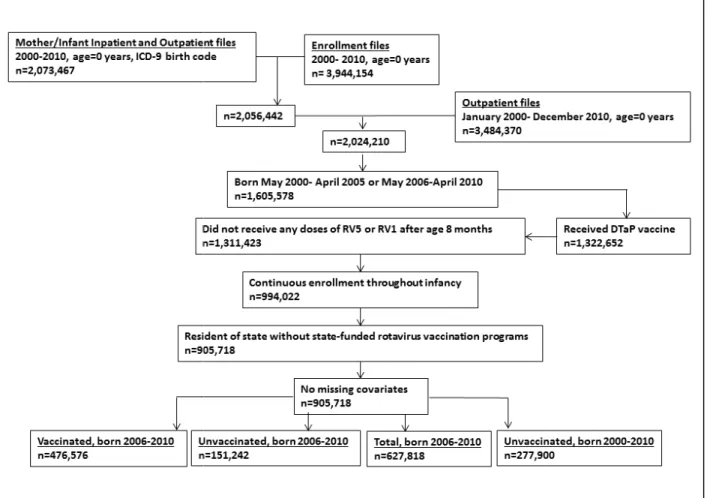
Infant cohorts. Approximately half (51%) of 2.80 million infants identified in the
enrollment files between January 2006 and December 2010 had an identifiable ICD-9 birthing code and corresponding date of service (Figure 3). Infants that were
36
predictors of rotavirus vaccine initiation and completion included 594,117 and 324,264 infants, respectively.
Temporal trends of rotavirus vaccine uptake. Rotavirus vaccine uptake among
infants in our cohort increased from 0% when RV5 was licensed (February 2006) to 25% when the first ACIP recommendations were published (August 2006) (Figure 1). Rotavirus vaccine uptake then increased even more rapidly, doubling to 49% by December 2006. The percentage of infants receiving at least one dose of rotavirus vaccine continued to grow steadily, reaching 62% by April 2007 and reaching 70% beginning November 2007. Throughout 2009 and 2010, a median of 81% (range, 78%-83%) of eligible infants were vaccinated with at least one dose of rotavirus vaccine each month. Among the infants receiving a rotavirus vaccine during our study period, 92% received RV5, 5% received RV1, and 3% received a combination of the two vaccines.
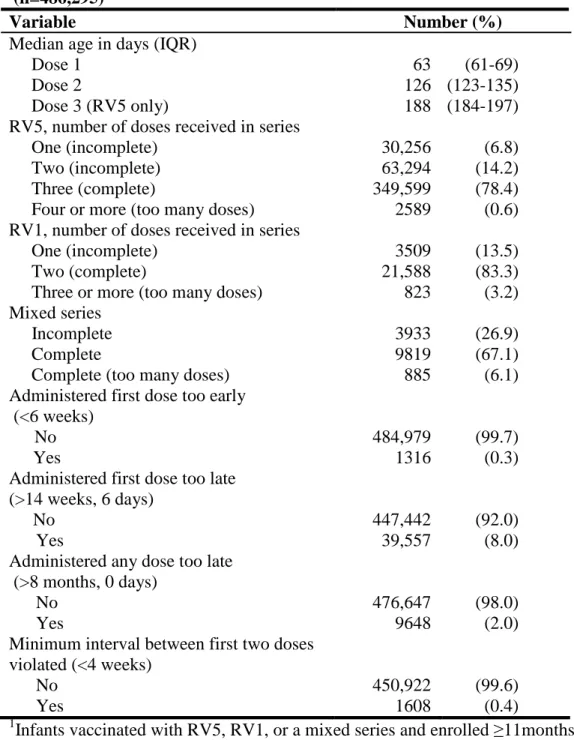
Adherence to the 2009 ACIP recommendations. The median and
37
ages older than the maximum recommended age for the first dose (14 weeks, 6 days), with 19% of infants in 2006 and 6.0-8.5% of infants from 2007 to 2010, receiving their first dose after age 14 weeks, 6 days. Although most infants who initiated rotavirus vaccination completed the full series, more infants completed the series for RV1 than RV5 or a combination of the two vaccines (87% versus 79% versus 73%, P<0.001).
Univariate, bivariate and multivariable analyses. Among 594,117 infants,
69% received at least one dose of rotavirus vaccine between February 2006 and December 2010 (Table 2). Most infants in the cohort were also vaccinated with at least one dose of DTaP, were born to mothers 25-39 years of age, were first born children or had one older sibling, visited in-network physicians, were enrolled in EPO or PPO health plans, received outpatient care from pediatricians, resided in the
Midwest or South, and lived in large metropolitan areas.
38
In order to determine whether predictors of rotavirus vaccine initiation changed over time, we also examined predictors of infants born when RV5 was first licensed (2006) with those born three years after RV5 licensure (2009). Compared to the 2006 birth cohort, visiting a pediatrician versus a family physician in the 2009 birth cohort was a less important predictor of rotavirus vaccine initiation (2006: RR=2.15, 95% CI= 2.02-2.28; 2009: RR=1.35, 95% CI = 1.32-1.37) as was residing in a metropolitan area with less than one million population versus an area with at least one million population.
Family physicians often provide care more frequently in rural areas, and infants visiting family physicians or residing in rural areas were independently less likely to receive a dose of rotavirus vaccine. We therefore explored potential interactions between the type of physician visited (pediatrician versus family physician) for routine care and population size of residence (metropolitan areas versus non-metropolitan areas), but did not find an interaction in these post-hoc analyses (Figure 2).
The most important predictors of rotavirus vaccine series completion were receipt of DTaP and receiving routine care from a pediatrician as opposed to a family
39
complete the rotavirus vaccine series. Region of residence was not an important predictor of vaccine series completion.
4. Discussion
We observed rapid diffusion of the rotavirus vaccine into routine practice shortly after licensure in the US. Approximately three quarters of infants born from early 2008 through mid-2010, received two or more doses. This estimate is slightly higher than the CDC estimate that analyzed data for infants born during approximately the same time period using a population-based telephone survey (NIS), and 5% lower than the HHS’ Healthy People 2020 goal.(5, 9) Our estimate may be higher than the CDC estimate and may have overestimated the progress towards the Healthy People 2020 goal for several reasons. First, our population included only infants with commercial insurance who may be more likely to be vaccinated than other infant populations, such as the uninsured or those with Medicaid insurance. Second, our cohort consisted of a non-population based sample of infants. Since the MarketScan Research Databases have increased in size over time, our data were weighted towards the later years (e.g., 2010) when rotavirus vaccine coverage was relatively high compared to the earlier years. In addition, infants residing in rural and small urban areas were less likely to be vaccinated in our study, but also underrepresented.
40
approximately one-fifth of infants were still not receiving the vaccine in January 2009 and coverage has failed to further increase since this time. Education interventions,
particularly those targeted at family physicians should be considered. This recommendation is consistent with the results of a 2007 nationally-representative survey of pediatricians and family physicians which found that pediatricians were much more likely to administer the rotavirus vaccine to eligible infants than family physicians, possibly because family physicians were more concerned with vaccine safety and adding additional vaccines to the childhood schedule than pediatricians.(8) Studies examining other vaccines in various populations of infants and young
children have also shown that family physicians may be less likely to adopt and may be less knowledgeable about vaccine recommendations than pediatricians.(10)
Since most children who received a rotavirus also received at least one other recommended childhood vaccine (e.g., DTaP), it appears that neither parents nor providers are “cherry-picking” vaccines. Rather, it appears that infants either
generally receive the recommended childhood vaccines or do not. This observation is further supported by a post-hoc analysis that found a high correlation between the number of doses of DTaP (one, two, or three) and number of doses of RV5 (one, two, or three) received among infants in our cohort (r=0.76). Since our cohort consisted of infants with private insurance who had at least one outpatient record, failure to access the healthcare system cannot fully explain why some infants did not receive recommended vaccines, such as DTaP or rotavirus. Based on our results,
41
assuming that vaccine availability is not an issue. This was shown to be the case for the DTaP vaccine in Australia, where the third dose coverage of DTaP vaccine in a
pre-RV5 cohort was 80%, but increased by 5 to 12 percent once the RV5 vaccine was available and widely used.(11)
Overall, adherence to the 2009 ACIP guidelines for rotavirus vaccine
administration was high. Although we compared all years of data (2006 to 2010) to the 2009 ACIP guidelines which are less stringent than the 2006 ACIP guidelines, adherence remained high even when we reanalyzed our data using the 2006 ACIP guidelines (data not shown). Despite overall high levels of compliance to the 2009 ACIP recommendations, ensuring that infants complete the rotavirus vaccine series could be improved. Other multi-dose vaccines face a similar challenge. Prior to rotavirus vaccine availability, the vaccination histories of over 17,000 children in the 2005 NIS were reviewed, revealing that of the 28% of children not compliant with ACIP recommendations, two-thirds were categorized as such because they were missing doses for multi-dose vaccinations.(12) However, since vaccination coverage has been shown to increase as the number of physician office visits increase, one remedy physicians could consider is vaccinating infants at-risk for missing office visits with RV1 since it requires only two doses to complete the series.(13) However, since identifying infants at-risk for missing office visits can be difficult, this
42
Our analyses are subject to limitations. Many variables potentially predictive of rotavirus vaccine uptake were not available in our data. Further research is needed to examine the effect of potentially relevant predictors, such as race, ethnicity, family economic status, and physician reimbursement levels. We
were unable to validate important estimated dates, such as birth dates and
rotavirus vaccination dates. While such misclassifications could affect the results of our analysis that assesses adherence to the 2009 ACIP recommendations, we do not suspect that there was enough misclassification to affect our overall conclusions and they are consistent with the results from another recently published study.(15) As mentioned earlier in the discussion, the infants in our cohorts were not representative of the US infant population; however, our study included nearly 600,000 infants with commercial insurance who may represent the group of infants that most commonly utilizes the rotavirus vaccines.
43 5. Figures and Tables
FIGURE 1. Percent and number of infants vaccinated with at least one dose of rotavirus vaccine, February 2006-November 2010 (n=825,300)
0 5000 10000 15000 20000 25000 0 10 20 30 40 50 60 70 80 90 100 F e b -0 6 A u g -0 6 F e b -0 7 A u g -0 7 F e b -0 8 A u g -0 8 F e b -0 9 A u g -0 9 F e b -1 0 A u g -1 0 N u m b e r v a cc in a te d P e rc e n t v a cc in a te d