HYDROFUNCTIONALIZATION THROUGH ELECTROPHILIC ALKENE ACTIVATION USING CARBODICARBENE LIGANDS
Matthew Jacob Goldfogel
A dissertation submitted to the faculty at the University of North Carolina at Chapel Hill in partial fulfillment of the requirements for the degree of Doctor of Philosophy in the Department
of Chemistry
Chapel Hill 2016
© 2016
ABSTRACT
Matthew Jacob Goldfogel: Hydrofunctionalization through Electrophilic Alkene Activation Using Carbodicarbene Ligands
(Under the direction of Simon J. Meek)
To my family, Nancy, Gary and Aaron, for supporting me through everything I’ve ever accomplished and always helping me along the way. I wouldn’t be who I am without your love
and support.
To Michelle for sharing me with chemistry these long years and being there whenever I could escape it. You are the love of my life and source of my remaining sanity.
To my mentor Simon for teaching me everything and challenging me constantly.
ACKNOWLEDGEMENTS
A PhD may be awarded to a person, but it is truly a team effort. Assistance from the amazing people around me has contributed to every part of my graduate experience. I would like to thank you all for making this possible. I would specifically like to acknowledge my mentor and boss, Simon Meek, for teaching me most everything I know about the chemical world. You built my understanding of organic and inorganic synthesis up from nothing and I have enjoyed our debates along the way. I also wish to thank my co-conspirators Courtney Roberts and Matthew Joannou as well as my younger labmates Stephanie and Jake for building this lab from the ground up. We’ve been through a lot together and I couldn’t ask for a better crew to share a lab with.
Not all of my time in graduate school was spent in the lab and it truly takes a community of amazing friends to celebrate successes and stick to it through the rough patches. So many of you have been instrumental in making my PhD what it is and I hope you all know how much I appreciate your friendship. I could write chapters on how each of you have helped me smile and cope. Thank you for all the game nights and late nights, the lunches and chats, for all the times you’ve fed me and told me to be calm and relax. You will be what I miss most of all as I move on from graduate school.
gloating a little about being smarter and taller than his elder brother. Don’t worry, I’ll stop calling you Munchkin eventually. I also want to acknowledge my grandparents Fuzzy, Janners, Myke, John, Bob, and Wanda for making many bus rides better with a phone call and kind word whenever I most needed. I may not see as much of you as I like, but I feel incredibly close to you all.
TABLE OF CONTENTS
LIST OF SCHEMES ... xiv
LIST OF TABLES ... xx
LIST OF ABBREVIATIONS AND SYMBOLS ... xxii
CHAPTER 1: CATALYTIC HYDROAMINATION WITH CARBODICARBENE LIGATED METAL COMPLEXES ... 1
1.1: Introduction to Hydroamination ... 1
1.1.1: Categories of Catalytic Methods for Hydroamination ... 3
1.1.2: Metal Catalyzed Hydroamination Mechanisms ... 7
1.1.3: Hydroamination in Total Synthesis: ... 11
1.1.4: Current Limitations in Hydroamination ... 15
1.2: Designing a Hydroamination Catalyst ... 16
1.2.1: Mechanistic Approach to Catalyst Design ... 17
1.2.2: Trends in Successful Late Transition Metal Hydroamination Catalysts ... 20
1.2.3: Design Goals for a Hydroamination Catalysts ... 21
1.2.4: Introduction to Carbodicarbene Ligands ... 24
1.3: Synthesis of the Carbodicarbene Ligand Scaffold ... 27
1.4: Syntheses of Carbodicarbene Ligated Metal Complexes ... 30
1.5: Intramolecular Hydroamination with Carbodicarbene Ligated Rh Complexes ... 37
1.5.1: General Catalyst and Reaction Considerations ... 38
1.5.2: Intramolecular Hydroamination of Electron Poor Protected Amines ... 39
1.5.3: Intramolecular Hydroamination of Electron Rich Amines ... 42
1.6: Intermolecular Hydroamination with Carbodicarbene-Ligated Rh Complexes ... 50
1.6.1 Screening for Intermolecular Hydroamination ... 51
1.6.2: Optimization of the Intermolecular Hydroamination of 1,3-Dienes ... 54
1.6.3: Amine Scope of the Intermolecular Hydroamination ... 56
1.6.4: Diene Scope of the Intermolecular Hydroamination ... 59
1.6.5: Summary and Outlook ... 66
REFERENCES ... 67
CHAPTER 2: CARBODICARBENE-LIGATED RHODIUM COMPLEXES AS ALKENE ACTIVATION CATALYSTS FOR HYDROARYLATION ... 79
2.1: Introduction ... 79
2.1.1 Selecting a Hydrofunctionalization Reaction for Study ... 82
2.1.2 Hydroarylation in the Literature ... 84
2.2: Discovery of Hydroarylation with Carbodicarbene-Rh Catalysts ... 88
2.2.1 Screening for Catalytic Hydroarylation ... 88
2.2.2 Scope of Diene Hydroarylation Catalyzed by a Carbodicarbene-Ligated Rh Complex ... 92
2.2.3: Problems with Reproducibility in Carbodicarbene Catalyzed Hydroarylation ... 95
2.3: Developing a Cationic Carbodicarbene-Rh Complex ... 96
2.4: The Discovery of Lewis Acid Activation of Carbodicarbene-Ligated Rh ... 100
2.4.1: Discovery of Bimetallic Catalyst Activation ... 100
2.4.2: Summary and Outlook ... 103
2.5: Future Directions ... 104
REFERENCES ... 106
CHAPTER 3: DIENE HYDROALKYLATION WITH CATIONIC CARBODICARBENE-RHODIUM CATALYSTS ... 111
3.1: Introduction ... 111
3.1.1 Hydroalkylation in the Literature ... 115
3.3: Diastereoselective Synthesis of Vicinal Tertiary and N-Substituted
Quaternary Stereogenic Centers via Intermolecular Diene Hydroalkylation ... 124
3.3.1: Selecting Oxazolones as Enolizable Carbon Nucleophiles ... 125
3.3.2: Discovery and Optimization of Intermolecular Diene Hydroalkylation with Oxazolone Nucleophiles ... 126
3.3.3: Diene Scope for Intermolecular Hydroalkylation with Oxazolones ... 134
3.3.4: Oxazolone Scope for the Carbodicarbene-Rh Catalyzed Intermolecular Hydroalkylation ... 138
3.3.5: Stereoretentive Functional Group Transformations of Allylic Oxazolone Products ... 141
3.3.6: Proposed Mechanism of Diene Hydroalkylation ... 143
3.3.7: Summary and Outlook ... 145
REFERENCES ... 147
CHAPTER 4: HYDROALKYLATION WITH ENOLATE NUCLEOPHILES TO DIASTEREOSELECTIVELY GENERATE ALLYLIC BUTENOLIDE PRODUCTS ... 154
4.1: Introduction ... 154
4.1.1: Literature Examples of Hydroalkylation with Silyl Enol Ethers ... 155
4.1.2: Proposed Extension to Enolate Nucleophiles for Hydroalkylation ... 156
4.2: Discovery of Diene Hydroalkylation with Silyloxyfuran Nucleophiles ... 157
4.2.1: Reaction Screening to Identify a Furan Nucleophile ... 157
4.3: Diene Hydroalkylation with Benzoyl-Derived Furan Nucleophiles ... 163
4.3.1: Optimization of the Addition of Benzoyl-furans to 1,3-Phenylbutadiene ... 163
4.3.2: Reaction Scope of Diene Hydroalkylation with Benzoyl-Furan Nucleophiles ... 167
4.4: Synthesis of Sterically and Electronically Modified CDC-Rh(I) Catalysts ... 169
4.4.1: Goals for Synthetic Modifications to the Carbodicarbene Ligand Scaffold ... 169
4.4.2: Early Attempts at Synthesizing Modified Ligand Scaffolds with Increased Sterics ... 171
4.4.3: Synthesis of Achiral CDC-Rh(I) Complexes with Modified Phosphine Substituents ... 173
4.5.1: Screening Electronically Modified CDC-Rh(I) Complexes for the Formation of Allylic
Butenolides ... 180
4.5.2: Screening Sterically Modified CDC-Rh(I) Complexes for the Formation of Allylic Butenolides ... 182
4.6: Revisiting the Additions of Silyloxyfurans to 1,3-Phenylbutadiene ... 185
4.6.1: Diene Hydroalkylation with Triisopropylsilyloxyfuran ... 185
4.7: Diastereoselective Synthesis of Substituted 2-Butanones through Carbodicarbene-Rh Catalyzed Additions of Silyloxyfurans ... 188
4.7.1: Optimization of Carbodicarbene-Rh Catalyzed Diene Hydroalkylation with Silyloxyfurans ... 188
4.7.2: Exploring the Diene Scope for Hydroalkylation with Silyloxyfuran ... 191
4.7.3: Preliminary Studies of the Silyloxyfuran Scope of Diene Hydroalkylation ... 193
4.7.4 Summary and Outlook ... 194
4.8: Hydroalkylation Synopsis and the Directions of Future Studies ... 195
REFERENCES ... 197
CHAPTER 5: ENANTIOSELECTIVE HYDROFUNCTIONALIZATION WITH CARBODICARBENE-RHODIUM CATALYSTS ... 201
5.1: Introduction ... 201
5.1.1: Introduction to Enantioselective Hydrofunctionalization ... 203
5.2: Enantiocontrol with Chiral Additives ... 207
5.2.1: Hydrofunctionalization with Chiral Lewis Acids ... 208
5.2.2: Hydroarylation with Chiral Lewis Bases ... 211
5.2.3: Hydroarylation with Chiral Counterions ... 212
5.3: Enantioselective Hydrofunctionalization Controlled by P-Stereogenic Carbodicarbene Ligands ... 213
5.3.1: Synthesis of P-Stereogenic CDC-Rh(I) Complexes ... 214
5.3.2: Enantioselective Hydrofunctionalization Catalyzed by P-Stereogenic CDC-Rh(I) Complexes ... 217
5.4.1: Retrosynthetic Analysis of the Chiral Diazepinium Core ... 222
5.4.2: Synthesis of Chiral Diazepinium Salts ... 222
5.4.3: Synthesis of Chiral Diazepinium Tridentate Ligands ... 224
5.4.4: Metallation of Chiral Diazepinium Ligands ... 226
5.4.5: Surveying Enantioselectivity with Chiral CDC-Rh(I) Complexes ... 229
5.5: Enantioselective Hydrofunctionalization with a Chiral Tridentate Cyclic Bent Allene ... 232
5.5.1: Designing a Second Generation Chiral Carbodicarbene Catalyst ... 233
5.5.2: Synthesis of the Second-Generation Cyclic Bent Complexes ... 235
5.5.3: Enantioselective Hydrofunctionalization Catalyzed by Cyclic Bent Allene-Ligated Metal Complexes ... 238
5.5.4: Summary and Outlook ... 242
REFERENCES ... 243
APPENDIX 1: SUPPORTING INFORMATION FOR CHAPTER 1 ... 252
Section 1.3: Synthesis of the Carbodicarbene Ligand Scaffold ... 253
Section 1.4: Syntheses of Carbodicarbene Ligated Metal Complexes ... 267
Section 1.5: Intramolecular Hydroamination with Carbodicarbene Ligated Rh Complexes ... 327
Section 1.6: Intermolecular Hydroamination with Carbodicarbene-Ligated Rh Complexes ... 340
APPENDIX 2: SUPPORTING INFORMATION FOR CHAPTER 2 ... 431
Section 2.2: Discovery of Hydroarylation with Carbodicarbene-Rh Catalysts ... 432
Section 2.3: Developing a Cationic Carbodicarbene-Rh Complex ... 465
APPENDIX 3: SUPPORTING INFORMATION FOR CHAPTER 3 ... 489
Section 3.2: Intermolecular Diene Hydroalkylation with 1,3-Diketo Nucleophiles ... 490
Section 3.3: Diastereoselective Synthesis of Vicinal Tertiary and N-Substituted Quaternary Stereogenic Centers via Intermolecular Diene Hydroalkylation ... 499
APPENDIX 4: SUPPORTING INFORMATION FOR CHAPTER 4 ... 598
Section 4.3: Diene Hydroalkylation with Benzoyl-Derived Furan Nucleophiles ... 603
Section 4.4: Synthesizing Sterically and Electronically Modified CDC-Rh(I) Catalysts ... 614
Section 4.5: Applications of Modified CDC-Rh(I) Complexes to the
Hydroalkylation of Dienes ... 644
Section 4.7: Diastereoselective Synthesis of Substituted 2-Butanones through
Carbodicarbene-Rh Catalyzed Additions of Silyloxyfurans ... 644
APPENDIX 5: SUPPORTING INFORMATION FOR CHAPTER 5 ... 695
Section 5.2: Enantiocontrol with Chiral Additives ... 695
Section 5.3: Enantioselective Hydrofunctionalization Controlled by P-Stereogenic
Carbodicarbene Ligands ... 698
Section 5.4: Enantioselective Hydrofunctionalization with Chiral
Carbodicarbene-Rh Complexes Derived from Chiral Diazepinium Ligands ... 713
LIST OF SCHEMES
Scheme 1.1-1: A general hydroamination reaction scheme. ... 2
Scheme 1.1-2: Regiochemical considerations in the hydroamination of an alkene. ... 2
Scheme 1.1-3: Stereochemistry in hydroamination. ... 3
Scheme 1.1.1-1: Examples of alkaline and rare-earth hydroamination catalysts. ... 4
Scheme 1.1.1-2: Examples of early transition metal hydroamination catalysts. ... 5
Scheme 1.1.1-3: Examples of late transition metal hydroamination catalysts. ... 6
Scheme 1.1.2-1: General mechanism for hydroamination with rare-earth catalysts. ... 8
Scheme 1.1.2-2: General mechanism for hydroamination with early transition metal catalysts. ... 9
Scheme 1.1.2-3: Two commonly proposed mechanisms for hydroamination with late transition metal catalysts. ... 11
Scheme 1.1.3-1: Natural products synthesized stereoselectively lanthanide and alkaline catalysts for hydroamination. ... 13
Scheme 1.1.3-2: Natural products synthesized stereoselectively lanthanide and alkaline catalysts for hydroamination. ... 14
Scheme 1.2.1-1: Working mechanism for designing a hydroamination catalyst including anticipated side reactions and off-cycle pathways. ... 18
Scheme 1.2.1-2: The Dewar-Chatt-Duncanson Model for alkene coordination to a late transition metal. ... 19
Scheme 1.2.2-1: Representative complexes used to inform catalyst design. ... 21
Scheme 1.2.3-1: Intramolecular hydroamination reactions used as direct inspiration for designing new catalysts. ... 22
Scheme 1.2.4-1: Defining the reactivity and structure of carbones and carbodicarbenes. ... 24
Scheme 1.2.4-2: Carbodicarbenes as ligands for late transition metals. ... 26
Scheme 1.2.4-3: Metal complexes that have been synthesized with carbodicarbene ligands. ... 27
Scheme 1.3-1: Design of a tridentate carbodicarbene ligand scaffold. ... 28
Scheme 1.3-3: Protonation studies of the carbodicarbene ligand used to demonstrate that the HOMO and HOMO-1
lies on the carbon(0). ... 30
Scheme 1.4-1: Attempts to form the free CDC ligand. ... 31
Scheme 1.4.1-1: Synthesis of CDC-Rh(I) complexes through C-H activation of the diazepinium ligand. ... 32
Scheme 1.4.1-2: Crystal structure of a CDC-Rh complex. ... 34
Scheme 1.4.1-3: Complexes for determining carbonyl stretching frequency. ... 35
Scheme 1.4.2-1: Synthesis of CDC-Pd(II) complexes. ... 36
Scheme 1.4.2-2: Crystal structure of the Ph CDC-Pd-Cl complex. ... 37
Scheme 1.5.1-1: Potential catalysts for intramolecular hydroamination and the test reactions used to gauge reactivity. ... 39
Scheme 1.5.2-3: Failed strategies for forming the dicationic CDC-Pd complexes. ... 41
Scheme 1.5.3-4: Substrate scope for intramolecular hydroamination catalyzed by CDC-Rh-Cl. ... 48
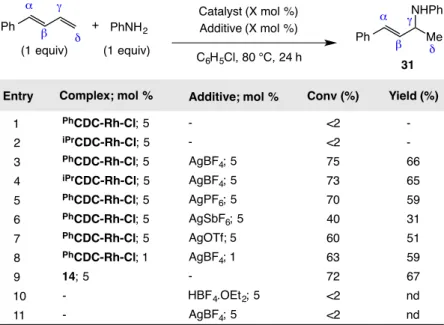
Scheme 1.6.1-1: Discovery of intermolecular hydroamination with CDC-Rh catalysts. ... 52
Scheme 1.6.1-2: Describing regioselectivity in the hydroamination of a diene. ... 53
Scheme 1.6.4-1: Reactivity of electronically disparate phenylbutadiene derivatives. ... 60
Scheme 1.6.4-3: CDC-Rh-catalyzed hydroamination of varied alkyl amines with alkyl dienes. ... 62
Scheme 2.1-1: Defining classes of hydrofunctionalization. ... 80
Scheme 2.1-2: Working mechanism for alkene activation with tridentate, square-planar metal catalysts. ... 81
Scheme 2.1-3: Hypothetical catalytic intermediate responsible for alkene activation. ... 82
Scheme 2.1.1-2: First generation of active CDC-Rh catalysts. ... 84
Scheme 2.1.2-1: Literature examples of cationic and neutral hydroarylation catalysts. ... 86
Scheme 2.1.2-2: Examples of hydroarylation in total synthesis. ... 88
Scheme 2.2.2-1: Diene scope of the intermolecular hydroarylation catalyzed by Ph
CDC-Rh-Cl. ... 94
Scheme 2.2.2-2: Further explorations of the scope of hydroarylation with internal dienes. ... 95
Scheme 2.2.3-1: Irreproducibility in hydroarylation reactions catalyzed by Ph
CDC-Rh-Cl. ... 96
Scheme 2.3-1: Synthesis of Ph
CDC-Rh-styrene, the monocationic CDC-Rh complex. ... 98
Scheme 2.3-2: Characterization of the cationic CDC-Rh complex by X-ray
crystallography and NMR. ... 99
Scheme 2.4-1: Unanticipated difference in reactivity between the neutral and cationic catalysts with and without AgCl. ... 100
Scheme 2.4-2: Examples of homo- and hetero-bimetallic transition metal
complexes with two metal centers bound to a single carbon(0) donor. ... 102
Scheme 2.4-3: Updated model for diene activation catalyzed by a CDC-Rh complex. ... 103
Scheme 3.1-1: The structures of our CDC-Rh(I) complexes and the proposed
activation mode for these catalysts. ... 112
Scheme 3.1-2: Proposed mechanism for diene hydroarylation catalyzed by a CDC-Rh(I)
complex and a Lewis acid co-catalyst. ... 113
Scheme 3.1.3: Comparing cross-coupling and hydrofunctionalization for the
formation of new C-C bonds. ... 115
Scheme 3.1.1-1: Defining hydroalkylation as a subset of hydrofunctionalization. ... 116
Scheme 3.2-2: Questioning whether the equilibrium between the keto and enol form of 2,4-pentanedione could account for the observed reactivity. ... 122
Scheme 3.3.1: Introduction to oxazolone nucleophiles and their activity as nucleophiles. ... 125
Scheme 3.3.2-4: The effect of acid impurities and oxazolone hydrolysis on reactivity. ... 134
Scheme 3.3.3-1: Scope of the diene for the CDC-Rh(I) catalyzed hydroalkylation with methyl-oxazolone 7. ... 135
Scheme 3.3.4-2: Oxazolone nucleophiles that were not successful reaction partners due to either low conversion or poor selectivity. ... 141
Scheme 3.3.5-1: Stereoretentive or selective functional group transformations of allylic oxazolone products. ... 142
Scheme 3.3.6-1: Proposed mechanistic cycle for the addition of oxazolones to diene
Scheme 3.3.6-2: Model to explain the substrate controlled diastereoselective
addition of CDC-Rh(I) catalyzed diene hydroalkylation. ... 145
Scheme 4.1-1: Hydrofunctionalization with arene nucleophiles to form C-C sp3 -sp3 hybridized bonds. ... 155
Scheme 4.1.2-1: Proposed diastereoselective hydroalkylation of 1,3-dienes with silyloxyfurans. ... 157
Scheme 4.2.1-3: Competing catalytic pathways in the hydroalkylation of 1,3-phenylbutadiene with a silyloxyfuran nucleophile. ... 161
Scheme 4.3.1-2: The effect of modifying the acyl protecting group on the conversion and selectivity of Ph CDC-Rh-styrene catalyzed hydroalkylation. ... 166
Scheme 4.3.2-1: Diene scope of CDC-Rh(I) catalyzed hydroalkylation with benzoyl furan nucleophiles (unpublished results). ... 168
Scheme 4.4.1-1: Strategies for tuning the activity of the diazepinium ligand scaffold. ... 170
Scheme 4.4.2-1: Attempted synthesis of a tert-butyl phosphine substituted CDC-Rh complex. ... 172
Scheme 4.4.2-2: Additional examples of syntheses where the sterics of the phosphine substituents prevented ligand and/or complex formation. ... 173
Scheme 4.4.3-1: Synthesis of the para-chlorophenylphosphine derivative of the CDC-Rh(I) complex. ... 175
Scheme 4.4.3-2: Synthesis of the 3,5-bis(trifluoromethyl)phenylphosphine derivative of the CDC-Rh(I) complex. ... 176
Scheme 4.4.3-3: Synthesis of the para-methoxyphenylphosphine derivative of the CDC-Rh(I) complex. ... 176
Scheme 4.4.3-4: Synthesis of the 3,5-dimethylphenylphosphine derivative of the CDC-Rh(I) complex. ... 177
Scheme 4.4.3-5: Attempted synthesis of the furylphosphine derivative of the CDC-Rh(I) complex. ... 178
Scheme 4.4.3-6: Structures of successfully synthesized CDC-Rh(I) complexes with differentially substituted aryl phosphines. ... 179
Scheme 4.5.1-1: Enolate hydroalkylations catalyzed by 71 (unpublished results). ... 181
Scheme 4.5.1-2: Enolate hydroalkylations catalyzed by 67 and 69. ... 182
Scheme 4.6.1-2: Control reaction demonstrating the inhibitory effect of furanone on hydroalkylation with TIPSO-furan (unpublished results). ... 187
Scheme 4.7.2-1: Diene scope for the CDC-Rh(I) catalyzed formation of allylic butenolides. ... 192
Scheme 4.7.3-1: Expanding hydroalkylation to 3-methyl-silyloxyfuran 84 with substituted aryl and alkyl dienes. ... 194
Scheme 5.1-1: CDC-Rh(I) complexes used in catalysis and the proposed catalytic intermediate responsible for diene activation. ... 203
Scheme 5.3.1.1-1: Synthesis of chiral a CDC-Rh(I) complex incorporating P-stereogenic 2,5-dimethylphospholanes. ... 215
Scheme 5.3.1.2-1: Synthesis of chiral a CDC-Rh(I) complex incorporating P-stereogenic BINEPINE. ... 217
Scheme 5.3.2-1: Screening for enantioselectivity with hydroamination and
hydroarylation reactions catalyzed by BINEPINE-derived 18. ... 218
Scheme 5.3.2-2: Screening for enantioselectivity with hydroamination reactions
catalyzed by DuPhos-related complex 15. ... 220
Scheme 5.4-1: Design philosophy for a chiral CDC-Rh(I) complex constructed from a chiral diazepinium ligand. ... 222
Scheme 5.4.2-1: Formation of the diamide backbones for the diazepinium ligand synthesis. ... 223
Scheme 5.4.2-2: Deprotection, reduction and cyclization steps in the synthesis of chiral diazepinium ligand precursors. ... 224
Scheme 5.4.3-2: Ligands formed from simultaneous modifications to the
diazepinium skeleton and phosphine substituents. ... 226
Scheme 5.4.4-1: Synthesis of chiral CDC-Rh(I) complexes with phenyl
phosphine substituents. ... 227
Scheme 5.4.4-2: Synthesis of chiral CDC-Rh(I) complexes with isopropyl
phosphine substituents. ... 228
Scheme 5.4.4-3: Synthesis of chiral CDC-Rh(I) complexes with furyl
phosphine substituents. ... 228
Scheme 5.5.1-1: Comparing the structure of CDC and CBA ligands. ... 234
Scheme 5.5.1-2: Ligand design of a chiral tridentate CBA incorporating two phosphine donors. ... 235
Scheme 5.5.2-2: Metallation of CBA ligands to form complexes with Pd and Pt. ... 237
Scheme 5.5.2-3: Newly prepared CBA-ligated metal complexes. ... 237
LIST OF TABLES
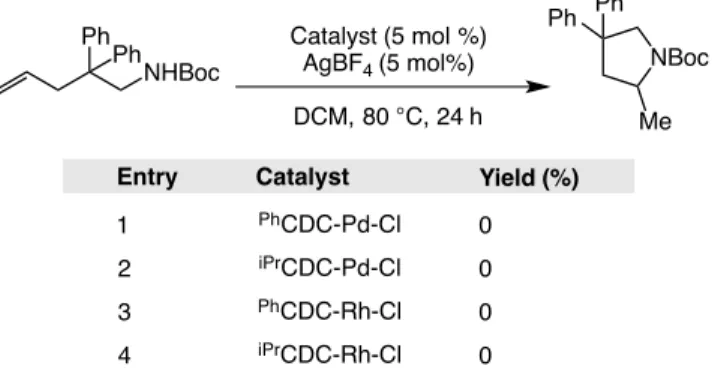
Table 1.5.2-1: Catalyst activity screening for the intramolecular hydroamination of an electron poor amine. ... 40
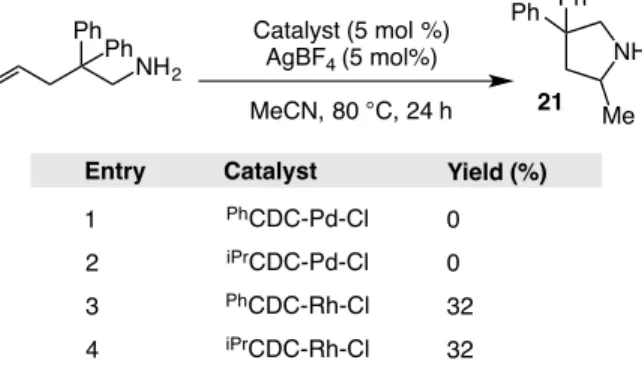
Table 1.5.3-1: Initial catalyst screen for intramolecular hydroamination with electron rich amines. ... 43
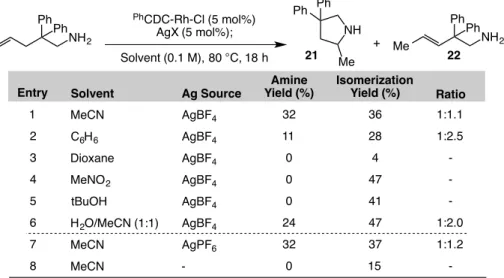
Table 1.5.3-2: Solvent screen for the intramolecular hydroamination of a primary amine. ... 44
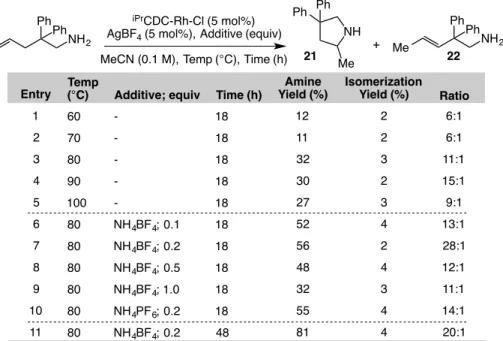
Table 1.5.3-3: Survey of conditions for optimizing intramolecular hydroamination with CDC-Rh(I) catalysts. ... 46
Table 1.6.2-1: Evaluation of the CDC-Rh complexes in hydroamination and
optimization of the reaction conditions. ... 55
Table 1.6.3-1: CDC-Rh-catalyzed hydroamination of phenyl-1,3-butadiene with aryl and secondary alkylamines. ... 57
Table 1.6.4-2: CDC-Rh-catalyzed hydroamination of aniline with alkyl dienes. ... 61
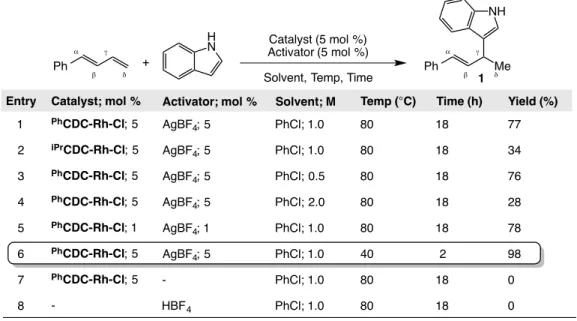
Table 2.2.1-1: Initial hits for intermolecular hydroarylation with CDC-Rh
complexes and optimization to obtain an efficient reaction. ... 91
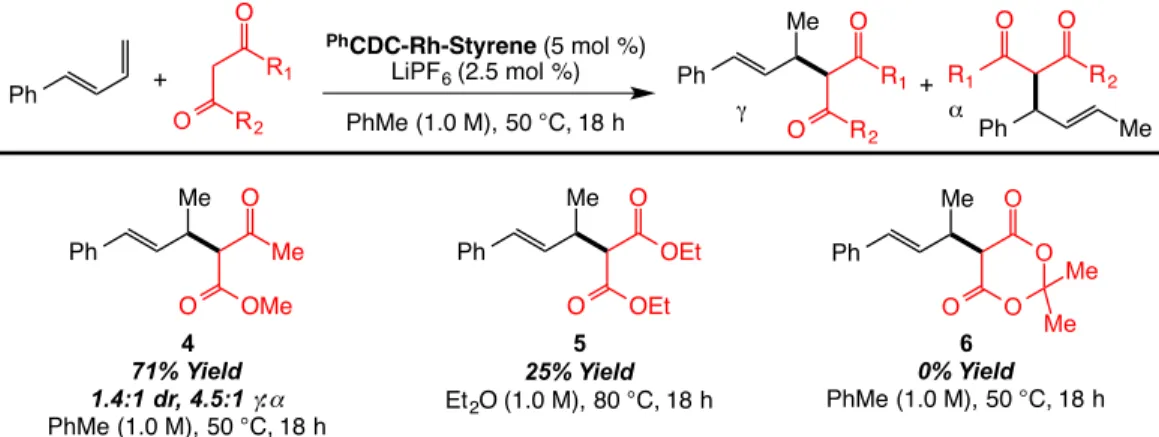
Table 3.2-1: Screening for the hydroalkylation of 1,3-phenylbutadiene with 2,4-pentanedione catalyzed by a cationic CDC-Rh(I) complex. ... 121
Table 3.2-3: A brief survey of the nucleophile scope for diene hydroalkylation with 1,3-diketo derivatives. ... 123
Table 3.3.2-1: Screening for hydroalkylation of 1,3-phenylbutadiene with Me-oxazolone 7. ... 128
Table 3.3.2-2: Studies on the role of the alcohol in oxazolone hydroalkylation and attempts to develop an enantioselective transformation through stereospecific hydrogen bonding. ... 131
Table 3.3.2-3: Additional optimization prior to the discovery of the alcohol additive. ... 132
Table 4.2.1-1: Reaction screening with 2-trimethylsilyloxyfuran to yield the allylic
butenolide 50. ... 159
Table 4.2.1-2: Screening the effect of modifying the alcohol additive, temperature and Lewis acid on hydroalkylation with 2-tert-butyldimethylsilyloxyfuran. ... 160
Table 4.2.1-5: Screening various protecting groups on 2-furanol as nucleophiles for hydroalkylation. ... 163
Table 4.3.1-1: Alcohol and temperature screens for benzoyl-protected furan additions to 1,3-phenylbutadiene. ... 164
Table 4.6.1-1: Screen of reaction conditions for the hydroalkylation of 1,3-phenylbutadiene with TIPSO-furan (unpublished results). ... 186
Table 4.7.1-1: Survey of conditions for the addition of silyloxyfurans to 1,3-phenylbutadiene using a cationic CDC-Rh(I) catalyst. ... 189
Table 5.2.1-1: Survey of chiral phosphoric acid additives for diene hydroarylation. ... 209
Table 5.2.1-2: Survey of protic chiral additives for the hydroalkylation of 1,3-phenylbutadiene (see Section 3.3). ... 210
Table 5.2.2-1: Survey of Lewis basic additives for stereoinduction in diene hydroarylation. ... 211
Table 5.2.3-1: Attempted enantioselective hydroarylation with chiral counterions. ... 213
Table 5.4.5.1-1: Surveying enantioselective intramolecular hydroamination with chiral CDC-Rh(I) complexes. ... 230
Table 5.4.5.2-1: Enantioselective intermolecular hydroarylation catalyzed by 32c. ... 232
Table 5.5.3-2: Screening Lewis acids for the enantioselective hydroalkylation of 1,3-phenylbutadiene with 2,4-pentanedione. ... 240
Table 5.5.3-3: Optimization of the solvent, concentration and temperature for
LIST OF ABBREVIATIONS AND SYMBOLS
(0) oxidation state of zero
(IV) oxidation state of four
[Rh(cod)Cl]2 chloro(1,5-cyclooctadiene)rhodium(I) dimer
[Rh(ethylene)2Cl]2 di-μ-chlorotetraethylene dirhodium(I)
°C degrees Celsius
Å angstrom
Ag silver
Au gold
BF4 tetrafluoroborate
BINOL 1,1'-bi-2-naphthol
Bn benzyl
Boc tert-butoxycarbonyl
Br bromine
Bz benzoyl
C carbon
Cal calorie
CBA cyclic bent allene
CDC carbodicarbene
Cl chlorine
ClO4 perchlorate
cm centimeter
Cu copper
d doublet
DBI Division of Biological Infrastructure
DCM dichloromethane
dd double of doublets
DFT density functional theory
DIPEA diisopropylethylamine
DMF dimethylformamide
dr diastereoselectivity
dt doublet of triplets
ee enantiomeric excess
eg for example
ES electrospray ionization
Et ethyl
Et2O diethyl ether
EtOAc ethyl acetate
F fluorine
Fe iron
GC gas chromatography
H hydrogen
H2O water
Hex hexanes
HOMO highest occupied molecular orbital HPLC high performance liquid chromatography HRMS high resolution mass spectrometry
Hz hertz
I iodine
ie in other words
iPrOH isopropanol
IR infrared
K potassium
La lanthanide
Li lithium
LRMS low resolution mass spectrometry LUMO lowest unoccupied molecular orbital
m multiplet
m- meta
Me methyl
MeCN acetonitrile
MeOH methanol
MHz megahertz
mmol millimoles
MS mass spectrometry
N nitrogen
NaBArF
4 tetrakis[3,5-bis(trifluoromethyl)phenyl]borate
NH4 ammonium
NHC N-heterocyclic carbene
Ni nickel
NMR nuclear magnetic resonance
O oxygen
o- ortho
OAc acetate
OMe methoxy
OTf triflate
P phosphorus
p- para
Pd paladium
PF6 hexafluorophosphate
Ph phenyl
PhCl chlorobenzene
PhH benzene
PhMe toluene
Pr propyl
Pt platinum
Q-ToF quadrupole time of flight
Rh rhodium
s singlet
SI supplementary information
t triplet
TADDOL α,α,α',α'-tetraaryl-2,2-disubstituted 1,3-dioxolane-4,5-dimethanol TBDPS tertbutyldiphenylsilyl
TBS tertbutyldimethylsilyl
tBuOH tert-butanol
THF tetrahydrofuran
TIPS triisopropylsilyl
Ti titanium
TLC thin layer chromatography
TMP tetramethylpiperidine
TMS trimethylsilyl
vida infra see below
vide supra see above
XRD X-ray defractometer
Zn zinc
Zr zirconium
α alpha
β beta
γ gamma
δ delta
ν frequency
π pi
CHAPTER 1: CATALYTIC HYDROAMINATION WITH CARBODICARBENE
LIGATED METAL COMPLEXES1
1.1: Introduction to Hydroamination
One well-studied class of alkene functionalization is hydroamination.1–5 Hydroamination
is defined as the addition of a N-H σ-bond across a C-C π-bond resulting in the formation of a new C-N and C-H bond vicinal to one another (Scheme 1.1-1). The significant interest in this reaction is in part due to the importance of carbon-nitrogen bonds in biologically active molecules, as highlighted by the rapid adoption of Buchwald-Hartwig couplings in the industrial syntheses of pharmaceuticals.6–8 Alkene hydroamination has the potential to generate valuable
C-N bonds in an atom-economical fashion, as every atom that is contained in the starting reagents is incorporated in the products. Additionally, the ready availability of alkenes and amines as starting materials allows hydroamination to rapidly transform simple compounds into complex molecules. Although a great deal of progress has been made in hydroamination, a general protocol has yet to be achieved and most catalysts are highly limited in scope.2
R1
N
N H
+ R2 Catalyst
R2 R1
C-C π-bond
H
N-H σ-bond 2 new σ-bonds
1
A portion of this chapter appeared as a communication in the Journal of the American Chemical Society. The original citation is as follows: Goldfogel, M. J.; Roberts, C. C.; Meek S. J., J. Am. Chem. Soc., 2014, 136 (17), 6227–6230. Of the work discussed, C. C. Roberts was responsible for the development and synthesis of the CDC ligands (Ph
CDC–H and iPr
CDC–H), Rh complexes Ph
CDC-Rh–Cl and iPr
Scheme 1.1-1: A general hydroamination reaction scheme.
Alkene hydroamination is complicated by the regiochemistry of the C-N bond formation. Addition of the C-N bond to the more substituted alkenyl carbon provides the branched Markovnikov products, while anti-Markovnikov addition to the less substituted or terminal sp2
carbon forms the less substituted amine (Scheme 1.1-2).3
The Markovnikov addition is more common, as any mechanism that proceeds through a cationic intermediate will favor formation of the more substituted cationic carbon, directing addition of the nitrogen nucleophile to the same location. In 1993 anti-Markovnikov hydroamination was identified as one of the top challenges facing catalysis9
and, despite recent catalytic examples,10
remains a problem today. Anti-Markovnikov hydroamination has been developed utilizing such strategies as substrate bias,11–18
hydride insertion,19
and radical chemistry,20–22
yet limitations still exist in scope and these methods are untested in total synthesis.
Ph Ph
Ph NR2
NR2
branched amine Markovnikov Product
catalyst A catalyst B
linear amine anti-Markovnikov Product N
H R R
N H
R R
Ph H Ph
H
favored disfavored Cationic intermediates favor the
Markovnikov products
Scheme 1.1-2: Regiochemical considerations in the hydroamination of an alkene.
Stereochemical challenges further complicate many hydroamination reactions as addition to an alkene π-bond results in the formation of a stereocenter (Scheme 1.1-3).23,24
Catalysts that can enantioselectively generate C-N bonds are particularly desirable, as many of the natural products amenable to hydroamination have specific stereochemistry.25
Alkyne hydroamination does not form stereocenters, as the resulting carbon center is sp2
stereogenic products through diastereo- and enantioselective transformations. The following sections will introduce several methods of alkene hydroamination to define the state-of-the-art and identify limitations that still prevent hydroamination from being adopted as a common synthetic tool.
Ph Ph
Ph
NR2 N
H R2 R1
N H
R2 R1
(R)-catalyst (S)-catalyst
NR2
Ph Ph
N H
R2 R1
catalyst
NR2 Alkene Hydroamination:
Alkyne Hydroamination:
Ph NR2
R1 and R2≠ H R1= H
tautomerization
Scheme 1.1-3: Stereochemistry in hydroamination.
1.1.1: Categories of Catalytic Methods for Hydroamination
Despite its utility, mild methods for the hydroamination of alkenes are elusive. As an almost thermo-neutral process, hydroamination proceeds through an entropically disfavored transition state and consequentially high activation barrier.2
As such, hydroamination under mild conditions necessitates the use of a catalyst. Hydroamination was initially explored with alkaline26,3
and rare-earth metals (ie: lanthanides),4,27
but more modern developments have introduced early transition metal28,29
and late transition metal catalysts5,30
which have come to dominate the literature due to their improved substrate scope, stability, and intermolecular transformations.2
1.1.1.1: Alkaline and Rare-Earth Catalysts
Alkaline and rare-earth catalysts are notable for their high reactivity, boasting high turnover frequencies and reliable regioselectivity (Scheme 1.1.1-1).4,31
Because of the reliability of these reactions, this class of catalysts is prevalent in synthetic applications of hydroamination (vide infra, section 1.1.3). However, alkaline and rare-earth catalysts rarely accomplish intermolecular reactions32,33 and are highly oxygen and water sensitive.27 These restrictions,
paired with catalyst incompatibility with polar functional groups (eg: aldehydes, ketones) and acidic protons (eg: alcohols, carboxylic acids) have encouraged recent hydroamination research in alternative mild catalysts.
Nd CH(TMS)2
Si La
H H
La N
Li N
Me
Me Me Me
N SiMe3
SiMe3
O
N N
O
Li N
iPr iPr
Sm N(TMS)2 Si
Alkaline Catalysts:
Rare-earth Catalysts: N
Li
Me3Si SiMe3
Scheme 1.1.1-1: Examples of alkaline and rare-earth hydroamination catalysts.
1.1.1.2: Early Transition Metal Catalysts:
Early transition metal catalysts have also been extensively explored for hydroamination, with the majority of research focusing on the group 4 metals Ti34,35
and Zr36
(Scheme 1.1.1-2). Catalysts derived from these metals have shown particular facility for alkyne and allene hydroamination, but are significantly less developed for alkenes. More recent work has shown that Ti37,38
and Zr29,39
can catalyze intramolecular alkene hydroamination, but intermolecular examples remain scarce.40
counterparts and have an accordingly greater tolerance for functional groups.2
The amine scope is notable for reacting efficiently with congested nucleophiles (eg: secondary amines, tertbutylamine), but bulky ligands are required to react with small amines due to catalyst dimerization (vide infra). Overall, early transition metal hydroamination has been proven to be quite effective, but limitations still exist in: (i) the scope of alkene substrates, (ii) the availability of intermolecular reactions, and (iii) tolerance for amines of varying nucleophilicity.
Ti Me Me
N Zr
NMe2 NMe2 O
O NMe2 N
(iPr)2N (iPr)2N N
N Ti NMe2
N NMe2 Me Ti
Me Me
Zr Me
CH2BH(C6F5) Zr
Me Me
Scheme 1.1.1-2: Examples of early transition metal hydroamination catalysts.
1.1.1.3: Late Transition Metal Catalysts
Many of the recent notable advances in hydroamination have come from late transition metal catalysts. Such catalysts tend to bind amines less tightly, which can allow them to overcome nucleophilic substrate limitations.5
Because of this increased tolerance, late transition metal catalysts have become increasingly common with many examples of Ru,41–49
Pd50–52
, Pt,53–57
Rh,30,58–63
and Ir64–72
and catalysts appearing in the literature (Scheme 1.1.1-3). The coinage metals (Cu,73–76 Ag,77–85 Au79,86–117) have also been used, with both Au and Ag catalysts being the
most developed for intramolecular and alkynyl reactions. Recent work with Cu has shown that hydride additions across alkenes offers an alternative, and useful, mechanism for hydroamination.76
There are limited examples of hydroamination with other first row late transition metals (Fe,118–122
Ni123–130
, Zn131–142
O O O O O Me Me Ph Ph
Et2N NEt2
Et2N NEt2
Rh N
BF4
P
P
Ar = OMe tBu tBu Ir Cl Cl Ar Ar ArAr C Me O O O O P P
Ar = OMe tBu tBu Cu OAc OAc Ar Ar ArAr iPr iPr iPr P Pt tBu tBu Cl Cl O P CyCy Ph Ph Rh(cod) BF4 MeO OMe P Au Cy Cy OTf N
Ph2P Pd PPh2
Cl Cl
Ru Ph2P PPh2
OTf O Ag P N(iPr)2 Ph Ph AcO N N Me Me Fe Mes Mes
CH2SiMe3
Fe
P
Fe Me Me
Cy
P Ni P O
2 2ClO4
Ph
Ph PhPh
Group 8:
Group 9:
Group 10:
Coinage Metals:
[Ru3(CO)12]
Scheme 1.1.1-3: Examples of late transition metal hydroamination catalysts.
Late transition metal catalyzed hydroamination generally benefits from a broader substrate scope than rare-earth or early transition metal methods, in part due to an increased tolerance for polar functional groups and decreased sensitivity of late transition metal complexes to oxygen and water.1,5
Despite several notable examples of intermolecular hydroamination,10,69,121,143,144
intramolecular examples predominate and alkene hydroamination is quite limited compared to reactions with alkynes and allenes.2
structures and scaffolds that have allowed for the control of reactivity at the metal center. The variety of available ligands paired with the range of accessible reactivity highlights the potential of late transition metal catalysts for hydroamination.
1.1.1.4: Metal Free Methods
Organocatalytic hydroamination reactions have been accomplished using acids to protonate the π-system and generate cationic intermediates before amine addition.145,146 However
these reactions are generally limited by harsh reaction conditions or poor substrate scope, and are almost exclusively intramolecular.1
This strategy is also limited mechanistically, as acid catalysts are restricted to generating Markovnikov products, since the intermediate cation is formed in the more substituted internal position. Recent advances in organocatalytic methods have overcome this limitation using photoredox catalysis to generate cation-radical intermediates that favor anti-Markovnikov addition.147–151
Although this field is in its infancy, these new metal-free methods mark a different and intriguing approach to hydroamination.
1.1.2: Metal Catalyzed Hydroamination Mechanisms
1.1.2.1: Mechanism of Catalysis with Rare-Earth Metals
Rare earth catalysts generally operate via direct nucleophilic addition or insertion of the amine into the π-system, which is usually the rate-determining step (Scheme 1.1.2-1).27
As such, there is a great deal of similarity between alkaline and Lanthanide mechanisms of hydroamination.152
Insertion into the π-system generates a highly basic alkyl-metal bond, which deprotonates another molecule of the amine to regenerate the active metal-amide intermediate. The high reactivity of the metal-amide intermediates is the source of the high turnover frequency and regioselectivity afforded by these catalysts.2
However, this high reactivity also results in high catalyst sensitivity and an inability to tolerate polar functional groups that could react with the metal-amide or alkyl metal bases found in the reaction.
Ln L
L NR2
H NR2 n
N n Ln L
L H
Ln L
L
H N
n n
Me HN
n
NH2
NH2
Ln L
L H
N n
Catalyst Activation
Alkene Insertion Protonolysis
Scheme 1.1.2-1: General mechanism for hydroamination with rare-earth catalysts.
1.1.2.2: Mechanism of Catalysis with Early Transition Metals
The mechanism for hydroamination with group 4 metals has been extensively modeled and differs dramatically from other hydroamination pathways (Scheme 1.1.2-2).153,154
4 metal initially reacts with a basic amine to generate a catalytically active metal-imido species. C-N bond formation then occurs through a [2+2] cycloaddition between the π-systems of the metal imido and alkene in order to form a strained metalocycle. Proton transfer from another amine to break the carbon-metal and metal-nitrogen bonds follows, releasing the product and reforming the catalyst. This mechanism is complicated by dimerization of the metal imido complexes to an off-cycle intermediate. Excessive formation of this intermediate can occur if the amine is not sufficiently bulky to prevent dimer formation. It is the formation of the off-cycle dimeric intermediate that is responsible for the general favorability of bulky amine substrates over primary amines, since steric bulk disfavors the formation of the bridged metal and forces the equilibrium towards the catalytically active monomeric metal imido.2
Smaller amine substrates can be utilized, provided ligands bound to the group 4 metal are large enough to compensate, but a specific ligand is rarely general for a large array of amine substrates.
MMe
Me M
NHR NHR
M N R
Cp2M N R
R1 R2 M N
NH R1
R2 R H
N
R1 R2 R
M N N
M R
R - RNH2
+ RNH2 RNH2
RNH2
R2 R1
R
metal imido complex
[2+2] cycloaddition proton
transfer
off-cycle dimerization
1.1.2.3: Mechanism of Catalysis with Late Transition Metals
Much of the literature discussed above has focused on developing late transition metal catalysts, which have shown greater substrate tolerance and mechanistic flexibility. Despite the variety of mechanisms that have been proposed, catalysis with late transition metals can be broadly categorized by whether the alkene or the amine is activated (Scheme 1.1.2-3, Cycle A vs Cycle B).2 Mechanisms that proceed via initial binding of the alkene are termed electrophilic
activation, while a mechanism that occurs through activation of the amine is referred to as an N-H insertion pathway. Electrophilic activation was initially proposed for Pd and is widely accepted for many mechanisms, particularly those involving cationic metal catalysts.155
Electrophilic catalysts operate through direct activation of the alkene by coordinating to the C-C π-system, which weakens the π-bond. This allows for external attack by the amine and subsequent formation of a metal-carbon bond. Protonation of this metal-carbon bond releases the product and regenerates the catalyst (Scheme 1.1.2-3, Cycle A).156
The alternative N-H insertion mechanism begins with oxidative addition of the metal into the amine N-H bond,67
or generation of a metal hydride from a stoichiometric hydride source.157 The resulting hydride- and/or
metal-amido complex can insert across the olefin forming either the C-N or C-H bond respectively.5
Cycle A Electrophilic Activation R R' H N M R M R' H N R M H N R' R M N R' H R' N M R' N M H H M N R' H N R' R Cycle B N-H Insertion R R R Olefin Coordination Nucleophilic Addition Oxidative
Addition CoordinationOlefin
Reductive Elimination Proton
Transfer EliminationReductive InsertionHydride
R'' R'' R'' R'' R'' R'' R'' R'' Direct Protonation M H
Scheme 1.1.2-3: Two commonly proposed mechanisms for hydroamination with late transition metal catalysts.
1.1.3: Hydroamination in Total Synthesis:
The use of catalytic methods in total syntheses serves as a metric for the overall utility and functional group tolerance of a reaction. Despite the prevalence of C-N bonds in natural products, and the corresponding value of forming C-N bonds with complete atom economy, hydroamination has only seen limited use in total synthesis. This is likely due to restrictions on substrate scope and the difficulty of identifying a general catalyst for a given reaction. However, several landmark examples of hydroamination in total synthesis do exist and will be discussed to enumerate the current limits of the reaction. Only stereoselective syntheses will be discussed in an effort to focus on hydroamination reactions that have the selectivity necessary to be generally applied in the synthesis of complex, stereodefined molecules.
The first application of hydroamination in natural product synthesis was by Marks et. al.
produced in the mucous coating of poison dart frogs.31
These syntheses were accomplished using organolanthanide catalysts to diastereoselectively hydroaminate allenes with a primary amine intramolecularly (Scheme 1.1.3-1: Lanthanide Catalysts). The high reactivity of organolanthanide catalysts is exemplified in the synthesis of Xenovenine as a tandem allene and alkene intramolecular cyclization could be catalyzed at temperatures as low as 45 °C. The absence of any other functional groups highlights the incompatibility of organolanthanide catalysts with Lewis basic moieties. Similar lanthanide catalysts have been subsequently used for the synthesis of (+)-Pinidinol158
and the HCl salt of coniine.159
The synthesis of coniine is particularly notable as one of only two examples of enantioselective hydroamination in total synthesis.
Alkaline hydroamination catalysts have seen use in total synthesis for the diastereoselective formation of pyrrolidine and piperidine rings. These methods generate lithiated amines, which have exceptional activity and selectivity. Alkaline catalysts were used in the syntheses of (-)-Codeine, (-)-Morphine,160 (-)-Metazocine, and (-)-Pentazocine161 by Trost et al. However, further extension of these methods has been dissuaded by the necessity for alkyl lithium bases, which have no tolerance for acidic protons. The synthesis of (-)-Metazocine is representative of the harsh conditions required, as the base caused in situ isomerization of the alkene and the only functional group tolerated was an ether (Scheme 1.1.3-1: Alkaline Catalysts). The second example of enantioselective hydroamination in synthesis was accomplished using an alkaline catalyst; a bisoxazoline ligand was paired with lithium diisopropylamine to catalyze the piperidine ring formation to synthesize (S)-Laudanosine with modest enantioselectivity.162
N
H n-C4H9
n-C5H11 H
H
N
Me n-C7H15
H
H H
(+)-Pyrrolidine 197B (+)-Xenovenine (-)-Pinidinol
N H OH HCl.Coniine N H2 Sm N(TMS)2
Si
H2N C6D6, rt, 7 days
Cl
R = H; (-)-Morphine R = Me; (-)-Codeine RO HO O H N Me (-)-Metazocine HO Me N Me Me (-)-Pentazocine HO Me N Me Me Me NMe MeO MeO OMe OMe (S)-Laudanosine NHMe MeO MeO OMe OMe O N N O
nBuLi (0.45 equiv) iPr2NH (0.3 equiv)
PhMe, - 30 °C, 26 h (0.5 equiv) 96% Yield 76% ee N H Me Enantioselective Synthesis: Enantioselective Synthesis: Alkaline Catalysts: Lanthanide Catalysts:
Scheme 1.1.3-1: Natural products synthesized stereoselectively lanthanide and alkaline catalysts for hydroamination.
More recent applications of hydroamination in synthesis have focused on late transition metal catalysts. Au,163–167
Pd,168
and Ag169
have been used in the intramolecular hydroamination of sp-hybridized alkynes or allenes to form piperidine rings, and limited examples of hydroamination with less reactive sp2
-hybridized substrates are also known.170,171
The natural products synthesized via these methods are significantly more complex and contain a variety of functional groups (Scheme 1.1.3-2). This demonstrates the increased tolerance and utility of late transition metal catalysts over their alkaline and lanthanide counterparts (Scheme 1.1.3-1: Late Transition Metal Catalysts). Particularly impressive examples include, Crambidine164
and (-)-Quinocarcine,165
intramolecular hydroamination is tolerant of esters, protected alcohols, and alkenes. Most recently the formal synthesis of (-)-Swainsonine was introduced by Lim et al. and marks the first use of enantioselective intermolecular hydroamination in total synthesis.172
N N
O Me CO2H H
OMe
H H
(-)-Quinocarcin
Late Transition Metal Catalysts:
N H N N O Me H H O O Me HO O
N NH3
NH3 OH n 3Cl (-)-Crambidine H N Ts OC5H11
+ Pd2(dba)3 (1 mol%) Et3N (10 mol%) Toluene, 40 °C, 16 h
HN NH
O O
PPh2
Ph2P Ts
N OC5H11 (2 mol%) N O O O Me Me H OH N HO OH H OH (-)-Swainsonine
Scheme 1.1.3-2: Natural products synthesized stereoselectively lanthanide and alkaline catalysts for hydroamination.
1.1.4: Current Limitations in Hydroamination
As was briefly discussed during the review of catalyst classes, efficienttransition metal-catalyzed hydroamination is limited by: (i) the small scope of amines and π-systems tolerated by a given catalyst, (ii) the scarcity of intermolecular methods, and (iii) the dearth of enantioselective methods. Catalysts rarely tolerate both nucleophilic and non-nucleophilic amines30,51
and are usually paired with sp-hybridized alkyne or allene electrophiles.2,5
We will focus on developing methods that react with sp2
hybridized π-systems in the interests of finding reactions that address current restrictions to substrate scope.
The nucleophilicity of the amine significantly impacts the viability of a given catalyst. Substrates containing nucleophilic amines are often plagued by product inhibition and exhibit an inverse dependence of the reaction rate on the amine concentration.173
Nucleophilic amines are less likely to react via the N-H insertion pathway due to the stronger N-H bond (Scheme 1.1.2-3: Cycle B).174 Similarly, electron poor amines are difficult for catalysts that favor the olefin
activation pathway, as they lack the nucleophilicity necessary to add to the π* orbital of the alkene (Scheme 1.1.2-3: Cycle A). The large variance of Lewis basicity between amine nucleophiles means that most catalysts are only competent for a narrow range of amine substrates, such as alkylamines,30
aryl amines,142
amides,69
or ureas.100
A significant advance in hydroamination would be the development of a general catalyst capable of hydroamination with multiple amine classes. This could also encourage the application of hydroamination in synthesis.
The majority of organometallic hydroamination catalysts have been demonstrated with alkyne and allene substrates.1
been demonstrated with alkenes the substrates are often strained (ie: norbornene71
) or activated by neighboring functional groups (ie: styrenyl olefins62 or dienes123). Substituted and internal
alkenes still pose a major challenge to reactivity.173
Most hydroamination protocols have been developed with intramolecular substrates. This is particularly apparent for rare-earth27
and early transition metal2
catalysts, where intermolecular reactions are rare. The examples of hydroamination in the synthesis of natural products underscore this limitation, as there are currently only intramolecular examples of stereoselective hydroamination. Intramolecular transformations significantly reduce the entropic barrier of the reaction, and can be further biased towards cyclization by the incorporation of geminal substituents.175
These limitations to substrate scope encourage the development of new catalysts and methods that can extend the viability of hydroamination as a synthetic reaction. One of the strengths of late transition metal catalysts is that they appear to be more amenable to the development of intermolecular reactions as there are examples with Cu,19
Pd,50
Rh,63
and Ir66
catalysts.
1.2: Designing a Hydroamination Catalyst
We aimed to develop a new catalyst capable of intermolecular reactions with alkenes to address systemic limitations to the field of hydroamination. To accomplish this goal, we chose to focus on late transition metal catalysts because they: (i) have been demonstrated in more intermolecular processes than other catalyst classes,176
(ii) show greater tolerance for polar functional groups and nucleophiles,173
and (iii) can have their reactivity tuned through judicious ligand choice.5
Many of the recent developments in hydroamination have been facilitated by the introduction of novel ligand frameworks that unlock new reactivity profiles and suppress undesired reactions.173
and synthesis of a new class of ligands that can control reactivity at the metal center. Known catalysts will provide the foundation for the rational design of new ligands and determine what steric and electronic traits may be beneficial to catalysis.
1.2.1: Mechanistic Approach to Catalyst Design
There are a limited number of mechanisms proposed for late transition metal catalyzed hydroamination.2 As described above, hydroamination with late transition metals can be broadly
categorized as either electrophilic activation or N-H insertion. Both have been demonstrated in alkene hydroamination, but the electrophilic activation pathway was chosen for further study in the interest of maintaining a broad nucleophile scope. Theoretically, an alkene activation mechanism could allow for the addition of any sufficiently nucleophilic Lewis base, possibly extending the developed catalysts to other hydrofunctionalization reactions (eg: hydroalkylation, hydroarylation, hydroetherification). This was particularly appealing as we hoped to develop a research program based on forming multiple types of bonds through the general activation of alkenes. Alkene activation should allow amines with varying nucleophilicity to react readily. In comparison, most N-H insertion mechanisms are restricted by the ability of the catalyst to insert into a given amine N-H bond, limiting the competent amine substrates.5
substrate inhibition that commonly limits amine scope in hydroamination. An effective ligand for general hydroamination with a variety on nucleophiles must control the steric and electronic properties at the metal center in order to encourage alkene binding.
Electrophilic Activation R
R
M H
R M R2N
R M NR2
H
H NR2 R
Olefin
Coordination NucleophilicAddition
Reductive
Elimination TransferProton
Direct Protonation M
R2N
H
β-hydride Elimination
R M R2N
H
H Substrate
Inhibition H R2N M
NR2 H
Scheme 1.2.1-1: Working mechanism for designing a hydroamination catalyst including anticipated side reactions and off-cycle pathways.
The second step of the mechanism is external attack by a nucleophilic amine in order to generate the C-N bond and an alkyl-metal intermediate. The high activation barrier to this step requires that the alkene be sufficiently electrophilic to encourage amine addition. Coordination of the alkene to an electron poor metal can lower the activation barrier by withdrawing electron density from the alkene as predicted by the Dewar-Chatt-Dunkanson model (Scheme 1.2.1-2).177
Alkene activation is described by Eisenstein and Hoffman as a geometric “slip” of the bound alkene to localize the LUMO on a single carbon.156,178
Additionally, computational studies predicted that the electronegativity of the metal center will impact reactivity and hypothesized that group 10 metals would be favored catalysts.179
M M
C
C
σ donation
C
C
π back-donation
M M
greater σ donation M
greater π back-donation
M δ M
δ
δ
δ Bonding Interactions in Alkene Coordination:
The Effect of Bonding on the Reactivity of the Alkene:
increased electron density and nucleophilicity
decreased electron density causes a ring slip to form an alkene electrophile
Desired Reactivity
Scheme 1.2.1-2: The Dewar-Chatt-Duncanson Model for alkene coordination to a late transition metal.
Unlike migratory insertion pathways, where the nucleophile initially binds to the metal before insertion can occur, electrophilic alkene activation is proposed to occur through outer sphere addition to the alkene. The catalyst only needs one open coordination site for this mechanism, encouraging bi- or tridentate ligand scaffolds that can fill unused coordination sites to prevent undesired reactivity. β-hydride elimination is a common side reaction in alkene hydroamination and forms imine products after reductive elimination. These imines can then further impede reactivity by tightly binding to the catalyst.173
Many catalysts have only a single available coordination site to prevent β-hydride elimination, which requires a second coordination site at the metal center in order to form the metal hydride.180
The final step of the proposed cycle is protonation of the metal-alkyl bond to form the product and regenerate the active metal catalyst with an open coordination site for alkene binding. For Rh and Ir catalysts this step is often considered to be rapid.5
However, for Pd181
and Au116
catalysts this protonation can be rate-determining. This is especially apparent for Au catalysts, which have been shown to stoichiometrically generate a stable alkyl-Au complex during C-N bond formation. For many catalysts protonation at the metal is not feasible since they do not have an open coordination site. In these cases, substrate or ligand assisted protonation may allow for an intramolecular protonation of the metal-alkyl bond to generate the product.108,181
1.2.2: Trends in Successful Late Transition Metal Hydroamination Catalysts
Trends have begun to emerge in the catalysts that efficiently hydroaminate alkenes since the seminal work of Beller63,182
and Hartwig.157
DFT studies by Togni et al. led us to examine the group 9 and 10 metals, which were predicted to be highly effective catalysts for electrophilically activating alkenes to allow for external amine addition.179
A series of representative catalysts are depicted in Scheme 1.2.2-1 to inform the following discussion. Examining the metals (eg: Rh,173,183 Pd,51,157 Ni125) used shows that they all have a positive charge at the metal center. This
cationic nature likely assists in removing electron density from a bound alkene to weaken the C-C π-bond. The importance of a highly electrophilic metal center is demonstrated by the cationic Pd complex 2, which was developed by Michael et al. and is one of the most active late transition metal catalysts.51
Additional trends emerge in the ligands used by effective hydroamination catalysts. Excluding Au, which favors a monodentate linear geometry, most active ligands for late transition metal catalyzed hydroamination are multidentate.2
preventing inhibition, and (iii) suppressing undesired side reactions. The majority of active catalysts using group 9 and 10 metals are square planar, and have only a single open coordination site. Undesired β-hydride elimination processes will be prevented by maintaining only a single open coordination site.173
Tridentate ligand scaffolds (ie: pincer ligands) are particularly useful in fulfilling this role and appear in many successful catalysts.51,64,173
As discussed above, a cationic metal center is usually required for effective catalysis; this necessitates neutral L-type ligands.
O Me Me
Ph Ph
Et2N NEt2
Et2N NEt2
Rh N BF4 C Me O P CyCy Ph Ph Rh(cod) BF4 N Ph2P Pd PPh2
Cl Cl Fe P Fe Me Me Cy
P Ni P
O 2 2ClO4
Ph
Ph PhPh
Fe P P Pd Ph Ph PhPh O O CF3
OTf 1 2 3 4 5 Trends:
1) Cationic Metals 2) Group 9 and 10 metals 3) Square planar complexes 4) Multidentate ligands 5) New ligand structures
Scheme 1.2.2-1: Representative complexes used to inform catalyst design.
1.2.3: Design Goals for a Hydroamination Catalysts
The design of a catalyst was approached using the above observations and the mechanistic rationale discussed for electrophilic alkene activation. Current limitations in intermolecular processes and the amine scope in hydroamination could be overcome by improving upon the reactivity of known complexes. Two catalysts in particular proved inspirational, both for their desirable properties and notable limitations (Scheme 1.2.3-1). The first of these is the dicationic Pd complex 2 developed by Michael et. al.51
and alkaline catalysts. However, catalyst 2 also suffered from inhibition in the presence of any Lewis base; even an ethereal solvent such as diethyl ether or tetrahydrofuran completely suppressed reactivity.181
Additionally, the reaction is restricted to intramolecular hydroamination with electron poor amides, which substantially reduces the generality of the transformation. By designing a similar complex with slightly reduced reactivity, we hoped to create a catalyst that maintained the activity of 2, while ameliorating catalyst inhibition. This could provide a catalyst capable of intermolecular hydroamination with more electron rich amines.
N Pd PPh2 Ph2P
Cl
Michael, 2008 H
N
Me N Boc Me
Me
Me
Me Boc
Cl
+ Room temperature hydroamination - Limited to protected amines - Inhibited by THF/Et2O
AgBF4, CuOTf, MgSO4
NH2
Ph Ph
Hartwig, 2010 Me
NH Ph
Ph O
Me Me
tBu tBu
P P NEt2
NEt2 Et2N
Et2N Rh
NCMe BF4
+ Broad amine scope - Intramolecular - Sensitive catalyst
2 1
Scheme 1.2.3-1: Intramolecular hydroamination reactions used as direct inspiration for designing new catalysts.
The second inspirational catalyst was the Xantphos ligated Rh complex 1 introduced by Julian and Hartwig for the formation of pyrrolidine and piperidine rings by intramolecular hydroamination.173
bonds. Development of a more stable complex could allow for higher reaction temperatures and intermolecular reactivity.
Taking these complexes as a starting point, we identified the properties expected to be beneficial to an alkene hydroamination catalyst. We reasoned that a catalyst derived from a group 9 or 10 metal would provide a flexible starting point and would need to be mono- or dicationic to be sufficiently electrophilic to promote alkene activation.184
The limitations of catalyst 2 due to substrate inhibition encouraged the use of a highly donating set of ligands that could stabilize a cationic metal center.180
These ligands would need to be L-type donors to maintain the cationic character at the metal center. In order to prevent β-hydride elimination, the ligand should fill three of the four available coordination sites on a square planar group 9 or 10 metal. This recommended the use of a tridentate ligand, and would have the additional benefit of incorporating a modular structure that could be used to tune the metal center through electronic and steric modifications.
A subtle trend in reports of novel catalysts is that advances in late transition metal hydroamination are usually accompanied by the introduction of a new ligand structure. Hydroamination has been thoroughly researched and most privileged ligand scaffolds have already been explored, including phosphine ligands derived from binapthyl185
or ferocenyl backbones,45
pincer ligands,64
and N-heterocyclic carbenes.186
Further screening of these known structures is unlikely to unlock new reactivity. Instead, we proposed to develop ligands that were unknown in catalysis and would therefore access entirely new chemical space. Carbodicarbenes were a class of neutral carbon donor ligands that fit this stipulation perfectly, since they had not been successfully applied to any catalytic reaction.187