PARENTAL MANAGEMENT OF ADRENAL CRISIS IN CHILDREN WITH CONGENITAL ADRENAL HYPERPLASIA
Louise Kathleen Fleming
A dissertation submitted to the faculty at the University of North Carolina at Chapel Hill in partial fulfillment of the requirements for the degree of
Doctor of Philosophy in the School of Nursing.
Chapel Hill 2016
©2016
ABSTRACT
Louise Kathleen Fleming: Parental Management of Adrenal Crisis in Children with Congenital Adrenal Hyperplasia
(Under the direction of Marcia Van Riper and Kathleen Knafl)
Background: Life-threatening conditions in children change the meaning of parenting. Classical congenital adrenal hyperplasia (CAH), a rare, endocrine disorder, requires caregivers to inject a child with hydrocortisone intramuscularly during illness and adrenal crisis. The inability to effectively respond to a crisis prevents parents from optimally managing the condition. Few studies have examined parental education on managing crises or parental management strategies. Identifying gaps in parent education by healthcare providers, especially concerning times of crisis, is necessary to promote positive outcomes, for children and family members.
Purpose: This is a three-manuscript dissertation. Chapter 2 presents a systematic review of the literature surrounding CAH management. Chapter 3 presents the results of a two-phase, mixed methods study examining parental management of adrenal crisis in children with CAH. Chapter 4 compares the family experiences of parents of girls versus boys with CAH.
Results: Four distinct themes emerged from the literature regarding family
management of CAH. As parents’ management ability increases, CAH has less impact on the family. Additionally, parents feel better able to manage the condition after their child turns 5 years old. Families having a daughter with CAH experience significant, additional challenges such as stigmatization, surgery, and disclosure about their daughter’s CAH.
Conclusion: Healthcare providers should deliver increased and more frequent education regarding adrenal crisis management and offer more in-depth, emotional
assistance to parents of children with CAH. Furthermore, providers need to create a network of support specifically for families of girls born with CAH that addresses both surgical
ACKNOWLEDGEMENTS
There is a long list of people that made my dissertation work possible, and to all of them I would like to express my sincere gratitude. To start, I could not have begun nor completed this journey without the loving support of my husband, Joe. Having a child with special health needs changed us both, and I will be forever grateful that he allowed me to channel my energy into this doctoral work with an eventual goal of helping other CAH families. His patience with my daily, necessary, early morning conversations over coffee was nothing short of a miracle. I want to thank my son Joey for his willingness to allow me to often make his private health something public and for showing unwavering courage in participating in research for the last twelve years. You inspire me (and many others). Thank you to my beautiful daughters who I hope I have shown that women, especially mothers, can achieve much, but perhaps not all at once and in a short time. Thank you to my mother for all of your help with the kids, especially when I was away at conferences or the kids needed be shuttled around for after school activities. Your help was always appreciated. Thank you as well to my mother-in-law, who moved to Apex in the middle of this process, and jumped right in with support.
welcome and needed. I would also like to thank Dr. Echo Meyer who has helped me both professionally and personally better understand the effects of childhood chronic illness on the family.
Many within the School of Nursing have been wonderfully supportive. Lee Smith has played an important role in designing materials for dissemination of my work, and Lica Strasner and Dr. Barbara Mark’s guidance as I navigated the PhD process has been most helpful. I am also extremely grateful for the thoughtful guidance of Kathy Moore, Jill
Summers, and Alisa Watson-Mebane as they supported me as a teaching fellow these last four years. In addition, my UNC School of Nursing fixed term faculty colleagues’ words of encouragement and support were much appreciated. Both Dr. Marilyn Oermann and Dr. Carla Gene Rapp were very instrumental early on in my career. They saw something in me I didn’t see in myself and sparked a career trajectory that I would not have had the confidence to embark on without their encouragement. A big thank you to Dr. Adele Yarcheski whose guidance and support through long distance phone calls were more helpful than she realized. I would also like to thank my fellow PhD in Nursing students, of whom I have learned more from than I ever would have thought possible. Through them, I traveled the world and learned of such valuable research on populations from varying races and
Funding and support for my predoctoral training included National Institute of Nursing Research of the National Institutes of Health T32 (PI: Mishel and Santacroce) from 2012-2014. This early funding supported me as I began planning and grant writing for my study. My dissertation study was further funded by the American Nurses Foundation Grant
sponsored by the Southern Nurses Research Society (PI: Fleming, 2015) and Sigma Theta Tau, Alpha Alpha Chapter Small Grants (PI: Fleming, 2013, 2014). I also received several helpful scholarships along the way including the Cynthia Davis Sculco Nursing Scholarship (2015), the Carol Ann Beerstecher Graduate Scholarship (2014), and the James M.
TABLE OF CONTENTS
LIST OF TABLES ... xi
LIST OF FIGURES ... xii
LIST OF ABBREVIATIONS ... xiii
CHAPTER 1: INTRODUCTION ... 1
Background and Significance ... 1
Aims ... 5
Theoretical Framework ... 6
Prepared Manuscripts ... 7
REFERENCES ... 11
CHAPTER 2: MANAGEMENT OF CONGENITAL ADRENAL HYPERPLASIA- A SYSTEMATIC REVIEW OF THE LITERATURE ... 14
Introduction ... 14
Methods ... 16
Results ... 17
Health and Development Issues Associated with CAH ... 18
Physical and Psychosocial Consequences from Exposure to Excess Androgens ... 20
The Life Experience of Having CAH for Those Affected and Their Families ... 26
Acute Illness and Managing and Averting Adrenal Crisis ... 28
Discussion ... 29
Future Implications for Practice and Research ... 31
CHAPTER 3: PARENTAL MANAGEMENT OF ADRENAL CRISIS IN
CHILDREN WITH CONGENITAL ADRENAL HYPERPLASIA... 51
Introduction ... 51
Methods ... 53
Guiding Framework ... 53
Design ... 54
Participants ... 54
Measures ... 55
Data Collection ... 56
Data Analysis ... 57
Results ... 59
Phase 1 Results ... 59
Phase 2 Results ... 60
Discussion ... 69
REFERENCES ... 77
CHAPTER 4: GENDER MATTERS IN FAMILIES HAVING A CHILD WITH CONGENITAL ADRENAL HYPERPLASIA ... 79
Overview ... 79
Methods ... 80
Participants ... 80
Analysis of Data ... 81
Findings ... 82
Timing of Diagnosis ... 82
Surgical Decisions ... 85
Stigma ... 87
Discussion ... 89
REFERENCES ... 94
CHAPTER 5: DISCUSSION ... 97
Future Implications for Practice and Research ... 102
REFERENCES ... 105
APPENDIX A: INVITATION TO PARTICIPATE LETTER ... 108
APPENDIX B: INTERVIEW GUIDE ... 109
APPENDIX C: FAMILY INFORMATION FORM ... 111
APPENDIX D: PEDIATRIC QUALITY OF LIFE-FAMILY IMPACT MODULE ... 115
APPENDIX E: FAMILY MANAGEMENT MEASURE-VIEW OF CONDITION IMPACT SCALE ... 118
LIST OF TABLES
Table 1.1. Outline of Study Aims and FMSF ... 10
Table 2.1. Summary of Articles: Health Related Issues Associated with CAH Diagnosis ... 34
Table 2.2. Summary of Articles: Physical and Psychosocial Consequences from Exposure to Excess Androgens ... 37
Table 2.3. Summary of Articles: The Lived Experience of Having CAH for Those Affected and Their Families ... 42
Table 2.4. Summary of Articles: Acute Illness, Stress Dosing, and Adrenal Crisis Experiences and Management ... 44
Table 3.1. Outline of Study Aims and FMSF ... 71
Table 3.2. Phase 1 Parent Participant Characteristics ... 72
LIST OF FIGURES
Figure 1.1. Family Management Style Framework ... 9
Figure 2.1. PRISMA flowchart ... 33
Figure 3.1. Family Management Style Framework ... 74
Figure 3.2. Data codes and major components of FMSF ... 75
LIST OF ABBREVIATIONS
17OHP 17 hydroxyprogesterone
AQ Autism spectrum questionnaire
BMI Body mass index
cIMT Carotid intima media thickness CAH Congenital adrenal hyperplasia
CARES Cares Foundation
DEX Dexamethasone
DSD Disorders of sex development
EAI Epinephrine auto-injector
EMS Emergency medical services
ESPE European Society for Pediatric Endocrinology
FaMM Family Management Measure
FMSF Family Management Style Framework
GH Growth hormone
HRQoL Health related quality of life
IM Intramuscular
LHRHa Leutinizing hormone releasing antagonist PedsQL Pediatric quality of life
U.K. United Kingdom
U.S. United States
INTRODUCTION
Background and Significance
Classic congenital adrenal hyperplasia (CAH) is a life-long, life threatening endocrine condition that has the potential to negatively affect the lives of children diagnosed with it as well as their families. CAH is inherited in an autosomal recessive pattern and affects approximately 1 in 15,000 live births (Speiser et al., 2010). Management of this condition requires parents to administer steroids, typically oral hydrocortisone, up to three times daily. In addition, parents need to supplement maintenance doses with oral “stress dosing” during times of illness and intramuscular (IM) injections of hydrocortisone when a child is unable to tolerate oral medications and/or if signs of adrenal crisis are present (Merke & Bornstein, 2005, Speiser et al., 2010, Witchel & Azziz, 2011). Children with CAH are at significant risk for adrenal crisis, defined as an abrupt, life threatening state with symptoms including hypotension, pallor, fatigue, headache, tachycardia, and vomiting, due to glucocorticoid and mineralocorticoid deficiency (Speiser, 2011). The need for stress dosing, either orally or by injection, related to simple viral and bacterial childhood illnesses is frequent and
unpredictable, requiring parents to make life or death complex treatment decisions (Merke & Bornstein, 2005). The looming threat of an adrenal crisis is ever present, and the knowledge that improperly responding to such a threat can result in a fatal outcome creates an
environment of uncertainty, stress, and potential dysfunction within the family (Fleming, Rapp, & Sloane, 2011).
Despite the importance of being able to effectively respond to an adrenal crisis episode, a 2011 study showed that only half of the 60 parents of children with CAH
how to administer the emergency injection of hydrocortisone (Fleming, Rapp, & Sloane, 2011). Additionally, although these children experienced adrenal crisis one to two times per year, 39% of parents had not received a prescription for injectable hydrocortisone at the time of diagnosis, despite that being the standard of care (Speiser et al., 2010). The study further found that the type of emergency education given to parents by health care providers varied considerably, with some parents receiving no formal instruction from providers while others receiving both oral and written instruction as well as an actual injection demonstration from a provider on when and how and to correctly administer the injection (Fleming et al., 2011). Adrenal crisis events are inherently stressful for parents and a lack of detailed, ongoing, thorough education from health care providers to parents on how to best handle such occurrences increases parental stress regarding ability to respond effectively in an emergency.
CAH shares characteristics of episodic, life-threatening crises with other, more prevalent, chronic childhood conditions (Harris et. al, 2002; Barnard et. al., 2010; Sicherer et. al, 2010). For example, during times of hypoglycemia in children with Type 1 diabetes, defined as a serum blood glucose level less than 70 mg/dL, parents are instructed to administer IM glucagon to prevent further declining blood glucose and the health hazards associated with hypoglycemia such as confusion, tachycardia, tremors, and even death (NIDDK, 2008). As with CAH, prior research in the pediatric diabetes community suggests that parental fear over their ability to properly handle times of a life threatening
incorrect dose of glucagon during a simulation (Harris et. al, 2002). Parental stress is not only a challenge for parents of diabetic children, but can also negatively affect children’s health outcomes, as parents report maintaining slightly elevated blood glucose levels in their children in an effort to avoid hypoglycemia (Barnard et. al, 2010).
Another childhood chronic condition that requires an IM injection during times of crisis is life threatening, or anaphylactic, food allergies, which affect approximately 5% of children--and that number is rising (Liu et al., 2010). Management of food allergies depends on strict allergen avoidance and ready availability of injectable epinephrine for emergency management (LeBovidge et al., 2008). Emergency IM epinephrine administration is crucial in managing anaphylaxis, but epinephrine auto-injectors (EAI) are underused by providers, patients, and their families (Chad et al., 2013). Studies have described a lack of parental knowledge regarding indications and technical aspects of EAI administration (Kapoor et al., 2004; Hayman, Bansal & Bansal, 2003). A 2013 study asked parents of children who had been prescribed an EAI whether they were fearful of using it and, if so, what factors that may contribute to that fear. Over half of the 1209 parents surveyed expressed fear regarding the use of the EAI, which they attributed to hurting the child, using the EAI incorrectly, or a negative outcome. Parents whose child had been diagnosed with anaphylactic food allergies longer or had experienced a severe reaction in the past and parents who were satisfied with the EAI training were less likely to be afraid (Chad et al., 2013). Studies exploring the impact of food allergies on families’ quality of life and parental stress have found significant links between increased levels of parental distress and worry and family tension compared with normative families (Sicherer, Noone & Munoz- Furlong, 2000; King, Knibb & Hourihane, 2008). A 2008 study with a primary aim of investigating the impact of peanut allergies on quality of life and anxiety for children and their immediate family members showed
from a fear of having to manage an anaphylactic reaction to a food by themselves with no family help (King, Knibb & Hourihane, 2008). Having to carry medication, or a “shot kit” at all times, and the isolation associated with not being able to eat school lunches at the same table as their peers further contributes to these children feeling stigmatized and different (King, Knibb & Hourihane, 2008).
In addition to being able to respond effectively to the life threatening aspect of CAH, parents must also handle day-to-day condition management. If a child is prescribed too much hydrocortisone, side effects can include growth suppression, obesity, and other cushingoid features. If the dose of hydrocortisone is not sufficient, children with CAH are at a high risk for precocious puberty, which can also lead to stunted growth and adrenal crisis. Daily management typically includes replacing deficient levels of cortisol and/or aldosterone, while attempting to: minimize androgen excess, prevent virilization, optimize linear growth (which is often compromised) and protect future fertility (Merke & Bornstein, 2005). Determining the proper dosage of steroids is typically achieved by obtaining routine
laboratory work and measuring the height, weight and bone age, typically every 3-6 months, in a growing child (Merke & Bornstein, 2005).
(Nordenstrom et al., 2010), and differences when compared to non-CAH girls in spatial abilities (Berenbaum et al., 2012).
Aims
The aims for this study include:
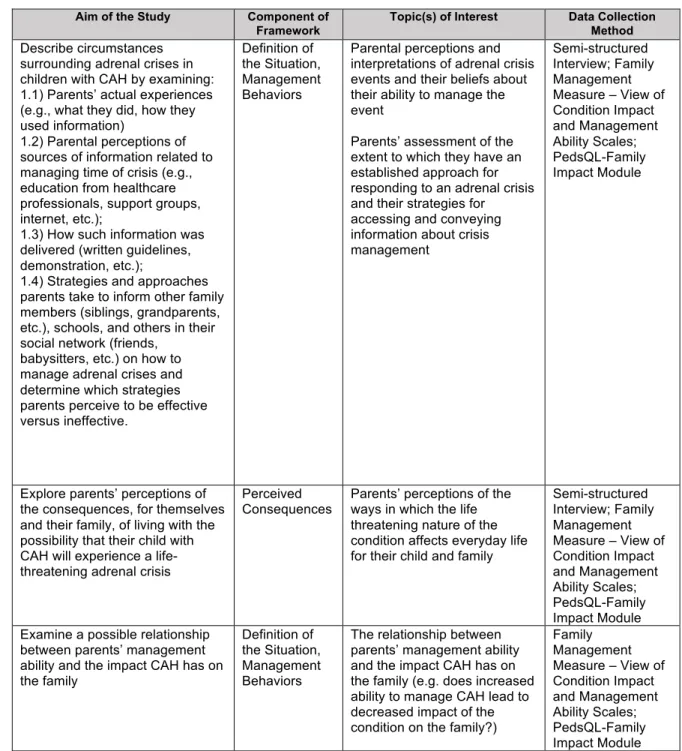
AIM 1. Describe circumstances surrounding adrenal crises in children with CAH by examining:
1.1) Parents’ actual experiences (e.g., what they did, how they used
information)
1.2) Parental perceptions of sources of information related to managing time of crisis (e.g., education from healthcare professionals, support groups, Internet, etc.);
1.3) How such information was delivered (written guidelines, demonstration, etc.);
1.4) Strategies and approaches parents take to inform other family members (siblings, grandparents, etc.), schools, and others in their social network (friends, babysitters, etc.) about the management of adrenal crises and their perceptions of effective versus ineffective strategies to manage them.
AIM 2. Explore parents’ perceptions of the consequences, for themselves and their family, of living with the possibility that their child with CAH will experience a life-threatening adrenal crisis
Theoretical Framework
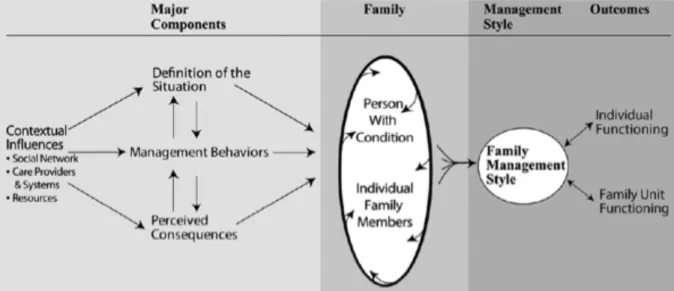
There are many reasons to use a theoretical model as a guide when conducting family research. The interface between theory and research has been described as a mutual relationship in which research supports theory and theory brings about research questions (Young et al. 2001). Theories provide a clear focus for research, including interventional work; help in the organization of large amounts of information; and provides a systematic way of understanding events, behaviors and/or situations. This study was guided by the Family Management Style Framework (FMSF), which is grounded in the originators’ research and syntheses of studies of family life in the context of childhood chronic conditions (Knafl, Deatrick, & Havill, 2012). (Figure 1) It has been used in studies with families exploring the overall response to the child’s condition as well as studies of selected aspects of their response (e.g., information management) (Knafl et al., 2012).
The framework is comprised of three components (with 8 dimensions total): definition of the situation (child identity, illness view, management mindset, parental mutuality),
management behaviors (parenting philosophy, management approach), and perceived consequences (family focus, future expectations) (Knafl, Deatrick, & Havill, 2012; Knafl et al., 2013). According to the latest revision of the FMSF, individuals in the family contribute to developing a family management style or pattern of response that can influence both
Prepared Manuscripts
This is a three-manuscript dissertation. Chapter 1 is an introduction to the challenges associated with family management of congenital adrenal hyperplasia with particular attention to crisis management. Chapter 2 is a systematic review, with an initial intent of focusing on family management of CAH; however, results of a preliminary scoping study conducted to examine the extent, nature, and range of research related to this focus indicated that few, if any, studies had addressed family response (Arksey & O’Malley, 2005; Levac, Coloquhoun & O’Brien, 2010). Hence, the aims of the review were expanded
to focus on the management and care related to children with CAH in order to better
understand the full extent of chronic condition related management challenges children with CAH and their families may face.
Chapters 3 and 4 are two manuscripts that comprise the dissertation project. Chapter 3 presents the results of a two-phase, mixed methods study. In Phase 1, parents were asked to complete online questionnaires about selected aspects of experiences of family life in the context of having a child with CAH. Results from the Phase 1 survey were used to select a purposive sample of parents for follow-up interviews. In Phase 2, descriptive, qualitative interviews were conducted to elicit more detailed descriptions of parents’ experiences of managing CAH-related crises and their perceptions of how the
Chapter 5 is a discussion regarding the synthesis of the results of the study, the implications of the study, and directions for future research studies to continue this program of research. The titles of the chapters are as follows:
Chapter 2: Management of Congenital Adrenal Hyperplasia-A Systematic Review of the Literature
Chapter 3: Parental Management of Adrenal Crisis in Children with Congenital Adrenal Hyperplasia
Chapter 4: Gender Matters in Families Having a Child with Congenital Adrenal Hyperplasia
Table 1.1. Outline of Study Aims and FMSF
Aim of the Study Component of Framework
Topic(s) of Interest Data Collection Method Describe circumstances
surrounding adrenal crises in children with CAH by examining: 1.1) Parents’ actual experiences (e.g., what they did, how they used information)
1.2) Parental perceptions of sources of information related to managing time of crisis (e.g., education from healthcare professionals, support groups, internet, etc.);
1.3) How such information was delivered (written guidelines, demonstration, etc.);
1.4) Strategies and approaches parents take to inform other family members (siblings, grandparents, etc.), schools, and others in their social network (friends,
babysitters, etc.) on how to manage adrenal crises and determine which strategies parents perceive to be effective versus ineffective.
Definition of the Situation, Management Behaviors
Parental perceptions and interpretations of adrenal crisis events and their beliefs about their ability to manage the event
Parents’ assessment of the extent to which they have an established approach for responding to an adrenal crisis and their strategies for accessing and conveying information about crisis management
Semi-structured Interview; Family Management Measure – View of Condition Impact and Management Ability Scales; PedsQL-Family Impact Module
Explore parents’ perceptions of the consequences, for themselves and their family, of living with the possibility that their child with CAH will experience a life-threatening adrenal crisis
Perceived
Consequences Parents’ perceptions of the ways in which the life threatening nature of the condition affects everyday life for their child and family
Semi-structured Interview; Family Management Measure – View of Condition Impact and Management Ability Scales; PedsQL-Family Impact Module Examine a possible relationship
between parents’ management ability and the impact CAH has on the family
Definition of the Situation, Management Behaviors
The relationship between parents’ management ability and the impact CAH has on the family (e.g. does increased ability to manage CAH lead to decreased impact of the condition on the family?)
REFERENCES
Arksey H & O’Malley L. (2005). Scoping studies: Towards a methodological framework. International Journal of Social Research Methodology, 8,19-32.
Barnard, K., Thomas, S., Royle, P., Noyes., K. Waugh, N. (2010). Fear of hypoglycemia in parents of young children with type 1 diabetes: a systematic review. BMC Pediatrics, 10(50), 1-8.
Berenbaum, S., Bryk, K., & Beltz, A. (2012). Early androgen effects on spatial and mechanical abilities: evidence from congenital adrenal hyperplasia. Behavioral Neuroscience, 126(1), 86-96. Doi: 10.1037/a0026652
Bernaix, L. W., Schmidt, C. A., Jamerson, P. A., Seiter, L., & Smith, J. (2006). The
NICU experience of lactation and its relationship to family management style. MCN: The American Journal of Maternal/Child Nursing, 31(2), 95-100.
Chad, L., Ben‐Shoshan, M., Asai, Y., Cherkaoui, S., Alizadehfar, R., St‐Pierre, Y., ... & Clarke, A. (2013). A majority of parents of children with peanut allergy fear using the epinephrine auto‐injector. Allergy, 68(12), 1605-1609. doi: 10.1111/all.12262
Deatrick, J. A., Thibodeaux, A. G., Mooney, K., Schmus, C., Pollack, R., & Davey, B. H. (2006). Family management style framework: A new tool with potential to assess families who have children with brain tumors. Journal of Pediatric Oncology Nursing, 23(1), 19-27.
Dessens, A., Slijper, F., & Drop, S. (2005). Gender dysphoria and gender change in chromosomal females with congenital adrenal hyperplasia. Archives of Sexual Behavior, 34(4), 389-397. Doi: 10.1007/s10508-005-4338-5
Fleming, L., Rapp, C. & Sloane, R. (2011). Caregiver knowledge and self-confidence of stress dosing of hydrocortisone in children with congenital adrenal hyperplasia. Journal of Pediatric Nursing, 26, 55-60. Doi: 10.1016/j.pedn.2011.03.009 Harris, G., Diment, A., Sulway, M., & Wilkinson, M. (2002). Glucagon administration
undervalued and undertaught. Practice Diabetes International, 18(1), 22-25. Hayman, G. R., Bansal, J. A., & Bansal, A. S. (2003). Knowledge about using auto-
injectable adrenaline: review of patients' case notes and interviews with general practitioners. BMJ, 327(7427), 1328. Doi: 10.1136/bmj.327.7427.1328
Kapoor S., Roberts G., Bynoe Y., Gaughan M., Habibi P. & Lack, G. (2004). Influence of a multidisciplinary paediatric allergy clinic on parental knowledge and rate of subsequent allergic reactions. Allergy 15(59), 185–191. Doi:10.1111/all.12262 King, R. M., Knibb, R. C., & Hourihane, J. B. (2009). Impact of peanut allergy on quality
of life, stress and anxiety in the family. Allergy, 64(3), 461-468. Doi: 10.1111/j.1398-9995.2008.01843.
Knafl, K., Deatrick, J., & Havill, N. (2012). Continued development of the family management style framework. Journal of Family Nursing, 18(1), 11-34. Doi:
10.1177/1074840711427294
Knafl, K., Deatrick, J., Knafl, G., Gallo, A., Grey, M., & Dixon, J. (2013). Patterns of family management of childhood chronic conditions and t heir relationship to child and family functioning. Journal of Pediatric Nursing, 28, 523-535. Doi:
10.1016/j.pedn2013.03.006
Levac, D., Coloquhoun, H., & O’Brien, K. (2010). Scoping studies: Advancing the methodology. Implementation Science, 5:69.
LeBovidge, J. S., Timmons, K., Rich, C., Rosenstock, A., Fowler, K., Strauch, H., ... & Schneider, L. C. (2008). Evaluation of a group intervention for children with food allergy and their parents. Annals of Allergy, Asthma & Immunology, 101(2), 160-165.
doi:10.1016/S1081-1206(10)60204-9
LWPES/ESPE CAH Working Group. (2002). Consensus statement on 21-hydroxylase deficiency from the Lawson Wilkins pediatric endocrine society and the European Society for Paediatric Endocrinology. The Journal of Clinical Endocrinology & Metabolism,18(9), 4048–4053.
Merke, D. & Bornstein, S. (2005). Congenital adrenal hyperplasia. Retrieved from
http://www.utp.edu.co.libproxy.lib.unc.edu/~maternoinfantil/Hiperplasia%20suprarren alLancet_2005_review.pdf
National Institute of Diabetes and Digestive and Kidney Disease (NIDDK). (2008). Hypoglycemia. Retrieved from http://www.niddk.nih.gov/health-information/health-topics/Diabetes/hypoglycemia/Pages/index.aspx
Nelson, A. E., Deatrick, J. A., Knafl, K. A., Alderfer, M. A., & Ogle, S. K. (2006).
Consensus statements: The Family Management Style Framework and its use with f amilies of children with cancer. Journal of Pediatric Oncology Nursing, 23(1), 36-37.
Nordenstrom, A., Frisen, L., Falhammer, H., Filipsson, H., Holmdahl, G., Janson, P. . . Nordenskjold, A. (2010). Sexual function and surgical outcome in women with congenital adrenal hyperplasia due to CYP21A2 deficiency: clinical perspective and the patients’ perception. Journal of Clinical Endocrinology & Metabolism, 95(8), 3633-3640. Doi: 10.1210/jc.2009-2639
Pasterski, V., Geffner, M., Brain, C., Hindmarsh, P., Brook, C., & Hines, M. (2005). Prenatal hormones and postnatal socialization by parents as determinants of male-typical toy play in girls with congenital adrenal hyperplasia. Child Development, 76(1), 264-278. Pasterski, V., Geffner, M., Brain, C., Hindmarsh, P., Brook, C., & Hines, M. (2007).
Increased aggression and activity level in 3- to 11-year-old girls with congenital adrenal hyperplasia. Hormones and Behavior, 52(3), 368-374. Doi:
Pearson, T. (2008). Glucagon as a treatment of severe hypoglycemia: safe and efficacious but underutilized. The Diabetes Educator, 34(1), 128-134. Doi:
10.1177/0145721707312400
Sicherer, S. et al. (2012). Development and validation of educational materials for food allergy. The Journal of Pediatrics, 160(4), 651-656. Doi: 10.1016/jpeds.2011.09.056 Speiser, P., Azziz, R., Baskin, L., Ghizzoni, L., Hensle, T., Merke, D. . . White, P. (2010).
Congenital adrenal hyperplasia due to 21-hydroxylase deficiency: An endocrine clinical practice guideline. The Journal of Clinical Endocrinology & Metabolism, 95(9), 4133-4160. Doi:10.1210/jc.2009-2631
Speiser, P. (2011). During illness and emergency. Retrieved from CARES Foundation website: http://www.caresfoundation.org/productcart/pc/Adrenal_Crisis.html
Sullivan-Bolyai, S., Bova, C., Leung, K., Trudeau, A., Lee, M. & Gruppuso, P. (2010). Social support to empower parents (STEP): An intervention for parents of young children newly diagnosed with type I diabetes. The Diabetes Educator, 36, 88-97. Doi: 10.1177/0145721709352384
Thibodeaux, A. G., & Deatrick, J. A. (2007). Cultural influence on family management of children with cancer. Journal of Pediatric Oncology Nursing, 24(4), 227-233.
Van Riper, M. (2007). Families of children with down syndrome: responding to a change in plans with resilience. Journal of Pediatric Nursing, 22(2), 116-128. doi:
10.1016/j.pedn.2066.07.004
Witchel, S. & Azziz, R. (2011). Congenital adrenal hyperplasia. Journal of Pediatric Adolescent Gynecology, 24, 116-126. Doi: 10.1016.j.jpag.2010.10.001 Young A., Taylor S.G.. & McLaughlin-Renpenning K. (2001) Connections: Nursing
MANAGEMENT OF CONGENITAL ADRENAL HYPERPLASIA-A SYSTEMATIC REVIEW OF THE LITERATURE
Introduction
Childhood chronic illness can be defined as lasting, or expected to last, more than three months and likely producing one or more of the following conditions: a limitation in function and/or activity level; a dependency on specific medications, diets, medical
technology or personal assistance; and/or a need for medical care beyond what is usual for a child of the same age (Perrin et al., 1993; Stein et al., 1993; Newacheck & Halfon, 1998). Families having a child with a chronic illness face many challenges related to the child’s condition such as parental conflict, strained parent-child bond, and sibling-child relationship difficulties, which puts them at risk for poor family functioning (Hall et al., 2011; Barlow & Ellard, 2006; Cabizuca, Marques-Portella, Mendlowicz, & Coutinho, 2009; Popp et al., 2014; van Oers et al., 2014). Families’ having a chronically ill child whose condition is also life threatening face the same challenges and often more problematic ones. The need for constant vigilance, especially with younger children who do not yet have the ability to
recognize and respond to crisis events (e.g., hypoglycemic episodes in diabetic children and adrenal crisis events in children who are adrenal insufficient), is ever present (Grey et al., 2011). Families who struggle to cope with the life threatening aspect of their child’s chronic condition often have children who report lower quality of life and parents with increased psychological distress (Whittemore, Urban, Tamborlane, & Grey, 2003; Streisand, Wickmark, Chen, & Holmes, 2005).
hydrocortisone intramuscularly (IM) during times of illness and adrenal crisis (Merke & Bornstein, 2005). Management requires parents to not only inject IM hydrocortisone when a child is unable to tolerate oral medications and/or if signs of adrenal crisis are present, but to also administer oral steroids up to three times daily, supplementing maintenance doses with oral “stress dosing” during times of illness (Merke & Bornstein, 2005; Speiser et al., 2010; Witchel & Azziz, 2011). The need for stress dosing, either orally or by injection, related to simple viral and bacterial childhood illnesses is frequent and unpredictable, often requiring parents to make life or death complex treatment decisions (Merke & Bornstein, 2005).
Moreover, girls born with CAH often experience virilization, which can result in ambiguous genitalia at birth due to elevated testosterone levels related to adrenal
dysfunction (Witchel & Azziz, 2011). This means some families having a child with CAH face multiple surgeries into adolescence should reconstructive feminizing genitoplasty be
recommended (Witchel & Azziz, 2011). These features of the disease have the potential to profoundly affect the family, as adrenal crisis events can be fatal, and gender ambiguity brings both physical and emotional challenges.
There are multiple challenges for practitioners and families regarding the treatment and monitoring of children with CAH including achieving optimal glucocorticoid replacement, height and weight difficulties, excess androgen exposure leading to ambiguous genitalia in females, and the need for stress dosing during times of illness and when signs and
symptoms of adrenal crisis are present (Kim, Ryabets-Lienhard & Geffner, 2012; Merke & Bernstein, 2005; Schaeffer et al., 2010; Speiser et al., 2010). In addition to these
physiological concerns, children and families with CAH must also manage the psychosocial aspects of chronic illness, such as dealing with school personnel who are often unfamiliar with the condition, the challenges associated with future family planning due to the
excess androgens (Schaeffer et al., 2010; Speiser et al., 2010). The primary purpose of this systematic review was to explore the management and care, including treatment modalities, associated health issues, and growth and developmental consequences, for children with CAH. Examination of family life in the context of CAH is needed to better understand the scope of chronic condition-related management challenges these families face. The review is intended to provide an evidence base for the development testing of interventions that will support optimal family management of CAH.
Methods
Four web-based literature indexes were searched for peer reviewed journal articles published from January 2000 to June 2015. It was decided to go back fifteen years to obtain a sufficient number of articles, as this is the first review exploring multiple aspects of care management related to children with CAH and their families and a comprehensive review was needed. Databases searched included PubMed, CINAHL, PsycINFO, and Family and Society Studies Worldwide. After consultation with a university health science librarian, the following search terms were used: congenital adrenal hyperplasia and family (or parents or siblings) as well as adrenal crisis and parents. The words family, parents, and siblings were truncated for maximum results.
To be included in this review, the studies needed to: 1.) concern CAH management, experience, and challenges for children under 18 years, 2.) be written in the English
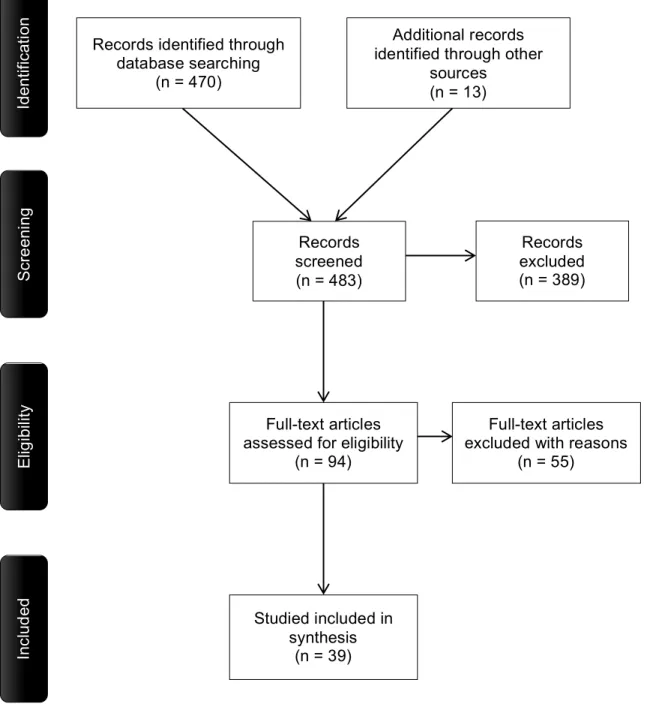
abstracts and full text excluded 55 articles leaving 26. Thirteen other manuscripts that met the criteria were added based on review of the reference lists of relevant research articles, resulting in a total of 39 empirical reports meeting the search criteria. A defined template was used that included information obtained from each report (author/title, research purpose, location of study, participant information, data collection methods, and findings). Data analysis was completed using a systematic approach consisting of sorting,
categorizing, and summarizing data in an effort to create meaningful conclusions (Whittemore & Knafl, 2005).
Results
Thirty-nine empirical research studies met the criteria and were included in this review. Thirty-four studies used a quantitative design, four used a mixed methods design, and one study used a qualitative design. These studies had global representation with North America, South America, Europe, Australia and Asia all having reported research on
children with CAH. Of the 39, fifteen were conducted in the United States (U.S.), thirteen in Europe (with the majority of European studies coming from the United Kingdom (U.K.)), eight in Asia (Jordan, Turkey, India, and Malaysia), three from Brazil, and one from Australia. One study was conducted jointly in the U.K. and the U.S. In the United States, studies were primarily conducted in Bethesda, Maryland (at the National Institutes of Health), in Los Angeles, New York, and in states described by the authors as in the “mid-western region.”
Health and Development Issues Associated with CAH
Children with CAH are steroid dependent for life, and the goal of daily maintenance treatment is to replace deficient levels of cortisol and/or aldosterone while minimizing androgen excess, preventing virilization, optimizing linear growth, and protecting future fertility. If children are prescribed excess hydrocortisone, side effects can include growth suppression, obesity, and other cushingoid features. If the dose of hydrocortisone is not sufficient, these children are at a high risk for precocious puberty, which can also lead to stunted growth and adrenal crisis (Merke & Bornstein, 2005).
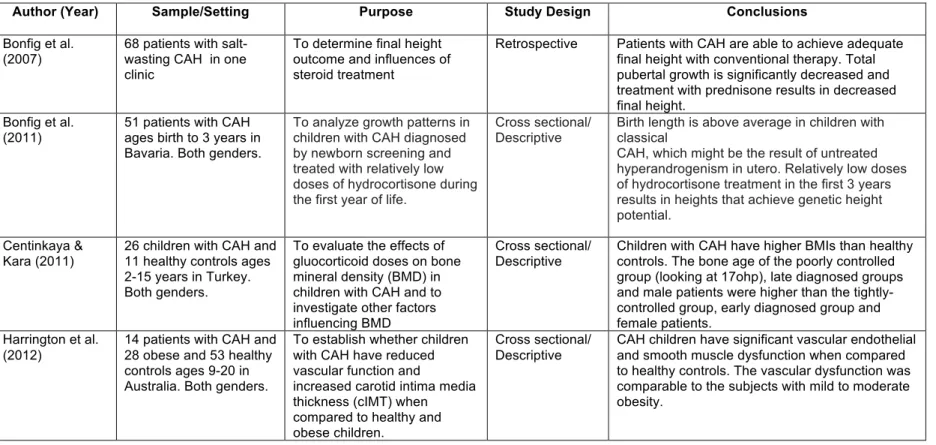
Ten studies focused on aspects of CAH that lead or have the potential to lead to negative health outcomes (Table 2.1). Of the ten, five articles focused on growth issues, both height and weight, in these children. Obesity was found to be a significant problem in children with CAH (Volkl, Simm, Beier, & Dorr, 2006; Mendes-dos-Santos et. al, 2011; Cetinkaya & Kara, 2011; Moreira et al., 2013). Medes-dos-Santos et al. (2011) concluded in their cross sectional, retrospective study that height in these children was similar to
unaffected children of the same age, yet children with CAH had higher body fat, which tended to be visceral. Volkl et al. (2006), in a cross-sectional study, examined Bavarian children with CAH and found that steroid dosing, age, advanced bone age maturation, and parental obesity all contributed to elevated body mass indexes (BMI); while birth height and weight, the types of glucocorticoids prescribed, and mineralocorticoid use were not
treatment of glucocorticoids did not appear to influence bone mineral density in CAH children.
Using a descriptive design, Bonfig, Schmidt, and Schwartz analyzed linear growth patterns in children with CAH treated with low doses of hydrocortisone during their first three years of life (2011). In their cohort of fifty-one children, birth length was above average in boys and girls, possibly due to increased androgens in utero, which correlated with Bonfig’s 2007 study results as well. Treating these children with lower levels of glucocorticoids in infancy did not accelerate bone age and growth, and they were able to achieve height within the target range as they grew. However, final height in these children was still decreased (Bonfig et al., 2007). Lin-Su, Harbison, Lekarev, Vogiatzi, and New (2011) evaluated
whether growth hormone (GH) alone or in combination with a leutinizing hormone releasing hormone agonist (LHRHa) would improve final height in children with CAH, as LHRHa can effectively suppress puberty, preserving the ability for continued growth. These findings indicate that for CAH children experiencing precocious puberty and short stature, GH alone or in combination with LHRHa is an effective therapy for improving final height; however, males experience somewhat less height benefit than females.
Due to a variety of factors, children with CAH are at risk for vascular problems (Harrington, Pena, Gent, Hirte, & Couper, 2012); hence a study was designed to establish whether children with CAH have reduced vascular function and increased carotid intima media thickness (cIMT) when compared to healthy children. The findings of this cross-sectional study suggest that CAH children have significant vascular and smooth muscle dysfunction when compared to healthy controls, and this level of dysfunction was
risk for cardiovascular problems later in life and education related to healthy lifestyle choices such as exercise and proper nutrition for these families is needed to diminish possible negative health outcomes as these children age (Harrington et al., 2012).
A 2006 retrospective, descriptive study was conducted to determine the incidence of urinary tract infections (UTIs) in children with CAH (Nabhan, Rink, & Eugster). Since girls with CAH often experience ambiguous genitalia that may result in structural genitourinary anomalies, the authors hypothesized these girls may be at higher risk for such infections. Both boys and girls with CAH were included in the study. The incidence of UTIs in children with CAH was similar to the general population; furthermore, there was not a significant increase in UTIs if genital surgery was delayed in affected girls.
Finally, one study investigated the behavioral health of children with CAH. Idris et al. (2014) studied behavioral outcomes in children with CAH compared to a non-affected, control group. They found a higher incidence of parent reported child problems including anxiety, depression, somatic complaints, social and attention problems, and aggressive behavior when compared to controls. Internalizing behavior problems were seen more often in boys with CAH compared with control boys, and CAH girls had similar psychosocial adjustment to their non-affected girl control counterparts. Idris et al. further found a relationship between increased parent reported child problem behavior and higher glucocorticoid doses and/or lower family income (2014).
Physical and Psychosocial Consequences from Exposure to Excess Androgens
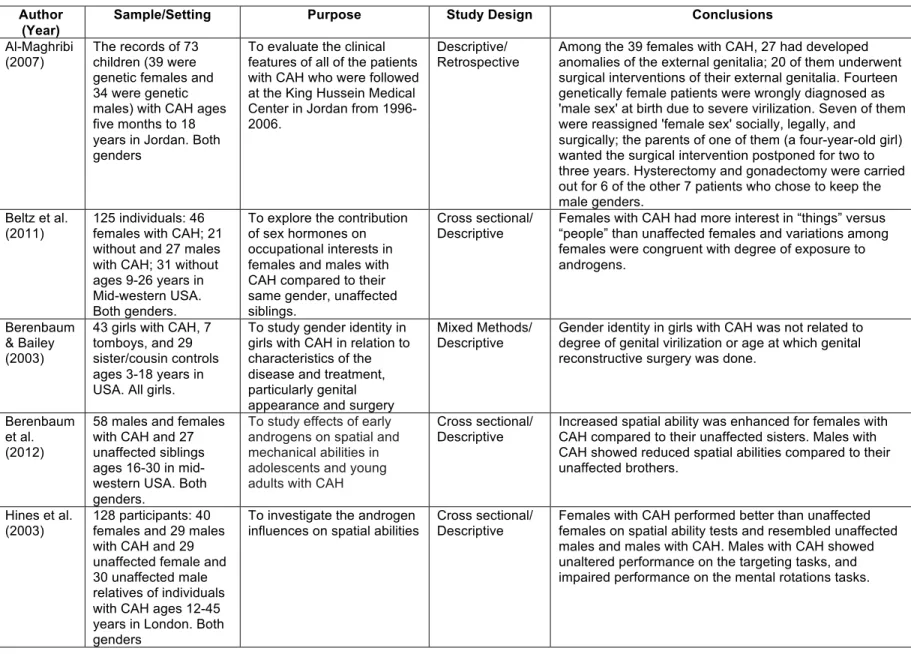
in these affected females can pose both a medical and family crisis (Merke & Bornstein, 2005). The majority of the studies reviewed (18) addressed the potential impact of excess androgen exposure on the physical genitalia characteristics and psychosocial presentations of children with CAH. (Table 2.2)
The aim of a 2004 retrospective study in Turkey was to report on the experience of gender (re) assignment in genotypical female patients with CAH. Seventy female patients were studied with 21 of them having been reared “male.” Nine of them were surgically reassigned as females, with a mean age of seven months at the time of surgery. The study found significant difficulties, both in surgical complications as well as family emotional strain, in attempting to correct the gender of female patients with CAH when they present at greater than 2.5 years of age (Ozbey, Darendeliler, Kayserili, Korkmazlar & Salman, 2004).
Another study (Al-Maghribi, 2007), based in Jordan, evaluated the clinical features of all patients with CAH treated at a major medical center from 1996-2006. Among the 39 females born with CAH, 27 had problems with external genitalia. Seven of these chose not to have reconstruction surgery and six of these had hysterectomies and gonadectomies to keep their “male genders.” Although the majority of these female children did have
A 2002 study in Germany (Woelfle et al.) examined sixteen completely virilized females in an effort to better understand specific problems these girls face. In this study, gender identity was defined as “an individual’s internalized sense of males or femaleness and the acceptance of the gender role of that sex as appropriate” (Woelfle et al., 2002, p. 233). The authors of this study define the circumstance of a female born with ambiguous genitalia due to CAH as “female pseudohermaphroditism,” which is a term that would likely not be accepted or welcomed in the general CAH population, nor medical communities that treat CAH globally (Matos, 2015). The authors concluded that there are five main concerns experienced in this population: 1.) delayed diagnosis (due to an assumption of the child being a male rather than female), 2.) gender assignment, 3.) surgical procedures, 4.) short stature, and 5.) precocious puberty. All of these issues, with the exception of gender assignment and related subsequent surgical procedures, also affect males with CAH. Similarly, a 2010 study in India used a case study approach to report the effect of steroid therapy during infancy and early childhood on the appearance of the external genitalia of girls with CAH (Kulshreshtha et al., 2010). It is unclear as to whether the three girls in the study had a definitive diagnosis of CAH, as steroids were not initiated until after two months of age in one and as late as 2.5 years in another. However, the authors concluded that there is improvement in the external appearance of the girls’ genitalia with post-natal steroid therapy.
Four cross-sectional studies examined toy preferences in children with CAH from the first year of life to young adulthood. In both the Servin et al. and Wong et al. (2003, 2013) studies, girls with CAH were more interested in masculine toys such as cars and
authors suggest that this could be due to the fact that parents simply encourage their children to play with toys that the child naturally prefers. Servin et al. (2003) examined the degree of masculinization for girls with CAH in regards to play behavior and attempted to identify playmates by asking the girls whom their “best friends” were. Two thirds of girls with severe masculinization reported a boy as their best friend, where most of the girls with milder forms of CAH and all of the control girls reported girls as their best friend. In addition, the group of girls with CAH who had the most masculinization spent significantly more time playing with masculine toys than girls with less masculinization.
A 2005 study by Pasterski investigated 65 CAH children, both male and female, as well as controls, to assess toy choices. As in the Servin and Wong studies, Pasterski et al. found that girls with CAH, aged 3-10, displayed more male-typical toy choices than controls, whereas boys with and without CAH did not differ. Similarly, a 2002 study (Nordenstrom et al.) not only investigated toy preference in girls with CAH, but also explored a relationship between the degree of disease severity, reflected in CYP21 genotype, and the degree of masculinization with toy play and preference. They too found that girls with CAH played more frequently with masculine type toys than controls; additionally, the higher degree of androgen exposure in utero did correlate with an increased preference of masculine toys.
A 2004 study explored if school aged girls with CAH had problems with gender identity due to increased androgen exposure prenatally and hypothesized that if the gender identity of CAH females was determined by prenatal androgens, one would expect
the average score was in between control girls and “tomboys,” which is not defined. However, girls with CAH, as also reflected in Meyer-Bahlburg’s study, did not express true gender confusion and articulated no discomfort in being a girl. Beltz, Swanson, and
Berenbaum (2011) explored the contribution of androgens on occupational interests in males and females with CAH compared to their same gender, unaffected siblings in an effort to better comprehend women’s lack of representation in careers focused on science and technology. The framework used was “Things versus People,” which stipulates that males prefer occupations related to objects and females prefer occupations related to people. Females with CAH did have more interest in “things” over “people” when compared to unaffected females and variations among females were significant to the degree of androgen exposure in utero (Beltz, Swanson, and Berenbaum, 2011).
Pasterski et al. (2015) studied 153 children total (43 females and 38 males with CAH as well as unaffected relative controls) to investigate potential cross gender identification in girls who were exposed to androgens prenatally. This was one of four studies evaluating the physical and psychosocial consequences of exposure to excess androgens that used a mixed methods approach in which standardized measures as well as a short parent and child interview were conducted. In this study, gender role behavior “refers to behaviors which, on average, are more typical of one gender or the other and includes preferences for specific toys, playmates and play styles” while gender identity was defined as “the sense of self as male, female, or a category that is neither male nor female” (Pasterski et al., 2015, p.1364). The study found that girls exposed to high levels of androgens in utero due to CAH show increased cross gender identification as well as cross gender role behavior, when compared to female controls (Pasterski et al., 2015).
abilities in males with CAH show inconclusive results. A 2003 study showed that males with CAH have unaltered performance on targeting tasks and impaired performance on internal rotation tasks compared to unaffected males, yet a 2012 study showed males with CAH scoring lower than their unaffected brothers in spatial ability (Hines et al., 2003; Berenbaum et. al., 2012). For females however, both studies suggest that females with CAH perform better than unaffected females on spatial ability measures and resemble unaffected males and males with CAH in this respect (Hines et al., 2003; Berenbaum et. al., 2012).
Knickmeyer et al. (2006) investigated whether autistic traits among boys and girls with CAH are increased as a result of exposure to excess androgens. The Autism Spectrum Questionnaire (AQ) was given, and females with CAH scored significantly higher than unaffected females, in large part due to increased scores on subscales measuring social skills and imagination. However, none of the females in the study had AQ scores that met the cut off for suspicion of a clinical diagnosis of autism among the general population. Males with CAH did not differ from unaffected males on the total AQ or on any of its subscales.
neural feedback mechanisms, may readjust to normal or even lower than normal levels (Mathews et al., 2009).
Prenatal treatment of dexamethasone (Dex) in pregnant women at risk for having a child with CAH was introduced decades ago (Nimkarn & New, 2009) with the understanding that taking steroids during pregnancy reduces the risk of virilization in the unborn female fetus with CAH by reducing the level of circulating adrenal androgens. Maryniak et al. (2014) studied 33 females in Poland ranging from 6-23 years of age from at-risk CAH families; 17 girls treated prenatally with Dex (9 affected and 8 unaffected after birth) and 16 CAH affected females that were not treated prenatally. The purpose of the study was to assess cognitive development and social and emotional function in girls treated with
dexamethasone prenatally compared to female CAH patients who were not treated
prenatally. The authors found that prenatal treatment with Dex was significantly associated with better cognitive functioning (based on measures including an intelligence scale as well as memory and verbal learning tests) in girls with CAH; however, treating unaffected CAH girls (in utero prior to knowing if they will have CAH or not) can cause the risk of unfavorable influence on the development of certain cognitive functions. Hence, prenatal Dex treatment in mothers should be discontinued immediately after determination of the unborn child’s CAH status and/or gender. As reflected in other studies (Beltz et al., 2014; Maryniak et al., 2014; Nordenstrom et al., 2002; Pasterski et al., 2005; Servin et al., 2003; Wong et al., 2013), prenatally untreated CAH girls had more male “interests” than unaffected and CAH affected/treated prenatally with Dex girls.
The Life Experience of Having CAH for Those Affected and Their Families
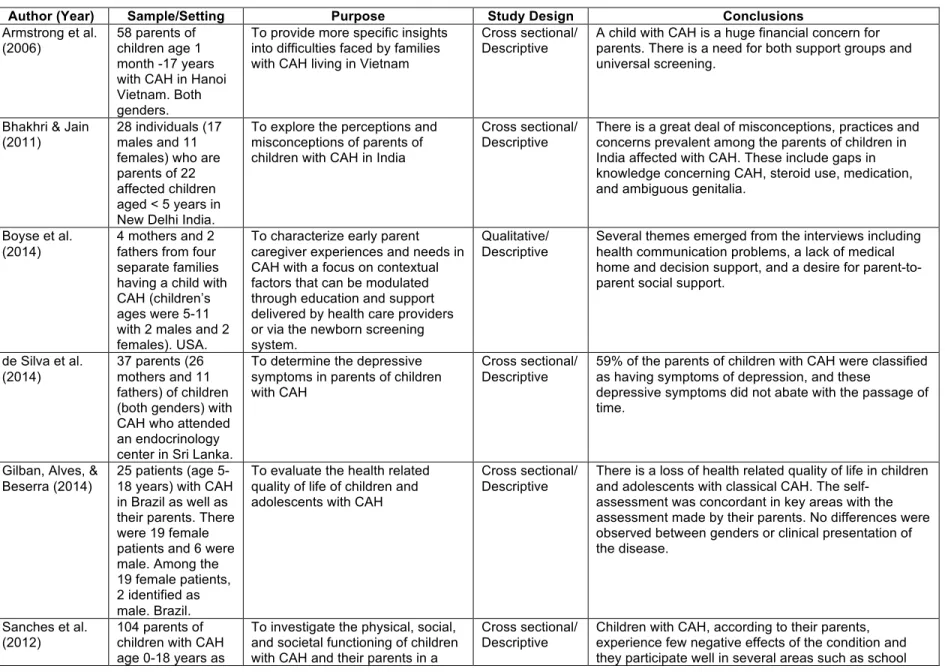
family members, or both (Table 2.3). Three of the studies focused on parents of children with CAH in developing countries: Sri Lanka, Vietnam and India (de Silva et. al., 2014, Armstrong, Henderson, Hoan & Warne, 2006; Bhakhri & Jain, 2011). Children’s perspectives were not given; however parents in the three countries reported
misconceptions and confusion with medication administration and general knowledge of the disorder. Other similar concerns expressed by parents from these countries included
surgical options and care for their daughters with CAH as well as the financial burden associated with having a chronically ill child. Authors concluded that there is a strong need for more support groups in helping parents deal with such struggles as well as more universal newborn screenings (Armstrong, Henderson, Hoan & Warne, 2006; Bhakhri & Jain, 2011). The de Silva study (2014) examined depressive symptoms in parents of
children with CAH and found over half of the parents of children with CAH were classified as having symptoms of depression that did not subside with the passage of time.
In the United States, Boyse et al. (2014) conducted a small, qualitative study (6 parents from 4 families) examining the experience of having CAH for children and their families and identified multiple challenges facing families having a child recently diagnosed with CAH. These included communication problems with health care providers, especially regarding parents’ understanding of the diagnosis and treatment options and the need for decision making regarding genital surgery in girls, as well as a lack of social support. These challenges left parents feeling overwhelmed and isolated as well as concerned that their knowledge of how to manage the condition was insufficient (Boyse et al., 2014).
Three additional studies examined aspects of families’ quality of life related to their child’s CAH diagnosis. Sanches et. al (2012) investigated the physical, social, and societal functioning of children with CAH and their parents in The Netherlands through parent report. Parents reported that their child with CAH experienced few negative effects from the
leisure activities, but also noted needed improvements in parental preparation for adrenal crisis events in their children. Gilban, Alves and Beserra (2014) evaluated the health related quality of life (HRQoL) of children and adolescents with CAH in Brazil. This was one of the few studies that used measures completed by both parents and affected children. They found a loss of HRQoL in children and teens with CAH, especially in the physical dimension (when compared with unaffected controls), which was in agreement with the assessment made by their parents. There were no statistically significant differences in quality of life between boys and girls with CAH however. Finally, Yau et al. (2015) evaluated the HRQoL in children with CAH, with a specific focus of comparing children with CAH and children with other endocrine conditions (hypothyroidism). Hypothyroidism was chosen because it too “requires the administration of daily medication and continuous medical assessment throughout childhood” (Yau et al., 2015, p.2). Based on both parent and child reports,
children with CAH had an overall decrease in HRQoL compared to both healthy children and children with hypothyroidism in school functioning. Furthermore, CAH children more
frequently reported peers not wanting to be friends.
Acute Illness and Managing and Averting Adrenal Crisis
Four studies focused on acute illness, stress dosing, and adrenal crisis experiences and management in children with CAH (Table 2.4). Three of the four examined the role that physical stress, such as exercise and acute illness, had on metabolic processes such as glucose regulation in children with CAH. In a randomized, double blind, crossover study from 2004, Weise et al. examined whether an extra dose of hydrocortisone would help normalize blood glucose levels in patients with CAH during exercise, as children with CAH do not mount the normal exercise-induced glucose response due to lack of cortisol
these findings, a 2010 study examined blood glucose levels and physical symptoms during typical acute viral or bacterial illnesses at home (Keil, Bosmans, Van Ryzin & Merke). Children with CAH who were being “stress dosed” appropriately during common childhood illnesses are at risk for hypoglycemia during the illness course. This suggests the need for additional glucose supplementation in addition to “stress dosing” during times of acute illness (Keil et al., 2010). Finally, a 2011 study assessed 60 caregivers’ knowledge of CAH, adrenal crisis, and stress dosing as well as their confidence in responding to adrenal crises (Fleming, Rapp & Sloane). The majority of caregivers responded that their child experiences a “crisis” situation an average of one to two times per year. Caregivers seemed to have a strong, basic understanding of the disorder; moreover, those that received both a written instruction guideline and a demonstration by clinicians on how to stress dose, both orally and via an injection, scored significantly higher when looking at self-efficacy (Fleming et al., 2011).
Discussion
Studies that met the inclusion criteria for this systematic review were primarily conducted using quantitative methods and were cross-sectional and descriptive in nature, with the sample population coming from either one institution or one city. Studies that use only samples from within one institution typically have the same group of pediatric
with CAH do not require growth hormone treatment, its applicability to the general CAH population is limited.
All of the investigators whose research focused on acute illness, stress dosing, and adrenal crisis either acknowledged having a small sample size (Keil et al., 2010; Fleming et al., 2011) or had a sample size less than 10 (Weise et al., 2004; Green-Golan et al., 2007). There were five studies that investigated body weight in children with CAH; however, only the Volkl et al. study accounted for parental BMIs and inquired about daily dietary intake for these children, making it difficult to know if the child’s weight was directly influenced simply by the child having CAH and not environmental or familial factors.
Two of the studies dealing with the family experience were in developing countries where steroids were reported to be expensive based on the typical amount of family income, and parents in these studies reported that medication cost was a significant concern
(Armstrong, Henderson, Hoan & Warne, 2006; Bhakhri & Jain, 2011). This particular
difficulty is likely not to be as prevalent in more developed countries such as those in Europe or in Canada and the U.S.; thus, it is probable that a similar study conducted in these
countries would yield different results.
described. Again, as reflected in previously discussed studies, investigators rarely collected data on aspects of family life such as marital status or parenting competence that could potentially influence child personality traits such as aggression and activity level. Since these studies focused on children, the lack of longitudinal studies, especially with regards to child preferences, is significant. The effects of excess prenatal androgens on both males and females with CAH have been studied in depth over the last fifteen years; however, there are few qualitative or mixed method studies on this issue. Ambiguous genitalia and the physical and emotional struggles associated with it are likely sensitive topics for research and the related effects might not be adequately represented in questionnaires and surveys completed by parents and children with CAH.
As stated, studies were focused primarily on potential health complications
associated with CAH, emergency management of the disorder, and potential consequences of excess androgen exposure; however, few studies examined the implications of these significant problems on families managing their child’s CAH. The lack of knowledge in this area limits the conclusions that can be made about family management and experience with CAH.
Future Implications for Practice and Research
times of adrenal crisis, is necessary to promote positive outcomes, both from an emotional and physiological family perspective (Fleming, Rapp & Sloane, 2011). In addition, parents of girls born with CAH likely feel the need to keep their child’s diagnosis of CAH more private due to potential stigmatization, which adds another challenge to a disorder that is already complex to manage. Acknowledging this difference and studying the effects of support systems designed specifically for girls born with CAH that address both the surgical procedures often associated with ambiguous genitalia as well as possible long-term
complications resulting from being born with elevated testosterone is critical to promoting a healthy family response to the disorder. Future studies with an emphasis on family
Id
en
tifi
ca
tio
n
Sc
re
eni
ng
El
ig
ibi
lit
y
In
cl
ud
ed
Records identified through database searching
(n = 470)
Additional records identified through other
sources (n = 13)
Records excluded (n = 389) Records
screened (n = 483)
Full-text articles assessed for eligibility
(n = 94)
Full-text articles excluded with reasons
(n = 55)
Studied included in synthesis
(n = 39)
34
Table 2.1. Summary of Articles: Health Related Issues Associated with CAH Diagnosis
Author (Year) Sample/Setting Purpose Study Design Conclusions
Bonfig et al.
(2007) 68 patients with salt-wasting CAH in one clinic
To determine final height outcome and influences of steroid treatment
Retrospective Patients with CAH are able to achieve adequate final height with conventional therapy. Total pubertal growth is significantly decreased and treatment with prednisone results in decreased final height.
Bonfig et al. (2011)
51 patients with CAH ages birth to 3 years in Bavaria. Both genders.
To analyze growth patterns in children with CAH diagnosed by newborn screening and treated with relatively low doses of hydrocortisone during the first year of life.
Cross sectional/ Descriptive
Birth length is above average in children with classical
CAH, which might be the result of untreated hyperandrogenism in utero. Relatively low doses of hydrocortisone treatment in the first 3 years results in heights that achieve genetic height potential.
Centinkaya &
Kara (2011) 26 children with CAH and 11 healthy controls ages 2-15 years in Turkey. Both genders.
To evaluate the effects of gluocorticoid doses on bone mineral density (BMD) in children with CAH and to investigate other factors influencing BMD
Cross sectional/
Descriptive Children with CAH have higher BMIs than healthy controls. The bone age of the poorly controlled group (looking at 17ohp), late diagnosed groups and male patients were higher than the tightly- controlled group, early diagnosed group and female patients.
Harrington et al.
(2012) 14 patients with CAH and 28 obese and 53 healthy controls ages 9-20 in Australia. Both genders.
To establish whether children with CAH have reduced vascular function and
increased carotid intima media thickness (cIMT) when compared to healthy and obese children.
Cross sectional/
35
Author (Year) Sample/Setting Purpose Study Design Conclusions
Idris et al. (2014) 49 patients between the ages of 6-18 that attend a medical center in Malaysia. Both genders.
To determine the status of the behavioral outcome in children with CAH compared to a control group of children without CAH and to identify the risk factors that may influence it
Cross sectional/ Descriptive
There was a higher incidence of parent reported problems of anxious/depressed and
withdrawn/depressed behaviors, somatic complaints, social, thought, and attention problems and rule-breaking, aggressive, internalizing and externalizing behavior among CAH children compared to controls. Internalizing behavior problems were higher in CAH boys compared with controls; CAH girls had similar psychosocial adjustment to the control group. Family income (the lower the income, the more behavior problems) and glucocorticoid dose (the higher the dose, the more behavior problems) were significantly related to parent reported problem behavior.
Lin-Su et al. (2011)
34 patients with CAH treated with GH with a mean age of 8 yrs in New York, USA. Both genders.
Examine whether growth hormone (GH) alone or in combination with leutinizing hormone releasing hormone antagonist (LHRHa) improved the final adult height in patients with CAH
Non randomized/ Prospective with an intervention
GH alone or in combination with LHRHa improves final adult height in patients with CAH.
Medes-dos-Santos et al. (2011)
21 pre-pubertal patients ages 2-10 years old with CAH and 67 healthy controls in Brazil. Both genders.
To evaluate growth and body composition of patients with CAH and to compare them with healthy children
Cross sectional/ Retrospective/De scriptive
Patients had growth recovery with mean height similar to the general population; however, they had higher body fat, which seemed to be visceral, since there was not difference between the skinfolds of both groups.
Moreira et al. (2013)
33 patients ages 6-17 who attend a clinic in Sao Paulo, Brazil. Both genders.
To investigate the prevalence of obesity and metabolic syndrome in young patients with CAH and to correlated this prevalence with glucocorticoid treatment and family history
Cross sectional/ Comparative
CAH patients presented a higher prevalence of obesity and metabolic syndrome, which were not correlated with the glucocorticoid treatment suggesting that obesity and familial predisposition are significant determining factors for an adverse metabolic profile in CAH patients.
Nabhan et al. (2006)
71 patients with CAH ages 15 and younger in Indianapolis, USA. Both genders.
Investigate the incidence of urinary tract infections (UTIs) in children with CAH and to determine whether there was a correlation between timing and type of genital surgery in girls
Cross sectional/ Descriptive/Retro spective
36
Author (Year) Sample/Setting Purpose Study Design Conclusions
Volkl et al. (2006) 89 children and adolescents with ages birth through 17 in Bavaria. Both genders.
Analyze BMI values, compared with population-based
references, for children and adolescents with CAH
Cross sectional/ Retrospective
37
Table 2.2. Summary of Articles: Physical and Psychosocial Consequences from Exposure to Excess Androgens
Author (Year)
Sample/Setting Purpose Study Design Conclusions
Al-Maghribi
(2007) The records of 73 children (39 were genetic females and 34 were genetic males) with CAH ages five months to 18 years in Jordan. Both genders
To evaluate the clinical features of all of the patients with CAH who were followed at the King Hussein Medical Center in Jordan from 1996-2006.
Descriptive/
Retrospective Among the 39 females with CAH, 27 had developed anomalies of the external genitalia; 20 of them underwent surgical interventions of their external genitalia. Fourteen genetically female patients were wrongly diagnosed as 'male sex' at birth due to severe virilization. Seven of them were reassigned 'female sex' socially, legally, and surgically; the parents of one of them (a four-year-old girl) wanted the surgical intervention postponed for two to three years. Hysterectomy and gonadectomy were carried out for 6 of the other 7 patients who chose to keep the male genders.
Beltz et al. (2011)
125 individuals: 46 females with CAH; 21 without and 27 males with CAH; 31 without ages 9-26 years in Mid-western USA. Both genders.
To explore the contribution of sex hormones on occupational interests in females and males with CAH compared to their same gender, unaffected siblings.
Cross sectional/ Descriptive
Females with CAH had more interest in “things” versus “people” than unaffected females and variations among females were congruent with degree of exposure to androgens.
Berenbaum & Bailey (2003)
43 girls with CAH, 7 tomboys, and 29 sister/cousin controls ages 3-18 years in USA. All girls.
To study gender identity in girls with CAH in relation to characteristics of the disease and treatment, particularly genital appearance and surgery
Mixed Methods/
Descriptive Gender identity in girls with CAH was not related to degree of genital virilization or age at which genital reconstructive surgery was done.
Berenbaum et al. (2012)
58 males and females with CAH and 27 unaffected siblings ages 16-30 in mid-western USA. Both genders.
To study effects of early androgens on spatial and mechanical abilities in adolescents and young adults with CAH
Cross sectional/
Descriptive Increased spatial ability was enhanced for females with CAH compared to their unaffected sisters. Males with CAH showed reduced spatial abilities compared to their unaffected brothers.
Hines et al.
(2003) 128 participants: 40 females and 29 males with CAH and 29 unaffected female and 30 unaffected male relatives of individuals with CAH ages 12-45 years in London. Both genders
To investigate the androgen