Patterns of local-regional management following neoadjuvant
chemotherapy in breast cancer: Results from ACOSOG Z1071
(Alliance)
Bruce G. Haffty1, Linda M. McCall2, Karla V. Ballman3, Sarah McLaughlin4, Reshma Jagsi5, David W. Ollila6, Kelly K. Hunt7, Thomas A. Buchholz8, and Judy C. Boughey9
1Rutgers Cancer Institute of New Jersey, New Brunswick, NJ 2Alliance Statistics and Data Center Duke University, Durham, NC 3Weill Cornell Medical College, New York, NY
4Mayo Clinic, Jacksonville, FL
5University of Michigan, Ann Arbor, MI 6University of North Carolina, Chapel Hill, NC
7Department of Breast Surgical Oncology, MD Anderson Cancer Center, Houston, TX
8Physician-in-Chief and Executive Vice President, MD Anderson Cancer Center, Houston, TX 9Mayo Clinic, Rochester, MN
Abstract
Purpose/Objective(s)—AXXXXX ZXXXX was a prospective trial evaluating the false negative rate of sentinel node (SLN) surgery after neoadjuvant chemotherapy (NAC) in breast cancer patients with initial node-positive disease. Radiation therapy (RT) decisions were at the discretion of treating physicians, providing an opportunity to evaluate variability in practice patterns following NAC.
Methods and Materials—Of 756 patients enrolled from July 2009 to June 2011, 685 met all eligibility requirements. Surgical approach, RT, ,and radiation field design were analyzed based on presenting clinical and pathologic factors.
Corresponding Author: Bruce G Haffty, MD, Dept. Radiation Oncology, Rutgers Cancer Institute of New Jersey, [email protected], Phone 732-235-5203.
The content is solely the responsibility of the authors and does not necessarily represent the official views of the National Institutes of Health.
Role of the Sponsor: The National Cancer Institute had no role in the design and conduct of the study; collection, management, analysis, and interpretation of the data; preparation, review, or approval of the manuscript; and decision to submit the manuscript for publication
Publisher's Disclaimer: This is a PDF file of an unedited manuscript that has been accepted for publication. As a service to our customers we are providing this early version of the manuscript. The manuscript will undergo copyediting, typesetting, and review of
HHS Public Access
Author manuscript
Int J Radiat Oncol Biol Phys. Author manuscript; available in PMC 2017 March 01.
Published in final edited form as:
Int J Radiat Oncol Biol Phys. 2016 March 1; 94(3): 493–502. doi:10.1016/j.ijrobp.2015.11.005.
Author Manuscript
Author Manuscript
Author Manuscript
Results—Of 401 node-positive patients, mastectomy was performed in 148 (36.9%),
mastectomy with immediate reconstruction in 107 (26.7%), and breast-conserving surgery (BCS) in 146 (36.4%). Of the 284 pathologically node-negative patients, mastectomy was performed in 84 (29.6%), mastectomy with immediate reconstruction in 69 (24.3%) and BCS in 131 (46.1%).
Bilateral mastectomy rates were higher in women undergoing reconstruction compared to those without (66.5% vs 32.2%, p<0.0001). Usage of internal mammary RT was low (7.8%–11.2%) and did not differ between surgical approaches. Supraclavicular-RT rate ranged from 46.6% to 52.2% and did not differ between surgical approaches but was omitted in 193/408 (47.3%) of node-positive patients. Rate of Axillary-RT was more frequent in patients who remained node-node-positive (p=0.002). However, 22% of patients who converted to node-negative still received Axillary RT. Post-mastectomy RT was more frequently omitted after reconstruction compared to mastectomy (23.9% vs 12.1%, p=0.002), and was omitted in 19 of 107 (17.8%) patients with residual node-positive disease in the reconstruction group.
Conclusion—The majority of clinically node-positive patients treated with NAC undergoing mastectomy receive RT. RT was less common in patients undergoing reconstruction. There is wide variability in RT fields. These practice patterns conflict with expert recommendations and ongoing trial guidelines. There is a significant need for greater uniformity and guidelines regarding RT following NAC.
Keywords
breast cancer; neoadjuvant; radiation; surgery
Introduction
Neoadjuvant chemotherapy (NAC) is commonly used in locally advanced and increasingly
in the management of stage II breast cancer1–3. Randomized trials comparing NAC to
standard adjuvant chemotherapy demonstrate similar overall survival and disease-free survival rates, but more patients were able to undergo BCS after NAC and a substantial
proportion with complete clinical and pathologic responses4–6. The increased utilization of
NAC can be attributed to a number of practical clinical advantages. Response to NAC is a powerful prognostic factor that can help the treating physicians evaluate tumor response and
guide future systemic approaches and multimodality treatment recommendations7.
Evaluation of response to NAC also provides an efficient approach for evaluating novel
drugs in clinical trials8.
The increasing use of NAC has, however, introduced questions regarding appropriate local-regional management, given that local-local-regional decision-making has traditionally been
based on clinical and pathologic factors after upfront surgery3, 9, 10. With the broad range of
responses to NAC, clinicians are faced with many decisions including appropriate imaging modalities in evaluating response, the optimal surgical approach to the breast, reliability of SLN surgery versus axillary lymph node dissection (ALND), the type and timing of reconstruction in anticipation of the need for radiation, and the appropriate use of regional nodal or post-mastectomy radiation (PMRT). Some of these issues are currently being addressed in ongoing randomized trials, such as NRG-9353/NSABPB-51/RTOG1304
Author Manuscript
Author Manuscript
Author Manuscript
(NRG_B-51) which is addressing the issue of potentially omitting regional nodal and PMRT in patients converting from node-positive to node-negative disease following NAC, and Alliance A011202, which is addressing whether axillary radiation alone is non-inferior to
ALND in patients who remain SLN positive after NAC11–13.
American College of Surgeons Oncology Group (AXXXXX is now part of the Alliance for Clinical Trials in Oncology) ZXXXX was a phase II, multicenter trial enrolling patients with
node-positive disease treated with NAC14 to determine the false negative rate of SLN
surgery following NAC. All patients had biopsy proven node-positive breast cancer at diagnosis and then had SLN surgery followed by completion ALND after NAC. Since the primary endpoint of ZXXXX was solely to determine the false negative rate of SLN surgery, local-regional management (beyond the required ALND) was left to the discretion of the treating physicians. Decisions regarding BCS or mastectomy, reconstruction, subsequent systemic therapy and RT were based on standard practices as determined by the treating physicians, with no specific guidelines within the trial regarding RT indications or field design. ZXXXX therefore offers a unique opportunity to evaluate contemporary practice patterns of local-regional therapy after NAC to assess variability in practice to inform gaps in education and the need for practice guidelines.
The current study examined local-regional treatment after NAC in patients enrolled in ZXXXX, with specific attention to surgical approaches, use of reconstruction after
mastectomy, and utilization of post-mastectomy and regional nodal irradiation, as a function of clinical factors, nodal status and response to NAC.
Methods and Materials
AXXXXX ZXXXX was approved by the institutional review boards of participating institutions and participants provided written informed consent. All patients had T0–T4, N1– N2, M0 primary invasive breast cancer, ECOG performance status 0 or 1, and underwent NAC. Nodal metastasis at initial diagnosis was confirmed by fine needle aspirate or core biopsy. Surgery was performed within 84 days of completion of NAC, and all patients underwent appropriate treatment of the primary tumor by BCS, mastectomy, or mastectomy with immediate reconstruction, based on clinical judgement, patient and physician
preference. All patients underwent SLN surgery followed by completion ALND. Further details of the trial with respect to the false negative rate of SLN have been previously
published14. As noted above there were no specific guidelines or central review related to
RT as the intent of the trial was limited to determining the false negative rate of the SLN surgery.
The records of patients enrolled in AXXXXX ZXXXX were reviewed with specific attention to local-regional management details following NAC. For the current analysis, surgical and radiation details as a function of clinical presentation, nodal status, and response to NAC were documented from the original case report forms in an effort to determine practice variability, needs for practice guidelines and potential issues for future trials.
Author Manuscript
Author Manuscript
Author Manuscript
Statistical analysis
Categorical variables were summarized as frequencies and percentages. Comparisons of categorical variables between groups were made with a chi-square test or Fisher’s exact test if expected cell sizes were too small for the chi-square test. All tests were two-sided, and p-values less than 0.05 were considered to be statistically significant. Data collection and statistical analyses were conducted by the Alliance Statistics and Data Center. Analyses were performed using SAS version 9.3 (SAS Institute Inc., Cary, North Carolina) on a dataset frozen on March 13, 2013.
Results
A total of 756 women were enrolled in ZXXXX from July 2009 to June 2011, of whom 701 met all eligibility requirements, underwent the mandated SLN surgery and completion ALND. Nodal status following NAC was not documented in one patient, and surgical details were not available in 15 patients, leaving 685 patients eligible for the current analysis.
Clinical characteristics of patients in the trial by surgical management of the primary tumor are summarized in Table 1. All patients who underwent immediate reconstruction or an expander for subsequent reconstruction were classified as mastectomy with immediate reconstruction.
Local-regional management (breast surgical procedure and radiation fields) following NAC for the 685 patients is summarized in Figures 1A (node-positive following NAC) and 1B (node-negative following NAC). Of the 685 patients, 401 (58.5%) remained node-positive following chemotherapy, and 284 (41.5%) converted to node-negative.
Surgical approach
Of the 401 node-positive patients, mastectomy was performed in 148 (36.9%), mastectomy with immediate reconstruction in 107 (26.7%), and BCS in 146 (36.4%). Of the 284 node-negative patients, mastectomy was performed in 84 (29.6%), mastectomy with immediate reconstruction in 69 (24.3%) and BCS in 131 (46.1%).
The rates of BCS were higher in patients with triple-negative and HER2-positive breast cancer, 79/170 (46.5%) and 89/212 (42.0%), respectively, compared to those patients with hormone-receptor-positive, HER2-negative disease (39.4%, p=0.024).
BCS was more commonly performed in those patients presenting with smaller primary tumors. with 82.7% of BCS cases having clinical stage cT0-cT2 disease at presentation. Patients undergoing BCS had higher rates of pathologic complete response in both the primary tumor (43.0% pathologically T0 or Tis) and nodes (47.3% pathologically node-negative) compared to patients undergoing mastectomy with or without immediate reconstruction (p < 0.0001; see Table 1). RTwas omitted in 10.7% of patients after BCS.
Of the patients who underwent mastectomy, a higher portion undergoing immediate reconstruction presented with earlier clinical stages of disease (Table 2). Use of immediate reconstruction was higher in patients presenting with cT0-2 tumors than those with cT3-4
Author Manuscript
Author Manuscript
Author Manuscript
disease (p < 0.0001). However, there were no significant differences in the final pathologic T-stage or N-stage between the patients undergoing mastectomy without reconstruction compared with those having immediate reconstruction.
Bilateral mastectomy rates were significantly higher in women undergoing immediate reconstruction compared to women without immediate reconstruction (66.5% vs 32.2%, p<0.0001).
Radiation Approach
As demonstrated in Figure 1, whether nodes remained positive or converted to node-negative after NAC, RT was employed in the vast majority of patients, regardless of the treatment of the primary tumor.
RT details are summarized in Tables 3–5. RT was more frequently used in patients undergoing mastectomy without reconstruction [204/232 (87.9%)] compared to patients undergoing mastectomy with reconstruction [134/176 (76.1%), p=0.002]. Of patients who remained node-positive following NAC, RT was employed in 133/148 (89.9%) of the mastectomy patients compared to 88/107 (82.2%) of the mastectomy with reconstruction patients (p=0.077). Although not statistically significant, PMRT was omitted more frequently in the mastectomy with reconstruction patients compared to the patients undergoing mastectomy without reconstruction, despite the fact that the final pathologic T-stage and N-T-stage did not differ between these two groups.
In those patients converting to node-negative after NAC (Figure 1B), PMRT was employed in 71/84 (84.5%) of the mastectomy patients compared to 46/69 (66.7%) of those
undergoing mastectomy with reconstruction (p< 0.001).
Although PMRT was omitted more frequently in patients undergoing reconstruction, the majority of mastectomy patients in both the node-negative (76%) and node-positive (87%) cohorts did receive PMRT.
For all surgical approaches, regional nodal irradiation in some form was employed in the majority of node-positive and node-negative patients.
Internal mammary radiation use was low, ranging from 7.8% to 11.2%, and did not differ by surgical approach, pathological tumor stage or nodal response. Similarly, rates of
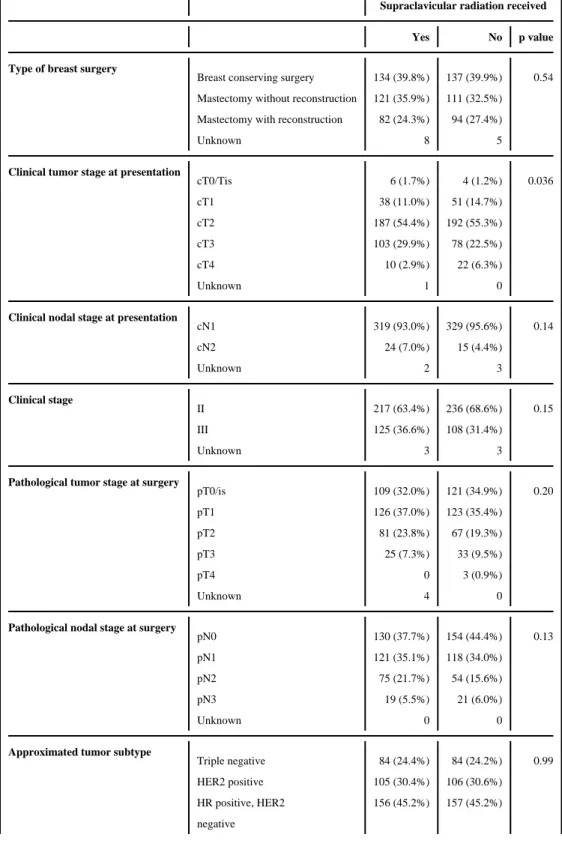
supraclavicular radiation ranged from 46.6% to 52.2% and did not differ between surgical approaches, pathological tumor stage or nodal response. Notably, supraclavicular radiation was omitted in 193/408 (47.3%) of patients with residual node-positive disease after NAC.
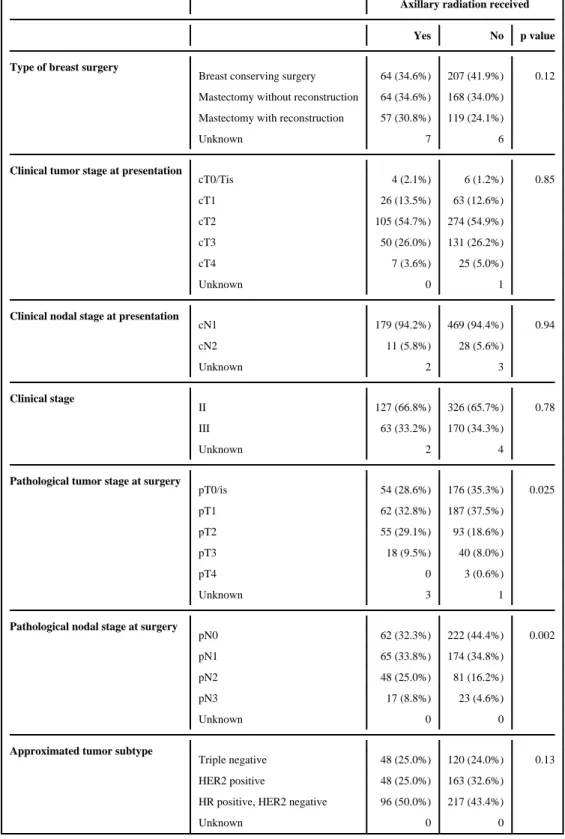
The use of axillary radiation was variable in this group of patients, all of whom underwent completion ALND. Axillary radiation was used more frequently in those patients remaining node-positive after NAC (p=0.002, Table 4) as well as those with residual disease in the breast (p=0.025). Axillary radiation was used less frequently in those undergoing BCS, consistent with the higher rate of pN0 patients in the BCS cohort. Of note, 22% (62/284) of patients who converted to pathologic node-negative disease and underwent completion ALND received axillary radiation.
Author Manuscript
Author Manuscript
Author Manuscript
Discussion
The increasing use of NAC has significantly impacted local-regional decision-making for
patients and their treating physicians.3, 9–12. Surgical decision-making in patients
undergoing NAC is complex, and involves consideration of response to therapy, patient and clinician preferences, and clinical judgement.
As expected, BCS was more common among women with higher response rates to NAC15.
However, a significant proportion of patients with a good response to NAC still elect to undergo mastectomy. The decision-making is multifactorial and may reflect factors at presentation despite a good response to NAC, and difficulties with interpretation of imaging
modalities to evaluate extent of residual disease.15 Details on family history and genetic
testing were not available for the current study population and could also have impacted decision-making.
Of those patients in ZXXXX undergoing mastectomy after NAC, 43% underwent immediate reconstruction. Bilateral mastectomy was more common in those women electing
reconstruction. This is in keeping with previous studies that have reported immediate
reconstruction is associated with higher rates of bilateral mastectomy for breast cancer16.
This has been attributed to improved symmetry with bilateral reconstruction compared with
unilateral reconstruction and a contralateral symmetrisation procedure17
The high rate of mastectomy with immediate reconstruction in this cohort of women who presented with node-positive disease demonstrates a paradigm shift from earlier time periods where immediate reconstruction was not favored if PMRT was anticipated. This may in part be due to increasing rates nationally of immediate reconstruction in women undergoing
mastectomy for breast cancer.16
While patients undergoing mastectomy without reconstruction presented with higher stages of disease compared to the immediate reconstruction group, the post-treatment pathologic T and N stages of these two groups were similar. Although pathologic data would usually not be available until several days after the surgery, these data suggest that the initial clinical stage may still be an important driver in decision-making regarding immediate
reconstruction rather than the response to therapy. This may also be a reflection of the fact that currently available imaging modalities cannot fully assess response to therapy, as
reported in a previous analysis of ZXXXX15. Improvements in imaging and predictors of
pathologic complete response could aid in patient counselling and decision-making. During the time of receiving NAC patients may also gain additional information regarding genetic testing results, reconstructive options and experiences of other breast cancer patients, all of which may influence individual treatment decisions.
Local-regional management practice patterns following NAC from patients enrolled in ZXXXX confirm a lack of uniformity with wide variations in practice, stressing the need for clinical trials, practice guidelines or consensus statements in this setting. Although NCCN guidelines do recommend PMRT following NAC for advanced breast cancer, more detailed practice statements and targeted education of the surgical, medical and radiation oncology
community can serve to lower practice variability18. In addition, this variability highlights
Author Manuscript
Author Manuscript
Author Manuscript
the importance of detailed guidelines regarding radiation field design and dose constraints, with centralized review and quality assurance. Close collaboration of all members of the multidisciplinary team, including the radiation oncologist, is essential in patients with advanced breast cancer regardless of response to NAC.
Two ongoing trials may help address several unresolved issues. Both trials have similar radiation field design and dose constraint guidelines that can be helpful in driving more uniformity in the delivery of radiation. Even for patients ineligible or unwilling to
participate in the trials, the RT guidelines and dose constraints provide a useful resource for local-regional treatment after NAC. Alliance A011202 will address whether axillary radiation is non-inferior to ALND following NAC. NRG_B-51 will determine the need for
PMRT or regional nodal irradiation in patients who convert to node-negative after NAC12.
There are some clinical data suggesting that in women who experience a complete response with NAC, omission of PMRT or elimination of regional nodal irradiation after BCS and
radiation may be an option10, 19–21. Therefore NRG_B-51 randomizes mastectomy patients
who convert to node-negative after NAC to PMRT or no further radiation, and patients undergoing BCS to breast radiation only or breast and regional nodal irradiation. Our data confirm wide variability in practice, reflecting the need for this trial. Of patients treated with BCS who converted to node-negative, it is interesting that regional nodal irradiation was employed in just over 50% reflecting uncertainty of the appropriate approach to regional nodal irradiation in this setting of true equipoise supporting the need for a randomized trial. Over 70% of patients treated with mastectomy who converted to node-negative received PMRT in our cohort, suggesting that the current most commonly practiced standard is to perform PMRT even with complete response. However 24% omitted PMRT, indicating variability across practices. The ongoing NRG_B-51 has the potential to significantly change practice if it demonstrates equivalence in omission of radiation in this setting.
Our data also revealed variations in radiation field design, often conflicting with the current radiation guidelines in the NRG and Alliance trials and conflicting with NCCN
recommendations18. Although our data were retrieved from the original case report forms as
opposed to centralized film review, introducing some uncertainty regarding the delivered radiation volumes, a previous analysis of AXXXXX Z0011 fields demonstrated excellent
concordance between the case data report forms and centralized film review22.
Despite persistent node-positive disease following NAC, among patients receiving RT, supraclavicular radiation was omitted in 47% of patients. The benefit of regional nodal irradiation has recently been demonstrated in two randomized trials in patients with early
stage node-positive or high-risk node-negative disease following upfront surgery.23, 24 For
patients with node-positive disease that persists even after NAC, the potential benefit may be greater and supraclavicular radiation is prudent and should be strongly recommended.
Internal mammary radiation was low in our cohort, reflecting a reluctance to recognize deliberate targeting of internal mammary nodes as a significant contribution to the benefits of regional nodal irradiation. Several trials have attempted to address this issue with conflicting reports, although most trials demonstrating an advantage to regional nodal
Author Manuscript
Author Manuscript
Author Manuscript
irradiation employed internal mammary radiation, including two recent trials published in
patients with earlier stage disease23–25. Furthermore, the recent Danish DBCG-IMN
prospective study demonstrated an advantage to internal mammary radiation26. While we
cannot comment on the benefit of internal mammary radiation from our data, it is clear that its use is limited and additional justification and educational resources will be required to increase its utilization.
Management of the axilla in node-positive disease is complex, requiring close coordination
among the multidisciplinary team27. The accuracy of SLN surgery and the false negative
rate from the ZXXXX trial have been previously reported14. Whether axillary radiation can
replace ALND in those patients who remain SLN positive is being addressed in Alliance A011202, which randomizes patients who are SLN positive following NAC to ALND plus radiation to the undissected Level II/III nodes, or full axillary and nodal radiation without
further surgery13. The AMAROS trial demonstrated equivalent regional control in patients
who underwent axillary radiation compared to ALND for the group of patients treated with upfront surgery who were SLN positive, with decreased morbidity associated with axillary
radiation28. However, patients who remain SLN positive after NAC are a higher risk group
and the Alliance A011202 trial will address whether axillary radiation can replace ALND in
this setting12.
Variability in the use of axillary radiation after completion ALND is expected, and often depends on a number of factors including the extent of ALND, residual nodal burden, initial
nodal status, physician biases and preferences, and clinical judgement3. However, in patients
who undergo completion ALND, as was done in all patients in this cohort, axillary radiation should typically be employed selectively in patients with a heavy residual nodal burden or inadequate dissection. Both the NRG_B-51 and Alliance A011202 trials discourage axillary radiation in patients undergoing completion ALND, except in the circumstances of an inadequate sampling or heavy tumor burden. In the current series it is notable that 22% of patients with complete axillary response (pN0) and completion ALND also received axillary radiation. This also demonstrates a gap in knowledge and need for clinical practice
guidelines.
Omission of radiation in patients undergoing immediate reconstruction also raises concerns. While it is expected that there is variability and lack of consensus regarding the need for PMRT, particularly in those patients converting to node-negative, it is generally accepted
that patients with persistently node-positive disease after NAC should receive PMRT.9
Furthermore, NRG_B-51excludes patients who remain node-positive after NAC as experts felt uncomfortable omitting radiation in this setting. Omission of PMRT in nearly 20% of patients with persistently node-positive disease in the current study also points to the need for education and guidance. It is interesting that PMRT was employed less frequently in reconstructed patients than in patients without reconstruction, despite the fact that there was no significant difference in the pathologic T or N stages between these groups, suggesting that immediate reconstruction and cosmetic issues may have influenced oncologic decision-making. Prior consultation with radiation oncologists regarding the use of immediate reconstruction is recommended, so that the patient can be fully informed and the radiation oncologist can be involved with the multidisciplinary decision-making.
Author Manuscript
Author Manuscript
Author Manuscript
In conclusion, results from AXXXXX ZXXXX demonstrate wide variability in local-regional practice patterns following NAC in patients with initial node-positive disease. While ongoing trials will help to address several unanswered questions, there is a need for more uniformity, practice guidelines and education to fill gaps in knowledge and alter practice patterns. While controversies and uncertainties will remain with some necessary variation in practice, several areas that deserve attention include factors that drive oncologic decision-making in the setting of immediate reconstruction and appropriate radiation field selection and design after NAC.
Acknowledgments
Funding/Support: Research reported in this publication was supported by the National Cancer Institute of the National Institutes of Health under Award Numbers U10CA180821 and U10CA180882 (to the Alliance for Clinical Trials in Oncology) and CA076001 [to the legacy American College of Surgeons Oncology Group (ACOSOG)].
References
1. Amoroso V, et al. International Expert Consensus on Primary Systemic Therapy in the Management of Early Breast Cancer: Highlights of the Fifth Symposium on Primary Systemic Therapy in the Management of Operable Breast Cancer, Cremona, Italy (2013). J Natl Cancer Inst Monogr. 2015; 2015:90–96. [PubMed: 26063896]
2. Gralow JR, et al. Preoperative therapy in invasive breast cancer: pathologic assessment and systemic therapy issues in operable disease. J Clin Oncol. 2008; 26:814–819. [PubMed: 18258991]
3. Teshome M, Hunt KK. Neoadjuvant therapy in the treatment of breast cancer. Surg Oncol Clin N Am. 2014; 23:505–523. [PubMed: 24882348]
4. Wolmark N, Wang J, Mamounas E, Bryant J, Fisher B. Preoperative chemotherapy in patients with operable breast cancer: nine-year results from national surgical adjuvant breast and bowel project B-18. J Natl Cancer Inst Monogr. 2001:96–102. [PubMed: 11773300]
5. Gianni L, et al. Phase III trial evaluating the addition of paclitaxel to doxorubicin followed by cyclophosphamide, methotrexate, and fluorouracil, as adjuvant or primary systemic therapy: European Cooperative Trial in Operable Breast Cancer. J Clin Oncol. 2009; 27:2474–2481. [PubMed: 19332727]
6. Rastogi P, et al. Preoperative chemotherapy: updates of National Surgical Adjuvant Breast and Bowel Project Protocols B-18 and B-27. J Clin Oncol. 2008; 26:778–785. [PubMed: 18258986] 7. Colleoni M, Viale G, Goldhirsch A. Lessons on responsiveness to adjuvant systemic therapies
learned from the neoadjuvant setting. Breast. 2009; 18(Suppl 3):S137–140. [PubMed: 19914533] 8. Berruti A, et al. Pathologic complete response as a potential surrogate for the clinical outcome in
patients with breast cancer after neoadjuvant therapy: a meta-regression of 29 randomized prospective studies. J Clin Oncol. 2014; 32:3883–3891. [PubMed: 25349292]
9. Buchholz TA, et al. Statement of the science concerning locoregional treatments after preoperative chemotherapy for breast cancer: a National Cancer Institute conference. J Clin Oncol. 2008; 26:791–797. [PubMed: 18258988]
10. Fowble BL, et al. Role of postmastectomy radiation after neoadjuvant chemotherapy in stage II-III breast cancer. Int J Radiat Oncol Biol Phys. 2012; 83:494–503. [PubMed: 22579377]
11. Haffty BG, Mahmoud O. The evolution of regional nodal irradiation in breast cancer. Breast J. 2015; 21:32–41. [PubMed: 25418516]
12. Smith BD. Using chemotherapy response to personalize choices regarding locoregional therapy: a new era in breast cancer treatment? J Clin Oncol. 2012; 30:3913–3915. [PubMed: 23032624] 13. Mak KS, Harris JR. Radiotherapy Issues After Neoadjuvant Chemotherapy. J Natl Cancer Inst
Monogr. 2015; 2015:87–89. [PubMed: 26063895]
Author Manuscript
Author Manuscript
Author Manuscript
14. Boughey JC, et al. Sentinel lymph node surgery after neoadjuvant chemotherapy in patients with node-positive breast cancer: the AXXXXX ZXXXX (Alliance) clinical trial. JAMA. 2013; 310:1455–1461. [PubMed: 24101169]
15. Boughey JC, et al. Tumor biology correlates with rates of breast-conserving surgery and pathologic complete response after neoadjuvant chemotherapy for breast cancer: findings from the AXXXXX ZXXXX (Alliance) Prospective Multicenter Clinical Trial. Ann Surg. 2014; 260:608–614. discussion 614–606. [PubMed: 25203877]
16. Kummerow KL, Du L, Penson DF, Shyr Y, Hooks MA. Nationwide trends in mastectomy for early-stage breast cancer. JAMA Surg. 2015; 150:9–16. [PubMed: 25408966]
17. Koslow S, et al. Long-term patient-reported satisfaction after contralateral prophylactic mastectomy and implant reconstruction. Ann Surg Oncol. 2013; 20:3422–3429. [PubMed: 23720070]
18. Gradishar WJ, et al. Breast Cancer Version 2.2015. J Natl Compr Canc Netw. 2015; 13:448–475. [PubMed: 25870381]
19. Mamounas EP, et al. Predictors of locoregional recurrence after neoadjuvant chemotherapy: results from combined analysis of National Surgical Adjuvant Breast and Bowel Project B-18 and B-27. J Clin Oncol. 2012; 30:3960–3966. [PubMed: 23032615]
20. Buchholz TA, et al. Predictors of local-regional recurrence after neoadjuvant chemotherapy and mastectomy without radiation. J Clin Oncol. 2002; 20:17–23. [PubMed: 11773149]
21. McGuire SE, et al. Postmastectomy radiation improves the outcome of patients with locally advanced breast cancer who achieve a pathologic complete response to neoadjuvant chemotherapy. Int J Radiat Oncol Biol Phys. 2007; 68:1004–1009. [PubMed: 17418973]
22. Jagsi R, et al. Radiation Field Design in the AXXXXX Z0011 (Alliance) Trial. J Clin Oncol. 2014; 32:3600–3606. [PubMed: 25135994]
23. Whelan TJ, et al. Regional Nodal Irradiation in Early-Stage Breast Cancer. N Engl J Med. 2015; 373:307–316. [PubMed: 26200977]
24. Poortmans PM, et al. Internal Mammary and Medial Supraclavicular Irradiation in Breast Cancer. N Engl J Med. 2015; 373:317–327. [PubMed: 26200978]
25. Chen RC, Lin NU, Golshan M, Harris JR, Bellon JR. Internal mammary nodes in breast cancer: diagnosis and implications for patient management -- a systematic review. J Clin Oncol. 2008; 26:4981–4989. [PubMed: 18711171]
26. Thorsen L, et al. The DBCG-IMN: A populatiton based cohort study of the effect of internal mammary radiation on early node positive breast cancer. J Clin Oncol. 2015 (IN PRESS)). 27. Buchholz TA, Mittendorf EA, Hunt KK. Surgical Considerations After Neoadjuvant
Chemotherapy: Breast Conservation Therapy. J Natl Cancer Inst Monogr. 2015; 2015:11–14. [PubMed: 26063878]
28. Donker M, et al. Radiotherapy or surgery of the axilla after a positive sentinel node in breast cancer (EORTC 10981-22023 AMAROS): a randomised, multicentre, open-label, phase 3 non-inferiority trial. Lancet Oncol. 2014; 15:1303–1310. [PubMed: 25439688]
Author Manuscript
Author Manuscript
Author Manuscript
Summary
Local-regional management following neoadjuvant chemotherapy in ACOSOG 1071 were reviewed. All patients had node positive breast cancer treated with neoadjuvant chemotherapy, sentinel node and completion axillary dissection. Review of the records revealed wide variability in practice, particularly regarding administration of radiation therapy, often conflicting with practice recommendations and guidelines. The study emphasizes the need for education, clinical practice statements and trials to address these issues and reduce variability in practice.
Author Manuscript
Author Manuscript
Author Manuscript
Author Manuscript
Author Manuscript
Author Manuscript
Figure 1.
Figure 1A. Local-regional management of node-positive patients following chemotherapy from AXXXXX ZXXXX
RNI, regional nodal irradiation; RT, radiation therapy *Regional Nodal Irradiation
Figure 1B. Local-regional management of node-negative patients following chemotherapy from AXXXXX ZXXXX
RNI, regional nodal irradiation; RT, radiation therapy *Regional Nodal Irradiation
Author Manuscript
Author Manuscript
Author Manuscript
Author Manuscript
Author Manuscript
Author Manuscript
Author Manuscript
Table 1
Clinical characteristics of the patient population (N = 685) by primary surgical approach
Breast conserving surgery
Mastectomy without reconstruction
Mastectomy with immediate
reconstruction
p-value
Number of patients
277 (40.4%)
232 (33.9%)
176 (25.7%)
Clinical tumor stage at presentation
<0.0001 cT0/Tis 3 (1.1%) 1 (0.4%) 3 (1.7%) cT1 38 (13.7%) 23 (9.9%) 28 (16.0%) cT2 188 (67.9%) 98 (42.2%) 94 (53.7%) cT3 44 (15.9%) 84 (36.2%) 48 (27.4%) cT4 4 (1.4%) 26 (11.2%) 2 (1.1%) Unknown 0 0 1
Clinical nodal stage at presentation
0.37 cN1 266 (96.0%) 214 (93.4%) 163 (93.7%) cN2 11 (4.0%) 15 (6.6%) 11 (6.3%) Unknown 0 3 2 Clinical stage <0.0001 II 220 (79.4%) 115 (50.2%) 118 (68.2%) III 57 (20.6%) 114 (49.8%) 55 (31.8%) Unknown 0 3 3
Pathological tumor stage at surgery
<0.0001 pT0/is 119 (43.0%) 59 (25.6%) 50 (28.7%) pT1 99 (35.7%) 85 (37.0%) 64 (36.8%) pT2 54 (19.5%) 50 (21.7%) 41 (23.6%) pT3 5 (1.8%) 34 (14.8%) 18 (10.3%) pT4 0 2 (0.9%) 1 (0.6%) Unknown 0 2 2
Pathological nodal stage at surgery
0.0003
pN0
131 (47.3%)
84 (36.2%)
Author Manuscript
Author Manuscript
Author Manuscript
Author Manuscript
Breast conserving surgery
Mastectomy without reconstruction
Mastectomy with immediate
reconstruction p-value pN1 100 (36.1%) 72 (31.0%) 63 (35.8%) pN2 39 (14.1%) 51 (22.0%) 36 (20.4%) pN3 7 (2.5%) 25 (10.8%) 8 (4.6%) Unknown 0 0 0
Approximated tumor subtype
0.11 Triple negative 79 (28.5%) 49 (21.1%) 40 (22.7%) HER2 positive 89 (32.1%) 70 (30.2%) 48 (27.3%)
HR positive, HER2 negative
109 (39.4%) 113 (48.7%) 88 (50.0%) Unknown 0 0 0
Laterality of surgery
<0.0001 Unilateral n/a 156 (67.8%) 59 (33.5%) Bilateral 74 (32.2%) 117 (66.5%) Unknown 2 0 Radiation therapy 0.0002 Yes 242 (89.3%) 204 (87.9%) 134 (76.1%) No 29 (10.7%) 28 (12.1%) 42 (23.9%) Unknown 6 0 0
Author Manuscript
Author Manuscript
Author Manuscript
Author Manuscript
Table 2
Comparison of mastectomy patients (N = 408) with or without immediate reconstruction
Mastectomy without reconstruction Mastectomy with immediate reconstruction
p-value
Number of patients 232 (56.9%) 176 (43.1%)
Clinical tumor stage at presentation <0.0001
cT0/Tis 1 (0.4%) 3 (1.7%)
cT1 23 (9.9%) 28 (16.0%)
cT2 98 (42.2%) 94 (53.7%)
cT3 84 (36.2%) 48 (27.4%)
cT4 26 (11.2%) 2 (1.1%)
Unknown 0 1
Clinical nodal stage at presentation 0.93
cN1 214 (93.4%) 163 (93.7%)
cN2 15 (6.6%) 11 (6.3%)
Unknown 3 2
Clinical stage at presentation 0.0003
II 115 (50.2%) 118 (68.2%)
III 114 (49.8%) 55 (31.8%)
Unknown 3 3
Pathological tumor stage at surgery 0.71
pT0/is 59 (25.6%) 50 (28.7%)
pT1 85 (37.0%) 64 (36.8%)
pT2 50 (21.7%) 41 (23.6%)
pT3 34 (14.8%) 18 (10.3%)
pT4 2 (0.9%) 1 (0.6%)
Unknown 2 2
Pathological nodal stage at surgery 0.12
pN0 84 (36.2%) 69 (39.2%)
pN1 72 (31.0%) 63 (35.8%)
pN2 51 (22.0%) 36 (20.4%)
pN3 25 (10.8%) 8 (4.6%)
Unknown 0 0
Approximated tumor subtype 0.80
Triple negative 49 (21.1%) 40 (22.7%)
HER2 positive 70 (30.2%) 48 (27.3%)
HR positive, HER2 negative
113 (48.7%) 88 (50.0%)
Author Manuscript
Author Manuscript
Author Manuscript
Author Manuscript
Mastectomy without reconstruction Mastectomy with immediate reconstruction
p-value
Laterality of surgery <0.0001
Unilateral 156 (67.8%) 59 (33.5%)
Bilateral 74 (32.2%) 117 (66.5%)
Unknown 2 0
Radiation therapy 0.002
Yes 204 (87.9%) 134 (76.1%)
No 28 (12.1%) 42 (23.9%)
Unknown 0 0
Radiation No Radiation p value
Pathological complete response Yes 64 (18.9%) 26 (37.1%) 0.0008
No 274 (81.1%) 44 (62.9%)
Unknown 0 0
Pathological T stage pT0/is 82 (24.6%) 27 (38.6%) <0.0001
pT1 123 (36.8%) 26 (37.1%)
pT2 80 (24.0%) 11 (15.7%)
pT3 49 (14.7%) 3 (4.3%)
pT4 0 3 (4.3%)
Unknown 4 0
Pathological N stage pN0 117 (34.6%) 36 (51.4%) 0.008
pN1-3 221 (65.4%) 34 (48.6%)
Unknown 0 0
Approximated tumor subtype 0.63
Triple negative 73 (21.6%) 16 (22.9%)
HER2 positive 95 (28.1%) 23 (32.9%)
HR positive, HER2 negative
170 (50.3%) 31 (44.3%)
Unknown 0 0
Author Manuscript
Author Manuscript
Author Manuscript
Author Manuscript
Table 3
Radiation therapy by surgical approach
Breast conserving surgery (N = 277)
Mastectomy without reconstruction (N = 232)
Mastectomy with immediate reconstruction (N = 176)
Breast RT
NA
Yes
242 (89.3%)
NA
NA
No
29 (10.7%)
Chest Wall RT
<0.0001
Yes
NA
179 (77.2%)
100 (56.8%)
No
53 (22.8%)
76 (43.2%)
Axillary RT
0.12
Yes
64 (23.6%)
64 (27.6%)
57 (32.4%)
No
207 (76.4%)
168 (72.4%)
119 (67.6%)
Supraclavicular RT
0.54
Yes
134 (49.4%)
121 (52.2%)
82 (46.6%)
No
137 (50.6%)
111 (47.8%)
94 (53.4%)
Internal Mammary RT
0.41
Yes
21 (7.8%)
26 (11.2%)
16 (9.1%)
No
250 (92.2%)
206 (88.8%)
160 (90.9%)
Author Manuscript
Author Manuscript
Author Manuscript
Author Manuscript
Table 4
Axillary radiation
Axillary radiation received
Yes No p value
Type of breast surgery
Breast conserving surgery 64 (34.6%) 207 (41.9%) 0.12
Mastectomy without reconstruction 64 (34.6%) 168 (34.0%)
Mastectomy with reconstruction 57 (30.8%) 119 (24.1%)
Unknown 7 6
Clinical tumor stage at presentation
cT0/Tis 4 (2.1%) 6 (1.2%) 0.85
cT1 26 (13.5%) 63 (12.6%)
cT2 105 (54.7%) 274 (54.9%)
cT3 50 (26.0%) 131 (26.2%)
cT4 7 (3.6%) 25 (5.0%)
Unknown 0 1
Clinical nodal stage at presentation
cN1 179 (94.2%) 469 (94.4%) 0.94
cN2 11 (5.8%) 28 (5.6%)
Unknown 2 3
Clinical stage
II 127 (66.8%) 326 (65.7%) 0.78
III 63 (33.2%) 170 (34.3%)
Unknown 2 4
Pathological tumor stage at surgery
pT0/is 54 (28.6%) 176 (35.3%) 0.025
pT1 62 (32.8%) 187 (37.5%)
pT2 55 (29.1%) 93 (18.6%)
pT3 18 (9.5%) 40 (8.0%)
pT4 0 3 (0.6%)
Unknown 3 1
Pathological nodal stage at surgery
pN0 62 (32.3%) 222 (44.4%) 0.002
pN1 65 (33.8%) 174 (34.8%)
pN2 48 (25.0%) 81 (16.2%)
pN3 17 (8.8%) 23 (4.6%)
Unknown 0 0
Approximated tumor subtype
Triple negative 48 (25.0%) 120 (24.0%) 0.13
HER2 positive 48 (25.0%) 163 (32.6%)
HR positive, HER2 negative 96 (50.0%) 217 (43.4%)
Author Manuscript
Author Manuscript
Author Manuscript
Author Manuscript
Author Manuscript
Author Manuscript
Author Manuscript
Author Manuscript
Table 5
Supraclavicular radiation
Supraclavicular radiation received
Yes No p value
Type of breast surgery
Breast conserving surgery 134 (39.8%) 137 (39.9%) 0.54
Mastectomy without reconstruction 121 (35.9%) 111 (32.5%)
Mastectomy with reconstruction 82 (24.3%) 94 (27.4%)
Unknown 8 5
Clinical tumor stage at presentation
cT0/Tis 6 (1.7%) 4 (1.2%) 0.036
cT1 38 (11.0%) 51 (14.7%)
cT2 187 (54.4%) 192 (55.3%)
cT3 103 (29.9%) 78 (22.5%)
cT4 10 (2.9%) 22 (6.3%)
Unknown 1 0
Clinical nodal stage at presentation
cN1 319 (93.0%) 329 (95.6%) 0.14
cN2 24 (7.0%) 15 (4.4%)
Unknown 2 3
Clinical stage
II 217 (63.4%) 236 (68.6%) 0.15
III 125 (36.6%) 108 (31.4%)
Unknown 3 3
Pathological tumor stage at surgery
pT0/is 109 (32.0%) 121 (34.9%) 0.20
pT1 126 (37.0%) 123 (35.4%)
pT2 81 (23.8%) 67 (19.3%)
pT3 25 (7.3%) 33 (9.5%)
pT4 0 3 (0.9%)
Unknown 4 0
Pathological nodal stage at surgery
pN0 130 (37.7%) 154 (44.4%) 0.13
pN1 121 (35.1%) 118 (34.0%)
pN2 75 (21.7%) 54 (15.6%)
pN3 19 (5.5%) 21 (6.0%)
Unknown 0 0
Approximated tumor subtype
Triple negative 84 (24.4%) 84 (24.2%) 0.99
HER2 positive 105 (30.4%) 106 (30.6%)
HR positive, HER2 156 (45.2%) 157 (45.2%)
Author Manuscript
Author Manuscript
Author Manuscript
Author Manuscript
Supraclavicular radiation received
Yes No p value
Unknown 0 0