INSIDE THE TRIANGLE:
ADVANCING RESEARCH ON ENTREPRENEURSHIP AND FIRM LOCATIONS
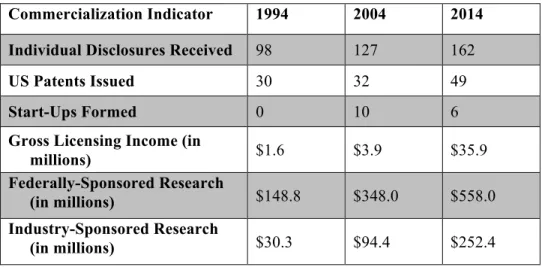
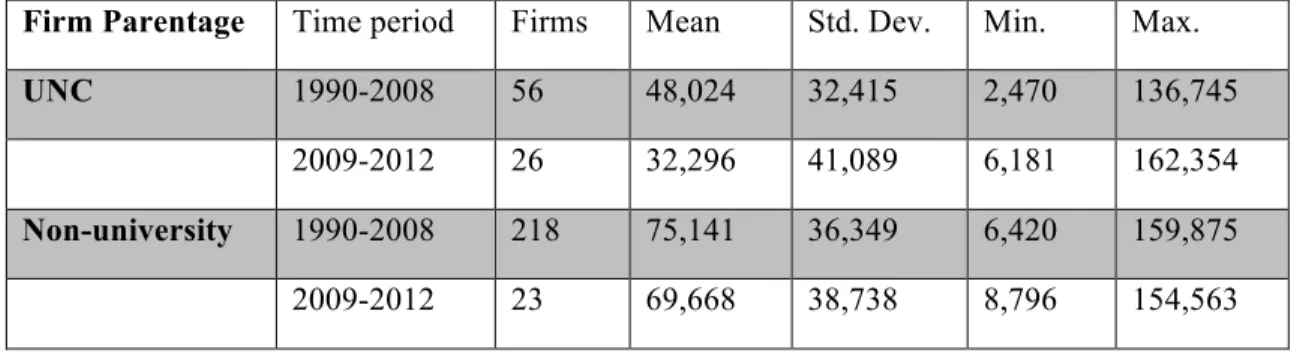
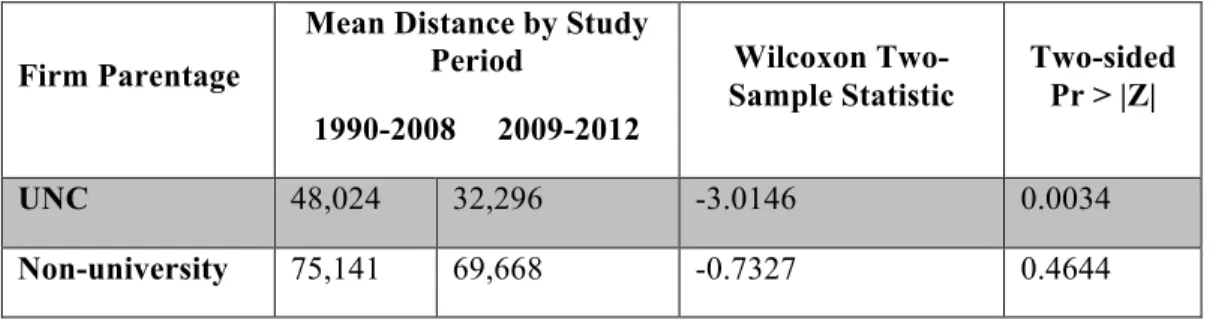
Mary Donegan
A dissertation submitted to the faculty at the University of North Carolina at Chapel Hill in partial fulfillment of the requirements for the degree of Doctor of Philosophy in the Department
of City and Regional Planning.
Chapel Hill 2016
ABSTRACT
Mary Donegan: Inside the Triangle: Advancing Research on Entrepreneurship and Firm Locations
(Under the direction of Dr. Nichola Lowe)
This dissertation focuses on the sub-regional, spatial arrangements of entrepreneurial bioscience companies in the Research Triangle Park region of North Carolina. The dissertation’s three papers tackle this topic in a systematic way, by (1) exploring why and how institutions develop policies that extend space-related resources to entrepreneurs, (2) analyzing the extent to which these space-related resources reshape the physical locations of entrepreneurial firms, and (3) comparing entrepreneurial establishment records from two different databases to determine which source is best for analyzing entrepreneurial firms.
The first paper, Universities as Jurisdictionally Embedded Institutions, uses university business incubators as a means to examine how institutions (like universities) that are embedded within multiple jurisdictions (states, counties, and cities) develop policy. Previous research has attributed policy development to two separate factors: university culture and regional
characteristics. The research shows, however, that the institution’s embeddedness in layers of political jurisdictions influences university cultures around entrepreneurship and development.
The dissertation’s second paper, Institutionally Bound Resources and Firm Location
Decisions, examines how UNC’s policies have reshaped firm microgeographies. The
paper I examine UNC’s introduction of spatial, institutionally bound resources (business incubators for entrepreneurial firms), and find that these resources have disrupted previously defined spatial patterns among firms with access to these resources.
The dissertation’s third paper, How Does Database Selection Influence our
ACKNOWLEDGEMENTS
First and foremost, I’d like to thank Nichola Lowe for her support and guidance along this path. Nichola was always been willing to answer my questions, point me to new literature, reframe my questions or theories, and connect me with individuals who can assist in my
research. I’d also like to thank Maryann Feldman, who took considerable time to offer feedback and advice. I’d also like to thank my committee members, Daniel Rodriguez, T. William Lester, and Todd BenDor, for proving feedback and support. Tab Combs, Allison Forbes, Allan Freyer, Marc Howlett, and Danielle Spurlock all read drafts of these papers, and were always kind when pointing out their flaws. I also appreciate all of the work that various members of the extended RTP research team did, especially: Paige Clayton, Daniel Fleck, Carolyn Fryberger, Theodora Hadjimichael, Cara Isher-Witt, Carl Kolosna, Alyse Polly, and Keagan Sacripanti.
I’d also like to thank Maryann Feldman, Nichola Lowe, Lisa Goble, and North Carolina’s Department of Commerce for sharing data with me, all of my interview subjects who took time out of their busy days to talk with me, and UNC's Graduate School and the Center for the Study of the American South for financial assistance. To Maryann and Nichola in particular, thank you for including me in this project, for listening to my never-ending thoughts on the design of the database, and for directing so many resources towards my work.
To my parents: thank you for cleaning my house and doing our laundry whenever you visited, and for watching the kids whenever I dropped them off. My in-laws, too, were always willing to watch children so I could work, and never thought it strange that I disappeared the moment they came to visit.
TABLE OF CONTENTS
1 INTRODUCTION ... 1
1.1 Entrepreneurship: Regions and Bioscience Firms ... 1
1.2 Putting the Local Back in the Region: Embedding Universities in Jurisdictions ... 3
1.3 Data: Limiting Our Ability to Study These Issues ... 5
1.4 Directions for Future Research ... 6
1.5 Objectives of This Research and Overview of the Three Papers ... 8
1.5.1 Overarching research objective ... 8
1.5.2 Research setting ... 8
1.6 Data ... 9
1.6.1 Paper 1: Research questions and methods ... 10
1.6.2 Paper 2: Research questions and methods ... 11
1.6.3 Paper 3: Research questions and methods ... 12
1.7 Implications of the Research ... 13
2 UNIVERSITIES AS JURISDICTIONALLY EMBEDDED INSTITUTIONS ... 15
2.1 Introduction ... 15
2.2 Theoretical Background ... 18
2.2.1 Urban redevelopment and the jurisdictionally embedded university ... 22
2.2.2 Research commercialization and the jurisdictionally embedded university ... 27
2.4.1 The Research Triangle region ... 31
2.4.2 Duke and UNC ... 32
2.4.3 Business incubation at Duke and UNC ... 34
2.5 The Case of UNC ... 35
2.5.1 Development in Chapel Hill ... 35
2.5.2 Commercialization at UNC ... 36
2.5.3 Business incubators at UNC ... 38
2.5.4 Business incubators as UNC’s jurisdictionally embedded bridging activity ... 40
2.6 Duke ... 44
2.6.1 Development in Durham ... 44
2.6.2 Commercialization at Duke ... 45
2.6.3 Business incubation at Duke ... 47
2.6.4 Business incubators as Duke’s jurisdictionally embedded bridging activity ... 48
2.7 Discussion and Conclusion ... 50
3 INSTITUTIONALLY BOUND RESOURCES AND FIRM LOCATION DECISIONS ... 53
3.1 Introduction ... 53
3.2 Entrepreneurial Firm Locations and University Parentage ... 58
3.2.1 Firm location literature ... 58
3.2.2 Social networks ... 60
3.2.3 Access to institutionally bound resources ... 62
3.3 Bioscience in the Triangle and at UNC ... 63
3.4 Empirical Strategy ... 67
3.5 Study Data and Methodology ... 69
3.5.1 Sample selection ... 69
3.5.3 Identifying company locations and creating distance measures ... 72
3.5.4 Testing for microgeographies ... 72
3.5.5 Interviews ... 73
3.6 Results ... 74
3.6.1 Interview results ... 76
3.6.2 Missing university networks and resources, 1990-2008 ... 77
3.6.3 University networks and institutionally bound resources, 2009-2012 ... 79
3.6.4 Non-university firms ... 80
3.6.5 Uncovering microgeographies: NETS data vs. interview data ... 81
3.7 Discussion and Conclusion ... 83
4 HOW DOES DATABASE SELECTION INFLUENCE OUR UNDERSTANDING OF ENTREPRENEURIAL REGIONS? ... 86
4.1 Introduction ... 86
4.2 The QCEW and the NETS: A Comparison ... 89
4.2.1 Accuracy of D&B and the NETS ... 92
4.2.2 Inclusion criteria in the QCEW and the NETS ... 95
4.3 North Carolina’s bioscience industry ... 98
4.4 Study Data ... 98
4.5 Study Methodology ... 101
4.5.1 Reference list development ... 102
4.5.2 Finding reference list matches in the QCEW and the NETS ... 103
4.5.3 Methods of comparing data between the databases ... 105
4.5.4 Adjusting the NETS data ... 107
4.6 Results: Raw NETS and Raw QCEW Data ... 109
4.6.2 Employment ... 109
4.6.3 Firm births over time ... 110
4.6.4 Location ... 111
4.7 Results: Adjusted NETS and Raw QCEW ... 113
4.7.1 Number of entrepreneurial firms ... 113
4.7.2 Employment ... 113
4.7.3 Firm births over time ... 114
4.7.4 Location ... 115
4.8 Discussion ... 117
4.9 Conclusion ... 119
5 CONCLUSION ... 121
5.1 Introduction ... 121
5.2 Summary of research findings ... 121
5.3 Significance of the research for research and policy development ... 123
5.4 Limitations of the research ... 125
5.4.1 Threats to external validity: Setting ... 125
5.4.2 Threats to external validity: Treatment ... 125
5.4.3 Threats to construct validity: Inexact proxy for entrepreneurship ... 126
5.5 Implications for future research ... 126
LIST OF TABLES
TABLE 2.1:UNC COMMERCIALIZATION INDICATORS,1994-2014 ... 37 TABLE 2.2:DUKE COMMERCIALIZATION INDICATORS,1994-2014 ... 46 TABLE 3.1:DESCRIPTIVE STATISTICS, ENTREPRENEURIAL BIOSCIENCE FIRMS
AND DISTANCE FROM UNC(IN FEET) ... 75 TABLE 3.2:BETWEEN-GROUP TEST STATISTICS, MEASURING DIFFERENCE IN
DISTANCE (FEET) TO UNC ... 75 TABLE 3.3:WITHIN-GROUP TEST STATISTICS, MEASURING DIFFERENCE IN
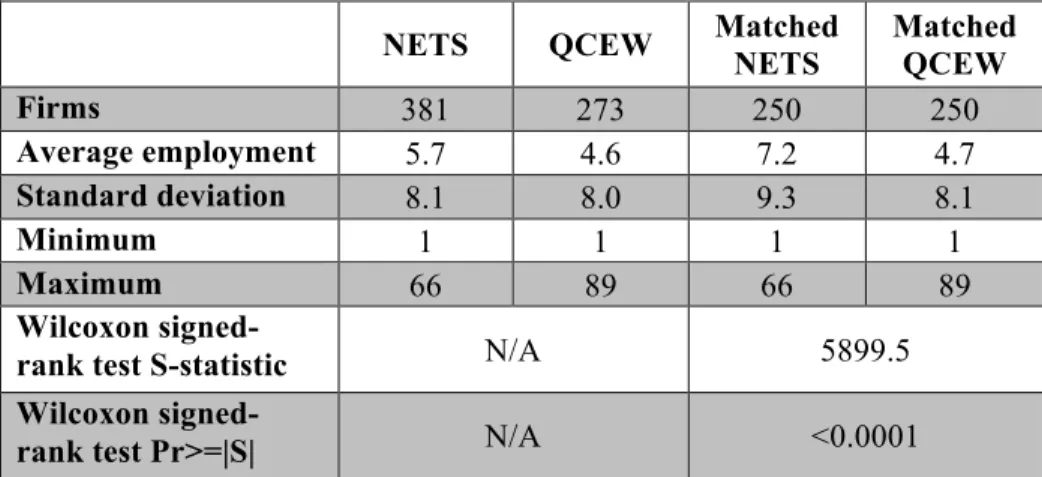
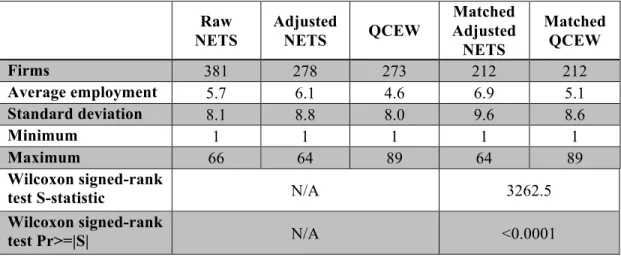
DISTANCE (FEET) TO UNC ... 76 TABLE 4.1:ENTREPRENEURIAL START-UP FIRMS IN THE QCEW AND THE NETS ... 109 TABLE 4.2:EMPLOYMENT STATISTICS,QCEW AND NETS ... 110 TABLE 4.3:ENTREPRENEURIAL START-UP FIRMS IN THE QCEW AND THE NETS,
LIST OF FIGURES
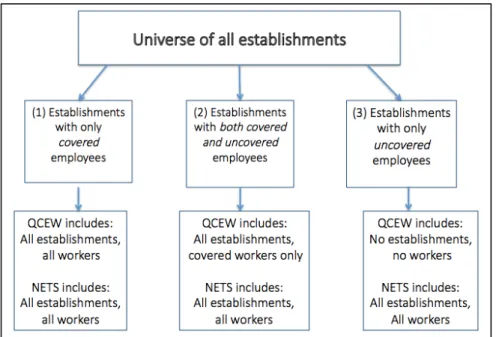
FIGURE 4.1:ESTABLISHMENTS AND WORKERS INCLUDED IN THE QCEW AND THE NETS ... 97
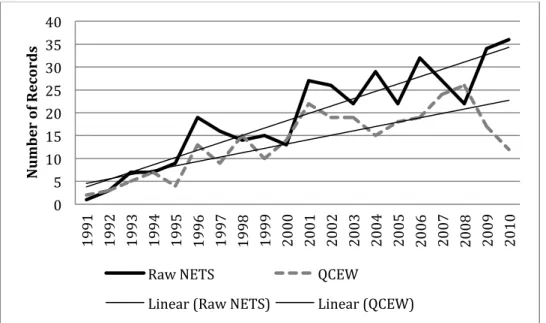
FIGURE 4.2:EARLIEST RECORD DATE OF REFERENCE LIST FIRMS,QCEW AND RAW NETS ... 111
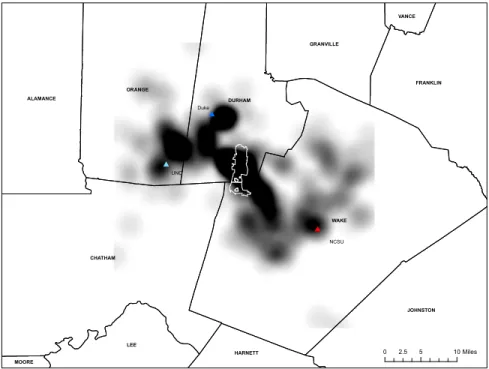
FIGURE 4.3:KERNEL DENSITY MAP OF BIOSCIENCE INDUSTRY FIRMS IN THE NETS ... 112
FIGURE 4.4:KERNEL DENSITY MAP OF BIOSCIENCE INDUSTRY FIRMS IN THE QCEW ... 112
FIGURE 4.5:EARLIEST RECORD DATE OF REFERENCE LIST FIRMS,QCEW AND ADJUSTED NETS ... 115
1 INTRODUCTION
1.1 Entrepreneurship: Regions and Bioscience Firms
Entrepreneurial firms, especially those that develop new or innovative technologies, are central to a region’s long-term economic development prospects. When linked to an existing or emerging industrial cluster, entrepreneurial firms develop products or services to complement, augment and otherwise utilize existing firms’ outputs, and further the region’s capacity for innovation by engendering new technologies, services, or organizational forms. Scholars have linked a region’s ability to develop, attract, and retain these entrepreneurial firms to numerous regional factors, including entrenched norms or culture, available financing, the presence of supportive organizations, and a region’s workforce. Together, entrepreneurial firms and their regional environments develop a unique, reciprocal relationship, tied together by an evolving, complex web of social, institutional, and economic interactions. Scholars refer to this web of interrelated resources that firms and their regions continually produce and re-produce as an entrepreneurial ecosystem (Auerswald, 2014; Feldman, Francis, & Bercovitz, 2005; Malecki, 1990; Owen-Smith & Powell, 2006; Saxenian, 1994).
laboratory spaces or equipment in the region. Firms involved in drug development, for example, need laboratories where workers can safely handle biological and chemical specimens. While office spaces can be “up fit” with this equipment, doing so requires considerable capital
investment. Unfortunately, many bioscience firms do not have access to the capital required for these investments.
Firms can search out resources from regional institutions or venture capitalists. In North Carolina’s Research Triangle Park (RTP) region, for example, all bioscience entrepreneurs have access to resources through the North Carolina Biotech Center and the Council for
Entrepreneurial Development. However, many of the physical and financial resources that are critical to entrepreneurial bioscience firms are not regional in nature. These resources are instead under the control of local jurisdictions (e.g. cities and counties), and other restricted or
membership-based organizations. The University of North Carolina at Chapel Hill (UNC) and Duke University (Duke), for example, restrict many of their resources to faculty, staff, and students. Their resources are thus tied to physical or social boundaries that the institution itself sets, making these resources institutionally bound. These institutionally bound resources are nested within the regional ecosystem, but are not available throughout the ecosystem.
One example of an institutionally bound resource is a university business incubator. Almost all universities have business incubators in some form (Markman, Phan, Balkin, & Gianiodis, 2005). In their simplest form, business incubators are physical spaces for
business plans.1 Scholars typically link business incubators to commercialization, or university
efforts to transfer academic research into licensed technology to larger firms, joint ventures, or entrepreneurial firms (Bøllingtoft & Ulhøi, 2005; Bradley, Hayter, & Link, 2013; Mian, 1996a, 1996b; Phan, Siegel, & Wright, 2005).
1.2 Putting the Local Back in the Region: Embedding Universities in Jurisdictions
That entrepreneurship scholars remain focused on the region as a geographic level of analysis is understandable, given the importance of regional resources in entrepreneurial and industrial development. Yet, while the long arc of industrial innovation occurs at the regional scale, the reality is that each individual firm is physically rooted in a single, specific address. Entrepreneurial firms have become targets for recruitment and retention efforts, in much the same way that cities, counties, and states have long targeted corporate headquarters, factories, or other branch plants (Isserman, 1993). The targeting of entrepreneurial firms likely reflects the attractiveness of entrepreneurial companies for individual jurisdictions. Recent work, for example, has attributed much of the job growth that Birch (1987) attributed to small firms to entrepreneurial companies (Haltiwanger, Jarmin, & Miranda, 2013; Haltiwanger & Krizan, 1999), making entrepreneurial companies important to economic development’s job creation goals.
Given jurisdictions’ desire to keep entrepreneurial firms embedded in their boundaries, and the diverse ways in which resources are extended to firms, analyzing the entrepreneurial
ecosystem from only a regional perspective may miss key drivers of sub-regional location decisions. Put another way, by analyzing the entrepreneurial ecosystem at a regional level, we have said nothing about the way in which firms are arranged at sub-regional geographies. By overlooking these sub-regional geographies, we overlook the ways in which institutions (like universities) shape these sub-regional geographies. Furthermore, we do not allow for the possibility that institutions such as universities are themselves tied to these jurisdictions and align their interests with these jurisdictions. These institutions are jurisdictionally embedded, linked to the political boundaries in which they are located through legal, personal, and institutional ties, all of which are rooted in decades of history. Together, recognizing these points to several possibilities: (1) organizations (like universities) have bounded resources, (2) multiple jurisdictions within a region have vested interests in fostering entrepreneurial
companies within their boundaries, and (3) universities may create and deploy resources in ways that are shaped by their jurisdictional embeddedness.
regional corners, they could be inadvertently inserting kinks or breaks into pathways of knowledge spillover.
1.3 Data: Limiting Our Ability to Study These Issues
Unfortunately, available data obscures how resources and institutions may shape small-scale firm geographies. Government data is made available to the public in aggregated form, thanks to reporting restrictions that prohibit governments from releasing confidential data; the Bureau of Labor Statistics, for example, does not make data available at geographies smaller than the county level. This aggregation conceals individual establishment births and deaths, as well as changes in employment at each establishment. Scholars can apply to individual state governments or to national bureaus to gain access to disaggregated versions of this data, but agencies often deny these applications.
As an alternative, scholars have increasingly turned to private databases. Private
firms, which often rely on informal or contract employment. Thus, while scholars realize they need research-appropriate data to develop informed policy, it is unclear whether governments or private companies provide the best data for entrepreneurial research.
1.4 Directions for Future Research
Analyzing sub-regional entrepreneurial firm locations is an approach that has slipped between separate fields and approaches in the literature. As detailed previously in this section, while the entrepreneurial ecosystem literature has focused on firm, social, and institutional dynamics, it has done so at the regional scale. This literature has therefore not explored how institutionally bound resources may shape sub-regional geographies of firms.
Other studies that have looked at these sub-regional locational patterns tend to lose sight of institutional supports. The economics literature has recently published studies of knowledge spillovers that include analyses of sub-regional clusters. Kerr and Kominers (2015), for example, examined patents in Silicon Valley to map sub-clusters of innovation in the region. However, patents are issued to both entrepreneurial and non-entrepreneurial firms, and as a proxy for technological innovation, studies based on patents can miss firms that innovate without patenting (e.g., advanced, industry-specific service firms) and other supportive firms (e.g., contract
Scholars have also overlooked questions of why institutions have implemented specific commercialization policies. In the case of universities, for example, the literature has largely attributed commercialization efforts to culture, or the attitudes that faculty, staff, and
administrators hold about the commercialization of academic research. While culture is important, fully attributing commercialization to culture, which is typically interpreted as internally-developed and defined norms of behavior, ignores how the jurisdictions in which universities are embedded shape the universities’ culture and, by extension, the direction of their commercialization efforts.
In terms of data, scholars in a separate field (public health) have published a number of papers that evaluate data quality in private databases (Fleischhacker et al., 2012; Kaufman et al., 2015; Liese et al., 2010; Ma et al., 2013). Unfortunately, the results are not completely
transferable. First, while location is important to both the public health and entrepreneurship fields, entrepreneurship scholars have a harder time verifying the location of companies in many fields (including bioscience). The public health studies largely focus on the locations of
consumer-oriented retail food establishments, as a means to identify food desserts. These
1.5 Objectives of This Research and Overview of the Three Papers
1.5.1 Overarching research objective
The three papers that comprise this dissertation are linked together by their focus on sub-regional patterns of entrepreneurial firm locations. The first paper explores how the jurisdictional embeddedness of the University of North Carolina (UNC) and Duke University has shaped their respective bioscience business incubation strategies. The second paper explores how UNC’s institutionally bound resources, in the form of business incubators, have shifted the locational patterns of affiliated start-up firms, pulling them closer to UNC. The third compares two
different sources of entrepreneurial data, one a private database and the other a public database.
1.5.2 Research setting
This dissertation’s three papers are all set in the Research Triangle region of North Carolina. Three research universities—UNC, Duke, and North Carolina State University (NCSU)—define the corners of the region.2 All three are research-intensive universities.3 These
three universities physically surround the Research Triangle Park (RTP), one of the nation’s oldest research parks (Luger & Goldstein, 1991). Many of the RTP’s early tenants were branch plants of large corporations or government research laboratories, leading early scholarship to regard the region as one defined by branch plants of larger corporations (Luger & Goldstein, 1991; Markusen, 1996). Recent scholarship has reframed the industry’s growth in the region, and
2 As a result of their medical schools, Duke and UNC have spun off many more companies than NCSU, which does not have a medical school. Because of this, this dissertation will focus much more closely on Duke and UNC than on NCSU.
in particular has recognized the roles high-profile branch plants (like GlaxoSmithKline), non-profit or quasi-public organizations (like the North Carolina Biotech Center), the state, and private incubators and accelerators have played in engendering the region’s entrepreneurial ecosystem (Feldman & Lowe, 2015; Link & Scott, 2005; Lowe & Feldman, 2014; Lowe et al., 2016; McCorkle, 2012). Largely by building on these branch plants, organizations like the North Carolina Biotech Center, and the three universities, the Triangle’s bioscience industry has become one of the largest in the country (Feldman & Lowe, 2011; Feser, Sweeney, & Renski, 2005; Goldstein, Feser, Freyer, Gordon, & Weinberg, 2008; Link & Scott, 2003; Lowe & Feldman, 2014; Markusen, 1996).
1.6 Data
This dissertation draws on five distinct sources of data. The first four are secondary databases, while the fifth is primary data in the form of interviews. The first, the Feldman-Lowe Database, is a proprietary database developed by Drs. Maryann Feldman and Nichola Lowe at UNC. This dissertation relies on a subset of this database. This subset is comprised of more than 500 entrepreneurial bioscience firms founded in the Research Triangle Park area between 1990 and 2012. A research team continually updates these records in the database, and this dissertation draws on data related to both the firms (including the products or services they produce and their founding date) and their founders (including the number of founders each firm has and each founder’s work history).
data from Dun & Bradstreet. This dissertation uses North Carolina files between 1990 and 2012, and uses data on firm addresses and the number of employees.
The third, the state of North Carolina’s data from the Quarterly Census of Establishments and Wages (QCEW), is a series of yearly snapshots of all establishments in the state of North Carolina. This dissertation uses establishment-level data on firm addresses and the number of employees, between 1991 and 2010.
The fourth source includes data from the Association of University Technology Managers (AUTM). AUTM conducts yearly surveys of technology transfer offices in U.S. research universities, and compiles it into a database. This dissertation uses data on patents, start-up firms, licensing revenue, and research expenditures for Duke and UNC between 1994 and 2014.
The fifth source is comprised of interviews with entrepreneurs; staff at UNC, Duke, and other area universities; city and county planners; and real estate developers.
1.6.1 Paper 1: Research questions and methods
The first paper begins with the observation that Duke and UNC—two similar universities in the same region, but in different cities and with different relationships with the state of North Carolina—have engaged in very different business incubation strategies. From there I ask three questions:
2. How has each university’s unique, jurisdictionally embedded nature shaped university culture and organization as they relate to commercialization and community
redevelopment?
3. How has jurisdictional embeddedness, through culture and organization, contributed to the policies that universities and their partners pursue?
I address these questions through an embedded case study of the two universities. Duke University and the University of North Carolina are in the same region, but they are in very different local jurisdictions. Their relationship with the state of North Carolina is different, too, due to Duke’s status as a private university and UNC’s as a public university. Through
interviews with current and former staff both from these two universities and other area universities, entrepreneurs, developers, and planners, I analyze how each university’s
embeddedness within these jurisdictions has shaped its culture and organization with respect to commercialization and redevelopment. These cultures, in turn, have led each university to approach business incubators—a bridging activity between commercialization and
redevelopment—in different ways. I supplement interviews with AUTM data on patents, university spin off companies, research expenditures, and licensing fees.
1.6.2 Paper 2: Research questions and methods
1. Does the introduction of new, institutionally bound entrepreneurial resources
fundamentally alter the pattern of firm locational decisions, such that we can observe a significant change in the geographic pattern of firm locations?
2. Do entrepreneurs embedded in a community with institutionally bound resources search for company space in a way that is different from entrepreneurs who are not embedded in the same community?
To answer these questions, the research utilizes a mixed-methods approach. I draw the sample of bioscience firms from the Feldman-Lowe database, and use location data from the NETS. Using the 2009 shift in UNC’s business incubator provision, I compare the first founding locations of UNC entrepreneurial bioscience firms to the locations of non-university
entrepreneurial bioscience firms, both before and after the 2009 change. The UNC-parented firms, founded by entrepreneurs who are embedded in the UNC community, have access to these institutionally bound resources between 2009 and 2012; the non-academic firms do not. Neither group has access between 1990 and 2008. I conducted interviews with entrepreneurs, UNC staff, and local planners.
1.6.3 Paper 3: Research questions and methods
Paper 3 offers a comparison of the NETS and the QCEW databases as sources of data for analyzing entrepreneurial regions. In this paper, I ask the following research questions:
2. How might a reliance on one database over another alter our understanding of a region’s entrepreneurial economy?
To answer these questions, I first create a reference list of Research Triangle area
entrepreneurial bioscience firms from the Feldman-Lowe database. Next, I match entrepreneurial bioscience firms in the Triangle region of North Carolina to their corresponding records in two databases: the NETS (a private database) and the QCEW (a government database). I then use statistical tests to assess differences in the number of matched records in the two databases, their employment counts, and their founding years, and I use kernel density maps to identify
differences in patterns of spatial concentration in the Triangle region between the two databases. Finally, I make a proxy adjustment for unpaid employment, which should be included in the NETS but excluded from the QCEW, and conduct these same statistical tests and maps.
1.7 Implications of the Research
universities, however, the research also reinforces the idea that there is no “one size fits all” approach to future policy development.
The second paper, in examining how UNC’s business incubator policies have affected the locational patterns of entrepreneurial firms, reinforces the importance of institutional resources in regional development. Yet, the results also draw attention to the institutionally bound nature of a portion of the region’s resources. Institutionally bound resources have frequently been conflated with resources that are available to all entrepreneurs. By showing how only those entrepreneurs with access to the resources altered their locational behavior, the research shows the importance of critically examining resources in terms of access.
The third paper finds that purposeful differences between the QCEW and the NETS (i.e., differences in the types of companies and employees that each database includes) drive much of the observed variation between the databases, and that many observed “inaccuracies” in the NETS disappear when controlling for unpaid labor at entrepreneurial firms. These findings suggest that the databases should not be viewed as substitutes for one another. For
2 UNIVERSITIES AS JURISDICTIONALLY EMBEDDED INSTITUTIONS
2.1 Introduction
Universities have increasingly embraced business incubation strategies as part of broader efforts towards commercializing university research, and in doing so have transformed both on- and off-campus land and buildings into spaces for academic entrepreneurs. Their widespread adoption is not surprising when we consider that research commercialization is a form of
technological innovation, which Goldstein, Maier, & Luger (1995) recognize as one of eight core functions of the modern research university. Yet, business incubators are unique amongst
commercialization strategies by requiring the physical construction, rehabilitation, or
rededication of land or buildings. When viewed from this perspective, business incubators are also a form of capital investment, another core university function (Goldstein, Maier, & Luger, 1995). According to Perry & Wiewel (2005), university redevelopment projects, while typically thought of as being motivated by a university’s need for space, are in fact frequently driven by a university’s interest in redeveloping neighborhoods it perceives as distressed or unsafe. Business incubators can therefore be thought of as a bridging activity between research commercialization (as technological innovation) and land redevelopment (as capital investment) strategies.
straightforward question: Why has one of these universities engaged in an expansive business incubator strategy while the other has not?
I ground the case in the concept of jurisdictional embeddedness, or the ways in which each university is tied to multiple, layered jurisdictions (i.e., the city, the county, the region, and the state) and their actors through personal relationships, laws, and historical organizational interactions and partnerships (see Feldman & Martin, 2005 for a related discussion of jurisdictional advantage). Each university’s unique jurisdictional embeddedness shapes its culture and organization as they relate to commercialization and redevelopment.
In addressing this straightforward question about divergent business incubator provision, I also use business incubators as a lens through which I examine: (1) the extent to which
jurisdictional embeddedness influences each campus’s internal culture and organization, and (2) how this culture and organization shapes business incubator processes, partnerships, and
locations. As bridging activities, business incubators present an ideal case. Business incubators are frequently developed with governmental partners, making them particularly susceptible to jurisdictional political pressures (Phan et al., 2005). I therefore ask two related questions: How has each university’s unique, jurisdictionally embedded nature shaped university culture and organization as they relate to commercialization and community redevelopment? How has jurisdictional embeddedness, through culture and organization, contributed to the policies that universities and their partners pursue?
commercialization activities from the Association of University Technology Managers.
I ultimately find that each university’s jurisdictional embeddedness has created feedback loops that iteratively frame each university’s choice sets and policy avenues, by way of
influencing internal cultures and organization. I find that jurisdictional embeddedness has shaped culture and organization as it relates to both commercialization and redevelopment at both UNC and Duke. Prior, local development partnerships, and legal and cultural relationships with the state of North Carolina, have shaped internal direction and choice sets, ultimately leading to distinct approaches to business incubation.
Insights from the study will improve not only how we conceptualize the dynamics of business incubator provision, but also other bridging activities, including the continued
expansion of university-linked medical centers, diverse off-campus student housing options, or the relocation of entire departments from one city to another. All of these projects are of enormous import to affected communities, impacting their tax revenues, employment bases, community milieu, and land costs, among others. The ways in which universities pursue these projects—whether to lease or buy, whether to adopt a process of community feedback or not, whether to partner with the community organizations and local government or not—have implications for community residents.
and conclusion.
2.2 Theoretical Background
The term “business incubator” is frequently used as a catch-all term, due to the fact that there is no agreed-upon classification system for business incubators (Bøllingtoft & Ulhøi, 2005; Bradley et al., 2013; Clarysse, Wright, Lockett, Van de Velde, & Vohora, 2005; Phan et al., 2005). At their most basic, business incubators are places where multiple small, entrepreneurial companies can use space. Companies frequently use space by short-term lease, often at low- or even below-market rents. More sophisticated business incubators include wrap-around services and resources to assist entrepreneurs, ranging from specialized equipment to assistance with business plans to networked mentoring with local entrepreneurs. Some are explicitly linked to venture capital of other types of funding, and some set limits on the amount of time a firm can spend in their space (Bøllingtoft & Ulhøi, 2005; Bradley et al., 2013; Meyer, 2003; Phan et al., 2005; Rothaermel, Agung, & Jiang, 2007). The lack of a standard definition or classification system has hampered the development of metrics to determine what constitutes a “successful” incubator, even as they are increasingly recognized as being instrumental in firm success (Bøllingtoft & Ulhøi, 2005).
broader institutional structure of the research university, the wrap-around services in these spaces are geared towards academic entrepreneurs’ unique limitations, including underdeveloped links to local industry and poor business-based (as opposed to scientific) knowledge. They also reflect the skills and knowledge of the broader university, including business and legal knowledge from business and law schools. Through their balance of resources and services (e.g., laboratory equipment, mentoring links to specific organizations or industries), universities can also design incubators that emphasize certain types of companies or industries. In a survey of 128 American research universities, Markman et al. (2005) found 62 percent had incubators—and that the remainder had plans to develop them.
As an economic development tool, business incubators are linked to second wave economic development theories and policies (Bradshaw & Blakely, 1999; Isserman, 1993). The presence of university-based business incubators in particular can also be traced back to the “entrepreneurial turn” in the academy, or the broader trend among universities to emphasize the commercialization of university research as part of their mission (Bøllingtoft & Ulhøi, 2005; Bradley et al., 2013; Etzkowitz, Webster, Gebhardt, & Terra, 2000; Goldstein et al., 1995; Phan et al., 2005; Rothaermel et al., 2007). However, this recognized link between the entrepreneurial university and the concomitant increase in business incubators does not help answer basic
questions about university business incubators. Why do some universities aggressively engage in an expansive business incubator strategy, while others do not? Why are some business incubators off campus, while others are on campus? Why do some incubators include multiple partners and services, while others do not?
acts as an incubator for the spin-out companies,” (p. 185). In these regions, the entrepreneurial community itself holds a wealth of knowledge and resources that can be directed towards new firms, especially firms that fall within the region’s industrial or occupational specializations. Additionally, as the region’s firms go through their life cycles—whether growth, decline, or death—newer companies are able to cycle into their abandoned spaces. Private companies, too, should see a value in building private incubators in well-developed entrepreneurial
environments, where there should be a high market-based demand for these spaces. In this view, the region determines both the extent to which universities engage in business incubation and the form those business incubators take.
However, conceptualizing a university’s business incubator as the product of its region and the particularities of each university’s entrepreneurs’ needs misses two larger points. First, a university’s location in a well-developed regional entrepreneurial environment does not negate other aspects of its location. While the ecosystem may be regional in nature, a university’s communities are not limited to the region. As Charles (2003) notes, “… the university is embedded in many different types of ‘community’: some local, some global; some overlapping and interacting, some barely recognizing each other,” (p. 13). In this paper, I address three of these communities beyond the regional scale, all of which are space-based and nested within each other: the city4 and the county, which frequently act in concert and are theoretically grouped
together in this section, and the state.5
4 Here, I use the term city to refer to a city or town.
Feldman & Martin (2005) address these different communities in their discussion of jurisdictional advantages, or how jurisdictions can contribute to regional innovation. As they state:
“The term [jurisdiction] connotes a broader and more inclusive description of the economic assets and joint decision-making of a spatially defined system…. [T]he concept of jurisdiction implies the development of laws, regulations, norms and conventions that provide systems of governance and innovation. A jurisdiction may be broad—for example, a country, in which case the vast majority of laws and regulations are the product of the jurisdiction. Or, a jurisdiction may also be narrow—for example, a city, in which case some of the laws and regulations are self-imposed while others are imposed by a super-ordinate body…. While the animate actors in the jurisdiction do not have complete freedom of action, they certainly have a great deal of scope for decision-making and implementation” (p. 1238).
Feldman and Martin develop further these ideas in suggesting how jurisdictions with place-based assets can make distinct, positive contributions towards constructing regional clusters. Yet, the inverse of looking at how jurisdictional actors can leverage their place-based assets is to examine the very institutions that hold or encompass those assets. In this sense, while jurisdictions themselves can directly contribute to development, they can also do so—wittingly or not—by shaping the institutions that are embedded in their communities.
sudden shifts that are the result of unexpected exogenous shocks. Rather, the institution— especially its culture and organization—incorporates new events or information through the institution’s historically developed feedback loops. Thus, the culture and organization of the university (along with its offices, schools, and departments) are constantly changing by adapting to new events or information, but do so at a speed that is often difficult to recognize (see also Skocpol, 1992; Thelen, 2004). I argue that the direction of the university’s gradual
transformative change is due, in part, to the ways in which the university continually reinterprets its core functions of capital investment (as redevelopment) and technological innovation (as commercialization) in a jurisdictionally embedded manner.
2.2.1 Urban redevelopment and the jurisdictionally embedded university
redevelopment initiatives form the backdrop for modern town-gown relationships (Bender, 1988; O’Mara, 2012; Perry & Wiewel, 2005; Rodin, 2007).6
Recent scholarship suggests that universities continue to address perceived community needs when engaging in redevelopment efforts (Bender, 1997; Holland, 2001; Perry & Wiewel, 2005; Rodin, 2007). In examining the cases included in their edited volume, Perry & Wiewel (2005) concluded that 15 of the 22 universities engaged in redevelopment initiatives after perceiving deteriorated neighborhood conditions around them. Universities, as Strom (2005) notes, are physically tied to their communities, in ways that even large corporations are not. While universities may move individual departments or research centers, entire campuses cannot relocate. To the extent that a university’s fate is tied to its ability to attract and retain students, faculty, and staff, the university and neighborhood are tied together. The motivation to redevelop a neighborhood due to perceived distress is distinct from developing for additional space, which can take place either on or off campus. In a similar vein, Lederer (2007) documented dozens of community-university partnerships aimed largely at housing and community development, and found that these community development partnerships are on the uptick.
The University of Pennsylviania (Penn), set in West Philadelphia, is a well-known example of a university-led redevelopment effort motivated not by a pressing need for space, but rather by concerns over safety and what the university perceived as a physically deterioted neighborhood setting. In the early 1990s, the unviersity led an ambitious redevelopment program in West Philadelphia after deciding that the city of Philadelaphia and existing communtiy
6 Not all universities separated themselves from their surrounding communities; land grant universities, created to make direct contributions to economic development, are common
development groups were either unwilling or unable to lead redevelopment efforts. While Penn ultimately partnered with other non-profits, the university was the primary source of plans and resources to tackle both residential and commercial development in West Philadelphia (Rodin, 2005, 2007; Strom, 2005). Holland (2001) terms this type of neighborhood-based capital investment strategy as the engaged campus, and considers it “responsive to (and respectful of) community-identified needs, opportunities, and goals in ways that are appropriate to the campus’ mission and academic strengths,” (p. 24).
Despite surrounding city conditions and university motivations for current intervention, however, the steps a university takes with each successive capital investment project are linked to historical community interactions. As O’Mara (2012) writes in her history of the university’s role in surrounding communities,
“[d]epending on time, place, economic conditions, and personal chemistry, the connection between locality and university can waver between wary goodwill and outright hostility, and it reflects fundamentally different organizational structures and institutional purposes. These relationships are strongly conditioned by past experiences and informed by policy feedbacks (e.g., Skocpol, 1992). Feedback loops can constrain university-locality relationships and the economic
development initiatives that they produce” (p. 236).
In this sense, the goals of historical redevelopment efforts continue to inform the goals of
modern interventions, and the ways in which universities pursued these goals in the past (through partnerships or not, in consultation with the surrounding community or not, etc.) continue to inform the ways in which universities approch development efforts. Penn, for example, acquired close to 50 percent of its modern real estate holdings in the 1960s and 1970s (Strom, 2005). Those tracts have served as the basis for its modern development footprint.
example of Penn, Strom’s (2005) analysis of both Penn and Temple University’s (Temple) involvement in Philadelphia, for example, contrasts how the two universities—both of which were significant forces in the city’s urban renewal programs between the 1950s and 1970s—have engaged in increasingly different development strategies since then. Penn has linked their
continued redevelopment efforts to a far more engaged process with the city of Philadelphia than Temple. Penn administrators, for example, have repeatedly sought out positions on both non-profit and governmental boards at much higher levels than Temple administrators, and have even taken part in political campaigns and transitions in Philadelphia.7 These cases reveal that while
history—in this case, urban renewal programs—matters, a university’s interactions with local governments and non-profit organizations are not predetermined or set by rigid, path-dependent prescriptions. Rather, through iterative community interactions, universities can incrementally forge new development directions.
Yet, the Penn and Temple examples also point to the state as an additional layer of jurisdictional embeddedness. The state—in their case, Pennsylvania—shapes embeddedness in multiple ways. First, states exert considerable variation in their control over public universities, particularly when it comes to development (Austrian & Norton, 2005). For development purposes in particular, public universities often do not control their own capital investment budgets (although university-controlled real estate foundations can be a way around parts of this). The state may make decisions over the buildings that can be built or how they are financed, and land the university owns is state land. These arrangements can open up or cut off certain
development paths if the university is acting as the sole developer, or incentivize partnerships that allow universities to circumvent state control. Second, the state may indirectly shape the types of projects public universities engage in. Public universities are expected (sometimes explicitly through their missions, but sometimes only implicitly) to contribute to both their state’s economic development and its well-being, and may view emphasizing such contributions through development as a way to preserve funding or increase goodwill in their state legislatures (Feller, 2004; Goldstein, 2010; Goldstein & Glaser, 2012; Goldstein & Luger, 1993; Lowe & Feldman, 2008). This may lead public universities to prioritize development projects that can be clearly linked to economic development, and work directly with local governments over private developers.
Private universities do not have this same complex relationship with their state legislature. Yet, the absence of such a relationship can leave them vulnerable to questions about their tax-exempt status, particularly when pursuing redevelopment projects or projects that their surrounding communities perceive as outside the university’s core educational mission. Princeton University, for example, has been engaged in a lengthy legal battle to protect its tax-exempt status in New Jersey. As explained in The Chronicle of Higher Education:
“In the Princeton case… a group of property owners sued the university in 2011, challenging the tax exemption of more than a dozen university buildings. …The property owners also contend that the university’s overall tax exemption should come into question because of its distribution of royalty payments to faculty members” (Blumenstyk, 2013).
that have for-profit operations in them (or that appear to be for-profit), partnering either with local governments or with private developers and taking the backseat in the development process.
The public university’s unique arrangement with their state government—and the private university’s lack of such an arrangement—does not invalidate the role of local government, or the complex and evolving relationships that constitute that level or jurisdictional embeddedness. Rather, a university’s embeddedness within the state can flow through to its embeddedness in the local jurisdictions, reinforcing historically developed partnerships and relationships.
2.2.2 Research commercialization and the jurisdictionally embedded university
A university’s research commercialization efforts are linked to its internal culture and organization. Scholars have noted that early pioneers in commercializing research, including MIT and Stanford, had broad cultural and organizational support for research commercialization across faculty and staff (Clark, 1998; Roberts, 1991). Evidence of the influence of culture has been found in many additional studies (Bercovitz, Feldman, Feller, & Burton, 2001; Goldstein, 2010; Jacob, Lundqvist, & Hellsmark, 2003; Rothaermel et al., 2007). Recent research,
recognizing that many of the policies or resources through which a university supports the
commercialization process do not emerge from the university’s technology transfer office (TTO), has focused on the roles that business and law schools provide in education, networking,
mentoring, and policy development (Wright, Birley, & Mosey, 2004). In this sense, the
university’s organization—in terms of the schools or departments it has, and the flexibility these programs have to develop and implement commercialization programs—matters.
embeddedness shapes both the ways in which research is commercialized (i.e., its “exit strategy”; Phan et al., 2005), and the university’s larger push to commercialize research, regardless of exit strategy. First, a university can accomplish the commercialization process by using a number of different exit strategies, or the ways in which the technology exits the university into the
commercial marketplace. One of the two most common strategies is to transfer a technology developed in the university to a larger corporation. The other common strategy is to transfer a technology to a new company, which can be either an entrepreneurial company or a joint
venture. The TTO, the office on campus that controls the transfer of the technology, is often seen as the protector of a university’s technology portfolio, with the responsibility to balance risk and return timelines (Siegel, Veugelers, & Wright, 2007). Financial returns from transferring
technology to a large corporation are often considered a safer, short-term payoff strategy; transferring to an entrepreneurial company includes a longer-term payoff structure, with the chance of either a very high or low payoff for the university (Siegel et al., 2007).
In theory, TTOs balance these exit strategies to balance their portfolio (Siegel et al., 2007). Yet, from the point of view of jurisdictional embeddedness, there is a critical difference between the two options. Licensing to a large company does not guarantee that the benefits of development—including jobs, an increased tax base, and the retention of knowledge that can feed back into the region’s industrial clusters—remain in the community. These benefits can instead move to the licensees’ regions. Entrepreneurial companies, in contrast, have a much higher likelihood of remaining in the region (assuming that there is regional capacity
entrepreneurs tend to treat their academic job as their “primary” job (Meyer, 2003), and therefore remain geographically tied to the community. The same state mission that influenced public universities in the previous section can be expected to influence a university’s exit strategy balance, too, with public universities emphasizing an entrepreneurial exit strategy. Private universities may, in contrast, take a more balanced approach.
.
2.3 Empirical Approach
This study asks three interrelated questions: First, Why has UNC engaged in an expansive business incubator strategy while Duke has not? Second, how has each university’s unique, jurisdictionally embedded nature shaped university culture and organization as they relate to commercialization and community redevelopment? Third, how has jurisdictional embeddedness, through culture and organization, contributed to the policies that universities and their partners pursue?
The study design exploits the fact that both universities are in the same region. As covered in the earlier theoretical section, a well-developed entrepreneurial ecosystem can serve as the incubator (or, as is more likely, provide private business incubators; Bradley et al., 2013; Clarysse et al., 2005; Rothaermel et al., 2007). This condition has led prior studies of university engagement models to conclude that inter-regional differences frequently drive different
university models (Gunasekara, 2006). While this is undoubtedly true, a focus on regional
differences obscures differences that can occur on smaller scales. By focusing on one region, this paper disentangles regional drivers from those that are specific to the university and its
the role of the region and the university, the university redevelopment literature focuses on a far narrower scale, typically at a neighborhood or city level (Charles, 2003; Smith, 2007). Similarly, by examining both a public and a private university in the same region, I can explore how the state of North Carolina shapes each university’s approach to business incubation.
Both UNC and Duke have used business incubators, although their physical
manifestations are starkly different. UNC embarked on a strategy of providing multiple business incubator spaces, including several that have served bioscience companies founded by UNC faculty and staff. These incubators provide entrepreneurs with distinct sets of resources (e.g. laboratory equipment, mentoring), are located both on and off campus, and have been developed by the university both as a single entity and in partnership with local governments. Duke, in contrast, does not currently have any business incubators that can serve faculty and staff. The university at one point had an incubator at the Pratt School of Engineering, and currently has incubators for student and social entrepreneurs.
time period. The interviews ranged from 30 minutes to 2 hours. All were semi-structured, and included questions about university culture, history, organization, and community relations. The study supplements these interviews with data from the Association of University Technology Managers (AUTM), spanning the years 1994 to 2014. This data includes information on university licensing agreements, patents, research expenditures, and start-ups formed through each university’s TTO.
2.4 The Research Triangle Region, Duke, and UNC
2.4.1 The Research Triangle region
Duke and UNC are both in the Research Triangle region of North Carolina. The region is known for its bioscience industry, which is anchored by the Research Triangle Park and three research universities (Duke, UNC, and North Carolina State University [NCSU]). The industry has its roots in large branch plants in the Park itself, which was built by the state as a way to spur regional and state development (Luger & Goldstein, 1991; Markusen, 1996; McCorkle, 2012). In the years since the early branch plants opened in the park, the region has witnessed increasing growth in the number of entrepreneurial companies in the region, supported by numerous
research institutes, quasi-governmental agencies, venture capital and angel investors, and private incubators (Feldman & Lowe, 2011; Lowe et al., 2016).
Garnsey, 2004). Many bioscience companies, including those that manipulate biological or chemical specimens for drug development, require specialized wet laboratory space and
equipment. However, many others do not. Diagnostic companies, for example, may rely entirely on dry laboratories (i.e., computers). Numerous other companies providing specialized supports, including technical or grant writing, also operate without wet laboratories. Contract research organizations span both groups, with some conducting research requiring a wet laboratory while others do not. Finally, even companies that require wet laboratories may go through a period of time when they do not need a lab bench. For example, if a faculty member makes a discovery when conducting research on a federal research grant, they cannot use that grant money to further the technology for commercial purposes. To raise the money they need, they may decide to temporarily switch their focus and develop their business plan, and they may choose to incubate in a non-laboratory setting for a short period of time. This diversity of needs, both between bioscience companies and within the same company over time, means that
entrepreneurial bioscience firms require a diverse set of resources and spaces, which can be difficult to categorize.
2.4.2 Duke and UNC
maintained similar levels of medical research funding from major government funders such as the National Institutes of Health and the National Science Foundation.
Yet there are critical differences between the two universities. Duke is a private
university; UNC is the state of North Carolina’s flagship public university, and the leader in what is now the 16-campus University of North Carolina system (the UNC System). Duke is a
relatively young university, founded in Durham in 1924 when the tobacco industrialist James Buchanan Duke infused a preexisting small college with a significant endowment. UNC was founded in 1789, making it the country’s oldest public university. Duke also has substantially more resources at its disposal; as of 2015, Duke’s endowment was valued at $7.3 billion, whereas UNC’s endowment was valued at $3.0 billion (NACUBO, 2016). There are also key differences in academic foci. Duke has an engineering school, which reaches back to its founding. While UNC once had an engineering department, it was shuttered soon after the development of the UNC System in 1932 to prevent competition with North Carolina’s land grant university, NCSU. However, UNC has a school of pharmacy, while Duke does not.
Additionally, while the two universities are a mere ten miles apart, downtown Durham (Duke) and downtown Chapel Hill (UNC) are distinct settings and jurisdictions. Durham’s landscape is rooted in the tobacco industry. While the city of Durham has numerous residential neighborhoods, the downtown features multiple, sprawling old warehouses featuring ornate brickwork. The city had a population of 228,330 in 2010, dominating the larger county of Durham, which had a 2010 population of 267,587. Chapel Hill, in contrast, is a largely
manufacturing was placed in neighboring Carrboro, another town in Orange County that is now largely residential. The state of the building stock reinforces differences between Chapel Hill and Durham. The mills in Chapel Hill’s closest neighbor, Carrboro, had either been torn down or renovated by the late 1970s. Durham’s redevelopment has been far slower, and didn’t begin in earnest until the 1990s.
2.4.3 Business incubation at Duke and UNC
The two universities have developed very different models of business incubation. Duke has not been directly involved in business incubator development involving its own faculty and staff. While there was a short-lived incubator in the Pratt School of Engineering, there are currently no incubators on campus that could house a bioscience company started by faculty or staff.8 However, the university is considering placing one in downtown Durham over the next
several years.
UNC, in contrast, has followed three distinct bioscience incubation strategies: (1) constructing or leasing off-campus space, either alone or in partnership with other entities, (2) dedicated on-campus incubation, where companies sign Facilities Use Agreements for space in incubators that have been carved out of academic buildings, and (3) ad-hoc on-campus
incubation, where companies sign Facilities Use Agreements to use individual laboratory benches for their commercial purposes. The divergent approaches prompt the questions: why have these two universities, embedded within the same region and sharing numerous
pre-characteristics, pursued very different business incubation strategies? And to what extent has jurisdictional embeddedness shaped these divergent strategies?
2.5 The Case of UNC
2.5.1 Development in Chapel Hill
UNC’s recent off-campus redevelopment history in Chapel Hill centers around Carolina North, a planned satellite campus. UNC owns roughly 1,000 acres of land two miles north of the university’s main campus. The land currently houses a small airport and natural, wooded land, and the university wanted to redevelop 250 of these acres. While UNC owns the land, the town of Chapel Hill must approve redevelopment plans. The university and the town of Chapel Hill spent more than two decades conducting a redevelopment plan for airport, until in 2008 the town and UNC put together a taskforce to address infrastructure-related stumbling blocks that had held the plans up. Within a year of this taskforce’s creation, UNC and the town reached a consensus plan, which Chapel Hill’s Town Council passed.
Unfortunately for the university, Carolina North has not progressed much since that time. Alexandria Real Estate Equities, Inc., the company that had agreed to build the campus’s
2.5.2 Commercialization at UNC
UNC was slow to develop on-campus organizational and cultural support for
commercialization. Staff and scientists on campus in in the 1980s and early 1990s describe the university back then as a place that was “hostile to commercialization,” (UNC Staff Member A, January 26, 2016). In 1988, following the recommendations of a 1983 study commissioned by UNC President William Friday, UNC, Duke, and NCSU formed the Triangle University Licensing Consortium, or TULCO, which was designed to handle the commercialization
processes for all three universities. UNC relied on TULCO for the entirety of its operation (1988-1995) (Feldman & Goble, 2016; Goble, 2013). In fact, the university didn’t hire a full time staff member to handle commercialization until after TULCO’s collapse in 1995.
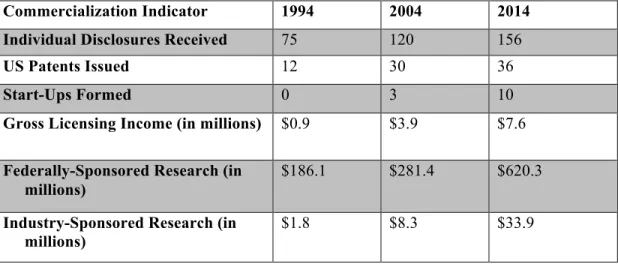
Since that time, UNC has followed a long path towards embracing commercialization on campus. This is reflected in data from the Association of University Technology Managers (AUTM) data, which collects data from TTOs at major research universities. Between 1994 and 2014, UNC increased in many measures of commercialization including patents, licensing income, and start-up formation. For example, faculty and staff disclosures of commercializable technology increased from 75 in 2004 to 156 in 2014, and US patents increased from 12 in 1994 to 36 in 2014. Table 1 summarizes UNC’s commercialization indicators from 1994-2014.
UNC’s commercialization strategy appears to be tilted towards entrepreneurship.
Looking at the number of patents issued versus the number of start-ups reveals a similar trend. In 1994, UNC received 12 patents yet spun out no companies. In 2004, the university had 30
patents and 3 spin-out companies. While those three spin-offs may not be from those 30 patents, as a rough approximation, UNC spun-out 10 percent of its patents into entrepreneurial
patents (28 percent). In contrast, UNC has consistently low levels of licensing income. The increase from $0.9 million in 1994 to $7.6 million in 2014 is a substantial percentage increase. However, when considered against the fact that the absolute increase was roughly $6.7 million in a time period when UNC’s patents rose from 10 to 36 and when its federal research expenditures increased from $186.1 million to $620.3 million, a $6.7 million increase is not dramatic.
Similarly, UNC’s industry sponsored research rose from $1.8 million to $33.9 million, but remained relatively low when compared against federal grants.
Table 2.1: UNC commercialization indicators, 1994-2014
Commercialization Indicator 1994 2004 2014
Individual Disclosures Received 75 120 156
US Patents Issued 12 30 36
Start-Ups Formed 0 3 10
Gross Licensing Income (in millions) $0.9 $3.9 $7.6
Federally-Sponsored Research (in millions)
$186.1 $281.4 $620.3
Industry-Sponsored Research (in millions)
$1.8 $8.3 $33.9
many of these programs are tilted towards entrepreneurship is not surprising, given UNC’s leadership under Chancellor Holden Thorpe between 2008 and 2013. Thorpe himself had been a bioscience entrepreneur, and during his tenure as chancellor pushed the university further
towards entrepreneurship. In fact, one staff member involved in incubator development remarked that he referenced Thorpe’s appointment whenever they encountered push-back:
“I used Holden as my kind of cover for a lot of what I did, because I could just point to the chancellor and say hey. We have a chancellor who is an entrepreneur, who believes in innovation and entrepreneurship, so therefore we should be doing these kinds of things. I think that helped grease the skids quite a bit to get some of these things through” (UNC Staff Member A, January 26, 2016).
From this perspective, while Thorpe provided leadership for entrepreneurship, his appointment gave this already developing entrepreneurial culture a chance to grow.
2.5.3 Business incubators at UNC
After Carolina North’s collapse, UNC began to ramp up its on-campus, ad hoc
incubation. The head of Carolina KickStart, a campus program that helps faculty commercialize their research through programming, mentorship, funding, and networking, worked to adapt Facilities Use Agreements (FUAs) into a commonplace tool for on-campus incubation. The university uses these agreements to allow outside groups to use on-campus space for their organization. University staff have adapted and streamlined these FAUs into formal agreements to allow bioscience companies to use on-campus space.9
UNC staff also looked off campus for potential business incubator locations. For
example, the Director of Economic Development and Regional Engagement at the Renaissance Computing Initiative (RENCI), a UNC research institute, decided that RENCI could house an incubator. 10 RENCI, located roughly four miles from campus, had extra space at the time.
RENCI reached out to the Director of the Center for Entrepreneurial Studies at UNC’s Kenan-Flagler Business School. The two soon drew up plans for an incubator, and Carolina Launch Pad opened in late 2008. The incubator didn’t have the capacity for wet laboratories, but nonetheless has housed bioscience companies. Dyzen, for example, is a web-based bioscience company that creates and tests virtual labs to maximize the efficiency of built scientific laboratories. The firm is therefore a prime example of bioscience companies that do not need wet laboratories.
However, even bioscience companies that eventually moved to wet laboratory space were originally located in the incubator. Rheomics, Inc., which develops diagnostic instrumentation and analysis systems, used Carolina Launch Pad when developing its business plan and applying for grants. Without these grants, the company could not afford to lease laboratory space and develop prototypes. Thus even for more traditional bioscience companies, these incubators are instrumental in helping to successfully push them through their life cycle.
However, UNC staff didn’t view Carolina Launch Pad as sufficient for bioscience companies. A Chapel Hill-based entrepreneur (who is also an adjunct professor at UNC’s business school, specializing in entrepreneurship) contacted the university and the town of Chapel Hill about a 1,200 square foot storefront he owned in downtown Chapel Hill, a space he
suggested would be ideal for a bioscience incubator. The university drew up plans for the space, but ultimately decided that installing wet laboratory equipment would be cost prohibitive and abandoned the plan. During this time, however, the town of Chapel Hill had also been
considering building an incubator, as part of a larger strategy to support entrepreneurship in the town. The Town reached out to UNC and Orange County, and asked if they would like to partner with the town. Orange County was a particularly important partner; voters in Orange County had recently passed a sales tax increase, and roughly $1.3 million per year of that increase is
earmarked for county economic development. The county had also been independently searching for a place to put an incubator, but had been unsuccessful in finding one. Together, the Town of Chapel Hill, UNC, and Orange County partnered to create Chapel Hill’s LaUNCh Chapel Hill; the university ultimately folded Carolina Launch Pad into this effort.
Unfortunately, this new incubator did not include wet laboratory space. Rather than search for additional off-campus space that could be upfitted to house wet laboratories, university staff decided to create a dedicated incubator in 6,000 square feet of space that had recently opened up on UNC’s campus. LaUNCh Chapel Hill remains an off-campus business incubator without wet laboratories, and UNC continues to rely on on-campus spaces for laboratories (while continuing to look for appropriate off-campus wet laboratory incubation space).
2.5.4 Business incubators as UNC’s jurisdictionally embedded bridging activity
UNC’s business incubator strategies bridge two of its university functions: (1) its