End-to-End Learning of Task-Oriented Dialogs
Bing Liu, Ian Lane Carnegie Mellon University
5000 Forbes Avenue, Pittsburgh, PA 15213, USA
[email protected], [email protected]
Abstract
In this thesis proposal, we address the limita-tions of conventional pipeline design of task-oriented dialog systems and propose end-to-end learning solutions. We design neural net-work based dialog system that is able to ro-bustly track dialog state, interface with knowl-edge bases, and incorporate structured query results into system responses to successfully complete task-oriented dialog. In learning such neural network based dialog systems, we propose hybrid offline training and online in-teractive learning methods. We introduce a multi-task learning method in pre-training the dialog agent in a supervised manner using task-oriented dialog corpora. The supervised training agent can further be improved via in-teracting with users and learning online from user demonstration and feedback with imita-tion and reinforcement learning. In addressing the sample efficiency issue with online policy learning, we further propose a method by com-bining the from-user and learning-from-simulation approaches to improve the online interactive learning efficiency.
1 Introduction
Dialog systems, also known as conversational agents or chatbots, are playing an increasingly im-portant role in today’s business and social life. People communicate with a dialog system in nat-ural language form, via either textual or audi-tory input, for entertainment and for completing daily tasks. Dialog systems can be generally vided into chit-chat systems and task-oriented di-alog systems based on the nature of conversation. Comparing to chit-chat systems that are designed to engage users and provide mental support, task-oriented dialog systems are designed to assist user to complete a particular task by understanding re-quests from users and providing relevant informa-tion. Such systems usually involve retrieving
in-formation from external resources and reasoning over multiple dialog turns. This thesis work fo-cuses on task-oriented dialog systems.
Conventional task-oriented dialog systems have a complex pipeline (Raux et al., 2005; Young et al., 2013) consisting of independently devel-oped and modularly connected components for spoken language understanding (SLU) (Sarikaya et al.,2014;Mesnil et al.,2015;Chen et al.,2016), dialog state tracking (DST) (Henderson et al.,
2014;Mrkˇsi´c et al., 2016; Lee and Stent, 2016), and dialog policy learning (Gasic and Young,
2014;Su et al., 2016). Such pipeline system de-sign has a number of limitations. Firstly, credit assignment in such pipeline systems can be chal-lenging, as errors made in upper stream modules may propagate and be amplified in downstream components. Moreover, each component in the pipeline is ideally re-trained as preceding compo-nents are updated, so that we have inputs similar to the training examples at run-time. This domino effect causes several issues in practice.
We address the limitations of pipeline dialog systems and propose end-to-end learning solu-tions. The proposed model is capable of robustly tracking dialog state, interfacing with knowledge bases, and incorporating structured query results into system responses to successfully complete task-oriented dialog. With each functioning unit being modeled by a neural network and connected via differentiable operations, the entire system can be optimized end-to-end.
In learning such neural network based dialog model, we propose hybrid offline training and on-line interactive learning methods. We first let the agent to learn from human-human conversations with offline supervised training. We then improve the agent further by letting it to interact with users and learn from user demonstrations and feedback with imitation and reinforcement learning. In
dressing the sample efficiency issue with online policy learning via interacting with real users, we further propose a learning method by combining learning-from-user and learning-from-simulation approaches. We conduct empirical study with both automatic system evaluation and human user eval-uation. Experimental results show that our pro-posed model can robustly track dialog state and produce reasonable system responses. Our pro-posed learning methods also lead to promising im-provement on dialog task success rate and human user ratings.
2 Related Work
2.1 Task-Oriented Dialog Systems
User
Automatic Speech Recognition
(ASR)
Spoken Language Understanding
(SLU)
Dialog State Tracking
(DST)
Dialog Policy Natural
Language Generation (NLG) Text
To Speech
(TTS)
DB/KB Input
Speech
ASR Hypothesis
Domain / Intents / Slot Values
Belief State
Dialog Act System
Response Voice
[image:2.595.73.288.273.393.2]Output
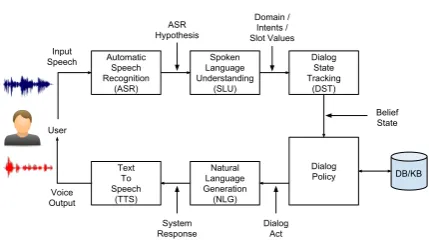
Figure 1:Pipeline architecture for spoken dialog systems
Figure 1 shows a typical pipeline architecture of task-oriented spoken dialog system. Transcrip-tions of user’s speech are firstly passed to the SLU module, where the user’s intention and other key information are extracted. This information is then formatted as the input to DST, which maintains the current state of the dialog. Outputs of DST are passed to the dialog policy module, which pro-duces a dialog act based on the facts or entities re-trieved from external resources (such as a database or a knowledge base). The dialog act emitted by the dialog policy module serves as the input to the NLG, through which a natural language for-mat system response is generated. In this thesis work, we propose end-to-end solutions that focus on three core components of task-oriented dialog system: SLU, DST, and dialog policy.
2.2 End-to-End Dialog Models
Conventional task-oriented dialog systems use a pipeline design by connecting the above core sys-tem components together. Such pipeline syssys-tem design makes it hard to track source of errors and align system optimization targets. To ame-liorate these limitations, researchers have recently
started exploring end-to-end solutions for task-oriented dialogs. Wen et al. (Wen et al.,2017) pro-posed an end-to-end trainable neural dialog model with modularly connected system components for SLU, DST, and dialog policy. Although these sys-tem components are end-to-end connected, they are trained separately. It is not clear whether common features and representations for different tasks can be effectively shared during the dialog model training. Moreover, the system is trained with supervised learning on fixed dialog corpora, and thus may not generalize well to unseen dialog states when interacting with users.
Bordes and Weston (Bordes and Weston,2017) proposed a task-oriented dialog model from a machine reading and reasoning approach. They used an RNN to encode the dialog state and ap-plied end-to-end memory networks to learn it. In the same line of research, people explored us-ing query-regression networks (Seo et al., 2016), gated memory networks (Liu and Perez, 2017), and copy-augmented networks (Eric and Man-ning,2017) to learn the dialog state RNN. Similar to (Wen et al.,2017), these systems are trained on fixed sets of simulated and human-machine dialog corpora, and thus are not capable to learn inter-actively from users. The knowledge base infor-mation is pulled offline based on existing dialog corpus. It is unknown whether the reasoning capa-bility achieved in offline model training can gen-eralize well to online user interactions.
3 End-to-End Dialog Learning
3.1 Proposed Dialog Learning Framework
Task-oriented dialog system assists human user to complete tasks by conducting multi-turn conver-sations. From a learning point of view, the dia-log agent learns to act by interacting with users and trying to maximize long-term success or an expected reward. Ideally, the dialog agent should not only be able to passively receive signals from the environment (i.e. the user) and learn to act on it, but also to be able to understand the dynamics of the environment and predict the changes of the environment state. This is also how we human be-ings learn from the world. We design our dialog learning system following the same philosophy.
Dialog Agent
Human User Observation /
User Input
Action / Sys Output Reward/ Feedback
Agent
Modeled User
(in agent’s mind)
Evaluator
Dialog Agent
Action Proposal Predicted
Observation
Inferred User State Agent State
Predicted Reward Knowledge
[image:3.595.73.288.296.389.2]Base
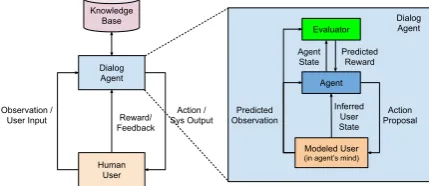
Figure 2:Proposed task-oriented dialog learning framework
Figure 2 shows our proposed learning frame-work for task-oriented dialog. The dialog agent interacts with user in natural language format and improves itself with the received user feedback. The dialog agent also learns to interface with ex-ternal resources, such as a knowledge base or a database, so as to be able to provide responses to user that are based on the facts in the real world. Inside the dialog agent, the agent learns to model the user dynamics by predicting their behaviors in conversations. Such modeled user or simulated user in the agent’s mind can help the agent to simulate dialogs that mimic the conversations be-tween the agent and a real user. By “imagining” such conversations and learning from it, the agent can potentially learn more effectively and reduce the number of learning cycles with real users.
3.2 End-to-End System Architecture
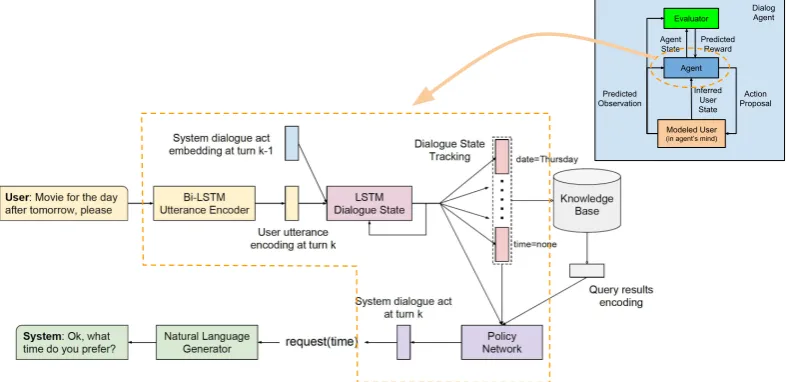
Figure 3 shows the architecture of our proposed end-to-end task-oriented dialog system (Liu et al.,
2017). We use a hierarchical LSTM to model a di-alog with multiple turns. The lower level LSTM, which we refer to as the utterance-level LSTM,
is used to encode the user utterance. The higher-level LSTM, which we refer to as the dialog-higher-level LSTM, is used to model a dialog over a sequence of turns. User input to the system in natural lan-guage format is encoded in a continuous vector form via the utterance-level LSTM. The LSTM outputs can be fed to SLU decoders such as an in-tent classifier and a slot filler. We may use such SLU module outputs as input to the state tracker. Alternatively, we may directly use the continuous representation of user’s utterance without passing it through a semantic decoder. The encoded user utterance, together with the encoding of the pre-vious system turn, is connected to the dialog-level LSTM. State of this dialog-level LSTM maintains a continuous representation of the dialog state. Based on this state, the belief tracker generates a probability distribution over candidate values for each of the tracked goal slots. A query command can then be formulated with the belief tracking outputs and sent to a database to retrieve requested information. Finally, the system produces an ac-tion by combining informaac-tion from the dialog state, the belief tracking outputs, and the encod-ing of the query results. This system dialog ac-tion, together with the belief tracking output and the query results, is used to generate the final nat-ural language system response via a natnat-ural lan-guage generator. All system components are con-nected via differentiable operations, and the entire system (SLU, DST, and policy) can thus be opti-mized end-to-end.
4 Learning from Dialog Corpora
In this section, we describe our proposed corpus-based supervised training methods for task-oriented dialog. We first explain our supervised learning models for SLU, and then explain how these models are extended for dialog modeling.
4.1 SLU and Utterance Modeling
Agent
Modeled User
(in agent’s mind)
Evaluator Dialog Agent
Action Proposal Predicted
Observation
Inferred User State Agent State
[image:4.595.101.495.64.255.2]Predicted Reward
Figure 3:End-to-end task-oriented dialog system architecture
state output at each time step is used for slot la-bel prediction for each word in the utterance. A weighted average of these LSTM state outputs is further used as the representation of the utter-ance for user intent prediction. The model objec-tive function is a linear interpolation of the cross-entropy losses for intent and slot label predictions. Experiment results (Liu and Lane, 2016a,b) on ATIS SLU corpus show that the proposed joint training model achieves state-of-the-art intent de-tection accuracy and slot filling F1 scores. The joint training model also outperforms the indepen-dent training models on both tasks.
4.2 Dialog Modeling with Hierarchical LSTM
The above described SLU models operate on ut-terance or turn level. In dialog learning, we expect the system to be able to reason over the dialog con-text, which covers information over a sequence of past dialog turns. We extend the LSTM based SLU models by adding a higher level LSTM on top to model dialog context over multiple turns (Liu and Lane, 2017a). The lower level LSTM uses the same bidirectional LSTM design as in section4.1
to encode natural language utterance. These en-coded utterance representation at each turn serve as the input to the upper level LSTM that mod-els dialog context. Based on the dialog state en-coded in the dialog-level LSTM, the model pro-duces a probability distribution over candidate val-ues for each of the tracked goal slots. This serves the functionality of a dialog state tracker. Further-more, the model predicts the system dialog act or
a delexicalised system response based on the cur-rent dialog state. This can be seen as learning a supervised dialog policy by following the expert actions via behavior cloning.
In supervised model training, we optimize the parameter set θ to minimize the cross-entropy losses for dialog state tracking and system action prediction:
min
θ K X
k=1
−h
M X
m=1
λlmlogP(lkm∗|U≤k,A<k,E<k;θ)
+λalogP(a∗k|U≤k,A<k,E≤k;θ) i
(1) where λs are the linear interpolation weights for the cost of each system output.lm
k∗anda∗kare the ground truth labels for goal slots and system action at the kth turn. In the evaluation (Liu and Lane,
2017b) on DSTC2 dialog datset, the proposed model achieves near state-of-the-art performance in dialog goal tracking accuracy. Moreover, the proposed model demonstrates promising results in producing appropriate system responses, outper-forming prior end-to-end neural network models using per-response accuracy evaluation metric.
5.1 Imitation Learning with Human Teaching
Supervised learning succeeds when training and test data distributions match. During dialog inter-action with users, any mistake made by the system or any deviation in the user’s behavior may lead it to a different state distribution that the supervised training agent has seen in the training corpus. The supervised training agent thus may fail due to the compounding errors and dialog state distribution mismatch between offline training and user inter-action. To address this issue, we propose a dialog imitation learning method and let the dialog agent to learn interactively from user teaching. After ob-taining a supervised training model, we deploy the agent to let it interact with users using its learned dialog policy. The agent may make errors during user interactions. We then ask expert users to cor-rect the agent’s mistakes and demonstrate the right actions for the agent to take (Ross et al.,2011). In this manner, we collect additional dialog samples that are guided by the agent’s own policy. Learn-ing on these samples directly addresses the limita-tion of the currently learned model. With exper-iments (Liu et al., 2018) in a movie booking do-main, we show that the agent can efficiently learn from the expert demonstrations and improve dia-log task success rate with the proposed imitation dialog learning method.
5.2 Dialog Reward Learning with Adversarial Training
Supervised learning models that imitate expert be-havior in conducting task-oriented dialogs usually require a large amount of training samples to suc-ceed due to the compounding errors from covari-ate shift as discussed in5.1. A potential resolution to this problem is to infer a dialog reward function from expert demonstrations and use it to guide di-alog policy learning. Task-oriented didi-alog systems are mainly designed to maximize overall user sat-isfaction, which can be seen as a reward, in assist-ing users with tasks. As claimed by Ng et al. (Ng et al.,2000), reward function as opposed to policy can usually provide the most succinct and robust definition of a task.
We propose a generative adversarial training method in recovering the dialog reward function in the expert’s mind. The generator is the learned dialog agent, who interacts with users to gener-ate dialog samples. The discriminator is a
neu-ral network model whose job is to distinguish be-tween the agent’s behavior and an expert’s behav-ior. Specifically, we present two dialog samples, one from the human agent and one from the ma-chine agent, to the discriminator. We let the dis-criminator to maximize the likelihood of the sam-ple from the human agent and minimize that from the machine agent. The likelihood of the sample generated by the machine agent can be used as the reward to the agent. Gradient of the discriminator in optimization can be written as:
∇θD h
Ed∼θdemo[log(D(d))]+Ed∼θG[log(1−D(d))] i
(2) where θG is the learned policy of the machine agent and θdemo is the human agent policy. θD is the parameters of the discriminator model.
6 Learning from Human Feedback In this section, we describe our proposed meth-ods in learning task-oriented dialog model inter-actively from human feedback with reinforcement learning (RL).
6.1 End-to-End Dialog Learning with RL
After the supervised and imitation training stage, we propose to further optimize the dialog model with RL by letting the agent to interact with users and collecting simple form of user feedback. The feedback is only collected at the end of a dialog. A positive reward is assigned for success tasks, and a zero reward is assigned for failure tasks. A small step penalty is applied to each dialog turn to en-courage the agent to complete the task in fewer steps. We propose to use policy gradient based methods for dialog policy learning. With likeli-hood ratio gradient estimator, the gradient of the objective function can be derived as:
∇θJk(θ) =∇θEθ[Rk]
=Eθa[∇θlogπθ(ak|sk)Rk]
(3)
improves dialog policy, but also improves the un-derlying system components (e.g. state tracking) in the end-to-end training framework.
6.2 Co-Training of Dialog Agent and Simulated User
We aim to design a dialog agent that can not only learn from user feedback, but also to understand the user dynamics and predict the change of user states. Thus, we need to build a user model, which can be used to simulate conversation between an agent and a user to help the agent to learn better policies. Similar to how a dialog agent acts in task-oriented dialogs, a simulated user picks ac-tions based on the dialog state. In addition, the user policy also depends on the user’s goal. In modeling the user (Liu and Lane,2017c), we de-sign a hierarchical LSTM model, similar to the design of dialog agent described in section 3.2, with additional user goal encoding as the model input. The simulated user is firstly trained in a supervised manner using task-oriented dialog cor-pora, similar to how we train the dialog agent as described in section4.2. After bootstrapping a di-alog agent and a simulated user with supervised training, we improve them further by simulating task-oriented dialogs between the two agents and iteratively optimizing their policies with deep RL. The reward for RL can either be obtained from the learned reward function described in section 5.2
or given by the human users. The intuition be-hind the co-training framework is that we model task-oriented dialog as a goal fulfilling process, in which we let the dialog agent and the modeled user to positively collaborate to achieve the goal. The modeled user is given a goal to complete, and it is expected to demonstrate coherent but diverse user behavior. The agent, on the other hand, attempts to estimate the user’s goal and fulfill his request.
6.3 Learning from Simulation and Interaction with RL
Learning dialog model from user interaction by collecting user feedback (as in section 6.1) is ef-fective but can be very sample inefficient. One might have to employ a large number of users to interact with the agent before the system can reach a satisfactory performance level. On the other hand, learning from dialog simulation in-ternally to the dialog agent (as in section 6.2) is relatively cheap to conduct, but the performance is limited to the modeling capacity learned from
the limited labeled dialog samples. In this sec-tion, we describe our proposed method in combin-ing the learncombin-ing-from-user approach and learncombin-ing- learning-from-simulation approach, with expectation to im-prove the online interactive dialog learning effi-ciency with real users.
We let the dialog agent to conduct dialog with real users using its learned policy and collect feed-back (reward) from the user. The newly collected dialog sample and reward are then used to update the dialog agent with the RL algorithm described in section 6.1. Before letting the agent to start a new session of interactive learning with users, we perform a number of learning-from-simulation training cycles. We let the updated dialog agent to “imagine” its conversation with the modeled user, and fine-tune both of them with RL using the re-ward obtained from the learned rere-ward function (section5.2). The intuition behind this proposed integrated learning method is that we want to en-force the dialog agent to fully digest the knowl-edge learned from the interaction with real user by simulating similar dialogs internally. Such in-tegrated learning method may effectively improve dialog learning efficiency and reduce the number of interactive learning attempts with real users.
7 Conclusions
References
Antoine Bordes and Jason Weston. 2017. Learning end-to-end goal-oriented dialog. InICLR.
Yun-Nung Chen, Dilek Hakkani-T¨ur, G¨okhan T¨ur, Jianfeng Gao, and Li Deng. 2016. End-to-end mem-ory networks with knowledge carryover for multi-turn spoken language understanding. In INTER-SPEECH, pages 3245–3249.
Bhuwan Dhingra, Lihong Li, Xiujun Li, Jianfeng Gao, Yun-Nung Chen, Faisal Ahmed, and Li Deng. 2017. Towards end-to-end reinforcement learning of dia-logue agents for information access. InACL.
Mihail Eric and Christopher D Manning. 2017. A copy-augmented sequence-to-sequence architecture gives good performance on task-oriented dialogue. InEACL.
Milica Gasic and Steve Young. 2014. Gaussian pro-cesses for pomdp-based dialogue manager optimiza-tion. IEEE/ACM Transactions on Audio, Speech, and Language Processing.
Matthew Henderson, Blaise Thomson, and Steve Young. 2014. Word-based dialog state tracking with recurrent neural networks. InSIGDIAL.
Sungjin Lee and Amanda Stent. 2016. Task lineages: Dialog state tracking for flexible interaction. In SIG-DIAL.
Xuijun Li, Yun-Nung Chen, Lihong Li, and Jianfeng Gao. 2017. End-to-end task-completion neural dia-logue systems. InIJCNLP.
Bing Liu and Ian Lane. 2016a. Attention-based recur-rent neural network models for joint intent detection and slot filling. InInterspeech.
Bing Liu and Ian Lane. 2016b. Joint online spoken lan-guage understanding and lanlan-guage modeling with recurrent neural networks. InSIGDIAL.
Bing Liu and Ian Lane. 2017a. Dialog context lan-guage modeling with recurrent neural networks. In
Acoustics, Speech and Signal Processing (ICASSP), 2017 IEEE International Conference on. IEEE.
Bing Liu and Ian Lane. 2017b. An end-to-end trainable neural network model with belief tracking for task-oriented dialog. InInterspeech.
Bing Liu and Ian Lane. 2017c. Iterative policy learning in end-to-end trainable task-oriented neural dialog models. InIEEE ASRU.
Bing Liu, Gokhan Tur, Dilek Hakkani-Tur, Pararth Shah, and Larry Heck. 2017. End-to-end optimiza-tion of task-oriented dialogue model with deep rein-forcement learning. InNIPS Workshop on Conver-sational AI.
Bing Liu, Gokhan Tur, Dilek Hakkani-Tur, Pararth Shah, and Larry Heck. 2018. Dialogue learning with human teaching and feedback in end-to-end train-able task-oriented dialogue systems. InNAACL.
Fei Liu and Julien Perez. 2017. Gated end-to-end memory networks. InEACL.
Gr´egoire Mesnil, Yann Dauphin, Kaisheng Yao, Yoshua Bengio, Li Deng, Dilek Hakkani-Tur, Xi-aodong He, Larry Heck, Gokhan Tur, Dong Yu, et al. 2015. Using recurrent neural networks for slot filling in spoken language understanding. Au-dio, Speech, and Language Processing, IEEE/ACM Transactions on, 23(3):530–539.
Nikola Mrkˇsi´c, Diarmuid O S´eaghdha, Tsung-Hsien Wen, Blaise Thomson, and Steve Young. 2016. Neural belief tracker: Data-driven dialogue state tracking.arXiv preprint arXiv:1606.03777.
Andrew Y Ng, Stuart J Russell, et al. 2000. Algorithms for inverse reinforcement learning. InICML. Antoine Raux, Brian Langner, Dan Bohus, Alan W
Black, and Maxine Eskenazi. 2005. Lets go pub-lic! taking a spoken dialog system to the real world. Inin Proc. of Interspeech 2005.
St´ephane Ross, Geoffrey J Gordon, and Drew Bagnell. 2011. A reduction of imitation learning and struc-tured prediction to no-regret online learning. In In-ternational Conference on Artificial Intelligence and Statistics, pages 627–635.
Ruhi Sarikaya, Geoffrey E Hinton, and Anoop Deoras. 2014. Application of deep belief networks for nat-ural language understanding. IEEE/ACM Transac-tions on Audio, Speech, and Language Processing. Minjoon Seo, Ali Farhadi, and Hannaneh Hajishirzi.
2016. Query-regression networks for machine com-prehension. arXiv preprint arXiv:1606.04582.
Pei-Hao Su, Milica Gasic, Nikola Mrksic, Lina Rojas-Barahona, Stefan Ultes, David Vandyke, Tsung-Hsien Wen, and Steve Young. 2016. On-line active reward learning for policy optimisation in spoken di-alogue systems. InACL.
Tsung-Hsien Wen, David Vandyke, Nikola Mrkˇsi´c, Milica Gaˇsi´c, Lina M. Rojas-Barahona, Pei-Hao Su, Stefan Ultes, and Steve Young. 2017. A network-based end-to-end trainable task-oriented dialogue system. InEACL.
Jason D Williams, Kavosh Asadi, and Geoffrey Zweig. 2017. Hybrid code networks: practical and efficient end-to-end dialog control with supervised and rein-forcement learning. InACL.