© 2016, IRJET | Impact Factor value: 4.45 | ISO 9001:2008 Certified Journal
| Page 1037
Experimental Studies of Different RCC Structural
Abhishek Kannojia, Rahul Satbhaiya
M.Tech Scholar Dept. Of Civil Engineering, Infinity Management & Engineering College Sagar, M.P. India
Head of Dept. Of Civil Engineering, Infinity Management & Engineering College, Sagar, M.P. India
---***---Abstract -
-
Earthquakes are natural hazards under which disasters are mainly caused by damage to structures or collapse of buildings and other man-made structures. Shaking and ground rupture are the main effects created by earthquakes, principally resulting in more or less severe damage to buildings and other rigid structures. As the earth vibrates, all buildings on the ground surface will respond to that vibration in varying degrees. The horizontal ground motion action is similar to the effect of a horizontal force action on the building.The seismic vulnerability of masonry buildings is strongly affected by the performance of the shear walls. The shearing strength of masonry mainly depends upon the bond or adhesion at the contact surface between the masonry unit and the mortar. Use of strong mortars, high strength masonry, added reinforcement, improved detailing and the introduction of good anchorage between masonry walls and floors and roofs have enhanced the resistance of masonry to seismic stress. Since shear strength is important for seismic resistance of masonry walls, an attempt has been made to investigate the brick masonry wall with clay brick /fly ash brick having the ratio of 1:6 cement mortar with partial replacement of fine aggregate with fly ash as 0%, 10% and 20% for their compressive strength and shear strength. Horizontal reinforcing of wall is required for imparting strength against plate-action and for tying the perpendicular walls together. When the masonry wall is subjected to lateral loading, the horizontal reinforcement prevents separation of the wall‘s cracked parts at shear failure, therefore improving the shear resistance and energy absorption capacity of the wall. Also, when the wall is adequately reinforced horizontally, many smaller cracks will be evenly distributed over the entire surface of the wall. Experiments have been conducted to understand the shear behaviour of the unreinforced and the reinforced masonry wall.
Key Words:
Reinforced Cement Concrete (RCC), steel bars,
corrosion, steel reinforcement, Glass Fibre Reinforced Polymer and Carbon Reinforced Fibre Polymer (GFRP)
.
1. INTRODUCTION
Masonry is the oldest building material that is still used in the building industry. The placing of brick units on top of each other bonded with mortar has revealed itself as a successful technique during thousands of years, which is mainly justified by its simplicity and the durability of the constructions. In-spite of the simplicity associated with the building in masonry, the mechanical behaviour of masonry construction remains a true challenge. The basic mechanical properties of the masonry are strongly influenced by the mechanical properties of its constituents namely brick and mortar. Masonry buildings have proved to be most vulnerable to earthquake forces and have suffered maximum damages in the past earthquakes. Hence, buildings in earthquake-prone regions require adequate seismic shear strength along with their vertical load carrying capacity. The use of masonry as a composite material has been favored in the construction of buildings and civil infrastructures as it is simple and sophisticated with durability, aesthetic appeal and economic advantages. However, the inherent weakness of masonry in tension has been repeatedly demonstrated in seismic events. The need to overcome seismic deficiency of unreinforced masonry panels has led to the development of structural walls with reinforcement. when exposed to harsh field conditions.
2. LITERATURE REVIEW
© 2016, IRJET | Impact Factor value: 4.45 | ISO 9001:2008 Certified Journal
| Page 1038
the elastic property are to be understood. In order to study the elastic properties of brick masonry in detail, mortar cubes and brick prisms were cast. In this research some preliminary investigations were determined for evaluating physical and mechanical characteristics of bricks, mortar and brick masonry. The parameters are,
Brick strength, Mortar strength,
Bond shear strength between brick - mortar and Masonry strength
A. Brick Masonry
Building bricks are usually made with mixture of clay and sand, which are mixed and moulded in various ways and are dried and burnt. Tutunlu Faith and Atalay Umit reported that the clay for brick making must develop proper plasticity and be capable of drying rapidly without excessive shrinkage, warping or cracking and of being burnt to desired texture and strength. This process for making clay bricks, require heating of the bricks in kilns to more than 2000oF, which consumes much fossil fuel and generates air pollutants and carbon dioxides due to the combustion of the fossil fuel; Fly ash is utilized to make bricks in one of several ways: (a) as substitute for a portion of the cement and/or aggregates in making concrete bricks and blocks; (b) as substitute for a portion of the clay used in making clay bricks. (c) as substitute for all the clay used in making clay bricks, using the same process for making clay bricks which requires burning fossil fuel to heat adobes in kilns at over 2000oF. This uses the same process and has the same drawback of using 100% fly ash in making bricks; and (d) as the mixture of the fly ash 20% to 60%, lime, sand and gypsum in making pressed bricks and dried.
B. Mortar strength
Mortar is used as a means of sticking or bonding bricks together and to take up all irregularities in the bricks. Although mortars form only a small proportion of a masonry wall as a whole, its characteristics have a large influence on the quality of the brick masonry. The utilization of fly ash as cement replacement material in mortar or as additive in cement introduces many benefits from economical, technical and environmental points of view as per Erdog Du. The use of fly ash is accepted in recent years primarily due to saving cement, consuming industrial waste and making durable materials, especially due to the improvement in the quality
stabilization of fly ash, as stated by Li Yijin. Fly ash is another type of pozzolanic material widely being used as a cement/fine aggregate replacement as reported by Rajamane. Many researchers, viz. Rafat and Chaid et al indicated that low-calcium fly ash (class F) improves the interfacial zone microstructures. Portland cement hydrates to produce calcium hydroxide as much as 20% to 25% by weight. Joshi and Lohitia reported that, when the pozzolanic materials in the form of fly ash are added to the cements, the C-H of hydrated cement is consumed by the reactive SiO2 portion of these pozzolanas. This pozzolanic reaction improves the microstructure of cement composites as additional C-S-H gel is formed and also the pore size refinement of the hydrated cement occurs. Hydration of tri-calcium-aluminate in the ash provides one of the primary cementitious products in many ashes. The rapid rate at which the hydration of the tri-calcium-aluminate results in the rapid set of these materials and is the reason for the delay in lower strengths of the stabilized material, as reported by Dattatreya et al. Use of the waste material like fly ash as partial replacement with cement and fine aggregate as 0%, 10%, 20%, 25% and 30% was investigated to obtain the substitutes for the cement/ fine aggregate in the mortar. The ordinary portland cement with fine aggregate of zone II and the fly ash obtained from the Mettur thermal power plant were used for this study. The basic properties of mortar like compressive strength, modulus of elasticity and poisson's ratio were determined.
C. Reinforcement
© 2016, IRJET | Impact Factor value: 4.45 | ISO 9001:2008 Certified Journal
| Page 1039
(fabric). This may improve the structural performance of masonry walls. Woven wire mesh placed along the bed joint in alternate course of the brick masonry is shown in. Hexagonal wire mesh fabric formed by twisting wires with a series of hexagonal openings and the length depends on the purchaser and the manufacturer. Hexagonal woven wire mesh is the least expensive and had the higher tensile strength among the meshes.
D. Masonry strength
Masonry is a material built with brick units and mortar. Behaviour of masonry greatly depends on the characteristics of masonry units, mortar and the bond between them. Analysis and design of buildings with masonry require material properties of masonry; modulus of elasticity of masonry is required in the case of linear static analysis. In general, masonry walls are primarily subjected to vertical gravity force and lateral in-plane shear forces during an earthquake. Direct compression and direct shear tests were carried out to obtain mechanical properties of masonry with various combinations of brick and the mortar. The strength and the elastic modulus of brick masonry under compression have been evaluated. Two types of bricks viz. clay brick and fly ash brick and the cement mortar with partial replacement of fine aggregate with fly ash were used in this study. The properties of different bricks and mortars adopted for casting the masonry specimens were also studied. In particular, modulus of elasticity is a mechanical property influenced by different factors, such as compressive strength of unit, shape of unit, compressive strength of mortar and state of stress developed during loading.
3. Experimental Investing on Masonry Walls
Masonry buildings constitute a significant part of the building either as load bearing wall or as filler wall or as non load bearing wall. Structural walls are principally designed to resist gravity loads. Structures that have proven to be safe and serviceable under gravity loads have provided valuable information for modern design criteria. But, many of these structures have not been tested for their capacity to resist lateral loadings. Unreinforced masonry shear walls are often used as the main structural component of masonry buildings responsible for carrying the lateral loading such as wind and earthquake loads. Horizontal loads induced by earthquakes, generate severe in-plane and out-of plane forces in the wall and the foundation transmits the seismic motion from the
ground to the stiffest elements. Durgesh Rai reported that the lateral load carrying capacity of shear wall in a structure mainly depends on the in-plane resistances of the shear walls because the in-plane stiffness of a shear wall is far greater than its out-of plane stiffness. Gabor et al described that the in-plane shear behavior of the structural element has an important role in improving the seismic force resistance of the brick masonry. Buildings that are properly designed and detailed on the basis of modern seismic building codes are less affected because these buildings absorb energy through inelastic behavior. Structural masonry is a combination of a few or all constituent masonry materials: masonry unit, mortar and reinforcement as discussed by Pankaj Agarwal
4.
Finite Element Modeling
© 2016, IRJET | Impact Factor value: 4.45 | ISO 9001:2008 Certified Journal
| Page 1040
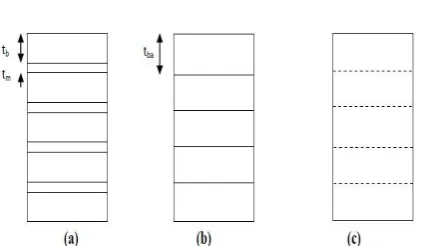
Fig. 1 (a) Micro level modeling (b) Meso level modeling (c) Macro level modelling
Zuchini used these different simulations depend upon the methods offered by different degrees of accuracy and therefore they should be used according to the requirements of individual situations. The first approach offers the detailed interaction between the masonry units (brick) and the mortar as it is most suitable for the current study. The five brick stack bonded prism provides the most detailed accuracy during simulation. The second approach offers a better accuracy of the behaviour of a masonry structure and is suitable for simulation of five brick stack bonded prism to study the concentration of stress. The last approach studies a general behaviour simulation of the structure and is better suited for studying large size structures for the global in-plane shear behaviour of the masonry wall.
5.
CONCLUSION
To simplify the reinforcement requirement in diagonally reinforced RC coupling beams, an alternative design consisting of precast HPFRCC coupling beams with different reinforcement configurations was experimentally investigated. The reinforcement details evaluated in this research project included the use of only distributed horizontal and vertical reinforcement and the use of supplementary diagonal bars without transverse steel reinforcement. The first specimen used as the control specimen, consisted of an RC coupling beam with diagonal reinforcement designed and detailed according to the ACI 318 Code. In the second specimen, the coupling beam was constructed with a HPFRCC containing PE fibers, and only conventional horizontal and vertical reinforcement was provided. Specimens 3 and 4 were constructed with HPFRCC containing PE and twisted steel fibers, respectively, and supplementary diagonal reinforcement, but no confinement hoops were provided.
The structural performance of these new precast HPFRCC coupling beams under reversed cyclic loading demonstrated that a more convenient reinforcement detailing can be used in coupling beams and still maintain adequate seismic behavior. The use of advanced fiber cementitious materials allowed the elimination of the transverse reinforcement typically required around the diagonal bars for confinement, thus simplifying the beam construction process. The test results showed that HPFRCC coupling beams with simplified diagonal reinforcement exhibited higher shear strength and stiffness retention. HPFRCC beams with supplemental diagonal bars reached a drift of at least 4.0% while maintaining approximately 80% of their shear-carrying capacity. Considering the multiple cracking pattern with hairline diagonal cracks up to fiber pullout experienced by the HPFRCC coupling beams, it is clear that HPFRCC materials have superior damage tolerance under large displacement reversals compared with regular concrete.
REFERENCES
[1]. Abdou L, Ami Saada R, Meftah F and Mebarki A, ―Experimental investigations of the joint-mortar behaviour‖, Mechanics Research Communications, Vol 33, 2006, p 370
[2]. Aeslina Abdul Kadir, Abbas Mohajerani, Felicity Roddick and John Buckeridge, ―Density, strength, thermal conductivity and leachate characteristics of light-weight Fired clay bricks incorporating cigarette butts‖ International Journal of Civil and Environmental Engineering, Vol 2, April 2010, p 179
[3]. Agarwal P and Thakkar, S K, ―Study of adequacy of earthquake resistance and retrofitting measures of stone masonry buildings‖, Research highlights in Earth systems science, DST Special Vol 2 on Seismicity, OP Verma (Ed) Indian Geological congress, 2001, p 327
[4]. Alfaiate J, Sluys L J and Pires E B, ―Mixed mode fracture in concrete and masonry‖, Computers and Structures, Vol 63, No 1, 1997, p 17
[image:4.595.39.256.88.211.2]© 2016, IRJET | Impact Factor value: 4.45 | ISO 9001:2008 Certified Journal
| Page 1041
[6]. ASTM C- 67-09, ―Standard test method of sampling and testing brick and structural clay tile‖, ASTM standard, USA 2009
[7]. ASTM C311-07 ―Standard test methods for sampling and testing fly ash or natural pozzolans for use in portland-cement concrete‖, 2007, ASTM standards, USA
[8]. ASTM E 519– E-00 ―Standard test method for diagonal tension (shear) in masonry assemblages‖ United States, December 2000, ASTM standards, USA
[9]. ASTM E 574 E-00 ―Standard practice for static load test for shear resistance of framed walls for buildings‖, United States, December 2000 ASTM standards, USA.
BIOGRAPHIES
Abhishek Kannojia is an M.Tech