MODELLING FOR IT
IMPLEMENTATION AT THE
BRIEFING STAGE
FARIDAH YUSUF
MODELLING FOR IT
IMPLEMENTATION AT THE
BRIEFING STAGE
FARIDAH YUSUF
T.I.M.E. Research Institute
Department of Surveying
University of Salford, Salford, UK
Submitted in Partial Fulfilment for
the Degree of Doctor of Philosophy,
Page 1 ix x xv xvii xviii Contents
List of Tables
List of Figures
List of Abbreviations
Acknowledgements
Abstract
CHAPTER 1: INTRODUCTION
1.1 Introduction
1.2 Background
1.3 Aims of the Study
1.4 The Objectives of the Research
1.4.1 Aims and Objectives of the Prototype
1.5 Research Outline
1.6 Scope of the Research
1.7 Guide to Thesis Contents
CHAPTER 2: THE BRIEFING PROCESS
2.1 Introduction
2.2 Briefing as a Phase in the Life Cycle of a Construction Project
2.3 The Project Participants
2.3.3 The Quantity Surveyor 22
2.3.4 Other Consultants 23
2.3.5 The Design Team 23
2.4 The Briefing Process 23
2.4.1 Briefing 23
2.4.2 The Brief 25
2.5 Problems of the Briefing Process 28
2.6 Improving/Facilitating the Briefing Process 30
2.6.1 Proposed Steps for Developing the Brief 35
2.7 Summary and Conclusions 38
CHAPTER 3 : CURRENT GUIDELINES TO BRIEF 41 FORMULATION
3.1 Introduction 41
3.2 "The Successful Management of Design" 42
3.3 "Better Briefing Means Better Buildings" 45
3.4 "Performance Standards in Building - Checklist for Briefing - Contents 46 of
Brief for Building Design"
3.5 Duerk's Model 48
3.6 "Specification for Urban Offices" 50
3.7 "A Client's Guide to Design-and-Build" 51
3.8 Analysis and Comparisons 51
3.9 Proposals 53
3.10 Summary and Conclusions 56
CHAPTER 4:11 AND THE BRIEFING PROCESS 57
4.2 IT Related Research 58
4.2.1 "Managing the Brief as a Process of Innovation" 58
4.2.2 Construct IT Centre of Excellence 59
4.2.3 "A Model for Guiding Clients and the Design Team during 61 Briefing for Construction Projects"
4.2.4 BriefMaker 62
4.3 Electronic Databases on CD-ROM or On-line 62
4.3.1 Barbour Index Construction Expert 63
4.3.2 EuroOSH 64
4.3.3 The CONTEXT JUSTIS CD-ROMI On-line Range 65
4.4 Visual Information Databases/ Visualisation Tools 66
4.4.1 "Dynamic Building Archive" 66
4.4.2 The Adoption of Interactive Video in Construction 67 4.4.3 "Construction Design Visualisation through Virtual Reality 68
(YR)/Virtual Environment (VE)"
4.5 Using the Internet as a Means of Transmitting and Accessing 69 Information
4.5.1 Construction Information Gateway (CIG) Demonstrator 69
4.5.2 The Building Research Establishment (BRE) 70
4.5.3 The Building Information Warehouse (BIW) 70
4.5.4 Building Online 71
4.5.5 RIBA Information Services 71
4.6 Summary and Conclusions 72
CHAPTER 5: TECHNIQUES FOR MANAGING PROJECT 74
INFORMATION
5.1 Introduction 74
5.2 Approaches to Managing Project Information 75
5.2.1 Static Modelling 75
5.2.2 Dynamic Modelling 76
5.3 Information/Data Modelling Techniques 77
5.3.1 Entity Relationship Diagrams 77
5.3.2 Object Oriented Techniques 78
5.4 Process Modelling 81
5.4.1 Data Flow Diagrams 81
5.4.2 Object Oriented Techniques 83
5.4.3 IDEFO 84
5.5 Analysis of Modelling Techniques 85
5.6 Summary and Conclusions 86
CHAPTER 6: INFORMATION MODELLING 88
(EXPRESS-G MODELS)
6.1 Introduction 88
6.2 EXPRESS-G Models and Notations 89
6.2.1 Graphical Symbols 89
6.3 Forms of Model 93
6.4 Developing the EXPRESS-G Models 94
6.4.1 Phase 1: Basic Objects 95
6.4.2 Phase 2: Relationships and Attributes 97
6.4.3 Phase 3: Completion of Constraints 99
6.4.4 Phase 4: Model Integration 100
6.5 The Context Diagram - The Framework of the Brief Presentation 101
6.6 The Level I Diagrams 105
6.7 The Level 2 Diagrams 123
6.8 The Level 3 Diagrams 163
6.9 Summary and Conclusions 168
CHAPTER 7: PROCESS MODELLING (IDEFO MODELS) 170
7.1 Introduction 170
7.2 IDEFO Model and Notations 171
7.2.2 Numbering the IDEFO Diagrams 174
7.2.3 Reading the IDEFO Diagrams 174
7.2.4 The Orientation of the IDEFO Models 175
7.3 The Development of the IDEFO Models 176
7.3.1 Process Models for Current Operations in Brief Development 176
7.3.1.1 The Orientation of the Functional Model 177
7.3.1.2 The Diagram Tree 178
7.3.1.3 The Context Diagram 179
7.3.1.4 The Level 1 Diagrams 182
7.3.2 Proposed Process Models for Prototype Development 188
7.3.2.1 The Orientation of the Proposed Process Model 188
7.3.2.2 The Diagram Tree 189
7.3.2.3 The Context Diagram 190
7.3.2.4 The Level 1 Diagrams 193
7.3.2.5 The Level 2 Diagrams 199
7.3.2.6 The Level 3 Diagrams 204
7.3.2.7 The Level 4 Diagrams 205
7.4 Summary and Conclusions 205
CHAPTER 8 : IMPLEMENTATION INTO THE OBJECT 207 ORIENTED
ENVIRONMENT
8.1 Introduction 207
8.2 Knowledge/Information Representation 208
8.3 Object Oriented Development Environment 210
8.4 Object Structure Representation in KAPPA-PC 212
8.5 Object Structure Representation of the Object Oriented Data Models 213
8.6 The Inclusion of Object Attributes 225
8.6.1 Identifying and Positioning the Attributes 226
8.6.2 Identifying Instance Connection 230
8.6.3 Checking for Special Cases 230
8.6.4 Specifying the Attributes and their Internal Structure 231
8.7.1 Object Behaviour Representation in KAPPA-PC 236
8.8 The Inclusion of Object Methods and Functions 237
8.8.1 Identifying the Required Object Behaviour 237
8.8.2 Identifying Message Connections 239
8.8.3 Specifying the Methods and Functions 243
8.9 Summary and Conclusions 246
CHAPTER 9: PROTOTYPE DEVELOPMENT ("AUTOBRIEF") 248
9.1 Introduction 248
9.2 Multimedia Technology 249
9.2.1 Applications and Benefits of Multimedia Technology 250
9.3 System Architecture 254
9.3.1 The Interface 254
9.3.2 The Core Engine 257
9.3.3 The External Resources 261
9.4 The Overall Process of the System Architecture 262
9.5 The Development of the End User Interface 271
9.5.1 Session Window Objects 272
9.5.2 Image Objects 273
9.5.2.1 Functionality of Image Objects 274
9.5.3 Communication Between Image Objects 277
9.6 Linking the External Resources to the Core Engine 278
9.6.1 Notepad 278
9.6.2 Microsoft Word 278
9.6.3 The Internet 279
9.6.4 Images and Pictures Databases 280
9.6.5 Sound Database 280
9.7 The Real Time Integration with External Resources 281
CHAPTER 10: "AUTOBRIEF" - THE RUNNING PROTOTYPE 285
10.1 Introduction 285
10.2 The Introductory Screen 285
10.3 The Main Screen 287
10.4 The System's Main Operations 288
10.4.1 The "Consultation" Mode 289
10.4.2 The "Generate Brief' Mode 320
10.5 Summary and Conclusions 323
CHAPTER 11: TESTING 327
11.1 Introduction 327
11.2 Scope of Testing 327
11.3 Evaluation of the Prototype's Approach 328
11.4 Prototype Flexibility Evaluation 333
11.5 Prototype Testing/Debugging 334
11.6 Comments and Suggestions 336
11.7 Summaiy and Conclusions 338
CHAPTER 12: SUMMARY AND CONCLUSIONS 341
12.1 Introduction 341
12.2 Summary 341
12.3 Main Conclusions 347
12.4 Recommendations for Further Research 352
APPENDICES
Appendix A: The Structured Framework for the Brief Presentation 373
Appendix B: EXPRESS-G Models 375
Appendix C: IDEFO Models 398
Appendix D: Prototype Development 420
Appendix E: "AUTOBRIEF" 426
LIST OF TABLES
Page
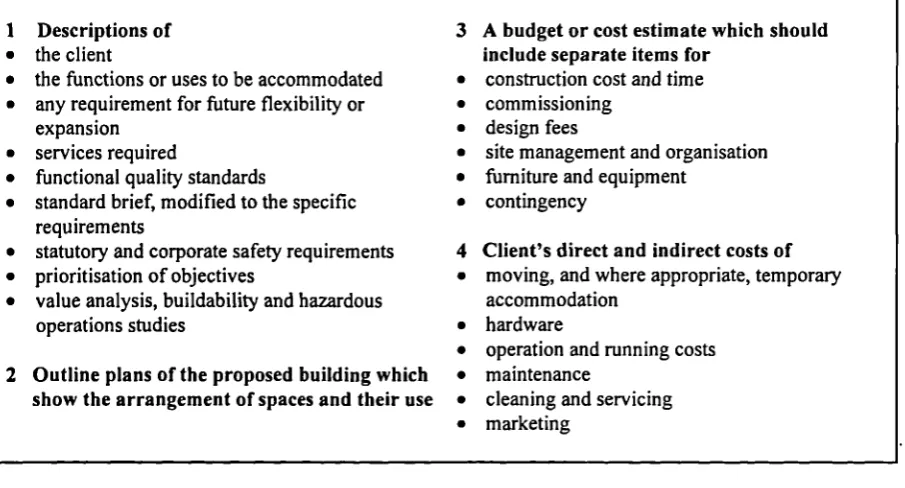
Table 3.1 : Checklist for Information to be included in the Statement of 44 Need
Table 3.2: Checklist for Information to be included in the Functional Brief 45
Table 3.3: Main Headings of Checklist for Briefing 46
Table 3.4: Main Headings of Checklist for Briefing - Contents of Brief for 47 Building Design
Table 3.5: Duerk's Model 48
Table 3.6: Duerk's Brief Contents Format 50
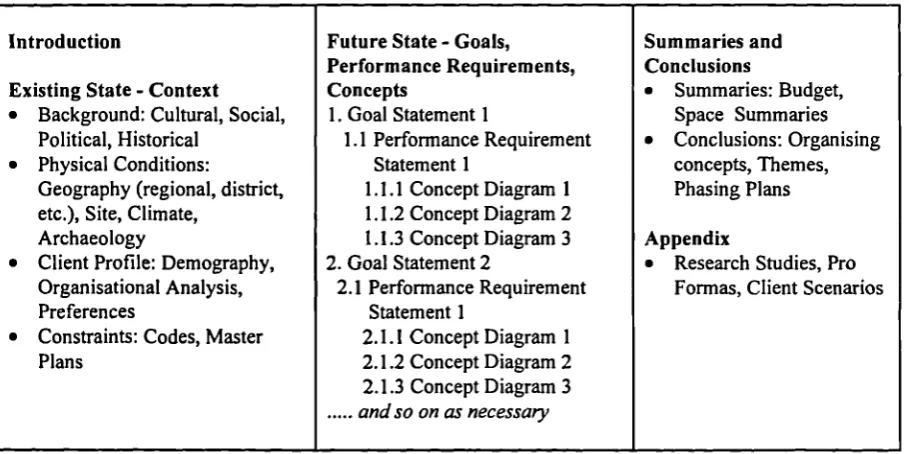
Table 3.7: Structured Framework for the Brief Presentation 54
Page 3 78 79 80 82 83 85 91 91 92 92 93 93 102 107 109 113 115 120
LIST OF FIGURES
Figure 1.1 : The "Johari Window"
Figure 5.1: ERD Notations
Figure 5.2: ORD Notations
Figure 5.3: EXPRESS-G Basic Notations
Figure 5.4: DFD Notations
Figure 5.5: OFD Notations
Figure 5.6: IDEFO Notations
Figure 6.1: Symbols for an Entity and a Schema
Figure 6.2 (a): Simple Type Symbols
Figure 6.2 (b): Type Definition Symbols
Figure 6.3 (a): Relationship Line Styles
Figure 6.3 (b): Open Circle Showing the to End Relationship
Figure 6.4: Composition Symbols
Figure 6.5: Context Diagram - The Framework of the Brief Presentation (Page 1 of 22)
Figure 6.6: Level 1 Diagram - Project Identification (Page 2 of 22)
Figure 6.7: Level 1 Diagram - Part Entity-Level Model of Project Aims (Page 3 of 22)
Figure 6.8: Level 1 Diagram Part EntityLevel Model of Project Aims -Life Expectancy (Page 4 of 22)
Figure 6.9: Level 1 Diagram - Project Resources (Page 5 of 22) Figure 6.10: Level 1 Diagram - Project Context and Design and
Figure 6.11: Level 2 Diagram - Project Management (Page 7 of 22) 125
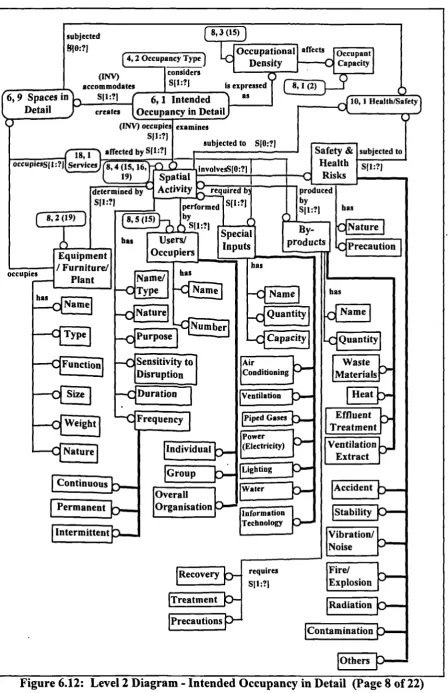
Figure 6.12: Level 2 Diagram - Intended Occupancy in Detail (Page 8 of 129 22)
Figure 6.13: Level 2 Diagram - Part Entity-Level Model of Regulatory 135 Issues (Page 9 of 22)
Figure 6.14: Level 2 Diagram - Part Entity-Level Model of Regulatory 136 Issues (Page 10 of 22)
Figure 6.15: Level 2 Diagram - Background and Historical Influences 138 (Page 11 of 22)
Figure 6.16: Level 2 Diagram - The Client's Future Enterprise (Page 12 140 of 22)
Figure 6.17: Level 2 Diagram - Site and Surrounding Influences (Page 13 143 of 22)
Figure 6.18: Level 2 Diagram - The Building as a Whole (Page 14 of 22) 146
Figure 6.19: Level 2 Diagram - Indoor Climate Control (Page 15 of 22) 149
Figure 6.20: Level 2 Diagram - "Physical Characteristics" in relation to 153 "Building as a Whole", "Spaces in Detail" and "Grouping of
Spaces" (Page 16 of 22)
Figure 6.21: Level 2 Diagram - Building Fabric (Page 17 of 22) 157
Figure 6.22: Level 2 Diagram - Services (Page 18 of 22) 159
Figure 6.23: Level 2 Diagram - Plant, Equipment & Furnishings (Page 19 160 of22)
Figure 6.24: Level 2 Diagram - Site and Surroundings (Page 20 of 22) 162
Figure 6.25: Level 3 Diagram - The "Wall Cladding" Entity in relation to 166 the "Wall" Entity (Page 21 of 22)
Figure 6.26: Level 3 Diagram - The "Wall Cladding" Entity (Page 22 of 167 22)
Figure 7.1 : IDEFO Notations 172
Figure 7.3:
Figure 7.4:
Figure 7.5:
Develop Brief (Context Diagram for Current Operations)
Develop Brief (Level 1 Diagram for Current Operations)
The Diagram Tree (Process Models for the Prototype Development)
Develop Brief (Context Diagram for the Prototype Development)
Develop Brief (Information Viewpoint)
Develop Brief (System Architecture Viewpoint)
Consultation 179 183 190 191 194 198 201 203 214 214 216 217 218 219 220 221 224 225 227 229 232 233 234 Figure 7.6:
Figure 7.7:
Figure 7.8:
Figure 7.9:
Figure 7.10: Generate Brief
Figure 8.1: The "Root" Object Structure
Figure 8.2: The "AUTOBRIEF" Object Structure
Figure 8.3: The "Brief' Object Structure
Figure 8.4: The "Projectldentification" Object Structure
Figure 8.5: The "ProjectAims" Object Structure
Figure 8.6: The "Proj ectResources" Object Structure
Figure 8.7: The "ProjectContext" Object Structure
Figure 8.8: The "Design_Performance" Object Structure
Figure 8.9: The "Wall" Object Structure
Figure 8.10: The "Performance" Object Structure
Figure 8.11: Object and Attributes (Examples)
Figure 8.12: The "AUTOBRIEF" Object and its Attributes
Figure 8.13 (a): Objects and Attributes (Brief Object Structure)
Figure 8.13 (b): Objects and Attributes (Brief Object Structure)
Figure 8.14 : Message Connections (to Generate Brief for "Project Identification")
Figure 8.15: Message Connections for "WaliCladding" Object (An Example)
Figure 8.16 (a): Objects and Methods (Brief Object Structure)
Figure 8.16 (b): Objects and Methods (Brief Object Structure)
Figure 8.16 (C): Objects and Methods
Figure 9.1: System Architecture of AUTOBRIEF
Figure 9.2: Overall Process of the System Architecture -The "Consultation" Mode
Figure 9.3: Overall Process of the System Architecture -The "Generate Brief' Mode
Figure 9.4: The "KWindow" Object Hierarchy
Figure 9.5: The "Image" Object Hierarchy
Figure 9.6: Examples of Types of Images on Part of a Session Window
Figure 9.7: Examples of Transcript Images
Figure 9.8: The Real Time Integration of AUTOBRIEF
Figure 10.1: The Introductoiy Screen of AUTOBRIEF
Figure 10.2: The Main Screen of AUTOBRIEF (with illustrations)
Figure 10.3: The Main Screen of AUTOBRIEF (Initial Stage of "Consultation" Mode) 241 242 244 245 246 255 265 269 273 274 275 277 282 286 287 289 292 293 294 296 297 Figure 10.4:
Figure 10.5:
Figure 10.6:
Figure 10.7:
Figure 10.8:
The "Project Identification" Sub-sections
The "Project Aims" Sub-sections (Steps 1 and 2)
The "Project Resources" Sub-sections
The "Project Context" Sub-sections
Figure 10.21 Figure 10.22: Figure 10.23: Figure 10.24: Figure 10.9: Figure 10.10: Figure 10.11 Figure 10.12: Figure 10.13: Figure 10.14: Figure 10.15: Figure 10.16: Figure 10.17: Figure 10.18: Figure 10.19: Figure 10.20:
The "Spatial Activity" Item Showing the "Particulars of Spatial Activities"
The "Design and Performance Requirements" Sub-sections
The "Building as a Whole" Sub-section
The System Response to the "Building Appearance" Button
The "Building Size" Button
The "Safety Features" Button
The "Passive Protection" Button
The "Indoor Climate Control" Button
The "Building Fabric" Button
The "External Envelope" Sub-section
The "Design Characteristics" Button for "Wall Cladding"
The "Performance Characteristics" Button for "Wall Cladding"
The "Spaces in Detail" Button
The "Space Physical Characteristics" Button
The Main Screen ("Generate Brief' Mode)
LIST OF ABBREVIATIONS
Abbreviations Meaning
AlA American Institute of Architects
BCO British Council of Offices
BIW Building Information Warehouse
BRE Building Research Establishment
BSI British Standards Institution
CFE Client Future Enterprise
CIG Construction Information Gateway
CIRIA Construction Industzy Research and Information Association
CPI Coordinated Project Information
DDL Dynamic Document Linking
DFD Data Flow Diagrams
DOE Department of Environment
eLR electronic Law Reports
ERD Entity Relationship Diagram
ICE Integrated Construction Environments
ILO International Labour Organisation
ISO International Organisation for Standardisation
IT Information Technology
NBS National Building Specifications
NEDO National Economic Development Office
ORD Object Relationship Diagram
OSH Occupational Safety and Health
PPO Project Participant Organisation
RGO Related Group Organisation
RIBA Royal Institute of British Architects
SADT Structured Analysis and Design Technique
STEP STandard for the Exchange of Product model data
YE Virtual Environment
ACKNOWLED GEMENTS
Firstly, I would like to express my gratitude to Prof. Dr. Mustafa Aishawi for his
invaluable advice and guidance in all aspects of the work.
I would also like to express my thanks to all the staff at the Department of Surveying
and the members of the AIC Research Group for their direct or indirect contribution to
the successful completion of the work.
Finally, I would like to express my appreciation for the support provided by my
husband, Mustaffa Samad and the rest of my family.
Faridah Yusuf
February 1997
ABSTRACT
During the early stages of a construction project, clients often have difficulties in
identifying and communicating their actual requirements to designers or other project
participants. This is mainly due to their difficulty in comprehending the vast amount of
information involved. In order to effectively address this information during the briefing
process, this study has modelled such information into structured data models using
EXPRESS-G technique. These data models represent a framework for the presentation
of the client's brief, with the aim of establishing a computerised tool to assist both
clients and designers to carry out this process effectively.
The process of developing the brief is then modelled using IDEFO technique. A two step
process modelling has been undertaken. Firstly, in the form of an abstract
representation of the briefing operations deduced from literature review, and secondly,
within the context of the forthcoming prototype development. The latter considers two
viewpoints; system architecture of the prototype and the information to be elicited from
the user.
The developed models establish the foundation for the development of a prototype
which utilises an object oriented environment. The use of structured analysis techniques
for the modelling process entails the relevant constructs of the developed models to be
transformed into their equivalents in the object oriented environment. The implemented
object oriented data models, then form the framework for the textual presentation of the
development). AUTOBRIEF is a prototype for the generation of the client's brief,
which provides access to project information prior to the brief generation.
The implementation of the prototype has been tested to reflect how effective it is in
support of the briefing process, using IT as a tool. At the end of the study, conclusions
INTRODUCTION
1.1 Introduction
Over the last three decades, despite a number of research projects being carried out and
efforts to improve the briefing process, there is little evidence to demonstrate that
briefing practice has significantly changed. As early as 1964, the Banwell report
concluded that insufficient resources were dedicated towards defining project
requirements (Ministry f Public Buildings and Works, 1964). More recently, the report
by Sir Michael Latham (Latham, 1994), arrived at similar conclusions, i.e. on the need
to improve the briefing process. Indeed, one of the recommendations made by Latham
(1994) was for the preparation of a client's guide on briefing.
Meanwhile, several professional organisations and academics have also addressed the
subject of briefing and the briefing process. In the main, issues of communication
between clients and other project participants are highlighted (Higgin and Jessop, 1965;
Graham, 1983; Rougvie, 1987; Hudson et al, 1991; Pilling, 1993; Gray et a!, 1994) in
order to emphasise their crucial roles in determining the eventual design, or even the
presentation of the client's brief have also been published (CIRIA, 1985; O'Reilly,
1987; BSI, 1995). Other publications which cover various aspects of the brief or the
briefing process include those by Atkin, 1990; Salisbury, 1990; Duerk, 1993; Murray et
al, 1993; Spekkink and Smits, 1993; Barrett and Stanley, 1996; Barrett et al, 1996;
Hansen et al, 1996; Atkin et al, 1996, and many others.
The development of a client's brief results in the transformation of the client's perceived
needs and requirements into a verbal and written expression of functional problems
related to the client's business activity (Pilling, 1993). This brief will then form the
basis for the production of alternative design solutions. A design solution may, to a
large extent, be considered a personal and subjective interpretation of the client's
requirements into a three dimensional built form. The design solution is usually one of
a range of possible alternative solutions constrained by the designer's perceptions of the
system boundaries which are defined by the client (Rougvie, 1987). It is imperative
therefore to eliminate sources of error and confusion or uncertainty that could arise if
the boundaries were to be stated in a subjective and imprecise manner. Uncertainties or
deferred decisions can affect the quality, costs and programme targets for a particular
project. In view of this, the communication between the parties involved plays a crucial
role in determining the eventual design or even the success of a construction project.
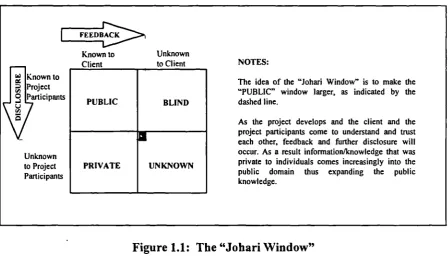
The "Johari Window" concept has been applied by Bejder (1991) and Barrett (1993) to
the briefing process to demonstrate the importance of communication and the various
forms of situations that reflect the process of communication during the briefing
requirements without difficulty to his advisers or the project participants via the
"public" window. Secondly, the needs which the project participants manage to identify
from the client after a two-way discussion, via the "blind" window. Thirdly, the
"private" window which relates to the information which the project participants are not
prepared to disclose, and finally, the "unknown" window which reflects the information
not known to the client or the project participants (Figure 1.1). The Johari Window
illustrates the fact that many decisions are made on an inadequate basis during the
briefing process, sometimes through the "unknown" window, which might result in
future changes.
EAcK
K.nown to Client
Known to Project Participants c-)
C',
Unknown to Project Participants
Unknown
to Client NOTES:
The idea of the "Johari Window" is to make the "PUBLIC" window larger, as indicated by the dashed line.
As the project develops and the client and the project participants come to understand and trust each other, feedback and further disclosure will occur. As a result information/knowledge that was private to individuals comes increasingly into the public domain thus expanding the public knowledge.
PUBLIC BLIND
I
[image:24.595.70.519.354.619.2]PRIVATE UNKNOWN
Figure 1.1: The "Johari Window"
Thus, communication can come in the form of the quality of advice provided by the
project participants to the client, either during the brief development or the design stage.
For communication to be effective, there should exist a level of trust and mutual respect
between construction professionals and clients during the briefing process. Furthermore,
1991) or verbal communication between clients and the construction professionals, in
particular, the designer. It symbolises a two-way educational process (Green, 1986)
which takes place between the parties involved in a construction project. Therefore,
effective communication would permit the processes of extended discussion,
investigation and analysis of requirements to be achieved. This gives rise to an agreed
baseline or premise suitable for secure design development. The agreed baseline then
represents the essential framework for the design process, i.e. in the form of a brief.
1.2 Background
Previous studies carried out by Graham (1983), Hudson et al (1991), Barrett and
Stanley, 1996, Barrett et at, 1996, and others suggests that the client's brief is often
inadequate, poor or not sufficiently explicit. Besides, it may not truly represent the
client's requirements. This may be due to a lack of experience on the part of the client,
with respect to construction projects, or his inability to identif,' and convey his actual
needs accurately to the design team. Another contributory factor could be the lack of
mutual understanding or lack of trust and common objectives between the parties
involved. Most significant, however, is the vast amount of project information that
needs to be acknowledged and dealt with by one or more parties during the briefing
process.
The situation can be improved by encouraging clients to participate fully during the
briefing process. This can be done by increasing the client's level of awareness through
effective presentation and manipulation of the project information and the associated
enhanced considerably. Clients and other project participants will work together, both to
identify a clear range of opportunities available for the development and to highlight
those problems which require a solution (Gray et a!, 1994). Through such discussions, a
closer rapport between the parties involved, and an understanding of and sympathy for
each other's objectives, will be established. On this basis, it is presumed that the
communication channel between the client and other project participants, in particular
the designer, will be improved significantly.
1.3 Aims of the Study
The principal aim of the research is to improve the communication channel between
clients and designers, and/or other project participants. The ultimate goal is to bridge the
gap between clients and the key players of a construction project.
The aim of the research can be expressed as follows:
1. to improve the client's understanding of. the processes involved during the early
design stage of a building project, especially during the briefing process.
2. to encourage the client to participate fully during the briefing process. This
opportunity would assist him in identifying and understanding his actual needs and
requirements.
3. to highlight to the client and to raise his level of awareness on issues related to the
4. to assist clients in arriving at a client's brief which reflects their requirements. This
could lead to a more appropriate design solution which satisfies the client's
requirements.
5.
to provide an avenue for continuous professional training to clients/designers and toprovide a basis for training to trainee designers/architects.
1.4 The Objectives of the Research
The objectives of the research are summarised as follows:
1. To examine the briefing process that takes place during the early design stage of a
building project.
2. To examine and review available publications and guidelines to the contents of the
brief for building projects
3. To identify and accumulate the required information which can produce an
comprehensive client's brief for a building project
4. To examine, analyse, classify and organise the above information using information
• identify the specific items of information which are required at every stage of
the brief development process
• identify the relationships between specific items of information
5. To develop a set of information models which will portray the information required
for inclusion in the client's brief. The most suitable information modelling technique
will be identified through a thorough comparison of the various techniques available.
6. To model the processes that transpire during the development of a brief. The most
suitable process modelling technique will be identified through a thorough
comparison of the various techniques available.
7. To link the information and process models in order to establish a conceptual model
for an object oriented computer environment. The conceptual model would serve as
an architecture for an information system prototype for the development of the
client's brief. The aims and objectives of the prototype development will be
described in section 1.4.1.
8. To map the information and process models into an object oriented environment
development tool to achieve the above objective.
9. To incorporate an integrated concept into the development of the above prototype
system to accommodate future concurrent engineering and to allow for integration
10. To draw conclusions and to give recommendations for further research.
1.4.1 Aims and Objectives of the Prototype
The principal aim of the prototype is to generate a documented brief for the client and to
provide easy access to project and relevant construction industry related information.
The prototype will also aim to demonstrate the viability of the developed information
and process models for the client's brief.
In order to achieve this, the main objectives for the prototype are to:
1. Assist designers in the design process in order to:
. obtain and interpret the client's requirements
• resolve conflicts between the client's requirements, i.e. ensure that the client's
requirements do not contradict each other and that they are compatible, for
example, in terms of compliance with regulations
• advise the client on technical issues, e.g. regulatory issues, design and
performance requirements, as well as other related construction industry
know-how, such as technical product data for specific materials
• enable designers to link the prototype to existing or future Integrated
Construction Environments (ICE), where facilities will be available which
allow them to visualise and document the design implications on costs and
time, and to examine the implications of a particular set of client requirements
2. Present relevant information to the client in the most appropriate format and medium,
and in a timely and efficient manner using the support of multimedia technology.
Such information could include:
. instructions or explanations in the form of recorded audio and text
• regulatory issues, e.g. Building Regulations, Laws and British Standards and
Codes
• on-line product information in the form of manufacturer's or supplier's
technical product data, product specifications, photographic images or
graphical portrayal of design details for specific materials and/or construction
technology
3. Generate the client's brief. The generated brief should:
• reflect the client's actual requirements
be clear, consistent, organised and coherent enough to be easily understood in
order to facilitate the process of design interpretation by designers and/or
other project participants.
be presented in a format that is appropriate for the construction industry
1.5 Research Outline
The difficulty in comprehending the vast amount of information involved in a
construction project, often leads clients to experience difficulties in identif ring and
order to enable this amount of information to be effectively addressed and imparted to
clients during the briefing process, this study has modelled such information into
structured information models using the EXPRESS-G technique. These information
models represent a framework for the presentation of the client's brief.
The process of developing the brief is examined. This entails the modelling of the
processes involved using the IDEFO technique. A two step modelling process has been
undertaken. Firstly, the processes have been modelled in the form of an abstract
representation of the briefing practice deduced from the literature review, and secondly,
in the context of the forthcoming development of the information system prototype. The
latter considers two viewpoints: the system architecture of the prototype and the
information to be elicited from the user.
The developed information and process models establish the foundation for the
development of an information system prototype using an object oriented environment.
Since structured analysis methods have been adopted for the modelling process, the
implementation into the object oriented environment entails the transformation of the
relevant constructs, or components, of the developed models into their equivalent in the
object oriented environment.
The selected information and process modelling techniques have proved to be very
effective in this translation process. The mapping into the object oriented environment
was conducted with relative ease. These object oriented data models form the
of project or construction industry related information. This has led to the development
of an information system prototype for the generation of the client's brief and for the
presentation of project information prior to the brief generation.
1.6 Scope of the Research
This research will focus on the vast amount of project information required for the
development of the client's brief during the early design stage of a construction project.
The main sources of information include currently available publications and guidelines
relevant to the briefing process and to the development of the client's brief.
The way in which clients select the route for the overall management of a project is
referred to as the procurement system. Such systems include traditional, management
contracting, design and build, and project management. The procurement system
selected by clients to implement their building projects can influence the success of the
design and construction process (Masterman, 1992). However, the scope of this research
does not include this aspect. This research takes the view that the modelling of
information required for brief formulation would be applicable to all types of building
procurement systems.
In addition, the scope of the prototype development has been limited to office buildings
only. Further, the development of the prototype will focus on certain aspects of the
design and performance requirements only. These aspects cover the client's
requirements with respect to the overall appearance and function of the building as a
performed within them. A limited number of wall cladding systems which form part of
the external envelope of the building are also considered. The prototype will also
include the identification of the project and parts of the aims, resources and context of
the project. However, the scope of the research and the prototype does not extend
beyond the development of the brief. In other words, it does not encompass the
development of a design solution based on the generated brief.
Because the system is only a prototype, the databases and presentation of information
are limited. A small number of options will be presented to the system's users in terms
of identifying and selecting the client's requirements. The incorporation of images and
multimedia techniques will also be limited, and the users of the system will be provided
with access to a limited number of external information resources. Nevertheless, the
development of the prototype will take into account the applicability of the system in
terms of achieving its main aims and objectives.
The implementation of the prototype will be subjected to a limited testing procedure,
chiefly to demonstrate its effectiveness in supporting the briefing process using IT as a
tool. At the end of the study, conclusions will be drawn and recommendations will be
made for future work.
1.7 Guide to Thesis Contents
This section presents the structure of the thesis and the contents of each chapter. The
Chapter 1
This chapter introduces the reader to the background of the research, the aims and
objectives of the research, the research outline, its scope, and the contents of the thesis.
Chapter 2
The concepts of the brief and the briefing process based on current practices conducted
within the construction industry are presented in this chapter. The problems encountered
during the briefing process are highlighted, and ways to improve/facilitate the briefing
process are proposed.
Chapter 3
This chapter examines current publications and guidelines relevant to the formulation of
the client's brief. Six main sources of information have been identified. These are
examined, compared and contrasted. A structured framework for the presentation of the
brief is proposed, which will aid the information modelling process.
Chapter 4
In this chapter, a number of research fmdings which relate to the briefing process are
examined, together with a number of electronic databases on CD-ROMs, visual
information databases and the use of the internet as a means of transmitting and
accessing information. These serve to demonstrate the role of information technology in
Chapter 5
This chapter investigates the various techniques available for organising project
information. A number of information and process modelling techniques are examined
and the most suitable is identified for modelling the information required for the brief
development. The most appropriate process modelling technique is also identified for
modelling the processes that take place during the development of the brief.
Chapter 6
A full analysis of the information required for the presentation of the client's brief is
presented in this chapter. The modelling of the information and the decomposition of the
information at various levels of detail are portrayed. The items of information, their
relationships and properties or attributes are highlighted. These constructs form the
information models for the presentation of the brief.
Chapter 7
This chapter presents the process analysis of the development of the brief. Firstly, the
processes involved during the development of the brief are modelled within the context
of an abstract portrayal of briefing practices within the construction industry. The
process is then re-modelled within the context of the proposed prototype system, with
two viewpoints: the first is based on the system architecture of the forthcoming
prototype, while the second is based on the process of obtaining the information
Chapter 8
This chapter discusses the implementation of the information and process-models into
the object oriented environment. It begins by emphasising the need to link the
information and process models prior to the implementation process. The object
oriented environment to be used for the prototype development is then presented,
followed by the translation of the relevant constructs in the information models into
objects in the object structure representation. It then describes the inclusion of attributes
attached to the relevant objects. The reasoning and behaviour capability of the object
oriented environment is presented, followed by the translation of the process models
into object methods in the object oriented environment.
Chapter 9
This chapter highlights the system architecture of the "AUTOBRIEF" prototype. It
describes the functions to be performed by each component of the system architecture,
the development of the user interface, and how the external resources are linked to the
object oriented environment. Finally, it describes the real time integration of the
prototype with external resources.
Chapter 10
The running prototype is demonstrated here, with the aid of screen dumps. The main
screens are described. The system's main operations are presented with reference to the
system's two modes; "consultation" mode, which refers to the process of identifying
generates the brief, and displays the generated brief in the object oriented environment
or a selected word processing application.
Chapter 11
This chapter describes the limited testing procedure to which the developed prototype
was subjected. The testing procedure was aimed towards evaluating the overall
conceptual approach of the prototype implementation and its flexibility for future
development, as well as to ascertain the usability and applicability of the prototype.
Chapter 12
In this chapter, the research work conducted for this study is summarised. The main
conclusions derived from the study are drawn, followed by recommendations for future
THE BRIEFING PROCESS
2.1 Introduction
The planning, design and management of our physical environment normally affects the
behaviour, performance and satisfaction of individuals, groups and whole organisations,
who end up as users of the built environment. Careful planning or the lack of it
ultimately leads to creditable benefits or avoidable costs, or possibly both, to clients and
users, of the built environment. To avoid failure to meet financial and programme
targets, not only in terms of the completed built environment, but also throughout the
life cycle of the project, it is useful to conduct a 'design research' prior to the design
process.
During this period, a disciplined process is carried out which includes data elicitation,
collection, analysis and organisation of information enabling all the factors influencing
the proposed environment to be explored. The requirements of the users and the entire
organisation are examined in terms of their functions as well as any other associated
characteristics, such as economics, symbols, etc. The 'design research' also focuses on
resourceful. The 'research' provides "a set of explanations for suggestions" (Duerk,
1993). It should investigate why certain requirements are selected and which of these
selected requirements are priorities. This 'design research' can be referred to as the
briefing process. In fact, this has been put forward by Zeisel (1981), who refers to the
briefing process as a research activity in that the objectives are those of enquiry. The
product of this design research is the 'brief'. In fact, it has been increasingly recognised
that the brief plays a crucial role in achieving high quality and value for money of the
completed building.
This chapter presents the briefing process, its problems and its output, the brief. It
explains the problems of current briefing practices and suggests ways to improve or
facilitate the briefing process. It begins by outlining the briefing process as part of the
overall life cycle of a construction project, followed by an overview of the project
participants usually involved during the briefing process.
2.2 Briefing as a Phase in the Life Cycle of a Construction Project
The life cycle of a construction project has been categorised into stages from inception
to completion, and beyond. Harvey and Ashworth (1993) separates the development
cycle of a construction project into five stages. They are Inception, Design, Construction
Project Planning, In-use and Demolition. Atkin (1990) divides it into five phases,
comprising: Project Initiation, Design Development and Documentation, Construction,
Commissioning and Operations and Maintenance. The conventional Plan of Work
contained in RIBA (1967), on the other hand, classifies the cycle of work into 12
A. Inception and B. Feasibility (termed as Briefing)
. C. Outline Proposals and D. Scheme Design (termed as Sketch Plans)
. E. Detail Design, F. Production Information, G. Bills of Quantities and H. Tender
Action (termed as Working Drawings)
J. Project Planning, K. Operations on Site and L. Completion (termed as Site
Operations)
. M. Feedback
Gray et al (1994) has redefined the above stages to suit "design management plan of
work". Stage A is termed the "Brief", Stages B, C and D have been designated as
"Concept design, Feasibility studies, Scheme Design", Stages E, F and G have been
referred to as "Engineering", Stages H and J have been called as "Procurement", while
Stage K is termed "Construction" and Stage L is referred to as "Commissioning and
handover".
The above has listed just a few from an extensive list of methods of categorising the life
cycle of a construction project. It can be seen that the stages may vary or overlap each
other. What is common though is the point in time at which briefing comes into the
overall process. The "Brief" phase is considered as part of the "Inception" stage of
Harvey and Ashworth's (1993) and a main activity of Gray et al's (1994). Atkin (1990)
uses the term "Project Initiation" to include briefing while RIBA (1967) identifies
Stages A and B as "Briefing". This observation indicates that the briefmg process is best
Institute of Architects (MA) Design Process (Duerk, 1993) which places
"Programming" (the term used for "Briefing" in U.S.) as part of the "Pre-Design" stage.
2.3 The Project Participants
The following briefly describes the project participants who may be involved during the
briefing process.
2.3.1 Clients
Clients range from private individuals, partnerships, special organisations, central
government to consortia of local authorities, special public corporations, companies or
groups of companies, housing associations or trusts and many more (Greenstreet, 1989).
It is the clients who initiate, commission and finance any particular construction project.
Clients are thus the core of the construction industry.
Various classifications have been put forward to distinguish clients. Amongst these are:
• Experienced versus inexperienced (or sophisticated versus naive (Higgin and Jessop,
1965)) - depending on the client's previous experience of the building process
• Continuing versus one-off (Hillebrandt, 1984) - Continuing clients are those actively
involved in repetitive developments as opposed to one-off clients who may be
involved with only one project. One-off clients are synonymous with inexperienced
clients.
• Primary versus secondary (Nahapeit and Nahapeit, 1985) - Primary clients are those
Secondary clients are those who build in order to perform some other business
activity, such as retailing.
. Public sector versus private sector (Hillebrandt, 1984; Forster, 1986) or individual
clients, public clients versus corporation (Rougvie, 1987) - Individual clients can be
referred to as private individuals. Public clients or public sector clients refer to
governing bodies, such as the central government and local authorities. Private sector
clients refer to private individuals, organisations or corporations. Organisation clients
tend to view architectural production from a purely rational and instrumental
perspective (Gutman, 1988), i.e. they regard buildings as capital assets, which should
be managed like any other potential source of productivity, income and profit, e.g. in
terms of maintenance costs and resale value.
• unitary versus multifaceted (pluralistic) (Cherns and Bryant, 1984; Green, 1996)
-depending on the social complexity of a client organisation. Multi-faceted clients
refer to client organisations which comprise various interest groups, such as different
departments or even a consortium of different organisations or public bodies, each
with differing objectives and its own social or cultural complexity. Unitary clients are
therefore those with only one main interest group with a set of specific objectives.
The client may represent himself or provide his own management team, or an appointed
or designated representative to manage the project on his behalf or to work directly with
others appointed (RIBA, 1991). To ensure smooth collaboration which is necessary for
the design team to progress effectively, the representatives should be vested with
his/her representatives are expected to play the key role in identifying and
communicating the client's needs and requirements to the design team.
2.3.2 Designers
A designer is the one responsible for some aspect of the design of the works which may
include the architect, engineer, specialist consultant or contractor (Davis Langdon
Consultancy, 1996). Harvey and Ashworth (1993) classifies designers into four
categories depending on the type of the project or the procurement route:
• Building projects - generally the architect is normally the first point of contact with
the client
• Engineering projects - civil engineering consultants
• Smaller works and schemes of refurbishment - building surveyor is usually the
client's main advisor on design aspects
• Design and build or management contracting - Clients either appoint the consultant
firm direct, choose an alternative consultant as a main partner in the venture/project,
or appoint a project manager to be in charge of the overall scheme.
During the briefing process, the designer is chiefly expected to capture the client's true
requirements to ensure that the design solution meets the actual needs of the client.
2.3.3 The Quantity Surveyor
The quantity surveyor may act as the client's advisor, or as part of the design team. In
either case, the quantity surveyor is responsible for cost control. His/her role is to advise
expenditure throughout the construction stage. The quantity surveyor ensures that none
of the project participants overlooks the financial implications of their ideas or actions.
2.3.4 Other Consultants
Other consultants include:
Structural Engineer: responsible for the design of the building structure
Services Engineer: responsible for the design of the building services
Specialist consultants: e.g. for interior designing, lighting, acoustics, landscaping,
planning, etc.
2.3.5 The Design Team
The design team nonnally comprises four professions: architect, quantity surveyor,
structural engineer and services engineer. Others may also contribute to the design
process depending on the nature of the project. These may include specialist consultants.
During the briefing process, the whole or particular members of the design team
collaborate with the client and/or his/her representatives to arrive at a definitive
statement which expresses the client's true needs in the form of a brief.
2.4 The Briefing Process
2.4.1 Briefing
The term briefing is used rather loosely and in different ways by different stakeholders
1. Briefing as a stage or stages in the design or construction process, or as part of the
overall life cycle of the project as described in section 2.2. For example, the Royal
Institute of British Architects (RIBA, 1967; RIBA, 1991) classifies Stages A (Inception)
and B (Feasibility) of the RIBA Plan of Work (1967) as Briefing. Blyth eta! (1996), on
the other hand, suggests that the briefing process lasts throughout the project, which is
divided into three main stages: project, project and post-project. During the
pre-project and pre-project stages, the needs are identified and the approaches are explored,
while in the post-project stage, the result is analysed against the original identified need.
2. Briefing as a systematic method of enquiry or process by which client's requirements
are made explicit. It is the process of eliciting or "brief-taking" (Barrett and Stanley,
1996) the information or requirements from clients. Briefing can be best expressed by
the definition used by the British Standards Institution (BSI, 1995), which defines
briefing as a process of identifying and analysing the needs, aims and constraints (the
resources and the context) of the client and the relevant parties, and formulating any
problems that the designer is required to solve. Briefing can therefore be considered as
the problem definition (Duerk, 1993), or the "problem seeking" phase, as opposed to
design, which is referred to as the "problem solving" phase (Pena, 1987). In the US, the
term programming (e.g. Pena, 1987; Duerk, 1993; Palmer, 1981) is widely used instead
of the UK's briefing terminology. In fact, "Programming" is considered as part of the
"Pre-design" stage of the American Institute of Architects (AlA) Design Process. The
terms architectural programming (Duerk, 1993) or facility programming (Palmer, 1981)
are used instead of briefing. By virtue of the above definitions, briefing, or
interpreting, compiling, and documenting or presenting all the information required for
a construction project. For the purpose of this research, this second usage of briefing
has been adopted, and the brief is considered as the output of the briefing process.
2.4.2 The Brief
The brief documents the client's aspirations in terms of his/her real need and feasibility
within overall budgetary constraints. The brief, sometimes termed the client 's brief; is a
definitive written statement or working document prepared during the briefing process,
which sets out the client's requirements for a construction project (a new building,
renovations/refurbishment, changes to layout, etc.). It specifies at any point in time the
relevant needs and aims, the resources of the client and user, the context of the project,
and any appropriate design requirements within which all subsequent briefing and
designing can take place (B SI, 1995). A good brief is one which creates a functional
basis for design, i.e. one which produces a pragmatic foundation to design information.
There is a clear understanding of all the constraints for the project, together with the
quality of the desired solution (Duerk, 1993). Getting the brief right is therefore crucial
for the effective delivery of a construction project (Latham, 1994).
Latham (1994) identifies two categories within the brief: the outline brief and the design
brief The outline brief or strategic brief (Davis Langdon Consultancy, 1996; Blyth,
1996) specifies the basic objectives of the client. It represents a clear and accepted
statement of the client's strategic objectives (Green, 1996) which can include the scope
and purpose of project, with key parameters including overall budget and programme
specific requirements. It contains everything a designer andlor engineer needs to know
about a client's proposed project (Hansen et a!, 1996). The definition used by Murray et
a! (1993) and supported by Hansen et a! (1996) defines the design brief as "a
contmunication process between a client organisation and construction professional to
produce a statement from which a facility which satisfies the client's requirements can
be produced".
On some large projects there may be more than one brief, each representing a particular
aspect of the brief in detail. They include functional brief, financial brief, facility
management brief and implementation brief (Atkin, 1990; Atkin et al, 1996). These are
defined as follows:
Functional brief a statement of spatial needs, services, quality of finishes, etc. Financial brief the financial parameters within which the project must perform
Facility management brief directed towards the subsequent operation and maintenance
of the building
Implementation brief setting out the policy of design, procurement, construction
contracts, master development programme and the information management
requirements.
Spekkink and Smits (1993), On the other hand, divides the development of a
"project-oriented client's brief' into phases. Indicated below are the phases and the
Phase Terminology Output of each phase
Phase 1 Initiative Global brief
Phase 2 Feasibility study Feasibility
Phase 3 Project definition Basic brief
Phase 4 Structural plan phase Brief for the provisional plan
Phase 5 Provisional plan phase Brief for the definitive plan Phase 6 Definitive plan phase Definitive brief
Phase 7 Specification phase Final specifications
According to Spekkink and Smits (1993), the client's brief is developed in phases from
"rough to fine" together with the plan. In such a case, the brief contains, prior to each
planning phase, the minimum amount of information which is necessary to be able to
direct the plan in that phase. This introduces a strong connection between the
development of the brief and the plan. While this approach is quite useful for the design
and build procurement method, it is, however, indirectly promoting the stage controlled
approach.
Best practice suggests that the brief should be prepared once the procurement route has
been decided upon in principle and roughly how much risk and direct involvement
should be accepted. This research, nonetheless, takes the view of the brief as the
integration of both the outline and the design brief, which also encompasses Atkin's
four briefs, excluding the procurement and construction contract. These two factors have
been excluded to support the view that a good and adequate brief can be developed
irrespective of procurement route. The outcome is thus a brief which is comprehensive
and coherent, and encompasses all the client's strategic objectives (Duerk, 1993;
Latham, 1994; Green, 1996) and organisation metaphors (Green, 1996), as well as the
client's and users' requirements. The brief, therefore, not only serves as the repository
of all the relevant factual materials with regard to the construction project, but also
documents decisions about the scope and direction of the project (Duerk, 1993).
2.5 Problems of the Briefing Process
During the briefing process, the project participants often misunderstand each other
about how the proposed building is to be used and designed. The client specifically
misunderstands the intention of the designer and more crucially, the designer,
misunderstands the needs, requirements and values of the client and the building's users.
Contractual disputes arise all too often as a result of these misunderstandings, or due to
incorrect or insufficient information being made available to both parties. Therefore, the
development of the brief serves as a tool for communicating both the intentions of the
client and the design team. However, previous studies suggests that the client's brief is
often inadequate, poor or not sufficiently explicit (Newman et al, 1981; Graham, 1983;
Atkin, 1990; Hudson et al, 1991). On numerous occasions, the brief does not truly
represent the client's requirements. This indicates a breakdown in communication at
one point or another. This gap in the communication channel may be due to a lack of
experience on the part of the client with respect to construction projects, or his inability
to identify and convey his actual needs accurately to the designer. Another contributory
factor could be the lack of mutual understanding or lack of trust and common objectives
comprising several different interest groups whose objectives differ and may well be in
conflict (Cherns and Bryant, 1984; Green, 1996).
Another factor that contributes to problems during the briefing process is the tendency
of designers to rely on their previous experience. This represents the level of knowledge
or preference of the designers and other project participants in developing the brief.
Construction professionals tend to act in accordance with a pre-determined set of
assumptions or rules, and a fixed course of action which has been acquired from
previous experience (Gammon, 1992; Green, 1996; Barrett and Stanley, 1996). This
factor varies between individuals or design teams, depending on their own set of
conduct which form the basis of their preference. This ultimately leads to varying ways
of conducting the briefing process as well as a non-standardised way of formulating and
presenting the brief. Green (1996) went further to illustrate that this "concept of
'default' paradigm" to such an extent explains why practitioners who are used to
working with "unitary" (individual) clients often find it difficult to adjust to "pluralistic"
clients (multi-faceted client organisations).
Most significant, however, is the vast amount of project information that needs to be
acknowledged and dealt with by one or more parties of a construction project during the
briefing process. Difficulty in identifying and accessing this information often leads to
poor interpretation of the client's needs which consequently results in ill-defined briefs.
Furthermore, the information required for the development of the brief not only covers
the brief domain specifically, but also encompasses all the information related to the
"construction industry know-how" or "supporting information" covers aspects like
technical product data, new or innovative construction technology, availability of
specific materials and many others. The lack of such information or refusal to
acknowledge this as part of the information gathering or analysis stage by the designer
can lead to an inadequate brief.
2.6 ImprovingfFacilitating the Briefing Process
Research has been carried out on the briefing process and the consequences of
inadequate briefs. The most frequently cited causes stem from the lack of
communication between clients and designers, which leads to poor scope definition and
inaccurate identification of client's requirements.
Several proposals have been made to improve or facilitate the briefmg process, or to
create best practice amongst project participants. These can be summarised as follows:
1. Encourage clients' participation
The lack of communication between clients and other project participants can be
improved by encouraging clients to participate fully or to a greater extent during the
briefing process. Clients should be encouraged to recognise the positive and
sustained contribution they have to make if buildings of excellence are to be the norm
rather than the exception (Blackmore, 1990). Hence, the wide gap of understanding
and confidence between clients and users, and the construction industry need to be
bridged. Professionals involved in a construction project should work with clients,
between clients and the project participants (Goodacre et al, 1982; Bennett, 1985;
Gameson, 1991), in particular the designers, the needs and objectives of the clients
can be explored in depth. The adequate articulation and analysis of a client's
requirements together with rigorous evaluation of available options (Atkin et al,
1996) is the key to successful briefing. Successful briefing in turn, paves the way for
successful design development.
2. Educate or inform inexperienced clients
Inexperienced clients (involved in one-off projects) often come to the designer or a
chosen consultant with a broad outline of their aspirations, a budget which is often
insufficient and a time scale for occupation which is often impossible (Harvey and
Ashworth, 1993). It has also been widely observed that such clients are often unable
to articulate their requirements until they have been exposed to a range of initial
design concepts (Goodacre et al, 1982; Murray et al, 1993, Green, 1996). This can be
done by increasing the client's level of awareness through effective presentation and
manipulation of project specific and supporting information, along with the
relationships between items of information and the associated processes. In doing so,
the client's knowledge of the entire briefing process may be enhanced considerably.
3. Understand the client organisation
Designers should understand the individual clients or client organisations for which
they work. In the case of client organisations, it is often necessary to accept that there
will never be a single interpretation of requirements (Green, 1996) due to differing
understand the characteristics of the client organisation, as well as the ways in which
the client makes sense of his organisation. There is a need therefore to create a
balance between all the conflicting priorities and arrive at some form of compromise
and understanding. With such an understanding, designers and clients (or client
organisations) will be able to work together, both to identify a clear range of
opportunities available for the development and to highlight those problems which
require a solution (Gray et al, 1994). Through such discussions, a closer rapport
between the parties involved, and an understanding of and sympathy for each other's
objectives, will be established.
4. Briefing as an iterative process
Briefing should be an iterative process. Often there are loops in the briefing process
where for several reasons it may be necessary to return to, and adjust an earlier brief
(Atkin, 1990). This allows a new, revised or unplanned condition or requirement to
be accommodated at a later stage in the briefing process. For this reason, adequate
time must be allowed for the evolution of the brief (Pena et al, 1987). Designers
should not assume that clients already know what their requirements are.
5. Formulation of the brief and its contents
Various guidelines to the formulation and contents of the brief exist within the
construction industry. In any form, the concepts within the brief should be kept
generic and abstract so that the alternatives for a concrete solution are not limited
during the design process. The performance requirements can be developed as