Taking nD modelling to the next level:
Methodological issues associated with the
development of a Regeneration Simulator
Workbench
MarshallPonting, AJ
Title Taking nD modelling to the next level: Methodological issues associated with the development of a Regeneration Simulator Workbench
Authors MarshallPonting, AJ
Type Conference or Workshop Item
URL This version is available at: http://usir.salford.ac.uk/id/eprint/15778/
Published Date 2008
USIR is a digital collection of the research output of the University of Salford. Where copyright permits, full text material held in the repository is made freely available online and can be read, downloaded and copied for noncommercial private study or research purposes. Please check the manuscript for any further copyright restrictions.
For more information, including our policy and submission procedure, please
Taking nD modelling to the next level: Methodological issues associated
with the development of a Regeneration Simulator Workbench
Amanda Marshall-Ponting
Research Institute of the Built & Human Environment, University of Salford, Maxwell Building, Salford, M5 4WT, UK.
Email: [email protected]
Abstract:
The multi-disciplinary SURegen project is aiming to develop a digital decision support aid that will capture good practice in sustainable urban regeneration (SUR) and support regeneration training and education for practitioners. It will achieve this through the modelling of the regeneration process, the identification of key decision points and the simulation of various decision outcomes. This paper will outline the research methodology that is planned for the project as a whole and for the technical development of the digital support aid, the Regeneration Simulator Workbench or RSW, and provide justification for these approaches within the context of antecedent research projects. Based upon the experiences of these previous projects, the paper will also present some of the difficulties that can be anticipated when conducting multi-disciplinary research.
Keywords:
Decision-support tools, nD modelling, regeneration, research methodology, systems development methodologies
1. Introduction
The SURegen project, funded by the UK’s Engineering and Physical Sciences Research Council’s Sustainable Urban Environments 2 program to a total of £2.3 million, is a four year project that aims to address the regeneration skills gap by developing a regeneration simulation tool to enable better understanding of the regeneration process and support decision making. The project will be informed by the experiences of two recent projects in particular, the EPSRC funded From 3D to nD Modelling project and Intelcities an European Framework 6 Integrated Project. This paper will outline the contributions that nD modelling has made in influencing the conceptual approach and its implications for SURegen on the technical development, supported by some of the experiences of developing integrated systems for decision making, simulation and information provision and show how the concept of nD modelling will be developed by the project and applied at the neighbourhood scale.
1.1.Regeneration processes and challenges
where they existed and that housing was one issues of many. This approach is evidenced by the Government’s Neighbourhood Renewal Strategy which aims to address deep seated problems by taking a longer term and more sustainable approach to quality of life issues by delivering economic prosperity, better health, safe and secure places and high quality schools (ODPM, 2003). As such, more holistic views about urban regeneration are now taken, with Roberts and Sykes (2000) describing it as a “comprehensive vision and action which leads to the resolution of urban problems and which seeks to bring about a lasting improvement in the economic, physical, social and environmental conditions of an area that is subject to change”. However, there is little consensus about how to achieve lasting and sustainable regeneration or the meaning of sustainable urban development (Palmer et al, 1997): In fact, there is greater agreement that urban regions characterised by high levels of deprivation, crime, derelict buildings and disorder are clearly unsustainable (Wates, 2005; Ekins & Cooper, 1993).
Fig. 1. RENEW NW’s ‘Egan Wheel’ for sustainable communities (RENEW NW, 2005)
collaborative skills required to deliver integrated multi-disciplinary working between disciplines working on SUR, and the engagement and visioning skills needed to identify and achieve the goals common to professionals, elected members and the general public. The Egan Review itself concluded that to achieve measurable improvements in the communities that they serve, individual professions and disciplines could be left to deliver their own domain skills but that there was an urgent need for people with higher level generic, cross-cutting skills. The RSW is seen as a tool that, by fostering a holistic approach to consideration of all the dimensions involved in urban regeneration and their implications upon decisions, could help support the development of these skills and knowledge
1.2.SURegen project aims and objectives
The overall aim of SURegen is to explore the concept and reality of a digital tool that is able to meet the decision-making challenges that regeneration poses, to practitioner stakeholders in the first instance. The Regeneration Simulator Workbench (RSW) will hold good practice knowledge about sustainable urban regeneration (SUR) allowing it to function as a library of good practice that could be used for education and training purposes and a learning laboratory to support professionals and other stakeholders to understand not only the regeneration process and its key decision points, but also to explore some of the impacts of these decisions through the running of ‘what-if’ scenarios. As a multi-perspective tool providing a shared workspace, the RSW will enable regeneration team members to collaborate more effectively due to access to the following:
• Simulations of the regeneration process. In the early diagnosis and visioning phases
this will allow professionals to gain experience of decision-making before they enter a live regeneration environment and allow them to transfer good practice to help fill the skills gap;
• Identification of the main regeneration process decision points. This will allow better
understanding of regeneration dynamics, potential decision outcomes available at each point and some of the management and planning implications ahead of full cost implementation;
• Team building and stakeholder engagement support (including businesses and
citizens) to diagnose the regeneration need, continuously develop and update the local vision and develop scenarios and indicator requirements;
• Advice about the most suitable available assessment tool for evaluating alternatives at
key regeneration process decision points against the vision, scenarios and indicators appropriate to delivering the most mutually satisfactory SUR outcome.
By providing this knowledge it is anticipated that the RSW will help to close the skills gap identified by the Egan report (2004) as above in section 1.1. This will be achieved by construction of the RSW and its ontology around the core set of regeneration competencies included in RENEW Northwest’s eight point development of the ‘Egan Wheel’ for sustainable communities.
2. Technology
underlying concepts of systems that are too complex to be otherwise understood. Visualisation and simulation technologies have been used for a number of years to present urban design plans, but current simulation models are limited in their ability to accurately predict future social, economic and environmental outcomes due to the complexity, uncertainties and ambiguities surrounding urban decision-making and the lack of applications based upon an integrated urban data model or ontology. Applying the ‘MoSCow Rules’ (Avison & Fitzgerald, 2006; Bell & Wood-Harper, 1998) to user requirements by prioritising them ‘must haves’, ‘should haves’, ‘could haves’ and ‘won’t haves’ is one method that can help to overcome the different and potentially conflicting viewpoints of the multiple stakeholders involved in planning and help implement all their requirements in one development lifecycle. The SURegen project aims to overcome these issues by both prioritising user requirements according to the MoSCow Rules in the modelling and matching methodology and use an urban data ontology in the development of the RSW.
2.1.n-Dimensional modelling
The EPSRC funded From 3D to nD Modelling project outlined and developed the concept of multi-dimensional modelling based on the building scale, and demonstrated that it was technically possible to integrate the numerous data sets relating to these dimensions to model what-if scenarios even with data that was not ‘spatial’ or geometric in nature. An nD model is defined as the development of the conventional 3D geometric model of length, width and depth to include any and an infinite or n number of dimensions that might be of relevance to the design, construction, maintenance of the building, i.e. its whole lifecycle, such as crime, lighting, thermal dynamics, safety, whole life costing and accessibility to name a few. The aim was to enable seamless communication, simulation and visualisation to demonstrate fitness for purpose for economic, environmental, building performance and human usability in an integrated manner. The nD tool prototype builds on the Building Information Model (BIM) concept and is IFC based and the prototype model integrated lifecycle costing, acoustics, environmental impact, crime and accessibility data and showed how different design priorities could be tuned up or down depending on the viewpoint or individual needs of a given stakeholder. This allows context specificity to be applied to the model: for example, different design features would be ‘turned up’ in a model applied to a high crime area which would have different knock-on implications to the design as a whole, e.g. location of windows, opening direction of doors, use of toughened glass and CCTV and the additional cost of these etc.
Embodied knowledge Multi-level over lifecycle: - City region, City, Urban district, Community scale, etc
Tacit knowledge Multi-actors: Planners, Designers, Politicians, Users etc Process knowledge - Business process - Planning & Design - Use (FM) etc
Encoded knowledge -Regulations -Codes of Practice SURegen Workbench
- Flexible - Cognitive -Knowledge “chunks” - What if-ing, etc Process configurable Scale configurable Actor configurable Code configurable Embodied knowledge Multi-level over lifecycle: - City region, City, Urban district, Community scale, etc
Tacit knowledge Multi-actors: Planners, Designers, Politicians, Users etc Process knowledge - Business process - Planning & Design - Use (FM) etc
Encoded knowledge -Regulations -Codes of Practice SURegen Workbench
- Flexible - Cognitive -Knowledge “chunks” - What if-ing, etc Process configurable Scale configurable Actor configurable Code configurable
Fig. 2. Regeneration simulator concept (developed from the nD modelling research framework, Aouad et al 2007; Lee et al, 2005)
It is these very benefits that the SURegen RSW wants to realise through the adoption of the holistic nD approach and applying it at the neighbourhood renewal scale at the early stages of the regeneration programme, i.e. the point at which numerous visions are explored and key decisions are taken. Figure 2 shows the nD modelling research framework, updated from Lee et al (2005) to show the four types of knowledge that the RSW should consider and include namely knowledge that is embodied, tacit or ‘embrained’, process, and encoded and the ability of the user to configure the data based on their individual needs i.e. according to scale or design feature. Whilst it is not anticipated that a regeneration ‘super model’ able to simulate all SUR aspects simultaneously could be built during the four years of the project, the model will be able to provide more concrete information about physical, economic and social outcomes of decision making as a result of the dimensions it is able to collect data on and the ontological model underpinning it.
3. Methodology
The RSW is aimed at regeneration professionals and knowledgeable non-experts and, whilst it will focus upon housing at the neighbourhood scale, its algorithms will enable reference to higher and lower scales and dimensions such as health, education and transport in order than impacts can be understood on the immediate area and those surrounding it. In order to populate, develop and validate the RSW with its anticipated stakeholder user group, the project will need to meet the following project sub-objectives:
• Capture knowledge of SUR processes and practice from recent research projects, good
• Transform this into actionable SUR knowledge objects or knowledge ‘chunks’ which
can be learned and assimilated by professionals either through the process of their development or after the event as an ‘education’ event mid career
• Map the SUR neighbourhood renew process and use this to inform an ontology to
drive the data modelling
• Select appropriate simulation and assessment tools which can be used to predict the
outcomes and impacts of regeneration
• Develop the system architecture to embed selected tools into the RSW’s data structure • Construct the RSW using evolutionary prototyping to demonstrate is use in the
planning and development stages of SUR and validate this with end users in the two case study areas
WP6:
Testing and system evaluation criteria Continuousformativeevaluation via iterative programmeusing action research principles Summativetesting at key milestones - 2 parts: (a) Simulation of the regeneration process (b) Simulation of regeneration outcomes
WP1: Regeneration Mapping, Logistics of Diagnosis and Visioning
WP2: User Needs & Requirements Knowledge Capture Process mapping Methods and Tools WP3:
Function of existing and emergent Tools and Methods Reconfiguration for Regeneration Workbench.
WP4:
System Architecture and Design
Interface Design Data modelling principles
WP5:
System implementation
Alpha Prototype Beta Prototype
WP7:
Project Management, Dissemination, Exploitation plans
Interoperability principles Use Characteristics Use Cases & Processes Selected methods and tools reconfigured System Design WP6:
Testing and system evaluation criteria Continuousformativeevaluation via iterative programmeusing action research principles Summativetesting at key milestones - 2 parts: (a) Simulation of the regeneration process (b) Simulation of regeneration outcomes
WP1: Regeneration Mapping, Logistics of Diagnosis and Visioning
WP2: User Needs & Requirements Knowledge Capture Process mapping Methods and Tools WP3:
Function of existing and emergent Tools and Methods Reconfiguration for Regeneration Workbench.
WP4:
System Architecture and Design
Interface Design Data modelling principles
WP5:
System implementation
Alpha Prototype Beta Prototype
WP7:
Project Management, Dissemination, Exploitation plans
[image:7.595.73.525.241.473.2]Interoperability principles Use Characteristics Use Cases & Processes Selected methods and tools reconfigured System Design
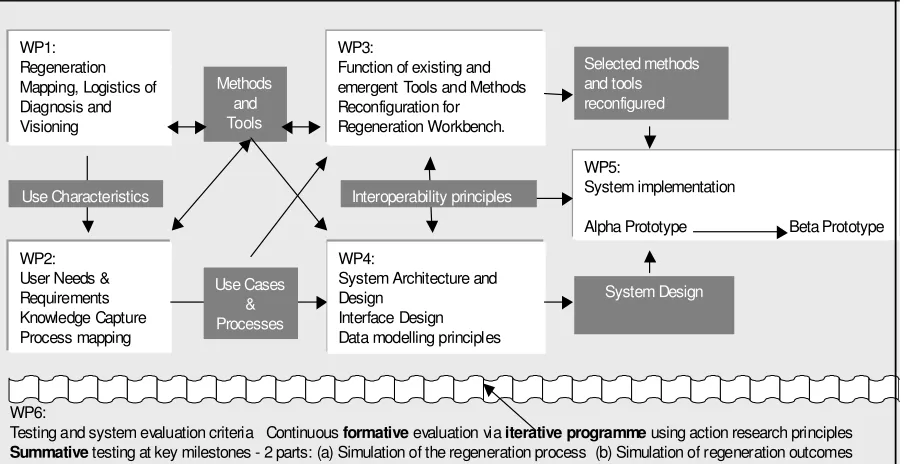
Fig. 3. SURegen project structure and knowledge flows
will drive the implementation of the RSW (to be carried out by WP5). WP6 will see the setting up and running of action learning sets comprised of regeneration practitioners who will provide knowledge of regeneration as it takes place on the ground in their case study area. This work package will also develop the RSW by validating the user requirements against the regeneration process, for their inclusion in prototypes of the RSW, and for their actual ability to support decision-making in the case study area. It is important to stress the iterative nature of the RSW development which will take place as a result of both knowledge collected by project partners from sources external to the project, through their relationships with one another, and from feedback collected via WP6 of experiences using the RSW on ‘live’ regeneration projects.
3.1.Technical development – RAD and modelling & matching
Whilst SURegen has not explicitly stated that the RSW development will take place using a Rapid Application Development (RAD) approach, the iterative nature of the RSW’s development and the complexity and uncertainties of the data it will be using mean that there are opportunities of conceptualising it in this way. RAD is a systems engineering development lifecycle that allows faster technical development at a lower cost and with higher quality results than the traditional development lifecycle and it consists of just four stages: requirements planning phase, user design phase, construction phase and cutover phase, the change from the old to the new system. Martin (1991) argues that the ability to create and modify applications more quickly is one of the most urgent concerns for enterprises as this allows them to react more quickly to maximise competitive opportunities in the market that developing such applications enables. Additionally, the pervasiveness of computer networks and immediate availability and access to information and desk-top decision-making tools shortens decision-making times and the use of ‘quick and dirty’ prototypes allowing technical development to be constantly validated with users during development rather than being checked at the end of the development which traditionally could take 2-3 years. This means that incremental changes can be made to the prototypes as either requirements change or are shown to be inaccurate for some reason or as additional functionality is required. This incremental way of working also allows new components to be developed as data becomes available and for concepts/assumptions to be tested if the tool is to embody information or knowledge that may be contentious, complex or poorly understood. The RAD lifecycle does not favour one particular technique over another, but rather it advocates the use of whichever technique or techniques are most suitable to the given problem e.g. process and data modelling, CASE tools, reverse engineering etc., although it does favour methodologies that are adaptable to changing circumstances, make sense to developers, allow developers to be creative and provide guidelines for success and warn of pitfalls (Martin, ibid).
which the prioritised system functionality is matched to the available technologies, the iteration process and the evaluation process.
4. Conclusions
This paper has provided a description of the SURegen project and the iterative way in which it will collect user needs and data to develop and validate a decision support tool, the Regeneration Simulator Workbench, to help address the regeneration skills gap identified by the Egan Review (2004). It has shown how an RAD approach to technical development can be useful when developing tools aiming to support processes that have uncertain and complex outcomes and it has shown how a similar approach to prototyping for modelling and scenario in the nD modelling project helped to overcome a number of difficulties associated with a complex concept.
References:
Aouad, G., Lee, A., Wu, S., Lee, J., Nadim, W., Tah, J.H.M. & Cooper, R. (2007) Designing fit-for-purpose schools: the nD game, in G.Aouad, A. Lee & S. Wu, Constructing the future: nD modelling, Taylor & Francis, Oxon, pp326-338.
Avison, D.E. & Fitzgerald, G. (2006) Information systems development: Methodologies, techniques and tools (4th edition). McGraw-Hill, Maidenhead.
Ball, M. & Maginn, P.J. (2005) Urban change and conflict: evaluating the role of partnerships in urban regeneration in the UK. Housing Studies, 20 (1), 9-28.
Bell, S. & Wood-Harper, T. (1998) Rapid information systems development: Systems development and systems design in an imperfect world (2nd edition). McGraw-Hill, UK. Bentivegna,V., Curwell, S., Deakin, M., Lombardi, P., Mitchell, G. & Nijkamp, P. (2002) A
Vision and Methodology for Integrated Sustainable Urban Development: BEQUEST. Building Research and Information, 30(2), 83-94.
Buxton, W. (1994) Human skills in interface design, in L.W. MacDonald & J. Vince (eds), Interacting with virtual environments, Wiley, New York, pp1-12.
Chen, Y. (2007) Modelling and matching: A methodology for complex e-planning systems development. Unpublished PhD thesis, University of Salford.
Curwell, S., Deakin, M. & Symes, M. (eds) (2005) Sustainable Urban Development: Volume 1. The Framework and Protocols for Environmental Assessment, Routledge, Oxon. Deakin, M., Mitchell, G., Nijkamp, P. and Vrekeer, R. (2007) Sustainable Urban
Development: Volume 2. The Environmental Assessment Methods, Routledge, Oxon. Egan (2004) - http://www.communities.gov.uk/index.asp?id=1502285
Ekins, P. & Cooper, I. (1993) Cities and sustainability, Joint research agenda for SERC and ESRC, Clean Technology Unit, SERC, Swindon.
Lee, A., Wu, S., Marshall-Ponting, A., Aouad, G., Cooper, R., Tah, J.H.M., Abbott, C. & Barrett, P.S. (2005) nD modelling roadmap: A vision for nD-enabled construction. Construct IT report, University of Salford.
Marshall-Ponting, A.J. (2006) nD modelling as an enabler of inter-disciplinary thinking among construction industry stakeholders. Unpublished PhD thesis, University of Salford.
Martin, J. (1991) Rapid application development. Macmillan, New York. ODPM (2003) The Sustainable Communities Plan - Building for the Future.
Palmer, J., Cooper, I. & van de Vorst, R. (1997) Mapping out fuzzy buzz words – who sits where on sustainability and sustainable development. Sustainable Development, 5 (2), 87-93.
RENEW Northwest (2005) Development of Egan Wheel.
http://www.renew.co.uk/articleimages/2005519_Egan_Wheel_-_for_general_use.jpg
Roberts, P. & Sykes, H. (2000) (eds) Urban Regeneration - a Handbook. Sage, London. Young, M. D. & Wilmott, P. (1957) Family and Kinship in East London (Glencoe, IL: Free
Press).
Wates (2005) The Wates report – Failing Communities: breaking the cycle. Wates Group, Leatherhead, Surrey.