Citation:
Lannon, J and Halpin, EF (2013) Responding to Cross Border Child Trafficking in South Asia: An Analysis of the Feasibility of a Technologically Enabled Missing Child Alert System. Project Report. Missing Child Alert (MCA), Plan International.
Link to Leeds Beckett Repository record: http://eprints.leedsbeckett.ac.uk/544/
Document Version: Monograph
c
Leeds Metropolitan University / Plan (2013)
The aim of the Leeds Beckett Repository is to provide open access to our research, as required by funder policies and permitted by publishers and copyright law.
The Leeds Beckett repository holds a wide range of publications, each of which has been checked for copyright and the relevant embargo period has been applied by the Research Services team.
We operate on a standard take-down policy. If you are the author or publisher of an output and you would like it removed from the repository, please contact us and we will investigate on a case-by-case basis.
RESPONDING TO CROSS-BORDER
CHILD TRAFFICKING IN SOUTH ASIA
An Analysis of the Feasibility of a Technologically
Enabled Missing Child Alert System
John Lannon and Edward F. Halpin
RESP
ONDING T
O
CR
OSS
-BORDER CHILD TR
AFFICKING IN SOUTH ASIA
Plan Asia Regional Office
14th Floor, 253 Sukhumvit 21 Road (Asoke), Klongtoey Nua, Wattana, Bangkok 10110, Thailand
Tel: +66 (0) 2 204 2630-4 Fax: +66 (0) 2 204 2629 www.plan-international.org/asia
PlaninAsia
@PlanAsia
City Campus Leeds
United Kingdom LS1 3HE
www.leedsmet.ac.uk
RESPONDING TO CROSS-BORDER
CHILD TRAFFICKING IN SOUTH ASIA
An Analysis of the Feasibility of a Technologically
Enabled Missing Child Alert System
Contents
Acronyms v
Executive Summary ix
1 Introduction 1
1.1 Background 3
1.2 Core Principles 5
1.3 Feasibility Study Objectives and Approach 8
1.4 Methodology 12
1.4.1 Definition 12
1.4.2 Exploration 15
1.4.3 Modelling 15
2 Research Findings and Analysis 17
2.1 The Legal, Political and Bureaucratic Landscape 19
2.1.1 Nepal 22
2.1.2 Bangladesh 25
2.1.3 India 26
2.1.4 Cross-Border Perspective 30
2.1.5 Opportunities, Challenges and Constraints 35
2.2 Information Management and Child Protection 38
2.2.1 Standard Reporting 40
2.2.2 Child-centred Information Flows 41
Authors
John Lannon and Edward F. Halpin Leeds Metropolitan University
Research Partners
Nazmunnessa Mahtab, Professor of Gender Studies, University of Dhaka, Bangladesh
Bandita Sijapati and Roojaa Darshan
Bajracharya, Centre for the Study of Labour and Mobility, Social Science Baha, Nepal
Pravin Patkar, Amrita Vishwa Vidyapeetham University, India
Cover photo: Plan / Alf Berg
February 2013
2.3 Technical Development 45
2.3.1 Existing Missing Child/Persons Systems in India, Nepal 45 and Bangladesh
2.3.2 Design Considerations 53
2.3.3 Local IT Capacity 62
2.3.4 Interfacing to Other In-Country Systems 63
2.3.5 Missing Child Alert Systems Around the World 65
2.4 Stakeholder Involvement and Governance 67
2.4.1 National 68
2.4.2 Regional 71
2.5 Long-Term Vision 73
3 Technical Architecture 77
3.1 Option 1: Decentralised Model 79
3.2 Option 2: Centralised Model 84
3.3 Option 3: Collaboration with Homelink/YaR 88
4 Roadmap and Conclusions 91
Bibliography 96
Appendix 1: DEMIR™ Framework 98
Appendix 2: List of Interviews 99
Appendix 3: Results of Delhi (Kickoff) Workshop Consultation 104
Appendix 4: High Level Requirements Specification for National 108 Missing Child Tracking System
CONTENTS
Acronyms
AATWIN Alliance Against Trafficking in Women and Children in Nepal
ADB Asian Development Bank
AED Academy for Educational Development
ARO Asia Regional Office
ATSEC Action against Trafficking and Sexual Exploitation of Children
BASIS Bangladesh Association of Software and Information Services
BGB Border Guards Bangladesh
BPO Business Process Outsourcing
CBCT Cross-Border Child Trafficking
CBO Community-Based Organisation
CCWB Central Child Welfare Board
CEDAW Convention on the Elimination of All Forms of Discrimination against Women
CHI Child Helpline International
CID Criminal Investigation Department
CINI Child In Need Institute
CMAS Commercial Mobile Alert System
CO Country Office
CRC Convention on the Rights of the Child
CRPD Convention on the Rights of Persons with Disabilities
CSO Civil Society Organisation
CWC Child Welfare Committee
DC District Commissioner
DCWB District Child Welfare Board
vi vii
EU European Union
FIR First Information Report
HTTCA Human Trafficking and Transportation (Control) Act
ICMEC International Centre for Missing and Exploited Children
ICPS Integrated Child Protection Scheme
ICT Information Communications Technologies
ICT4D Information Communications Technologies for Development
ILO International Labour Organization
IP Internet Protocol
IT Information Technology
IPTV Internet Protocol Television
ISP Internet Service Provider
ITES IT Enabled Services
ITSM IT Service Management
ITPA Immoral Trafficking Prevention Act
JJB Juvenile Justice Board
MCA Missing Child Alert
MHA Ministry of Home Affairs
MIS Management Information System
MoU Memorandum of Understanding
MWCA Ministry of Women and Children Affairs (Bangladesh)
MWCD Ministry of Women and Child Development (Government of India)
MWCSW Ministry of Women, Children and Social Welfare (Nepal)
NCMEC National Centre for Missing and Exploited Children
NCW National Council for Women
NGO Non-Governmental Organisation
NHRC National Human Rights Commission
NIC National Informatics Centre
NNAGT National Network Against Girls Trafficking
NPA National Plan of Action
RAF Regional Action Forum
RRRI Rescue, Recovery, Repatriation, and Integration
SAARC South Asian Association for Regional Cooperation
SaaS Software as a Service
SACH South Asia Child Helplines
SAFAHT South Asia Forum Against Human Trafficking
SAIEVAC South Asia Initiative to End Violence Against Children
SAGC South Asia Coordinating Group on Action against Violence
SDF SAARC Development Fund
SMS Short Messaging Service
SOP Standard Operating Procedure
TIP Trafficking in Persons
UIDAI Unique Identification Authority of India
UISC Union Information Service Centre
UN United Nations
UNDP United National Development Programme
UNICEF United Nations Children’s Fund (shortened from the original United Nations International Children’s Emergency Fund)
UNICEF ROSA UNICEF Regional Office for South Asia
UNIFEM United Nations Fund for Women
UNODC United Nations Office on Drugs and Crime
UNTOC UN Convention against Transnational Organized Crime
USAID/OTI United States Agency for International Development/Office of Transition Initiatives
URC-ICT Union Resource Center for ICT
VPN Virtual Private Network
XML eXtensible Markup Language
ACRONYMS ACRONYMS
An Analysis of the Feasibility of a Technologically Enabled Missing Child Alert System
Executive Summary
This report examines the feasibility of a technologically enabled system to help respond to the phenomenon of cross-border child trafficking in South Asia, and makes recommendations on how to proceed with a pilot project in the selected areas of Bangladesh, Nepal and India. The study was commissioned by the Missing Child Alert (MCA) programme which is an initiative led by Plan International (referred to as Plan in this report). Plan works in 50 developing countries to promote child rights and lift millions of children out of poverty.
As part of a body of research undertaken between August and November 2012, interviews were conducted with more than 50 organisations and individuals. These included police, child welfare officials, government ministries, local and municipal government officials in each of the three countries; local and national non-governmental organisations (NGOs) working in the area of child protection; regional and international agencies; technology providers; and authorities that had experience of implementing missing child alert systems in other parts of the world.
The findings of the research are grouped in five broad areas. These are the legal, political and bureaucratic landscape; information management and child protection; technical development; stakeholder involvement and governance; and the long-term vision for the MCA programme and the technologically enabled system.
Legal, political and bureaucratic landscape
The main findings of this first area relate to the need to sensitise and change the attitude of the law enforcement authorities so that missing children who are thought to be trafficked are properly recorded, and that families feel able to immediately report to them. This is linked to a need for awareness raising campaigns at community level, aimed in the first instance at effective and prompt reporting and in the longer term at prevention. Two opportunities in particular were identified for this, both in Bangladesh. One is through partnership with a community-based ICT service provider called D.Net; the other is with the government-run Union Information and Service Centres.
x An Analysis of the Feasibility of a Technologically Enabled Missing Child Alert System xi EXECUTIVE SUMMARY
countries (Nepal and Bangladesh) or found in the destination country (India) is noted. The research also highlights the non-existence of repatriation procedures between India and Nepal, and the failure to implement the procedures that do exist between India and Bangladesh. These are major impediments to the safe and speedy reunification of children who have been trafficked.
The report recommends that in each of the three countries, the MCA programme appoint a person with the necessary authority and reputation to be able to engage with national stakeholders, while accurately reflecting reality on the ground at local level. This involves liaising with lead government authorities, and developing relationships with key political, civil service, NGO and civil society personnel who can help to exploit the opportunities and deal with the challenges identified.
Information management and child protection
The report recommends that the MCA programme should take a proactive role in efforts to develop coded typologies or thesauri to support consistent and standard reporting of missing children in South Asia. It emphasises that the analysis and verification of information relating to a missing child should be done by police in the source country, whereas the recording of a trafficked child, the sending of alert messages, and the subsequent analysis of data and generation of periodic reports can be handled by a technologically enabled, regional
cross-border child trafficking response mechanism. The processes of reporting and alerting could be implemented as one technological system with distinct functionality and user roles. The report also notes that key stakeholders, particularly the police, must be involved in the design of the child trafficking response system. In particular there is a need to work with the law enforcement agencies in each of the target countries, and through SAARC mechanisms such as the Chief of Polices conferences, in order to reach agreement on the minimum criteria for launching a cross-border alert. This will only be possible if there is State support for the concept in all three countries, and involvement at the highest level from the start.
Technical development
There are no national databases or web portals for missing children in Bangladesh or Nepal, but there are a number of initiatives at State level in India. The
Government of India has proposed a national missing child system but has not yet taken effective concrete action to make this a reality. As a result the current situation facing missing children in India can be described as sectoral and fragmented.
The only national missing child system currently in existence in India is the Homelink initiative overseen by Don Bosco/YaR Forum. While this has not been adopted to any great extent by the State authorities, the MCA programme should consider it a key component in the overall infrastructure for missing children in the region.
A number of key design considerations for the cross-border child trafficking system are discussed in the report. These include accessibility, security, data protection and availability. It is recommended that the initial focus should be on the use of simple, accessible Internet Protocol (IP) based interfaces for approved alert recipients. Nonetheless system designers should ensure that viable options exist for sending out alert information to large numbers of individuals and companies through mobile phone networks, data feeds to the broadcast media, and interfaces to emerging communications channels like social media. It also recommends that the matching of missing and found children should be based where possible on biometric data, and that the system should be linked to the unique ID and birth registration systems in India and Bangladesh. Automatic photograph matching can also be done but stored photographs should not be publically displayed.
The report also looks at missing child alert systems in Europe and the USA. While their focus is on abducted children and the expectation that the public can help find the child, the MCA programme can nonetheless learn lessons from their experience and from the mechanisms that have been put in place. One lesson in particular is that it has taken three to seven years to implement missing child alert systems in European countries where there is a strong law enforcement
motivation to solve these crimes. While the Government of India may now be able to deliver on a national missing child system in a similar timeframe, given the amount of work already done on the issue at various levels, the same is not likely to be the case in Bangladesh or Nepal.
Stakeholder involvement and governance
The long-term goal for the MCA programme should be to have in-country missing child systems managed by the government in each country, with regional coordination through a cross-border child trafficking response system managed by the South Asia Initiative to End Violence Against Children (SAIEVAC). As noted already, the former (in-country missing child systems) cannot be fully and effectively delivered in a short number of years. Equally the management of a regional cross-border child trafficking system by SAIEVAC is not a realistic option for the foreseeable future. Nonetheless it is recommended that the MCA
EXECUTIVE SUMMARY
EXECUTIVE SUMMARY EXECUTIVE SUMMARY
programme begins to work with SAIEVAC to help build their capacity to do so. The target should be to hand over the coordination of the regional aspect of the system to SAIEVAC within an agreed timeframe.
SAIEVAC support for the MCA programme can help make child trafficking more prominent on the regional agenda. It can also work with governments to get it on their agenda through its own mechanisms and the mechanisms of SAARC. SAIEVAC also works with civil society, children and the international agencies. As a result it has all the components necessary to make the CBCT response system sustainable as well as participatory.
Long-term vision
Attention is drawn to the need for child protection mechanisms in the region to address all categories of missing children, as well as children who are vulnerable to abuse and exploitation in other ways. While the MCA programme is seeking to address one particular category, there is potential to do so in a coordinated and convergent way through a close working relationship with SAIEVAC. There are a range of regional mechanisms through which agencies in the different SAARC countries are linked together. SAIEVAC can play an important role in coordinating the efforts of these mechanisms.
Overall it is recommended that the system limit its activities to those that require cross-border communication and collaboration. This means it should support information flows relating to trafficked children that may have been taken across a border, found children whose identity is not known, and rescued children whose needs may be best addressed through repatriation and reunification. Clarity is required around if and how children that are trafficked internally within the countries are handled by the MCA initiative. It is also recommended that further consideration be given to the name of the intervention since it is related specifically to cross-border child trafficking rather than missing children per se.
In terms of the technical architecture for the system, three possible options are outlined. Option 1 is to build a network of in-country missing child systems that would exchange information about missing or found children. The MCA
programme would support the development and deployment of these systems by the national governments, and would work with stakeholders to develop protocols for the exchange of information. Option 2 is to design and implement a
centralised cross-border child trafficking response system in which authorities in each country can record incidents of suspected cross-border child trafficking. This system would send notifications to recipients in the country(s) the child is likely to have been brought to. It would also coordinate cross-border activities
such as the search, rescue and repatriation of the child. Option 3 is to implement a missing child search system across the region by extending and modifying the existing Homelink system.
Based on the research the report concludes that a pilot project can make significant progress towards providing a technologically robust system to track, rescue and repatriate children that are trafficked from one country to another. The system must be acceptable politically and operationally, as well as usable by communities, non-governmental organisations and responsible authorities. The process to put this system in place must begin by exploring each of the technical options presented in greater depth, by engaging with the governments and in particular key people in the relevant ministries, SAIEVAC, and Don Bosco/ YaR Forum. While Option 2 is deemed likely to present the highest chance of success, stakeholder acceptance is crucial for its sustainability. With this in mind all options must be considered further before proceeding.
The last section of the report presents a roadmap outlining the next steps that should be taken to get the pilot project under way. One of the first steps recommended is to establish a web portal on child trafficking in South Asia. This web portal should represent the public face of the cross-border child trafficking response system, thereby helping to establish it with international, regional and national stakeholders. It should also provide information relating to child trafficking (and in particular cross-border child trafficking), national initiatives aimed at addressing the phenomenon, and regional developments. The information presented should reflect the breadth of effort being undertaken by stakeholders, including regional and international agencies.
Introduction
1
The Missing Child Alert (MCA) programme is an initiative to address cross-border child trafficking in South Asia, led by Plan. The aim of the programme is to link existing institutions, mechanisms and resources in order to tackle the phenomenon from a regional perspective. To achieve this, Plan propose to implement a technologically equipped, institutionalised system of alert that can assist in the rescue, rehabilitation, repatriation and reintegration of children who are at risk of, or are victims of, cross-border trafficking. As it is a new and ambitious concept, it is proposed to undertake a pilot project over a period of approximately three years. This pilot project will be implemented in selected parts of Bangladesh and Nepal, both of which are primarily (though not exclusively) source countries for child trafficking, and India which is a destination and transit country for international trafficking. The pilot project is supported by a grant from the Nationale Postcode Loterij in The Netherlands.
This report examines the feasibility of a pilot MCA system and makes
recommendations in relation to its architecture. It also outlines a roadmap that can lead to an expanded child protection system covering the entire South Asian Association for Regional Cooperation (SAARC) region.1 The
main objectives of the report are:
1. To map existing opportunities to establish and operate a technology-enabled system that can address the issue of cross-border trafficking in India, Bangladesh and Nepal;
2. To explore the best technological solutions and to develop a blueprint for recommended solutions; and
3. To analyse the political, social, legal and economic context impacting on the sustainability of the system.
Literature reviews and desk research have been used to examine the political, economic, social,
technological and legal environments, while field research and interviews conducted between July and November 2012 provide in-depth understanding of the opportunities, risks and constraints that exist at national and regional levels.
1 The SAARC member states are Afghanistan, Bangladesh, Bhutan, India, Maldives, Nepal, Pakistan and Sri Lanka.
1.1 Background
Children go missing for many reasons. In South Asia, many are abducted and put into forced labour. Others are persuaded to leave home by somebody they know, and are subsequently exploited in the sex trade or sold to work as domestic help. Some simply run away from home, or are forced to leave because of difficult circumstances such as domestic violence or the death of a parent.
The issue of missing children is linked to, although not limited to, child trafficking. This is a highly secretive and clandestine trade, with root causes that are varied and often complex. Poverty is a major contributor but the phenomenon is also linked to a range of other ‘push’ (supply side) and ‘pull’ (demand side) factors. The push factors include poor socio-economic
conditions; structural discrimination based on class, caste and gender; domestic violence; migration; illiteracy; natural disasters such as floods; and enhanced vulnerability due to lack of awareness. The pull factors include the effects of the free market economy, and in particular economic reforms that generate a demand for cheap
labour; urbanisation; and a demand for young girls for sexual exploitation and marriage.
Children can be trafficked by a stranger or by someone who knows them, such as a relative or acquaintance. The traffickers are often part of an organised criminal network that recruits children and transports them across the border. They acquire their victims in a variety of ways. These include kidnapping, offering work opportunities and travel costs (sometimes with other financial incentives), and even purchasing the children from parents or relatives on the basis of false promises of work – sometimes for as little as 1,000 rupees (US$20). Families’ expectations may be based on what they hear or see in the media, the false testimonies of others who have returned from work abroad, or the misguided hope that anything must be better than what they have at home. Gender-based social practices also lead parents to be persuaded by traffickers under false pretexts of marriage without a dowry. The fact that many families fail to report these practices, thereby perpetuating and
4 5
2 Hameed, S., Hlatshwayo, S., Tanner, E., Turker, M., & Yang, J. (2010). Human Trafficking in India: Dynamics, Current
Efforts, and Intervention Opportunities for the Asia Foundation: Stanford University.
3 See Plan International. (2011). Context Analysis of the Child Trafficking Situation in India, Bangladesh and Nepal. 4 The Protocol to Prevent, Suppress and Punish Trafficking in Persons, especially Women and Children (also referred
to as the Trafficking Protocol or UN TIP Protocol) is a protocol to the Convention against Transnational Organised Crime. Available at http://www2.ohchr.org/english/law/protocoltraffic.htm.
5 Mazud Ali, A. K. M. (2005). Treading along a Treacherous Trail: Research on Trafficking in Persons in South Asia.
International Migration, 43(1/2), 141 –164.
institutionalising the act of trafficking, hinders efforts to thwart the
traffickers.2
Child trafficking is often facilitated, either intentionally or unintentionally, by officials and others who profit from the business. In India, brothels may receive protection, for example, and traffickers and brothel owners frequently evade arrest.3 The scale of
trafficking as an organised crime, and the number of small, unconnected gangs engaged in the practice makes prevention extremely difficult. While India has recently ratified the United Nations (UN) Protocol on Trafficking4
(also known as the Palermo Protocol), there is to date no crime called ‘trafficking’ in the country. As a result the National Crime Records Bureau (NCRB) have no reliable data on the practice.
In recent years, the trafficking of South Asian children has expanded beyond the national borders of the countries in the region, with trafficking between countries now commonplace. In this context, India can be characterised as a trafficking destination, while Nepal and Bangladesh are two major source
countries. Estimates of the number of girls trafficked to India annually vary from 5,000 to 20,000,5 and of the 2
million women and girls involved in sex work in India it is thought that almost 5% come from Nepal and Bangladesh. However, attempts to identify the country of origin of trafficked children in India can be difficult for a variety of reasons. Firstly, they are not always willing to reveal their national identity, often because of fear of the traffickers or law enforcement. Secondly, there are lingual and physical similarities between people from different countries (for example between Bangladeshis and Bengalis of West Bengal, India). Thirdly, there are only a few border checkpoints monitoring the flow of migrants and
trafficked persons.
In his study of human trafficking along the international borders between West Bengal and Bangladesh,
Chakraborty (2012) lists several ways in which trafficked children are exploited. One of the most common is sexual exploitation, including pornography, forced prostitution, religiously sanctioned prostitution, and sex tourism. Other illegal activities such as
1.2 Core Principles
The fundamental principles and values of the MCA programme are derived from the Universal Declaration of Human Rights (UDHR), the
international human rights instruments of the UN, and in particular the Convention on the Rights of the Child (CRC) and the Convention on the Elimination of All Forms of Discrimination against Women
(CEDAW). Its actions must therefore be consistent with the values derived from these. Article 19 of the CRC is
particularly relevant. It directs state parties “to protect children from all forms of physical or mental violence, injury or abuse, neglect or negligent treatment, maltreatment or
exploitation, including sexual abuse”, and which calls for other forms of prevention as well as procedures for “identification, reporting, referral, investigation, treatment, and follow-up of instances of children maltreatment”.
There are other principles and values that inform MCA programme interventions. These are:
1. Child protection
As an organisation, Plan is committed to actively safeguarding children from harm and to ensuring that children’s rights to protection are fully realised. They promote child-safe practices and strive to ensure that children are protected from harm, abuse, neglect, violence, and exploitation in any form.
Plan’s overall child protection goal is for every child to enjoy the right to protection from all forms of violence in all settings through effective,
competent and well-resourced child protection systems. The specific objectives of its policy are to enhance the capacities of duty bearers at different levels with a view to establishing and strengthening child protection systems to prevent violence
RESPONDING TO CROSS-BORDER CHILD TRAFFICKING IN SOUTH ASIA An Analysis of the Feasibility of a Technologically Enabled Missing Child Alert System
INTRODUCTION Core Principles
begging, smuggling/drug peddling and trafficking for sale of body parts also feature. Many children end up in bonded labour, agricultural labour, domestic work, brick field production,
6 See ‘Safe and Sound – Growing up with Protection’. Child Protection Programme Framework produced by Plan
International – Asia Regional Office.
7 Wulczyn, F., Daro, D., Fluke, J., Feldman, S., Glodek, C., & Lifanda, K. (2010). Adapting a Systems Approach to
Child Protection: Key Concepts and Considerations. New York: UNICEF.
8 See Plan International. (2012). The ‘Missing Child Alert’: Inventing technology to end cross-border trafficking of
boys and girls from Bangladesh, Nepal to India Regional Proposal: ‘Missing Child Alert’.
against children and to respond to child protection issues in the best interest of every child; to establish, sustain and scale up effective community-based child protection mechanisms to contribute towards fully functional national child protection systems; to ensure meaningful involvement of children, particularly those from excluded and marginalised groups, in their own protection; and to conduct advocacy with duty bearers for the establishment and enforcement of child protection legal and policy frameworks and allocation of resources to ensure fully functioning child protection systems are in place.
The development of robust programming guidelines on child protection by Plan will add to the consistency and coherence of the MCA interventions. It is clear from work done at regional level6 that Plan is
committed to promoting and
integrating a rights-based approach as a foundation for all child protection interventions. In addition, there is an emphasis on the need for initiatives that are geared towards meeting the rights and needs of children who have suffered harm to also include activities focused on prevention. This ensures that not only are situations of abuse
responded to when they occur, but that steps are taken to prevent abuse in the first place.
2. Holistic approach
International organisations are increasingly turning to a systems approach in their efforts to establish and strengthen child protection programmes.7 Instead of focusing on
approaches targeting single issues like child trafficking, child labour or HIV/ AIDS, the systems approach promotes a holistic view of child protection that engages the full range of actors involved in protecting a child’s rights.
3. Child participation
The MCA programme assumes children and young people to be equal partners in the initiative rather than simply passive recipients of benefit. In keeping with a rights-based approach, their participation is an integral part of the programme and is expected to take place not only at implementation level but also at programme management and programme governance levels.8
Children’s participation should go beyond mere formal consultation, and should be active, free, and meaningful. Processes and structures should be accessible to children affected by
trafficking, and information exchange should be transparent and timely. This means continuous engagement with children and their guardians at community level so that they become empowered to respond to and ultimately eradicate child trafficking. It also calls for the development of mechanisms that are accessible to children and young people who are at risk or are already victims of trafficking.
4. Gender sensitivity
Particular attention is given to the ways in which women and girls act and are treated in their communities and in places where they are vulnerable or at risk. Full participation of girls is essential, and in order to achieve this, the MCA must incorporate an
understanding of gender stereotypes in society, and must take cognisance of the impact of discrimination and gender roles.
5. Inclusiveness
An inclusive approach not only means that diverse individuals and groups are involved, but also that the perspectives and contributions of all people are valued, and that the needs, assets and perspectives of all affected
communities and stakeholders are incorporated into the design and implementation.
Every effort should be made to reach the most marginalised, excluded, disadvantaged groups of society and to
include them in the programme. This should not be as mere beneficiaries but as active participants in the process of implementation at community level.
6. Confidentiality
The holding of personal information about children and families brings with it a duty to ensure that the dignity, well-being, or privacy of the individual is not undermined through the disclosure of the information, or through a failure to protect it. The safety, well-being, and protection of the child are the primary
considerations. For this reason, it is important to ensure that any
information that is shared is necessary for the purpose for which it is intended, that it is shared only with those people or organisations that need to have it, that it is accurate and up-to-date, and that it is shared in a timely and secure manner.
7. Transparency, Integrity and Accountability
All responsible parties should be held to account for their performance in order to ensure continual improvement and ongoing learning in pursuit of common goals. To achieve this, appropriate impact assessment measures should be applied to all plans, proposals, policies, and programmes to determine if the desired progress is being made by the MCA programme in terms of child protection.
8 9 Transparency is a necessary
precondition for the exercise of accountability since without access to clear, accurate and up-to-date information it is impossible to judge whether the desired outcomes of an intervention are being achieved. This requires openness and effective communication in all aspects of the project.
For multi-stakeholder initiatives like the MCA programme, integrity is also an important consideration. This refers to the honesty or trustworthiness of those involved in delivering a service. Processes of due diligence should be undertaken with all responsible parties,
including technology providers, to ensure this is the case.
8. Sustainability
Plan’s Asia Regional Office (ARO) emphasise that in any project, consideration should be given to the potential that exists for scaling up the work and to its sustainability. They also note that entry points should be identified to advocate for the establishment and development of sustainable mechanisms to ensure structures and systems are in place to prevent, protect and reintegrate children at risk, or those who experience violence, abuse of harm.
1.3 Feasibility Study Objectives and Approach
constraints, and risks associated with the establishment, on a pilot basis, of a cross-border missing child alert system covering selected parts of Bangladesh, India and Nepal;
2. to identify existing alert systems, both cross-border and national, and to assess their value as a basis for the foundation of a missing child alert network in South Asia; The overall aim of this study is to
examine the feasibility of establishing a technology enabled missing child alert system, initially on a pilot basis, and to outline a roadmap that can lead to an expanded child protection system covering the entire SAARC region. Seven specific objectives were identified for the study:
1. to provide Plan with a solid overview of the opportunities,
3. to outline the legal, financial, social and political context as relevant to the design, establishment, management and sustainability of the MCA system;
4. to liaise with key actors in order to understand their ICT usage and data assets, and to examine how an MCA system would complement their working practices and ICT capacity while ensuring a sustainable business model that would ideally provide this service for free;
5. to create a specification document that outlines the functionality and high level architecture of a missing child alert system, and makes recommendations in relation to its implementation;
6. to outline the likely implementation and running costs of such a system at a high level, paying special attention to network costs;
7. to recommend a timeframe and next steps for development of a missing child alert system, looking specifically at whether it is feasible (i) to build a basic functional system using an existing system, and (ii) to stagger the development such that an early but limited functional release could be utilised to prove the viability of the system.
The overall MCA programme is envisaged as having a range of activities linked to four result areas.
RESPONDING TO CROSS-BORDER CHILD TRAFFICKING IN SOUTH ASIA An Analysis of the Feasibility of a Technologically Enabled Missing Child Alert System
INTRODUCTION Feasibility Study Objectives and Approach
Feasibility Report
Pilot Phase
Regional Intervention
These result areas are: the prevention and protection of children from being trafficked in source areas and during transit; the establishment and institutionalisation of a technology enabled alert system; repatriation, rehabilitation and reintegration of victims of cross-border child
trafficking; and advocacy to strengthen regional instruments and policies to ensure justice.
While the findings and
recommendations of this feasibility study impact on all four result areas, the primary focus is on the
[image:14.595.48.371.289.386.2]A Systems Approach to Child Protection
A system is a collection of components or parts organised around a common purpose or goal. As the MCA’s goal is improved protection of children from trafficking and exploitation it can be described as a child protection system.
System components can be best understood in the context of relationships with each other rather than in isolation. Several key elements of systems apply to child protection systems (Wulczyn et al, 2010). These include the following:
● systems exist within other larger systems, in a nested structure. Children are
embedded in families or kin, which live in communities, which exist within a wider societal system.
● given the nested nature of systems, attention needs to be paid to coordinating
the interaction of related systems so that their work is mutually reinforcing.
● systems accomplish their work through a specific set of structures and
capacities, the characteristics of which are determined by the context in which the system operates. In the case of cross-border child trafficking, the context varies between countries, government departments and in some cases even interventions.
● changes to any system can potentially change the context, while changes to the
context will change the system.
● well-functioning systems pay particular attention to nurturing and sustaining
acts of cooperation, coordination and collaboration among all levels of stakeholders.
● systems achieve their desired outcomes when they design, implement, and
sustain an effective and efficient process of care in which stakeholders are held accountable for both their individual performance and the performance of the overall system.
● effective governance structures in any system must be flexible and robust in
order to cope with uncertainty, change, and diversity.
The adoption of a systems approach means that the challenges presented by the MCA initiative are addressed holistically. The roles and assets of all the key actors, including governments, NGOs, community structures, families and caregivers, technology providers, and most importantly children themselves, are all taken into consideration.
system but the dependency on the in-country missing child systems is such that they cannot be ignored.
This feasibility report is intended to lead to the establishment of a pilot project which will be undertaken in selected parts of Bangladesh, Nepal and India. This will, in turn, lead to the launch of a broader regional intervention.
A systems approach known as DEMIR™ (Definition – Exploration – Modelling – Implementation – Review) is used to provide a methodological framework for the feasibility study. This assumes that any system can be best
understood by examining the relationships between the component parts and with other systems, rather than in isolation.
DEMIR™ was developed at Leeds Metropolitan University to address the challenges faced when seeking to implement technology enabled systems in complex or ‘messy’ social contexts. It consists of five stages, three of which cover the feasibility study itself, and two of which can be used to guide the subsequent pilot project. The DEMIR™ framework facilitates inclusion of a wide range of perspectives in the feasibility study and is consistent with the core principles outlined already. It has been developed
through solid academic research, based on consultation with practitioners around the world.
Appendix 1 provides a more comprehensive description of the methodological framework.
Pilot Project
The pilot project plans for each of the three countries are as follows:
1. Bangladesh: The project will be implemented in a total of 20 unions across five upazilas9 in the border
belt districts of Jessore and Satkhira. Women and children are routinely trafficked through these areas into West Bengal in India. The upazilas selected are Sharsha (4 unions) and Jessore Sadar (4 unions) in Jessore, and Satkhira Sadar (4 unions), Kaligonj (5 unions) and Kolaroa (3 unions) in Satkhira.
2. Nepal: Three districts in which Plan is already implementing anti-trafficking programmes have been selected. These are
Makwanpur, Banke and Morang. Two of these (Banke and Morang) border India, and while Makwanpur is not a border district, it has high levels of trafficking and is close to the border.
9 The districts of Bangladesh are divided into sub-districts called Upazila Parishads. These in turn are divided into
Union Parishads.
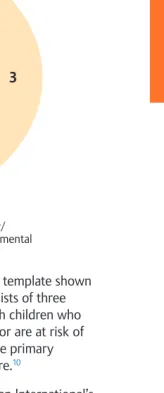
12 13 Civil society/
non-governmental
1 2 3
State service providers/ government authorities
Regional/International Agencies
Plan
Children Technology Providers
1.4 Methodology
10A fourth orbit has also been identified for the wider MCA programme. This consists of the institutional donors
like the EU, DFID, SIDA, and USAID, as well as the UN treaty monitoring bodies (such as the CRC Committee). These stakeholders are important in terms of bringing international pressure to bear on State parties to adopt and embrace the MCA concept.
The research for this report consisted of a series of activities undertaken to address the study objectives. These activities were organised into three stages using the DEMIR™ framework, namely definition, exploration and modeling.
1.4.1 Definition
The main objectives of the first stage of the investigation were to map the key stakeholders from governmental, inter-governmental and
non-governmental sectors, to identify the different perspectives on what the
cross-border child trafficking response system is expected to achieve, to outline the scope of the pilot project, and to reach some broad
understandings of what needed to be done during the feasibility study.
The methods used to achieve this consisted of desk research and primary data collection. In the case of the former, a contextual analysis of each of the three target countries was
undertaken. This included an
[image:16.595.513.755.89.286.2]examination of key documentation on issues of cross-border trafficking, factors affecting the use of information
Figure 2:Stakeholder mapping template
and communication technologies (ICTs), the legal landscape, the role of various governmental, regional and inter-governmental bodies and
mechanisms. It also included analysis of reports from government ministries, human rights commissions, national child protection commissions and other such bodies.
In the course of the definition stage, key stakeholders were identified and classified in accordance with the
stakeholder mapping template shown in Figure 2. This consists of three peripheral orbits, with children who have been trafficked or are at risk of being trafficked as the primary stakeholders at its core.10
Orbit 1 consists of Plan International’s country offices (CO’s) in India, Bangladesh and Nepal, its Asia Regional Office (ARO), and the National Office (NO) in the Netherlands.
RESPONDING TO CROSS-BORDER CHILD TRAFFICKING IN SOUTH ASIA An Analysis of the Feasibility of a Technologically Enabled Missing Child Alert System
INTRODUCTION Methodology
3. India: Missing children information will be gathered from 23 border district areas, spread across the states of Uttar Pradesh and Bihar, both of which border Nepal, and West Bengal which borders Bangladesh. It is proposed to send alert information in the first instance to transit intervention points in New Delhi, Mughalsarai, Katihar, New Jalpaiguri, Malda Town and Guwahati, and in the second instance to destination areas across the country.
Orbit 2 contains organisations responsible for the day to day implementation of activities linked to the MCA programme objectives. This is comprised of three parts. The first contains state service-providing agencies and government authorities.
The second is civil society, meaning the groups and organisations that occupy a position between the household, the state and the private sector.11
This includes non-governmental organisations (NGOs) and
community-based organisations (CBOs) as well as academic institutions, faith-based groups and media
organisations. The third part consists of private sector companies that have the potential to provide technological components or other required services to enable the implementation and operation of the system.
Orbit 3 covers organisations and networks that are working regionally to ensure cooperation among state parties.
The primary data collection during the definition stage consisted of in-depth discussions with the Orbit 1
stakeholders. This was done through a kickoff workshop held in Delhi from
July 11th to 13th 2012, at which representatives from the Plan target country offices, ARO and the National Office in The Netherlands participated.
This consultation was enhanced through the preparation of proposal documents by each of the three Plan country offices (India, Bangladesh and Nepal) and by the Regional Office.12
Finally it is important to note that all three countries have a significant history of involvement of children’s groups and clubs in different aspects of child protection. While these are part of the core or heart of the stakeholder map, this research has not had an opportunity to consult with them directly. However any MCA
intervention must ensure that children become truly engaged as subjects in their own right, bearing in mind that they do not hold ultimate responsibility for their own protection which still remains with adults. It is therefore important to involve children’s groups – some of which already play an important part in community-based surveillance groups (in Nepal and India at least), so that the MCA can build on their existing efforts rather than starting from scratch.
1.4.2 Exploration
The exploration stage provided an opportunity to capture the perspectives of a wide range of stakeholders, and to consult with technical and child protection experts in the region. Interviews were conducted with more than 50 organisations between the months of August and November 2012, with follow-up discussions taking place as required. These interviews covered Orbits 2 and 3 of the stakeholder map shown in Figure 2. In the state sector those consulted included police, child welfare officials, government ministries, local and municipal government officials. In the civil society sector it covered local and national NGOs working in the area of child protection, as well as CBOs.
Technology providers in each of the three countries were also interviewed in order to gain an understanding of local capacities and the technological opportunities and constraints. A number of regional and global solution providers were also consulted. The objectives here were to identify potential technology partners and to assist in the process of developing a blueprint for the pilot phase of the project.
Finally, a number of interviews were conducted with regional and international agencies, and with authorities that had experience of implementing missing child alert systems. These focused on issues relating to inter-State cooperation and sustainability.
A full list of interviews is provided in Appendix 2.
1.4.3 Modelling
Initial findings from the exploration stage were presented and discussed with the Plan MCA programme regional coordinator and the country office representatives. This took place at a review meeting in Dhaka on 27th and 28th August 2012.
At the review meeting, tentative models were presented for the in-country missing child and CBCT response systems, leading to increased clarity around the areas requiring further exploration. Further analysis of the findings from the exploration stage, which are presented in the next section, resulted in the
recommendations and roadmap outlined in Sections 3 and 4.
11From http://www.dfid.gov.uk/what-we-do/who-we-work-with/civil-society/.
12See Plan Bangladesh. (2012). The Missing Child Alert: Fight against Crossborder Trafficking: Bangladesh Country
Proposal: Plan Bangladesh, Plan India. (2012). Proposal on Missing Children Alert in India with a Special Focus on Cross Border Trafficking from Nepal and Bangladesh: Plan India, Plan International. (2012). The ‘Missing Child Alert’: Inventing technology to end cross-border trafficking of boys and girls from Bangladesh, Nepal to India
Regional Proposal: ‘Missing Child Alert’, Plan Nepal. (2012). Missing Child Alert System: Combating Cross-Border
Child Trafficking Plan Nepal Country Proposal (2012-2014): Plan Nepal.
17
Research Findings
and Analysis
2
There are already many nested and overlapping child protection and anti-trafficking systems in the South Asia region, including regional initiatives and networks, government efforts and non-government
interventions. As a system that sits in both the child protection and anti-trafficking space, the MCA programme must identify and interact with existing and emerging systems in both areas. It must also interact with a range of existing and future systems at national level, including birth registration systems. Consequently the CBCT response system must be planned, designed and implemented with these in mind.
The Delhi workshop drew attention to a number of important considerations. Firstly there is the complex nature of cross-border trafficking, and in particular, the legal aspects of inter-State cooperation and information flow. Secondly the importance of data security in relation to child protection must be considered. Thirdly there is the need to ensure that technological solutions do not preclude linkages with existing systems for tracking, tracing, and referral, and that they reflect current and future technology trends in South Asia. And fourthly, while Plan has already committed resources to
the programme and is accountable to the donor for the duration of the pilot phase, consideration needs to be given to embedding the programme in a broader institutional mechanism in the long term.
The Delhi workshop also highlighted the need for a qualitative analysis of the situation relating to the
cross-border trafficking of children and the use of technology to track and resolve individual cases. Participants expressed their preference for this approach during the pilot phase, rather than the establishment of a quantitative baseline and indicators. Consequently, the focus for this initial phase should be on lessons learned rather than numbers of
beneficiaries covered.
Emerging from the workshop discussions, five key areas were identified.13 These are:
● The legal, political and bureaucratic landscape
● Information management and child
protection
● Technological development
● Stakeholder involvement and governance
● The long-term vision for the MCA programme
13The workshop report is available from the Plan Regional Office. [Damle, A. (2012). Key Lessons and Plans
Missing Child Alert (MCA) – Commencement of Feasibility Study: Kickoff Workshop, 11 – 13 July 2012,
Delhi: Plan International.]
For each of these an initial list of issues was drafted. These were elaborated on
2.1 The Legal, Political and Bureaucratic Landscape
There are a number of international legal instruments relating to child trafficking. These include the UN Convention against Transnational Organised Crime (UNTOC) and the associated Protocol to Prevent, Suppress and Punish Trafficking in Persons, Especially Women and Children; the UN Convention on the Rights of the Child and the Optional Protocol on Sale of Children, Child Prostitution and Child Pornography; the Convention for the Elimination of All Forms of Discrimination Against Women; the ILO Minimum Age Convention (No. 138); and the ILO Convention on the worst forms of child labour (No. 182). Plan has already identified the need to harmonise domestic legislation in India, Bangladesh and Nepal with the international standards set by these. In particular the UNTOC and its Protocols need to be fully ratified in order to support a more uniform system to combat both internal and cross-border trafficking.
In 2002 the SAARC member States adopted the Convention on Preventing and Combating Trafficking of Women and Children for Prostitution, known as the SAARC Trafficking Convention. This came into force in 2006. It obliges state parties to enter into bilateral agreements for cooperation in order to prohibit the trafficking of women and children, and to exchange pertinent information. However the SAARC Trafficking Convention is primarily a criminal justice instrument that aims to ensure states parties adopt the necessary legislative and other measures to criminally investigate, prosecute, and punish alleged traffickers at national level, while also promoting regional law enforcement cooperation to achieve this same end. A main emphasis of this Convention is to promote criminal justice cooperation among member States, since lack of communication and cooperation is recognised as a barrier to effectively suppressing transnational crimes, including cross-border trafficking. and examined during the exploration phase.
20 RESPONDING TO CROSS-BORDER CHILD TRAFFICKING IN SOUTH ASIA 21
RESEARCH FINDINGS AND ANALYSIS The Legal, Political and Bureaucratic Landscape
An Analysis of the Feasibility of a Technologically Enabled Missing Child Alert System
However the Convention defines the term ‘trafficking’ very narrowly and focuses on trafficking for prostitution and sexual exploitation. In addition, there are no special provisions made under the convention for dealing with the trafficking of children.
There have been a range of other efforts to address trafficking in South Asia over the last decade. These have included initiatives by UN agencies like UNICEF, UNIFEM (merged into UN Women in 2011), UNODC and UNDP; State-based networks formed by leading anti-human trafficking organisations; donor driven networks such as the South Asia Forum Against Human Trafficking (SAFAHT)14 and the
Regional Action Forum set up by the Academy for Educational Development (AED); as well as South Asian
networking initiatives like ATSEC.15
The Regional Action Forum (RAF) supported by AED resulted in a significant amount of democratic and open interaction among the
anti-human trafficking organisations in South Asia and also came out with a number of regional protocols, software-based solutions (for example, the Mumbai Victim Tracking Registry)
and action projects (like the Post Rescue Operations & Victim Witness Protection – Mumbai). The RAF also tried to influence the SAARC Trafficking Convention and process, although it lacked the locus standi of UN agencies like UNICEF or UNIFEM.
These networks maintained a very good rapport with their governments and the UN agencies, and worked excellently as multidisciplinary groups on a wide variety of dimensions and frontiers. Many of the initiatives were supported directly or indirectly by massive US government’s
anti-trafficking aid under its Trafficking in Persons (TIP) programme which stopped around 2009. An acute shortage of external and internal funding subsequently led to competition among civil society groups, thereby resulting in a much reduced level of cooperation among the active organisations. However the art of domestic and cross-border networking was not lost. It continued, not on a broad regional level, but through smaller, more focused efforts within countries and across borders.
In India, Bangladesh, and Nepal there are now national plans of action aimed
14The South Asia Forum against Human Trafficking (SAFAHT) is a network organisation covering India, Pakistan,
Nepal, Sri Lanka and Bangladesh. It was initiated and supported by UNIFEM and ATSEC in Delhi.
15ATSEC was a South Asian initiative at networking that emanated from Bangladesh but could not command the
required leadership and hence remained a BD network. Some of its partners in India formed ATSEC India which also ran into difficulties due to the lack of independent leadership and democratic functioning.
at combating and addressing trafficking.16 Nonetheless, effective
coordination between stakeholders involved in efforts to combat child trafficking remains a challenge, even at national level. As Plan note, “[l]limited resources and lack of cooperation, often compounded by limited understanding of the situation at both conceptual and ground level have presented considerable constraints to effective action”.17 While there has
been an increase in awareness of trafficking at government level, and greater allocation of financial and other resources by governments, UN agencies, and international donors, there is still a scarcity of services such as trauma counselling, legal aid and specialised health services.
As part of the coordinated regional response to trafficking, the
governments have now committed to the implementation of Standard Operating Procedures (SOPs) for effective implementation of the SAARC Trafficking Convention. To date there has been some, but not a great deal of,
16In India the Ministry of Women and Child Development, which is the nodal agency dealing with human trafficking
at national level, launched an Integrated Plan of Action to Prevent and Combat Human Trafficking With Special
Focus on Women and Children in 2008. In Bangladesh the Ministry of Home Affairs published the National Plan of
Action for Combating Human Trafficking 2012-2014 in January 2012. And in Nepal a National Plan of Action
against Trafficking in Persons, Especially Trafficking in Women and Children 2068 (AD2012) was launched by the
Ministry of Women, Children and Social Welfare in 2012.
17Plan International. (2011). Context Analysis of the Child Trafficking Situation in India, Bangladesh and Nepal. 18This joint plan of action was developed in 2007 by government and NGO stakeholders from Bangladesh and India,
with the help of UNICEF.
19This was progressed at the 3rd Meeting of the India-Bangladesh Task Force on Human Trafficking which was held
in Cox’s Bazar on December 8-9, 2012.
progress in this area. A Joint Plan of Action for the Rescue, Recovery, Repatriation, and Integration (RRRI) of Child Victims of Trafficking between Bangladesh and India18 is one of the
few examples of bilateral efforts in this regard. In Bangladesh the Ministry of Home Affairs has developed a SOP for the repatriation of trafficked women and child victims between Bangladesh and India. Across the border in India, the states of West Bengal and
Maharashtra have a different SOP that they are following under the Ministry of Women and Child Development. The Ministry of Home Affairs in Bangladesh and their counterparts in the Ministry of Home Affairs in India have now drafted a unified
Indo-Bangladesh SOP under the Centre-State Division for both
countries, and this is awaiting signature by the high officials of the nodal ministries in both countries.19
the eight SAARC countries, operating at regional, intergovernmental level. Its activities are decided by Board Members representing member countries and other stakeholders, and its coordination is managed by a permanent Regional Secretariat hosted by the Government of Nepal. SAIEVAC is now the SAARC apex body for children and is backed by UNICEF. As such, any regional child protection initiative should not ignore or undermine its presence and activities.
Indeed from the SAIEVAC 2010 – 2015 Workplan20 one can see that there are
both opportunities and gaps that are pertinent to the MCA programme. In particular the strategic objective relating to data collection does not include comprehensive data gathering or data matching mechanisms for missing or found children, although it does note the need for national databases and for regional standards to ensure comparability of data. And while trafficking is identified as a key issue (along with early marriage, sexual abuse and exploitation, corporal punishment and child labour), the issue of children who go missing as a result of being trafficked across a border is not addressed, nor is their repatriation. There is scope therefore for further advocacy to strengthen SAIEVAC’s agenda and workplan.
RESEARCH FINDINGS AND ANALYSIS The Legal, Political and Bureaucratic Landscape
20The South Asia Initiative to End Violence Against Children (SAIEVAC) Workplan 2010 - 2015 is available at
http://www.saievac.org/category/resources/saievac-resources/workplan/.
The potential for the MCA programme to work with SAIEVAC is discussed in a later section on Stakeholder Involvement and Governance.
As is noted in the UNODC’s legal and policy review of responses to human trafficking in Bangladesh, India, Nepal and Sri Lanka (UNODC, 2011), the primary tools used by governments in the South Asia region to combat cross-border trafficking is their own domestic legislations. There are two main reasons for this according to the report. One is because the legislations are set in the criminal justice mode and have clearly identifiable crimes with their consequential punishments. The other is that the criminal justice systems of the countries are geared towards enforcing domestic law.
Here, a closer look at the legal and political landscape at national level highlights further challenges and opportunities linked specifically to each country. For further country analysis the UNODC (2011) report is recommended.
2.1.1 Nepal
In 1963 with the adoption of the Muluki Ain (Civil Code), Nepal established trafficking in persons as a crime. In addition, the Muluki Ain also criminalises making another
person a slave or bonded labourer, arranging or causing forced or child labour, as well as acts which tend to be committed within the trafficking context. More recently, the Interim Constitution of 2007 guarantees basic human rights including freedom from human trafficking, exploitation, forced labour, slavery and servitude, and the right to constitutional remedy.
Anti-human trafficking laws have also been established in the country. The main instruments are the Human Trafficking and Transportation (Control) Act of 2007 (HTTCA), and the Human Trafficking and Transportation (Control) Rules of 2008. The HTTCA prohibits both internal and transnational trafficking in persons, and covers both sex and labour exploitation. Even though the law is seen as a strong and progressive legislation there are loopholes and it is not very effectively implemented. The definition of trafficking adopted by the law, though partially compliant with the UN Protocol on Trafficking, places undue importance on sex trafficking. It also fails to address issues like the prevention of trafficking, witness protection, repatriation of victims, and the immigration status of foreign victims in Nepal.
The HHTCA is considered to be a strong and a victim friendly law.
21ABA Rule of Law Initiative and Center for Legal Research and Resource Development. Human Trafficking
Assessment Tool Report for Nepal. Washington, DC: American Bar Association. 2011.
Nonetheless since the criminal justice system is largely confession oriented in Nepal, investigations do not attempt to establish objective and scientific evidence relating to violations of human rights. The lack of objective evidence may lead to prosecuting the wrong (possibly innocent) person, which in turn affects the credibility of the justice system. Offenders often avoid prosecution since confessions are not always accepted as independent evidence for convictions, and courts may give the benefit of the doubt to the accused.21 Furthermore victims,
especially women, may be subjected to extreme vulnerability within the justice system. Male dominant police stations and unfriendly environments,
especially for women and children, often prevent them from filing a case with the police.
24 RESPONDING TO CROSS-BORDER CHILD TRAFFICKING IN SOUTH ASIA An Analysis of the Feasibility of a Technologically Enabled Missing Child Alert System 25
RESEARCH FINDINGS AND ANALYSIS The Legal, Political and Bureaucratic Landscape
Nonetheless the government of Nepal has adopted policies to govern trafficking and has established
institutional mechanisms to address the issue. The government has adopted the regional framework to jointly address the problem with other member countries of South Asia, and also bears an international commitment to prevent trafficking by being party to the relevant international laws. But despite the legal framework that is in place, actions aimed at meeting the objectives of these mechanisms have been limited mainly due to a lack of political commitment. Even within the SAARC framework, Nepal has not been able to work effectively in alliance with India or other countries to address trafficking. Quarterly joint meetings are held between representatives of the Nepal Police and the Armed Police Force of the border districts with their counterparts in India but while the meetings focus on cross-border security, they rarely address trafficking in persons. Furthermore, the gathering and sharing of information is
complicated since Nepal does not have an institutionalised mechanism for mutual legal assistance in criminal matters nor does it have bilateral enforcement cooperation. At the local level efforts are made to address the issue through meetings between the border police of India and Nepal but these initiatives are not replicated at the higher level.
In 1998 the Nepali government produced its first National Plan of Action against Trafficking in Women and Children and their Sexual
Exploitation. This was revised in 2001, and in 2012 a new National Plan of Action against Trafficking in Persons, Especially Trafficking in Women and Children was published by the Ministry of Women, Children and Social Welfare (MWCSW) which is the highest governmental authority with
responsibility for addressing trafficking issues. Plan provided technical and financial assistance for the drafting of the National Plan of Action (NPA) which has five major components: prevention; protection; prosecution; capacity development; and
coordination, cooperation and collaboration at national and regional levels. The MCA programme falls primarily under the protection component.
Like a number of other countries in the region, including Bangladesh, Nepal has experienced political instability over recent years. This has a negative impact on bureaucratic
decision-making processes in the country, as well as the political willingness to address issues like child trafficking. Nepali NGOs working to address trafficking have been quite active in their interventions but their success and achievement is hampered by the ever growing magnitude and severity of the problem. Networking among these organisations can be
effective when there is a need to combine expertise and programmes, for example, in response to a rescue request. It has also helped to raise a collective voice in advocacy campaigns. The Alliance Against Trafficking in Women and Children in Nepal (AATWIN) and the National Network Against Girls Trafficking (NNAGT) are two prominent networks focused on trafficking in Nepal. However the networks have not been able to effectively enhance
coordination or to avoid duplication of programmes among the various NGOs working on trafficking. Furthermore, ideological differences between the members and/or networks pose constraints in working together. The networking is also obstructed by the lack of will to hold regular meetings and discussions and to jointly plan and implement anti-trafficking
programmes.
2.1.2 Bangladesh
Bangladesh has also ratified a range of human rights instruments, conventions and declarations that explicitly or implicitly address trafficking and seeks to take measures to combat trafficking and missing in women and children. These include the CRC, CEDAW, ILO Convention No.182, and the SAARC Trafficking Convention. The
Constitution has not defined the term ‘trafficking’ as such, but related matters have implications for trafficking. In particular Article 18 of the Constitution says that the state
shall adopt effective measures to prevent prostitution and has identified prostitution as an
anti-social act. With regard to legal status of trafficked and missing children, parents and guardians are becoming more likely to approach the police for assistance. However parents in the poorer areas of the country from which the majority of children go missing often tend to first look to their relatives for assistance with finding the children. According to one experienced social worker in Jessore, reporting to the police may not occur for two or three days. And in some cases parents may be more inclined to meet with journalists or to inform NGOs like, for example Rights Jessore, who they believe might be able to help.
When a missing child is reported to the police the normal procedure is to log a general diary entry. A first information report (FIR) is required if/when a case is being processed, accusing a suspected trafficker. However if the missing case seems to be a trafficking case the police are often reluctant to register it.
RESEARCH FINDINGS AND ANALYSIS The Legal, Political and Bureaucratic Landscape
Coordination Committee for Trafficking in Women and Children was also established, comprised of
representatives from the Ministry of Home Affairs, Ministry of Foreign Affairs, the Ministry of Women and Children Affairs (MWCA), the Attorney General’s Office and NGOs involved in monitoring and implementing programmes to combat trafficking. The Ministry of Expatriate Welfare and Overseas Employment operates shelters for female Bangladeshi victims of trafficking and exploitation overseas, although none of these shelters are located in India.
In February 2012 a new law entitled The Human Trafficking Deterrence and Suppression Act 2012 was enacted in Bangladesh. This Act generally prohibits and punishes all forms of human trafficking. In 2012 the Ministry of Home Affairs also introduced a three-year National Plan of Action for Combating Human Trafficking on behalf of the Bangladesh government. This is intended to prevent human trafficking and to protect trafficking victims. As part of this initiative the government have said they will take initiative in five key areas – prevention, protection, prosecution, participation and monitoring. As in the case of Nepal, the MCA programme activities are particularly relevant in the area of protection. The MWCA and the Ministry of Social Welfare have also engaged in several activities to address the growing trend of trafficking of children. NGOs have been involved at
The MCA programme should work with other NGOs to sensitise and change the attitude of the law enforcement authorities so that missing children who are thought to be trafficked are properly recorded, and that families are able to report immediately to them. This needs to be linked to awareness raising campaigns at community level.
Further work also needs to be done to examine the need to strengthen the law in relation to the recording of missing children who may have been trafficked.
different levels to suppo