Masnani Mohamed1, Warsuzarina Mat Jubadi1 and Wan Suhaimizan Wan Zaki1
1
Faculty of Electrical & Electronic Engineering, UTHM
email: [email protected]
Abstract
A Project Oriented Problem Based Learning (POPBL) has been introduced to the first year students in the Analog Electronics (BEL10203) course at the Faculty of Electrical and Electronic Engineering, UTHM. The aim is to design an electronic circuit using transistors and diodes that can function as electronic appliances with low cost, low power consumption, and has the features of smart and portable. The total of 141 students were divided into groups and assigned to setup an electronic based company that will be manufacturing the electronic product. Each group had to conduct their regular meetings and develop different kind of products with their creativity. The overall evaluation is divided for both lecturer and peer assessment which carried 20% of their course work. The assessment covered 60% of evaluation for the group management, attitude, progress presentation, report writing while another 40% for the functionality and features of their product. As a result, the POPBL session has increased the student’s ability to analyze and design an analog circuit using various kinds of transistors and diodes. They also gained practical understanding on transistor and diode operation. The POPBL not only expanded their experience in using software tools for circuit design and simulation, but also developed greater awareness to conduct professional presentation and technical report. They also learned to work as professional, keen to ethical responsibilities and committed to the group. The analysis conducted has shown that 95% of the students agreed that the problem given helped them understands better the course syllabus and developed a good problem solving skills.
Keywords:Analog Electronics, assessment, diodes, POPBL, transistors.
An Implementation of POPBL for Analog
Electronics (BEL10203) Course at the Faculty
1. INTRODUCTION
POPBL is an alternative learning method where the students are in an environment centered on learning through project work instead of on teaching. POPBL tries to cultivate students’ ability to learn actively, to think critically and to solve problems through an instruction process that focuses on practical tasks. It also encourages students to conduct group discussions.
An implementation of POPBL in teaching and learning of Analog Electronics (BEL10203) course therefore had given a great opportunity for the students that registered in this course to improve more in their soft skills and self-directed learning. This course is compulsory for all first year students in FKEE since it is one of the core courses offered. In that case, all the first year students have to undergo the POPBL process.
Generally, this course discusses about the basic analog circuit analysis techniques. Moreover, it introduces the fundamental of some of the electronic devices. There were 5 sections allocated for this course in Semester 2 Session 2010/2011 and basically about 141 students enrolled for this course. All of them were
from the matriculations and Sijil Tinggi Persekolahan
Malaysia(STPM) program, which means that they
have never experience the POPBL technique before. For that reason, their perception and feedback will be very valuable for further improvement in the POPBL implementation.
The implementation of POPBL in this course has several objectives:
i) to familiarize students with basic electrical engineering instruments such as multimeter (digital and analog), basic components (resistor, capacitor, diode, transistor, etc.), power supply and storage oscilloscope;
ii) to validate the experimental results with software simulation;
iii) to improve students’ communication skills via weekly progress presentation as well as report writing and technical poster presentation;
iv) to expose students with group and teamwork management experiences; and
v) to give a practice to students in analyzing circuits.
2. IMPLEMENTATION
The main goal of POPBL is to provide opportunities for students to apply knowledge and at the same time gather the information. POPBL is based on problem formulation as well as problem solving, and it seeks to simulate a real-world engineering research. The main features of POPBL can be identified as followed:
i) The learning process is done by the student;
Student can choose the way how to solve the problem/task crafting.
ii) Discussion in students’ group to promote collaborative learning.
iii) Lecturers act as facilitators or coaches.
iv) Problem/task crafting is essential for student development problem solving skills. It can form the student focus and stimulus of learning.
v) New knowledge is acquired through self- directed learning.
2.1 POPBL Process
The project for students must be crafted in the way that there is a connection between activities and the underlying conceptual knowledge that one might adopt [10]. The central activities of the project must involve the transformation and construction of knowledge (e.g., new understandings, new skills) on the part of students [11].
This POPBL task is designed in such way that the students need to integrate their knowledge mainly in Chapter 2 (Diode Application) and Chapter 3 (Bipolar Junction Transistor) in order to accomplish the whole project. On the other hand, students must understand other chapters as well that provides the knowledge in solving the problems and not to mention, the knowledge from pre-requisite course also could help them a lot in completing their task.
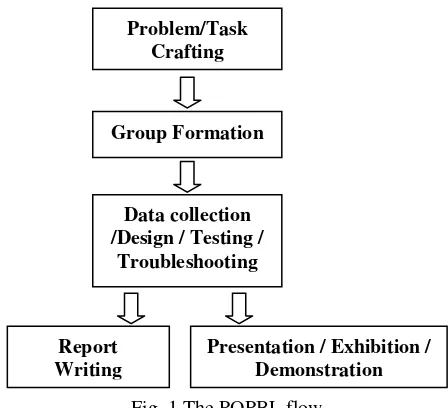
[image:2.595.331.555.544.748.2]Students can experience a lot of hands-on activities because they must undergo the process of designing and simulating their project with the right technique and the right formulation in order to produce a good product. Hence, the testing and troubleshooting part give a great impact for their experiential learning activities. The final output is a hardware that should be demonstrated and explained in detail by each group at the end of the POPBL session. All the process done is documented in the report.
Fig. 1 The POPBL flow
Problem/Task Crafting
Group Formation
Data collection /Design / Testing /
Troubleshooting
Report Writing
2.2 Group Arrangement
The ways of learning is affected by “the combination of how people perceive and how people process”. People often perceive ‘things’ different. Therefore mixing people with different background, age, culture etc. should increase the conditions for a creative group climate [9].
In this case, group arrangement has been done by lecturer/facilitator, purposely not to allow students bias by choosing their own team members. They were formed according to some factors that seem to be realistic for getting an ideal group. The group arrangement was based on gender, ethnicity and academic background (CPA and grade of Electric Circuit course) so that students can expose to inter and intra-cultural values (gender and ethnicity) and able to adapt and appreciate others with different learning styles, abilities, as well as attitudes.
The students were divided into 25 groups and each group was engaged by 6-7 members. Students were required to appoint a Team Leader and related posts in their first meeting. The attendance for meeting and group discussions were compulsory for every group member. In every meeting, each group prepared their minutes of meeting and recorded every single progress in their work.
2.3 Supervision
A POPBL approach is no longer emphasize on the result but rather to concentrate on the process and the lecturer will be transforming from the classroom main actor to an advisor or facilitator which will be more concern about guiding and facilitating learner activity.
Regarding that, some facilitators have been assigned to engage with the groups throughout this task. During the first briefing session, the importance of facilitator roles has been addressed as well as the ground rules of student-facilitator relationship to ensure the task is meeting the objectives. During this stage, students should be clear about every member’s responsibility. It is expected that the students can be gradually understand their project materials and take full responsibility.
The facilitators implemented the ‘floating facilitator’ technique to guide and keep the groups on track. Otherwise students will loose their focus. Throughout the semester, every group usually reported/presented to the facilitator about the progress of their project in informal session. Basically, it conducted at least once a week. However, they still required to present their progress and result in two mini formal presentations. This seems to be the best way for everybody to give and take feedback.
2.4 Group Discussion Environment
Meeting and group discussions are compulsory in POPBL implementation. In every meeting, each group
must prepare their minutes of meeting and record every single progress in their work for assessment. Other than in class meeting, students are free to choose the time and venue to hold their extra discussions as long as all the group members can join it. Since the wireless connection is available around the campus, therefore students are required to bring their laptop during the discussions to search the information from internet and to update their progress report.
The group leader played an important role to involve the members in active discussion so that every member knows every single part of their project. All group members should be ready for the final presentation, which is scheduled at the end of the semester. They needed to present their work in a small exhibition by
explaining and demonstrating their outcomes/products.
3. ASSESSMENT
The main problem with group work is that, some students gain a lot of qualification but some of them gain nothing because they left everything to the others. Therefore, facilitators should focus on the achievement of every student rather than every group. They should allocate the marks fairly and accordingly and they must avoid allocating the same mark to every student in a group because this situation can lead to the problem of free-riders.
In this POPBL, the assessment was not only done by facilitators but students also took part in assessing their group members. The marks given are based on the level of participation and contribution of every member. They were also allowed to assess other group’s presentation and demonstration. The allocation marks are as follows:
Presentation/ poster/ demonstration (55%)
Final report (20%)
Progress presentation (10%)
Individual assessment (5%)
Peer assessment: Group assessment (5%) Peer assessment: Individual assessment (5%)
4. FEEDBACK AND FINDING ON IMPLEMENTATION
OF POPBL
Most students are too embracing the traditional method, which is the teacher-centered learning method. Therefore, most of them feel kind of lost and cultural shock at the very beginning of the project. Some students complain that they consumed more time to complete the project. This happens because they actually unable to delegate the task and to manage their time to be synchronize with the team members. Another challenge for them is they have to find the project components by their own since some of them are not available in the faculty store.
apply and enhance their soft skills such as
communication skills, critical thinking skills,
teamwork skills and many more. This is proved by the feedback from questionnaires that have been delegated to 141 students during the exhibition illustrated in Fig. 2 to Fig. 9. They also gained new knowledge such as using some new software and practicing the learning in the real life situation for example they can
troubleshoot the real problem happen to their circuit.
PERSONAL DEVELOPMENT (Q1)
66; 46.2% 71; 49.7%
6; 4.2% 0; 0%
0; 0% 0 10 20 30 40 50 60 70 80
1: Strongly Disagree 2: Disagree 3: Neither agrees nor disagrees
4: Agree 5: Strongly Agree
[image:4.595.314.557.51.192.2]N o . o f R e s p o n d e n ts
Fig. 2 Result in respond to statement “The POPBL project in this course encourage me to integrate concepts and skills
from different disciplines”
PERSONAL DEVELOPMENT (Q2)
48; 33.6% 77; 53.8%
17; 11.9%
1; 0.7% 0; 0%
0 10 20 30 40 50 60 70 80 90
1: Strongly Disagree 2: Disagree 3: Neither agrees nor disagrees
4: Agree 5: Strongly Agree
[image:4.595.50.283.184.327.2]N o .o f R e s p o n d e n ts
Fig. 3 Result in respond to statement “The POPBL project in this course helped me to improve my oral communication
skills and also confidence level to myself”
PERSONAL DEVELOPMENT (Q3)
70; 49% 64; 44.8%
9; 6.3%
0; 0% 0; 0%
0 10 20 30 40 50 60 70 80
1: Strongly Disagree 2: Disagree 3: Neither agrees nor disagrees
4: Agree 5: Strongly Agree
[image:4.595.311.559.249.391.2]N o .o f R e s p o n d e n ts
Fig. 4 Result in respond to statement “The POPBL projects in this course provided peer and group interactions useful to
me in completing the task”
PERSONAL DEVELOPMENT (Q4)
67; 46.9% 68; 47.6%
7; 4.9% 1; 0.7%
0; 0% 0 10 20 30 40 50 60 70 80
1: Strongly Disagree 2: Disagree 3: Neither agrees nor disagrees
4: Agree 5: Strongly Agree
[image:4.595.52.283.376.525.2]N o .o f R e s p o n d e n ts
Fig. 5 Result in respond to statement “The POPBL project in this course enabled me to develop a deeper understanding of topic and also encourage me to know more about electrical
and electronic engineering”
PERSONAL DEVELOPMENT (Q5)
0; 0% 1; 0.7%
7; 4.9%
77; 53.8%
58; 40.6%
0 10 20 30 40 50 60 70 80 90
1: Strongly Disagree 2: Disagree 3: Neither agrees nor disagrees
4: Agree 5: Strongly Agree
[image:4.595.310.557.435.577.2]N o . o f R e s p o n d e n ts
Fig. 6 Result in respond to statement “The POPBL project in this course enabled me to enhance problem-solving ability
and improve my critical thinking”
PERSONAL DEVELOPMENT (Q6)
52; 36.4% 74; 51.7%
15; 10.5%
1; 0.7% 1; 0.7%
0 10 20 30 40 50 60 70 80
1: Strongly Disagree 2: Disagree 3: Neither agrees nor disagrees
4: Agree 5: Strongly Agree
N o .o f R e s p o n d e n ts
Fig. 7 Result in respond to statement “The POPBL project in this course enabled me to improve my presentation skills”
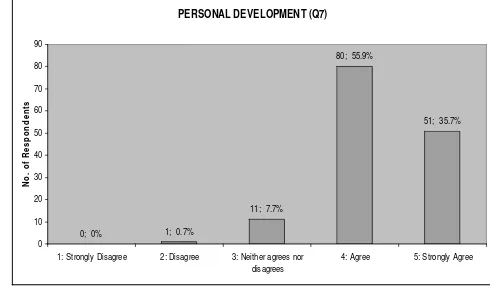
PERSONAL DEVELOPMENT (Q7)
51; 35.7% 80; 55.9%
11; 7.7%
1; 0.7% 0; 0%
0 10 20 30 40 50 60 70 80 90
1: Strongly Disagree 2: Disagree 3: Neither agrees nor disagrees
4: Agree 5: Strongly Agree
N o . o f R e s p o n d e n ts
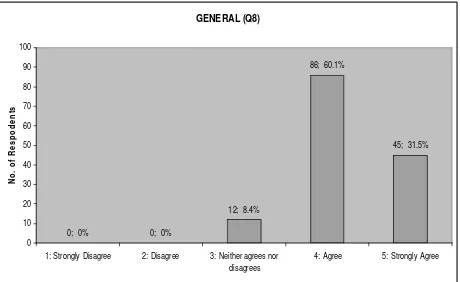
[image:4.595.53.283.571.720.2] [image:4.595.310.555.616.759.2]GENERAL (Q8)
45; 31.5% 86; 60.1%
12; 8.4%
0; 0% 0; 0%
0 10 20 30 40 50 60 70 80 90 100
1: Strongly Disagree 2: Disagree 3: Neither agrees nor disagrees
4: Agree 5: Strongly Agree
N
o
.
o
f
R
e
s
p
o
d
e
n
[image:5.595.59.289.51.192.2]ts
Fig. 9 Result in respond to statement “POPBL is more effective in fulfilling learning objectives”
7. CONCLUSION
Through the POPBL implementation, students have experienced a great self learning process. They not only learn about how to get the task done but they also learn about how to handle a group and being a leader. As the main objective of learning is to help students to get deeper understanding on the subject, POPBL on the first year engineering student has a lot of potential to keep its momentum until graduation. This first year students experienced a lot in managing the resources, gathering the information, troubleshooting the errors, contributing the ideas and delegating the tasks.
Results obtained in this study shown that POPBL is a promising technique to be introduced in other courses with a well organized planning. However, it is noted that further improvement needs to be considered in terms of a problem crafting, industrial collaboration and supervisory skills.
ACKNOWLEDGMENT
The authors would like to thank the Universiti Tun Hussein Onn Malaysia for the facility support and everyone that directly or indirectly involves in this POPBL process. The authors are also indebted to PBL Committee of FKEE for introducing and explaining about PBL/POPBL.
REFERENCES
[1] Ruhizan M. Yasin and Saemah Rahman, “Problem
Oriented Project Based Learning (POPBL) in Promoting Education for Sustainable
Development,” ProcediaSocial and Behavioral
Sciences 15(2011), 2011, pp. 289–293.
[2] Ignacio de los Rios et. all, “Project-based
Learning in Engineering Higher Education:Two Decades of Teaching Competences in Real
Environments”.ProcediaSocial and Behavioral
Sciences 2(2010), 2010, pp. 1368–1378.
[3] Stefan Cronholm and Ulf Melin, “Project Oriented
Student Work: Group Formation and Learning”, Information Systems Education Conference
(ISECON), 2006.
[4] Ole E. M. Borch et. all, “Changes in roles and
behavior of learners and teachers when going for
POPBL,” IEEE, 2006, pp. 194–199.
[5] E. Moesby, “Curriculum development for
project-oriented and problem-based learning (POPBL) with emphasis on personal skills and abilities,” Global J. of Engng. Educ.,vol. 9, No.2, 2005, pp. 121–128.
[6] D. M. Akhbar Hussain and Rosenorn T.,
“Assessment of student competencies for a
second-year operating system course,” SEFI-2008,
Aalborg Denmark, 2008.
[7] Jerry A. Colliver, “Effectiveness of problem-based
learning curricula: research and theory” Academic
MEDICINE, VOL.75, No.3, 2000, pp. 259–266.
[8] Archana Mantri, Sunil Dutt, J.P. Gupta and Madhu
Chitkara, “Design and evaluation of a PBL-based
course in analog electronics,” IEEE Transactions
on Education, vol.51, No.4, 2008, pp. 432–438.
[9] Kolb, D., “Experiential learning: Experience as the
source of learning and development,” Prentice Hall, New Jersey, 1984.
[10]Barron B. J. S. et al, “Doing with understanding:
Lessons from research on problem- and
project-based learning,” The Journal of the Learning
Sciences, 7(3&4), 1998, pp. 271–311.