Seismic Soil Structure Interaction Effects on RC Bare
Frames Resting on Pile-Grid Foundation
Renu Raghuveeran, Hashifa Hassan P
Department of Civil Engineering, Saintgits Engineering College, Kottayam
Abstract- In the last few decades, it has been recognized that Soil Structure Interaction (SSI) altered the response characteristics of a structural system because of massive and stiff nature of structure and, often, soil softness. The present study makes an attempt to show the response of a structure in earthquake analysis by considering the effect of soil structure interaction. For superstructure G+7 simple square building is considered for seismic analysis. A study has to be carried out for buildings with the same geometry found on varying soil types over pile- grid foundation. An attempt has to be made to find the deformations under seismic loading in the structure and pile- grid foundation by incorporating the effect of soil-structure interaction which is further compared with those of fixed base condition. Influence of variation of the parameters such as, different soil conditions and number of stories are also considered for which the buildings are modelled by alternate approaches, namely, (1) bare frame with fixed supports, (2) bare frame with supports accounting for soil-flexibility using Ansys 14.5.
Index Terms- Soil Structure Interaction, RC Square Frames, Pile-Grid Foundation, Natural Period, Lateral Deflection, Soil Displacement, Static Analysis, Modal Analysis And Time History Analysis.
I. INTRODUCTION
esponse of structure depends on the properties of soil, structure and the nature of the excitation. The process in which, the response of the soil influences the motion of the structure and vice versa, is referred to as Soil-Structure Interaction (SSI). Implementing soil-structure interaction effects enables the designer to assess real displacements of the soil-foundation structure system precisely under the influence of seismic motion. Present design practice for dynamic loading assumes the building to be fixed at their bases. Whereas, in reality supporting soil medium allows movement to some extent due to their natural ability to deform which decrease the overall lateral stiffness of the structural system resulting in the lengthening of lateral natural periods. Such lengthening of lateral natural periods does considerably change the seismic response of building frames.
Soil Structure Interaction is one of the most flourishing areas of research in Structural Engineering at present. It can be defined as the coupling between a structure and its supporting medium (bedrock or soil bed) during an earthquake. Aided by the revolution in computer technology, tackling such problems has become possible lately. Works done in the recent decade have shown the importance of structure-soil-structure interaction on
dynamic response of key structures such as silos, storage tanks, and offshore structures. SSI calls for improvement in codal provisions for seismic design and communications between geotechnical and structural engineers.
Variation in dynamic response between fixed base and SSI model can be mainly attributed to (i) foundation stiffness and damping, (ii) foundation deformations and (iii) change in foundation input motion from free-field motion on account of kinematic and inertial interactions.
Most of the building frames are supported on combined footings, isolated footings, raft, pile foundations depending on the amount of load and the nature of supporting sub soil. Generally the multi- storied buildings constructed on week strata at shallow depth are supported on pile foundations. The problem of interaction becomes more complex when soil, foundation and structure have to be modeled with equal rigor.
The present study has been carried out for buildings with the same geometry found on varying soil types over pile-grid foundations subjected to El Centro (1940) earthquake ground motion in time domain. An attempt has been made to find the deflection, natural period and settlement under seismic loading in the structure and pile- grid foundation by incorporating the effect of soil-structure interaction which was further compared with those of fixed base condition. Influence of variation of the parameters such as, different soil conditions and number of stories were also considered in the present study for which the buildings were modelled by two alternate approaches, namely, (1) bare frame with fixed supports and (2) bare frame with supports accounting for soil-flexibility. Variations in natural period are also noted down for both base conditions and a comparative study has been done.
II. IDEALIZATION OF THE SYSTEM
i. Structural Idealization
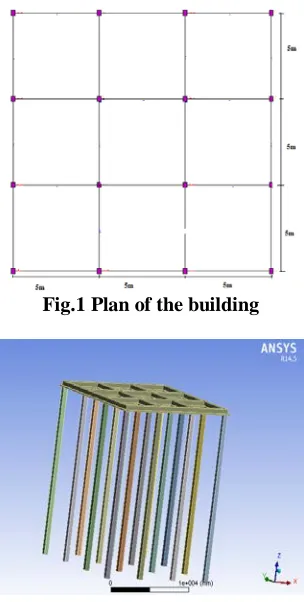
To study the seismic soil structure interaction, building frames of 4, 6 and 8 storey was modeled in Ansys software. 3D models of square frame with 3 bays in both X and Y directions are modelled. The storey height and length of each bay of all building frames were chosen as 3m and 5m respectively which is reasonable for a residential building. The thickness of floor slab and roof were taken as 100mm. beam and column dimensions were as given in table 1. The grid dimensions and pile dimensions were calculated according to the axial load they have to carry. Square Pile of 550mm side dimension and 20m length, and grid beam with 1m width and 500mm depth were considered for the analysis (fig 2). The materials considered for design were M30 and Fe 415 steel.
Fig.1 Plan of the building
Fig 2: finite element model of pile grid
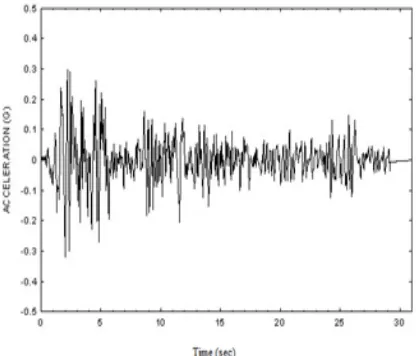
Fig.3: 3D model of structure-pile grid-soil system
Table 1: Details of the building
ii. Idealization of Soil
The structures are assumed to be resting on two types of soil namely, loose and medium sand. The soil is assumed to be linear, elastic and isotropic in nature. Soil is discretised as solid. Modelling of infinite soil media in soil structure interaction plays a vital role. A finite soil body extracted from infinite soil field is the analysis object in the finite element analysis. But these artificial boundaries bring some error in dynamic analysis. To eliminate this taking into account the radiation damping of the system, some boundaries like viscous boundaries and transmitting boundaries are provided. According to Rayhani and Naggar (2008), horizontal distance between soil boundaries is assumed to be five times the structural width. As the most amplification occurs within the first 30 m of the soil profile, which is in agreement with most of modern seismic codes (e.g., ATC-40 1996, NEHRP 2003), here bed rock depth is assumed to be 60 m. these boundaries do not absorb energy but for the reduction of reflexive wave’s effects, the distance between the structure and boundaries are increased.
The soil dimension considered are 75 x 75 m in both X and Y direction and 60m in Z direction. The soil boundary limit conditions have been postulated as zero displacement.
The analysis of the structures are done for two different soil conditions and then compared with fixed base condition. Loose sand and medium sand are selected with properties as given in Table 2.
PARTICULARS DETAILS
TYPE OF STRUCTURES
R.C.C RESIDENTIAL BUILDING
COLUMN 500 x 500 mm
BEAM 300 x 450 mm
SLAB THICKNESS 100 mm FLOOR TO FLOOR HEIGHT
3000 mm
NO. OF BAYS IN X-DIRECTION
3
NO. OF BAYS IN Y- DIRECTION
3
CLEAR SPAN OF EACH BAY
5000 mm
INFILL WALL THICKNESS (URM)
200 mm
CONCRETE GRADE M30
DEAD LOAD AS PER IS 875 PART 1 LIVE LOAD AS PER IS 875 PART 2 EARHTQUAKE LOAD AS PER IS 1893 ; 2002
[image:2.612.90.245.388.510.2]Table 2: Details of soil parameters considered [7]
Soil type
Poisson ’s ratio (γ)
Density (kg/m3)
Modulus of elasticity (MN/m2 )
Angle of friction
Loose sand
0.4 1600 108.752 30
Medium sand
0.35 1800 445.872 35
The modelling of the structure-pile grid-soil system was generated using Ansys work bench 14.5 and model for 8 storeyed frame is as shown in Fig. 3.
III. METHODOLOGY
Both static and transient analysis of 8, 6and 4 storeyed RC structures were performed for fixed base condition and soil structure interaction models for both loose sand and medium sand base conditions to examine the earthquake response of the structures. Transient analysis was done with the time history data of Elcentro ground motion. The soil is modelled as a homogeneous elastic material. The earthquake response of the building frames considering the flexibility of the soil is examined and the results are compared with fixed base condition. Model analysis is done to find out the natural frequencies and corresponding natural period of the structures.
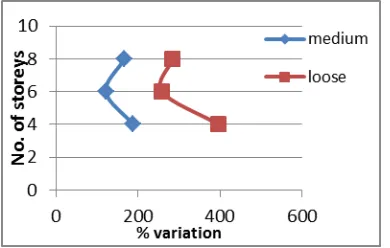
[image:3.612.55.282.75.201.2]The effect of soil structure interaction on the building frames for the whole study is carried out for Elcentro earthquake with peak acceleration 0.319g was selected for the study. The acceleration time history of Elcentro earthquake is shown in figure 4.
Fig.4 Acceleration time history of Elcentro earthquake with acceleration of 0.319g
The damping ratio of the entire system including soil and structure is assumed to be 5% of the critical. The corresponding α and β values are computed and given in the analysis [7].
IV. RESULTS AND DISCUSIONS
The seismic response of RC frames resting on pile grid foundation is investigated for the real earthquake excitations. The analysis is carried out for three cases namely fixed base condition, SSI models with loose and medium sand soil. Following section shows the changes in soil settlement, lateral deflection and natural period of three dimensional finite element modal of integrated soil - pile grid - RC frames accounting the effect of soil-structure interaction. The results are in the form of percentage variation, regarding the effect of soil-flexibility with that of the fixed base condition.
A. Effects of SSI under static and dynamic analysis
i. Roof displacement
[image:3.612.350.581.308.408.2]Variation in roof displacement due to earthquake motions for various building models with different soil conditions has been studied. The values of roof displacement and its variations considering effect of SSI are studied and tabulated below.
Table 3: Lateral Roof Displacements
The results show that roof displacement values are more in transient analysis than static. The percentage variation considering the effect of SSI increases with decrease in stiffness of soil and is more for transient than static analysis. A maximum of 284.5% increase is obtained for loose sand base condition in transient analysis.
ii. Soil settlement
Table 4. Soil settlement
From the results it has been observed that for loose soil settlement is more than that of medium soil and the settlement values obtained for transient is more than static analysis.
B. Effects of soil structure interaction under modal analysis
Modal analysis is done to determine natural period of the structures when no external loading is given. Modal analysis is
Stor ey leve l
Base conditi on
BF Variation due to
SSI (%) static transi
ent
static transie nt
G+7
Fixed 16.79 12.68 - - Mediu
m 27.37 33.93 82.7 167.6 loose 35.89 48.76 113.8 284.5
Storey level
Base condition
BF
static transient
G+7
Fixed 0 0
Medium 22.24 25.10
[image:3.612.62.271.473.651.2]assessed in terms of percentage variation accounting the effect of SSI. The values obtained from the analyses are tabulated in Table 5.
[image:4.612.328.561.167.446.2]From results obtained it has been observed that as the no. of storeys increases the natural period of frames considered slightly increases. But considering the effect of soil flexibility showed a large percentage variation in natural period. The percentage increase in natural period increases with decrease in soil stiffness and no. of storeys.
Table 5: Variation in Natural period
No. of storey
Base condition
Natural Period
Variation in natural period due to SSI (%)
4 Fixed 0.05 -
Medium 0.18 280 Loose 0.32 540
6 Fixed 0.08 -
Medium 0.19 138 Loose 0.33 312.5
8 Fixed 0.14 -
[image:4.612.64.272.195.500.2]Medium 0.2 42.9 Loose 0.36 157.1
Fig 5: Variation in natural period with no. of storeys
Fig 6: Percentage variation in natural period
C. Time history analysis
In the analysis acceleration time history of Elcentro earthquake ground motion is used. All the structures are analysed with three base conditions namely, without soil (fixed base) and
with soil ranging from loose sand to medium sand. The variation of lateral floor deflection and soil settlement is studied considering the effect of soil structure interaction. The analysis is carried out for 4,6 and 8 structures. The results are noted down for each structure and compared with fixed base to account for soil flexibility.
[image:4.612.65.271.534.652.2]i. Lateral roof displacement
Table 6: Variation in lateral roof deflection
Storey Base
Roof Deflection (mm)
Variation in deflection (%)
4
Fixed 2.90 -
Medium 8.37 188.6
Loose 14.4 396.55
6
Fixed 6 -
Medium 13.30 121.7
Loose 21.52 258.7
8
Fixed 12.69 -
Medium 33.93 167.4
Loose 48.76 284.2
It has been observed that the lateral floor deflection increases with increase in floor levels. But the lateral floor deflection values are more when SSI effect is considered. For loose sand the deflection is more as compared with medium sand as its stiffness is less than the latter. It has also been observed that the percentage increase in lateral deflection is maximum for 4 storeyed frame which is same for loose and medium sand base conditions as compared with that of fixed base condition.
[image:4.612.349.541.559.688.2]Fig 8: Percentage variation in deflection due to SSI
ii. Soil settlement
Table 7: variation in soil settlement
Storey level
Base condition
Soil settlement (mm)
4 medium 23.8
loose 85.8
6 medium 24.3
loose 87
8 medium 25.1
loose 89.1
There is an increase in soil settlement as the no. of storeys increases due to the increase in weight of the frame.
Fig 8: variation in soil settlement with no of storeys
V. CONCLUSION
With the present study an effort has been made to evaluate the effect of SSI on primary dynamic characteristics of bare frame of varying height resting over pile grid foundation founded on different soil types. The following are the conclusions drawn from the present study.
1. Both static and transient analyses follow the same trend for 8 storeyed structures. Both show that effects of seismic responses on structure increases with increase in soil flexibility.
2. From modal analysis, the natural period is found to be increasing with increase in soil flexibility and with number of storeys. The percentage variation in natural
period increases with soil flexibility while it is found to be decreasing with increase in number of storeys. 3. From transient analysis it was observed that
i. Roof displacement increases with increase in soil flexibility and number of storeys. While the percentage increase in lateral deflection decreases with increase in number of storeys.
ii. Soil settlement also increases with increase in soil flexibility and number of storeys.
REFERENCES
[1] Cai, Y. X., Gould, P. L. and Desai, C. S. ʺNonlinear Analysis of 3D Seismic Interaction of Soil‐Pile‐Structure Systems and Application.ʺ Engineering Structures 22, 191‐199,2000.
[2] Charles, W. W. Ng., Zhang, L. and Nip, D. C. N. ʺResponse of laterally Loaded Large‐Diameter Bored Pile Groups.ʺ Journal of Geotechnical and Geoenvironmental Engineering, Vol. 127, No. 8, August, 2001.
[3] Chore, H. S. and Ingle, R. K. ʺInteraction Analysis of Building Frame Supported On Pile Group.ʺ Indian Geotech. Journal, 38(4), 483‐501, 2008 a. [4] Chore, H. S., Ingle, R. K. and Sawant, V. A. ʺBuilding Frame‐Pile Foundation‐Soil Interaction Analysis.ʺ Interaction and Multi scale Mechanics, Vol. 2, No. 4, 397‐411, 2009.
[5] Chore, H. S., Ingle, R. K. and Sawant, V. A. ʺBuilding Frame‐ Pile Foundation‐Soil Interaction Analysis: A Parametric Study.ʺ Interaction and Multi Scale Mechanics, Vol. 3, No.1, 55‐79, 2010.
[6] Deepa B. S., Nandakumar C.G., ʺSeismic Soil Structure Interaction Studies on Multistorey Frames.ʺ
International Journal of Applied Engineering Research and Development, Vol.2, Issue 1, 45‐58, Mar 2012.
[7] B.R.Jayalekshmi,S.V.Jisha, ‘Effects of Dynamic Soil-Structure Interaction on Raft of Piled Raft Foundation of Chimneys’,Hindawi Publishing Corporation ISRN Civil Engineering, Vol 2014.
[8] J. Králik, “Probability And Sensitivity Analysis Of Soil-Structure Interaction Of High-Rise Buildings”,Slovak journel of civil engineering, 2006/3 – 4 PAGES 23 — 32.
[9] Lewis Edgers, Masoud Sanayei &Joseph L. Alonge, “Modeling the Effects ofSoil-Structure Interactionon a Tall BuildingBearing on a Mat Foundation”, civil engineering practice fall/winter 2005.
[10] Lu, X., Chen, B., Li, P., and Chen, Y. ʺNumerical Analysis of Tall Buildings Considering Dynamic Soil‐Structure Interaction.ʺ J. Asian Archit. Build., 2(1), 1‐8, 2003.
[11] R. R. Chaudhari, Dr K. N. Kadam, “ Effect Of Piled Raft Design On High-Rise Building Considering Soil Structure Interaction”, international journal of scientific & technology research volume 2, issue 6, june 2013.
[12] S. Hamid RezaTabatabaiefar, Behzad Fatah and Bijan Samali, “Lateral
seismic response of building frames considering dynamic soil-structure interaction effects”, Structural Engineering and Mechanics, Vol. 45, No.3 (2013) 311-321
[13] Shreya Thusoo, Karan Modi, Rajesh Kumar, Hitesh Madahar, “Response of Buildings with Soil-Structure Interaction with Varying Soil Types”, International Journal of Civil, Structural, Construction and Architectural Engineering Vol:9, No:4, 2015.
[14] Sushma Pulikanti, Pradeep Kumar Ramancharla, “SSI Analysis of Framed Structures Supported on Pile Foundations : A Review”, Frontier in Geotechnical Engineering (FGE) Volume 2 Issue 2, June 2013.
[15] Vivek, G., and Hora, M. S. ʺA Review on Interaction Behaviour of Structure‐Foundation‐Soil System.ʺ International Journal of Engineering Research and Applications, Vol. 2, Issue 6, November‐ December, 639‐644, 2012.
[16] Yingcai, H. “Seismic Response of Tall Building Considering Soil‐Pile‐Structure Interaction”, Earthquake Engineering and Engineering Vibration, Article ID: 1671‐3664 (2002) 01‐0057‐08, June, 2002.
[17] IS 456:2000 Plain and reinforced concrete – code of practice,
[image:5.612.64.271.419.538.2][19] IS: 875 (Part 1- Part 3) - 1987, ‘Code of Practice for Design Loads (other than earthquake) for Building and Structure’, Bureau of Indian Standards, New Delhi.
[20] Bowles J.E. (1998). ‘Foundation Analysis and Design’, McGraw Hill, New York.
[21] Pankaj Agarwal (2014) ‘Earthquake Resistant Design of Structures’,PH1 Learning Private Limited, Delhi.
[22] Nainan P Kurian (2009) ‘Design of Foundation Systems’, Narosa Publishing House, New Delhi.
AUTHORS
First Author – Renu Raghuveeran, M.Tech student, Department of Civil Engineering, Saintgits Engineering College,