R E S E A R C H A R T I C L E
Open Access
Assessing upper limb function: transcultural
adaptation and validation of the
Portuguese version of the Stroke Upper
Limb Capacity Scale
João Paulo Branco
1,2,3*, Sandra Oliveira
3, João Páscoa Pinheiro
1,2and Pedro L. Ferreira
4,5Abstract
Background:Brachial hemiparesis is one of the most frequent sequelae of stroke, leading to important functional disability given the role of the upper limb in executing activities of daily living (ADL). The Stroke Upper Limb Capacity Scale (SULCS) is a stroke-specific assessment instrument that evaluates functional capacity of the upper limb based on the execution of 10 tasks. The objective of this study is the transcultural adaptation and psychometric validation of the Portuguese version of the SULCS.
Methods:A Portuguese version of the SULCS was developed, using the process of forward-backward translation, after authorisation from the author of the original scale. Then, a multicentre study was conducted in Portuguese stroke patients (n= 122) to validate the psychometric properties of the instrument. The relationship between sociodemographic and clinical characteristics was used to test construct validity. The relationship between SULCS scores and other instruments was used to test criterion validity.
Results:Semantic and linguistic adaptation of the SULCS was executed without substantial issues and allowed the development of a Portuguese version. The application of this instrument suggested the existence of celling effect (19.7% of participants with maximum score). Reliability was demonstrated through the intraclass correlation coefficient of 0.98. As for construct validity, SULCS was sensible to muscle tonus and aphasia. SULCS classification impacted the scores of the Motor Evaluation Scale for Upper Extremity in Stroke (MESUPES) and the Stroke Impact Scale (SIS).
Conclusions:The present version of SULCS shows valid and reliable cultural adaptation, with good reliability and stability.
Keywords:Stroke, Stroke Upper Limb Capacity Scale, Upper limb, Disability, Functionality, Hemiparesis
Background
Stroke continues to be associated with high morbidity and mortality worldwide. In Portugal, the mortality rate from cerebrovascular diseases decreased from 71.9 deaths per 100,000 inhabitants in 2009 to 54.6 deaths per 100,000 inhabitants in 2013 [1]. The majority of strokes were of ischaemic aetiology, occurring mostly in individuals >65 years-old, with atherosclerosis as the main cause [2].
Brain lesions due to cerebrovascular diseases are, currently, one of the leading causes of disability [3]. Approximately 70% of patients that survive stroke present hemiparesis with brachial predominance in the acute phase [4], 30% of those require inpatient care dur-ing the first 3 months and, ultimately, 15–30% of pa-tients show permanent disability [5]. Approximately 70% of patients with mild to moderate paresis recover some degree of manual dexterity within the first 6 months, while patients with paresis of the limb with reduced muscle strength do not recover [6].
The upper limb is crucial in executing activities of daily living (ADL) [6] and, therefore, there is a need for an assessment instrument capable of evaluating and
* Correspondence:[email protected] 1
Faculty of Medicine of the University of Coimbra, Coimbra, Portugal 2Physical and Rehabilitation Medicine Department, Centro Hospitalar Universitário de Coimbra, Coimbra, Portugal
Full list of author information is available at the end of the article
quantifying upper limb functionality after stroke. Several instruments have been developed to assess motor, sensi-tive, and functional ability after stroke [7, 8], including the Jebsen-Taylor Hand Function Test [9], the Box and Block Test [10], and the Frenchay Arm Test [11]. How-ever, all these instruments require some degree of hand functioning and, as such, are not adequate for patients with severe hand disability. Other instruments such as the Research Arm Test [12] and the Upper Limb Motor Assessment Scale [13] evaluate other parameters beyond functional capacity, which hinders the interpretation of functional capacity results [7].
The Stroke Upper Limb Capacity Scale (SULCS) was developed in this context as an easy-to-use, unidimen-sional, hierarchical, and internally consistent scale that assesses upper limb capacity after stroke. It was the first assessment instrument that included items evaluating both basic upper limb functioning (activities that require reduced or no hand functioning) and more demanding upper limb functioning (activities that require intensive distal functioning) [7, 14].
The objective of this study is the transcultural adaptation and psychometric validation of the Portuguese version of the SULCS in a sample of Portuguese stroke patients.
Methods
Study design and sample
This was a multicentre study conducted in the Centre region of Portugal, in patients with history of stroke (both of ischaemic and/or haemorrhagic nature). A total of 122 patients agreed to participate in the study, most of whom had permanent functional disability. The clin-ical procedures of the study were conducted between May 2014 and April 2015.
All participants were evaluated by healthcare profes-sionals specialised in rehabilitation in the context of stroke or other neurological conditions. Beyond the Portuguese version of SULCS and the sociodemographic question-naire, the following assessment instruments were used: generic quality of life scale (EuroQol five dimensions questionnaire [EQ-5D]), specific stroke scale (Stroke Impact Scale [SIS]), and specific upper limb functionality scale (Motor Evaluation Scale for Upper Extremity in Stroke [MESUPES]). All these instruments were previ-ously validated for use in the Portuguese population.
The study was conducted according to the precepts of the Declaration of Helsinki and the Oviedo Convention. The study protocol and data collection instruments were approved by the Ethics Committee of the Faculty of Medicine of the University of Coimbra (reference letter 104-CE-2014). This assessment constituted the basis for approval of the study in all participating centres. All participants provided their written informed consent prior to enrolment in the study.
Measures
Stroke upper limb capacity scale
SULCS is the first assessment instrument that includes items evaluating both basic upper limb functioning (activ-ities that require reduced or no hand functioning) and more demanding upper limb functioning (activities that require intensive distal functioning) [7, 14]. This instru-ment can be used in men and women with both left and right hemiplegia, and in both ischaemic or haemorrhagic stroke [14]. SULCS assessments are short (approximately six minutes) and are based on 10 specific activities that are related to the patients’ ADLs. Three items evaluate proximal functioning (in which there is no active function from the hand and fist), four items evaluate functioning that requires basic control of the fist and fingers, and three items evaluate advanced distal functioning [6, 7, 14].
SULCS assessments can use“start and stop”rules with which it is possible to forgo the assessment of tasks that were previously successfully executed or to interrupt the evaluation when the patient is incapable of executing certain tasks. In this instrument, tasks are unidimen-sional and hierarchically ordered by increasing difficulty of execution. Scoring is dichotomous: 0 points if it is not possible to execute the task or 1 point if the task is properly executed. The sum of the scores from each task leads to a total score that varies from 0 to 10 points, with higher scores indicating better functioning. Results from SULCS assessments can be summarised in the fol-lowing categories: “no hand functioning” (0–3 points), “basic hand functioning” (4–7 points),“good hand func-tioning”(8–10 points) [6]. Contrary to other instruments previously used in this context, SULCS can categorise patients according to their proximal and distal function-ing, which provides valuable insight for patient progno-sis in terms of functional recovery.
EuroQol five dimensions questionnaire
EQ-5D allows the general assessment of health-related quality of life [15]. This instrument evaluates several dimen-sions: mobility, self-care, usual activities, pain/discomfort, and anxiety/depression. It also includes a self-evaluation component, in which the respondents evaluate their overall health status through a visual analogue scale (EQ-VAS), ranging from 0 (worse health status imaginable) to 100 (best health status imaginable). The Portuguese validated version of EQ-5D and the corresponding valuing system were used in this study [16, 17].
Stroke impact scale
mobility (10 items), hand function (five items), ADLs/in-strumental ADLs (9 items), and recovery (1 item) [18, 19]. The Portuguese validated version of SIS was used in this study [19].
Motor evaluation scale for upper extremity in stroke (MESUPES)
MESUPES was designed to evaluate the quality of upper limb movements after stroke. It consists of 17 items, 8 of which refer to proximal upper limb functioning and 9 to distal upper limb functioning [20, 21].
Translation and transcultural adaptation
SULCS was developed in 2001 at the Sint Maartenskliniek Rehabilitation Centre, in Nijmegen, The Netherlands. Be-tween 2001 and 2008, SULCS was applied to 546 patients hospitalised in this centre and in 2010 the data from these assessments were used to evaluate the reliability, sensitiv-ity, and validity of the scale. The results of this analysis revealed that SULCS has outstanding psychometric prop-erties [7]. The scale has since been translated and vali-dated for the English language and a French validation is in progress.
After authorisation from the author of the original SULCS, a Portuguese version of the scale was developed, using the process of forward-backward translation [22]. The process of forward translation consisted of an initial preparation of two translations, completed by two inde-pendent Portuguese bilingual translators, one translator was a professional translator and the other was a PhD and teacher of English. Then, a consensus version was prepared by two of the authors (PLF and JPB). This con-sensus version was then back-translated by a native English translator. The back-translated version was evaluated by the authors PLF, JPB, and JPP to verify agreement with the original instrument and, then, a final version of the Portuguese SULCS translation was prepared. Subsequently, a Portuguese expert in the field of rehabilitation conducted a clinical review to obtain a more specialised translation, which would be easier to understand by employing language with which the patients were more familiar.
Statistical analyses
The acceptability of the scale was tested through the quantification of missing data and the distribution of the sample by the various categories of the scale. The fol-lowing hypothesis was formulated:
H1: The SULCS scale presents no significant missing
data and its distribution is spread over the various categories.
Concordance between observers was evaluated in 41 participants. Each of those participants was subject to
two evaluations by different healthcare professionals. Cohen’s kappa coefficient and the criteria defined by Landis and Koch were used for this analysis [15].
To test the construct validity of SULCS, criteria derived from sociodemographic and clinical variables in known samples were used. The following hypotheses were tested:
H2: Patient gender impacts SULCS score.
H3: Patient age impacts SULCS score.
H4: Stroke aetiology (haemorrhagic/ischaemic)
impacts SULCS score.
H5: Left/right lateralisation of the affected limb
impacts SULCS score.
H6: Tonus changes impact SULCS score.
H7: Presence of communication impairment
(aphasia) impacts SULCS score.
These hypotheses were tested using Chi-square tests, as well as tests for the comparison of means (t-Student for two independent samples or ANOVA for more than two samples). Post-hoc multiple comparison analyses were used when applicable.
To test criterion validity, SULCS was categorised into“no hand functioning” (0–3 points), “basic hand functioning” (4–7 points), and “good hand functioning” (8–10 points), and then compared with EQ-5D, SIS, and MESUPES, with the objective of testing the following hypotheses:
H8: Patients with good hand functioning according
to SULCS show higher EQ-5D scores.
H9: Good hand functioning according to SULCS is
highly associated with SIS.
H10: SULCS scores are highly associated with
MESUPES total scores.
Statistical analyses were performed with IBM SPSS Statistics for Windows, Version 23.0. (IBM Corp, Armonk, NY, USA). A 5% level of significance was adopted.
Results
Semantic and linguistic adaptation
The changes suggested after the expert review were scarce and based on clinical and linguistic criteria. In the original SULCS instrument there was a reference to the term “affected forearm”, which had been equivalently translated and was changed during the expert review to the Portuguese equivalent of “affected limb”. The remaining changes consisted of verb conjugation corrections. There-fore, content validity was obtained.
Study sample
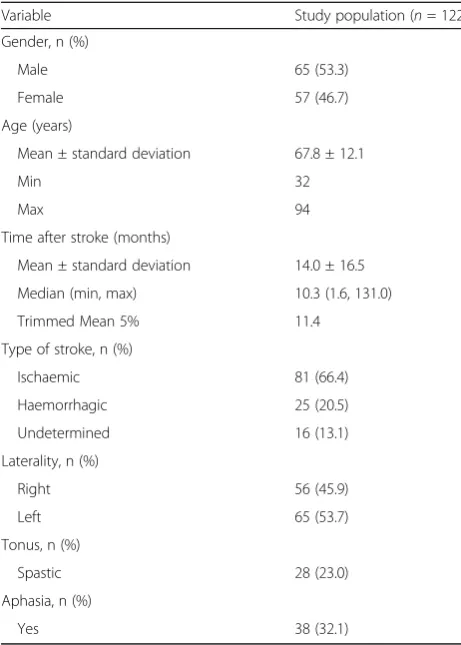
age in the study sample was 67.8 ± 12.1 years and mean time after stroke was 14.0 months. There was no signifi-cant predominance in terms of gender or laterality. Most participants had had stroke of ischaemic origin, and most showed no discernible spasticity or aphasia.
Table 2 presents the descriptive statistics for the vari-ous assessment instruments used in the study. Percep-tion of health-related quality of life was fairly low in the study population, as suggested by the mean EQ-5D score of 0.21. This value decreased with advancing age: 0.33 (<50 years), 0.27 (50–64 years), 0.18 (65–74 years), and 0.15 (≥75 years).
According to SIS scores, the dimensions that showed higher impairment after stroke in this population were hand function (32.4%), strength (41.2%), and ADLs (45.8%). Communication was the dimension evaluated by SIS in which participants showed better results.
Mean SULCS score was 6.0. Most participants (43.3%) showed good hand functioning, 24.6% showed basic hand functioning, and 32.0% showed no hand functioning.
In the affected limb, according to MESUPES scores, there was greater functional impairment at the hand rather than the shoulder (47.9% and 73.9%, respectively).
Acceptability and distribution
Since SULCS is applied by healthcare professionals, there were no comprehension issues or any other diffi-culty in conducting the assessments; this is reflected by the absence of missing data (Hypothesis H1). The distri-bution of the sample included all SULCS categories: no hand function (32.0%), basic hand functioning (24.6%), and good hand functioning (43.3%). However, the high-est SULCS score (10) was registered in 24 patients (19.7%), thus showing evidence of a ceiling effect (according to a 15% criterion).
Reliability
SULCS showed a 0.984 intraclass correlation coefficient. Since SULCS allows categorisation (no hand functioning, basic hand functioning, and good hand functioning), a 0.886 Cohen’s kappa coefficient was also calculated.
Construct validity
Construct validity was tested by assessing how different values of sociodemographic and clinical characteristics impacted SULCS scores, as shown in Table 3. When considering hypotheses H2 to H7, only the variables change in muscle tonus and the presence of aphasia were determinants for hand functioning as measured by SULCS (Hypothesis H6).
Table 1Demographic and clinical characteristics of the study
population
Variable Study population (n= 122)
Gender, n (%)
Male 65 (53.3)
Female 57 (46.7)
Age (years)
Mean ± standard deviation 67.8 ± 12.1
Min 32
Max 94
Time after stroke (months)
Mean ± standard deviation 14.0 ± 16.5
Median (min, max) 10.3 (1.6, 131.0)
Trimmed Mean 5% 11.4
Type of stroke, n (%)
Ischaemic 81 (66.4)
Haemorrhagic 25 (20.5)
Undetermined 16 (13.1)
Laterality, n (%)
Right 56 (45.9)
Left 65 (53.7)
Tonus, n (%)
Spastic 28 (23.0)
Aphasia, n (%)
Yes 38 (32.1)
Table 2Descriptive statistics for the EQ-5D, SIS, SULCS, and MESUPES scales in the study population (n= 122)
Variable Minimum Maximum Mean Standard deviation
EQ-5D
Dimensions −0.49 1.0 0.21 0.3
EQ-VAS 20.0 90.0 51.7 16.5
SIS
Recovery 10.0 95.0 53.0 20.4
Strength 12.5 100.0 41.2 19.1
Memory 0.00 100.0 73.4 25.1
Emotion 33.3 80.6 57.7 10.5
Communication 0.00 100.0 80.2 24.6
Activities of daily living 4.2 100.0 45.8 24.7
Mobility 2.5 100.0 49.8 27.5
Hand function 0.0 100.0 32.4 33.0
Participation 11.1 100.0 53.9 20.4
SULCS 0.0 10.0 6.0 3.3
MESUPES
Hand 0.0 2.0 47.9 36.9
Shoulder 0.0 5.0 73.9 33.0
Total 0.0 3.4 65.6 32.7
Criterion validity
To test criterion validity, SULCS scores (in categorised from) were compared with scores from EQ-5D, SIS, and MESUPES, as shown in Table 4. That is, we tested whether different functional categories given by SULCS correspond to different average scores given by EQ-5D, SIS, and MESUPES.
Participants with good hand functioning according to SULCS showed better overall health status, as measured through EQ-5D (mean EQ-5D of 0.36), than the remaining groups (Hypothesis H8).
All dimensions of SIS were significantly impacted by SULCS scores (Hypothesis H9); there were particularly strong effects for the dimensions of recovery, ADLs, mo-bility, hand function, and participation (all p < 0.001). For all these dimensions, participants with good hand functioning showed higher scores in SIS, as compared to the remaining groups. For the dimensions of memory, emotion, and communication, as would be expected, the effects were of lesser magnitude.
The MESUPES scores were also impacted by SULCS scores, including both dimensions and the total score (Hypothesis H10).
Discussion
Stroke has a reported incidence of 1.9% in the general population, but is more frequent in men and individuals with age 65 to 74 years-old [23]. Ischaemic aetiologies represent the majority of strokes (87%, thrombotic or embolic), while haemorrhagic aetiologies represent a small fraction of cases (13%, intracerebral or subarach-noid) [24]. In this study, the mean age was over 65 years and there was a predominance of ischaemic stroke, as expected according to the literature. However, we found no statistically significant differences in terms of gender
predominance or laterality. It should be highlighted that there was a mean time from stroke of approximately 14 months and spasticity and aphasia were not particu-larly clinically relevant in this population.
Stroke continues to be one the main causes of health-related quality of life impairment in the country [25], which is reflected in the EQ-5D scores from this sample (EQ-5D of 0.21). These findings are consistent with pre-vious studies, and further highlight the medical and so-cial impact of stroke in the Portuguese population. However, despite the impact of stroke in the Portuguese population there is not yet a validated instrument to spe-cifically assess upper limb functioning in these patients. The development of such functional evaluation tools is crucial to improve the clinical management of stroke pa-tients and to allow the development of clinical research in rehabilitation medicine. SULCS is an easy-to-use, uni-dimensional, hierarchical, and internally consistent scale that evaluates upper limb functioning after stroke and can provide valuable insight in both clinical practice and clinical research contexts.
SIS scores were significantly impacted by SULCS clas-sification for all dimensions, with particularly stronger impact for the dimensions of strength, ADLs, mobility, hand function, and participation. These findings can be explained by the fact that most of the tasks alluded by SIS need proper upper limb function to be adequately executed. The recovery dimension was also impacted by the SULCS classification of participants, which high-lights the importance of upper limb functional recovery for general recovery after stroke. SULCS classification did not, however, impacted the dimensions of memory, emotion, and communication, as would be expected since these aspects are not particularly dependent on upper limb functioning.
MESUPES scores were also strongly impacted by SULCS classification for both dimensions as well as the total score. Such findings were expected, since SULCS and MESUPES evaluate highly-related types of functioning and, therefore, these results confirm the capacity of this version of SULCS in establishing upper limb functionality.
In terms of EQ-5D results, this population showed substantially impaired quality of life, but, interestingly, average SULCS scores were only indicative of moderate upper limb functional impairment (with mean SULCS score within the basic hand functioning category) [6]. These findings highlight the importance of using specific instruments to assess the several domains that can im-pact a patient’s quality of life and health status, since general quality of life assessments do not always accur-ately represent aspects that play important roles in per-forming ADL’s, such as upper limb functioning.
Several factors associated with worse prognosis after stroke have been described in the literature, including
Table 3Mean SULCS scores according to sociodemographic
and clinical characteristics of the study population
Variable Value N Mean ± SD |t| p-value
Gender Male 65 6.15 ± 3.22 0.698 0.486
Female 57 5.74 ± 3.37
Age <65 years old 50 5.90 ± 3.30 0.165 0.869
≥65 years old 72 6.00 ± 3.29
Type of stroke Ischaemic 81 5.93 ± 3.37 0.061 0.952
Haemorrhagic 25 5.88 ± 3.14
Laterality Right 56 6.01 ± 3.51 0.081 0.936
Left 65 5.97 ± 3.09
Tonus Spastic 28 3.32 ± 2.68 5.265 <0.001
Non-spastic 79 6.79 ± 3.09
Aphasia Yes 38 4.75 ± 3.44 2.533 0.013
No 84 6.44 ± 3.13
advanced age, right hemisphere involvement, lesions of haemorrhagic nature, and cognitive impairment [26–28]. In this study, however, there were no statically significant associations between age, gender, aetiology, and laterality and upper limb functional capacity as measured by SULCS. These results can be explained by the fact that SULCS is a highly-specific instrument aimed at evaluating upper limb functioning and not overall patient functional-ity or health status (as assessed in previous studies). As for the relationship between gender and functional recovery after stroke, this study is in agreement with previous evi-dence, indicating that gender is not significantly associated with functional prognosis [26, 28].
The presence of spasticity in the upper limbs after stroke has been associated with impaired functionality and high levels of dependence [29]. In this study, pa-tients with higher degree of spasticity showed lower upper limb functional capacity (with significantly lower SULCS scores), as expected. The difference in SULCS scores for patients showing spasticity vs. non-spastic pa-tients was highly significant (P< 0.001), despite the fact that only 23% of the study population showed spasticity in the upper limbs, thus, further emphasising the rele-vance of this difference. Further studies should explore the effect of spasticity on long-term upper limb func-tioning as measured by SULCS.
Patients with aphasia showed significantly lower upper limb functional capacity according to SULCS scores. In this case, however, the findings should be interpreted with caution, since there is a potential for bias due to the communication deficits of patients with aphasia and the inherent difficulties in applying the assessment instrument.
This study has limitations that should be considered. The study population was relatively heterogeneous (particularly in terms of age distribution and time since acute stroke). The multicentre design has some disad-vantages to consider, particularly the larger number of healthcare professionals involved in the study proce-dures, which may increase the potential for subjectivity in the assessments. Patients with aphasia were enrolled, including those with expression aphasia, which might pose a bias in interpreting the results from assessment scales. The population also had substantially impaired overall health status, which can bias the results towards lower quality of life and impaired functioning.
Conclusions
The process of translation and transcultural adaptation of SULCS to the Portuguese population was performed without substantial issues, with high concordance be-tween translation and expert review.
Table 4Mean EQ-5D, SIS, and MESUPES scores according to SULCS scores (in categorised form)
SULCS category
Variable No hand
functioning [1]
Basic hand functioning [2]
Good hand functioning [3]
F p-value Post-hoc
multiple comparison
EQ-5D
Dimensions 0.01 ± 0.29 0.20 ± 0.25 0.36 ± 0.24 20.75 <0.001 1 < 2 < 3
EQ-VAS 48.2 ± 14.6 47.7 ± 17.4 56.6 ± 16.2 4.32 0.015 1 = 2 < 3
SIS
Recovery 46.1 ± 17.9 48.5 ± 20.2 60.6 ± 20.1 7.29 0.001 1 = 2 < 3
Strength 27.4 ± 12.9 39.6 ± 15.9 52.4 ± 17.7 27.95 <0.001 1 < 2 < 3
Memory 74.0 ± 24.8 69.0 ± 30.5 75.5 ± 22.2 0.66 0.516
Emotion 57.6 ± 10.3 55.2 ± 11.1 59.3 ± 10.3 1.46 0.236
Communication 77.4 ± 27.8 79.4 ± 27.8 82.7 ± 20.0 0.54 0.586
ADL 29.7 ± 18.9 40.7 ± 22.2 60.5 ± 21.3 26.01 <0.001 1 < 2 < 3
Mobility 32.8 ± 23.4 46.6 ± 25.7 64.2 ± 23.5 19.53 <0.001 1 < 2 < 3
Hand function 2.1 ± 5.1 23.5 ± 22.4 59.8 ± 26.9 87.06 <0.001 1 < 2 < 3
Participation 45. 9 ± 15.8 49.9 ± 21.5 62.1 ± 20.1 8.96 <0.001 1 = 2 < 3
MESUPES
Hand 0.05 ± 0.14 0.45 ± 0.3 0.79 ± 0.2 180.52 <0.001 1 = 2 < 3
Shoulder 0.33 ± 0.24 0.84 ± 0.1 0.99 ± 0.0 205.52 <0.001 1 = 2 < 3
Total 0.24 ± 0.19 0.72 ± 0.1 0.93 ± 0.1 289.65 <0.001 1 = 2 < 3
In terms of sociodemographic and clinical factors, the instrument was sensible to muscle tonus and aphasia. There was high concordance between observers, which demonstrates reliability.
Health-related quality of life decreased with advancing age in this patient population, but this factor was not reflected in hand functioning.
SULCS classification impacted MESUPES and SIS di-mensions, with stronger impacts in the dimensions of strength, ADLs, mobility, hand function, and participa-tion. These data provided the basis to confirm both con-struct and criterion validity.
Therefore, the present version of SULCS is validated for use in the Portuguese population.
Abbreviations
ADL:Activities of daily living; EQ-5D: EuroQol five dimensions questionnaire; MESUPES: Motor evaluation scale for upper extremity in stroke; SIS: Stroke impact scale; SULCS: Stroke upper limb capacity scale; VAS: Visual analogue scale
Acknowledgements
The authors thank all the healthcare professionals involved in the implementation of this study at the various clinical centres (Centro de Medicina e de Reabilitação da Região Centro, Hospital São João Baptista e Hospital da Misericórdia da Mealhada). The authors also thank Tiago Campos (ARC Publishing) for providing editorial assistance.
Funding
There were no external sources of funding.
Availability of data and materials
The datasets (in anonymised form) used and/or analysed during the current study are available from the corresponding author on reasonable request.
Authors’contributions
JPB and PF designed the study; JPB, PF, JPP coordinated the process of translation and transcultural adaptation; JPB, SO collected the data; JPB, PF contributed to data analysis and interpretation; JPB, SO drafted the manuscript; PF, JPP, JPB conducted critical analysis of the contents of the manuscript; and all authors reviewed and approved the final manuscript.
Ethics approval and consent to participate
The study was conducted according to the precepts of the Declaration of Helsinki and the Oviedo Convention. The study protocol and data collection instruments were approved by the Ethics Committee of the Faculty of Medicine of the University of Coimbra (reference letter 104-CE-2014). This assessment constituted the basis for approval of the study in all participating centres. All participants provided their written informed consent prior to enrolment in the study.
Consent for publication Not applicable.
Competing interests
The authors declare that they have no competing interests.
Publisher’s Note
Springer Nature remains neutral with regard to jurisdictional claims in published maps and institutional affiliations.
Author details 1
Faculty of Medicine of the University of Coimbra, Coimbra, Portugal. 2Physical and Rehabilitation Medicine Department, Centro Hospitalar Universitário de Coimbra, Coimbra, Portugal.3Physical and Rehabilitation Medicine Department, Centro de Medicina de Reabilitação da Região Centro
–Rovisco Pais, Tocha, Portugal.4Faculty of Economics, University of Coimbra, Coimbra, Portugal.5Centre for Health Studies and Research of the University of Coimbra, Coimbra, Portugal.
Received: 23 April 2017 Accepted: 23 July 2017
References
1. Ferreira R, Neves R, Rodrigues V, Nogueira P, Silva A. Doenças cérebro-cardiovasculares em números Portugal. 2014.
2. Maas MB, Safdieh JE. Ischemic stroke: pathophysiology and principles of localization. 2009.
3. Ward A, Payne KA, Caro JJ, Heuschmann PU, Kolominsky-Rabas PL. Care needs and economic consequences after acute ischemic stroke: the Erlangen Stroke Project. Eur J Neurol. 2005;12:264–7.
4. Oujamaa L, Relave I, Froger J, Mottet D, Pelissier JY. Rehabilitation of arm function after stroke. Literature review. Ann Phys Rehabil Med. 2009;52:269–93. 5. Saenger AK, Christenson RH. Stroke biomarkers: progress and challenges for
diagnosis, prognosis, differentiation, and treatment. Clin Chem. 2010;56:21–33. 6. Houwink A, Nijland RH, Geurts AC, Kwakkel G. Functional recovery of the
paretic upper limb after stroke: who regains hand capacity? Arch Phys Med Rehabil. 2013;94:839–44.
7. Roorda LD, Houwink A, Smits W, Molenaar IW, Geurts AC. Measuring upper limb capacity in poststroke patients: development, fit of the monotone homogeneity model, unidimensionality, fit of the double monotonicity model, differential item functioning, internal consistency, and feasibility of the stroke upper lim. Arch Phys Med Rehabil. 2011;92:214–27.
8. Prange GB, Jannink MJ, Groothuis-Oudshoorn CG, Hermens HJ, Ijzerman MJ. Systematic review of the effect of robot-aided therapy on recovery of the hemiparetic arm after stroke. J Rehabil Res Dev. 2006;43:171–84. 9. Jebsen RH, Taylor N, Trieschmann RB, Trotter MJ, Howard LA. An objective
and standardized test of hand function. Arch Phys Med Rehabil. 1969;50: 311–9.
10. Mathiowetz V, Volland G, Kashman N, Weber K. Adult norms for the Box and Block Test of manual dexterity. Am J Occup Ther Off Publ Am Occup Ther Assoc. 1985;39:386–91.
11. De Souza LH, Hewer RL, Lynn PA, Miller S, Reed GA. Assessment of recovery of arm control in hemiplegic stroke patients. 2. Comparison of arm function tests and pursuit tracking in relation to clinical recovery. Int Rehabil Med. 1980;2:10–6.
12. Lyle RC. A performance test for assessment of upper limb function in physical rehabilitation treatment and research. Int J Rehabil Res. 1981;4:483–92. 13. Carr JH, Shepherd RB, Nordholm L, Lynne D. Investigation of a new motor
assessment scale for stroke patients. Phys Ther. 1985;65:175–80. 14. Aarts PB, van Hartingsveldt M, Anderson PG, van den Tillaar I, van der Burg
J, Geurts a C. The Pirate group intervention protocol: description and a case report of a modified constraint-induced movement therapy combined with bimanual training for young children with unilateral spastic cerebral palsy. Occup Ther Int. 2012;19:76–87.
15. Van Agt H, Essink-Bot ML, Krabbe P, Bonsel G. Test-retest reliability of health state Valuations collected with the EuroQol questionnaire. In: EQ-5D concepts and methods: a developmental history; 2005. p. 109–23. 16. Ferreira PL, Ferreira LN, Pereira LN. [Contribution for the validation of the
Portuguese version of EQ-5D]. Acta Med Port. 2013;26:664–75.
17. Ferreira LN, Ferreira PL, Pereira LN, Oppe M. The valuation of the EQ-5D in Portugal. Qual Life Res. 2014;23:413–23.
18. Duncan PW, Bode RK, Lai SM, Perera S. Rasch analysis of a new stroke-specific outcome scale: the stroke impact scale. Arch Phys Med Rehabil. 2003;84:950–63.
19. Gonçalves RS, Gil JN, Cavalheiro LM, Costa RD, Ferreira PL. Reliability and validity of the Portuguese version of the Stroke Impact Scale 2.0 (SIS 2.0). Qual. Life Res. 2012;21:691–6.
20. Van de Winckel A, Feys H, van der Knaap S, Messerli R, Baronti F, Lehmann R, et al. Can quality of movement be measured? Rasch analysis and inter-rater reliability of the Motor Evaluation Scale for Upper Extremity in Stroke Patients (MESUPES). Clin Rehabil. 2006;20:871–84.
21. Johansson G, Häger C. Measurement properties of the motor evaluation scale for upper. Disabil Rehabil. 2012;34:288–94.
23. Sousa-Uva M, Dias CM. Prevalência de Acidente Vascular Cerebral na população portuguesa: dados da amostra ECOS 2013. Bol Epidemiológico INE. 2014;9:12–4.
24. White BM, Milligan TA, Gould RE, Maas MB, White BT, Castle PP, et al. neurology Board Review Manual Ischemic Stroke: Pathophysiology and Principles of Localization Contributors: Neurology Board Review Manual Ischemic Stroke : Pathophysiology and Principles of Localization. 2009;13. 25. Direção-Geral da Saúde. Portugal–Doenças Cérebro-Cardiovasculares em
Números–2014. 2014;
26. Smith PM, Ottenbacher KJ, Cranley M, Dittmar SS, Illig SB, Granger CV. Predicting follow-up living setting in patients with stroke. Arch Phys Med Rehabil. 2002;83:764–70.
27. Corso G, Bottacchi E, Tosi P, Caligiana L, Lia C, Morosini MV, et al. Outcome predictors in first-ever ischemic stroke patients: a population-based study. Int Sch Res Notes. 2014;2014:904647.
28. Dusica S-P, Gordana D, Mirjana J, Nedeljko P. Stroke rehabilitation: which factors influence the outcome? Ann Indian Acad Neurol. 2015;18:484. 29. Opheim A, Danielsson A, Alt Murphy M, Persson HC, Sunnerhagen KS. Early
prediction of long-term upper limb spasticity after stroke: part of the SALGOT study. Neurology. 2015;85:873–80.
• We accept pre-submission inquiries
• Our selector tool helps you to find the most relevant journal • We provide round the clock customer support
• Convenient online submission • Thorough peer review
• Inclusion in PubMed and all major indexing services • Maximum visibility for your research
Submit your manuscript at www.biomedcentral.com/submit