TECHNICAL REPORT
Contraception for Adolescents
abstract
A working knowledge of contraception will assist the pediatrician in both sexual health promotion as well as treatment of common adoles-cent gynecologic problems. Best practices in adolesadoles-cent anticipatory guidance and screening include a sexual health history, screening for pregnancy and sexually transmitted infections, counseling, and if in-dicated, providing access to contraceptives. Pediatricians’ long-term relationships with adolescents and families allow them to help pro-mote healthy sexual decision-making, including abstinence and con-traceptive use. Additionally, medical indications for contraception, such as acne, dysmenorrhea, and heavy menstrual bleeding, are frequently uncovered during adolescent visits. This technical report provides an evidence base for the accompanying policy statement and addresses key aspects of adolescent contraceptive use, including the following: (1) sexual history taking, confidentiality, and counseling; (2) adolescent data on the use and side effects of newer contraceptive methods; (3) new data on older contraceptive methods; and (4) evi-dence supporting the use of contraceptives in adolescent patients with complex medical conditions.Pediatrics2014;134:e1257–e1281
INTRODUCTION
Pediatricians play a key role in adolescent sexual health and con-traception. Sexual health is an important part of adolescent anticipatory guidance and screening, and pediatricians’long-term relationships with adolescents and families allow them to help promote healthy sexual decision-making, including abstinence and contraceptive use. Addi-tionally, medical indications for contraception, such as acne, dysmen-orrhea, and heavy menstrual bleeding, are frequently uncovered during adolescent visits. A working knowledge of contraception will assist the pediatrician in both sexual health promotion as well as treatment of common adolescent gynecologic problems. This technical report pro-vides the pediatrician with updated information on adolescent sexual behavior, guidelines for counseling adolescents, and an update on available methods of contraception. It is a companion to the policy statement“Contraception for Adolescents.”1
ADOLESCENT SEXUAL BEHAVIOR AND USE OF CONTRACEPTION
Sexual intercourse is common among adolescents. In 2011, 47% of high school students reported ever having had sex, and 34% reported having had sex in the previous 3 months.2For the pediatrician, this means
that approximately half of their adolescent patients have engaged in sex,
Mary A. Ott, MD, MA, FAAP, Gina S. Sucato, MD, MPH, FAAP, and COMMITTEE ON ADOLESCENCE
KEY WORDS
contraception, adolescent, birth control, intrauterine device, contraceptive implant, oral contraceptive pills, contraceptive injection
ABBREVIATIONS
AAP—American Academy of Pediatrics ART—antiretroviral therapy
BMD—bone mineral density
CDC—Centers for Disease Control and Prevention COC—combined oral contraceptive
DMPA—depot medroxyprogesterone acetate EC—emergency contraception
FDA—US Food and Drug Administration
HIPAA—Health Insurance Portability and Accountability Act IUD—intrauterine device
LARC—long-acting reversible contraception POP—progestin-only pill
STI—sexually transmitted infection VTE—venous thromboembolism
This document is copyrighted and is property of the American Academy of Pediatrics and its Board of Directors. All authors havefiled conflict of interest statements with the American Academy of Pediatrics. Any conflicts have been resolved through a process approved by the Board of Directors. The American Academy of Pediatrics has neither solicited nor accepted any commercial involvement in the development of the content of this publication.
The guidance in this report does not indicate an exclusive course of treatment or serve as a standard of medical care. Variations, taking into account individual circumstances, may be appropriate.
All technical reports from the American Academy of Pediatrics automatically expire 5 years after publication unless reaffirmed, revised, or retired at or before that time.
www.pediatrics.org/cgi/doi/10.1542/peds.2014-2300
doi:10.1542/peds.2014-2300
PEDIATRICS (ISSN Numbers: Print, 0031-4005; Online, 1098-4275).
many without adequate protection against pregnancy and sexually transmitted infections (STIs).
Unintended pregnancy is a serious adolescent morbidity, and use of ef-fective contraception is one of the pillars of adolescent pregnancy prevention. Each year, approximately 750 000 ado-lescent girls become pregnant, and 82% of these pregnancies are unplanned.3,4
More than half of these pregnancies (59%) end in births, 14% end in mis-carriages, and 27% end in abortion.3
From 1990 to the early 2000s, adoles-cent pregnancy rates declined mark-edly, and 86% of this decline was attributable to increased consistent contraceptive use (the remainder was attributed to delay of sexual activity).5
By 20 years of age, 18% of young women will have given birth, and this number is largely unchanged from 2002.6
The contraceptive method most com-monly used by adolescents is the condom (96% of young women who have ever used a contraceptive reported previous condom use), followed by withdrawal (57%) (see Table 1). Among hormonal methods, experience with combined oral contraceptives (COCs) is most common (56%), followed by depot medroxyprogesterone acetate
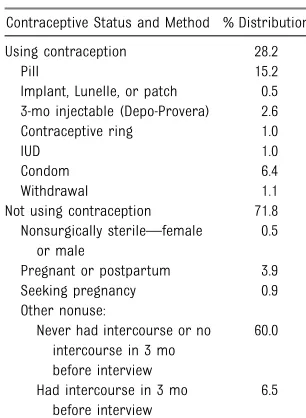
(DMPA) injection (20%), the trans-dermal patch (10%), and the vaginal ring (5%). More than 13% of adoles-cents have ever used emergency con-traception (EC), and 15% have ever used periodic abstinence. However, ever having used a method does not necessarily translate into consistent or current use. When a nationally repre-sentative sample of all 15- to 19-year-old adolescent girls were asked about current use (past 3 months), 28% reported any contraceptive use. The pill was most commonly used (15%), followed by condoms (6%), DMPA (3%), and withdrawal, the contraceptive ring, and the intrauterine device (IUD) (all approximately 1%). The transdermal patch was less than 1% (see Table 2). Experience with long-acting reversible contraception (LARC), such as IUDs and implants, has increased markedly in 15- to 19-year-olds over the past de-cade, with the bulk of the increase in the 18- to 19-year age range. By 2009, it was estimated that 4.5% of contra-ceptive use was an IUD or implant.4
SETTING THE STAGE:
CONFIDENTIALITY, CONSENT, AND THE SEXUAL HISTORY
Sexual history taking and counseling about pregnancy prevention, including contraceptive use, are key Bright Futures objectives for the adolescent visit.7The demands of these tasks can
be managed by situating them in an adolescent’s medical home. Because of pediatricians’ongoing relationships with adolescents and families, they are optimally suited for this role.7The
following sections outline the evidence base for key elements relevant to con-traceptive care, including confidentiality and consent, sexual history taking, and counseling.
Confidentiality and Consent
In the setting of contraception and sexual health care, the American Academy of
Pediatrics (AAP) believes that policies supporting adolescent consent and pro-tecting adolescent confidentiality are in the best interests of adolescents. Most states have specific laws regarding mi-nor consent to contraception (see“State Minor Consent Laws: A Summary”8and
the Guttmacher Institute’s State Center9
for regularly updated state-by-state summaries). For states without spe-cific laws, best-practices guidelines, federal statutes, and federal case law may support minor confidentiality and consent.10For example, family-planning
clinics funded by Title X of the federal Public Health Services Act (42 USC xx300–300a-6 [1970]) are required to provide confidential services to ado-lescents.8
The Health Insurance Portability and Accountability Act (HIPAA [Pub L No. 104-191, 1996]) specifically addresses minor confidentiality. Although HIPAA allows parents access to adolescents’ records as personal representatives of the minor, that access is denied when the minor can consent under state or other laws, or when the par-ent agrees that the minor may have confidential care.10The AAP, therefore,
recommends that pediatricians have an office policy that explicitly describes confidential services and that pedia-tricians discuss (and document) confidentiality with all parents and adolescents. As an additional protection for minors’ confidentiality, HIPAA states that if there is no applicable state law about the rights of parents to access the protected health information of their children, pediatricians (or other licensed health professionals) may exercise their professional judgment to pro-vide or deny parental access to the records. This can be accomplished with careful documentation of their professional judgment.
Insurance billing, electronic health re-cord systems, and patient portals create additional challenges to maintaining the TABLE 1 Lifetime Use (Ever-Use) of
Contraception Among Sexually Experienced Women Aged 15 to 19 Years: United States, 2006 to 2010
Method % Distribution
Any method188
98.9
Injectable 20.3
Pill 55.6
Contraceptive patch 10.3 Contraceptive ring 5.2 Emergency contraception 13.7
Condom 95.8
Female condom 1.5
Periodic abstinence—calendar 15.0
Withdrawal 57.3
Other methods 7.1
Long-acting reversible contraceptives (IUDs and implants)64
confidentiality of visits, visit content, and associated laboratory testing that will need to be considered. The AAP policy statement on electronic health records supports privacy policies consistent with state health care consent laws and best practices around sensitive health top-ics such as sexual behavior and con-traception.11
Importance of Confidentiality and Consent
Careful attention to minor consent and confidentiality are important, because confidentiality is a major concern of adolescents12 and a reason for
fore-going contraceptive care. In a nationally representative sample, adolescents most in need of confidential health services (eg, sexually active girls) were more likely to cite confidentiality as a reason for foregoing health care.13
Confidentiality concerns are height-ened among adolescents from un-derrepresented minority groups14,15
and other groups at high risk of un-intended pregnancy (eg, those involved with the juvenile justice system; lesbian, bisexual, and transgender; and lower-income youth).16,17 Many adolescents
are unaware they can obtain confi -dential health care,18presenting a
po-tential barrier to access to contraceptive services.
Limitations on adolescents’ confi den-tiality and their ability to consent have been associated with lower use of contraceptive services and poor out-comes. Among minors attending family-planning clinics, young women reported that if parental notification were re-quired for prescriptive contraceptives, only 1% would stop having vaginal sex, but 59% would stop using all clinic services.19 Among young African
Amer-ican women, fear of family finding out about sexual health services was a common reason to delay a first clinic visit for contraception.20On a population
level, minors’ capacity to consent to contraceptives has been associated with lower adolescent birth rates,21 and
restrictions on minors’capacity to con-sent to contraceptives have been asso-ciated with higher birth rates.22
Parents
The relationship among parents, con-fidentiality, and access is complex. Many parents are supportive of minor consent and confidentiality for sexual health services. In a national Internet-based survey, 66% of parents agreed that it was important for adolescents to have private time with physicians, and more than half (54%) of parents did not want doctors to disclose con-fidential information obtained from adolescents to parents.23Many parents
are aware that their adolescents use confidential sexual health services. A national study of adolescent family-planning clinic clients revealed that 60% of adolescents reported that their parents were aware of their use of sexual health services.24 Among
ado-lescents whose parents were aware of their sexual health service use, 79% would continue to use the services, even if parental notification were re-quired; however, among adolescents
whose parents were unaware of their sexual health services use, fewer than 30% would continue to use services.24
Sexual History Taking and Counseling
Taking a Sexual History
Adolescents consider pediatricians and other health care providers a highly trusted source of sexual health and other confidential information.25,26When
pediatricians discuss sensitive topics with adolescents, instead of reporting discomfort, adolescents reported that the pediatrician understood their prob-lems, eased their worries, and allowed them to make treatment decisions.27
Best-practices guidelines require that the sexual history be taken with the adolescent alone.7Key to history taking
is an honest, caring, nonjudgmental at-titude and a comfortable, matter-of-fact approach to asking questions. This can be accomplished by using the“5 Ps”tool of the Centers for Disease Control and Prevention (CDC): partners, prevention of pregnancy, protection from STIs, sexual practices, and past history of STIs and pregnancy (see http://www.cdc.gov/std/ treatment/SexualHistory.pdf).28
Contraceptive counseling should be developmentally targeted, because the sexual health and contraceptive needs of early adolescents differ markedly from those of middle and late lescents. Even among same-age ado-lescents, there is often a wide range in adolescents’ sense of themselves as a sexual being, their sexual expe-riences, and their interest and need for contraception. For example, a study of early adolescents described views and behaviors ranging from consider-ing sex to be “nasty” and something best left to adults, to an intense cu-riosity about and initiation of sexual behaviors.29 Bright Futures provides
sample questions and guidance for a developmentally tailored sexual history.7
TABLE 2 Current Contraceptive Use by Method of Women Aged 15 to 19 Years: United States, 2006 to 2008162
Contraceptive Status and Method % Distribution
Using contraception 28.2
Pill 15.2
Implant, Lunelle, or patch 0.5 3-mo injectable (Depo-Provera) 2.6 Contraceptive ring 1.0
IUD 1.0
Condom 6.4
Withdrawal 1.1
Not using contraception 71.8 Nonsurgically sterile—female
or male
0.5
Pregnant or postpartum 3.9 Seeking pregnancy 0.9 Other nonuse:
Never had intercourse or no intercourse in 3 mo before interview
60.0
Had intercourse in 3 mo before interview
Counseling Using Motivational Interviewing
Increasing evidence from studies of adolescents suggests that individual counseling about contraception and sexual health topics is most effective using patient-centered approaches, such as motivational interviewing.30,31
Motivational interviewing can be used to address the ambivalence and dis-crepancies among adolescents’sexual and contraceptive behaviors, their sexual and relationship values, and future life goals. Key elements are (1) an empathetic and nonjudgmental in-terviewer with unconditional positive regard for the adolescent in a safe, nonthreatening environment; (2) en-gaging adolescents in their own be-havior change; (3) asking adolescents about their goals, and helping them identify inconsistencies between their goals and current behavior; (4)“ roll-ing with resistance,” or avoiding di-rect confrontation when resistance is met, and waiting for adolescents to find their own answers rather than pointing them out; and (5) supporting adolescents’ capacity to change.32,33
Motivational interviewing is a natural extension of youth development prin-ciples in its focus on goals and future orientation, belief in adolescents’ ca-pacity to change, and engagement of adolescents in the process of adopt-ing health-promotadopt-ing behaviors.34
Motivational interviewing is accom-plished through open-ended questions and careful listening.32,33In the context
of pregnancy prevention and sexual health promotion, discussions might explore the adolescent’s reasons for becoming sexually active and the effect that sexual intercourse and unintended pregnancy may have on relationships with peers, parents, and significant others.35For example, does
the adolescent believe that sex will deepen a relationship?36 Or is sexual
behavior or pregnancy considered a
marker for adulthood?37 A motivational
interviewing approach to contraceptive counseling might also focus on adoles-cents’ goals (examples of goals linked to sexual decision-making include school completion, college, marriage, and childbearing37), and how contraception
and the delay of pregnancy might af-fect those goals.35 An example of an
inconsistency between goals and be-haviors might be the adolescent who expresses a desire to graduate from high school and attend college but is frequently engaging in unprotected sex, putting her at risk for an unintended pregnancy.
A common concern of pediatricians is giving complex messages to adoles-cents: in the case of sexual behavior, the complex message is that a pedia-trician would like to encourage absti-nence but also is willing and able provide appropriate counseling re-garding sexuality and contraception. With motivational interviewing approaches, it is possible and appropriate for pe-diatricians to provide this type of com-plex message, because the focus is on the adolescents’ values and relation-ships and related goals and discrep-ancies between goals and behaviors. Research suggests that adolescents are capable of understanding this type of complex message and, in fact, may disregard messages that they consider judgmental or overly simplified or that eliminate key health information.25,26
More detailed information on motiva-tional interviewing with adolescents can be found in recent publications.35,38
Abstinence Counseling in the Office Setting
Counseling about abstinence is an important component of sexual health care. When used consistently without exception, abstinence can be an ef-fective means of contraception and STI prevention and is a viable strategy in the pediatrician’s toolkit for reducing unintended pregnancy and STIs. It has
been estimated that approximately one-quarter of the decline in the adolescent pregnancy rates from 1995 to 2002 was attributable to the delayed initiation of sexual activity.5 Abstinence counseling
should follow the motivational inter-viewing approaches described previously. A set of practical tips for abstinence counseling within an office-based setting has been published, and it uses a com-prehensive motivational interviewing per-spective.35
When adhered to perfectly, sexual abstinence is 100% effective, making it an attractive choice for pregnancy prevention. However, many adoles-cents who practice abstinence do not adhere to the method 100% of the time (ie, they occasionally have vaginal-penile intercourse). Few data exist on actual effectiveness of abstinence (called “typical use,” see explanation in Methods of Contraception)39;
how-ever, existing data suggest that the effectiveness of abstinence for preg-nancy and STI prevention over ex-tended periods of time is likely low. For example, among adolescents reporting virginity pledges in the National Longitu-dinal Study of Adolescent Health, at 6-year follow-up (wave 3), 88% had engaged in sexual intercourse (most premarital), and 5% were infected with STIs.40Because of
concerns about a low typical-use effec-tiveness of abstinence as a contraceptive method, it is critical for pediatricians to reassess intentions to remain abstinent at every visit and additionally to provide access to comprehensive sexual health information, including information about EC and condom use. Comprehensive information, including pregnancy pre-vention, should be provided to all ado-lescents, including those who identify as lesbian and gay, because they may have opposite-sex partners as well.17
METHODS OF CONTRACEPTION
contraception are available (see, for example, Contraceptive Technology41
and the CDC’s“US Selected Prescribing Recommendations for Contraceptive Use”42). Additionally, there are online
resources for prescribing contraceptives geared toward clinicians (see Table 3). The following section focuses on the appropriateness of various methods available for adolescents.
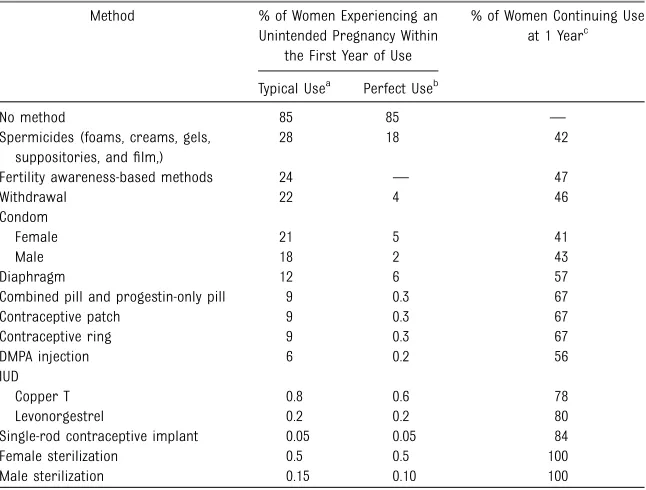
When comparing the efficacy of dif-ferent contraceptive methods, it is important to distinguish“perfect use” and“typical use.” Perfect-use efficacy refers to the probability of pregnancy if used consistently and correctly ev-ery time; data for perfect use come from clinical trials with very high lev-els of adherence.43Typical-use efficacy
refers to the probability of pregnancy during the first year of typical use; data for typical-use efficacy come from national surveys that include users with varying degrees of adherence.43
Thus, the typical-use efficacy rates re-flect how well a contraceptive method works with an average user, factoring in mistakes, such as missed pills, for-gotten condoms, or patches that are left on too long. Table 4 includes perfect-and typical-use data for all contra-ceptive methods. The individual methods appropriate for adolescents are addressed hereafter, discussed in order of effectiveness, starting with LARC. It is recommended that pedia-tricians use a “tiered” approach to contraceptive counseling, starting with the most effective methods.
Progestin Implants
Currently available progestin implant LARC methods include Implanon and Nexplanon (Merck, Whitehouse Station, NJ). Both consist of a single-rod im-plant that contains etonogestrel, the active metabolite of desogestrel; Nexplanon also contains barium sulfate to render it visible on radiography. The implant, highly effective with a failure rate of less than 1%,43,44may remain in
place for 3 years. It is inserted into the inside of the nondominant upper arm, 6 to 8 cm above the elbow, by a medical professional who has completed the requisite training. Insertion takes ap-proximately 1 minute, and removal can be accomplished in under 5 minutes.45
Complications are rare but include transient nerve injury and the need for removal under general anesthesia.44,46,47
Implants are ideal for adolescents who prefer a method that does not require regularly scheduled adherence and who desire an extended length of protection. Authors in Brazil have identified it as a viable option for delaying second pregnancy in adolescent mothers.48In
Australia, a prospective study was conducted of 137 adolescent mothers, 18 years or younger.49 Participants
selected their own method, with half choosing the implant and the re-mainder choosing COCs, DMPA, a bar-rier method, or nothing. Both method continuation and time to next preg-nancy were significantly longer in im-plant users. It must be noted, however, that there were key differences
be-tween the users of the implant and users of other methods. For example, implant users were significantly more likely to be living with the birth father rather than one of their own parents. In addition, more than half of implant users discontinued their method ear-lier than 24 months, with the most common reason being abnormal uter-ine bleeding. This is consistent with observational studies (as opposed to clinical trials, which tend to enroll and retain more adherent contraception users) describing continuation rates and bleeding patterns in adult users.50,51 In
a published summary of 11 clinical trials that included a total of 942 women within 80% to 130% of their ideal body weight, 64% reported amenorrhea or infrequent bleeding over the first 2 years, and 15% reported frequent or prolonged bleeding.52 This may differ
from clinicians’anecdotal experience in part because heavier women may have more bleeding than lighter women.53
Unlike most other continuous methods, it is not clear that implant users ex-perience improved bleeding patterns over time.54 Experience in the first 3
months may help predict future bleeding patterns,53 but individual
ex-perience is highly variable. Although bleeding is frequent with all progestin-only methods, it is important to re-member that unscheduled bleeding can also be a sign of an STI, and ado-lescents should be tested accordingly. Data are limited, but experts have recommended the use of nonsteroidal anti-inflammatory drugs and/or COCs
TABLE 3 Online Contraceptive and Sexual Health Resources for Providers
Centers for Disease Control and Prevention
US Selected Practice Recommendations for Contraceptive Use, 2013 http://www.cdc.gov/mmwr/preview/mmwrhtml/rr6205a1.htm?s_cid=rr6205a1_w Counseling Resources: Teen Pregnancy Prevention http://www.cdc.gov/teenpregnancy/healthcareproviders.htm
US Medical Eligibility Criteria for Contraceptive Use, 2010 www.cdc.gov/mmwr/pdf/rr/rr59e0528.pdf
Contraceptive Technology http://www.contraceptivetechnology.org/reproductive-health-resources/training-videos-slides/
Association of Reproductive Health Professionals Web site www.arph.org/
Managing Contraception www.managingcontraception.com/ga
as potentially helpful measures to man-age implant-related bleeding.54
Other than irregular bleeding, adverse effects are not common, but include emotional lability, weight gain, head-ache, and acne.52Data are scant on the
effect of the implant on bone mineral density (BMD).55–57 Given the higher
estradiol level in implant users com-pared with DMPA users,54 it could be
presumed that the implant has less effect on BMD, but this has not been adequately assessed in adolescent women. Similar to the combined hor-monal methods, efficacy is impaired by hepatic enzyme-inducing drugs (see Table 5); however, implants are con-sidered safe for women with estrogen contraindications.58
For adolescents who need highly ef-fective contraception that is user- and coitus-independent, the implant is an
outstanding choice. However, it is crit-ical that the risk of persistent ir-regular bleeding is well understood; to date, this is the most common complaint resulting in premature re-moval. For adolescents seeking hor-monal methods specifically to manage abnormal uterine bleeding and irreg-ular cycles, a combined method or a levonorgestrel IUD may be more ac-ceptable to the patient.
Intrauterine Contraception
IUDs are inserted into the uterus to provide long-acting reversible contra-ception. Appropriate for adolescents, IUDs are generally safe, effective meth-ods of contraception with a failure rate of less than 1% (see Table 4).43 Three
IUDs currently are approved for the US market: a copper-containing T-shaped IUD (copper T380-A, ParaGard; Teva
North America, North Wales, PA) and 2 levonorgestrel-releasing T-shaped IUDs (52-mg levonorgestrel, Mirena, and 13.5-mg levonorgestrel, Skyla; Bayer HealthCare Pharmaceuticals Inc, Wayne, NJ). The primary mechanism of action of both types of IUD is preventing fer-tilization by inhibiting sperm motility. The levonorgestrel IUDs also thicken cervical mucus. All mechanisms occur before implantation, when pregnancy begins, and inhibiting implantation is not believed to be a primary mechanism of action for either type of IUD.59 The
13.5-mg levonorgestrel IUD is approved for 3 years.60The 52-mg levonorgestrel
IUD is approved for 5 years,61although
data suggest that it is still effective at least up to 7 years; similarly, the copper T380-A IUD is approved for 10 years,62 but data support use for
12 years.63Although IUDs have very low
use in the United States, they are used extensively worldwide, and use is in-creasing in the United States, particu-larly among older adolescents.64
Previous concerns about adolescents and IUDs have been addressed by more recent data demonstrating that IUDs are safe for nulliparous adoles-cents. For example, a case-control study demonstrated that past associations between infertility and IUD use among nulliparous women were attributable to STIs rather than IUDs.65Other
stud-ies support a rapid return to fertility after IUD removal.66,67 Data also
ad-dress concerns about pelvic infections. There is a small increase in infection risk around the time of IUD insertion as a result of the procedure. However, beyond the first 20 days after in-sertion, IUDs do not increase rates of pelvic inflammatory disease (PID) above baseline.68,69 Screening for gonorrhea
andChlamydiacan be performed at the same time as insertion.59Any necessary
treatment can be subsequently provided without IUD removal, as international studies have demonstrated that STIs TABLE 4 Contraceptive Method Efficacy
Method % of Women Experiencing an Unintended Pregnancy Within
the First Year of Use
% of Women Continuing Use at 1 Yearc
Typical Usea
Perfect Useb
No method 85 85 —
Spermicides (foams, creams, gels, suppositories, andfilm,)
28 18 42
Fertility awareness-based methods 24 — 47
Withdrawal 22 4 46
Condom
Female 21 5 41
Male 18 2 43
Diaphragm 12 6 57
Combined pill and progestin-only pill 9 0.3 67
Contraceptive patch 9 0.3 67
Contraceptive ring 9 0.3 67
DMPA injection 6 0.2 56
IUD
Copper T 0.8 0.6 78
Levonorgestrel 0.2 0.2 80
Single-rod contraceptive implant 0.05 0.05 84
Female sterilization 0.5 0.5 100
Male sterilization 0.15 0.10 100
—, data not available.
Source: Trussell J. Contraceptive failure in the United States.Contraception.2011;83(5):397–404.
a
Among typical couples who initiate use of a method (not necessarily for thefirst time), the percentage who experience an unintended pregnancy during thefirst year if they do not stop use for any other reason. Estimates of the probability of pregnancy during thefirst year of typical use for spermicides, withdrawal, periodic abstinence, the diaphragm, the male condom, the pill, and Depo-Provera are taken from the 1995 and 2002 National Survey of Family Growth, corrected for underreporting of abortion; see the text for the derivation of estimates for the other methods.
bAmong couples who initiate use of a method (not necessarily for thefirst time) and who use it perfectly (both
consistently and correctly), the percentage who experience an unintended pregnancy during thefirst year if they do not stop use for any other reason.
and PID can be treated with the IUD in place,70as long as the patient improves
with treatment. As a result, there are now more limited infectious contra-indications to IUDs. These include cur-rent or recent (past 3 months) PID or current gonorrhea, Chlamydia, or puru-lent cervicitis. Additional contraindications include pregnancy and uterine anomalies that distort the uterine cavity in a man-ner incompatible with IUD insertion (see CDC recommendations for com-plete list58). HIV infection and
immuno-suppression are not contraindications to IUD use.
The one area with less clarity is that, for insertion of IUDs (but not contin-uation), “high risk of STIs” is consid-ered by the CDC to be level 2 (benefits generally outweigh risks) or level 3 (risks generally outweigh benefits, but clinician may individualize). However, the data supporting the level 3 catego-rization are from a study of HIV-infected adult women in Africa.58 Beyond STI
risk, existing concerns about IUD use in adolescents are that rates of expulsions
and experiences of pain and discomfort are somewhat higher among nulliparous compared with parous young women. Nonetheless, current data suggest that IUDs are generally well tolerated in young women and that continuation and satis-faction rates are high.71–74
Adolescent-specific data are limited on acceptability and use of IUDs for contraception; however, recent stud-ies are promising, suggesting 1-year continuation rates of 75% or greater.75–78
The data on levonorgestrel IUD use for medical indications in adolescents reveal improvement in dysmenorrhea and heavy menses.76,79 The
levonor-gestrel IUD is also useful for adolescents with medical conditions that require long-term menstrual suppression in which estrogen is contraindicated or that present a serious risk to the fetus in the case of unintended pregnancy. For example, use of the levonorgestrel IUD with disabled nonambulatory ado-lescents allows effective menstrual suppression while avoiding both exog-enous estrogen exposure and the bone-density effects of DMPA.78,80
Levo-norgestrel IUDs also provide an im-portant option for adolescent bariatric surgery patients, for whom experts recommend a delay of pregnancy of at least 12 to 18 months after surgery but who often experience a rapid return to fertility after surgery.81Barriers to
pediatricians inserting IUDs, such as lack of training, lack of office capacity, or not seeing enough patient volume to maintain skills, pose an access problem, which can be overcome by identifying specific providers in the community to whom these patients can be referred.
Progestin Injections
DMPA, also known by the brand name Depo-Provera (Pfizer, New York, NY) is a long-acting progestin that is given as a single injection every 13 weeks (up to 15 weeks) using a dose of either 150 mg
delivered intramuscularly or 104 mg delivered subcutaneously; the feasibility of self-administration of the latter is currently under investigation. Both regimens have similar effectiveness and side effects.82DMPA can be initiated on
the same day as the visit (“mid-cycle”or “quick”start). The CDC states that even if pregnancy cannot be definitively ruled out, the benefits of initiating DMPA ex-ceed the risks and that DMPA can be initiated at any time, with a follow-up pregnancy test in 2 to 4 weeks.42
DMPA is highly effective in preventing pregnancy. In the first year of use, the probability of becoming pregnant by typical users is approximately 6% (perfect use is 0.2%; see Table 4).43
Some experts believe that the use of DMPA, whichfirst became available in the United States in 1992, is one factor responsible for the declining rates of adolescent pregnancy in the United States.5,83
DMPA is convenient for many adoles-cents because of its ease of use compared with coitus-dependent meth-ods or those that require daily, weekly, or monthly adherence. Other advan-tages, similar to combined hormonal methods, include improvement in dys-menorrhea and protection against iron-deficiency anemia and endometrial cancer.84 DMPA may be safely
recom-mended for adolescents who are lac-tating85 and most of those who have
chronic illnesses.58 It may provide
ad-ditional benefits in some circumstances, for example, by raising the seizure threshold85 and decreasing sickle cell
crises.87,88 Despite recent work
sug-gesting that DMPA may result in an increased risk of venous thrombosis,89
for patients at risk for estrogen-related complications, the advantages of DMPA are still believed to outweigh the risks.58
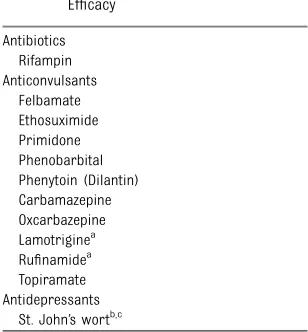
The major disadvantages of DMPA for adolescents are menstrual cycle ir-regularities (present for nearly all patients initially), the need for an TABLE 5 Medications That Decrease COC
Efficacy Antibiotics
Rifampin Anticonvulsants
Felbamate Ethosuximide Primidone Phenobarbital Phenytoin (Dilantin) Carbamazepine Oxcarbazepine Lamotriginea Rufinamidea Topiramate Antidepressants
St. John’s wortb,c
Source: World Health Organization.Medical Eligibility Cri-teria for Contraceptive Use. 4th ed. Geneva, Switzerland: World Health Organization; 2009.
aFewer data are available for these newer antiepileptic
drugs, but available data suggest they can decrease COC effectiveness.
b
Advantages of COC use generally outweigh the risks.
cMurphy PA, Kern SE, Stanczyk FZ, Westhoff CL.
injection every 13 weeks, and potential adverse effects, including weight gain and interference with normal increases in bone density. Other adverse effects include headache, mastalgia, hair loss, and change in libido. Although rare, anaphylaxis to DMPA has been described.90
The irregular bleeding associated with DMPA typically improves over time.91,92
Studies have demonstrated that pa-tients are more likely to continue DMPA use if they are counseled about adverse effects before their first injection, but these studies did not tar-get adolescents specifically.93,94
Long-term DMPA use is also associated with a delayed return to fertility, typically 9 to 18 months, while the endometrial lining returns to its pre-DMPA state and ovulatory function returns. Both sub-cutaneous and intramuscular DMPA show similar delays to fertility after injection.95 However, for adolescent
patients, such a delay does not usu-ally pose a major deterrent to using this method.
Although a number of observational studies have found an increased risk of weight gain among young women using DMPA,96–100 a recent Cochrane
review101 evaluated this subject and
identified only 2 high-quality and 2 moderate-quality studies, only one of which102 demonstrated that
adoles-cents using DMPA had increased body fat percentage and decreased lean body mass. Thisfinding, in contrast to widespread clinical observations about significant weight gain with DMPA, could be explained by significant vari-ability in the trajectories of weight gain among women using DMPA. Bonny et al103 studied 97 adolescents and
found that 21% experienced early weight gain, defined as an increase in weight of more than 5% at 6 months. Over 18 months, those early gainers experienced an increase in mean BMI of 7.6 compared with 2.3 for non-early
weight gainers. Similar findings in adult patients104 suggest that
weight-gain status at 6 months is a strong predictor of future excessive weight gain with ongoing DMPA use but that weight gain on DMPA is not a uniform finding for all patients.96,98
Because DMPA suppresses circulating estradiol concentrations, it causes lack of BMD accrual105–107 and has an
ad-verse effect on biochemical markers of bone formation and resorption.108 In
response to these concerns, the Food and Drug Administration (FDA) issued a “black-box” warning regarding the risk of decreased BMD among DMPA users in November 2004.109The warning
recommended using DMPA for longer than 2 years only if other methods are inadequate, noting a lack of certainty regarding peak BMD attained later in life among users of DMPA. Since that time, 3 publications have described prospective studies of adolescent and young adult women during and after use of DMPA.110–112 All 3 documented
substantial recovery of BMD after DMPA use, thus, offering reassurance about the long-term skeletal health of ado-lescent patients who use DMPA. The American College of Obstetricians and Gynecologists, recognizing the risk of unwanted pregnancy if adolescents’ contraceptive options are limited, does not advise limiting DMPA use to 2 years, nor does it recommend monitoring BMD after that time frame.83In addition,
some experts113 dispute the limited
data that suggest a link between DMPA use and elevated risk of fractures in reproductive-age women114,115and have
called for removal of the black box warning.
Although recent studies are reassur-ing about the likelihood of bone re-covery after DMPA cessation, it is important to consider other risk fac-tors for osteoporosis and to tailor counseling and recommendations to each patient. Factors such as small
body habitus, chronic alcohol or to-bacco use, eating disorders, or illness that necessitates chronic use of cor-ticosteroids may lead a clinician to more strongly encourage alternatives to DMPA. All patients should be en-couraged to include foods and/or supplements to ensure intake of at least 1300 mg calcium each day along with 600 IU vitamin D,116to participate
in weight-bearing exercise regularly, and to stop smoking as important measures to promote skeletal health. Clinicians must remind patients that, as with all hormonal methods of contraception, condoms should be used in conjunction with DMPA for protection from STIs.
Combined Oral Contraceptive Pills
COCs have been available for more than 50 years. They are a reliable, effective method for the prevention of pregnancy, are available only by pre-scription in the United States, and are the most popular method of hormonal contraception among adolescents (see Tables 1 and 2). They are the pro-totype for other combined methods of birth control, including the vaginal ring and transdermal patch (discussed later), which have similar effective-ness, contraindications, medical bene-fits, and side-effect profiles.
COC Prescribing
setting, see the 2010 AAP clinical report on the subject.117) COCs can be started
on the same day as the visit (“quick start”), or on the day following EC use (see section on EC) in healthy, non-pregnant adolescents. Patients should be counseled that a back-up method (ie, condoms or abstinence) should be used for at least thefirst 7 days for contra-ceptive efficacy, and a condom should be used at all times for protection against STIs. A routine follow-up visit 1 to 3 months after initiating COCs is useful for addressing persistent ad-verse effects or adherence issues.
There is no 1 pill formulation that is the best choice for every adolescent, and even within the“low-dose”range, changing the amount of estrogen or the type of progestin may be neces-sary to address adverse effects or optimize medical benefits. Patients also should be informed of common tran-sient adverse effects, including irregu-lar bleeding, headache, and nausea. Neither weight gain nor mood changes have been reliably linked to use of combined hormonal contraception.118–120
Recommendations for managing ad-verse effects have been published else-where121or can be found online (http://
www.managingcontraception.com/qa/ index.php). COCs have few contra-indications in healthy female adoles-cents. They should not be prescribed for patients with severe and un-controlled hypertension (systolic pres-sure≥160 mm Hg or diastolic pressure
≥100 mm Hg); ongoing hepatic dysfunc-tion; complicated valvular heart disease; migraines with aura or focal neuro-logic symptoms; complications of di-abetes (ie, nephropathy, retinopathy, neuropathy, or other vascular disease); complicated solid organ transplantation; or thromboembolism or thrombophilia (eg, factor V Leiden mutation; anti-phospholipid antibody syndrome; or protein C, protein S, or antithrombin 3 deficiency).111 An excellent and
up-to-date resource for prescribing hor-monal contraceptives, the“US Medical Eligibility Criteria for Contraceptive Use,”is available on the CDC Web site (http://www.cdc.gov/reproductive-health/UnintendedPregnancy/USMEC.htm) and in print.58 These recommendations
weigh the risks and benefits of con-traceptive methods against unwanted pregnancy. When hormonal methods are used for medical therapy, the risk/ benefit ratio may differ, and treatment decisions should be considered on a case-by-case basis. Other useful resources include a 2004 detailed dis-cussion of contraceptive choices for patients with congenital heart dis-ease122 and a recent publication
of-fering expert guidance on prescribing contraception to adolescents at in-creased risk of hypercoagulability.123
The most serious adverse event asso-ciated with COC use is the increased risk of blood clot, which is discussed in further detail in the following para-graphs.124Although smoking should be
discouraged, it is not a contraindication to COC use in teenagers and young adults.58
New data have continued to emerge regarding the risks and benefits of different progestins. On April 10, 2012, the FDA posted a drug safety com-munication that resulted in revised drug labels for COCs containing the progestin drospirenone.125These note
that epidemiologic studies reported as high as a threefold increase in the risk of blood clots for drospirenone-containing products when compared with products containing levonorges-trel or some other progestins, whereas other epidemiologic studies found no additional risk of blood clots with drospirenone-containing products.
However, it is important to remember that most of the risk of blood clot is conferred from the estrogen compo-nent of the pill and that all COCs confer a lower risk of blood clot than
pregnancy.126 The baseline incidence
of venous thromboembolism in ado-lescents is up to 1 per 10 000 woman-years per year.127 Currently available
COCs increase the risk of blood clot three-to fourfold, or up three-to 4 per 10 000123,124
woman-years. In comparison, the in-cidence of venous thromboembolism (VTE) associated with pregnancy and the postpartum period is 10 to 20 per 10 000 woman-years, of which 1% to 2% are fatal.128,129
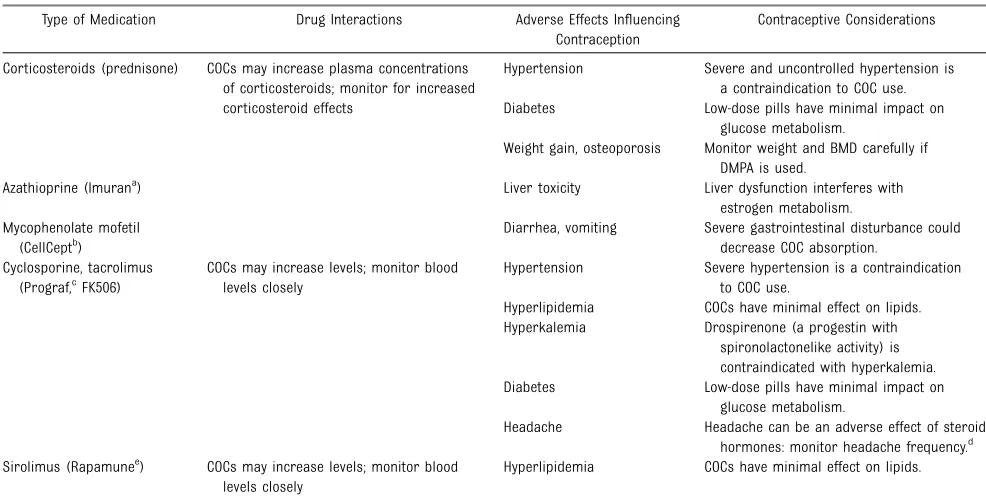
COCs decrease the effectiveness of some medications (eg, lamotrigine). Conversely, other medications, such as anticonvulsants and antiretroviral agents, decrease COC effectiveness to the extent patients may need to choose alternative methods130(see Table 5 and
Special Populations). With regard to antibiotics, neither a 2001 review of the literature131nor a 2011 case-crossover
study of 1330 COC failures132found any
definitive evidence of decreased COC effectiveness with the use of any anti-biotic except rifampin.
Used perfectly, COCs are extremely effective, with a perfect-use failure rate for all users of 0.3%; however, the typical-use failure rate is 9%, sug-gesting that adherence is a key issue in COC use (see Table 4).43Counseling
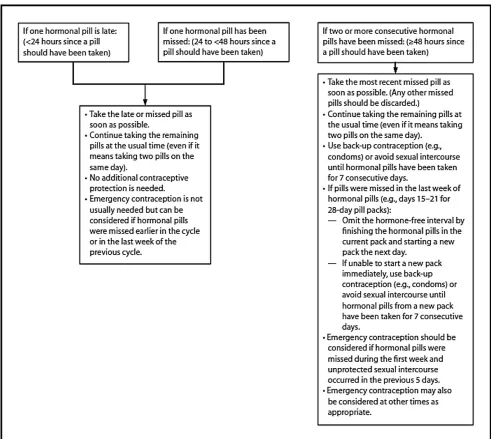
should include strategies to promote adherence, such as cell phone alarms and support from a family member or partner. Patients should be instructed on what to do if pills are missed. A missed pill should be taken as soon as it is remembered. If more than 1 pill in a row is missed, only the most recently missed pill should be taken as soon as possible, and the remain-ing pills should be taken at the usual time, reminding patients that 7 con-secutive hormone pills are required to prevent ovulation. Further instructions can be accessed online at http://www. cdc.gov/mmwr/preview/mmwrhtml/ rr6205a1.htm?s_cid=rr6205a1_w#Fig2.42
may be needed if 2 or more pills are missed in thefirst week or if 1 or more pills were missed earlier in the same cycle or late in the previous cycle (see online instructions and Fig 1 for details).
COC Regimens
COCs are currently available in fi xed-dose, monophasic regimens (each tab-let contains the same dose of estrogen and progestin) or in phasic regimens (triphasic and biphasic packs that contain varying doses of estrogen and progestin). Standard pill packs include 28 pills total, with 21 to 24 hormone pills and 4 to 7 placebo (hormone-free) pills. Among low-dose pills, there are no clear data suggesting one formulation is su-perior to another for adolescent use, so it is appropriate to choose one with the lowest copay on a patient’s insurance formulary (if applicable). Many experts recommend starting adolescents on a monophasic pill with monthly bleed-ing and then changbleed-ing regimens and/or extending cycles, as indicated, to address patient adverse effects or preference.121
Many adolescent medicine providers be-gin with a COC containing 30 to 35μg of ethinyl estradiol and a progestin, such as levonorgestrel or norgestimate.
The benefits of decreasing or elimi-nating the placebo hormone-free in-terval (see section on COC benefits) have been increasingly recognized, and there are several regimens packaged with more than 21 active pills and fewer placebo pills. For example, some regi-mens (eg, Yaz [Bayer, Leverkusen, Germany], and Generess FE [Watson, Parsippany, NJ]) have 24 active pills and 4 pills without hormones. Several brands are available with 84 active pills and 7 placebos, or 84 active pills and 7 pills of low-dose estrogen (eg, Seasonique and LoSeasonique; Teva, Petah Tikva, Israel). In 2007, the FDA approved thefirst COC packaged with a year of continuous combined hormone pills, Lybrel (Pfizer, New York, NY).
COC Benefits
The noncontraceptive benefits of COC use include decreased menstrual cramping and blood loss and improvement in acne. Extended or continuous cycles may be particularly appropriate for adolescents with medical conditions, such as anemia, severe dysmenorrhea, endometriosis, abnormal uterine bleeding, and Von Willebrand and other bleeding diatheses and for adolescents who prefer amen-orrhea.133These regimens may also be
useful for conditions that are known to be exacerbated cyclically, such as mi-graine (without aura), epilepsy, irritable bowel syndrome, some psychiatric symptoms,134and behavioral problems
(such as increased aggression or self-mutilation) that sometimes worsen cy-clically in young women with profound cognitive impairment.135 The most
com-mon adverse effect of extended-cycle regimens is unscheduled bleeding. Elim-inating the hormone-free interval will also minimizefluctuations in medications that interact with COCs (see section on Special Populations). In addition, ovar-ian suppression is optimized by COC regimens with shorter or no placebo (hormone-free) intervals, potentially in-creasing contraceptive effectiveness, especially among adolescents who frequently miss pills.136–138
Families can be reassured that COC use has not been shown to increase the risk of breast cancer.139Also, use
of COCs for more than 3 years pro-vides significant protection against endometrial and ovarian cancers.140
Overall, COCs are one of the best-studied medications ever prescribed. Completely reversible and with no neg-ative effect on long-term fertility, COCs are a safe option throughout a woman’s reproductive years.
Contraceptive Vaginal Ring
The vaginal ring (NuvaRing; Merck) re-leases 15μg ethinyl estradiol and 120μg etonogestrel (the active metabolite
of desogestrel) daily. It is a round,fl exi-ble device that measures 54 mm in outer diameter and 4 mm cross-sectionally. This soft silicone vaginal ring releases both estrogen and pro-gestin hormones that protect against pregnancy for 1 month. It is inserted in the vagina and stays in place for 3 weeks, with removal for 1 week to duce menstruation followed by in-sertion of a new ring. Patients should be instructed to insert a new ring after 7 days even if bleeding has not ceased.
Because adolescents may be unfamiliar with their own reproductive anatomy, a pelvic model141 or other visual aid
may be useful in explaining to patients where the ring will be. Patients should be reassured that the ring will not fall out. Eighty women (∼90% of them nulliparous) were examined with the ring in place and none were able to expel the ring by bearing down in a Valsalva maneuver.142 The ring
typi-cally sits with the superior-most por-tion of the ring lying posterior to the cervix.143
Most patients will not have previous experience with intravaginal medication and may have questions about its use, such as whether tampons can be worn when the ring is in place. On the basis of evaluation of serum concentrations of ethinyl estradiol and etonogestrel, contraceptive efficacy should not be compromised by concomitant use of tampons,144the spermicide nonoxynol-9,145
or intravaginal miconazole.146Similarly, the
ring is intended to stay in place during coitus but can be removed for up to 3 hours if desired. This is not typically rec-ommended, and sexually active patients may be reassured to know that most men were not bothered by its presence, if it was noted at all.142,147
The ring has comparable typical-use failure rate (9%), risks, and benefits as other combined hormonal meth-ods43 but provides the simplest
start can be used with the vaginal ring. Adverse effects are largely sim-ilar to other combined methods, in-cluding breast tenderness, headaches, nausea, and breakthrough bleeding or spotting, with the additional vaginal symptoms of discharge, discomfort, and problems related to the device (eg, expulsion).150 The limited investigation
of bone health with the ring points to its bone neutrality, but these studies have not included adolescents younger than 18 years.151,152 Studies to date
have yielded inconsistent results about how the risk of VTE with use of the ring compares with the risk with use of low-dose COCs.153–156
Analogous to experience with the contraceptive patch, it has not been clearly demonstrated that the simplified regimen afforded by the ring results in improved medication adherence or continuation in young people.157 A trial
of 237 college students randomized to use either the ring or COC found that perfect use was greater for the ring in
the first 2 months but that this was no longer statistically significant in the third month of the study. Similarly, 6-month continuation rates were no different and were less than 30% for both groups.158
The ring is an excellent method for extended use. The vaginal ring package insert states that 1 ring can be used for up to 28 days with no back-up method; however, the rings contain sufficient medication to be used for up to 35 days159and, thus, can be replaced
FIGURE 1
once every calendar month. This elim-inates the need for additional refills potentially not covered by insurers, which sometimes poses barriers to continuous pill and patch regimens. As with COCs, the longer the duration of continuous hormones, the greater the number of unscheduled bleeding days; however, the difference between a 28-day and 49-day cycle is small.160
Similar to COCs, the decision about how often to allow uterine bleeding to occur can be individualized to the adolescent’s medical needs and pref-erences. Women who choose to use the ring continuously with no planned ring-free days can be advised to remove the ring for 4 days if they have more than 5 days of consecutive bleeding, as this has been found to result in fewer bleeding days overall.161
Transdermal Contraceptive Patch
The combination hormone transdermal contraceptive patch (Ortho Evra [Ortho-McNeil Pharmaceutical, Raritan, NJ]) contains 0.6 mg norelgestromin and 0.75 mg ethinyl estradiol and measures approximately 1.75×1.75 in. The patch can be placed on the abdomen, upper torso, upper outer arm, or buttocks, using 1 patch for each of 3 weeks in a row, followed by 1 week off the patch, during which a withdrawal bleed usu-ally occurs. Current estimates of fail-ure rates for typical use are 9% (<1% for perfect use).43 Approved by the
FDA in November 2001, patch use rose in popularity until 2005, when use de-clined162after publicity about increased
estrogen exposure from the patch, which has been found to be 1.6 times higher than estrogen exposure with a COC.153 The patch has undergone
mul-tiple label revisions, most recently Au-gust 22, 2012. The 2012 package insert contains a black box warning citing 5 US studies163–170 (1 with statistically
significantfindings) that suggest a pos-sible increased risk of VTE compared with a 20- to 35-μg COC, with odds ratios
of 1.2 to 2.2. Although these potential health risks are concerning to some adolescents, the patch remains an im-portant contraceptive alternative that may be the best option for some ado-lescents, especially in comparison with the many adverse consequences of un-planned pregnancy, which include an increased risk of VTE. Nonetheless, other methods may be saferfirst-line choices for patients interested in extended cycling.
The patch has comparable efficacy, benefits, and drug interactions as other combined methods, but provides a simpler regimen. Thus, it was initially assumed that the patch would promote improved contraceptive adherence in adolescents. Accordingly, early studies demonstrated better adherence to the patch than to COCs among adults,171,172
most notably among 18- and 19-year-olds,173,174 and 2 smaller studies of
adolescents had high rates of self-reported short-term perfect patch use, 87% and 93%.175,176 However,
contra-ceptive effectiveness requires that the method be sufficiently well accepted to be continued over time.
To our knowledge, there are no studies that have randomized adolescents to use either the patch or pills, and the observational studies that have com-pared these methods are plagued by possible selection bias; adolescents who choose a nondaily method may have behavioral characteristics that would interfere with continuation and perfect use of any method.177–179
For example, Bakhru and Stanwood177
prospectively followed 1230 women (416 of whom were 17 years or youn-ger) who self-selected their method and found 57% continuation of the patch at 1 year compared with 76% continuation of the pill (P= .004). In contrast to their initial hypothesis, patch users were significantly less likely than pill users to continue their method and, thus, were more likely to experience pregnancy.177
Even lower rates of patch continuation, ranging from 25% to 50%, have been found in other longitudinal studies of adolescent patch users.179–181
In addition, similar findings have been shown in randomized studies of adults. A 2010 Cochrane review182
(based on 4 such studies) concluded that patch users were more likely than pill users to discontinue study partici-pation because of adverse effects. Similarly, in a study that randomized 500 women (average age, 25–26 years) to either the patch or the contraceptive vaginal ring, only 27% of patch users (versus 71% of ring users) planned to continue their assigned method after the 3-month study concluded.183
Side effects of the patch are largely similar to other combined methods, with the addition of local adverse effects, such as dislodged patches and hyperpigmentation,175,176 contact
der-matitis and other skin irritation,184
and concerns about the visibility and appearance of the patch.185,186
Inves-tigations into the patch’s effect on bone health have yielded inconsistent results, with findings in adults150,151
more reassuring than those in ado-lescents.187However, this limited work
is far from conclusive.
Progestin-Only Pills
Similar to other progestin-only methods, irregular bleeding is a common adverse effect. However, POPs are markedly less effective than other progestin-only methods, including the progestin-containing IUD, the progestin implant, and injectable progestin. Therefore, POPs are not typically recommended as a first-choice contraceptive in healthy adolescents. Nonetheless, they provide a progestin-only alternative for selected adolescent patients with demonstrated excellent medication adherence.
Male Condoms
The male condom is a mechanical barrier method of contraception and STI pre-vention. In a recent nationally represen-tative survey, condom use was reported atfirst intercourse by 68% of adolescent girls and 80% of adolescent boys and at most recent intercourse by 52% of adolescent girls and 75% of adolescent boys.188 Male condoms have several
advantages for adolescents, including involving males in the responsibility of contraception, easy accessibility and availability to minors, use without a prescription, and low-cost STI pro-tection.
Male condoms are most commonly made of latex. Lubricated condoms are used for vaginal and anal intercourse; unlubricated condoms are available for oral sex. Although many individuals will need additional lubrication with condoms, adolescents’ lubricant use is rarely assessed. Condoms should be used only with water-based lubri-cants (eg, K-Y Jelly [McNeil PPC Inc, Fort Washington, PA], Astroglide [Bio-film Inc, Vista, CA]), because oil-based lubricants (eg, petroleum jelly, massage oils, body lotions) can weaken latex and cause breakage. Male condoms also are available as polyurethrane (syn-thetic) for people with latex sensitivities and as natural membrane (eg, lamb cecum). Polyurethrane condoms have similar effectiveness to latex condoms
but are more resistant to deterioration and are compatible with both oil- and water-based lubricants. Natural mem-brane condoms are porous and provide inadequate STI protection.
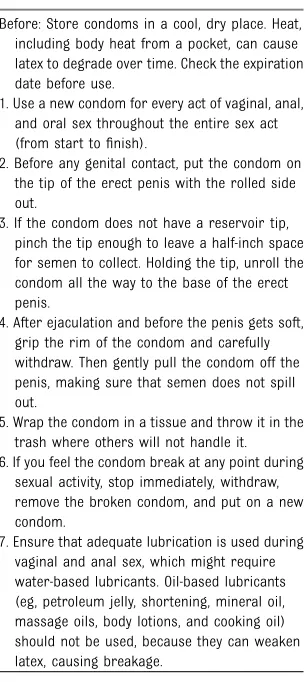
Condom effectiveness depends on con-sistent and correct use (see Table 6).189
For pregnancy prevention, the failure rate at the end offirst-year use for the male latex condom is 2% with perfect use and 18% with typical use.43,190
Con-sistent evidence supports condoms as reducing the risk of disease transmitted to and from the penile urethra, including gonorrhea, Chlamydia, trichomoniasis, hepatitis B, and HIV.191–195 Emerging
evi-dence also supports condoms as re-ducing the risk of acquiring diseases transmitted through skin or mucosal contact, including genital herpes simplex virus,196,197human papillomavirus,198,199
and syphilis.200Because condoms
pro-tect against STIs, all sexually active adolescents should be encouraged to use condoms, regardless of whether an additional contraceptive method is used. Instructions for condom use can be found in Table 6. Additional details on condoms and recommendations can be found in the AAP policy state-ment on condom use by adolescents.201
Despite increases in condom use, many adolescents do not use condoms effec-tively or at all. Condom use is influenced by individual, relationship, and broader social and structural factors,202–204
which should be addressed on multiple levels, including provider counseling, sex education, and interventions to improve access. Because condom use requires cooperation and communication between partners, condom use within relationships changes as relationships evolve205 and commonly declines in
established relationships.206,207
Emergency Contraception
In the United States, the available methods of EC include orally adminis-tered hormones, either in a
progestin-only dedicated EC product (levonorgestrel, 1.5 mg) or in high-dose combined es-trogen and progestin oral contraceptive pills (the Yuzpe regimen); ulipristal ace-tate (a progesterone receptor modula-tor); and insertion of a copper IUD. These methods can prevent pregnancy when initiated up to 5 days after an act of underprotected sexual intercourse but are more effective the sooner they are used. Data suggest that ulipristal acetate, approved by the FDA in 2010, may have increased effectiveness over oral levo-norgestrel at the end of the 5-day window of use and in heavier women.208–210 On
the basis of data demonstrating that the levonorgestrel EC pill loses effectiveness in women who weigh more than 165 pounds and is ineffective in women who weigh more than 176 pounds, the levo-norgestrel EC pill is undergoing revised labeling in Europe, and the FDA is con-sidering whether to require similar revisions in the United States.211
Unlike ulipristal, which is pregnancy category X, levonorgestrel does not have teratogenic or other adverse effects on the fetus,212 and a
preg-nancy test is not necessary before prescribing levonorgestrel EC.213
Levo-norgestrel EC is estimated to be up to 85% effective.213,214 Additional details
on prescribing EC can be found in the AAP policy statement on emergency contraception,213 and additional
guid-ance can be found at http://ec.princeton. edu/questions/dose.html#dose.
Plan B One-Step (Teva Pharmaceuticals, Petah Tikva, Israel), a dedicated progestin-only method, is approved by the FDA as a nonprescription product for all women of childbearing potential. Generic versions are approved as nonprescription for women 17 years of age and older; however, proof of age is not required to purchase them.
no medical contraindications to this method, and multiple studies have found that providing EC in advance increases the likelihood of women us-ing it when it is needed and does not increase sexual or contraceptive risk-taking behavior.215,216 Given the
some-times sporadic and unplanned nature of adolescent sexual behavior, counsel-ing and advance provision of EC should be a part of anticipatory guidance.
Other Barrier Methods
Female Condoms
The female condom is a polyurethrane or synthetic nitrile pouch with 2fl ex-ible rings, onefitting inside the vagina and the other on the perineum. Female condoms have a perfect-use failure rate of 5% and a typical-use failure rate of 21%.43 Among US adolescents
and young adults, the female condom
has had very low uptake,217 in part
because of higher cost, less avail-ability, lack of knowledge, and nega-tive attitudes toward female condoms.
Vaginal Spermicides
Vaginal spermicides are a chemical bar-rier method (most commonly nonoxynol-9) applied intravaginally through a vari-ety of forms: gel, foam, suppository, or film. Spermicides consist of 2 com-ponents: a formulation (the gel, foam, suppository, orfilm) and the chemical ingredient that kills the sperm. Table 4 describes typical- and perfect-use failure rates for vaginal spermicides. The CDC identifies being at high risk for HIV (eg, commercial sex workers) and HIV infection as contraindications for use of spermicides, as use can disrupt the cervical mucosa, poten-tially increasing risk of HIV acquisition or increased viral shedding and transmission of HIV.58,218
Diaphragm, Cervical Cap, and Contraceptive Sponge
The diaphragm, cervical cap, and sponge are barrier methods of contraception. They are less commonly recommended for adolescents, because they do not provide STI protection and have lower effectiveness rates than other meth-ods.43 Diaphragms are flexible latex
cups used with spermicide that are inserted into the vagina before in-tercourse and must remain in place for 6 hours after intercourse. Cervical caps are latex or silicone cups with a firm rim that adhere to the cervix and pro-vide continuous contraceptive pro-tection for up to 48 hours. Sponges are polyurethane sponges that contain nonoxynol-9 spermicide. They are ap-proximately 2 inches in diameter, can be inserted up to 24 hours in advance, and must be left in place for 6 hours after intercourse. Sponges are available over the counter. Diaphragms and caps require fitting by a health care
pro-fessional. Table 4 provides typical- and perfect-use failure rates for the di-aphragm, cervical cap, and contracep-tive sponge. For the sponge, typical- and perfect-use failure rates are as much as 16% and 11%, respectively.219 These
methods are contraindicated in women at high risk of HIV or women with HIV infection, because the concomitant spermicide use may increase risk of HIV acquisition or transmission.58
De-tailed information can be found in Con-traceptive Technology.41
Fertility Awareness and Other Periodic Abstinence Methods
Periodic abstinence methods identify fertile days within each menstrual cycle, and the individual abstains during those fertile times. Fertile days can be de-termined using a menstrual calendar, basal body temperature, and cervical mucus consistency. In a recent national survey, 17% of adolescents report ever using periodic abstinence.6Among both
adults and adolescents, as many as 24% of individuals reporting periodic abstinence as their primary method of contraception will experience an un-intended pregnancy within thefirst year of use. More concerning is the poor continuation rates for the method,220
even for individuals participating in clinical trials.221An additional challenge
with adolescents is that ovulation may not be predictable in thefirst few year (s) after menarche. If periodic absti-nence is used, counseling on dual use of a condom and more reliable alter-native methods should be offered. More detailed information can be found in
Contraceptive Technology.41
Withdrawal
Withdrawal, or coitus interruptus, is a method in which the male partner attempts to“pull out”his penis before ejaculation. Although typically consid-ered a “nonmethod,” withdrawal is commonly practiced by both adults TABLE 6 How to Use a Condom Effectively
Before: Store condoms in a cool, dry place. Heat, including body heat from a pocket, can cause latex to degrade over time. Check the expiration date before use.
1. Use a new condom for every act of vaginal, anal, and oral sex throughout the entire sex act (from start tofinish).
2. Before any genital contact, put the condom on the tip of the erect penis with the rolled side out.
3. If the condom does not have a reservoir tip, pinch the tip enough to leave a half-inch space for semen to collect. Holding the tip, unroll the condom all the way to the base of the erect penis.
4. After ejaculation and before the penis gets soft, grip the rim of the condom and carefully withdraw. Then gently pull the condom off the penis, making sure that semen does not spill out.
5. Wrap the condom in a tissue and throw it in the trash where others will not handle it. 6. If you feel the condom break at any point during
sexual activity, stop immediately, withdraw, remove the broken condom, and put on a new condom.