Internet of Things for Smart Cities
Andrea Zanella,
Senior Member, IEEE,
Nicola Bui, Angelo Castellani,
Lorenzo Vangelista,
Senior Member, IEEE,
Michele Zorzi,
Fellow, IEEE
Abstract—The Internet of Things (IoT) shall be able to incor-porate transparently and seamlessly a large number of different and heterogeneous end systems, while providing open access to selected subsets of data for the development of a plethora of digital services. Building a general architecture for the IoT is hence a very complex task, mainly because of the extremely large variety of devices, link layer technologies, and services that may be involved in such a system. In this paper we focus specifically to anurban IoT systemsthat, while still being quite a broad category, are characterized by their specific application domain. Urban IoTs, in fact, are designed to support the Smart City vision, which aims at exploiting the most advanced communication technologies to support added-value services for the administration of the city and for the citizens. This paper hence provides a comprehensive survey of the enabling technologies, protocols and architecture for an urban IoT. Furthermore, the paper will present and discuss the technical solutions and best-practice guidelines adopted in the Padova Smart City project, a proof of concept deployment of an IoT island in the city of Padova, Italy, performed in collaboration with the city municipality.
Index Terms—Smart Cities, Test-bed and Trials, Sensor Sys-tem Integration, Network Architecture, Service Functions and Management, EXI, CoAP, 6lowPAN
I. INTRODUCTION
T
HE IoT is a recent communication paradigm that en-visions a near future in which the objects of everyday life will be equipped with micro-controllers, transceivers for digital communication, and suitable protocol stacks that will make them able to communicate with one another and with the users, becoming an integral part of the Internet [1]. The IoT concept, hence, aims at making the Internet even more im-mersive and pervasive. Furthermore, by enabling easy access and interaction with a wide variety of devices such as, for instance, home appliances, surveillance cameras, monitoring sensors, actuators, displays, vehicles, and so on, the IoT will foster the development of a number of applications that make use of the potentially enormous amount and variety of data generated by such objects to provide new services to citi-zens, companies, and public administrations. This paradigmAndrea Zanella,∗ Lorenzo Vangelista, and Michele Zorzi are with the
Department of Information Engineering, University of Padova, Via Gradenigo 6/B - 35131, Padova, Italy. They are also affiliated with Consorzio Ferrara Ricerche (CFR), Via Saragat, 1 - 44122, Ferrara, Italy. Michele Zorzi and Lorenzo Vangelista are founding members of Patavina Technologies s.r.l., Via Venezia 59/8 - 35131, Padova, Italy.
Angelo Castellani was with Department of Information Engineering, university of Padova, Italy. He is now with TeSAN, Via L.L. Zamenhof, 200 -36100 Vicenza, Italy.
Nicola Bui was with Patavina Technologies s.r.l., and with Consorzio Ferrara Ricerche. He is now with Institute IMDEA Networks, Avenida del Mar Mediterraneo, 22 Leganes - 28918, Madrid, Spain.
∗Contact author’s e-mail: [email protected].
Copyright (c) 2012 IEEE. Personal use of this material is permitted. However, permission to use this material for any other purposes must be obtained from the IEEE by sending a request to [email protected].
indeed finds application in many different domains, such as home automation, industrial automation, medical aids, mobile health care, elderly assistance, intelligent energy management and smart grids, automotive, traffic management and many others [2].
However, such a heterogeneous field of application makes the identification of solutions capable of satisfying the re-quirements of all possible application scenarios a formidable challenge. This difficulty has led to the proliferation of differ-ent and, sometimes, incompatible proposals for the practical realization of IoT systems. Therefore, from a system per-spective, the realization of an IoT network, together with the required backend network services and devices, still lacks an established best practice because of its novelty and complexity. In addition to the technical difficulties, the adoption of the IoT paradigm is also hindered by the lack of a clear and widely accepted business model that can attract investments to promote the deployment of these technologies [3].
In this complex scenario, the application of the IoT paradigm to an urban context is of particular interest as it responds to the strong push of many national governments to adopt ICT solutions in the management of public affairs, thus realizing the so-called Smart Cityconcept [4]. Although there is not yet a formal and widely accepted definition of “Smart City,” the final aim is to make a better use of the public resources, increasing the quality of the services offered to the citizens while reducing the operational costs of the public administrations. This objective can be pursued by the deployment of anurban IoT, i.e., a communication infrastruc-ture that provides unified, simple, and economical access to a plethora of public services, thus unleashing potential synergies and increasing transparency to the citizens. An urban IoT, indeed, may bring a number of benefits in the management and optimization of traditional public services, such as transport and parking, lighting, surveillance and maintenance of public areas, preservation of cultural heritage, garbage collection, salubrity of hospitals and school [5]. Furthermore, the avail-ability of different types of data, collected by a pervasive urban IoT, may also be exploited to increase the transparency and promote the actions of the local government toward the citizens, enhance the awareness of people about the status of their city, stimulate the active participation of the citizens in the management of public administration, and also stimulate the creation of new services upon those provided by the IoT [6]. Therefore, the application of the IoT paradigm to the Smart City is particularly attractive to local and regional administrations that may become the early adopters of such technologies, thus acting as catalyzers for the adoption of the IoT paradigm on a wider scale.
framework for the design of an urban IoT. We describe the specific characteristics of an urban IoT, and the services that may drive the adoption of urban IoT by local governments. We then overview the web-based approach for the design of IoT services, and the related protocols and technologies, discussing their suitability for the Smart City environment. Finally, we substantiate the discussion by reporting our experience in the “Padova Smart City” project, which is a proof of concept IoT island deployed in the city of Padova (Italy) and interconnected with the data network of the city municipality. In this regard, we describe the technical solutions adopted for the realization of the IoT island and we report some of the measurements that have been collected by the system in its first operational days.
The rest of the paper is organized as follows. Sec. II overviews the services that are commonly associated to the Smart City vision and that can be enabled by the deployment of an urban IoT. Sec. III provides a general overview of the system architecture for an urban IoT. More in detail, the sec-tion describes the web service approach for the realizasec-tion of IoT services, with the related data formats and communication protocols, and the link layer technologies. Finally, Sec. IV presents the “Padova Smart City” project, which exemplifies a possible implementation of an urban IoT, and provides examples of the type of data that can be collected with such a structure.
II. SMARTCITY CONCEPT AND SERVICES
According to [7], the Smart City market is estimated at hundreds of billion dollars by 2020, with an annual spending reaching nearly 16 billions. This market springs from the synergic interconnection of key industry and service sectors, such as Smart Governance, Smart Mobility, Smart Utilities, Smart Buildings, Smart Environment. These sectors have also been considered in the European Smart Cities project (http://www.smart-cities.eu) to define a ranking criterion that can be used to assess the level of “smartness” of European cities. Nonetheless, the Smart City market has not really taken off yet, for a number of political, technical, and financial barriers [8].
Under the political dimension, the primary obstacle is the attribution of decision-making power to the different stakeholders. A possible way to remove this roadblock is to institutionalize the entire decision and execution process, concentrating the strategic planning and management of the smart city aspects into a single, dedicated department in the city [9].
On the technical side, the most relevant issue consists in the non-interoperability of the heterogeneous technologies currently used in city and urban developments. In this respect, the IoT vision can become the building block to realize a unified urban-scale ICT platform, thus unleashing the potential of the Smart City vision [10], [11].
Finally, concerning the financial dimension, a clear business model is still lacking, although some initiative to fill this gap has been recently undertaken [12]. The situation is worsened by the adverse global economic situation, which has deter-mined a general shrinking of investments on public services.
This situation prevents the potentially huge Smart City market from becoming reality. A possible way out of this impasse is to first develop those services that conjugate social utility with very clear return on investment, such as smart parking and smart buildings, and will hence act as catalyzers for the other added-value services [12].
In the rest of this section we overview some of the services that might be enabled by an urban IoT paradigm and that are of potential interest in the Smart City context because they can realize thewin-winsituation of increasing the quality and enhancing the services offered to the citizens while bringing an economical advantage for the city administration in terms of reduction of the operational costs [8]. To better appreciate the level of maturity of the enabling technologies for these services, we report in Tab. I a synoptic view of the services in terms of suggested type(s) of network to be deployed; expected traffic generated by the service; maximum tolerable delay; device powering; and an estimate of the feasibility of each service with currently available technologies. From the table it clearly emerges that, in general, the practical realization of most of such services is not hindered by technical issues, but rather by the lack of a widely accepted communication and service architecture that can abstract from the specific features of the single technologies and provide harmonized access to the services.
Structural health of buildings. Proper maintenance of the historical buildings of a city requires the continuous mon-itoring of the actual conditions of each building and the identification of the areas that are most subject to the impact of external agents. The urban IoT may provide a distributed database of building structural integrity measurements, col-lected by suitable sensors located in the buildings, such as vibration and deformation sensors to monitor the building stress, atmospheric agent sensors in the surrounding areas to monitor pollution levels, and temperature and humidity sensors to have a complete characterization of the environmental conditions [13]. This database should reduce the need for expensive periodic structural testing by human operators and will allow targeted and proactive maintenance and restoration actions. Finally, it will be possible to combine vibration and seismic readings in order to better study and understand the impact of light earthquakes on city buildings. This database can be made publicly accessible in order to make the citizens aware of the care taken in preserving the city historical heritage. The practical realization of this service, however, requires the installation of sensors in the buildings and sur-rounding areas and their interconnection to a control system, which may require an initial investment in order to create the needed infrastructure.
contain-TABLE I
SERVICES SPECIFICATION FOR THEPADOVASMARTCITY PROJECT
Service Network type(s) Traffic rate Tolerable delay Energy source Feasibility
Structural health
802.15.4; WiFi; Eth-ernet
1 pkt every 10 min per device
30 min for data; 10 sec-onds for alarms.
Mostly battery pow-ered.
1: easy to realize, but seismograph may be difficult to integrate
Waste Man-agement
WiFi; 3G; 4G 1 pkt every hour per de-vice
30 min for data Battery powered or en-ergy harvesters.
2: possible to realize, but requires smart garbage containers
Air quality monitoring
802.15.4; Bluetooth; WiFi
1 pkt every 30 min per device
5 min for data Photovoltaic panels for each device
1: easy to realize, but greenhouse gas sensors may not be cost effective
Noise mon-itoring
802.15.4; Ethernet 1 pkt every 10 min per device
5 min for data; 10 sec-onds for alarms
Battery powered or en-ergy harvesters.
2: the sound pattern detection scheme may be difficult to implement on constrained devices Traffic
con-gestion
802.15.4; Bluetooth; WiFi; Ethernet
1 pkt every 10 min per device
5 min for data Battery powered or en-ergy harvesters.
3: requires the realization of both Air Quality and Noise Monitoring
City energy consump-tion
PLC; Ethernet 1 pkt every 10 min per device
5 min for data; tighter requirements for control
Mains powered 2: simple to realize, but requires authorization from energy operators
Smart park-ing
802.15.4; Ethernet On demand 1 minute Energy harvester 1: Smart parking systems are already available on the market and their integration should be simple.
Smart light-ing
802.15.4; WiFi; Eth-ernet
On demand 1 minute Mains powered 2: does not present major difficulties, but re-quires intervention on existing infrastructures. Automation
and salubrity of public buildings
802.15.4; WiFi; Eth-ernet
1 pkt every 10 minutes for remote monitoring; 1 pck every 30” for in-loco control
5 minutes for remote monitoring, few seconds for in-loco control
Mains powered and battery powered
2: does not present major difficulties, but re-quires intervention on existing infrastructures.
ers that detect the level of load and allow for an optimization of the collector trucks route, can reduce the cost of waste collection and improve the quality of recycling [14], [15]. To realize such a smart waste management service, the IoT shall connect the end devices, i.e., intelligent waste containers, to a control center where an optimization software processes the data and determines the optimal management of the collector truck fleet.
Air quality. The European Union officially adopted a 20-20-20 Renewable Energy Directive setting climate change reduction goals for the next decade [16]. The targets call for a 20 percent reduction in greenhouse gas emissions by 2020 compared with 1990 levels, a 20 percent cut in energy consumption through improved energy efficiency by 2020 and a 20 percent increase in the use of renewable energy by 2020. To such an extent, an urban IoT can provide means to monitor the quality of the air in crowded areas, parks or fitness trails [17]. In addition, communication facilities can be provided to let health applications running on joggers’ devices be connected to the infrastructure. In such a way, people can always find the healthiest path for outdoor activities and can be continuously connected to their preferred personal training application. The realization of such a service requires that air quality and pollution sensors be deployed across the city and that the sensor data be made publicly available to citizens.
Noise monitoring. Noise can be seen as a form of acoustic pollution as much as carbon oxide (CO) is for air. In that sense, the city authorities have already issued specific laws to reduce the amount of noise in the city centre at specific hours. An urban IoT can offer a noise monitoring service to measure the amount of noise produced at any given hour in the places that adopt the service [18]. Besides building a space-time map of the noise pollution in the area, such a service can also be used to enforce public security, by means of sound detection algorithms that can recognize, for instance, the noise of glass crashes or brawls. This service can hence improve both the quiet of the nights in the city and the confidence of public establishment owners, although the
installation of sound detectors or environmental microphones is quite controversial, because of the obvious privacy concerns for this type of monitoring.
Traffic congestion. On the same line of air quality and noise monitoring, a possible Smart City service that can be enabled by urban IoT consists in monitoring the traffic congestion in the city. Even though camera-based traffic monitoring systems are already available and deployed in many cities, low-power widespread communication can provide a denser source of information. Traffic monitoring may be realized by using the sensing capabilities and GPS installed on modern vehicles [19], but also adopting a combination of air quality and acoustic sensors along a given road. This information is of great importance for city authorities and citizens: for the former to discipline traffic and to send officers where needed, for the latter to plan in advance the route to reach the office or to better schedule a shopping trip to the city centre.
City energy consumption. Together with the air quality monitoring service, an urban IoT may provide a service to monitor the energy consumption of the whole city, thus enabling authorities and citizens to get a clear and detailed view of the amount of energy required by the different services (public lighting, transportation, traffic lights, control cameras, heating/cooling of public buildings, and so on). In turn, this will make it possible to identify the main energy consumption sources and to set priorities in order to optimize their behavior. This goes in the direction indicated by the European directive for energy efficiency improvement in the next years. In order to obtain such a service, power draw monitoring devices must be integrated with the power grid in the city. In addition, it will also be possible to enhance these service with active functionalities to control local power production structures (e.g., photovoltaic panels).
WAN connec)on (Internet)
web frontend
Database manager
IoT nodes
Simple Gateway
IPv4 TCP/ UDP HTTP XML
xDSL
IPv6 xDSL
IPv4 xDSL IPv6
UDP CoAP
xDSL IPv6 TCP/ UDP HTTP XML
xDSL EXI
XML/EXI HTTP/CoAP
URI
Edge Router NATP IPv4/IPv6
IoT peripheral
cloud 6LoWPAN UDP CoAP
802.15.4 EXI Sink Gateway Sensor
cloud
IPv6 TCP/ UDP HTTP XML
xDSL
Pro
pri
et
ary
p
ro
to
co
l
sta
ck Gateway
CONTROL CENTER
6LoWPAN UDP CoAP
802.15.4 EXI
6LoWPAN 802.15.4
IPv6 xDSL
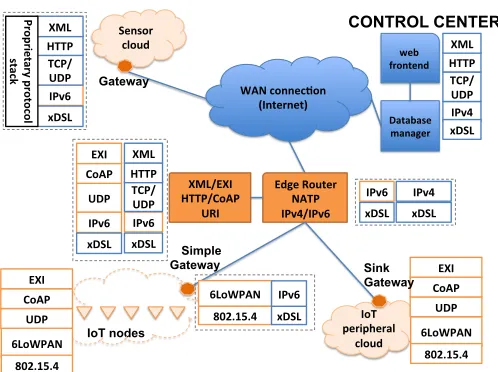
Fig. 1. Conceptual representation of an urban IoT network based on the web service approach.
slot means fewer CO emission from the car, less traffic congestion, and happier citizens. The smart parking service can be directly integrated in the urban IoT infrastructure, because many companies in Europe are providing market products for this application. Furthermore, by using short-range communication technologies, such as Radio Frequency Identifiers (RFID) or Near Field Communication (NFC), it is possible to realize an electronic verification system of parking permits in slots reserved for residents or disabled, thus offering a better service to citizens that can legitimately use those slots and an efficient tool for quickly spot violations.
Smart lighting. In order to support the 202020 directive, the optimization of the street lighting efficiency is an important feature. In particular, this service can optimize the street lamp intensity according to the time of the day, the weather conditions and the presence of people. In order to properly work, such a service needs to include the street lights into the Smart City infrastructure. It is also possible to exploit the increased number of connected spots to provide WiFi connection to citizens. In addition, a fault detection system will be easily realized on top of the street light controllers.
Automation and salubrity of public buildings. Another important application of IoT technologies is the monitoring of the energy consumption and the salubrity of the environment in public buildings (schools, administration offices, museums) by means of different types of sensors and actuators that control lights, temperature, and humidity. By controlling these parameters, indeed, it is possible to enhance the level of comfort of the persons that live in these environments, which may also have a positive return in terms of productivity, while reducing the costs for heating/cooling [21].
III. URBANIOTARCHITECTURE
From the analysis of the services described in Sec. II, it clearly emerges that most Smart City services are based on a centralized architecture, where a dense and heterogeneous set of peripheral devices deployed over the urban area generate
different types of data that are then delivered through suitable communication technologies to a control center, where data storage and processing are performed.
A primary characteristic of an urban IoT infrastructure, hence, is its capability of integrating different technologies with the existing communication infrastructures in order to support a progressive evolution of the IoT, with the in-terconnection of other devices and the realization of novel functionalities and services. Another fundamental aspect is the necessity to make (part of) the data collected by the urban IoT easily accessible by authorities and citizens, to increase the responsiveness of authorities to city problems, and promote the awareness and the participation of citizens in public matters [11].
In the rest of this section we describe the different compo-nents of an urban IoT system, as sketched in Fig. 1. We start describing the web service approach for the design of IoT services, which requires the deployment of suitable protocol layers in the different elements of the network, as shown in the protocol stacks depicted in Fig. 1 besides the key elements of the architecture. Then, we briefly overview the link layer technologies that can be used to interconnect the different parts of the IoT. Finally, we describe the heterogeneous set of devices that concur to the realization of an urban IoT.
A. Web service approach for IoT service architecture
Although in the IoT many different standards are still struggling to be the reference one and the most adopted, in this section we focus specifically on IETF standards because they are open and royalty-free, are based on Internet best practices, and can count on a wide community.
The IETF standards for IoT embrace a web service archi-tecture for IoT services, which has been widely documented in the literature as a very promising and flexible approach. In fact, web services permit to realize a flexible and interoperable system that can be extended to IoT nodes, through the adoption of the web-based paradigm known as Representational State Transfer (ReST) [22]. IoT services designed in accordance with the ReST paradigm exhibit very strong similarity with traditional web services, thus greatly facilitating the adoption and use of IoT by both end users and service developers, which will be able to easily reuse much of the knowledge gained from traditional web technologies in the development of services for networks containing smart objects. The web service approach is also promoted by international standard-ization bodies such as IETF, ETSI and W3C, among others, as well as European research projects on the Internet of Things such as SENSEI [23], IoT-A [24] and SmartSantander [5].
HTML/XML
HTTP/TCP
IPv4/IPv6
EXI
CoAP/UDP
IPv6/6LoWPAN
Data
Applica*on/ Transport
Network
Unconstrained Constrained
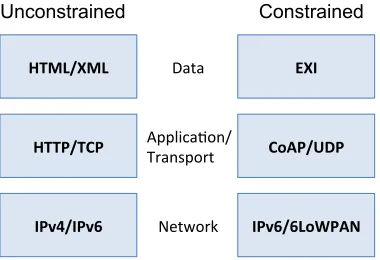
Fig. 2. Protocol stacks for unconstrained (left) and constrained (right) IoT
nodes.
are suitable even for very constrained devices. The transcoding operations between the protocols in the left and right stacks in Fig. 2 can be performed in a standard and low complexity manner, thus guaranteeing easy access and interoperability of the IoT nodes with the Internet. It may be worth remarking that systems that do not adopt the EXI/CoAP/6LoWPAN protocol stack can still be seamlessly included in the urban IoT system, provided that they are capable of interfacing with all the layers of the left-hand side of the protocol architecture in Fig. 2.
In the protocol architecture shown in Fig. 2 we can dis-tinguish three distinct functional layers, namely (i) Data, (ii) Application/Transport, and (iii) Network, that may require dedicated entities to operate the transcoding between con-strained and unconcon-strained formats and protocols. In the rest of this section, we specify in greater detail the requirements at each of the three functional layers in order to guarantee interoperability among the different parts of the system.
1) Data format: As mentioned, the urban IoT paradigm sets specific requirements in terms of data accessibility. In architectures based on web services, data exchange is typically accompanied by a description of the transferred content by means of semantic representation languages, of which the eXtensible Markup Language (XML) is probably the most common. Nevertheless, the size of XML messages is often too large for the limited capacity of typical devices for the IoT. Furthermore, the text nature of XML representation makes the parsing of messages by CPU-limited devices more complex compared to the binary formats. For these reasons, the working group of the World Wide Web Consortium (W3C) [25] has proposed the EXI format [26], which makes it possible even for very constrained devices to natively support and generate messages using an open data format compatible with XML.
EXI defines two types of encoding, namely schema-less and schema-informed. While the schema-less encoding is generated directly from the XML data and can be decoded by any EXI entity without any prior knowledge about the data, the schema-informed encoding assumes that the two EXI processors share an XML Schema before actual encoding and decoding can take place. This shared schema makes it possible to assign numeric identifiers to the XML tags in the schema and build the EXI grammars upon such coding. As discussed in [27], a general purpose schema-informed EXI processor can be easily integrated even in very constrained
devices, enabling them to interpret EXI formats and, hence, making it possible to build multi-purpose IoT nodes even out of very constrained devices. Using the schema-informed approach, however, requires additional care in the development of higher layer application, since developers need to define an XML Schema for the messages involved in the application and use EXI processors that support this operating mode. Further details about EXI and schema-informed processing can be found in [27].
Integration of multiple XML/EXI data sources into an IoT system can be obtained by using the databases typically created and maintained by high-level applications. In fact, IoT applications generally build a database of the nodes controlled by the application and, often, of the data generated by such nodes. The database makes it possible to integrate the data received by any IoT device to provide the specific service the application is built for. A generic framework for building IoT web applications according to the guidelines described in this section has been proposed in [28], where the authors also suggest exploiting the Asynchronous JavaScript and XML (AJAX) capabilities of modern web browsers that allow for a direct communication between the browser and the final IoT node, demonstrating the full internetworking of the protocol stack and the open data nature of the proposed approach.
2) Application and transport layers: Most of the traffic that crosses the Internet today is carried at the application layer by HTTP over TCP. However, the verbosity and complexity of native HTTP make it unsuitable for a straight deployment on constrained IoT devices. For such an environment, in fact, the human-readable format of HTTP, which has been one of the reasons of its success in traditional networks, turns out to be a limiting factor due to the large amount of heavily correlated (and, hence, redundant) data. Moreover, HTTP typically relies upon the TCP transport protocol that, however, does not scale well on constrained devices, yielding poor performance for small data flows in lossy environments.
The CoAP protocol [29] overcomes these difficulties by proposing a binary format transported over UDP, handling only the retransmissions strictly required to provide a reliable service. Moreover, CoAP can easily interoperate with HTTP because: (i) it supports the ReST methods of HTTP (GET, PUT, POST, and DELETE), (ii) there is a one-to-one corre-spondence between the response codes of the two protocols, and (iii) the CoAP options can support a wide range of HTTP usage scenarios.
Even though regular Internet hosts can natively support CoAP to directly talk to IoT devices, the most general and easily interoperable solution requires the deployment of an HTTP-CoAP intermediary, also known as cross proxy, that can straightforwardly translate requests/responses between the two protocols, thus enabling transparent interoperation with native HTTP devices and applications [30].
solution to this problem is offered by the IPv6 standard [31], which provides a 128-bit address field, thus making it possible to assign a unique IPv6 address to any possible node in the IoT network.
While, on the one hand, the huge address space of IPv6 makes it possible to solve the addressing issues in IoT, on the other hand it introduces overheads that are not compat-ible with the scarce capabilities of constrained nodes. This problem can be overcome by adopting 6LoWPAN [32] [33], which is an established compression format for IPv6 and UDP headers over low-power constrained networks. A border router, that is a device directly attached to the 6LoWPAN net-work, transparently performs the conversion between IPv6 and 6LoWPAN, translating any IPv6 packet intended for a node in the 6LoWPAN network into a packet with 6LoWPAN header compression format, and operating the inverse translation in the opposite direction.
While the deployment of a 6LoWPAN border router enables transparent interaction between IoT nodes and any IPv6 host in the Internet, the interaction with IPv4-only hosts remains an issue. More specifically, the problem consists in finding a way to address a specific IPv6 host using an IPv4 address and other meta-data available in the packet. In the following we present different approaches to achieve this goal.
v4/v6 Port Address Translation (v4/v6 PAT). This method maps arbitrary pairs of IPv4 addresses and TCP/UDP ports into IPv6 addresses and TCP/UDP ports. It resembles the clas-sical Network Address and Port Translation (NAPT) service currently supported in many LANs to provide Internet access to a number of hosts in a private network by sharing a common public IPv4 address, which is used to address the packets over the public Internet. When a packet is returned to the IPv4 common address, the edge router that supports the NATP service will intercept the packet and replace the common IPv4 destination address with the (private) address of the intended receiver, which is determined by looking up in the NATP table the address of the host associated to the specific destination port carried by the packet. The same technique can be used to map multiple IPv6 addresses into a single IPv4 public address, which allows the forwarding of the datagrams in the IPv4 network and its correct management at IPv4-only hosts. The application of this technique requires low complexity and, indeed, port mapping is an established technique for v4/v6 transition. On the other hand, this approach raises a scalability problem, since the number of IPv6 hosts that can be multiplexed into a single IPv4 address is limited by the number of available TCP/UDP ports (65535). Furthermore, this approach requires that the connection be initiated by the IPv6 nodes in order to create the correct entries in the NATP look up table. Connections starting from the IPv4 cloud can also be realized, but this requires a more complex architecture, with the local DNS placed within the IPv6 network and statically associated to a public IPv4 address in the NATP translation table.
v4/v6 Domain Name Conversion. This method, originally proposed in [30], is similar to the technique used to provide virtual hosting service in HTTP 1.1, which makes it possible to support multiple websites on the same web server, sharing the
same IPv4 address, by exploiting the information contained in the HTTP Host header to identify the specific web site requested by the user. Similarly, it is possible to program the DNS servers in such a way that, upon a DNS request for the domain name of an IoT web service, the DNS returns the IPv4 address of an HTTP-CoAP cross proxy to be contacted to access the IoT node. Once addressed by an HTTP request, the proxy requires the resolution of the domain name contained in the HTTP Host header to the IPv6 DNS server, which replies with the IPv6 address that identifies the final IoT node involved in the request. The proxy can then forward the HTTP message to the intended IoT via CoAP.
URI mapping. The Universal Resource Identifier (URI) mapping technique is also described in [30]. This technique involves a particular type of HTTP-CoAP cross proxy, the reverse cross proxy. This proxy behaves as being the final web server to the HTTP/IPv4 client and as the original client to the CoAP/IPv6 web server. Since this machine needs to be placed in a part of the network where IPv6 connectivity is present to allow direct access to the final IoT nodes, IPv4/IPv6 conversion is internally resolved by the applied URI mapping function.
B. Link Layer Technologies
An urban IoT system, due to its inherently large deployment area, requires a set of link layer technologies that can easily cover a wide geographical area and, at the same time, support a possibly large amount of traffic resulting from the aggregation of an extremely high number of smaller data flows. For these reasons, link layer technologies enabling the realization of an urban IoT system are classified into unconstrained and constrained technologies. The first group includes all the tra-ditional LAN, MAN and WAN communication technologies, such as Ethernet, Wi-Fi, fiber optic, broadband Power Line Communication (PLC), and cellular technologies as such as UMTS and LTE. They are generally characterized by high reliability, low latency, and high transfer rates (order of Mbit/s or higher), and due to their inherent complexity and energy consumption are generally not suitable for peripheral IoT nodes.
The constrained physical and link layer technologies are, instead, generally characterized by low energy consump-tion and relatively low transfer rates, typically smaller than 1 Mbit/s. The more prominent solutions in this category are IEEE 802.15.4 [34], [35] Bluetooth and Bluetooth Low Energy [36], IEEE 802.11 Low Power, Power Line Commu-nication (PLC) [37], Near Field CommuCommu-nication (NFC) and Radio Frequency Identifier (RFID) [38]. These links usually exhibit long latencies, mainly due to two factors: (i) the intrinsically low transmission rate at the physical layer, (ii) the power saving policies implemented by the nodes to save energy, which usually involve duty cycling with short active periods.
C. Devices
1) Backend servers: At the root of the system, we find the backend servers, located in the control center, where data are collected, stored, and processed to produce added-value services. In principle, backend servers are not mandatory for an IoT system to properly operate, though they become a fundamental component of an urban IoT where they can facilitate the access to the smart city services and open data through the legacy network infrastructure. Backend systems commonly considered for interfacing with the IoT data feeders include the following.
Database Management Systems.These systems are in charge of storing the large amount of information produced by IoT peripheral nodes, such as sensors. Depending on the particular usage scenario, the load on these systems can be quite large, so that proper dimensioning of the backend system is required.
Web Sites.The widespread acquaintance of people with web interfaces makes them the first option to enable interoperation between the IoT system and the “data consumers,” e.g., public authorities, service operators, utility providers, and common citizens.
Enterprise Resource Planning systems (ERP).ERP compo-nents support a variety of business functions and are precious tools to manage the flow of information across a complex organization, such as a city administration. Interfacing ERP components with database management systems that collect the data generated by the IoT allows for a simpler management of the potentially massive amount of data gathered by the IoT, making it possible to separate the information flows based on their nature and relevance and easing the creation of new services.
2) Gateways: Moving toward the “edge” of the IoT, we find the gateways, whose role is to interconnect the end devices to the main communication infrastructure of the system. With reference to the conceptual protocol architecture depicted in Fig. 2, the gateway is hence required to provide protocol translation and functional mapping between the unconstrained protocols and their constrained counterparts, that is to say XML-EXI, HTTP-CoAP, IPv4/v6-6LoWPAN.
Note that, while all these translations may be required in order to enable interoperability with IoT peripheral devices and control stations, it is not necessary to concentrate all of them in a single gateway. Rather, it is possible, and sometimes convenient, to distribute the translation tasks over different devices in the network. For example, a single HTTP-CoAP proxy can be deployed to support multiple 6LoWPAN border routers.
Gateway devices shall also provide the interconnection between unconstrained link layer technologies, mainly used in the core of the IoT network, and constrained technologies that, instead, provide connectivity among the IoT peripheral nodes.
3) IoT peripheral nodes: Finally, at the periphery of the IoT system we find the devices in charge of producing the data to be delivered to the control center, which are usually called IoT peripheral nodes or, more simply, IoT nodes. Generally speaking, the cost of these devices is very low, starting from 10 USD or even less, depending on the kind and
number of sensors/actuators mounted on the board. IoT nodes may be classified based on a wide number of characteristics, such as powering mode, networking role (relay or leaf), sen-sor/actuator equipment, supported link layer technologies. The most constrained IoT nodes are likely the Radio Frequency tags (RFtags) that, despite their very limited capabilities, can still play an important role in IoT systems, mainly because of the extremely low cost and the passive nature of their communication hardware, which does not require any internal energy source. The typical application of RFtags is object identification by proximity reading, which can be used for logistics, maintenance, monitoring, and other services.
Mobile devices, such as smart phones, tablet PCs, or laptops, may also be an important part of an urban IoT, providing other ways to interact with it. For instance, the Near-Field-Communication (NFC) transceiver integrated in last-generation smartphones may be used to identify tagged ob-jects, while the geolocation service provided by most common operating systems for mobile devices can enrich the context information associated to that object. Furthermore, mobile devices can provide access to the IoT in different ways, e.g., (i) through an IP connection provided by the cellular data-link service, or (ii) setting up a direct connection with some objects by using short-range wireless technologies, such as Bluetooth Low Energy, low power WiFi, or IEEE 802.15.4. Furthermore, it is possible to develop specific applications for mobile devices that can ease the interaction with the IoT objects, and with the system as a whole.
IV. AN EXPERIMENTAL STUDY: PADOVASMARTCITY
The framework discussed in this paper has already been successfully applied to a number of different use cases in the context of IoT systems. For instance, the experimental wireless sensor network testbed, with more than 300 nodes, deployed at the University of Padova [39], [40] has been designed according to these guidelines, and successfully used to realize proof-of-concept demonstrations of smart grid [41], and health care [42] services.
In this section we describe a practical implementation of an urban IoT, named “Padova Smart City,” that has been realized in the city of Padova thanks to the collaboration between public and private parties, such as the municipality of Padova, which has sponsored the project, the Department of Information Engineering of the University of Padova, which has provided the theoretical background and the feasibility analysis of the project, and Patavina Technologies s.r.l.,1 a spin-off of the University of Padova specialized in the development of innovative IoT solutions, which has developed the IoT nodes and the control software.
The primary goal of Padova Smart City is to promote the early adoption of open data and ICT solutions in the public administration. The target application consists of a system for collecting environmental data and monitoring the public street lighting by means of wireless nodes, equipped with different kinds of sensors, placed on street light poles and connected to the Internet through a gateway unit. This system shall make it
Fig. 3. System architecture of “Padova Smart City.”
possible to collect interesting environmental parameters, such as CO level, air temperature and humidity, vibrations, noise, and so on, while providing a simple but accurate mechanism to check the correct operation of the public lighting system by measuring the light intensity at each post. Even if this system is a simple application of the IoT concept, it still involves a number of different devices and link layer technologies, thus being representative of most of the critical issues that need to be taken care of when designing an urban IoT. A high-level overview of the types and roles of the devices involved in the system is given hereafter.
Padova Smart City components. A conceptual sketch of the Padova Smart City system architecture is given in Fig. 3. In the following, we describe in more details the different hardware and software components of the system.
Street light. It is the leaf part of the system where IoT nodes are placed. Each streetlight is geographically localized on the city map and uniquely associated to the IoT node attached to it, so that IoT data can be enhanced with context information. The monitoring of the correct operation of the bulbs is performed through photometer sensors that directly measure the intensity of the light emitted by the lamps (or, actually, by any source whose light reaches the sensor) at regular time intervals or upon request. The wireless IoT nodes are also equipped with temperature and humidity sensors, which provide data concerning weather conditions, and one node is also equipped with a benzene (C6H6) sensor, which monitors air quality. IoT nodes are generally powered by small batteries, though connection to a low power grid is required by the benzene sensor. The packaging of the sensor nodes has been designed by taking into account the specific requirements of this use case. Indeed, sensor nodes have been hosted in a transparent plastic shield that protects the electronic parts from atmospheric phenomena (like rain or snow), while permitting the circulation of air and light for the correct measurement of humidity, temperature, and light intensity.
Constrained link layer technologies.The IoT nodes mounted on the streetlight poles form a 6LoWPAN multi-hop cloud,
using IEEE 802.15.4 constrained link layer technology. Rout-ing functionalities are provided by the IPv6 RoutRout-ing Proto-col for Low power and Lossy Networks (RPL) [43]. IoT nodes are assigned unique IPv6 addresses, suitably compressed according to the 6LoWPAN standard. Each node can be individually accessible from anywhere in the Internet by means of IPv6/6LoWPAN. Nodes collectively deliver their data to a sink node, which represents the single point of contact for the external nodes. Alternatively, each node might publish its own features and data by running a CoAP server, though this feature is not yet implemented in the testbed. In either case, a gateway is required to bridge the 6LoWPAN cloud to the Internet and perform all the transcoding described in the previous section.
WSN Gateway. The gateway has the role of interfacing the constrained link layer technology used in the sensors cloud with traditional WAN technologies used to provide connectivity to the central backend servers. The gateway hence plays the role of 6LoWPAN border router and RPL root node. Furthermore, since sensor nodes do not support CoAP services, the gateway also operates as the sink node for the sensor cloud, collecting all the data that need to be exported to the backend services. The connection to the backend ser-vices is provided by common unconstrained communication technologies, optical fiber in this specific example.
10/24 10/25 10/26 10/27 10/28 10/29 10/30 10/31 14
16 18 20 22 24 26 28 30 32
Dat e
T
e
m
p
e
ra
tu
re
[
◦C
]
Raw data Filtered data
(a) Temperature
10/24 10/25 10/26 10/27 10/28 10/29 10/30 10/31 50
60 70 80 90 100
Dat e
H
u
m
id
it
y
[%
]
Raw data Filtered data
(b) Humidity
Fig. 4. Example of data collected by Padova Smart City: temperature and humidity.
range. This service is co-located on the switchboard gateway in the Padova Smart City system, though it could also be placed in the backend servers, thus making it possible to control multiple gateways by using a single proxy instance.
Database server.The database server collects the state of the resources that need to be monitored in time by communicating with the HTTP-CoAP proxy server, which in turn takes care of retrieving the required data from the proper source. The data stored in the database are accessible through traditional web programming technologies. The information can either be visualized in the form of a web site, or exported in any open data format using dynamic web programming languages. In the Padova Smart City network, the database server is realized within the WSN Gateway, which hence represents a plug-and-playmodule that provides a transparent interface with the peripheral nodes.
Operator mobile device. Public lighting operators will be equipped with mobile devices that can locate the streetlight that requires intervention, issue actuation commands directly to the IoT node connected to the lamp, and signal the result of the intervention to the central system that can track every single lamppost and, hence, optimize the maintenance plan.
Such a system can be successively extended to include other types of IoT nodes or clouds of IoT nodes, provided that each IoT peripheral system supports an HTTP-based interface, which makes it possible to interact with it in an open, standard, and technology independent manner.
A. Example of data collected by Padova Smart City
Fig. 4 and Fig. 5 report an example of the type of data that can be collected with the Padova Smart City system. The four plots show the temperature, humidity, light, and benzene readings over a period of seven days. Thin lines show the actual readings, while thick lines are obtained by applying a moving average filter over a time window of one hour (approximately 10 readings of temperature, humidity and light, and 120 readings of the benzene sensor, whose sampling rate is larger since the node is powered by the
grid). It is possible to observe the regular pattern of the light measurements, corresponding to day and night periods. In particular, at daytime the measure reaches the saturation value, while during nighttime the values are more irregular, due to the reflections produced by vehicle lights. A similar pattern is exhibited by the humidity and temperature measurements that, however, are much more noisy than those for light. The benzene measurements also reveal a decrease of the benzene levels at nighttime, as expected due to the lighter night traffic, but quite surprisingly there is no evident variations in the daytime benzene levels during the week end (Oct. 26-27). It is also interesting to note the peak of benzene measured in the early afternoon of Oct. 29. Examining the readings of the other sensors in the same time interval, we can note a sharp decrease of light intensity and temperature, and an increase in humidity. These readings suggest that a quick rainstorm has temporarily obscured the sunlight, while producing congestion in the road traffic and, in turn, a peak of benzene in the air.
V. CONCLUSIONS
10/24 10/25 10/26 10/27 10/28 10/29 10/30 10/31 500
1000 1500 2000 2500 3000 3500 4000
Dat e
L
ig
h
t
[
lu
x
] Raw data
Filtered data
(a) Light
10/24 10/25 10/26 10/27 10/28 10/29 10/30 10/31 10−1
100 101
Dat e
B
e
n
z
e
n
e
[
u
g
/
m
3]
Raw data
Filtered data
(b) Benzene
Fig. 5. Example of data collected by Padova Smart City: light and benzene.
ACKNOWLEDGEMENT
The authors would like to thank the municipality of Padova (Italy), and Eng. Alberto Corò in particular, for the support in the realization of the “Padova Smart City” project. The authors are also grateful to the engineers of Patavina Technologies s.r.l. (http://patavinatech.com/) for their invaluable support in deploying the system and in providing experimental data and technical documentation concerning the “Padova Smart City” project. This work has been supported in part by the European Commission through the FP7 EU project “Symbiotic Wireless Autonomous Powered system” (SWAP, G.A. no. 251557, http: //www.fp7-swap.eu/).
REFERENCES
[1] L. Atzori, A. Iera, and G. Morabito, “The internet of things: A survey,”
Computer Networks,vol. 54, no. 15, pp. 2787-2805, 2010.
[2] P. Bellavista, G. Cardone, A. Corradi, and L. Foschini, “Convergence
of MANET and WSN in IoT Urban Scenarios,”IEEE Sensors Journal,
vol.13, no.10, pp. 3558-3567, Jun. 2013.
[3] A. Laya, V. I. Bratu, and J. Markendahl, “Who is investing in
machine-to-machine communications?”,24th European Regional ITS Conference,
Florence, Italy, 20-23 Oct. 2013.
[4] H. Schaffers, N. Komninos, M. Pallot, B. Trousse, M. Nilsson, and A. Oliveira, “Smart Cities and the Future Internet: Towards Cooperation
Frameworks for Open Innovation”,The Future Internet, Lecture Notes
in Computer Science Volume 6656, pp. 431-446, 2011.
[5] SmartSantander. [Online]. Available: http://www.smartsantander.eu/. [6] D. Cuff, M. Hansen, and J. Kang, “Urban sensing: out of the woods.”
Communications of the ACMvol. 51, no. 3, pp. 24-33, Mar. 2008. [7] Pike Research on Smart Cities. [Online]. Available: http://www.
pikeresearch.com/research/smart-cities.
[8] M. Dohler, I. Vilajosana, X. Vilajosana, and J. LLosa, “Smart Cities: An
Action Plan,”Barcelona Smart Cities Congress 2011, Barcelona, Spain,
Dec. 2011.
[9] I. Vilajosana, J. Llosa, B. Martinez, M. Domingo-Prieto, A. Angles, and X. Vilajosana, “Bootstrapping smart cities through a self-sustainable
model based on big data flows,”IEEE Communications Magazine, vol.
51, no. 6, pp. 128-134, Jun. 2013.
[10] J. M. Hernández-Muñoz, J. B. Vercher, L. Muñoz, J. A. Galache, M. Presser, L. A. Hernández Gómez, and J. Pettersson, “Smart Cities at the
Forefront of the Future Internet,”The Future Internet, Lecture Notes in
Computer Science, vol. 6656, pp. 447-462, 2011.
[11] C. E. A. Mulligan, M. Olsson, “Architectural implications of smart city
business models: an evolutionary perspective”IEEE Communications
Magazine, vol. 51, no. 6, pp. 80-85, Jun. 2013.
[12] N. Walravens, P. Ballon, “Platform business models for smart cities:
from control and value to governance and public value”IEEE
Commu-nications Magazine, vol. 51, no. 6, pp. 72-79, Jun. 2013.
[13] J. P. Lynch, and J. L. Kenneth, “A summary review of wireless
sensors and sensor networks for structural health monitoring.” Shock
and Vibration Digest vol. 38 no. 2, pp. 91-130, 2006.
[14] T. Nuortio, J. Kytöjoki, H. Niska, and O. Bräysy, “Improved route
planning and scheduling of waste collection and transport,” Expert
Systems with Applications,vol. 30, no. 2, pp. 223-232, Feb. 2006. [15] FP7-ENVIRONMENT program, “EcoWeb a dynamic e-dissemination
platform for EU eco-innovation research results” [Online]. Available: http://ecoweb-project.info/
[16] Decision No 406/2009/Ec of the European Parliament and of the Council of 23 April 2009 on the effort of Member States to reduce their greenhouse gas emissions to meet the Community’s greenhouse gas emission reduction commitments up to 2020. [Online]. Available: http://ec.europa.eu/clima/policies/package/documentation_en.htm [17] A. R. Al-Ali, I. Zualkernan, and F. Aloul, “A mobile GPRS-sensors
array for air pollution monitoring.”IEEE Sensors Journal, vol. 10, no.
10, pp. 1666-1671, Oct. 2010.
[18] N. Maisonneuve, M. Stevens, M. E. Niessen, P. Hanappe, and L. Steels,
“Citizen noise pollution monitoring.”In Proceedings of the 10th Annual
International Conference on Digital Government Research: Social Net-works: Making Connections between Citizens, Data and Government,
pp. 96-103, 2009.
[19] X. Li, W. Shu, M. Li, H.-Y. Huang, P.-E. Luo, and M.-Y. Wu, “Performance evaluation of vehicle-based mobile sensor networks for
traffic monitoring.” IEEE Transactions on Vehicular Technology, vol.
58, no. 4, pp. 1647-1653, May 2009.
[20] S. Lee; D. Yoon, A. Ghosh, “Intelligent parking lot application using
wireless sensor networks,” International Symposium on Collaborative
Technologies and Systems 2008, pp. 48-57, 19-23 May 2008, Chicago. [21] W. Kastner, G. Neugschwandtner, S. Soucek, and H. M. Newmann,
“Communication systems for building automation and control.”
Pro-ceedings of the IEEE, vol. 93, no 6, pp. 1178-1203, Jun. 2005.
[22] R. Fielding, “Representational state transfer,”Architectural Styles and
the Design of Network-based Software Architecture, pp. 76-85, 2000 [23] FP7 European project: “SENSEI - Integrating the Physical with the
Digital World of the Network of the Future.” [Online]. Available: http://www.sensei-project.eu/.
[24] FP7 European project: “Internet of Things Architecture (IoT-A).” [On-line]. Available: http://www.iot-a.eu/public
[25] World Wide Web Consortium (W3C). “Efficient XML Interchange Working Group.” [Online]. Available: http://www.w3.org/XML/EXI/ [26] J. Schneider and T. Kamiya. “Efficient XML Interchange (EXI) Format
1.0.” [Online]. Available: http://www.w3.org/TR/exi/
[27] A. P. Castellani, N. Bui, P. Casari, M. Rossi, Z. Shelby and M. Zorzi, “Architecture and protocols for the Internet of Things: A case
study,”8th IEEE International Conference on Pervasive Computing and
application framework for the internet of things.”Proc. of the IEEE Wireless Communications and Networking Conference Workshops.Paris, France, 2012.
[29] Z. Shelby, K. Hartke, C. Bormann, and B. Frank. “Constrained
Appli-cation Protocol (CoAP).”draft-ietf-core-coap-18. s.l. : IETF, 2013.
[30] A. Castellani, S. Loreto, A. Rahman, T. Fossati and E. Dijk. “Best
Practices for HTTP-CoAP Mapping Implementation.”
draft-castellani-core-http-mapping-07.s.l. : IETF, 2013.
[31] S. Deering and R. Hinden. “Internet Protocol, Version 6 (IPv6)
Specifi-cation.”RFC2460. s.l. : IETF, 1998.
[32] G. Montenegro, N. Kushalnagar, J. Hui and D. Culler. “Transmission of
IPv6 Packets over IEEE 802.15.4 Networks.”RFC4944: s.l. : IETF, Sep
2007.
[33] J. Hui and P. Thubert. “Compression Format for IPv6 Datagrams over
IEEE 802.15.4-Based Networks.”RFC6282. s.l. : IETF, 2011.
[34] IEEE Computer Society. “IEEE Standard 802.15.4-2011.” [Online]. Available: http://standards.ieee.org/getieee802/download/802.15.4-2011. pdf
[35] IEEE Computer Society. “IEEE 802.15 WPAN Task Group 4e (TG4e). [Online]. Available: http://www.ieee802.org/15/pub/TG4e.html [36] Bluetooth SIG. “Adopted Bluetooth Core Specifications.” [Online].
Available: https://www.bluetooth.org/Technical/Specifications/adopted.
htm
[37] IEEE Communications Society. P1901.2-2013 - Standard for Low Fre-quency (less than 500 kHz) Narrow Band Power Line Communications for Smart Grid Applications. [Online]. Available: http://standards.ieee. org/findstds/standard/1901.2-2013.html.
[38] ISO/IEC 14443-1: “Identification cards – Contactless integrated circuit cards – Proximity cards – Part 1: Physical characteristics.” ISO. [On-line] Available: http://www.wg8.de/wg8n1716_17n3994_Notification_ for_Ballot_FDIS_14443-1_2008_FDAM1.pdf
[39] A. P. Castellani, M. Gheda, N. Bui, M. Rossi, and M. Zorzi. “Web
Ser-vices for the Internet of Things through CoAP and EXI.”in Proceedings
of the IEEE International Conference on Communications (ICC 2001), Kyoto, Japan, 2011.
[40] P. Casariet al., “The WIreless SEnsor networks for city-Wide Ambient
Intelligence (WISE-WAI) project,” MDPI Journal of Sensors, vol. 9,
no. 6, pp. 4056–4082, Jun. 2009. [Online]. Available: http://www.mdpi. com/1424-8220/9/6/4056
[41] N. Bressan, L. Bazzaco, N. Bui, P. Casari, L. Vangelista and M. Zorzi. “The deployment of a Smart Monitoring System using Wireless
Sensor and Actuator Networks.”Proc. of IEEE SmartGridComm2010,
Gaithersburg, MD, 2010.
[42] N. Bui and M. Zorzi. “Health Care applications: A solution based on
the Internet of Things.” InISABEL, Barcelona, Spain, Oct. 2011.
[43] T. Winter, P. Thubert, A. Brandt, J. Hui, R. Kelsey, K. Pister, R. Struik, JP. Vasseur, and R. Alexander. “RPL: IPv6 Routing Protocol for
Low-Power and Lossy Networks.”RFC6550. s.l. : IETF, 2012.
[44] R. Bonetto, N. Bui, V. Lakkundi, A. Olivereau, A. Serbanati and M. Rossi. “Secure Communication for Smart IoT Objects: Protocol Stacks, Use Cases and Practical Examples.” IEEE IoT-SoS, 2012, San Francisco, CA, US.
Andrea Zanella(S’98–M’01–SM’13) is Assistant Professor at the Department of Information Engi-neering (DEI), University of Padova (ITALY). He received the Laurea degree in Computer Engineering in 1998 from the same University. In 2000, he was visiting scholar at the Department of Computer Science of the University of California, Los Angeles (UCLA). In 2001, he got the PhD degree in Elec-tronic and Telecommunications Engineering from the University of Padova. Andrea Zanella is one of the coordinators of the SIGnals and NETworking (SIGNET) research lab. His long-established research activities are in the fields of protocol design, optimization, and performance evaluation of wired and wireless networks.
Nicola Bui received the BE and ME degrees in Telecommunication Engineering in 2003 and 2005, respectively, both from the University of Ferrara, Italy. Currently, Nicola is a research engineer at IMDEA Networks and a PhD candidate at the Uni-versity Carlos III de Madrid. Until May 2013, he served as general manager of Patavina Technologies, operating in ICT field design and systems develop-ment for the Internet of Things (IoT). Also he had been a research fellow with the Consorzio Ferrara Ricerche and with the Department of Information Engineering, University of Padova, for 5 years. During this period, he was involved in many European and Italian-funded projects, including: Ambient Networks, IoT-Architecture, SWAP, dealing with sensor networks and the Internet of Things. Currently, Nicola is working in the eCOUSIN project, focused on content distribution network optimization.
Angelo P. Castellanireceived the Ph.D. in Infor-mation Engineering in 2012 from the University of Padova, Italy. He obtained the BE and ME, summa cum laude, both from the University of Rome “Sapienza” (Italy) in 2004 and 2006, respectively. He is currently working in the R&D department of TeSAN, an e-Health Italian company. His research interests are in the fields of sensor networks and the Internet of Things (IoT), including protocol design and experimentation. He has been active in standard-ization work within the IETF and involved in the EU-funded IoT-Architecture project, both activities were centered around IoT networking research.
Lorenzo Vangelista(S’93–M’97–SM’02) received the Laurea degree and the Ph.D. degree in electri-cal and telecommunication engineering, both from the University of Padova, Italy, in 1992 and 1995, respectively. He subsequently joined the Transmis-sion and Optical Technology Department of CSELT, Torino, Italy. From December 1996 to January 2002, he was with Telit Mobile Terminals, Sgonico (TS), Italy, and then, until May 2003, was with Microcell A/S, Copenaghen, Denmark. In July 2006, he joined the worldwide organization of Infineon Technolo-gies, as program manager. Since October 2006, he has been an Associate Professor of Telecommunication with the Department of Information En-gineering, Padova University. His research interests include signal theory, multicarrier modulation techniques, cellular networks, wireless sensors and actuators networks, and smartgrid.