5
MANAGING
RESOURCES
AND ASSETS
Managing resources and assets
The AEC manages a diverse portfolio of resources and assets throughout
offices at the national, state/territory and divisional level. These include
physical assets such as office equipment, information assets such as
technology services and human resources such as the agency’s regular
and casual workforce.
Assets management
The AEC’s management of assets incorporates leased property, applications software, information and communications technology (ICT) hardware, office fit‑outs, office machines and equipment.
Human resource management
The agency’s recruitment, training and retention of both regular and casual employees is essential to the delivery of modern and efficient electoral services throughout Australia.
Procurement
The AEC manages a range of procurement, tenders, consultancies and contracts. A total of 64 per cent procurement contracts are held with Small and Medium Enterprises (SMEs).
Environmental performance
The resources and assets of the AEC are managed in a sustainable manner that adheres to the Environment Protection and Biodiversity Conservation Act 1999 by minimising impact to the environment, reduces waste and conserves energy use.
Asset management
The AEC manages a range of assets which incorporate both physical
and information assets. Physical assets consist of property and equipment
utilised by offices across Australia. Information assets, provided by a
combination of in‑house and external resources, include information and
ICT hardware and software.
Overview
Asset management for the AEC consists of the ongoing management of leased property, applications software, ICT hardware, office fit‑outs, office machines and equipment. While an external commercial property manager assists with the management of the property portfolio, AEC staff within the Finance and Business Services Branch are responsible for managing the assets database (Financial Management section), property (National Property Team) plus office equipment and non‑networked machines (Workplace Services and Security section).
5
Physical assets
The physical assets of the AEC include equipment located at offices throughout Australia. ICT infrastructure, machines, equipment and office fit‑outs are managed on an ‘end of life’ or ‘end of lease’ schedule. Service and maintenance agreements ensure all assets are fully functional and perform at optimal levels.
In 2014–15, the AEC managed the move of the national office assets from West Block Offices in the Canberra suburb of Parkes to 50 Marcus Clarke Street in central Canberra. Divisional office staff from the electoral divisions of Canberra and Fraser were also moved into the new premises.
Office fit-outs
The National Property team manages accommodation and fit‑outs based on the AEC’s Strategic Property Plan, which incorporates an ‘end of life’ or ‘end of lease’ schedule. Throughout 2014–15, there were two office fit‑outs for AEC offices – one in Geelong (Victoria) and the other in Joondalup (Western Australia).
The move of the national office to 50 Marcus Clarke Street did not require the purchase of any new assets, as the majority of the fit‑out was already in existence and only small modifications were made to some areas. The fit‑out remains the property of the Department of Education and Training.
Office machines and equipment
The existing fleet of multi‑function devices, such as photocopiers and printers (updated in 2012), were successfully transferred to the new national office. Desktop resources such as computer terminals were moved across for approximately 320 employees.
Information assets
The work of the Information Technology (IT) Branch is integral to the AEC’s activities within the government’s digital transformation strategy, particularly leadership, digital engagement, organisational management and service delivery partnerships. A combination of in‑house resources and external providers support the delivery of AEC outcomes.
ICT hardware assets
In addition to a range of technical support services, the AEC’s IT Branch is responsible for the strategic direction and operational management of the AEC’s physical ICT infrastructure.
These physical assets include servers, desktop computers, laptops, printers, mobile phones, tablets and operational software. As required, the AEC invests in the maintenance and upgrade of ICT assets to deliver operational outcomes and efficiencies.
Achievements
In 2014–15, the AEC successfully managed the upgrade of physical and virtual servers across both data centres and state offices. The upgrade provided the AEC with improved system performance, redundancy, cost benefit and additional business capacity.
In early May 2015, the IT Branch of the AEC moved to the new national office premises a week ahead of all other branches to ‘set the stage’ for all staff and establish the IT infrastructure. The process involved moving 145 km of network fibre, patching 425 computer terminals, moving 500 telephones, the relocation of 18 multi‑function devices and the installation of an estimated 4 km of new copper cabling.
As a result of the May 2015 move into a shared building with the Department of Education and Training, the national office now utilises the Shared Services Centre1 integrated desktop technology for all telephony solutions.
Human resource management
The AEC employs a range of strategic workforce initiatives to recruit,
retain, manage and train its employees. The People Services Branch is
responsible for all workforce planning, learning, human resource systems,
employee relations and employee services.
Overview
AEC employees are located throughout Australia in a network of divisional, state and territory offices, including a national office located in Canberra. As at 30 June 2015, the AEC had a regular workforce of 834 staff, a casual workforce of 739 irregular or intermittent staff, plus a temporary election workforce of over 70 000 polling officials.
Working for the AEC
One of the AEC’s greatest strengths is the skill and talent of its staff. The recruitment, development and retention of professional staff is of high importance to the AEC. In 2014–15, the agency continued strengthen the approach to learning and development in line with the Learning and Development (L&D) Blueprint.
Employment agreements
The AEC Enterprise Agreement 2011–14 covers the majority of AEC staff. Table 41 in Appendix H illustrates the salary ranges for each classification under the agreement. The AEC is in negotiations for a replacement Enterprise Agreement as the current agreement nominally expired on 30 June 2014. Negotiations are being conducted in accordance with the provisions of the Fair Work Act 2009 and the Australian Government Public Sector Workplace Bargaining Policy.
Australian workplace agreements
An Australian Workplace Agreement covered one senior executive service officer.
Section 24(1) determinations
In 2014–15, the terms and conditions of employment of eight employees, predominantly senior executive service and executive level officers, were set by individual determinations under section 24(1) of the Public Service Act 1999.
5
Collective Determination under the Commonwealth Electoral Act 1918
The AEC has a collective determination for staff engaged under the Electoral Act. The collective determination covers temporary staff, such as polling officials, for the election period only and sets the terms and conditions, hourly rates of pay and other entitlements. These terms and conditions are set by the Electoral Commissioner under section 35 of the Electoral Act. While there were no electoral events conducted in the 2014–15 period, the AEC ensured that a draft Collective Determination was in place should it be required. It has been updated to reflect legislative changes to salary, superannuation and allowances.
Individual flexibility arrangements
To meet the needs of the AEC and individual employees, under the AEC Enterprise Agreement 2011–14, the Electoral Commissioner may agree to individual flexibility arrangements with employees, for one or more of the following:
working hours overtime rates penalty rates allowances remuneration leave.
During 2014–15 there were 30 new individual flexibility arrangements agreed to by the Electoral Commissioner. The majority of these reflected the ongoing need to recognise the particular needs of both the individuals and the AEC. As at 30 June 2015, 28 individual flexibility arrangements were still active.
Senior executive remuneration
The Remuneration Tribunal determines the remuneration of the Electoral Commissioner under the Remuneration Tribunal Act 1973.
Other statutory appointees are part of the principal executive officer structure under the
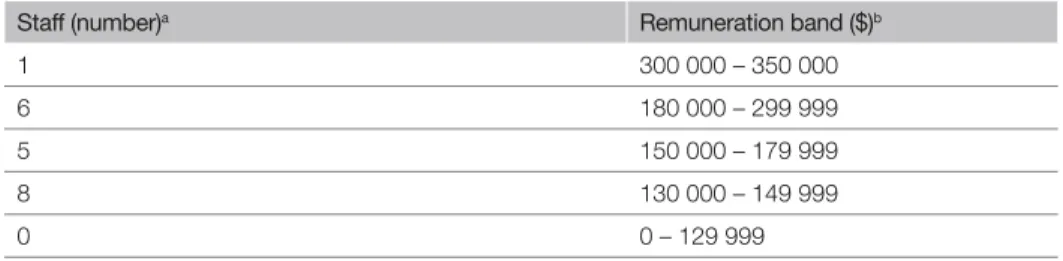
Remuneration Tribunal Act 1973. The Electoral Commissioner determines the remuneration and conditions afforded to these appointees, within parameters set by the Remuneration Tribunal. Table 10 illustrates the salary ranges for each classification of statutory appointees and senior executive staff.
Table 10: Base salary bands for statutory appointees and senior executive staff effective 30 June 2015
Staff (number)a Remuneration band ($)b
1 300 000 – 350 000
6 180 000 – 299 999
5 150 000 – 179 999
8 130 000 – 149 999
0 0 – 129 999
a. This data includes staff acting in positions at 30 June 2015.
b. Bands do not represent total remuneration; they include salary for superannuation purposes but do not include other components of salary packaging such as cars and superannuation.
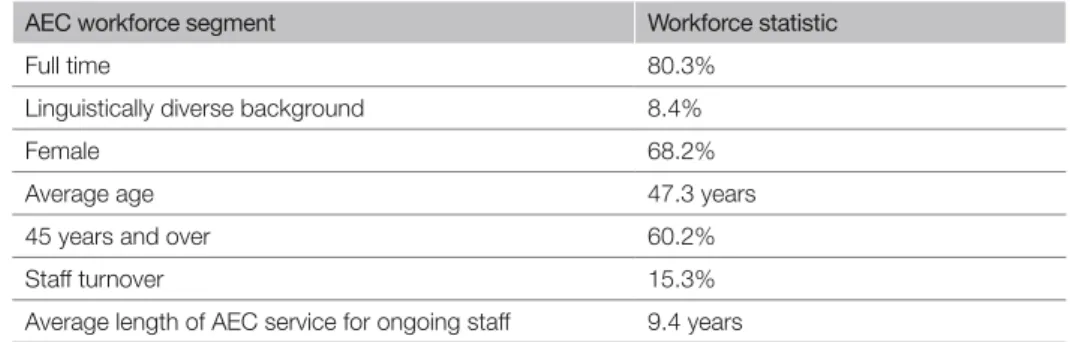
Table 11: AEC regular workforce profile as at 30 June 2015
AEC workforce segment Workforce statistic
Full time 80.3%
Linguistically diverse background 8.4%
Female 68.2%
Average age 47.3 years
45 years and over 60.2%
Staff turnover 15.3%
Average length of AEC service for ongoing staff 9.4 years
Performance management and pay
AEC performance management covers ongoing and non‑ongoing employees employed for six months or more and forms part of the AEC Enterprise Agreement 2011–14. The Performance Management programme aligns individual employee performance with the achievement of the AEC’s business objectives. Managers and employees work together to ensure that:
the nature and standard of work requirements are clearly articulated
performance is reviewed regularly, in line with expectations
regular feedback is provided
individual development needs are agreed upon and actioned.
The People Services Branch provides assistance and advice to managers and staff on performance matters to ensure confidence in addressing performance issues. This advice is consistent with the AEC’s performance management policy and guidelines.
Salary progression in the AEC is subject to meeting the standards of the Performance Management programme. Following the completion of the performance planning cycle, eligible employees receive annual pay advancement within the salary range of their classification.
In 2014–15, performance bonuses were not offered to any employees.
AEC workforce
As at 30 June 2015, the AEC workforce consisted of:
a regular workforce of 827 ongoing and non‑ongoing APS employees and seven Electoral Act employees
a casual workforce of 739 irregular or intermittent employees.
Tables provided at Appendix H provide a further breakdown of the AEC workforce.
AEC workforce statistics
Regular AEC workforce
The AEC’s regular workforce is spread across the AEC network of national, state, territory and divisional offices.
5
Figure 11: Staff by gender 2012–13 to 2014–15Financial year Male Female Staf f 0% 20% 40% 60% 80% 100% 2014–15 2013–14 2012–13
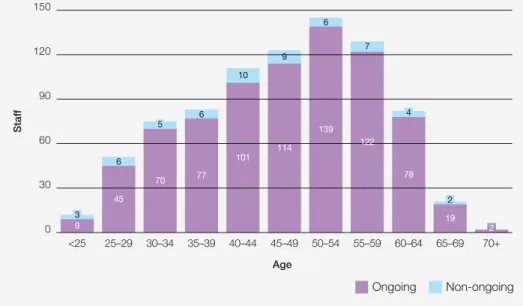
Figure 12: Ongoing and non‑ongoing staff by age group as at 30 June 2015
Age Non-ongoing Ongoing Staf f 0 30 60 90 120 150 70+ 65–69 60–64 55–59 50–54 45–49 40–44 35–39 30–34 25–29 <25 3 101 9 45 70 77 114 139 122 78 19 2 2 4 7 6 9 10 6 5 6
The majority of AEC staff are female (68.2 per cent) and work at the APS 6 level, which includes most divisional office managers who act as returning officers for each electoral division a federal during election. Table 11 provides a snapshot of the AEC’s regular workforce profile.
A range of tables and figures provide specific workforce information within this section of the report. Percentages of male and female staff, from 2012–13 to 2014–15, are shown in Figure 11. The age profile of AEC employees is shown in Figure 12.
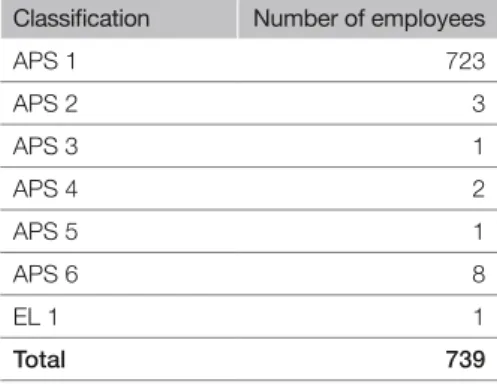
Table 12: Intermittent or irregular employees by classification
Classification Number of employees
APS 1 723 APS 2 3 APS 3 1 APS 4 2 APS 5 1 APS 6 8 EL 1 1 Total 739
APS = Australian Public Service; EL = Executive Level
Irregular or intermittent employees
At 30 June 2015, the AEC had a casual workforce of 739 irregular or intermittent staff. Employed mostly at the APS 1 level, casual employees work predominantly in divisional offices supporting fluctuating workloads throughout the electoral cycle. A breakdown of this workforce is provided in Table 12.
Indigenous employees
In 2014–15, 2.4 per cent of the regular AEC workforce self identified as Aboriginal or Torres Strait Islander peoples.
Indigenous election employees
The AEC is committed to creating a staffing profile at polling places that reflects the cultural diversity of the communities it serves throughout Australia.
It is important that Aboriginal and Torres Strait Islander peoples are provided polling assistance during federal elections by those from a similar cultural background. Since 2010, recruitment activities have successfully increased the amount of Indigenous election employees available to support Aboriginal and Torres Strait Islander peoples.
In 2013, as a result of these efforts, the AEC almost doubled the number of Indigenous polling officials employed compared with 2010. The recruitment and development of Indigenous Voter Information Officers continued through 2014–15.
Figure 13 provides information on AEC staff who self identify as culturally and linguistically diverse, Aboriginal or Torres Strait Islander peoples.
Disability reporting
Since 1994, Australian Government departments and agencies have reported on their performance as policy adviser, purchaser, employer, regulator and provider under the Commonwealth Disability Strategy.
As disability reporting to the Council of Australian Governments now occurs through the National Disability Strategy, within the State of the Service report, the specific requirement for disability reporting in individual Commonwealth agency annual reports has been discontinued. These reports are available at www.apsc.gov.au.
5
Figure 13: Staff by diversity 2011–12 to 2014–15Financial year
Culturally or linguistically diverse Aboriginal and Torres Strait Islander peoples
Staf f 0% 2% 4% 6% 8% 10% 2014–15 2013–14 2012–13 2011–12
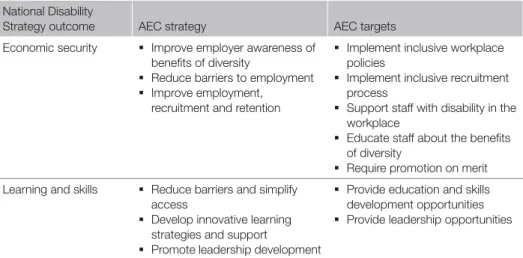
Table 13: National Disability Strategy measures in relation to staff
National Disability
Strategy outcome AEC strategy AEC targets Economic security Improve employer awareness of
benefits of diversity
Reduce barriers to employment
Improve employment, recruitment and retention
Implement inclusive workplace policies
Implement inclusive recruitment process
Support staff with disability in the workplace
Educate staff about the benefits of diversity
Require promotion on merit Learning and skills Reduce barriers and simplify
access
Develop innovative learning strategies and support
Promote leadership development
Provide education and skills development opportunities
Provide leadership opportunities
The National Disability Strategy 2010–2020 established a ten‑year national policy framework to improve the lives of people with disability, their families and carers. A high level two‑yearly report now tracks progress against each of the outcome areas of the strategy and presents a picture of how people with disability are faring. This report is available at www.dss.gov.au. The AEC supports the National Disability Strategy 2010– 2020 as it relates to staff with disabilities. The strategies it utilises are listed in Table 13. The Social Inclusion Measurement and Reporting Strategy also includes reporting on disability matters.
Figure 14: Proportion of AEC staff with a disability 2011–12 to 2014–15 Financial year Staf f 0.0% 0.3% 0.6% 0.9% 1.2% 1.5% 2014–15 2013–14 2012–13 2011–12
Disability Advisory Committee and Inclusion Strategy
The AEC’s Disability Advisory Committee held its annual meeting in June 2015 at the offices of the Australian Human Rights Commission in Sydney. Committee members include representatives from peak disability organisations and members of the Electoral Council of Australia and New Zealand.
The AEC reported on progress against the AEC’s Disability Inclusion Strategy 2012–20, outlining a range of actions which aim to support the participation of people with disabilities in the electoral system and to ensure the AEC is an inclusive workplace that supports employees with a disability. Figure 14 illustrates the proportion of AEC staff with a disability.
Recruitment and employee retention
In 2014–15, with the AEC undertaking election preparations, the People Services Branch was focused on securing staff for an electoral event particularly in divisional offices. The recruitment of employees was undertaken in an efficient manner to ensure that the calibre of candidates remained high.
Recruiting employees
In early 2015 the AEC restructured its internal recruitment delivery to focus on the provision of greater support and administration services. This restructure resulted in the development of a team of account managers dedicated to specific business areas to provide efficient service delivery and greater candidate care and attention.
Job advertising
The AEC’s total advertised vacancies (ongoing and non‑ongoing positions) grew from 36 in 2013–14 to 135 in 2014–15, as illustrated in Figure 15.
5
Figure 15: Number of vacancies advertised 2011–12 to 2014–15
Advertised vacancies 2014–15 2013–14 2012–13 2011–12 Timeframe 15 10 10 19 17 23 12 10 9 5 4 1 5 10 15 20 25 Jun May Apr Mar Feb Jan Dec Nov Oct Sep Aug Jul
2014 graduates with their APSC award and members of the Executive Leadership Team. From left: Electoral Commissioner Tom Rogers, Rachel Veitch, Kalinga Hulugalle, Rebecca Hansen, Priscilla Li and First Assistant Commissioner Capability Tim Courtney.
Graduate program
The 2014 Graduate program concluded with four employees successfully completing the program. These graduates were recognised by the Australian Public Service Commission (APSC) 2014 Graduate Development Program with an award for ‘Best Major Project Video Presentation’ for their video AEC Connect.
The AEC did not run a graduate program in 2015.
Retaining employees
The AEC’s retention rate for ongoing staff in 2014–15 was 95.5 per cent, representing a slight increase from 93.2 per cent in 2013–14. The AEC’s ongoing employee retention rate has been trending upwards over 90 per cent during the past decade despite year on year fluctuations.
Learning and development
AEC Learning
In 2014–15 the AEC continued to strengthen its approach to learning and development in line with the Learning and Development (L&D) Blueprint, commencing in July 2014 across four reforms:
Reform 1: the adoption of underlying key principles and a shared framework for learning design
Reform 2: a focus on performance coaching
Reform 3: development of certification processes and competency‑based assessment
Reform 4: a redefined role for the Learning and Development Team in the People Services Branch.
The new Learning Management System ‘AEC Learning’ was launched in early 2015. AEC Learning represents a new approach to the way APS employees engage in learning and development in the AEC, and was the first step in implementing the L&D Blueprint.
5
AEC Learning offers a range of self‑paced and instructor led courses designed to enhanceoverall workforce capability and professionalism and will also be used to deploy bespoke learning programs currently under development.
The approach to learning by AEC employees has evolved significantly since the launch of the L&D Blueprint. Systems and processes have continued to be established or improved to ensure the development of nationally consistent, engaging and high quality learning programs that address the needs of the AEC and meet best practice now and into the future.
Election training development
In November 2014 the AEC undertook a full review of technical election training to better prepare employees for the operational demands of increasingly complex elections. This included a review of election training for both APS employees and polling officials. The findings were consolidated into the Election Training Review Report.
The key principles of Reform 1 underpinned the development of an Election Training Curriculum Framework and Election Training Curriculum and are aligned with future work in progress and to be developed under Reform 4. The work under Reform 1 has laid the foundations for best practice learning across Reforms 2, 3 and 4 of the L&D Blueprint.
Performance Coaching
A bespoke Performance Coaching Model was designed by AEC under Reform 2. The model is designed to create an environment where everyday conversations between employees link performance and learning to influence the AEC culture and to become a stronger learning organisation. As part of this model five ‘Creating Coaching Leaders’ programmes have been designed and will be developed throughout the second half of 2015. In continuing to develop and embed the value of high performing employees within AEC, carefully selected coaching champions are being used to support the socialisation and messaging of the model.
Trainer certification
The Trainer Certification Program will create a pool of internally accredited APS trainers in line with Reform 3 who will deliver endorsed and nationally consistent programs from the Election Training Curriculum to operational election employees.
A new role for L&D
Consistent with Reform 4 in the L&D Blueprint, the transition of the AEC’s Learning Management System to AEC Learning means that a new way of working is required for L&D in the AEC. A redefined role for the L&D area of the People Services Branch will establish a centralised hub for all training/learning programs. The new model will ensure the AEC embarks on a more coordinated approach to how learning and development across all programs is planned, designed, developed and measured.
Investing in our greatest asset
Workforce planning
In 2014–15 the AEC’s dynamic work environment continued to be influenced by the electoral cycle. Overseeing an ongoing workforce of approximately 800 employees, in addition to planning for a temporary election workforce of over 70 000 for a full federal election, requires carefully co‑ordinated resource planning. For this reason, the AEC is currently designing and implementing a range of strategic initiatives to increase the sophistication of its workforce planning practices to ensure the delivery of organisational objectives now and into the future.
A crucial aspect of the workforce planning strategy is the introduction of more formal, systematic workforce planning improvements that complement the AEC’s broader electoral reform programme. This business‑driven approach balances the development of the agency’s operational workforce planning practices with longer term strategic workforce planning. Since early 2015, the AEC has been focussed on preparations for the anticipated 2016 federal election, particularly the improvement of workforce planning. This includes:
establishing a planning framework that will strengthen agency workforce planning at the national, state/territory and divisional levels
reinforcing this framework by utilising a suite of workforce planning resources, such as templates and other materials
continuing to develop a comprehensive set of role profiles for permanent (ongoing and non‑ongoing APS) and temporary (election) roles.
Employee benefits
AEC staff receive a range of non‑salary benefits, consisting of leave arrangements, provision for separation and redundancy benefits, plus superannuation. This information is listed in the Notes to the Financial Statements section of this report.
State of the Service
The AEC’s State of the Service employee survey results for 2014–15 showed general improvement in employee engagement levels and widespread increases in employee satisfaction levels with the agency’s overall performance. In particular, there was
5
The survey results also highlighted a number of areas requiring development including:
opportunities for career progression and talent development
improving internal communication
managing employee wellbeing.
Support of the
Carer Recognition Act 2010
The AEC does not have any obligations with regard to the Carer Recognition Act 2010, as the agency is not defined in the Public Service Act 1999 as being responsible for the development, implementation, provision or evaluation of policies, programs or services directed to carers or the persons for who they care.
As a public service agency, the AEC does support employees with caring responsibilities as outlined in the Carer Recognition Act 2010. Employees are eligible for Paid Personal Leave (Carer’s), under Clause 69.7 of the AEC Enterprise Agreement 2011–14, to provide care or support to those they are responsible for in the case of personal illness, injury or unexpected emergency.
Work health and safety
The AEC recognises its responsibility to positively influence the work health and safety (WHS) of employees and to provide a safe environment for members of the public who enter AEC premises, including leased premises used as polling places during an electoral event.
The AEC’s ELT and the Operational Compliance Group are the senior executive forums with responsibility for oversight of the AEC’s work health and safety management system. The Health, Safety and Wellbeing Team in the People Services Branch maintain focus on prevention and wellbeing at work, early intervention and the management of rehabilitation and return‑to‑work programs, providing WHS support to managers and employees and reviewing the agency’s WHS performance reporting.
WHS obligations
The AEC complies with its obligations under both the Work Health and Safety Act 2011
(WHS Act) and the Safety, Rehabilitation and Compensation Act 1988 (SRC Act) by ensuring there are appropriate systems that actively monitor, evaluate and maintain health, safety and welfare across all aspects of business. Table 14 provides a summary of ongoing AEC workplace health and safety outcomes.
Throughout 2014–15, the AEC maintained compliance with the WHS and SRC Acts by:
continuing to improve the WHS management system
introducing a new WHS due diligence framework to assist senior executives and employees to understand and meet their WHS legal obligations
introducing an enhanced WHS management structure, providing a greater level of consultation and representation through WHS committees, a strengthened health and safety representative network and revised work group structure
Table 14: Workplace health and safety summary
Information required under the WHS Act AEC Outcomes
Initiatives taken during the year to ensure the health, safety and welfare of workers
Continued development of the AEC WHS management system
Introduction of new WHS due diligence framework Introduction of enhanced WHS management structure Election‑related WHS strategies
Health and safety outcomes achieved as a result of the initiatives
A reduction in the duration of incapacity through targeted rehabilitation strategies
An enhanced WHS management arrangement structure, providing a greater level of employee consultation and representation through an increased health and safety representative (HSR) network and revised work group structure
A framework to help senior executives understand and meet their WHS legal obligations
Notifiable incidents A reduction from eight notifiable incidents in 2013–14, to two incidents in 2014–15 – consisting of one dangerous occurrence and one serious injury Investigations conducted by the AEC Two investigations were conducted, with no formal
notices issued by the Regulator
WHS management system
A new WHS due diligence framework and manual were implemented in August 2014, within the AEC WHS management system. The framework has been developed to ensure that any staff involved in making decisions that affect a substantial part of the AEC business exercise due diligence. More than 400 employees have participated in face‑to‑face presentations in a range of AEC locations to support the implementation of the framework.
Significant work was also undertaken in strengthening the AEC’s WHS quarterly performance reporting, with a new reporting process commencing on 28 August 2014. The ELT and other senior managers receive quarterly performance reports using a mix of WHS lead and lag indicators that are cascaded upwards. Details include incidents, hazards and risks that can be eliminated or minimised to improve the health and safety environment.
A review of the following was also undertaken throughout 2014–15, to safeguard the representation of staff in managing WHS:
relevant AEC work groups
health and safety representatives
first aid officer networks.
Health and wellbeing programs
The AEC encourages its employees to pursue healthy lifestyles with a range of elective health and wellbeing programs:
the Employee Assistance Program (EAP)
5
workstation assessments and provision of recommended ergonomic equipment
eyesight testing reimbursements
financial support for early intervention on health matters.
The EAP provides free, confidential support services that address a range of health and wellbeing issues. In 2014–15 the EAP utilisation rate for new AEC referrals was 3.7 per cent.
Workplace injuries and illnesses
In the period July 2014 to June 2015, 111 health and safety incidents were reported, comprising of 73 incidents, seven near hits and 31 hazards. This shows a significant decrease from the previous year, which was an election year featuring an increased workload and increased workforce. For the period July 2013 to June 2014, 239 work health and safety events were reported, comprising 176 incidents, 50 near hits and 13 hazards.
The top three mechanisms of incident reported in the AEC during 2014–15 were body stressing, mental stress and falls, trips and slips.
Notifiable incidents
There were two notifiable incidents during 2014–15, including one serious injury and one dangerous occurrence. Both incidents were reported to Comcare, investigated internally and remedial measures put in place.
Investigations conducted during the year
In 2014–15, there were no Comcare investigations undertaken, and no improvement notices issued to the AEC. One liaison inspection was undertaken and a report provided to the AEC with recommendations being currently implemented. No formal notices were issued by the Regulator.
Health safety and welfare outcomes
Claims management
The AEC’s management of claims consisted of:
14 new cases for compensation (of which nine were accepted by Comcare)
30 continuing cases for compensation
19 new cases of non‑compensation injuries
nine continuing cases of non‑compensable injuries.
Table 15 shows the number of new cases the AEC managed for compensation and non‑compensable injuries over the past three years, reported in the year in which management commenced.
People Services Branch strategically assessed and managed both compensable and non‑compensable claims for Comcare, the incident management regulator. These responsibilities include the review of all claim information, providing quality assurance for AEC internal processes and ensuring prompt action or intervention to support injured employees in their return to pre‑injury duties/hours. The branch also supported injured employees in achieving positive outcomes and improving the performance of the AEC workers’ compensation premium.
Table 15: New claims for compensable and non‑compensable injuries
Case management type 2012–13 2013–14 2014–15
Compensable 9 17 14
Non‑compensable 17 32 19
Total 26 49 33
Table 16: Premium rate compared to overall Comcare scheme 2012–13 to 2014–15
Premium rate (excluding GST) 2012–13 2013–14 2014–15
AEC premium 0.93% 1.11% 1.84%
Overall scheme premium 1.61% 1.65% 1.93%
The AEC’s workers’ compensation premium payable in 2014–15 from the previous year, due to a bonus payment. Comcare is predicting a continued reduction in the AEC’s premium as a result of the positive outcomes seen in the reduction in claim costs. A primary cost driver in the premium estimate is the amount of time off work and/or repeated periods of time off work taken by an employee, which has been noticeably reduced in the past 12 months.
Worker’s compensation premium
The AEC workers’ compensation premium for 2014–15 under the Comcare scheme was 1.84 per cent of wages and salary.
Table 16 details the AEC’s premium rates, compared to the overall Comcare scheme over the past three years.
The number of AEC worker compensation claims received for 2014–15 was the same as that for 2013–14. In the 2014–15 period, a new strategy for the management of compensation claims was developed, focusing on active intervention, investigation and resolution of cases. Particular focus was given to mental health cases.
The indicative costs for total AEC premiums for 2015–16 show a decrease of 14 per cent, compared to premium costs for 2014–15.
Health and safety representative elections
The National Work Health and Safety Committee (NWHSC) meets every quarter, with out‑of‑session meetings held as required to address specific work, health and safety matters. The purpose of the NWHSC is to provide a consultative forum that can effectively address, at a national and strategic level, the health and safety matters arising in the AEC or those escalated by state/territory work health and safety committees, with particular reference to the requirements of the Work Health and Safety Act 2011 and the Work Health and Safety Regulations 2011. Work health and safety committees also meet quarterly in all states and territories and minutes are available to staff via the AEC intranet.
The AEC conducts national elections for Health and Safety Representatives (HSRs) and Deputy HSRs, who are elected for a term of three years. Elections are conducted electronically, following the AEC’s HSRs Procedure for Elections, which sets out the requirements and process for electing HSRs and the responsibilities of various stakeholders in this process.
5
Procurement
The AEC’s focus has been on improving procurement processes and
practices in preparation for the next federal electoral event. In 2014–15,
the Commercial Law and Procurement Section coordinated procurement
planning for key election services to ensure national consistency and
implemented a contract management framework.
Overview
Procurement within the AEC consists of processes and procedures to ensure purchasing represents best value for money and is conducted in a transparent and accountable manner.
In 2014–15 the AEC continued to improve these processes through the use of the Procurement and Contract Management Register which records all procurements:
valued at $10 000 and over
that involve election‑related services
where intellectual property is created
where a consultancy is engaged
that present a high risk for the AEC.
This information feeds into the monthly reports provided to the ELT on new procurements and expiring contracts.
In accordance with external reporting obligations, the AEC also publishes an Annual Procurement Plan and contractual arrangements on AusTender.
Purchasing
Procurement procedures, policy and planning
The AEC’s procurement procedures and related templates provide AEC employees with guidance on how to conduct procurements in accordance with the Commonwealth procurement and financial framework.
Procurement and contract management register
The Procurement and Contract Management Register is used to streamline procurement and contract management processes and enhance quality assurance and compliance with the relevant Commonwealth framework, including reporting obligations.
Panel and multi-use list
Panels and multi‑use lists provide the AEC with an efficient process for achieving the best value for money when purchasing goods or services.
Tenders
Sustainability principles
In accordance with the Commonwealth Procurement Rules and Policy, the AEC adheres to its responsibility to be efficient, effective, economical, ethical and sustainable. The AEC’s procurement policy acknowledges ‘sustainability’ as a capacity for development that can be sustained into the future, such as the promotion of reduced energy consumption and minimising waste.
Consultancies
Engaging consultants
The AEC’s procurement procedures, which include guidance on consultancies are supported by a range of best practice guides and resources such as the Procurement and Contract Management Register, contract management support materials (i.e. a contract management plan template and checklist) and online procurement and contract management training.
The AEC may engage consultants under section 35(2) of the Electoral Act and determine the terms and conditions of engagement of those consultants under section 35(4) of that Act. In 2014–15, consultants could also be engaged in accordance with the Public Governance, Performance and Accountability Act 2013.
The AEC categorises arrangements as consultancies when:
the services involve the development of an intellectual output that assists with agency decision‑making
the output reflects the independent views of the service provider.
When engaging consultants to work with a value up to $79 999, the AEC generally seeks quotes from prospective consultants according to the AEC procurement procedures. If the expected value of the consultancy is $80 000 or more, AEC staff follow policy and procedures outlined in the Commonwealth Procurements Rules (July 2014).
Consultancy use
During 2014–15, the AEC’s new consultancy contracts involved total actual expenditure of $2 568 692 (GST inclusive).
There were 35 new consultancies with a contract value of $10 000 (GST inclusive) or more during 2014–15. The total actual expenditure on consultancy contracts increased by $1 148 345, compared to 2013–14. The increased expenditure can be attributed to the AEC implementing a number of strategic measures including revised election planning, assurance and governance frameworks and measures to facilitate cultural change. The AEC engaged consultants for the following purposes:
business intelligence consulting services
internal audits
project management
information technology consultation services
education and training services
strategic planning consultation services
5
human resource services
business administration services
management advisory services.
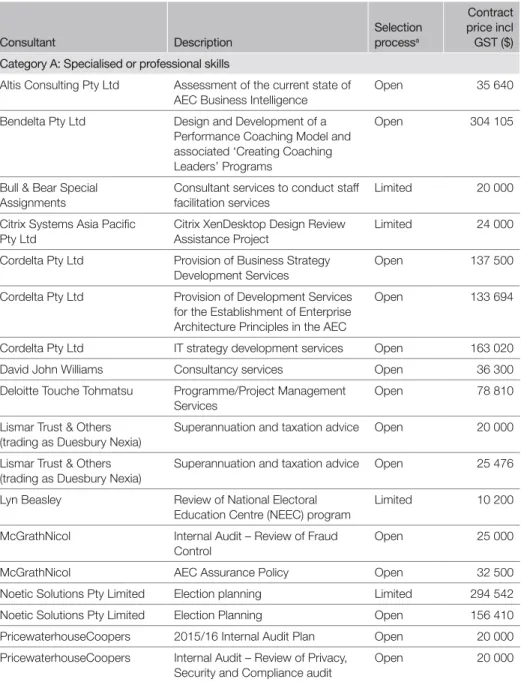
There were no ongoing consultancy contracts or related ongoing expenditure. Table 17 contains details of the AEC consultancy contracts to the value of $10 000 or more. Further information on the value of AEC contracts and consultancies is available on AusTender at www.tenders.gov.au.
Consultancy contracts table
Table 17: Consultancy contracts to the value of $10 000 or more during 2014–15
Consultant Description Selection processa Contract price incl GST ($) Category A: Specialised or professional skills
Altis Consulting Pty Ltd Assessment of the current state of AEC Business Intelligence
Open 35 640
Bendelta Pty Ltd Design and Development of a Performance Coaching Model and associated ‘Creating Coaching Leaders’ Programs
Open 304 105
Bull & Bear Special Assignments
Consultant services to conduct staff facilitation services
Limited 20 000 Citrix Systems Asia Pacific
Pty Ltd
Citrix XenDesktop Design Review Assistance Project
Limited 24 000 Cordelta Pty Ltd Provision of Business Strategy
Development Services
Open 137 500 Cordelta Pty Ltd Provision of Development Services
for the Establishment of Enterprise Architecture Principles in the AEC
Open 133 694
Cordelta Pty Ltd IT strategy development services Open 163 020 David John Williams Consultancy services Open 36 300 Deloitte Touche Tohmatsu Programme/Project Management
Services
Open 78 810
Lismar Trust & Others (trading as Duesbury Nexia)
Superannuation and taxation advice Open 20 000 Lismar Trust & Others
(trading as Duesbury Nexia)
Superannuation and taxation advice Open 25 476 Lyn Beasley Review of National Electoral
Education Centre (NEEC) program
Limited 10 200 McGrathNicol Internal Audit – Review of Fraud
Control
Open 25 000
McGrathNicol AEC Assurance Policy Open 32 500 Noetic Solutions Pty Limited Election planning Limited 294 542 Noetic Solutions Pty Limited Election Planning Open 156 410 PricewaterhouseCoopers 2015/16 Internal Audit Plan Open 20 000
Consultant Description Selection processa Contract price incl GST ($)
PricewaterhouseCoopers Internal Audit – Review of McLeod recommendations FAD
Open 25 000
PricewaterhouseCoopers Internal Audit: AEC Assurance Policy
Open 30 100
PricewaterhouseCoopers 2014–15 Internal Audit Plan – Fixed fee services
Open 17 000
PricewaterhouseCoopers 2014–15 Internal Audit Plan – Implementation of the Keelty Report Recommendations
Open 31 295
PricewaterhouseCoopers 2014–15 Internal Audit Plan – Risk Management Framework Maturity
Open 25 000
PricewaterhouseCoopers 2014–15 Internal Audit Plan – Review of Election Evaluation
Open 20 000
PricewaterhouseCoopers 2014–15 Internal Audit Plan – Review of People Services Systems Replacement (PSSR) project
Open 15 000
Protiviti Pty Ltd Risk Consultancy Open 62 920 RSB4STARS Industries Pty Ltd General consultancy – workforce
planning
Open 132 990 SAVV‑E PTY LTD Capability Pathway and Governance
Framework
Limited 282 800 Total Decision Support Pty Ltd Rebasing of costs for the Joint Roll
Arrangements – Update of Cost Models
Open 34 850
Total Decision Support Pty Ltd Rebasing of costs for the Joint Roll Arrangements – Update of Cost Models
Open 14 630
Total Decision Support Pty Ltd Review of PSB Business Services and AEC leave records
Limited 116 325
Category B: Independent research or assessment
Business Strategy Review Pty Limited
Strategy for procurement of future fixed voice services
Open 113 620 Kurtis Paige Initiatives Review Recruitment and Pay model
for temporary election staff
Open 52 800
The Trustee for Birdanco Practice Trust
Consultancy Services for Recruitment project
Open 18 500
The Trustee for Birdanco Practice Trust
Consultancy services for recruitment project
Open 38 665
Total 2 568 692
a. See Commonwealth Procurement Rules (1 July 2014) for an explanation of the procurement process. GST = Goods and services tax.
5
SME procurement
The AEC acknowledges Small and Medium Enterprises (SMEs), as defined by the Australian Bureau of Statistics and the Department of Finance, as a trading business with fewer than 200 full‑time employees that operates independently of any parent organisation for taxation arrangements.
The AEC’s procurement procedures and practices, including payment terms, support the requirements under paragraph 5.4 of the Commonwealth Procurement Rules. This includes the implementation of Small Business Engagement Principles such as communicating in clear, simple language and presenting information in accessible formats. Statistics for 2013–14 which illustrate SME participation in the Australian Government procurement market are available on the Department of Finance’s website at: www.finance. gov.au/procurement/statistics‑on‑commonwealth‑purchasing‑contracts.
List of initiatives
In the AEC, the overall SME participation rate for 2013–2014 was 34.4 per cent of contracts by value and 64 per cent by number.
The AEC recognises the importance of ensuring that small businesses are paid on time. The results of the Survey of Australian Government Payments to small business are available on the Treasury’s website at: www.treasury.gov.au.
Contractual arrangements
ANAO access clauses
During 2014–15, all AEC contracts in excess of $100 000 (GST inclusive) included provisions for the Auditor‑General to have access to the contractor’s premises.
Exempt contracts
During 2014–15, no contract or standing offer in excess of $10 000 (GST inclusive) was exempted from publication on AusTender on the basis that it would disclose exempt matters under the Freedom of Information Act 1982.
Environmental performance
The AEC’s Finance and Business Services Branch is responsible for the
sustainable management of property, workplace services and security.
The recent move of the AEC’s national office to a 6 Green Star rated
building has improved the agency’s environmental performance.
Overview
The AEC manages its environmental performance by minimising the impact of its operations on the environment, encouraging sustainable business practices, managing waste and monitoring energy and resource use.
The National Property Team (NPT), within the Finance and Business Services Branch, is committed to developing, implementing and maintaining improvements to environmental and sustainability practices and performance for all properties within the AEC’s property portfolio.
Environmental performance incorporates nationwide sustainable procurement practices, building operations and the management of national, state/territory and divisional offices. It also includes the impact of state and federal elections and management of the waste reduction programme for the NEEC.
The AEC’s Environment Management Commitment is provided on its website.
Sustainable development
Sustainable use of premises
In accordance with section 516A of the EnvironmentProtection and Biodiversity Conservation Act1999 (EPBC Act) the AEC reports on environmental performance and measures that minimise environmental impact, including:
the recommendations of the Australian National Audit Office’s Performance Audit Report No.47 of 1998–99
Department of Sustainability, Environment, Water, Population and Communities’ Energy Efficiency in Government Operations policy
Fleet Monitoring Body guidelines for use of ethanol.
The AEC continues to take the following measures to minimise the effect of office operations on the environment:
contracting service providers to collect and recycle paper, cardboard, plastics, aluminium and glass from national office
contracting service providers to remove spent toner cartridges from all offices
using partly or wholly recyclable products wherever possible
applying double‑sided default printer settings to reduce office paper consumption
promoting E10 petrol for AEC vehicles
considering environmental impacts in the design and layout of new and upgraded accommodation
working with contracted property services providers to reduce energy consumption in state/territory and divisional offices.
The AEC also adheres to a range of environmental management requirements, listed in Table 18.
Sustainable procurement practices
The AEC addresses sustainable procurement in accordance with: the Commonwealth Procurement Rules; the Department of Sustainability, Environment, Water, Population and Communities’ Sustainable Procurement Guide; and the AEC Procurement Policy. Value for money is a core principle of the AEC’s Procurement Policy. As a result, the agency values goods and service providers that reduce:
energy and consumption demand
5
Table 18: Legislative compliance and reporting for environmental managementArea Requirements
Energy Efficiency in Government Operations (EEGO Policy)
Office tenant light and power to be 7 500 MJ per person per annum. Office central services (e.g. air‑conditioning, elevators, base build lighting and hot water) to be 400 MJ per m2 per annum.
Office lighting to not exceed 10W per m2.
Refurbishments over 2 000 m2 to satisfy 4.5 NABERS Energy Rating. New buildings over 2 000 m2 to satisfy 4.5 NABERS Energy Rating. Green Lease Schedules for new leases over 2 000 m2 and for two‑year terms.
Commonwealth Procurement Rules
Where financially viable, minimise environmental impact over the life of goods and services by choosing products or services that have lower adverse impacts associated with any stage in their production, use or disposal. Commonwealth Property Management Framework and Guidelines
The Commonwealth Property Management Framework focuses on achieving efficient, effective and sustainable property outcomes and sets out arrangements under which the AEC is responsible for its performance. When determining the merits of a property the AEC will (on a case‑by‑case basis) take into consideration cost‑benefit analysis (using Whole‑of‑Life Costs) and environmental obligations and impact.
The Property Guidelines seek to enhance good property management practice across agencies, providing increased efficiency and effectiveness of property use in the course of Government business.
Australian Packaging Covenant
Arrangements in place for efficient collection and recycling of packaging. National Waste Policy Avoid the generation of waste, reduce the amount of waste (including
hazardous waste) for disposal. Manage waste as a resource.
Ensure that waste treatment, disposal, recovery and re‑use are undertaken in a safe, scientific and environmentally sound manner.
Contribute to the reduction in greenhouse gas emissions, energy conservation and production, water efficiency and the productivity of the land.
Throughout 2014–15, the AEC approached the open market for procurement of:
provision of election training and workplace support services
web hosting solution
furniture and equipment hire
café services
data capture services
development and support services for Microsoft Dynamics GP and associated software
interpreting and translation services
office locator
transactional banking services
ballot paper scanning and counting technology
temporary election workforce
provision of alarm monitoring at AEC warehouses and West Block offices
Table 19: Sustainable resource management
Area Requirements
Administration Ensure cleaning products have Safety Data Sheets (SDSs), which include the ecological impact for each product/chemical.
Maintain accurate and complete records for reporting purposes on the consumption and supply of office equipment and related consumables. Fit‑out and
refurbishment
Procure products that are recycled or have recycled content and are recyclable at the end‑of‑life—where practical, fit‑for‑purpose and cost effective.
Where possible, procure products with eco‑labels that are compliant to ISO 14024 or ISO 14021 eco‑labelling standards (life cycle impacts), such as timber and wood products meeting Forest Stewardship Council (FSC) certified sources/forests or Program for the Endorsement of Forest Certification (PEFC). Procure products that have energy conservation features in their design. Procure products that are designed for longevity and have design features which minimise the environmental impact at end of life, or have options for manufacturer/ supplier take back.
Procure products that are designed and supplied with low environmental load packaging, while maximising the purpose of preventing damage or breakage. Procure products that have energy conservation features in their design (a minimum level of 5 Stars under the ENERGY STAR® program) where such equipment is available, fit for purpose and cost effective.
For appropriate contracts, apply an appropriate evaluation measure or weighting to environmental criteria in procurements.
Procure products that have reduced or eliminated environmentally sensitive materials and substances such as volatile organic compounds (VOCs) in paints and solvents, mercury, lead, cadmium, hexavalent chromium, short chain chlorinated paraffin (SCCP) flame retardants and plasticisers in certain applications.
Minimising impact
Building design
The relocation of the AEC’s national office to 50 Marcus Clarke Street in central Canberra in May 2015 significantly improved the AEC’s environmental performance, particularly in the areas of building design, water and energy use. Table 20 outlines the national environmental ratings of the building.
A key aspect of these premises is the use of an integrated trigeneration system which simultaneously produces three forms of energy – electricity, heating and cooling. This single system produces power, hot water, space heating and air‑conditioning for the entire building which considerably reduces the greenhouse gases produced. The building’s overall lighting power density is kept to an average of 1.75 W/m2/100 lux.
Energy conservation
Energy efficient operations in the national office include the use of:
energy‑efficient dishwashers and refrigerators
automatic energy‑saving mode for multi‑function devices and machines
5
Table 20: National office environmental ratingsRating Body
6 Star Green Star As Built (whole of building)
The Green Star rating is awarded by the Green Building Council of Australia as an internationally recognised sustainability rating system.
The Office Design v2 category evaluates the environmental potential and operational performance of commercial office design.
5 Star Green Star Office Interiors
5.5 Star NABERS Energy for both Base Building and Tenancy
NABERS is a national rating system that measures the environmental performance of Australian buildings, measuring energy efficiency, water usage, waste management, indoor environment quality and impact on the surrounding environment. Ratings range from one star (lowest) to six stars (highest).
5.5 Star NABERS Water
4.5 Star NABERS Indoor Environment 4.5 Star NABERS Waste
low‑flow sensor taps
grey water recycling for flushing toilets
dual‑flush cisterns and waterless or low‑flow urinals
rainwater retention for use in cooling towers.
The NPT is committed to establishing standards, programs and innovative practices to improve energy efficiency across the AEC’s property portfolio. Table 21 outlines the considerations and activities related to energy consumption.
Water and energy use
The AEC aims to adopt best practice water and energy management in its business activities conducted at national, state/territory and divisional offices.
Water conservation
Water conservation activities include: the efficient use of energy and water resources; conservation of water resources; and minimisation of wastewater disposal.
While strategies for the conservation of water use are limited across the AEC network, the NPT has made improvements to the capture and use of water across the property portfolio. These are outlined in Table 22.
For 2014–15, the use of light and power energy across all AEC premises was 11 320.6 megajoules per person which represents a 127.9 per cent increase on the previous year. This increase is due to staffing fluctuations related to the 2014–15 non‑election period.
Waste and recycling
Processes relating to waste management and recycling may vary from site to site, within the AEC national network. Initiatives include, but are not limited to:
general waste disposal
recycling paper
recycling shredded paper
recycling cardboard
Table 21: Energy consumption considerations across the network
Area Requirements
Administration Review provision for accredited renewable energy (e.g. Green power) take‑up in electricity contracts.
Maintain accurate and complete records for reporting purposes on electricity and gas use in buildings, refrigerant types used in air conditioning systems and fire retardants used in fire suppression systems.
Ensure non‑AEC energy‑intensive power consuming devices that are continuous in operation must not to be connected to power points (e.g. fish tanks, digital photo frames, fans and heaters), unless approved by the NPT and respective State Manager and/or Branch Head.
Provide for major property energy efficiency and greenhouse initiatives through the annual strategic property planning review.
Education Ensure approved AEC energy‑intensive devices must be switched off when not in use.
Make effective use of curtains or blinds to optimise air conditioner and heating system efficiency.
Fit‑out and refurbishment
Ensure newly constructed or major refurbishments of tenanted space meet the minimum energy performance standard set out in the EEGO policy.
Include the provision for renewable energy generation initiatives into new building designs and fit‑outs.
Leasing Ensure new office leases over 2 000 m2 and two‑year duration include the relevant version of the Green Lease Schedule (GLS) which contains ongoing minimum energy performance standards.
Ensure the National Australian Built Environmental Rating System (NABERS) assessment and evidence of market testing occurs and is taken into account in overall cost considerations before exercising a lease option.
Ensure separate digital metering is established to differentiate the supply between base building and tenancy energy use.
Include the provision for renewable energy generation initiatives into new building designs and fit‑outs.
Table 22: Water consumption considerations across the network
Area Requirements
Administration (Fit‑Out,
Refurbishment and Leasing)
Introduce water conservation measures into building leases for existing and/ or new tenancies, toilets and urinals with high Water Efficiency and Labelling Service (WELS) scheme star ratings, re‑use systems, rainwater harvesting and the use of drought‑tolerant native plant species local to the area. Maintain accurate and complete records for reporting purposes on the water infrastructure established during refurbishments.
Apply strategies and procedures to effectively arrange potable water use. Education Report tap water leakages in a timely manner to the relevant
responsible areas.
Leasing Ensure mains digital metering is established to differentiate the supply between base building and tenancy water use.
5
The AEC’s Environmental and Sustainability Guide also provides staff with instruction on the responsible disposal of:
cleaning chemicals
volatile organic compounds (VOCs) in paints and solvents
staff amenity paper products
furniture
kitchen supplies.
Vehicle use and travel reduction
AEC business vehicles are selected in accordance with the Department of Finance vehicle selection policy, with a focus on reduced CO2 emissions when comparing suitable models.
Sustainable move of the national office
A number of staggered activities were undertaken to ensure the national office move to 50 Marcus Clarke Street in central Canberra was socially and commercially sustainable.
Pre-move
All staff thoroughly cleared out their work stations and related storage areas, to reduce the amount of materials moved to the new office. This significantly reduced the weight and fuel consumption of the moving vehicles involved.
The move presented an opportunity to keep unwanted items out of landfill by recycling paper, glass, plastic and cardboard matter.
Unclaimed or unwanted items that were particularly useful, or of high value, were put up for silent auction with the proceeds going towards staff orientation and relocation resources.
The move allowed for a thorough inventory of all archival materials.
Old furniture and existing office fit‑out was left behind intact, for new tenants.
Items of national significance were donated to the relevant cultural institution (e.g. the national tally board was given to the Museum of Australian Democracy and 20 boxes of publications and reports were provided to the National Library of Australia).
Staff were fully engaged and consulted throughout all stages of the office move, with an active online platform providing a forum for questions and information sharing (e.g. new building orientation and familiarity with surrounding amenities).
National Electoral Education Centre waste reduction
programme
The ACTSmart Business Recycling Programme assesses the waste reduction initiatives of businesses located in the Australian Capital Territory. In November 2014, the National Electoral Education Centre (NEEC) was awarded its fifth ACTSmart accreditation. In 2014–15 the NEEC extended its paper recycling efforts to include other materials such as plastic bottles. In the five years that the NEEC has actively participated in the programme it has reduced annual landfill waste to 2.9 cubic metres per annum, representing a waste reduction of 83 per cent. This achievement has been maintained despite the fact that the NEEC maintains annual visitor numbers of 90 000.
CASE STUDY
Enhancing WHS due diligence
In response to obligations to implement the harmonised
Work
Health and Safety Act 2011
(WHS Act) the AEC has, during the
course of the year, progressively implemented a model of due
diligence with a particular focus on a proactive approach. This
means responsible officers must be personally engaged with, and
responsive to, WHS issues.
The core elements of due diligence implemented by the AEC are directed at:
acquiring and updating knowledge of WHS matters
gaining an understanding of the hazards and risks of the operations/business of the AEC
ensuring the AEC has the appropriate resources and processes to eliminate or minimise risks to health and safety
ensuring that appropriate processes have been implemented for receiving, considering and responding to information regarding incidents, hazards and risks
ensuring the AEC has, and implements, processes for complying with any duty or obligation of the person conducting a business or undertaking (PCBU) under the WHS Act
verifying the provision and use of relevant resources and processes. In July 2014, the Electoral Commissioner commissioned a project for the development and implementation of a manual to assist officers in exercising their WHS due diligence obligations. The manual’s purpose was to ensure that any officer within the AEC who has the ability to make, or participate in making, decisions that affect the whole or a substantial part of AEC business, exercises WHS due diligence in making such decisions. The project was conducted between mid‑July and late October 2014, leading to the implementation of the AEC Due Diligence Framework (the Framework). Implementation briefings were conducted across the AEC network, between August and September 2014. These briefings coincided with the first round of quarterly reporting, therefore providing the opportunity for immediate application.
The Framework provides the necessary platform for WHS reform within the AEC. Building on the existing WHS Management System, the Framework supports the WHS Act’s intent to protect workers against harm to their health, safety and welfare through the elimination or minimisation of risks arising from work.
The Framework, built on a robust quarterly reporting structure, touches each work area within the AEC. Each manager provides data on their area’s level of WHS ‘readiness’, including data on:
WHS representation (including First Aid Officers, plus Health and Safety Representatives)
incidents and investigations
WHS inspections
unscheduled absences
rehabilitation
WHS training
WHS initiatives conducted over the reporting period.
This data is captured on reporting templates and cascades up to the next level of management until a final report on the AEC’s WHS ‘readiness’ is delivered to the Operational Compliance Group (OCG).
Since implementation, the AEC has conducted three consecutive WHS reporting cycles and experienced an improvement in a number of areas. This has included:
a decrease in the rates of unscheduled absences
a decrease in the AEC worker’s compensation rate
a 300 per cent increase in WHS inspections
an increase in WHS training undertaken
and an increase in investigations into WHS incidents.
In the 2015–16 financial year, the AEC will focus on aligning the AEC’s WHS Management System to enable delivery of the Due Diligence Framework. With the focus of the reporting data being on proactive prevention, it is reasonable to think there will be a positive effect on the capability of the workforce through raised awareness and focus on responsibilities, while reducing unscheduled absence rates and worker’s compensation claim costs.
Officers may ask themselves the following questions in making resource decisions:
Are there any impacts upon health and safety arising from this resource decision?
If so, what are the impacts upon health and safety?
In the event that there is a potentially detrimental effect upon health and safety arising from the decision, how can we eliminate or minimise the impact on health and safety?
What resources do we need to allocate to eliminate or minimise such impacts upon health and safety?