University of South Florida
Scholar Commons
Graduate Theses and Dissertations Graduate School
4-4-2006
An Exploratory Analysis Of The Effects Of A
Statewide Mandatory Grade Retention Policy And
Student Academic Achievement
Larry J. Porter Jr.
University of South Florida
Follow this and additional works at:http://scholarcommons.usf.edu/etd
Part of theAmerican Studies Commons, and theEducation Commons
This Ed. Specalist is brought to you for free and open access by the Graduate School at Scholar Commons. It has been accepted for inclusion in Graduate Theses and Dissertations by an authorized administrator of Scholar Commons. For more information, please contact
Scholar Commons Citation
Porter, Larry J. Jr., "An Exploratory Analysis Of The Effects Of A Statewide Mandatory Grade Retention Policy And Student Academic Achievement" (2006).Graduate Theses and Dissertations.
An Exploratory Analysis Of The Effects Of A Statewide Mandatory Grade Retention Policy And Student Academic Achievement
by
Larry J. Porter, Jr.
A thesis submitted in partial fulfillment of the requirements for the degree of
Education Specialist
Department of Psychological and Social Foundations College of Education
University of South Florida
Major Professor: George Batsche, Ed.D. Michael Curtis, Ph.D.
Constance Hines, Ph.D.
Date of Approval: April 4, 2006
Keywords: retention, promotion, high stakes testing, student progression, remedial instruction
Table of Contents
List of Tables iii
List of Figures iv Abstract v Chapter I: Introduction 1 Purpose 8 Research Questions 9 Hypotheses 10 Definition of Terms 11
Chapter II: Review of Selected Literature 13
Introduction 13
Characteristics of Retained Students 15
Negative Outcomes of Student Retention 16
Positive Outcomes of Student Retention 26
The State of Florida’s Retention Model 29
Supplemental Instruction 30
Early Intervention 31
Conclusion 32
Chapter III: Method 35
Introduction 35
Sample 35
Instruments 37
Procedure 39
Data Analysis 40
Chapter IV: Results 48
Introduction 48
Data Screening 48
Characteristics of Final Samples 49
Performance of the Samples on the 2003 3rd-grade FCAT Reading Test 50
Performance of Higher Achieving Retained Students 52
Performance of Promoted Low Achieving Students 61
Introduction 69
Student Characteristics 69
Retained Student Outcomes 71
Promoted Student Outcomes 74
Student Outcomes by Gender 75
Student Outcomes by Race/Ethnicity 76
Limitations 77
Delimitations 79
Implications for Florida’s Student Progression Policy 80
Implications for Future Research 83
Conclusion 84
List of Tables
Table 1 Demographic Characteristics of Retained and Promoted Students 50
Table 2 Means and Standard Deviations of 2003 3rd grade FCAT-Reading
Scaled Scores for Retained and Promoted Students 51
Table 3 Number and Percent of Retained Students on the 2004 3rd grade
FCAT Reading Test by Performance Level 52
Table 4 Number and Percent of Retained Students by Performance Level
and Gender on the 3rd grade FCAT-Reading in 2004 55
Table 5 Number and Percent of Retained Students by Performance Level
and Race/Ethnicity on the 3rd grade FCAT-Reading in 2004 56
Table 6 Number and Percent of Retained Students by Performance Level
and Size of District on the 3rd grade FCAT-Reading in 2004 57
Table 7 Logistic Regression Analysis of Retained Students Meeting State
Standards on the 2004 3rd grade FCAT-Reading 59
Table 8 Observed and Predicted Frequencies for Attainment of State
Standards in Reading by Logistic Regression with the Cutoff of
.87 60
Table 9 Number and Percent of Promoted Students on the 2004 4th grade
FCAT-Reading by Performance Level 61
Table 10 Number and Percent of Promoted Students by Performance
Level and Gender on the 4th grade FCAT-Reading in 2004 62
Table 11 Number and Percent of Promoted Students by Performance Level
and Race/Ethnicity on the 4th grade FCAT-Reading in 2004 63
Table 12 Number and Percent of Promoted Students by Performance Level
and Size of District on the 4th grade FCAT-Reading in 2004 64
Table 13 Logistic Regression Analysis of Promoted Students Meeting State
Table 14 Observed and Predicted Frequencies for Success by Logistic
List of Figures
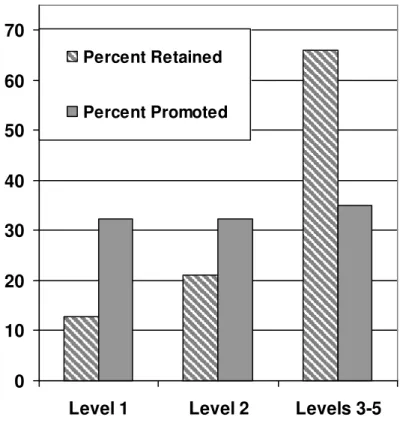
Figure 1 Percentages of retained students attaining Levels 1, 2, and 3 through 5 on the 2004 3rd grade FCAT reading test and promoted, low achieving students attaining Levels 1, 2, and 3 through 5 on the
An Exploratory Analysis Of The Effects Of A Statewide Mandatory Grade Retention Policy And Student Academic Achievement
Larry J. Porter, Jr. ABSTRACT
The literacy skills of students have become a significant concern among legislators and educators. The federal government has responded to this by enacting legislation that increases state accountability to provide evidence-based interventions to struggling readers. In response, the State of Florida has mandated mandatory retention for third-grade students who are at risk for reading failure. Third-grade students who do not pass the Florida Comprehensive Assessment Test-Reading (FCAT) are retained. Students who score at Level 1 are retained, and students who scored at Levels 2 through 5 are promoted.
Research has indicated that retention has been an ineffective intervention to improve academic performance. However, it is difficult to compare research findings with Florida’s current retention plan. Previous research has not delineated the
intervention strategies that were utilized during the retention year. Florida requires that all students are provided evidence-based reading remediation.
The purpose of this study was to explore the association of Florida’s model of student progression and academic achievement. More specifically, the study investigated
the academic outcomes of third-grade students who scored within 10 scaled score points below the student progression achievement cut-off, attained a Level 1 designation in 2003 and were retained, and students who scored within 10 scaled score points above the student progression achievement cut-off, attained a Level 2 designation in 2003 and were promoted to fourth grade.
Results indicated that 87% of the higher performing retained students subsequently scored at Level 2 or higher in 2004 while 67% of the promoted, low
achieving student scored at Level 2 or higher in 2004. Furthermore, gender, SES and race were significantly associated with the reading outcomes of higher achieving retained and promoted, low achieving students.
This study contributes to the literature by examining the outcomes of a retention model within a framework of academic remediation. In addition, the utility of high stakes testing and retention decisions were also examined. Future implications for research include direct comparisons of retained and promoted students, a longitudinal research design to examine the long-term effects of retention, and the identification of more effective services and intervention strategies to target at-risk students.
Chapter One Introduction
Since the introduction of the Elementary and Secondary Education Act (ESEA) in 1965, the federal government has funded $320 billion for education. However, data suggest that students are not achieving desired levels of proficiency in the academic areas of reading, mathematics, science, and writing (United States Department of Education, 2002). In 2000, only 32% of fourth-grade students in the United States were considered proficient in reading (Donahue, Finnegan, Lutkus, Allen, & Campbell, 2001). The disparity between funding in education and academic achievement resulted in the Congress of the United States requiring state-specific standards for student achievement and the use of evidence-based instruction and interventions. In the past, education has been the sole responsibility of the states (U.S. Constitution). While this is still the case, the federal government has used funding to states as leverage for policy change. In order to obtain federal financial assistance for education funds, states must ensure that their policies and practices are consistent with the ESEA.
Elementary and Secondary Education Act
Previous laws such as the ESEA (1965) focused on ensuring that states complied with the provisions in the law. States followed strict regulations in order to obtain federal funds. The No Child Left Behind Act (NCLB, 2002), the 2002 version of ESEA,
(Linn, Baker, & Betebenner, 2002). States are required to demonstrate that their schools use disaggregated student data to demonstrate outcomes, that their curriculum is
evidence-based, and that all students are held accountable to a single standard. In order to ensure that all students are proficient in reading, each state must establish benchmarks, known as adequate yearly progress (AYP), that lead to full proficiency by 2012 (Linn et al., 2002).
No Child Left Behind (NCLB) Act
The impact of the No Child Left Behind (NCLB) Act on district, and local school educational practices has been significant. In order to secure funding under NCLB, states must provide documentation of student performance relative to state goals. Also, states must submit their goals to the United States Department of Education for approval (Mann & Shakeshaft, 2003). These goals are then evaluated by the U.S. Department of
Education, and funds are dispersed on the approval of those state goals. In addition, NCLB provides federal funding for after-school programs and requires that every classroom be staffed by highly qualified teachers to teach in the curriculum content area (Canales, Frey, Walker, Walker, Weiss, & West, 2002).
A central tenet of the Improving the Academic Achievement of the
Disadvantaged Title in NCLB (2002), is that reading proficiency is paramount for positive student achievement outcomes. Children must learn to read in order to read to learn (Donnelly, 2000). In the grades Kindergarten through third grade, students are instructed in basic reading skills such as decoding, oral fluency, phonics, and phonemic awareness (Sindelar, Lane, Pullen, & Hudson, 2002). However, in the fourth grade, a curriculum shift requires students to read in order to obtain knowledge. The primary
focus of reading instruction shifts from reading mechanics to understanding what is read and to using that information appropriately. Therefore, reading becomes a vehicle for subsequent learning. In order to ensure that students were “reading to learn” by fourth grade, the federal government allocated a significant amount of funding, through the Reading First and Early Reading First initiatives, to states for evidence-based reading instruction in kindergarten through grade three. The Reading First initiative makes $900 million (in addition to $275 million for early reading first) available through grants to states to support reading instruction in the early grades (NCLB, 2002). The goal of Reading First is to have every student proficient in reading by the end of third grade (United States Department of Education, 2003). An integral component of Reading First is the application of evidence-based reading research to instructional techniques
employed by schools. In order to receive a Reading First grant, states must submit a proposal to the U.S. Department of Education that delineates the specific conditions under which the Reading First initiative will be implemented in that state. This proposal is then reviewed by a panel which then makes recommendations based upon individual state needs.
Reading First and NCLB specify that reading interventions should focus on grades kindergarten through third grade (NCLB, 2002). The fundamental reason for this narrow focus is that (a) reading difficulties are more easily prevented than remediated (Coyne, Kame’enui, & Simmons, 2001), and (b) the remediation of reading difficulties is most successful if interventions are employed early in the development of the problem (Haager & Windmueller, 2001, Jenkens & O’conner, 2002; Phillips, Norris, Osmond, &
Maynard, 2002). By the time a student reaches the secondary grades, it may be too late to implement basic reading interventions successfully (Coyne et al., 2001).
Reading Interventions
Many reading strategies are used to advance the reading proficiency of individual students. Interventions such as previewing and repeated readings are utilized to increase oral reading fluency in students (Sindelar, et al, 2002). Each strategy is contingent on the amount of time students are exposed to text. Text comprehension interventions include vocabulary instruction, guided oral reading, and increased teacher preparation.
Vocabulary instruction involves the direct instruction of vocabulary words while teacher preparation focuses on increasing teachers’ instructional competence (National Reading Panel, 2000). Other strategies have been employed to increase reading achievement in multiple students including class-wide peer tutoring programs and self-monitoring interventions (Greenwood, Maheady, & Delquadri, 2002; Shapiro, Durnan, Post, & Levinson, 2002).
Student Retention
One of the interventions traditionally used for students performing below grade level in reading has been grade retention (Jimerson, 2001; National Association of School Psychologists, 2003a). According to the National Association of School Psychologists (2003a) 15% to 20% of students are retained in the United States each year and 30% to 50% of students are retained before ninth grade. Retention occurs when a student is required to repeat a particular grade year as a result of delayed academic progress
(Rafoth, 1991). The assumptions underlying the use of retention are that students who do not possess basic academic skills will not be successful in successive grade levels. It is
also assumed that students have not developed these skills because they have not had sufficient practice time and opportunities to learn in order for these skills to develop. Therefore, retained students may benefit and respond to extra instructional time and become more proficient in reading, writing, and mathematics (Graue & DiPerna, 2000).
Each school district in the state of Florida is required to develop a district student progression plan (K-20 Education Code, 2003
).
Progression plans delineate the criteria necessary for a student to be moved from one grade to the next, and ultimately, graduate from secondary school. Some states have implemented grade retention in order to prepare children more adequately for the increasing demands of the curriculum as grade level increases. For example, Florida has instituted a policy which mandates that students pass the reading section of the Florida Comprehensive Assessment Test (FCAT) in third-grade in order to be promoted to the fourth grade (Florida Department of Education, 2002a). Thus, students who do not possess basic reading skills by the end of the third grade are retained (Florida Department of Education, 2002a). Exceptions are written into this law that permit for the exclusion of students with disabilities, limited English proficient students and students who have been retained previously. In addition, exemptions are made for those students who perform poorly on standardized tests such as the FCAT, but who can otherwise demonstrate proficiency through portfolios or other alternateassessments such as the Stanford Achievement Test – Tenth Edition (SAT-10; Florida Department of Education, 2002a).
Despite the widespread adoption of retention by states and districts, a review of the retention literature has suggested that retention has been an ineffective intervention to improve academic performance (Denton, 2001; Jimerson, 2001; Jimerson & Kaufman,
2003). Negative side effects have also been identified, including, (a) increased drop out rate (Jimerson, Anderson, & Whipple, 2002), (b) lower performance on standardized academic achievement tests (Graue & Diperna, 1999; Jimerson 1999; Reynolds, 1992), (c) increased negative feelings towards learning (Fergusen, Jimerson, & Dalton, 2001), and (d) increased behavior problems as measured by ratings on behavior scales (National Association of School Psychologists, 2003a). Research has suggested that students who are retained are at risk for adverse social adjustment in school, and may suffer from lower self-esteem than students who are promoted (National Association of School
Psychologists, 2003a). Moreover, research has indicated that males, minority, and low socioeconomic students are retained at disproportional rates relative to their peers.
Research seems to project a grim picture of what happens when districts embrace a policy of retention.
The methods that have been used to explore the effects of retention typically compare aggregated outcome measures of students who were retained and those who were not. However, a comprehensive examination of the research reveals that there may be serious limitations in the methods used to evaluate the effectiveness of retention. The general format of the research on retention has been to compare groups of retained students to those not retained or to conduct a longitudinal study demonstrating the long-term outcomes for students who were retained. There has been no research found evaluating the different methods of retention, comparing different activities that occur during the retention year, or evaluating the effects of retention across diverse student demographic characteristics (e.g., age, grade, gender, race). No study was found that has differentiated between various types of retention practices (e.g., retention in one subject
area only, retention with intense remediation), and no study was found that compared students who simply repeated a grade to those for whom systematic, evidence-based interventions were used during the retention year.
Florida’s Model of Retention
The state of Florida has adopted a model of retention that is conceptually different than previous models of retention (Florida Department of Education, 2002a). Retention in the State of Florida calls for retention with remediation of academic skills. Policies in the State of Florida dictate that the needs of retained students are addressed systematically during the retention year. More specifically, the State of Florida’s retention policy requires that students do not merely repeat the same curriculum and experiences. Rather, interventions are developed that are student specific and are designed to address
individual skill deficits. The policy calls for Academic Intervention Plans (AIPs) to be developed for every student who is retained. These plans include instructional
modifications that are linked to individual skill deficiencies in students by setting clear and measurable academic goals. These AIPs are then evaluated frequently to determine if retained students are making progress to attain their academic goals (Florida Department of Education, 2002a). Although AIPs are required by the State of Florida, the
implementation and integrity of AIPs vary by location and it was not possible to account for these differences. Examples of modifications supported by AIPs include, pull-out services, one-on-one tutor instruction, peer tutors, and the employment of reading coaches.
In order to determine which third-grade students have not attained the reading proficiencies necessary for promotion to fourth grade, Florida uses a high stakes testing
procedure. Third-grade students must pass the Florida Comprehensive Assessment Test - Reading in order to be promoted to fourth grade. Third-grade students who do not meet state standards on the reading portion of the FCAT are required to be retained (Florida Department of Education, 2002a). The scoring on the FCAT consists of scaled scores of which are broken into five achievement levels of reading proficiency. The decision to retain third-grade students in the State of Florida is contingent, among other factors, on FCAT reading achievement levels. The achievement Level 1 represents scaled scores of 258 and lower and does not meet reading state standards. Third-grade students who attain a scaled score of 258 or lower and subsequently a Level 1 designation on the FCAT reading test are retained. The achievement Levels 2 through 5 includes scaled scores of 259 and higher. These achievement levels are considered to meet state standards for reading and third-grade students who obtain the reading achievement Levels 2 through 5 are not required to be retained.
Purpose
Given the lack of research that has delineated explicit or implied policies for the type of services provided to students during the retention year, the effects of retention on diverse student populations, and the usefulness of using cutoff scores for identifying students for mandated retention, the purpose of the present study was to explore the association of Florida’s model of student progression and academic achievement. More specifically, the study investigated the academic outcomes, as measured by FCAT
reading levels, of third-grade students who scored within 10 scaled score points below the student progression achievement cut-off (248-258), attained a Level 1 designation in 2003 and were retained, and students who scored within 10 scaled score points above the
student progression achievement cut-off (259-269), attained a Level 2 designation in 2003 and were promoted to fourth grade. Student population characteristics (e.g., ethnicity, social economic status) and size of district were also explored to extend
previous research on retention and to determine if Florida’s Retention Policy is equitable for diverse populations of students.
Research Questions
In order to explore the effectiveness of Florida’s retention policy, the present study examined the relationship between student retention and reading outcomes
measured by FCAT levels attained by third-grade higher achieving retained students and fourth-grade promoted, low achieving students. Specifically, the present research
questions included:
1. What proportion of higher performing retained third-grade students who had reading scaled scores of 248-258 on the 2003 FCAT reading test subsequently scored at Level 2 or higher on the 2004 3rd-grade FCAT reading test?
2. What is the relationship between a) gender, and b) race/ethnicity and performance on the 2004 3rd-grade FCAT reading test for higher performing third-grade
retained students who had scaled scores of 248-258 on the 2003 FCAT reading test?
3. Is there a relationship between the size of school district attended and
performance on the 2004 third-grade FCAT reading test for higher performing third-grade retained students who had scaled scores of 248-258 on the 2003 FCAT reading test?
4. What is the relationship among gender, race/ethnicity, prior performance on the FCAT reading test and attaining state reading standards on the 2004 FCAT reading test for higher performing students retained in third grade?
5. What proportion of promoted third-grade students who had reading scaled scores of 259-269 on the 2003 FCAT reading test subsequently scored at Level Two or higher on the 2004 fourth-grade FCAT reading test?
6. What is the relationship between a) gender, and b) race/ethnicity and performance on the 2004 fourth-grade FCAT reading test for third-grade promoted students who had scaled scores of 259-269 on the 2003 FCAT reading test?
7. Is there a relationship between size of school district attended and performance on the 2004 fourth-grade FCAT reading test for low achieving students promoted to 4th grade who had scaled scores of 259-269 on the 2003 FCAT reading test? 8. What is the relationship among gender, race/ethnicity, and prior performance on
the 2003 3rd-grade FCAT reading test and attainment of state standards on the 2004 fourth-grade FCAT reading test for low achieving students who were promoted to fourth grade?
Hypotheses
Previous research has suggested that retention is not an effective academic intervention for students (Jimerson, 1999; Jimerson, 2001). Therefore, it was hypothesized that:
1. There is a significant difference in the obtained 2004 FCAT reading levels of higher performing retained students by a) gender, and by b) race/ethnicity. 2. There is a significant difference in the obtained post-retention 3rd-grade FCAT
3. For higher performing students retained in the third grade, there is a significant relationship among gender, race/ethnicity, prior performance on the FCAT reading test and attaining state reading standards on the 2004 FCAT reading test. 4. There is a difference in the obtained 2004 FCAT reading levels of promoted, low
achieving students by a) gender, and by b) race/ethnicity.
5. There is a difference in the obtained post-retention FCAT reading levels of promoted, low achieving students as a function of district size.
6. For students promoted to fourth grade, there is a relationship among gender, race/ethnicity, prior performance on the FCAT reading test and attaining state reading standards on the 2004 FCAT reading test.
Definition of Terms
Retention: Repeat a grade the subsequent year because of inadequate academic progress.
High Performing Retained Students: Third-grade students in the State of Florida who were retained at the end of 2003 academic year, attained a scaled score of 248-258 on the 2003 third grade FCAT reading test, and were designated as scoring at Level One on the 2003 FCAT reading test.
Promoted, Low Achieving Students: Third-grade students in the State of Florida who were promoted to fourth grade at the end of 2003 academic year, attained a scaled score of 259-269 on the 2003 third-grade FCAT reading test, and were designated as scoring at Level Two on the 2003 FCAT reading test
Low Socio- Economic Status: Students who received free and reduced lunch in Florida during the 2003-2004 school year.
Meeting State Standards: Students who attained a scaled score of 259 or higher on the FCAT reading test.
Chapter Two
Review of Selected Literature Introduction
Chapter II contains a review of related literature. An introduction to the effectiveness of retention on academic achievement is considered along with the characteristics of students who are retained. Also, the factors that are associated with retention are reviewed. This review of literature is not intended to be exhaustive, rather it is intended to provide the most relevant and current research regarding retention
practices.
Student retention refers to a practice in which a student is required to repeat a particular grade year as a result of delayed academic progress (Rafoth, 1991). In
accordance with this concept, students who need support services are provided extra time and opportunities to learn basic academic skills. Retention has been used as an
intervention for students with academic difficulties for many years (Jimerson, 2001). However, due to increasing numbers of students in need of extra instructional time, more students are being retained (Jimerson & Kaufman, 2003). According to the National Association of School Psychologists (2003a) 15% to 20% of students are retained each year and 30% to 50% of students are retained before ninth grade. Jimerson (2001) offered more conservative estimates of 5% to 10% students retained each year. Other studies
have indicated a wide range in the rate of student retention (Fine & Davis, 2003; McCoy & Reynolds, 1999).
Interest in the effects of retention on academic and behavioral outcomes has increased among researchers in the past ten years due, at least in part, to many politicians and educators supporting the end of “social promotion” (Jimerson, 2001). Social
promotion is regarded as promoting students in spite of delayed academic performance. In 1999, President Clinton called for an end to social promotion in his State of the Union address. This theme was continued in 2002 with the No Child Left Behind (NCLB) Act. NCLB set educational guidelines and required states to be accountable in order to obtain federal funding. NCLB particularly focused on student reading proficiency. Therefore, the goal set in NCLB was for every student to be proficient in reading by the 2013-2014 school year. Many states have responded to NCLB by incorporating evidence-based reading interventions for students who are not obtaining adequate yearly progress. Student retention is one of the interventions that has been utilized.
Retention is defined as a practice that requires a student to repeat a grade designation for one subsequent year (Jimerson, 2001). Retention is an expensive intervention, adding the cost of one extra year for each student retained (Pagani,
Tremblay, Vitaro, Boulerice, & McDuff, 2001). According to Dawson (1998) retention costs 14 billion dollars a year. This may be the reason, at least in part, to the insufficient funding for extra support services for students who are retained. The question for many researchers is if the cost of retaining students is worth the academic outcomes. Do retained students demonstrate significantly higher levels of academic achievement meriting the cost? The methods that researchers have utilized to examine the impact of
grade-retention on academic performance has traditionally compared aggregated data of outcome measures of students who were retained to students who were not retained. Researchers have utilized prospective longitudinal designs, meta-analyses, and qualitative methods to investigate grade retention.
Research regarding the effect of retention on academic and behavioral outcomes has been inconclusive. According to Tomchin and Impara (1992), teachers view retention as a useful strategy to increase mastery of academic tasks. A handful of studies have found that retention is linked to limited improvement in self-esteem and mathematics scores (Alexander, Entwisle, & Dauber, 1994; Gottfredson, Fink, & Graham, 1994; Mantzicopoulos & Morrison 1992). Pagani et al. (2001) indicate that the positive effects of retention tend to fade out over time. A larger number of studies have linked negative academic and behavioral outcomes to retention (Jimerson, 2001; National Association of School Psychologists, 2003a).
Characteristics of Retained Students
As would be expected, low academic achievement is common among students who are retained (Jimerson, 2001). Additionally, research indicates that a student is more likely to be retained if the student is male, an ethnic minority, and of low social economic status (Abidin, Golladay & Howerton, 1971; Niklason, 1984). Retained students are typically considered to be younger than their grade-level peers, however, studies addressing the age of students who are retained have been inconclusive (Shepard & Smith, 1987).
Jimerson, Carlson, Rotert, Egeland, and Sroufe (1997) identified many additional variables that are associated with retained students. Their study included 179 participants
(80% Caucasian, 14% African American, and 6% Hispanic) in three groups: a retained group (n = 29), a low achieving group (n = 50), and a control group (n =100). The results of the study indicated that males are more likely to be retained than females (M = 6.76, p < .05). The participants in the retained group were comprised of 74% males, while the participants in the low achieving but promoted group were comprised of 56% males. The results of the study also indicated thatethnic minority students were more likely to be retained than Caucasian students and that low social economic status (SES) was a risk factor for grade retention. Specific internal student characteristics were also identified as being associated with retention. These included lower cognitive ability, poor peer
relations, and high rates of absenteeism.
A study conducted by Graue & Diperna (2000) corroborated the findings of Jimerson et al. (1997). Results indicated that males were retained more often than females, and that minorities were retained more often than Caucasians. In addition, students whose birthdays were close to the school entrance cutoff were more likely to be retained.
Negative Outcomes of Student Retention
As previously stated, retention is used for students with delayed academic performance. However, a great number of studies indicate that it is not an effective strategy. A study conducted by Pagani, et al. (2001) focused on the academic and behavioral outcomes of retained students. The study included 1,830 students who were randomly selected from a larger pool of 6,397 participants. Each of the participants selected were followed until the age of 12. The independent variables in the study included retention and gender. The study included teachers’ ratings of students overall
academic performance, and the teachers completion of the Social Behavior
Questionnaire. The questions on the Social Behavior Questionnaire are derived from the Preschool Behavior Questionnaire and the Prosocial Behavior Questionnaire. The data were analyzed using a basic autoregressive model. This model allows for the control of changes that would be expected from students with different achievement levels. Therefore, achievement level trajectories are held constant.
Analysis of the data suggested that retention had a negative affect on the
academic trajectory of both girls and boys. Specifically, after being retained between the ages of 6 and 8, boys showed signs of negative academic trajectories at the times of follow up (e.g., ages 10 and 12) relative to students who were not retained (path = -.12, p < .01). Girls displayed similar negative academic effects at age 10 (path = -.07, p < .01) and at age 12 (path = -.07, p < .05). Retention also seemed to have a negative effect on the behavioral trajectories of the boys who participated in the study.
The authors suggested that the negative behavioral effects may have caused the negative academic effects of retention and it was difficult to separate the two variables. The study relied on overall student performance ratings from teachers to assess academic achievement. Teachers’ ratings may not have been reliable, and the ratings may not be an accurate representation of actual student academic performance. Finally, while the study’s trajectories were found to be statistically significant, the sample size was large. Therefore, the statistical significance may not indicate a large effect size designating real world significance.
Another longitudinal study conducted by McCoy and Reynolds (1999) indicated similar results. Data were analyzed from the Chicago Longitudinal Study to determine
the academic outcomes of students who were retained. The participants included 1,164 low-income, mostly African-American seventh- and eighth-grade students, of which 315 had been retained. Of the students retained, 296 had been retained once, and 19 had been retained more than once. The study included four outcomes measures: a) reading
comprehension, b) mathematics achievement, c) perceived school competence, and d) school-reported delinquency. The participants were given the Iowa Test of Basic Skills (ITBS) mathematics and reading comprehension subsections at the age of 14.
The students’ scores were analyzed using a hierarchal multiple regression model. Retention significantly predicted student reading comprehension (R2 = .47) and
mathematics performance (R2 = .57) when comparing same age peers. According to the study, retention explained 47% of the variability in the participants’ ITBS reading comprehension scores and 57% of the variability in the participants’ ITBS mathematics scores. After the researchers included demographic factors (e.g., gender, parent
education, free-lunch eligibility, and SES) and early adjustment indicators (e.g., classroom adjustment, first-grade reading and mathematics achievement), retention predicted lower mathematic scores (ES = -.481, p <. 001) and reading comprehension scores (ES = -.424, p < .001). The time at which students were retained (e.g., early vs. late retention) seemed to have an impact on reading scores. Early retention (grades 1-3) was associated with lower reading achievement than later retention (grades 4-7). The authors did note, however, that more than 50% of the differences between the groups were explained by other factors.
In addition to comparing same age peers, the authors compared seventh- grade retained students with their same grade peers. Again, analysis indicated that retention
predicted negative reading comprehension (β = -4.6 standard score points, p < .001), however, the prediction was not significant for the mathematics ITBS scores. According to the authors, the results of this study indicate that retention is not an effective
intervention for low achieving students. Retention did not seem to benefit students more than other less expensive alternatives.
A similar study conducted by Jimerson (1999) attempted to answer the question “To retain or not to retain?” (p 243). This study set out to determine the association between grade retention and high school academic achievement, later high school dropout rates, and post-secondary education. Participants in the study fell into three groups including a retention group (n = 29), a low-achieving, promoted group (n=50), and a control group (n = 100). The retained group had a larger number of males than did either the low-achieving, promoted group or the control group. The percentage of minority students was highest in the retained group (35%), followed by the low-achieving, promoted group (31%) and finally the control group (16%). Students in the retained group were retained once in kindergarten through third grade. The researchers conducted teacher interviews, child interviews, child testing, parental interviews and parental testing (e.g., Wechsler Adult Intelligence Test, Home Inventory) during the early childhood years for participants in the retained group, low-achieving, promoted group, and the control group. In addition, mother and home assessments were collected before birth and soon after birth, at 30 and 48 months, and at first grade. This information included SES, age of the mother at the child’s birth, education completion, and
intelligence assessment. The participants were followed into adolescence (eleventh grade) and early adulthood (19 and 20-years-old). Several outcome measures were investigated
including high school achievement as measured by grade point average, and attendance, high school completion, and post-secondary education enrollment.
The results of the study indicated that the retention group had significantly lower high school achievement than the low-achieving, promoted group (F = 6.59, p <.01) and the control group (F = 13.95, p < .001). The participants in the retention group were also more likely to drop out of high school (F = 3.57, p < .05), and were less likely to receive a certificate for high school completion (F = 5.44, p < .01) relative to the low achieving, promoted group. The researcher suggested that the results of the study indicated that retention is not an effective early intervention practice. Students who were retained in early primary grades were more likely to eventually drop out of school. However, the additional academic support that the retention students received during the retention year was not assessed or discussed. Students who were retained may not have received any academic remediation interventions.
An earlier study conducted by Jimerson et al. (1997) examined the effects of retention on achievement in elementary school and at sixth grade. The study included 179 students from Minnesota that consisted of three groups: a retained group, a
low-achieving, promoted group, and a control group. The retained group consisted of 29 students who were retained in either kindergarten, first, second, or third grade. The participants in the low achieving, promoted group were selected because their academic performance was similar to that of the participants within the retention group. These students were identified by Peabody Individual Achievement Test (PIAT) scores that fell within the bottom quartile of the entire sample. Finally, the control group consisted of 100 participants randomly selected from a larger pool of participants who were not
eligible for the retained or the low-achieving, promoted groups. The participants were enrolled in kindergarten (25), first (25), second (25) and third (25) grades. The study utilized several outcome measures to compare the three groups. Each participant was given each of the measures during the primary grade of the student and at sixth grade. The outcome measures included teacher interview measures, attendance reports, the Child-Behavior-Checklist—Teacher Edition (CBCL-T), peer acceptance measures, the PIAT, the Wechsler Preschool and Primary Scales of Intelligence (WPPSI), the Wechsler Intelligence Scale for Children-Revised (WISC-R), the Woodcock-Johnson Achievement Test-Revised (WJ-R), maternal interviews, and a life events inventory.
The results of the study reported both the short-term effects and long-term effects of retention. The short-term effects of retention were measured by running contrasts comparing the PIAT scores of the retained and the low achieving, promoted groups the next school year. The age at which the participant was retained was also considered. Participants who were retained in kindergarten were compared with same aged peers after the completion of first grade. After controlling for previous achievement, contrasts
indicated that the PIAT math, reading comprehension, and spelling scores of students who were retained during kindergarten and low achieving, promoted students were not statistically significant. This indicates that retained students academic achievement did not improve relative to same age peers. Similarly, the PIAT reading comprehension and spelling scores of first and second grade retained group did not differ from the low achieving, promoted group. However, retained students did have significantly higher PIAT math scores than low achieving, promoted students (F = 6.05, p < .05).
In addition to examining the short-term effects of retention the authors also examined the long-term effects of retention on academic achievement. The long-term effects of retention were measured by total PIAT score performance for each group at the completion of sixth grade and WJ-R total scores at age 16. The contrasts between the retained and low achieving, promoted groups PIAT scores at the completion of sixth grade were not significant. Furthermore the contrasts between the retained and the low achieving, promoted groups WJ-R scores were not significant. The results of this study indicate that students who were retained did not perform significantly better than their peers when prior achievement was controlled. Short-term positive effects for math were evident for first and second grade participants, however these effects washed out after the completion of sixth grade. Critiques of this study are that it included a small sample size and omitted a discussion regarding academic interventions employed during the retention year. It is possible that students who were retained received no additional academic support services and completed another year of curricula that they already had received.
A meta-analysis conducted by Jimerson, et al. (2002) examined 17 studies in order to determine the relationship between retention and high school drop-out. Each of the studies that identified retention as a potential predictor of later high school dropout indicated that retention was significantly associated with later high school dropout. Furthermore, retention was consistently one of the most powerful predictors of dropout. Moreover, students who were retained more than once are more at-risk for later dropout. The studies that were reviewed indicated that students who were retained once were 40 to 50% more likely to drop out of high school and students who were retained more than once were 90% more likely to drop out of high school when compared with promoted
peers. The authors conclude that retention should not be considered a direct cause of dropout. Rather, retention and other factors such as low SES, immaturity, and low achievement place students at risk for future dropout. The relationship between retention and later high school dropout is transactional. Retention leads to other negative
conditions such as absenteeism, low school engagement, and low self-esteem contributing to later dropout.
A recent study by Fine and Davis (2003) investigated the long-term effects of grade retention. Specifically, the authors were interested in the relationship between grade retention and later post-secondary education enrollment. The study included 11,637 (5605 male, 6031 female) participants derived from the National Educational
Longitudinal Survey (NELS) database. The data used for this study were gathered in 1988, 1992, and again in 1994. Retention status for each participant was determined by responses to survey questions. Likewise, the outcome measure, post-secondary
enrollment, was determined by participant responses to surveys in 1994. The participants were matched on demographic variables, SES and academic achievement. Odds ratios reported the likelihood of the outcome measure among students with different
characteristics. Each of the regressions used promoted students as the comparison group. The results of the study indicated that boys were almost twice as likely to be retained than girls with an odds ratio of 1.89 (p < .01) and students with low SES were almost twice as likely to be retained as high SES participants with an odds ratio of 1.87 (p
< .01). However, males were slightly less likely to be retained more than once (odds ratio = .88). Students who were retained were one-half less likely to enroll in a four-year college (odds ratio = .47, p < .01) when compared to promoted students. Retained
students were also less likely to enroll in any type of post-secondary education (odds ratio = .617, p < .01). Interestingly, students who were retained more than once were more likely to enroll in a four-year college (odds ratio = .75) than students who were retained once
(odds ratio = .45) when compared to promoted peers. However, students who were retained once were more likely to enroll in any type of secondary education
(odds ratio = .64) than students who were retained more than once (odds ratio = .37) when compared with promoted students.
Overall, the results of this study indicate that retention has negative long-term effects on students. The author suggests that even when retained students overcome the odds and graduate from high school the effects of retention are still evident. Students who were retained were significantly less likely to enroll in post-secondary education than their promoted peers. According to the investigators, teachers, school staff and school psychologists should be cautious when recommending retention for students because the effects of retention may not be evident until early adulthood. Limitations of this study include the age of the NELS database. More current data would have been more desirable. Also, there was no control for the quality of instruction, interventions, and curriculum to which retained and promoted students were exposed. Finally, this study did not include students who did not graduate from high school, but who did obtain their GED. These students could have impacted the results of the study.
A meta-analysis performed by Jimerson (2001) attempted to provide a thorough review of 20 studies published between 1990 and 1999. The author’s goal was to
retention and social promotion. Each study was examined by (a) determining the variables used to match retained students with comparison peers, (b) determining the outcomes associated with the grade at which students were retained, (c) examining the statistical outcomes of retention on academic achievement, and (d) the author’s
conclusions regarding the use of retention as an intervention for academic difficulties. The studies reviewed matched students on various variables including IQ scores, previous academic achievement, SES, and sex. Most studies compare students who were retained with promoted students and measured academic achievement by relative gains on norm-referenced achievement tests.
The results of the analysis indicated that retention had a negative effect on the academic outcomes of the participants. Included within the 20 studies were 91
statistically significant analyses, of which 82 favored low achieving, promoted students over retained students. In addition, 84 statistical analyses on academic achievement were not significant. Subtracting the mean of the retained group from the mean of the
comparison group and dividing by the standard deviation of the comparison group calculated the effect sizes (ES) for each academic achievement analyses. The effect sizes ranged from –2 to 1.25. The overall ES was -.39 indicating that on average, the retained group scored .39 standard deviation units lower than the comparison group. The author concludes by suggesting that neither grade retention nor social promotion will remediate the academic difficulties of students. The costs that are associated with retention do not justify its use. Professionals and researchers should begin to focus on alternative
strategies to enhance academic achievement such as prevention and early intervention, and progress monitoring.
Positive Outcomes of Student Retention
Although a large portion of literature contends that retention negatively affects student achievement, some research has documented positive effects of retention. A study conducted by Mantzicopoulos (1997) investigated the long-term academic effects of retention on kindergarten students with attention problems. The study included 40 participants (28 males, 12 females) of which 25 were retained and 15 were promoted. Each student had attention difficulties as measured by teacher interviews and was
matched for school, sex, at-risk status, reading achievement, and math achievement. Two measures were used to assess achievement: the Stanford Achievement Test, and the California Test of Basic Skills (CTBS). Specifically, reading and mathematics achievement were assessed at the end of the kindergarten, first and second grade.
The results of the study included comparisons of same-grade participants and same-age participants. Same-grade comparisons indicated that retained students earned higher mathematics achievement scores (F = 5.63, p < .05). However, same-grade comparisons of reading achievement scores did not favor retained or promoted students. Same-age comparisons for mathematics achievement was also significant (F = 4.95, p < .05) indicating that retained students outperformed their same-age peers on the
mathematics achievement tests. Same-age comparisons of reading achievement did not yield significant results. Adjusted mean differences were calculated for both retained and promoted students from national averages. Retained students’ performed higher than the national average in mathematics (MAd = ,21,.41 for first and second grades respectively)
while the promoted group remained below the national average. Adjusted mean differences were also calculated for reading achievement scores. After an initial
improvement in the first grade (MAd = .72), mean differences decreased by second grade
(MAd = .18) for retained students. This decrease was not evident for promoted students.
Based on the results of this study the author suggested that retention does not benefit students as an intervention for delayed academic progress. This assertion is made because the participants reading achievement scores improved the first year after
retention, but faded by second grade. Retention did however seem to benefit the participants’ mathematics achievement scores. Even at the end of first grade, retained students mathematic achievement scores remained above the national adjusted average, and were significantly higher than same-age and same-grade peers. As with most studies investigating retention, this study did not control for instructional strategies that were used during the retention and subsequent school years. The decline in reading
achievement score gains could be explained by discontinued academic interventions after the retention year. Additionally, the sample size used in this study was relatively small, making it difficult to generalize the results to other populations.
While Mantzicopoulos (1997) offered limited evidence of the possible positive effects of retention, Alexander, et al. (1994) conducted a longitudinal study with more conclusive positive findings. The study consisted of a stratified random sample of 800 children in Baltimore. At the beginning of the study, each of the participants were entering first grade. Each were then followed for eight subsequent years. At the end of the first year of the study, 127 first-grade students were retained. The authors noted that some students who were retained were later promoted mid year (n = 17), or were double promoted (n = 12). By the eighth year of the study, 142 children were at least one year behind grade level (7th grade). Data were collected on each participant via test scores,
grade reports, interviews with the participants and their parents, and questionnaires completed by teachers. In analyzing the data, the researchers controlled for prior
achievement, demographic variables (race, SES), parent education, and school readiness. Three groups were compared: the retained group, the low achieving, promoted group, and the rest of the students who were promoted. In addition to comparisons, the retained groups academic trajectory was determined by comparing pre- and post-retention academic achievement.
As expected, the participants who were retained at end of first grade had
significantly lower test scores than did their same age non-retained peers at the beginning of first grade (M = -33.5, p < .01), and at end of first grade (M = -59.5;
p < .01). After the completion of the retained year, the achievement gap was less between the retained group and their same age non-retained peers. The retained group participants gained seven points (p < .01) on reading test scores and 4 points (p < .01) on math test scores when compared to non-retained same age peers. Comparisons of math test scores between retained students and same-grade non-retained students at the completion of the retention favored the retained students with a 17-point relative gain (p < .01). However, this gap decreased after the initial follow up. Students who were retained in second grade seemed to fair better than the participants who were retained in the first grade. The second grade retained students gained on average 17.3 test score points relative to their same age peers. Students who were retained in third grade seemed to show the most achievement gains. At the end of the initial third grade year, the retained students on average scored 28.4 points lower than their same-age peers. At the end of the retention year, the retained student’s test scores were on average 15.9 points lower than their
same-age peers, and by the end of seventh grade, the retained student’s scores were on aversame-age only 9.7 points lower than their non-retained peers.
The results this study indicated, that on average, the students who were retained in the third grade had better outcomes than the students who were retained in the first grade. The authors argue that if the retained students would not have been retained, the
achievement gap between them and their same-age peers would have widened rather than decreased. Although this may be the case, other factors may have influenced the results of the study. No attempt was made to determine whether supplemental services were provided to the students who were retained. The gains in tests scores could be attributable to intense remediation interventions that were provided during the retention year rather than merely repeating a particular grade.
The State of Florida’s Retention Model
According to the Florida Department of Education, Florida’s retention practices are different from those of the past in two key domains. In the past, retention has included repeating a grade with no emphasis on supplemental services. Students experienced the same materials, instruction, and teachers for an additional year. Moreover, past models of retention were conceptualized as an intervention to remediate students’ academic skills. It has been a response to academic failure and if retained, students will catch up to their same-grade peers. The state of Florida’s retention policy is focused on (a) providing students with increased amounts of time to engage in academic instruction and (b) preventing the academic failure of students.
Supplemental Instruction
According to the Florida Department of Education (2002a) each retained student is required to have an individualized academic improvement plan (AIP). This program delineates the type, difficulty, amount, and intensity of instruction each retained student needs in order to reach academic standards. Many times, AIPs specify the use of
supplemental instructional services for students. Supplemental instruction is that which is beyond what students typically obtain during allotted instructional time. Some examples are as follows: reading instruction is increased from 45 minutes to 90 minutes, other types of instruction (e.g., mathematics, art) are suspended giving more time for reading instruction, and the use of after-school tutors. Providing more allocated time to students may result in more opportunities for the retained student to be engaged in instruction and academic activities than their peers. The extra time allows for at-risk students to close the achievement gap (Aronson, Zimmerman, & Carlos, 1998; Nelson, 1990).
In addition to providing more time, supplemental instruction is intended to provide students with intensive evidence-based academic interventions matched to students’ individual needs. Numerous studies have documented the effectiveness of supplemental instruction in promoting academic achievement (Gredler, 1997). A recent meta-analysis conducted by Jimerson, Kaufman, Anderson, Whipple, Figueroa, Rocco, & O’Brien, (2002) provides a comprehensive review of academic interventions in an
attempt to persuade educators and professionals to move beyond discussing retention and social promotion and focus on supplemental instruction strategies.
Early Intervention
In addition to supplemental instruction, early intervention is a critical component to Florida’s model of retention. Students are retained in third grade, before what many call the curriculum shift at fourth grade. The retention gate is set at third grade forcing educators and teachers to focus academic support on grades 1-3. The overall goal is to
prevent students from being retained in third grade. Therefore, more resources are given to early intervention in order to prevent academic failure. Early intervention research has suggested that reading difficulties are more easily prevented than remediated (Coyne et al., 2001, National Association of School Psychologists, 2003b), and the remediation of reading difficulties is most successful if interventions are employed early in the
development of the problem (Haager & Windmueller, 2001, Jenkens & O’conner, 2002; Phillips, et al., 2002).
A study conducted by Lennon & Slesinski, (1999) evaluated the impact of early intervention on later reading development. The study included 156 students who were assessed in reading based on their letter-naming proficiency. The participants in the study fell into three groups; low-scoring (n= 80), middle-scoring (n= 56), and high scoring (n= 40). Students in the low-scoring group were randomly assigned into two subgroups: 1:2 tutoring during 20 weeks (low-scoring A), or 1:2 tutoring during the second 10 weeks (low-scoring B). The middle-scoring group was also assigned to one of two tutoring sessions (middle-scoring A and middle-scoring B). The high-scoring group did not receive tutoring but served as a control group. Each tutoring session lasted 30 minutes, 5 times a week and consisted of explicit instruction in letter naming, letter sounds,
outcome measures assessed letter naming fluency, letter sound, phoneme segmentation, decoding fluency, sight words, and concepts of print. Each of the outcomes was measured during baseline, after 10 weeks, and again after 20 weeks.
The results indicated that all students who received instruction during the first 10 weeks performed better on each of the outcome measures than did students who waited 10 weeks for tutoring. The low-scoring group A outperformed the low-scoring group B on letter naming (ES = .63), letter sounds, (ES = .98), decoding (ES = .69), phoneme segmentation, (ES = .67), sight words (ES = .78), and concepts of print (ES = .67)
outcome measures. Results also indicated that middle-scoring participants benefited from receiving instruction during the first 10 weeks when compared to their peers who waited 10 weeks for tutoring on each outcome measure. Finally, results indicated that after intervention the low-scoring A subgroup performed similarly to the middle-scoring group did at baseline. Moreover, the middle-scoring A subgroup performed similarly to the high-scoring group did at baseline. The researchers concluded that early intervention promotes academic achievement for low performing students, and average performing students.
Conclusion
In conclusion, a preponderance of research studies on retention does not find support for retention as an effective intervention for the remediation of academic delays of primary grade students. Furthermore, studies examining the long-term effects of retention suggest that students who are retained are more likely to drop out of school, and are less likely to obtain post-secondary education (Jimerson, Anderson, & Whipple, 2002). In addition to negative academic effects, research has suggested that retention has
negative behavioral and emotional effects (National Association of School Psychologists, 2003a). A few studies (Alexander, et al., 1994; Gottfredson, Fink, & Graham, 1994; Mantizicoupoulos, 1997, Peterson, DeGracie, & Ayabe, 1987) offer some evidence that in some instances retention can help promote the academic achievement of students.
However, these academic gains are often reported to be short-term (Pagani, et al., 2001). According to researchers (e.g., Ferguson et al., 2001; Jimerson, 2001; Jimerson et al., 1997) research that has examined the effects of student retention on academic
achievement have common experimental design flaws. Isolating the effects of retention is difficult because one cannot randomly assign groups of students to be either promoted or retained and examine the achievement differences. Therefore, many studies are quasi-experimental attempting to control for potentially relevant variables (e.g., demographic characteristics, prior achievement). A second potential flaw in literature is the definition used by researchers for retention. Retention is broadly defined within the literature as a practice that requires any student to repeat a grade as a result of academic difficulties. This broad definition makes it difficult to determine what characteristics of the retention year are potentially effective or ineffective. The definition does not control for the quality of instruction and interventions that students engage during the retention year. No study could be found that addressed the types of services that were offered during the retention year. Some students may have received intensive academic interventions during the retention year, while others may have been exposed to the same curriculum that they had received the previous year.
Florida’s model of retention can be considered to be retention with reading remediation. Students who are retained are provided with AIPs that are individually
developed for each student and provide evidence that retained students received supplemental services during the retention year. In addition to individualized AIPs, students are provided with extra opportunities to become proficient in reading due to the extra time afforded by retention.
Chapter Three Method Introduction
Chapter III contains information regarding the method and procedures that were used in the present study. Specifically, the population and sample, instrumentation, data collection, and data analysis are discussed.
Sample
The sample for this study was drawn from the total population of third- and fourth-grade students in the public schools of the state of Florida who took the FCAT reading Test in 2003 and 2004. In the state of Florida, 28,028 third-grade students were retained during the 2002-2003 school calendar year (Florida Department of Education, 2004), however the final sample of students used for the current study consisted of two select groups of retained and promoted third-grade students.
Higher Performing, Retained Sample. Third-gradestudents whose 2003 FCAT reading score fell just “under” (score of 248-258) the cut score required for promotion to fourth grade and who were retained in third grade for the 2003-2004 school year
constituted the retained group. These students scored at a Level 1 on the 2003 FCAT Reading Test. According to the Florida Department of Education (2004) students who score at Level 1 on the FCAT-reading test will experience limited success with the Sunshine State Standards Curriculum. Therefore, these Level 1 students are retained
because it is believed that they will not benefit from fourth-grade instruction. According to Florida educational guidelines, any student who exhibits a substantial reading, writing, math, or science deficiency must have an Academic Improvement Plan (AIP). The
purpose of an AIP is to ensure an individualized intervention plan for each student. These plans are required to identify specific areas of deficiency (e.g., fluency, phonemic
awareness, comprehension) and include instructional and environment interventions designed to remediate academic deficiencies in students. Examples of AIP interventions are (1) the use of a peer tutor, (2) one-on-one instruction with a reading coach, and (3) 30 minutes extra time for reading instruction. AIPs also include measurable academic goals that are linked to previous assessment. Teachers and school staff are required to monitor the progress of these goals on a frequent basis. Retained students as well as at-risk students are required to have an AIP.
Promoted, Low Achieving Sample. This sample consisted of students whose 2003 3rd grade FCAT reading score ranged from 259-269, who received a Level 2 designation and were promoted to the fourth grade for the 2003-2004 academic year. For the
purposes of this study, this sample of students is referred to as the “promoted, low achieving group”. Students who obtained an FCAT reading score just above the required promotion score received a Level 2 designation. According to the state of Florida, these students will experience little success with the Sunshine State Standards curriculum, but possess the skills necessary for promotion to fourth grade. FCAT reading scores from 12,948 students (grades three and four) in the Florida Department of Education database constituted the final sample. The score of each student who took the 2002-2003 and
2003-2004 FCAT was archived in the FLDOE database, along with the gender, race, and size of district that the student attends.
Several students were excluded from the study due to various reasons. Students who scored just below the required FCAT reading score for promotion but were promoted because of one of the previously stated good cause exceptions were not included. Students who attended lab schools in the State of Florida were excluded, as well as students who attended home school. Finally, students with missing data were also excluded from the sample.
Instruments
The Florida Comprehensive Assessment Test (FCAT) is a criterion-referenced test developed by a panel of curriculum specialists from the Harcourt Educational Measurement Company (Florida Department of Education, 2003). It was developed to assess student achievement of the higher-order cognitive skills represented in the Sunshine State Standards (SSS). The FCAT reading reports scores in four areas including: (1) main idea, plot and purpose, (2) words and phrases in context, (3) comparisons of cause/effect, and (4), reference and research (Florida Department of Education, 2003). Included in the FCAT are literary passages, and informational passages. Another portion of the FCAT reading section is used normatively, comparing the students of Florida with the rest of the nation. During the months of February and March, the FCAT is administered to over 1.5 million students. The tests are then sealed and sent to the Florida Department of Education. The FCAT contains both multiple choice and performance questions. The multiple choice questions are scored by computers while the performance tasks are hand scored.
Scoring of the FCAT is based on item response theory (IRT, Lord & Novick, 1968). The IRT theory assumes that student responses to individual questions are directly related to underlying achievement in a given content area. Cronbach’s reliability
coefficient estimates of the fourth-grade reading portion of the FCAT scores was reported by total score (r = .88), literary text (r = .79) and informational text (r= .79) (Florida Department of Education, 2002b). The third-grade reliability coefficients were not provided. Unfortunately, score reliability estimates for the proposed sample will not be available. Construct, criterion, and content validity coefficients of the FCAT could not be found. However, the items on the FCAT were reviewed by the Florida Department of Education for style, content and match to SSS benchmark. Community sensitivity committees, bias committees, and content committees then reviewed the FCAT items (Florida Department of Education, 2002b). Currently, the only resource that has provided the technical characteristics of the FCAT is provided by the state of Florida (Florida Department of Education, 2002b).
The possible range of scaled scores on the FCAT reading achievement test is 100 to 500 (Florida Department of Education, 2003). Based on these scaled scores students are placed within one of five levels. Each level represents a different level of proficiency in reading. In 2003, Level 1 scores fell within the scaled scores of 100-258, Level 2 scores fell within the 259-283 range, Level 3 scores fell within the 284-331 limits, Level 4 scores fell within the 332-393 range, and Level 5 scores fell within the 394-500 limits. In reading, a student who achieves a Level 1 score on the FCAT is predicted to
experience limited success with the content of the Sunshine State Standards. A Level 2 score represents little success (Florida Department of Education, 2003). Currently,